Tag: music

  • Spirituality And Music

    Spirituality And Music

    Every religion or spiritual faith depends on music to create an atmosphere of spiritual longing, beauty and refinement. This kind of music can be ennoble and inspire our spirit to divine aspirations and express our longing to live a more spiritually conscious life in the physical world.
    images

    No matter what religion, physical setting , or language in which a religious service or spiritual meeting may be conducted, spiritual music is used in the same way and for the same reasons throughout religious and spiritual groups throughout the world. The greatest musical compositions are those that celebrate God, building a melodious bridge between the human being and the divine spirit. Music that speak of God’s glory or expresses our deepest spiritual aspirations can elevate and center our attention in the divine.

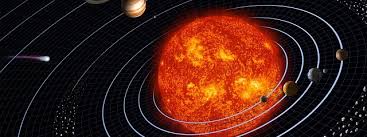
    The Greek philosophers, Plato, Plotinus and Pythagoras, in their writings described the existence of a universal harmony called ” The Music Of The Spheres”. They believed that the planets, as they orbited throughout the universe, produced a perfect music that could be heard by the enlightened beings. Those whose lives were lived in the harmony with divine laws could ” tune in” to this universal music. Many philosophers since then have also theorized about the music of the spheres.

    In the 17th century, the great English playwright, William Shakespeare, made reference to the Music Of The Spheres in his romantic comedy, The Merchant Of Venice. At the end of the play, one of the main character laments that this divine music can only be heard by ” immortal souls “, but those who are constrained inside the human body are unable to hear it.
    images (4)

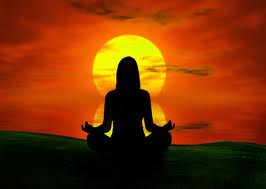
    Religion has two aspects, an inner or esoteric side and an outer or exoteric side. The inner or esoteric side of religion is the aspect that deals with the spiritual experience in which our soul recognizes itself and reunites with the God. It is reached through inner spiritual practices such as meditation, prayer, or inverting one’s attention within to contact the divine. By going within through meditation we can connect with the inner light and sound, or celestial music of God, called the word, naam, the light and sound current, harmony of harmonies, nad, jyoti and sruti, kalma or voice of silence. It is a music or sound that emanates from God and is not made by any instrument. It is the vibratory principle of God that created all religions of creation, this physical world, all life, including the human beings, and resounds within each being. To listen to it requires inner spiritual practices such as meditation.

    Each religion also has an outer or exoteric side, which involves rites, rituals, outer services, outer recitation of prayers, and various customs. Outer music is often an integral part of the outer aspect of any religion. It forms the part of the many of the customs, religious services, or rites and rituals in various religions. It also has the effect of inspiring, creating a spiritual mood, and helping to focus attention on spiritual goals.
    images (1)

    Devotional music is always performed in Hindu, Jain, Sikh and Buddhist religious services. Such music is considered an offering to the divine, or to deities, Gods and goddesses- an offering that is believed to summon the grace and protection of God or any chosen deity. These hymns are called shabds or shabads, bhajans and kirtan are integral to private and group worship. Another aspect of Eastern spiritual music, in Hinduism, Sikhism, Jainism and Buddhism particularly, is the role of mantras. A mantra is a ” sacred utterance”- a syllable, a word, or a verse considered to posses great mystical power. Some mantras are intoned out loud and others are repeated silently, by the ” tongue of the thought”. Some mantras have no apparent meaning in terms of the human language and yet are thought to carry a deep spiritual significance. Some mantras are repeated until they produce a trans-like state. Those mantras that are considered to be  the most powerful are those given verbally by a spiritual master.
    images (2)

    Buddhist music revolves around the Buddhist traditions. In general, Buddhist monks encourage music related to one’s spiritual exercises. Buddhist chants, especially Tibetan chants are famous for producing vocal overtones and harmonies with the use of drums.

    Christian spiritual music covers a vast field. During a religious service, spiritual hymns from the Bible are sung. There are also original songs that are sung and accompanied by the music written on the christian themes.
    images (3)

    The holy scripture in the Islam is the Koran. Music in Islam centers mostly on the chanting of the Koran in the forms of call to prayer, pilgrimage chants, eulogy chants of praise, and other noble themes. The Koran is written in Arabic, so the reading of the scriptures, done in the melodious way, is also in Arabic.

    Music of the Sikhs is largely devotional, often accompanied by the harmonium and tablas. These hymns prepare one for meditation and simran.
  • Sway the Ballroom Way!

    Sway the Ballroom Way!

    Dance is a way of life! People are rarely wrong when they say this, as dance expresses many lively aspects and emotions. Be it love, anger, disputes, chastity,  entertainment, surprise, bliss, sadness; dance can represent every shade of human emotion.   The movement to a rhythm is emotionally soothing and one confers a sense of accomplishment. Dance helps one to build confidence and express oneself; two things that every individual finds essential.

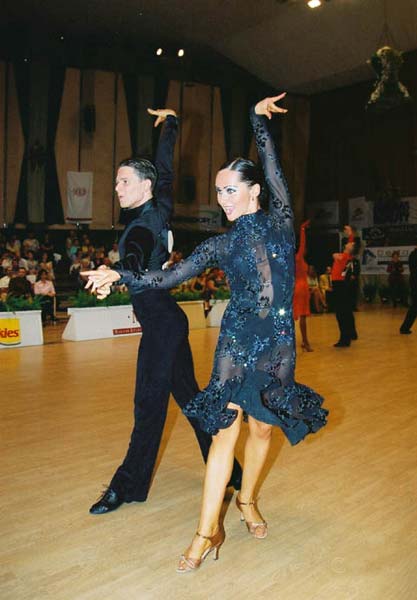
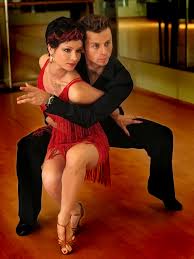
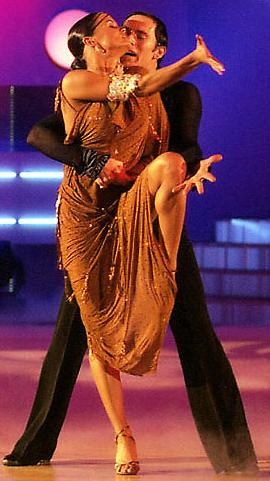
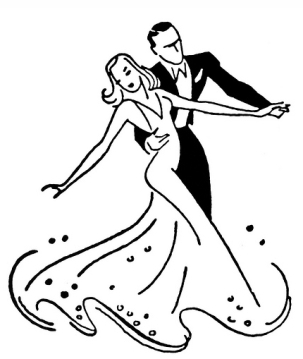
    The more romantic sort of a dance, however, is a ballroom dance. Ballroom dances are partner dances enjoyed socially and competitively worldwide. Love is an expression that can be shown beautifully in almost any ballroom dance form. Be it aggressively, possessively, intimately, softly, or delicately, a ballroom dance can show it all. It is considered an art form.

    It is bodily movement synchronized with a rhythm provided by some form of musical instrument. While the music is itself an art form, in dancing one takes advantage of the rhythm. Through tradition certain rhythms that are synchronized with selected patterns of body and foot movement are adopted. These patterns are then given names such as Mambo, Waltz, Cha Cha or Tango.

    download (2)download (3)ballroomdancing

    Jive:


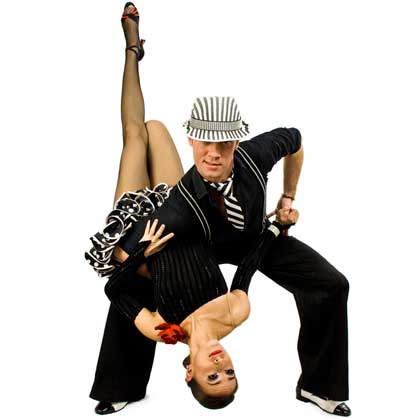
    Jive is a dance style that originated in the United States from African-Americans in the early 1930’s. It was originally presented to the public as ‘Jive’ in 1934 by Cab Calloway. Jive is one of the five International Latin dances. In competition it is danced at a speed of 176 beats per minute, although in some cases this is reduced to between 128 and 160 beats per minute. It is a lively form of Swing dance, and a variation of the Jitterbug. While there are many complicated versions of jive, some of which involve flipping the female dance partner, the basic dance is well controlled, with a six count foot pattern.

    Jive

    Paso Doble


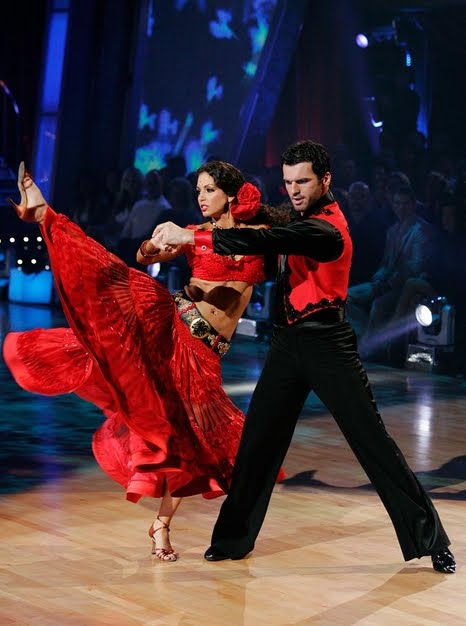
    Paso Doble in Spanish, literally means double step. It is a traditional dance in Spain and is danced to the kind of music played when the bullfighter enters the bullfighting ring (Paseo) or during the passes(Faena) before the final kill, during a bullfight. Paso Doble is a lively style of dance to the duple meter march-like Paso Doble music. It is modeled after the sound, drama, and movement of the Spanish and Portuguese bullfight. Famous bullfighters have been honoured with Paso Doble tunes named after them.

    Pasodoble2


    Cha Cha


    The Cha Cha is danced to; a little obvious, Cha Cha music, introduced by Cuban composer and violinist Enrique Jorrín in 1953. Styles of the Cha Cha dance may differ in the rhythmical structure. The original Cuban and the ballroom Cha Cha count is “two, three, chachacha” or “four-and-one, two, three”. The dance does not start on the first beat of a bar, though it can start with a transfer of weight to the lead’s right. Partners work together to synchronize each movement in perfect alignment.

    cha-cha


    Mambo


    The Mambo is one of the most sensual and emotional Latin American ballroom dances. Swaying hip movements, facial expressions, arm movements and holds all add to the sensuality of the dance. Mambo music was invented during the 1930’s by Arsenio Rodríguez, developed in Havana by Cachao and made popular by Dámaso Pérez Prado and Benny Moré. In the late 1940’s, Perez Prado came up with the dance for the mambo music and became the first person to market his music as “mambo”. Prado moved his music to Mexico, where his music and the dance was adopted. The original mambo dance was characterized by freedom and complicated foot-steps. Some Mexican entertainers became well known dancers like Tongolele, Adalberto Martínez, Rosa Carmina, Tin Tan and Lilia Prado.

    Mambo

    Rumba


    The Rumba is considered by many to be the most romantic of all Latin ballroom dances. It is often referred to as the “Grandfather of the Latin dances.” It is one of the ballroom dances which occurs in social dance and in international competitions. Among the five international Latin dances, Rumba is the slowest. It was derived from a Cuban rhythm and dance called the bolero-son;  a genre of slow-tempo Latin music and its associated dance.

    Rumba1

    Tango


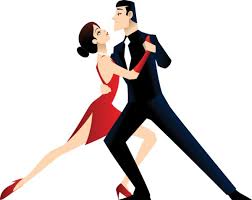
    Tango, in Latin, means touch. This sensual ballroom dance originated in South America in the early twentieth century. It is one of the ballroom dances which is most fascinating to watch. The Tango consists of a variety of styles that developed in different regions and eras of the world. The dance developed in response to many cultural elements, such as the crowding of the venue and even the fashions in clothing. The styles are mostly danced in either open embrace, where the dancers have space between their bodies, or close embrace, where the dancers connect either chest-to-chest (Argentine tango) or in the upper thigh, hip area (American and International tango).

    tango-lesson


    Waltz


    The Waltz is one of the oldest of ballroom dances, dating from the mid-Eighteenth Century. The German “Lander”, which is a folk dance, is supposed to be its predecessor. The name; “Waltz” is a developed form of “Waltzer”, which was derived from the Latin “Volvere”, which means rotation. When The Waltz was first introduced to the world in the early Nineteenth Century, it was treated with resentment because it was the first dance where the couple was in close contact. The man’s hand was to be wound around the lady’s waist and they were to dance so close that their faces almost touched. This is called a Closed Position in dance terminology. Waltz dancers appear to glide around the floor with almost no effort, showing its grace and elegance.

    Waltz


    Samba


    Samba is a Brazilian dance, which originated in Bahia, Brazil. Around the world, it is known as the symbol for Brazil and the Brazilian Carnival. It has also become the symbol of Brazilian national identity and is considered to be one of the most popular Brazilian cultural expressions. Traditionally, the samba is played by strings and various percussion instruments such as tambourine. Influenced by American orchestras in vogue and the cultural impact of US music post-World War II, Samba began to use trombones, trumpets, flutes, and clarinets.

    Samba