Tag: tourism

  • What’s to Know about Willis Tower?

    What’s to Know about Willis Tower?

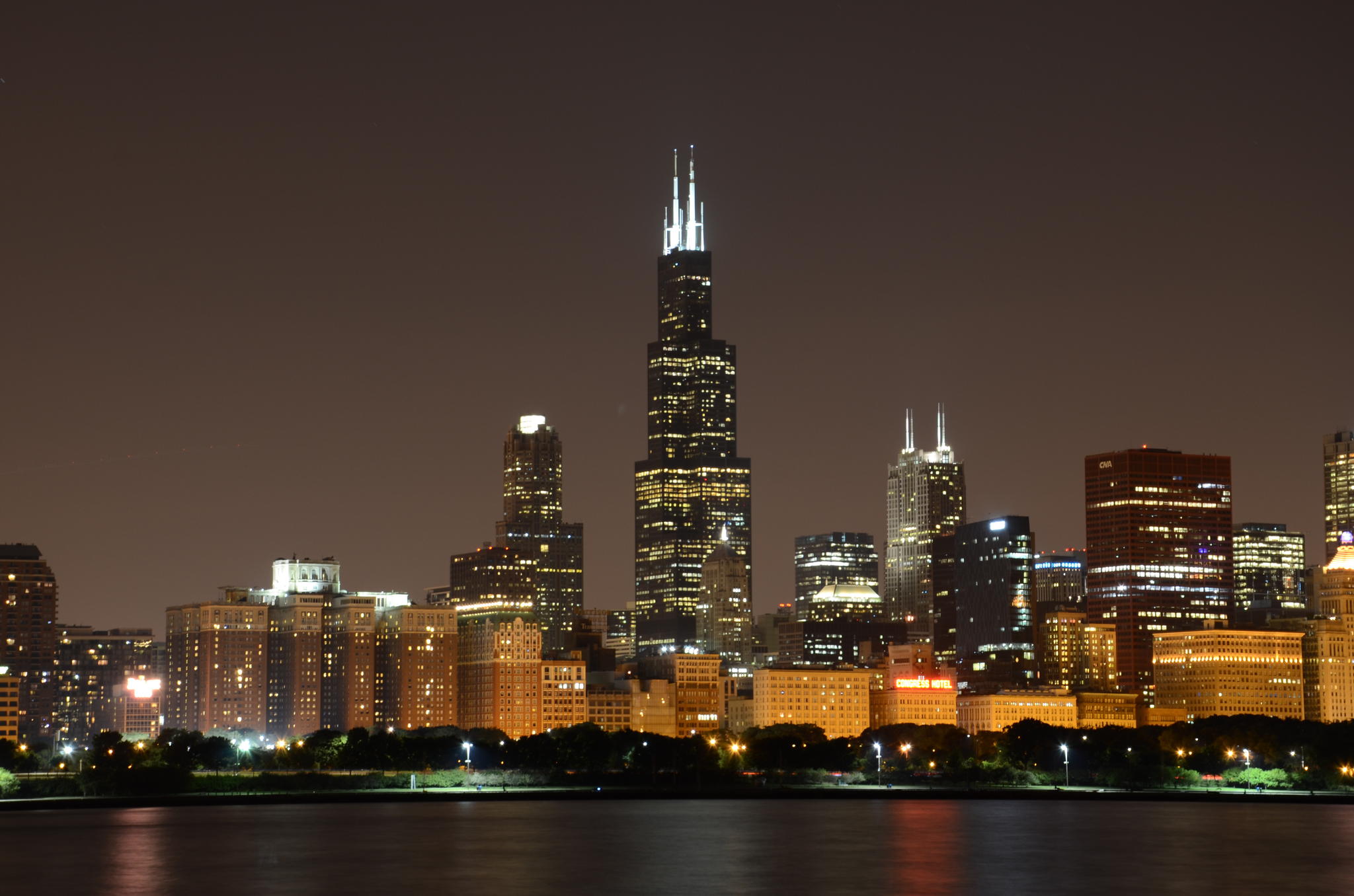
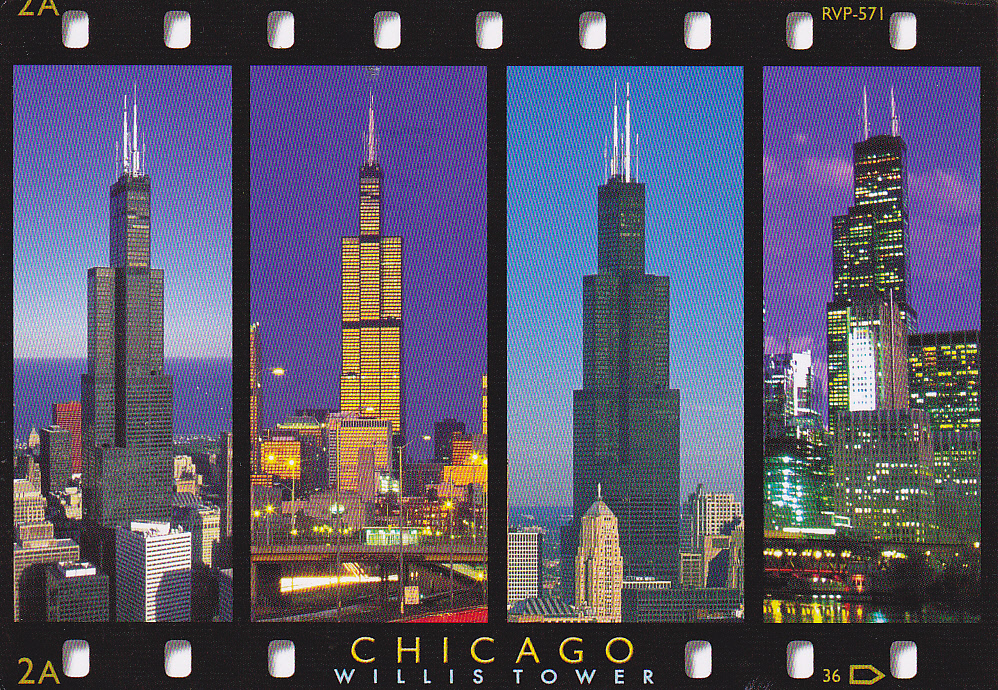
    The Willis Tower, formerly known as Sears Tower, is a 110 storey skyscraper in Chicago, United States of America, was once the tallest building in the world, occupying the top spot for a period of around 25 years, from 1973 to 1998, until the Petronas Twin Towers in Kuala Lumpur, Malaysia, broke the record. While Burj Khalifa, Dubai, holds the current world record, Willis Tower is now the eighth tallest building in the world, and the second tallest building in USA, surpassed only by the recently reconstructed One World Trade Centre in Manhattan. Willis Tower stands tall at an impressive height of four hundred and forty three metres, which is over sixty metres taller than the Empire State of Building in New York City. The Tower was originally built as the national headquarters of the Sears, Roebuck Company.
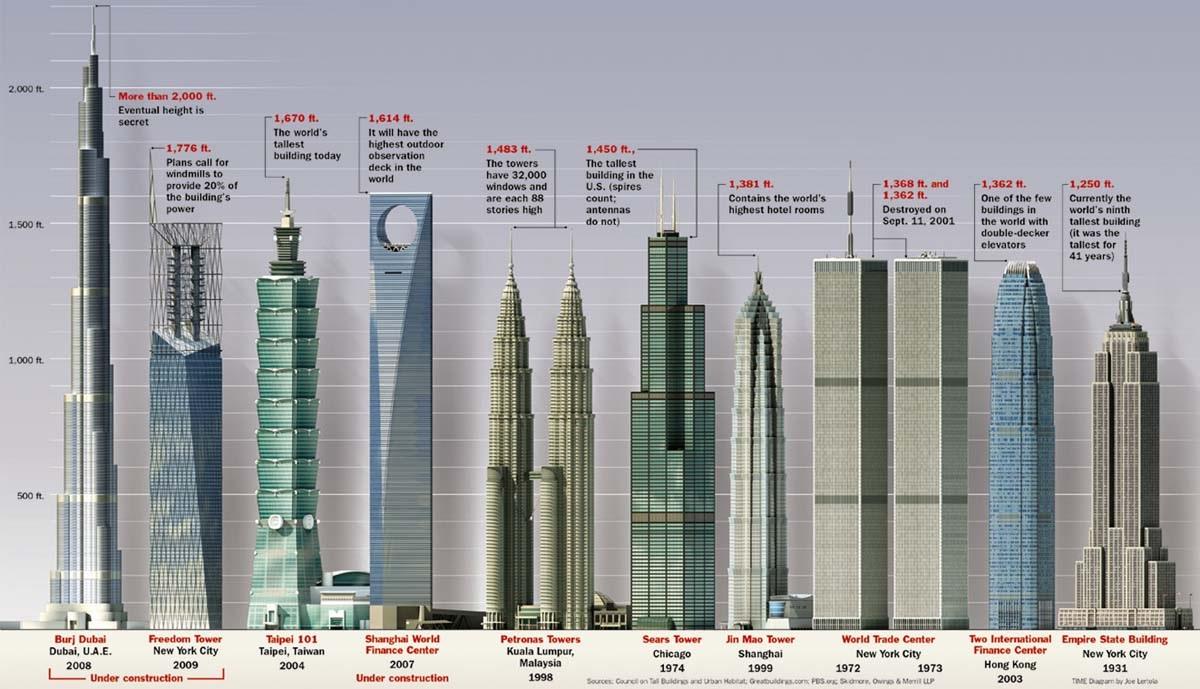
    tallest-freedom-tower-589126279

    Most people generally agree that the skyscraper was invented in Chicago, which is the third largest city in USA.  In 1871, a fire destroyed a third of the city, and architects set about rebuilding it. By this time, steel was being mass produced and, in 1852, Elisha Otis had invented the elevator, also known as the lift. New buildings could safely and practically be made much taller. The first high-rise building appeared in the city in 1882. This was the Home Insurance Company Building. It was the first building to have a skeleton structure made entirely of steel and iron. It had ten floors – a hundred fewer than Sears Tower which would be built ninety years later. As the demand for land in city centres grew, people needed to build fast and economically. Skyscrapers were the perfect solution to this challenge. With new materials and developing technology, the design of skyscrapers was gradually improved and perfected. Steel girders were used in different ways to build a strong framework. Some buildings were made of tall steel tubes, designed to withstand the winds that blow around the top levels. Inside the tubes, individual floors and rooms are rigid so that people can live and work safely and comfortably.

    It took around two thousand and four hundred workers around three years to build Willis Tower, and eventually finish it in 1973. The unique framework of the tower is made up of nine steel square tubes, which form a large square at the base. This rests on concrete, rock-filled shafts that are securely fitted into the solid rock beneath. The nine welded steel tubes rise fifty floors up. Then the building starts to narrow as you go upwards. Seven tubes continue on up to the sixty-sixth floor. Then five rise on to the ninetieth floor, leaving just two tubes to form the top twenty floors. Two television antennae take the building’s total height to a whopping five hundred and twenty metres – over half a kilometre. The amount of steel used to build the framework alone was enough to make more than fifty two thousand cars. Each of the steel tubes that form the top stage of the tower is 23 metres square in size. Viewed from above, the third strafe makes up a cross shape of five tubes. The second stage of the “step back” design has seven tubes that rise for 65 metres. Each side of the tower’s base, made up of nine tubes, is 69 metres long, with the total structure weighing over a 200,500 tonnes. During construction, up to eight floors were added to the building every month. The building’s steel frame was put together in sections, and were then welded and bolted tightly into place. In 1985, a four storey hall was built a base of Willis Tower, to give extra space. There are also shops and restaurants in the buildings.
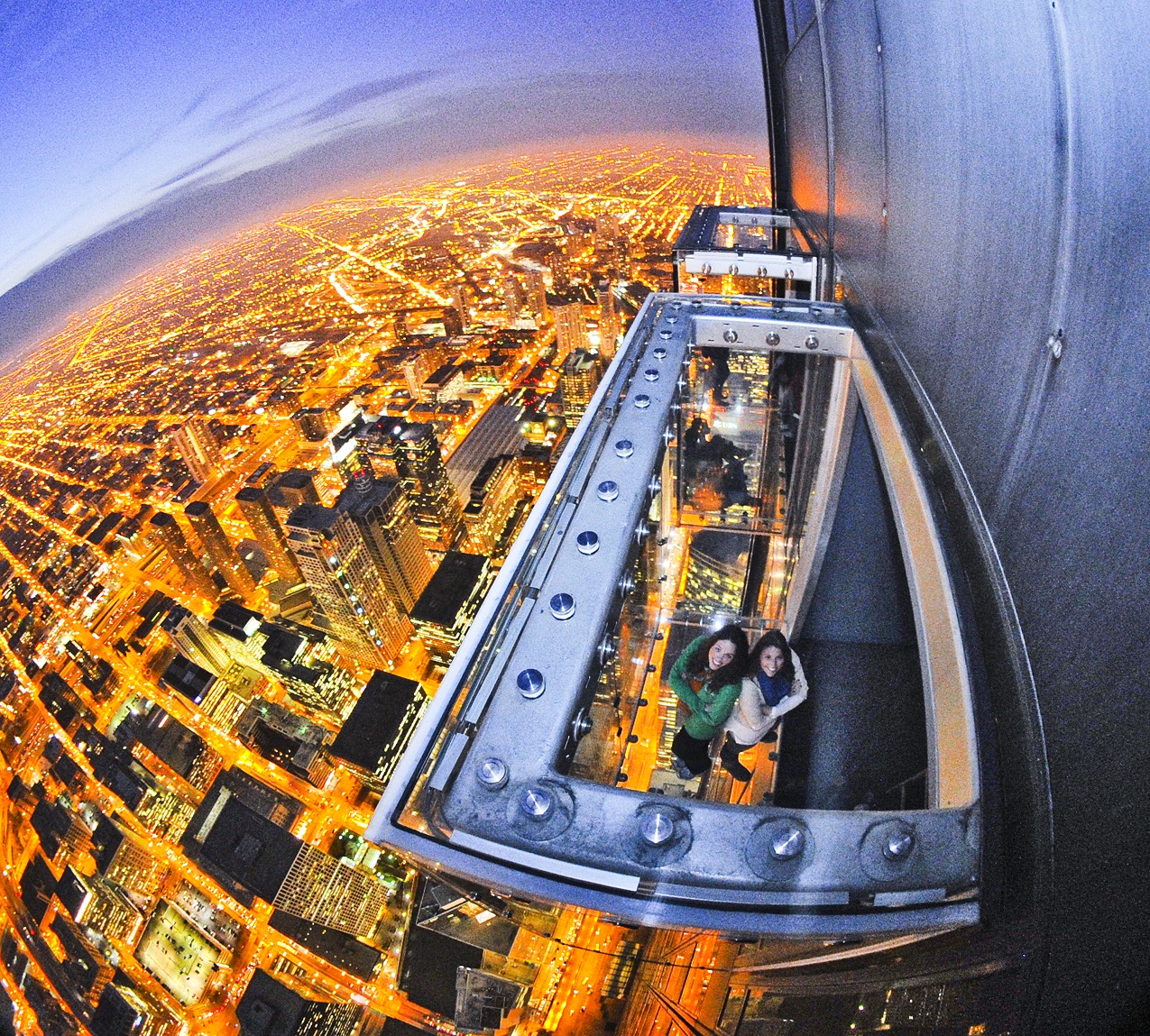
    This huge building has over four hundred and eighteen thousands square metres of space, which amounts to around sixty football pitches. The Tower has a hundred and four high-speed lifts, which divide the building into three separate zones and make it easier for people to find their way around. The fireproofed frame is covered in a metallic skin made of black aluminium, and more than sixteen thousand bronze-tinted glass windows. Six automatic window-washing machines clean the whole of the building eight times a year. Willis Tower makes the high-rise buildings around it look small. It is designed to sway up to ninety centimetres at the top in the occurrence of strong winds. About 1.5 million tourists visit Willis Tower each year, making it the most sought after tourist attraction in the city. Two express lifts take them up to the 103rd floor in just over a minute. From the Tower’s Skydeck, visitors have a spectacular view of the Chicago panorama. In the building’s lobby there is an enormous “wallmobile” by the famous sculptor Alexander Calder. The Skydeck is situated a four hundred and twelve metres up in Willis Tower. On a clear day, visitors can see over eighty kilometres, with a breath-taking view of four American states – Illinois, Indiana, Michigan, and Wisconsin.
    IMG_0015

    The official address for the building is 233 South Wacker Drive, Chicago, Illinois 60606, and is the “most impressive office space in Chicago” as it rightfully claims on its official website. Its pinnacle stands tall at a height of 1,729 feet. While the Sears sold the building way back in 1994, and completely vacated the building by the following year, it still held the naming copyrights to the building till 2003. That year, the London based stockholdings company Willis Group Holdings Limited bought around three floors’ worth of area, and thus won the naming rights without any conflict. Currently, United Airlines is the largest occupier of the Willis Tower, and has about twenty floors under its ownership which are home to its headquarters and operations centre.
  • A Visit to Akbar’s Tomb, Sikandra

    A Visit to Akbar’s Tomb, Sikandra

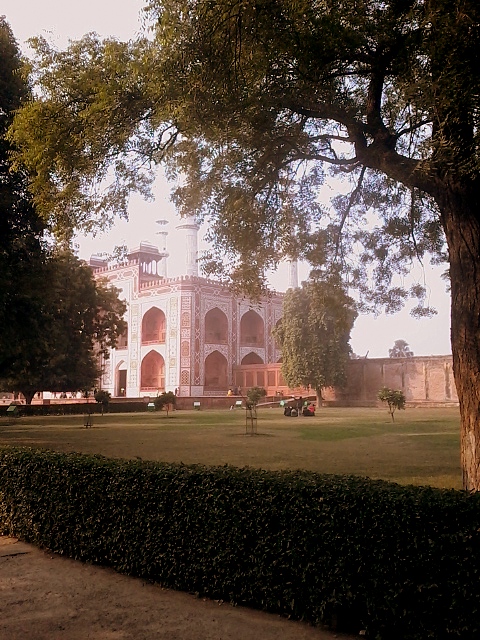
    A few days ago, I had the good fortune of visiting the tomb of the famous Mughal emperor, Akbar the Great. Located in Sikandra, a small suburb on the outskirts of the city of Agra, Akbar’s Tomb goes by much unnoticed by large hordes of tourists, just like the plethora of the city’s numerous other monuments as compared to the universally popular Taj Mahal. Jalaluddin Muhammad Akbar, widely known to be the greatest Mughal emperor by far and one of the most magnanimous rulers of the country prior to its democratic independence, reigned over his vast kingdom from 1555 A.D. to 1605 A.D. At the time of his death, the Mughal Empire stretched from Kabul in the west to Assam in the east, and from Kashmir in the north to Ahmednagar in the south.

    Under Akbar’s rule, the country was united under a peaceful and safely secular co-existence, as he was responsible for abolishing the jiziya tax targeted towards non-believers of his religion, Islam, and bringing in more opportunities for all classes and castes under new, novel institutions, such as the mansabdari system. He united the country under a uniform, cultural, political, and administrative system, accepting its varied diasporas of religions, traditions, cultures, and customs with great tolerance and respect, thus earning the honorary title of “Chakravartin” from the masses, and the epithet of “Akbar the Great” from historians of every age. While Shah Jahan built the Taj and has been remembered by generations for the marvellous creation, the third Mughal emperor was just as illustrious a builder, and is credited with restoring and expanding the Agra Fort as we know it today, and the fabled city of Fatehpur Sikri with all its palaces, massive lawns, and various other royal structures in it, apart from many other monuments.

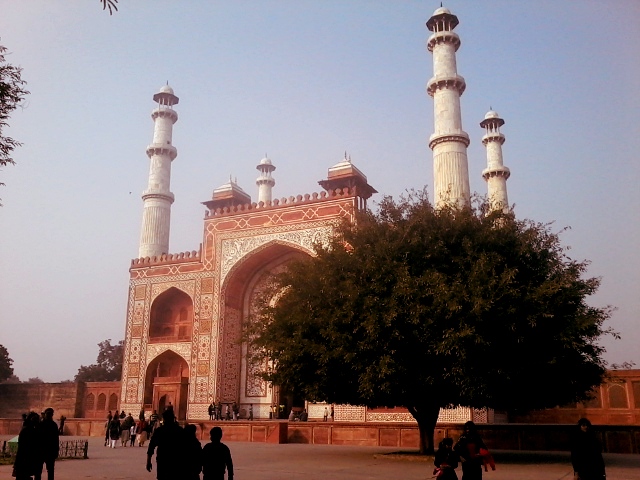
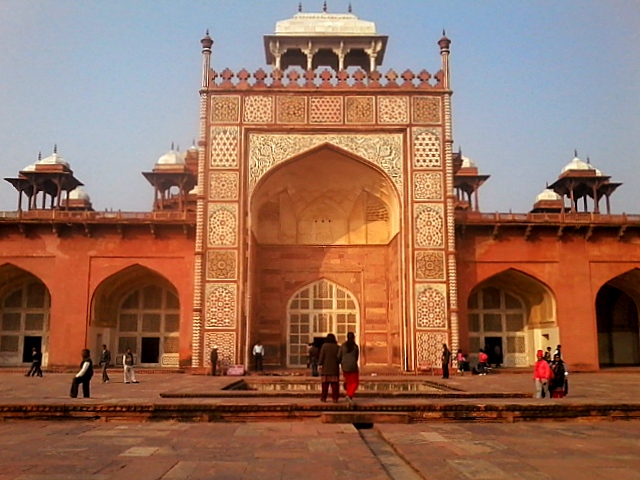
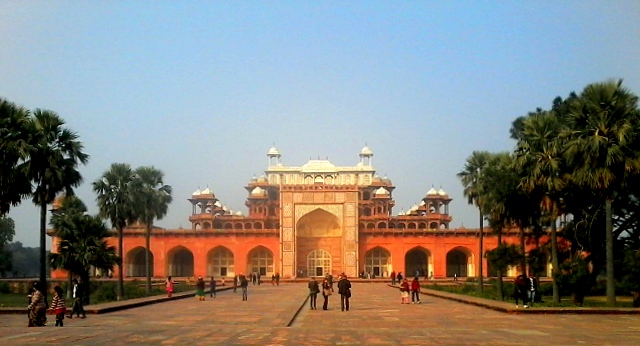
    Set in over a hundred and twenty acres of open, fertile land, near the Jamuna River, the tomb commenced building in 1605 under Akbar’s behest only after he chose the site and renamed it “Bihishtabad”, which means heavenly abode. Akbar died later that same year, and his son and heir apparent, Jahangir built the monument of deep, red sandstone, as according to plan after that, completing its construction in 1613 A.D. The tomb is planned in the centre of a vast garden enclosed by walls on all sides, with a gigantic gateway on each side. The southern gateway is the largest and most intricate in its design, with two storeys, and four, circular, tapering minarets made from white Makrana marble of Rajasthan. The entrance portal here is 61 feet in height, and is flanked by double alcoves. Just the like the gateway to the Taj, this gateway also possesses Persian scriptures gorgeously furnished in marble relief, and an inlay of precious stones and gems in various designs. The twelve inscribed couplets eulogize Akbar and his tomb, and also reflect his philosophical views, apart from briefly mentioning Abdul Haq Shirazi, the head calligrapher on the project, and the date of the monument’s completion, 1605. The chhatri-styled tower incorporations have been inspired from the Char Minar in Hyderabad, which was built in 1591 A.D. by Muhammad Quli Qutb Shah.

    The internal premises reflect the symmetrical charbagh (four gardens) architectural, which was a hit with the Mughal rulers, and true to its name, the garden is divided into four equal quarters, each separated by a high terrace or a causeway of stone masonry, 75 metres in width with a small water channel running in the centre and raised walkways on its sides. Distinctly raised from the present day deer-populated garden, these walkways can be accessed by staircases, which are accompanied by cascades and lily ponds. However, owing to the issue of devastating wildlife endangerment, the garden area is strictly off-limits for all visitors. In a distinguishing departure from most Mughal architectural pieces, Akbar’s Tomb does not feature any cypress avenues or flowerbeds rising from the causeways. This uniqueness is reflective of character, which is full of dignity, sobriety, and thoughtfulness, and peace, rather than the usual splendour, gaiety, delicacy, and superiority, associated with other Mughal monuments, and has thus been made in accordance with the personality of Akbar.

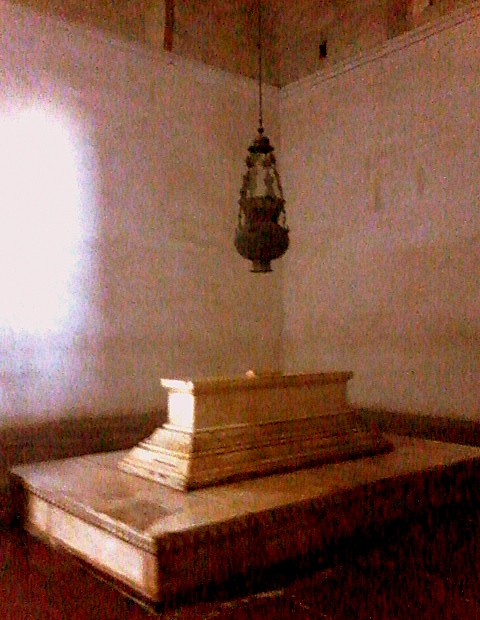
    The main building is square in its outlay, and has five receding storeys. The ground floor has spacious chambers, with an elaborate marble entry portal to access each. The southern entrance of the tomb leads directly into the vestibule that opens to the main grave chamber. Austere in appearance, this chamber features Quranic verses in stucco and painting, an octagonal tower superimposed by an eight pillar chhatri (roof) and numerous arches. While the monument has been built mostly in sandstone by Akbar, as per old Mughal tradition, Jahangir’s architectural style is also reflected in the seamless incorporation of white marble in the gate minarets, entry portals, and the top storeys of the main building.

    The upper floors of the monument have been cordoned off from the general public, and while it is not visible to the naked eye from the ground, tourist guides also mention a huge open-air square court on the top storey, 70 metres long on each side, and covered by arches. A cenotaph has been placed on the platform in the court, and has 36 Persian couplets praising Akbar carved on it. The tomb building is a four-tiered pyramid, surmounted by a marble pavilion containing the false tomb. The true tomb, as in other mausoleums, is in the basement. Apart from Akbar’s grave, many others of his family were also buried here, including a number of his queens and children, just like other Mughal mausoleums such as the Taj Mahal which contains the graves of both Shah Jahan and his queen, Mumtaz Mahal, for whom it was built. The tomb was severely damaged in the 16th century and was consequently restored by the Archaeological Survey of India between 1902 and 1911.