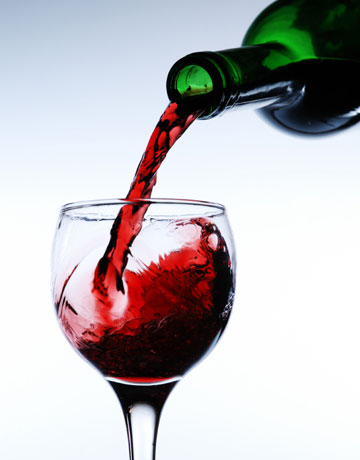
Tag: wine

  • Easy way of making Wine at home

    Easy way of making Wine at home

    Wine is nothing but a alcoholic beverage that is made out of fermented grapes.Basically there are two varieties of wines they are red wine and white wine.The simple difference between them is that red wine is prepared by soaking the grapes along with the skin whereas the white wines are prepared by removing the skin of the grapes after fermentation process.By using different types of grape varieties and strains of yeasts, they produce different type of wines.
    history of wine
    history of wine

    History:

    Wine has a very long history and it spans over thousands of years.At first the evidence of wine civilization is found in China around 7000 BCE. Mainly the wine making technology was improved during the roman empire.They used to store them in barrels and shipped them to various parts of the world.The production and consumption has eventually increased during 15th century.Slowly it has spread to all the parts of the world and now it is available everywhere around the world.
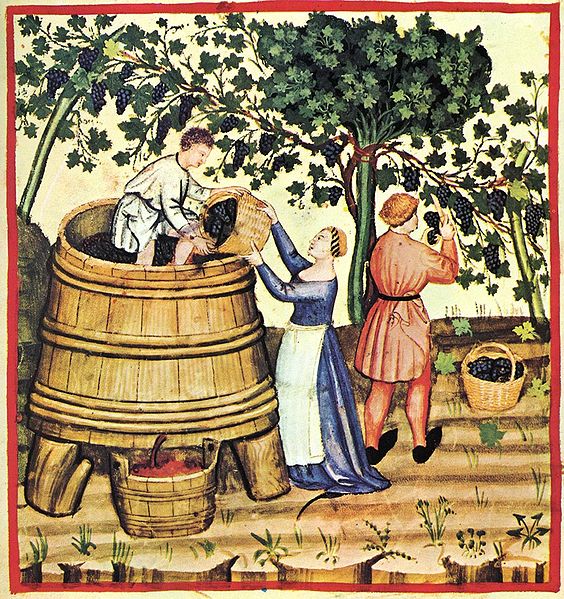
    history of wine
    history of wine

    Making wine at home:

    From thousands of years people are making their own type of wine at home.This can be prepared using any type of fruit but most people prefer to make it with grapes.In this process after mixing all of the ingredients we must leave the wine to ferment and then we have to age it before bottling.By using this simple olden process we can make delicious wine at home.

    Ingredients:

    1) Take six cups of any of the fruit

    2) Take two cups of honey

    3) Take one packet of yeasts

    4) Take filtered water

    Step 1:

    This is the step we have to prepare all our supplies and ingredients first.Along with the wine ingredients we have to take some of the basic supplies so that our wine can age longer without being affected by bugs and bacteria.As we are making it in home we should see that it should not be much expensive.The supplies that are required for making at home are

    1) Take two gallons of glass jar

    2) Take one gallon of glass container having small neck

    3) Take an air lock

    4) Take a thin plastic tube that may be used for siphoning

    5) Take clean wine bottles with screw caps

    Step 2:

    Select any type of fruit for making wine.Most of the people use grapes for the preparation of wine.While choosing a fruit it is better to choose a fruit that is organic as it has to be treated with chemicals if it is not organic.For reduced cost of making this wine take fruits in a farmers market.

    Step 3:

    At first take the fruits and remove the stems and and leaves and clean them thoroughly so that there should not be any dirt or grit.Next rinse the fruit thoroughly and place it in a crock or glass jar.Before crushing we can peel off the skin, but the actual flavor comes from the skin itself.If we peel off the skin then the wine will be more milder.Few think that natural yeasts lie on the skin of the fruit and does not wash it before crushing.

    Step 4:

    Now crush the fruits till the juice comes out of it.This process of taking the juice out of fruit is known as crushing.This process must be done until the fruit juice is about one and half inches from the top of the crock or glass jar.In case if the fruit juice is not till top of the glass jar fill the remaining level with mineral water.At this stage add campeden tablet to the mixture as it releases sulphur dioxide which kills wild yeasts and bacteria.In case if we don’t want to use tablet at that stage add two cups of boiling water to the fruit.

    Step 5:

    Add honey to the fruit juice as it adds sweetness to the wine and also provides food for yeasts.We can also add sugar if we don’t have honey available.

    Step 6:

    Now the main thing yeasts are to be added to the mixture taken and stir them well continuously by using a long handed spoon.For the preparation this is a step is a must and should not be ignored.

    Fermenting wine:

    wine-fermentation
    wine-fermentation

    Step 1:

    Now after adding yeasts cover the crock by using a lid such that i must keep bugs away from it and it must allow air to flow in and out.Then tie it with a t shirt at the opening by using a rubber band.Now leave this undisturbed over night by providing it a temperature of 70 degrees.

    Step 2:

    Continuous stirring must be done for every four hours and must recover it such that the mixture starts bubbling so that yeasts start their action.This continuous stirring will help in making delicious wine.

    Step 3:

    Now as the bubbling slows down after few days take this to a glass container with a small neck for longer storage.Now place the small balloon over the opening  to let the gas collected and replace it in a right away.

    Step 4:

    After this process let the wine be stored for few months but at least one month as the age for the wine increases the taste for it also increases.

    Step 5:

    At last preserve the wine by taking it in clean bottles and close it immediately by using a cork.Generally use dark bottles to preserve red wines.Allow it to preserve for longer age or can also take it immediately depending on one’s requirements.
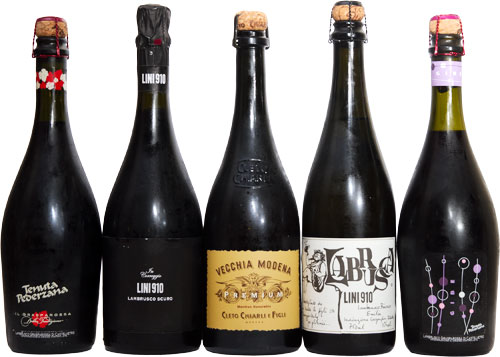
    Wine stored in dark bottles especially red wine
    Wine stored in dark bottles especially red wine
  • La Cucina Romana

    La Cucina Romana

    When in Rome, do as The Romans do.  Meaning it is polite, and possibly advantageous, to stand by the customs of a society when one is a visitor. But of course, if you’d rather literally do as The Romans do, whether or not in Rome, the best place to start is food.

    Tasting the various flavours of the place you are visiting is one of the best ways of saying “I come in peace” and also, the best way to enjoy. All you need to know is what you are eating and all you need to do is try to find out how it is made.

    Roman cuisine is the cuisine of the city of Rome, in Italy. Rome is city that is generally referred to as an empire. Though size has a major role to play in that title, it is also so called due to the widely spread culture. Roman food has grown through centuries of social, political, and cultural changes. The city became a chief gastronomic centre during the ancient times. Since Rome was, in many ways, a derivative of Greece, ancient Roman cuisine was highly influenced by Ancient Greek culture. The empire’s constant and enormous expansion exposed its people to new culinary habits and cooking techniques.

    The most original and traditional Roman food can still be found in Testaccio Rione. Gladly, you needn’t go all the way.


    rome-banner


    PASTA

    Pasta is one major constituent of Roman food. There are various shapes of pasta, the most common being Spaghetti. There are others like Fusilli, Gemelli, Lasagna, Linguine, Macaroni, Orecchiette, Penne, Ravioli, Riccioli, Rotini, Tortellini, Tripolini, Vermicelli, Tubini, Zitti and many, many more.

    However, the diversity in pastas doesn’t come from their shape alone, but also from their sauces.

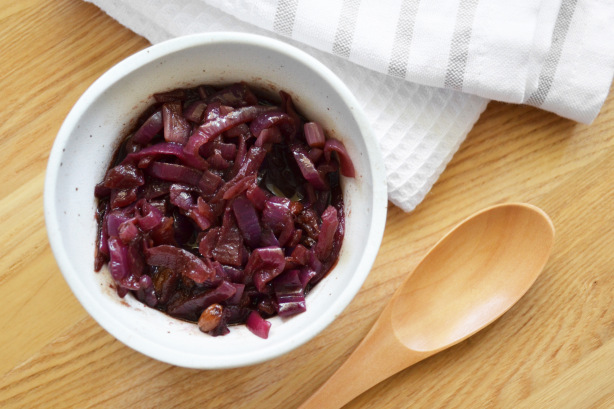
    Agrodolce is a traditional sweet and sour sauce. Its name comes from “agro” meaning “sour” and “dolce”, meaning “sweet”. Agrodolce is made traditionally using vinegar and sugar. Sometimes, additional flavouring is added, such as wine, fruit, or even chocolate. It is served over rigatoni or wide noodles, such as pappardelleand can also be served with salmon or lamb meat.

    agrodolce


    INGREDIENTS

    • 2 tablespoons olive oil
    • 2/3 cup balsamic vinegar
    • 1 teaspoon sugar
    • 1 tablespoon unsalted butter


      METHOD

    1. Heat 2 tbsp of oil in a large skillet over medium-high flame till it shimmers
    2. Sauté onions until they turn golden brown and crisp-tender. This takes 6 to 8 minutes.
    3. Stir in vinegar, sugar, and 1/2 tsp salt
    4. Cook until sauce is syrupy. This usually takes about 2 minutes.
    5. Remove from heat and stir in butter.


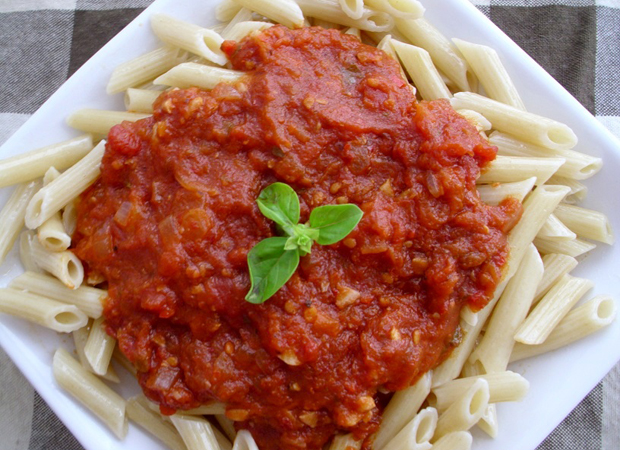
    Arrabbiata sauce is a pasta sauce meaning “angry sauce” in Italian. It is so named because of its spicy nature.

    Arrabbiata sauce with Penne pasta
    Arrabbiata sauce with Penne pasta

    INGREDIENTS

    • 1 tsp Olive Oil
    • 1 cup chopped onion
    • 4 cloves garlic, minced
    • 3/8 cup red wine
    • 1 tbsp white sugar
    • 1 tbsp chopped fresh basil
    • 1 tsp crushed red pepper flakes
    • 2bsps tomato paste
    • 1tbsp lemon juice
    • ½ tsp Italian seasoning
    • ¼ tsp ground black pepper
    • 4 peeled and diced tomatoes
    • 2 tbsps chopped fresh parsley


    METHOD

    1. Heat oil in a large saucepan over medium heat. Sauté onion and garlic in oil for 5 minutes.
    2. Stir in wine, sugar, red pepper, basil, lemon juice, tomato paste, Italian seasoning, black pepper and tomatoes. Bring mixture to boil. Simmer uncovered for about 15 minutes.
    3. Stir in parsley.
    4. Serve with the hot cooked pasta of your choice.


    It is a myth to think that Roman cuisine consists of pasta alone. Sure, they eat pasta all the time, but not as a main course. In Italy, pasta is actually more of a starter (primo). It is eaten in very little quantities, followed by the main course (secondo).


    BREADS

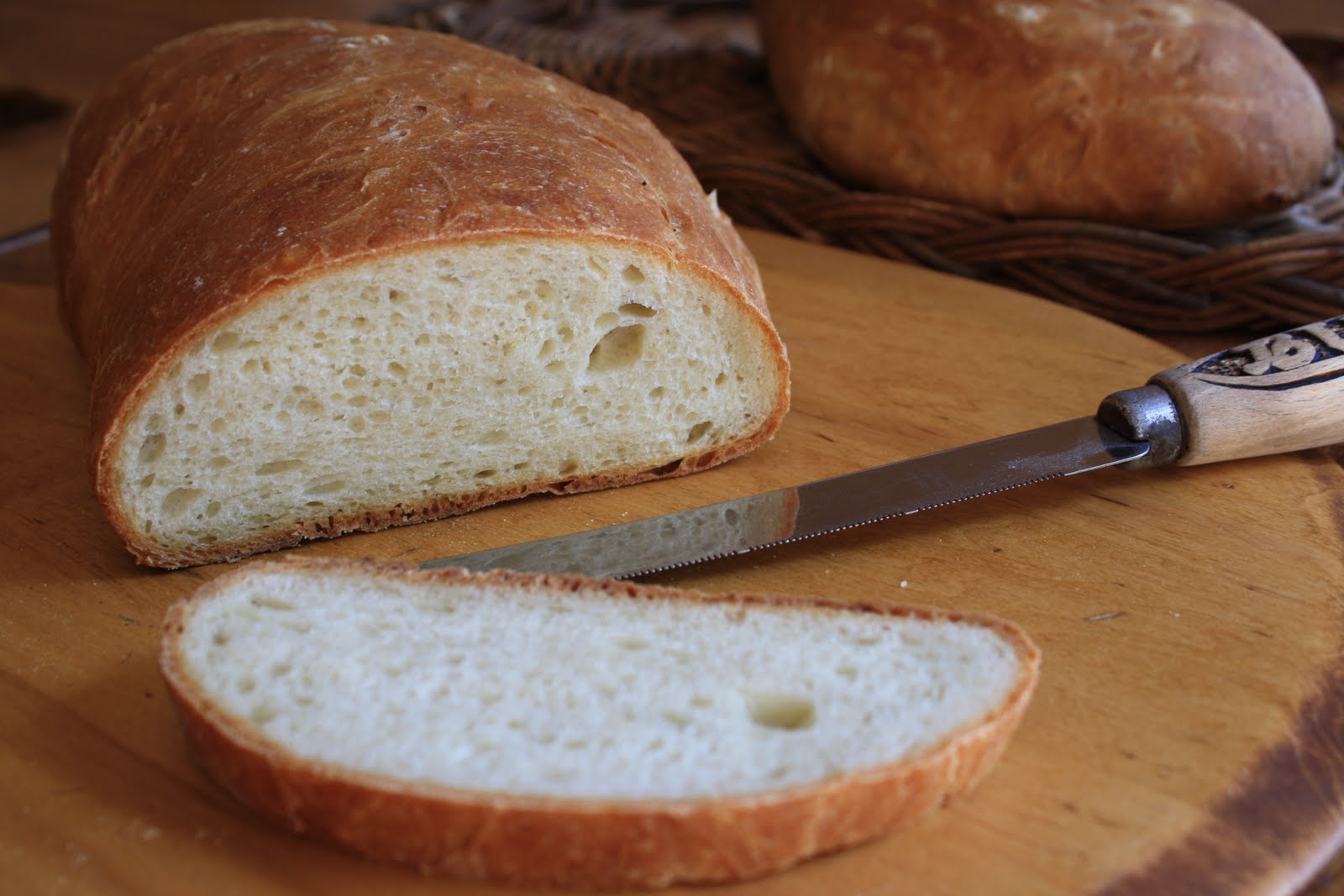
    In Rome, bread varies in quality depending on the flour, which depends on the grain used, the setting of the millstones and the distinction of the sieves. The very best bread is made from wheat flour and the very worst is from bran alone. Traditionally, bread loaves were cylindrical yet somewhat flat, like a coffee cake, but shape is hardly a fixed parameter now.

    Italian Bread

    The types of bread include

    1. Libae—small rolls
    2. Panis Primus—cheap, coarse grain bread
    3. Panis Secondus—Bread one step above Panis Primus
    4. Panis Plebeius—Common Bread
    5. Panis Castrensis— Army Bread
    6. Panis Sordidus—Dark Bread
    7. Panis Rusticus— Country Bread
    8. Siligineus— White Bread.


    Legumes like beans, green peas, chick peas, lentils, etc. were also added to bread.


    FRUITS AND VEGETABLES

    The common fruits eaten by Ancient Romans are almonds, plums, walnuts, apple, figs, pomegranates, filberts, quinces, grapes, chestnuts, pears. Fruits were generally eaten raw, dried, preserved, and cooked. They were generally dried and preserved for winter. However, this is not the case in modern Rome. Nowadays, all sorts of fruits are eaten all over the world and Rome is no exception. Vegetables were eaten in variety too—artichokes, garlic, beans, lentils, onions, parsnips, peas, pumpkins, radishes, melons, cabbages, cucumbers, lettuce etc.

    dried figs


    BEVERAGES

    Wine was a major beverage, considered as a symbol of richness and prosperity. It was always watered down. Romans never drank wine straight. It was taken in small quantities with breakfast and in moderately large quantities during the main meal—Cena. Cena was taken between lunch and supper. Supper was generally a light affair, but wine was mostly taken during Cena.

    Other beverages included:

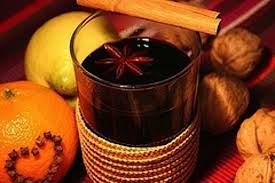
    1. Calda, which was a mixture of warm water and wine laced with spices. It was typically a winter drink.
    2. Mulsum; honeyed wine.
    3. Posca; Vinegar diluted with enough water to make it potable. It was a soldier’s or a slave’s drink.

    calda


    MEAT AND FISH

    Roman meats included Beef & Veal, pork, lamb, sausage, snails, sucking pig, hare, goat kid, venison, mutton, boar, mackerel, mullet, crab, eel, flounder, hake, lobster, rays, octopus, oysters, perch, duck, swordfish, flamingo, fig-peckers, dove, partridge, peacock, pigeon, thrushes, crane, goose, ostrich, etc.

    The poor Romans could seldom afford meat. Out of the listed, pork was considered a great delicacy. Peacocks were served to impress guests at dinner parties and you were considered a happy guest if you belched loudly. It was a “polite” gesture, stating that you enjoyed your meal.

    Well, after having read the scrumptious list of foods the Romans savoured, all one can say is Buon Appetito!