Author: anirudh

  • Check out at the check in!!

    Check out at the check in!!

    It’s a place where people usually hang-out with their friends and family. Next to beaches and shopping malls, this attracts an equal number of people. We still live by the saying that a satisfied hunger and quenched thirst makes one pleasant and closer to us. True to these words, various hotels, restaurants, motels and other such places that offers food have opened up almost everywhere.

    temp1
    A restauramt setting


    In today’s world, it is not fair for someone to say that he/she do not often visit restaurants, owing to the fact that they are sprawled across the map of the world. Ranging from ordinary road-side carts and mini eat-outs to posh, rich and elegant restaurants boasting of the 5 stars of quality (that restaurants are usually titled to). It is, as the saying goes, where there is food, there are people.

    This tradition of offering food to people dates back to the times where cities were first beginning to develop and dynasties ruled parts of the world.

    The first restaurants

    The idea of serving food in exchange for money goes back to the days when people travelled by either foot or a horse-driven carriage. The earliest known restaurants were more, like today’s road-side inns. The customers were usually peasants and small-time traders, travelling from one city to another. These restaurants simply consisted of a few benches or tables and they did not have any particular menu. These places offered simple foods commonly found in merchant’s homes. It was the chef’s choice which ultimately became the day’s menu.

    In the middle ages, as the population slowly increased, taverns became one of the most common places for a common man to buy food and drinks. In addition to serving food, they served as the first bars or pubs too. A few of these can be seen even today.

    temp2
    An artist’s rendition of a restaurant in the olden days


    These places were usually places where people gathered and discussed official matters or met for recreational purposes. Thus, they imbibed a society that was socially strong. These taverns however, had a simple menu from which people could choose what they wanted to eat or drink and they were often served by people who owned the place or worked there. They were the first bearers or waiters.

    Restaurants also occurred in the form of road-side shops serving simple, yet satisfying meals. These were usually considered the fore-runners of the modern day fast-food chains that can be found sprawled across the map of the world. In the American continent, these usually sold the first buns and mustard, peanuts, popcorn, candies or any other such food articles by which people could satisfy their hunger temporarily.  Later, as time passed, the buns turned to hamburgers and hotdogs which soon became an instant hit not only because of their taste, but also because these foods were easily made and quickly served. Thus, it marked the beginning of fast foods. In France, small restaurants opened up at corners of streets or openings of junctions and they primarily served soups and stews which instantly struck a chord with the French. They soon revolutionized to various other food articles, which are served almost in all parts of the world even today. The French were usually good with breads and foods out of breads and dough. It was the French who brought “baking” to the limelight.

    temp3
    A painting of a street-side restaurant in Paris

    In the European sub-continent however, pies of various sorts and flavors were becoming popular. In short, restaurants immediately became popular among the people, even though they served simple foods.

    It was in the fifteenth century when foods from different parts of the world were traded. Thus each recipe special to a particular country, became famous in another part of the world. This never stopped there though and the market and trade only increased with time and now, it has resulted in the numerous continental restaurants, five-star hotels and simple inns which serve foods both simple and those unheard of in that region.

    Restaurants in India

    India is a vast, diverse, multi-cultured country which has different eating habits as well as different food items. Thus, the normal, modern restaurants with either a three or four star rating usually serve more of recipes from other parts of the country when compared to recipes from around the world. However, it is a different tale when it comes to continentals and five-star hotels. These serve both in equal proportions and in top qualities.

    The first restaurants here were road-side carts selling very simple items exclusive to that place or country. These types of road-side stalls can still be found even today, buzzing and alive with hungry people. However, these have now modernized to serving snacks (“chaat” items), in addition to serving sandwiches, beverages, pastries, juices, etc. they have become a common place of hang-out especially for the younger generation.

    Check out at the check in!

    Restaurants are places where, in addition to serving food, also provide people with a place to stay for a stipulated amount of time. This practice dates back to the time when travelers having travelled quite a long distance, needed a place to eat and rest. The earliest known such rest-houses where more like big houses apartments usually called “inns”. They had extra rooms which were carefully and regularly maintained by the owners and proprietors. The food was cooked by them and served. This soon modernized to become resorts and lodges.

    Rooms allotted for a longer period of time and those which offered more comforts were called suits and these are usually found in five-star hotels today.

    In short, restaurants have come a long way to what they are now. They have undergone changes alongside people and have become a common thing now. Not much thought have gone to their origin and history.
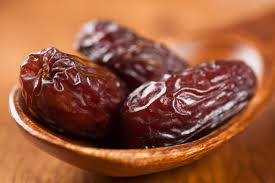
  • Nature’s candy-date palm

    Nature’s candy-date palm

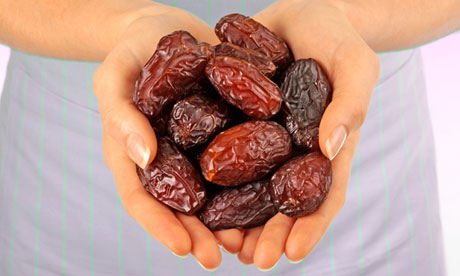
    They grow in hot places like deserts and are among the freshest dry fruits. During their growth, these fruits tend to produce a lot of sugar, which crystallizes in the hot sun. This crystallized sugar slowly soaks the outer skin of the dates thus making them soft and chewy to eat. It is the presence of this sugar which makes them so sweet earning them the name of nature’s candy.

    Date palms often occur in yellow, red or reddish brown, often occurring in the latter of the three colors.

    Dates a nutricious fruit
    Dates a nutricious fruit

    They are believed to have been the staple diet of the Babylonians where they are found in abundance. They first became popular in areas in and around Egypt, Babylonia, and Mesopotamia and along the banks of the Nile and the Euphrates River.  But, thanks to trade and transport, it soon spread to other countries and they are now found in almost all warm countries. These contain seeds but they are usually deseeded during mass production and marketing. Though they are sticky, they are quite irresistible and they are a factory for a whole lot of delicious recipes.

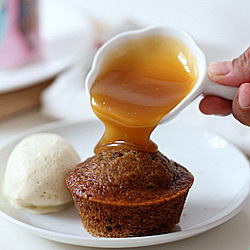
    Desi date sauce

    This is one lip-smacking recipe that is simply irresistible and would leave one craving for more. Indians have always found pride in their food and their recipes, many of which have become popular even in foreign countries. The combination of the sweet taste of the dates and the spices added simply multiply the zing in this recipe.

    All one needs is a bottle of vinegar, olive oil, fresh, chopped chili pepper and the required Indian spices. The vinegar is used to improve the taste, giving it the required quantity of “tanginess”. The pepper gives it the spicy taste and it is this combination of the sweet dates and the spice which makes it a perfect accompaniment for snacks like French fries or anything that is fried. The procedure is very simple.

    temp1


    All one has to do is to put all the ingredients in a big vessel and is simmered under a medium flame for about 10-15 minutes. The required amount of salt is added to it and water is added to prevent it from getting too thick and solid. Then the entire simmered content is allowed to cool to room temperature. After this, it is transferred to a blender bowl and is blended till a smooth texture is obtained.

    The yummy date jam

    Yet another delicious recipe that can be made using dates is the date jam. This can be used like any other jam, almost on anything that one wishes. Be it toast, plain bread, buns, Indian bread, cakes and the list goes on!

    temp2

    Though preparation is slightly complex than the previous recipe, the end result is truly sumptuous. The main ingredients required for this one are sugar, ground cinnamon, non-flavored butter, peel and juice of lemon to give it a slightly sour taste and chopped or diced date pieces. Additional flavoring may be added like the essence of vanilla, orange or apple simply to give the jam its fruity taste and its irresistible fragrance.  The date pieces and water is allowed to simmer under medium flame and is slowly brought to boil. Stirring of the contents is to be done throughout the process. Slowly, all the other ingredients are added to this mixture, while simultaneously stirring.


    Stirring prevents the contents from getting solidified and thick at the beginning itself. Gradually, the mixture becomes smooth and thick. It is at this time that it is taken off the stove and is then allowed to cool to room temperature. It is then carefully stored in sterilized containers to prevent attack by moisture and maybe be used cold.

    A dessert from the desert

    True to the title, this recipe is perfect to end a truly delicious meal.  This dessert is a liquid, making it a different and a tasty finisher. It is very simple to make and does not have a standard set of ingredients as it depends on an individual’s taste. However, the following ingredients are usually used for a perfect milkshake. 2 ripe bananas, the required quantity of fresh milk, chopped or diced dates, sugar, if required (even honey can be used a substitute), vanilla essence, nuts, if required. All the items, excluding the nuts are put into a blender and are mixed till a smooth liquid free of date chunks is obtained. It is best when served cold.

    Date sandwich for the lazy

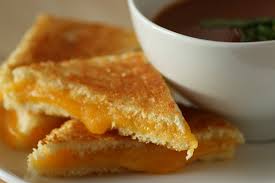
    For those who simply hate having to spend a lot of time in the kitchen, this recipe is the one. In addition to being extremely simple to make, it is healthy and makes a great snack or lunch.  Because of its taste, lunch time will never be the same again. The items required are very less and are easily available. These include rich, cream cheese, preferably non-flavored, honey, finely chopped deseeded dates and required slices of raisin bread (or normal bread would also suffice).

    temp3

    The date pieces can also be grounded using a blender and gently sprinkled on top of a thick layer of cheese and honey. It may be topped with any desired layer of toppings.

    Benefits of dates

    • Dates have been found to be very healthy and are packed with nutrients. They help in proper building of the body’s metabolism and in improving the immune system.
    • Due to the presence of sugars, they are an excellent food to break a fast and are thus usually eaten during the Ramadan months. The sugars present in them immediately and easily mix with the blood thus replenishing the body’s lost glucose and electrolyte levels.
    • Dates have been found to be rich in potassium, which help in maintaining the heart, by controlling the heart rate and the blood pressure thus reducing the risk of heart attacks and strokes.
    • They are also rich in calcium which is vital for the proper growth of bones and general body development.
  • That squishy yellow fruit-Go Bananas!

    That squishy yellow fruit-Go Bananas!

    They are yellow, long, soft, and squishy and they taste good when they are at their best stage of ripening. Bananas have been known to man for a very long time and they form a very important part in our lives. They are so common that, when a person thinks of a fruit, the chances of him/her choosing a banana is almost equivalent to that of an apple. They have been painted by artists and have become one of their greatest masterpieces and sold at auctions to the highest bidder.  With just their sunny yellow color, they have sent people to a whimsy. They have even been animated and shown in cartoons; making people to slip and fall down.

    banana


    They are an integral part of diet plans and in the food hierarchy. However, in all these various representations of the banana, they have been shown only as ‘the perfectly ripened fruit’. The over-ripe bananas have simply been thought to be over the hill and are thrown away for the only reason that they become too squishy and mushy when they over-ripe.

    When they ripen, the starch inside them turns to sugar, thus making them sweeter and their water content, mixed with the sticky sugar, oozes out covering its brown-spotted outer layer, making them sticky. This naturally causes a feeling of disgust amongst all of us and so, we finally end up ignoring it.

    But, not many know that there are quite a lot of delicious recipes and foods that can be made when a banana reaches its height of ripening.

    A New Year recipe!

    Just like how all good things start from a New Year, this recipe is usually chosen by people wishing to welcome the New Year on a sweet and a healthy note. For those who have sworn to hit the gym at the start of the year and to maintain a healthy lifestyle, this recipe is especially for them, irrespective of whether they follow their promise or not.

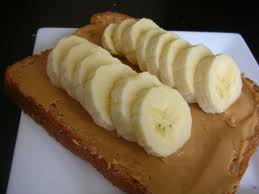
    All one needs is a few over-ripe bananas, peanut butter and if required, sugar. This is very simple and can be prepared in a few minutes though its taste lingers really long at the back of the mouth. The ripened flesh (or pulp) of the bananas are neatly cut and kept aside. Layers of the banana are later used to sandwich the tastier part in the middle.

    temp1

    However, not all bananas are cut. A few, depending on the needs of an individual, are put in a bowl and mashed, to give a fine, thick pulp. Very small amounts of water may be added to make the pulp smoother and to give it a sweeter taste. Peanut butter and sugar (if required) are then mixed at this stage. The entire content is mixed thoroughly to give it a smoother and richer texture.

    Addition flavoring may be added in the form of fine coconut shavings sprinkled on top along with a dollop of honey if required. The finished product may be kept in the refrigerator for some time and served cold.

    A deep fried recipe

    Cooking is all about making something amazing from almost nothing. It’s all about changing the nature of the particular food article and bringing out something, though related to it, but much tastier than the original.

    The required quantity of oil is poured into a big vessel and is heated. Add required quantity of sugar to the hot oil.  After a minute or so, add freshly cut ripened banana slices to the hot oil and sauté for a few minutes until they turn golden brown. Continue the process until they turn into a deeper brown. This recipe definitely satisfies those who love crackers, chips or anything that’s fried. They make an excellent evening snack and are simply irresistible.

    Banana, oat ‘n’ honey

    This one definitely tops the cart when it comes to those who wish to have a proper breakfast. For many, breakfast has become a monotonous, tasteless affair. Why not change it to the better?

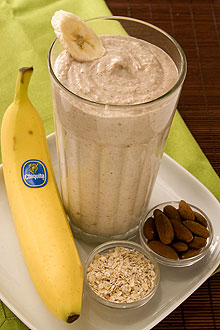
    This recipe is a quickie and, saves one from having to spend their time in the kitchen preparing something that would satisfy our hunger. This banana smoothie not only satisfies our hunger, it also energizes us, while providing the body with the required nutrients. Thus, it is a perfect way to jumpstart one’s day.

    temp2

    All one needs is a few ripened bananas, fruits (figs are preferable), honey (or sugar) and maybe a few nuts, like almonds, cut in small pieces and about a litre or two of milk. Everything is put in a blender and mixed till the contents are properly and perfectly mixed. The resulting product should be smooth and should not contain too many large pieces of bananas or figs. At the end, it is poured into a glass and cut almond pieces are added. They may be served cold as smoothies taste best when served cold. And there you have it, a healthy, yet tasty breakfast.

    A perfect dessert

    Who would have thought that bananas can be used to make one of the tastiest ice-creams? Put peeled bananas into the freezer for some time. Take them out and blend them till they become chunky. Now, vanilla essence is added to it and it is blended again to get a smooth mixture. There you have it! A natural, vanilla-banana cream!

    Also, they can also be made into popsicles. But for this, the banana paste is made a bit runny. Then, it is put into a suitable vessel whose shape the Popsicle will take. An ice-cream stick is inserted into this vessel and it is carefully kept in the freezer. After sometime, the pulp hardens around the stick and it can easily be popped out. Nuts can also be added to the runny mixture, before freezing it. For this recipe, almost any flavoring can be used depending on the individual’s taste. Cocoa powder can be added to get a Chocó-banana ice-cream or ripe pineapple essence is mixed before freezing it to get a naturally sweet taste. This recipe though, is definitely for those with a sweet tooth and a craving for banana products.

    Thus, even over-ripe bananas can be used resourcefully and who would have thought that they so many delicious recipes can be made from them. It is indeed, not much of a surprise that bananas have become a part and parcel of everyone’s lives.

  • C for coffee, C for Chennai

    C for coffee, C for Chennai

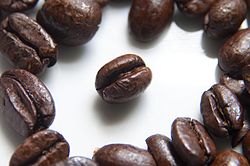
    They have always been our wake up alarm. A companion during late night assignments and last minute projects. For the others, it has served simply as a break. Coffee has been an integral part of the lives of humans ever since its find and domestication. In India however, it has gone a step above. This can especially be seen in the city of chennai, famous for its coffee after its dosas and sambar.

    A different tale is observed here in Chennai, when it comes to coffee. The ‘coffee custom’ struck the city and soon became an epidemic. Its not just a myth that coffee is addictive pretty much like other drugs. The only difference is that, its legal. The people of Chennai seemed to have become addicted to the beverage more than tea and the taste is passed on through generations, thus making sure that the coffee market here never banks down. The citizens of Chennai have their own customs when it comes to drinking and serving it. Its not a surprise that coffee has become one of the most sought after beverages here, owing to its many benefits.

    Its history-in short

    The birthplace of coffee is believed to have been somewhere in Ethiopia. However, it was not until the 17th century that the seeds reached the South Indian soil. The drink had already made its way to the other parts of the world by then. It was believed that a certain person, on his pilgrimage, came across the wonderful taste and experience of coffee. He then wanted the people of his city to taste and experience the heavenly feeling, the aroma and the richness of the beverage. So, it is said that he had brought a handful of these seeds, safely hidden inside his waist pouch. Thus, coffee entered the southern soil.

    CoffeeBeans

    However, the people here were already contented with their traditional beverages, which included buttermilk, porridge and milk. So, naturally, the seeds took it own time to get accustomed to the people. Along with coffee came another refreshing beverage, which was in the form of leaves and went by the name of tea. Tea however, was more easily accepted by the people than coffee and was soon boiling in almost  every house. By this time, India came under the control of the British and colonisation happened. During this time, the market was not in favour of the lower and middle  classes as prices of even the basic amenities were high. This was another reason for the popularity of tea  when compared to coffee. The price of tea was much cheaper than coffee, which was usually drunk by the upper classes and the officials. This was another reason why tea was usually called-“The poor man’s drink” by some.

    However, by the start of the 19th century, the tables were turning and tea took a back seat.   From then on till now, there was no turning back as coffee smartly captured the first position in the hearts of the people.  Before long, every street corner, every road and side-road had a coffee stall. Today, in addition to the many coffee stalls propped up  on the roads, there are various other coffee hang-outs, complete with plush interiors, foreign coffee recipes and fully air conditioned centres, sprawled across the map of Chennai.

    The coffee culture

    As coffee slowly gained popularity, it turned out to be more of a fashion statement for someone,to say that they are coffee-addicts. The modern coffee shops attracted quite a lot of people like flies attracted to a ripe banana.This may be termed as the modern coffee culture in Chennai. Almost contrary to the beliefs of the people, even the roadside stalls are equally frequented.

    However, the people of Chennai have the best of both worlds. The traditional culture imbibes the warmth of one serving his/her guests by serving coffee as a complimentary, followed by snacks. The city dwellers prefer a milky blend of 70% coffee and 30% chicory. This is varied though, according to one’s requirement. The chicory content is either increased or decreased depending on whether one wants a strong or light blend. Back in the olden days, the meager average income was just enough to buy jaggery or honey, as sugar seemed almost improbable because of the taxes implied on them.

    coffee two

    Coffee had become such an integral part of everyone’s lives that various coffee -powder producing shops opened up. These, specialized in grinding the raw coffee beans, brought in fresh, from the coffee estates. They had specialised grinding machines, where, fresh beans along with the chicory powder were put in the exact required proportion and were crushed to a fine powder.  They are then packed and hermetically sealed to prevent the rich aroma and the taste from being lost.

    Coffee was usually the beverage of the working class. Though there was a small hesitation in accepting the filtered coffee by certain groups of the society,  it soon lost its steam and coffee found its way into the shelves of every home.


    The filter ‘kaapi’

    Coffee-Receipe

    The perfect filter coffee is made by the right ingredients and the right vessels (or containers) are used. The filter, is a metallic, perforated, flat plate used to neatly filter only the essence of the coffee powder. This is in turn, used to make the essence or the decoction, from which the coffee is actually made, by mixing it with hot milk. The vessel used to make the decoction is a stainless steel vessel containing two halves. The top half contains the place where the perforated plate-like vessel is placed firmly. Boiled hot water, along with the coffee powder is poured in slowly at a steady rate to prevent solidification of the powder. It is then left for sometime for the essence to slowly sediment and drip down to the lower vessel which acts as a storage container.

    Though there are various flavours and types of coffee now available, the basis for the preparation of the essence is pretty much the same.

    Coffee has indeed become a part and parcel of the people of Chennai and there’s always the whiff of coffee in the air, here in Chennai.

  • Not a nut, but a fruit!

    Not a nut, but a fruit!

    The human body is like a machine in its way of functions.  It is a common known fact that a machine heats up when it does work. So, to cool it, a suitable coolant is used and the most common that is naturally available, is water.  Similarly, the human body also needs water to cool itself down and to maintain its normal temperature. Earth is the only known planet in our solar system lucky enough to contain the elixir of life in its liquid form. Apart from the common sources from where water is obtained, it is also got from certain fruits like tender coconuts.

    A short description

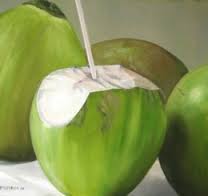
    Even though it is named, coconut, it is actually a type of fruit and not a nut. It belongs to the palm family and is mostly found in the tropical and the sub-tropical regions. It can be especially found in abundance, in the Indian sub-continent. The southern parts of India are literally the home for these fruits to grow. They are usually tall trees, which have thick trunks, but almost no branches. Instead, these trees have very long leaves, with some of them even growing up to 25 feet. These leaves make up for the default branches that an average tree usually has. The tree itself may grow up to a 100 feet tall or approximately around 30 meters in height.  This type of tree has a fibrous root system and requires sufficient water to grow. The fruit formed is a multi-layered seed that is extremely hard. The hardness is to protect the soft, fleshy part of the coconut pulp inside.

    coconut


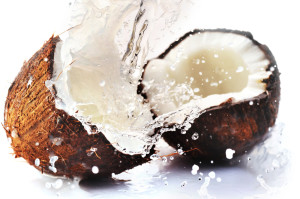
    This fruit is unique in the sense that it has the ability to store water taken in from the roots inside its shell to help it to germinate and grow. However, it can be harvested much before and the water inside it can be consumed. The stored water, even though has its source from the water taken in from the ground, it is very different from the actual groundwater. This is because of the various changes taking place inside the shell that affects the water stored inside it. By a certain set of chemical and biological changes happening inside, the coconut pulp is formed which takes up some water and by the process of diffusion, gives some amount of sugar and taste to the otherwise bland water.

    This water formed is very rich in potassium and electrolytes, compounds which helps in replenishing the human body from lost nutrients. This is the reason why coconuts are the best source of natural electrolytes and natural coolants especially during the summer months. The human body tends to lose a lot of vital nutrients during the hot months and the water of a tender coconut consumed at a time like this replenishes and energizes the entire system. However, coconuts kept for a long time tend to lose its water content, as the pulp inside begins to dry up, thus consuming the available water to maintain the required moisture. A coconut at this stage is no longer called tender. Instead, it is just the matured form of the fruit and it has a soft flesh which is very sweet in taste.

    coconut-water-splash

    It also has a lot of oil content and so, these pulps are usually squeezed and cultivated to produce coconut oil. The dry coconut easily comes off its outer shell as there is nothing holding it to the walls of the shell. This is also because of the fact that the coconut as a whole shrinks in size, thus loosening itself from the shell. For the diet conscious, this fruit suits best as it does not known stored natural fats and its cholesterol content is very low. Thus, tender coconut water is a very healthy way to start one’s day.

    The vegan way

    Vegan is a type of diet which contains non-dairy and non-animal products. People who follow this diet are called vegans. It is very popular all over the world. For the diet conscious vegans, tender coconut water taken every morning keeps their heart and their body sound. Coconut water has the property of cooling one’s body by maintaining the blood flow and its pressure. It regulates the body’s natural temperature and also helps in lowering the cholesterol levels. Vegans usually consume tender coconut water or the fleshy pulp inside as a substitute for artificial electrolytes and vitamin enhancer.

    coconut-water

    The diet of vegans consists only of plant products. As many of these dishes and recipes tend to have a lot of fiber content, sometimes, it becomes tough for the stomach to digest all the fiber consumed. Fibers from plants sometimes contain quite a high amount of cellulose content. Cellulose is one of the main constituents of green, leafy plants. Through the process of evolution, humans have lost their ability to digest cellulose like herbivores. So, it takes quite a lot of time for the stomach acids to break down cellulose consumed in the form of salads rich in leafy vegetables. However, when taken in large amounts, it may cause indigestion. Now this is where coconuts and tender coconut water play an important role. They are known to be natural appetizers and antacids, improving digestion and preventing from indigestion. Consumption of tender coconut water after a meal of salads rich in greens, improves the stomach’s ability to secrete the digestive juices, while protecting the walls of the stomach from the rancid effects of the juices at the same time. It is for this reason why vegans prefer coconuts water more than any other fruit juices.

  • Nuts about them!!

    Nuts about them!!

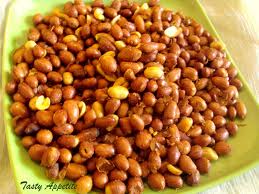
    They have been around quite a long time and have become so common, people hardly notice their presence. They occur as plain salted, sprinkled with spices and coated with a tinge of lemon or as small pieces in odd shapes, deftly concealed under layers of yummy, crunchy chocolate, their taste easily identifiable. According to records, peanuts have been a very tasty part in mankind and have evolved along with them, although not in terms of appearance, but on the basis of usage. They can be used plain salted as an excellent snack, spiced for use as a good substitute for popcorn, or roasted to perfect conditions to make a masterpiece among chocolates.  Peanuts have not changed through history, but their ways of eating have transformed a lot.

    History of peanuts

    peanut12


    Peanuts have been believed to have first grown in the Brazilian forests. Finds have proved the existence of these nuts in the form of pottery-paintings. Even during those days, the appearance of these nuts hasn’t changed much and even today, they grow under the ground as tubular plants. They have been found to be rich in fats and proteins, which were both essential for general body metabolism and development. Their conditions for cultivating and their simplicity to cook them made them immensely popular and a huge success throughout the world.  The wildest types of peanuts are still exported in large numbers even today from the countries of Bolivia, Paraguay and Brazil and hence, these places have been thought to be the birthplace of peanuts. Their history can be traced back to the Peruvian civilizations, where they were an important offering to the gods during ceremonies, rituals and sacrifices. Even the Egyptians were found to give importance to this nut, by burying them along with their dead. They thought that these foods often helped the dead in their afterlife.  From the civilization of Peru, it slowly spread to Spain, and to other parts of Central America. However, the mass migration of peanuts worldwide was because of the European civilization, which contributed greatly to the popularity of these nuts. The Europeans first discovered peanuts in Brazil. The Portugal brought it to their homeland and later passed it on to the Philippines and West Africa. Thus, peanuts slowly found their way into every nook and cranny of almost everyone in the world. However, it was not after the 1930’s that people switched the use of peanuts from cattle feed to human food. During the voyages of the African slaves to America, peanuts served as a staple food.

    India produces about 6.23 million metric tonne of peanuts every year and is one of the largest producer and exporter.

    Groundnut superiority!

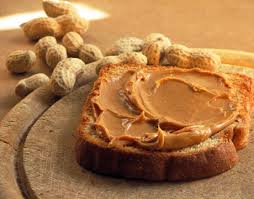
    They are also known as groundnuts .One of the best advantages of peanuts which make them so easy to grow is their nature to grow best by the use of the “crop-rotation” technique. In this technique, after the cultivation and harvest of particular plants are done and the soil, almost exhausted off its nutrients, another plant is grown, which, in addition to making use of the remaining nutrients, also replenishes the soil of the lost nitrates. Groundnuts, belonging to the tubular-type plants that grow underground, act as a good source of nitrate replenishing agent. Also, their rough, outer shells prevents them from most attacks by moisture and bacteria and hence were found to be the best sources of food for the armies and during long travels. As time passed, the combination of peanut and butter in a semi-solid or gel type proved to be a tasty idea and immediately struck a chord with the people. Thus, was born, one of the most famous foods ever made by man- the peanut butter jelly.

    peanut1

    In the 19th century, it was discovered that peanuts could protect decaying teeth and a physician in St.louis, made a paste of peanut, with a tinge of butter and fed to the people with bad teeth. Soon, this idea spread to all parts of the world like a wildfire and serial and confectionary companies realized this to be their window to the larger market. They adopted the basic idea and made changes of their own to it. While some added more butter to make it taste delicious, others churned it to give it a smoother, richer texture and feel, while the rest, roasted it to the perfect temperature to give the jam, a crunchy taste. One of the most common uses of peanuts is in the manufacture of peanut oil. This is found to have a relatively higher smoke point and a milder flavor. Also, it is healthier than saturated fats as it is monosaturated. Their shelf life is longer and they are resistant to rancidity. Peanut oil is very common in the Indian sub-continent, as Indian foods have been found to use oil more than any other country in the world.

    In addition to using peanuts as oil, they are ground to a fine powdery state to give, peanut flour. It has been found to have high protein content and is used as a flavor enhancer in many dishes. Also, peanut flour is gluten-free and low in fat content and hence, a perfect choice of flour for the diet consciousness.  Dry roasted peanuts are very famous in the American sub-continent where they are produced in large numbers and packed in hermetically sealed pouches and sold in thousands daily. These make the perfect snack while watching a movie or a game with friends and family. Peanuts are otherwise steamed or boiled in pressure cookers making them an ideal snack during cold or rainy seasons. This type of dish is very common especially in the southern parts of India.

    peanut4


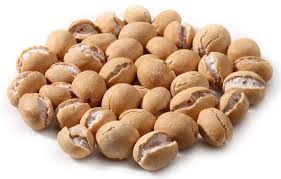
    In countries like Israel, peanuts are mixed with sesame oil, lecithin, and are roasted to perfection. They are then coated with a layer of salt or sugar and sold in the markets as snacks.

    Nuts about them!!!

    The market and trade of peanuts throughout the world have become easier and faster. As a result of this, it has reached people in almost all niches of life more than any other food has. Naturally, there are many ways that one can eat it. It has been found that there are over 300 ways or 300 recipes that one can make using peanuts.

    Although it is a very popular and easily affordable snack, there are some who are highly allergic to it. This symptom is most commonly found in the American continent. One of the reasons for his allergy is because of the lack of sufficient digestive juices to break down and digest the nut. They have been found to take a longer time to digest and the taste lingers long after consumption. One of the most important benefits of groundnuts, though, is their ability to act as natural anti-oxidants, keeping the heart healthy. Truly, peanuts indeed occupy the top positions when it comes to snacks. Now that is what’s called, groundnut superiority.

  • All about Red wine

    All about Red wine

    It is often said that bread and wine completes one’s supper. Though bread, a solid food, satisfies our hunger, our stomach is more like a churning machine, digesting food and supplying the body with the required nutrients and so, in addition to the digestive juices it secretes; it does need a little extra lubricant at times, to completely break the food down. Wine, when taken in measured quantities along with food, does the trick. There are various types of wines that man has discovered and created. However, the wines containing a larger proportion of alcohol content along with the other ingredients which makes a wine, perfect, affects our health.  Red wine, however, boasts of various positive benefits and thus, stands out.

    history of wine
    red wine

    Manufacture- A brief description:

    It all starts in a vine yard growing black grapes.  The freshest and the best ones are carefully hand-picked and are then sent to a receiver. True to the fact that a perfect wine is certified by its taste, the raw grapes are carefully de-stemmed, washed and the leaves, removed. This is then processed, which includes crushing to completely squeeze the juice out. It is this juice which gives the wine its blood-red colour and its royal taste. The skins of these fruits are however retained and the pulp is stored in a large vessel and is allowed to ferment.

    wine-fermentation
    wine-fermentation


    This is the most important process in wine-making.  Suitable quantities of yeast and water are added for proper fermentation and the proportion is maintained throughout the process without any change. This is vital to maintain the richness of the wine. Then, tannin is also added to stabilize the red colour and also to prevent the wine from rotting by the process of oxidation. The addition of yeast naturally produces alcohol during fermentation. This is increased a little more by heating to a moderate temperature. However, the alcohol content in red wine is much lesser when compared to other types of wines, which makes it more like a health drink. Once the wine is finally made, it is packed and sent to shops which finally reach our shelves.

    Benefits:

    It is not just a myth that the best wines are the one’s which have lived for many years. The time of storage of wines is directly linked to its quality. In other words, the older the wine is, the richer and better it is. This is because of the chemical reactions which take place as the wine ages. Its taste improves and the colour becomes richer and the density of the wine, thicker.

    Red wine is a natural source of anti-oxidants. These compounds make it possible to rinse out the toxins from the body. The anti-oxidants are present in the form of phenols commonly found in the grapes of dark colors. Accumulation of oxidants in our body leads to clogging of the arteries and may also lead to the growth of cancerous tumours. The practice of drinking wine with food dates back and can be found in almost every ancient culture .

    It is still practiced today in many parts of the world. In the days of yore, it was a common belief that wine was the drink of the gods and drinking it would not only boost one’s health, but that it would also bring one, closer to god. Today, research has shown that red wine actually acts as an appetizer. It stimulates the glands in the stomach responsible for secretion of digestive juices and thus aids in the process of digestion. It was found that food was more easily broken down into the component proteins and energy and that these were more easily assimilated by the body. It was also found that red wine boosted the body’s immune system and thus kept illness at bay. Accumulation of oxidants in the body may also lead to a condition called macular degeneration, where the muscles in the eyes (the ciliary muscles) loosen, causing temporary or permanent vision impairment or formation of cataract. Red wine has the properties to decelerate macular degeneration. Also, it has proved to be an excellent supplement along with food for those wishing to diet and lose flab. Weight loss is found to occur when one consumes red wine along with one’s daily meal. This is explained by the fact that red wine retards the time for the stomach to get empty, thus making the person to eat less.  The feeling of hunger that one normally experiences is by a particular gland in the brain that is stimulated. Consumption of red wine during meals slows down the time taken for the signals to reach the brain, thus resulting in the person to think that he/she is full. As the food intake decreases, weight is automatically managed. Red wine is also found to protect an individual from major heart diseases, by increasing the body’s “good” cholesterol level, which is vital to keep the heart healthy. It eases the flow of blood through the veins and thus prevents unnecessary clotting of blood or blockages in the arteries. Slight changes in the blood pressure are also observed. The “bad” cholesterol levels are found to decrease in quantity, thus preventing blockages of the main arteries by fats hardened. The risk of heart attacks is thus reduced when red wine is consumed in measured quantities.

    The other side of it:-

    However, it has been found that wine, red wine or alcoholic wine is highly addictive and may lead to adverse effects if taken too much. Even though red wine contains very little amount of alcohol in it, over consumption can lead to lack of judgment or difficulty in speech. Also, the natural phenols present in the black grapes, is found to increase the risk of cancer if taken continuously or in large amounts. The cancerous agents may also leads to formation of ulcers in the stomach as it disrupts the natural breakdown of food by the digestive enzymes. Over dose of red wine may also lead to mental breakdown in the form of loss in memory either temporarily or permanently ( a condition called dementia). The risk of Alzheimer’s is found to increase a notch higher when the concentration of alcohol in the body increases. Alcohol, which is a known natural pain suppressor, may also dull the senses when one consumes it often. So it ultimately makes a person lethargic and slows one’s response to stimuli. The ability to grasp things and to think creatively is greatly reduced by an increase in the alcohol level in the body.