Tag: halwa

  • Winter Delights: Gajar Ka Halwa and Gujarati Meethi Kadhi

    Winter Delights: Gajar Ka Halwa and Gujarati Meethi Kadhi

    The frigid winter months of December and January are bearing down upon us, and all anyone wants to do right now is to curl up cosily in their heavy blankets and eat tons of hot, rich food. The harsh weather right now makes the human body crave even more for nutrition, and it is not surprising that some of the best dishes that we know of taste the best in these freezing days. Compared to the year long summer heat in most parts of India, we have a greater appetite for food in the winters. It is in these few weeks that we look with great curiosity towards our kitchens, and wait impatiently for our mothers to emerge out of the area with some aromatic and delicious gastronomic work. Be it sarson ka saag and makke di roti, gulab jamuns, hot coffee, or ginger tea, all of these dishes and more never fail to tickle our tastebuds during the cold season. Here are two easy to cook recipes, one for gajar ka halwa, and the other for Gujarati meethi kadhi, in case you ever need a hot fix for your winter woes.


    Gajar ka Halwa
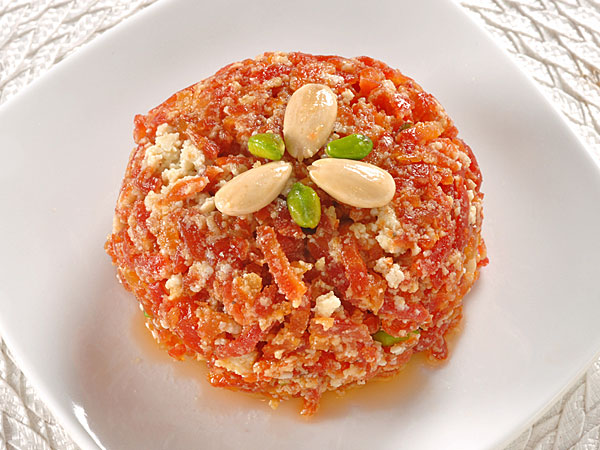
    Also known as gajrela, gajar ka gajrela, and carrot halwa, gajar ka halwa is a South Asian dessert pudding and a winter delicacy in north Indian states. Made by cooking grated carrots, milk, ghee (clarified butter), and nuts together, this dessert is eaten on many festive occasions in both India and Pakistan apart from being available round the year in most sweetmeat shops of the subcontinent. A completely vegetarian preparation, gajar ka halwa is a dish enjoyed by all people, and has been subject to a number of culinary innovations, some of which are a vegan version, red velvet gajar ka halwa, similarly flavoured doughnuts topped with the same, a cream cheese and halwa combination which is the desi counterpart to the carrot cheesecake.

    The dish dates back to the ancient Mughal times, and the word “halwa”, meaning sweet, is itself derived from the Arabic language. Gajar translates to carrot from the Hindi language. While gajar ka halwa may seem like a particularly difficult preparation to pull off in the kitchen, it is actually not. Although the ingredients do take a considerable amount of time to cook fully, gajar ka halwa is a very easy recipe to make provided you have all the cooking materials you need ready at your disposal.

    Recipe (serves three-four)

    Ingredients required:

    • 1 kg of grated carrots, cleaned and peeled beforehand
    • 100 ml of condensed milk
    • Cleaned, preferably roasted, dried fruits and nuts (cashews, almonds, raisins, pistachios)
    • ½ kg of khoya
    • 4 big tablespoons of desi ghee (clarified butter)
    • 1 cup of castor sugar
    • 4 cups of milk
    • Cardamom seeds. Alternatively, you can use one-third of a teaspoon of cardamom powder.

    The steps needed:

    • Put the shredded carrots and milk in a heavy-bottomed pan or a wok on medium flame.
    • Let the carrots soak in the milk to a considerable amount. Let the mixture turn a rich golden-orange colour.
    • Add condensed milk and cardamom and stir for some time.
    • When it is cooked halfway, add khoya, after putting aside some for garnishing. Also add ghee.
    • Once everything is properly mixed, add sugar on a low flame. Take note of the flame and ensure that the sugar does not caramelize in the halwa.
    • Add dried fruits from above, garnish with a little khoya, and serve in bowls. You can also add varakh (the silver food foil) for an aesthetic look.


    Gujarati Meethi Kadhi
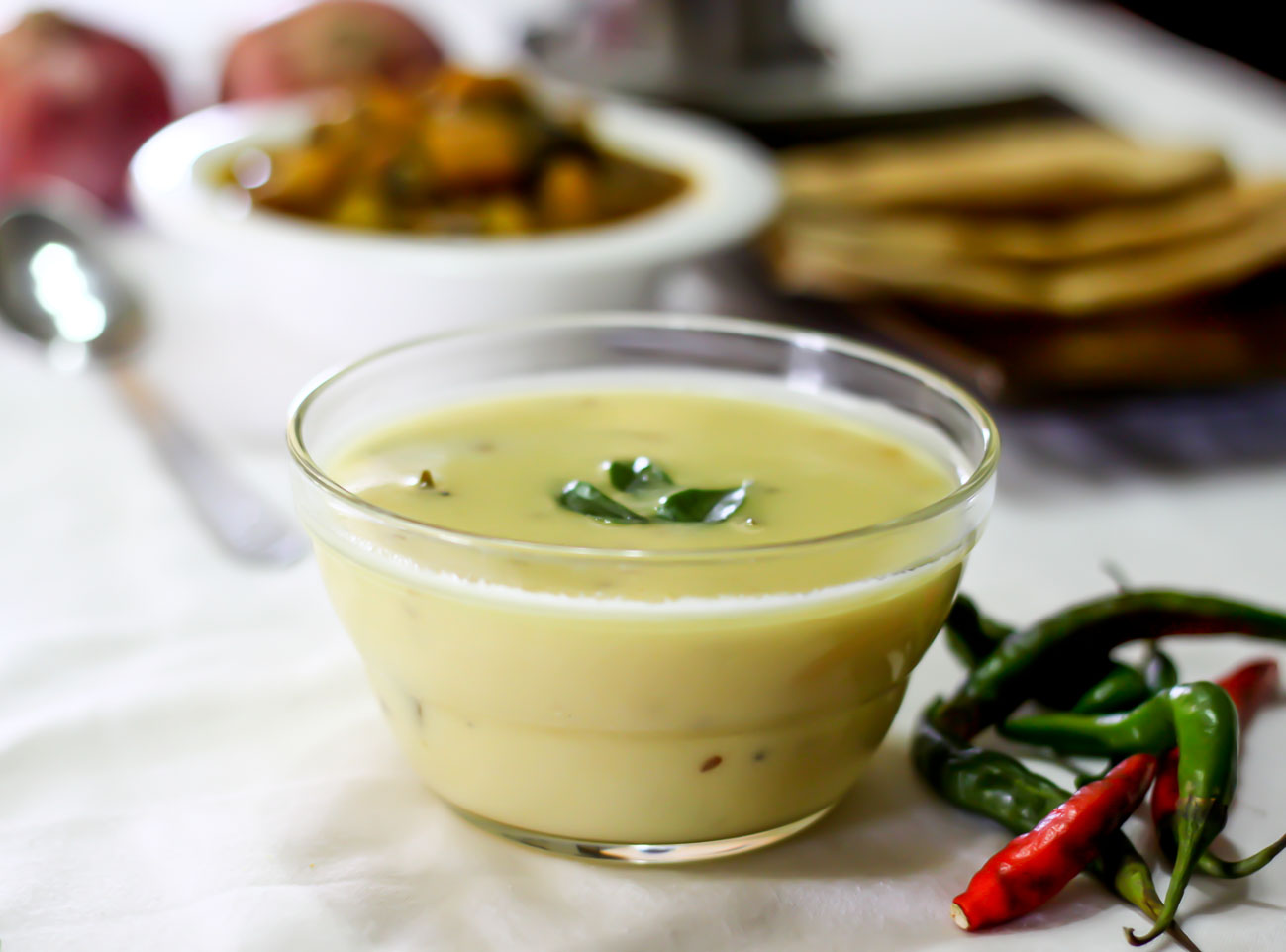
    Kadhi is an Indian main course dish of desert origins, and was first made in Rajasthan. However, it quickly grew popular with people from other regions of India, and now has different variants according to different states, belonging to Punjab, the Sindh area of Pakistan, Gujarat, Uttar Pradesh, and Maharashtra. While it is a dish best served hot, kadhi itself is derived from curd and yoghurt, which ironically taste best when cold.

    Gujarati cuisine is known for its sweetness, and its kadhi carries the same quality. In our household, Gujarati meethi (Hindi for “sweet”) kadhi is a winter favourite, and its recipe has passed on from one generation to the next, with a few modifications by each. This dish can be had as a drink, and since we already have the salty kadhi of Uttar Pradesh, complimented with besan pakodas (fillets), Gujarati meethi kadhi is served as a hot and sweet beverage mostly in the evenings. It hardly takes much time and effort to prepare, and is the perfect heavy snack that will fill your stomach in between meals. All you need is a bowl, a saucepan, and some easily accessible cooking materials, and a time period of fifteen minutes to spare.

    Recipe (serves two)

    Ingredients required:

    • 2 big tablespoons of besan (gram flour)
    • 1½ glasses of curd
    • Half a cup of water
    • Turmeric
    • Curry leaves
    • Asafoetida
    • A teaspoon of rai (mustard seeds)
    • Two teaspoons of sugar
    • Salt
    • Whole, dried red chillies
    • 2 teaspoons of oil

    The steps needed:

    • Add the besan and curd slowly in a big bowl, stirring slowly so that no lumps are formed.
    • Put a pinch of turmeric in this mixture. Also, add salt according to taste.
    • In a separate pan, put oil and let it heat on a slow flame.
    • To the hot oil, add rai, a little hint of asafoetida, and some curry leaves. Be careful to not let the curry leaves blacken completely because of excessive heat.
    • On a low flame, add red chillies to the pan.
    • Take the besan and curd paste, and pour it in the pan.
    • Stir continuously so that no lumps are formed while keeping the pan on a medium flame.
    • Let the mixture boil, and then pour it in glasses.
    • Top with a few curry leaves and serve hot.
  • Unparalleled Taste of the Awadhi Cuisine

    Unparalleled Taste of the Awadhi Cuisine

    The sumptuous meal that the city of Awadh has to offer is nothing short of magical. The royalty and the grandeur of it will leave you mesmerized. It will leave an everlasting impression on your taste buds. You’ll always want some more of it. You will get the Nawabi feel in every bite you take. Such is the magnificence of the Awadhi cuisine. The city is notably famous for the dum style of cooking. It originated in Awadh, or the present day Lucknow. This style of cooking goes back to the 16th century. The food is cooked over a slow fire in a closed container.  With the increased time of cooking, the entire flavour of the spices and herbs used, is released into the dish. This gives a distinct taste to the Awadhi cuisine. Sometimes cooking dough is used to seal the mouth of the container in which the dish is being prepared. This leads to aroma of the spices to seep through the dough, thus providing it with a flavour.

    Dumpukht

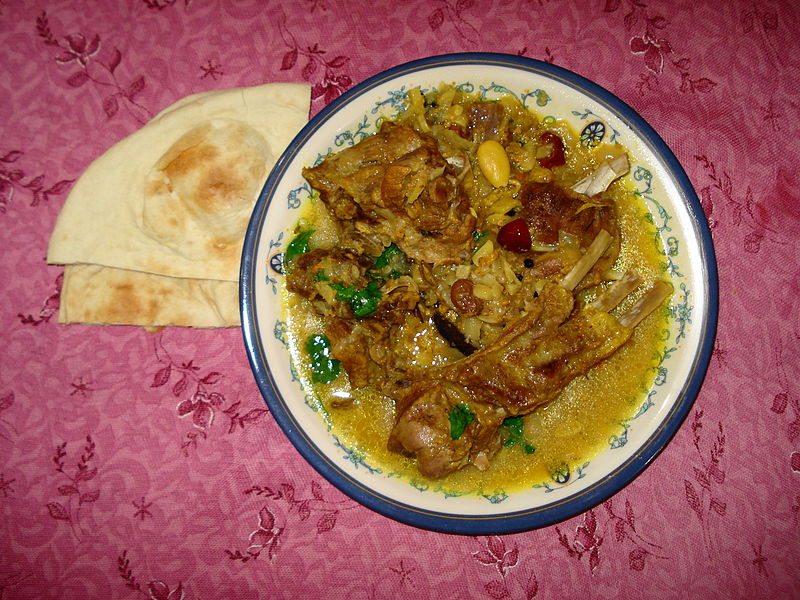
    Awadhi Dumpukht

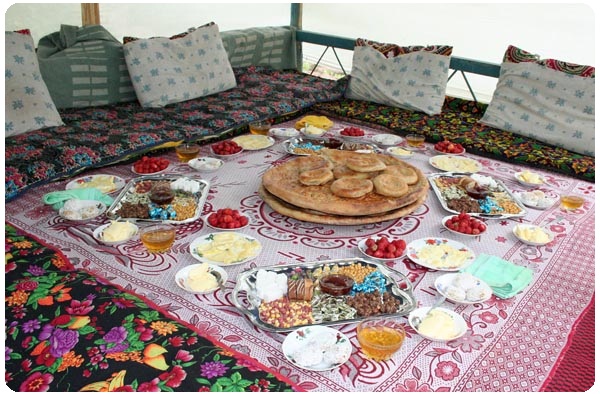
    Not just the style of cooking, but also the way in which the meal is spread out elaborately, will make your mouth water. The presentation of the food has a royal touch to it. When you sit down to eat, it will appear to you that you’re a king and everyone on the table is waiting for you to take the first bite! In the olden times, the spread was laid out in the centre and it was necessary for everyone to sit around and eat together. Such a spread is known as Dastarkhwan. It consists of a variety of dishes like kebabs, korma, biryani, roomali rotis, nihari kulchas, sheermal etc. Such practices can still be observed around the city. The menu of the Dastarkhwan changes with the seasons.

    Dastarkhan

    A typical example of the spread: Dastarkhwan

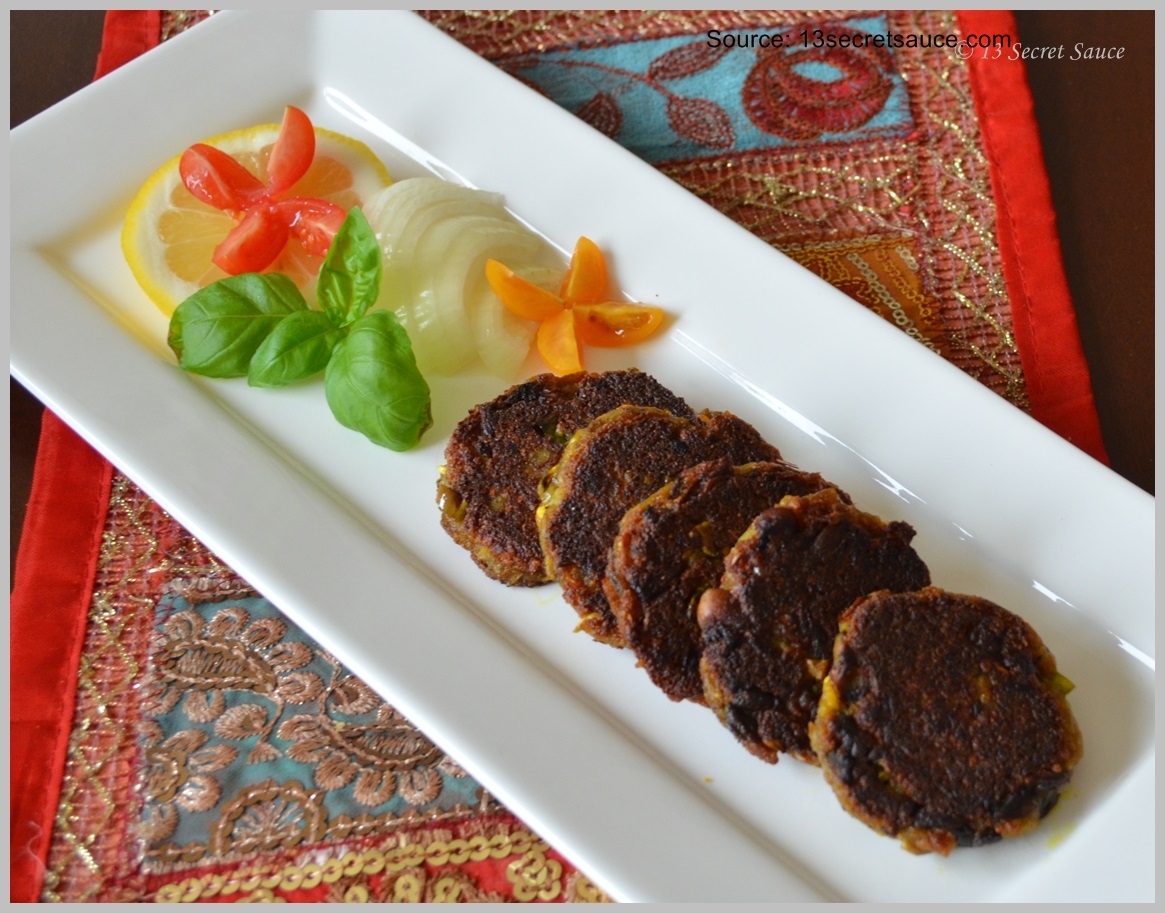
    The menu of winters is very different from that of spring. In winters, heat giving, rich meat is preferred. During spring, various kinds of crispy snacks are prepared. Similarly during summers, a variety of dishes and desserts are prepared using raw mangoes. Sewaiyan is another sweet dish which can be often seen in the houses during the pious months of Ramzan. The dishes that form a major part of the Awadhi platter are Kebabs, Biryani, Korma and a variety of breads. Kebab is the identity and pride of Lucknow. Kebabs are made from meat, fish or vegetables that are grilled on a chulha. Lucknow boasts a wide variety of Kebabs, namely, Kakori Kebabs, Seekh Kebabs, Galawat ke Kebabs, Ghutwa Kebabs, Shami Kebabs, and Boti Kebabs etc. Vegetarian kebabs are made using yam, kidney beans, jackfruit (kathal), peas and taro (arbi). The most famous shop for kebabs in Lucknow is the Tunde Ke Kabab. It is a 100 year old shop which serves the best kebabs in the city. It boasts of using 160 different homemade spices which is their trade secret. The who’s who of Bollywood come all the way to try out these kebabs. The list of the fans is endless. So many of the Bollywood biggies fly out the khansamas (cooks) from here to cater their functions. This is surely a feat to be proud of.

    Galouti kebab.png

    Galouti Kebabs

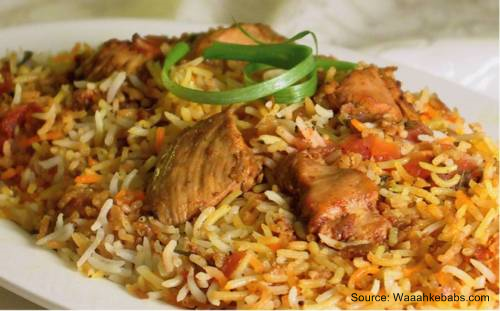
    Lakhnawi biryani is another dish that is famous worldwide. It is a special preparation of basmati rice with species, curd, meat and/or vegetables. It uses the method of layering. The meat and the rice are cooked separately. They are then layered on top of each other and baked. Vegetarian biryani is also very common.
    Biryani

    Biryani

    The various types of breads that are eaten are chapatis, pooris, parathas, naans, roomali roti, tandoori roti and sheermal (sweet naan). Korma is the curry used which is made by braising meat or vegetables in case of navratan korma. The Awadhi desserts have the perfect kind of sweetness and taste that is required after a meal. Kulfi is one such dessert which is famous among the masses. It is made from rich milk and cream. Prakash Ki Mashhoor Kulfi is the oldest known shop for kulfi. They offer the best falooda kulfi in the city. A type of halwa which is specially prepared in Lucknow is the sohan halwa.  Different cereals like gram flour, sooji, wheat etc. are used to prepare halwa. It is heavily garnished with rich dry fruits. The barfi, jalebi and rabri are some other desserts to look up to. After the meal, consumption of Paan is quite common. An evening without Paan is thought to be incomplete. Paan is made from betel leaf which is garnished with saffron, spices, silver foils and other condiments.

    Falooda Kulfi

    Falooda Kulfi By Prakaksh ki Mashoor Kulfi

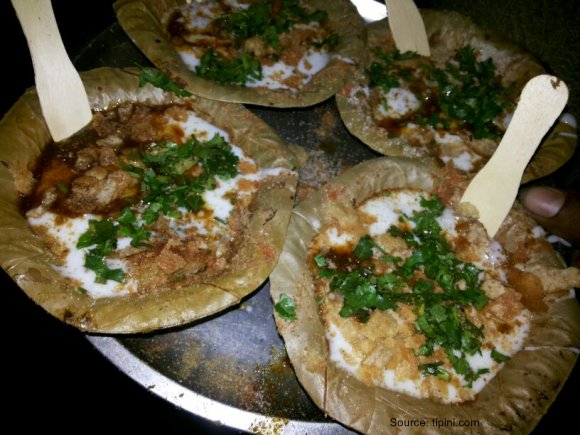
    After boasting of the nawabi Awadhi cuisine, Lucknow still has a lot to show off in terms of street food. Be it Idris ki biryani or Shukla ki Chaat, be it Rahim ke Kulchey Nihari or Royal Café k paani-batashe, every single one of them is worth a try. And when you try them once, you’re surely going to be a fan. The originality of the taste will hold you spellbound. Paapdi chaat, tikki chaat, dahi bada, paani poori, sev poori etc., the names are enough to tickle your taste buds. Where else can you get eight different types of paani for the paani puri at one stall? That’s right, in this magical city which has a cuisine so quintessential!

    Shukla ki Chaat 

    Aaloo Tikki by Shukla ki Chaat

    The mouth-watering delicacies that this culture offers are just too many to name. Piece of advice, go try out some Awadhi cuisine, you are missing out on a lot. Trust me, you’ll be thankful!