Tag: Maggi

  • Magic Maggi!

    Magic Maggi!

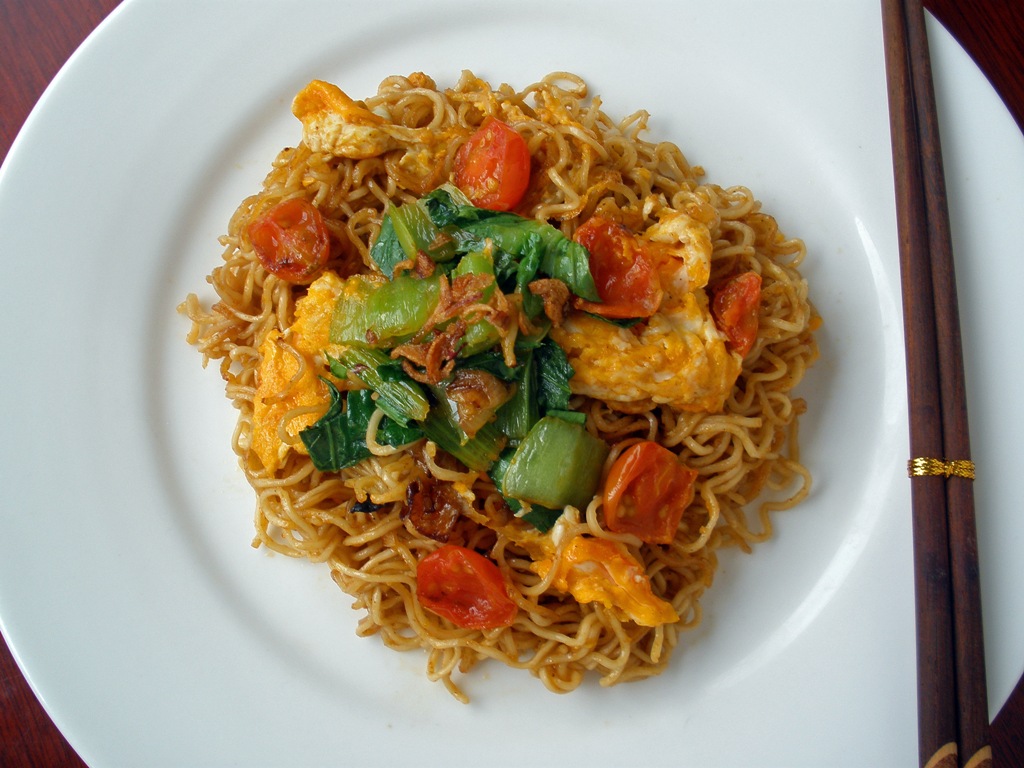
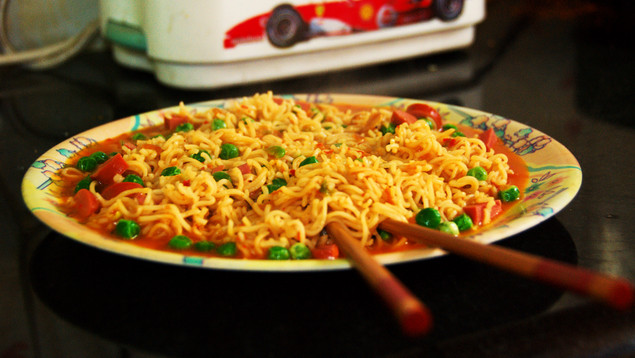
    Ma’s ‘magic maggi’. I remember getting it to school for lunch almost every week and my friends would finish it off in less than 5 minutes. They loved my mother’s ‘magic maggi’. I did too.  She fried it instead of simply boiling it. She gave a whole new dimension to it.

    Ma added eggs (a must), experimented with different veggies depending on the season of the year, sometimes threw in a couple of shredded chicken, tossed and turned the divine mixture – a bit of this, a bit of that – and voila the favourite food of the household was ready to be devoured.

    One needs to know the craft of making maggi and simply fall in love with its art.

    My sister-in-law loves maggi – quoting her, “During my college years, I had to stay in a hostel and you know how hostel food is. Yuck! I basically learnt to eat maggi for breakfast, lunch AND dinner. My Life Saviour! “

    She taught me a couple of tricks and different recipes to turn a simple maggi into a restaurant quality dish (almost). And being the awesome person that I am, I would love to share those recipes with you. We will start with something yummy yet simple, and move on to the dishes which require a bit more skill to make. So, here goes:

    Cheese and Corn Maggi
    maggi cheese and corn

    What you will need: 2 packets of Magic Masala Maggi, 2 and a half cups of Mozzarella Cheese (shredded), ½ cup boiled corn, 1 and a ½ cup of water, 2 tbsp butter, salt

    How to make it: Boil water in a pan. Break the cakes of Maggi into smaller bits. Add the Maggi. Stir gently. Add the Masala (spice mix). Stir. Add the boiled corn and some salt to the Maggi. Grease a baking tray with some butter and keep it aside. Once the Maggi is half-cooked, pour them in the baking tray. Add the shredded Mozzarella on top. Sprinkle the top with more cheese and herbs. Place the baking tray in a preheated oven (around 120 degree Celsius) for 5-6 minutes. Once the cheese melts, your Cheese and Corn Maggi should be ready.

    Maggi Sandwich
     maggi sandwich

    What you will need: 1 packet Magic Masala Maggi,2 toasted bread slices, 1cheese slice (cut them into small pieces),1/2 tsporegano (dried),1/2 tsp dry red chilli flakes

    How to make it: Boil 1 cup of water in a pan. Break the cakes of Maggi into smaller bits. Add the Maggi. Stir gently. Add the Masala (spice mix). Cook on a medium flame for 3 to 4 minutes. Stir occasionally.Add cheese, oregano and chilli flakes. Stir and mix well. Divide the mixture into 2 equal portions.Spread a portion of the mixture on each toasted bread slice.Serve hot.

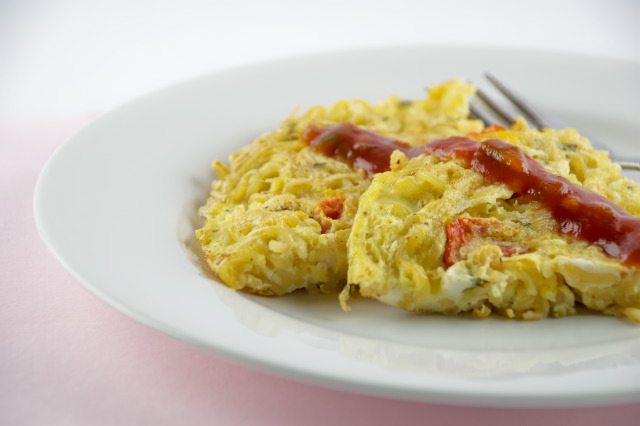
    Veg Maggi Omlette
     maggi veg omelette

    What you will need: 1 small packet of Magic Masala Maggi, 1 cup besan, 1 cup semolina, 3 or 4 green chillies,  1/2 cup sprouted whole green gram, a bunch of coriander leaves, 1 medium sized onion, 1 tsp ginger and garlic paste,  1/4 cup carrot (grated), 1/4 cup coconut (grated , 1/2 cup olive oil , pinch of salt

    How to make it: Boil 2 cups of water in a pan. Break the cakes of Maggi into smaller bits. Add the Maggi. Stir gently. Add the Masala (spice mix).  In a bowl, put besan, semolina, salt, ginger garlic paste. Mix well.Take the Maggi, onions, grated carrot, grated coconut, coriander and green chillies and dip them in the besan mixture. Mix thoroughly. Add water to balance the consistency of the batter. Dab some oil on a pan. Heat it. Put some batter in the pan in the shape of an omlette. Add green gram sprouts over the omlette. Cover the pan with the lid and allow it to simmer. After 3 minutes, flip the omlette. Cook for another 2 minutes. Serve hot.

    Maggi Noodle Salad
    Maggi Noodle Salad

    What you will need: 1 packet of Magic Masala Maggi, 1 cucumber (diced), 1 onion (finely chopped), 1 tomato (finely chopped), 1 capsicum (diced), ½ tsp cumin (powdered), 3 garlic cloves, 2 pinches of rock salt, one pinch of salt, ½ tsp sugar (powdered), ¼ tsp chat Masala, 1 green chilli, a bunch of mint leaves (finely chopped), a bunch of coriander leaves (finely chopped)

    How to make it: Break the cakes of Maggi into smaller bits. Dry roast them in a pan until they are a soft brown colour. In a large bowl, mix vegetables such as, cucumber, tomato, capsicum and onion. Add crushed garlic, cloves and green chilli. Add rock salt, cumin, salt, chat masala, sugar. Mix well. Add the crushed roasted maggi noodles to the vegetable mix. Sprinkle some mint and coriander leaves on top. Serve immediately.

    The Maggi Magic does not end here. Obviously. Give it a northern twist. Add the southern zing. Spice it up. Or keep it simple. Listen to your heart. Put on your chef’s hat. Experiment with flavours and let your creation do the talking. Be the Maggi Chef. Be You.
  • Maggi… the most Loved !

    Maggi… the most Loved !

    maggi small-500x500

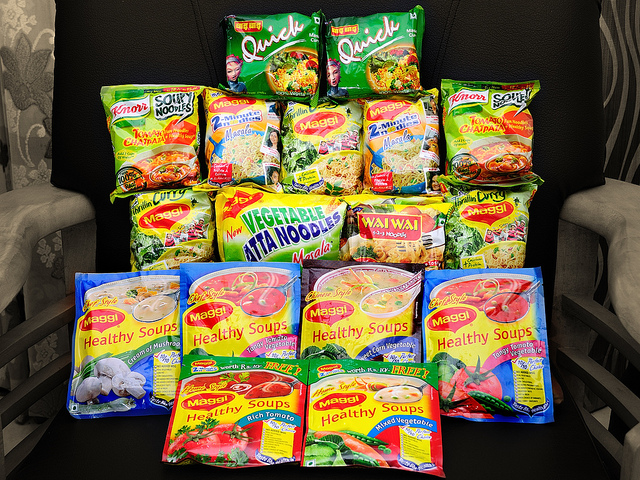
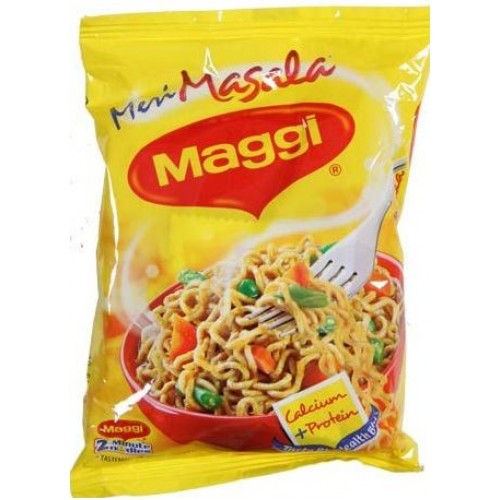
    Meri maggi… Are you also among the ones to munch on maggi whenever you feel hungry and is it the most lovable snack of yours and yes the instant one? Well, I know Maggi is something, actually popular throughout the world to have for at anytime of day and can be made in versatile ways. Let’s know some facts about maggi apart from its taste and the two-minute mechanism. Maggi is an international brand owned by Nestle since 1947, of instant soups, ketchups, sauces, seasonings and instant noodles. Advertised as 2 minute noodles since 1982, maggi instant noodles are very popular in India and Malaysia having 39% market in Malaysia and 60% in India. Initially, maggi was developed only keeping kids and children in mind, but gradually it took a remarkable place in lives of almost all age groups. Nestle has never thought that their product’s popularity will go viral in this way and their breakfast product will be so acceptable. Though it was launched long time back, people in research and development has never slowed down and they still try hard to make maggi tastier and more flavourful and have other variants of maggi also, while also enhancing the health benefits of products. Now, you have got so many options of maggi ranging from cuppa mania, atta noodles, vegetable maggi and many more.

    4735830730_9b49f91546_z

    In this era, almost every child has their own version of “Maggi Memories”, that you had maggi at this place, while cycling trip or in your hostel at midnight or some road trip or maggi being a savior. It has been a true childhood buddy, something that mom lets us eat in place of something that we ought to eat from outside otherwise. Even small kids can make it alone. What maggi endorses that it has calcium, protein “Taste Bhi, Health Bhi” makes it all the more attractive.

    But there may arise a question, if maggi is really this healthy, Afterall the main ingredient being refined flour (maida). Maggi is easily approachable and convenient and tastier, but nutrition is completely different thing which maggi doesn’t seem to deliever much. The nutritionist Mrs. Shweta Iyenger says,” Children are addicted to maggi due to high salt content in the tastemaker. Excessive salt intake can lead to the water retention in the body.” The other problem with it is obviously; maida. Eating it on daily basis can be a great disadvantage for you and your health in such ways;

    09f07697c1fabc63733d3de20797cdbd

    It is a Junk food: The name says it all, it’s a junk food so obviously can do no good to health. Many people are prone to it because of their busy lives. This fast and quick maggi noodles have been marked as junk food by health experts. It contains maida, which is a combination of fat, carbohydrate and sugar and is made from left over husk of wheat. The noodles being difficult to digest poses many problems to body and is thus reckoned as junk food.

    Negligible nutritional value: Though, the maggi wrapper says ‘Taste bhi, Health bhi’ but trust me, if we take the findings seriously, there is no nutritional value in it because the main ingredient being refined flour. They don’t contain and vitamins and minerals and there claim of noodles being rich in calcium or any other minerals. Also, it contains high amount of sodium which is really for people suffering from high blood pressure conditions and can also cause hyper tension and heart problems. All this is not at all good for school going children. So, all this proves maggi to be just food for leisure, to be consumed few times in a week and must be avoided the frequent intakes by everyone as it can serve no good.

    High calories: The maggi noodles have high calorie content and thus can lead to obesity. One regular packet of maggi contains 400 calories. Such a high volume of calories is a worrisome issue and is not good for heart patients and even increase cholesterol and even the children who consume it daily just as a snack in their evenings and mornings are at a risk of getting obesity.

    Problem of Dehydration: people who have regular intake of maggi has reported problems of dehydration. As these are highly sticky noodles can stick within your organs and cause serious problems like loose motions and loss of excessive water from your body. All this is really scary and just demands to call off maggi for some time from your life if you consume it in excessive manner.

    Maggi, the all time favorite food, though it is not recommended to completely abandon it but limit must be maintained in its intake. It should not be consumed daily because the nutrition, a proper food can provide is irreplaceable. There should be mindful eating in case of maggi. Just hav it as a snack and not a food item and it has no food value. As you don’t have French fries due to the fear of getting obese because of that potato thing, try to stay far from maggi due to maida thing. It will be good for you only in the long run.

    Healthy Eating. Happy life.

  • Maggi Mania

    Maggi Mania

    On Mondays, they serve Matar Paneer in the mess. But as my friend down the hall puts it, it is better described as “water Paneer” – a few peas and an even fewer pieced of cottage cheese swimming in a curry that’s all but water. Needless to spell out, you walk out of the mess feeling less than full. Two hours on, you fall prey to crazy hunger pangs. The solution? Why, a packet of Maggi noodles of course!

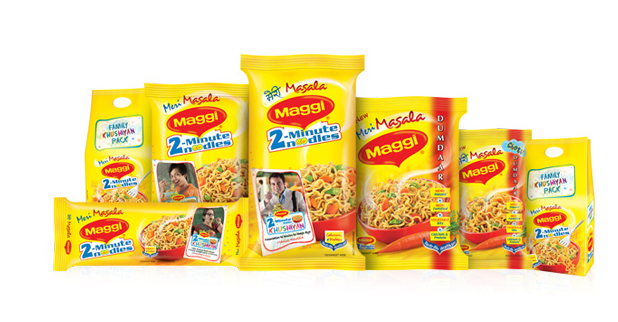
    If you have ever lived in a hostel in the last thirty years or so, the story above must be only too familiar. But the massive popularity of Maggi noodles is definitely not confined within the poster-clad walls of college hostels. If you live in India, you probably have slurped on a plateful at some point or another. So much so, that everyone has a “Maggi memory” – and the manufactures have very cleverly tapped into this nostalgia factor associated with Maggi noodles as a major marketing strategy. In fact, in India, “Maggi” is synonymous with instant noodles, despite the existence of other brands. According to a report by Euromonitor, Nestle has 60% of the instant noodle market in India with Maggi – the first instant noodle introduced in the country. Marketed as a “2 Minute Noodles” since 1982, the manufacturers seem to have stumbled upon a highly saleable hit formula back then and never looked back.

    At the same time, despite being arguably one of India’s most popular food brands, Maggi has repeatedly come under the scanner for being unhealthy. What, then, accounts for the unparalleled popularity of Maggi noodles in India? And what is the controversy all about? Let’s explore.

    Maggi noodles


    The popularity:

    Why are Maggi noodles as popular as they are? Perhaps, the most common-sensical answer is the extreme convenience they guarantee. They are very inexpensive – available in packets worth 10 and 5. This implies that almost everyone, from broke college students to budget-conscious moms, can afford to put a few packets of Maggi on their shopping list – and pretty frequently. Besides, Maggi noodles are as easy to cook as can be. If you were a child of the ‘80s, the ‘90s, or the ‘00s (yes – three generations), chances are Maggi was the first thing you were ever actually allowed to cook. Late night hunger pangs at home? Campsite snack-craving? Maggi is your one simple answer.

    Effective marketing is another factor that accounts for the unprecedented popularity of Maggi noodles in India.

    “Mummy Bhookh lagi!”

    “Bas 2 minute!”

    These signature Maggi lines are indeed unforgettable. They highlight how easy it is to cook the noodles, the fact that they are seldom ready in 2 minutes notwithstanding. Here’s another slogan you’ll remember: “Taste Bhi, Health Bhi”. This one’s aimed at putting a mom’s misgivings about exposing her child to a potentially unhealthy food at rest. A food that your child loves – and you will indeed have a hard time finding a child whodoes not love Maggi noodles – and it promises health? That’s the dream!

    Perhaps, another reason why Maggi noodles have a wide appeal is the fact that they take well to the addition of different ingredients – veggies, chicken, cheese, butter, ketchup, etc. In fact, there are entire road-side joints selling only different types of Maggi noodles – Masala Maggi, Cheese Maggi, Butter Maggi, Chicken Maggi, Egg Maggi, Spicy Maggi – you name it, they have it.

    OLYMPUS DIGITAL CAMERA

    The Controversy:

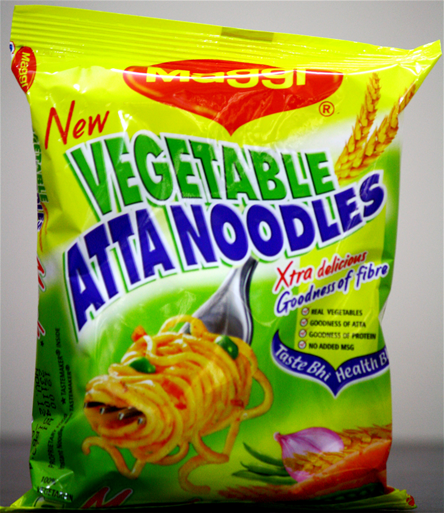
    You have probably received emails and SMSes warning you against the possible wax content of Maggi noodles. Yes, the same ones that probably also told you about Kurkure containing plastic and Coke being an excellent toilet cleaner, etc. While viral mass messages are rarely to be taken at face value, food critics have also condemned Maggi noodles for being low in nutrition and high in salt, MSG, and fat. It was to counter this ‘unhealthy’ tag that the brand marketers quickly came up with the “Taste Bhi Health Bhi” slogan. They also came up with the new Maggi Atta noodles. With a healthy green packaging and new tags –  with the “goodness of three rotis” and “with vegetables” – these noodles were obviously aimed at driving home a more-than-subliminal message about better health.

    Maggi Atta Noodles

    So, on the one hand there are all these allegations about the noodles being fried in wax and animal fat before packaging and apprehensions about unhealthy packaging that causes the plastic to leach into the actual food, and on the other, there is the manufacturer’s claim that it’s all good and safe and healthy. What do we as consumers believe?

    The Middle-way:

    While we may never know the full truth, it probably lies somewhere in between the scare-mongering and the slick marketing. The Atta noodles may be slightly better than the maida ones, but three desiccated peas and five shreds of dehydrated carrots in the Tastemaker hardly count for “added vegetables”. Nutritionally there isn’t much that Maggi noodles can offer, unless you decide to mix in your own ingredients (like fresh vegetables or protein-rich lean meats). Also, now that the ‘No MSG’ claim is prominently made on the packet, know that it is highly plausible that other substitutes are used for it – such as excess salt. There is also the claim that the product has “goodness of protein/calcium/fibre” – know that it perhaps has just enough to let the manufacturers legally make that claim.

    So while you may love Maggi – for reasons of taste, nostalgia, or convenience, don’t let yourself be fooled into thinking that it is anything close to as healthy as the marketing chaps would have you believe. But that does not mean that you have to buy into the charges of toxicity made by the alarmists either. Like so many other things in life, moderation is the key. An occasional Maggi meal really doesn’t need to make you feel guilty.