Tag: religion

  • Spirituality And Music

    Spirituality And Music

    Every religion or spiritual faith depends on music to create an atmosphere of spiritual longing, beauty and refinement. This kind of music can be ennoble and inspire our spirit to divine aspirations and express our longing to live a more spiritually conscious life in the physical world.
    images

    No matter what religion, physical setting , or language in which a religious service or spiritual meeting may be conducted, spiritual music is used in the same way and for the same reasons throughout religious and spiritual groups throughout the world. The greatest musical compositions are those that celebrate God, building a melodious bridge between the human being and the divine spirit. Music that speak of God’s glory or expresses our deepest spiritual aspirations can elevate and center our attention in the divine.

    The Greek philosophers, Plato, Plotinus and Pythagoras, in their writings described the existence of a universal harmony called ” The Music Of The Spheres”. They believed that the planets, as they orbited throughout the universe, produced a perfect music that could be heard by the enlightened beings. Those whose lives were lived in the harmony with divine laws could ” tune in” to this universal music. Many philosophers since then have also theorized about the music of the spheres.

    In the 17th century, the great English playwright, William Shakespeare, made reference to the Music Of The Spheres in his romantic comedy, The Merchant Of Venice. At the end of the play, one of the main character laments that this divine music can only be heard by ” immortal souls “, but those who are constrained inside the human body are unable to hear it.
    images (4)

    Religion has two aspects, an inner or esoteric side and an outer or exoteric side. The inner or esoteric side of religion is the aspect that deals with the spiritual experience in which our soul recognizes itself and reunites with the God. It is reached through inner spiritual practices such as meditation, prayer, or inverting one’s attention within to contact the divine. By going within through meditation we can connect with the inner light and sound, or celestial music of God, called the word, naam, the light and sound current, harmony of harmonies, nad, jyoti and sruti, kalma or voice of silence. It is a music or sound that emanates from God and is not made by any instrument. It is the vibratory principle of God that created all religions of creation, this physical world, all life, including the human beings, and resounds within each being. To listen to it requires inner spiritual practices such as meditation.

    Each religion also has an outer or exoteric side, which involves rites, rituals, outer services, outer recitation of prayers, and various customs. Outer music is often an integral part of the outer aspect of any religion. It forms the part of the many of the customs, religious services, or rites and rituals in various religions. It also has the effect of inspiring, creating a spiritual mood, and helping to focus attention on spiritual goals.
    images (1)

    Devotional music is always performed in Hindu, Jain, Sikh and Buddhist religious services. Such music is considered an offering to the divine, or to deities, Gods and goddesses- an offering that is believed to summon the grace and protection of God or any chosen deity. These hymns are called shabds or shabads, bhajans and kirtan are integral to private and group worship. Another aspect of Eastern spiritual music, in Hinduism, Sikhism, Jainism and Buddhism particularly, is the role of mantras. A mantra is a ” sacred utterance”- a syllable, a word, or a verse considered to posses great mystical power. Some mantras are intoned out loud and others are repeated silently, by the ” tongue of the thought”. Some mantras have no apparent meaning in terms of the human language and yet are thought to carry a deep spiritual significance. Some mantras are repeated until they produce a trans-like state. Those mantras that are considered to be  the most powerful are those given verbally by a spiritual master.
    images (2)

    Buddhist music revolves around the Buddhist traditions. In general, Buddhist monks encourage music related to one’s spiritual exercises. Buddhist chants, especially Tibetan chants are famous for producing vocal overtones and harmonies with the use of drums.

    Christian spiritual music covers a vast field. During a religious service, spiritual hymns from the Bible are sung. There are also original songs that are sung and accompanied by the music written on the christian themes.

    images (3)

    The holy scripture in the Islam is the Koran. Music in Islam centers mostly on the chanting of the Koran in the forms of call to prayer, pilgrimage chants, eulogy chants of praise, and other noble themes. The Koran is written in Arabic, so the reading of the scriptures, done in the melodious way, is also in Arabic.

    Music of the Sikhs is largely devotional, often accompanied by the harmonium and tablas. These hymns prepare one for meditation and simran.
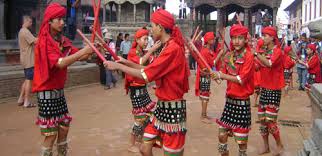
  • Culture of Nepal

    Culture of Nepal

    Nepal has a unique culture which  has evolved since many years.It’s culture is greatly influenced by religion, architecture, music and literature.In Nepal, we can find various temples, churches, monasteries and many other religious buildings.There are many ethic groups, tribal and social groups in Nepal.Different type of festivals and practices are seen in Nepal.Nepal got its name from the Kathmandu valley as the founder of the  nation established a capital there in eighteenth century itself.

    Culture of Nepal
    Culture of Nepal

    Geography:

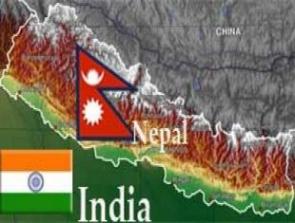
    The country is spread over an area of 381,200 square kilometers.It is surrounded by three Indian states on south, west and east whereas the north border is shared by Tibet.Most of the Himalayan mountain ranges are in Nepal, including the Mt.Everest.The country is divided into three horizontal zones which are: the high mountains, the lush central hills, and the flat region with low water levels in the south.The trade factor has influenced the ethnic groups.There are more than thirty six ethnic groups and over fifty languages in Nepal.According to 1977 ,the population of Nepal is nearly 22.6 million.As the birth rate is gradually increasing in rural areas, people are migrated  to cities.This lead to over population in Kathmandu, at present it is holding more than seven Lakh people.

    Geography of Nepal
    Geography of Nepal

    Ethnic relations:

    Nepal consists of many cultural, racial, linguistic groups, that are mainly divided into three categories.Indo Napelese, Tibeto Nepalese and Indigenous Nepalese.Since centuries, they were practicing Hinduism and people speak Indo-Aryan languages.Most of these people settle in lower hills and river valleys.The second type is Tibeto Nepalese who have generally Mongolian features and they speak Tibeto Burmese languages.These people reside in hills and mountain areas.Different groups under Tibeto Nepalese practice Buddhism, Hinduism.Later these ethnic groups fell into single caste hierarchy.The first and the top most caste is Hindus, second is Matwalis who are generally alcohol drinking people.Bottom are the untouchable Hindu castes.Higher caste people buy lands and enjoy political and economic privileges whereas lower caste people are far from these opportunities.Untouchable castes were not permitted to own land.We know that the caste system is illegal, but it has not disappeared in many places.Most of the posts like civil services, army and police were selected by the higher caste people only.

    Different Ethnic relations of Nepal
    Different Ethnic relations of Nepal

     Food:

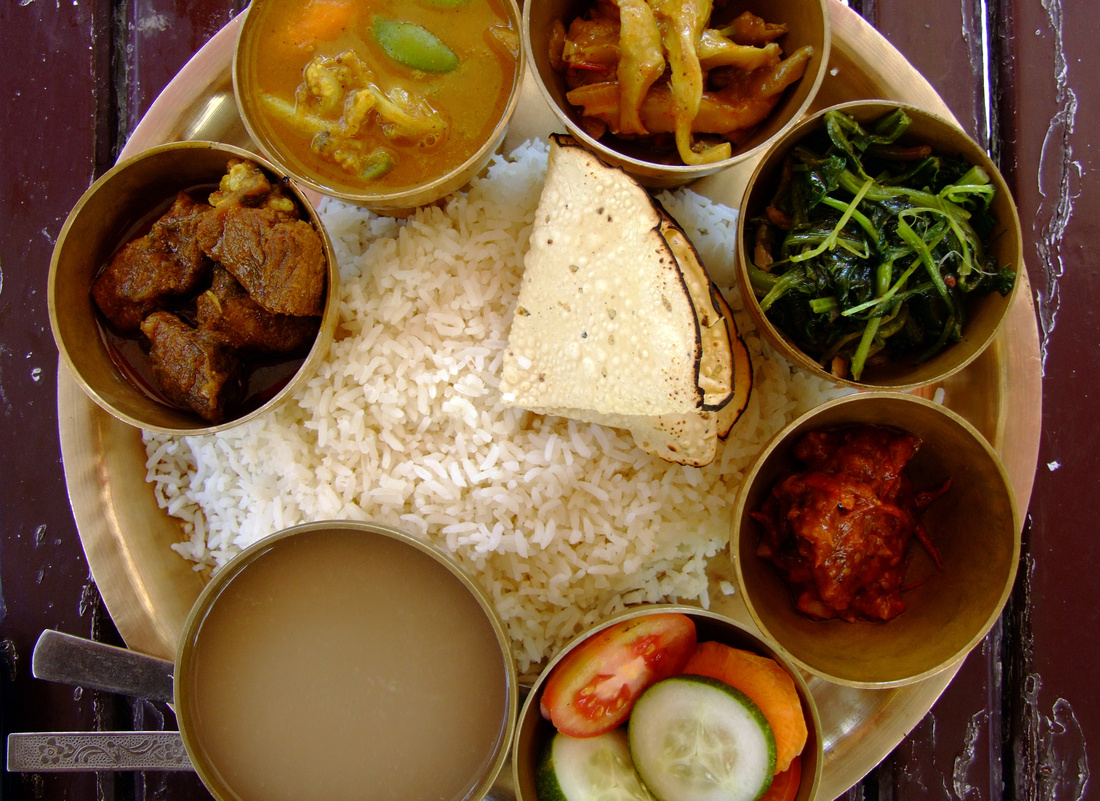
    Nepalese enjoy different food items that are generally hot, spicy and nutritious.Newari and Thakali cuisines are the original taste of Nepal.Generally Nepalese cooking style is influenced by both Indian cuisine and Tibetan cuisine.Nepalese staple food is daal bhat tarkari.Most of the tourists who visit Nepal like to have hot and spicy meat curries that are cooked in their style.The meal includes different varieties of food items and also pickle that is made out of fruits or vegetables are served.Most families eat from individual plates while seated on the floor.It is more common to eat food with hands rather than utensils.In Nepal, high caste people only eat vegetarian and do not take alcohol whereas other caste people may drink alcohol, eat pork and even beef.People of higher caste do not show interest to eat food that is prepared by strangers.

    Food of Nepal
    Food of Nepal

    Industries:

    In Nepal there was no industrial development till the middle of the twentieth century.The industrial development is accomplished with the help of countries like India, China and Soviet Union.With the abundant availability of minerals, industrial development is made possible in Nepal.The major industries focused on was of  jute, tea and sugar.Manufacturing of brick, tiles, construction materials, paper making, vegetable oil extraction, sugar refining and many more industries are established in Nepal.

    Industrial textile factory
    Industrial textile factory

    Trade:

    The trade of Nepal mostly depends on the neighboring countries -India and China.Major of the goods are imported from India.Goods transportation is limited by the terrain.Nepal import gold, machinery and other equipment.In Nepal although roads and modern transport are available, much of the country goods are transported by porters and pack animals.Generally this type of transport is used where landslides and flooding is more.Not only imports ,but Nepal is also famous for exports of goods like carpets, clothing, leather goods, jute, and grain.Apart from these, Nepal is famous for tourism which is another primary export.

    Nepal trade with the neighboring countries
    Nepal trade with the neighboring countries

    Medicine and health care:

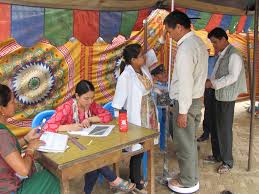
    Nepal suffers from malnutrition, infant mortality,respiratory and intestinal diseases.In Nepal, average expectation of life span is fifty seven years.Being very poor , unhygienic and lack of health care, the hospitals are available only in urban areas.But these hospitals are also poorly equipped and unhygienic.Few medicines are also not available in rural areas.There are few western hospitals, but the poor cannot afford them because of high costs.People still believe in religious practitioners and they approach them if they have any health problems.Hence, few people look at Ayurvedic medicines.As they think that illness is caused due to the imbalance of body hormones, they try to balance them using proper diet.Recently malaria is eradicated in Nepal.So at present, health development is concentrated on immunization, birth control, and basic medical care.

    Health care services in Nepal
    Health care services in Nepal
  • Culture of Mizoram

    Culture of Mizoram

    Mizoram is one of the north-eastern sate of India.Aizawl is the capital city of Mizoram.The name Mizoram is derived from the words “Mi which means people” , “Zo which means hill” and “Ram which means land”.Thus the name itself conveys that it is a land of hill people.It has three bordering states namely Tripura, Assam and Manipur.The state acts as a border for two countries Bangladesh and Myanmar.According to census 2011 the state had a population of about 10,91,014.It is one of the least populous state in the country.It covers an area of approximately 21,087 square kilometer.Before 1987 it is an integral part of Assam.After 1987 it it formed as a 23rd state in India.In Mizoram most of the people are tribal and many of them belong to Christianity.Most of the people took Christianity during 20th century.It is one of the three states in India that is having majority of the people are Christians.People of Mizoram practice shifting cultivation and the crop yields are poor.In recent years, the jhum farming practices are being replaced with horticulture and bamboo products industry.About 20% of the Mizoram’s population lives below poverty line.

    villagers of Mizoram
    Villagers of Mizoram

    Geography:

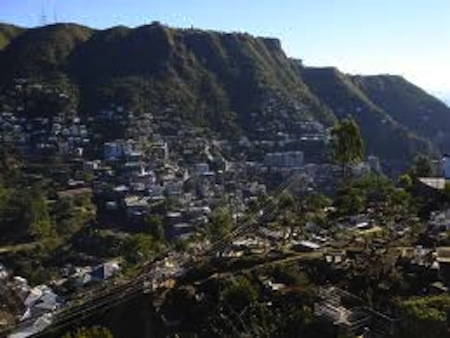
    MIzoram consists number of hills and valleys.Being on the hills and valleys all the villages are located on the hills itself.About 21 hills are present with an average height of 1000 meters above the sea level.The highest peak in Mizoram is Phawngpui Tlang with a height of 7,250 feet.Most of the area is covered by forests and only eight percent is land.The sate is having the highest risk of getting earthquakes compared to other parts of India.

    Geography of Mizoram villages
    Geography of Mizoram villages

    Climate:

    Mizoram experiences very low temperatures in any season.During summer the temperature ranges from 20 to 29 °C and in winter temperatures ranges from 7 to 22 °C.In monsoons this region experiences heavy rainfall.The average rainfall in Mizoram is about 254 cm in moist tropical to moist sub-tropical regions.Whereas in the capital city Aizawl it is about 215 cm.It is better for the tourists to visit during November to March.

    Most of the time the climate is cool
    Most of the time the climate is cool

    Ethic groups:

    Different types of groups and languages can be seen in Mizoram.As most of the people are tribal, they are known as hill men.Bengali’s who had settled in Mizoram during 16th century are called as Kukis.In Mizoram there are many tribes who are further divided into clans.These clans are again are sub divided into sub-clans.

    Ethic groups of Mizoram
    Ethic groups of Mizoram

    Languages:

    Mizo is the important language widely used by the local people of Mizoram.Along with that English is used in education and other interactions officially.Duhlian dialect was the first language of Mizoram and later it is known as Mizo.It is a mixture of few other languages.The Christian missionaries resided in Mizoram developed the Mizo script.The Writing of this language is a combination of the Roman script and Hunterian transliteration methodology with prominent traces of a phonetics based spelling system.In Mizo there are 25 alphabets they are A, AW, B, CH, D, E, F, G, NG, H, I, J, K, L, M, N, O, P, R, S, T, Ṭ, U, V, Z.In this state Hindi is a compulsory subject for all the students up to eighth standard.Besides Mizo Nepali is also spoken by many of the Nepali immigrants in the state.

    Religion:

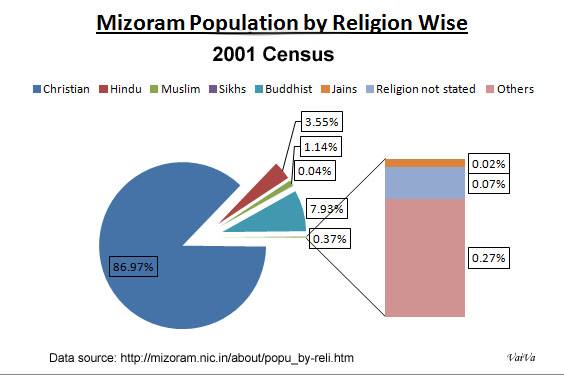
    About 87 % of the population in Mizoram are Christians.Among the population of Mizoram, the largest minority is Buddhists.They are followed by Hindus.Apart from them several thousands of people who have converted to Judaism.Muslims in the state are about 1.1% .The remaining 3,000 people in Mizoram state belongs to Sikhs, Jains and other religions.

    Mizoram religion wise population
    Mizoram religion wise population

    Industries:

    In bringing the advancement to the industries Mizoram faces few difficulties.The main drawback for the industries is lack of proper transport.The other problems that are faced by the state are shortage of electricity, capital, telecommunication and export market access. Mizoram is having two industrial estates and one software technology, that is being established in Mizoram university.The state government has acquired 127 acres of land in Khawnuam for development of the Indo-Myanmar border trade township.

    There are two industrial sectors in Mizoram
    There are two industrial sectors in Mizoram

    Educational Infrastructure:

    The christian missionaries have established the primary school in Aizawl during the year 1898.The state has higher literacy rates than average literacy rates for India.In India Mizoram is having the second highest literacy rate.There were about 3,894 schools in Mizoram.There were many educational institutions establishment under the umbrella of the Ministry of Education.It also includes universities, colleges and other institutions.In the Mizoram university there are 29 undergraduate departments including 2 professional institutions affiliated with the university.

    Mizoram university
    Mizoram university

    Traditional festivals:

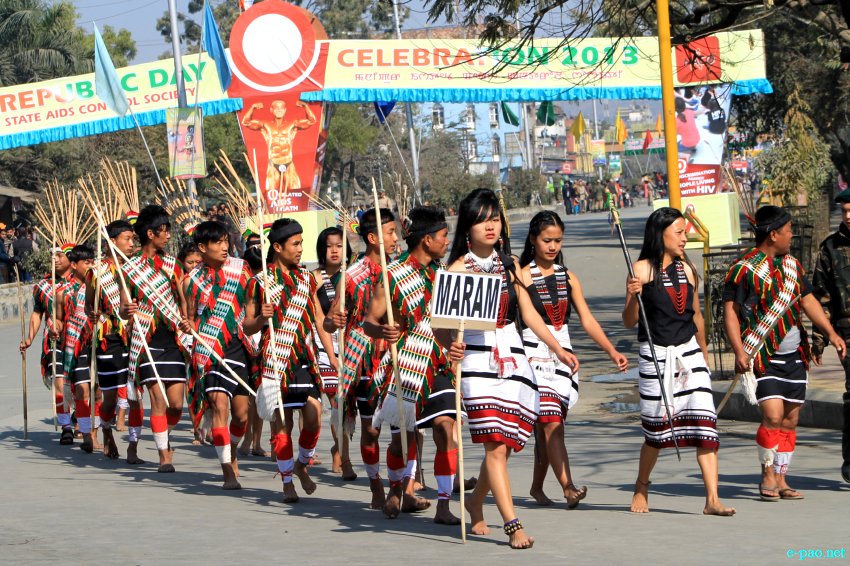
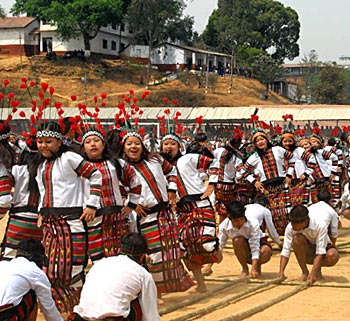
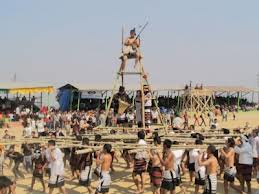
    The traditional festivals in Mizoram are celebrated around various stages of jhum cultivation.In the local language they are call it as Kut.There were many major and minor Kuts such as Chapchar Kut, Thalfavang Kut, Mimi Kut and Pawl Kut.The Chapchar Kut was the festival of spring.Thalfavang Kut was the festival celebrated after the completion of weeding of the jhum crop fields.Mimi Kut was the festival dedicated to ancestors after first maize crop was collected.Pawl Kut is celebrated at the end of harvest i.e., at the start of new year.Later after the Christianity has spread these festivals have slowly vanished.

    Traditional festivals of Mizoram
    Traditional festivals of Mizoram