Tag: street food

  • Street Food Made Easy Part-2

    Street Food Made Easy Part-2

    Okay, for those of you who have read the previous edition to this article, I am not going to bother with an explanation regarding what street food is, how it tastes, what are its benefits and the like. However, for those who are reading about street food for the first time, this article will surely prove to be a pleasant surprise. And dare I say both for the tummy and the mind!

    Street food can be of various types. It can include heavy or light food items as per your hunger pangs. Well, in this article, I would like to satisfy those among you who prefer the former category.

    Often while returning from work or from school or from college, you find your stomach rumbling. Really loudly! Well, what to do? You know that having food from the street is not really the safest bet for your health. But what is the alternative then? It is really simple actually. Just make those street food items which you have been craving for God know how many days at your own home! Follow the recipes given below to get the most satisfying and sumptuous results with the utmost amount of ease on your part. I assure you that you will not be disappointed in the least. Simply read on to find out more!

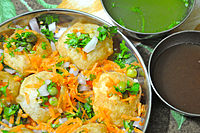
    (1) Dahi Papdi Chaat:
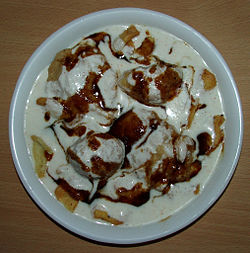
    PapriChaat


    Dahi Papdi Chaat is a very popular north Indian (Maharashtrian) street food item. Chaat essentially means a Hindi word which literally means ‘to lick’. It is now used to describe a whole range of savoury snacks and fast food items across Indian and in some places abroad as well. Papdi refers to the special crisp fried dough wafers which are made in a special way by using refined white flour and oil (mustard usually) as the main ingredients.

    Ingredients:

    •Crisp Papdis: 24.
    •Whisked Yoghurt: 1 ½ cups.
    •Salt: According to taste.
    •Sugar: 1 tbsp.
    •Boiled and Chopped Potatoes: 2 medium sized.
    •Blanched Sprouted Green Gram: ½ cup.
    •Red Chilli-Garlic Chutney: ¼ cup.
    •Green Chutney: ½ cup.
    •Sweet Tamarind Chutney: ¼ cup.
    •Roasted Cumin Powder: 1 tsp.
    •Chaat Masala: ½ tsp.
    •Red Chilli Powder: ½ tsp.
    •Fresh Coriander Leaves: According to use.
    •Sev: As required.
    •Peeled Pomegranate (Anar): 2 tbsp.

    Preparation:

    •Add salt and sugar to the yogurt and whisk further till it has arrived at a smooth consistency. Keep the mixture in the refrigerator till use. In the meantime, arrange the Papdis on a medium-sized plate.
    •Place some of the chopped potatoes over each Papdi. Over that, put some boiled sprouted moong. Drizzle a little Red Chilli-Garlic Chutney, Green Chutney and Sweet Tamarind Chutney over those.
    •Sprinkle cumin powder, chaat masala, a little red chilli powder and salt. Top it all up with the chilled yogurt mixture.
    •Drizzle some more of the Sweet Tamarind Chutney and the Red Chilli-Garlic Chutney. Then add the coriander leaves, Sev and the pomegranate pearls on top at the end.
    •Serve immediately.

    Preparation Time: 15-20 minutes.

    Serves 4.

    (2) Pav Bhaji:
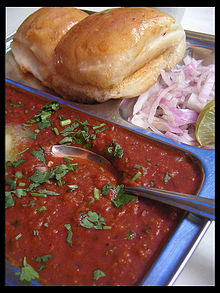
    PavBhaji

    Pav Bhaji is an exceedingly popular Maharashtrian street food item that traditionally originated in the Mumbai cuisine. While the Bhaji part of the dish is a traditional Indian name for a vegetable dish, the Pav or Pau or Pao was the Portuguese word for bread (small rolls). Pav Bhaji is native to Mumbai and has now become popular in almost all the metropolitan areas in India especially in those of central and western Indian states such as Gujarat and Karnataka.

    Ingredients:

    •Turmeric Powder: ¼ tsp.
    •Pav Bhaji Masala Powder: 1 ½ tbsp.
    •Ginger Garlic Paste: 1 ½ tbsp.
    •Finely Chopped Tomatoes: 3 medium sized.
    •Tomato Sauce (Optional): 4 tbsp.
    •Lemon Juice (Optional): 1-2 tsp.
    •Finely Chopped Onion for Garnishing (Optional): 1 small sized.
    •Coriander Leaves for Garnishing: According to requirement.
    •Butter/Oil for Bhaji: 1 tbsp.
    •Additional Butter for Pav: According to requirement.
    •Pav (Buns): 6 to 8.

    Preparation:

    •Add the butter or oil in a pan and heat it up. Add the chopped onions and fry till they turn translucent. Then, add the ginger garlic paste and fry till it gets fragrant.
    •Add the chopped tomatoes, the turmeric powder and then sprinkle salt. Continue to fry till the tomatoes turn soft and mushy.
    •Add the chilli powder, extra salt and Pav Bhaji Masala powder. Mix well and fry for another 2 minutes.
    •Pour water so that it is just enough to cover the vegetables.
    •Add the coriander leaves. Mix well and mash the curry if you desire a smooth Bhaji.
    •Cook till the consistency of the gravy becomes thick.
    •Slit the Pav buns horizontally leaving one edge intact.
    •Heat the butter on a pan. Open the buns and toast it for a minute or two. If you like to make it spicier, sprinkle some Pav Bhaji Masala Powder on the inner side.
    •Garnish with onions and serve either hot or warm.

    Preparation Time: 25-30 minutes.

    Serves 3-4.

    So, there you are. I am sure that you must be salivating by now if you have read through the recipes and seen the pictures. Especially if you are on an empty stomach! Well, then. Why the wait up? Go to the kitchen and start cooking. Nobody is going to stop you from devouring these delicious food items once you are done!

    Happy snacking folks!
  • Street Food Made Easy Part-1

    Street Food Made Easy Part-1

    They say that temptation was the fall of man. Well, the Bible does anyway. It relates how Eve and Adam gave in to temptation when falsely lured by the Serpent and how they bit into the Forbidden Fruit. Despite being forbidden repeatedly, their greed was predominant. And this small act of temptation signified their fall from God’s grace and the Garden of Eden.
    One such similar temptation when it comes to matters of the tummy is street food. It is not gastronomically appropriate for you. In fact, it is every dietitian’s worst nightmare come true. You are highly aware of all these solid facts! And yet you simply can’t stay away from these forbidden delights out on the city streets. Street food just has that certain appeal of its own, you say.
    Now what comes to your mind immediately when upon hearing the term ‘street food’? Unhealthy? Unhygienic? Inappropriate? Unfit? Unpalatable? Well, there might just be a way to avoid all of the above terms and also savour these tempting snacks at the same time. How you ask? It’s impossible no longer. If you have the recipe to spruce up these cookeries at hand, you no longer have to worry about any outside problem at all. You can be your own cook and your own critic at the same time! And all while enjoying the comforts of your own little kitchen at home as well. Don’t worry even if you are a beginner at cooking. All you have to do is simply follow the recipes and voila! There you go. You have those mouth-watering and irresistible food items right in front of you all just waiting to be devoured. Now then, we ask. How much better could it honestly get?
    What’s the wait up for then? Simply make a note of the following recipes. Close your eyes. And just let your taste buds do the talking. Read on to find out more!

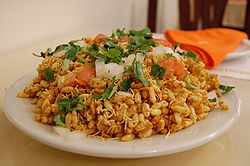
    (1) Bhelpuri:

    Bhelpuri

    Bhelpuri is a savoury Indian snack, and also a variant of chaat. It is typically prepared by mixing together appropriate portions of puffed rice, vegetables and a tangy tamarind sauce along with a few other ingredients on the side. Bhelpuri is thought to have originated in Gujarat. Thereafter, because of its immense popularity among the mass, the recipe has spread to many other parts of India where it has been modified accordingly to suit local food availability. The Kolkata variant of Bhelpuri is called Jhaal Muri (meaning “spicy puffed rice “). A native Mysore variant of Bhelpuri is known as Churumuri or Churmuri in Bangalore.

    Ingredients:

    • Puffed Rice: 2 cups.
    • Sev: ½ cup.
    • Roasted Masala Chana Dal: ¼ cup.
    • Roasted Peanuts: ¼ cup.
    • Crisp Puris: 8.
    • Onion: 1 medium sized.
    • Potatoes: 2 medium sized.
    • Green Chillies: 2-3
    • Salt: According to taste.
    • Green Chutney: ¼ cup.
    • Tamarind Chutney: ½ cup.
    • Garlic and Red Chilli Chutney: 2 tbsp.
    • Lemon Juice: 1 tsp.
    • Fresh Coriander Leaves: 10-15.

    Preparation:

    •Peel the onion and chop finely. Clean the coriander leaves, wash well and then chop finely. Boil the potatoes. Then peel and cut into bite sized pieces. Wash and remove stems. Then finely chop the green chillies.
    •Combine the puffed rice, onion, roasted masala chana dal, peanuts, potatoes, green chillies, half of the Sev and toss well in a big mixing bowl. Add four crushed puris and mix further. Add salt according to taste. Add the three chutneys as per your own taste and mix well. Add lemon juice and mix well.
    •Garnish with the chopped coriander leaves and the remaining Sev. Serve immediately along with the remaining puris to eat.

    Preparation Time: 12-15 minutes.

    Serves 4.

    (2) Panipuri:

    Panipuri

    Panipuri (also known as Golgappa, Pani ke Bataashe, Phuchka or Gupchup) is a popular street snack famous all over the countries of India, Pakistan, Bangladesh and Nepal. It basically consists of a round, hollow fried crispy puri which is filled with a mixture of flavored water (“pani”), tamarind chutney, chili, chaat masala, potato, onion and chickpeas. It is generally small enough to fit completely into one’s mouth in one go. The pleasure lies in being able to swallow it whole and thus, relish the small bite-sized snack as it is meant to be. It is an exceedingly popular street food dish especially in the regions of Mumbai, Kolkata, Delhi and Lucknow in India. The panipuri is said to have originated from the Magadha region of India.

    Ingredients:

    •Crisp Puffed Puris: 40.
    •Date and Tamarind Chutney: 1 ½ cups.

    For the filling:

    •Boiled Bean Sprouts: 1 cup.
    •Boiled Potatoes cut into small pieces: 2 big-sized.
    •Black Salt: According to taste.
    •Chaat Masala: 1 tsp.

    For Pani:

    •Fresh Coriander Leaves: 20-25.
    •Fresh Mint Leaves: 20-25.
    •Green Chilies: 5-6.
    •Panipuri Masala: 2 tbsp.
    •Dried Mint Powder: 12 tbsp.
    •Black Salt: According to taste.
    •Salt: According to taste.
    •Roasted Cumin Powder: ½ tbsp.
    •Lemon Juice: 3 tbsp.
    •Boondi: ¼ cup.
    •Dry Mango Powder: 2 tsp.

    Preparation:

    •To make the moong sprout filling, combine all the ingredients in a bowl, toss to mix well and set aside.
    •To make the pani, grind the coriander leaves , mint leaves and green chillies to a paste using water as required.
    •Transfer the coriander and mint paste into a large bowl, add panipuri masala, dry mango powder, black salt, salt, cumin powder and lemon juice and stir to mix well. Add six cups of water to the above mixture.
    •Stir to mix well and put to chill in the refrigerator. While serving, add boondi to the prepared pani and stir.
    •Take a puri, break a little of the crust, fill it up with a little moong and potato filling followed up by a half a tablespoon of sweet date and tamarind chutney each.
    •Dip the puri in the prepared pani and serve immediately. Similarly, prepare the remaining puris and serve.

    Preparation Time: 16-20 minutes.

    Serves 4.

    Well then, what are you waiting for? These delicious street food items are exceedingly simple to make. Moreover, you can vouch for the food hygiene yourself. We assure that they will surely leave you craving for more. And more.

    So, stop slacking! Get snacking!

  • Street Food

    Street Food

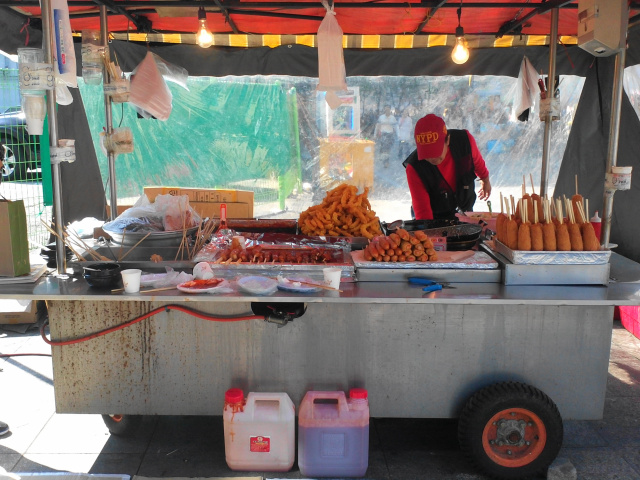
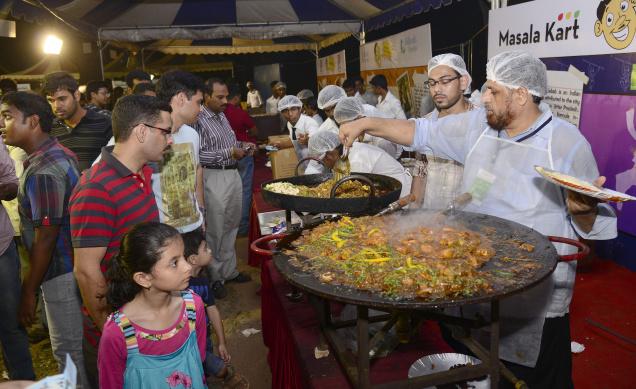
    In simple terms, street food can be defined as the food available in the streets. It’s basically ready-to-eat food which is prepared by local venders and then sold to the consumers. The business is carried out in a food truck or a cart where the food is prepared. Mostly regional in nature however there are a lot many venders who venture out into different cuisines in order to expand their market. Since the investment to start this business is comparatively less, the price of the food items is also cheap however we have no guarantee regarding the quality of the food. Many venders believe that quality matters a lot because if the food is tasty but not hygienic then the business might not run well and so in some cases special care is taken regarding safety and hygiene. Earlier street food was not so popular due to quality reasons and secondly people did not have the facility of bringing the kitchen out in the streets or having a mobile kitchen which can both cook and travel to different locations. However over the years lifestyle has changed and people are finding ways to do things in a quick and smart way. This formula was applied to food as well. Due to long working hours and busy schedules, people rely on street food and other fast food joints which relieve them from preparing food at home after work. Moreover with quality standards being established, faith in street food has improved over the years. Today people demand food for a number of reasons such as delicious food at cheap price or for many it’s a way of knowing what other cuisines have to offer while for others it’s an excuse to get holiday from the kitchen. People who look for convenience at cheap prices may not be concerned much about hygiene or sanitation. According to a study done in 2007 by the Food and Agricultural Organization, about 2.5 billion people consume street food every day.

    street food 1

    There is no proper evidence which tells us who or how the idea of street food was introduced however it’s found that street food was basically concentrated for the poor who did not have the proper facilities  for cooking for example in Rome. In china, street food was for the servants and the lower strata of the society. Wealthy households used to send their servants to buy street food for themselves while they ate rich home cooked food. Many of the African settlers made a living by selling street food in America. The products they sold ranged from cakes and biscuits to coffee, tea, soups and other light foods such as snacks. Venders when found a base in the society expanded their business and started offering food items such as grilled and fried beef, oysters and other meat items which attracted more people. French fries which had been introduced as a street food became very famous among the public and also started being offered in very well established hotels and restaurants. In Thailand Street food had not found its popularity until the 1960s when urbanization occurred rapidly and home cooked food was displaced with street food.

    street food 2

    The contribution done by these street venders was neglected or unnoticed by the government for a long time. However when a study was done it was found that in Indonesia about US$67 million was generated in the economy through street food sales alone while in Malaysia it was found to be about US$2.2 million per annum. Since all these revenues are earned by the vendors itself, it’s in a way helping the economy to be self sufficient. Being a part of the informal sector can be one reason why it was never given much importance because it was always viewed that the formal sector was the engine of growth of the economy however over the years planners have seen that with limited employment opportunities available in the formal sector along with high level of competition, the importance of informal sector is coming into the picture. There are many people who due to various economical or social backwardness, fail to get in the formal sector however find work easily in this industry. The International Labour Organization reveals that about 29 percent of the labour force is employed in street food industry where the vendors earn three to ten times more than the minimum wage rate. In many countries the monthly wages earned by these vendors is almost equal to the wages earned by people involved in the formal sector. Women participation has also increased in this business over the years with 90 percent increase in Philippines and 40 percent increase in Indonesia.

    street food

    With advantages such as delicious food at cheap rates, better employment opportunities, self- sufficiency, women participation etc, there are some disadvantages as well that follows. Contamination of food followed by the use of additives and colouring agents are some of the biggest issues associated with it. However study reveals that it is not the ingredients which go inside rather it is the quantity of these chemicals which we consume that matters. Moreover the water used in preparation of food also affects its quality. Therefore it is suggested that snacks which are fried and food which is hot is safe as they are consumed immediately and since it’s hot, kills most of the microorganisms. There are many other incidents which question the quality of food provided by these vendors for example in 2011, a Pani Puri seller in thane was filmed urinating into the container which was used to serve the consumers. Secondly there are many hawkers who sell without proper permit from the municipality. As a result of which in 2007 the Supreme Court ordered the municipality to demolish and remove all hawkers and food joints which did not have the required permit or did not approve to the quality standards.

    street food 3

    With increasing globalization and tourism, the safety of street food has become an important concern for government. There are many ways such as training programs or rewarding programs for vendors which can help in improving the quality as well as build up confidence in street food resulting in the growth of both the industry and the economy.