Author: shreeja singh

  • Hinduism and Food!

    Hinduism and Food!

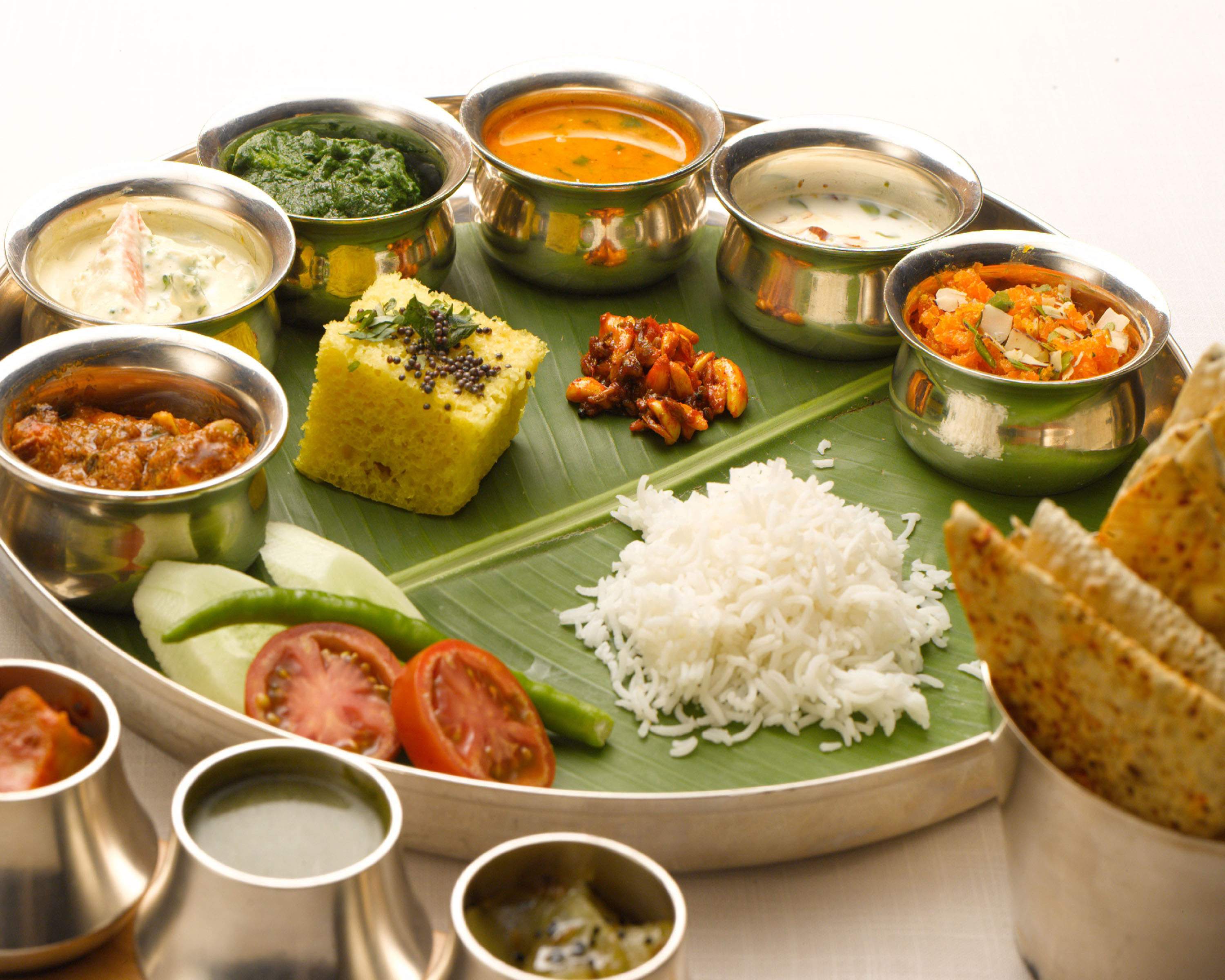
    There is a very prominent tale in Mahabharat where Draupadi had a bowl of plenty awarded to her by Sun god when she along with the Pandavas was in exile. She could take as much food from the bowl as she wanted until she herself has eaten.  One day sage Durvasa and his disciples arrived at her hut and asked Draupadi to feed them. Rishi Durvasa was known for his anger. To add insult to injury, she had already consumed food that day and knew that the pot would not yield any more eatables. She prayed to her Sakha, Lord Krishna for help. Incidentally, one grain of rice was left in the bowl. Lord Krishna took that grain and ate it up. To Draupadi’s surprise, Lord Krishna let out a belch as if just been fed with a sumptuous three-course meal. With him all the beings of the universe: the deities, yakshas , Gandharvas and also, Sage Durvasa and his disciples were satisfied.

    1

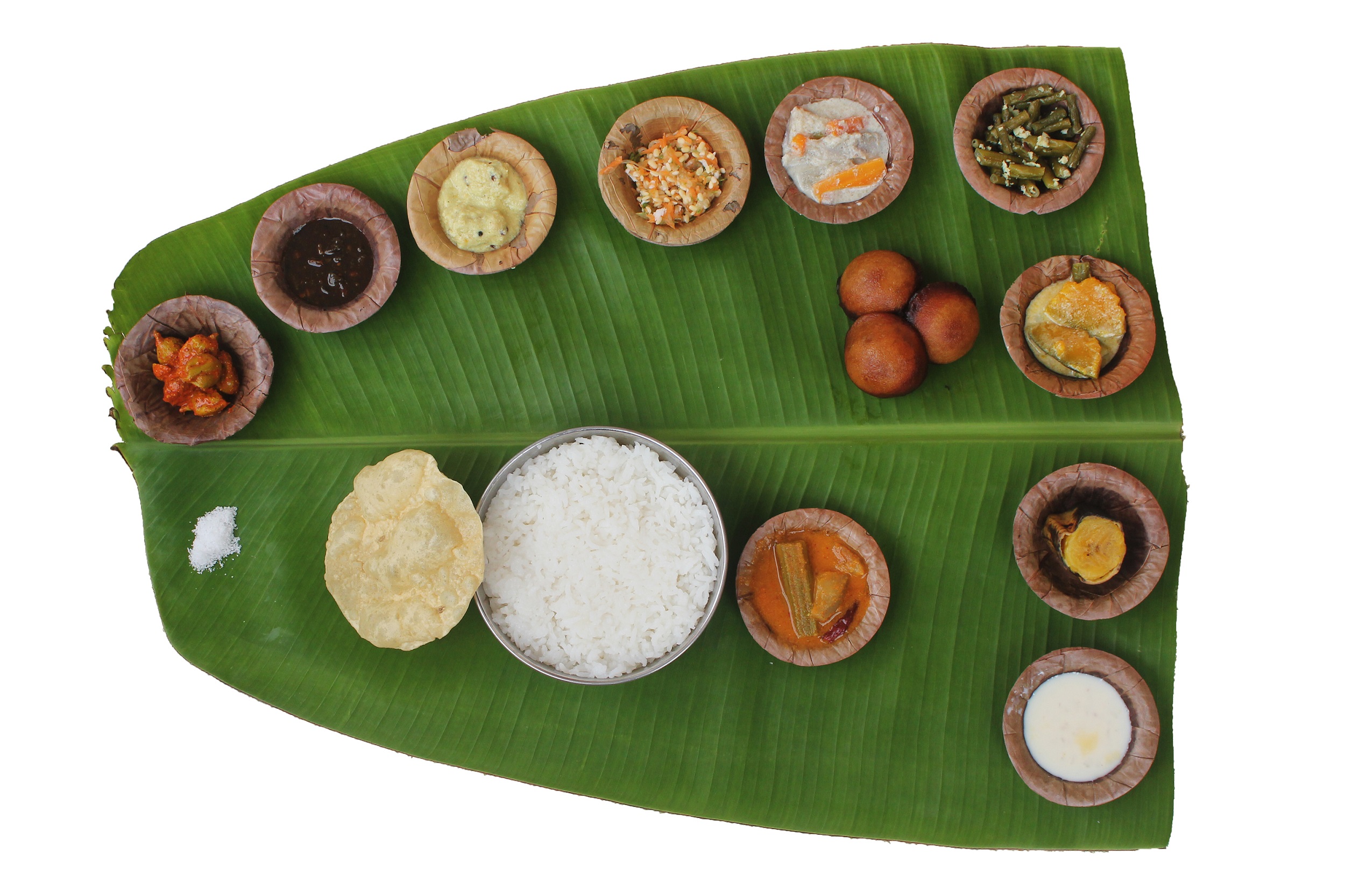
    This story indicates the importance of food in Hindu culture and mythology. In fact, food is central to almost all Hindu rituals and modes of worship. The Bhagavad Gita declares: “If one offers Me with love and devotion a leaf, a flower, a fruit, or water, I will accept it.” (9.26). The food is served in a clean place and before eating, water is sprinkled around the plate and vedic mantras are recited.  A little water is sipped before eating which is scientifically proven to be beneficial. The intension is that our mind and intellect remains inclined towards spirituality and virtues while doing everything, even, eating.

    Hindus believe that everything in the mortal world including, the five sense organs, the objects of the sense organs, elements, mind and intellect are essentially made of three qualities: Sattwa, Rajas and Tamas. Sattwa is associated with light, knowledge and purity; Rajas with activity and passion; and Tamas with ignorance, stagnancy and delusion. Consequently, different food items have different tendencies attached to them.
    3

    Foods which increase life, purity, strength, joy and cheerfulness and are savory, substantial and agreeable are Sattwic. This includes fruits, nuts, vegetables, milk and grains. The foods that are bitter, sour, saline, excessively hot, dry, pungent and burning are known as Rajasic. Onions and Garlics fall under this category and are believed to inspired passion in individuals. Tamasic food includes meat, alcohol, eggs, fish etc. Although, vegetarianism is encouraged in Hinduism, it is important to understand that these are mere guidelines that are provided to individuals to help aid the practice of meditation and there is no compulsion as far as adherence is concerned.

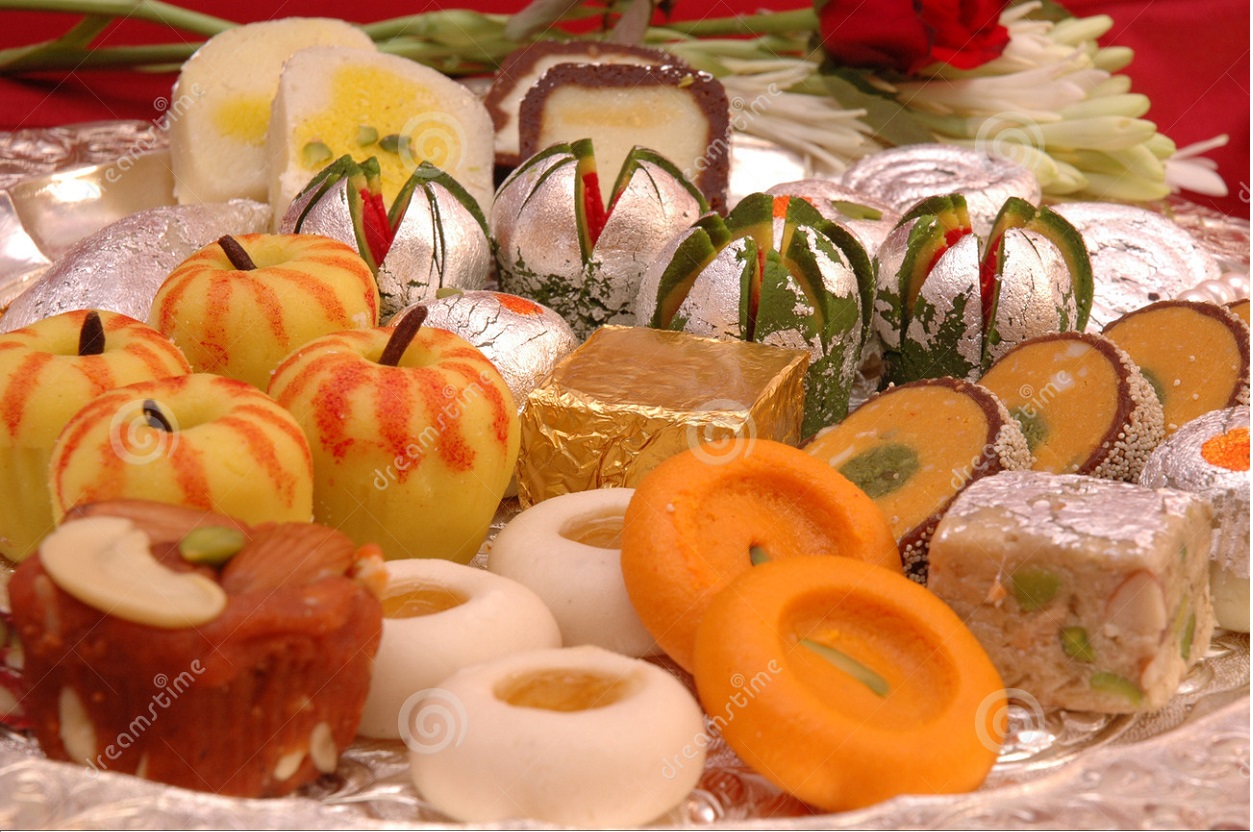
    Another important aspect of Hindu rituals is Prasad or the sacred food offering to the lord. Almost every Puja or worship is concluded by the distribution of Prasad i.e. the food that was offered to the lord during the worship. Prasad can include a variety of things such as jiggery, sweets, coconut, fruits, sweet rice, milk, tulsi leaves (Basil) etc.  The intension of the devotee is of prime importance here and not the material worth of the offering. Depending on one’s position and ability, one can offer anything with devotion. A few tulsi offered with a pure conscience will reap greater merit than gold offered with arrogance.
    4

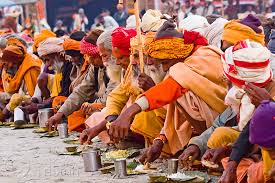
    Growing up in a Hindu household, I have vivid memories of being restless during the entire course of my mother’s daily prayers and waiting for the Prasad at the end. During Navratras, the nine day worship of the divine mother, Bhandaras are organized.  Bhandaras are spiritual gatherings where large quantities of food are prepared by the community and then distributed to everybody who attends it. This is a form of community service where poor and ailing are fed alongside  the affluent and thus establishing their equality in the eyes of the lord.
    3

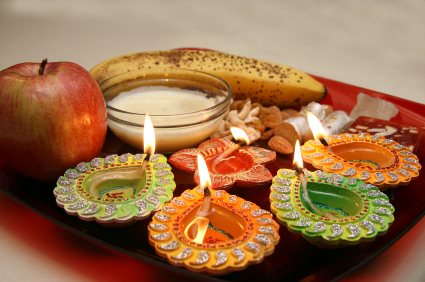
    Feast and fast, both are essential part of the Hindu experience. The festivals of Diwali, Holi, Dussehra  and Janmashtami are often associated with the preparation of delicious foods. People visit their friends and relatives and offer each other food. This helps in spreading harmony and unity in the community.  Hinduism offers a great deal of flexibility even in the case of fasting. Fasting can be complete, eating “purer” foods, adopting a completely vegetarian diet or it can be abstaining from favorite foods. It can be seen as a means of purification or as a sacrifice.
    3

    The Hindus are known to use hands to consume their food. The idea is to savor the food with as many sense organs as possible: the color and appearance of the food with eyes; its rich aroma with the nose; it’s delicious taste with the tongue and its texture with the hands. There is an interesting story regarding this. The Indian president, Dr. Radhakrishnan once met Britist Prime Minister Winston Churchill and they sat down for lunch. Before eating, Dr. Radhakrishnan washed his hands and when the food was served, took a morsel in his hands and began eating. Churchill told Dr. Radhakrishnan, “Why are you using your hands? Use spoon and fork, they are more hygienic”.

    Radhakrishnan’s repartee was, “Since nobody has used my hand to eat before, my hand is more hygienic than any spoon you can find.”
  • Sweet Dishes For Eid-ul-Fitr-

    Sweet Dishes For Eid-ul-Fitr-

    Eid-ul-Fitr is the religious festival of Muslims that marks the end of the holy month of Ramadan during which they fast for 29 or 30 days from dawn to sunset. It is celebrated with great zest around the world and the greeting of “Eid Mubarak” (“Blessed Eid”) is exchanged between the merry-makers. According to some traditions, it is believed to have been initiated in Madinah after the migration of Muhammad from Mecca.

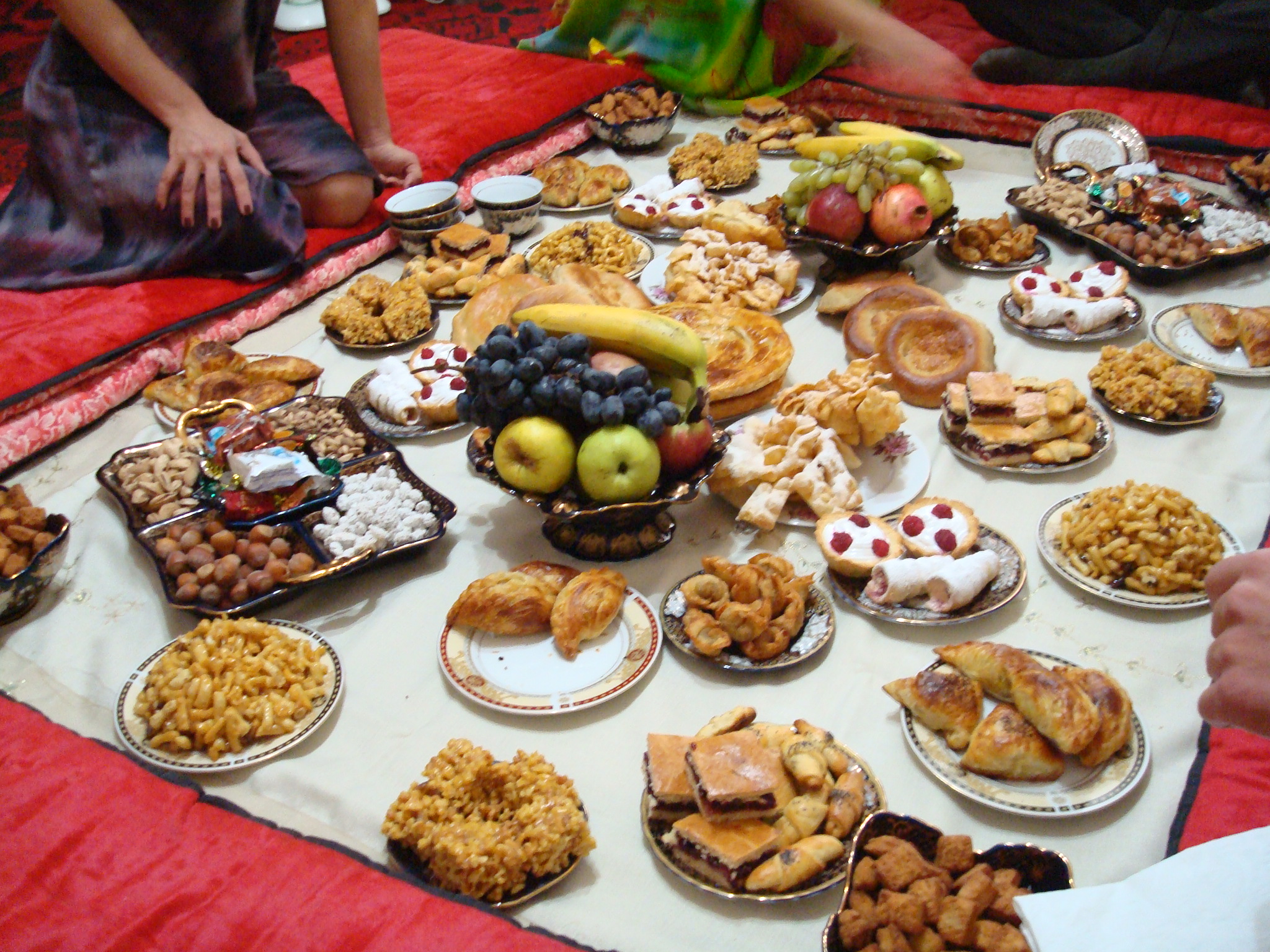
    Eid-ul-Fitr is known for the variety of delicacies prepared especially sweets earning it the name of “sweet Eid”. Depending on the region, the types and forms of the cuisine vary but always include sweet dishes. While local sweets such as Gulaab Jamun, Ras Malai etc have been promptly absorbed in the Eid cuisine in South Asia, Baklava and other types of pastry type sweets are eaten in Turkey. After a month of continuous fast, we believe people have earned this. So let us have a look at some of the wonderful desserts that are prepared in this amazing festival.

    1. SHEER KORMA 

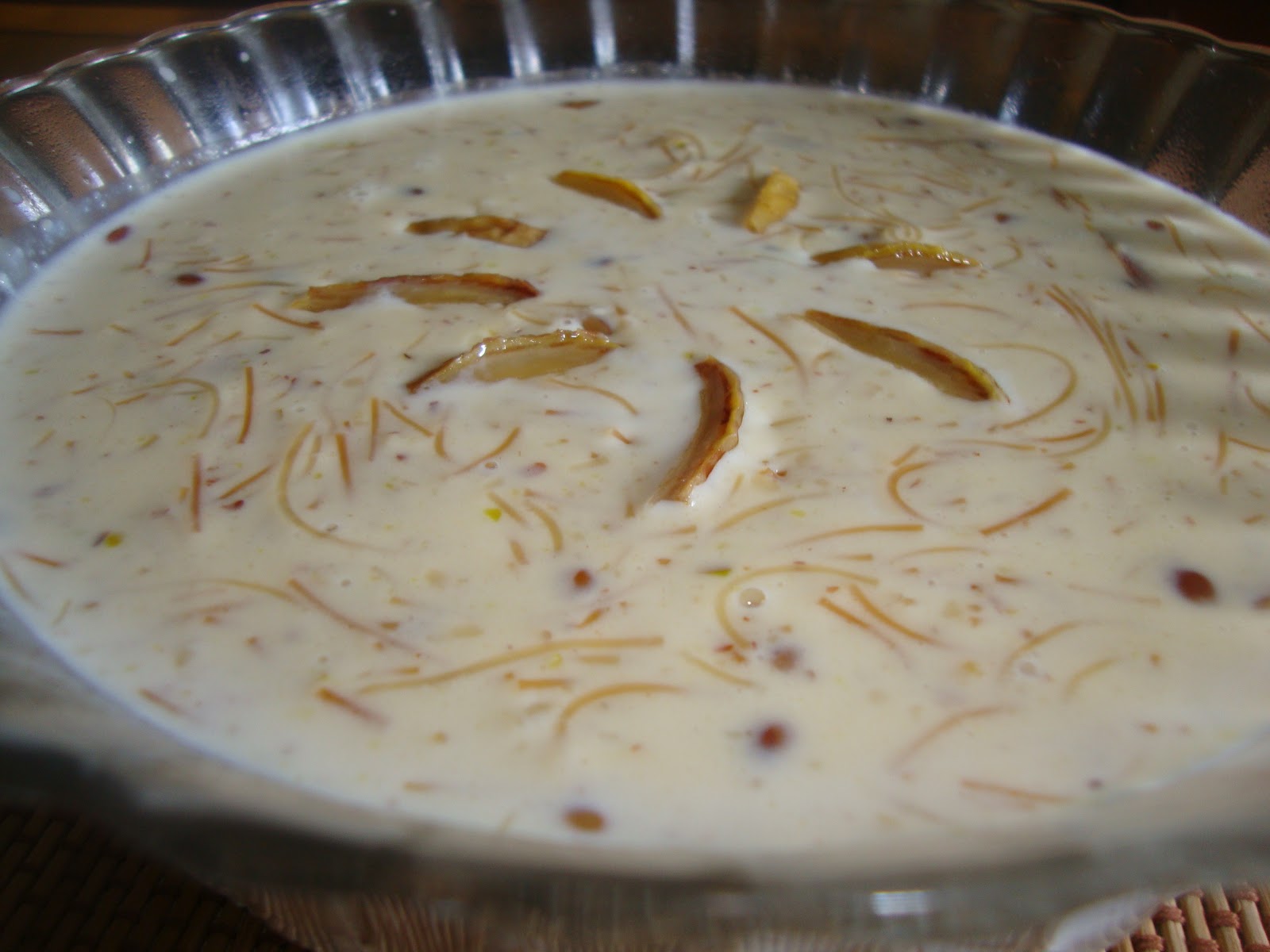
    Sheer Korma is a popular vermicelli (saviyaan) dish which is almost synonymous with Eid-ul-Fitr in India and Pakistan. It is served during the Eid morning after the prayer and then to the guests who arrive throughout the day.  Sheer is Persian for milk and Khurma is Persian for dates. It is simple and easy to prepare.

    1


    Ingredients

    1. 1 Packet vermicelli
    2. 500 ml Milk
    3. 1 cup sugar
    4. 1 tbsp butter
    5. ½ tsp flavoring agent like vanilla or rose water
    6. ½ cup raisins
    7. 20 whole cardamom pods
    8. ½ tsp cardamom powder
    9. 1 cup dry fruits like almond, cashews and pistachios
    10. ½ cup fresh cream
    11. ½ tsp saffron strands
    12. Dates cut in small pieces


    Method of preparation

    1. Melt butter in a pan and fry vermicelli in it till it turns beautiful brown. Make sure that you keep the heat low so that the vermicelli is not burnt. Once ready, the vermicelli will absorb all the butter. Alternatively, fried vermicelli is also available in the market.

    2. Mix ¼ cup sugar in it and then slowly add milk to it while constantly stirring the assembly. Increase the heat to bring the milk to boil.

    3. Now add the raisins, dry fruits, dates, cardamom pods and the remaining sugar and mix everything properly.

    4. Let the milk boil until it is reduced to half its original volume. Reduce the heat and thicken the korma to three-strand consistency.

    5. Quickly add your favorite flavoring agent and fresh cream. Cover it and let it simmer for 10 minutes.

    6. Garnish with saffron strands, and cardamom powder and serve it to the delight of friends, family and guests.

    2. BADAM PHIRNI

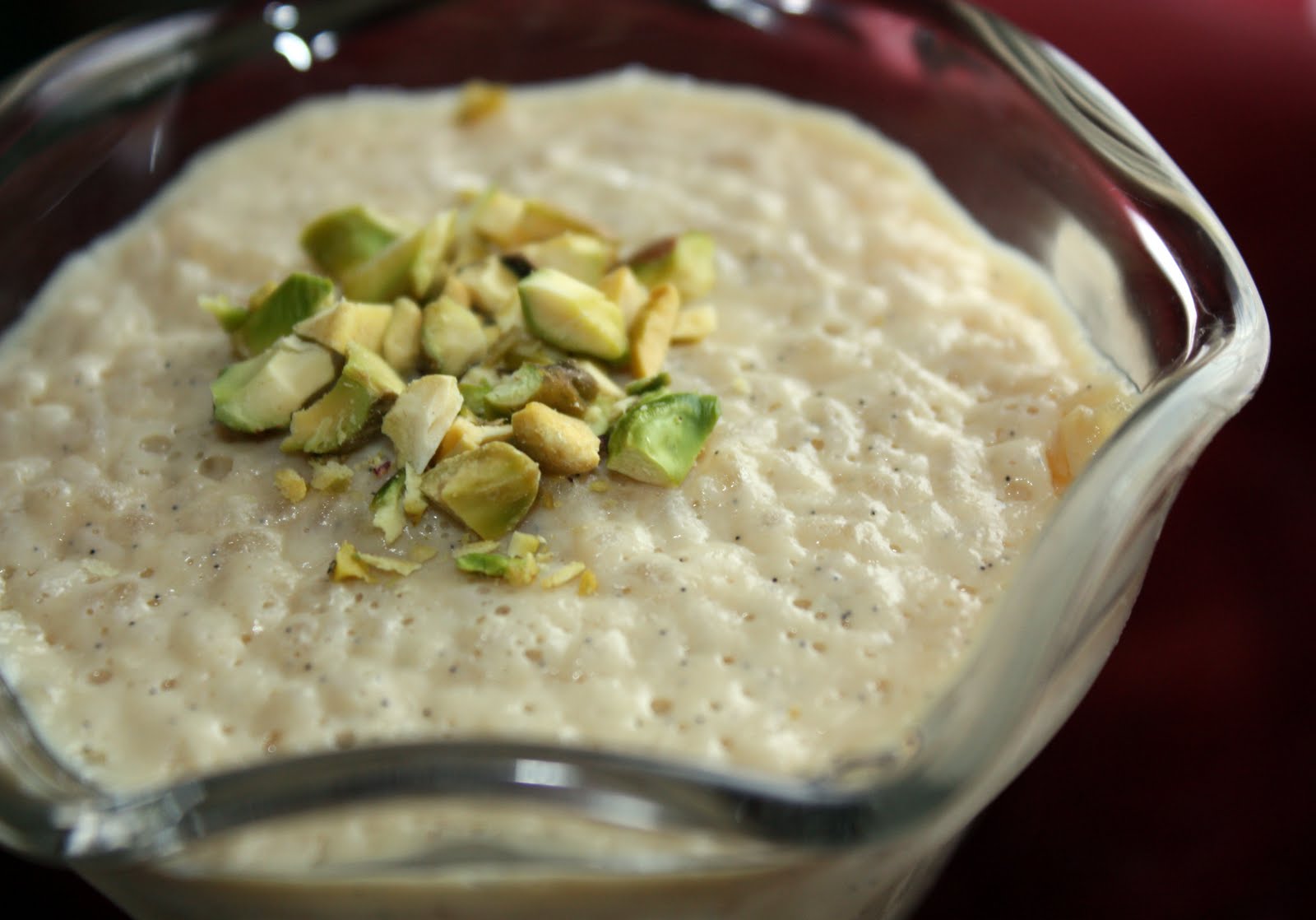
    Phirni is a very popular Indian dessert that is prepared on a variety of occasions including Eid, Diwali etc. There are more than a few versions of Phirni varieties available, for example, Gur aur Badam ki phirni (Jaggery and Almond Phirni), Sugar Badam Phirni etc. Here we will discuss the phirni that uses Sugar.

    2

    Ingredients

    3 cups Milk
    ¼ cup Rice
    2 tbsp Sugar
    1/4th Cup Blanched Almonds (sliced)
    ½  tsp Green Cardamom (crushed)
    1/2 tsp rose water

    Method of preparation

    1. Soak the rice in water few hours before the commencement of preparation. Grind the drained rice into a smooth paste and add a little boiled milk to it.

    2. Boil milk in a non-stick saucepan and bring it to boil. After boiling for a few minutes, reduce the heat to simmer.

    3. Increase the heat to moderate and add cardamom, sugar and rice paste to it while stirring constantly.  Allow it to thicken.

    4. Remove heat and add almonds.

    5. Put it in serving bowls and let it cool. Refrigerate it for some time and then serve.

    3. SUFI MALPUA

    The delectable Sufi Malpua is somewhat irresistible and that explains it popularity among the Muslim community around the world. It is not only served on the occasion of Eid but also throughout the holy month for iftar (meal to break the fast).  It is easy to prepare and requires but few ingredients.

    3

    Ingredients

    1 liter Milk
    1/4 cup Maida
    1/4 cup Suji
    Ghee
    Water

    Method of preparation

    1. Boil the milk till it reduces to half its original volume.

    2. Roast the suji on a pan on low heat till it turns brown. Take special care so that it does not burn and turn black.

    3. Add the roasted suji and maida to the milk while constantly stirring the mixture. Make sure that no lumps are formed and assembly is of smooth pouring consistency. Pour this batter in a big round bowl.

    4. Boil water in a separate saucepan and bring it to boil. Add sugar to the boiling water and let it brew till it transforms into syrup of 1 thread consistency.

    5. Heat ghee in a pan and pour the batter in it in the form of small pan cakes. Let it cook for a few seconds and then turn it over. Make sure that the Malpuas retain their fluffiness and softness and not turn too hard or crisp.

    6. Dip the Malpuas in the sugar syrup and leave them in it for few minutes so that they absorb the syrup completely. Finally take them out of the syrup and serve!!


  • FIVE ESSENTIAL NUTRIENTS FOR HEALTHY SKIN AND WHERE TO FIND THEM!!

    FIVE ESSENTIAL NUTRIENTS FOR HEALTHY SKIN AND WHERE TO FIND THEM!!

    Skin-care is probably the most overrated issue in our life. With the flooding of creams, face-washes and other products in the market, beauty is arguably the most profit-generating venture. There are day creams, night creams, anti-aging, wrinkle-lift, fairness creams, cold-creams and what not!! I am sincerely waiting for noon creams, evening creams, summer creams, spring creams and most importantly, anti-dumbness creams.  When all these creams don’t suffice, people flock to the parlors and salons for various treatments like bleaching and de-tanning.A little application of moisturizers and sunscreens is necessary for protecting our skin. Agreed!! Also,messages are very helpful in improving blood-circulation to the skin and relaxation. Agreed again!! But at the same time,there is a hoard of unnecessary products in the market that are simply aimed at duping huge sums of money from people.. The photo shopped images of celebs and models further push people towards parlours and beauty-treatments. The drive for that radiant flawless skin has never been stronger. Ironically, when the drive for looking younger and prettier is stronger than ever before, people have forgotten the essentials of ever-lasting beauty.  In fact, the secrets of beauty are highly mis-understood.The old adage- You become what you eat, is long forgotten!! This leads to many problems like premature-aging,chemical burns etc. The safest and the longer-lasting ways to a healthy, glowing skin is probably the easiest too- eating right, exercising and protecting from sun!! So, let me take you to a tour into the beautiful kingdom of delicacies that will make your skin glow like never before!!

    1.  VITAMIN E

    vitamin e

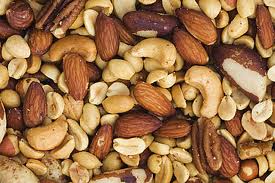
    When our body comes in contact with external influences like Sun exposure, chemicals etc., some molecules constituting our body get oxidized and produce free-radicals. Free-radicals are extremely unstable molecules and they take electrons from neighboring molecules to gain stability. This induces a chain reaction that produces more such radicals, thereby causing severe damage to skin cells and collagen, the main structural protein of our body. This results in aging, fine-lines and wrinkles. Our body thus needs antioxidants that neutralize free radicals. Vitamin E is an extremely powerful antioxidant and thus, the route to longer youth. It is found in avocado, almonds. Hazelnuts, corn oils etc.

    2. VITAMIN C

     Vitamin-C

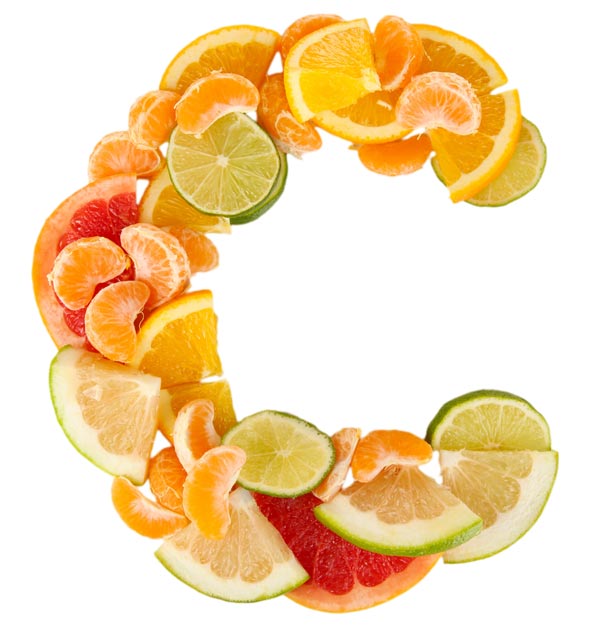
    Vitamin C, also known as ascorbic acid, is an elixir for your skin. Vitamin C is known to aid the production of Collagen, the main structural protein that makes up for about 25-35% of the whole body protein content. Collagen strengthens the capillaries supplying the skin and also helps in cell growth. Thus, Vitamin C is essential for skin repair and maintenance. Moreover, Being an anti-oxidant, it is also known to neutralize the free-radicals. It also reduces the effects of long-term effects of sun exposure like skin cancers. The main sources of Ascorbic acid are – Guava, Oranges, Lemons, Strawberries, Blueberries and other citrus fruits.

    3. ZINC

    food-sources-of-zinc

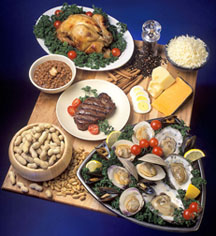
    Zinc is the goldmine of skin benefits. It is primarily responsible for carrying out repair work. Sebum is an oily secretion by sebaceous glands to keep our hair and skin moisturized. When secreted in excess, it can cause a variety of problems like Acne. Zinc helps counteract the damage to skin caused due to acne by reducing the amount of sebum secreted and repairing the scarred skin around acne. Zinc is one of the main constituents of almost all Sunscreen products because it provides protection against harmful UVA and UVB rays. It’s anti-cancerous properties further reduces chances of skin cancer due to repeated exposure of sun. It is also important for a healthy scalp and provides protection against skin ailments such as burns, boils, eczema etc. Zinc is found in abundance in fish, meat, whole grains, nuts, sea-food, seeds etc.

    4. OMEGA-3 AND OMEGA-6 FATS

    download

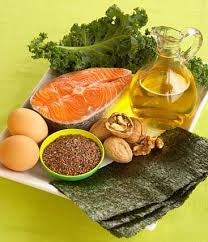
    Omega-3 fatty acids particularly, eicosapentaenoic acid (EPA) regulate oil production in the body and keeps your hair and skin hydrated. Without these essential fats, your scalp and skin will become dry and flaky. Apart from this, these fatty acids are very powerful anti-oxidants as well and thus, protect our skin from free-radical damage. They are also associated with skin maintenance and repairs and have anti-inflammatory action. For this reason, they are used for providing relief in skin conditions like eczema, psoriasis etc. They, however, cannot be produced by body and has to be obtained from outside. Chief sources include- flax-seed oil, linseed, walnut and rapeseed oil.

    5.LOW GI-CARBS

    images

    Clear skin-tone, freedom from acne and a slim waistline, you name it and you have it!! Low GI carbs are your one-stop solution to all beauty-related problems. As opposed to high GI carbohydrates like sweets, potatoes etc. , low GI carbs release sugar in the blood-stream slowly. This makes you feel full for longer duration and also, helps avoid a situation known as hyperinsulinemia (excess of insulin in blood)which is often associated with acne. The main sources of low GI carbs include beans, pulses, porridge etc.

    Once you start regulating your diet to include these products, you would feel a new re-flux of energy in your life. But don’t be too impatient. It takes about 6 weeks for a new layer of epidermal cells to form on your body. So, the diet changes would also take as much to provide visible results!! A little care and control today can guard your beauty forever!!

  • INSTANT ACCHARS: PICK YOUR PICKLE

    INSTANT ACCHARS: PICK YOUR PICKLE

    Growing up in India “Acchars” or the Indian pickle has been a substantial part of my childhood experience. I would see my Mom and Aunts spending considerable time in preparing the vegetables, gathering the spices and making arrangements for their storage for days on end. A very tedious affair indeed!! But the end product makes up for all the trouble caused. Pickles are tangy and immediately add savor to anything they are consumed with, be it- paratha, burger or pancakes.

    Pickles are formed by the anaerobic fermentation of vegetables and unripe vegetables in the presence of brine (salt-water) or vinegar. This caused them to dehydrate and thus, discourages the growth of microbes. Moreover, their pH is less than 4.6 which further kills most bacteria. Thus, they can be preserved for months and depending on the recipe, even years!!  The vegetables pickled in brine as opposed to vinegar, are known to contain Lactobacillus and are thus, probiotic.

    Like mentioned above, making “Acchars” can be a pretty tiring job especially if you are a student or working a 24×7 job. Not anymore. Here are 5 instant Pickle recipes anyone can make. They can be stored for lesser duration as compared to the traditional pickles, but the tang it brings to our food is so worth it!!

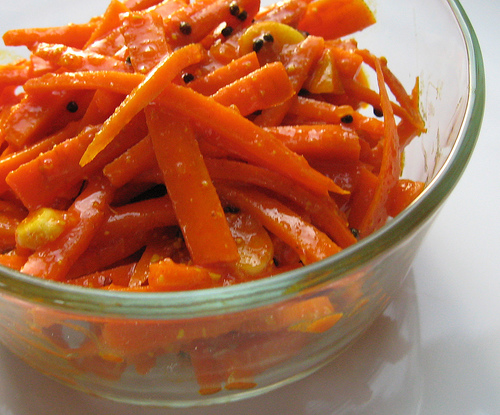
    1.  CARROT PICKLE

    carrot

    Ingredients

    1. 10 carrots
    2. 1 ½ tbsp crushed mustard
    3. 1 ½ tbsp lemon juice
    4. 1 ½ tbsp oil
    5. Cumin powder
    6. Turmeric powder

    Method

    Wash the carrots and peel them to remove a thin layer of outer covering. Cut the carrots into desired shapes, preferably rectangular. Gather all the ingredients in a bowl and mix them thoroughly. And you are good to go!! Finish this preparation within 2-3 days.

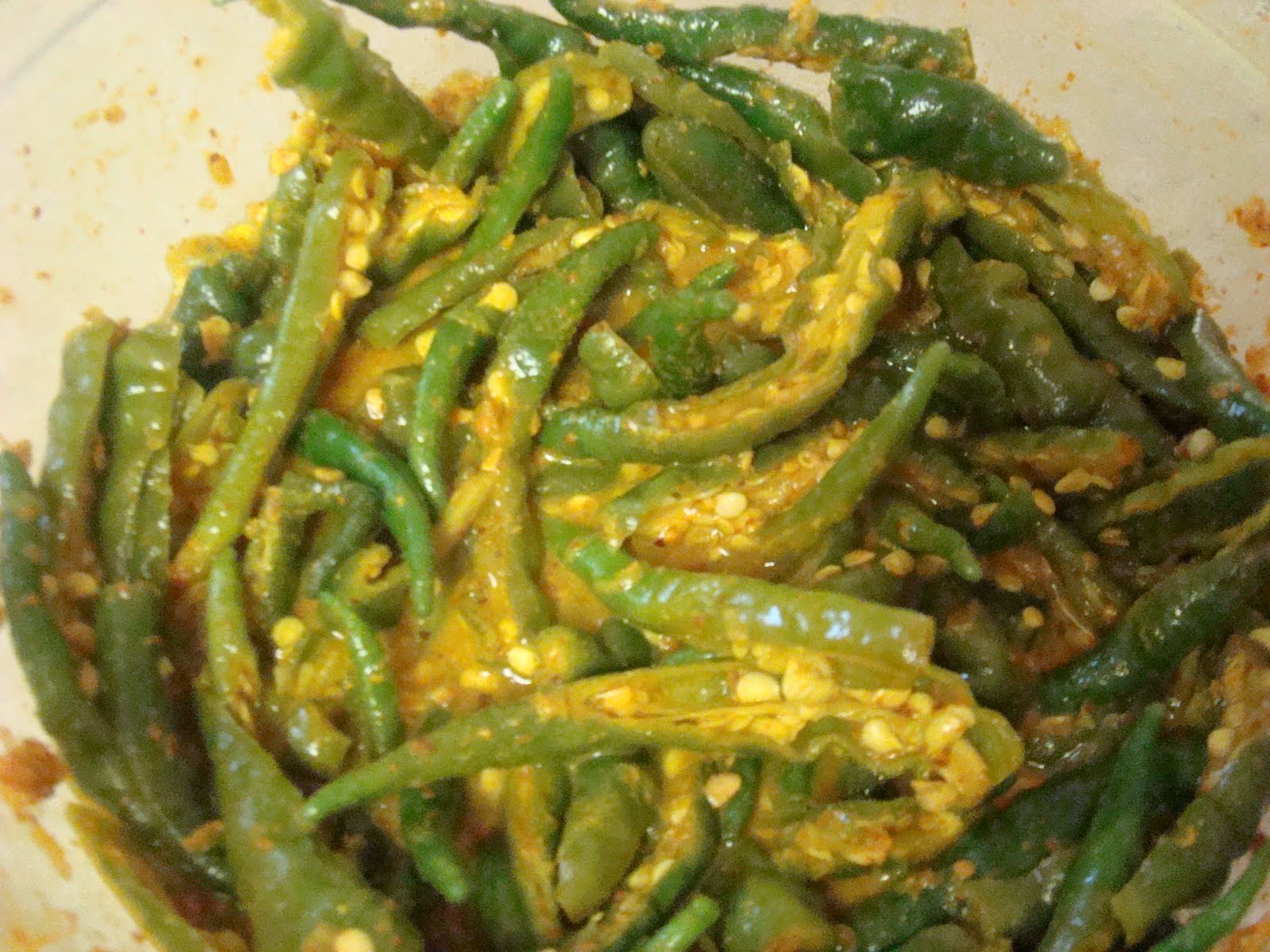
    1. GREEN CHILLI  PICKLE

    chilli

    Ingredients

    1. 1 cup green chilies
    2. ¼  tbsp fenugreek seeds
    3. ¼  tbsp cumin seeds
    4. 1/8 tbsp turmeric powder
    5. 1/8 tbsp grounded asafetida
    6. 1 tbsp lemon juice
    7. 2 tbsp oil
    8. ½ tbsp sugar
    9. ½ tbsp salt
    10. ¼ tbsp amchoor or dried mango powder

    Method

    Wash green chilies and give them a longitudinal cut right in the middle such that they still remain joined at the end. Put oil in a pan and allow it to heat it till it is ready enough to fry. Add cumin and fenugreek seeds and keep whisking them lightly till they begin to crackle. Add amchoor, asafetida, turmeric powder, salt and chilies and mix them for a few minutes. Finally, add sugar and lemon juice. Mix them properly and turn off the heat.

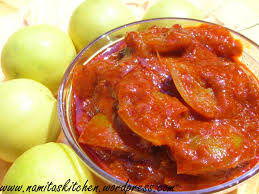
    1. LEMON PICKLE

    lemon

    Ingredients

    1. 10 lemons
    2. 6 tbsp salt
    3. 2 tbsp red chili powder
    4. ½ tbsp turmeric

    Method

    It takes a little longer to prepare this pickle. But it can be stored for months and is extremely easy to make. Cut the lemons into half or make 4 pieces. Gather the lemons in a large bowl and pour all the other ingredients i.e. salt, turmeric and chili powder. Mix the constituents properly. Remember, depending on the climate and temperature of the place, the amount of ingredients has to be adjusted. Put the mixture in a glass-jar and put it daily under sunlight for a week or so. The pickle is considered ready when the lemon loses water and becomes soft. To store it for longer duration, add oil.

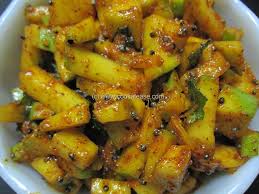
       4. MANGO PICKLE

    mango

    Ingredients

    1. 1 cup sliced unripe mango
    2. 1 tbsp chili powder
    3. ½ tbsp salt
    4. 1 ½ tbsp mustard oil
    5. 1 tbsp cumin seeds roasted
    6. ¼ tbsp grounded asafetida
    7. ½ tbsp turmeric powder

    Method

    Mango pickle is arguably the most famous and mouth-tickling pickle there is. Traditionally, it requires a long for the mango “acchar” to get ready. But you need not compromise with taste in your hectic life. So let’s get started. Firstly, take the mango strips in a bowl and add salt. Mix these two ingredients properly and leave them aside for one and a half hour. Once the mangoes lose water, drain the water and collect the mango strips. Put these strips in a large bowl and add all the other ingredients. Mix these thoroughly and your delicious pickle is ready to be served. It can be stored up to 3-4 days when refrigerated.

        5. AMLA OR INDIAN GOOSEBERRY PICKLE

    Amla_Pickle_Stp3

    Ingredients

    1. 10 Amlas
    2. 1/8 tbsp Red chili powder
    3. 1/8 tbsp asafetida
    4. 1/8 tsp fenugreek powder
    5. A pinch of turmeric powder
    6. Salt-to taste
    7. 1 tbsp oil
    8. 1/8 tbsp yellow mustard seeds

    Method

    Boil water in a pan with a pinch of salt. Slowly add Amlas to this boiling mix and let it heat for 5 to 6 minutes. Drain water from the Amlas and allow them to cool for some time. Once they cool down, separate them into their natural wedge shape by cutting and remove the seed in the middle. Heat oil in a pan and add asafetida and mustard seeds. When the seeds begin to crackle, add amla wedges followed by the rest of the ingredients and cook them for 3-4 minutes. Turn off the flame and allow it to cool. Refrigerate for prolonged storage.


    Pickles add flavor to your life, they make your food come alive and dance. In our hectic lives, we often compromise with our meals. So the next time, you decide to half-heartedly swallow bread and a sad not-so-tasty vegetable that you prepared, think again!! Just few minutes of your precious time and you can add soul to your snack. so, come on- PICK YOUR PICKLE!!

  • Weight loss 101

    Weight loss 101

    heart-cholesterol-fatty-food

    With the comforts offered by the modern technological innovations and the decline of labor-intensive jobs, staying fit and active has become a major challenge.  Rise in cases of obesity and diabetes has created immense pressure on us to constantly adopt life-style changes to stay lean. The flood of slender models and bulked-up dudes on electronic and print media doesn’t help either. In wake of this, the health conscious and even the not-so-conscious try almost everything, they hear or learn from friends and internet about weight-loss, in bits and pieces- dieting, gym, running and what not. And most of the time, even after days and weeks of struggle with their cravings and laziness, they are left disillusioned. So what goes wrong?? Why is losing those few extra pounds so difficult?? The answer is – the lack of understanding of the mechanism of loss. The absence of the complete picture is a major reason why people often make wrong choices while deciding their plan of action. But you need not worry. Coming up in the paragraphs to follow is everything you need to know about body weight, fat and how our body responds when we lose weight.

    download (1)

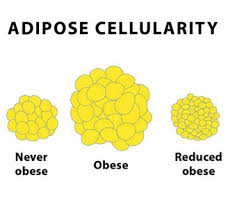
    The energy generated in our body, from the food that we eat, is utilized for various internal and external activities like walking, running, maintaining metabolism etc. The excess energy that remains unutilized even after successfully carrying all these activities is stored as fat in specialized cells called fat cells or Adipocytes. The fat cells develop in our body during childhood and for the rest of our life, their number remains almost constant. Thus, weigh gain is associated not with the number of fat cells present (since their numerical count remains constant even when we lose/gain weight) but rather with their size. When the body consumes more food than is required and consequently produces more energy than it dissipates (via various physical activities or body functions), more of it gets stored as fats. This causes the fat cells to swell up and appear as bulk.

    download (2)

    Apart from the stored fat, the body has another source of energy stored in the cells called glycogen which is nothing but excess blood sugar acted upon by the enzyme insulin (responsible for regulating blood sugar levels). Whenever, energy shortage occurs in our body, the body first uses this glycogen followed by the utilization of stored fat. The released fat is acted upon by various processes and finally converted into heat, water, carbon dioxide and ATP i.e. adenosine triphosphate (energy). ATP is used by the body to meet its energy requirements, water leaves the body as sweat and urine and carbon dioxide is exhaled. This explains where the lost fat “goes” when we lose weight. So, in order to devour fat, we need to create an energy deficit in our body which can be accomplished in two ways- by consuming less food or by dissipating more energy. This brings us to the universally known mantras of weight loss i.e. dieting and exercising. So far so good.

    images

    Then why these obvious methods don’t seem to work that smoothly?? Why is losing weight so frustrating, so say the least?? Well the answer is that there are related mechanisms that interfere and affect the whole process and if not understood clearly, can greatly reduce the benefits of dieting and exercising.

    1. Firstly, after the commencement of dieting, your body first loses water weight before glycogen and fat is burnt. This is why it is fairly easy to lose weight in the first few weeks and after that, it gets increasingly frustrating each passing day. The key to success here is to stay resilient and not stray in the times of difficulty. Patience always pays off.

    2. When the body senses that it is getting fewer calories, it responds by storing more fat to prepare itself for famine-like situations. So, cutting too many calories or eating too less can prove to be suicidal in these situations. Don’t starve yourself, instead eat healthy food.

    3. Eating too less or not indulging in weight training can make you lose muscles along with fat. This is not good news. Always remember- excess of anything, dieting included, is bad!!

    4. Recent studies also suggest that high calorie and high fat food evoke responses from the brain that are similar to cocaine addiction. Consuming them in greater quantities causes compulsive eating habits. So, abstaining from such food causes very strong cravings for them. Therefore, one must not lose control during the tough times and stick with the diet plan. An alternate way is to never really turn away from such food items completely, rather cut their quantity and restrict their consumption to just once a day.

    5. Weight loss has many other related implications.  It might make you feel sleepy or cause you to lose sleep. Like mentioned above, weight training stresses our body. So, one need not fight sleep too much. Lying lazily for long hours should definitely be avoided but a minimum of 7 to 8 hours of sleep must be ensured so that the body gets the rest it needs. On the contrary, if you are not consuming enough calories, you will find it harder to sleep. A good solution to this problem is to have a hearty (and healthy) dinner or a glass of almond milk before you doze off.

    6. Dieting can cause physical and mental stress. All this can trigger the secretion of the stress hormone cortisol.Thus, it is essential that one indulges in some sort of stress management activity like yoga or meditation.

    Dieting_


    With a little bit of self-control and discipline, you can easily get that flat belly you always wanted. So the next time you decide to put on a saree at a wedding or a bikini on beach, you don’t have to feel conscious. And remember, nutritious and tasty food choices are not mutually exclusive. They can and do go hand-in-hand. Nature has rewarded us with a host food of products that are delicious and healthy at the same time. The choice is ours to make.