Tag: winter food

  • Winter Delights: Gajar Ka Halwa and Gujarati Meethi Kadhi

    Winter Delights: Gajar Ka Halwa and Gujarati Meethi Kadhi

    The frigid winter months of December and January are bearing down upon us, and all anyone wants to do right now is to curl up cosily in their heavy blankets and eat tons of hot, rich food. The harsh weather right now makes the human body crave even more for nutrition, and it is not surprising that some of the best dishes that we know of taste the best in these freezing days. Compared to the year long summer heat in most parts of India, we have a greater appetite for food in the winters. It is in these few weeks that we look with great curiosity towards our kitchens, and wait impatiently for our mothers to emerge out of the area with some aromatic and delicious gastronomic work. Be it sarson ka saag and makke di roti, gulab jamuns, hot coffee, or ginger tea, all of these dishes and more never fail to tickle our tastebuds during the cold season. Here are two easy to cook recipes, one for gajar ka halwa, and the other for Gujarati meethi kadhi, in case you ever need a hot fix for your winter woes.


    Gajar ka Halwa
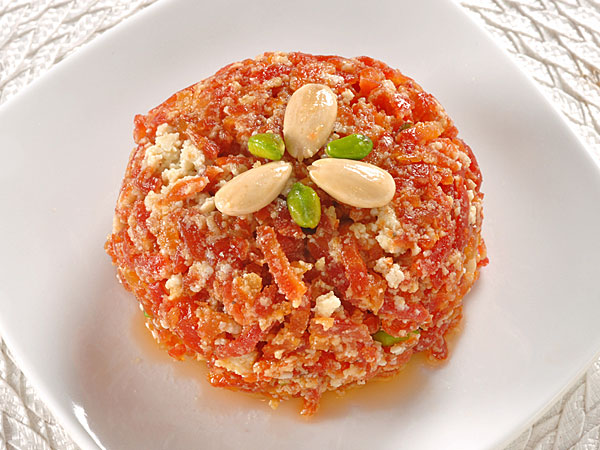
    Also known as gajrela, gajar ka gajrela, and carrot halwa, gajar ka halwa is a South Asian dessert pudding and a winter delicacy in north Indian states. Made by cooking grated carrots, milk, ghee (clarified butter), and nuts together, this dessert is eaten on many festive occasions in both India and Pakistan apart from being available round the year in most sweetmeat shops of the subcontinent. A completely vegetarian preparation, gajar ka halwa is a dish enjoyed by all people, and has been subject to a number of culinary innovations, some of which are a vegan version, red velvet gajar ka halwa, similarly flavoured doughnuts topped with the same, a cream cheese and halwa combination which is the desi counterpart to the carrot cheesecake.

    The dish dates back to the ancient Mughal times, and the word “halwa”, meaning sweet, is itself derived from the Arabic language. Gajar translates to carrot from the Hindi language. While gajar ka halwa may seem like a particularly difficult preparation to pull off in the kitchen, it is actually not. Although the ingredients do take a considerable amount of time to cook fully, gajar ka halwa is a very easy recipe to make provided you have all the cooking materials you need ready at your disposal.

    Recipe (serves three-four)

    Ingredients required:

    • 1 kg of grated carrots, cleaned and peeled beforehand
    • 100 ml of condensed milk
    • Cleaned, preferably roasted, dried fruits and nuts (cashews, almonds, raisins, pistachios)
    • ½ kg of khoya
    • 4 big tablespoons of desi ghee (clarified butter)
    • 1 cup of castor sugar
    • 4 cups of milk
    • Cardamom seeds. Alternatively, you can use one-third of a teaspoon of cardamom powder.

    The steps needed:

    • Put the shredded carrots and milk in a heavy-bottomed pan or a wok on medium flame.
    • Let the carrots soak in the milk to a considerable amount. Let the mixture turn a rich golden-orange colour.
    • Add condensed milk and cardamom and stir for some time.
    • When it is cooked halfway, add khoya, after putting aside some for garnishing. Also add ghee.
    • Once everything is properly mixed, add sugar on a low flame. Take note of the flame and ensure that the sugar does not caramelize in the halwa.
    • Add dried fruits from above, garnish with a little khoya, and serve in bowls. You can also add varakh (the silver food foil) for an aesthetic look.


    Gujarati Meethi Kadhi
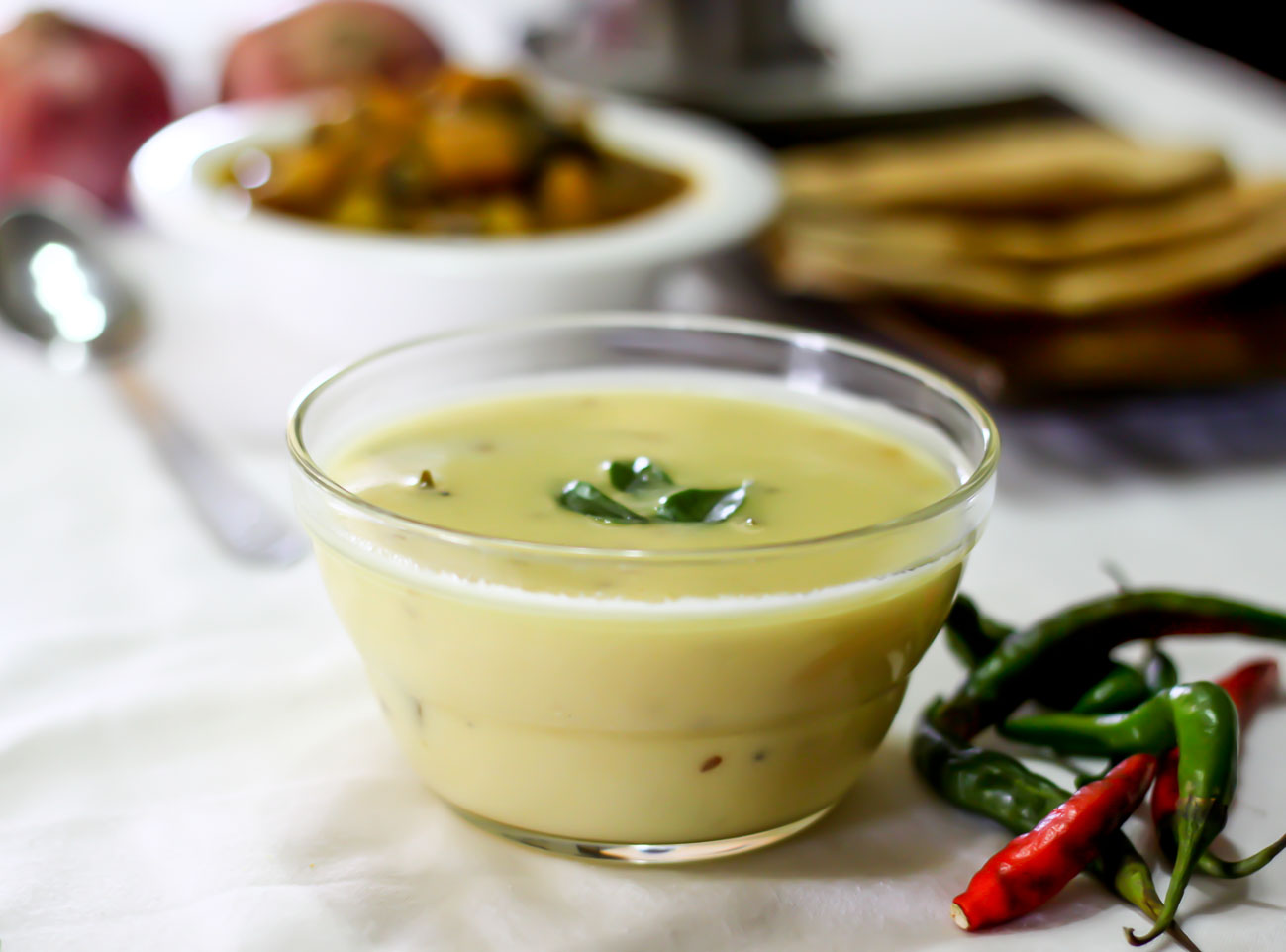
    Kadhi is an Indian main course dish of desert origins, and was first made in Rajasthan. However, it quickly grew popular with people from other regions of India, and now has different variants according to different states, belonging to Punjab, the Sindh area of Pakistan, Gujarat, Uttar Pradesh, and Maharashtra. While it is a dish best served hot, kadhi itself is derived from curd and yoghurt, which ironically taste best when cold.

    Gujarati cuisine is known for its sweetness, and its kadhi carries the same quality. In our household, Gujarati meethi (Hindi for “sweet”) kadhi is a winter favourite, and its recipe has passed on from one generation to the next, with a few modifications by each. This dish can be had as a drink, and since we already have the salty kadhi of Uttar Pradesh, complimented with besan pakodas (fillets), Gujarati meethi kadhi is served as a hot and sweet beverage mostly in the evenings. It hardly takes much time and effort to prepare, and is the perfect heavy snack that will fill your stomach in between meals. All you need is a bowl, a saucepan, and some easily accessible cooking materials, and a time period of fifteen minutes to spare.

    Recipe (serves two)

    Ingredients required:

    • 2 big tablespoons of besan (gram flour)
    • 1½ glasses of curd
    • Half a cup of water
    • Turmeric
    • Curry leaves
    • Asafoetida
    • A teaspoon of rai (mustard seeds)
    • Two teaspoons of sugar
    • Salt
    • Whole, dried red chillies
    • 2 teaspoons of oil

    The steps needed:

    • Add the besan and curd slowly in a big bowl, stirring slowly so that no lumps are formed.
    • Put a pinch of turmeric in this mixture. Also, add salt according to taste.
    • In a separate pan, put oil and let it heat on a slow flame.
    • To the hot oil, add rai, a little hint of asafoetida, and some curry leaves. Be careful to not let the curry leaves blacken completely because of excessive heat.
    • On a low flame, add red chillies to the pan.
    • Take the besan and curd paste, and pour it in the pan.
    • Stir continuously so that no lumps are formed while keeping the pan on a medium flame.
    • Let the mixture boil, and then pour it in glasses.
    • Top with a few curry leaves and serve hot.
  • The Great Indian Breads !

    Indians are known for their eating habits and their love for food . In India there is a wide range of cuisines and varieties with every 100 km you stretch . We live to eat that’s proven and we are the most natural host when comes to throw a party . If you sit and think Why I am claiming that Indians are such big foodies and party lovers , you just need to visit an Indian family for lunch or dinner (Even breakfast is not spared ) and see how they treat you as God ( We truly believe in Atithi Devobhavah….its not just for a commercial ). If I have mentioned about lunch and dinners I am talking about full rich 5 course meals (Yes! we eat that daily …at least I do) .Not only do we cook great curries and starters we have wide  variety in flat breads too.We do have in offer variety in flat breads with every changing season.

    All have great value addition to their taste , be it fluffy, rich in taste, soft, their fillings , sweet , salty , spicy , rich in proteins and minerals . You name it and we have it. India is diversified in its customs , culture , tradition and each part of India has their specific preferred  breads be it chapati , Fulkas, Naan, Kulchas, rumali rotis , parathas, various flavoured pancakes, tandoori roti etc  that too with different kind of cereals. Our flat bread preparation largely depends on what kind of crop is grown in that region .For example : Western part of India eats a lot of Bajra , Ragi, Northen India eats Maize or Wheat , Eastern eats a lot of Rice flour  or refined flour and if we consider Southern India they eat mostly rice flour in fermented form .Breads are staple food for any country, city or tradition.

    We actually consider breads to be very important for a wholesome 5 course meal. Its practically not possible to avoid a meal without adding bread to it . we don’t feel yummy tummy  until we eat bread. Today its very simple and convenient to barge into a supermarket and get frozen breads ,which my generation people gladly do , But if asked to me I would prefer preparing it at home as any dish has to be fresh to consume and for that packed food is totally a “No No” for me.When I started cooking after my marriage making rotis or chapatis was my biggest challenge (many do agree with me- its a common syndrome )but tummy wants food , so slowly I learned how to get the perfect shaped chapatis to not impress anyone …but to satisfy my own hunger. With every occasion we have specific choices in food and we do set our happy menu accordingly, so today my attempt is to bring a variety in your life .If you are done with frozen parathas or frozen chapatis try out few of my simple recipes of very commonly eaten Indian breads .Today I have tried to assemble few regional breads for you variety and taste change. Some of it is widely eaten but Do you really want to eat frizen or try these simple recipes with much nutrition and  taste.

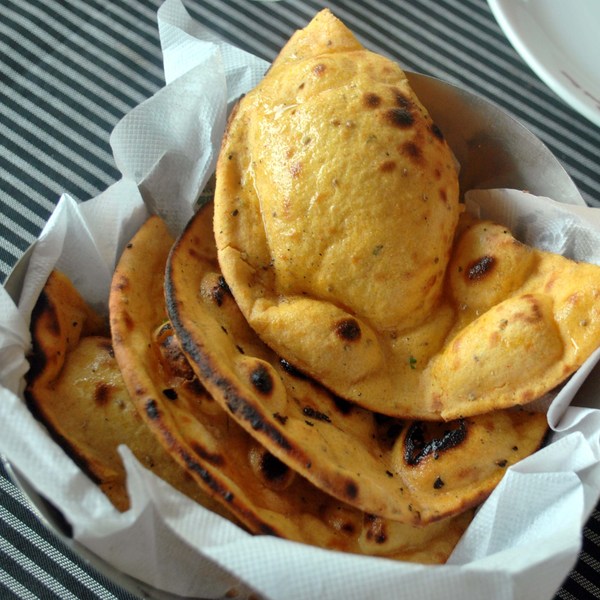
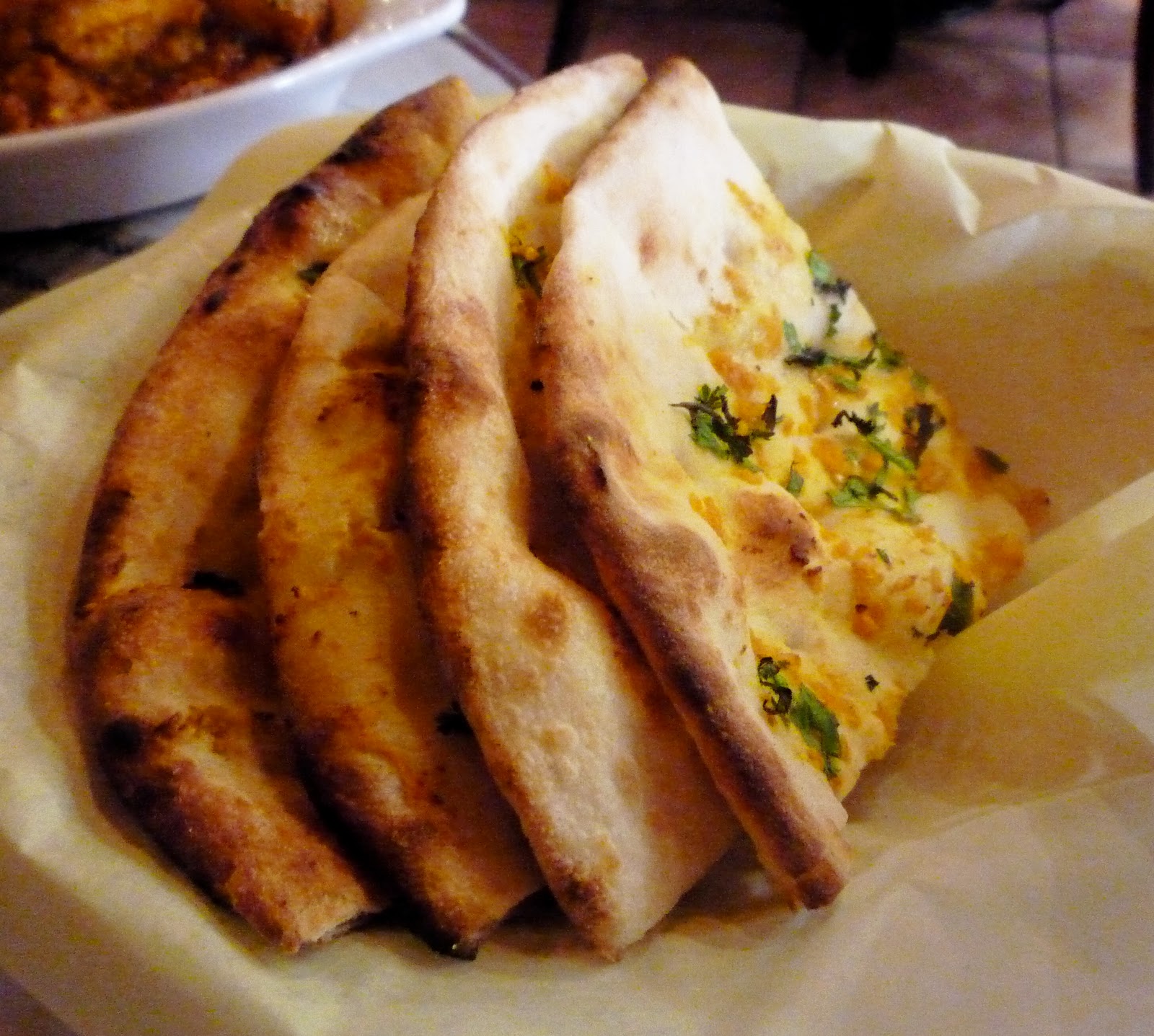
    Garlic Naan

    Garlic Naan :

    Ingredients :2 cup Plain refined flour, 1 cup yoghurt, 1 teaspoon baking powder, 1/2 teaspoon sodium bicarbonate, 1 teaspoon onion seeds, 1 tablespoon garlic finely chopped, 1 tablespoon butter to glaze the naans.

    Servings : 3 to 4

    Method : mix plain refined flour, baking powder, sodium bicarbonate and sieve it well to add up air . (this process makes fluffy & soft naans). Kneed the flour mixture with yoghurt into a fine soft dough , if you feel yoghurt is little less then u may add some Luke warm milk to make a softer dough. wrap the dough with a damp cloth and keep it for minimum two hours ( You may keep it overnight if you have preparation time ). This gives the dough time to ferment well , more the fermentation more fluffy and softer naan you would get. Once the dough is fermented you can make naans of your desired size with the help of a rolling pin . Once you get the desired shape top it with garlic and few onions seeds and with the help of your hands elongate it from two ends to get a longitudinal naans. Now the way you cook chapatis you just have to repeat it for these naans (No tandoor required , just simply toss it both sides on a hot tava ) the naans themselves will blow u beautifully. Once done glaze it with butter on top and serve hot .

    Makki di Roti

    Makke di roti :

    Ingredients : 2 cup Maize( Makka /makai ) flour , Luke warm water to kneed , 1/2 cup wheat flour , ghee or unsalted butter to cook and for glazing .

    Servings : 3 to 4

    Method : Its simple recipe but you need to be very careful while making it as it has a tendency to crack up from sides and eventually break. To avoid that its important to kneed the dough just before serving it. Its easy to make a dough so its not a very difficult thing to maintain

    Mix maize flour , wheat flour with the help of a siever  and kneed it with Luke warm water. Make a soft dough as hard dough may crumble up easily. slowly with the help of your palms flatten it and increase its size. Try to maintain the shape the sides will crack its something which is obvious , so do not worry. Once you have flattened the bread , bake it in a hot tava from both sides and glaze it with ghee . Serve it with Spinach curry, or simply with jaggery it will taste awesome . Its very commonly eaten in Punjab (North India) on a day to day basis during winters. It has natural warming ability so it keeps warm from within.

    images

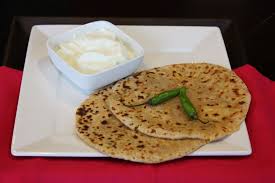
    Paneer Paratha :

    Ingredients:

    For Dough :
    2 cups whole wheat flour , 1/2 cup refined flour , 1 tablespoon cooking oil( Oil helps the bread to get moistened crusty look ), Luke warm water to kneed , pinch of salt, 1 teaspoon Ajwain ( carom seeds ).

    For stuffing :

    1 cup grated cottage cheese or Paneer , 1/2 cup coriander leaves chopped , 1 tablespoon finely crushed pomegranate seeds , salt to taste ,1 teaspoon red chilly powder, 1 teaspoon Aamchur ( dry mango powder), 1 teaspoon finely chopped green chillies.

    Oil for glazing the parathas.

    Servings : 4 to 5 parathas

    Method : Sieve whole wheat flour and and refined flour and add cooking oil , salt ,ajwain & Luke warm water to make a soft dough out of it . Keep it for 30 minutes and prepare the stuffing .For the stuffing mix all the ingredients mentioned above for stuffing purpose.

    Once you are done preparing both take equal portions from the dough and stuff the paneer mixture into each portions and flatten it with the help of a rolling pin . Bake it on a hot tava from both sides once its crusty glaze it with oil ( you may use butter ) . Serve hot with your choice of curry or you can simply serve it with yoghurt . Enjoy the flavours of these great Indian breads and see your family smiling.