Author: shayeree chakraborty

  • Four Appetizers from Bangladesh that Will Blow Your Mind!

    Four Appetizers from Bangladesh that Will Blow Your Mind!

    Not a very long time ago when both the Bengali sisters were conjoined, India witnessed a phenomenon in cuisine from this part of the country. Although Bangladesh today is not physically part of the nation we call our Home, fond memories of togetherness live on in the food enjoyed by West Bengalis. A large part of Bengal houses those Bengalis who had had their roots in East Bengal but have been living in the western counterpart for generations. Bengali Recipes thus include a significant melange of the East and the West. Here’s reliving ten appetizers from the other side of Bengal that will make you want to be a different kind of Bengali 😉

    Fried Fish:

    Fried Fish

    Wash a kilo of surmai fish (if you have a knack towards experimenting, go ahead!) and put half a tablespoon of salt, dill seed, coriander powder, tamarind pulp and ginger garlic paste. Put in an egg, mix it well and marinate for a while. To prepare the batter, mix some corn flour, salt, red chilli flakes, black pepper, gram flour, dill seeds and cumin seeds together. Take a piece of fish, roll it in dry ingredients and deep-fry till golden-brown. This dish is high in nutrients and fish is very good for both brain growth as well as hair. Not only that, this dish is very easy to make and serves to cure all evening-time hunger woes. Do not lose heart if you don’t get it right at the first go. With time and patience, this fish-preparation will become a piece of cake.


    • Crispy-fried Cauliflower:

    Cauliflower

    Four tablespoons of rice flour, one tablespoon of corn flour, half teaspoons each of red chilli powder and cumin powder, one-fourth teaspoon of turmeric powder and half teaspoons each of salt and sugar should be mixed well in a container. In another container, beat an egg, add one teaspoon of soya sauce and three tablespoons of water. Mix well.
    After a smooth batter is made by mixing these two mixtures, it should be set for around 10 minutes. In the meanwhile, take a saucepan and pour in some water. Add some salt (not more than one teaspoon) and leave it to boil. As the water boils, add 10-15 cauliflower pieces (all cut to an inch in size) and boil them for 5 minutes till the flowers soften. Drain the water. Heat some oil in a pan and keep adding the flowers after slowly dipping them in the batter that you have already made. Fry them, till you get the lovely brown tinge. Be patient with this dish, any hurry might result in loss of crispiness. Take the flowers, keep them on some tissue paper to soak the excess oil and then serve to your amazed guests!


    • Eggplant Fry:
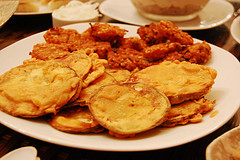
    Beguni

    This eggplant fry coated in besan is a huge hit on this side of the border too! Known as the infamous “beguni”, this dish can be a wonderful pre-meal snack or even a lovely evening-time munchie. The procedure is as follows: take half a cup of besan or gram flour, half teaspoons each of turmeric powder, red chilli powder and cumin powder, 2 teaspoons of rice flour, 3/4th teaspoons of baking powder and half a teaspoon of salt.
    Mix them well in a bowl and make sure the distribution of ingredients is as even as possible. Add water to the mixture and stir well to make a smooth batter. Keep it aside for half an hour to forty-five minutes. Now, the eggplant needs to be washed and sliced into pieces not more than half centimetres thick. Heat the oil on a medium flame, coat both sides of the eggplant pieces with besan and then carefully launch it into the oil. Fry both sides of the pieces till you get a nice golden-brownish tinge. Soak the oil on a paper towel and serve with or without ketchup.


    • Vegetable Cutlet:

    cutlet veg

    This is very good news for all the vegetarians out there! It is indeed a stereotype that Bengali food is nothing without meat and fish… and an untrue one at that! This vegetable cutlet will surely win over all, no matter what their preferences. Grate 2 medium-sized boiled potatoes and set them aside. Boil 3-4 cups of water, add two cups of mixed vegetables and a pinch of salt just when the water starts to boil. Boil for 5 minutes. Drain the water and leave the mixture to cool down.
    Squeeze the water from the vegetables. Mash the vegetables but do not make a paste. Heat one tablespoon of oil in a pan, add cumin seeds and crushed cashew nuts and fry all a while. Add chopped onion and continue frying till the onion becomes soft. Add half a teaspoon each of chopped green chilli, ginger paste, garlic paste and fry for a few seconds. Add the vegetables (not the mashed potato) fry till the water dries up.
    Take the vegetables in a mixing bowl, add the grated potato, and mix all. Add cumin powder, red chilli powder, garam masala powder, chat masala, mango powder, chopped coriander and salt and mix them well. In case the mixture still seems watery, add a few bread crumbs. These will soak up the excess water. Take a part of the vegetable mixture, make the desired shape and coat it with bread crumbs.
    Heat some oil in a pan. When the oil is well-heated, carefully put the cutlets in and fry till you achieve the golden-brown colour. Soak the excess oil on a paper towel. Serve with ketchup or chutney.
    All these dishes are very easy to prepare and never cease to amaze anyone they are served to! So get the Bengali bit of your Indian identity alive and kicking! 😉
  • Secrets of the Bengali Kitchen

    Secrets of the Bengali Kitchen

    The best part about cooking, as every enthusiast would agree, are the little additions and subtractions here and there that can make-or-break your dish. All those who have tried their hand at cooking Bengali cuisine know how particularly tiring it can be to get the dish “just right”. Bengali cuisine, like every other cuisine, has a feel unique to it. For a true Bong foodie, distinguishing between authentic and ‘almost-authentic’ Bong food in a matter of a few seconds is a skill picked up quite early. Then how DOES one get it right? Here’s bringing you five delicious secrets from the Bengali kitchen that will add that extra zing to your maachh, mishti and more 😉

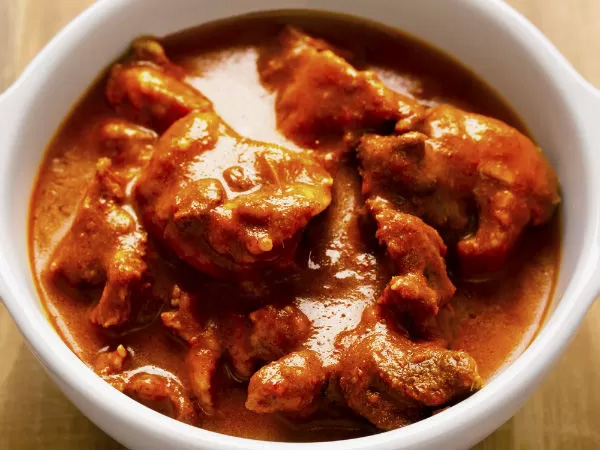
    Kosha Mangsho: One of the most popular and well-loved dishes in Bengal is definitely the “Kosha Mangsho”, translated to English as Red Mutton Curry. Along with great taste, Kosha Mangsho comes with high health benefits and has always been a favourite in Bengali kitchens. What tends to go wrong with it most of the time is the correct, and rather hard-to-achieve, balance of spices. The easiest trick in the book to get this one right is to go easy on the chillies. I would suggest avoiding chillies altogether, but if unavoidable, try getting hold of Kashmiri Degi Mirch. Degi Mirch refers to the dried fruit of chilli peppers and powdered Degi Mirch has been made easily-available in stores under various brand-names. To get the brilliant reddish-brown colour that defines the curry, add a spoonful of sugar in the oil and wait for it to caramelise before frying the spices.

    kosha mangsho

    Maachher Tawk: This sweet-and-sour dish is a fish-based preparation, very popular with traditional Bengalis even today. The most important step to get right here is, of course, the choice of fish. Machher Tawk is prepared using large pieces of rohu or ‘katla machh’, an easily available sweet-water fish bred in Bengal’s numerous ponds but may also be prepared using the ‘mourala’ fish that can be eaten whole. The ‘tawk’ is often compared to the rasam of South India and helps cool the body and also helps in digestion, thus making it a popular summer favourite. The fish used has to be very fresh and devoid of any smell. The fish must be lightly fried; remember, it comes towards the end of the meal and must not be a heavy curry. Use a little jaggery instead of sugar, raw mangoes instead of tamarind and maybe one or two green chillies for the zing and voila! You have perfected the traditional fish curry!

    maacher tawk

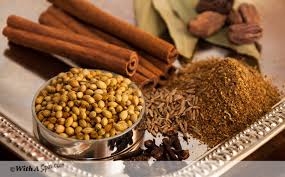
    Garam Masala: Although this is one of the oldest tricks in the book, I deem it quite necessary to mention it here. A blend of ground spices common in Asian cuisine, the word garam refers to intensity of the spices used. A typical Indian version of garam masala contains turmeric, black and white peppercorns, cloves, cinnamon, black and white cumin seeds and black, brown, and green cardamom pods. Garam masala contains several micronutrients and is considered good for health. One important commandment of Bengali Cuisine that one must remember is : toil brings rewards (in this case, flavour.) Instead of choosing the readymade garam masala available in the market, opt for making a powder of crushed small cardamom, clove and cinnamon. Do not go for badi ilaichi as it will ruin the authentic Bengali taste of your dish, no matter what you choose to cook.

    garam masala

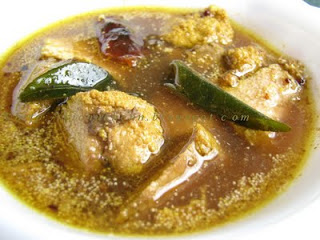
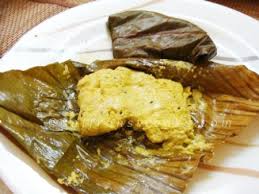
    Fish in Mustard Sauce: The health benefits of mustard are innumerable; high in selenium and magnesium, it is recommended to patients of asthma, arthritis and high cholesterol. It also slows ageing and helps one to lose weight. The world knows about the Bengali love for fish, and ‘Bhetki machher paturi’ is a gem in the crown. The trick to getting this very tricky dish right is making a good mustard paste, making sure that it doesn’t taste bitter. Heads up: this could be a major challenge, especially if you’re not comfortable with this dish. Professionals often fail while trying to get this one right and it is unlikely that those attempting it for the first time will hit the bull’s eye. However, that is no reason to lose hope as long as time and practice accompany it! One little tip: instead of sticking to only black mustard, try to use equal portions of black as well as white mustard. Soak the mustard seeds overnight and when crushing it in the mixer, add small ice-cubes instead of water. The magic of mustard will soon reveal itself!

    bhetki macher paturi

    Sweet Tooth: No Bengali meal is complete without the sweet dish at the end! No matter how wonderful your meal is, the true Bengali will always look at you expectantly at the end of the meal for that heavenly offering of mishti doi, sandesh or pantua. You have to get a little strict here; keep the calorie counter running! Although Bengali sweets are delightful to eat, they aren’t recommended in large amounts. A little tip here: when making mishti doi, make sure you use cow’s milk and never buffalo’s milk. Curd made from buffalo’s milk, although very common in East India, is not recommended at all for its high fat content. The best bit about Bengali desserts is the variety: cham-chams, rosogullas, payesh…the list is endless!

    mishti doi

    So what are you waiting for? Grab that apron, and you’re all set to win that Bong heart! A word of advice: serve it with a winning smile and a lot of love. Fondness is a dish best served smiling!

  • The End of Good Folk: “Bihu Somrat” passes away to cheers of joy

    The End of Good Folk: “Bihu Somrat” passes away to cheers of joy

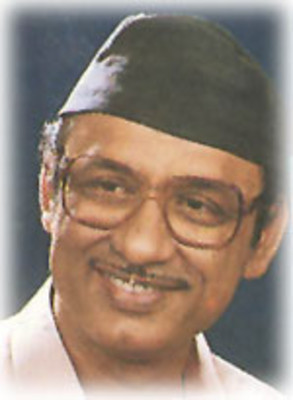
    Khagen-Mahanta


    When I heard the news the first time, I was moved to tears. To everyone around me, it meant nothing. On June 13th, a person by the name of Mr. Khagen Mahanta passed away after months of battling an illness. To those unfamiliar with his life and field of work, he may be better known as Bollywood singer Papon’s father.

    Papon

    Nothing can make a man prouder than the moment when he is known as his son’s father. To me, however, it was a shattering moment. Don’t get me wrong; I have nothing against the son. The battle I wage is against the cloud of disinterest that surrounded the father’s death. Facebook and Twitter were flooded by the World Cup fever, which by the way is a wonderful thing to happen. It makes me very happy to see people feeling proud of their passions, but it also disturbs me tremendously when we remain ignorant of, and even disrespectful towards, somebody else’s passions. Among those thousand World Cup posts, my eyes rested on one Facebook update about the heartbreaking news I had mentioned in the very beginning of my sad story: “Reputed King of Bihu… Rest in peace!” Ah. An Assamese friend remembered. Finally. I congratulated him- I really did. “It’s wonderful that you made an effort to make the world realised what a gem we have lost.” “I spent the whole of yesterday listening to his songs. I feel like I’ve lost my childhood.” Those words brought tears to my eyes. “I didn’t know you were so fond of Assamese culture”, my friend went on. “You’re Bengali, aren’t you?”


    happy-face-4

    A major chunk of my new-found respect for him disappeared. Mr. Khagen Mahanta was one of the greatest exponents of Assamese folk music. A musical legend, he was also tremendously famous as a soldier who made music his weapon. On his death, musician and singer JP Das lamented: “He was a true gentleman who never raised his voice. He was very passionate about Assamese folk music and its preservation. He tried to save the ‘borgeet’, ‘goxha’, ‘biya naam’ and other forms. His death has created a vacuum in the field of music.” Mr. Mahanta, for me, however, was simply the reason why I fell in love with Assamese culture in the first place. He is called the “Bihu-Somrat” (King of Bihu) and my first encounters with the part of his soul that he put in his music were through his Bihu songs I found in an old record in the attic. Although Bengal does celebrate Bihu (at least, parts of it do), the first Bihu song I heard was in Assamese. And I loved it. Assamese is a wonderful language, and fused with the melodious voice of this man, it struck a chord somewhere deep in my heart. My rendezvous with folk music had started early, and I soon went on to explore music from various parts of the country. The words ‘popular’, ‘folk’ and ‘classical’ did not mean anything to my childish ears, all I knew was I had found a passion that would fuel the loneliness of teenage, and fire the love of the senses that adolescence brings on. As I grew up, I realised my friends in school never discussed these things. They spoke of English rock songs I hated, discussed people with hairstyles that scared me and never comprehended the beauty I felt in my veins everytime Mahanta’s voice hit my ears. No one understood the language, and he was therefore labelled ‘boring’. I have news for you. I don’t understand or speak Assamese either. How can we call ourselves music-lovers when languages and social distinctions (folk, classical) and utterly stupid classifications called genres get in the way of our passion? Folk music remains my passion till date, and Mahanta’s songs simply enticed me towards the language! As I grew up, I made a sincere effort to pick up the language so that I could feel the spirit of the songs. By the time I had made myself fairly acquainted with the exponents of Assamese folk music, I realised I was very close to attaining an acquaintance with the language. Language and culture are vehicles of each other, but in the world that had been created around me, both were things to be looked down upon. The lure of the regional was something that had become part of my world and, at the same time, something that could never allow my world to merge with that of my friends. I realise now that I shouldn’t have been so shocked at the social media reaction. The death of folk culture had made its presence felt quite early in my life…and yet, it hurt me when a country on the other side of the world managed to receive the admiration that a region in our very own country has never received and truly deserves. I do not wish to advocate the supremacy of one culture over another; that can never be. Each country, each region and each culture is as supreme as another and everyone has something to learn from their neighbours. All I wanted was Bengal, Punjab, Kerala, Telengana to feel the pain Assam felt at that moment. Selfishly, perhaps, I wanted my country to scream out to the world and ask it to share in our loss. What I realised was : none had lost, for none had loved. Years of fighting for culture and music, and his death is met by rejoicing of various sorts. Several Assamese friends I spoke to told me they had never heard of him. They’d heard of Papon, of course. Famous Bollywood Singer. Chartbuster Hits. It’s okay if he died, they grinned. His son will carry forward the legacy. Are any of us worthy of carrying forward the legacy of our past? Assam had lost a gem that day but my generation had lost Folk long before that.

    images

    May my children be as enamored by him as I was. Or will they?