Author: srishti saha

  • Chokhi Dhaani: A Treat for all your Senses!

    Chokhi Dhaani: A Treat for all your Senses!

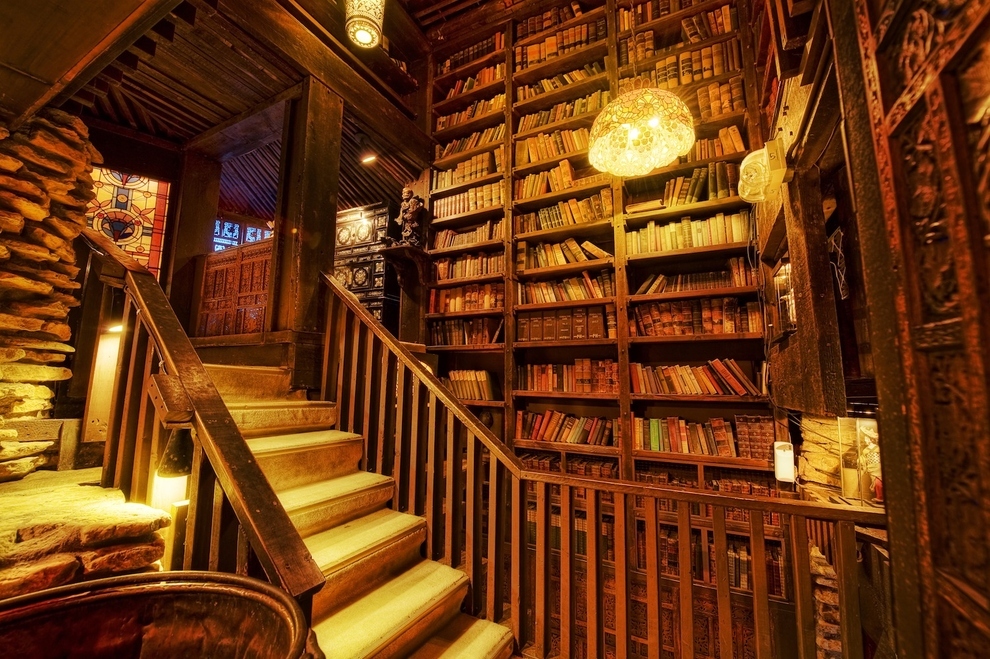
    Rajasthan, India’s biggest state in terms of land area that is spread over 132,139 square miles is a hub for ancient cultures and beautiful civilizations. The ‘land of Kings’ as the name suggests, was once home to the worlds’ first and most ancient human civilization, Indus Valley Civilization. Owing to its rich culture and extravagant history, Rajasthan is one of the finest seats of  both ancient and emerging cultures. The capital of this western state of India, Jaipur is a perfect example of how urban civilization can co-exist with age-old traditions, cultures and settlements. In this city lies an establishment that embodies the exact essence and individuality of the state. Chokhi Dhaani is a resort cum recreational centre that reflects the cultural, social and economic realities of the state from the ancient as well as modern times. Chokhi Dhaani is a concept that captures the vibrancy of Rajasthani culture in its truest sense. It hence has to offer to the inbound and native tourists the different facets and components of the western states’ heritage in its’ pristine semblance.
    download (5)

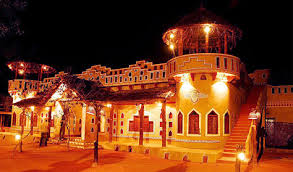
    Chokhi Dhaani directly translates into ‘ Special or good village’ and with the ambiance it boasts of, it makes one experience rural Rajasthan in its’ unadulterated form. Although it is located at a little distance from the actual city of Jaipur, it is well connected and easily accessible. Located around 20 kilometres away from Jaipur on the Tonk Road, one can reach here easily using ones’ own private conveyance or by a taxi. A taxi might cost you a bit around 600 Indian Rupees, inclusive of waiting charges. For an evening out in Chokhi Dhaani along with an exquisite Rajasthani meal, it shall cost you around 650  Indian rupees for an adult and around 400 for kids aged between 3 to 9 years of age (or of height up to 3.5 feet) . Without the meal it costs up to 450 rupees for an adult and 350 for the kids. The prices may vary a bit according to the time and season of visit. Chokhi Dhaani even has rooms for those of you who intend to put up here for your entire trip to Jaipur.  For those who intend to stay in the resorts within Chokhi Dhaani, there are buffet meals which may cost you around a thousand bucks for adults and 650 bucks for children. With food to die for, you shall not regret spending the amount of money here. The village is open for visitors from 5 in the evening to 11 in the night.
    download (3)

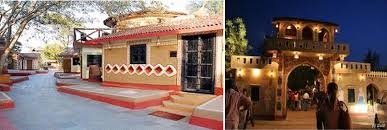
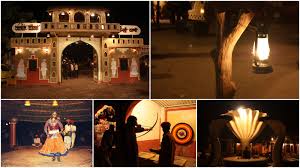
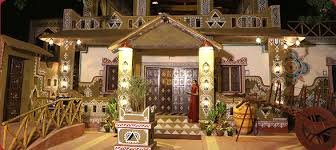
    With a huge wall with the appearance of the rustic mud walls as those that exist in the rural huts and structures in the desert region of Rajasthan and a beautiful wooden door open to welcome you, this place pleases ones’ eyes at the very first sight. Once you step in, you have men and women clad in aboriginal Rajasthani clothes and costumes ready to welcome you with open arms,  smiles on their faces and warmth in their hearts . These men adorning traditional Rajasthani attire and colourful turbans tied in the accurate fashion welcome you with ‘tikas’ or red vermilion on the forehead. After paying the required amount for entering, you can step into this world of wonder. There are little hut-like structures with thatched sloping roofs that are scattered around. You may find people greeting you in the traditional Rajasthani way and offering you an amazing variety of services. From a plethora of activities around you could witness a puppet show with narrations, a magic show, a snake charmer making snakes dance to his tune or even local dances by women dressed in colourful costumes. The dancers might even rope you in and the music and beats played on the indigenous drums and other musical instruments will tempt you enough to keep dancing to the tunes till you are drained out of energy. If you are too tired from walking around, there are sheds that give away refreshing summer drinks for free. Be it the delectable ‘aam panna’ or the tangy ‘jaljeera’, ones’ thirst for these Indian drinks never ends. Women can get their hands and feet decorated and tainted with henna for minimal charges. There are slides and other joy rides for the children as well. You may even get your future predicted by an astrologer, tarot card reader and a palmist that sit there every evening. Visitors also have an option of  enjoying rides on animals like camels, elephants or horses on a fixed route around the entire place. It is a great experience for those who have never been to rural areas of the Indian states and yet want to experience the little details of the life there.
    images

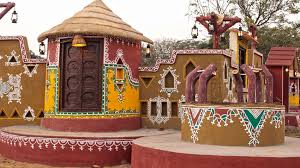
    A maze made of mud walls and a cluster of mud huts resembling the ones’ in an actual village complete the rustic setting of the place, thus lending it authenticity. You can even find life-sized models of men and women, made of clay to complete the scenery of rural households. With facilities for people to try smoking from the traditional ‘hookah’ , it can provide you with yet another point to note down in your list. There is also a man-made canal which permits boating and thus can be a good way to relax after roaming around.
    download (1)

    An artificial tunnel that has been made to look like a haunted place leads into an open space whee there are groups of people dressed as people from the indigenous tribes. They seem to be friendly and one can easily interact with them and can even dance if he/she wishes to. There are shops and counters where one can buy a wide variety of articles, native handicraft products or just souvenirs for friends and family. Products ranging from puppets, key rings,  stationary, shawls and turbans, other clothing items or even plastic and mud toys; one can find them all here. There are counters for games like archery, dart games and many others, where if lucky, you can even win small rewards!
    download (4) images (1)

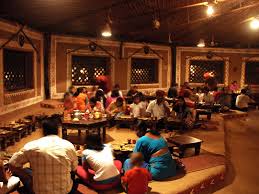
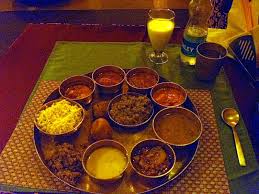
    The best part is the dining place where one gets to sit in a rural Rajasthani setting  and enjoy unlimited servings of authentic pure vegetarian food from the state. Be it a variety of breads, spicy chutneys, delicious sides and curries or the refreshing ‘chaanchh’; one can never have enough of the food served here. One has the options of sitting in either an AC hall or a non-AC dining space.  Once you’re done with the meal, make sure you thank the ones’ who served you. They definitely will appreciate your acknowledgement.
    download (2)

    An evening spent here will be an outing that is worth your time and money. Make sure this place features on your itinerary for the next Jaipur trip that you plan.
  • The Fedora Hat

    The Fedora Hat

    So, you have  an English-themed party  in two days and you go buy one of the best outfits from a designer-clothes brand outlet. And with that you now have to plan and match your accessories. With jewelry, shoes and a bag in place, you feel good enough to go. We all know how important accessories are to accentuate or complete a look. They not only enhance physical appearance, they are also symbolic of ones’ confidence, character and mood.

    The significance of accessories is also extended to cultural and social aspects. In the following article, we shall get to know one such accessory.  You must have seen entertainment artists like actors, singers and dancers donning this piece of adornment in a large number of movies and music videos. What today adorns the heads of modern fashion lovers , was once a daily wear for the Orthodox Jews. The Fedora hat along with a smaller variant of the same style, called the Trilby are supposedly two of the most famous hats for men. These never went out of fashion and have been called timeless by people who love hats.
    images

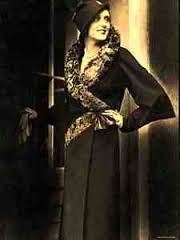
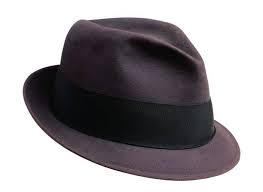
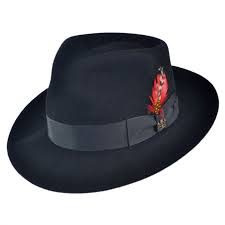
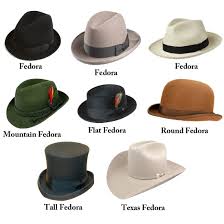
    One can easily recognize a fedora as a felt hat with a wide brim and an indented or a pinched crown. Both Trilby and Fedora were originally made of beaver or rabbit felt. They can be found in both stiff and softer varieties. A fedora which is more popular among the masses is just a little different from the Trilby in the way it looks. It generally is also bounded by a hat band or a trim-ribbon around the rim of the crown. The fedora crown has its brim turned down in the front and is snapped up at the back , giving it a characteristic appearance and thus making it popular among all men.

    The gutter dent or the crease running lengthwise through the crown and the side-dents give it a particular pinched appearance. Fedoras can also be creased with teardrop crease which gives the appearance of a teardrop from the top, or a diamond shaped crown, centre dents and many others. Although the positions of the pinches can also vary, the basic appearance stays the same. A typical fedora crown is upto 4.5 inches in height while the brim spans up to 6.4 centimeters or 2.5 inches wide. The brim may also be wider as per the rquirement. While the crease is a characteristic feature of the fedoras, some of them might also lack the crease and are called the ‘bucket fedoras’. Though fedoras can be found in a variety of colours and prints, but black, grey, dark brown and fawn are the most common colours. A Trilby looks very similar to a Fedora except for the fact that it has a shorter brim and also a slightly tighter upturn at the back.

    download

    The first time some one sported a fedora hat was in the year 1882 as a female accessory on the production of a stage play in Paris. It was a first production of the play titled ‘Fedora’ by the author Victorian Sardou. The actress Sarah Bernhardt who portrayed the role of Princess Fedora wore a hat with a wide brim and a pinched crown with an indented center. This was named after her character and has been popular ever since as the fedora hat. After Sarah Bernhardt wore the hat for her play, it became a popular fashion statement for women especially for women-rights activists. Besides them, the fedora hat found its’ many fans among newspaper reporters, Chicago gangsters, and tough guys in the movies. Rather, it became a basic accessory with a suit of clothes.

    Any man who would wear a suit of clothes would top it off with a fedora. In 1924, Prince Edward of Britain started wearing fedoras on public appearances and social gatherings. Soon after this, fedora became a significant part of fashion for men and went on to replace caps, bowlers’ hats or even top hats. The classic black fedora was also worn traditionally by Orthodox Jews in the first few decades of the 20th century. They adopted the fedora as a part of their daily wear and a few of them still wear one. Though many cultures reportedly incorporated the fedora in their costumes significantly, the classic fedora was invented in the year 1891. On the other hand, what is known to be its’ younger brother, the Trilby was invented in the year 1894.

    download

    A fedora was typically worn in urban areas by men to protect them from the bad weather. It also has an aesthetic appeal that added to the many purposes of the hat. The structure of the hat makes it fashionable and hence lends to its’ popularity. Besides the appearance, they are also practical. The practicality lies in the fact that it has a relatively shorter brim that the other hats and hence they did not obstruct the view while driving a car. Since they are not so big, they could easily be worn on social outings and in public transports without any hassles. they could also be easily folded and stored or carried around without distorting the shape or  posing any  such problems. Besides utility, cultural and social importance, these hats have also made a significant place for themselves in the fashion industry and have been an important part of popular culture.

    genuine-indiana-jones-fedora-hat-8

    The media has played an important role in keeping the fedoras’ popularity intact even if it dipped at times. Hollywood actors and actresses like Cary Grant, Humphrey Bogart, football coaches such as Paul Bear Bryant, musicians like Michael Jackson and Justin Timberlake and even writers of the sorts Terry Pratchett have all sported this statement of fashion and have contributed to keeping it in fashion.

    images (1)

    Thus we see, the Fedora has a significant place in the glamour and fashion sector. It has always been noticed since it was invented. Even if it lost its’ popularity in the late 1950s owing to the fact that it was relatively a formal piece of clothing and people favoured informal clothing styles then, the significance was restored as and when important figures belonging to different fields wore it publicly. People have accepted the Fedora and all its variants in all the dimensions that it has to offer.

  • Snack-Time : Part 2

    Snack-Time : Part 2

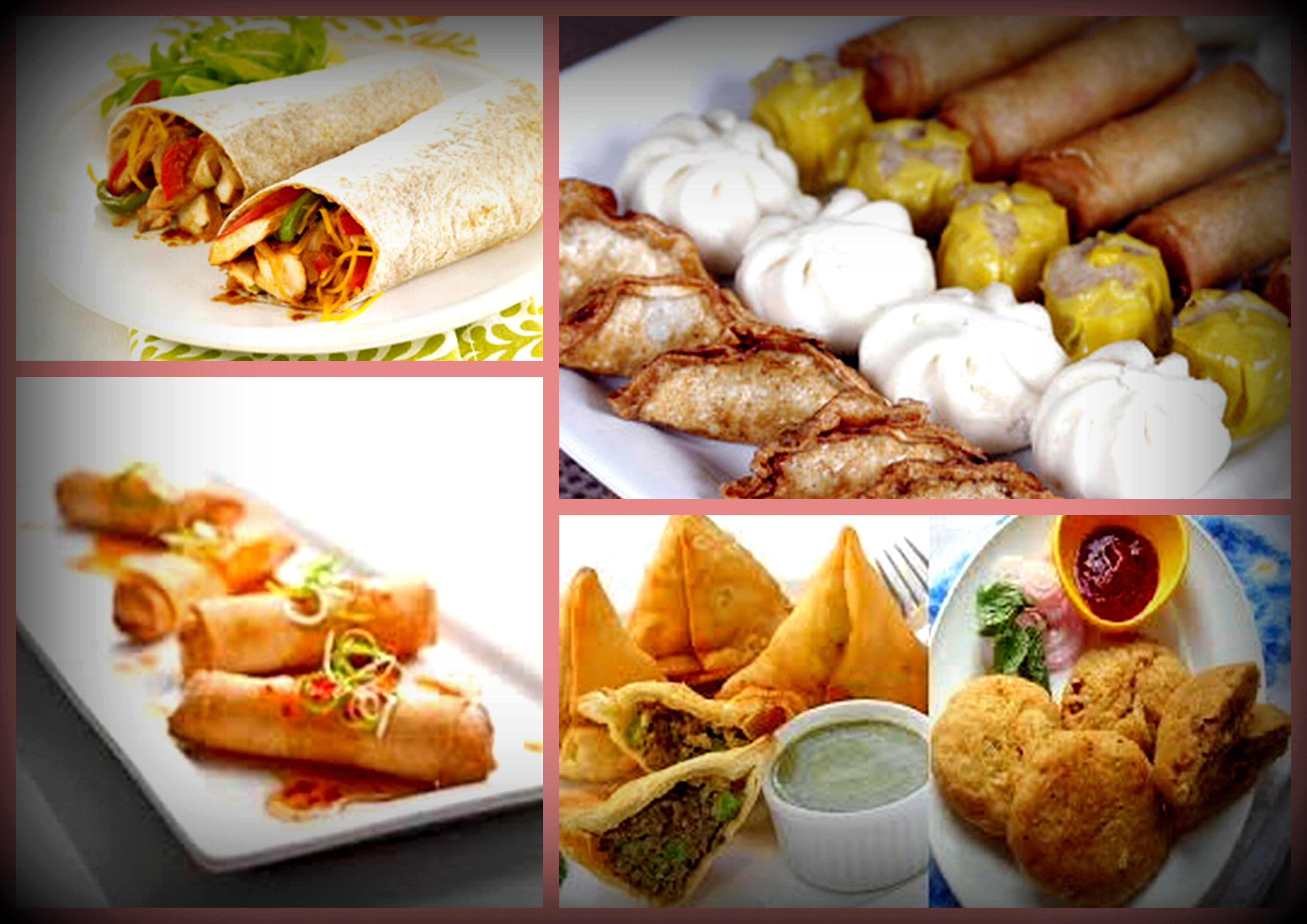
    As the largest continent, Asia is home to a variety of cultures, religions, castes and races. Asian cuisine is one of the most diverse amalgamation of spices, flavours and a variety of ingredients owing to the large number of countries the continent is home to. Besides the huge number of ingredients being used in the Asian style of cooking, the multitude of techniques used add to quality, thus making it a characteristic style of traditions and components. Asian cuisine can be broadly categorized into several major regional families viz. East Asian, Southeast Asian, South Asian, Central Asian, and Middle Eastern cuisines, each easily identifiable by a distict feature or a characteristic common ingredient used in most dishes. For instance, curries are a regular in the Eastern and Southern regions. This being the second in the series ‘Snack-Time’ covers a few facts about a few Asian snacks.

    Samosa

    images (2)

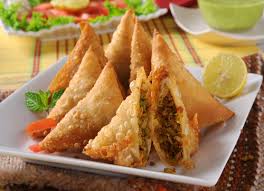
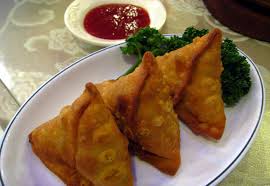
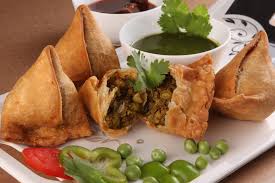
    An entree originally from Middle East Asia, South Asia, or even Central Asia is also known as samsa, sambosak, somasi or somaas depending on the region it it found in. To be described, it is a pastry that is stuffed with spiced ingredients like boiled and mashed potatoes, peas, onions, lentils or even cottage cheese and then either fried or baked. The non vegetarian version may have ground beef, ground chicken or any other form of meat as the stuffing.

    images (1)

    The snack is said to originate in the Middle East where it was originally called as Sambosa before the 10th century. It was then made familiar to South Asian cooking when cooks from the Middle East and Central regions of the continent began migrating to South Asia in search of work in the kitchens of the nobility. Reports have records of the dish being served as a part of royal meals. Amir Khusrao who was a royal poet in the Delhi Sultanate, wrote that the nobles relished the “samosa prepared from meat, ghee, onion and so on”. Other records by the traveller Ibn Batuta, dating back to the 14th century also support the fact. The Indian Samosa is mainly vegetarian and is said to originate in the state of Uttar Pradesh. It is a popular appetizer through out the country and even though the size and the filling may vary from region to region, the basic shape, which is a tetrahedron, stays the same.

    images (3)

    In India, the samosa mainly consists of a deep-fried refined-flour shell with a spiced potato and peas filling seasoned with chillies and fried onions. It is served with a mint-chutney and can also be plated with a variety of other sauces, like sweet tamarind sauce, tomato ketchup etc. Known as ‘Shingaras’ in West Bengal, it is a slightly different version of the samosa found in the other parts of the country. Howsoever you prepare it, it is still one of the most delectable snacks found in India and in the other parts of Asia.

    Shawarma

    download

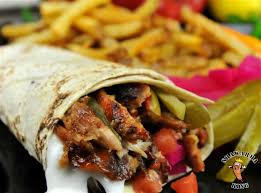
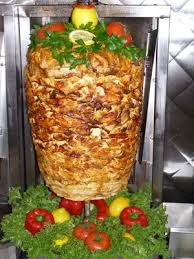
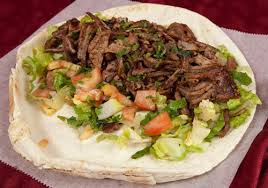
    A favourite among almost all the non-vegetarians, this Arabian fast food is popular in almost all Eastern and Mediterranean countries as well as in countries like Argentina, Brazil, Australia, Canada, UK, West Africa and the United States. As its’ history suggests, Shawarma or Shawurma is originally a Levantine Arab meat preparation, which means it belongs to the Levant, or the Turkish-Ottoman Empire. It involves marinating whole-muscle meat  in a savory blend of spices which is then hand-layered into the shape of a cone which is gradually cooked on a spit.

    images (5)

    The marinade that is used for the meat mainly contains lots of garlic, ginger, lemon, yogurt and other Asian spices like bay leaves, cinnamon, cloves, cardamom, nutmeg, dried lime, spicy paprika and vinegar primarily. At times, orange zest or slices of orange are also used. Chefs all over the world claim that the secret of  making the perfect shawarma lies in perfecting the marinade. The shawarma’s origin is said to have happened in Turkey. Here it was known as “çevirme”, which directly translates to ‘turning’. This makes more sense when we see how the meat-cone is cooked by the heat by slowly rotating the cone so as to cook the meat from all sides. After the meat is roasted from all sides for a few hours at a stretch, it is shaved off from the cone  and the shredded meat is tossed and mixed with a spicy sesame sauce called Tahini and is wrapped in a pita bread or any other bread for serving.

    images (4)

    The other sauces used to serve a Shawarma include hummus, amba sauce consisting of pickled mango spiced with chilli or even mayonnaise. Though the most common meat used is chicken, some places even use goat meat or beef as well. This delicious snack is one of the most filling and wholesome snacks you can get hold of easily in almost all cities in India as well.

    Dumplings

    l_3377_StockFood-00193424cut

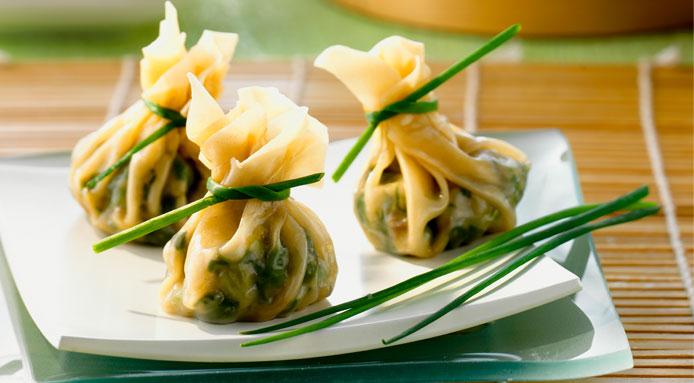
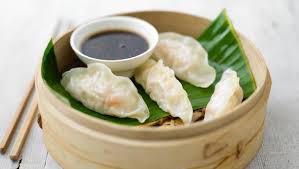
    Call them dim sums, dumplings or momos, they shall be one of our forever favourites when it comes to snacking. These little balls of joy are like like surprise parcels that burst into delectable flavours when bit into. Dumplings are basically a style of Cantonese  cooking and are originally prepared as small bite-sized portions of food which are then served in small steamer baskets or on small dishes. Yum cha or tea tasting is an older Chinese tradition and Dim sums are often linked to this practise. It is said that travellers while travelling on the Silk Road would halt at tea houses set up by the side of the road for rest. They would then add snacks with their tea.

    images

    Dim sums are often served with tea and hence eating dim sums at an eatery is usually termed in Cantonese as going to “drink tea”. The unique culinary art of dim sum originated in southern China. It can be prepared either by steaming or frying among other methods.

    220px-Chinesische_Küche

    Though there are a variety of dim sums the most popular ones are the translucent ones with a filling of well seasoned shrimp, meat or vegetables  packed in rice flour or wheat starch skin. It is found all over the world and is relished by people of all regions.

    blogimage

    These are some of the popular Asian snacks that suit almost all palates around the world. For yet another region, check out the next and the final article in the series.

  • Snack-Time: Part 3

    Snack-Time: Part 3

    The third and the final article in the series ‘Snack-Time’, primarily focuses of two popular snacks from Europe. We all have an idea how passionate the Europeans are about their cuisine. Be it the most extravagant dinner party or the simplest dish prepared at home, they relish every grain of food. The Europeans are not just very particular about what is on their plate, they also make sure they have suitable complements for each dish, be it an age-old wine or just plain orange juice.

    download (3)

    European snacks are popular throughout the world and are now sold by many leading outlets internationally. Be it sweet treats or savory dishes, Europeans are very particular about the technique of cooking as they believe it lends them authenticity. With a fair amount of cultures interacting and existing harmoniously on a relatively smaller piece of land, the intermingling of cultures is well reflected in the cuisine and food habits. European cuisine is alternatively also called Western cuisine and a characteristic feature of this food culture is that they emphasize greatly on accompaniments, seasonings and sauces and condiments. The cooking in Western countries is diverse from Asian cooking and also in the method of serving. For instance, the size of the meat served for a meal is considerably larger in Western cuisine than in the Asian meals. Following are a few famous appetizers from this continents of beauty and culture.

    Pretzel

    images (1)
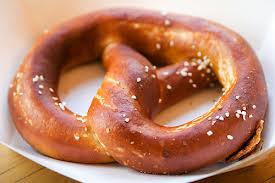
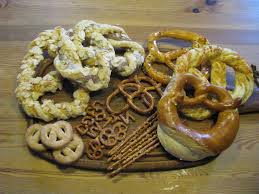
    A pretzel is a baked bread in a shape of a unique knot. Though salt is the most common seasoning for pretzels, other flavouring agents include chocolate, sugar, seeds, glazes and much more. The traditional shape of a pretzel is a symmetrical loop that is distinctive. The ends of a traditional pretzel is made from a long strip of dough which has its’ ends intertwined and then twisted back into itself in a particular way that is called the pretzel loop. Though they now come in various shapes and sizes, the standard shape stays the same. The origin of pretzels has been recorded differently in various accounts. It has been written by Bryan Bunch and Alexander Hellemans in the book ‘The History of Science and Technology’, which dates back to 610 AD that an Italian Monk invented pretzels to reward the children who learned their prayers. The strips of dough were folded to resemble arms crossing the chest and were then baked. These were called ‘pretiola’ which means ‘little rewards’.

    images (3)

    It is claimed by some accounts that pretzels have a Christian back-ground and the credit of a pretzels’ invention goes to the German monks. A 12th century illustration, Hortus deliciarum from Alsace depicts a pretzel at a banquet organized by Queen Esther and King Ahasuerus. Some other records also claim that the pretzel may be invested in southern France. When bakers were held hostage by local dignatories in Germany, they apparently came up with the concept of pretzels out of desperation. It is known as ‘Brezel’ in German and the name may have been derived from the Latin root ‘bracellus’ meaning ‘bracelet’ or ‘bracchiola’ which means ‘little arms’.
    The pretzel holds a significance that is greater that satiating ones’ hunger. It has been used as an emblem for the bakers in south Germany since the 12th century. It also holds a religious significance as pretzels are made of only flour and water and thus it can be consumed during Lent when the Christians are asked not to eat eggs or dairy products.

    images (2)
    One can now find a variety of pretzels, sweet and savory in a variety of flavors and sizes. Toppings like sesame seeds, poppy seeds, melted cheese, bacon, pumpkin or caraway seeds or even nuts like chopped almonds, pistachios and walnuts can be used to make a pretzel look inviting.

    Pizza

    download

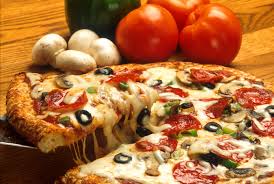
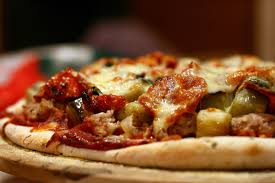
    What the world knows now as a Pizza and consumes it as a full course meal was originally a small-sized portion of food. A traditional pizza is an oven baked flat bread with toppings of tomato sauce and cheese. Some additional complements are a variety of vegetables, meats and condiments that go well with the bread. The name ‘pizza’  first appeared in a Latin text from Gaeta which dates back to 997 AD. Gaeta is a town in southern Italy and the text stated that  ”a tenant is to give the bishop of Gaeta duodecim pizze (“twelve pizzas”) every Christmas Day, and another twelve every Easter Sunday”.

    download (2)

    The modern pizza is said to be invented in the city of Naples in Italy and its’ popularity has now reached out to the world. It is said that ancient  Greeks used to coat their breads with a combination of oils, spices and cheese. On the other hand, Romans developed the concept of a ‘placenta cake’ topped with honey and cheese and flavoured it with bay leaves. But the modern Neapolitan pizza was invented only in the late 18th or early 19th century. Before that time,a  flat bread was generally  topped with a variety of flavourful seasonings for instance,  garlic, salt, cheese and basil. It is still not clear as to when tomatoes were first added.

    images

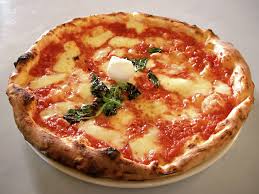
    A famous story claims that the Pizza Margherita as we know it today was invented in 1889. When Queen Margherita was to visit the Royal Palace of Capodimonte, the Neapolitan pizza maker, Raffaele Esposito was commissioned to create a pizza in her honor. Out of the three different pizzas which he had prepared, the Queen preferred a pie that had the colors of the flag of Italy viz. red  from the tomato, green from basil leaves, and white mozzarella cheese. Apparently, this pizza was then named after the Queen as we all know now know it to be, “Pizza Margherita”. Various other variations were then brought into the existing recipe and now there are innumerable varieties and versions of a pizza that are prepared in homes world wide and are even sold by leading food chains.

    images (4)


    These are some of the brilliant food options that the world provides us with. There are many more and reading about food history gives us a new dimension about it. Next time you bite into your favourite pizza, the delectable Shawarma or sit with a big bowl of popcorn while watching a movie, you’ll definitely eat with a newer awareness.


  • Snack-Time: Part 1

    Snack-Time: Part 1

    By definition, a snack is a term coined for the portion of food that is generally smaller than a proper meal and is eaten between the meals. Originally, snacks were prepared from simple ingredients that would easily be available at any house-hold. Traditionally, leftovers, fruits, salads, cold-cut sandwiches, nuts and similar simple-to-make food items were consumed as snacks.  With the globalization of cultures and industrialization taking over, packaged food and processed items started filling up the shelves of the snack-section in markets. Potato chips, chocolates, sausages, yogurts and smoothies are just to name a few.

    In the series of articles titled ‘Snack-Time’, this is the first of the three where in we covered two popular snacks from the North-American continent. Read on for all that information you need to know about how some of your favorite snacks came to be known in their present worth.

    Nachos

    images (12)

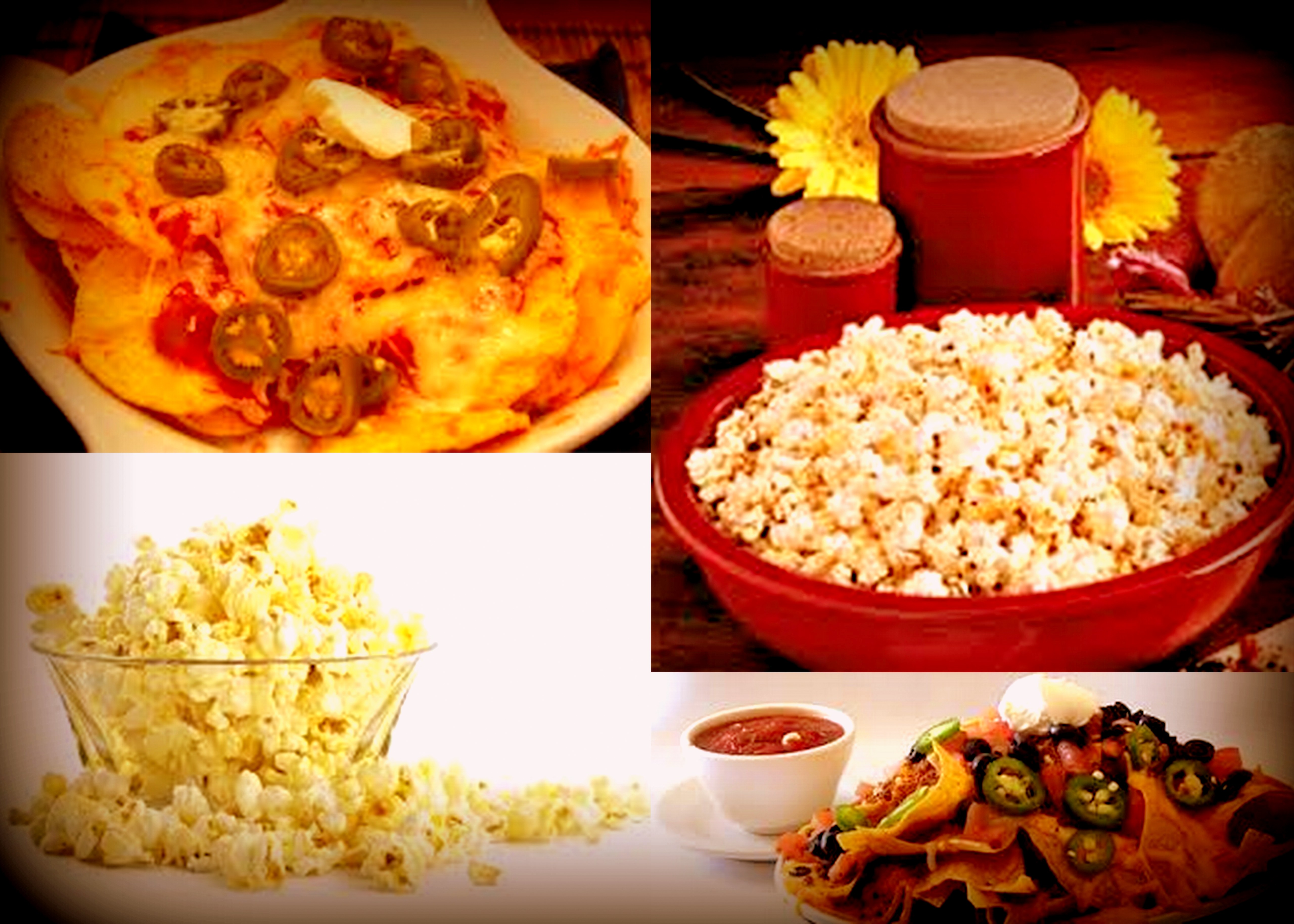
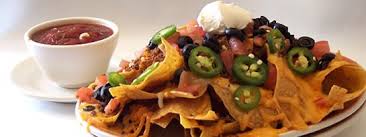
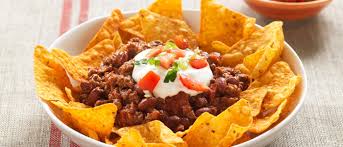
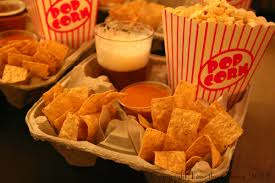
    Most of us Indians have developed a palate for spicy food and hence many of us are fond of Mexican food. The perfect blend of spice and flavours, ranging from that of spicy peppers to tangy sauces makes it a perfect blend for visual satisfaction and for quenching ones’ huge appetite. One such popular Mexican snack is Nachos. Nachos is a originally dish of tortilla chips topped with cheese or cheese-based dressings. Be it the movies or the football matches, nachos form an integral part at the menus of the snack-shop at stadiums and movie halls. THe traditional nacho recipe makes ones’ mouth water just by the mere mention. The salty crunch of the chips, the delectable flavours of the sauces, the creaminess of the cheese dressing and the fresh crisp of the jalapenos make it the best possible savory snack using cheese and chips. This appetizer can easily be transformed into a meal sized portion by jazzing it up as per your taste.

    download (8)

    The Mexican treat does not have a very ancient history. There are numerous tales about how this dish came into existence. Accounts claim that Nachos originated in Mexico, in the city of Piedras Negras, Coahuila. It is said that in the early 1940s, around 1943, a few number of ladies while on a shopping trip went to the Victory Club restaurant, located just south of Eagle Pass, Texas, after it had closed for the day. Reluctant to turn paying guests away, the maitre d’hotel, Ignacio Anaya, assembled a simple dish with whatever ingredients were available in his kitchen: tortilla chips and cheese, and coined a new name for it that read, ‘Nacho’s Especiales.’ He cut the tortillas into triangles, shredded cheddar cheese and tossed it in and heated them quickly. He then sliced some pickled jalapeno peppers and added them before serving it to the bunch of the women. As the word spread the name of the dish was changes. The apostrophe was dropped and it became ‘special nachos’. The popularity of this dish spread all over through Texas and the Southwest. Anaya also worked at the Moderno Restaurant which follows the original recipe till date. He went on to open his own restaurant which he called the ‘Nacho’s restaurant’ in Piedras Negras. Who knew that these tiny canapes of tortilla chips topped with cheese and a few pickled jalapeno peppers could take him that long a way.

    Popcorn

    download (6)

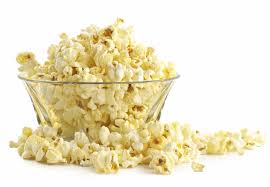
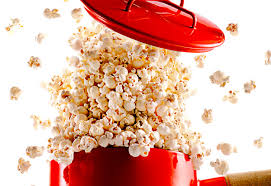
    Buy a ticket for the 2.00 p.m. show of a movie and enter the multiplex. You are welcomed by the pleasant aroma of corn and a long queue; a queue not crazy enough to enter the hall, but eager enough to grab a large bag of pop-corn! Popping corn, or better called as Popcorn is basically a variety of corn or maize that puffs up from the kernel when heated, due to expansion.

    The history of popcorn dates back to the before Christ era. As per the records, Popcorn was first cultivated on the Mexican lands around 9,000 years ago. It was derived from a wild grass. The evidence of popcorn being cultivated from 3600 B.C. was found in New Mexico. A few centuries later it was then domesticated on agricultural lands across Central and South America as well thus gaining popularity. It is one of the oldest forms of corn known and cultivated by human dwellings. Corncobs were also found at two atavistic sites in the country, Peru viz.  Huaca Prieta and Paredones  and it is claimed that they may belong to a time as early as 4700 B.C. This fact implies that people dwelling along the coast of northern parts of  Peru had already been introduced to the concept of popcorn by this time.

    download (7)

    The narrative that the British settlers  travelled to America in the 16th and 17th centuries and hence, carried what they learned about popping corn from the Native Americans is claimed to be a myth. There is no proof that the natives from the coast of North American cultivated or even knew about popcorn so early.

    Popcorn gained popularity during the Great Depression as it was inexpensive and costed nothing as compared to other food items. It thus became a common domestic commodity. During the World War II, prices of candy soared as sugar cultivation and consequently, manufacturing processes of candy became highly priced. This is when the Americans consumed almost thrice the amount of popcorn they used to use earlier.

    Mushroom_and_butterfly_popcorn

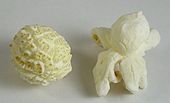
    A popped kernel of the corn is known as a flake, which can either be shaped as a butterfly (right) or as a mushroom (left) as shown in the picture. Popcorn can either be eaten with salted toppings like butter and spices or with toffee or caramel toppings as a sweetened snack. Many other versions like cheese flavoured popcorn  are also widely available these days. The snack has gained popularity all over the globe and is also taken as breakfast cereal.

    download (9)

    These are two famous snacks that the North Americans introduced us to. The other two parts shall cover a few more snacking options from the other cultures. Till then, keep crunching on those spicy nachos and these soft melt-in-the-mouth popcorns! Snack away!


  • The Tantalizing Tiramisu

    The Tantalizing Tiramisu

    Talk Europe and you talk culture; a culture so rich and diverse that you cannot possibly learn all about it from a book. Out of the many beautiful countries of Europe is Italy. The shoe shaped country on the political map of Europe is how I used to identify the country as a kid, but as you start learning about this country, you know it has a notable position in the worlds of art, literature, fashion industry, music and food as well. Food is to Italians what water is to fish. The fact that the number of international food chains selling pastas and pizzas is at large and is still growing popularly, is evidence enough to prove that the Italians consider their food to be a token of their cultural identity and national recognition.

    download

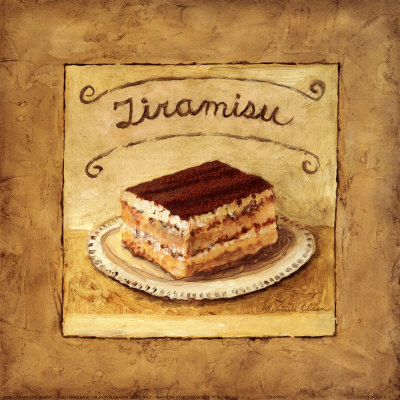
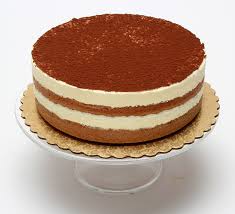
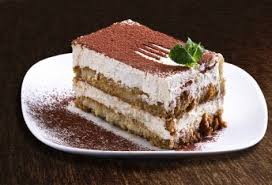
    Though the Italian cuisine has incorporated global food culture and has developed through political and social changes over the centuries, its’ roots can be traced back to ancient Rome. Most of us would know about the pastas, cheeses, wines and gelatos of Italy, but little do we know about the coffee indulgence of these food-loving people. This love for coffee of theirs’ has given rise to a coffee-infused dessert that often forms the star of the dining table on occassions and social gatherings. The tiramisu as the world better knows it, is an iconic Italian dessert. Originally from Veneto, this dessert has now been adapted into a variety of other cakes, ice-creams and other sweet-treats.

    download (3)

    Tiramisu is an Italian phrase which directly translates to ‘pick me up’ or ‘lift me up’. It is said that it was invented in the 1960s in the region of Veneto, Italy. Accounts of origin of this coffee-flavoured dessert claim that it was first made at a restaurant ‘Le Beccherie’ in Treviso in Italy. Alternative theories also propose that it could be a variation of Zuppas Inglese which is another layered dessert.

    images (11)

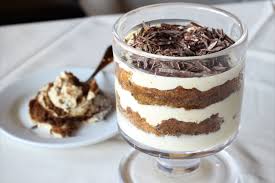
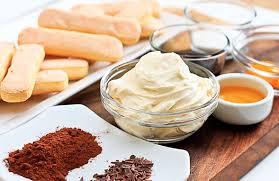
    The original Tiramisu consisted of a small list of ingredients despite its delectable flavour. Finger biscuits or ladyfingers, egg yolks, sugar, coffee, marscaporne cheese cream and cocoa powder were all that were used to make this delicious dessert. As the variations started coming up, liquor, commonly rum became an integral component of the recipe too. The dessert is originally assembled in a circular shape. Though the shape of the lady finger biscuits favors the rectangular or square shaped pan, it can also be assembled in glasses or dessert bowls to show all the layers in the Tiramisu.

    download (4)

    Following is a recipe that lies the closest to the original authentic recipe of Tiramisu.

    Tiramisu
    This recipe satiates approximately 12 people .

    images (10)
    Ingredients
    Egg yolks : 6
    white powdered sugar: 1 1/4 cups
    marscapone cheese cream: 1 1/4 cups
    Heavy whipping creap: 1 3/4 cups
    Ladyfinger biscuits: 24 in number
    coffee concentrate (slightly sweetened): 1/3 cup
    Rum: 4 tablespoons (optional)

    Procedure
    **Before you start with the actual procedure, we need to chill the bowl for a few hours in the refrigerator. So it is an advice to keep the bowl well in advance or maybe overnight if possible.**

    Step 1:
    Take a double boiler and prep it up. If you don’t have a double boiler, construct a make-shift double boiler by boiling water in a large vessel and placing another pan on top of this. Combine the egg yolks and the powdered sugar in the pan while whisking it continuously.
    **Reduce the heat to low and remember to constantly stir the egg yolks and the sugar mixture. This process is called coddling of eggs and ensures that the eggs aren’t raw but do not cook hard either. If you do not stir the eggs, they may curdle and cook hard.**

    Step 2:
    After the mixture has been stirred for 10 minutes or so, remove it from heat and keep it aside to cool. After it has cooled down, we need to beat the egg-sugar mixture using a beater. You could use a manual or an electronic beater for this. Whip the mixture till it is thick.

    Step 3:
    Add in the marscapone cream in the whipped egg-sugar mixture and blend well until it forms a smooth mizture.

    Step 4:
    In the chilled bowl that was kept in the fridge a few hours ago, whip the heavy cream till it forms stiff peaks. This is the exact consistency needed.

    Step 5:
    Gently fold in the whipped cream in to the egg-sugar mixture and set this aside.

    Step 6:
    Take the biscuits and split them into half.
    **You could also use vanilla sponge cake if you cannot find lady finger biscuits around. They both lend the same texture.**

    Step 7:
    Soak the biscuits in the coffee (and rum) syrup such that only half of them are dipped into the liquid. Take them out before they turn too moist and line the bottom of your serving dish with a layer of these biscuits.

    Step 8:
    Scoop out a part of the cream filling and spread it evenly over the layer of the biscuits.

    Step 9:
    Layer down another set of biscuits or cake soaked in the coffee concentrate.

    Step 10:
    Layer the filling again. Continue doing this till all the biscuits are over. The top layer should be of the cream filling.
    **You could garnish the top layer by sprinkling instant coffee powder or dark cocoa powder or both. You could even use chocolate shavings or chocolate curls to dceorate.**
    **Refrigerate your tiramisu for several hours before you serve it to your guests.**

    download (5)

    The total time to prepare this delicious dessert should be around 30 minutes if you aren’t preparing the biscuits or the cake yourself.

    images (8)

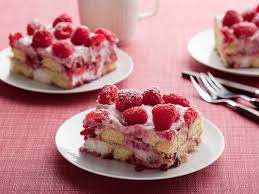
    Tiramisu often marks a special occasion or a matter of celebration in the Italian culture, but with such a simplified and efficient recipe, I am sure you cannot resist making it whenever you have a craving for a gorgeous dessert. Many modern food chains have tried to replicate the dish and create versions of it in different flavours. The chocolate Tiramisu is one famous variant to be named.

    So indulge yourself in this sweet temptation and bless the Italians for it.

  • Old is Gold!

    Old is Gold!

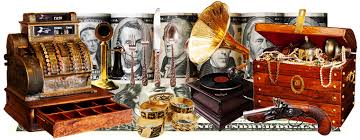
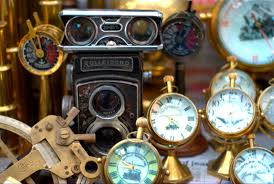
    Antiquities or antiques are ancient collectable items that are valued for their historical importance. The age, beauty, utility, cultural importance, sentimental connection or any other unique feature attached to an item makes it desirable. Any antique is a reflection of the socio-cultural standing of a previous era or a time period in the human civilization. Most collectables of this class possess a certain degree of design or craftsmanship. Some of these antiques were in use till a little time ago and then with the decrease in their popularity and usage over the years, they were deemed to be called the tokens from the past.

    images (1)

    This article focuses on a few such articles that our generation has seen but never realized how important they once had been.

    The Postcard

    images (3)

    Not so long ago, when my Dad had gone to Germany, he called me up to ask what I want from there. Not so sure of what I really did want, I asked him to get anything he feels like. He returned with a bunch of these colourful paper rectangles with a blank other side to be written on. The world knows them better as the postcards.

    images (2)

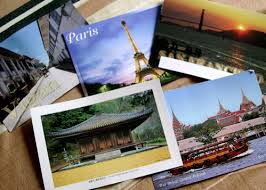
    These small souvenirs brimming with culture, colour and a characteristic story behind them are a staple form of communication from the past and a visual treat to both the sender and the receiver. Besides the message written inside it, the gesture of choosing an appropriate postcard and having it sent to that particular person is enough to bring about a smile to his/her face. A tourists’ souvenir-collection would not be complete without some gorgeous postcards from the place he has struck off his bucket-list. This memento might be a little lacking as per modern aesthetic standards, but these single image cards were once every hobbyists’ treasures.

    e0a2340038d726cc2b17a38953020197

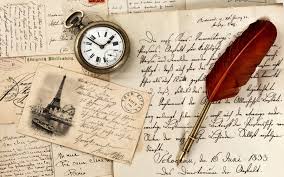
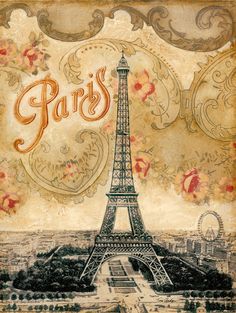
    The first postcard ever was a printed image which was sent via mail and was received in Hungary in 1869. United States’ first postcard appeared in the year 1873. It depicted the main building of the Inter-State Industrial Exposition in Chicago. Paris also saw the postcard-culture when cards with images of the Eiffel Tower were printed in the year 1889. In the Great Britain the very first advertising cards were printed in 1872.

    There were a variety of postcards that were once widely used. From a variety of ‘view’ cards with images of famous architectural sites and landmarks, to other ‘art’, ‘fashion’ and ‘historical’ cards; one can find them all.

    download

    Societies all over the world had taken to this mode of communication where there is no need of an envelope or stamps. From army personnel to young pen-pals, everyone has used these beautiful cards for communicating with their loved ones.

    The Hourglass

    images (4)

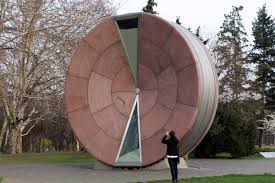
    Call it the hourglass, sand timer, sand clock or the sand glass; this tool is the oldest device known to mankind for measuring time. These days, hourglasses are used mostly for ornamental purposes or for domestic and kitchen applications like board games or boiling an egg.

    hourglass_by_galitamiina-d6r9re5

    An hourglass can measure time varying from a few minutes to even a number of hours depending on a number of factors. The mechanism behind its operation is the flow of sand or any similar granulated substance through an orifice connection two bulbs. The two vertical glass bulbs are connected to allow a regulated trickle of the granulated material from the top to bottom. Once the top bulb is completely empty, the hourglass can be inverted for the next cycle. The factors that determine the time that can be measured are the amount of sand or the granulated substance, the size of the bulbs, the width of the neck/passage or the orifice and the quality of the material that has been put inside the bulbs.

    The place of origin of the sand-glass is not very clear; though it is said it might have been invented by the ancient Egyptian civilization. The American Institute of New York claims that it was invited in about 150BC, at Alexandria. There was a phase when the hourglass disappeared till it became a popular culture again in the medieval European civilization. It was in the 14th century when the sand-glass became a common house-hold item. It was used on land as well as in the sea. Churches and other institutions used them widely to keep track of the time. It was also used by sailors to record time as mechanical clocks were not easily available back then.

    download (1)

    Soon after 1500AD the hourglass lost its utility and charm due to the development of cheap mechanical clock technology. The oldest sand-glass that is known to survive is at the British Museum in London.

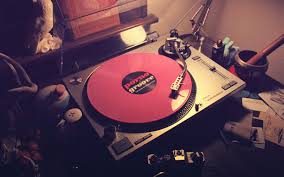
     The Gramophone

    images (6) 6349340117_8e7f56543c

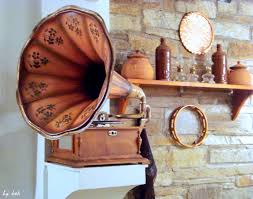
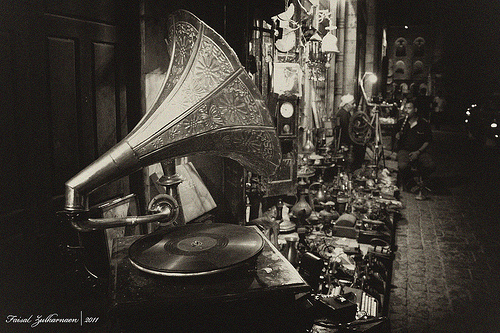
    Invented in the year 1887 by Emile Berliner, a German by nativity who was then working in Washington D.C., the gramophone is one of the choicest possessions for many, be it curators or music enthusiasts. Earlier attempts like the one by Thomas Alva Edison, which was called the ‘phonograph’ could record sounds from cylinders but could not reproduce human voice and each recording played only once. There were certain other attempts that were made after Edison, for instance the ‘graphophone’ by Graham Bell.  Here wax cylinders were used and although these could be played repeatedly, they had to be recorded separately, making mass production of records difficult.

    images (7)

    Berliner was successful in inventing a convenient system for sound recording. Another advantage was that she employed flat disks instead of cylinders thus bringing in the portability factor.

    images (5)

    The concept of recording sound by fixing a needle to a membrane resonating in symphony dates back to early 19th century. Gramophones formed an important part of human culture. They were a part of huge operas and were even housed in many institutions like offices. The avant-garde reigned the industry till more efficient digital storage technologies came up. It is sad that now the only place we can easily spot one of these is either the antiques-shop or the museums.

    download (2)

    Though the article ends here, there is a huge list of such forgotten objects of beauty that were once a common commodity. We sure have better and more efficient alternatives for all of them; but there is a charm about these that shall never be lost. And as they say: “Old is Gold”, these vintage tokens are definitely more precious than we think they are.

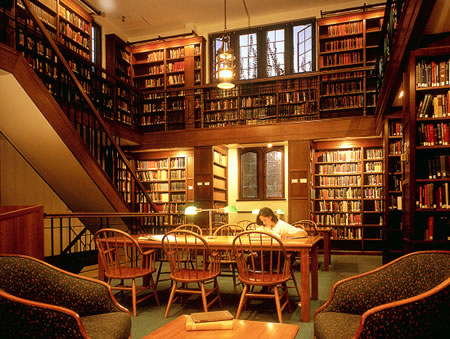
  • Going around Magnificent Libraries

    Going around Magnificent Libraries

    High ceilings, minimalist yet statement furniture and rows of bounded paper from various eras screaming wisdom! Doesn’t a library stimulate your mind so much that you could stay there for days altogether reading as many books as you might? What Wikipedia defines as ‘an organized collection of sources of information and similar resources, made accessible to a defined community for reference or borrowing’ is actually a gateway to knowledge and culture.

    library-483s

    Libraries have witnessed human civilizations grow culturally, technologically and intellectually. Right through the Renaissance, Industrialization and ages of intellectual evolution, libraries have witnessed it all and hold scores of written and visual records of the series of events that have occurred in these processes. Libraries not only boast of utmost cultural significance but also have answers to most questions of human existence. They also have the best accounts on most technological, economic, political and cultural subjects. From some great autobiographies to some great technical research papers, libraries house it all under one roof.

    download

    Libraries are synonymous with learning opportunities and they can fuel the holistic development of an individual or societies alike to a great extent. Aphra Behn once said, “That perfect tranquility of life, which is nowhere to be found but in retreat, a faithful friend and a good library.” A good library is like the oasis with refreshing greenery and sparkling water amidst a vast stretch of the desert of ignorance and mundane civilization.

    The Long Room in the Trinity Library, Duiblin, I have been here Kathy Zynda Just Plain Pretty

    Some of the worlds’ greatest libraries are listed below. The description of the grandeur of these magnificent structures is beyond the capability of words; yet this is a brave attempt to succinctly chronicle these splendid structures.

    1.)    Wiblingen Monastery Library, Germany

    editBibliotecaGeraldaUniversidadedeCoim

    The library modeled in the Baroque style has a charm of its own. It was completed in 1744. Just outside the library it is inscribed “In quo omnes thesauri sapientiae et scientiae,” which directly translates to “In which are stored all treasures of knowledge and science.” The interesting thing about this library is that most of the elements that appear to be marble such as the pillars are actually painted wood.

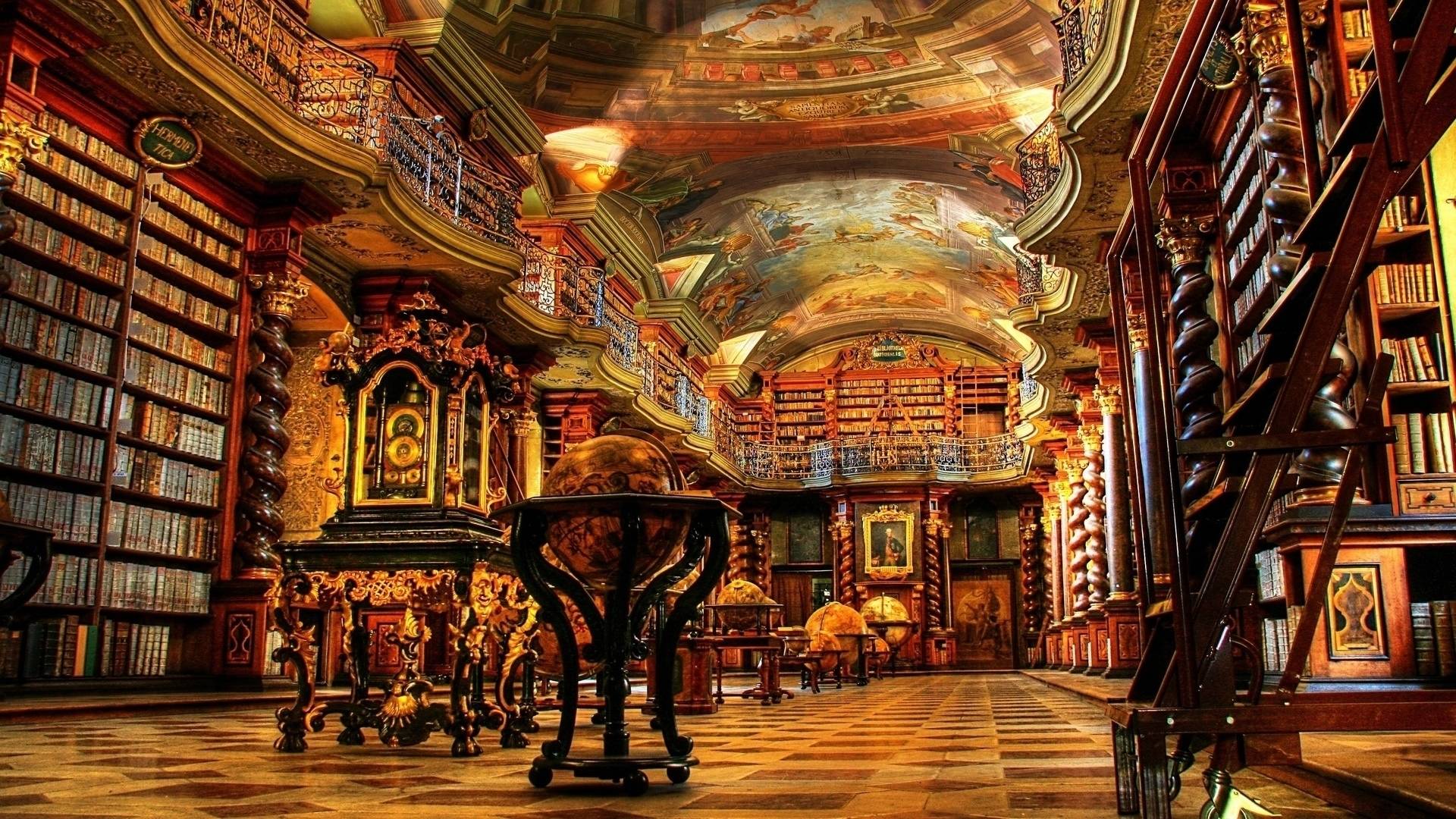
    2.)    Clementinum National Library, Czech republic

    klementinum-library-prague-czech-republic

    This National Library comprises of a series of buildings that owe their design and conception to an 11th century chapel dedicated to Saint Clement thus lending it its’ name. The Clementinum National Library was founded in 1781. Constructed in a Baroque style, the library has served as a copyright library since the year 1782. The collection housed in the magnificent walls now includes historical examples of the mesmerizing Czech literature, special materials relating to Tycho Brahe, along with a unique collection of Mozart’s personal effects.

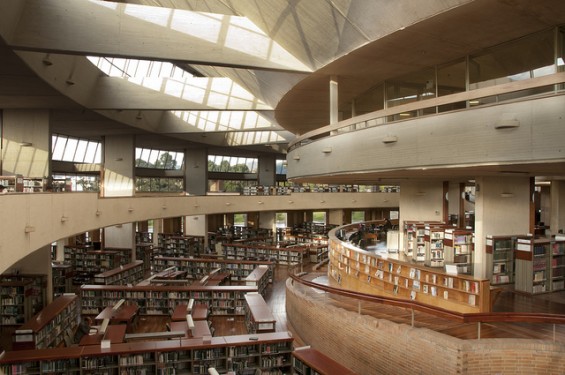
    3.)    Virgilio Barco Library, Colombia

    6191987879_1d9b1474b8_z-565x375

    This one boasts of a modern architecture along with a labyrinth of books on a multitude of  subjects. Designed by the famed architect Rogelio Salmona, it was completed in 2001. It features red brick walls, blue water pools and green lawns that adds to its architectural splendor. This creative design looks like a maze of colors.

    4.)    Library of Parliament, Canada

    download (1)

    The Library of Parliament in Canada has been called the ‘most beautiful room in Canada’. It was once a part of the city’s original Parliamentary headquarters that was constructed in the late 19th century. The building had been under construction for around a decade before it was finally revealed that the builders engaged could not create a domed roof as shown in the plans. The Tomas Fairbairn Engineering Company of England was then commissioned to create a pre-fabricated dome to solve the issue. Hence, the building had the vivid distinction of being the first building in North America to possess a wrought iron roof. The unique Gothic building is so fabled that it even features on the Canadian ten-dollar bill.

    5.)    Jay Walker’s Private Library, USA

    house-on-the-rock-wisconsin-usa

    This gorgeous wooden library is filled with an array of historical and pop culture artifacts and has been called ‘the most amazing library in the world.’ The gorgeous etched glass, the labyrinthine design and the many stories of book shelves lend it an impressive characteristic. As if this was not enough, the collection of rarities housed in this gorgeous library is completely magical. With books bound in rubies, a Sputnik, a chandelier from ‘Die Another Day’, and a list of plague mortalities from 1665, this place attracts scores of tourists on a regular basis.

    6.)    Palafoxiana Library , Mexico

    images

    This Puebla library was established in 1646. It was the first public library in Mexico. Some even claim that it was the first library established in the Americas. Its’ name is now mentioned in UNESCO’s Memory of the World Register and is definitely one of the biggest collection of texts with its 41,000 books and manuscripts including an array of rare and antique titles.

    7.)    Raza Library, India

    article-2243627-165E8BE0000005DC-660_634x478

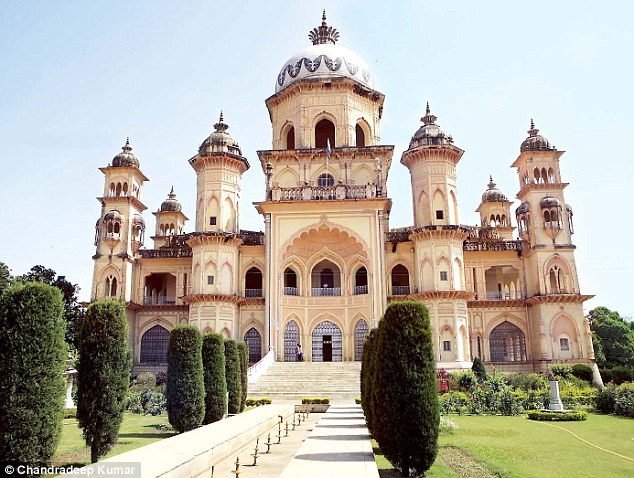
    The Rampur Raza Library is located in Rampur, Uttar Pradesh, India. The library was established in the year 1904. It is a repository of Indo-Islamic cultural heritage and a treasure-house of knowledge established in the late 18th century. It was built by successive Nawabs of Rampur and is now managed by the Government of India. Rampur’s Raza Library also boasts of printed works in Sanskrit, Hindi, Urdu, Pashto (having the original manuscript of the first translation of the Qur’an in addition to other important books/documents), Tamil and Turkish, and approximately 30,000 printed books in a plethora of indigenous and international languages.

    8.)    The Tianyi Pavilion Library, China

    download (2)

    Boasting of the majestic traditional Chinese architecture, you need to visit the Tianyi Pavilion Library located in the Ningbo City. It is the oldest private library in Asia. Built in 1560, it is the third oldest private library in the world. It is a proud abode to a collection of 300,000 ancient books, including a number of woodcut and handwritten titles.

    9.)    The state library of New South Wales, Australia

    download (3)

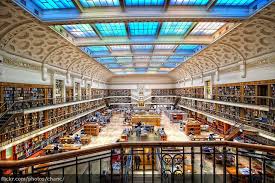
    It is the oldest library in all of Australia, and was started as the Australian Subscription Library in 1826. The current building was built in 1845. The most popular and beautiful part of the library is the Mitchell Wing, construction of which was completed in 1910. This wing was named after David Scott Mitchell who had a collection of old books like the original journals of James Cook. The library now contains over 5 million items, including 2 million books and 1.1 million photographs.

    10.) Trinity college Library, Ireland

    download (4)

    This library is absolutely gorgeous with two story dark wooden arches. It is also the largest library in Ireland. It serves as the nations’ copyright library, where a copy of all new books and periodicals should be sent when being applied for copyright protection. The library is also home to the famous Book of Kells.

    11.) Abbey Library of St. Gallen, Switzerland

    Stiftsbibliothek_St._Gallen_1

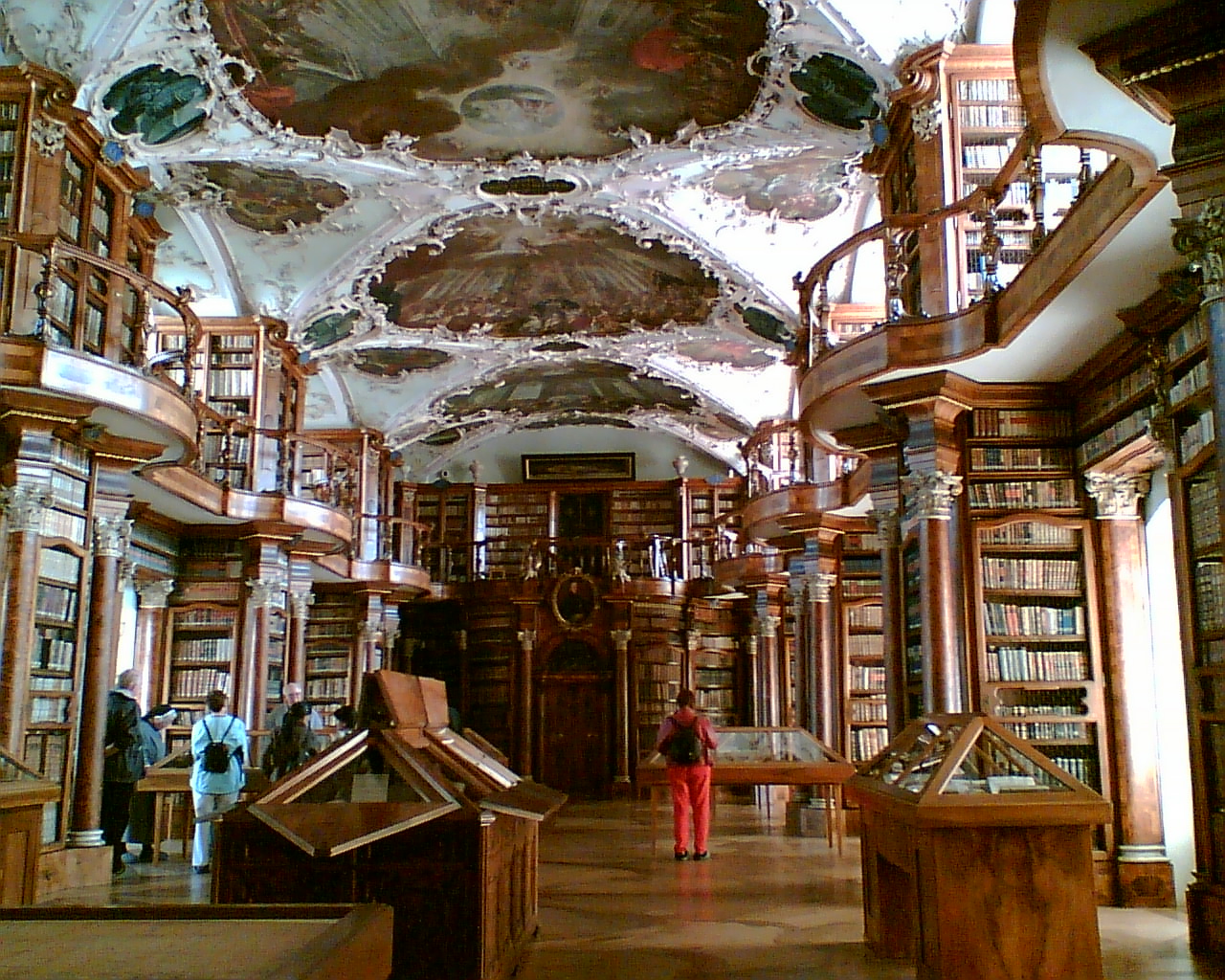
    The Abbey Library of St. Gallen is not only the oldest in Switzerland, but also one of the oldest and most important monastery libraries in the world. It boasts of a holding of over 160,000 volumes many of which date back as far as the 8th century. The Rococo-styled library is considered to be one of the most perfect libraries in the world and has earned the Abbey recognition as a World Heritage Site.

    12.) The Library of the San Francisco Monastery, Peru

    monasterio-san-franciso-lima-bilblioteca

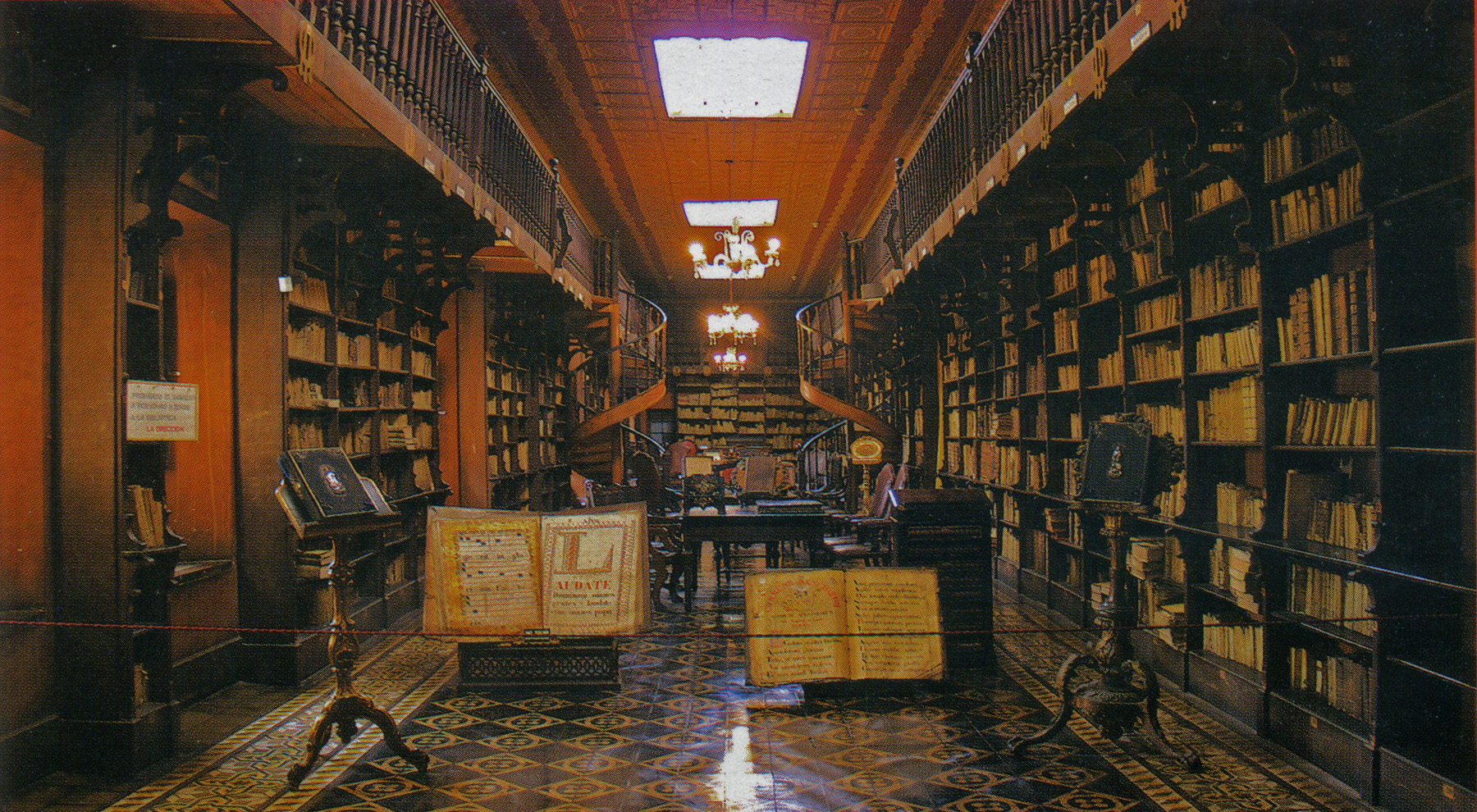
    This library built in Lima’s San Francisco Monastery is one of most ancient and most gorgeous in the continent. The majestic convent was built in 1672, with renovations and improvements continuing up until 1729. The 25,000 volumes housed here are extremely rare, registering a massive variety of knowledge ranging from the 15th to the 18th centuries.

  • Sketch it up with Charcoal!

    Sketch it up with Charcoal!

    Most of you must have heard of charcoal being used in the mud-stoves in villages for cooking and heating purposes. Many of us relish the grand barbeques that employ chunks of burning charcoal for that distinct flavor. Charcoal obtained from various timbers are used as industrial, domestic and metallurgical fuels of various grades all across the world. Activated charcoal is also used as a purifier or filter as it has properties of absorbing impurities from the atmosphere. Besides these areas of utility, charcoal is also used in art widely. It can produce gorgeous looking pieces of art with just the monochrome it is!

    images (2)

    As a part of the Publicity and Printing team of my college, we had to come up with interesting ideas to put up attractive paintings, posters and 3D art pieces around the campus to promote the festive mood and adorn the campus. I took up charcoal as my tool and decided to come up with some decent ideas to attract the attention of the passers-by. This intrigued me to research upon this interesting yet not-so-conventional art medium.

    images

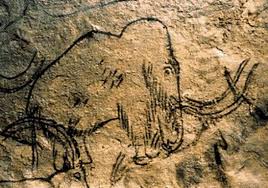
    Charcoal art dates back to 15000 BC or even earlier when the walls of caves of human dwellings were mans’ only canvas. The popular cave drawings of a mammoth of Lascaux in France, for instance proves the use of charcoal as a tool for drawing. These pictures would have been made from charred sticks taken from a fire rather than intentionally created charcoal. The paintings were found to be well preserved when the caves were first discovered. After being opened to the public in the last 1940s, the presence of the large number of visitors started interfering with the delicate environment of the ancient caves and hence, the paintings started to deteriorate. The replicas of the caves were constructed after the original caves were closed to the public in the year 1963.

    download

    Since then many cultures, civilizations and artists have given importance to charcoal as a drawing instrument. Indigenous people from all continents including Australia and Africa have used charcoal for body painting as a part of many traditions and rites of passage like child birth, weddings, wars, hunting, spiritual rites and even funerary rituals. One of the oldest charcoal paintings date back to 23,000 BC. It is the picture of a zebra found at the Apollo cave in Namibia.

    images (1)

    Charcoal was largely used for drawing during the Renaissance period for creating initial drawings for a panel or fresco mural drawings. Only a few of these survived as charcoal marks on paper are relatively ephemeral. As more advanced trends in art came up in the later 15th century, drawings were now fixed by being immersed in baths of gum! Hence, these pieces of art which were earlier taken to be preparatory frameworks were now considered more seriously and were taken to be finished pieces of art.

    download (1)

    Powdered charcoal is the most basic form of charcoal used. Though it can be very messy, but it allows artists to give definition and tone up large areas of a surface. It is an ingredient in compressed charcoal which is also used for drawing. Powdered charcoal held together with gum or wax gives compressed charcoal a range of softness based on the proportions of the powder and the binder. Compressed charcoal is however harder than willow or vine and hence it can retain its shape. Moreover, compressed charcoal is more break-resistant and lends a deeper black colour. It can also be sharpened for intricate detailing. This makes it suitable for drawing fine lines, textures and details neatly.

    images (3)

    Willow and vine charcoal are made from grape vine and willow branches which are burnt to a precise degree of hardness. Since it does not contain any binding agent, it can be erased easily and are soft and powdery. It is less suitable for rendering fine crisp images though it can be used for sketching out composition on a canvas before a painting is done.

    download (3)

    Since charcoal tends to smudge on any surface, it becomes mandatory to preserve the work with a fixative, irrespective of the type or amount of charcoal used. However, using a fixative does not make the charcoal drawings completely smudge-proof. They still need glassine sheets or need to be framed under glass to protect themselves completely.

    download (2)

    The techniques used with charcoal also depends on the quality and texture of the surface or canvas used. One of the most important techniques used is hatching. Hatching is defined as an artistic technique used to create tonal or shading effects by drawing or painting or scribing closely spaced parallel lines, often rapidly. It is used to create the illusion of shade or texture in a drawing. Rubbing is another technique used with charcoal where in gradient is an important feature. Erasing charcoal is used often to lend a lighter shade or define some features. A charcoal artist is capable of creating a variety of levels of gradation by simply adjusting the pressure on the tool, and by turning or rotating the instrument. He or she can create a whole new kind of stroke on the surface of a work by changing the direction of strokes. Like many other drawing media, charcoal responds strongly to the grain and texture of the paper it is used on.

    download (4)

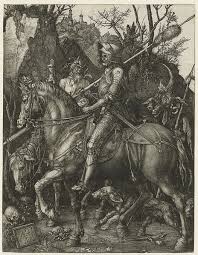
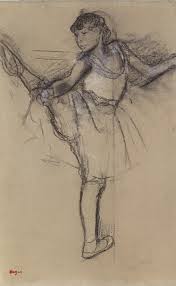
    Many famous artists like Albrecht Durer, Paulus Potter and various other Italian artists have created famous charcoal paintings that have survived. Charcoal drawings were also created throughout the 19th and 20th centuries and into the 21st. There are many popular examples by such artists, in particular French artists like Édouard Manet, Edgar Degas, and Henri de Toulouse-Lautrec.  Also the Germans, namely, Ernst Barlach and Käthe Kollwitz had created mesmerizing art pieces using this simple medium. Most of the famous artists since the Renaissance, from the likes of Rembrandt, Degas, Matisse and Picasso, have also used charcoal in one way or another.

    note-in-pink-and-brown download (5)

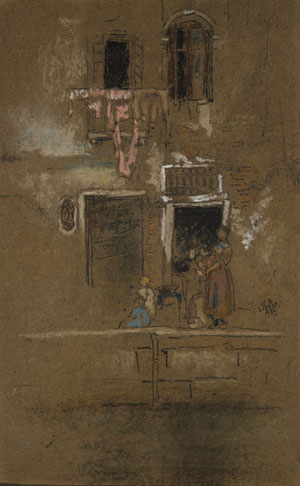
    Some of them have used it extensively for studies, some for portraiture, while some for truly notable unique works of art. For example, “Woman Bathing in Shallow Tub” (Charcoal and Pastel Drawing) by Edgar Degas (1885), Portrait of Sergei I Shchukin in Charcoal by Henri Matisse (1912), and Note in Pink and Brown Charcoal by James McNeill Whistler are some noteworthy pieces one should definitely appreciate.

  • Candy bars: Part 1

    Candy bars: Part 1

    “There’s nothing as cozy as a piece of candy and a book.”

    ― Betty MacDonald.

    images

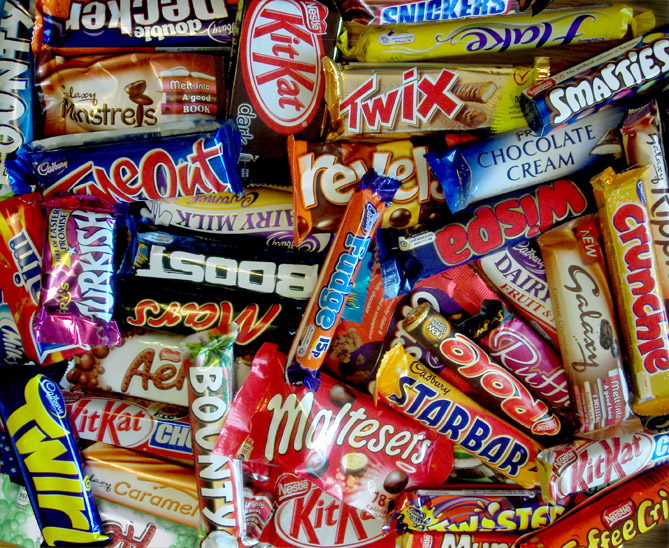
    So they say that! I believe candy bars are not just a treat for the kids. I, at twenty-two can jump with glittering eyes and a wide smile if you offer me a bar of Bounty! Chocolates are not just a delicious snack but also a great source of instant energy. While travelling, just before exams or something important, good rains, after a good workout, or just while watching your favorite movie, every time is the right time to grab a candy bar!

    images (2)

    Some chocolates I grew up with and bring back a jet of nostalgia with every bite are mentioned below. I just think it is a great idea to know a little more about them. My article on Candy Bars has been split up into two parts, this being the first one. For more on these delicious treats, look out for the second part too.

    Cadbury Flake

    cadburys-flake-21386023

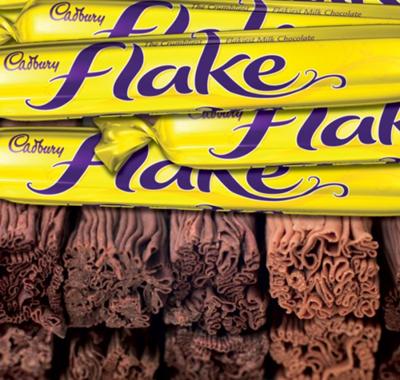
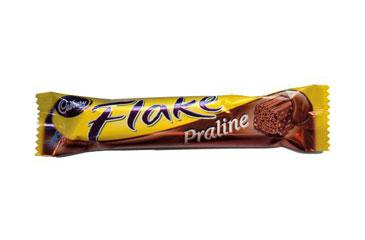
    Flake is a chocolate bar brand which is currently manufactured by Cadbury Ireland. It has an interesting flaky texture and consists of thinly folded Dairy Milk milk chocolate. Founded by an employee at Cadbury in 1920, it was developed when the excess from the moulds was drained off and fell off in a stream. This created folded chocolate with flaking properties on hardening.  As it has a flaky texture, it is a little difficult to eat it without dropping any as it tends to crumble apart.

    cadburys-flake-praline-chocolate-bar

    Many other variations have also been developed though the original flake was a constant hit amongst its fans. Flake Dipped, also known as Flake Luxury is the original milk chocolate Flake dipped in milk chocolate. It was launched in 2003. Flake Noir is a dark chocolate Flake bar while Flake Dark that was launched in 2006, is a dark chocolate Flake bar covered in dark chocolate. Flake Snow, the white chocolate variant of Flake Dipped was known as Snowflake until 2003 and was then discontinued in 2008. Many other flavors and variants of Flake have been introduced and launched in different parts of the world. Some of them are Flake Praline, Flake Allure, Orange Flake and Flake Mint.

    Hershey’s Kisses

    Hershey-Kisses-001

    A famous brand of chocolate manufactured by The Hershey Company came up with these bite-sized pieces of chocolate having a distinct shape resembling that of flat bottomed tear drops. Hershey’s Kisses are packed in lightweight aluminium foils of different colors depending on the flavor of the chocolate. They had a narrow strip of paper protruding from the top. These are one of the most popular chocolate brands in the States and in the rest of the world. Kisses are mass-produced by machinery that would pump a specified amount of viscous chocolate on a conveyer belt and then are allowed to cool down so as to lend it the shape.

    images (3)

    These candies get their name ‘Kisses’ because of the ‘kiss-like’ sound that the machinery makes during production. It was first introduced in 1907, and a century later, they are still reigning the market and the hearts of the fans. They form an integral part of American history and pop-culture. Kisses is also available in a variety of forms like the Kisses with Almonds, Dark Chocolate Kisses, Caramel Kisses and Kisses with Hazelnut. ‘Hugs’ or the mini Kisses covered in white chocolate was my personal favorite though it was a limited version. Some other limited versions were ‘Layers’ i.e. white chocolate on the top and milk chocolate in the bottom, Special Dark Coffee flavored Kisses, Extra Creamy with Toffee and Almond, Dark Chocolate Orange flavored and many more.

    Bounty Bar

    Bounty-chocolateBar-coconut

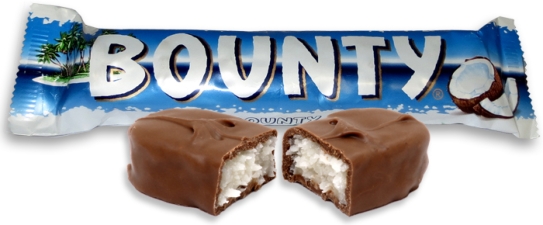
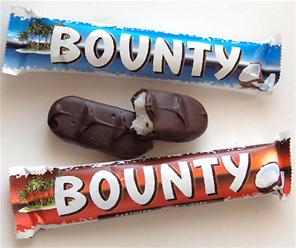
    Bounty is a chocolate bar produced by Mars, Incorporated. It was first introduced in 1951, in the United Kingdom and Canada. What distinguishes this chocolate bar from others is the moist coconut filling in the centre which is enrobed with milk chocolate. This is available all over the world except the States, where Mounds by Hershey’s, a similar product is marketed. The dark chocolate version of Bounty is also available in the market. The thick milk chocolate coating provides a perfect contrast and balance with the mild flavor of the soft coconut center.

    fsImageResize

    The chocolate bar should be eaten right out from the refrigerator as it tastes the best then. It might even take you to the tropical beaches lined with coconut palms in your imaginations as you bite into this delicious candy bar. For its variants, there were limited editions of a Cherry Bounty Bar which was available since 2006 in Australia. A limited mango flavored edition was available during 2004-2005 and a few years later again in Russia.

    Twix

    images (5)

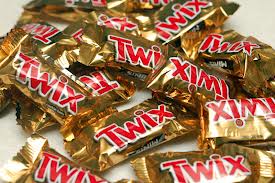
    Twix is a popular chocolate bar manufactured by Mars, Incorporated. It consists of a biscuit finger, coated with other confectionery toppings, most commonly caramel and milk chocolate. Twix Bars are typically packaged in pairs. The chocolate bars apparently got their name from combining the words, ‘twin’ and ‘biscuits’. It was first created in 1967 in the United Kingdom, and was later introduced in the United States in 1979. Twix was called Raider in  certain parts of the world like Denmark, Belgium, Poland, Spain, Israel, Turkey and many other countries till 1991, when its’ name was changed to match the international brand name.

    images (4)

    Twix is available in various other flavors like Twix PB that has a chocolate biscuit, peanut butter coating instead of caramel and milk chocolate coating, Cookies-n-Cream Twix where a cookies and cream filling replaced the caramel filling, Twix White with a white chocolate coating, Triple chocolate that contained chocolate flavored butter cookie, chocolate flavored caramel and a chocolate coating. Many other versions were the Choc ‘n’ Orange Twix, Twix Mint, Coffee Twix, and Dark Chocolate Twix Towers etc. They are also available in different sizes and as singles too.

    images (1)

    These chocolate bars are bound to take you through a variety of memory lanes, I am sure! Go get your favorite candy bar and pamper your taste buds. But before you leave, remember: ‘Candy Bars: Part 2’ coming soon!