Tag: idli

  • Chutneys are Yummy! Part 2

    Chutneys are Yummy! Part 2

    Chutney (also translated as Chatney or Chatni) is a family of condiments mainly associated with South Asian cuisine that usually contain some mixture of spice(s), vegetable(s), and/or fruit(s). Chutneys may be either wet or dry, and can have a coarse or fine texture. There are various types of chutneys.

    Traditionally, chutneys are ground with a mortar and pestle made of stone or an ammikkal . Spices are added and ground, usually in a particular order; the wet paste thus made is sauteed in vegetable oil, usually gingelly (sesame) or groundnut (peanut) oil. Electric blenders or food processors can be used as labor-saving alternatives to stone grinding.
    Chutney

    Let’s explore two new mouth-watering recipes of Chutneys which one can make easily at home!

    • Garlic Chutney:

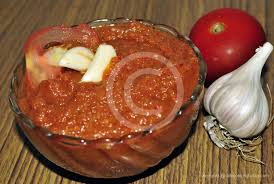
    garlic chutney

    This is a fiery-spicy chutney made from garlic cloves and red chilies. It is a taste-enhancing must-have accompaniment for South Indian dishes like Dosa, Idli, etc. In this customized Indian Garlic Chutney recipe, garlic, soaked red chillies and coconut are first sautéed in oil, and then crushed with tamarind pulp to make delicious Chutney having a complex hot, sour and spicy taste altogether.

    • Ingredients:

    1)  8 chopped garlic cloves (skin removed).
    2)  2 whole dry red chillies, seeded and broken into pieces.
    3)  ½ cup grated fresh coconut.
    4)  1 teaspoon tamarind pulp.
    5)  ¼ cup water.
    6)  2 teaspoons oil.
    7)  Salt according to taste.

    • Directions:

    1)  Heat 1 teaspoon oil in a pan. When the oil is hot enough, sauté the chopped garlic over a low flame for a minute and then transfer to a plate.
    2)  Heat the remaining 1 teaspoon oil in the same pan and sauté the dry red chillies over a low flame for 20-30 seconds. Again, transfer them to the same plate.
    3)  Let the sautéed garlic and dry red chillies cool for about 3-4 minutes. Transfer the garlic and the dry red chillies to the chutney jar of a grinder or food processor. Grind them until a medium coarse paste is formed.
    4) Add the grated coconut, the tamarind pulp, ¼ cup water and salt (according to taste) to the jar.
    5)  Grind them till a medium coarse paste is formed. Tasty South Indian Garlic Chutney to be enjoyed along with Dosa and Idli is ready to be served!

    • Tips:

    1)  You can also use 2 teaspoons of the red chilli powder in place of the usual dried red chillies.
    2)  Dry Kashmiri red chillies are specially added to get that nice red color and also to make a less spicy Chutney when compared to other varieties of chillies as such.
    3)  Replace the tamarind pulp with 1 teaspoon of lemon juice for a slight variation in the overall taste of the Garlic Chutney.

    • Preparation Time: 5 minutes.
    • Cooking Time: 5 minutes.
    • Servings: 6 (½ cup).


    • Pudina Chutney:

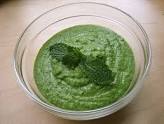
    pudina chutney

    Pudina (Mint) is an herb known for its medicinal benefits for indigestion, acidity, headache, dental and skin diseases. It is an integral part of Indian cuisine as well. This Pudina Chutney recipe makes for an extremely flavorsome and tempting Chutney prepared right from fresh mint and coriander leaves. However, its main taste comes from the tamarind paste which is added to give a nice tang to its spiciness. The whole texture of the Chutney is derived from the fresh coconut.

    • Ingredients:

    1)  ¼ cup fresh Pudina (mint) leaves.
    2)  1 cup chopped coriander leaves.
    3)  ½ cup grated fresh coconut.
    4)  2 chopped green chillies.
    5)  ½ inch piece ginger, chopped.
    6)  2 teaspoons tamarind pulp or lemon juice.
    7)  1 teaspoon sugar (optional).
    8)  Salt according to taste.
    9)  ½ cup water.

    • Note:

    This recipe requires tamarind pulp as an ingredient. You can easily find ready-made tamarind pulp to be bought in the market. If the tamarind pulp is not available, then you can also prepare it at home by simply following the directions which are given below-

    1)  Soak the tamarind in hot water for roughly 1 hour.
    2)  Remove the seeds of the tamarind.
    3)  Strain the whole mixture to prepare fresh and homemade tamarind pulp.

    • Directions:

    1)  Clean the mint leaves and the coriander leaves well by running them under fresh tap water.
    2)  Grind the fresh coconut, green chillies, ginger, sugar and salt together in the chutney jar of a mixer or a food processor until a very smooth paste is formed.
    3)  Add the mint leaves, the coriander leaves, the tamarind pulp (or the lemon juice) and ½ cup water. Grind again until a very smooth consistency of chutney is arrived at.
    4)  Fresh Pudina Chutney is ready to be served along with your favorite condiments!

    • Tips:

    1)  Replace the tamarind pulp with an alternative of lime juice for an even more delicious tang of the Pudina Chutney.
    2)  Store it in an airtight container in refrigerator for up to 3-4 days. You can then use as and when it is required.
    3)  You can always add more water and adjust the spices according to your own tastes so as to make the Pudina Chutney more diluted and thin, or of a concentrated and strong flavor.

    • Preparation Time: 10 minutes.
    • Servings: 8 (1 cup chutney).

    So there you are – two delicious Chutneys which you can easily make at home by following some simple instructions. These are very good from the health point of view. They also acts as excellent taste enhancers.

    Keep watching this space for more delicious recipes!
  • Treat From The South!

    Treat From The South!

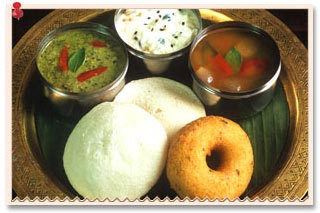
    Think of South India and the first thing that comes to the head of a North Indian like me is the yummy ‘Idli and Dosas’. But what else do we know about South Indian cuisine except the fact that it is amazingly delicious. But there is a lot more to know about our favourite cuisine.

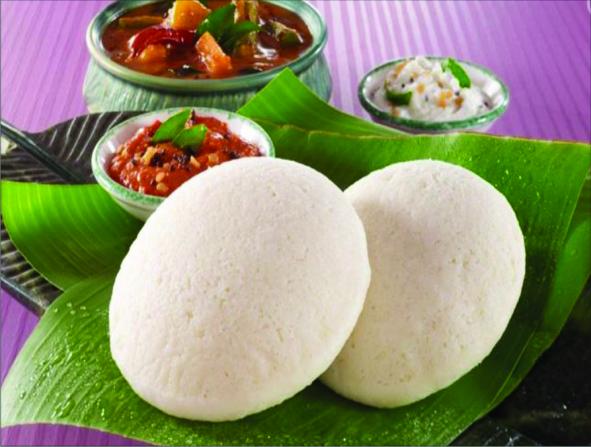
    idli


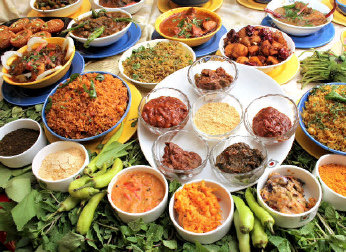
    South India being hot and humid climatically, gets rain in abundance each year and so fresh fruit, vegetables and rice are readily available throughout the year. Malabari cooking comes from Kerala with its catalogue of yummy seafood dishes. Nizams have ruled Hyderabad so the food that comes from Andhra is rich and full flavour. The food is full of dry fruits and nuts (and especially exotic spices like Saffron.)

    On the whole, South Indian cuisine is the hottest of all Indian cuisines. Most of the meals are centred on rice and are rice based. Sāmbhar is a soup-like lentil with which is rice is combined. Rasam is a hot-sour lentil soup, again eaten with rice dishes.

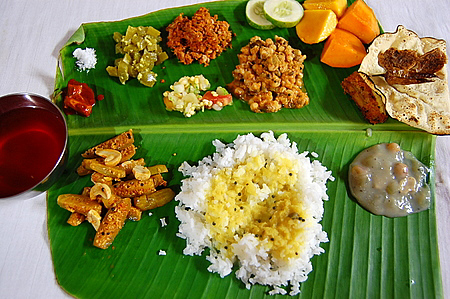
    Yes they love Rice! No meal in South India is complete without rice being an active participant in the entire cooking process! Idles, Dosas, Uttapams are all a part of their daily meal. Coconut oil is usually used for cooking and frying purposes and vegetable oils and ghee is spread over rice when meals are cooked on special occasions. Curry leaves, mustard and peppercorns are the main ingredients in every south Indian dish.

    Let’s talk about the various culinary schools of South India:

    Andhra: Food from Andhra is mostly vegetarian but in the coastal areas of the state, you would get to taste a variety of seafood. Prawns and fish are fried in coconut oil and ground pepper is used to flavour the dish. Again, Andhra food is usually served with rice. Rice and Sāmbhar along with other lentil preparations, steamed vegetables that are flavoured with coconut oil are all a part of the Andhra culinary school. Pakodas and vadas are served for snack. They taste even more delicious when they are dipped in Sāmbhar. One can also try the payasam or the exotic Hyderabadi Sheer Khurma for dessert. Andhra cuisine will definitely take you heart away!

    Andhra-Food

    Karnataka: On a visit to the state of Karnataka? Then you would surely find a typical Kannad meal served to you that would include very specific dishes and in a definite order. And the surprising part! You start your meal with a dessert! Then come some soup-like dishes as majjige huli, Kootu, saaru etc. and these are eaten with rice. The raita comes next and then the Bonda is served. Finally, the meal is ended by serving a bowl of curd rice. For sweets, try the famous Mysore Pak, Pedha or Chiroti!

    karnataka cuisine

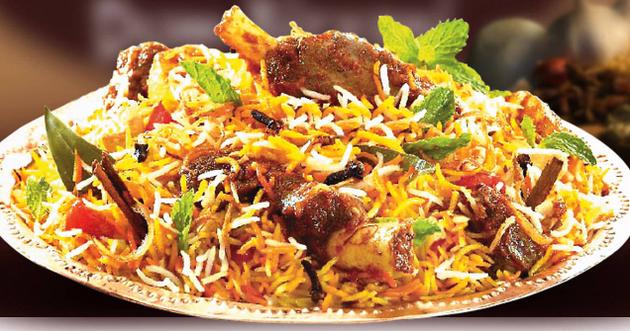
    Hyderabad: The fancy Nizams and the even fancier and amazingly delicious cuisine from Hyderabad. The cuisine from Hyderabad is a combination of techniques of the Muslim rulers and the vibrant spices and ingredients from the local Hindu people. It tastes sour and sweet and everyone who tries it returns to Hyderabad for some more. It is one of India’s most exotic and finest cuisines and people from all across the globe love to savour their tatste buds with the Hyderabadi Biryani.
    hyderabadi biryani


    Tamil Nadu: Cuisine from Tamil Nadu is popularly called ‘Chettichand Cuisine’. If you think that its tastes similar to the simple, bland cuisine of the traditional Tamil Brahmins, then you are definitely mistaken, because Chettichand cuisine is one the oiliest and the most aromatic food in the country. Though, Chetiars are popular for their yummy vegetarian meals, their preparations also include a variety of other items like meat, fish etc. Since I already mentioned that its one of the  “oiliest “cuisine, the use of oil is extremely liberal while cooking these dishes and have a large amount of bay leaves, cinnamon and red chillies in them. Some popular dishes are veruval which is a dish fried in spices and onions, poriyal is a curry and kuzambu is a dish which has ingredients that are stewed in gravy of spices and coconut. And where there is oil and spice, can pickles be far behind? So you will find that a variety of pickles and pappads and dry snacks are a part of Tamil Cuisine too. Murukkus are small spiral shaped snack fried out of rice dough. Other small snacks include thattai, masala vada, etc.

    tamil food

    Kerala: Kerala is popular for its pancakes rice cakes that are steamed.  Kerala is a state which home to various religious communities and this is a reason behind the repertoire of dishes one finds when Kerala cuisine is mentioned. For the Muslims, Biryani is a must. This flavoured Biryani is made of mutton and fish.

    In districts like Kottayam and Pala, which are largely inhabited by Christians, a dish called ‘ishtew’ with appam is permanent dish that one finds in every marriage reception.  There are fermented beverages which form a part of the Kerala cuisine. Kallu and patta charayam are one of these.

    appam

  • Healthy Cooking for Diabetes

    DIABETES. What is Diabetes?

    images

    When one has diabetes, the amount of glucose (sugar) in his/her blood is very high. This is mainly because the body is unable to use the glucose properly.

    For Diabetic people, maintaining blood glucose levels is the essential aim for treatment and this can be done by leading a healthy lifestyle. My grandmother and my mother are both prey to the disease diabetes mellitus. It is one horrible disease. The things to do and not to do. To eat or not to eat. The regular checkups. The huge doses of a dozen pills on a regular basis. The daily insulin intake through injections. It is a nightmare.

    To be healthy, to lead a normal lifestyle, one has to follow a balanced diet among other remedies.


    Breakfast, lunch and dinner are the three main meals of one’s day. The following recipes are very healthy and cooked as par the diet of a diabetic patient.


    BREAKFAST is the most important meal of your day.


    Besan Methi Frankie (Stuffed gram flour roti)

    Ingredients –

    For the dough- 90g gram flour (besan), 70g whole-wheat flour (atta) plus extra for dusting, 160g fresh fenugreek leaves (methi ) chopped, 4 green chillies (chopped), ¼ tsp ground turmeric, ¼ tsp carom seeds ( ajwain), 1 tbsp natural low-fat yogurt,½ tsp salt, green chutney ( as required), 1 medium sized onion ( chopped)

    For the stuffing – 1 tsp olive oil, 2 medium sized onions (chopped), 2 medium sized tomatoes ( seeded and chopped), 2 green chillies ( chopped), 160g bean sprouts ( blanched), ¼ tsp ground turmeric, ¼ tsp red chilli powder, ½ tsp chaat masala, ½ tsp salt, 1 tsp lemon juice, 1 tbsp chopped fresh coriander leaves

    Method – Mix together the two flours, fenugreek leaves, chillies, turmeric, carom seeds, yogurt and salt. Add enough water to knead into a semi- soft dough. Cover the dough with a damp cloth and rest for about 15 minutes.

    To make the stuffing, heat the oil in a pan, add the onions and tomatoes and sauté for 2 minutes. Add the chillies and bean sprouts and continue to sauté for 30 seconds. Stir in the turmeric, chilli powder, chaat masala, salt, lemon juice and coriander, and sauté for 1 minute. Remove from the heat and set aside.

    Divide the dough into 8 equal size portions and form into balls. Dust these with a little whole-wheat flour, and then roll out into rotis, roughly 15 cm in diameter. Heat a non-stick tawa and cook the rotis on both sides, until evenly done. To prepare a Frankie, place a roti on a flat work surface and spread a tsp of green chutney all over. Spoon some of the stuffing on one side of the roti, sprinkle on some onions, then simply roll up. Prepare the rest of the frankies in the same way, wrapping them in foil as you go to keep them warm and make them easier to handle. Serve immediately.


    LUNCH – eat a light lunch and have a snack later if you are hungry


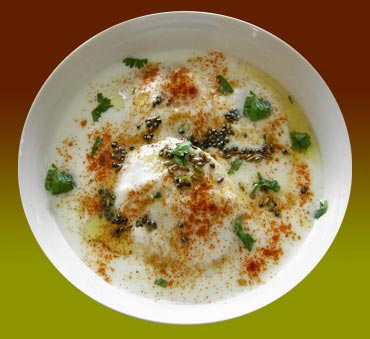
    Dahi Idli ( Steamed Rice Cakes in Yogurt)

    19summer-diet2

    Ingredients – 220g parboiled rice, 100g split black gram, 500g natural low-fat yogurt ( whisked), 2 tbsp green chutney, 2 tbsp tamarind chutney, ¼ tsp red chilli powder, ¼ tsp ground cumin, 2 tbsp chopped fresh coriander leaves

    Method – Wash the rice and then soak in 600ml fresh water for at least 2 to 3 hours. Wash the dal and then soak in 400 ml water for a similar period of time. Drain the rice and grind to a slightly coarse texture. Mix in as much water as required to make a batter of dropping consistency. Drain and grind the dal, then mix to a smooth and spongy batter, again using as much water as required. Mix both the batters together and pour into a large vessel with a lid. Close the lid tightly and then leave the batter to rest, and ferment, in a warm place overnight. The following day, heat sufficient water in a steamer. Place a muslin cloth on the idli stand. Pour a spoonful of the fermented batter into each dent. Place the idli stand in the steamer and cook for 8 to 10 minutes, or until the idlis are done. Place the idlis in a serving bowl and drizzle over the yogurt and chutneys, followed by the chilli powder and ground cumin. Garnish with the chopped coriander leaves and serve.


    DINNER is the last meal of your day. Try having your dinner at least 3 to 4 hours before you sleep. If convenient, walk a little after your dinner. This helps in giving your body the time to digest the meal and use up the calories from the food before your metabolism rate lowers for the rest of the night.


    Prawn Rice

    Ingredients – 190g brown rice, 10 medium prawns ( shelled and deveined), 1 tsp lemon juice, 1 tsp salt, 30g fresh coriander leaves (chopped), 2 tbsp grated fresh coconut, 3 green chillies (chopped), 2.5 cm piece root ginger (finely chopped), 4 garlic cloves (finely chopped), 12 to 15 fresh mint leaves, ¾ tbsp olive oil, 1cm piece cinnamon stick, 3 black cardamom pods (split), 1 star anise, 3 cloves, 1 tsp cumin seeds, 1 large onion (chopped), 1 ½ tsp low-fat coconut milk

    Method – Soak the brown rice in 500 ml water for 2 hours. Drain and set aside. Marinate the prawns in the lemon juice and salt. Set aside 1 tbsp each of the coriander and grated fresh coconut for the garnish. Grind the remaining coriander and coconut with the green chillies, ginger, garlic and mint to a fine paste. Heat the oil in a thick-bottomed handi and add the cinnamon stick, cardamom, star anise, cloves and cumin seeds. Sauté for 1 minute. Add the chopped onions and sauté for 3 to 4 minutes, or until it turns golden brown in colour. Add the masala paste and stir-fry for a further 30 seconds. Add the soaked rice and stir gently for 1 minute. Stir in the coconut milk and 1 litre water. Bring to the boil, stirring once or twice, and then cook on a medium heat until the water has almost disappeared – about 30 to 35 minutes. Add the prawns, reduce the heat and cook, covered, until the rice is tender. Remove the pan from the heat and served garnished with the reserved coriander leaves and grated coconut.


    HAVING DIABETES DOES NOT MEAN YOU CANNOT HAVE SWEETS. Small amount mixed with a balanced diet is fine.

    You can try making this healthy yummy pudding whenever you are craving for some sweet meats.


    Pineapple Yogurt Fool

    1386678376_pineapple yogurt fool

    Ingredients – ½ medium pineapple (cut into small pieces), 2.5cm stick cinnamon, 135g hung natural low-fat yogurt

    Method – Place the pineapple and cinnamon in a non-stick pan and stew over a low heat for 30 minutes. Set aside to cool. Remove the pineapple pieces from the pan and mix them with the yogurt. Blend together in a mixer. Chill in the fridge. Serve chilled.


    Recipe Courtesy – sanjeevkapoor.com

    Image Courtesy – lchdhealthcare.org, rediff.com, 4remedy.com