Tag: pickle

  • Be Careful about your food condiments!

    Be Careful about your food condiments!

    A condiment is a common generic term for any spice, sauce, or any other minor food preparation that is taken with the main course to impart a particular flavour, to enhance the original flavour, or to complement the dish. Although table items like salt, pepper, sugar, pickles, tomato ketchup, and the works are most people’s general idea of condiments, barbeque sauce, teriyaki sauce, soy sauce, and marmite, all of which are used during cooking as well, are also classified under the same. The word condiment is derived from the Latin words condimentum, meaning “spice, seasoning, sauce” and condere, meaning “preserve, pickle, season”.


    1. Tomato ketchup
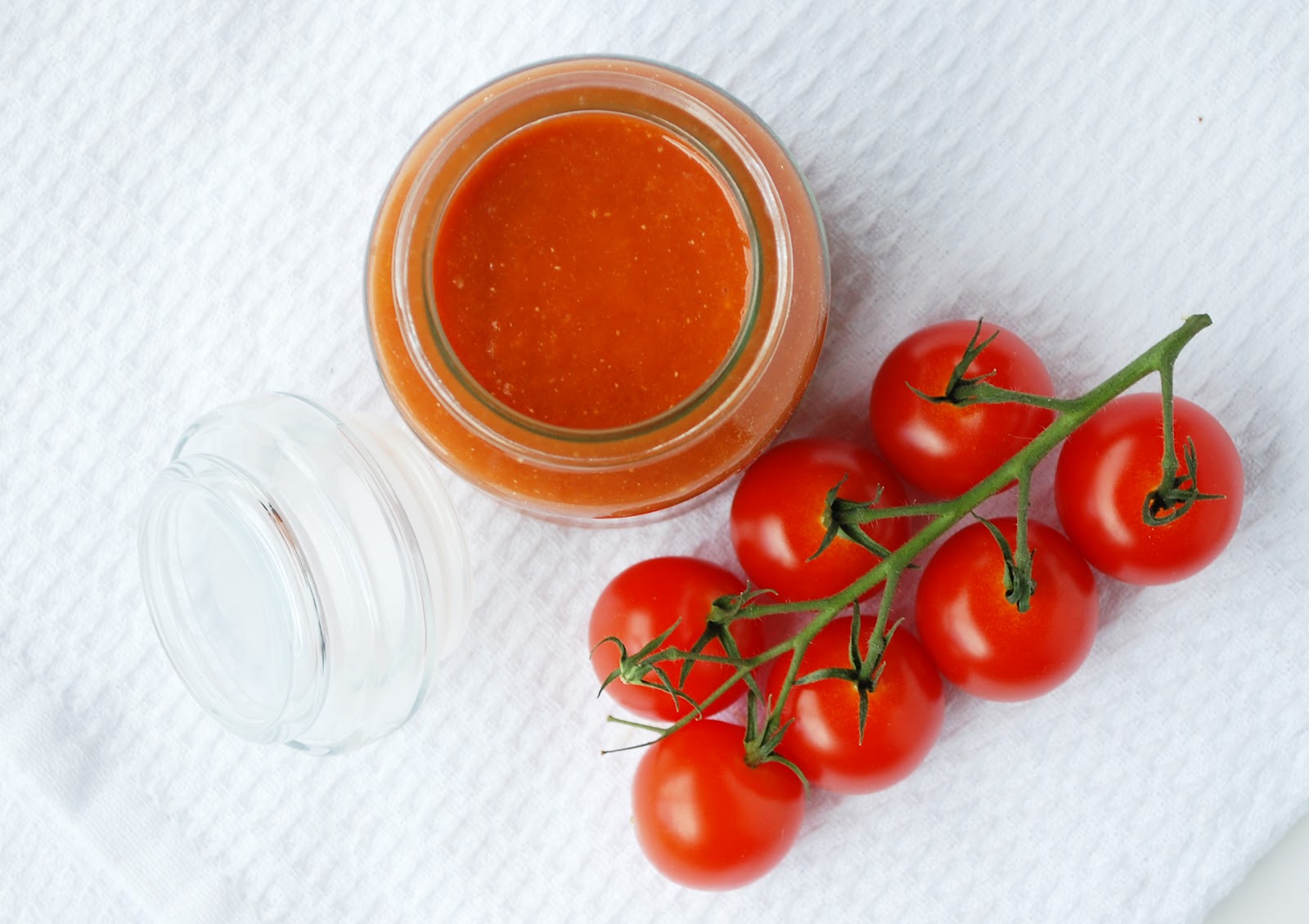
    The first known recipe of tomato ketchup perhaps was the one published by Sandy Addison in the American cookbook, The Sugar House Book, way back in 1801. However, Jonas Yerks is widely believed by many to have cashed on the saleability of the condiment and made a product originally sold by American farmers in small niche sales, a national phenomenon. Heinz Tomato Ketchup was the first multinational company to sell tomato ketchup on a mass scale, and since their establishment in 1876, have remained one of the bestselling brands of ketchup.

    Chemically speaking, tomato ketchup is a mixture of tomato, onion, garlic, sugar, salt, garam masala, and preservatives like sodium benzoate and acetic acid. While the best way to cook tomato sauce is the original, organic way by making it from fresh tomatoes at home, bottled tomato ketchup is also a safe option. Since canned ketchup hardly contains any fat, it can be consumed by obese and overweight people without any grave health issues cropping up.


    2. Chutney
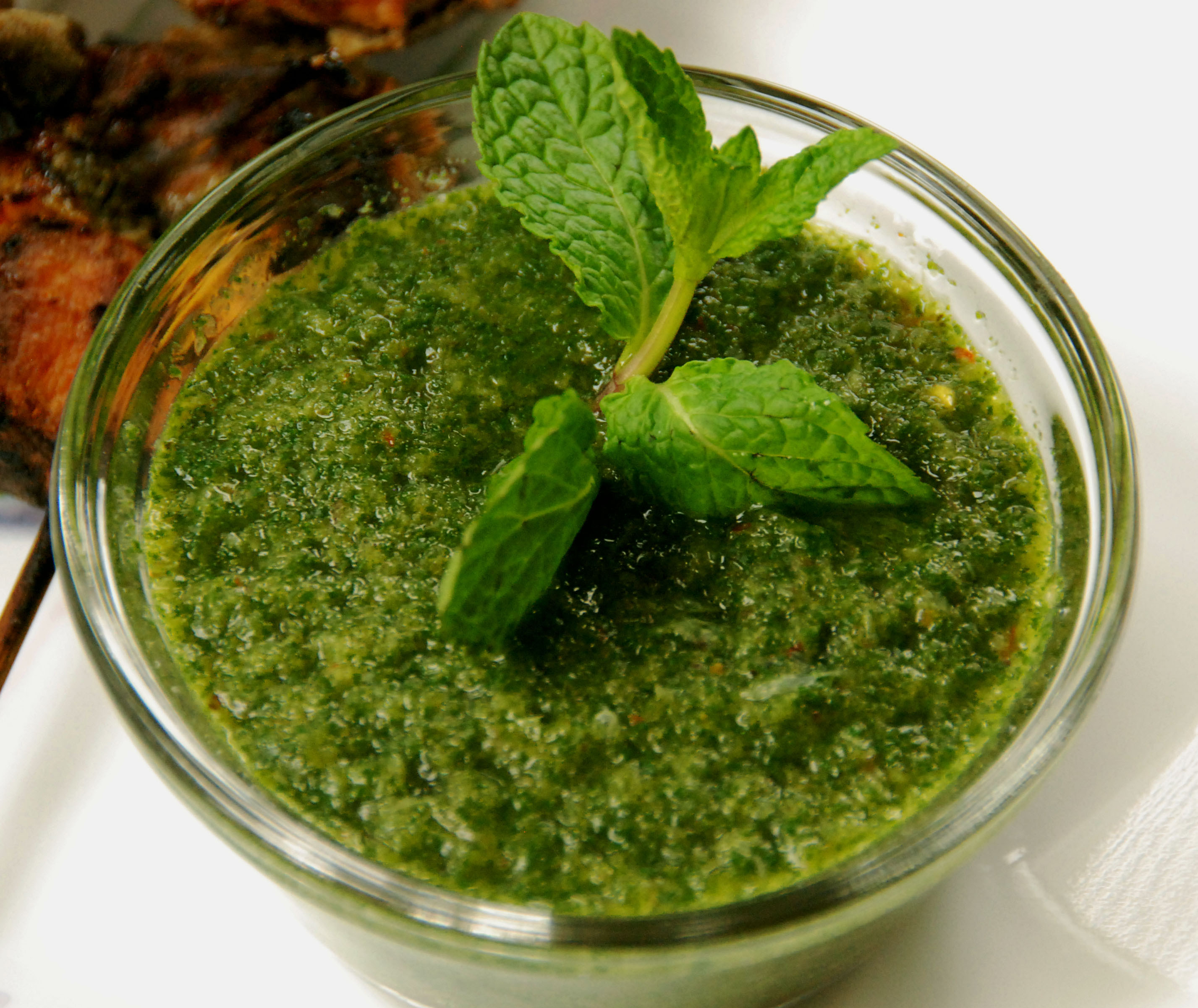
    Originating in India and other neighbouring countries of South Asia, chutneys are a blended, liquid mixture of spices, herbs, vegetables, and/or fruit. Highly variable and versatile in nature, chutney can be made by any palatable combination of its components. Generally hot because of their high spice content, some chutneys can also be sweet in taste. Traditionally made in village households by grinding raw materials with a mortar and a pestle, and then, as in most cases, cooking the paste in vegetable oil, chutneys nowadays are being produced in tons of cans and leak proof packages, courtesy electric blenders and huge food processors.

    The natural acidic content of most components, as well as the presence of sugar and salt in this condiment serve as natural preservatives. Vinegar can be added as well, both to enhance the taste and the shelf-life of the chutney. With the exception of coconut chutney which has an oil content of around forty percent, people can take chutney in liberal amounts owing to its good nutritive and fibre content. Carrot chutney, curry leaves chutney, and dhania-pudina (coriander-mint) chutney are some of the most popular ones consumed in the country, as well some of the healthiest.


    3. Pickle
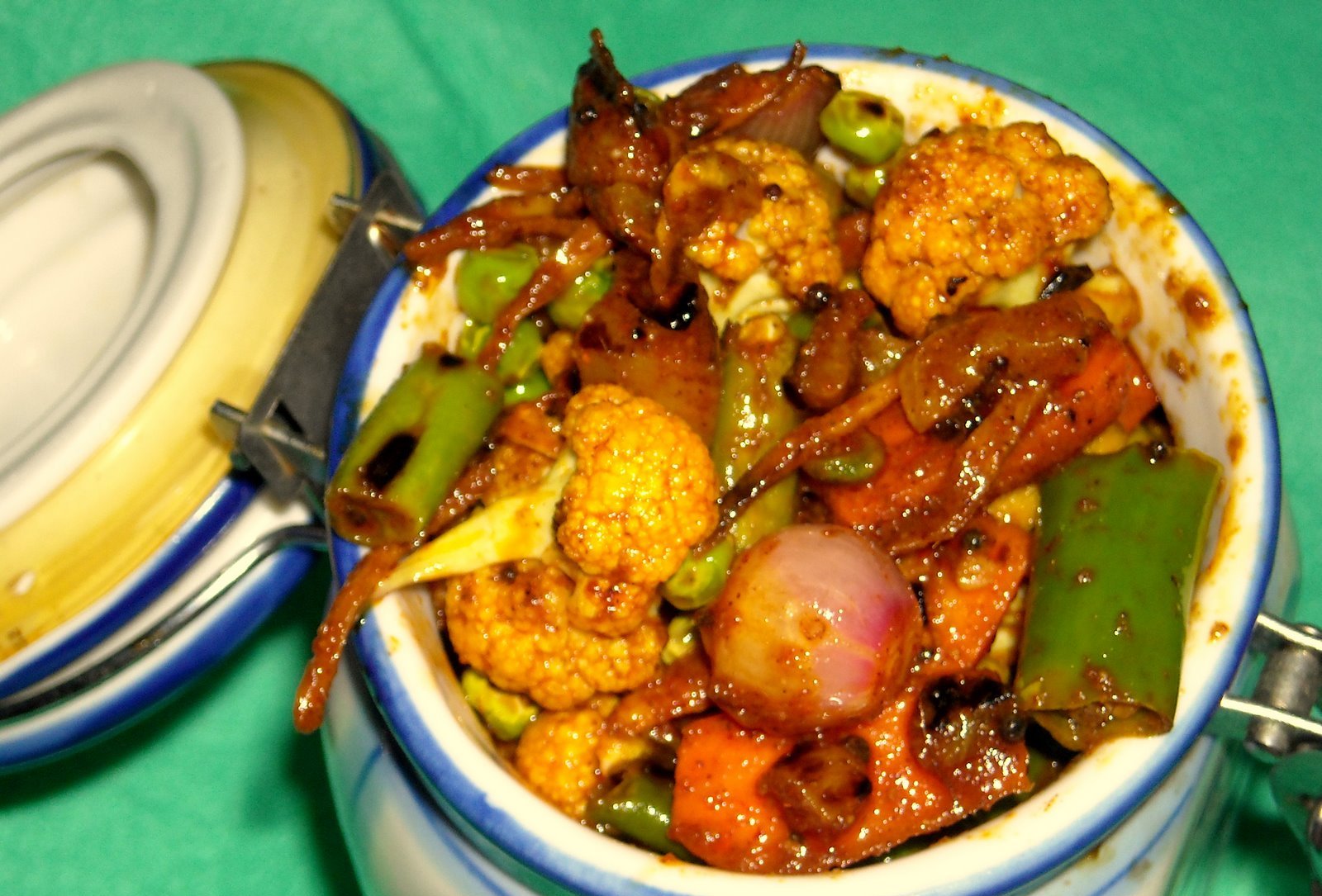
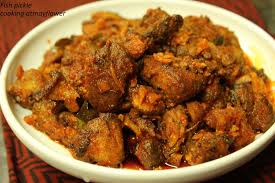
    Also known as achaar, pickles form an inseparable part of the cuisine of the Indian subcontinent and other countries of South Asia. Pickles are generally made from handpicked vegetables and fruits, which are then chopped into small pieces and preserved in an immersion of edible vegetable oils like sesame oil, sunflower oil, or any other, along with plenty of salt, and a mixture of different Indian spices, including asafoetida, red chilli powder, turmeric, and fenugreek. In many regions, particularly coastal areas, meat and fish are also made into pickle and produced on a large scale. This particular mixture is then slowly cooked on a low flame or by the natural heat of the sun, of which the latter is usually the preferred, but longer process.

    Pickles are full of natural preservatives and hence discourage the growth of microbes that would otherwise allow this condiment to decompose. People who have been recommended low salt diets or who suffer from high blood pressure problems should not consume pickles, due to their high sodium content. Sometimes, a particular component of pickles can trigger allergic reactions in people. Overweight and obese people can consume pickles as well, as long as they are cooked in vinegar, sodium benzoate, or any other non-oily preserving medium. However, they must be consumed fresh due to their extremely low shelf life.


    4. Jam
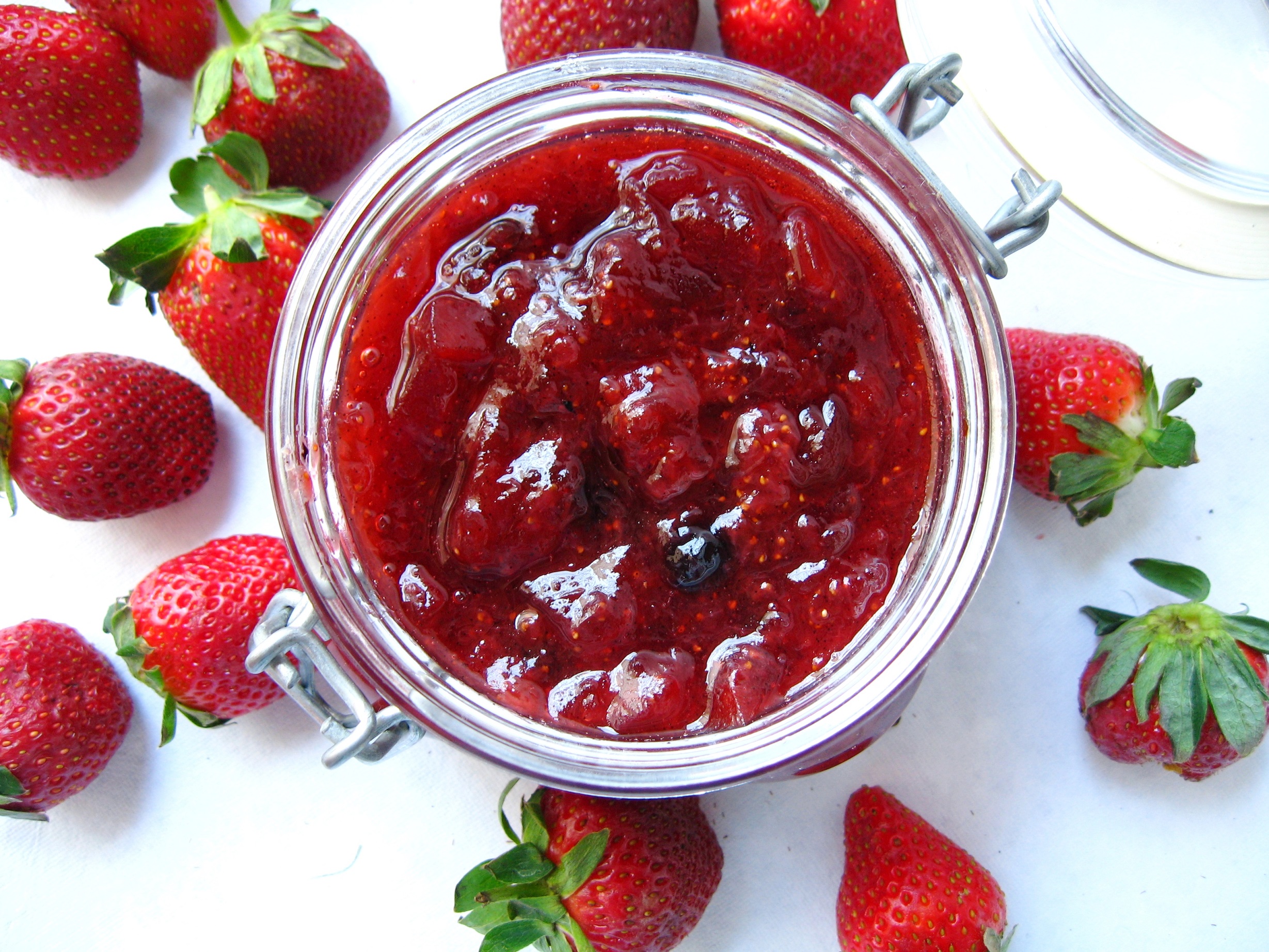
    Available in many flavours and colours, jam typically is a semi-solid suspension of both the juice and flesh of a particular single or a mix of vegetables and fruits, boiled in a sugar solution. Usually called by the popular term fruit preserve in most parts of Europe and America, you can find canned bottles of jam in nearly every grocery store today, with types ranging from apple, squash, strawberry, berries, and mixed fruit. Marmalade is a much loved jam variant and popular breakfast condiment, and it is made from the peel and fruit extracts of citrus fruits such as oranges cooked in a sugar syrup. In India, an ethnic jam type is a much favoured food accompaniment, and consists of entire pieces of fruit cooked in sugar and water and then cooled hereafter.

    Jams offer little other than concentrated energy in the form of sugar. It is a great source of energy for growing children who usually lead active lifestyles and have vigorous, playing sessions on a daily basis. One tablespoon of jam yields minute amounts of dietary fibre in the form of pectin, which is a by-product of the boiling process, and a negligible amount of vitamins. The heat treatment involved in the boiling process incidentally, also greatly reduces the Vitamin C content in jams.


    5. Jelly
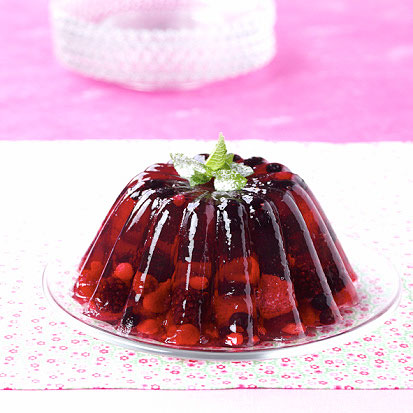
    Generally eaten as dessert, jelly is a clear, translucent preparation made by boiling and setting a mix of fruit pieces and juice extracts (occasionally vegetables), gelatine, and sugar solution. While the process of producing and most of the core ingredients used for jelly are almost identical to that of jam, jellies are available both in perishable and long lasting forms. Home cooked jellies which are served as a sweet dish are meant for immediate consumption, while candied jellies such as gummy bears possess a much greater shelf life.

    Since jellies contain an extremely high amount of sugar, and very little proteins and vitamins, much like jam, they should be avoided by overweight, obese, and diabetic people.
  • INSTANT ACCHARS: PICK YOUR PICKLE

    INSTANT ACCHARS: PICK YOUR PICKLE

    Growing up in India “Acchars” or the Indian pickle has been a substantial part of my childhood experience. I would see my Mom and Aunts spending considerable time in preparing the vegetables, gathering the spices and making arrangements for their storage for days on end. A very tedious affair indeed!! But the end product makes up for all the trouble caused. Pickles are tangy and immediately add savor to anything they are consumed with, be it- paratha, burger or pancakes.

    Pickles are formed by the anaerobic fermentation of vegetables and unripe vegetables in the presence of brine (salt-water) or vinegar. This caused them to dehydrate and thus, discourages the growth of microbes. Moreover, their pH is less than 4.6 which further kills most bacteria. Thus, they can be preserved for months and depending on the recipe, even years!!  The vegetables pickled in brine as opposed to vinegar, are known to contain Lactobacillus and are thus, probiotic.

    Like mentioned above, making “Acchars” can be a pretty tiring job especially if you are a student or working a 24×7 job. Not anymore. Here are 5 instant Pickle recipes anyone can make. They can be stored for lesser duration as compared to the traditional pickles, but the tang it brings to our food is so worth it!!

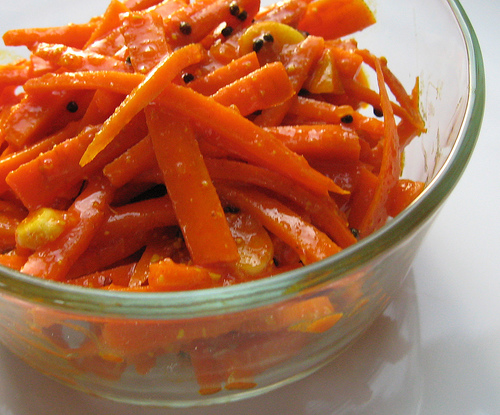
    1.  CARROT PICKLE

    carrot

    Ingredients

    1. 10 carrots
    2. 1 ½ tbsp crushed mustard
    3. 1 ½ tbsp lemon juice
    4. 1 ½ tbsp oil
    5. Cumin powder
    6. Turmeric powder

    Method

    Wash the carrots and peel them to remove a thin layer of outer covering. Cut the carrots into desired shapes, preferably rectangular. Gather all the ingredients in a bowl and mix them thoroughly. And you are good to go!! Finish this preparation within 2-3 days.

    1. GREEN CHILLI  PICKLE

    chilli

    Ingredients

    1. 1 cup green chilies
    2. ¼  tbsp fenugreek seeds
    3. ¼  tbsp cumin seeds
    4. 1/8 tbsp turmeric powder
    5. 1/8 tbsp grounded asafetida
    6. 1 tbsp lemon juice
    7. 2 tbsp oil
    8. ½ tbsp sugar
    9. ½ tbsp salt
    10. ¼ tbsp amchoor or dried mango powder

    Method

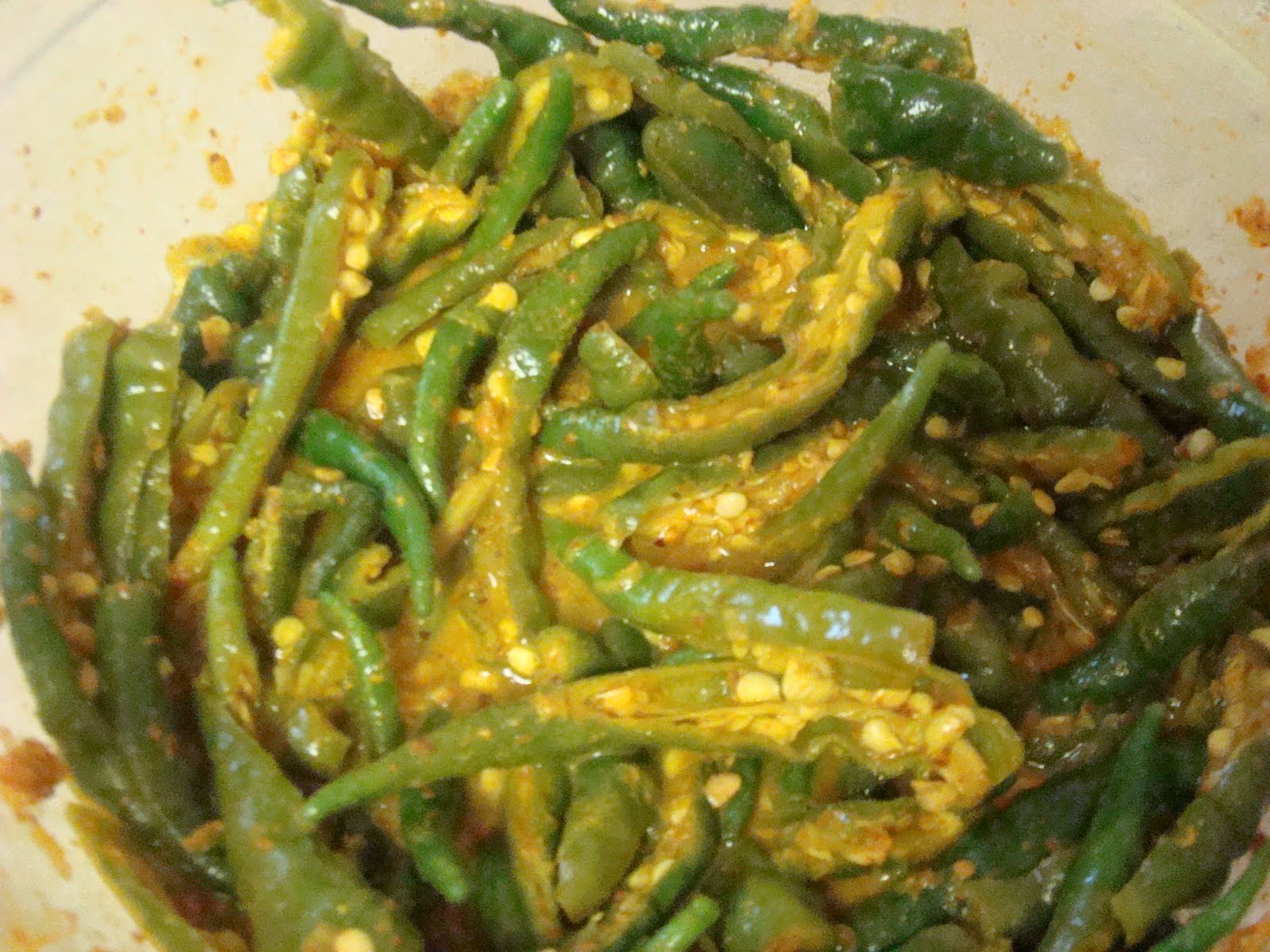
    Wash green chilies and give them a longitudinal cut right in the middle such that they still remain joined at the end. Put oil in a pan and allow it to heat it till it is ready enough to fry. Add cumin and fenugreek seeds and keep whisking them lightly till they begin to crackle. Add amchoor, asafetida, turmeric powder, salt and chilies and mix them for a few minutes. Finally, add sugar and lemon juice. Mix them properly and turn off the heat.

    1. LEMON PICKLE

    lemon

    Ingredients

    1. 10 lemons
    2. 6 tbsp salt
    3. 2 tbsp red chili powder
    4. ½ tbsp turmeric

    Method

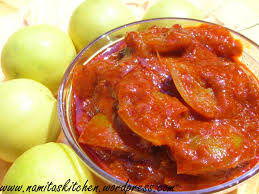
    It takes a little longer to prepare this pickle. But it can be stored for months and is extremely easy to make. Cut the lemons into half or make 4 pieces. Gather the lemons in a large bowl and pour all the other ingredients i.e. salt, turmeric and chili powder. Mix the constituents properly. Remember, depending on the climate and temperature of the place, the amount of ingredients has to be adjusted. Put the mixture in a glass-jar and put it daily under sunlight for a week or so. The pickle is considered ready when the lemon loses water and becomes soft. To store it for longer duration, add oil.

       4. MANGO PICKLE

    mango

    Ingredients

    1. 1 cup sliced unripe mango
    2. 1 tbsp chili powder
    3. ½ tbsp salt
    4. 1 ½ tbsp mustard oil
    5. 1 tbsp cumin seeds roasted
    6. ¼ tbsp grounded asafetida
    7. ½ tbsp turmeric powder

    Method

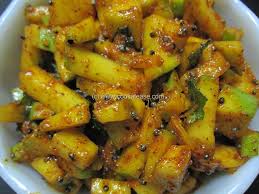
    Mango pickle is arguably the most famous and mouth-tickling pickle there is. Traditionally, it requires a long for the mango “acchar” to get ready. But you need not compromise with taste in your hectic life. So let’s get started. Firstly, take the mango strips in a bowl and add salt. Mix these two ingredients properly and leave them aside for one and a half hour. Once the mangoes lose water, drain the water and collect the mango strips. Put these strips in a large bowl and add all the other ingredients. Mix these thoroughly and your delicious pickle is ready to be served. It can be stored up to 3-4 days when refrigerated.

        5. AMLA OR INDIAN GOOSEBERRY PICKLE

    Amla_Pickle_Stp3

    Ingredients

    1. 10 Amlas
    2. 1/8 tbsp Red chili powder
    3. 1/8 tbsp asafetida
    4. 1/8 tsp fenugreek powder
    5. A pinch of turmeric powder
    6. Salt-to taste
    7. 1 tbsp oil
    8. 1/8 tbsp yellow mustard seeds

    Method

    Boil water in a pan with a pinch of salt. Slowly add Amlas to this boiling mix and let it heat for 5 to 6 minutes. Drain water from the Amlas and allow them to cool for some time. Once they cool down, separate them into their natural wedge shape by cutting and remove the seed in the middle. Heat oil in a pan and add asafetida and mustard seeds. When the seeds begin to crackle, add amla wedges followed by the rest of the ingredients and cook them for 3-4 minutes. Turn off the flame and allow it to cool. Refrigerate for prolonged storage.


    Pickles add flavor to your life, they make your food come alive and dance. In our hectic lives, we often compromise with our meals. So the next time, you decide to half-heartedly swallow bread and a sad not-so-tasty vegetable that you prepared, think again!! Just few minutes of your precious time and you can add soul to your snack. so, come on- PICK YOUR PICKLE!!

  • The Goodness of Bitter Gourd

    The Goodness of Bitter Gourd

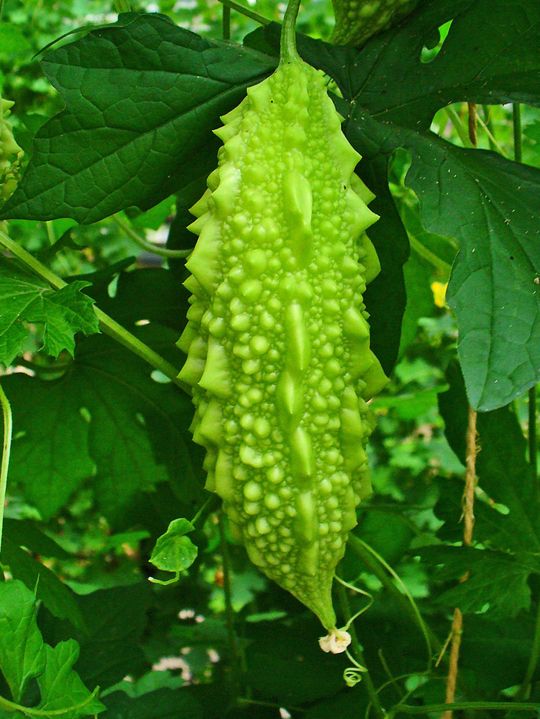
    The bitter gourd or karela is a summer vegetable mainly found in the tropical areas.  It first originated in India and then by the 14th century began to be widely cultivated in Asian countries, Africa and the Caribbean islands.  The edible fruit of this vine is extremely bitter but is a storehouse of iron.  There are different varieties of the bitter gourd, and they vary in size and colour. The medicinal value and antiseptic qualities of this humble vegetable cannot be underestimated. Its juice is often recommended for controlling diabetes, healing stomach ailments and as a natural way to good health.

    The bitter gourd vine is herbaceous and has tendrils which help it to hold on to supports.  The leaves have rugged edges and grow alternatively on the tender stem.  The bright yellow flowers, both male and female are seen on the same plant.  After flowering in June the fruits usually start forming within a few months.  The fruit is oblong in shape, with a spiky outer surface which is bright green in colour.  Flat seeds are found inside the fleshy outer cover.  This vegetable has a watery texture, and is very bitter.  The skin is tender and edible and is eaten green.  When the fruit ripens, the skin becomes tough and bitter to taste and cannot be eaten raw.  On the other hand the pith which becomes dark red in colour is used raw in some salads.

    karela

    The different varieties of bitter gourd carry the same properties although they vary in colour, size and appearance.  The white or light green variety is longer in size with less tapering ends and a moderately less spiky exterior.  The smaller, dark green variety with sharp spiky exterior is used as a stuffed vegetable and is popular in Pakistan, Nepal, India and the Asian sub-continent.  This green vegetable is generally eaten in a cooked state, while the young shoots and leaves can be eaten as greens.  The bitter flavour of the bitter gourd makes it an important ingredient in stir fries, soups and in the making of herbal teas and beers.

    In India bitter gourd is cooked differently in the south and north.  The people in north India sometimes cook it as a stuffed vegetable in oil, or cook it separately with tomatoes and potatoes as a subzi and eat it along with roti and curd.  In south India it is cooked using coconut oil, with lots of grated coconut as a thoran, or with fried coconut as a theeyal or pachhadi and is consumed with steaming brown rice.  In Tamil Nadu, the bitter gourd is made as a special dish using onions, lentil and coconut along with tamarind juice.  This is a very popular preparation and is called ‘kattu pagarkkai’. In most of the dishes, a lot of onions are used along with rich spices and tomatoes, which help to lessen the bitterness of the vegetable. The green vegetable is cooked in different forms. In many households, bitter gourd is cooked with meat, eggs, beef, pork or shrimps and use coconut milk for added flavour.  Pickles, soups, curries, stews, chutneys and stir-fries made using this wonderful vegetable are popular delicacies all around the world.

    bitter-gourd-benefits

    Bitter gourd is well known for its medicinal values also.  Since time immemorial it has been used in herbal medicine systems.  It is largely used as sure cure for various ailments, especially complaints of the gut stomach and intestines.  Research has proved that the concentrated extracts of the bitter gourd has hypoglycemic and hypolipidemic effects which make it popular as a widely used remedy for diabetes. The extract of the bitter gourd is also used as a dietary supplement for breast cancer patients because it exerts a significant effect against the growth of breast cancer cells.

    If we have leisure time and interest in cooking we can experiment and bring forth innumerable attractive and mouth watering delicacies. For example:

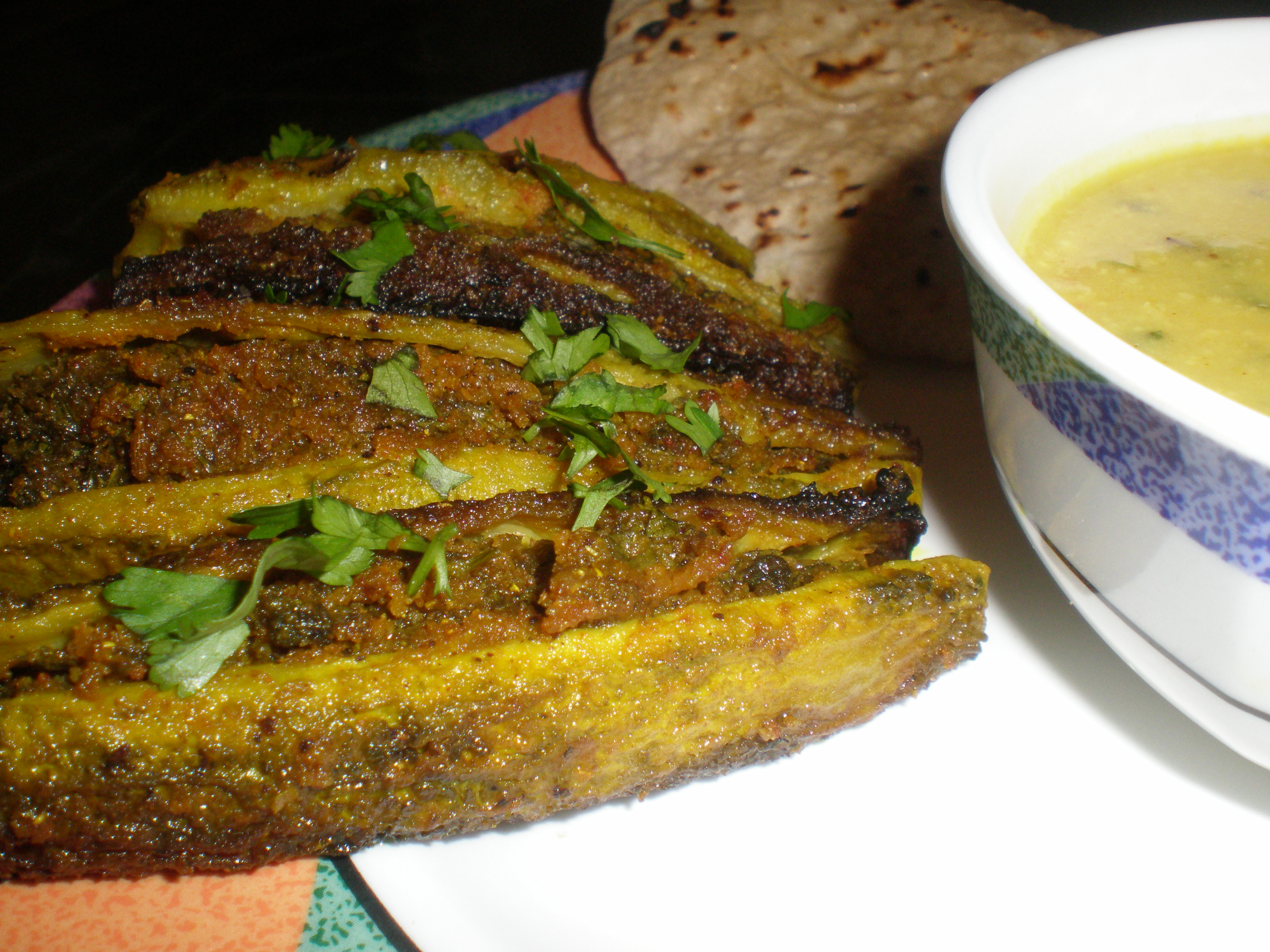
    Fried karela Boat

    OLYMPUS DIGITAL CAMERA

    Directions:

    • Slit open  8 long, slender karelas and clean out the inside
    • Half cook the karelas in salted water with a pinch of turmeric
    • Grind 5 green chillies and 100gms of roasted channa
    • Mix well with salt, garam masala and coriander powder
    • Add chopped coriander and stuff into the slit karela
    • Tie each karela ( boat) with a thin thread
    • Use a shallow pan and heat the oil well
    • Fry the karela on a slow flame and carefully keep turning them over till they turn into a golden brown colour.

    The dish can be served hot with tomato sauce or pudina chutney. This appetizing and spicy dish can be enjoyed with rice, parathas or rotis.

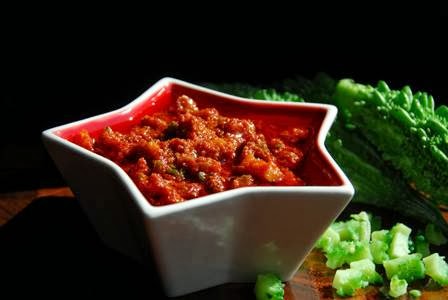
    Hot Karela Achar 

    karela achar   

    The bitter gourd can also be used to make a very tangy, sour pickle with many spices and condiments.  This “Hot Karela Achar” goes very well with rice or rotis and can be carefully preserved for some time.

    Directions:

    • Wash and dry karelas well
    • Cut the karelas and De-seed.
    • Chop karelas and few green chillies into very thin slices
    • Rub salt well, squeeze out water and sun dry for one day
    •  Heat one cup of oil, splutter mustard and lightly fry a few methi seeds.
    • Add the dried karela and green chillies, curry leaves and fry till crispy
    • Mix thoroughly with a pinch of asafetida powder and salt to taste
    • Store in dry glass jars when cool and fill oil till top
    • Keep for two days, mix oil well and then serve.