Month: February 2015

  • Easy Tapioca Recipes

    Easy Tapioca Recipes

    Tapioca is a starch extracted from ‘cassava’ roots. This plant is the native to the north region of Brazil but today it is cultivated worldwide. Tapioca is known for its nutritional value. It predominantly consists of carbohydrates and is low in saturated fat, protein and sodium. It has no significant essential vitamins or dietary minerals. It is also used in other purposes like tapioca roots can be used to manufacture biodegradable wastes and tapioca starch can be used to starching garments before ironing.

    So here are some easy tapioca dishes that can be tried out in homes.

    i)  TAPIOCA PUDDING
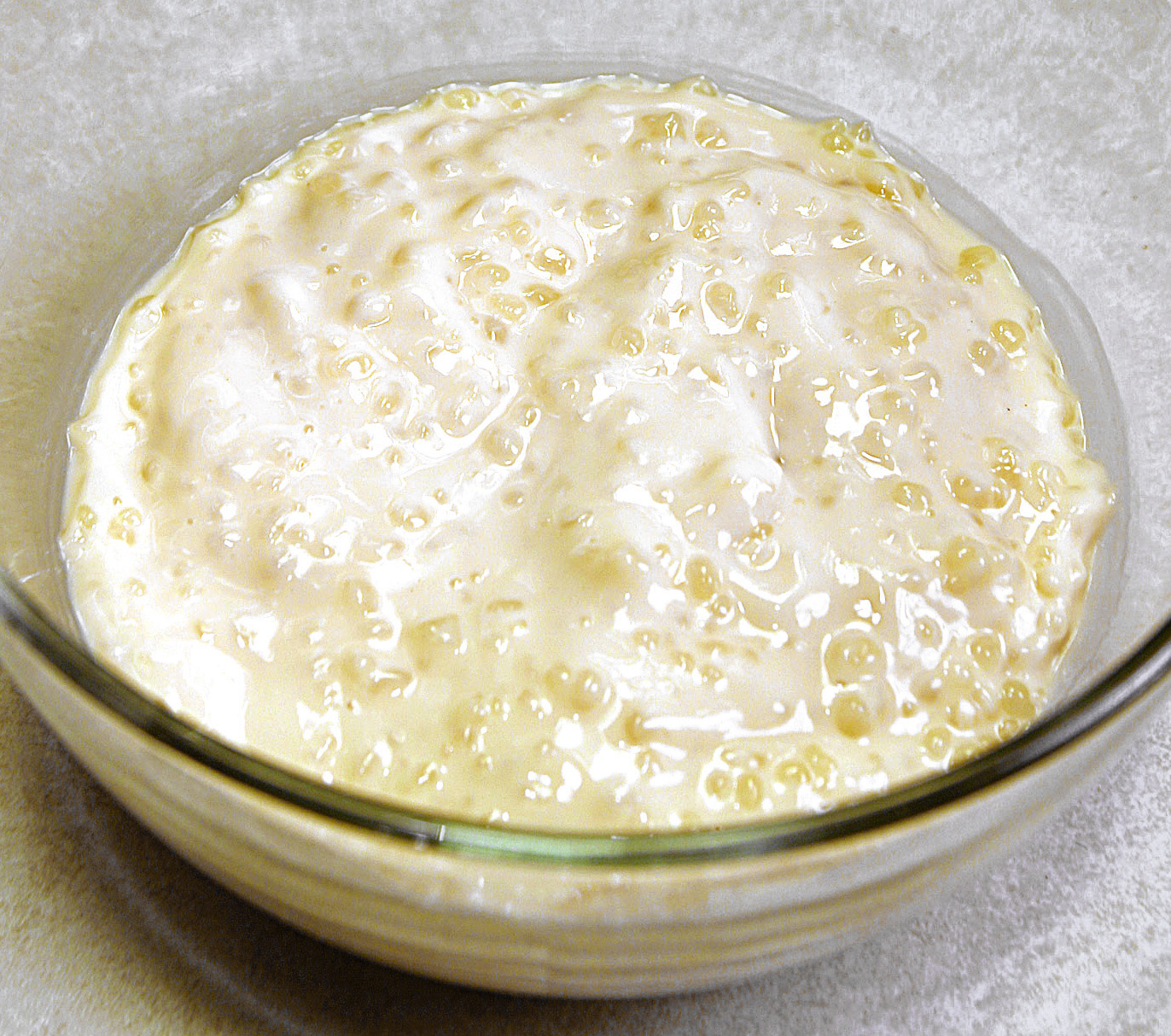
    Tapioca_pudding-3

    Time: 35 min

    Ingredients:

    Tapioca- ½ cup

    2% low fat milk- 3 cups (if pearls are soaked overnight, then use 2 ½ cups milk)

    Salt- ¼ teaspoon

    Sugar- ½ cup

    Eggs- 2

    Vanilla- ½ teaspoon

    Preparation:

    1)      Soak tapioca pearls in water the night before to reduce some excess starch (hence less cooking time).

    2)      In a saucepan, mix the tapioca pearls, milk and salt. Stir it frequently on medium high heat until the mixture comes to a boil.

    3)      Now reduce the heat to a minimum and simmer 5 minutes. Add sugar to it gradually while stirring.

    4)      In another bowl, beat the two eggs. Add some tapioca mixture to the eggs and continue stirring, preventing the eggs from scrambling.

    5)      Now add the mixture to the tapioca and gently bring the mixture back to near boiling. Reduce the heat to minimum and simmer, stirring constantly, till the desired consistency is reached.( note that the pearls should be translucent and gelatinous in this stage)

    6)      Allow the tapioca mixture to cool before adding vanilla to it.


    ii)  BOILED TAPIOCA
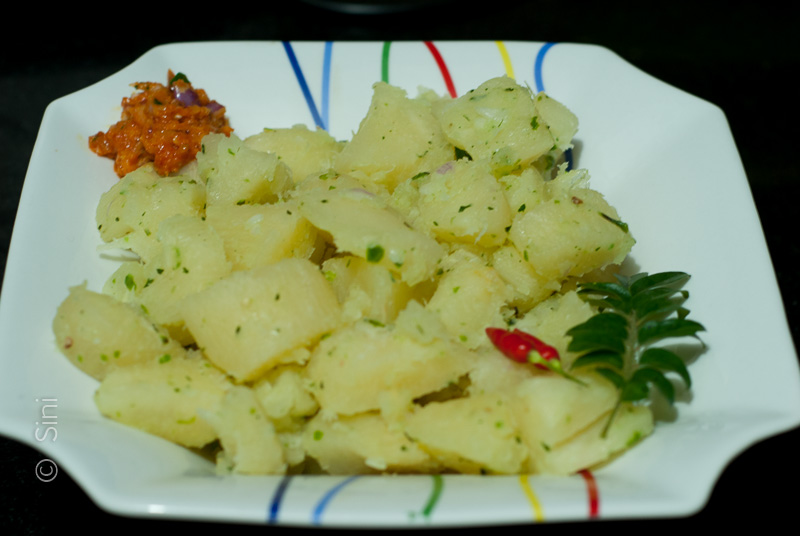
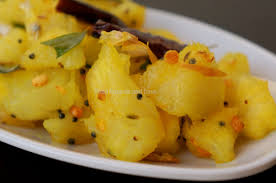
    boiled tapioca

    Preparation time: 15 minutes

    Ingredients:

    Tapioca-1

    Salt- to taste

    Preparation:

    1)      Peel the skin of tapioca and wash it thoroughly. Then cut it into big pieces.

    2)      Take these tapioca pieces in a vessel and pour enough water so that the pieces are submerged.

    3)      Now add some salt to it and boil it.

    4)      Cook for about 10 min till the pieces are soft.

    5)      Drain the excess water.

    6)      To make it more flavorful, add mustard seeds and some curry leaves. Also sprinkle some freshly grated coconut on top.

    7)      Now serve it hot.


    iii) TAPIOCA PUTTU
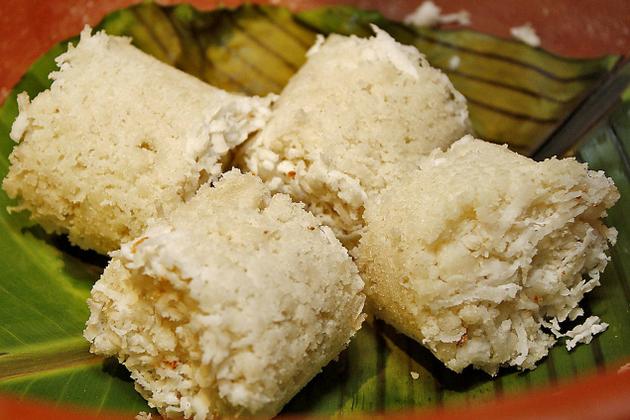
    tapioca puttu

    Preparation time: 20 min

    Ingredients:

    Tapioca flour- 1 cup

    Grated coconut- 1 cup

    Onion (big) – 1

    Green chili- 3

    Salt- to taste

    Preparation:

    1)      Cut onion and green chili finely.

    2)      In a bowl, mix tapioca flour, green chili, coconut and onion.

    3)      Sprinkle water to it and mix it well. Now keep the mixture for about 15 min.

    4)      Steam it for 10 min.


    iv) TAPIOCA HALWA
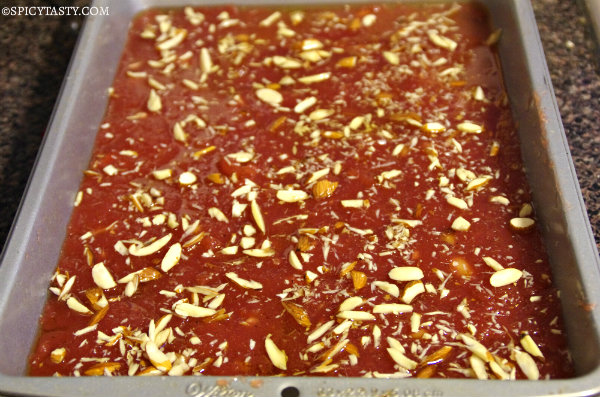
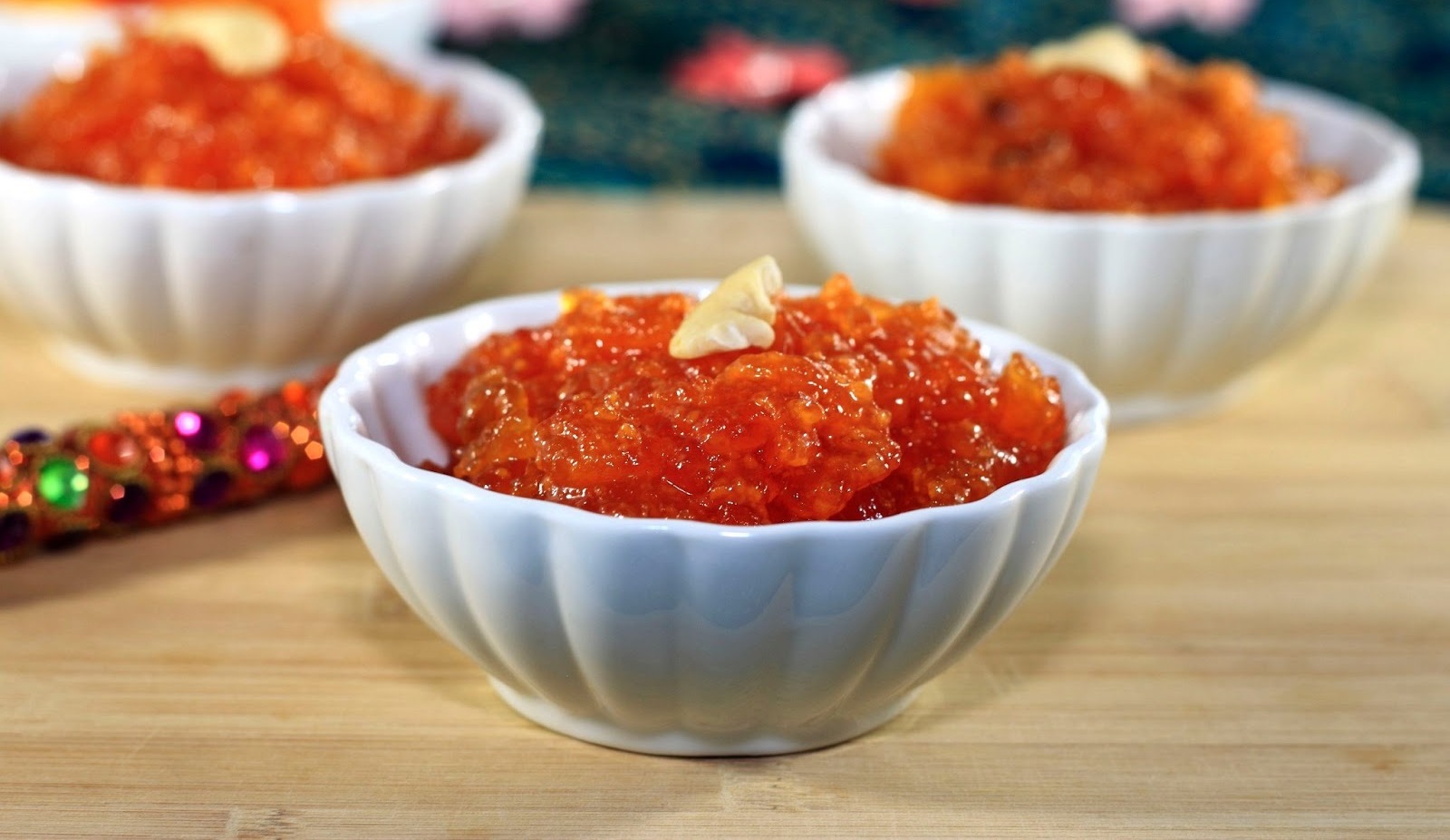
    tapioca halwa

    Preparation time: 30 min

    Ingredients:

    Tapioca- ¼ kilos

    Grated coconut- ½ cup

    Sugar- ¼ kilo

    Ghee- 100 g

    Cashew- 10

    Raisins- 20

    Kesari powder- a pinch

    Cardamom powder- ¼ tsp

    Preparation:

    1)      Remove the skin of tapioca.

    2)      Grind tapioca, coconut and sugar to a thick paste and transfer this content to a bowl.

    3)      Melt 2 tsp of ghee in a frying pan.

    4)      Add cashew and raisins to the ghee and fry it till it reaches a golden color. Now add it to tapioca.

    5)      Add kesari powder, cardamom powder and ghee to tapioca.

    6)      Stem the contents for about 15 min.

    7)      Cut it into pieces when cool. Keep the contents in a cool place.


    v)  TAPIOCA AVIYAL
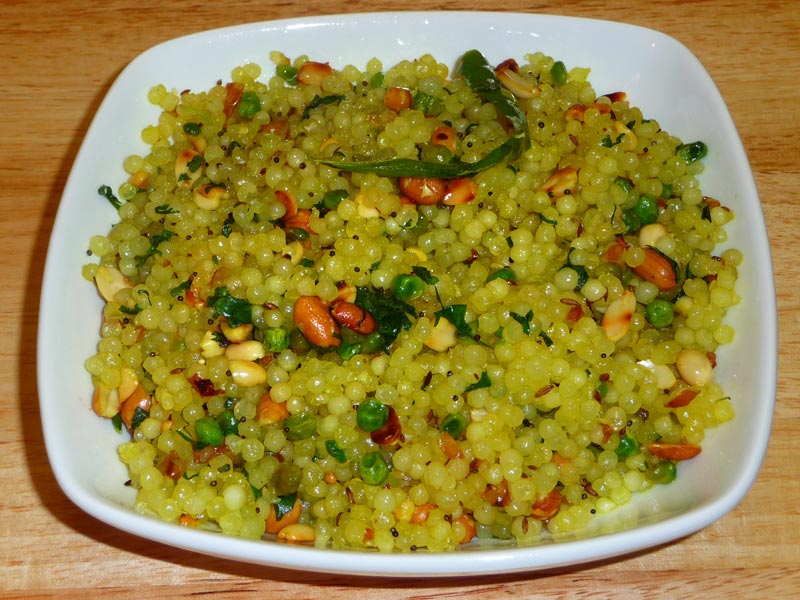
    t. aviyal

    Preparation time: 35 min

    Ingredients:

    Tapioca (cut into long thin pieces) – 1

    Grated coconut- 1 cup

    Shallots- 4

    Jeera seeds- ½ tsp

    Curd- 2 tbsp

    Turmeric powder- ¼ tsp

    Chili powder- 1 tsp

    Curry leaves- a sprig

    Coconut oil- 1 tsp

    Salt- to taste

    Preparation:

    1)      Cook tapioca by adding salt and water and until it is soft.

    2)      Drain excess water and keep it aside.

    3)      Grind coconut, jeera, shallots, turmeric powder and red chili powder into a paste.

    4)      Now add this paste to the tapioca pieces and mix well.

    5)      Reduce the heat and cook the tapioca for about 1 min, stirring frequently.

    6)      Add curry leaves, curd and cook until it is thick.

    7)      Garnish it with grated coconut and remove from heat.

    8)      Serve it hot.


    vi) TAPIOCA CURRY
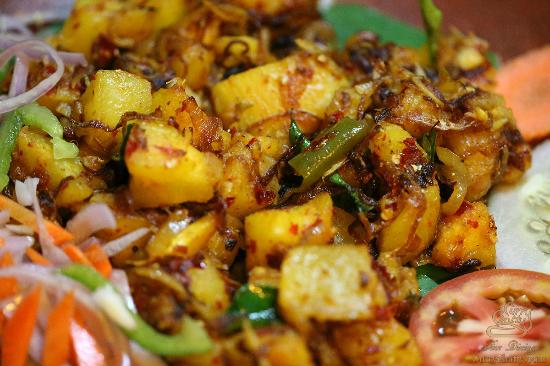
    t. curry

    Preparation time: 20 min

    Ingredients:

    Tapioca- 1

    Grated coconut- ¼ cup

    Cumin- ¼ tsp

    Garlic- 2 cloves

    Curry leaves- a few

    Red chili- 4

    Turmeric powder- a pinch

    Mustard- ½ tsp

    Curry leaves- few

    Urad dal- ½ tsp

    Salt- to taste

    Oil- as needed

    Preparation:

    1)      Boil tapioca with salt and turmeric powder. Now peel of its skin and set it aside.

    2)      Grind coconut, cumin, garlic, red chili and curry leaves into a paste.

    3)      Heat oil in a frying pan and add mustard, curry leaves and urad dal to it.

    4)      When mustard splutters, add grated coconut to it and heat till a raw smell subsides.

    5)       Add tapioca to it and mix well.

    6)      Cook for few minutes and remove the pan from heat.

    7)      Garnish it with curry leaves and serve it hot.


    vii) TAPIOCA PEARLS IN COCONUT SAUCE
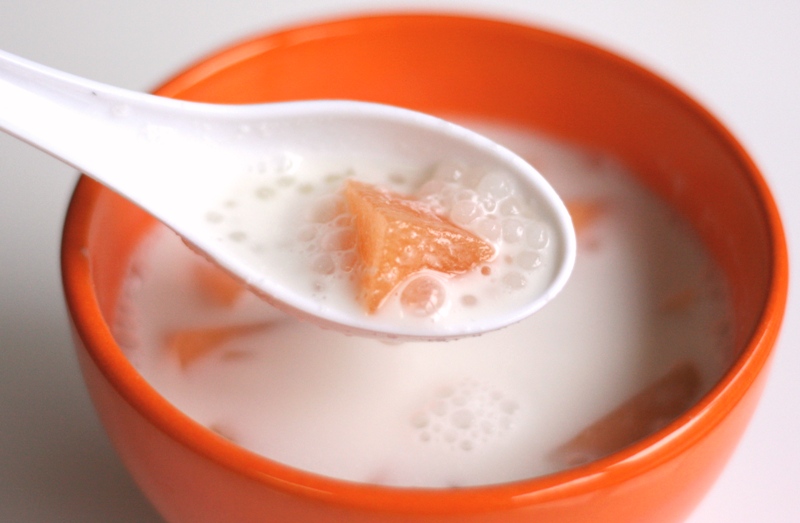
    tapioca-pearls-and-coconut sauce

    Preparation time: 20 min

    Ingredients:

    Tapioca pearls- 100 g

    Sugar- 30 g

    Salt- a pinch

    Coconut milk- 150 g

    Preparation:

    1)      Boil the tapioca pearls in water till it becomes translucent.

    2)      Drain off excess water.

    3)      Now add sugar to it and heat the contents to dissolve the sugar.

    4)      In a separate pan, warm the coconut milk with a pinch of salt.

    5)      Now add the tapioca pearls to the warm coconut milk.

    6)      Serve it hot.


    viii)  SABUDANA LADOO (LADOO MADE OF TAPIOCA PEARLS)
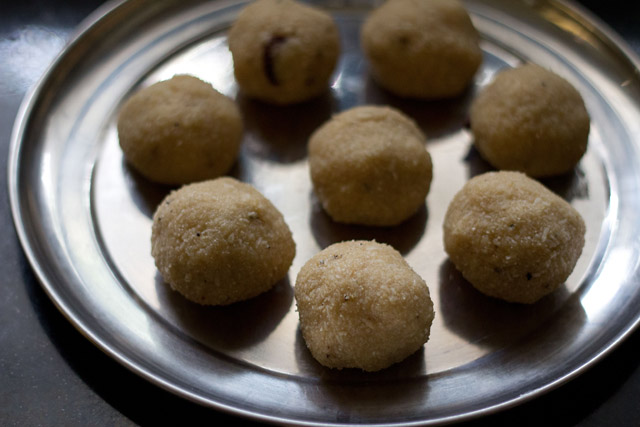
    sabudana-ladoo10

    Preparation time: 45 min

    Ingredients:

    Tapioca pearls- 200 g

    Grated coconut- ½ cup

    Powdered sugar- 30 g

    Ghee/ oil- 1 tsp

    Chopped cashews- 4

    Cardamom powder- ¼ tsp

    Nutmeg (crushed) – 1

    Preparation:

    1)      Roast tapioca pearls in a pan in low flame. This takes about 20 to 30 min.

    2)      Remove the pearls from the pan when it reaches a golden color. Now keep it aside to cool.

    3)      Grind it into a fine powder.

    4)      In another pan, heat the grated coconut.

    5)      Add the powdered tapioca pearls and powdered sugar to it.

    6)      Heat oil/ghee in a pan and roast the cashew nuts in it.

    7)      Now pour this whole mixture to the grated coconut mixture.

    8)      Also add cardamom powder and nutmeg to it. Mix the contents well.

    9)      When the mixture is slightly warm, make medium sized ladoos from it.

  • Universal Studios Singapore: A Magical Journey

    Universal Studios Singapore: A Magical Journey

    While vacationing in Singapore some time back, I had the good fortune of getting to explore the then newly opened Universal Studios along with my grandmother. Located within Resorts World on Sentosa Island, Singapore, the massive theme park as one can see today took nearly two years of construction and testing to build. This one in a kind tourist paradise is stunning and extraordinary in its architectural finesse and roller-coaster layout, and has quickly risen through the ranks to become one of the best theme parks in Asia. Spread over an area of around fifty acres, Universal Studios Singapore contains a total number of twenty-four specially designed attractions. There are seven specific zones based on a bestselling television series or blockbuster film produced by the company, all surrounding an artificially modified lagoon. The park was officially inaugurated on 28th May, 2011, and since then, the tourist crowd has been pouring in consistently for the unforgettable rides offered there.

    307743_2450549821068_107624392_n 317379_2450608222528_1553518607_n

    Themed after the Hollywood Boulevard of the 1970s, Hollywood forms the entrance zone of the theme park. It features a long, but adequately spacious walkthrough with the erstwhile dynamic architecture lining the faux street, complete with the signature palm trees. With an outstanding replica of the celebrated Hollywood Walk of Fame, this zone also contains a Broadway style theatre, which regularly holds live musicals starring characters from Universal Horrors and Sesame Street. Several restaurants and a variety of flagship shops also line the walkway, selling unique dishes and eatables such as chocolate fudge, candy floss, and elaborate main course preparations from many cuisines, as well as movie memorabilia, celebrity posters, books, themed souvenirs, film accessories and apparel. Different food joints in the Hollywood zone have been remodelled to resemble settings from iconic Universal films, such as Mel’s Diner, which is based on the 1973 production, American Graffiti, and serves its customers snacks and beverages as per the culinary traditions of the 1950s.

    298205_2450557461259_767743055_n 311713_2450552421133_1315545504_n

    The New York zone lives up to its name, and is a perfect post-modern replication of the Big Apple, with its signature neon lights, huge billboards, towering skyline, and bustling sidewalks crafted to visual and aesthetic perfection. One of the major decor pieces here is the replica of the much renowned New York Public Library which has been created by talented artist in precision down to the last detail, and even has the two enormous statues of lions in white stone guarding its faux entrance. Lights! Camera! Action! Hosted by Steven Spielberg is this zone’s front running sound and lights show fitted with additional special effects to mimic a major hurricane about to hit the city. Other attractions in this area include New York styled pizza parlours and barbeque grills, apart from a Sesame Street: Space Chase themed indoor ride featuring beloved characters such as Elmo, Cookie Monster, Bert, Abby, and many others.

    296213_2450560741341_1930820810_n 314341_2450562701390_40690414_n

    Sci-Fi City proved to be one of the most exciting zones for me in Universal Studios Singapore by far, and will indeed prove to be delight for countless other science fiction enthusiasts. It is supposed to be an imagining of the future of human civilization, with remnants of the human population and previously unknown alien beings socializing and living together in a much more technologically advanced era. The blue and red Human and Cylon roller coasters inspired from the Battlestar Galactica television franchise currently hold the world record of the tallest pair of duelling roller-coasters standing at a height of around a hundred and forty metres. A Transformers themed simulation ride, which was opened much later by the director of the famous film adaptations, Michael Bay on 2nd December 2011, is another key feature of this zone. A much minor ride of revolving teacups, named Accelerator, and various merchandise shops and themed food outlets are other things to look forward here.

    293595_2450568581537_1777969231_n 297980_2450566861494_1453031324_n

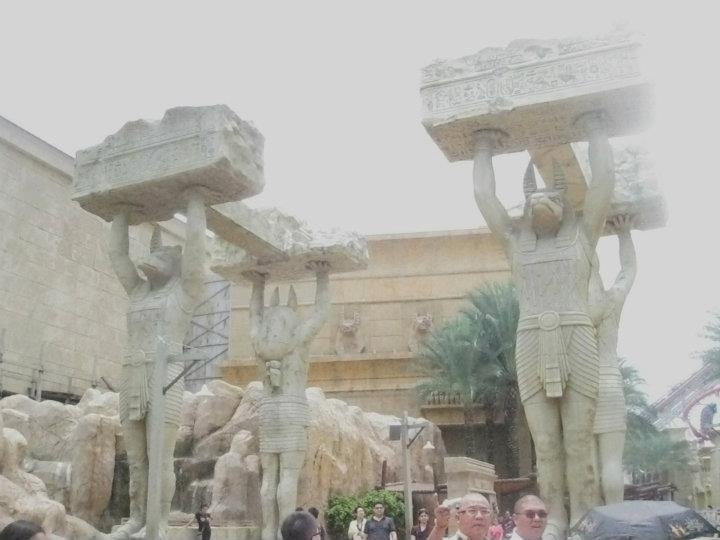
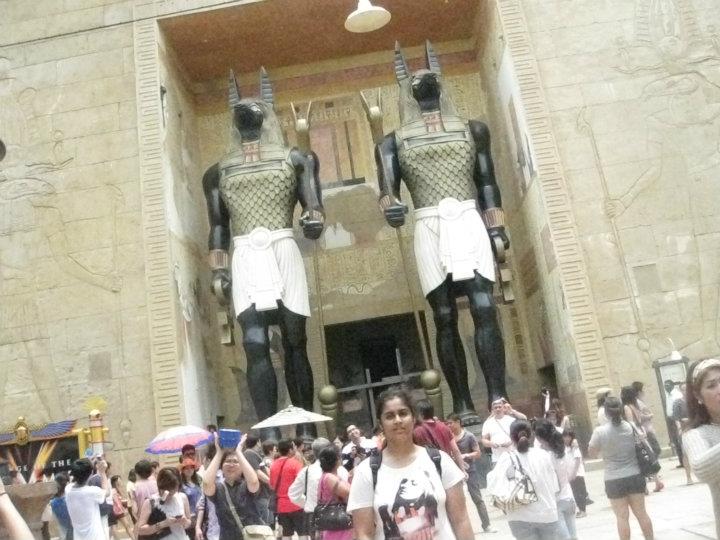
    The aptly named Ancient Egypt zone is designed as per the settings of the many American productions of the 1930s, rightfully called Hollywood’s Golden Age of Egyptian exploration. Sandstone obelisks, statues and miniature pyramids form the architectural diaspora of this zone, and the main ride here is the high-speed and dark Revenge of the Mummy: The Ride, which is based on The Mummy film series. Treasure Hunters is another key ride, and consists of an airborne leisure car ride around an abandoned Egyptian excavation site. Apart from souvenir shopping, visitors can eat out at the Oasis Spice Cafe which boasts of a sumptuous multi-cuisine buffet serving spicy delicacies from Lebanese, Turkish, Indian, and Mediterranean cultures.

    314546_2450602942396_817192514_n 319155_2450569021548_749427338_n

    Based on one of the bestselling science fiction franchises of all time, The Lost World zone is divided into two areas, Jurassic Park and the more aquatic based Waterworld. The Jurassic Park series has been based on the popular live-action adaptations of Michael Crichton’s fictional works of cloned dinosaurs, which have been directed by Steven Spielberg. Waterworld is based on the 1997 Hollywood film of the same name which stars Kevin Costner. The Lost World is filled with action packed adventures for all people, and has a diverse range of shows and rides, including roller-coasters, pyrotechnics, water rides, stunts, rock-climbing, as well as movie merchandise retail outlets and themed restaurants.

    297361_2450574741691_1461647883_n 310534_2450575581712_148669093_n

    Far Far Away is the fantastical, magical realm of fairytale characters in the Shrek movie series, and one of the more children-targeted attractions of Universal Studios Singapore. From the gentle ogre Shrek to the loud princess Fiona and the lovable Donkey, you will find all the characters from this much loved fictional universe, and be mesmerized by a huge and intricate real-life version of the Far Far Away Castle, and the delightfully dirty replica of Shrek’s Swamp as shown in the animated films. This zone includes miniature child-friendly coasters and ferris wheels, apart from a 4D simulated adventure ride and a digitally interactive live show with one of the characters. An added bonus to this area are the aptly named food outlets which sell memorabilia and food items based on fairytale myths, such as magical potions, liquid elixirs, you name it.

    298913_2450578821793_171735215_n 310153_2450581261854_679314696_n

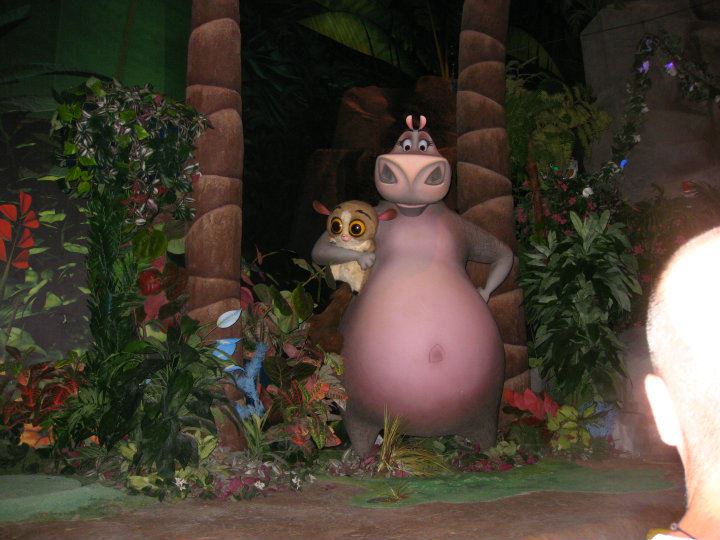
    Madagascar is the culminating zone of the theme park, and is based on the animated film adventures of Alex, Gloria, Marty, and Melman, a lion, a hippopotamus, a zebra, and a giraffe, all of who escape from the New York City Zoo, and travel to the wild but unknown regions of the African continent. This area has more kid-friendly rides, such as a crate water ride, and a carousel, and appropriately themed merchandise shops and food outlets.

  • Chandni Chowk – The Streets of Chaos, Hhistory and Wonder

    Chandni Chowk – The Streets of Chaos, Hhistory and Wonder

    The year before I completed school and slogged the entire summer giving competitive exams. I reluctantly left Delhi to pursue management in a prestigious institute nearly two thousand miles away. In those countless nights spent dreaming about home, what I missed most was my visits to Chandni Chowk with my mother. The streets of Chandni Chowk never fail to amaze me.

    Chandni Chowk can be traced to the time of the Mughal Empire. When Shah Jahan moved the capital from Agra to Shahjahanabad (Delhi), he built the magnificent Red Fort on the banks of River Yamuna. It was erected in the year 1650 AD as an accompaniment to the fort. Designed by his dearest daughter Jahaanara, it was a square(chowk) with a pool in the centre. The tale says that the square and the pool used to dazzle on a moonlit night- hence ‘Chandni Chowk’. Many say that it is named so after its silversmiths.

    For someone who’s been to Chandni Chowk a dozen times, it’s difficult to distinguish the dariba from the meena bazaar– It is truly a labyrinth! Located in central Delhi, The streets of Chandni Chowk are lined with several objects of fascination that draws everybody to it – right from fashion designers exploring beautiful fabrics and accessories for their creations to freezing Delhites seeking refuge from the unforgiving winters with delicious revdi and gajjak. And then there are those wide- eyed tourists caked with sunscreen, admiring the busy streets and clicking away curious onlooker. Despite the chaos, Chandni Chowk is a cosmos in itself.

    Chandni Chowk is home not just to several shops but also to several places of worship. The Jama Masjid attracts thousands of people every day. Sri Digambar Jain Lal Mandir is known for its bird hospital. The Sunehri Masjid and the Fatehpuri Masjid too retain their importance in present times.

    Chandni Chowk has seen several palatial havelis raised to the ground. The Chunamal Haveli, spread over nearly an acre and ten scores old, it houses several shops on the ground floor while Lal Chunamal’s fifth generation resides on the first floor. The Haksar Haveli, where Pandit Jawaharlal Nehru took his vows with Kamala Nehru is now a commercial complex. Our favourite action man Akshay Kumar (then Rajiv Bhatia ) spent his childhood there before making it big. It is quite common to find pictures of Akshay posing with the shopkeepers adorn the walls of many a shops in Chandni Chowk. “Bachpan ke dost the hum – ek saath patang udaya karte the hum” is the standard reply to any questions asked about those pictures. Akshay’s movie Chandni Chowk to China further put Chandni Chowk in the limelight.

    Chunnamal Haveli
    The Chunnamal Haveli

    The market comprises of different lanes known for different items. The Dariba is known for breathtaking, beautiful jewellery that attracts all brides-to-be and anyone looking for something. Most shops are more than a century old and yet are as sought after as they must be in their heydays. Right from glittering diamond necklaces to one time wear costume jewellery, the dariba has everything. Chandni Chowk is known for its silver, be it cute balis for school girls, jhumkas for casual college wear or expensive gift items such as chandi glasses, trays and coins that people have been exchanging on festivals and auspicious occasions. You can even get your grandmother’s tarnished silver jewellery polished and bring it back in fashion!  If not, then sell exchange/sell it for the new trendy pieces. There is a chance Chandni Chowk is named so after its sparkling silver!


    Traditional jewellery that you would spot only with your grandmother still sells like hot cakes among the more, recent fashionable kinds such as sparkling diamond sets. Meenakari jewellery that brides still swear by is very sought after. Magnificent kundan and  polki sets adorn the showcase, among a barrage of the kinds that are currently trendy. They are styled both in the antique and shiny finish. Be rest assured that everything you buy will stay on in your family for generations!


    The dariba is home to the renowned Gulab Johri Mal Shop. Found in 1819, the shop sells exquisite itras or perfumes made from actual extracts customised to your taste. You can explore their entire range of fragrances before settling for the sweetest smell. As exciting as it sounds, it is often impossible to pick and choose! To help compare fragrances better, you are advised to sniff coffee beans in between. Or better still, ask for the one that smells the most!

    The Kinari bazaar sells luxuriant  zardozi and zari material that can brighten any outfit. All brides flock to the market to get their hand on lovely lehengas and embroidered sarees that often inspire designer wear! What helps is that kaleeras, choodas and all other essential rite-d-passage items are found in one mile’s radius.
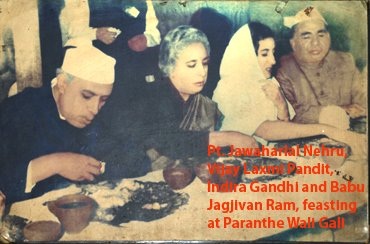
    Chandni Chowk is as much about food as it is about fashion. A visit to Chandni Chowk is incomplete without paranthas. The Paranthe Wali Gali is true paradise. Shallow fried in ghee, the delicious parantha is served with different kinds of sabzis, sweet and sour chutney and different kinds of pickle, nobody knew paranthas could be so much fun! Also try the sweet lassi served in small earthen pots known as kulhars. The thick, delicious rabri made from condensed milk is a must for those with a sweet tooth.


    Street food like chaat, moong pakodis are all over the place, with a chaatwala in every nook and cranny. For those with a craving for delicious Mughlai food, Karim’s is the place to visit. Opposite to Jama Masjid, it’s easy to find and inviting. The plain exteriors are in sharp contrast to the welcoming ambience of the restaurant. The Mutton burra and the sheermal, among other tantalising kebabs have been enjoyed by generations of loyal diners.

    Karim in Chandni Chowk
    Karim in Chandni Chowk
    Karim
    Amazing food at Karim’s

    Chandni Chowk leaves an everlasting impression on everyone who walks its streets.


  • Chokhi Dhaani: A Treat for all your Senses!

    Chokhi Dhaani: A Treat for all your Senses!

    Rajasthan, India’s biggest state in terms of land area that is spread over 132,139 square miles is a hub for ancient cultures and beautiful civilizations. The ‘land of Kings’ as the name suggests, was once home to the worlds’ first and most ancient human civilization, Indus Valley Civilization. Owing to its rich culture and extravagant history, Rajasthan is one of the finest seats of  both ancient and emerging cultures. The capital of this western state of India, Jaipur is a perfect example of how urban civilization can co-exist with age-old traditions, cultures and settlements. In this city lies an establishment that embodies the exact essence and individuality of the state. Chokhi Dhaani is a resort cum recreational centre that reflects the cultural, social and economic realities of the state from the ancient as well as modern times. Chokhi Dhaani is a concept that captures the vibrancy of Rajasthani culture in its truest sense. It hence has to offer to the inbound and native tourists the different facets and components of the western states’ heritage in its’ pristine semblance.

    download (5)

    Chokhi Dhaani directly translates into ‘ Special or good village’ and with the ambiance it boasts of, it makes one experience rural Rajasthan in its’ unadulterated form. Although it is located at a little distance from the actual city of Jaipur, it is well connected and easily accessible. Located around 20 kilometres away from Jaipur on the Tonk Road, one can reach here easily using ones’ own private conveyance or by a taxi. A taxi might cost you a bit around 600 Indian Rupees, inclusive of waiting charges. For an evening out in Chokhi Dhaani along with an exquisite Rajasthani meal, it shall cost you around 650  Indian rupees for an adult and around 400 for kids aged between 3 to 9 years of age (or of height up to 3.5 feet) . Without the meal it costs up to 450 rupees for an adult and 350 for the kids. The prices may vary a bit according to the time and season of visit. Chokhi Dhaani even has rooms for those of you who intend to put up here for your entire trip to Jaipur.  For those who intend to stay in the resorts within Chokhi Dhaani, there are buffet meals which may cost you around a thousand bucks for adults and 650 bucks for children. With food to die for, you shall not regret spending the amount of money here. The village is open for visitors from 5 in the evening to 11 in the night.

    download (3)

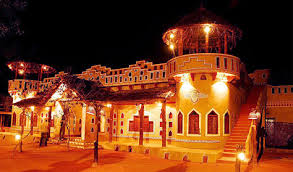
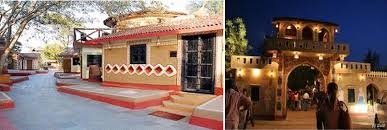
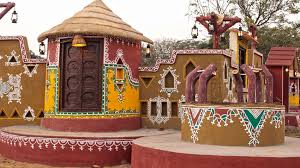
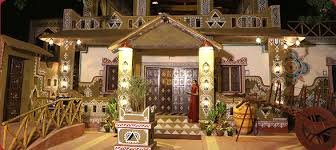
    With a huge wall with the appearance of the rustic mud walls as those that exist in the rural huts and structures in the desert region of Rajasthan and a beautiful wooden door open to welcome you, this place pleases ones’ eyes at the very first sight. Once you step in, you have men and women clad in aboriginal Rajasthani clothes and costumes ready to welcome you with open arms,  smiles on their faces and warmth in their hearts . These men adorning traditional Rajasthani attire and colourful turbans tied in the accurate fashion welcome you with ‘tikas’ or red vermilion on the forehead. After paying the required amount for entering, you can step into this world of wonder. There are little hut-like structures with thatched sloping roofs that are scattered around. You may find people greeting you in the traditional Rajasthani way and offering you an amazing variety of services. From a plethora of activities around you could witness a puppet show with narrations, a magic show, a snake charmer making snakes dance to his tune or even local dances by women dressed in colourful costumes. The dancers might even rope you in and the music and beats played on the indigenous drums and other musical instruments will tempt you enough to keep dancing to the tunes till you are drained out of energy. If you are too tired from walking around, there are sheds that give away refreshing summer drinks for free. Be it the delectable ‘aam panna’ or the tangy ‘jaljeera’, ones’ thirst for these Indian drinks never ends. Women can get their hands and feet decorated and tainted with henna for minimal charges. There are slides and other joy rides for the children as well. You may even get your future predicted by an astrologer, tarot card reader and a palmist that sit there every evening. Visitors also have an option of  enjoying rides on animals like camels, elephants or horses on a fixed route around the entire place. It is a great experience for those who have never been to rural areas of the Indian states and yet want to experience the little details of the life there.

    images

    A maze made of mud walls and a cluster of mud huts resembling the ones’ in an actual village complete the rustic setting of the place, thus lending it authenticity. You can even find life-sized models of men and women, made of clay to complete the scenery of rural households. With facilities for people to try smoking from the traditional ‘hookah’ , it can provide you with yet another point to note down in your list. There is also a man-made canal which permits boating and thus can be a good way to relax after roaming around.

    download (1)

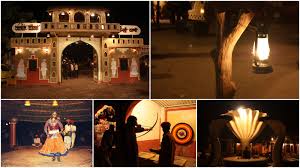
    An artificial tunnel that has been made to look like a haunted place leads into an open space whee there are groups of people dressed as people from the indigenous tribes. They seem to be friendly and one can easily interact with them and can even dance if he/she wishes to. There are shops and counters where one can buy a wide variety of articles, native handicraft products or just souvenirs for friends and family. Products ranging from puppets, key rings,  stationary, shawls and turbans, other clothing items or even plastic and mud toys; one can find them all here. There are counters for games like archery, dart games and many others, where if lucky, you can even win small rewards!

    download (4) images (1)

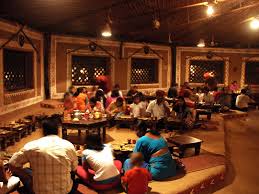
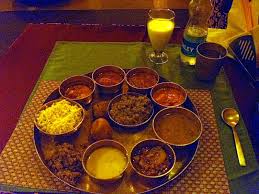
    The best part is the dining place where one gets to sit in a rural Rajasthani setting  and enjoy unlimited servings of authentic pure vegetarian food from the state. Be it a variety of breads, spicy chutneys, delicious sides and curries or the refreshing ‘chaanchh’; one can never have enough of the food served here. One has the options of sitting in either an AC hall or a non-AC dining space.  Once you’re done with the meal, make sure you thank the ones’ who served you. They definitely will appreciate your acknowledgement.

    download (2)

    An evening spent here will be an outing that is worth your time and money. Make sure this place features on your itinerary for the next Jaipur trip that you plan.

  • All about Papaya – Nutrition, Uses and Recipes

    All about Papaya – Nutrition, Uses and Recipes

    Papaya is a fruit that’s quite commonly available in all continents of the world during the summer season. Rich in Vitamin A and Vitamin C, the fruit has many health benefits. The fruit, it’s seeds as well as the leaves are edible and are widely used in South East Asian cuisines. If you don’t prefer eating raw papaya, you can make a variety of dishes, smoothies and drinks and enjoy it the way you like. You can make it into a flavor you like. You just have to spice it up!

    All about Papaya - Nutrition, Uses And Recipes

    Before moving on to the various recipes let us take a look at the nutritional and health benefits offered by papaya.

    Protects Heart : As I have already mentioned, Papayas are rich in Vitamin C and Vitamin A. This makes it a wonderful element in a salad as it helps in preventing heart diseases. Vitamin A and C  play a key role in oxidation of cholesterol in our body, that is they are powerful anti-oxidants. Moreover, papayas have high fiber content, which also helps in lowering the cholesterol level!

    Supports Digestive System and Immune System : Papayas help in improving the digestive heath and they also help in preventing colon cancer. It is also available now in tablet forms to treat digestion related problems! They also help in improving the immune system and prevent common illness like cold, flu, etc.

    Prevent Prostrate Cancer : It is widely known that, papaya when taken with a sip of green tea can reduce the risk of prostrate cancer to a great extent!

    Traditional Medicine To Treat Malaria : Leaves of the papaya tree are also edible and in some countries, its medicinal value is put to use. They are boiled and used to make tea, s a medicine to treat malaria.

    As we have now covered its health benefits and nutritional value, let’s now see some of its other uses.

    Papaya Face Mask    papaya seeds

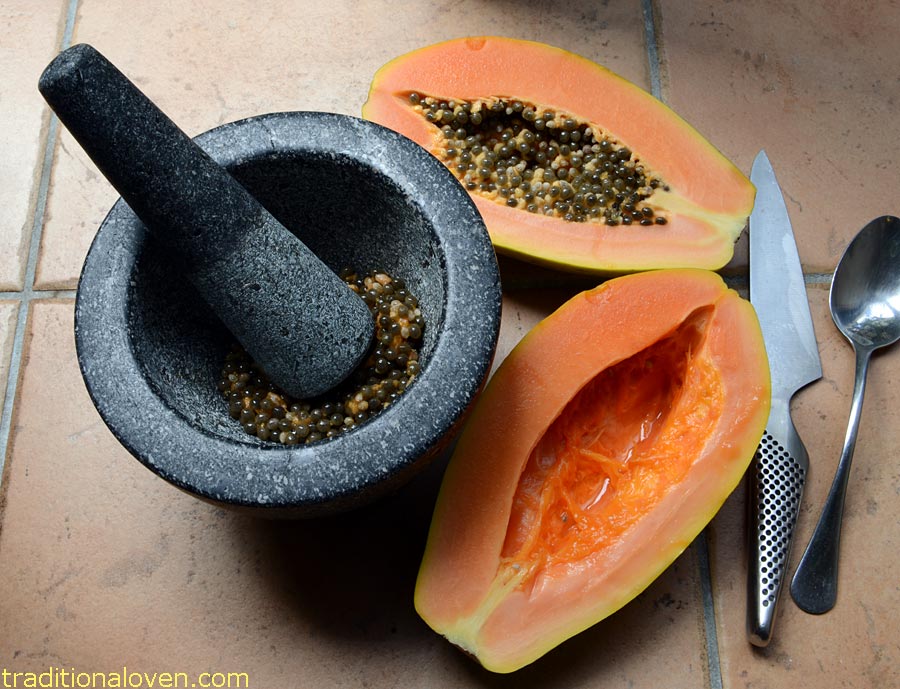
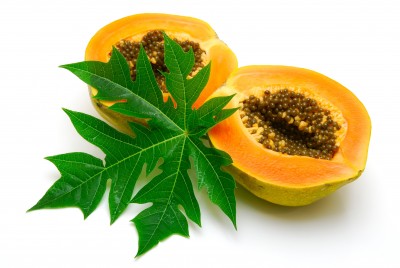
    Substitute Spinach and  Black Pepper : The seeds of papaya can also be used for cooking. They are spicy and are used as a substitute for black pepper in many countries. The seeds also help in destroying intestinal worms. The papaya leaves can also be boiled or steamed and cooked as a spinach!

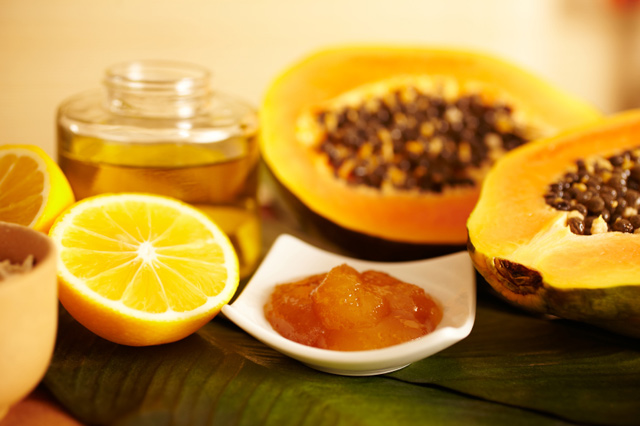
    Skin and Face Mask : Papaya is one of the best face masks that help in rejuvenating the skin, heals acne and other skin infections.

    Apart from the above mentioned uses and benefits, Papayas can be used to make some of the best dishes. If you like juices and smoothies, sweets (halwa) or salads and salsa, papayas can blend in and create some of the delicious dishes.

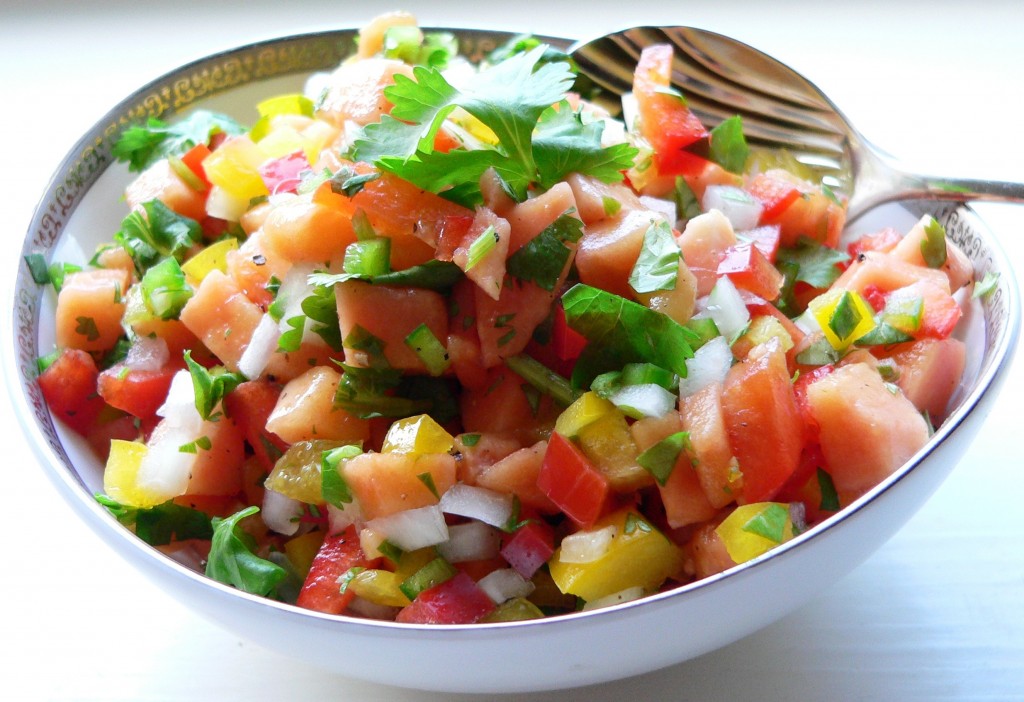
    Papaya Salsa

    Papaya Salsa

    For those who like to eat spicy dishes, the best way to eat a papaya is to make a papaya salsa! It is very easy to make as you don’t have to cook. All you need is the ingredients. Mix them, stir them well and they are ready to serve with chicken or fish!

    Ingredients:

    1 mango or 1 pineapple

    1 ripe papaya

    1 large red bell pepper

    1 avocado

    a small sweet onion

    fresh cilantro

    balsamic vinegar

    salt and pepper

    How To Make:

    Step 1 : Peel the mango or pineapple, avocado and papaya and dice them into small cubes.

    Step 2 : Chop the onion, cilantro and the red bell pepper

    Step 3 : Now mix the diced fruits, red bell pepper, onion and avocado in a large bowl.

    Step 4 : Add two tablespoons of the balsamic vinegar and 2 tablespoons of the chopped fresh cilantro.

    Step  5 : Now stir the contents and add salt and pepper to taste.

    Step 6 : Let the mix for sometime and after 15 minutes, the Papaya Salsa is ready to serve.

    If you are a lover of sweets and desserts, you can make use of the fully ripened sweet papayas to prepare Papaya Halwa.

    Here is the recipe for Papaya Halwa, one of the best delicacies to serve during dinner, festivals and parties. It can be served as a dessert!

    Papaya Halwa

    Papaya Halwa

    Papaya Halwa is one of the delicious sweets and is very easy to make. It requires very less ingredients. All you need is a sweet fully ripened papaya and the following ingredients, listed below

    Ingredients:

    1 fully ripened papaya

    2 tablespoons of oil or ghee

    1 cup of sugar

    2 tablespoons of Almond Powder / Milk Powder / Coconut Powder

    1 tablespoon of Cardamom Powder

    4-5 Cashew Nuts

    How To Make:

    Step 1 : Take a fully ripe papaya, peel off the skin and dice it into small cubes. You can also grate the papaya with grater so that it will be easier to mash it.

    Step 2 : Pour some oil or ghee in a pan and heat it. Now add the diced / grated papaya in the pan. Keep the stove on low flame for about 15 minutes and stir the papaya often until it is well cooked.

    Step 3 : Add the required amount of sugar, and mash the mix with a potato masher. It will slowly lose its opacity and start to release the juices which will it easier to mash it as well.

    Step 4 : About 20 minutes later, the color and consistency of the mix will change considerably and it will become thicker.

    Step 5 : Now add the cardamom powder and the almond powder/milk powder/coconut powder.

    Step 6 : Now let it cook for 5 more minuted on low flame, stir it well and add cashew nuts.

    Step 7 : Stir for 2-3 more minutes and the Papaya Halwa is all ready to serve!


    If you are looking for a refreshing drink that supplies energy after a tiresome day at work, you can make this quick drink, Papaya-Melon Tango.

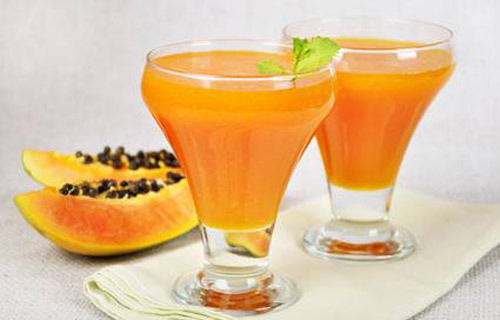
    Papaya-Melon Tango

    Papaya-Melon Tango

    Papaya-Melon Tango is a rich source of glucose and provides immense energy after an exhausting day.

    Ingredients:

    1/4 cup of peeled and diced papaya

    3/4 cup of peeled and diced muskmelon

    1/2 tablespoon of lemon juice

    1/4 cup of crushed ice

    How To Make:

    Add the diced papaya and muskmelon in a mixer along with the lemon juice and crushed ice. Turn on the blender until the mix turns into a smooth liquid and the Papaya-Melon Tango is ready to serve!

    The above mentioned ingredients makes 2 glasses of Papaya-Melon Tango.

    Place it in a fridge to keep it cool.

  • The Nairs of Old Kerala

    The Nairs of Old Kerala

    “You take on your house name?! Whoa, that’s totally cool.” I get that from many people all the time when they ask me about my funny sounding surname. It is bound to sound funny because it is not just a simple name of a person but the name of the hereditary house (tharavadu) of that specific individual. In other words, every person will have a house name and all the people belonging to that particular house/family will take on the same name. This practice is followed by the Nairs mainly along with some of the other non-brahmin castes. Now you must be wondering who Nairs are.

    They are the ones who come second in the caste hierarchy of Kerala after the Namboothiris. The Namboothiris are the Brahmins and they comprise the whole section of priests. They are the most respected in the society and the Nairs follow them in the status list. While the Namboothiris are the priests, the Nairs comprises of the ministers of the state, the state cavalry, the state administration and such. They are just below the royal family in ranking; they were the Kshatriyas.

    220px-Dikshitar                                                                                                                                                                            A Namboothiri, notice the sacred thread and the tuft of hair to the front

    The Nairs have always followed the matrilineal system as I mentioned earlier. Unlike the Northern parts of India, patriarchy was never followed. The decision making power fell on the female head of the tharavadu  along with the senior most male head called the Karnavar. It should be noted that the powers of the female head was mainly in the inner domains of the house. Even though the power is enjoyed jointly by the female and male head, their seniority decides who has the final say in the matter.

    17tvpadns1_capt_G7_1182739e

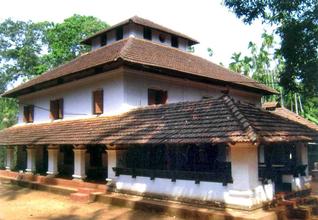
    A typical tharavadu

    Also, the property and the name is passed on to the daughter and not the son. The new born takes on the family name of its mother. As a result of that, daughters are more vied in this society! This system is known as ‘marumakkathayam’. It was practiced widely in the olden days while many of the Nair families of today have turned to the patriarchal system where the surname is that of the child’s father.

    The most interesting fact that we can find about this community’s culture is that of marriage. The present society which tries to hush up everything related to sex and sexual morality should learn a thing or two from them. For example, divorce still carries with itself a stigma whether we accept it or not. But things were not so bad years before. As we technologically advance, we grow more and more narrow minded, going backwards in terms of rationality. Back in those days, the Nair community did not follow the typical form of marriage of the present day.

    The women especially had the luxury of having multiple partners and it was considered normal if not preferred while something like that is practically impossible in the so-called modern time! They availed themselves of sexual freedom with no attachment of stigma as opposed to us. Imagine the irony of it.

    At an extremely young age, the girls are married to a Brahmin man but they don’t live together and it is called ‘kettu kalyanam’ (mock  marriage) which lasts for 4 days. The girl will have nothing to do with the man unless and until he dies, upon which she observes two weeks of mourning. And once they reach puberty, it is celebrated in an extensive manner with a grand function arranged where the girl is rubbed with oil, decked in gold etc. And finally comes the real marriage where the man and woman in the relationship consummate their marriage and this was called ‘samhandham’. The woman was free to have how many ever sambandhams as she pleases! It is officially carried out with a Namboothiri. He would visit her house at night and take leave in the morning after a bath so as to purify himself (though that doesn’t stop him from having intercourse with her).

    The twist to the thing is that the children born out of this relationship will have no connection of any sort with his or her father (Namboothiri) . This was a devious way to ensure that that the property never left their hands. Anyway, this kind of relationship can also be viewed as the policing of open sexual morality. It worked on a totally different level. The Nair woman was free to consent or terminate the relationship at any time just like the man and thus it speaks of mainly one thing – equality in sexual matters.

    However, the Namboothiri women were not so lucky. Referred to as ‘Antharjanams’, they mostly died unmarried or widowed. Only the oldest Namboothiri son is allowed to marry a Namboothiri girl while all his younger brothers are supposed to have sambandhams. The Namboothiri girls were usually married off to old, wealthy Nambhooothiris who already might be having other wives. So, once their husbands die (when she is around 18/19), they remain widowed throughout their lives since they are not allowed to remarry unlike the Nair women.  If they did commit infedility or even fantasized mentally, they were put to trial and finally excommunicated. The only famous Antharjanam to have broken this rule and to have slept with more than 65 men is the beautiful Kuriyedathu Thathri.  Boy that was one beautiful, brave lady.

    images

    The ongoing trial of Thathri

    Apart from her, the other chickens in the coop never saw er, sexual daylight. So,even if the Namboodhiris were above the Nairs in the cast hierarchy, the Nair women sure were better off than their Namboothiri counterparts!

    What about their dress?

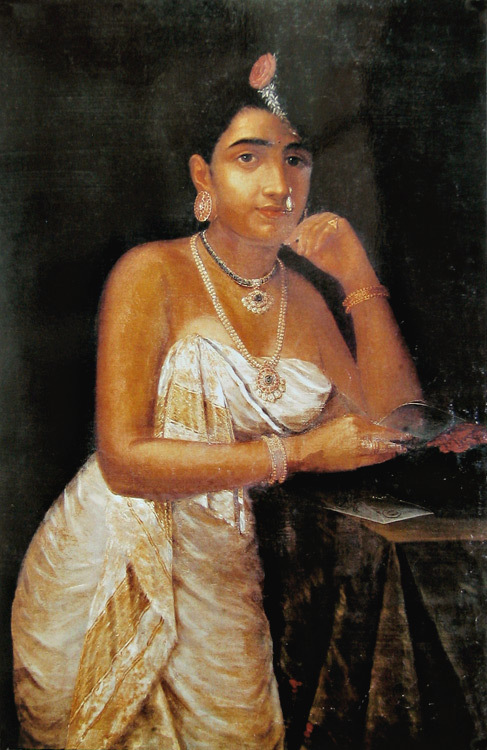
    I am sure most of you have come across plenty of Raja Ravi Verma’s famous oil paintings of saree-clad women in elegant postures. The attire is not exactly draped like a saree but is worn in a specific manner with the hair tied tightly in a bun to the front-side of the head. This style of dressing was mainly observed in the princely state of Travancore. This potrayal of the dressing style is justified by the fact that Ravi Verma was from the same region. In the other areas of Kerala, the saree is draped in another fashion.

    malabar-beauty-by-raja-ravi-verma-QB28_l

    The Travancore style of draping

    Originally the men and women wore only a loin cloth around their waists (worn by Thiyyas). There was no thoughts of nudity or shame related to it since the weather of Kerala allowed dressing only in minimal. The top body was covered with only necklaces and other ornaments. Later, it evolved into the waist cloth along with a piece of cloth worn across the bosom loosely. Then again, this was allowed only for the Nair and Namboothiri women (though sometimes the Nair women stayed topless inside their houses). The lower caste women were expected to expose their breasts as a sign of their low status. Finally, this turned into a full fledged revolt and the women of lower castes obtained the rights to cover their top body.

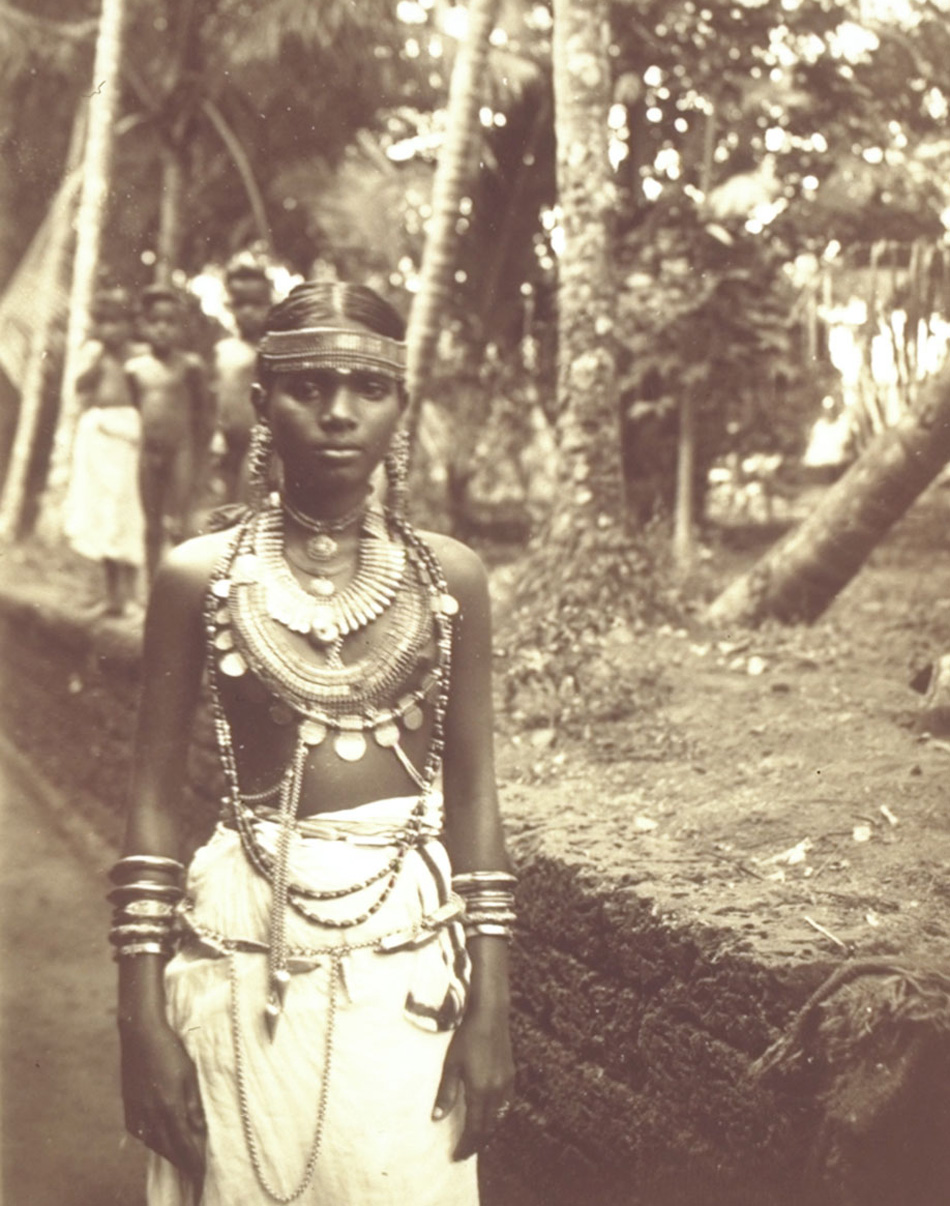
    Malabar Nair Woman Wearing Jewelery - 1914

    A Nair girl decked in jewellery (Malabar style)

    Speaking of food, we should be thanking our mothers to be tolerant enough to put up with our daily fussing over delicious dishes everyday. That was not the case years back! Mind it, no pizzas or shawarmas. The Nairs ate rice gruel all three times of the day. The richer families had tasty items accompanying it though I am sure that those wouldn’t beat our junk.

    Last but not the least is the set of superstitious beliefs. Hailing from a Nair family myself, it’s a common thing for me to ask my friends (just for the heck of it) if they have a ‘kari naaku’ which means a tongue with brown spotting since it is believed that the things uttered by those who possess a kari naaku come true! They also have the notion of evil eye which means that if you praise someone too much for whatever quality, they attract the evil eye and the victim will lose that quality eventually.

    Of course we can never cover the entire culture and practices of this community in just one article, but I have tried my best to put in the most interesting parts of it!