Tag: cuisine

  • Chutneys are Yummy! Part 1

    Chutneys are Yummy! Part 1

    Often while having food, you find that the dish lacks a certain punch. A flavor so to speak. You wonder how to solve this problem. Well, worry no longer. There is a solution at hand which will leave your taste buds tingling in the process. What can that be you ask? One word we say in reply. Chutneys!
    chutney

    Chutney (also translated as chatney or chatni) is a family of condiments mainly associated with South Asian cuisine that usually contain some mixture of spice(s), vegetable(s), and/or fruit(s). Chutneys may be either wet or dry, and can have a coarse or fine texture. There are various types of chutneys.

    The name “chutney” covers a wide variety of foodstuffs. The common element which makes them all “chutneys” is that they are added to meals to add flavor; the best English “translation” of “chutney” is “relish”. As such, they can be, and are, eaten with a wide variety of foods.

    The word “chutney” is derived from the Sanskrit word caṭnī, meaning to lick. The first chutneys in India would have been sticky fruit based preserves. Sugar, although available in India, was not widely cultivated and honey would have been used to sweeten dishes, this leading to the chutneys being used as more of a dipping sauce rather than a condiment. It is written differently in several North Indian and South Indian languages.
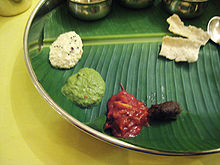
    chutney

    Let’s have a look at some popular Indian chutney recipes!

    • Peanut Chutney:


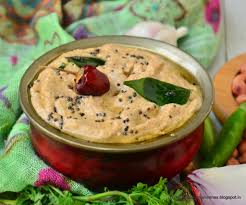
    peanut chutney

    Peanut Chutney, a versatile and easy-to-make spicy chutney, is a must-have accompaniment in South Indian cuisine. It can be of two types, wet and dry. This recipe is for making wet peanut chutney for Dosa and Idli, and it can be used either as spread or as an accompaniment.

    •  Ingredients:

    1)  1/2 cup roasted peanuts, skin removed.
    2)  3 garlic cloves.
    3)  1/4 teaspoon tamarind paste.
    4)  4 dry red chillis.
    5)  1/2 teaspoon mustard seeds.
    6)  4-5 curry leaves.
    7)  2 teaspoons oil.
    8)  1/2 cup water.
    9)  Salt to taste.

    •  Directions:

    1)  Put the roasted peanuts, garlic, 3 dry red chillis, tamarind paste and salt in the chutney jar of the grinder.
    2)  Grind them together till a medium coarse powder.
    3) Add 1/2 cup water to the mixture, and grind again until a smooth paste is formed. Transfer the paste to a serving bowl, and proceed to prepare tempering.
    4)  Heat oil in a small pan. Break 1 dry red chilli into two pieces. Add the mustard seeds. When they start to crackle, add curry leaves and the remaining 1 dry red chilli. Sauté for 10 seconds and turn off the flame.
    5)  Pour the tempering over the prepared chutney paste. Peanut chutney is now ready to be served along with steamed Idli and Dosa!

    • Tips:

    1)  If roasted peanuts are not available, then you can dry roast them over low flame in a heavy based pan for 7-8 minutes. Let them cool for 3-4 minutes and remove the skin.
    2)  Increase or decrease the amount of red chillis to make more or less spicy respectively.
    3)  You can avoid topping it up with mustard seeds tempering if you are going use it only for making Dosa.

    •  Preparation Time: 10 minutes.
    •  Cooking Time: 2 minutes.
    •  Servings: 2.


    •  Coconut Chutney:


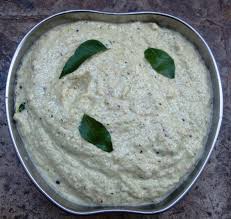
    coconut chutney

    Making South Indian Coconut Chutney for Dosa and Idli is very simple. Just blend fresh coconut with chillis, curd and ginger, and mix tempered mustard seeds. However, the real taste differentiators in this recipe are roasted chana dal, tamarind paste, cumin seeds and curry leaves. Follow this recipe and discover how good the chutney tastes. But yes, don’t blame us if you get addicted to it!

    •  Ingredients:

    1)  1 cup roughly chopped fresh coconut.
    2)  1 teaspoon grated ginger.
    3)  2 green chillis, chopped.
    4)  1 tablespoon roasted chana dal.
    5)  1 tablespoon curd.
    6)  1 teaspoon lemon juice or tamarind paste.
    7)  1/2 cup water.
    8)  Salt to taste.

    • For Tempering:

    1)  1/2 teaspoon cumin seeds.
    2)  1/4 teaspoon mustard seeds.
    3)  4-5 curry leaves.
    4)  1 dry red chilli.
    5)  1 teaspoon oil.

    •  Directions:

    1)  Take chopped coconut in a small chutney jar of the food processor or grinder.
    2)  Grind it to make a medium coarse paste and transfer on to a plate.
    3)  Add green chillis, roasted chana dal and ginger to the same chutney jar.
    4)  Grind mixture to a smooth powder.
    5)  Add crushed coconut, curd, lemon juice, salt and 1/2 cup water.
    6)  Grind them to make a medium coarse paste. If required, add more water to get the desired consistency of chutney and grind again. Transfer to a bowl.
    7)  Heat oil in a small tempering pan. Add mustard seeds. When the seeds begin to crackle, add cumin seeds, dry red chilli and curry leaves and sauté for 10 seconds.
    8)  Take the pan away from flame and immediately pour tempering over the prepared coconut paste. Mix well. Delicious Coconut Chutney for Idli and Dosa is now ready to serve!

    •  Tips:

    1)  Adjust quantity of water accordingly to make it thick or diluted.
    2)  Avoid the addition of green chillis while making coconut paste, and avoid dry red chillis in tempering while making white Coconut Chutney.
    3)  Consume fresh chutney immediately or refrigerate it, and use it for up to 3 days.

    • Preparation Time: 10 minutes.
    • Cooking Time: 2 minutes.
    • Servings: 6.

    Watch this space for recipes of more mouth-watering chutney recipes. Coming soon!
  • Culture of Delhi

    Culture of Delhi

    Culture of Delhi
    Culture of Delhi

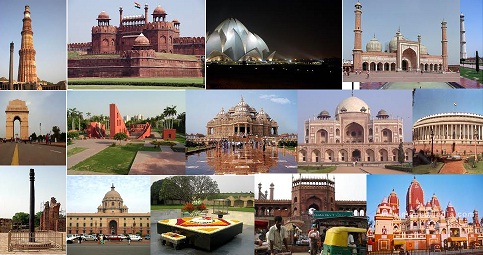
    Delhi, the capital city of India has a unique culture.People from different parts of the country have settled in Delhi.So, Delhi has a mixed culture of all the states.It’s culture is considered as the culture of India as a whole.As it is the capital city of India, all the political discussions and decisions are taken here itself.Delhi is a mixture of modern lifestyle as well as old traditions and values.Different types of festivals are celebrated in Delhi.The Chhat puja of Bihar is celebrated grandly as the festival of Durga puja.The  Muslim festival Eid ul Fitr and Punjabi festival Lohri are celebrated without any difference.In Delhi ,we can also see the cultures of Haryana, Uttarpradesh, Rajasthan and Punjab as these are the bordering states of Delhi.Different monuments, sculptures, places add additional beauty to the city.

    History:

    A pic showing history of Delhi
    A pic showing history of Delhi

    Delhi was treated as the capital of the Pandavas during Mahabharata.Delhi was considered as the cultural, political, and commercial capital of North-West India and the Gangetic Plains during the Delhi Sultanate era.During the period of Mughal empire,Shah Jahan built a new capital city named Shahjahanbad which is now called as old Delhi.During his rule he had built several gates like The Kashmiri Gate, Delhi Gate and Ajmeri Gate.In the year 1911,the Britishers have decided to shift the capital from Kolkata to Delhi.Then they slowly moved their capital to the partially built New Delhi in 1912.When the Britishers left India in 1947, New Delhi became the capital of India.

    Architecture:

    Sites-monuments-touristspots-architecture-of-Delhi
    Sites-monuments-touristspots-architecture-of-Delhi

    The city has the oldest buildings that belong to the early muslims.During the period of Khaljis, the Pashtun style has been indulged in the Islamic architecture.The typical features of their style are red stand stone surfaces with white marbles inlays and the windows are fitted with perforated screens.The best examples for this Pashtun architecture includes the Quwat-ul-Islam mosque, the Qutb Minar, the tomb of Iltumish and the Ala’i Gate.In Delhi ,the first Mughal architecture was the Humayun’s tomb.Later the Mughal architecture can be further seen within the red fort.It has massive red stone walls, entertainment halls, balconies, baths, indoor canals, gardens and also one highly decorated mosque.Jama Masjid is also one of the finest architecture bulit by the Mughal empires.Humayun’s tomb and Red fort are UNESCO world heritage sites.During the British colonial rule, they have built the President House (Rashtrapati Bhavan), Parliament and Secretariat buildings.After the Independence, India has aimed to develop its own architectural language in a synthesis between Western and local styles.We can see such type of architectural styles in the Supreme Court building, the Vigyan Bhavan (a conference centre), the Crafts Museum and offices of the various ministries.

    Climate:

    Climatic conditions of Delhi
    Climatic conditions of Delhi

    Delhi has a unique type of climate.In Delhi the warm season lasts from the month of April to July with the temperature ranging from 25 degrees to 36 degrees.The cold season lasts from the month of  December to February with the temperature ranging from 2 degrees to 18 degrees.Monsoon arrives at the end of June with an increase in humidity and the mild winter starts in late November, reaches peaks in January with heavy fog.The average annual rainfall is approximately 714 millimeters.Most of the rainfall occurs during the months of July and August.

    Economy:

    Economy of Delhi
    Economy of Delhi

    Delhi is considered as the largest commercial center in Northern India.According to 2013 the per capital income of Delhi was Rs.210000, which is recorded as the highest in India.According to the economic survey, the tertiary sector contributes 70.95 percent of Delhi’s State Domestic Product, followed by the secondary and primary sectors with contributions of 25.20% and 3.85% respectively.The workforce in Delhi has increased by 52.52% from the year 1991 to 2001.In accordance with it the unemployment rate has decreased from 12.57% in 2000 to 4.63% in 2003.The key services that are being provided in Delhi are information technology, telecommunications, hotels, banking, media and tourism.Apart from them, construction, power, health, community services and real estate are also important to the city’s economy. Delhi is one of India’s largest and fastest growing retail industries.Manufacturing of goods has also increased considerably with the establishment of manufacturing units and headquarters in the city.

    Cuisine:

    Spicy street food in Delhi
    Spicy street food in Delhi

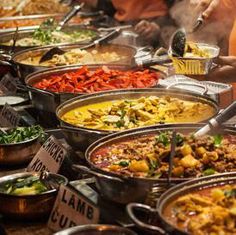
    Being the Capital city of India and centuries old Mughal capital, different food habits have been indulged in it and it  is also a place where the Mughlai cuisine had originated.The dishes of Delhi like Kebab, Biryani, Tandoori has world wide popularity.The classic dishes like Butter chicken, Aloo chat, Chaat, Dahi vada, Kachori, Chole bhature, Jalebi and lassi are also famous dishes available in Delhi.Street food is commonly habituated food for the citizens of Delhi.Highway Dhabas offer spicy food at low cost which is popular among the residents of Delhi.Apart from them, we can see the popular restaurants like Karim Hotel, the Punjab Grill and Bukhara.A street in Chandini Chowk is particularly famous for food eateries since the 1870s.Almost the entire street is occupied by fast food stalls or street vendors.It has became so popular such that almost every prime minister of India has visited the street to eat Paratha at least once.However, other Indian cuisines are also available in this area.

  • India wedding  food

    India wedding food

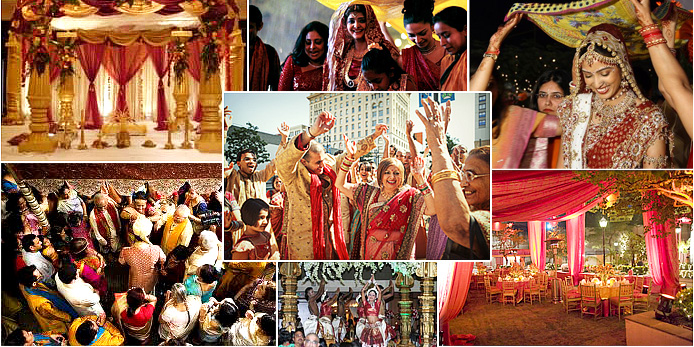
    A wedding is a ceremony or gathering of people where all the relatives, neighbors are united.As there are many cultures and traditions in India, there are different styles in wedding.Depending on the countries and religions it varies.Most of the couples and their respective families exchange gifts, rings, symbolic item, flowers, money,cars , bikes, flats and many more in a wedding.Special and new garments are worn by everyone who attended the marriage.Just after the day of marriage there will be a special function.Depending on the region, religion and status the cultural events in the wedding varies.But music, poetry, prayers, dance programs and few more are also commonly seen in many of the marriages.

    wedding in India
    wedding in India

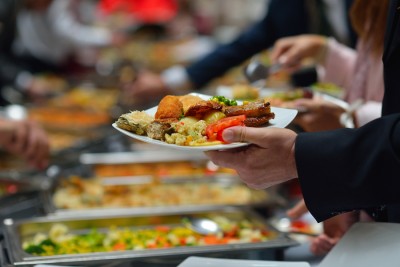
    Food is considered as a very special and integrated part of any occasion in India.In any persons life marriage is a special occasion and one will remember it in his/her lifetime.Along with the grand decorations and arrangements made, the food menu in a wedding will be very grand with lots of specials and the food is simply delicious.Many of the people from the family side, neighbors everyone will talk about the grand feast even after the marriage is completed.The type of food and dishes provided depends on the couples, religion, tradition, state and many other factors.However, the basics items remain same in any part of the country, but the additional items may vary.Now we can see more varieties of food items in weddings around India.

    Indian wedding food:

    North:

    In the north Indian weddings we can find lot of lavish food varieties.The guests are given most priority and are welcomed with most interest.As soon as the guests enter the wedding they are served with finger foods and snacks.After that they are also served with drinks like soft drinks, coffee, soups, juices, mocktails, etc.In some weddings, mostly Punjabi weddings liquor is also served.This goes on till the pheras, after which the wedding is complete.After the completion of this, main dishes are served.Later delicious deserts and fruit salads are offered.The most usual things that we can find almost every marriage we appear is the Dal Makhani, Shahi Paneer, Pulao, Mixed Veg and Chicken.Apart from these the main feast includes some of the other north Indian varieties as well.

    Wedding food in North India
    Wedding food in North India

    West:

    While coming to the wedding in west.In a traditional Maharashtrian wedding, the food is served on freshly washed banana leaves.The guests at the dining place will be seated on chatais or wooden planks while eating.In their wedding meal no onion or garlic is used in cooking.The dishes in Maharashtrain wedding are completely vegetarian.Apart from the meals different varieties of desserts like basundi, jalebi and few more are served.The main dish is finally ended by taking butter milk and paan.Whereas in Gujarati wedding snacks and drinks are followed by the main meal.The main meal consists of Rotli, daal, rice and sabzi, apart from other dishes.The dessert is served in the end.

    West Indian food in marriages and occasions
    West Indian food in marriages and occasions

    East:

    The main feast of the Bengali wedding consists of snack, finger foods and drinks.The veg dishes consists of Poto Posto, Begun, Bhaja and the non vegetarian dishes consists of Muri Ghonto and few more.As most of the eastern states consume large amounts of fishes in fish is a part of their main meal.The Bengali dishes consists of Macher Kaalia and it contains sweets like Roshogulla and Mishti Doi.If we consider Bihari wedding feast, it contains lots of sweets, in snacks as well as main course.After that both vegetarian as well as non vegetarian dishes are served along with rice.In Bihari wedding rice is the main highlight.There wont be any alcoholic drinks in the Bihari wedding.

    East India wedding food
    East India wedding food

    South:

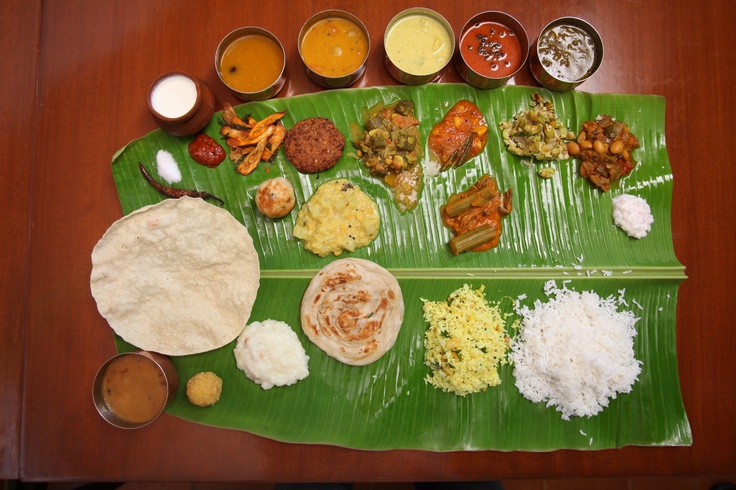
    In most of the south Indian marriages the wedding ceremony is conducted early in the morning.In this region also the guests are served finger foods, along with the drinks, like nimboo pani, fresh juice, coffee, etc.After the marriage is completed i.e., when the bride and groom are declared husband and wife, the main food is served.Like in Maharashtrian wedding,the food in south India is served on banana leaves, with the guests sitting on the floor.After the completion of the main meal dessert and fruit salad are served.After their meal is completed they wish the newly married couple once again, bless them and take their leave.

    South Indian wedding food
    South Indian wedding food

    North East:

    The wedding feast in the Northeastern side includes large amount of non vegetarian dishes along with the finger foods, snacks.In the non vegetarian varieties we can find at least one fish variety especially in case of weddings in Tripura and Assam.Apart from that, you will be offered to a few vegetarian dishes also.In vegetarian food one of the variety will be containing bamboo shoots.The dishes that are made up of rice are highlight of the feast.In most of the marriages that are held in India rice is a common dish.After the main meal is completed the people at the wedding are served with different varieties of desserts.After that drinks are served which might include noodle soup and also usual juices and soft drinks.

    North East wedding food
    North East wedding food
  • Red Meat: Is it really bad for your health?

    Red Meat: Is it really bad for your health?

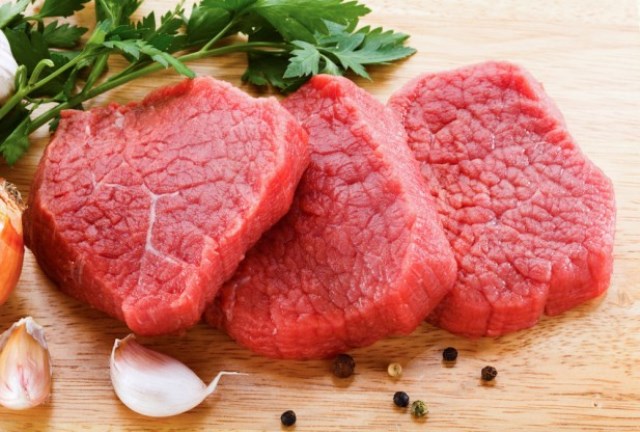
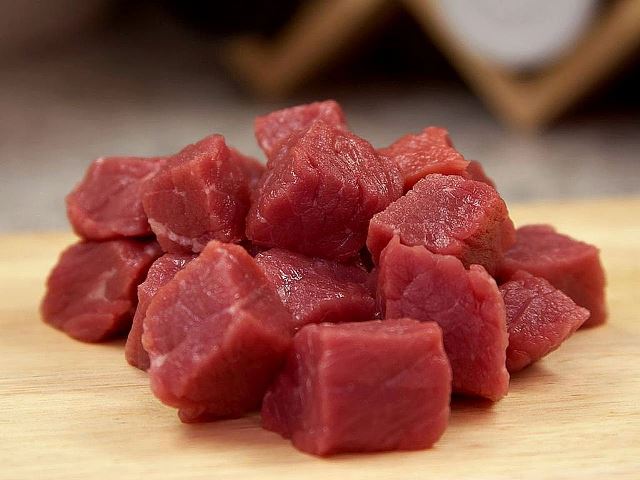
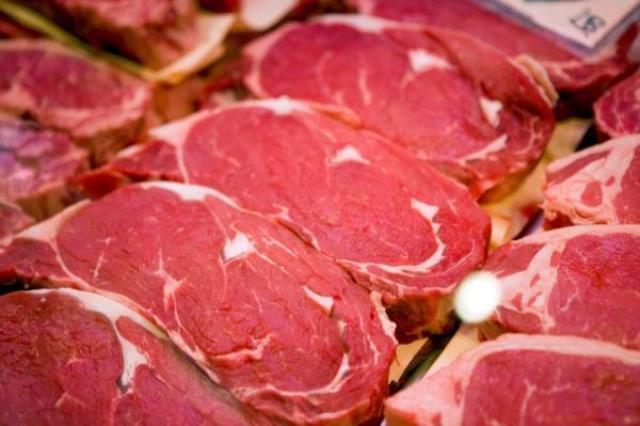
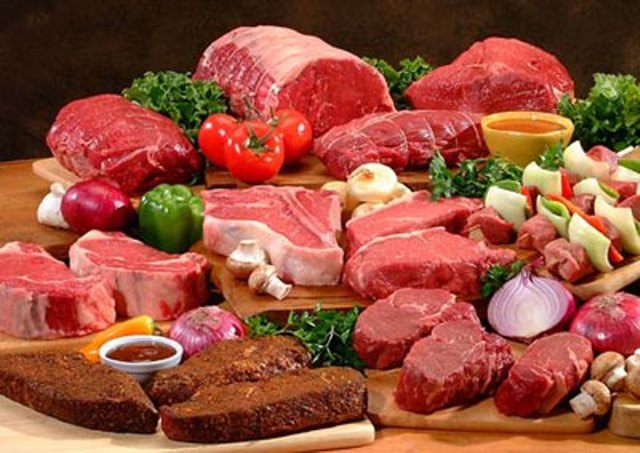
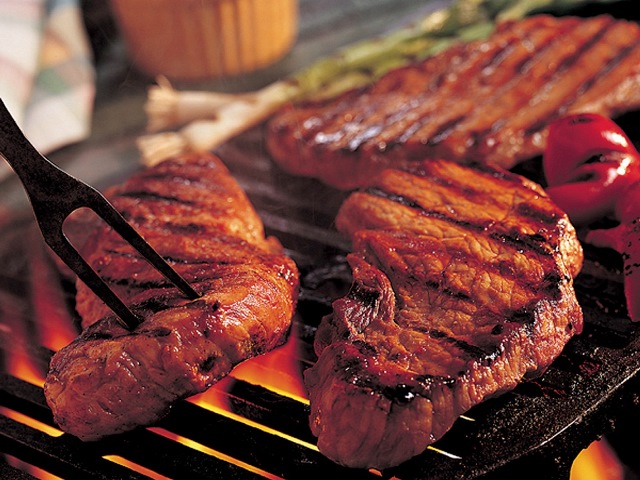
    Red meat is certainly one food item which has created a lot of controversies and people are divided on the basis of their opinions id it sis good or bad for the health. When the red meat is raw, it is of red color and moreover its color does not change to white after it is cooked. There had been many reports lately suggesting that red meat is not good for the human health and so people should immediately stop eating it. These reports have been prepared on the basis of observational studies.  Almost all the meat which is obtained from the body of mammals is red meat as they have a high concentration of myoglobin in it. The red meat lovers are in dilemma that whether they should eat their favorite food or skip it for the sake of their health. Some people have claimed that these reports are not correct and if you eat unprocessed i.e. the fresh raw meat then there is no harm. You just have to pay attention towards the fat content and the preparation of the dishes made out of red meat as it is the best way you can stay protected and enjoy your favorite food. The processed red meats are the ones which undergo various processes such as the smoking, adding preservatives etc. after it is obtained from the animal’s body. Here we are discussing if the red meat is actually bad for the health or it is just a myth that people have.

    4

    Talking about the red meat it is a wonderful source of many essential nutrients and minerals which the human body needs. It is in fact the most nutritious food which is available. If you measure 100 grams of red meat, it will have the following minerals and nutrients in it. Vitamin B12 (Cobalamin), Vitamin D, Vitamin B3 (Niacin), Vitamin B6 (Pyridoxine), Phosphorus, Iron (12 % of RDA), Zinc (32 % of RDA), Selenium (24 % of RDA), Creatine, Riboflavin, Thiamin and Lipoic acid. It also has the high calories and about 10 grams of fats in it. Those people who are vegetarians are deprived of certain nutrients such as Carnosine and Creatine. Red meat is a rich source of both these proteins which is essential for the timely development of human body. Red meat also increases the hemoglobin count in the blood and also helps in building and repairing of the muscles. The meat obtained from the body of the chickens, pigs and rabbits are actually white meat and it is also completely safe to eat.

    2

    There has been so many research conducted to verify if the red meat actually causes the so called cardiovascular diseases and diabetes which results into the death of the person. And every research has given us the report that these are just a myth and there is no evidence which can support these claims. But the catch here is that you should eat only those red meats which are unprocessed one. The processed red meats are unhealthy and they can therefore lead to you all these diseases. You have to clearly understand the distinction between the two and choose accordingly.

    1

    Another myth that people generally have is that red meat is one such food items whose consumption can increase the chances of cancer in the body. Generally people relate colorectal cancer with the red meat which is one of the most common cancers in today’s time. Although the careful studies conducted by the experts suggests that there is weak link between these two but since there is not enough evidence as the studies which have been conducted so far are the observational ones and so they cannot say that eating red meat will cause you colorectal cancer and this is actually a myth that people generally have.

    5

    Now for those people who love to eat red meat we hereby recommend that when you prepare any red meat dish, cook it at moderate temperature. The high temperature cooking can lead to the formation of the harmful compounds such as AGE, HA and PAH. These compounds can then harm your health. Any food item if cooked at high temperature will lead to the formation of these compounds in it. So go for the options such as the steaming and stewing. Further if you want to cook gravy dishes with red meat then first marinate it with the garlic or olive oil or red wine as this will reduce the formation of the HCA to a larger extent. When you start cooking, make sure that the meat is not overcooked and none of the pieces are burnt because of it. The burnt pieces must be thrown away. All these methods that have been mentioned here are for precautions. So eat unprocessed red meat by cooking it gently and make sure that they are not charred. Red meat is actually very healthy and if you are eating it frequently then I bet you will have a healthier body.

  • JEEZ! Chinese
    JEEZ! Chinese

    Familiar with fried rice, spring rolls and Manchurian?

    Thanks to the Chinese for blessing us with such an appetizing cuisine. Unlike the Italian and French cuisines, Chinese cuisine is less sophisticated has far more outreach to the general population around the world. No wonder it’s ranked among the best cuisines the world.But sadly, noodles bears the overused symbolism of Chinese in food, like Butter chicken and Naan to the Indian cuisine.

    History of Chinese cuisine dates back to thousands of years and has encountered change at every level from time to time. People in china are especially particular about their food and hence they have eight culinary traditions namely, ANHUI, CANTONESE, FUJIAN, HUNAN, JIANGSU, SHANDONG, SZECHUAN and ZHEJIANG cuisines. The prominence of this cuisine had taken it out past the national boundaries to countries like Singapore, Malaysia, Indonesia, India and America who have incorporated their native flavors to the cuisine.

    Let’s learn more about it in particular, Staples in Chinese cuisine involve rice, noodles, vegetables, sauces and seasonings. It doesn’t include much of Dairy products but the same is subtly compensated by variety of seafood, poultry and meat.  Corn, millet, cabbage, sweet potato and tofu are eaten the most under vegetables and cereals categories. It is said that that when in past famines were frequented much, it posed a threat to the food supply for general population. At that time rice became an important part of every meal as it was available in plentiful and was observed to go well with both vegetables and meat based on what was available. This gave rice a revered position in their platter which is cherished still the same. And yes! It is traditional for them to use chopsticks and soup spoons for every meal.So now that we had familiarized ourselves to the cuisine, moving towards more exciting part let’s regard some really delectable must have dishes. Shall we?

    1. PEKING DUCK

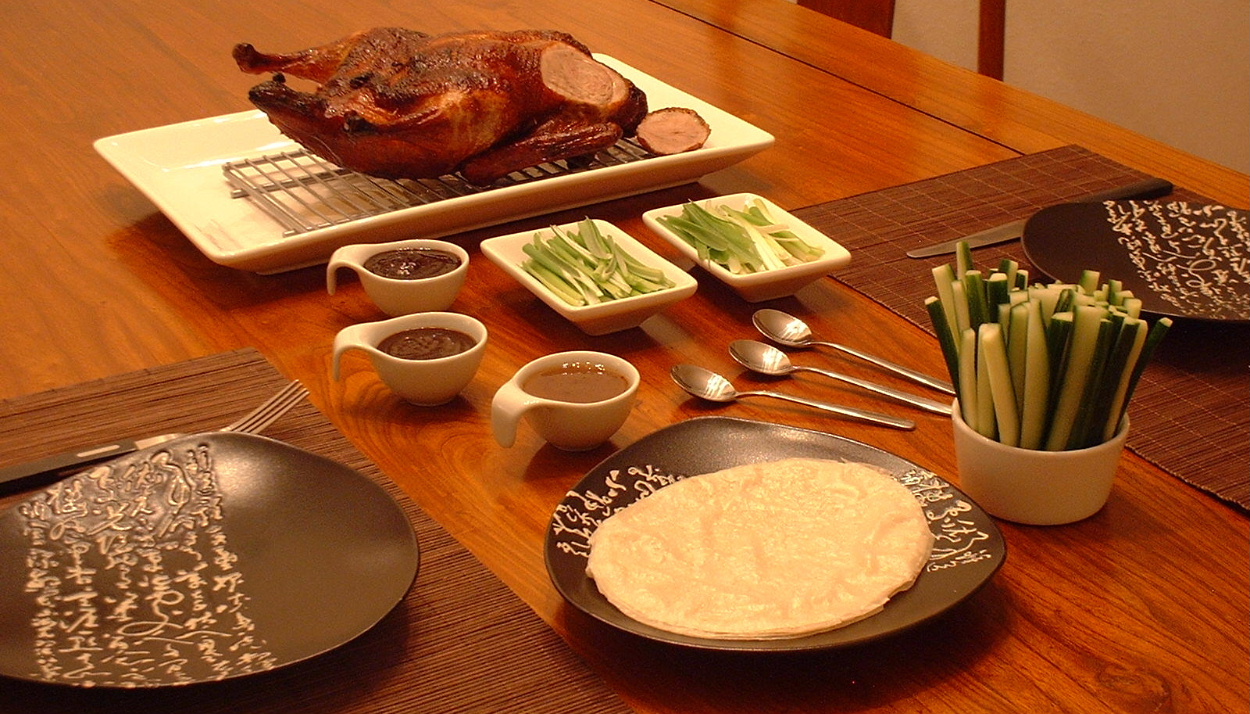
    Peking duck is a duck dish originated from Beijing and cooked from the imperial era is now considered a national dish.  Relished for the thin and crisp duck skin, the dish is eaten with scallion, cucumber and sweet bean sauce with pancakes rolled around the fillings. After cooking, dish is served in three steps: skin dipped in garlic and sugar sauce, meat served with steamed pancakes, sweet bean sauce and spring onions. The rest and vegetables is either eaten separately or mixed with the broth which customers often takeaway.

    Peking_Duck


    1. KUNG PAO CHICKEN

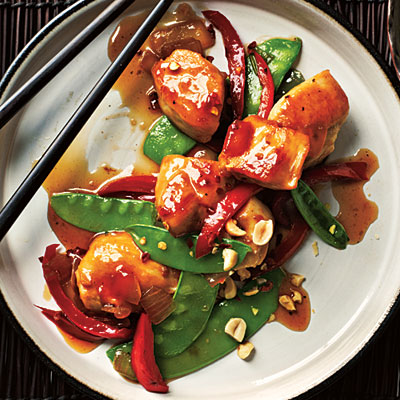
    Next on the list is the very delicious Kung Pao chicken, categorized under Szechuan cuisine originated primarily from the south-western parts of China. Known for its spicy twist, dish is made up of chicken, peanuts, vegetables and chili peppers.  The original version of Kung Pao chicken involves marinating diced chicken and stir frying it with vegetables and peanuts. In vegetables, chili peppers and Sichuan peppercorns are important components. While preparing, peanuts or cashew nuts are deep fried in the wok first till they are golden brown and afterwards rest of the ingredients are added. In the westernized versions of Kung Pao chicken instead of marinated diced chicken, beef, pork or seafood are often substituted which is then cooked by adding orange or orange juice with ginger, garlic and corn starch. The dish is garnished with roasted peanuts or cashew nuts.

    kung-pao-chicken

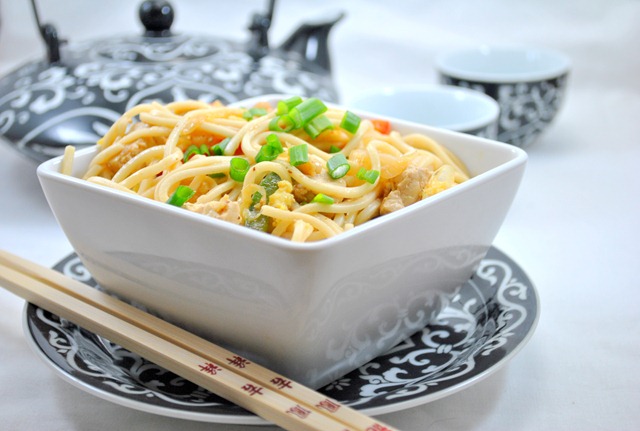
    1. CHOWMEIN

    Now who wouldn’t know this? Very well relished by everyone, it literally means “stir-fried” noodles”. Though there are many regional variations to it, it’s basically they are prepared in two ways: 1. Steamed and 2. Crisp. The Steamed chowmein has long and rounded noodles with softer texture than crispy chowmein, which has fried and flat noodles and is crisper and drier in texture.

    chowmein

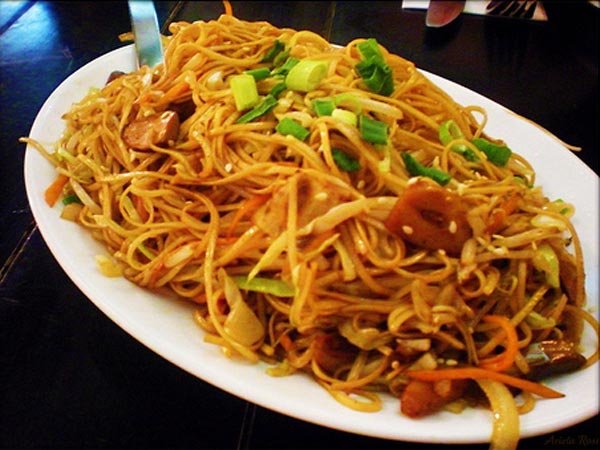
    The popularity of chowmein is so widespread that it has more than 5 varieties collaborating with respective regional cuisines all over the world. There are still differences except the basic texture of noodles between crispy and steamed noodles. Like crispy noodles May or may not contained any vegetables or and be simply strained and stir fried, while steamed chowmein usually carrots, onions or celery, cabbage and sprouts.

    crispy chowmein

    The former is served with thick brown sauce while the other is topped with soy sauce. Chowmein can be custom incorporated into Frankies, burgers or you can add chicken or egg to increase the nutrient value of this delight.

    1. WANTONS

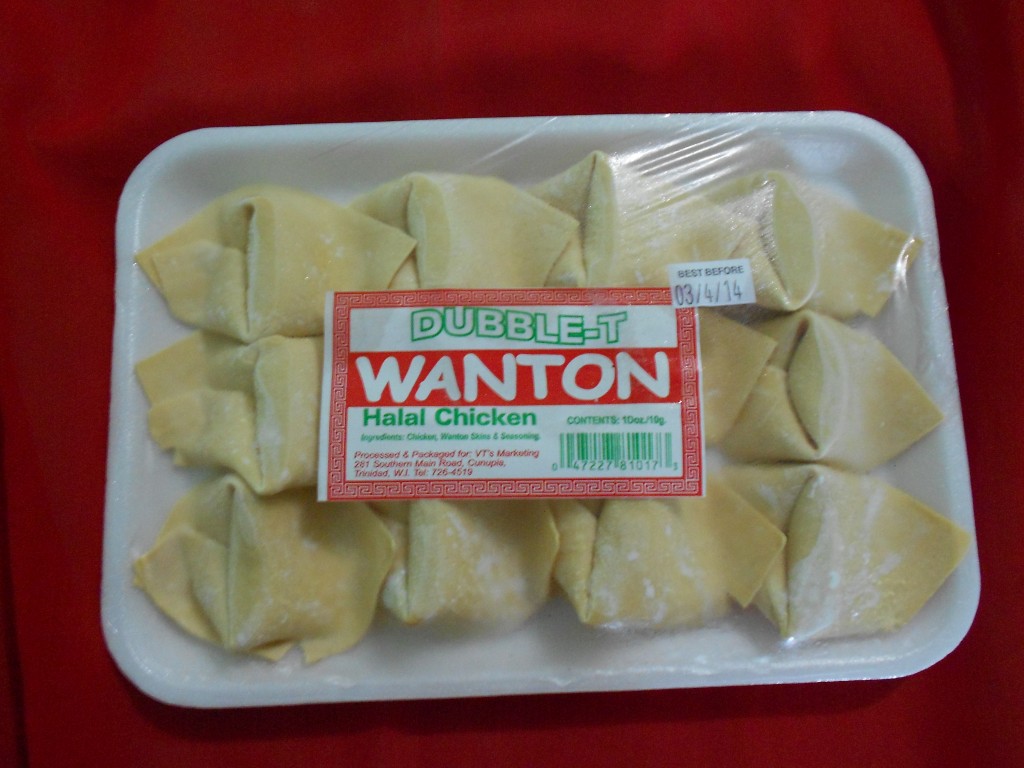
    Dumpling! Yes, wantons are a common addition to soups in Chinese cuisine. The dough is prepared by using flour, water, egg (as per preference) and salt which is then made into small wrappers filled with meat or shrimp or steamed vegetables seasoned with spices, garlic and green onions. The shapes are made as per desire but most versatile shape is right triangle, made by folding the wrapper in half by pulling two diagonally opposite corners.

    wanton

    Relished by boiling and serving them in soups, wantons are also preferred deep fried, like other Chinese dishes it also has various regional variations. Basically the differences lie between the shapes and the filling inside the wantons. If not comfortable with sweating to cook, the pre cooked versions of wantons are available in the market. Enjoy the delicacy with Hoisin or garlic sauce.

    Wrapped-Wantons-Chicken

    1. POPULAR INDO-CHINESE ENTREES

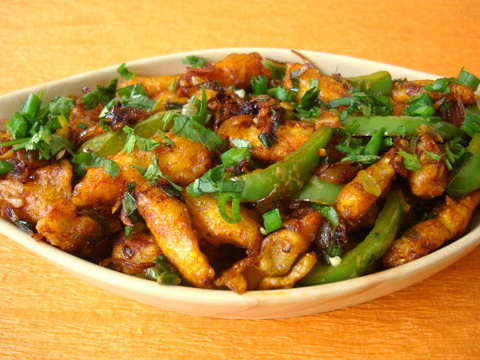
    Now talking about what we plate after collaborating with Chinese cuisine, we actually have plenty from appetizers to desserts.  One of the most popular appetizers is momos apart from apart from spring rolls and soups.Popular entrees include chilli and Manchurian dishes which is often cooked with either chicken for non vegetarian foodies and is mostly substituted by paneer and other vegetables like cauliflower and baby corns for Vegetarians.

    baby-corn-manchuria

    All this and more delicacies are there to explore in this cuisine, which is ever evolving and still have roots to the Chinese tradition. So, explore into the finesse of Chinese.

  • Delhi’s Street Food

    Delhi’s Street Food

    There are many cities in the world which are famous for their street food and without a doubt Delhi finds a place in that list. Delhi is not only the capital of India but also a place which has rich heritage and history behind it. Although Delhi is full of high end restaurants and hotels which provide excellent food and ambience, Delhi’s street foods have their own separate name and reputation. These street foods are famous for being delicious and exquisite. And so people are crazy towards these street foods. The best things about the Delhi’s street foods is that they are not only fabulous in taste but are also very much pocket friendly and so everybody can afford it. Further there are numerous options available so people can select the dish as per their choice. Once you taste the dishes which are sold here, you will surely not be able to stop yourself from going back to the same place again and enjoy these appetizing dishes. This article is dedicated to all those people who are very much passionate about trying new, delicious food items in Delhi.


    Dilli Haat:

    6

    Everybody knows Dilli Haat as a place which is perfect for window shopping and so it is one of such places where the people love to visit. Dilli Haat is also known for the wide range of street food stalls selling the delicious dishes. You can find all type of Indian foods be it a North Indian cuisine or South Indian cuisine. There are also specific shops selling the food items from a particular state. For a person who loves to try new dishes, Dilli Haat is the perfect destination as they will find numerous options in one location.


    Connaught Place:

    7

    Connaught Place is located into the heart of Delhi and it is one such place where the people living here love to visit. It is because this place not only has shops of almost all brands but also famous food chains, restaurants, clubs, five star hotels and street food stalls which are open till late night. The famous food items here are Mutton Samosa, wide range of chicken, mutton and fish dishes, vegetarian and non-vegetarian rolls, Rasqulla, Chole Bhature, Biryani and many more. You will certainly enjoy shopping here and when you will get hungry you will have enormous choice to choose from.


    Chandni Chowk:

    5

    Chandni Chowk is one of the oldest areas in Delhi and is often crowded with people coming here for shopping and offering prayers at the Jama Masjid. But without a doubt, the wide variety of street food which you can get in Chandni Chowk is simply unmatchable. You may be a vegetarian or a non-vegetarian; this place will surely make you happy with its exquisite dishes. You can visit the Karim’s if you love eating chicken and muttons. Else if you are a vegetarian, then you can simply walk into the Paranthe Wali Gali and get a taste of the delicious paranthas which are sold here from generations. Further you will also find Jalebi, Kachori, Dahi Bhalle, different types of Chatt, Lassi and Pakodas which will surely make you fall in love with them.


    Khan Market:

    1

    Khan Market is one of the high end shopping markets in Delhi but the food items that are available here are very much pocket friendly and people simply love them. From noon till late mid night you will find variety of Chinese and Indian foods in various stalls. So the people living nearby Khan Market often pay visit in evening to taste the mouth-watering dishes that are sold here. Momos, Chilly Potatos, Soups, Corn and Chatt are the famous dishes in this place.


    Pandara Road:

    4

    Pandara Road is another excellent place in Delhi where you will find delicious street foods. If you are a person who likes to eat spicy food, then this is the place you should visit. The Punjabi and the North Indian cuisines available in this place are simply amazing and eating here will surely be a delightful experience for you. Both for the non-vegetarians and the vegetarians there are tremendous options available and you will certainly not be disappointed with the food here. If you love Punjabi dishes then Pandara Road is the place you should visit as it has almost every dish which is made in Punjab and their preparation is so healthy and spicy that you will certainly feel like coming back to this place again.


    Nehru Place:

    3

    Though out the day you will find Nehru Place filled with people as it is one of the biggest electronics market in India. But apart from the computer and electronic shops here, you will also find numerous food corners there. Again the Punjabi food is the most famous here. But then you can also find the food stalls offering the fast foods, continental and north Indian cuisines. The best thing about the food sold here is that they are delicious and healthy to eat. One simply gets a much desired relief after eating in the food stalls here.

  • The cultural capital of India – Kolkata

    The cultural capital of India – Kolkata

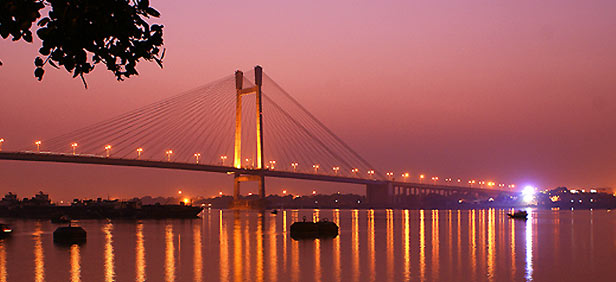
    Kolakta which is the capital of West Bengal and it is the former capital of British India during the year 1772 to 1911.It is one of the ancient and largest cities in India and also one of the major ports in India.IT is located on the eastern bank of hugli river.A city of commerce, transport, and manufacture, Kolkata is the dominant urban centre of eastern India.

    kolkata-city
    Kolkata-city

    Origin of name Kolkata:

    The ancient name of Kolkata is Calcutta, it is a older version of Bengali name Kalikata. According to few people the name Kalikantha is derived from the word Kalikshetra which means ground of goddess Kali.According to few people the name came as the city is located on the bank of the canal Khal.The other opinions are as it is famous for the manufacturing of shell lime, the Bengali words for lime are Kali and the burnt shell in Bengali is kata, thus the name originated according to few people.As it is famous for manufacture of shell lime the government of West Bengal has changed its name to Kolkata.

    Landscape:

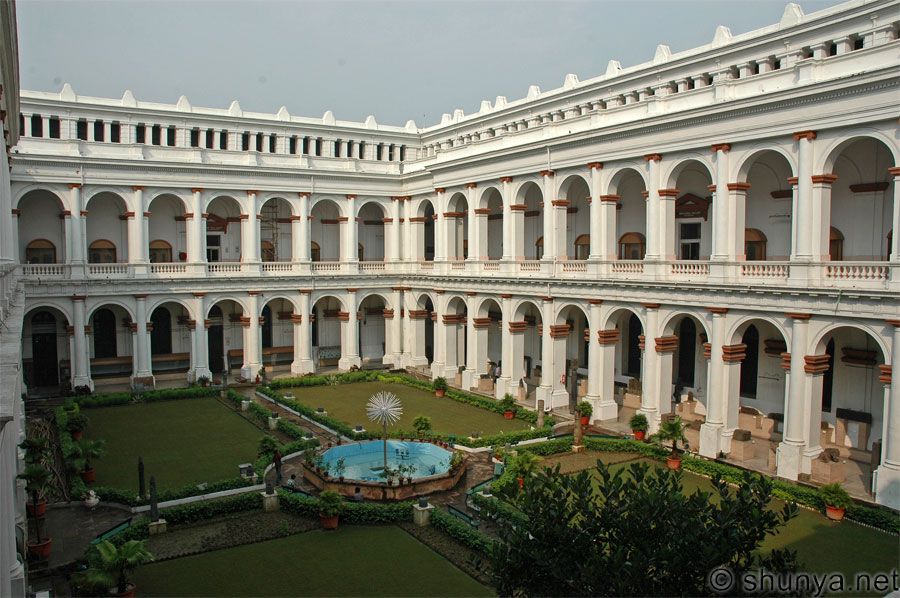
    The city has a maximum elevation of about 9 meters above sea level.The city handles a large portion of India’s foreign trade in both agricultural and manufactured products.The main thoroughfare in Kolkata is Jawaharlal Nehru Road.Along this road we can find many shopping malls, city’s shops, restaurants, and hotels. On our way we an find Indian Museum which has a vast collection of ancient Indian artifacts and on this road we can find Birla Planetarium which is one of the largest planetariums in Asia.Maidan park covering over 985 acres and the main attractions of the park are Fort William and the Victoria Memorial Hall which is massive monument in the museum which is made up of marble.

    Indian-Museum-kolkata
    Indian-Museum-Kolkata

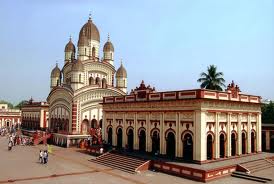
    The city is having many old churches, temples, mosques.The largest mosque in the city was Nakhoda Mosque which was built around 1926 to 42.The Kali temple is an impressive Hindu temple which is famous all over the country.Coming to churches St. Paul’s which is an Anglican cathedral is built around 1839 to 47.Durga puja which is famous Hindu festival celebrated very grandly throughout the city during the months of September and October.

    Kolakta kali temple
    Kolakta kali temple

    University of Calcutta which is being the oldest and is found during the year 1857 and this is one of the leading Institution in the city of Kolkata for the higher education.In this city of Kolkata there is National library with a collection of about 20,00,000 volumes.This library is situated at Belverdere Estate which is located near Alipore Zoo.

    Calcutta_university_1857
    Calcutta_university_1857

    The city of Kolkata is having an International Airport which is being served by several railways and highways, including the Grand Trunk Road which links Kolkata with Delhi and upper part of India.In India first Subway is opened in Kolkata during the year 1984.

    kolkata_international_airport
    Kolkata_international_airport

    Climatic conditions:

    The city is quite hot with moderate temperatures during December to January and is having high temperatures during April and May.The average annual rainfall in Kolkata is about 64 inches.Winter falls from the end of November and continues till February.it is pleasant and the fogs and mists reduce the visibility in the early hours.

    People:

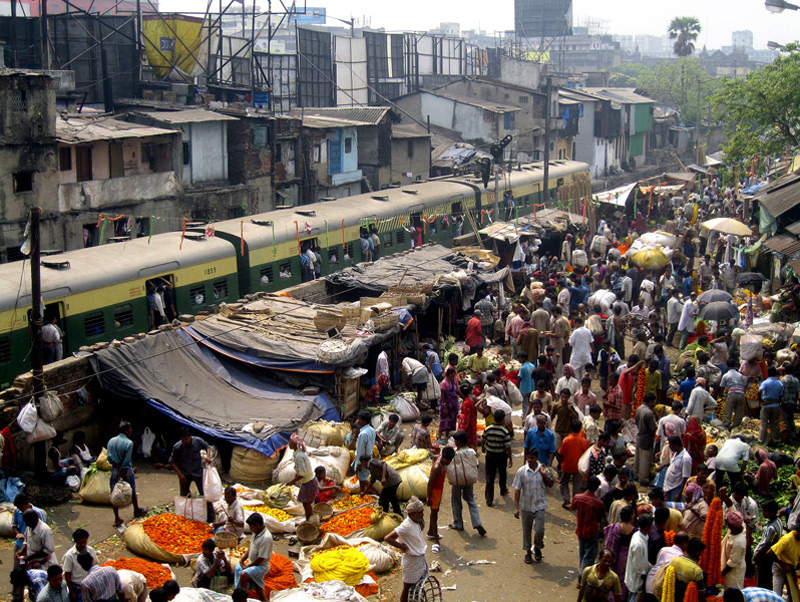
    We can find many religions in Kolkata but the major are Hindus, Christians, Muslims.Because of this multi linguistic in nature we can find many languages are being spoken by the people but most dominant language is Bengali.Many people from various parts of the world visit this city for various purposes being a cosmopolitan city.The population in Kolkata is extremely high and overcrowding can be find in almost every place we visit in the city.This overcrowding is found from many decades this is mainly due to the migrants of the people from the neighbouring states like Bihar, Orissa, Uttar pradesh, Jharkhand are coming to Kolkata in search of employment.

    Over crowding in Kolkata
    Over crowding in Kolkata

    Economy:

    Kolkata Is one of the India’s  prominent economic centres because of its manufacturing industries, finance, trade, exports, imports and is having major activities like printing, publishing, and newspaper circulation, as well as for recreation and entertainment.In addition to all these there are many resources available in Kolkalta like coal, iron, manganese, mica, petroleum, tea, and jute.

    Kolkata Cuisine:

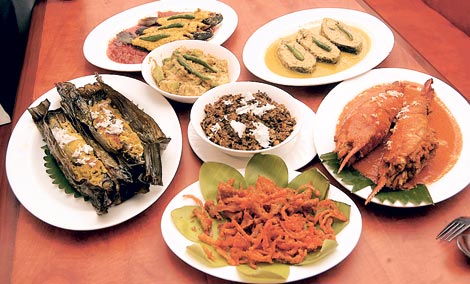
    Kolkata is having unique food habits and many of them eat meat and fish regularly.People of Bengal mostly prefer to eat fish, goat, mutton and chicken and the only exception is beef and few Muslim communities even eat it also.As Kolakta is having countless rivers, ponds and lakes many varieties of fish are available here and we can also find prawns, shrimp and crabs also in abundant.Most of the people eat fish as a dish in any of their day meal.They use different types of spices both for fish and vegetables.

    Kolkata cuisine
    Kolkata cuisine

    Fish:

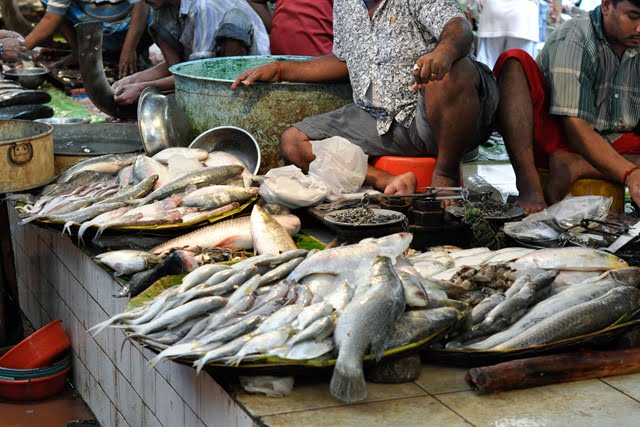
             Fish is the dominant kind of protein in their cuisine because of the numerous number of ponds, lakes, rivers.Almost every part of the fish are eaten and few spare bits of the fish are usually used to flavor curries and dals.The salt water fish Ilish is very popular among the Bengali’s and is also known as the icon of Bengali’s cuisine.There are many ways for the cooking of these fishes depending on the texture, size, fat content and the bones.They can be fried, roasted, a simple spicy tomato based gravy.Some are cooked with curd or yogurt with sour sauce, with sweet sauce or even the fish made to taste sweet on one side and savoury on the other.There is a saying that the Ilish fish can be cooked in 108 different ways.

    Varieties of fishes in Kolkata fish market
    Varieties of fishes in Kolkata fish market
  • Dutch Delicacies

    Dutch Delicacies

    We generally do not find many Dutch restaurants in India. The food from the Netherlands is not as famous as Mexican, Italian or French food but has a spectacular flavor which makes your mouth water and fall in love with it. A foodie like me would never miss a chance to hog on to Dutch food. A lot of sea food and vegetables are consumed by the Dutch, simply because they are into fishing and farming. Bread is also consumed in a large by them. They are number one consumers of bread worldwide.
    Dutch cuisine includes many vegetables and little meat; since the consumption of bread is high, breakfast and lunch generally include bread with a variety of toppings whereas the dinner included some meat and potatoes with lots of seasonal vegetables. The Dutch people prefer relatively high carbohydrates and fat in food, reflecting the dietary need of the labourers. They also consume many dairy products. Many holidays and special occasions are good time to cook special foods. In the course of the twentieth century this diet changed and became much more cosmopolitan, with most international cuisines being represented in the major cities.

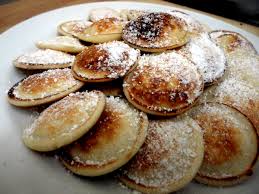
     dutch food

    HISTORY

    Traditionally, the Dutch cuisine consisted of simple food such as bread and herring. Their poverty played a huge role in modifying their cuisines. They consumed foods that were filling yet cheap. In the 18th century people started eating potatoes which became their staple food by 1800. In the early 1800s, while the rich afford what they desired, the working population ate bread and potatoes. In some areas, pancakes, fish and other seafood were consumed along with fruits and vegetables and a little meat.
    Since potatoes were grown on a large scale; they were eaten at almost every meal. Boiled and pealed for the main course during lunch and warmed and mashed for dinner. The leftovers were served for breakfast with salt, sometimes vinegar, but without gravy or any other fat. Generally, gravy was served during lunch or dinner. Since it was the food of the poor, it wasn’t very lavish but was filling and tasty. Its simplicity was its USP.
    During the nineteenth century, whatever the people drank was more or less watery, which meant that they consumed poor quality beverages with a lot of water in it. In few areas hot chocolate was consumed but beer and Jenever were the most famous drinks in the country. For most of the century beer was drunk in the southern part. This beer was top-fermented and of terrible quality; not until the 1880s did German-style bottom-fermented pilsner enter the Dutch market. Jenever consumption early in the nineteenth century was twice that of the equivalent.
    FOOD

    BREAKFAST AND LUNCH

    dutch foods


    Breakfast and lunch are similar in Dutch Cuisine. Both consist of bread with a wide variety of cold cuts, cheeses and sweet toppings; such as Hagel slag, vlokken and muisjes. The Dutch are known for their dairy products and specially cheeses. Edam, Gouda, Leerdammer, Leyden, Limburger, Maaslander, Maasdam, Mimolette, Parrano, Roomano, Vlaskaas and Prima Donna are a number of cheeses that are consumed in this nation. Dutch bread tends to be very airy, as it is made from yeast dough. Additional seeds such as sunflower or pumpkin seeds often mixed with the dough for taste. A Frisian luxury version of white bread is suikerbrood, white bread with large lumps of sugar mixed with the dough.[4] Kerststol is a traditional Dutch Christmas bread made of bread dough with sugar, dried fruits, raisins and currants and lemon and orange zest, eaten sliced, spread with butter. The Dutch produce a wide variety of breads.

    TEA TIME

    dutch-coffee


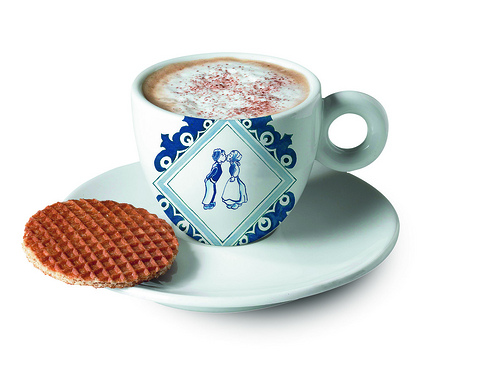
    Dutch people invite friends over for koffietijd (coffee time), which consists of coffee and cake or a biscuit, served between 10 and 11 a. m. (before lunch) and/or between 7 and 8 p. m. (after dinner). The Dutch drink coffee and tea throughout the day, often served with a single biscuit. Dutch thrift led to the famous standard rule of only one cookie with each cup of coffee. It has been suggested that the reasons for this can be found in the Protestant mentality and upbringing in the northern Netherlands.Café au lait is also very common. It is called koffie verkeerd (literally “wrong coffee”) and consists of equal parts black coffee and hot milk. The Dutch drink tea without milk and the tea is quite a lot weaker than the typical English types of tea which are taken with milk. Other hot drinks used to include warm lemonade, called kwast (hot water with lemon juice), and anijsmelk (hot milk with aniseed).

    DINNER

    meat


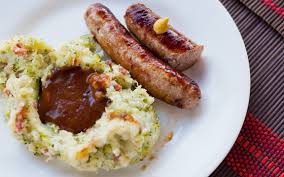
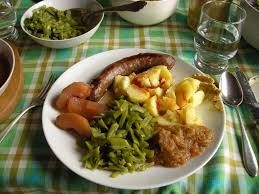
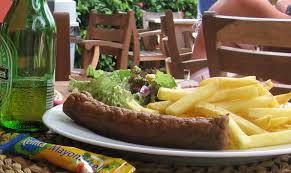
    You will not find many vegetarians over there and thus consumption of meat is common. Dinner is generally served early that starts around or even before 6 o’clock in the evening. The Dutch dinner consists of one simple course: potatoes, meat and vegetables. Traditionally potatoes with a large portion of vegetables and a small portion of meat with gravy, or a potato and vegetable stew are served. A typical traditional Dutch dinner would include stamppot (Dutch mashed potato mixed with other mashed vegetables) and pea soup.. Vegetable stews served as side dishes are for example rodekool met appeltjes (red cabbage with apples), or rode bieten (beetroot). Regular spices used in stews of this kind may be bay leaves, juniper berries, cloves, and vinegar, although strong spices are generally used sparingly. Stews are often served with pickles, including augurken (gherkins) or cocktail onions (zilveruitjes). The Dutch food is rarely hot or spicy. They prefer eating boiled food over fried ones.

    SPECIAL FOODS

    ss


    Cooking special food during special occasions is not something that only the Dutch follow. A variety of food is cooked at different occasions. The birth of a child is an occasion for serving beschuit met muisjes (Dutch rusk covered with sugared aniseed).
    The Dutch celebrate a festival of Sinterklaas is held on 5 December. On this occasion, the Dutch drink hot chocolate milk and eat spice cookies, like speculaas.
    Christmas dinner is also a family occasion where roast pork, game or other luxury meat may be served. An alternative typical Dutch tradition for Christmas meals is ‘gourmet’, when people sit together around a gourmet-set (small table top cooking stove with miniature frying pans) and use their own small frying pans to cook different types of meats, fish prawns/shrimps and finely chopped vegetables accompanied by salads, fruits and sauces.
    eww
    A famous Dutch sweet is zoute drop, (lit. “salty liquorice”) and other liquorice sweets. These sweets are small, black and look much like gums. The four types of drop are soft sweet, soft salt, hard sweet and hard salt drop. It is said that Dutch settlers introduced the cookie to North America. In fact, even the word ‘cookie’ comes from the Dutch ‘koekje’.
  • Beauty of the feast!

    Beauty of the feast!

    World consists of human divided by infinitesimal differences by region, religion, nation, race, caste, color, creed and what not. Things like globalization would be impossible to think of if we would not have been able to find the common binding factor among the differences. India here very well stands for its world known diversity which had stood as one against the tests of time. Apart of being multicultural from the very roots of it, Indians tend to employ these differences to propagate brotherhood among them. Sharing of cultural elements like native food, religious practices, festivals and language has only helped us to bind together.  Thinking of food, how many of us really look for what’s in the platter is more than just a meal?

    Every culture has their own essence and it can very well be witnessed by their local cuisine. As the saying by Adelle davis goes “We are indeed much more than what we eat, but what we eat can nevertheless help us to be much more than what we are.” holds true when we think of food more than mere nutrition provider. Nowadays food has become an art, there are nutritionists and health inspectors their careers based on the quality of food served to masses.  People like Tarla Dalal and Sanjeev Kapoor are superheroes of kitchens in India as they redefined the culinary art altogether and who can miss Masterchef series? They all prove that food is a serious deal and as fine and detailed the fine arts are, same is for the food or culinary arts.

    Beauty of food is celebrated in every cuisine around the world like Chinese and Indian food are tangy and spicy where Italian cuisine is comparatively less zesty and prefer involving more of herbs. If we come to think of it, whenever we go to a new place and one of the first things that we look for is food available there. It makes a whole lot of impact on how we perceive that place for the rest of the time. I think that most would agree to the fact that we tend to look for our native flavors in the new region, so goes with the food. How much ever we buy pizzas and subs it won’t suffice the appetite of an Indian living overseas finding tikkas and kebabs.

    Food does so much more than calming the hunger; it crosses boundaries of region and religion. In India especially during festivals which occur more than Sundays in the whole year, we have a pre-planned menu set for each one. The cooking of all the sweets gives the real pleasure of an occasion for the mothers in the household and children’s by making sure to consume every bit of them. The sharing of sweets signifies sharing part of happiness that had come with the festivals.

    Festival sweets

    For a culture rich country like ours, food holds more meaning and there are regulations and provisions regarding cuisines in any religion, state e.t.c. Like in a Brahmin household usage of onion and garlic is avoided and in Christianity communion involves having bread and wine (or other substitutes) to represent the body and blood of Jesus Christ. When a dietary practice is preserved by religious dogma it is given additional force, and if observed it tends to promote a balanced diet! It may be one of the reasons behind many of our grandma’s and grandpa’s resistance against diseases and allergies.

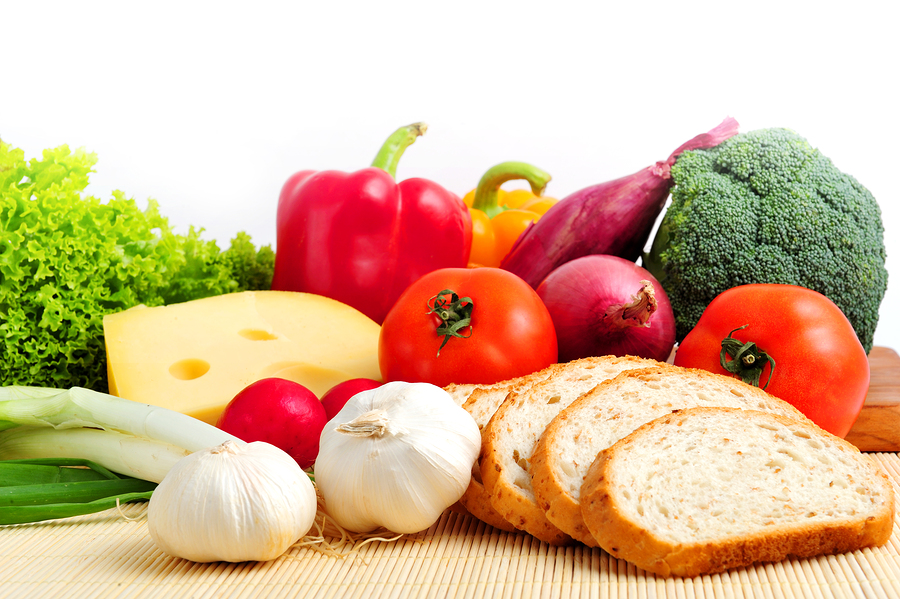
    Food has many nutrients and a person should contain just the right amount for their age in their meals. Leafy vegetables as we all are very familiar of carries infinite benefits like building up one’s resistance to diseases, helping in one’s “weight management program” more like dieting? They are also known to lower the risk of cardiovascular disease and Type 2 diabetes. Like in all seriousness, vegetables no matter how much we despised them as kids do have a hand over pizzas!

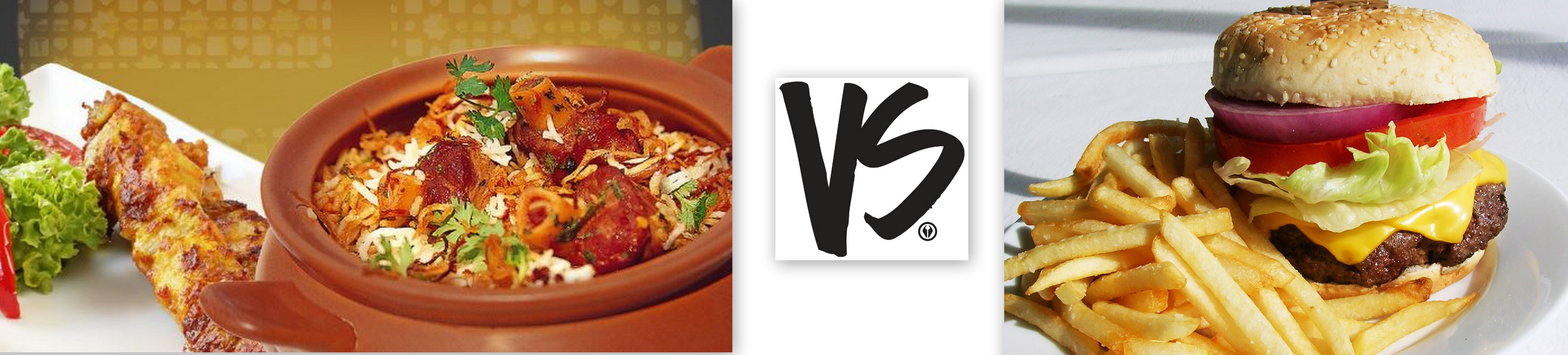
    Talking about pizzas, who doesn’t like having a large size ordered along with coke on a Friday? The fact that we had become conscious about our fast food intake is because of the general awareness regarding cholesterol related diseases like obesity, hypertension e.t.c.

    Fat gained by fast foods

    Fast foods are source of saturated fats also known as “Bad fats” and are often linked with diseases like cardiovascular and coronary heart diseases as well as stroke. Nowadays many healthy choices regarding even the basic in groceries like flour and edible oils are available in the market. Once in a month or few weeks surrendering to the craving for fast foods is okay I guess, but the fact doesn’t change that dieting and refraining from them is the solution for the above problems. Yes! Exercise! Obesity is another much discussed disorder caused by the negligence of the individual’s choice of meals, caution should be taken where something can appeal to the taste buds doesn’t necessarily goes well with the rest of body. Moreover the skipping of meals in order to “diet” is a pointless thought as we can see an obvious difference visible between men who had his meals and who didn’t, the stark lethargy and dreariness is hard to miss. In the other words, skipping meals over a period of time without regarding with a nutritionist would only make you look like a zombie strolling in workplace out of the series “Walking Dead”!

  • Unparalleled Taste of the Awadhi Cuisine

    Unparalleled Taste of the Awadhi Cuisine

    The sumptuous meal that the city of Awadh has to offer is nothing short of magical. The royalty and the grandeur of it will leave you mesmerized. It will leave an everlasting impression on your taste buds. You’ll always want some more of it. You will get the Nawabi feel in every bite you take. Such is the magnificence of the Awadhi cuisine. The city is notably famous for the dum style of cooking. It originated in Awadh, or the present day Lucknow. This style of cooking goes back to the 16th century. The food is cooked over a slow fire in a closed container.  With the increased time of cooking, the entire flavour of the spices and herbs used, is released into the dish. This gives a distinct taste to the Awadhi cuisine. Sometimes cooking dough is used to seal the mouth of the container in which the dish is being prepared. This leads to aroma of the spices to seep through the dough, thus providing it with a flavour.

    Dumpukht

    Awadhi Dumpukht

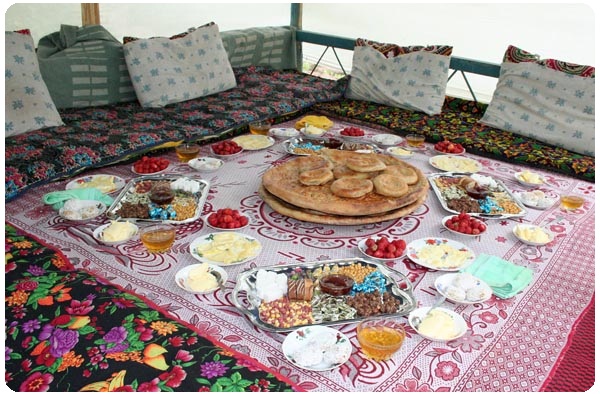
    Not just the style of cooking, but also the way in which the meal is spread out elaborately, will make your mouth water. The presentation of the food has a royal touch to it. When you sit down to eat, it will appear to you that you’re a king and everyone on the table is waiting for you to take the first bite! In the olden times, the spread was laid out in the centre and it was necessary for everyone to sit around and eat together. Such a spread is known as Dastarkhwan. It consists of a variety of dishes like kebabs, korma, biryani, roomali rotis, nihari kulchas, sheermal etc. Such practices can still be observed around the city. The menu of the Dastarkhwan changes with the seasons.

    Dastarkhan

    A typical example of the spread: Dastarkhwan

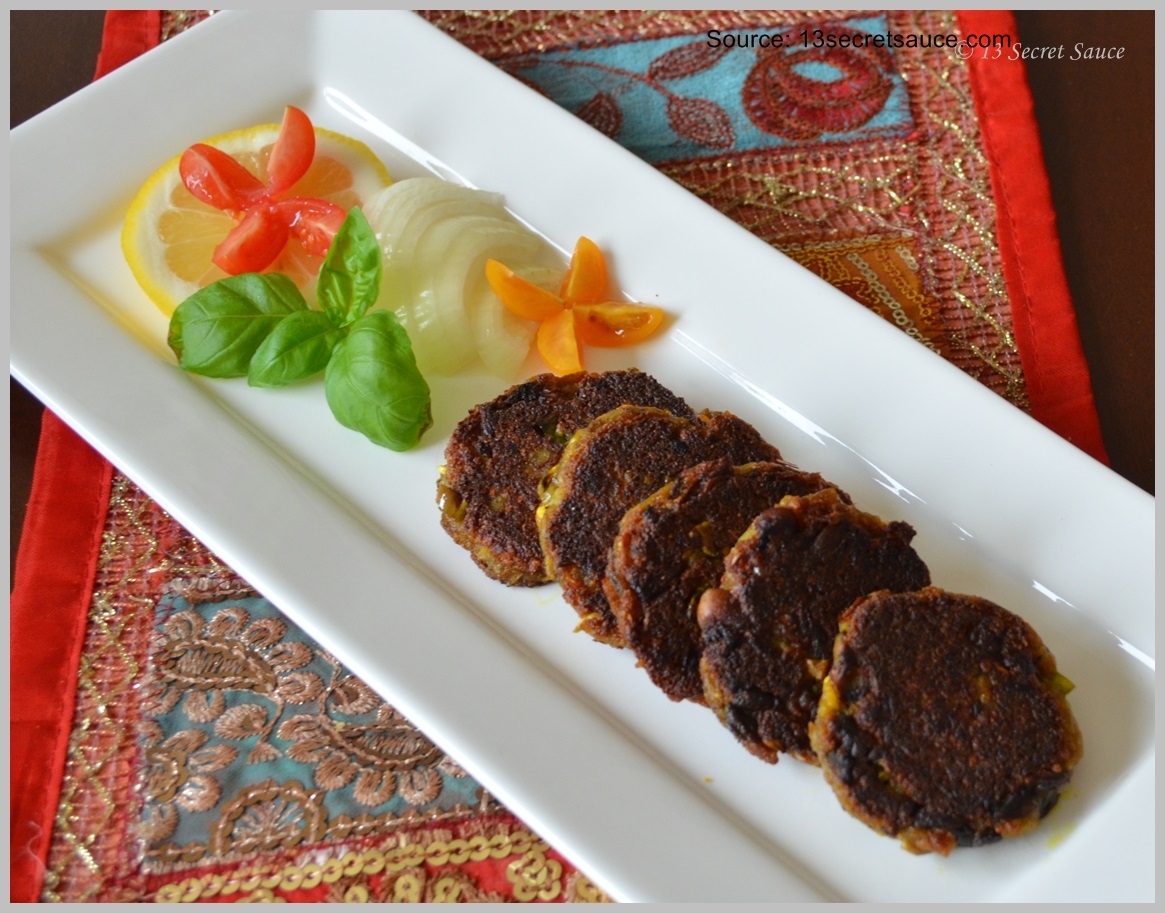
    The menu of winters is very different from that of spring. In winters, heat giving, rich meat is preferred. During spring, various kinds of crispy snacks are prepared. Similarly during summers, a variety of dishes and desserts are prepared using raw mangoes. Sewaiyan is another sweet dish which can be often seen in the houses during the pious months of Ramzan. The dishes that form a major part of the Awadhi platter are Kebabs, Biryani, Korma and a variety of breads. Kebab is the identity and pride of Lucknow. Kebabs are made from meat, fish or vegetables that are grilled on a chulha. Lucknow boasts a wide variety of Kebabs, namely, Kakori Kebabs, Seekh Kebabs, Galawat ke Kebabs, Ghutwa Kebabs, Shami Kebabs, and Boti Kebabs etc. Vegetarian kebabs are made using yam, kidney beans, jackfruit (kathal), peas and taro (arbi). The most famous shop for kebabs in Lucknow is the Tunde Ke Kabab. It is a 100 year old shop which serves the best kebabs in the city. It boasts of using 160 different homemade spices which is their trade secret. The who’s who of Bollywood come all the way to try out these kebabs. The list of the fans is endless. So many of the Bollywood biggies fly out the khansamas (cooks) from here to cater their functions. This is surely a feat to be proud of.

    Galouti kebab.png

    Galouti Kebabs

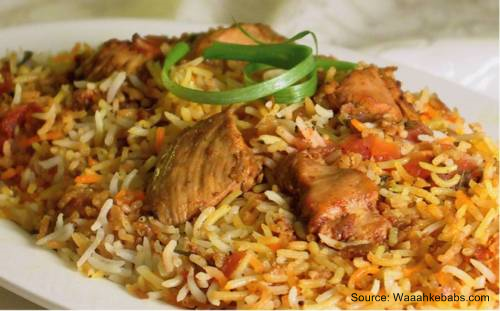
    Lakhnawi biryani is another dish that is famous worldwide. It is a special preparation of basmati rice with species, curd, meat and/or vegetables. It uses the method of layering. The meat and the rice are cooked separately. They are then layered on top of each other and baked. Vegetarian biryani is also very common.
    Biryani

    Biryani

    The various types of breads that are eaten are chapatis, pooris, parathas, naans, roomali roti, tandoori roti and sheermal (sweet naan). Korma is the curry used which is made by braising meat or vegetables in case of navratan korma. The Awadhi desserts have the perfect kind of sweetness and taste that is required after a meal. Kulfi is one such dessert which is famous among the masses. It is made from rich milk and cream. Prakash Ki Mashhoor Kulfi is the oldest known shop for kulfi. They offer the best falooda kulfi in the city. A type of halwa which is specially prepared in Lucknow is the sohan halwa.  Different cereals like gram flour, sooji, wheat etc. are used to prepare halwa. It is heavily garnished with rich dry fruits. The barfi, jalebi and rabri are some other desserts to look up to. After the meal, consumption of Paan is quite common. An evening without Paan is thought to be incomplete. Paan is made from betel leaf which is garnished with saffron, spices, silver foils and other condiments.

    Falooda Kulfi

    Falooda Kulfi By Prakaksh ki Mashoor Kulfi

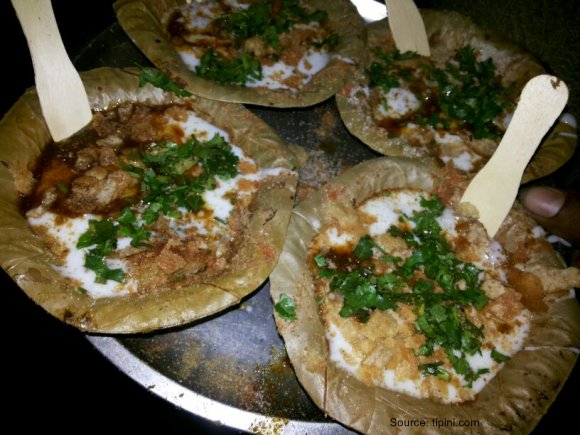
    After boasting of the nawabi Awadhi cuisine, Lucknow still has a lot to show off in terms of street food. Be it Idris ki biryani or Shukla ki Chaat, be it Rahim ke Kulchey Nihari or Royal Café k paani-batashe, every single one of them is worth a try. And when you try them once, you’re surely going to be a fan. The originality of the taste will hold you spellbound. Paapdi chaat, tikki chaat, dahi bada, paani poori, sev poori etc., the names are enough to tickle your taste buds. Where else can you get eight different types of paani for the paani puri at one stall? That’s right, in this magical city which has a cuisine so quintessential!

    Shukla ki Chaat 

    Aaloo Tikki by Shukla ki Chaat

    The mouth-watering delicacies that this culture offers are just too many to name. Piece of advice, go try out some Awadhi cuisine, you are missing out on a lot. Trust me, you’ll be thankful!