Author: Shivangi Borah

  • A Bowlful of Comfort: Healthy Soups for You

    A Bowlful of Comfort: Healthy Soups for You

    I was out this evening and it suddenly started to pour. That’s how it is in these parts – unpredictable heavy showers are a fact of life. I arrived home all drenched. An hour later, I was sneezing: I’d come down with a bad cold. That’s when mom came up with just what I needed – like moms always do – a bowlful of delicious, warm soup. As the warm, tempting aroma filled my senses, I started feeling better already – at least in my head.

    It’s true: soups are the ultimate comfort food – warm, nourishing, and you don’t even have to chew them. What’s more, they can be amazingly healthy! Nutritionists urge us to eat five portions of fruit and vegetables a day, but it can be difficult to hit these targets. A bowl of soup is an excellent way to make sure you are getting at least two of those portions. A mixed vegetable or minestrone soup will also ensure you get a good mix of minerals, nutrients, and phytochemicals – antioxidants found in plants that destroy harmful chemicals in your body. Soups with beans and pasta provide slow-release carbohydrates to give you energy throughout the day. In fact, researchers in Thailand and Japan have now discovered that a certain soup could help prevent cancer! This is the Thai Tom Yum Gung soup – speculated to be a hundred times better at cancer prevention than any other food. If the speculation is true, then a delectable mix of shrimps, coriander, lemon grass, and various chillies may be just about the tastiest way to fight cancer!

    However, if you think all kinds of soup are good for you – think again. Cream-based ‘luxury’ soups in restaurants pack in more fat and calories than you might be prepared to bargain for. Besides, store-bought instant soups contain higher-than-recommended levels of sodium – intended to prolong their shelf life. The solution is simple, though. Make your own healthy soup with the goodness of ingredients you choose. Here are a few simple recipes for all you soup enthusiasts to try out.

    Chinese Clear Vegetable Soup
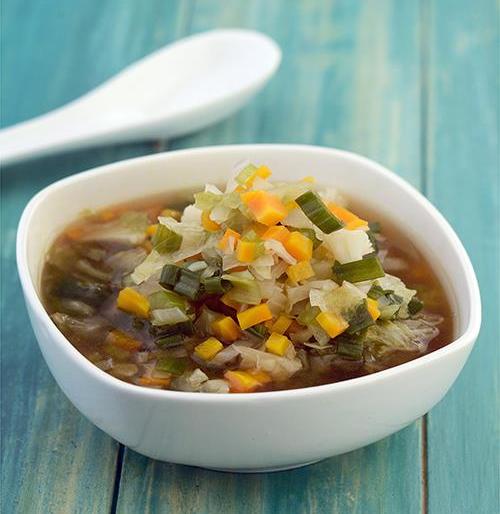
    Chinese Clear vegetable Soup

    This soup utilizes the technique of stir-frying the veggies to ensure minimum lose of nutrients during cooking: it’s health in a bowl.

    Ingredients:

    • 1 carrot, thinly sliced
    • ¾ cup cabbage
    • 3 lettuce leaves
    • 3 spring onions with greens
    • 3 sticks of celery
    • 50 g sliced cauliflower
    • 2 tbsp oil
    • A pinch of baking powder
    • A pinch of citric acid
    • 2 tsp soy sauce
    • Salt to taste
    • Chillies in vinegar
    • Chilli sauce

    Directions:

    • Tear the cabbage and lettuce leaves.
    • Chop the spring onions with the leaves.
    • Cut the celery into pieces about 12 mm in length.
    • Heat the oil thoroughly. Add the vegetables, baking powder, and citric acid and cook on a high flame for 3 to 4 minutes.
    • Add 5 teacups of boiling water, soya sauce and salt. Boil for 3 to 4 minutes.
    • Serve hot with chillies in vinegar and chilli sauce.


    Curd Shorba:

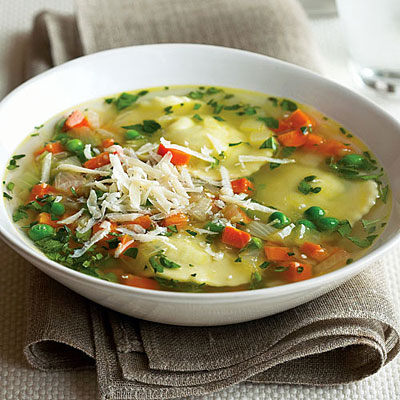
    Curd Shorba Soup

    This is classic combination of protein-rich ingredients brought together in a delicious Indian-style soup. If you are a fan of creamy soups but want to keep the calorie count in check, this is the soup for you. All you need to do is set the curd the previous day, and you’ll be able to make the soup in a snap.

    Ingredients:

    • 4 cups fresh low-fat curd
    • 1 tsp plain flour
    • ¼ tsp turmeric powder
    • 2 tbsp. skimmed milk
    • 1 tsp. oil
    • ½ tsp. cumin seeds
    • ¼ cup finely chopped onions
    • 2 green chillies, finely chopped
    • ½ tsp. grated ginger (optional)
    • 2-4 tsp. finely chopped tomatoes
    • 1 tbsp. finely chopped cucumber
    • 1 tbsp. chopped coriander (for garnishing)

    Directions:

    • Beat the curd, plain flour, turmeric powder, and milk together.
    • Heat the oil in a deep non-stick pan and add the cumin seeds.
    • Add the onions, green chillies, and ginger. Sauté for a minute.
    • Add the curd mixture and salt. Mix well and boil for a few minutes.
    • Add the tomatoes and cucumber, mix well and cook for 1 more minute.
    • Serve hot garnished with coriander.

    Chunky Chicken Noodle Soup
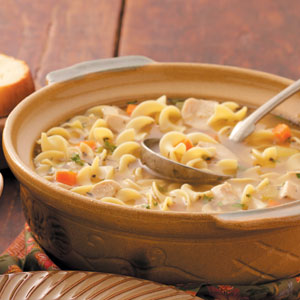
    Chunky Chicken Noodle Soup

    Hard-core non vegetarian? Here’s a tasty, healthy soup for you. Research suggests that chicken noodle soup may help counter inflammation. Either way, it offers proteins and helps relieve congestion. What’s more: it’s lower on calories and sodium than your canned or packet options.

    Ingredients:

    • 1 (3-pound) broiler-fryer, cut up and skinned
    • 4 cups water
    • ¾ teaspoon poultry seasoning
    • A pinch of dried thyme
    • 3 celery tops
    • 2 cups water
    • 2 ounces uncooked medium egg noodles
    • ½ cup sliced celery
    • ½ cup sliced carrot
    • ½ cup sliced green onions
    • 2 tbsp. minced fresh parsley
    • 2 tsp. chicken-flavored bouillon granules
    • ¼ tsp. coarsely ground black pepper
    • 1 bay leaf
    • Additional coarsely ground black pepper (optional)

     Directions:

    • Combine first 5 ingredients in a Dutch oven; bring to a boil. Cover, reduce heat, and simmer 45 minutes or until chicken is tender. Remove chicken from broth, discarding celery and reserving broth.
    • Skim fat from broth. Add 2 cups water and next 8 ingredients to broth; bring to a boil. Cover, reduce heat, and simmer 20 minutes.
    • Bone and chop chicken; add to broth mixture. Cook 5 minutes or until thoroughly heated. Discard bay leaf. Ladle soup into bowls, and sprinkle with additional pepper, if desired.

    There, you have the recipes. Try these out and create some of your own. Enjoy your bowlful of warmth and health!

    I just finished mine.

    (Recipe sources: TarlaDalal.com, FitnessMagazine.com)

  • Bring Out the Teapots!

    Bring Out the Teapots!

    Every time I come home to Assam for the holidays, I notice just how much the Assamese people love their tea. It is that first warm sip in the morning that gets them going for the day – and not without reason. Regarded for thousands of years in the East as a key to good health, happiness, and wisdom, tea has finally caught the attention of researchers in the West, who are discovering the many health benefits of this potent elixir. But before you start chugging, making sure that your “tea” is actually tea. “Tea”, in layman’s language, is the name given to a number of brews. But “real” tea, according to experts, includes only four varieties – green, black, white, and oolong – all derived from Camellia sinensis, a shrub native to China and India. Anything else, like herbal “tea” for instance, is an infusion of a different plant and isn’t technically tea.

    Katherine Tallmadge, spokeswoman for the American Dietetic Association, says, “There doesn’t seem to be a downside to tea. I think it’s a great alternative to coffee drinking. First, tea has less caffeine. It’s pretty well established that the compounds in tea – their flavonoids – are good for the heart and may reduce cancer.” Indeed, teas have been studied to be chock full of the powerful antioxidants called flavonoids, the most potent of which (known as ECGC) may help prevent cancer, heart disease, and clogged arteries.

    Experts suggest that to maximise the benefits of tea and minimize the calorie and sugar content, it is best to brew your own rather than buy it bottled. Here are a few simple recipes to help you get started on that journey down tea lane.


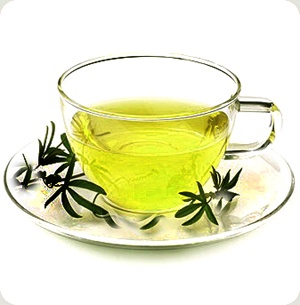
    Green Ginger Tea

    Green tea

    Green tea is a wonderful beverage. But if you’re not familiar with a few basic techniques, you can wind up with a tea that’s grassy, bitter, or just too strong. Don’t worry, though – with patience and practice, you’ll perfect your own recipe. Here’s a simple one for you to try out.

    Ingredients:

    (Makes one cup)

    • 1 tsp. (or 5 g) green tea leaves
    • Ginger or dry ginger powder
    • 1 cup water

    Directions:

    • Place the green tea leaves and the ginger (or ginger powder) in a tea strainer or sieve.
    • Fill a non-reactive pot or pan (glass or stainless steel) with water. Heat it to about 180°F. You can either use a candy thermometer to watch the temperature or simply keep an eye on the water to make sure it doesn’t boil.
    • Place the filled tea strainer or sieve into an empty mug or cup.
    • Pour the heated water into the mug, over the tea leaves.
    • Steep the tea leaves for 2 – 3 minutes but not any longer, or else your tea will become slightly bitter.
    • Remove the tea strainer from the mug.
    • Let your tea cool down for a few moments and enjoy your perfect cup of green tea.

     Lemon Black Tea:

    Lemon Black tea

    Here’s a blend for those of you who love a lemony flavour. You will notice that unlike the almost overpowering sourness of the commercial lemon teas, this brew has a subtler, more restrained in its lemony taste. But it’s still got the tang!

    Ingredients:

    (Makes 1 cup)

    • 1 tsp. black tea leaves
    • ½ tsp. dried lemon peel
    • ½ tsp. coriander seed
    • 1 cup water

    Directions:

    • Heat water to about 180°F.
    • Add the black tea leaves, dried lemon peel, and coriander seeds.
    • Steep for about 10 minutes.
    • Strain out your tea; discard residue.
    • Let cool for a few moments before serving.

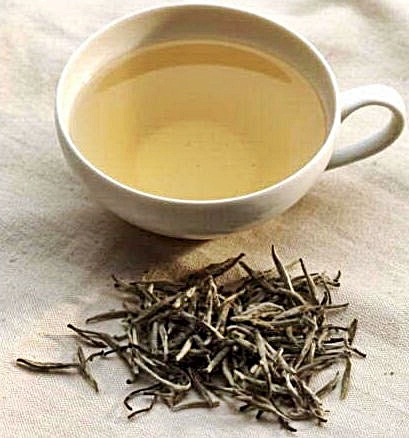
    White Tea

    white tea

    Containing up to three times as many antioxidants as green tea, this least-processed tea is arguably the healthiest of all teas. It has a mild and sweet flavor that is velvet-like in smoothness, and has none of the grass-like flavors some green teas can produce. The best white teas come in loose-leaf form. Like green tea, white tea is best brewed with pure water that is very hot, but not boiling. Follow the steps below to make sure your white tea retains all its fine qualities while brewing.

    Ingredients:

    (Makes 1 cup)

    • 2 tsp. white tea leaves
    • Pure water

    Directions:

    • Bring water to a boil and remove from heat.
    • Warm your spotlessly clean teacup with hot water. Pour away the water.
    • Add the white tea leaves
    • Fill the cup with pure water. Cover and steep tea for about 5 minutes. For stronger flavor, steep for a few minutes longer. Re-steep the leaves once or twice to extract all the nutrients.
    • Serve as it is, unadulterated. Pouring milk or sugar will drown out the already subtle flavour of the tea.

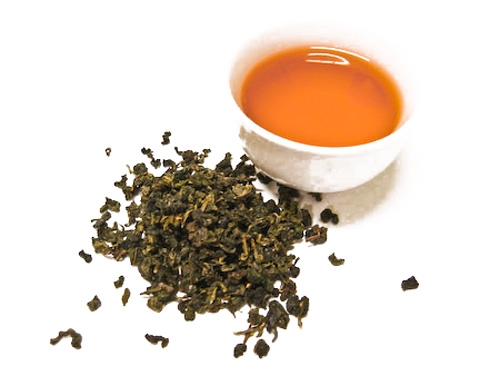
    Traditional Oolong Tea

    Oolong Tea

    Preparing Oolong tea correctly is an art. While the ritual can be very detailed and complicated, here is a simplified recipe for your daily cup.

    Ingredients:

    • Good quality oolong tea from a company you trust
    • Water Boiler
    • Teapot with a built-in strainer
    • Ceramic drinking cups

    Directions:

    • Bring water to rolling boil, then rinse and warm up the tea set.
    • Add oolong tea leaves to the teapot. Tea leaves take approximately 5 percent of space in the teapot.
    • Pour rolling boiled water (212°F) into the teapot.
    • Use the cover to push away the white floating bubbles.
    • Cover the teapot and steep for a couple of minutes. Pour the tea into the cups.
    • The last few drops are the richest in flavor. They should be carefully and evenly distributed across all cups.
    • This tea is as much enjoyed for its aroma as its taste. Remember to smell before you sip.

    Now that you have the recipes down, go brew yourself a cuppa. Sip your way to health!

  • Let’s Make a Healthier Pizza

    Let’s Make a Healthier Pizza

    The Dominos commercials may show shiny, happy people gorging on slices of pizza, but you’re nobody’s fool. You know the ugly truth. The dripping cheese that looks so tempting on your television screen is bad news for your heart and waistline. But if you think that means pizzas are to be absolutely cut out of your diet – no matter how much that saddens your inner pizza-lover – think again. What is it that makes any kind of food healthy or unhealthy? The ingredients, of course! So, depending on what ingredients you favour, your pizza has the potential of being a quintessential junk food or a healthy pie. Here’s how to make a healthier pizza at home:

    • Go for a whole-grain crust.

    A whole grain crust will ensure that each satisfying slice adds more fibre and protein to your body. Store-bought pre-made whole wheat pizza crusts will make your work child’s play. If you’re passionate about building your pizza from scratch, simply substitute whole wheat flour for the white flour in your recipe.

    • Cut back on the cheese.

    Cheese not only tastes amazing on your pizza but is also a good source of calcium. But dollops of melted cheese all over the surface of your pizza can pack in more calories and saturated fat than you might be prepared to bargain for. A smart option is to go big on flavour and low on calories by using a light sprinkling of a combination of part-skim mozzarella, sharp provolone, and naturally lower-fat Parmesan.

    • Load up on the veggies.

    They’re nutritious and low in calories. Some delicious choices include sun-dried tomatoes, onions, broccoli, spinach, olives, spinach, peppers and mushrooms. There really is no rule. Pizza night is a great way to use up all that’s in the fresh zone of the fridge – whatever you’ve got, toss it on.

    • Choose your meats smartly.

    Processed meats like pepperoni and sausages are high on fat content and have been associated with stomach and colorectal cancers. Does that mean meat-lovers have to lose out? No! Swap processed meat for lean steak, grilled chicken, and shrimp for a protein-rich meal.

    • Be sauce-savvy.

    Store-bought jarred pizza sauces are usually drowning in sodium and other preservatives. Give them a miss and make your own to instantly improve the health quotient of your recipe. Think fresh tomatoes – that are a good source of lycopene, a powerful carotenoid that is fast earning a reputation for aiding the prevention of various types of cancers. If you are not a fan of red sauce, try pesto. It may be higher on fat content, but most of that is healthy monounsaturated fat from olive oil. Besides, the addition of basil and garlic adds a concentrated punch of cancer-fighting compounds.

    • Spice it up.

    Need a flavour boost? Think spice rather than grease. Fresh chillies and red pepper flakes are a good match for more subtle flavours like fresh tomatoes and herbs. Chilliis known to relieve pain and aid blood circulation, while red pepper is an excellent source of vitamins A, C, and K.

    • Mind your potion-size.

    Pizza is one of those foods that folks enjoy with friends and family or while watching a movie in the comfort of your living room. The result? Mindless shoveling of slice after slice way beyond satiation. It is thus worth the while to pay attention to your potion size. Before reaching for that third or fourth slice, ask yourself: do you really it?

    • Serve with a salad.

    If you have a big appetite or are super hungry, it may be difficult to downsize your meal. So instead of simply eating fewer slices of pizza, team your pizza up with a light salad.

    Now that you have the tricks down, here are two simple recipes to help you make your own healthy pizzas.

    Pita-Bread Pizza:

    Pita Bread Pizza

    This is an easy recipe for a fun, healthy snack.

    Ingredients:

    • 4-6 whole wheat pita rounds
    • 1 cup of pizza sauce
    • 1 cup low-fat mozzarella cheese
    • toppings of your choice (veggies, lean meats)

    Preparation:

    Preheat oven to 375 degrees. Spoon pizza sauce over the pita rounds. Top with mozzarella and desired toppings. Place on baking sheet and cook for 7-10 minutes. Serve immediately.


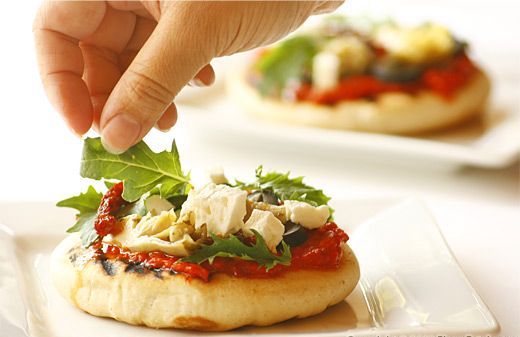
    Mediterranean Pizza:

    Mediterranean Pizza

    This low fat Mediterranean pizza is nutritious and delicious, and is a great way to use up leftover roast chicken. Add a tossed green salad, and you have your dinner ready.

    Ingredients:

    • A 10-ounce pre-baked whole wheat pizza crust
    • ½ cup tomato sauce, with no added salt
    • 1 garlic clove, finely chopped
    • 1 cup shredded chicken
    • ½ cup sliced olives
    • 1 small jar artichoke hearts, drained and chopped
    • 1 small jar roasted red peppers, chopped
    • ½ tsp. dried oregano
    • ½ tsp. dried basil
    • 1 cup low-fat mozzarella cheese

    Preparation:

    Preheat oven to 450 degrees. Spread tomato sauce over the crust. Sprinkle toppings on pizza, finishing with cheese. Bake on a pizza sheet for 10 minutes. Serve hot.

    So the next time you invite your friends over for a “healthy” dinner, remember that it can include pizza, no matter how bewildered they may be. Gather up, all you pizza lovers! Let’s pledge to make healthier pizzas!

  • Your Guide to Surviving Without Cooking

    Your Guide to Surviving Without Cooking

    There are days when you love to cook. You look up fancy recipes online, don an apron, and cook up a storm. Maybe you even invite a friend over. And then there are those days when you absolutely don’t want to. You hate the mess, you hate the fumes, and you really the effort required. What do you do then? Order a pizza? Eat out? Drive by a take-out? Any of those options could work once in a while. But college students and 20-something office-goers with rented apartments and no family living in will know that those lazy days come a tad bit too often. Besides, regular assignments and the pressure of timely submissions mean that there are those days, not all that infrequently, when you simply can’t afford time away from your laptop and in the kitchen. The sheer frequency then implies that Dominos deliveries and KFC takeouts might not only burn a hole in your pocket but also deal a heavy nutritional blow to your body!

    So are there cost-effective and healthy ways to survive those lazy days without cooking? Thankfully, there are. A little thought, a little creativity can take you a long way. Here are some tips and tricks to help you get started.


    • Go Paleo.

    Raw Paleo-style food

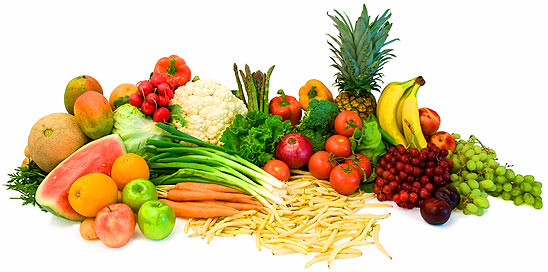
    Growing interest in Paleo diets has revealed just how far modern humans have divorced themselves from the healthy foods nature intended for us to eat. By eating more raw food and following a Paleo-style diet, you will not avoid cooking but also reconnect with some very healthy food choices. Eat foods that can be eaten pretty much in their natural states, without requiring any changes to be made by you – like fresh or dried fruits, nuts, seeds, and long-lasting veggies like carrots, cabbage, and peppers. You could spice up your veggies, too! Try Yogurt, hummus, salsa, and tomato sauce. Do note that if you want to puree or blend nuts, seeds, and fruits, then there is some preparation involved.

    • Eat like a backpacker.

    Granola Bars

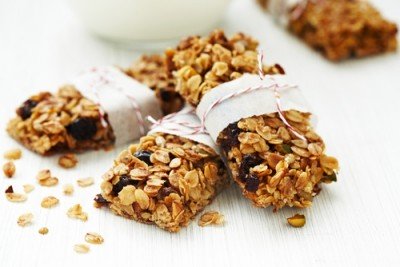
    Stock up on granola bars, whole-bran corn flakes, whole-wheat cookies, bread, peanut butter, and canned beans. However, take care not to over-supply your kitchen – just as a backpacker keeps moving to new destinations and can’t be weighed down by too much food. Always only have sufficient to eat should you get too busy – or too lazy, as the case may be – in the next few days. This will ensure that you do not begin to live your life off energy bars.

    • Be salad-savvy.

    Salad

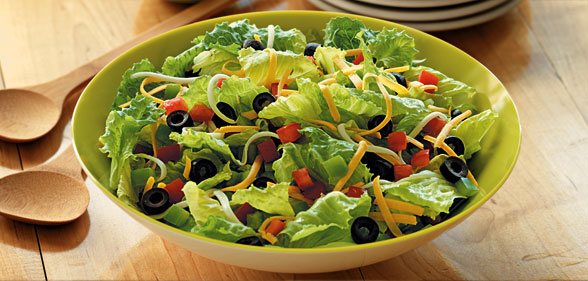
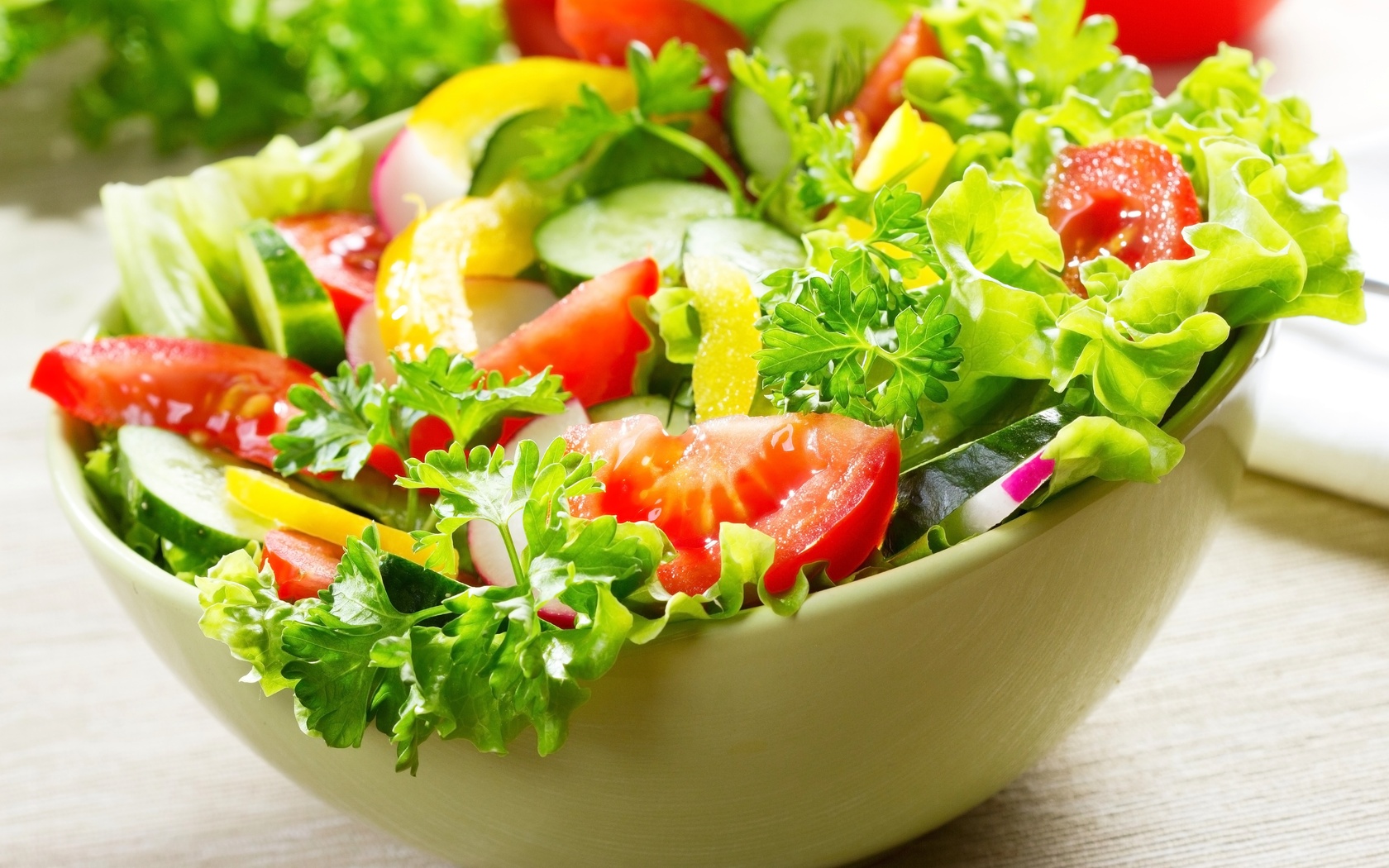
    Salads are not only easily prepared but also pack great health benefits. They add more fibre to your diet, help keep your blood pressure and cholesterol levels in check, enhance insulin sensitivity, and improve your immune system. And you don’t have to stick to the typical garden salad either. Come up with ways to make your salad more interesting! For ideas, you can always look for easy, no-cook salad recipes online

    • Get creative with sandwiches

    Sandwich

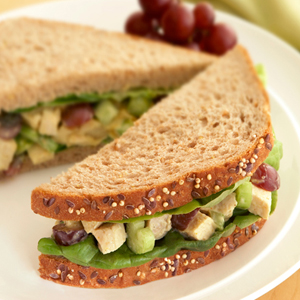
    Sandwiches are easy to make, can taste great, and can be healthy too! Opt for whole-grain brown bread rather than the sliced white stuff that has had all the life processed out of it. Try as many fresh veggies as you can afford to. If you want meat between your bread, go for chunks of real, fresh chicken rather than processed meat like bologna and salami. If you are watching your weight, though, you’d do well to avoid too much cheese or fatty sauces. Instead, go for small amounts of hard cheese for a big flavour boost. For sauces, try mustard, mint, or tomato. Get creative with condiments – pepper and oregano will spice things up nicely. Try eating your sandwiches toasted, cold, open-faced, or heated in the microwave. Don’t be afraid to try sweet fillings such as sliced fruit – you might be pleasantly surprised.

    • Use microwaveable foods and meals.

    Microwaveable Meal

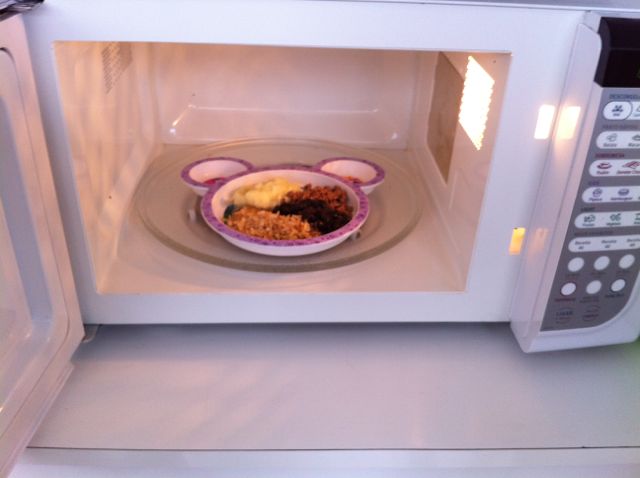
    Every once in a while, you could buy food or pre-made meals that you can put in the microwave to heat up and eat up later. But make it a point to include a good dose of fresh food such as an accompanying salad or some lightly steamed veggies. Be sure to read the labels – many microwaveable meals are high in saturated or trans-fats, sugar, salt, and artificial additives. For good quality microwave meals, try a local delicatessen, specialist bakery, or gourmet foods store that makes microwaveable meals and fresh salads for takeout on a daily basis.

    • Try the smarter on-the-go foods.

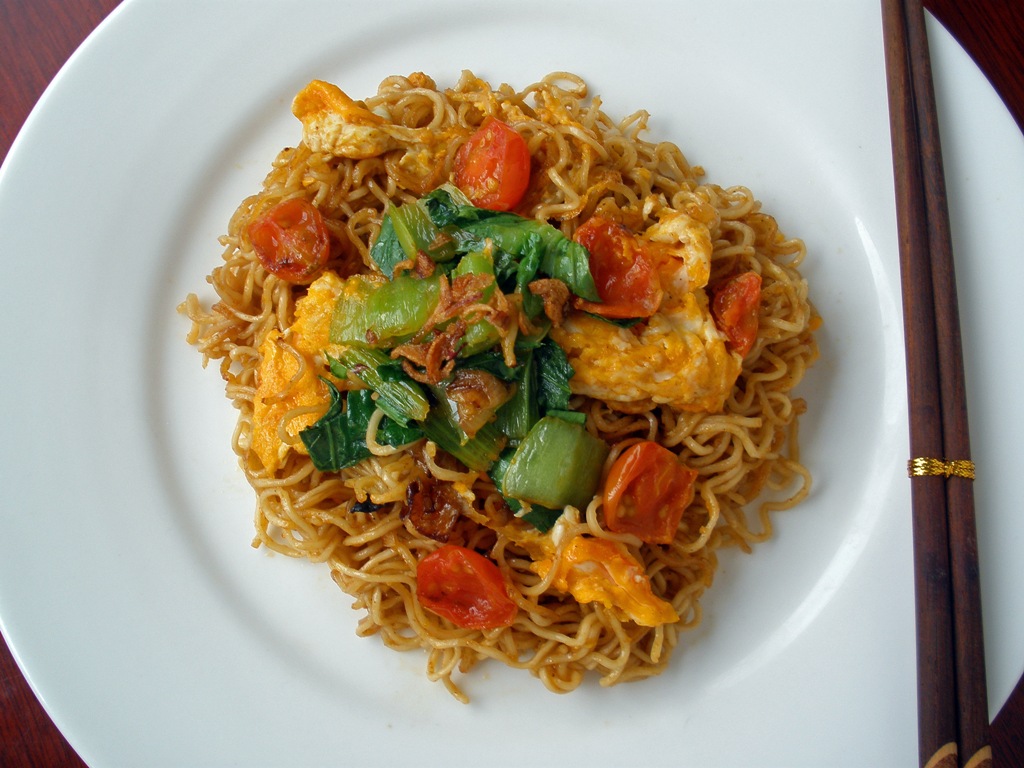
    Asian Stir-fry

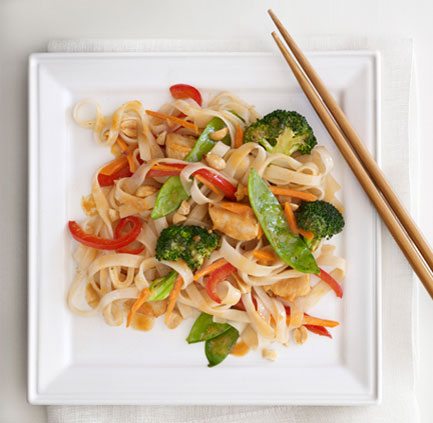
    Don’t live off commercial food. They tend to be very high in trans-fat, salt, sugars and artificial flavorings, and colorings. You don’t need all those unhealthy, nutrition-deficient fillers in your body. However, there are ways to choose your take-out options smartly on those rare occasions that you absolutely have to. Skip the double-cheese pepperoni pizza and juicy hamburger. Instead, opt for cheese-free thin-crust veggie pizzas, Asian stir-fries, falafel plates, and salads.

    If all else fails, make friends with people who are enthusiastic about cooking and feeding others. But remember to be nice and reciprocate in other ways!

  • Be Salad-Savvy

    Be Salad-Savvy

    Salads are a great dinner option. They are not only filling and often easily prepared, but with the right ingredients, they can potentially pack in a whole lot of health benefits. But while urban Indian restaurant-goers are fast developing a taste for Caesar salad and Coleslaw, salads at home still mean a side-dish comprising a few cucumbers, onions, and tomatoes – chopped, diced, or sliced. The result: A boring basic garden salad and a complete lack of interest in the culinary potential of salads. But think again. Great-tasting, interesting salads need not be the exclusive domain of fancy restaurants. All you need do is get creative with the ingredients. A little thought can take you a long way. Here are a few simple recipes to help you get started.

    Apple and Lettuce Salad with Melon Dressing

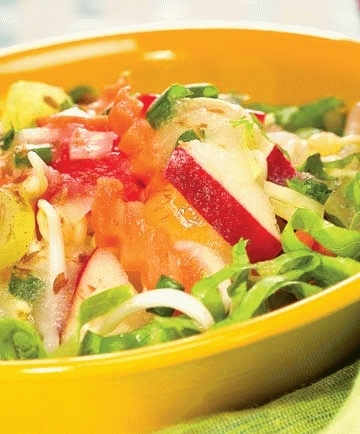
    Apple and Lettuce Salad

    Consuming fresh fruits and vegetables is one of the best ways to replenish our body’s water and electrolyte needs. This recipe calls for a wide assortment of fruits and vegetables tossed together in a refreshing musk melon dressing. Enjoy a plateful of good health and pure taste.

    Ingredients:

    • ½ cup muskmelon purée
    • ½ tsp. roasted cumin seeds, crushed
    • 3 tbsp. chopped coriander
    • 1 cup torn lettuce
    • ½ cup shredded cabbage
    • ¼ cup thickly grated carrot
    • ¼ cup capsicum (red and yellow) cubes
    • ½ cup chopped apples
    • ½ tsp. lemon juice
    • ½ cup bean sprouts
    • 2 tbsp. chopped grapes
    • 1 tbsp. chopped spring onion greens
    • Salt to taste
    • Freshly ground pepper to taste

    Method of preparation:

    • Blend together the muskmelon purée, crushed roasted cumin seeds, and chopped coriander into a dressing. Add salt and pepper. Keep aside.
    • Next, soak the lettuce, cabbage, carrots, and capsicum in ice-cold water for 30 minutes. This will make them crisp. Drain, wrap in a muslin cloth and refrigerate till ready to use.
    • Toss the apples in lemon juice and refrigerate till ready to use.
    • Combine the lettuce, cabbage, carrots, capsicum, apples, bean sprouts, grapes, spring onion greens in a bowl. Add salt (optional) and mix gently.
    • Before serving, add the dressing and toss well. Serve immediately.

    Been Sprout and Capsicum Salad

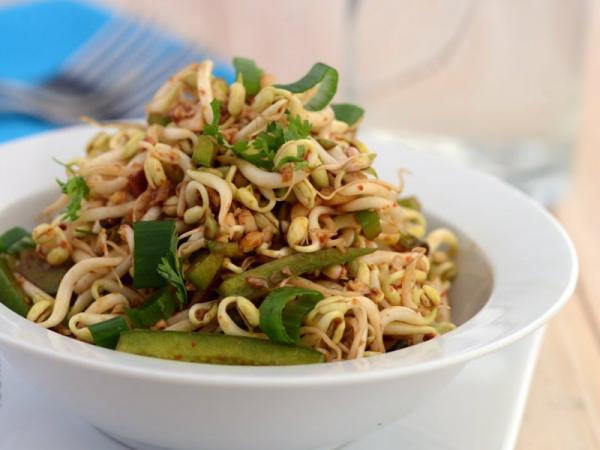
    Bean Sprouts and Capsicum salad

    This recipe combines the goodness of bean sprouts with a spicy, tasty dressing. Bean sprouts are a great source of calcium and vitamin C, while capsicum is a potent source for vitamin C.

    Ingredients:

    • 1 ½ cups bean sprouts
    • ½ cup thinly sliced capsicum
    • 1 ½ tsp. oil
    • 1 tsp. crushed garlic
    • 2 tsp. vinegar
    • 1 tsp. soy sauce
    • ½ tsp. sugar
    • ½ tsp. chilli powder
    • 1 ½ tbsp. roasted and coarsely crushed peanuts
    • Salt to taste

    Method of preparation:

    • For the spicy dressing, heat the oil in a small non-stick pan, add the garlic, and sauté on a medium flame for 15 seconds. Remove from the flame and keep aside to cool slightly. Add the vinegar, soy sauce, sugar, chilli powder, and peanuts; and mix well. Keep aside.
    • Combine the bean sprouts, capsicum, spicy dressing, and salt in a bowl and toss well. Refrigerate for 30 minutes. Serve chilled.

    Egg-cellent Asparagus Salad

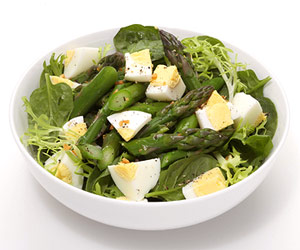
    Egg-cellent Asparagus Salad

    This is a power recipe that packs in the goodness of your daily egg and greens into one simple, great-tasting meal.

    • 8 asparagus spears
    • 2 tsp. olive oil
    • 1 garlic clove
    • 2 cups mixed greens
    • 1 hard boiled egg
    • 1 tbsp. vinegar
    • Salt to taste
    • Pepper to taste

    Methods of preparation:

    • Cut 8 asparagus spears into 2-inch pieces; saute with 2 tsp. olive oil and 1 minced garlic clove.
    • Top 2 cups greens with cooked asparagus, 1 chopped hard-boiled egg, and 1 tbsp. vinegar.
    • Add salt and pepper to taste.

    Grilled Chicken Salad

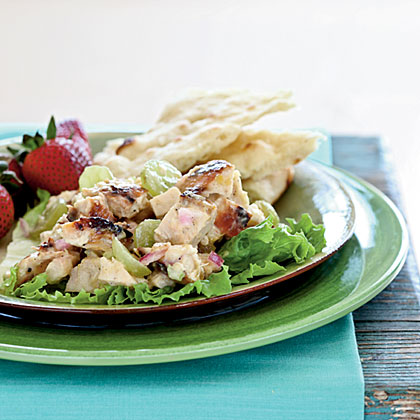
    Grilled Chicken Salad

    Hard-core chicken fan? Love a desi zest? Then this is just the recipe for you! This recipe calls for an Indian tandoori-style yogurt marinade for the chicken. Then it’s grilled, chopped, and stirred together with tangy dressing. The flavours are to die for. What’s more? It won’t sit heavy on your waistline either.

    Ingredients:

    • 1 ½ cups low-fat yogurt
    • 1 tbsp. canola oil
    • 1 tbsp. grated peeled fresh ginger
    • 3 garlic cloves, minced
    • ¾ tsp. salt, divided
    • ½ tsp. red pepper, ground
    • 4 bone-in chicken breast halves, skinned
    • Cooking spray
    • 1 cup seedless green grapes
    • ½ cup chopped red onion
    • ½ cup mango chutney
    • 1 cup finely chopped celery
    • 1 tbsp. canola mayonnaise
    • 3 tbsp. fresh lemon juice

    Methods of preparation:

    • Mix the yogurt, canola oil, ginger, cloves. Stir in ¼ tsp. salt and pepper. Place the mixture in a heavy-duty zip-top plastic bag. Add chicken to bag; seal. Marinate in refrigerator for 2 hours, turning occasionally.
    • Prepare grill to medium-high heat.
    • Remove chicken from bag; discard marinade. Place chicken breast side down on grill rack coated with cooking spray; grill for about 10 minutes. Turn chicken over; grill for 20 minutes. Remove chicken from grill; let stand 10 minutes. Remove meat from bones; discard bones. Coarsely chop chicken and place in a medium bowl. Sprinkle chicken with remaining 1/2 teaspoon salt.
    • Add the remaining ingredients to the chicken; toss gently to combine. Chill for 30 minutes before serving.


    Now that you have the recipes down, go try them out, and create a few of your own. Go take that healthy, tasty walk down salad lane!

  • Maggi Mania

    Maggi Mania

    On Mondays, they serve Matar Paneer in the mess. But as my friend down the hall puts it, it is better described as “water Paneer” – a few peas and an even fewer pieced of cottage cheese swimming in a curry that’s all but water. Needless to spell out, you walk out of the mess feeling less than full. Two hours on, you fall prey to crazy hunger pangs. The solution? Why, a packet of Maggi noodles of course!

    If you have ever lived in a hostel in the last thirty years or so, the story above must be only too familiar. But the massive popularity of Maggi noodles is definitely not confined within the poster-clad walls of college hostels. If you live in India, you probably have slurped on a plateful at some point or another. So much so, that everyone has a “Maggi memory” – and the manufactures have very cleverly tapped into this nostalgia factor associated with Maggi noodles as a major marketing strategy. In fact, in India, “Maggi” is synonymous with instant noodles, despite the existence of other brands. According to a report by Euromonitor, Nestle has 60% of the instant noodle market in India with Maggi – the first instant noodle introduced in the country. Marketed as a “2 Minute Noodles” since 1982, the manufacturers seem to have stumbled upon a highly saleable hit formula back then and never looked back.

    At the same time, despite being arguably one of India’s most popular food brands, Maggi has repeatedly come under the scanner for being unhealthy. What, then, accounts for the unparalleled popularity of Maggi noodles in India? And what is the controversy all about? Let’s explore.

    Maggi noodles


    The popularity:

    Why are Maggi noodles as popular as they are? Perhaps, the most common-sensical answer is the extreme convenience they guarantee. They are very inexpensive – available in packets worth 10 and 5. This implies that almost everyone, from broke college students to budget-conscious moms, can afford to put a few packets of Maggi on their shopping list – and pretty frequently. Besides, Maggi noodles are as easy to cook as can be. If you were a child of the ‘80s, the ‘90s, or the ‘00s (yes – three generations), chances are Maggi was the first thing you were ever actually allowed to cook. Late night hunger pangs at home? Campsite snack-craving? Maggi is your one simple answer.

    Effective marketing is another factor that accounts for the unprecedented popularity of Maggi noodles in India.

    “Mummy Bhookh lagi!”

    “Bas 2 minute!”

    These signature Maggi lines are indeed unforgettable. They highlight how easy it is to cook the noodles, the fact that they are seldom ready in 2 minutes notwithstanding. Here’s another slogan you’ll remember: “Taste Bhi, Health Bhi”. This one’s aimed at putting a mom’s misgivings about exposing her child to a potentially unhealthy food at rest. A food that your child loves – and you will indeed have a hard time finding a child whodoes not love Maggi noodles – and it promises health? That’s the dream!

    Perhaps, another reason why Maggi noodles have a wide appeal is the fact that they take well to the addition of different ingredients – veggies, chicken, cheese, butter, ketchup, etc. In fact, there are entire road-side joints selling only different types of Maggi noodles – Masala Maggi, Cheese Maggi, Butter Maggi, Chicken Maggi, Egg Maggi, Spicy Maggi – you name it, they have it.

    OLYMPUS DIGITAL CAMERA

    The Controversy:

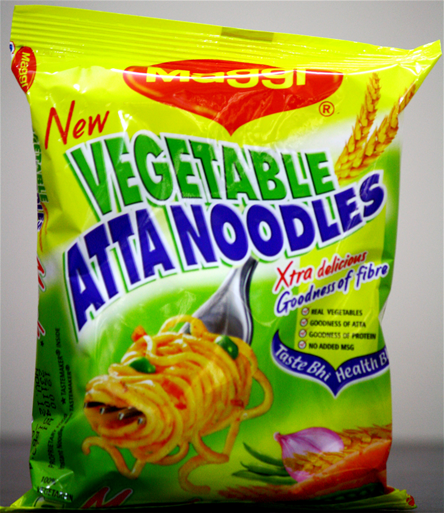
    You have probably received emails and SMSes warning you against the possible wax content of Maggi noodles. Yes, the same ones that probably also told you about Kurkure containing plastic and Coke being an excellent toilet cleaner, etc. While viral mass messages are rarely to be taken at face value, food critics have also condemned Maggi noodles for being low in nutrition and high in salt, MSG, and fat. It was to counter this ‘unhealthy’ tag that the brand marketers quickly came up with the “Taste Bhi Health Bhi” slogan. They also came up with the new Maggi Atta noodles. With a healthy green packaging and new tags –  with the “goodness of three rotis” and “with vegetables” – these noodles were obviously aimed at driving home a more-than-subliminal message about better health.

    Maggi Atta Noodles

    So, on the one hand there are all these allegations about the noodles being fried in wax and animal fat before packaging and apprehensions about unhealthy packaging that causes the plastic to leach into the actual food, and on the other, there is the manufacturer’s claim that it’s all good and safe and healthy. What do we as consumers believe?

    The Middle-way:

    While we may never know the full truth, it probably lies somewhere in between the scare-mongering and the slick marketing. The Atta noodles may be slightly better than the maida ones, but three desiccated peas and five shreds of dehydrated carrots in the Tastemaker hardly count for “added vegetables”. Nutritionally there isn’t much that Maggi noodles can offer, unless you decide to mix in your own ingredients (like fresh vegetables or protein-rich lean meats). Also, now that the ‘No MSG’ claim is prominently made on the packet, know that it is highly plausible that other substitutes are used for it – such as excess salt. There is also the claim that the product has “goodness of protein/calcium/fibre” – know that it perhaps has just enough to let the manufacturers legally make that claim.

    So while you may love Maggi – for reasons of taste, nostalgia, or convenience, don’t let yourself be fooled into thinking that it is anything close to as healthy as the marketing chaps would have you believe. But that does not mean that you have to buy into the charges of toxicity made by the alarmists either. Like so many other things in life, moderation is the key. An occasional Maggi meal really doesn’t need to make you feel guilty.

  • Drink Light, Drink Right

    Drink Light, Drink Right

    When the summer sun is up with a vengeance, there’s nothing like a cool, delicious drink to refresh you. But beware. Every time you reach for your favourite juice/soda/latte/shake, you may be ingesting more calories than you might be prepared to bargain for. So what do you do then? Would you put your weight loss plans on hold and gulp down a sugary drink and a guilty conscious? Or would you simply sigh and pass on that glass of sweet, chilled delight? Thankfully, there’s a way out of the dilemma. A little creativity can take you a long way. Put some thought into your ingredients, play around, and before you know it, you’ll have a healthy summer drink you can sip on with a smile.

    Here’s a list to help you get started:

    • Iced Tea: Give the sweetened iced tea that comes in cans and bottles a miss. Brew your own instead. Steep your favourite herbal tea and chill it. Once chilled to perfection, add mint, lemon, and honey, for an additional jolt of refreshing taste.
    • Flavours and colours: Avoid all artificial/nature-identical flavouring substances and chemical colours. They contain added sugar and the chemicals present may pose a threat to your well-being. Add real fruits, such as oranges, lemons and limes, or even berries to your water for a more honest, healthier taste. If you like a pretty hue in your glass, try using 100% fruit puree.
    • Fizzy drinks: Each can of your favourite soda not only contains high levels of sugar, but can also potentially dehydrate you. Add a hint of mint or ginger to sparkling water to create a healthier substitute.
    • Added sugars: Added sugar means empty calories. Avoid adding sugar to your drinks. Use natural sweeteners such as honey or maple syrup instead.
    • Cream or milk based beverages: These are loaded with fat, and often, lots of sugar. If you feel like something creamy, try making a smoothie or latte using almond milk or rice milk.

    Here are a few simple recipes to help you make better-for-you beverages in a snap:


    Fresh Ginger Beer

    With a flavor similar to ginger ale, this ginger beer is a fizzy, non-alcoholic mixture of sparkling water, lime juice and fresh ginger. Ginger has been used as a home remedy for years to combat stomach aches and morning sickness. Studies also suggest that ginger may help reduce knee pain in people with osteoarthritis.

    Fresh Ginger Beer

     Requirements:

    (Makes 8 servings)

    • 2 cups cold water
    • 1 cup fresh lime juice
    • 4 teaspoons  ground fresh ginger
    • 1 ½ tbsp. honey
    • 3 cups sparkling water
    • Lime slices (optional)

    Preparation:

    Combine water, juice, and ginger in a blender; process until blended. Line a strainer with cheesecloth. Strain mixture over a pitcher; discard solids. Add honey to pitcher; stir until well mixed. Add sparkling water just before serving. Serve over ice. Garnish with lime slices, if desired.

    Citrus Tea Punch

    Tea itself offers significant health benefits because of its antioxidant compounds, but you can double the antioxidant benefits by stirring in some orange juice.

    Citrus Tea Punch

    Requirements:

    (Makes 12 servings)

    • 6 cups water, divided
    • 2 tbsp. honey
    • 3 whole cloves
    • 2 family-sized tea bags
    • A 3-inch cinnamon stick
    • 1 cup orange juice
    • 1 cup fresh lime juice, undiluted
    • Ice
    • Lemon slices (optional)

    Preparation:

    Combine 4 cups of water with honey in a heavy saucepan; bring to a boil. Remove from heat. Add cloves, tea, and cinnamon; steep for 5 minutes. Strain mixture through a sieve into a pitcher; discard the solids. Add the orance juice, lime juice, and the 2 remaining cups of water. Stir well. Chill. Serve over ice, and garnish with lemon slices, if desired.

    Strawberry Aqua Fresca

    Spanish for “fresh water”, Agua fresca is a refreshing, fruit-infused drink that is served throughout Mexico. Drinking a fruity water-based drink is a great way to stay hydrated in the summer while getting some extra vitamins and flavours.

    Strawberry Aqua Fresca

    Requirements:

    (Makes 8 servings)

    • 4 cups water
    • 1 ½ tbsp. honey
    • 6 cups hulled strawberries
    • ¼ cup fresh lime juice (about 2 limes)

    Preparation:

    Place strawberries in a blender and process until smooth. Add water, honey, and juice to the strawberry puree. Stir well.


    Watermelon Cooler

    Watermelon is a top source of lycopene, a compound that has been suggested to reduce the risk of prostate cancer. Enjoy a glassful of health! And what’s more? It tastes amazing!

    Watermelon Cooler

    Requirements:

    (Makes 6 servings)

    • 8 cups chopped seedless watermelon
    • 1 cup fresh lime juice
    • 1/2 cup sugar
    • 1/2 cup water
    • Dash of salt

     Preparation:

    Place half of watermelon in a blender; process until smooth. Strain watermelon through a sieve into a pitcher; discard solids. Repeat procedure with the remaining watermelon. Stir in lime juice, sugar, 1/2 cup water, and dash of salt. Serve over ice.


    Spicy Mango-Orange Slush

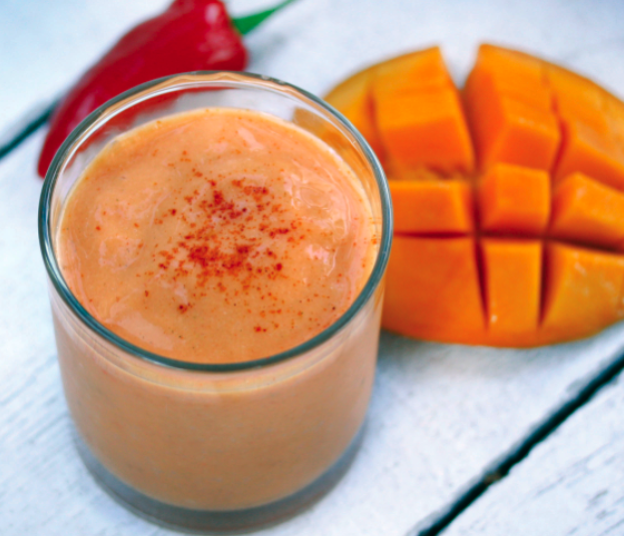
    Kick up the flavor of this fruity frozen drink with a sprinkle of ground red pepper and a splash of lime juice. It’s healthy, too. Orange is an excellent anti-oxidant, while mangoes are a good source of fibre and contain enzymes that help with digestion.

    Spicy Mango-Orange Slush

    Requirements:

    (Makes 2 servings)

    • 2 cups cubed peeled ripe mango, frozen
    • 1 cup fresh orange juice
    • ½ cup sparkling water, chilled
    • 1 tsp. grated lime rind
    • 2 tbsp. fresh lime juice
    • A pinch of ground red pepper

    Preparation:

    Place all the ingredients in a blender; process until smooth. Serve chilled.

    Now that you know the tricks, drink your way to refreshing health this summer!

  • Festa Italiana: How to Eat Healthy at an Italian Restaurant

    Festa Italiana: How to Eat Healthy at an Italian Restaurant

    On days that you don’t feel like cooking, what do you do? For many of you, the likely answer is order a pizza. It’s true. The urban Indian audience has been fast developing a taste for Italian food. And it’s not just the promptly delivered, hassle-free pizzas that we go for either. For many of us today, bruschetta, pasta, and lasagna are standard choices when eating out. But what are the implications of an appetite for cheesy pizza, creamy pasta, and gooey lasagna for your heart and waistline? Obviously, adverse. So does that mean you have to give up on your favourite Italian restaurant in favour of your health? Or would you continue your liaison with Italian food, albeit with a guilty conscious? Thankfully, there’s an effective middle path. The two major variables in Italian food are pasta and sauce, and both have the power to steer you towards obesity and heart disease. That’s the bad news. The good news, though, is that they don’t have to. There are ways to make your experience of dining at an Italian restaurant easier on your conscience and your midsection.

    Good things first, authentic Italian is arguably one of the healthiest cuisines in the world. What accounts for this win? The answer is its star ingredients: tomatoes, olive oil, garlic, oregano, parsley, and basil. Studies have shown that lycopene, which is found in tomatoes, may help prevent breast cancer. One of the best ways to get cancer-fighting lycopene into your system is by consuming cooked tomato products: half a cup of tomato sauce has more than 20 milligrams. Plus, garlic, and traditional Italian herbs and spices like oregano, parsley, and basil are great sources of vitamins A and C. Olive oil is known to help lower cholesterol, fight heart disease, and burn belly fat.

    Notice how melted cheese isn’t on that list of power Italian staples? Italians typically use Parmesan or other hard cheeses instead, grated in small amounts for a big flavour boost. It’s the Americanised versions of Italian dishes that typically tend to be loaded with fat and calories. And it is here that you have to be careful. Here are a few guidelines on how to choose right from amongst your favourites when eating Italian.


    Pasta:

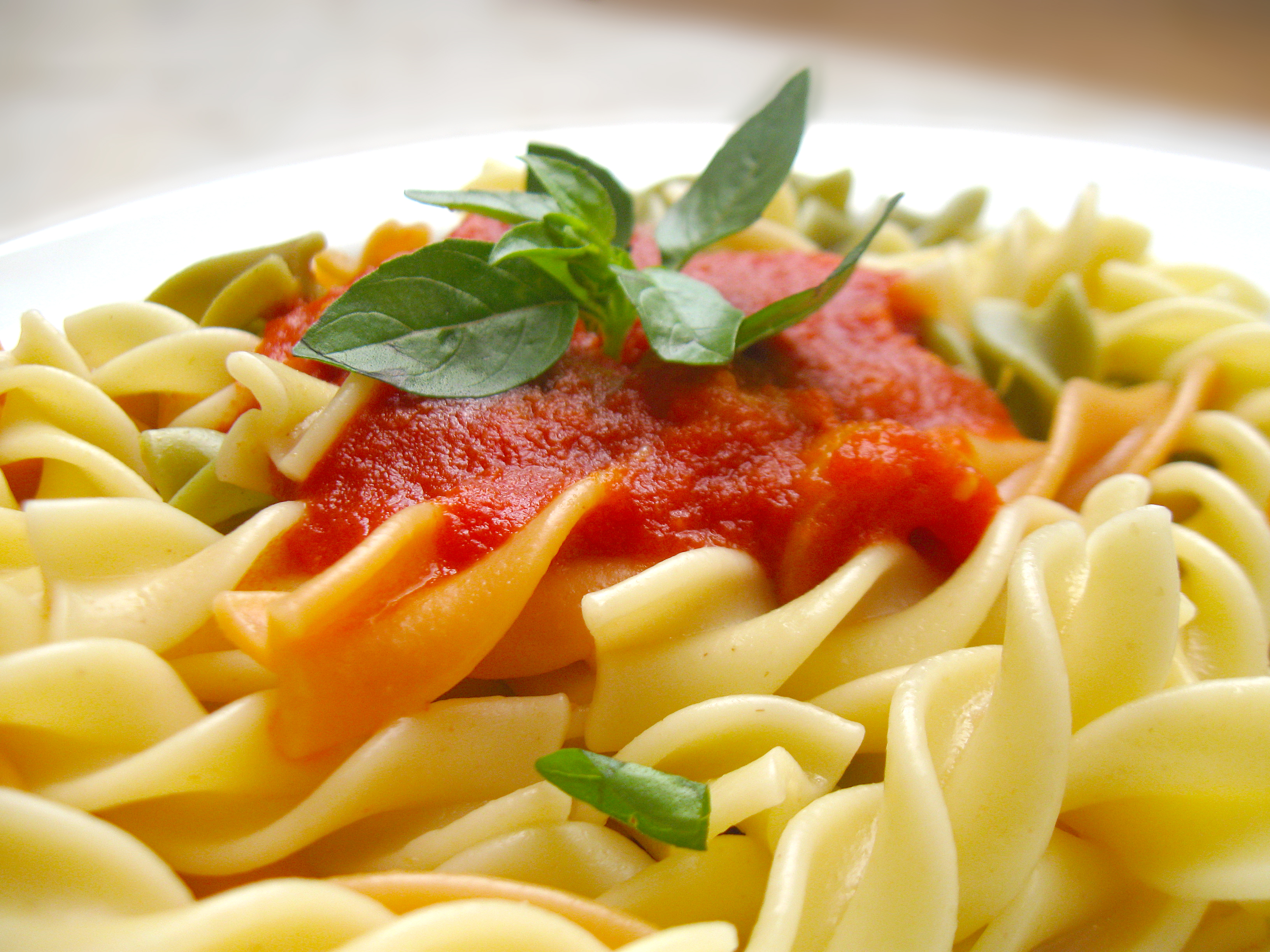
    Pasta with sauce

    Pasta is basically just dough made from durum wheat and water, extruded or stamped into various shapes and typically cooked in boiling water. It provides quick burning carbs and is lower on the calorie meter than traditional Indian staples like steamed rice. However, it’s not the pasta but the sauce that you need to be careful about. Sauces are the big players in Italian cuisine. As such, choosing your sauce carefully is crucial to your nutritional success. Marinara is a smooth basic tomato sauce that is virtually fat-free and delivers at least one serving of fruit in the form of antioxidant-packed tomatoes. Go for Arrabiata if you like your food spicy. It is basically the same as Marinara, but with red pepper flakes that give you an instant burn. Pesto is high on fat content, but most of that is healthy monounsaturated fat from olive oil. Besides, the addition of basil and garlic adds a concentrated punch of cancer-fighting compounds. Butter and Parmesan offers just fat from the sauce and quick-burning carbs from the pasta. Alfredo is the same as Butter and Parmesan, but with the addition of heavy cream. If you are looking for something heart-healthy and light, this is not the sauce for you.


    Pizza:

    Pizza

    Pizzas are family farourites. But a careless order can turn your pizza into a fat-loaded nutritional disaster. Opt for whole-wheat thin crusts instead of cheese-filled or deep dish ones. Veggie toppings are a good call. Think tomatoes, artichokes, mushrooms, spinach, broccoli, onions, garlic, and peppers. Skip the pepperoni, meatballs, and sausages – they add more calories than you might be prepared to bargain for. If you want meat on your pizza, go for chicken chunks. Avoid extra cheese. You could even ask for lesser cheese or no cheese at all and simply sprinkle a spoonful of Parmesan on top for flavour.


    Lasagna:

    Lasagna

    While the traditional recipe can be effectively altered at home to cut the calorie content, the restaurant versions are so loaded with fat that it is all but impossible to order a lasagna without dealing a heavy nutritional blow to your body. If you frequent Italian restaurants, it is probably a good idea to give this comfort food a miss.


    Bruschetta:

    Bruschetta

    Love bruschettas? This Italian version of chips and salsa has much more going for it than the bottomless baskets of fried tortillas. A full order will run about 600 calories — perfect for a table of four. Opt for the mussels. Low in fat and packed with protein, they make a good start to your meal.


    Penne alla Vodka:

    Penne alla vodka

    Here’s a tricky one. The alcohol gets cooked off, but before it goes it helps extract flavours that would otherwise remain hidden in the tomatoes. However, the caliber of the sauce depends entirely on what’s used in the house recipe. Ask your server if your dish is closer in color to the red of tomato soup or the washed-out pink of white zinfandel wine. If it’s the latter, look elsewhere.


    Chicken Marsala:

    Chicken Marsala

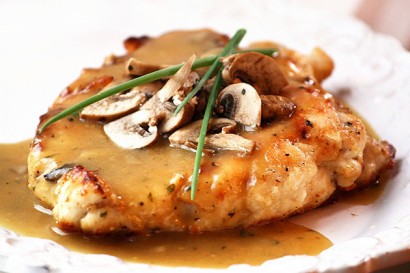
    Made with chicken cutlets, mushrooms, and Marsala wine, this preparation has all the potential for being full of health if the original recipe is followed. However, more often than not, in restaurants chefs get carried away with the prosciutto and oil and this simple staple may pack in a whopping 900 calories or more.

    Cannoli

    Cannoli

    This authentic Sicilian dessert consists of pastry dough stuffed with sweetened ricotta, a cheese that shares much in common nutritionally with cottage cheese. As long as the portion size is reasonable, cannoli is any day preferable over a 700-calorie slice of tiramisu. To keep it around 200 calories, look for a piece about 4 inches long. If served two to a plate, share them.

    Gelato:

    Gelato

    The Italian ice cream is made with milk instead of heavy cream. Although that doesn’t make it a zero-impact food, but it is undoubtedly a massive step above Haagen-Dazs.

    Now that you have the facts, tips, and tricks down, head out to your favourite Italian restaurant with confidence and enjoy a guilt-free Italian feast!

  • Let’s Taste Assam

    Let’s Taste Assam

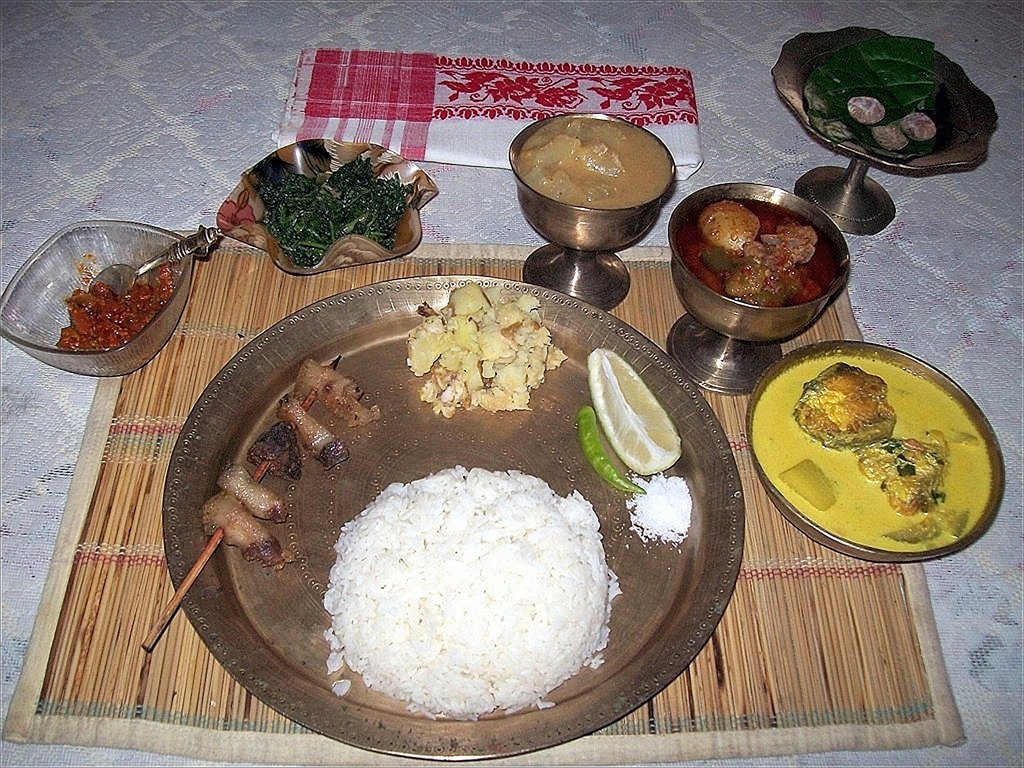
    There is one thing that strikes me every single time I come home to Assam: Assamese food, though little-known to people outside the valley, is more unique and distinct than given credit for. Assamese cuisine is a confluence of cooking habits of the hill folk that privilege fermentation and drying as forms of food preservation,and those from the plains that include the use of fresh vegetables and fish, found abundantly in its many rivers and ponds – both of which are centered on the main ingredient: rice. It is characterized by very minimal use of oil, little cooking over fire, and strong flavours due mainly to the use of endemic exotic fruits and vegetables that are fresh, dried, or fermented. Fish are popular, as are birds like chicken, duck, and squab. Preparations are rarely elaborate – the practice of Bhuna (the gentle frying of spices before the addition of the main ingredient) so common in North Indian cooking, is all but absent in the Assamese kitchen. There is a popular tendency to club Assamese cuisine together with Bengali cuisine, due to the prominence of rice and fish in both. However, if you consider the methods of preparation, as well as the other ingredients used, the differences are not easily missed.

    Assamese Thali

    Ingredients:

    • Rice

    As a staple, rice is eaten either steam boiled (ukhua) or sundried (aaroi). As a snack, it is roasted and ground (xandoh), boiled in its husk and flattened (chira), or puffed (akhoi). Rice is an indispensable part of all Assamese meals. A traditional breakfast consists of chira mixed with yogurt and jaggery. For other major meals, rice could be boiled, steamed or wrapped in leaves and roasted. A special class of rice preparations, called pithas, is generally made only on special occasions like Bihu. Usually made with soaked and ground glutinous rice, they could be fried in oil with a sesame filling (xutuli pitha), roasted in tender green bamboo over a slow fire (sunga pitha), or baked and rolled over a hot plate with a filling (kholasapori pitha).

    • Fish

    Fish, big and small, harvested from the many rivers, ponds, and lakes in the region, form an integral part of the Assamese diet. The most popular dish is, undoubtably, the tenga (fish sour). Another favorite is small fish roasted wrapped in banana leaves – patotdiaHukuti is a special fish dish prepared from dried small fish (puthi maas) pounded with arum stem and dried and stored in bamboo tubes, and roasted with lavish amounts of green chilli, tomato, ginger, and garlic; the ingredients are then pounded in a mortar to make a coarse paste and served with rice. Fish cooked with fermented bamboo shoot is also popular, as is fish is fried in mustard oil, or curried with bottle gourd or spinach.

    • Meat

    The Assamese enjoy a wide variety of meat – duck, chicken, squab, mutton, venison, turtle; although in recent times, the consumption of venison and turtle meat has been declared illegal. Assamese meat preparations are characterised by the sparing use of oil, and higher quantities of ginger, curry leaves, and lemon juice. Boiling is the basic method of cooking.

    • Greens and vegetables

    Green leafy vegetables, called xaak, are an important part of the cuisine. There is indeed a bewildering variety – both domesticated and wild – that is eaten by the people of the region. In fact, according to custom, one has to have a hundred different kinds of xaak during the Rongali Bihu celebrations.

    • Spices

    Among spices, ginger, garlic, onion, cumin seed, black cumin, black pepper, chilli, turmeric, coriander seed, cinnamon, cardamom, clove, fenugreek seed, white mustard seed, aniseed, and Malabar leaf find wide usage.


    Traditional Preparations:

    • Khar

    Khar

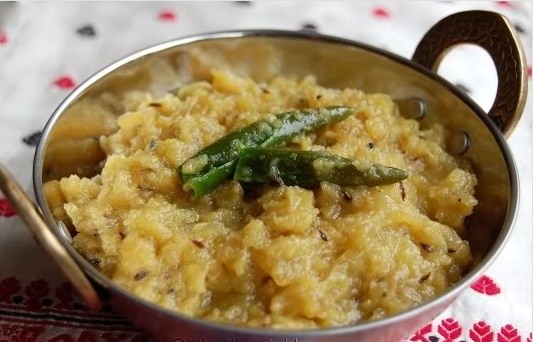
    When you think of a typical Assamese meal, you invariable think of khar. Khar is a class of preparations named after the key ingredient, which is made by filtering water through the ashes of a banana tree. Popular khar dishes are made of raw papaya or pulses as the other main ingredient.

    • Tenga

    Tenga

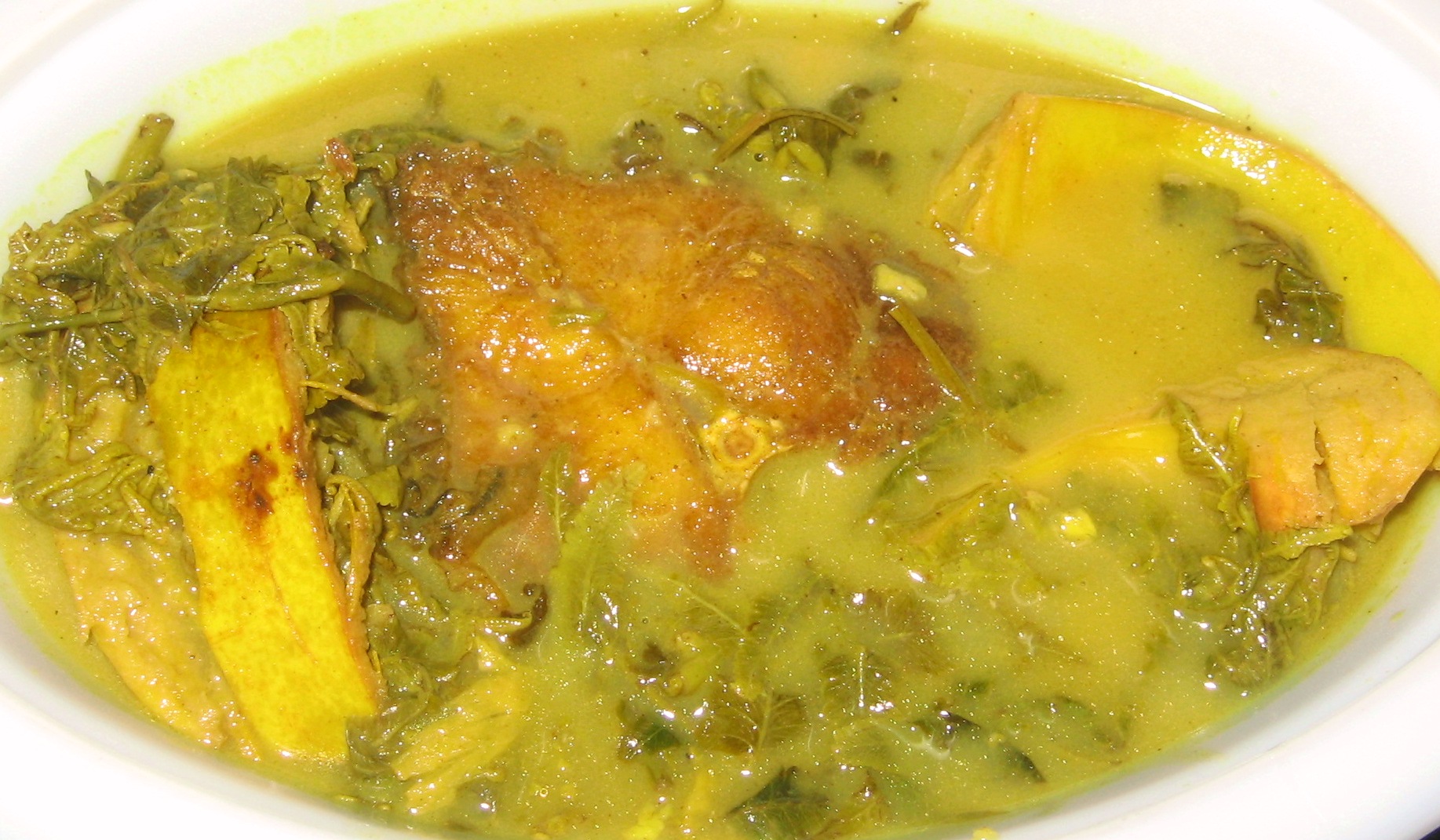
    The tenga is a light and sour fish preparation. The souring ingredient could be tomato, mangosteen, or lemon. Another tenga dish is prepared with matimah (urad bean) and outenga (elephant apple). However, mixing of tenga and khar is not recommended, the former being acidic and the latter alkaline.

    • Pura

    Pura

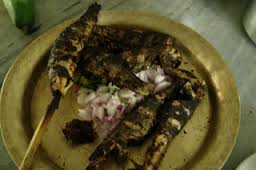
    This is the Assamese version of smoked or barbecued dishes. Different types of meat and fish are often served in this form.

    • Pitika

    Aloo Pitika

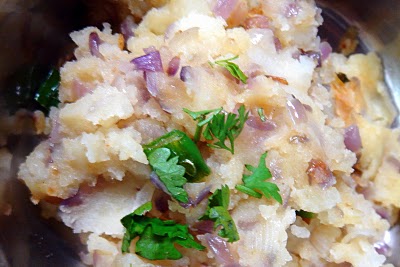
    Side dishes called pitika (mashes) is a signature characteristic of Assamese cuisine. Perhaps, the most popular is aloo pitika (mashed potatoes), garnished with raw onions, mustard oil, green chilli, and sometimes, boiled eggs. Khorisa tenga is mashed fermented bamboo shoot, pickled in mustard oil and spices. Fermented mashed mustard seed is eaten in the form of kharoli (when a khar is added) or kahudi (when an acidic agent, such as lemon juice or dried mangosteen, is added). Pitikas are also made from roasted or steamed vegetables, primarily tomato and eggplant. Small fishes are roasted, separately wrapped in banana leaves, and mashed into pitika along with mustard oil, salt, chilli, etc – a preparation traditionally called patotdia.

    Patotdia

    We talk of “Indian cuisine” as if it were a homogenous category. Of course some ingredients and methods of preparation find favour in recipes across regions, but the distinctive elements stand out far too prominently for a one-size-fits-all definition. For instance, four years of eating North Indian food in Delhi and I still miss the flavours back home! It’s true: you are what you eat.

  • Baking for the Vegan

    Baking for the Vegan

    The day you went vegan, you probably made the most responsible choice you’ll ever make. Not only did you refuse to partake in the unethical treatment of animals, but you also took a step towards a healthier heart and away from obesity, diabetes, and various types of cancers. And the bonus? You get to smirk every time your meat-eating friends express awe at your choice. Because there is one secret all vegans know: veganism isn’t as difficult as it is made out to be. Today, a range of mock-meat and faux-poultry products are available in the market, implicating that compromise on taste is rarely an issue.

    But what about those of you who love to bake? Does going vegan mean foregoing your passion? Or is your love for baking your apology for not going vegan despite wanting to? After all, eggs and dairy products are a baker’s indispensable ingredients, eh? Think again. Vegan baking is not only possible, but is also easy and effective. All you need to do is substitute a few key ingredients. Here’s how you can get started.


    Eggs

    Why give up eggs, you ask? The poultry industry is downright abusive. And unless your eggs come from your own chicken bred in your own strictly-for-private-use, non-abusive farm, you are contributing to the abuse. You may want to know these quick facts:

    • Hens are kept cooped up in tiny, restrictive cells at high temperatures meant to alter their egg-producing cycles such that they produce eggs with unnatural frequency. Most do not get to so much as move a wing during their entire lifetime. In some cases, their beaks are chopped off, often without the use of anesthetics, so that they do not peck at their peer in the next cell.
    • Millions of day-old male chicks are killed (usually in a high-speed grinder) every year because they are useless to the egg industry.

    How to go about eggless-baking? It’s simpler than you anticipate. First, you need to determine why you need eggs in your recipe: Is it for leavening (to make the end product fluffy and light, like cakes)? Or is it for binding (to make the end product dense and thick, like cookies)? Then, replace each egg in your recipe with whichever of the following best suits you.

    For leavening:

    Vegan cake

    • 2 tsp. baking soda mixed with 2 tbsp. warm water and ½ tsp. oil
    • 1 tsp. baking powder mixed with 1 tsp. vinegar
    • 1 tsp. baker’s yeast dissolved in ¼  cup warm water
    • 1 tbsp. ground flaxseeds mixed with 3 tbsp. water

    For binding:

    Vegan cookies

    • Ener G Egg Replacer
    • 2 tbsp. corstarch mixed with 2 tbsp. water
    • 2 tbsp. potato starch mixed with 2 tbsp. water
    • 2 tbsp. instant mashed potatoes

    For custards and quiches, replace each egg with ¼ cup pureed soft tofu.

    If you need to replace just the egg white, try using 1 tbsp. plain agar powder dissolved in 1 Tbsp. water, whipped, chilled, and whipped again, for each egg white.

    In a rush? A can of diet soda can be used to replace 2 eggs in many cake recipes. It won’t add any calories either!

    Dairy Products

    The dairy industry is no more forgiving than the poultry industry. Here’s why:

    • Cows produce milk for the same reason as humans and other mammals do — to nourish their young. But mother cows in the dairy industry have their babies taken away from them shortly after birth, so as to conserve the milk.
    • A cow’s natural lifespan is about 15 years, but cows used by the dairy industry live for a mere four to five years, as a result of abusive confinement and unnatural stimulation to produce milk in greater quantities. Most are slaughtered once they are no longer capable of producing milk in the huge quantities expected.

    If it is buttermilk you need to replace in your recipe, combine 1 cup unsweetened soy milk and 2 tbsp. lemon juice or vinegar in a bowl, whisk until well blended and creamy, and use in place of 1 cup of buttermilk.

    To replace cow’s milk in your recipe, use equal amounts of any of the following:

    • Soy milk (better for rich desserts)
    • Coconut milk (better for rich desserts)
    • Almond milk
    • Rice milk

    Be sure to use the unsweetened varieties for baking. Otherwise, your finished product may end up slightly sweeter than anticipated.

    To replace butter in your recipe, simply use same amounts of vegan margarine. For baking, use full-fat vegan margarine rather than the lighter varieties. You could try any of the following:

    • Coconut oil
    • Earth Balance Buttery Spread
    • Earth Balance Vegan Buttery Sticks
    • Smart Balance Light Original Buttery Spread with Flax

    Miss the condensed milk? Here’s how you make a smart replacer:

    You will need:

    • 2 1/2 cups soy milk
    • 6 Tbsp. vegan margarine

    Here’s what you do:

    • Boil the soy milk in a pan.
    • In a separate pan, melt the vegan margarine; add sugar.
    • When the sugar begins to melt, add the hot soy milk and a dash of salt to the margarine.
    • Boil gently and stir for approximately 5 minutes.

     (Makes 14 oz.)

    Vegan cheesecake

    I understand that vegan baking make take a wee bit more effort than the egg and dairy based baking you may be used to, but the very fact that you are doing your bit to give back to Mother Nature should keep you going. Kudos!