Category: Spirituality

  • Go Nuts about Nuts! (Part 1)

    Go Nuts about Nuts! (Part 1)

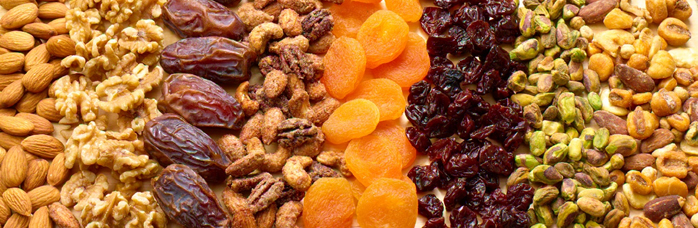
    With high nutritive value and a deliciously sweet taste, dried fruit is fruit from which the majority of the original water content has been removed either naturally, through sun drying, or through the use of specialized dryers or dehydrators. Nuts are edible fruits as well, anatomically different from the rest because of their soft internal kernels enclosed within a hard shell. Both dried fruits and nuts possess high shelf life, and have been in use throughout centuries in every part of the world. Today, they form an integral part of our culture and cuisine, and have an irreplaceable importance in our daily lives.


    1. Khajoor
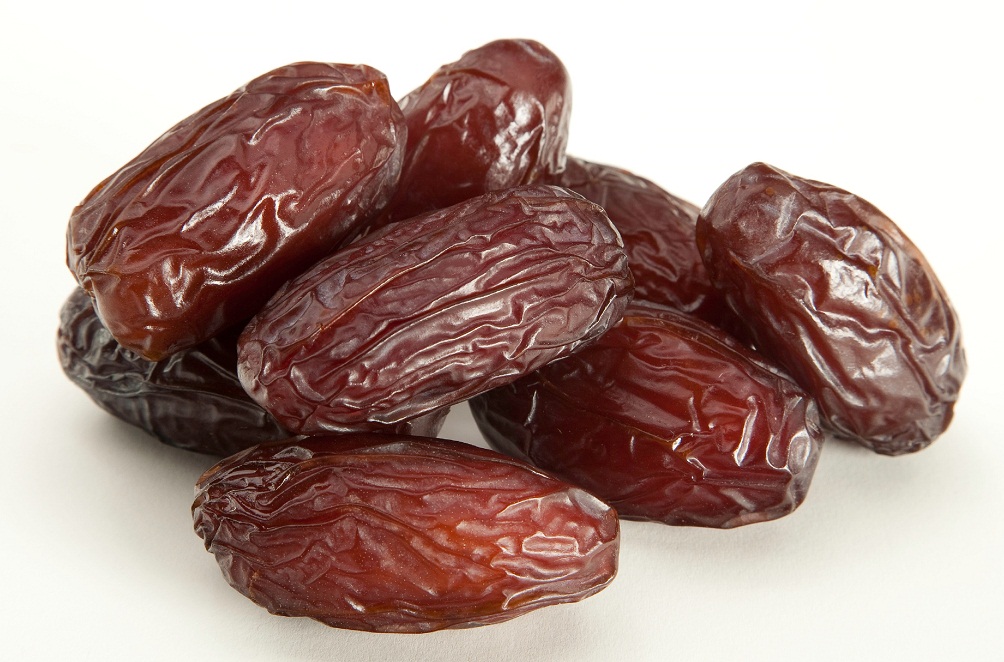
    Khajoor, or the rather generic term, dates are the fruits of palm trees. Named Phoenix dactylifera in the binomial classification system of living organisms, both these names are derived from the Greek word for “finger”, dáktulos, because of the fruit’s elongated shape. What is interesting about the date palm, which produces this particular fruit, is that the male and female plants are separate and independent of each other, and only the female is capable of bearing fruit. The male plants only produce pollen, which is vital for the fertilization of the female and the subsequent production of dates. In most cities in India, dried dates are available easily at every fruit seller’s and vendor’s, and you can find those yellowish, deep red fruits packaged in small cylindrical plastic casings. Dates are extremely high in their carbohydrate content, and a hundred grams of dates will provide you with over three hundred calories. Dates contain minimal protein content, and an abundance of simple sugars which get easily absorbed in the bloodstream, and hence should be mostly avoided by obese and overweight people.


    2. Dried figs
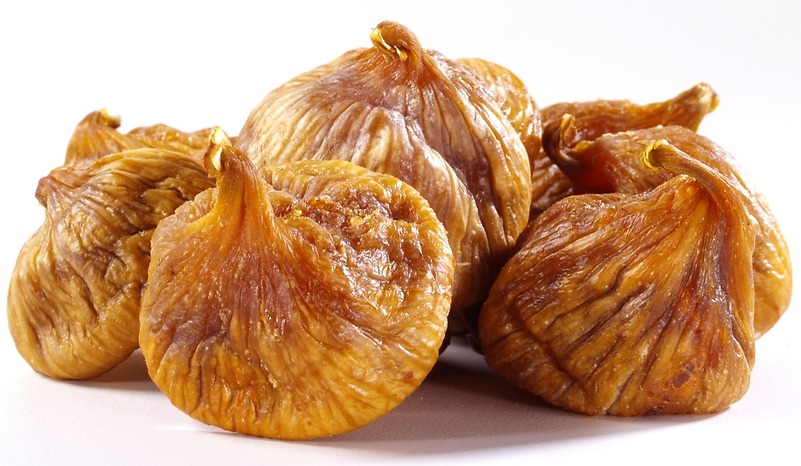
    Figs (Ficus carica) are native to the countries of the Middle East and western Asia, and have been used for both ornamental and consumption purposes over the course of many centuries. One of the first edible plants cultivated by humankind, figs are mentioned in many historical accounts and incidents, one of the most famous being the suicide of the Egyptian queen Cleopatra, who apparently got herself bit to death by an asp smuggled in a basket of figs instead of surrendering to the erstwhile Roman Empire. The small, green-skinned fruit contains many smaller drupelets, or one-seeded fleshy fruit components, and can be eaten fresh, after drying, and in numerous other preparations ranging from jam to ice cream. Known by the vernacular term anjeer in most of the Indian subcontinent, figs are extremely high in their carbohydrate content as well. Dried figs contain rich amounts of sugar, and hence have high calorific content, making it an unhealthy dietary component for obese, overweight people with cardiac risks.


    3. Almonds
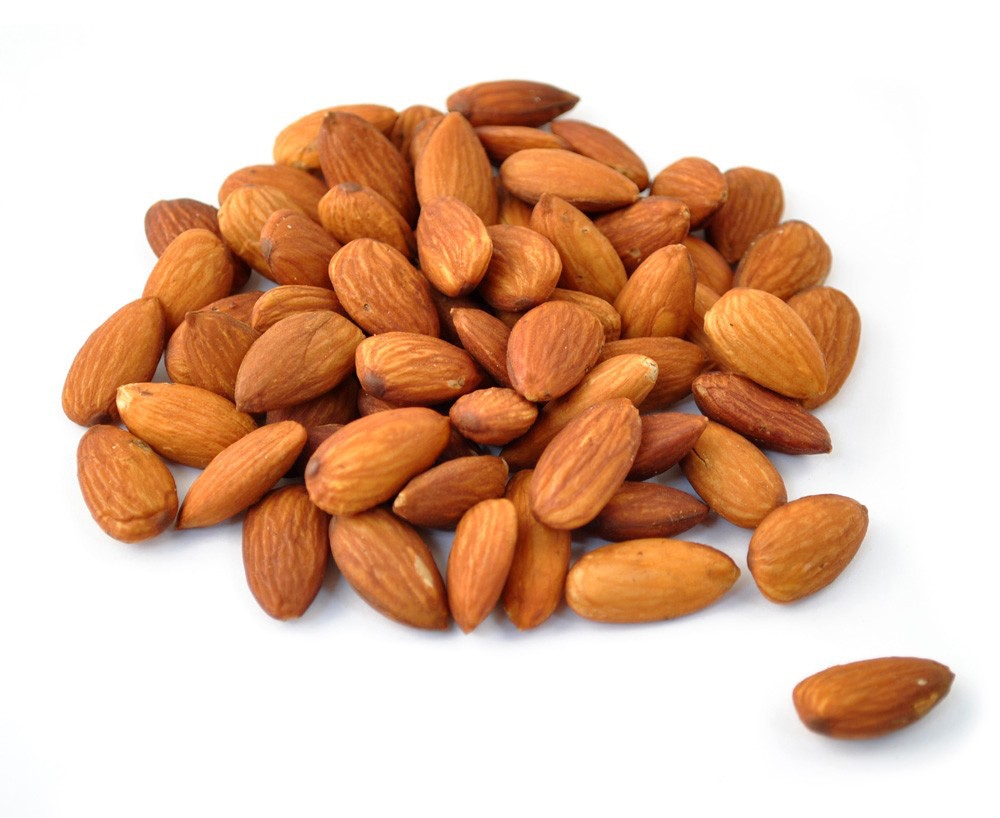
    Almonds, popularly known by their Hindi name badam in the northern states of India, are the seeds of a tree (Prunus dulcis) originally found in the Middle East and South Asia. Closely related to the peach family, the almond fruit also look rather like small green peaches, and are available in both sweet and bitter varieties. Etymologically speaking, the word is derived from countless variations and modifications of the Latin amandula, the Greek word amygdala, and the Old French almande or allemande over the ages. Apart from being eaten in its raw, roasted, and blanched forms, almonds are also used in your daily breakfast muesli as well as while making many delicacies such as cakes, nougat, marzipan, and macaroons in Europe and America, and badam halwa, barfi, biscuits, and flavoured milk in India. Extremely nourishing in nature, almonds are valued as a good muscle and body building substance, in addition to boosting the brain’s grey matter. Used for making oil, almonds also have high calorific value, with every hundred grams of almonds giving over six hundred and fifty calories, and sixty grams of almond fat giving nearly twelve teaspoons of oil.


    4. Peanuts
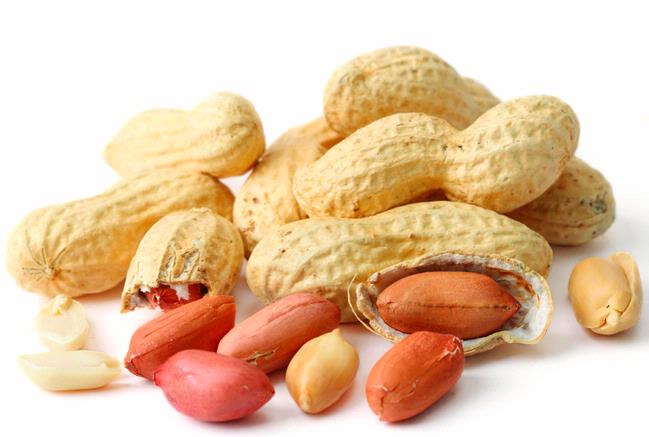
    Peanuts, or groundnuts (Arachis hypogaea) as they are mostly called in India, belong to the leguminous beans family, and was first cultivated in the red soils of Paraguay. The species name as according to taxonomist Carl Linnaeus hypogaea has Latin roots and literally means “under the earth”. Apart from being eaten in their raw, salted, roasted, and even boiled forms, peanuts are used to make countless basic cooking ingredients such as flour and oil, as well as many complex delicacies. They also have many applications outside the realm of the kitchen, such as their usage in the manufacture of solvents, industrial non-edible oil, textile materials, and both allopathic as well as herbal medicines. American botanist George Washington Carver is credited with hundreds of peanut recipes and related products, peanut butter being one of his most famous patents of all time. In India, groundnuts alone make a wonderful evening snack in winters, and you can find them being sold at very cheap prices at any roadside vendor. Groundnut oil is very healthy and is used in many households as a cooking medium. They are also a major component of chikki, a popular north Indian snack made by boiling and solidifying jaggery, sugar, peanuts, and til (sesame seeds) in long sheets. Though groundnut resembles other pulses in general nutritive value, they are very rich in fat, with a hundred grams of groundnut will yield almost forty grams of oil worth more than five hundred calories.


    5. Cashews
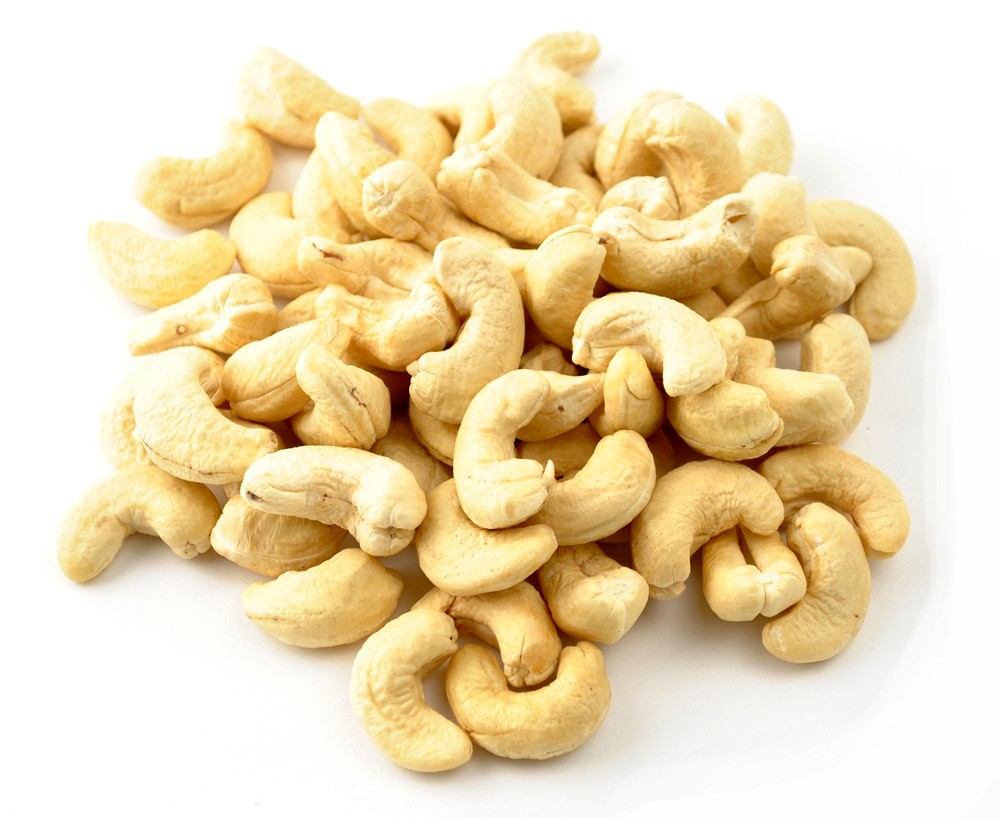
    Cashewnuts are derived from the cashew tree (Anacardium occidentale) which also bears the cashew apple. White, sweet, kidney-shaped, and extremely versatile as far as their culinary uses are concerned, cashews can be salted, roasted, creamed into gravies, made into liquor and oil, and are also used in the preparation of many sweet dishes. The word cashew has been derived from the Portuguese word caju which has been in turn derived from acajú of the indigenous Tupi language, and literally translates to the “nut that produces itself”. Cashews are used for making many Indian curries, such as korma and shahi dishes, and sweetmeats such as kaju katli. Because of their high starch content, cashews serve as good emulsifying agents and are used for thickening soups, syrups, curries, and the works. Boiling them in oil or salting them makes them harder to digest so they are best eaten in their natural, raw state. They go best with acidic fruit and non-starchy vegetables rather than sweet fruit and heavy starch. They are good body builders and easily digested when raw, and hence, help in cases of emaciation and in building good teeth. Like all nuts, cashews contain a great deal of unsaturated fatty acids, mostly in the form of oleic acid. On consuming a hundred grams of cashew nuts, you gain nearly fifty grams of fat, and a hundred grams of cashew oil, which amounts to around ten teaspoons, yields 600 calories.
  • Top 10 Temples in India

    Top 10 Temples in India

    Top Indian Temples
    Top Indian Temples

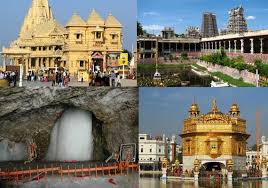
    Temples are the sacred places where gods receive human offerings.Many temples have great architecture that resembles a palace for god.Generally, temples are dedicated to one primary god, but few temples are dedicated to more than one god.Temple walls are decorated with  stone carvings that depicts the story or history regarding the god being worshipped.People entering the temple must remove their shoes to pay respect to the god within the temple.The innermost area contains the idol of god and the priests offer prayers to god.India is a land of temples and the list of top ten temples are  mentioned below.

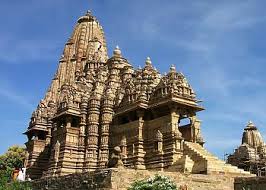
    1) Khajuraho Temple in Madhya Pradesh

    Khajuraho Temple in Madhya Pradesh
    Khajuraho Temple in Madhya Pradesh:

    The Khajuraho group of monuments are one the UNESCO world heritage sites in India.Because of the famous sculptures and large number of Hindu and Jain temples, tourists from various parts of the country visit this place.These temples were built by Chandela kings during the period of 950 to 1050 A.D.The Hindu temples in Khajuraho are dedicated to Lord Brahma, Lord Vishnu, Lord Shiva and also different goddesses.These temples are mainly famous for their wonderful carvings.The carvings on the external walls are bold artistic type, but the carvings inside the temples are decent and represent simple facts of life.Most of the carvings on the walls show the everyday life of a common man at that time when they were made.

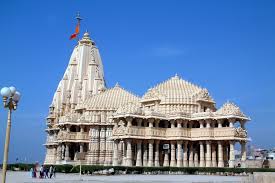
    2) Somnath Temple in Gujarat

    Somnath Temple in Gujarat
    Somnath Temple in Gujarat

    The Somnath temple is dedicated to Lord Shiva with a moon on his head.This temple is situated in Saurashtra.There is a saying that the Moon God Somraj has built this temple himself by using gold.This is a Hindu temple, but has Jain influences in the architecture.This temple has one of the 12 jyothirlingas and faces the east direction.This temple has the biggest dome that is ever made in this century.The temple has a large central hall with entrances on three sides.The sculptures and carvings speak about the artistic taste of the craftsmen of that century.It is believed that till now 200 priests have served this temple.The first temple of Somnath  existed before the Christian era, the second was built by Maitraka kings, the third Somnath temple was built by Pratihara king.This temple was destroyed six times and re-constructed.The present temple was built and taken care by Shree Somnath trust.

    3) Kashi Vishwanath Temple, Varanasi

    Kashi Vishwanath Temple, Varanasi
    Kashi Vishwanath Temple, Varanasi

    It is one of the most famous Hindu temples dedicated to Lord Shiva and is located in Varanasi, Uttar Pradesh.There is a belief that every Hindu, at least once in his lifetime, must visit the holy place.Hindus believe that mixing ashes of the deceased  in the Ganges will make the soul rest in peace.This temple is situated on the western bank of the Ganges and is one among the 12 jyothirlingas. During religious occasions like Shivratri, no person is allowed to enter the temple till the priest offers prayers to god.

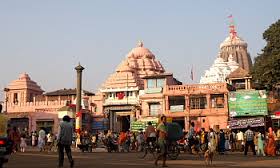
    4) Lord Jagannath Temple, Puri

    Lord Jagannath Temple, Puri
    Lord Jagannath Temple, Puri

    Puri Jagannath temple is one of the biggest temples in Orissa.This temple is established in the 12th century and is dedicated to Lord Jagannath.The temple foundation was laid by Raja Ananta Varman Chodaganga Dev.From Bhubaneswar, the temple is located at a distance of 60 kilometers.The king Indradyunna saw Lord Jagannath in his dreams and constructed this temple to fulfill the Lord’s wishes.The pillars of the temple are decorated with pictures that depict the life of Lord Krishna.Ratha Yatra that is organized once a year is one of the major attractions of the temple.

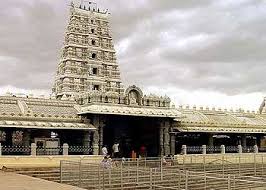
    5) Venkateshwara Tirupati Balaji, Andhra Pradesh

    Venkateshwara Tirupati Balaji, Andhra Pradesh
    Venkateshwara Tirupati Balaji, Andhra Pradesh

    Tirupati is one of the most visited temples in India and second most visited temple in the world.This temple is situated on the seventh hill in Chittoor district and is dedicated to Lord Venkateswara.It is one of the richest temple in the world.Many facilities are available to visit this temple either by plane, train or by bus from almost all parts of the the country.It is one of the most visited pilgrimage by Hindus.

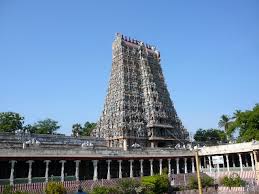
    6) Meenakshi Temple, Madurai

    Meenakshi Temple, Madurai
    Meenakshi Temple, Madurai

    Meenakshi temple is one of the holy Hindu temples and is located in Madurai, Tamil Nadu.This temple is dedicated to Lord Shiva and Goddess Parvati.The temple has 14 magnificent Gopurams, including two golden Gopurams.The temple is one among the 51 shakti peethams.The golden lotus tank in the center is surrounded by corridors and the walls of them are covered with paintings that depicts the miracles of Lord Shiva and goddess Parvati.

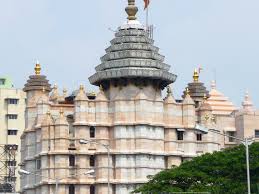
    7) Siddhivinayak Temple, Maharashtra

    Siddhivinayak Temple, Maharashtra
    Siddhivinayak Temple, Maharashtra

    Lord Ganesh is worshipped in this temple.It is built in 18th century and is located in Mumbai, Maharashtra.The present temple was re-constructed five years ago.The idol of Ganapathi is also known as Chaturbhuj as the idol has four arms.The idol of Lord has lotus in the upper right hand and a small axe in the upper left hand.The lower right hand has a jampala and the lower left hand has modaks.On some special Tuesdays, the queue for Darshan will be about 2 kilometers long.

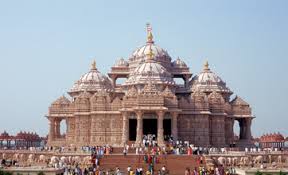
    8) Akshardham Temple, Delhi

    Akshardham Temple, Delhi
    Akshardham Temple, Delhi

    Akshardham is a massive temple with more than 20,000 statues, arches and carved pillars.This temple was constructed in the year 2005 and was dedicated to Swaminarayan.The temple has a unique architecture and represents Indian culture.The temple has more than 100 acres decorated with water fountains and beautiful constructions.The amount spent on this massive structure was 2 billions and it took nearly two years to complete.The fountain dance is one of the major attraction of this temple.

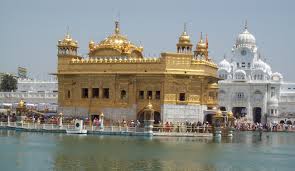
    9) Golden Temple, Amritsar

    Golden Temple, Amritsar
    Golden Temple, Amritsar

    The Golden Temple in Amritsar is one of the major pilgrimage place for Sikhs and one of the well known tourist destination.Until 2005, it is called as Golden Temple and later it was officially renamed as Harmandir Sahib.The temple has a great historical and architectural interest.Every year, many visitors from different places around the world visit this place.

    10) Brihadeshwara Temple, Thanjavur

     Brihadeshwara Temple, Thanjavur
    Brihadeshwara Temple, Thanjavur

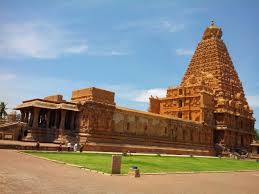
    Brihadeshwara temple is dedicated to Lord Shiva.This temple was built by the Chola king Raja Raja 1.This temple is declared as one of the world heritage sites by UNESCO.The temple has a Mahalingam of 4 meters height and another major architectural attraction of this temple is the Nandhi chiseled out from a single rock.This temple depicts the Chola architecture because of the style of construction and the carvings on the pillars.

  • What makes Delhi, Dilli – 2

    What makes Delhi, Dilli – 2

    In the last tour de Delhi, we hopped onto some of the binges of Delhi, how the love affair of the nation started with Delhi, the great repertoire of Architectural marvels in Delhi and a touched the tip of the iceberg as to what makes you melt with love, when you hear the word Delhi. Today, we explore more.

    The Bedmi and Nagori:

    be

    One relatively less known delicacy but nevertheless enjoyed to its zenith by the  few loyal customers, the bedmi is a variety of Khasta Kachori smaller in size and more khasta by all means. This is what one could call the Kachori’s  younger cousin. Filled in the epicentre with Semolina, carom seeds and grated peas, this delicacy melts in your mouth. Served along with our beloved aloo ki sabzi and halwa, you might have an oddity treat and might as well try mixing the two side dishes (The halwa and the aloo ki sabzi). This queer combination will make you reminiscent of the sweet and sour soup gone terribly wrong, but it’s a taste nevertheless. The Nagori is the youngest of the brood of Kachoris and more closely resembles the papadi that you get at a chaat stall. This also served along with aloo ki sabzi and halwa will give you plentiful of energy (And not to mention a truckload of calories) to roam the rest of Chandni Chowk with me.

    The Punjabi Diaspora:

    bangla

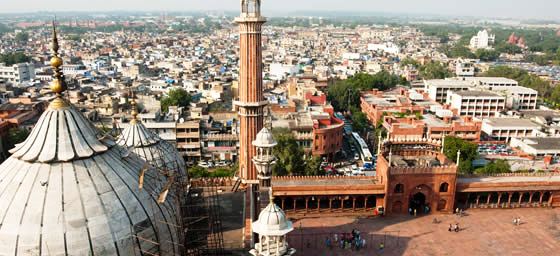
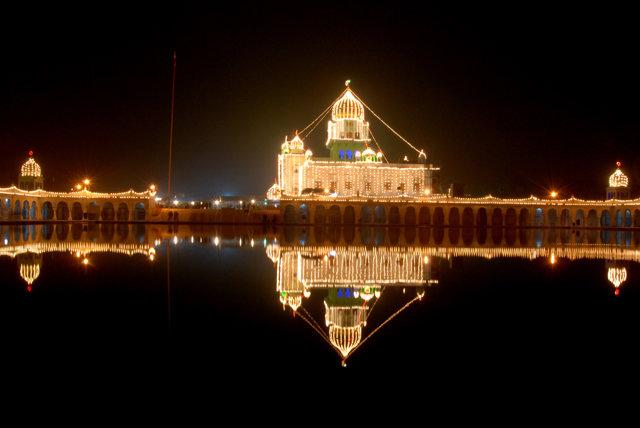
    Delhi is borderline Punjab. Geographically and literally. Once you enter Delhi, you’ll see an equal number of turbans as you will see bare heads. That because, there was a huge exodus from the Punjab region during Delhi’s early industrialization days and also during the Punjab conflict periods. Thus there’s a mini Punjab residing in Delhi. And with their amazing good humor and tantalizing cuisines come along the mighty and revered Gurudwaras. Gurudwaras are the worship place for Sikhs. Here Sikhs spend quite a lot of time serving other people as they faithfully believe in the quote “ Service to mankind is Service to God.” There are a plenty of Gurudwaras in and around Delhi and the best part of visiting them is the tasteful  ‘Langar’.  Langar is the lunch that is served in Gurudwaras to everyone who visits them. Large langars are organized where people sit on elongated jute mats on the floor and eat out of leaf plates. The langar, anywhere, in any gurudwara is something to be DEFINITELY had if you ever get the lucky chance to visit Delhi. Daal is a must in every Langar. Along with it Halwa, aloo ki sabzi and poori make your lunch hearty and eventful. There are two large Gurudwaras in Delhi to which people flog on from places far and beyond. These are The SeesGanj Sahib and The Bangla Sahib. Both are lakes of tranquillity and you will feel emancipated from all your worries and ill humoured feelings, once you enter the complex. Visit these if you are looking for serenity and a meal full of love and affection.

    Kareem’s and Khan Chacha:

    Chicken = Kareem’s.              Kareem’s = Chicken.

    Chicken = Khan Chacha.     Khan Chacha = Chicken.

                         Kareem’s = Chicken = Khan Chacha.


    tn_6284_khan1-1374305008

    One’s trip to Delhi will be wasteful, if he goes to Delhi but does not visit any of the above mentioned place. Both these places have been established in Delhi for the last 100 years or so and have been constantly providing the people of Delhi with an indispensable service ever since. The service of good food. Or more specifically, the service of Great Chicken. Khan Chacha and Kareem’s both are known for their Mughal style Chicken which they both offer in Chandni Chowk. The shop is tiny but the crowd of buyers: mammoth. Both of them provide exceptional Tandoori Chicken and Kebabs. Their extraordinary skills lie in providing with dry chicken variety. They specialize in Seekh kebab, Shammi kebab, mutton burra kebab, mutton stew and the rann (goat’s leg). These leave you with the exact smoky flavour that should be left after having a tandoori meal and also bestows upon you the feel of the grill.

    Connaught Place:

    cp-650_081714012910

    What makes Delhi, Dilli you ask. One of the reasons of Delhi’s uniqueness is Connaught Place. Two British Built market places in circular shape around a gigantic park in between. Sounds confusing? Well, it is. But in earnest Connaught Place is one stop destination for all the top notch brands anywhere in the world. Until one hasn’t a shop in Connaught Place, he/she is too amateur to go global. A beautiful set of buildings all dressed up in white just like a catholic wife-to-be in circular shape mark the inner circle and the outer circle. A market place to take a stroll ith your friends or go bridal shopping; A day to enjoy Delhi in one glance and a hurried shopping session; everything happens at Connaught Place.

    ‘THE’ Palika Bazaar:

    pal

    Ever heard of an underground market place? Palika is one. No, it is not underground as in illegal, it is underground as in, it is literally 400 bunch of shops UNDER-the –GROUND. Remember how the Connought Place is circled around a gigantic park? Well this is a market place under that gigantic park. Palika is every women’s dream destination. Because you get the best of fashion labels at throw away prices. Loads of accessories, clothing, body tattoo shops throng the Palika. Men, don’t be disappointed. There’s something for you too, down there. Palika has men’s fashion outlets too, but more amazingly it has an entire bunch of shops that sell cheap China built Electronics gadgetry. So, next time you want a pen camera or a big grizzly transforming car, you can always go to the underground market.

    So, we made a tiny bit of progress in learning about Delhi. But don’t get tired yet, there’s more of Delhi to come.. Stay tuned.

  • Go Nuts about Nuts! (Part 2)

    Go Nuts about Nuts! (Part 2)

    With high nutritive value and a deliciously sweet taste, dried fruit is fruit from which the majority of the original water content has been removed either naturally, through sun drying, or through the use of specialized dryers or dehydrators. Nuts are edible fruits as well, anatomically different from the rest because of their soft internal kernels enclosed within a hard shell. Both dried fruits and nuts possess high shelf life, and have been in use throughout centuries in every part of the world. Today, they form an integral part of our culture and cuisine, and have an irreplaceable importance in our daily lives. In the second segment of this listicle, there is more to learn about our favourite ones.


    6. Walnuts

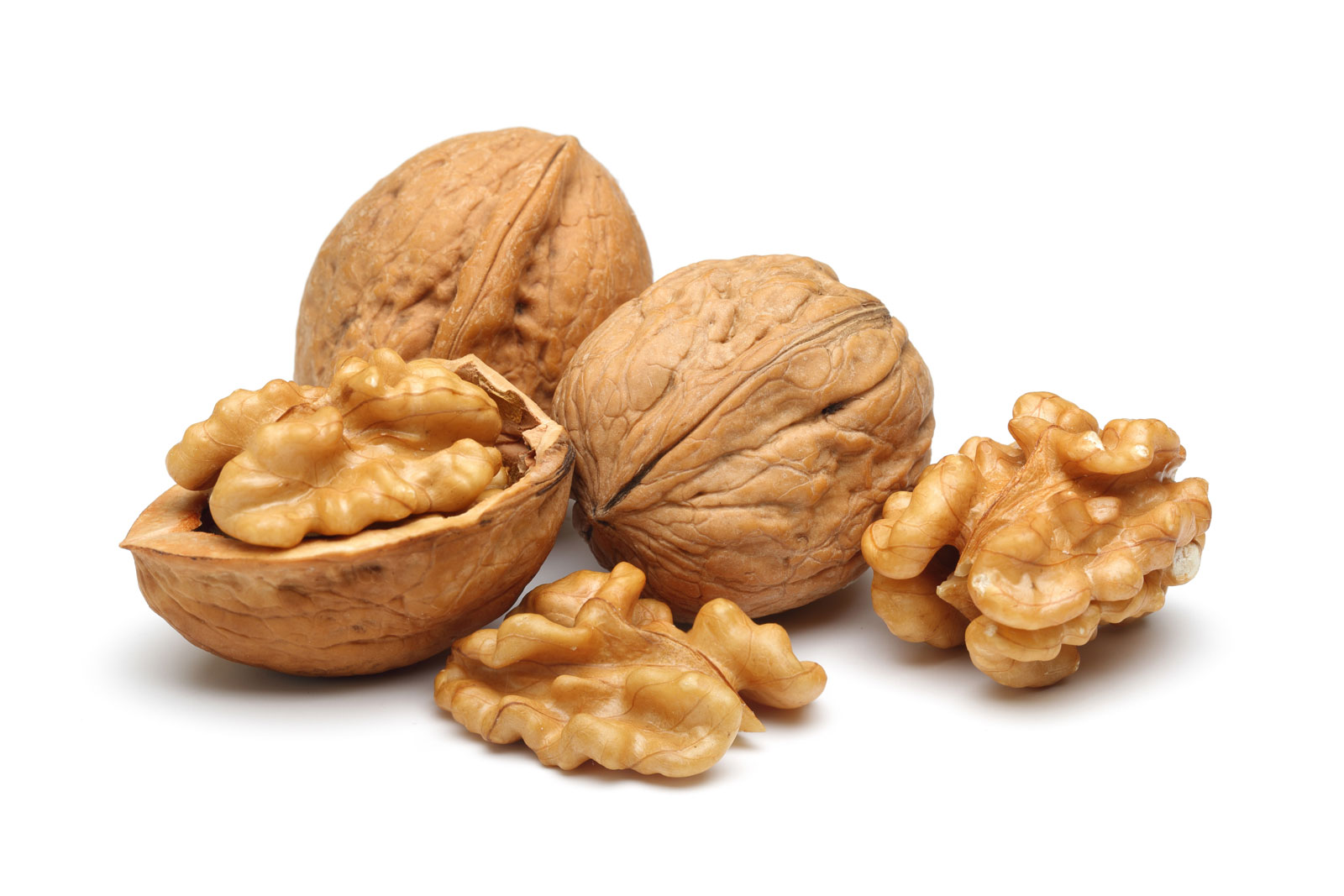
    Walnuts are derived from the Persian and English walnut trees (Juglans regia) and its soft edible kernel resembles the human brain. In etymological terms, the word is derived from the Germanic wal and the Old English wealhhnutu, meaning “foreign nut”. The shells are thin with a faint sheen and crack neatly into half, revealing the twisted, curly shaped nut. Versatile in the kitchen, walnuts can be candied and pickled in addition to being eaten raw or in their roasted form. Walnuts also form an integral part of many dishes, particularly desserts like chocolate brownies and even breakfast mueslis. You can also find them in many a salad, as their slightly bitter taste balances out the overall sweetness of the rest of the dish. Walnuts are very rich in protein and also contain a small amount of Vitamin B. They are rich in antioxidants and are curative for many minor diseases such as eczema. In fact, the oil obtained from the kernel has been found of great help in skin diseases. The green unripe walnut is useful for expelling worms from the stomach. They are also good for treating constipation because of their proven laxative qualities. Walnuts also possess many other non-culinary qualities, some of them being in the areas of cleaning agents, inks and dyes, and even anti-cancer drugs. Although walnuts are highly rich in protein and are very good for the brain, they yield nearly seven hundred calories and seventy grams of fat in just a hundred grams.


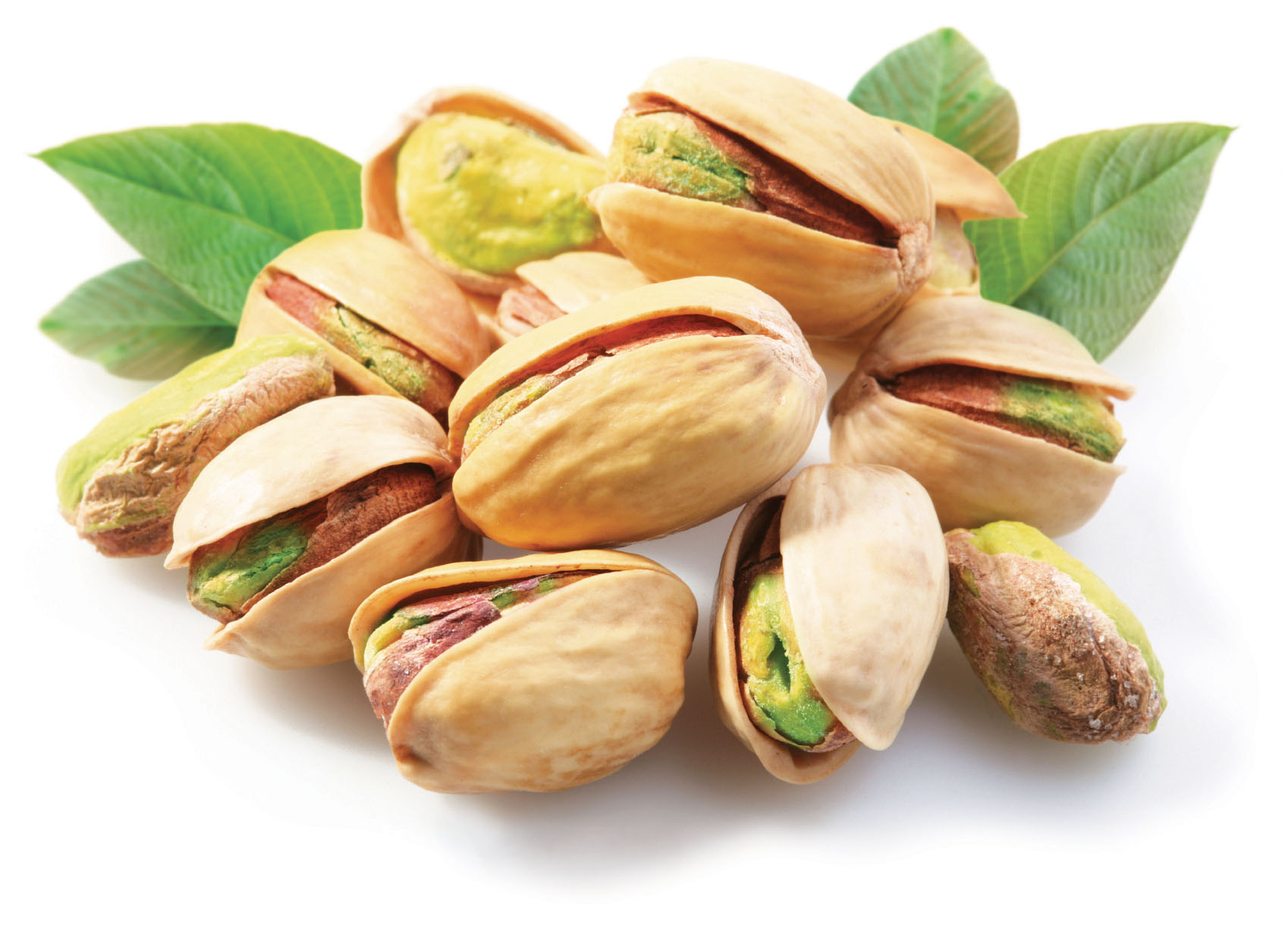
    7. Pistachios

    Pistachios belong to the cashew family and are obtained from small pistachio trees (Pistacia vera) which originated from the countries of Central Asia and the eastern part of the Mediterranean coast. The word pistachio comes from the medieval Italian pistacchio, which has been derived from the classical Latin pistacium, which in turn has its origin in the ancient Greek pistákion and the Persian pistákē. The kernel of the pistachio nut is consumed, and the non-edible beige coloured shells also find many uses in non-culinary areas, such as fuel and composting purposes. Pistachios formed a common part of the diet of ancient human civilizations, with notable mentions in ancient texts dating back to centuries before the advent of the Christ. Slightly sweet in taste, pistachios are eaten raw, roasted, salted, and also as a part of desserts such as the Indian kulfi, cold salads, Italian biscottis, Turkish delights, and ice cream. Pistas, as they are commonly called in India, are very high in calories and thus should be avoided by obese and overweight people with diligence. According to dietary charts, a hundred grams of pistas yield more than six hundred calories.

     

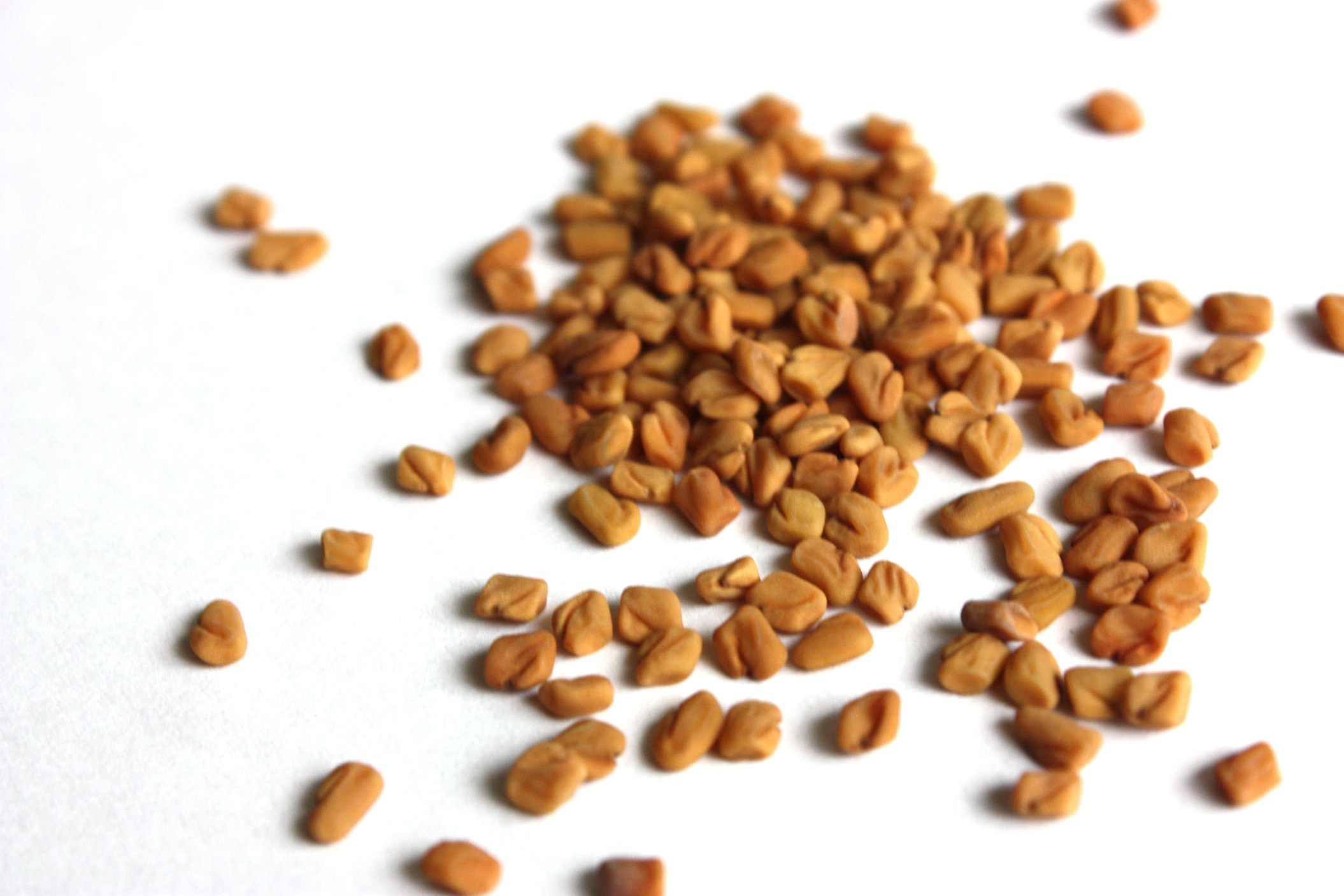
    8. Fenugreek

    Fenugreek seeds are obtained from the small herbaceous fenugreek plant (Trigonella foenum-graecum), and are usually called methi by most people in the Indian subcontinent. Originating from Egypt and other countries of Western Asia, fenugreek and its various parts are used as herbs, spices, and vegetables. The word has its origins in the Latin faenugraecum, literally meaning “Greek hay” and dates back to the ancient Roman era where the dried fenugreek plant was used as fodder. Hard lentils by biological classification, fenugreek seeds are a dark fawn in colour and possess an astringent aroma. Containing around five percent of bitter fixed oil, the seeds are usually broken to down to obtain the same. The oil is bitter in taste, smells like celery, and is used in small quantities in seasoning Indian dishes like sambhar and kadhi. Rajasthani people even make curry out of fenugreek. Fenugreek oil greatly improves the flavour and quality of pickles, and is mostly used in cooking with sour substances so as to balance out the taste. It is particularly beneficial to non-insulin dependent diabetics as it helps them to regulate their blood glucose levels by their significant hypoglycaemia-inducing properties. It is also used in buttermilk to treat dysentery.


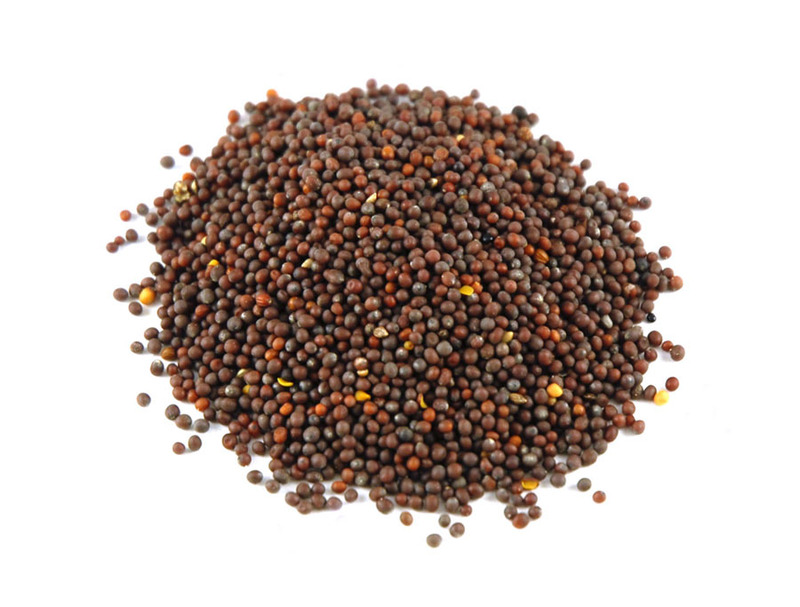
    9. Mustard

    Mustard seeds are derived from the mustard plant (Brassica juncea) and are generally advised to be consumed in moderate amounts. They are small in size, stretching no more than two millimetres in diameter, and are usually reddish-black in colour. Mentioned in many ancient religious texts, mustard holds an important historicity in Hinduism, Judaism, Christianity, and Buddhism. Generally called by their Urdu term sarson in most parts of northern India, mustard has its etymological origins in the Old French mostarde and the Latin mustum which means “new wine”. The leaves are consumed as vegetable, the skinned seeds are used for making pickles, and its oil is used as a cooking medium. The pungent taste and tear-producing properties of mustard seeds are due to nitrogen and sulphur containing compounds called isothiocyanates. Mustard seeds are used in treating rheumatism, arthritis, acidity, kidney and bladder ailments, bronchial inflammation, and are also recommended particularly for pregnant women. Nursing mothers are advised to take mustards due to its detoxifying properties. Mustard greens are rich in Vitamins A, B, and C, and contain fibre in bulk, which produces a mildly laxative effect.


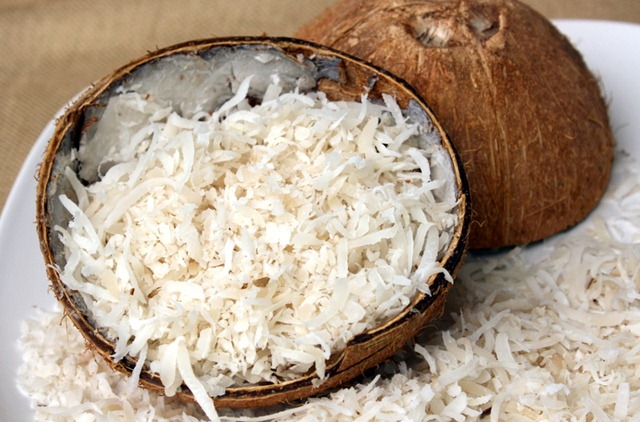
    10. Coconut

    September52011022

    Dried coconut is obtained from the coconut palm tree (Cocos nucifera) and is ideally found in coastal and tropical areas where the hot temperature and slightly arid soil contribute to its growth. The coconut has even been mentioned in old fiction, such as in “The One Thousand and One Nights” story by Sindbad the Sailor. Derived from the Spanish word coco which literally means “grinning face” and refers to the three-holed humanoid appearance of the fruit, coconuts have important uses all over the world. Primarily used in the southern states of India for its oil, coconut is a vital part of the local cuisine, and an inseparable ingredient of many delicacies. It is also used in the north as a part of many sweetmeats, with coconut milk a favourite summer beverage throughout the country, and fermented coconut being used to make toddy, an alcoholic beverage native to South Asia. Rich in Vitamins A, B, and C, this tropical wonder food is also a rich source of potassium, sodium, calcium, magnesium, iron, phosphorus, and sulphur. While the carbohydrate and protein content is moderate, the fat content is quite high, with a hundred grams of oil yielding nearly seven hundred calories.

  • Know Your Christian Festivals!

    Know Your Christian Festivals!

    With the year drawing to a close, Christmas has already come and gone. But apart from the 25th of December, how many other important days of the Christian calendar do we really know of? Here is a small list of some of the major Christian festivals celebrated all over the world:


    1. Epiphany (also known as Twelfth Night)

    epiphany-around-world

    The 6th of January every year all over the world, with the exception of 18th January in Russia and 1st February in Ethiopia, is celebrated as Epiphany. The word itself is derived from the Greek word epiphaneia which literally means manifestation. This day celebrates three events that are all thought to have happened on this very same day, namely, the first appearance of Jesus Christ as a newborn to the Magi, the three wise men; the baptism of Jesus, when God acknowledged his son; and the first public miracle by the Christ, when he turned water to wine in Galilee.


    2. Ash Wednesday

    The first day of Lent, Ash Wednesday is a day of repentance for Christians, when they make amends for the year’s sins before the culminating period of fast in the Lent. It occurs forty-six days before Easter and can fall as early as the 4th of February or as late as the 10th of March. Anglican and Roman Catholic churches hold ceremonies at which the foreheads of churchgoers are marked with crosses using ash. Many other Christians, such as Lutherans, Presbyterians, and Methodists also hold this day in great reverence and celebrate it with equal fervour.


    3. Shrove Tuesday (also called Mardi Gras)

    85011240MC002_Choristers_At

    The day before the start of Lent is known as Shrove Tuesday or “Fat Tuesday”, when Christians traditionally eat up any leftover animal products (often in the form of pancakes) as these cannot be eaten during Lent. Generally held in the month of February, the exact date of Mardi Gras varies according to the Easter schedule. The phrase is derived from the word shrive which means “confess”. It is widely considered by many Christians as a special time of introspection, during which they consider what sins they need to repent, and what areas of life and spiritual growth need amendments and God’s help.


    4. Lent

    Procession_St_Spulcre

    The forty four days before Good Friday, including Sundays, Lent is a period of fasting when Christians identify with the suffering of Jesus Christ. Lasting for a period of approximately six weeks, the traditional purpose of Lent is the preparation of the believer through prayer, penance, repentance, almsgiving, atonement, and self-denial. This festival is celebrated in commemoration of the same amount of time taken by the Christ to fast in the desert all the while resisting the temptation of evil from Satan, as mentioned in the Gospels of Matthew, Luke, and Mark, three of Christ’s favourite disciples.


    5. Palm Sunday

    palm-sunday

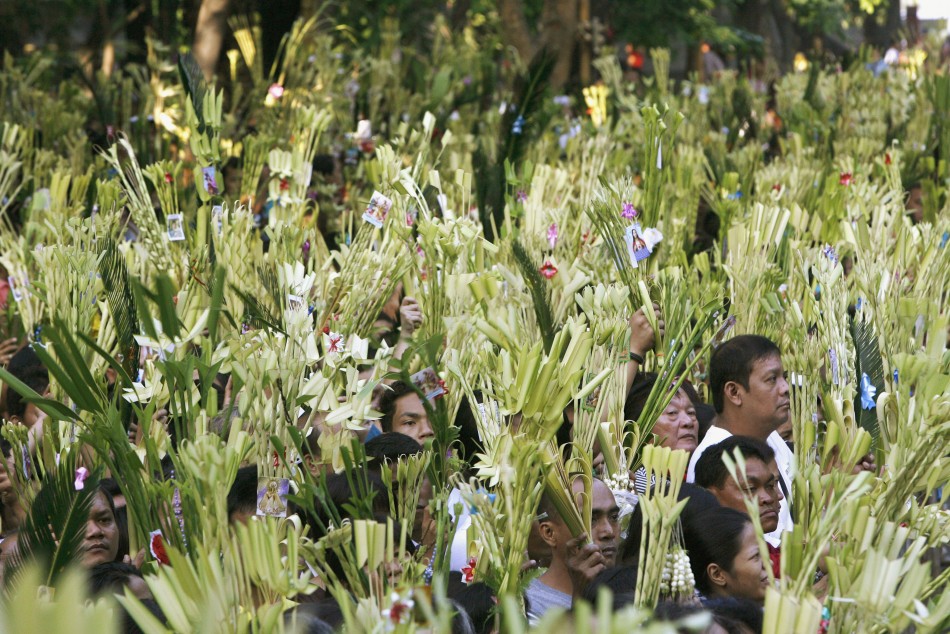
    The Sunday before Easter Sunday and the first day of Holy Week (the period of one week before Easter), Palm Sunday commemorates the arrival of Jesus Christ in Jerusalem, where the crowd threw palm leaves in front of his donkey and cheered his triumphal entry. This important event has been mentioned with much emphasis in all the Gospels of the Bible. Later that week, many in the devoted crowd of worshippers were calling for the execution of the Christ.


    6. Maundy (also known as Holy Thursday)

    holy_thursday_2

    The Thursday before Easter Sunday, Maundy Thursday commemorates the Last Supper, which established the ceremony of the Holy Communion, when bread and wine came to be respectively identified with the body and blood of the Christ. It was also the day when Jesus washed the feet of his disciples. At a Roman Catholic church services on Maundy Thursday, the priest ceremonially washes the feet of twelve people during mass. Maundy is the fifth day of the Holy Week, and is usually falls between the 19th of March and the 22nd of April.


    7. Good Friday

    Good-Friday-Vatican

    The Friday before Easter Sunday, Good Friday is spent in remembrance of the day when Jesus Christ was crucified by the Romans. The “good” in Good Friday is its form in Early Modern English and means “holy”. The symbol of the cross is an important part of church services on this day, and churchgoers read the psalms and the gospels to remember the Christ’s painful experience. Good Friday sometimes coincides with the Jewish festival of Passover, and is a time of solemn prayer and charity for Christians.


    8. Easter Sunday

    Easter_eggs_-_straw_decoration

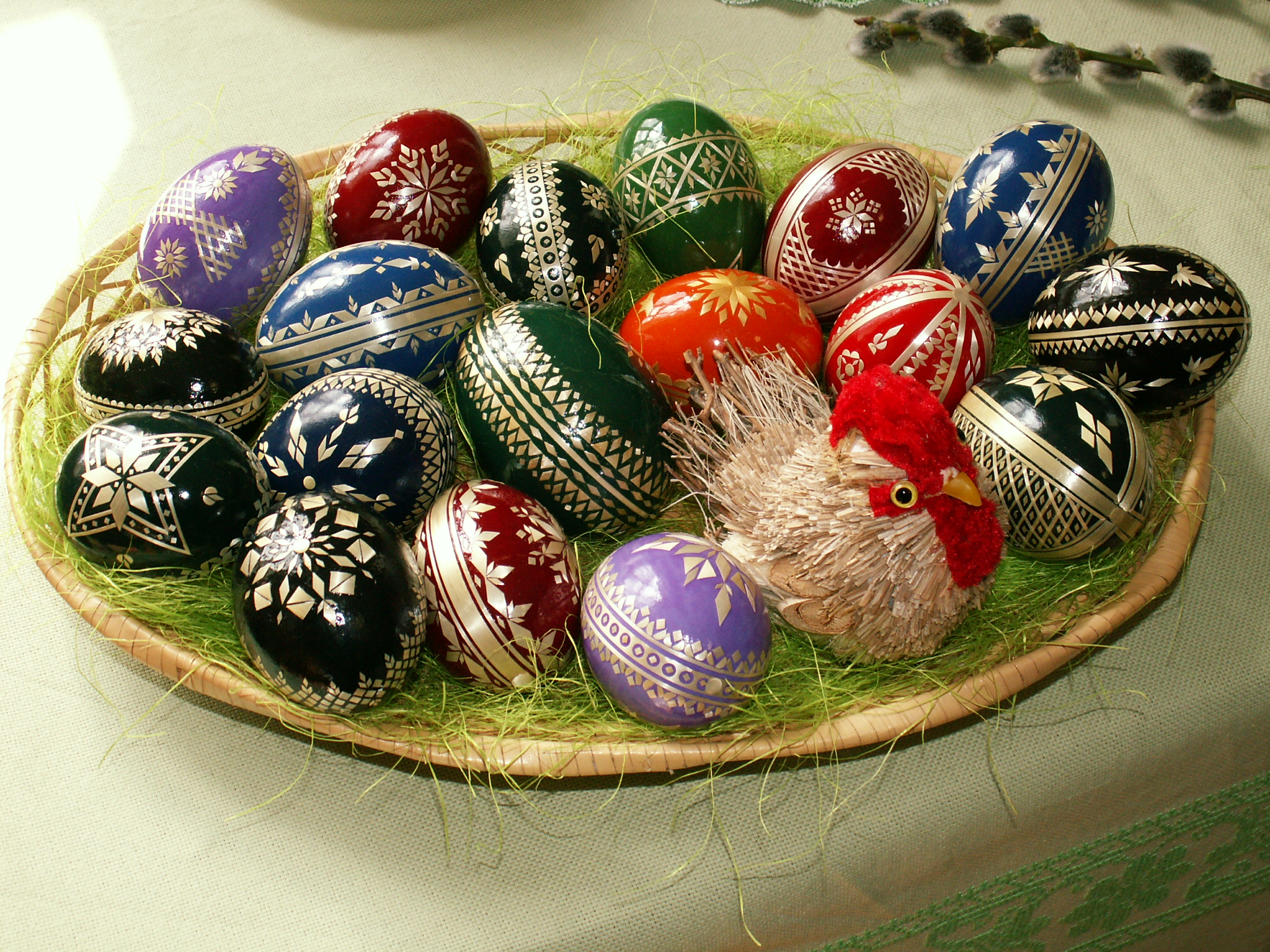
    The Sunday that follows the first full moon after the 21st of March (which is also the spring equinox), Easter always falls between 22nd of March and 25th of April in the Western calendar. Easter is up to two weeks later in Orthodox Churches. Easter Sunday is the most important day in the Christian calendar, as it celebrates the resurrection of Jesus Christ from the dead. Sunday is a joy of Christians. Easter is a joyful time, with family gatherings and festive meals, along with the distribution and consumption of Easter egg candies and other gifts.


    9. Pentecost (also known as Whitsunday)

    photos-pentecost

    Fifty days after Easter Sunday, Pentecost celebrates the day the Holy Spirit entered the Apostles, enabling them to speak many new languages and spread the word of God. This event is considered by most Christians to mark the birth of the Church. Massive church processions, festive meals, and the holy ceremonies of Confirmation, Ordination, and Communion mark this festival. In some countries, folk customs such as dancing, woodland rites, and ethnic clothing ceremonies are also observed.


    10. Christmas

    Beautiful_christmas_tree

    The celebration of the birth of Jesus, Christmas falls on the 25th of December every year, with the exception of the 6th of January in Russia and the 17th of January in Ethiopia. It is arguably the biggest Christian festival of the year, as most of us know. The word itself is derived from the Old English Crīstesmæsse, literally meaning “Christ’s mass” and is also referred to as the Yule and Nativity. Christmas trees and stars are symbolic of this occasion, and carols are sung in churches decorated with holly and mistletoe. The jolly old figure of Santa Claus is associated with the Yuletide traditions of wish-making and gift-giving. It is a season to be merry, indeed, with all its feasts and warmth.

  • Happiness and spirituality

    Happiness and spirituality

    Spirituality is often misunderstood to be a component of Religion. People have this notion of spiritual people are the ones who are often seen visiting the churches or mosques. Then there are also the other kind of people who immediately picture an Indian mystic in a yogic position in their minds. Well, both these stereotypes are so erroneous that Buddha would be turning in his grave.

    However, it can mean different to different people. To me, Spirituality means to be healthy spiritually. In other words, when we are hurt by harsh words, it hurts not just our heart but our spirit too. If the wound is very deep, then no matter how much you push it from outside, you won’t heal completely since the injury is internal. A change of external set-up is not going to help if it is not dealt with from the bottom. Haven’t you heard of wounds caused by viruses which go away temporarily when dealt from outside but when medicine is administered which kills the virus in the blood, it never surfaces again. We always have take fight at the grassroot level. Thus, to have a healthy mind devoid of bad and hurtful thoughts is of utmost importance.

    You don’t NEED to meditate or go to the temple or say prayers to be spiritually healthy. They just help you reach towards the goal faster. It varies from person to person. Being mentally healthy is the first and major step and right now in this world but more than half of the population is plagued more by mental trauma/problems (relationships,work-related etc) than physical illness. Happiness is a scarcity!

    In my opinion, I find following some very simple rules in life helps to live with a smile on the face!

    1. Handling harsh words/sentiments – People hurt us with their words, knowingly or unknowingly. But as they say, it is upto us to finally accept the invitation or not. When you feel hurt by someone, try to feel empathetic towards them. They are telling hurtful things because they themselves are hurt and when you respond in a soft manner, they will be taken aback. Anger is not something people can control and 90% of what we say in anger are things we don’t mean. So, be the better man (or woman) and stay calm.

    man-yelling-at-woman


    2. Fighting pessimism – How many of you have heard about the placebo effect? A man was administered with certain medicines which was supposed to fight cancer and after continual intake, his health revived and he was finally cured of it! Astonishing, isn’t it? When we convince our mind that something will get alright that you will do just fine, it really happens.
    Physical health is greatly linked with mental health. So if you think pessimistically, it destroys the little chance that you have, you fail in your endeavor and end up blaming it on fate. This cycle repeats over and over gain. So, you’ve got to have confidence in yourself that you can do it, hell or high water.

    pessimism


    4. Controlling anger – Most of us go red with temples on the verge to burst out when it comes to anger. However, even the smallest bit of irritation/anger can be controlled. Despite knowing that it unnecessarily harms our health by increasing our blood pressure which ups the risk of heart diseases, we don’t do anything to stay calm. I know it is not easy.

    But there are various various ways to deal with this. For example, people with a high sense of pride can manipulate and train their minds into thinking that giving into anger would mean defeat to their body. They are controlled by their emotions; they are not their own masters. The person who is trying to make you angry wants to see a reaction. So, if you don’t give the expected reaction, it would frustrate them. Bingo!

    Try thinking about something pleasant and remember to focus on it. That can calm you down. You can also try counting numbers (personally, never worked for me).

    how-to-control-anger_364x200_dv1161025

    5. Jealousy – The green eyed monster is no new visitor. Starting from children to big adults, everyone is subjected to jealousy. Jealousy is hurtful since it inflicts a mixture of pain and hatred in the heart making you restless and vindictive. I can hear many ”Well, we can’t help it”s!
    I have a simple strategy to deal with it. Whenever I get jealous, I remind myself that the competition should actually be with myself. Every new day, your goal should be to beat the person you were yesterday. It doesn’t hurt to compete with oneself where failure and success is taken with good sportsmanship. Burning with jealousy for your just-promoted colleague or that supermodel’ish girl is not going to get you anything but pain and hurt. Are they worth your pain? Instead compete with self.

    Self-Competition


    6. Regret – Yes, it is true that regret is our mind’s permanent tenant. Some consider that life is all about one shots. You are wrong. You can always pick up the cudgels and fight for another chance. There is always another way; unless and until you are ready to believe that yourself, the way out won’t appear. You always have another chance to make it right and it is just a matter of standing up for yourself yet again.
    Always remember, everything happens for a reason.

    regret

    7. Letting go – I have included this on my list since relationship break-ups and losing someone to death make the worst kind of pain. I know that attachments are stronger than any chemical bond. When you have loved someone truly, you can never undo it. Never. And losing that special someone can hurt beyond imagination since love is another synonym for vulnerability. But the intensity and pain of the separation heals with time.

    Even if they may not be in your life anymore, they will always be in your heart. Look after the memories tenderly even if the separation had been bitter because you loved them and nothing makes you more happy than their happiness. They would want you to be happy too. So, move on and harbor only good thoughts for them because life is too short for tears and grief.

    lettinggo1


    8. Believing in something – This is the most important key to happiness. Have you ever wondered why a child feels secure in the arms of a mother who is physically incapable of protecting him? Because he believes in his mother.

    When you believe in something/someone, you will have hope and when you have hope, nothing can destroy you. You know that they will always be there for you no matter what and you can draw strength from it. They will always be there to protect you. So you will be never be alone. This source can be divine or anything which is innocent and pure. Divine because definitely there is something behind the working of this universe starting from the microscopic quarks to the gigantic galaxies. On the other hand, you can believe in say, your dog because he loves you innocently. Anything which is innocent is divine. That’s why they say babies are divine and that they see god when they smile in their sleep.

    believe

    Incorporate these ideas in your lives and see the magic!

  • A Visit to Akbar’s Tomb, Sikandra

    A Visit to Akbar’s Tomb, Sikandra

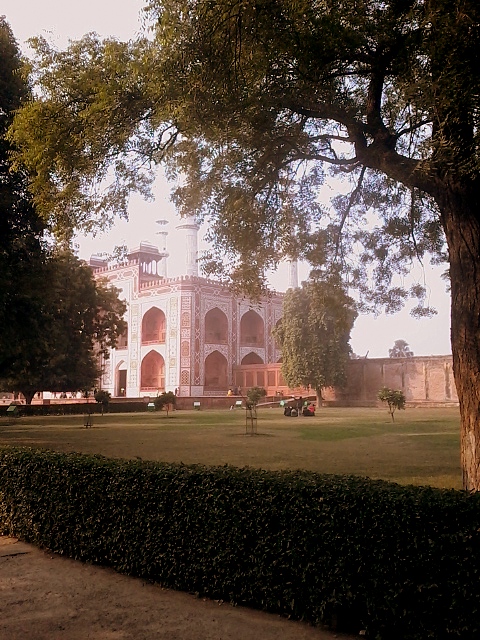
    A few days ago, I had the good fortune of visiting the tomb of the famous Mughal emperor, Akbar the Great. Located in Sikandra, a small suburb on the outskirts of the city of Agra, Akbar’s Tomb goes by much unnoticed by large hordes of tourists, just like the plethora of the city’s numerous other monuments as compared to the universally popular Taj Mahal. Jalaluddin Muhammad Akbar, widely known to be the greatest Mughal emperor by far and one of the most magnanimous rulers of the country prior to its democratic independence, reigned over his vast kingdom from 1555 A.D. to 1605 A.D. At the time of his death, the Mughal Empire stretched from Kabul in the west to Assam in the east, and from Kashmir in the north to Ahmednagar in the south.

    Under Akbar’s rule, the country was united under a peaceful and safely secular co-existence, as he was responsible for abolishing the jiziya tax targeted towards non-believers of his religion, Islam, and bringing in more opportunities for all classes and castes under new, novel institutions, such as the mansabdari system. He united the country under a uniform, cultural, political, and administrative system, accepting its varied diasporas of religions, traditions, cultures, and customs with great tolerance and respect, thus earning the honorary title of “Chakravartin” from the masses, and the epithet of “Akbar the Great” from historians of every age. While Shah Jahan built the Taj and has been remembered by generations for the marvellous creation, the third Mughal emperor was just as illustrious a builder, and is credited with restoring and expanding the Agra Fort as we know it today, and the fabled city of Fatehpur Sikri with all its palaces, massive lawns, and various other royal structures in it, apart from many other monuments.

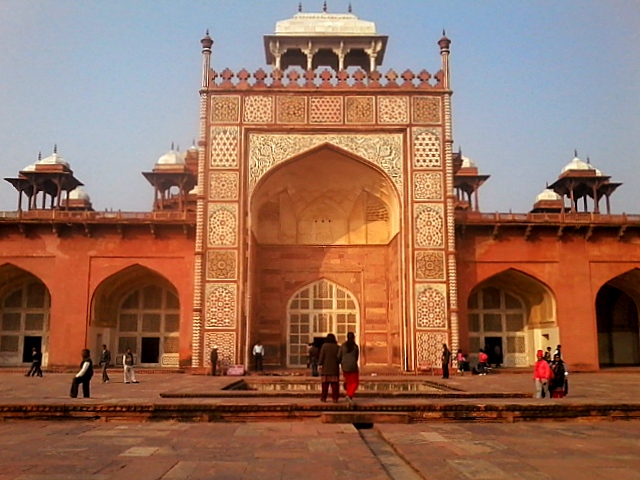
    Set in over a hundred and twenty acres of open, fertile land, near the Jamuna River, the tomb commenced building in 1605 under Akbar’s behest only after he chose the site and renamed it “Bihishtabad”, which means heavenly abode. Akbar died later that same year, and his son and heir apparent, Jahangir built the monument of deep, red sandstone, as according to plan after that, completing its construction in 1613 A.D. The tomb is planned in the centre of a vast garden enclosed by walls on all sides, with a gigantic gateway on each side. The southern gateway is the largest and most intricate in its design, with two storeys, and four, circular, tapering minarets made from white Makrana marble of Rajasthan. The entrance portal here is 61 feet in height, and is flanked by double alcoves. Just the like the gateway to the Taj, this gateway also possesses Persian scriptures gorgeously furnished in marble relief, and an inlay of precious stones and gems in various designs. The twelve inscribed couplets eulogize Akbar and his tomb, and also reflect his philosophical views, apart from briefly mentioning Abdul Haq Shirazi, the head calligrapher on the project, and the date of the monument’s completion, 1605. The chhatri-styled tower incorporations have been inspired from the Char Minar in Hyderabad, which was built in 1591 A.D. by Muhammad Quli Qutb Shah.



    The internal premises reflect the symmetrical charbagh (four gardens) architectural, which was a hit with the Mughal rulers, and true to its name, the garden is divided into four equal quarters, each separated by a high terrace or a causeway of stone masonry, 75 metres in width with a small water channel running in the centre and raised walkways on its sides. Distinctly raised from the present day deer-populated garden, these walkways can be accessed by staircases, which are accompanied by cascades and lily ponds. However, owing to the issue of devastating wildlife endangerment, the garden area is strictly off-limits for all visitors. In a distinguishing departure from most Mughal architectural pieces, Akbar’s Tomb does not feature any cypress avenues or flowerbeds rising from the causeways. This uniqueness is reflective of character, which is full of dignity, sobriety, and thoughtfulness, and peace, rather than the usual splendour, gaiety, delicacy, and superiority, associated with other Mughal monuments, and has thus been made in accordance with the personality of Akbar.

    The main building is square in its outlay, and has five receding storeys. The ground floor has spacious chambers, with an elaborate marble entry portal to access each. The southern entrance of the tomb leads directly into the vestibule that opens to the main grave chamber. Austere in appearance, this chamber features Quranic verses in stucco and painting, an octagonal tower superimposed by an eight pillar chhatri (roof) and numerous arches. While the monument has been built mostly in sandstone by Akbar, as per old Mughal tradition, Jahangir’s architectural style is also reflected in the seamless incorporation of white marble in the gate minarets, entry portals, and the top storeys of the main building.

    The upper floors of the monument have been cordoned off from the general public, and while it is not visible to the naked eye from the ground, tourist guides also mention a huge open-air square court on the top storey, 70 metres long on each side, and covered by arches. A cenotaph has been placed on the platform in the court, and has 36 Persian couplets praising Akbar carved on it. The tomb building is a four-tiered pyramid, surmounted by a marble pavilion containing the false tomb. The true tomb, as in other mausoleums, is in the basement. Apart from Akbar’s grave, many others of his family were also buried here, including a number of his queens and children, just like other Mughal mausoleums such as the Taj Mahal which contains the graves of both Shah Jahan and his queen, Mumtaz Mahal, for whom it was built. The tomb was severely damaged in the 16th century and was consequently restored by the Archaeological Survey of India between 1902 and 1911.


  • Spirituality And Music

    Spirituality And Music

    Every religion or spiritual faith depends on music to create an atmosphere of spiritual longing, beauty and refinement. This kind of music can be ennoble and inspire our spirit to divine aspirations and express our longing to live a more spiritually conscious life in the physical world.

    images

    No matter what religion, physical setting , or language in which a religious service or spiritual meeting may be conducted, spiritual music is used in the same way and for the same reasons throughout religious and spiritual groups throughout the world. The greatest musical compositions are those that celebrate God, building a melodious bridge between the human being and the divine spirit. Music that speak of God’s glory or expresses our deepest spiritual aspirations can elevate and center our attention in the divine.

    The Greek philosophers, Plato, Plotinus and Pythagoras, in their writings described the existence of a universal harmony called ” The Music Of The Spheres”. They believed that the planets, as they orbited throughout the universe, produced a perfect music that could be heard by the enlightened beings. Those whose lives were lived in the harmony with divine laws could ” tune in” to this universal music. Many philosophers since then have also theorized about the music of the spheres.

    In the 17th century, the great English playwright, William Shakespeare, made reference to the Music Of The Spheres in his romantic comedy, The Merchant Of Venice. At the end of the play, one of the main character laments that this divine music can only be heard by ” immortal souls “, but those who are constrained inside the human body are unable to hear it.

    images (4)

    Religion has two aspects, an inner or esoteric side and an outer or exoteric side. The inner or esoteric side of religion is the aspect that deals with the spiritual experience in which our soul recognizes itself and reunites with the God. It is reached through inner spiritual practices such as meditation, prayer, or inverting one’s attention within to contact the divine. By going within through meditation we can connect with the inner light and sound, or celestial music of God, called the word, naam, the light and sound current, harmony of harmonies, nad, jyoti and sruti, kalma or voice of silence. It is a music or sound that emanates from God and is not made by any instrument. It is the vibratory principle of God that created all religions of creation, this physical world, all life, including the human beings, and resounds within each being. To listen to it requires inner spiritual practices such as meditation.

    Each religion also has an outer or exoteric side, which involves rites, rituals, outer services, outer recitation of prayers, and various customs. Outer music is often an integral part of the outer aspect of any religion. It forms the part of the many of the customs, religious services, or rites and rituals in various religions. It also has the effect of inspiring, creating a spiritual mood, and helping to focus attention on spiritual goals.

    images (1)

    Devotional music is always performed in Hindu, Jain, Sikh and Buddhist religious services. Such music is considered an offering to the divine, or to deities, Gods and goddesses- an offering that is believed to summon the grace and protection of God or any chosen deity. These hymns are called shabds or shabads, bhajans and kirtan are integral to private and group worship. Another aspect of Eastern spiritual music, in Hinduism, Sikhism, Jainism and Buddhism particularly, is the role of mantras. A mantra is a ” sacred utterance”- a syllable, a word, or a verse considered to posses great mystical power. Some mantras are intoned out loud and others are repeated silently, by the ” tongue of the thought”. Some mantras have no apparent meaning in terms of the human language and yet are thought to carry a deep spiritual significance. Some mantras are repeated until they produce a trans-like state. Those mantras that are considered to be  the most powerful are those given verbally by a spiritual master.

    images (2)

    Buddhist music revolves around the Buddhist traditions. In general, Buddhist monks encourage music related to one’s spiritual exercises. Buddhist chants, especially Tibetan chants are famous for producing vocal overtones and harmonies with the use of drums.

    Christian spiritual music covers a vast field. During a religious service, spiritual hymns from the Bible are sung. There are also original songs that are sung and accompanied by the music written on the christian themes.

    images (3)

    The holy scripture in the Islam is the Koran. Music in Islam centers mostly on the chanting of the Koran in the forms of call to prayer, pilgrimage chants, eulogy chants of praise, and other noble themes. The Koran is written in Arabic, so the reading of the scriptures, done in the melodious way, is also in Arabic.

    Music of the Sikhs is largely devotional, often accompanied by the harmonium and tablas. These hymns prepare one for meditation and simran.

  • Yoga for Everyone!!

    Yoga for Everyone!!

    Yoga, a thought itself creates a grotesque, twisted pose in our mind, but do you people know what actually yoga is apart from these senseless thoughts. Yoga is much more than these weird poses. Yoga has derived its name from the word yoking together, which means yoking of body and mind. It is a physical and mental exercise which aims to present our body and mind to the new world. It has originated since from the time of pre-Vedic traditions and now it has become a part of this Western world in the form of spiritual practices. This is often referred to as Hatha Yoga. Yoga described human as a combination of three bodies along with the five sheets which controls the energy flowing through the channels.

    yoga2

    People usually considered yoga as the regimented method for accomplishing a goal. It is one of the well-organized techniques to control the mental and physical status of our body. It helps in the expansion of awareness and consciousness in our mind.  It is controlled course to omniscience. It is a practice which helps us to enter into other bodies and simultaneously generate numerous souls along with the attainment of supernatural powers.

    A yoga practice varies their meaning with the different types of religions. Every religion has its own beliefs like in Jainism it is known as the most spiritual practice which helps in self-realisation, attainment of salvation and provides complete freedom to our soul. It is a practice which keeps us apart from attachments and provides purity to our soul. It is broadly classified into Shukla Dhyana, Dharmya Dhyana and Raudra Dhyana. When we move on to Buddhism it is considered as the form of meditation which increases our concentrating powers and provide supernatural spirits in us. They regarded Yoga as a path leading to Nirvana and enlightenment.

    yoga1

    Yoga carries a various different meaning like combination, connection, contact, application, method etc. For example chakra-yoga means locating the position of the thigh, guna-yoga has a sense of contacting with the cord, pum-yoga is for showing relations with a person, Bhakti-yoga is a path of devotion, Raja-yoga is a sense of controlling our minds etc. It is a complete way of living life which balances our body and rejuvenates each and every nerve of our mind.

    Yoga is like a package which offers stress relief, weight loss, all-round fitness of our body, glowing skin like benefits to us. We misunderstood yoga and keep it limited to its poses, but in reality it is immensely involved in bringing our mind, body and breath together. Here are some benefits that yoga involves:

    Fitness: As it is a known fact that health is wealth. You are truly fit and healthy when you are emotionally and mentally balanced. Health is a combination of expressing how enthusiastic and loving you are and here comes the major role of yoga in providing all-round fitness to our body with the help of meditation, several different postures and pranayama. It provides a hidden healing power to our mind and soul. It keeps our body away from any heart diseases.

     Boost Immunity: Certain researchers found that there are various yoga practices that helps in boosting our immunity towards any disease. Yoga practices tend to change some gene expression when you are on the mat itself. When you breathe well, move well then the entire organ functions well. A small irregularity in our mind affects the overall functioning of our body and makes our body restless, so in such cases, yoga poses helps in strengthening our muscles and releasing stress from the mind. It provides immunity to asthma and relieve all mental stress.

    yoga3

    Provide flexibility:  Include yoga in your daily routine and make your body more flexible and strong. It stretches each and every part of your muscles and tone them. It helps in improving our postures while we stand, sleep, walk or sit. In turn, it helps in removing our body pain due to incorrect postures.  It helps in twisting our body into various shapes and find inner peace.

    Some of the best yoga poses are

    Malasana: It is also known as Yoga Squat which helps in relieving backache and stretches our thigh and calves. This is just a squatting position with heels in, toes out and hands are in a prayer position in front of our chest.

    malasana

    Camel Pose: this pose helps in improving our lungs capacity and stimulates thyroid and pineal glands. In this you have to stand up on your knees, keeping your hips apart. Your hands must rest on the lower back or on heels.

    camel

    Nostril Breathing:  this pose helps in maintaining the proper functioning of our respiratory system. In this you must be seated in a comfortable position to provide balance in both the branches of the nervous system. It helps in relieving stress and worries and refreshes our lymphatic system.

    So Yoga is a way of life and it aims to support you on that journey in an open environment…!!

  • Tales served in a plate!

    Tales served in a plate!

    Have a big party to host too soon? But are too bored of the clichéd party menus available (Mexican, Chinese, Italian, Indian or Mughlai)? I have just the thing for you, that will surely elevate your stature to the “PARTY KING/QUEEN” and give you and you’re fiction-fellas the best time of their lives! Yes, give way to your literary gastronomy as I bring forth a list of fictional literary food items that you’ve read about in novels or watched your favourite characters sip or bite onto them in movies and TV series!

    1. Butterbeer (Harry potter series):

    Butterbeer-1-edited-upload

    “Why don’t we go and have a butterbeer in the Three Broomsticks, it’s a bit cold, isn’t it?”-Hermione Granger.
    Ah! The reveries of sipping through the clouded peaks of tankard-full butterbeer, on chilly December mornings ,while crouching over the wooden benches of The Three Broomsticks, or Leaky Cauldron, has enticed us since our ripe days of innocence( and they still do). So, why not relive those days, just not in reveries but in reality! Set up old shaggy benches, restrict the light source to quivering candles, and Cheers!
    INGREDIENTS
    • Cream soda- 2 litre
    • Butter extract- 2 tbsps.
    • Rum extract- 2 tbsps.
    *add drops of the extracts into a 2 litre bottle, put on the cap and slowly rotate (not shake) until combined.
    • For the crème topping- 17oz container of marshmallow crème
    • Whipping cream- 1 cup
    • Rum extract- 1 tbsp.
    METHOD

    • Add all the items together in a blender and combine until smooth
    • Pour the butterbeer into a glass and drizzle with the cream topping and Enjoy!

    2. Scooby Snacks (Scooby- dooby doo series) :

    Scooby-Snacks

    Our very own beloved stoner mates of childhood! Remember the eternally hungry Scooby and Shaggy, who were always lured to chase the villains using this snack!
    INGREDIENTS
    • Dry oatmeal- 1 cup
    • Flour- 2 cups
    • Sugar- 1 cup
    • Eggs- 2
    • Butter- ¼ pound or ½ cup
    • Walnut extract- 1 tsp.
    • Vanilla essence – 1 tbsp.
    • Cocoa powder- ½ cup
    • Finely ground cannabis- 1 oz.
    METHOD
    • Pre-heat the oven to 350 degrees.
    • In a large mixing bowl, combine all the ingredients. Stir continuously.
    • If the consistency becomes too thick or tight making it difficult to stir, then add a tablespoon of milk into it, and mix.
    • Taste the batter and adjust the sweetness according to preferences.
    • On a lightly greased cooking sheet, place them in scoops or bone shape cut-outs and bake for 8-12 minutes ( depending upon the size of the cookies)
    • If you wish to bite on to dry and crispy cookies, bake for longer, but if chewy and soft is your thing, a shorter time span for baking them, is fine.

    3. Hotpie’s Wolf Bread (Game of thrones):

    CnPkwNc

    Does this ring a bell? In Season 3, this becomes a parting gift for Arya by Hotpie, remember? Of course you do! So, now imagine, breaking pieces from this Wolfbread we’re about t0 make and dipping it in the Virginia Woolf’s Boeuf en Daube (in the next point) , ah, heavenly delicious, and such a intermingled literary hotchpotch! Well, let’s proceed.

    INGREDIENTS ( makes 3 breads)
    • Coarse meal- 2 cups
    • Wheat flour- 3 cups
    • Egg(beaten with a little water, for the wash) – 1
    • Baking powder-1 tsp.
    • Baking soda- 1 tsp.
    • Butter- 6 tbsps.
    • Honey- 4 tbsps.
    • Pinch of salt
    • Buttermilk or sour milk
    METHOD
    • Combine the dry ingredients and rub in butter
    • Then, stir in the honey, buttermilk, and fold in a soft workable dough
    • Roll it out around 1/2″ thickness, and skilfully cut out the dire wolf shape with a knife by placing the template(below) over it( template given at the bottom)
    • Once satisfied, transfer it to a baking sheet lined with a parchment paper. Brush all over it with the beaten egg
    • Now, for 20 minutes, let it bake at 250 degrees F, until it’s tinted in lovely golden brown colour. Enjoy!

    wolfbread-template

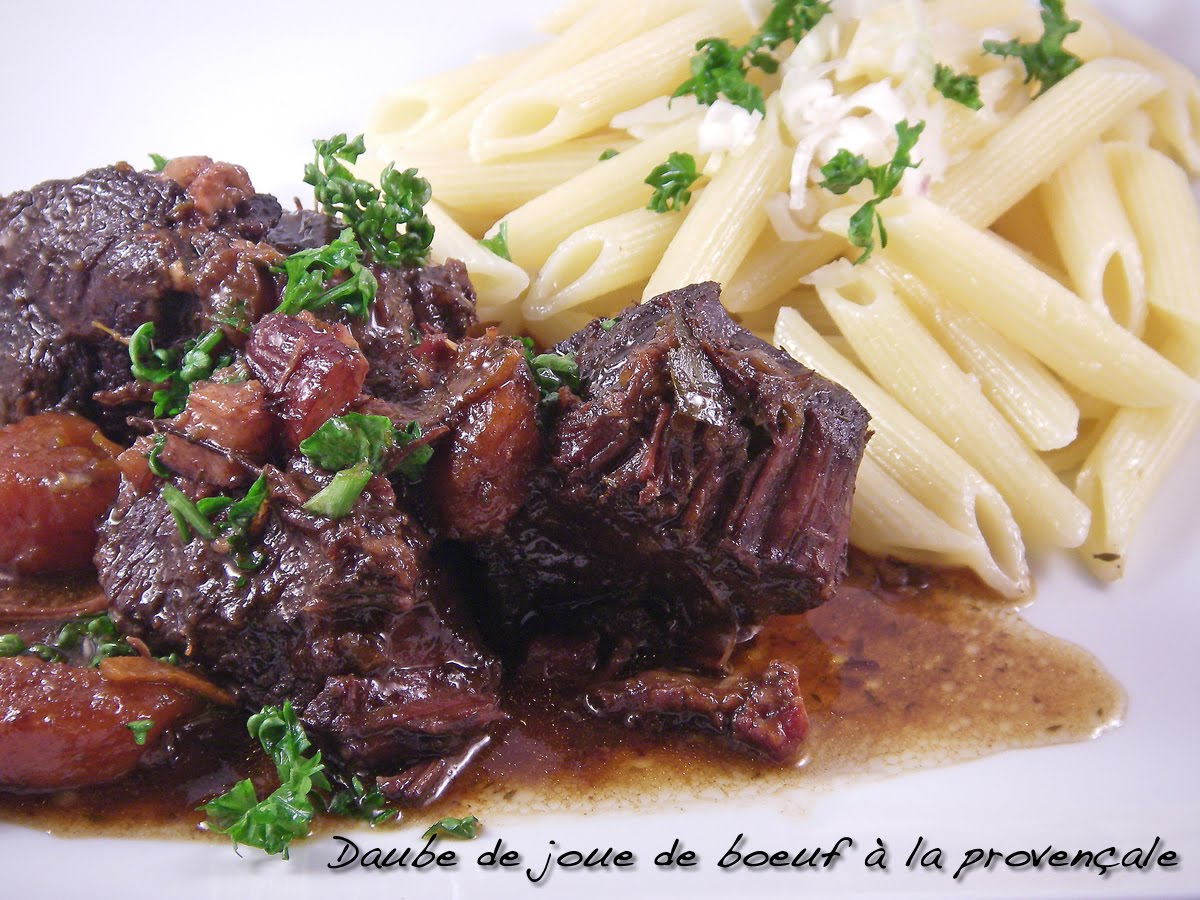
    4. Boeuf en Daube (To the Lighthouse):

    daube_joue_de_boeuf_provencale

    Direct from Virginia Woolf’s imaginative kitchen, this recipe is a star for any party especially if the dwellers are meat lovers. Known to spell magic with her words, Woolf in ‘To the Lighthouse’, one of the best English novels of the 20th century tickles the gastronomic sensations of her readers with her vivid descriptions of this delicacy. So let’s have a look at the recipe!
    INGREDIENTS
    • Primed beef (can also use mutton), cubed and trimmed of fat- 5 lbs.
    • Peeled shallot or onions- 8-10 pieces
    • Burgundy wine- 750 ml
    • Olive oil- 1-2 tbsps.
    • Fresh thyme- 1 bunch
    • Garlic cloves( peeled and chopped finely) – 4-6
    • Bay leaves- 2-4
    • Lardons (or smoked bacon pieces) – 1 lb.
    • Orange peel( dried) – 6-8 pieces
    • Soft brown sugar- 1 tbsp
    • Cepes( a type of mushroom), soaked for 1 hour- ½ ounce
    • Sea salt
    • Fresh ground black pepper
    • Sun-dried tomatoes (drained and chopped finely)- 2-3
    • Cognac – 2 tbsps.
    • Corn flour – 1-2 tbsps.
    • Tomato sauce- 2 cups
    METHOD
    • In a bottle of red wine, marinade the beef with herbs, shallots, and garlic overnight. Drain and keep the wine aside.
    • Take a large frying pan, pour olive oil and sear and brown the beef pieces over high heat, till nutty and golden brown.
    • In a cast iron Le Creuset Casserole Dish, or a crock pot, place the beef. Fry the lardons or chopped bacon pieces until crispy and golden brown. Drain and add to the beef.
    • Then, brown-fry the garlic in the bacon fat and add to the beef and bacon.
    • In the crock pot, add all the ingredients including the reserved wine except the corn flour.
    • Cook on high flame for 4 hours and low up for 6 hours. Or, preheat oven to 175 degrees C or 325 degrees F n cook for 4-6 hours, slowly. The meat must become extremely tender.
    • Once done, stir in the corn flour and cognac into the stock encased within the crock pot.
    • Serve with Mashed, steamed and pureed potatoes, and green beans, or with French bread, salads and pasta! Try and make it on the day before the party, it tastes better. Best for main course!

    5. Turkish Delight (The Lion, the Witch and the Wardrobe):

    Turkish-Delight

    Remember Edmund in The Lion, the Witch and the Wardrobe, who after inhaling the Snow Queen’s Turkish Delight had betrayed his sibling?! Yes, disgust for the character seeps into your veins at this nostalgia, but never mind he learnt his lesson, right? And, the Turkish Delight, is surely a delight!

    INGREDIENTS
    • Water- 1 ½ cups
    • Cold water- ½ cup
    • Corn-starch- ¾ cup
    • Orange juice- ½ cup
    • Orange zest- 3 tbsps.
    • Granulated sugar – 3 cups
    • Light corn syrup- 3 tbsps.
    • Unflavoured gelatin-3(.25 ounces) envelopes
    • Vanilla extract- 1 tbsp
    • Pistachio nuts( chopped)- ¾ cup
    • Confectioners’ sugar for dusting
    METHOD
    • Take a large saucepan, place it over medium-high heat and add water, sugar and corn syrup to it and bring to boil. Stir continuously until the temperature reaches 115 degrees C or 240 degrees F, on a candy thermometer. Set aside and keep hot
    • Stir in the orange juice and zest, and sprinkle with gelatin and set aside. Take a small bowl and pour in ½ cup of cold water, dissolve the corn-starch in it and stir into a hot syrup, over medium flame, until thick.
    • Remove from heat and stir in vanilla essence, pistachio nuts and a little more of the orange juice. Sprinkle an 8×8 inch pan indulgently with the confectioners’ sugar. Pour the Turkish Delight into the pan and let it cool (do not refrigerate) until set, for 3-4 hours approx.
    • Once cool, now sprinkle on top another thick layer of the special sugar. Cut them into 1-inch squares and dredge each well in the confectioners’ sugar. Store in room temperature in an airtight container! Serve with tea, coffee or just as welcome sweets or even as end-of-the-meal desserts!
    Set the mood with the right décor, music and games, and the rest, leave it to these scrumptious delights to handle! Rest assured, just dig in!!!