Tag: food

  • KARIM’S: A must visit restaurant for the non-vegetarians

    KARIM’S: A must visit restaurant for the non-vegetarians

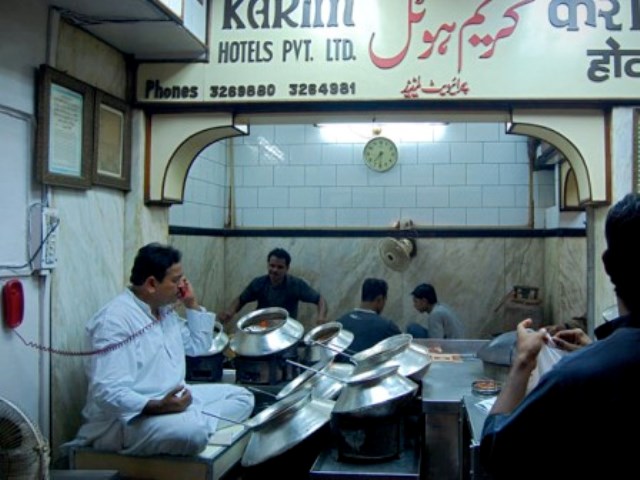
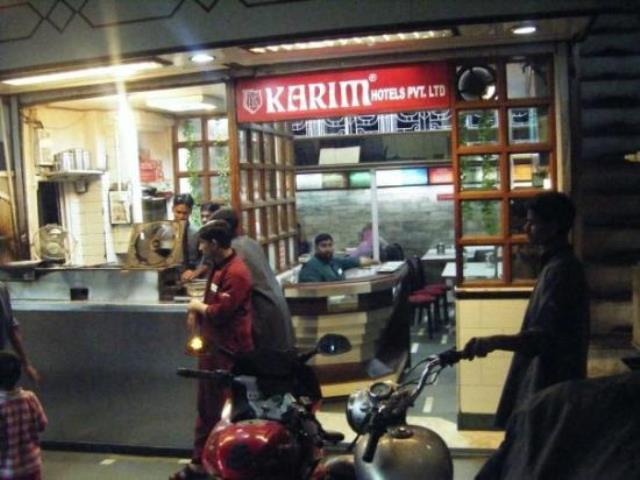
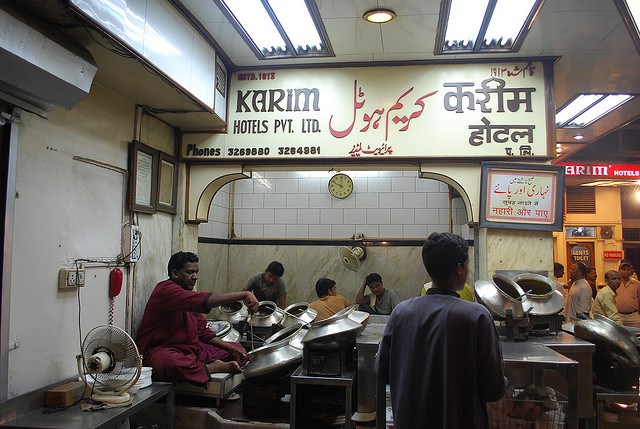
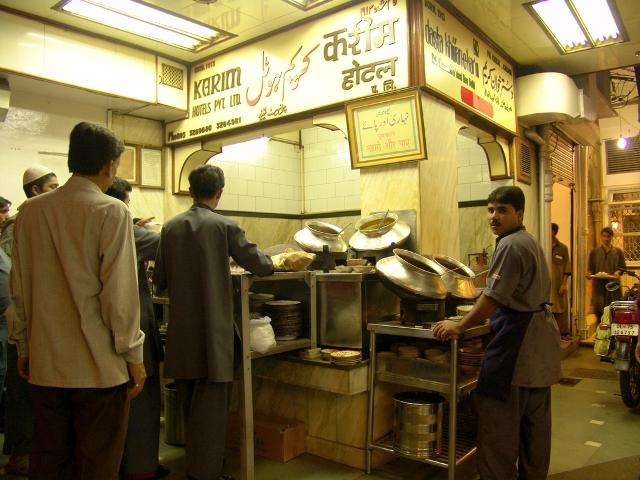
    Karim’s is one of the most famous non vegetarian destinations located in the Jama Masjid area of Old Delhi. The popularity of this restaurant can be described by the fact that today Karim’s is synonym to the area in which it is located. This place provides the best and most delicious Mughlai cuisine. None of the non-vegetarian food chain in India is more famous than Karim’s. This hotel has simply created its utmost position in providing the ultimate non vegetarian dishes. The reason behind its rise is the use of the secret exotic spices which they use in their dishes.
    2


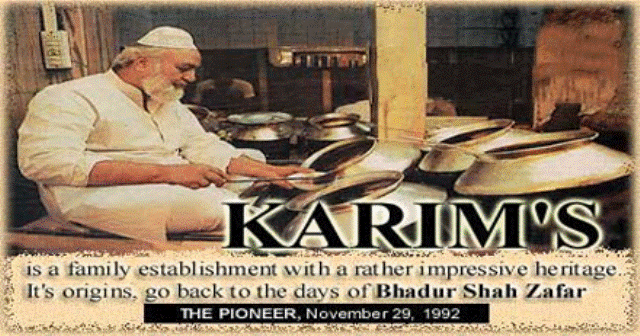
    This hotel was started by the veteran cook Haji Karimuddin who served as the royal chef in the court of the Mughals. In the year 1857, when the Mughal Empire came to end after the last ruler Bhadur Shah Zafer was overthrown by the Britishers, Haji Karimuddin had no other options but to run away from the shackles of the Britishers. He spent the next few years in the small area near the Jama Masjid. Although Haji Karimuddin was in a condition which he never expected of, he never forgot the recipes of mouthwatering dishes that he used to cook for the Mughals. During this time of struggle he taught his son all the secret recipes that were used in these dishes. Finally in the year 1911, when people from different parts of India were coming to Delhi to join the coronation ceremony of the King George V, Haji Karimuddin opened a Dhaba to help the people by providing them with the tasty food during their stay. He started by selling only two dishes. With the overwhelming response that he received, he finally opened his own restaurant in the year 1913 with a view to serve people with the dishes that he used to cook in the Mughal’s kitchen. Since then this family has been serving the royal foods. At present it is the fourth generation of this family which is looking after this famous restaurant chain.
    3

    Karim’s has a wide range of the main course and starters in its menu that ranges from chicken to mutton. One can simply select the dish as per their choice and experience the taste they will cherish for a long time. One of the reasons why Karim’s food is famous is because of the fact that they are delicious in taste and quite spicy in flavor. After the mouthwatering meal, one can simply enjoy a variety of desserts which this place has. If you are planning to visit Delhi, then this city has lots to offer in terms of the tasty and delicious food options that will be available in front of you. But if you are one of the non-vegetarians then this is one such place which you must visit. You will surely have the pleasure of experiencing the cuisines that you have never had before.
    1

    This is not one of the very highly priced restaurants and so people from all section of the society visit this place to get the taste of the Mughlai foods. Every time you visit this place you will find it filled with people more than its capacity. From the time the restaurant opens and till it gets closed, you can find people all over it. This is the power of the delicious food that they serve. This restaurant is the recipient of the many prestigious awards such as the Golden Plate Best North Indian Restaurant Award for the year 2005. Recently when the Prime Minister of Pakistan visited India on the oath taking ceremony of the Indian Prime Minister Narendra Modi, he expressed his desire to taste the food from this veteran restaurant. This shows that not only in India, people in various other countries are also aware of the finest food that this place provides and whenever they get a chance to visit India, they do take out time to visit Karim’s. Even the painter M. F. Hussain had words of praise after he visited this restaurant.
    5

    Almost all the magazines and shows based on the Indian food have mentions the delicious non-vegetarian food served at the Karim’s. Pioneer described Karim’s as a place which is served by a family which has a rich heritage and expertise in cooking the non-vegetarian food. Not a single hotel or restaurant can match the food being served at Karim’s. In one of its edition, the world famous Time magazine termed Karim’s as one of the best restaurants in Asia. Leading newspapers such as The Hindu, The Sunday Observer, The Asian Age, The Indian Express and everyone else have constantly reviewed this place for their readers and have mentioned it as one of the must visit non place serving restaurant. The world’s famous travel and food shows being telecasted by the National Geographic and the BBC World Guide have also praised this restaurant and have telecasted the story of a family which is so much dedicated in serving the best Mughlai dishes in India.
  • Pickle your Mangoes this Summer

    Pickle your Mangoes this Summer

    Mango pickle refers to a variety of pickles that are prepared by using mangoes.Mango pickle is a very popular in south India and few parts of south Asia. Mango pickle is a spicy dish that can be enjoyed with any variety of food.This traditional south Indian dish can be available in many forms either spicy one or sweet one.As it is summer we can find mangoes abundant in all the markets and streets.As the availability is more most of the women at home are busy making pickles with raw mangoes.In Andhra mango pickle is famously known as Avakaaya pachadi or Mamidikaaya pachadi. As different regions in India have different preparation process the taste also varies.South Indian Pickle has quite different taste from the flavor of  pickle in north India.Even the main ingredients are same in any of the preparation process but south Asian pickles are having different flavor from others as it undergoes different process and uses different spices in the preparation.The main difference in the preparation is, in the southern states sesame oil is used where as in northern states mustard oil is preferred for  for making pickles.

    Hot and spicy mouth watering spicy mango pickle
    Hot and spicy mouth watering spicy mango pickle

    The pickle has a flavor which tempts every one for its fragrance and everyone likes to taste it because of its attractive color and spiciness in it. It is a favorite dish for many people,this has a great taste when it is eaten with hot rice and ghee.Generally this pickle is prepared in summer season just after the ugadi festival as raw mangoes are abundantly available.The ingredients that give spicy and great taste for mango pickle are cumin seeds, curry leaves, fenugreek powder, garlic, hing , mustard powder, mustard seeds, oil, raw sour green mango, dried red chillies, red chilli powder and little turmeric powder.The overall taste of mango pickle is like sour, tangy and spicy flavour.

    Ingredients:

    For making spicy pickled mango:

    1) Take one kg of raw green mangoes

    2) Take one and half cup of mustard oil ( Aamudamu )

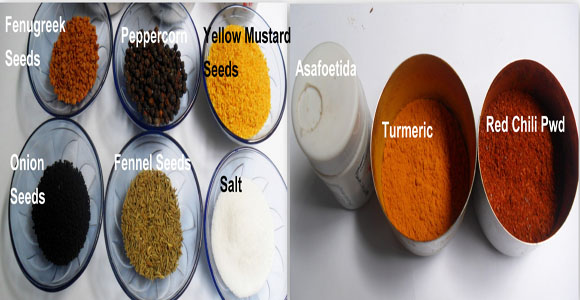
    3) Take three table spoons of fenugreek seeds ( Mentulu )

    4) Take four table spoons of fennel seed ( Sompu )

    5) Take two table Red chilli powder

    6) Take two table spoons of turmeric ( Pasupu )

    7) Take two strands curry leaves

    8) Take two table spoons of 2 vinegar

    9) take salt that is sufficient for taste

    Ingredients that are required for making mango pickle
    Ingredients that are required for making mango pickle

    Preparation:

    The pickling process in India is quite different as it follows different preparation steps and fermentation process.These pickles are used as side dishes and some times used as main dishes depending on the situations and occasions.For the preparation of this delicious spicy yummy mouth watering dish we mostly prefer to take raw mango or tender mango.We can find many types of mango pickles in the market but the most famous types are whole baby mango pickle or cut mango pickle.Whole baby mango is popular in South Indian and is prepared by using baby mangoes that are only few weeks old.The other is cut mango pickle in which we will use a special type of mango that is only used for pickle purpose and they cannot be consumed directly as ripe fruit.The baby mangoes are pickled and added with some spices by undergoing some process so that the pickles can be preserved for years.

    Spicy pickled mango preparation:

    Step 1:

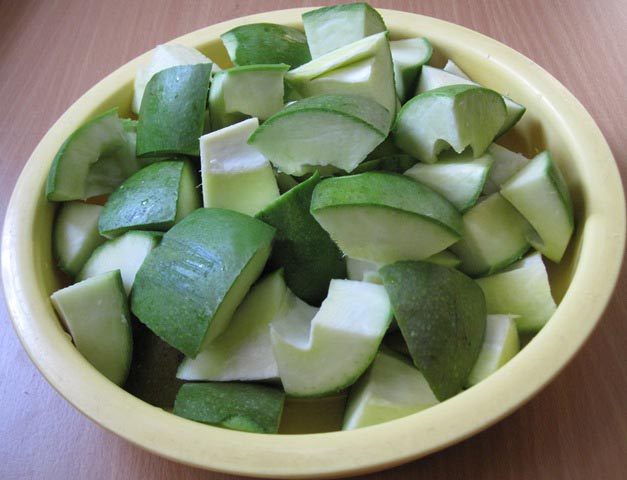
    Wash the mangoes thoroughly and cut them into four pieces each.Then remove the pit from the mango and add salt to the pieces and mix them well until the salt gets absorbed by the mango pieces and leave it undisturbed for about 20 minutes.After that dry the mango pieces in the sunlight for two to three hours so that the moisture present in them can be evaporated.

    Mango preparation process step 1
    Mango preparation process step 1

    Step 2:

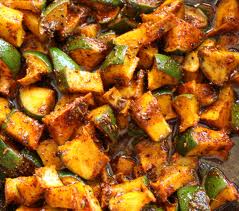
    Take one and half cup of mustard oil in a pan and heat it for about one to two minutes.If you don’t have mustard oil you can take cooking oil and heat it with mustard seeds.Now lightly crush the fenugreek seeds ( mentulu ) until they become are fine enough.Mix these crushed fenugreek with the remaining ingredients and half of the oil.Then mix the fenugreek with the fennel seeds, turmeric, chilli powder, curry leaves, vinegar, salt, and half of the mustard oil.After making this mixture add mango pieces to it and mix them well in this mixture until each piece gets the spice evenly.

    Mixing of ingredients and spice with mango pieces
    Mixing of ingredients and spice with mango pieces

    Step 3:

    After mixing well move the pieces into a sterilized jar and the remaining oil that is present poured over the pieces.Then place a muslin cloth on the jar and use a rubber band to secure the cloth.Later place the jar in sun for four to five days so that the pieces get enough time to fully absorb the spicy pickling mixture.after five days remove the muslin cloth and cover it with a lid.Once the mango is fully pickled, just use a jar with a tight lid which will help it to last for longer time.That’s it the spicy South Indian variety mango pickle is ready and it can be served with daal, rice, roti, ghee and many more.

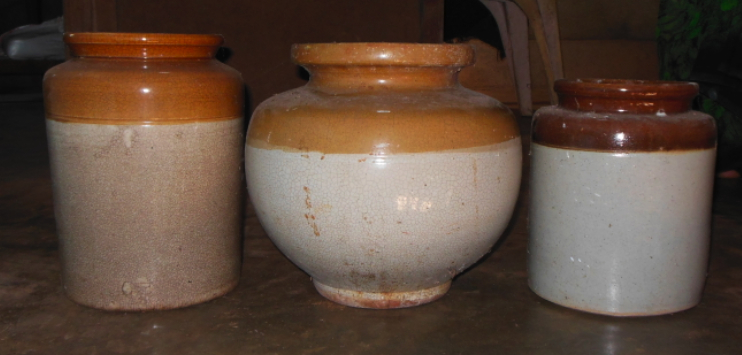
    Jadi that are mostly used for preserving pickles
    Jadi that are mostly used for preserving pickles


  • What They Write When They Write About Food?

    What They Write When They Write About Food?

    Food in Literature


    It all started when I was reading J. R. R. Tolkien’s The Hobbit where one can find description of food and feast on every third page. The word-ly delights guided me to see the divine connection between food and literature.

    Well, this reference of food in literature is not new at all. It has been there since the very beginning of written and verbal art. Homer’s Greek epic Odyssey has extensive descriptions of sacrificial food and wine in every chapter. Early Roman literature is full of food and festivity. Bible too is not untouched by this. Remember that bread and wine miracle?

    In literature, food is not only a means of survival but also a medium of interaction in society, a plot twist, reunion, symbol of change and what not. Food, in general, is a reflection of culture as a whole. No doubt writers have utilized this device of representation to their best.

    tea

    “Take some more tea,” the March Hare said to Alice, very earnestly.
    “I’ve had nothing yet,” Alice replied in an offended tone: “so I can’t take more.”
    “You mean you can’t take less,” said the Hatter: “it’s very easy to take more than nothing.”
    … Alice did not quite know what to say to this: so she helped herself to some tea and bread-and-butter.

                    This has been my favourite way of asking people have some tea. Alice comes to terms with the world around her through this little tea party. Lewis Carroll has effectively used food, in both of his books Alice’s Adventure in Wonderland and Through the Looking-Glass, to represent as well as critique on social behavior and ideals of Victorian society.

    Queen said. “The rule is, jam to-morrow and jam yesterday—but never jam to-day.”
    “It must come sometimes to ‘jam to-day,’ ” Alice objected.
    “No it can’t,” said the Queen. “Its jam every other day: to-day isn’t any other day, you know.”

                    As we are talking about a society’s critique, Tolstoy’s opinion of the excesses of nineteenth-century Russian aristocrats can be seen in Anna Karenina where the characters Levin and Oblonsky share a meal of three dozen oysters, soupe printanière, turbot with sauce Beaumarchaise, roast beef, poulard à l’estragon, parmesan cheese, macédoine de fruits, vodka, champagne, and two bottles of Chablis.

    A person’s eating habits also shows his character. In world’s most unread classic, James Joyce’s Ulysses, the protagonist Leopold Bloom’s description is like this:

    Mr. Leopold Bloom ate with relish the inner organs of beasts and fowls. He liked thick giblet soup, nutty gizzards, a stuffed roast heart, liverslices fried with crustcrumbs, fried hencods’ roes. Most of all he liked grilled mutton kidneys which gave to his palate a fine tang of faintly scented urine.

                    Our protagonist is a man of tremendous appetite and similarly in later part of the story, we can hear his belly grumbling. As the story ends and he reaches his home, all he asks his wife to do before falling asleep at her feet is to make him some breakfast.

    One of my favourite story A Christmas Carol by Charles Dickens also has a special role of food in it. First when the Second Spirit brought Scrooge to Bob Cratchit’s dwellings and at the end of the story when Scrooge sent a turkey to Bob Cratchit’s place.

    “Do you know the Poulterer’s in the next street but one, at the corner ?” Scrooge inquired.
    “I should hope I did,” replied the lad.
    “An intelligent boy!” said Scrooge. “A remarkable boy! Do you know whether they’ve sold the prize Turkey that was hanging up there?—Not the little prize Turkey: the big one?”
    I’ll send it to Bob Cratchit’s,” whispered Scrooge, rubbing his hands, and splitting with a laugh. “He shan’t know who sends it. It’s twice the size of Tiny Tim. Joe Miller never made such a joke as sending it to Bob’s will be!”

                    In Scrooge’s story it is shown as a first step towards change. Still my all-time favourite dining table moments are following:-

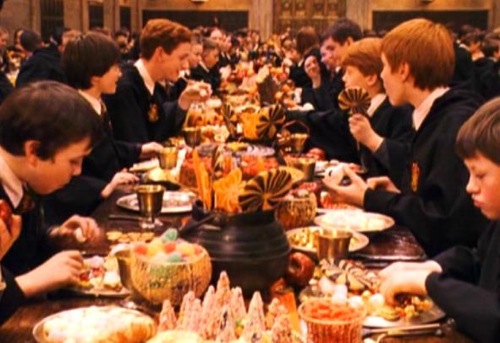
    First would be the Harry Potter’s feast in Hogwarts. For both Harry and reader it was the most amazing experience. A new world for Harry, where his life truly begins.

    Hogwarts-Feast

    “He had never seen so many thing he liked to eat on one table: roast beef, roast chicken, pork chops and lamb chops, sausages, bacon and steak, boiled potatoes, roast potatoes, fries, Yorkshire pudding, peas, carrots, gravy, ketchup, and for some strange reason, peppermint humbugs.” (Harry Potter and the Sorcerer’s Stone, J. K. Rowling)

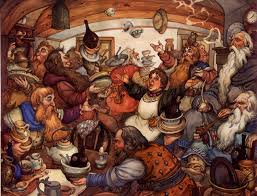
                    Last but not the least, we will go back to the starting point, that is, Tolkien’s The Hobbit which is full of Hobbit-love for food but the best isthelittle feast right at the beginning of story which decides the future of Bilbo Baggins.

    images

    Already it had almost become a throng. Some called for ale, and some for porter, and one for coffee, and all of them for cakes; so the hobbit was kept very busy for a while.
    A big jug of coffee had just been set in the hearth, the seed-cakes were gone, and the dwarves were starting on a round of buttered scones, when there came- a loud knock.
    “Now we are all here!” said Gandalf, looking at the row of thirteen hoods- the best detachable party hoods- and his own hat hanging on the pegs.
    “Quite a merry gathering!I hope there is something  left for the latecomers to eat and drink! What’s that? Tea! No thank you! A little red wine, I think for me.”
    “And for me,” said Thorin.
    “And raspberry jam and apple tart,” said Bifur.
    “And mince-pies and cheese,” said Bofur.
    “And pork-pie and salad,” said Bombur.
    “And more cakes- and ale- and coffee, if you don’t mind,”
    called the other dwarves through the door.
    “Put on a few eggs, there’s a good fellow!” Gandalf called after him, as the hobbitstumped off to the pantries. “And just bring out the cold chicken and pickles!”

    There are so many references that it is impossible to put together all of them. So the story ends here. Next time you pick up a book, pay attention to the food too as it tells a story in itself.

  • Mouth-watering Kolkata Street Food

    Mouth-watering Kolkata Street Food

    Kolkata. The City of Joy.
    Kolkata. The land of literature and poetry.
    Kolkata. The land of ‘tok-jhal-mishti’.
    Kolkata. The city of history and heritage.
    Kolkata. The Cultural Capital of India.
    Kolkata. The city of street food.

    Food as we know goes hand in hand with culture. Street food- the very culture of which began in Kolkata and it holds great importance in the city. Unlike other cities where there are particular areas where you can expect to find chaat-walla, gol-guppa walla and nimbu-pani wale bhaiya, in Kolkata you will find road-side vendors at every nook and crack of the city selling some or the other snack. Once you have lived in Kolkata and if you move out, more than your family you will miss the food- this is a popular belief. I was born and brought up in this city and I have explored all the possible street food items that are available here, being the foodie that I am. So here is a list of the 16 most delicious and mouth-watering street food items found in the City of Joy which sure will leave all of you wanting for more.

    1. The all-time favourite: Puchka and Churmur.

    110

    This is one of the most iconic street food items and it is an all-time favourite. As we know it, puchka belongs to the Gol-guppa or the Paani puri family, which are the other variations found in other parts of the country. But puchka, as called in Kolkata is thought to be the King of all variations. It contains numerous spices and comes in lot of variations like- ‘Doi puchka or dahi puchka’ which has curd. This is one of the specialities of Kolkata. The spiced mashed potato along with the tamarind or ‘misthti jol’ (Sweet water) in the crunchy puri is sure to make you drool.

    2. Jhalmuri

    24

    This is another speciality of Kolkata. This is so famous that it has made a mark for it across continents. It consists of puffed rice, spices, chanachur or bhujia, chopped onions, chilly and nuts. It might also have coriander, tomatoes and a coconut slice. This is a food item which can be modified according to the customer’s choice. Jhalmuri is served in old newspaper cones, something which has been an old tradition now.

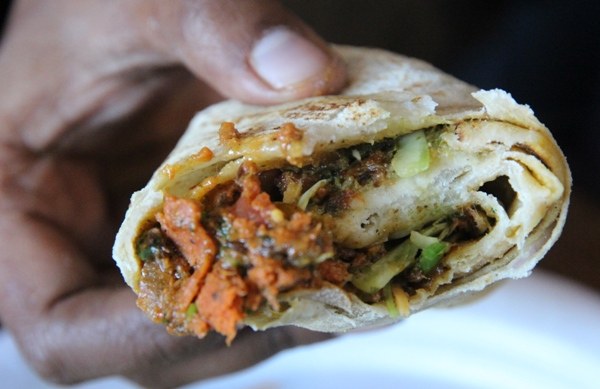
    3. Roll

    35

    The rolls found in Kolkata are definitely the most delicious ones you will ever eat. The Kathi roll is again a speciality of this city. Basically a parantha is filled with the stuffing of one’s choice (for example Aloo, paneer, tandoori chicken, egg, etc.) and it rolled up, which the customer is supposed to hold in the hand and eat. Rolls are a favourite of the students or office-workers because it is not only tasty, it is also filling and affordable.

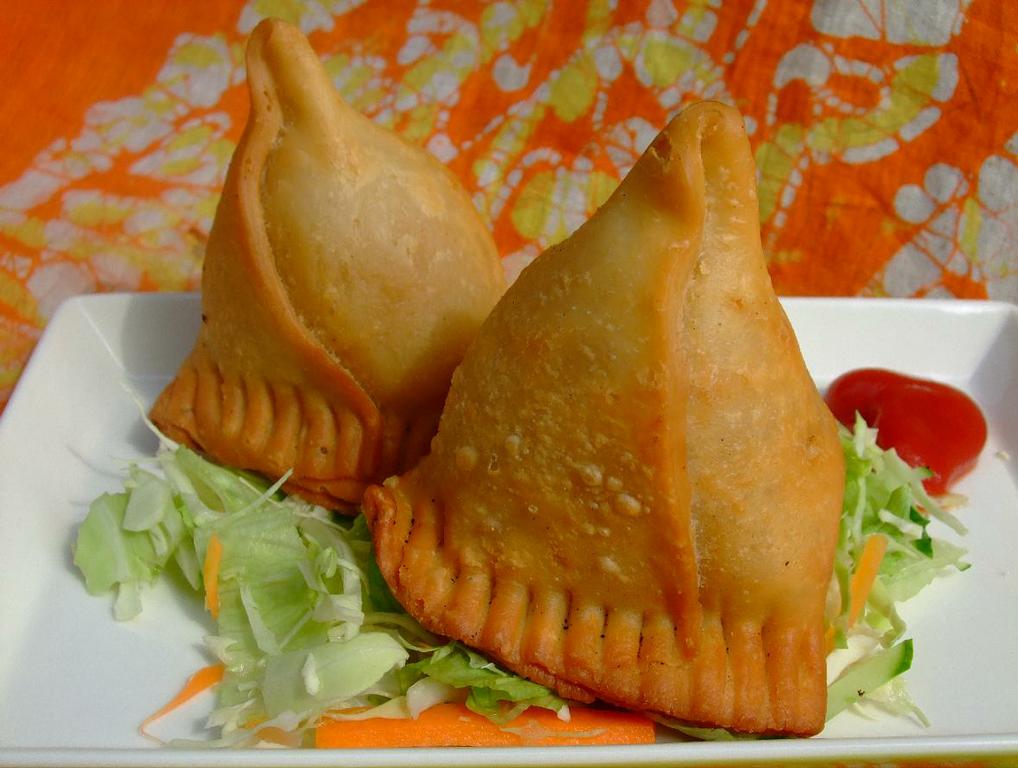
    4. Samosa or Shinghara

    samosa_full

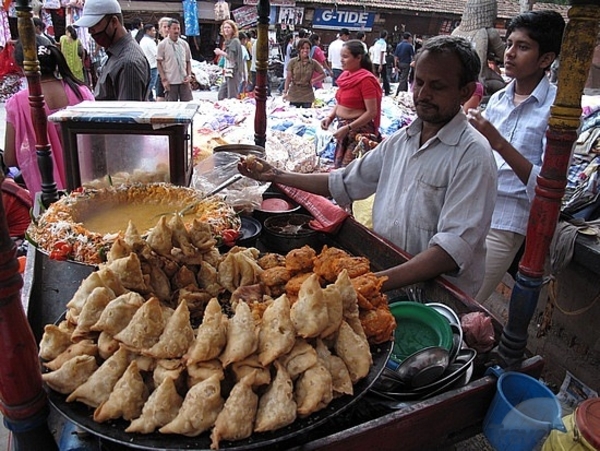
    Usually it is an evening snack, enjoyed with a cup of hot tea. It is a triangular shaped baked of fried pastry and it has a stuffing of mashed potatoes and is served with mishti chutney. They may have variations where the stuffing comprises of paneer, minced mutton, keema, etc.

    5. Telebhaja

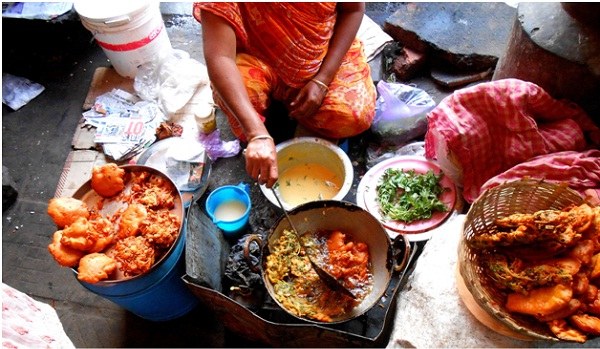
    43

    Quintessentially Bengali, telebhaja means fried items. In every corner of the street you will find small road-side stalls selling fried items such as ‘Beguni, aloo’r chop, pyaaji, phuluri, etc. They are excessively oily but they taste heavenly. This is one item every Calcuttan definitely misses when they leave.

    6. Ghoogni

    54

    This is a typical Bengali dish and it comprises of Yellow dried peas, onions, chilly, coriander, tomatoes, and seasoned with spices. One may also add sliced carrots and coconut. It is mixed with the peas and served hot in a dry leaves bowl. Some Bengalis also enjoy ghoogni with puffed rice.

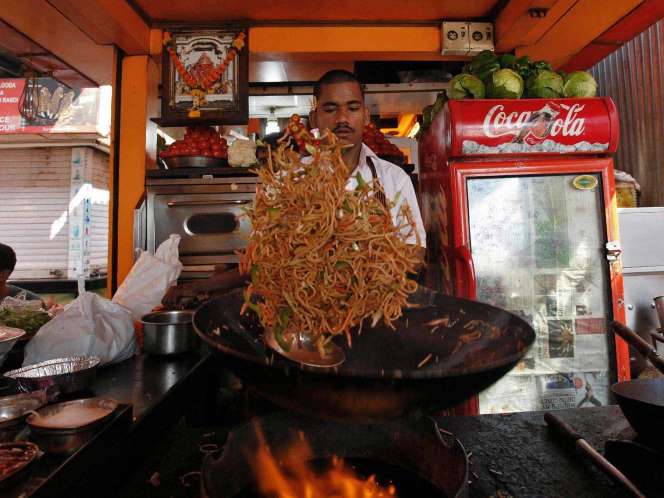
    7. Chowmein

    1CBF89791CF653CE125AE1CB2A5E7_h498_w598_m2

    You might be wondering how this dish is street food? Well in Kolkata it is. You will find street-side stalls where hot and spicy chow is pan fried or stir fried with added vegetables or egg or chicken and served in plastic plates. You have to try it and then you will never want to have chow in a restaurant again.

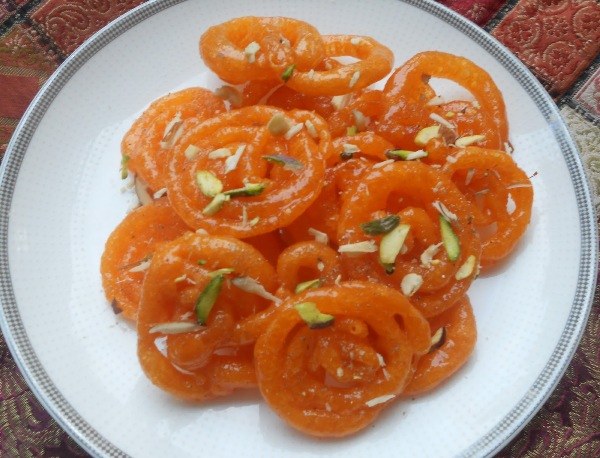
    8. Jalebi or Jilipi

    112

    Jilipi as Bengalis love to call it, it a unique type of sweet. One can never say what it exactly taste like because it is crispy, chewing, and soft all the same time. Kolkata has a special variation of jalebi called the ‘Channa’r jilipi’ which is made of channa or thick, fresh cottage curd cheese.

    9. Fish Cutlet or fish fingers

    132

    As we all know it, Bengalis love fish. Fish and even chicken cutlets once again can be found in and around every street corner and is enjoyed by all. These are really tasty snacks which are mouth-watering and very inexpensive.

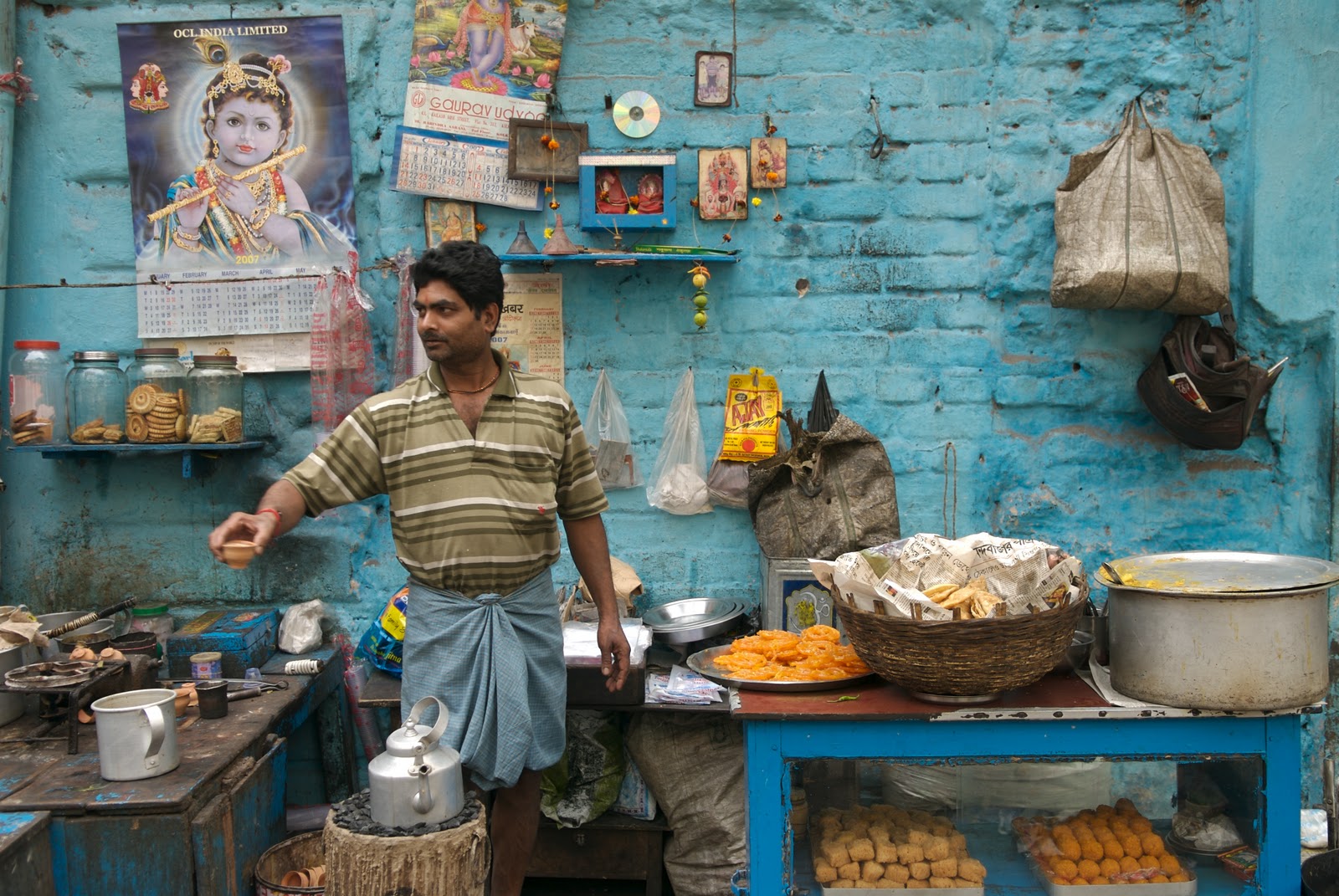
    10. Cha, Chaai in Earthen cups

    175

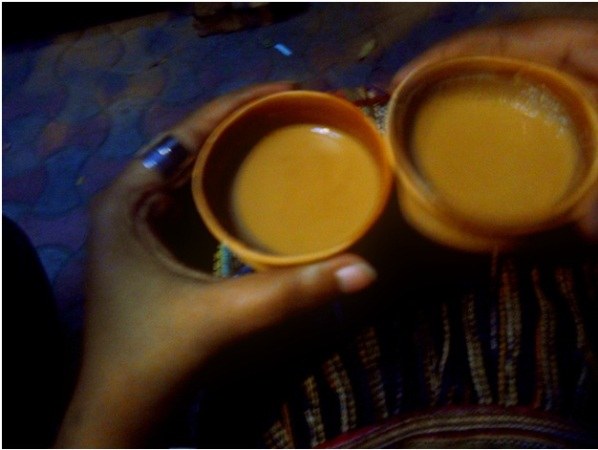
    Chai is available everywhere in the country. Then what makes Kolkata’s chai so special? The USP of the tea served here is that it is served in ‘Bhaanr’ or earthen cups. Every Calcuttan who has had chai in earthen cups will know that it adds a characteristically different flavour to the tea. The road-side vendors do add spices if the customer demands.

    These are the list of 10 street-food items which are delicious and will totally satisfy your taste buds. So all the foodies out there, next time plan a trip to Kolkata and trust me you will not be disappointed!

  • Paneer Tikka

    Paneer Tikka

    Paneer Tikka
    Paneer Tikka

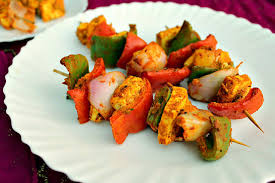
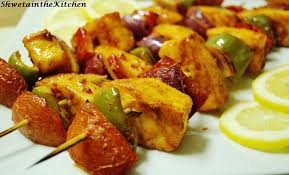
    Paneer Tikka is a popular tandoori snack which is a simple recipe. Paneer Tikka is a marinated paneer cubes which are arranged on skewerss,which are used for holding food and then baked in an oven.It is considered as one of the best paneer recipes.There are many varieties in paneer tikka to prepare.Mostly,paneer tikka is prepared on a tandoor and hence it can be named as tandoori paneer tikka but it can also be made simply through an oven.

    Paneer Tikka Masala is used to make Paneer Tikka which is  a spicy dish of onions and garlic.The garlic flavor richens the dish.This dish is originated in India and considered as an popular dish in Middle-east and Europe.This dish is popular for both vegetarians and non-vegetarians as many varieties lies in this recipe as it can always be substituted with chicken and also Chicken Tikka Masala can also be added inspite of normal masala powder  while preparing.

    Paneer
    Paneer

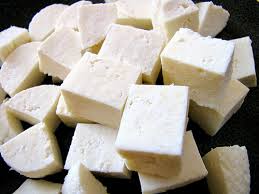
    Paneer is a dairy product now-a-days become majorly famous due to its elegance in taste.It is a type of cheese of milk curdled from sheep,goats, cows.It has a good quantity of calcium which helps in building strong body and it strengthens the bones,teeth.It also develops insulin resistance syndrome and helps in  back pain and joint pains.As it is rich in proteins,it reduces the risk of cancer and also prevents stomach disorders and is mostly useful for elder women.

    Recipe of Paneer Tikka:

    Paneer Tikka can also be made in a tawa instead of oven.We also can make paneer at home easily which tends to be healthier than which are available in markets.

    Method to prepare Paneer

    muslin cloth
    muslin cloth
    1. Boil 2 litres of fresh milk and add vinegar or curd or lemon juice to the milk and stir well and keep it aside.
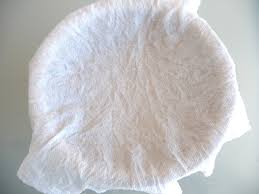
    2. After the milk has been curdled,wrap it in a muslin cloth(a thin delicate sheet) and rinse it with fresh water and squeeze the water.
    3. Now,form it like a ball and place it under a saucepan for nearly 20 minutes.
    4. Then,paneer of 200 gms is ready and we can use it in all foods.

    Ingredients needed for Paneer Tikka-

    ingredients needed
    ingredients needed
    requirements
    requirements
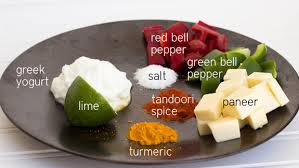
    • 2 green and red cubed capsicums cut into cubes
    • 1 onion cut into cubes
    • 1/2 cubed tomato
    • 1 1/2 cup of paneer cubes
    • 1/2 tsp of tandoori masala powder
    • 1/2 tsp of lemon juice
    • 1 cup of hung curd or yogurt
    • 1 1/2 tsp of ginger-garlic paste
    • 1 tsp of red chilli powder
    • 1/2  tsp of garam masala powder
    • 1 tsp of coriander powder
    • 1 1/2 tsp of oil
    • 1/2 tsp of kasturi methi leaves
    • 1 onion sliced for garnishing
    • toothpicks
    • salt to taste

    Preparing Paneer Tikka

    1. Take hung curd or yogurt in a bowl and beat it until it turns into a smooth paste.
    2. Add all spice powders such as red chilli powder,garam masala,coriander powder,tandoori masala powder and also add ginger-garlic paste,kasturi methi leaves and salt.
    3. Mix well and prepare a  marinade(a mixture where the food is soaked to give flavor).
    4. Now,add paneer and add the capsicum pieces,onions and stir them so that all ingredients are mixed up and leave it for an hour to marinate them.It can also be covered and placed in a  refrigerator.
    5. Now ,take a toothpick and arrange capsicums red and green,onion,paneer in an order.
    6. Switch on the stove and heat tawa and put 1 1/2 tablespoons of oil.After mil heating,lightly fry paneer and vegetables over the heat. and cook them until those items turn light brownish in color for 3-4 minutes.
    7. Now,Paneer Tikka is transferred to a plate and slowly remove the toothpicks by pushing the vegetables into the plate.
    8. Add 1 -2 tsp of lemon juice over the food and garnish them with sliced onions and serve them.
    Paneer Tikka
    Paneer Tikka
    • Paneer Tikka can also be served as a roll wrapped.The vegetables we arranged in toothpicks can be taken or also kept like it while serving.
    • Paneer Tikka can also be grilled in an oven.The marination process  should be more than 2 hours.The more it marinates,the flavors gets fused much more that they get even more tasty after preparation.
    • You can also use mushrooms,babycorn,cauliflower,tomatoes in this dish.
    • For low fat,we can add 1/4 cup of milk.
    • We can add gram flour to the marinade such that it prevents from sticking paneer in the pan.
    • Also,we need to ensure that the paneer are not overcooked and it is cooked on all sides.

    Paneer Tikka is a freshly made spicy Indian dish which can be accompanied with naans,chapati,bread.It is a tasty dish with several variations.It is also served with a gravy known as Paneer Tikka Masala.It has been popular such that even International fast food chains have added this recipe in their menu.Now-a-days,instant making packages are available in markets by different companies.It can be made within less amount of time.But the home made taste can’t compare with any taste which needs to be tasted once in a life time.

  • Dutch Delicacies

    Dutch Delicacies

    We generally do not find many Dutch restaurants in India. The food from the Netherlands is not as famous as Mexican, Italian or French food but has a spectacular flavor which makes your mouth water and fall in love with it. A foodie like me would never miss a chance to hog on to Dutch food. A lot of sea food and vegetables are consumed by the Dutch, simply because they are into fishing and farming. Bread is also consumed in a large by them. They are number one consumers of bread worldwide.
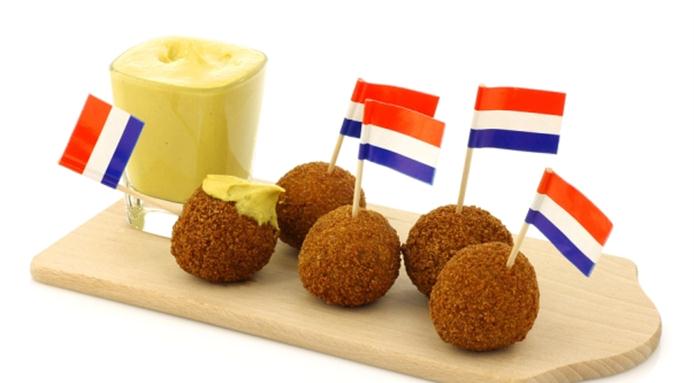
    Dutch cuisine includes many vegetables and little meat; since the consumption of bread is high, breakfast and lunch generally include bread with a variety of toppings whereas the dinner included some meat and potatoes with lots of seasonal vegetables. The Dutch people prefer relatively high carbohydrates and fat in food, reflecting the dietary need of the labourers. They also consume many dairy products. Many holidays and special occasions are good time to cook special foods. In the course of the twentieth century this diet changed and became much more cosmopolitan, with most international cuisines being represented in the major cities.

     dutch food

    HISTORY

    Traditionally, the Dutch cuisine consisted of simple food such as bread and herring. Their poverty played a huge role in modifying their cuisines. They consumed foods that were filling yet cheap. In the 18th century people started eating potatoes which became their staple food by 1800. In the early 1800s, while the rich afford what they desired, the working population ate bread and potatoes. In some areas, pancakes, fish and other seafood were consumed along with fruits and vegetables and a little meat.
    Since potatoes were grown on a large scale; they were eaten at almost every meal. Boiled and pealed for the main course during lunch and warmed and mashed for dinner. The leftovers were served for breakfast with salt, sometimes vinegar, but without gravy or any other fat. Generally, gravy was served during lunch or dinner. Since it was the food of the poor, it wasn’t very lavish but was filling and tasty. Its simplicity was its USP.
    During the nineteenth century, whatever the people drank was more or less watery, which meant that they consumed poor quality beverages with a lot of water in it. In few areas hot chocolate was consumed but beer and Jenever were the most famous drinks in the country. For most of the century beer was drunk in the southern part. This beer was top-fermented and of terrible quality; not until the 1880s did German-style bottom-fermented pilsner enter the Dutch market. Jenever consumption early in the nineteenth century was twice that of the equivalent.
    FOOD

    BREAKFAST AND LUNCH

    dutch foods


    Breakfast and lunch are similar in Dutch Cuisine. Both consist of bread with a wide variety of cold cuts, cheeses and sweet toppings; such as Hagel slag, vlokken and muisjes. The Dutch are known for their dairy products and specially cheeses. Edam, Gouda, Leerdammer, Leyden, Limburger, Maaslander, Maasdam, Mimolette, Parrano, Roomano, Vlaskaas and Prima Donna are a number of cheeses that are consumed in this nation. Dutch bread tends to be very airy, as it is made from yeast dough. Additional seeds such as sunflower or pumpkin seeds often mixed with the dough for taste. A Frisian luxury version of white bread is suikerbrood, white bread with large lumps of sugar mixed with the dough.[4] Kerststol is a traditional Dutch Christmas bread made of bread dough with sugar, dried fruits, raisins and currants and lemon and orange zest, eaten sliced, spread with butter. The Dutch produce a wide variety of breads.

    TEA TIME

    dutch-coffee


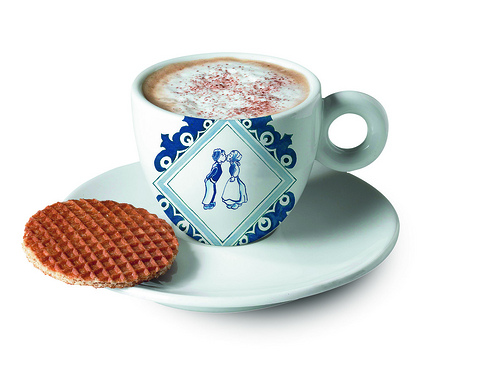
    Dutch people invite friends over for koffietijd (coffee time), which consists of coffee and cake or a biscuit, served between 10 and 11 a. m. (before lunch) and/or between 7 and 8 p. m. (after dinner). The Dutch drink coffee and tea throughout the day, often served with a single biscuit. Dutch thrift led to the famous standard rule of only one cookie with each cup of coffee. It has been suggested that the reasons for this can be found in the Protestant mentality and upbringing in the northern Netherlands.Café au lait is also very common. It is called koffie verkeerd (literally “wrong coffee”) and consists of equal parts black coffee and hot milk. The Dutch drink tea without milk and the tea is quite a lot weaker than the typical English types of tea which are taken with milk. Other hot drinks used to include warm lemonade, called kwast (hot water with lemon juice), and anijsmelk (hot milk with aniseed).
    DINNER

    meat


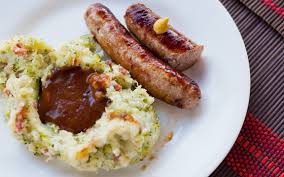
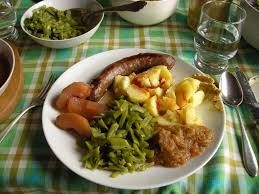
    You will not find many vegetarians over there and thus consumption of meat is common. Dinner is generally served early that starts around or even before 6 o’clock in the evening. The Dutch dinner consists of one simple course: potatoes, meat and vegetables. Traditionally potatoes with a large portion of vegetables and a small portion of meat with gravy, or a potato and vegetable stew are served. A typical traditional Dutch dinner would include stamppot (Dutch mashed potato mixed with other mashed vegetables) and pea soup.. Vegetable stews served as side dishes are for example rodekool met appeltjes (red cabbage with apples), or rode bieten (beetroot). Regular spices used in stews of this kind may be bay leaves, juniper berries, cloves, and vinegar, although strong spices are generally used sparingly. Stews are often served with pickles, including augurken (gherkins) or cocktail onions (zilveruitjes). The Dutch food is rarely hot or spicy. They prefer eating boiled food over fried ones.

    SPECIAL FOODS

    ss


    Cooking special food during special occasions is not something that only the Dutch follow. A variety of food is cooked at different occasions. The birth of a child is an occasion for serving beschuit met muisjes (Dutch rusk covered with sugared aniseed).
    The Dutch celebrate a festival of Sinterklaas is held on 5 December. On this occasion, the Dutch drink hot chocolate milk and eat spice cookies, like speculaas.
    Christmas dinner is also a family occasion where roast pork, game or other luxury meat may be served. An alternative typical Dutch tradition for Christmas meals is ‘gourmet’, when people sit together around a gourmet-set (small table top cooking stove with miniature frying pans) and use their own small frying pans to cook different types of meats, fish prawns/shrimps and finely chopped vegetables accompanied by salads, fruits and sauces.
    eww
    A famous Dutch sweet is zoute drop, (lit. “salty liquorice”) and other liquorice sweets. These sweets are small, black and look much like gums. The four types of drop are soft sweet, soft salt, hard sweet and hard salt drop. It is said that Dutch settlers introduced the cookie to North America. In fact, even the word ‘cookie’ comes from the Dutch ‘koekje’.
  • Street Food Made Easy Part-2

    Street Food Made Easy Part-2

    Okay, for those of you who have read the previous edition to this article, I am not going to bother with an explanation regarding what street food is, how it tastes, what are its benefits and the like. However, for those who are reading about street food for the first time, this article will surely prove to be a pleasant surprise. And dare I say both for the tummy and the mind!

    Street food can be of various types. It can include heavy or light food items as per your hunger pangs. Well, in this article, I would like to satisfy those among you who prefer the former category.

    Often while returning from work or from school or from college, you find your stomach rumbling. Really loudly! Well, what to do? You know that having food from the street is not really the safest bet for your health. But what is the alternative then? It is really simple actually. Just make those street food items which you have been craving for God know how many days at your own home! Follow the recipes given below to get the most satisfying and sumptuous results with the utmost amount of ease on your part. I assure you that you will not be disappointed in the least. Simply read on to find out more!

    (1) Dahi Papdi Chaat:

    PapriChaat


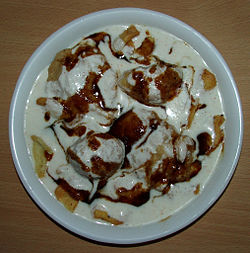
    Dahi Papdi Chaat is a very popular north Indian (Maharashtrian) street food item. Chaat essentially means a Hindi word which literally means ‘to lick’. It is now used to describe a whole range of savoury snacks and fast food items across Indian and in some places abroad as well. Papdi refers to the special crisp fried dough wafers which are made in a special way by using refined white flour and oil (mustard usually) as the main ingredients.

    Ingredients:

    •Crisp Papdis: 24.
    •Whisked Yoghurt: 1 ½ cups.
    •Salt: According to taste.
    •Sugar: 1 tbsp.
    •Boiled and Chopped Potatoes: 2 medium sized.
    •Blanched Sprouted Green Gram: ½ cup.
    •Red Chilli-Garlic Chutney: ¼ cup.
    •Green Chutney: ½ cup.
    •Sweet Tamarind Chutney: ¼ cup.
    •Roasted Cumin Powder: 1 tsp.
    •Chaat Masala: ½ tsp.
    •Red Chilli Powder: ½ tsp.
    •Fresh Coriander Leaves: According to use.
    •Sev: As required.
    •Peeled Pomegranate (Anar): 2 tbsp.

    Preparation:

    •Add salt and sugar to the yogurt and whisk further till it has arrived at a smooth consistency. Keep the mixture in the refrigerator till use. In the meantime, arrange the Papdis on a medium-sized plate.
    •Place some of the chopped potatoes over each Papdi. Over that, put some boiled sprouted moong. Drizzle a little Red Chilli-Garlic Chutney, Green Chutney and Sweet Tamarind Chutney over those.
    •Sprinkle cumin powder, chaat masala, a little red chilli powder and salt. Top it all up with the chilled yogurt mixture.
    •Drizzle some more of the Sweet Tamarind Chutney and the Red Chilli-Garlic Chutney. Then add the coriander leaves, Sev and the pomegranate pearls on top at the end.
    •Serve immediately.

    Preparation Time: 15-20 minutes.

    Serves 4.

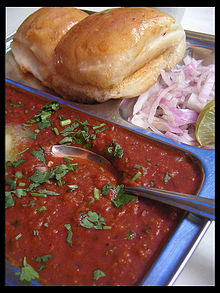
    (2) Pav Bhaji:

    PavBhaji

    Pav Bhaji is an exceedingly popular Maharashtrian street food item that traditionally originated in the Mumbai cuisine. While the Bhaji part of the dish is a traditional Indian name for a vegetable dish, the Pav or Pau or Pao was the Portuguese word for bread (small rolls). Pav Bhaji is native to Mumbai and has now become popular in almost all the metropolitan areas in India especially in those of central and western Indian states such as Gujarat and Karnataka.

    Ingredients:

    •Turmeric Powder: ¼ tsp.
    •Pav Bhaji Masala Powder: 1 ½ tbsp.
    •Ginger Garlic Paste: 1 ½ tbsp.
    •Finely Chopped Tomatoes: 3 medium sized.
    •Tomato Sauce (Optional): 4 tbsp.
    •Lemon Juice (Optional): 1-2 tsp.
    •Finely Chopped Onion for Garnishing (Optional): 1 small sized.
    •Coriander Leaves for Garnishing: According to requirement.
    •Butter/Oil for Bhaji: 1 tbsp.
    •Additional Butter for Pav: According to requirement.
    •Pav (Buns): 6 to 8.

    Preparation:

    •Add the butter or oil in a pan and heat it up. Add the chopped onions and fry till they turn translucent. Then, add the ginger garlic paste and fry till it gets fragrant.
    •Add the chopped tomatoes, the turmeric powder and then sprinkle salt. Continue to fry till the tomatoes turn soft and mushy.
    •Add the chilli powder, extra salt and Pav Bhaji Masala powder. Mix well and fry for another 2 minutes.
    •Pour water so that it is just enough to cover the vegetables.
    •Add the coriander leaves. Mix well and mash the curry if you desire a smooth Bhaji.
    •Cook till the consistency of the gravy becomes thick.
    •Slit the Pav buns horizontally leaving one edge intact.
    •Heat the butter on a pan. Open the buns and toast it for a minute or two. If you like to make it spicier, sprinkle some Pav Bhaji Masala Powder on the inner side.
    •Garnish with onions and serve either hot or warm.

    Preparation Time: 25-30 minutes.

    Serves 3-4.

    So, there you are. I am sure that you must be salivating by now if you have read through the recipes and seen the pictures. Especially if you are on an empty stomach! Well, then. Why the wait up? Go to the kitchen and start cooking. Nobody is going to stop you from devouring these delicious food items once you are done!

    Happy snacking folks!

  • Mangoes: Shout out to all the Mango Maniacs

    Mangoes: Shout out to all the Mango Maniacs

    Summer is at full stretch and the scorching heat and frequent power cuts don’t make it easy to fancy this season. There are still stuffs that we do root for throughout the year. Yes! I’m talking about long vacations, hometown visits or vacationing in the hill stations! But for all the “Foodaholics”, out there awaits the king of all fruits. Yes! MANGOES!! Though age is no category for a mango maniac, still I believe that kids are best examples of the same as to them apart from joining exciting summer camps or watching TV for endless hours, mangoes do hold a special place. Have to admit watching kids eat mangoes with pulp all over hands is an off-putting yet adorable sight. They are ones who won’t count calories but would feast upon them and contest with their siblings of who had the most like a true Mango maniac! As a kid when we used to head for our hometown, the sight of mango laden trees and lots of them used to get us frantic! Even in the cities at that time the quality of mangoes available in the market used to be fine and more feasible for the “Feast contests”.             Nowadays, we find it difficult to make a difference between which one is naturally and which are artificially ripened mangoes as both of them look almost alike. Well, to be honest artificially ripened looks more alluring. There are many features that set them apart like artificially ripened ones will have distinct patches of green color and their taste gives slight burning sensation in the mouth.  It is said that to get the taste of natural mango one should wait for the season to set in like after April. Now to list up all the mouth watering delicacies made from mangoes, though note that this wouldn’t include any sophisticated recipes but more like a list of the best homemade “Beat the heat” and other refreshments  from mango. Just to be sure Do Google the recipes for them!

    1. AAM PANNA!

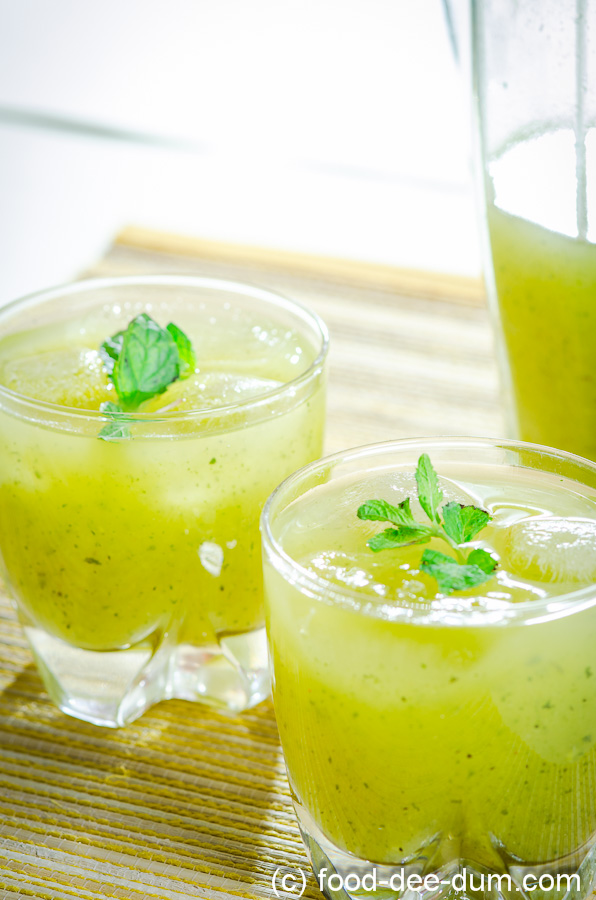
    Refreshing drink made from raw mangoes, Aam panna is made by taking the pulp out of boiled raw mangoes and then mixing the pulp with water adding sugar or jaggery. Of course not forget, Ice! Having a chilled glass of Aam panna after an exhausting day in office or playing all day in the scorching heat surely refreshes the senses. Aam_Panna

    1. AAMRAS!

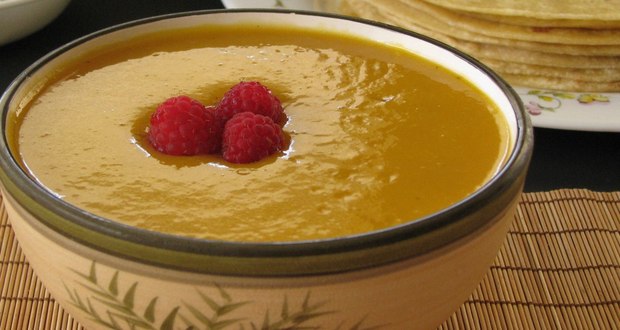
    Aamras is nothing but mango puree flavored with cardamom and saffron. This refreshment goes well with Puris, Paranthas or can relished solo. Sweetened naturally doesn’t have added sugars and one can enjoy this with limited calorie intake. aamras

    1. MANGO SMOOTHIE!

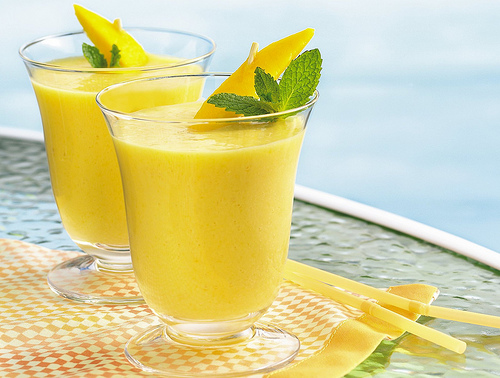
    Delicious summer drink prepared by blending mango pulp with almost equal amount of water and lime juice (as per preference). Sugar or sugarcane juice can be added to sweeten it more.Smoothie should be served chilled. Mango-Smoothies

    1. KHATTI MEETHI CHUTNEY!

    As it is not so much popular than the above refreshments, so I don’t know what its market name is. Regardless in our household it has been given that name.So, it’s basically prepared by frying raw mango pieces with mustard and cumin seeds. The fried mango pieces are the poured into hot sugar or jaggery syrup and cooked for few minutes.This mouth watering chutney tastes tangy-sweet and goes well with the meals or can be enjoyed as it is. Khatti meethi chutney

    1. MANGO MOUSSE!

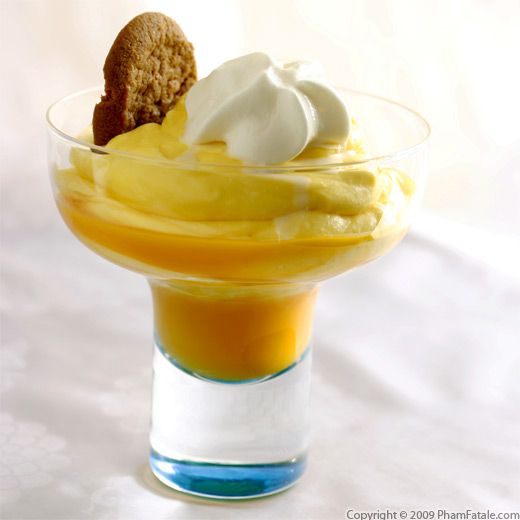
    One of the favorite deserts ever! Mango mousse is a light and creamy sweet dish prepared by both using egg or egg less. Prepared by blending the mango pulp with honey and cream and refrigerated for 30 minutes or so. This can be served with your favorite toppings like blueberry, tooti fruity e.t.c.  In the egg version while blending, egg whites pre- cooked in caramel is added. Mango mousse

    1. MANGO UPSIDE-DOWN CAKE!

    Fan of baking? If not too, this flavorsome cake is worth every bite.  Prepared like any other cake with a twisted layer of mangoes at the bottom. Top the cake with whipped cream and there you have a perfect piece of delight. Mango upside down cake   Okay, so the point made Mangoes are “Kings of Fruit”. Apart of being awesomely delicious let’s see if they carry more value.

     SKIN

    Having acne problems? Boil a raw mango, take the juice and apply as an acne remover. Mangoes are believe it or not great cleansers and exfoliate your skin too. Add wheat flour to mango pulp and apply this mixture to clean pores in the skin from deep within. For exfoliation purpose blend peeled mango with milk and crushed cashews or oat. People with sensitive skin can use mango-milk pack for refreshing their skin without worrying about reactions. Mangoes are also known to remove blemishes and enhance the skin color because of the presence of vitamin A, C and Beta carotene.

    Mango health benefits

    HEALTH

    4000 Years and older this fruit contains abundant levels of anti-oxidants  which is said to beneficial for preventing diseases like cancer, leukemia e.t.c.  It helps improving the eyesight due to presence of vitamin A. Additionally, the presence of fiber and Vitamin C helps in bringing down cholesterol and it increases metabolism.Mangoes are said to be rich in folic acid which helps in improving fertility.    So, a Mango maniac yet? There is around a month more for the mango season to get over, make sure you grab a bite of delectable must haves from safe to say now an “All rounder” fruit!

  • Gobi Manchurian Recipe

    Gobi Manchurian Recipe

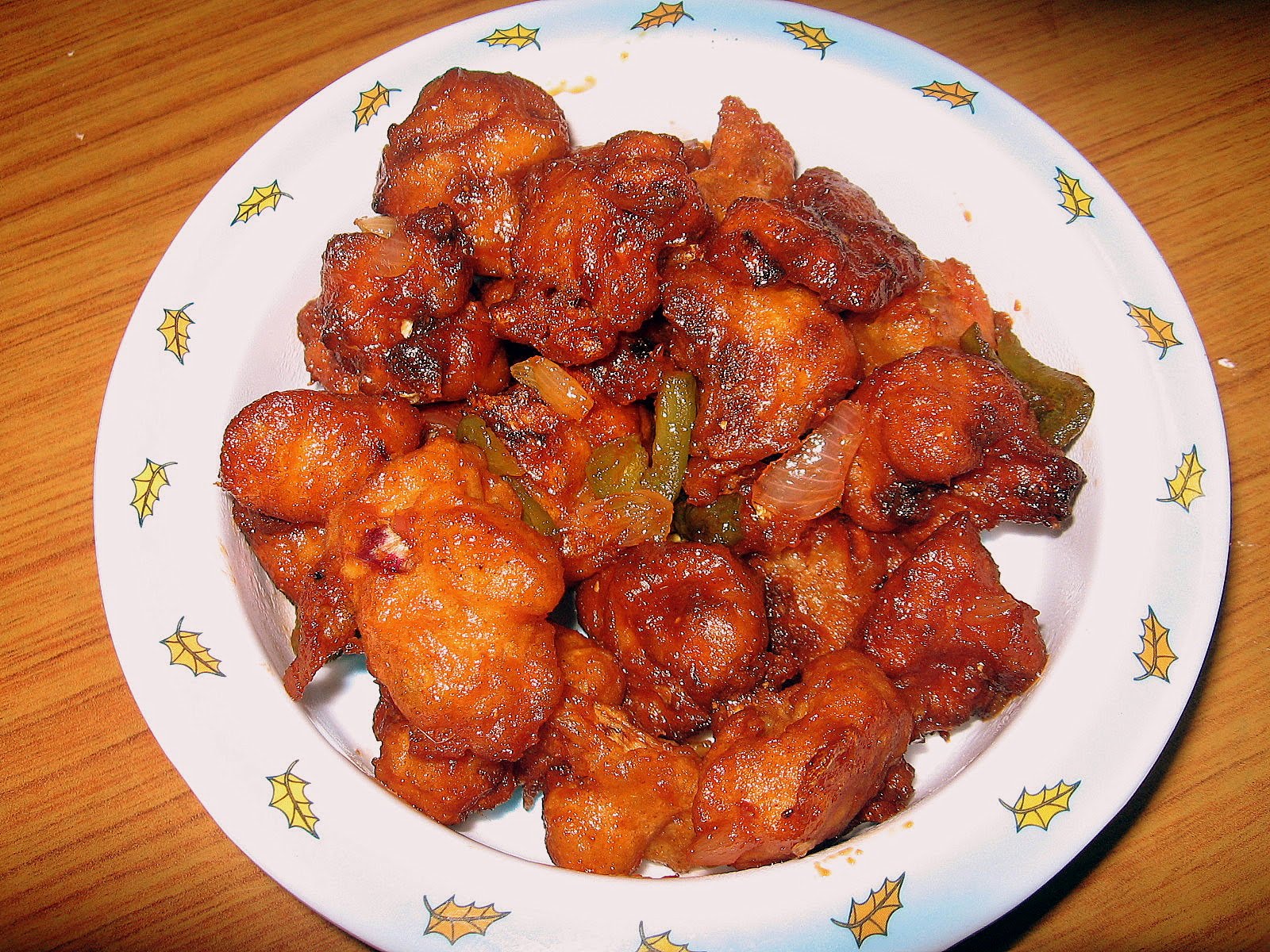
    Gobi Manchurian is a Indochinese item which is made out of fried cauliflower and this dish is popular all over India.We can find it in all the restaurants and occupies a respective place in the menu card. This Chinese dish became in India because it had a adaptive taste that is suited for many of the Indians.It is believed that the origination of this dish has came through a small Chinese community in that lived in Kolkata for a century. We can find two varieties of this dish, one is dry and the other is gravy.Both of these varieties can be prepared by using cauliflower, corn flour, maida flour, spring onion, capsicum, soy sauce, minced garlic, ground pepper, etc.generally spring onion is used for garnish purpose.It has mild spicy to hot taste this can be varied depending on one’s requirements.

    This popular Indo Chinese recipe is very delicious and tasty.This can be prepared by using florets of cauliflower known as Gobi. This will be more delicious when we make a serve with steamed rice, rotis, naans, plain noodles.We can make dry and gravy version of this Gobi Manchurian by following some steps.

    Gobi Manchurian recipe
    Gobi Manchurian recipe

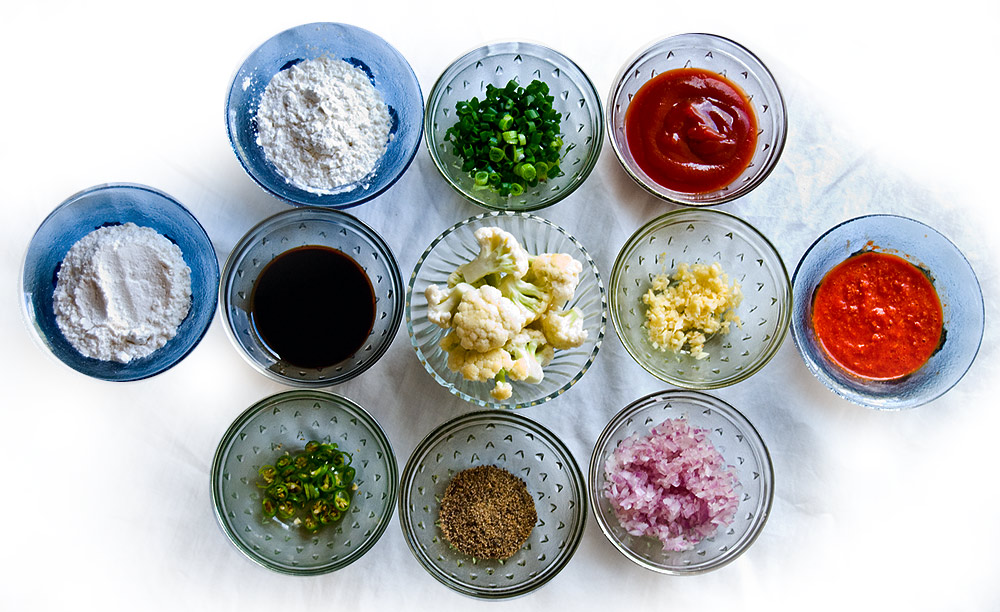
    Ingredients:

    For making sauce:

    1) Take a bunch of finely chopped spring onions approximately half the cup

    2) Take two table spoons of finely chopped ginger

    3) Take two table spoons of  finely chopped garlic

    4) Take half the table spoon of chopped celery

    5) Take 1/4 or half table spoon of black pepper powder

    6) Take one to two finely chopped green chillies

    7) Take one table spoon of soy sauce

    8) Take two to three table spoons of oil

    9) Take one and half cup of fresh water

    10) Take salt that is suitable for taste

    For making batter:

    1) Take medium sized Gobi or Cauliflower

    2) Take one cup of maida or all purpose flour

    3) Take three table spoon of corn flour

    4)  Take one table spoon of minced ginger garlic paste

    5) Take one table spoon of soy sauce

    6) Take half table spoon of black pepper powder

    7) Take 3/4 cup of veg stock

    8) Take oil that is required for making a deep fry

    9) salt required amount

    Ingredients required for making Gobi Manchurian
    Ingredients required for making Gobi Manchurian

    Preparation of Florets:

    Gobi Manchurian which is one of the best starters that one can have in any party, occasion.Most of the people like this item and no one likes to ignore it.As there are two varieties of this type most of the people like to have dry item rather than gravy one as dry item is convenient to have as a snack item before dinner. The preparation of dry Gobi Manchurian involves two parts 1) making of florets, 2) make spicy saute.

    Step 1:

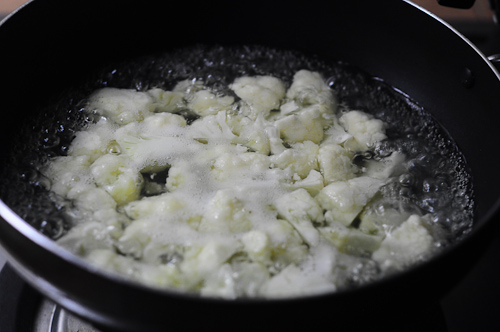
    At first take a fresh cauliflower and wash it thoroughly to see that it is dust free, care should be taken that the florets should not get damaged.Take a bowl of water and add salt, cauliflower florets to it,allow it to boil in salted water for three to four minutes on a medium flame.After boiling, excess water is drained and spread these cauliflower florets on a tissue paper.

    Boiling the florets in salt water
    Boiling the florets in salt water

    Step 2:

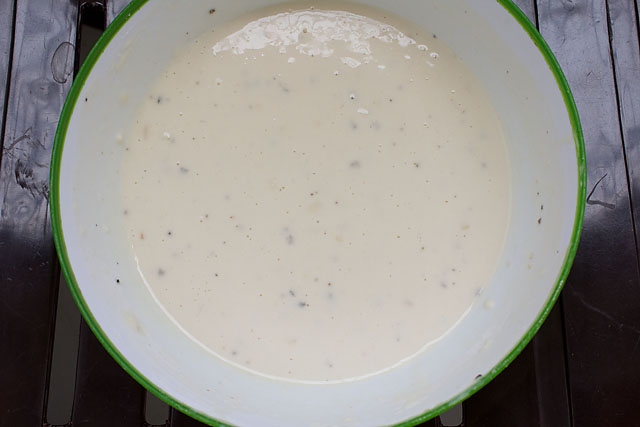
    Take a bowl and mix maida,corn flour,ginger paste,garlic paste,water and salt to form a batter.Care should be taken that this batter is not so thick or thin.Make sure that this batter must have thickness similar to dosa batter.Now add all the florets to this batter and mix them well.For better taste of this Manchurian batter must be evenly mixed to these florets.

    Batter preparation for making gobi Manchurian recipe
    Batter preparation for making gobi Manchurian recipe

    Step 3:

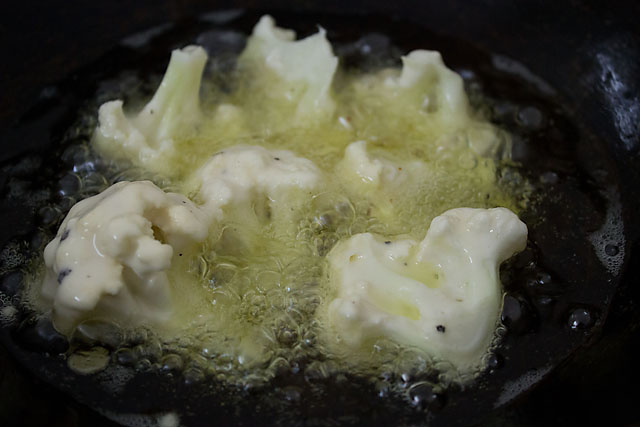
    At first take a pan and add oil to it  that is required for deep fry of these florets.Heat the oil on a medium flame and slowly add the florets to it that are mixed with batter.Fry these florets on a medium flame and care should be taken that they should not turn the oil may not spill.Frying process is done till their color changes to brown.After they are fried transfer these fried florets to a plate.

    Deep frying of florets in oil
    Deep frying of florets in oil

    Preparation of saute:

     Step 1:

    Take a deep pan or kadai and add two table spoons of oil.Heat it on a medium flame and add ginger paste, garlic paste, finely chopped green chillies, chopped capsicum, finely chopped onion to it and saute them well on a high flame for about three to four minutes.

    Gobi-Manchurian-saute making process
    Gobi-Manchurian-saute making process

    step 2:

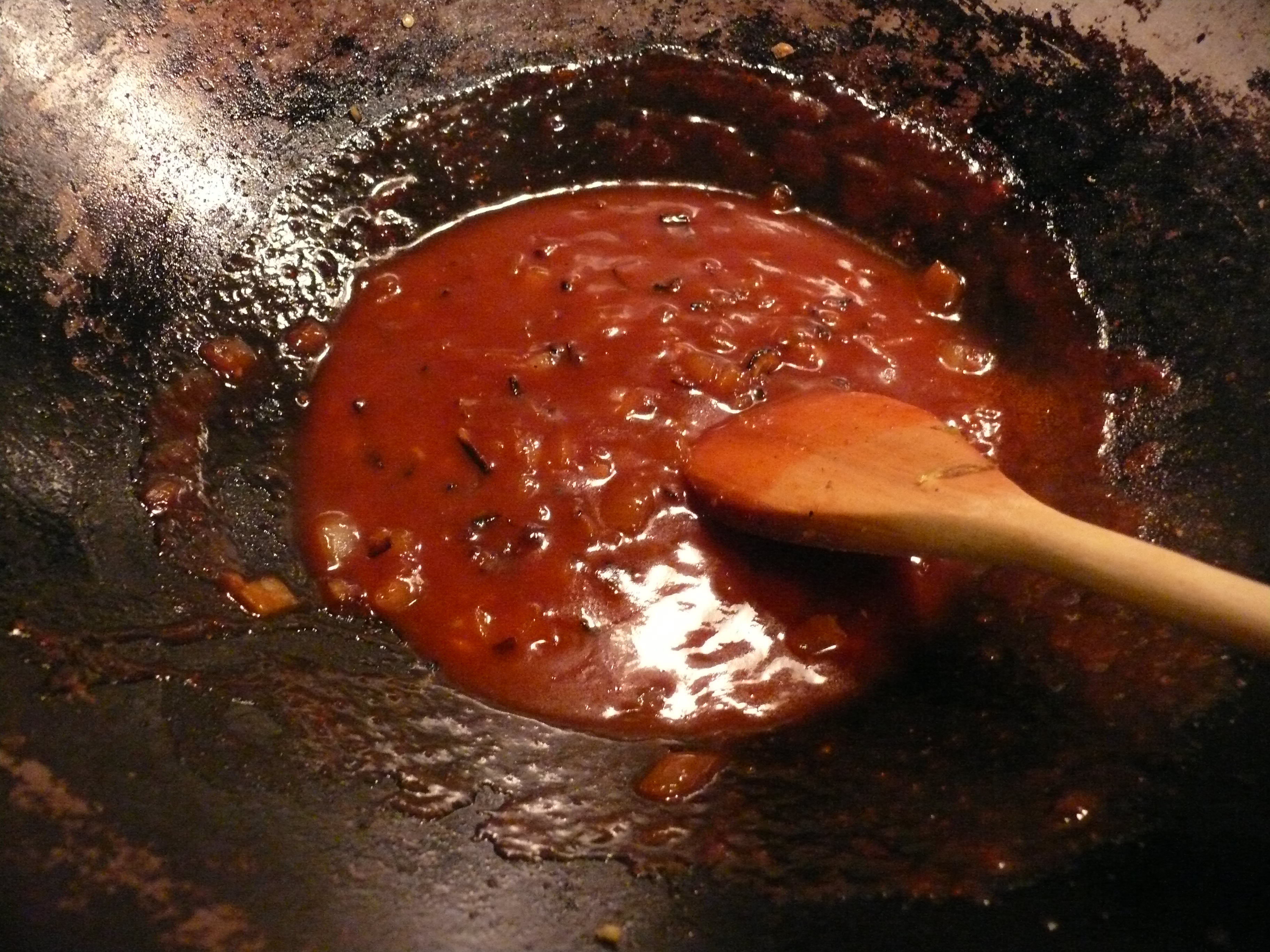
    To the mixture add soy sauce,tomato ketchup, chilli sauce and salt that is required for taste,now saute this mixture well until all the ingredients are well mixed.It must be stirred continuously for about one minute and add deep fried florets to this mixture.

    Adding florets to the sauce mixtures and saute it
    Adding florets to the sauce mixtures and saute it

    step 3:

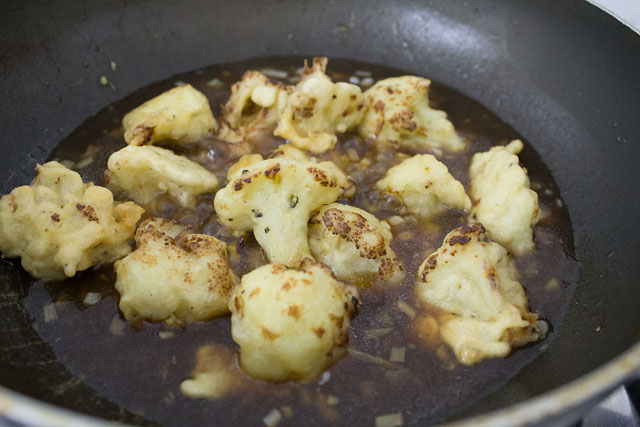
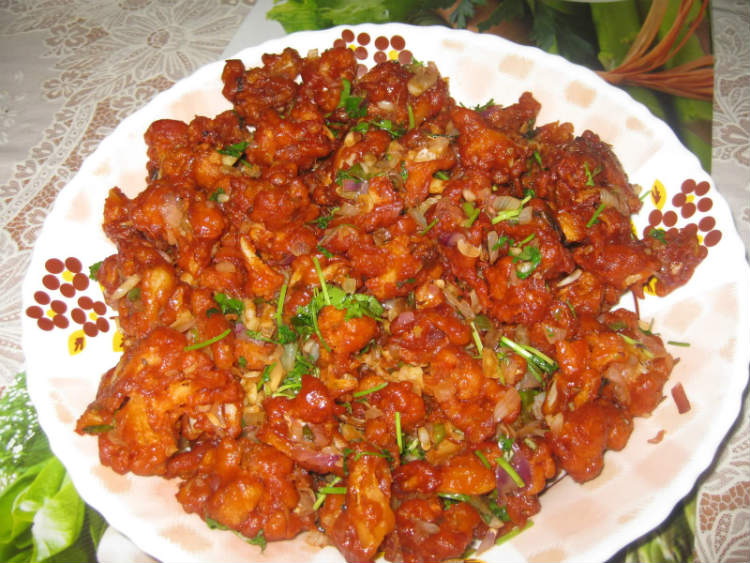
    Add deep fried florets to the pan and continuously toss the pan so that all the ingredients are well attached to each of the florets.This process of mixing must be continued for about two to three minutes on a high flame. Care should be taken while tossing the items on pan as spilling may happen.That’s it very tasty and spicy hot Gobi Manchurian is ready, take it to a serving place and enjoy the Indo Chinese recipe.

    Serve the Gobi Manchurian in a plate
    Serve the Gobi Manchurian in a plate


  • Sweets – Yummy treats for You!!

    Sweets – Yummy treats for You!!

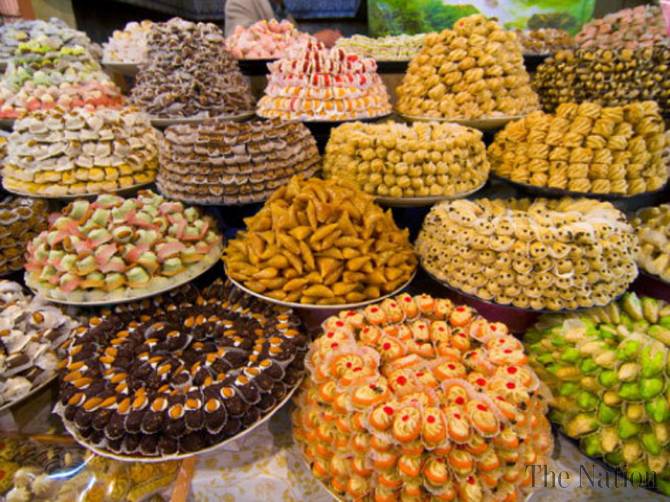
    My college is situated at this awesome place. Remember, I told you about all the lip-smacking biriyani food joints near my college? Well, Park Circus also has its neat share of ‘misti r dokan’, i.e., sweet shops.

    To name a few – Jugols’ , Mithai and a tiny sweet shop near Mahadevi Birla Girl’s School which serves soft hot white rasgullas that melt in the mouth. I remember walking to Jugols’ in the sultry heat in my first year (back then I was a regular customer) of college just to satisfy my taste buds.

    sale-of-sweets-cakes-up-manifold-ahead-of-eid-1375757760-6699


    Kolkata or Calcutta, as I still prefer to call it, is home to century old sweet shops. The ownerships may have changed hands but the love of sweets of the customers never ceased (and might I add, it never will).

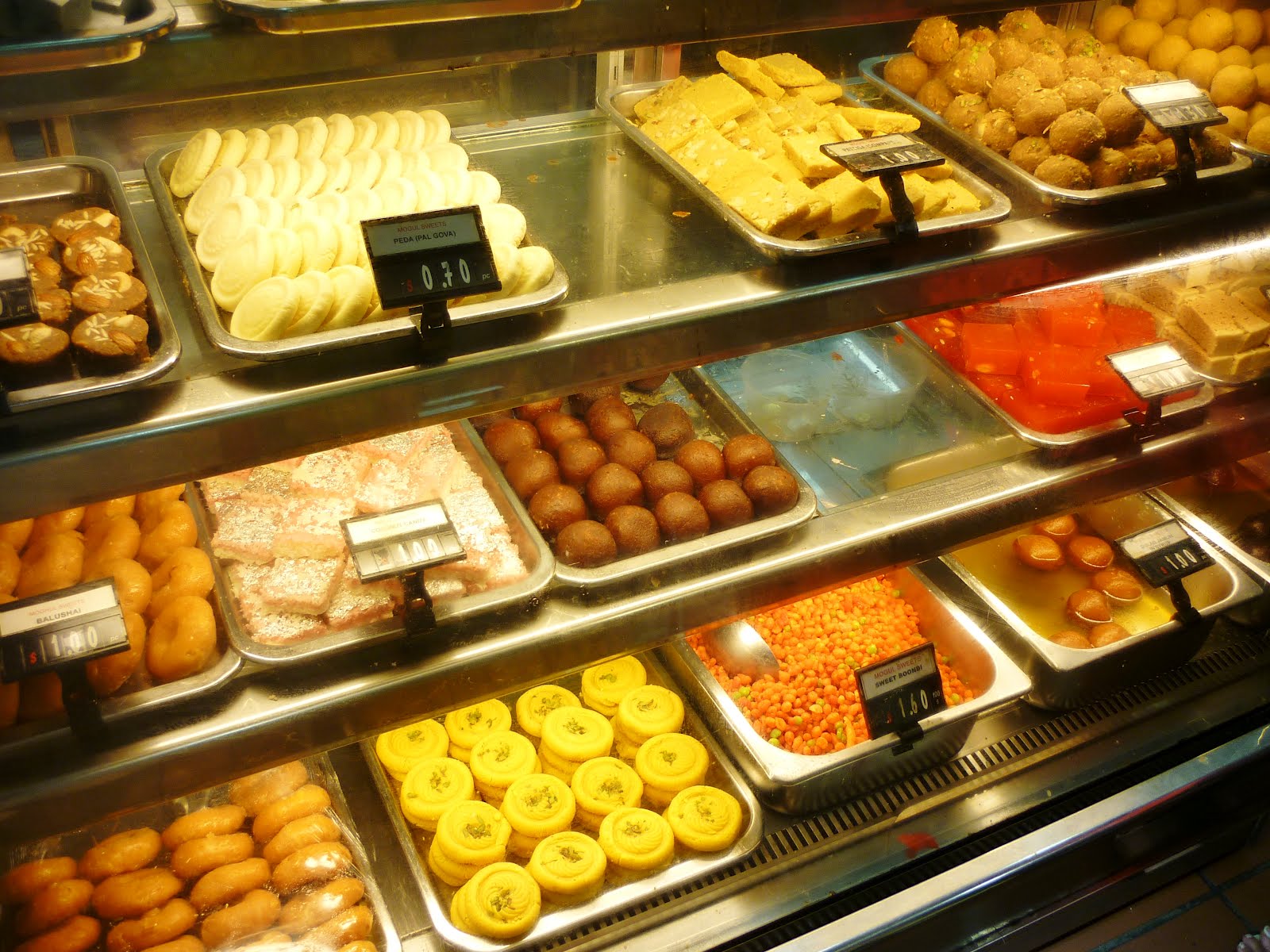
    Putiram’s ‘Rosomadhuri ‘, Mithai’s ‘Misti Doi’, Ganguram’s ‘Chomchom ‘, Balaram Mullick and Radharam Mullik’s ‘Mango Chanar Brulee ‘, Bancharam’s ‘Raj Bhog‘, Bhim Chandra Nag’s ‘Pranhara‘, are by far the popular choices of the ‘misti-loving’ denizens.


    How to make your own sweets and woo your loved ones?

    Plain and simple – follow these super easy recipes and you will be good to go.


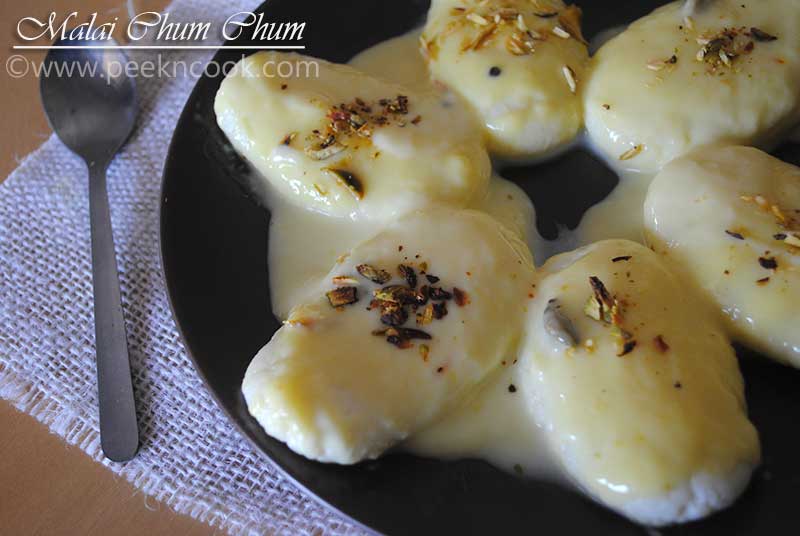
    Malai Chomchom

    malai_chumchum

    Ingredients: 1 cheese cloth

    For channa – ½ gallon whole milk, 1 large fresh lemon squeezed and filtered to make juice (use more if lemons are small size)

    For syrup- 5 cups drinking water,2 cups sugar

    For malai – ½ gallon whole milk, 1 tsp cardamom powder

    For garnish- Sliced pistachios


    Directions: Heat ½ gallon of whole milk in a heavy bottomed non­stick container in medium high heat. Stir occasionally to make sure milk does not burn at bottom or spill. When milk starts to boil put lemon juice (freshly squeezed) slowly into the boiling milk with constant gentle stirring. As milk starts to cuddle and gets separated from the whey (greenish transparent water) in about 2-­3 minutes remove the vessel from heat and pour it in a cheese cloth spread over a strainer. Note: if the whey is not transparent then add a little more lemon juice and stir gently until whey is clear and transparent. Wash the chhana under cold water nicely to remove lemon flavor. As the chhana cools down bring the edges of the cloth up and tie it together. Squeeze out as much water as possible. In order to dry the chhana  even further hang this chhana in cloth above the sink or keep a plate over it with some heavy object on top. Keep it this way for about 30 minutes. Then knead the dry chhana using the heel of your palm on a flat clean surface for about 7­-8 minutes until it becomes a soft smooth dough and your palm becomes oily. Divide the dough into 12-­14 equal parts. Take each part and roll it with both palms gently to make a smooth ball and then roll one way to give it a cylindrical shape – and voila a chomchom! Likewise do all the chom-choms. Place all the rolls on a plate and cover them with a damp cloth on top or with another plate so that they don’t dry out.

    For the syrup, take 5 cups of water and boil it in a wide vessel. Add 2 cups of sugar to it when water starts boiling. Wait until sugar dissolves completely. Add about 7­-8 chom­choms one by one into the boiling water. Don’t put too many at the same time as the chom-choms need room to expand. Keep the heat in medium high and cover the vessel tightly. Let it cook for 25 minutes. Do not open the lid in between. After 25 minutes switch off the heat and let it cool (covered) for another 10­-15 minutes. Repeat the steps to make next batch of chom-choms. For preparing the Malai, boil ½ gallon of whole milk in medium flame, stirring occasionally to prevent it from getting burnt at the bottom, until it thickens and becomes creamy. This will take some 20­-30 mins. Add cardamom powder to it and mix well. Switch off the heat. Take the chom­-choms out of the syrup and drop them into the warm malai one at a time. Kepp them in the syrup for 20 minutes. Take out the malai wrapped chom­-choms carefully and lay them into a plate. Garnish with pistachio.


    Pranhara

    pranhara-5

    Ingredients: 4 Cups whole milk, 4 tablespoons white vinegar or strained lemon juice, ½ Cup sugar, 1 Cup dry powdered milk, 3-4 tablespoons butter, 3-4 drops of rose water


    Directions: Line a colander or sieve with a large piece of cheesecloth that has been folded 3-4 times. Place the lined colander or sieve over a large bowl or sink. Boil milk in a large thick-bottomed saucepan over medium high heat. Stir occasionally, scraping the pan bottom, to avoid scorching. Mix vinegar with 4 tablespoon of water and add to boiling milk. Look out for curd-mass to separate from greenish water. As curds rise and come to the surface stop the stove. Run a spatula along the bottom of the pan occasionally to free up any stuck curds. Gently begin to ladle curds into the prepared sieve or colander. Wrap the cloth around the cheese and rinse under a running water without pressing the cheese. Gather the edges of the cloth, tie or fasten into a knot and allow to cool and drain for 2 hour minimum.

    Heat butter in a nonstick pan over medium low heat. Once butter melts, add the dry powdered milk. Stir constantly to form a coarse dust and until slightly golden and aromatic. Set aside. Knead the cheese on a clean surface with your heel of the hand by pressing it across the surface until smooth and fluffy and no trace of grains. Knead about 5-6 minutes. Collect all the cheese and divide them into two parts. Mix sugar and cheese dust(Set aside some for garnish) with one part cheese and cook in low heat stirring constantly, scrapping the pan bottom. Use a thick bottomed or non-stick pan. Cook until the mixture is very sticky and a mass pulls away from the bottom and sides of the pan. Remove from heat. Let cool. Mix the rose water, second portion of the cheese and knead till smooth. Divide into smaller bite size balls. Garnish with cheese dust.


    Recipe Courtesy – withaspin.com, bengaligourmet.com

    Image Courtesy – peekncook.com, withaspin.com, hungryangmo.com