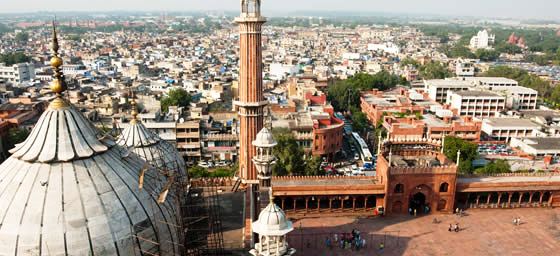
Tag: kebab

  • What makes Delhi, Dilli – 2

    What makes Delhi, Dilli – 2

    In the last tour de Delhi, we hopped onto some of the binges of Delhi, how the love affair of the nation started with Delhi, the great repertoire of Architectural marvels in Delhi and a touched the tip of the iceberg as to what makes you melt with love, when you hear the word Delhi. Today, we explore more.

    The Bedmi and Nagori:
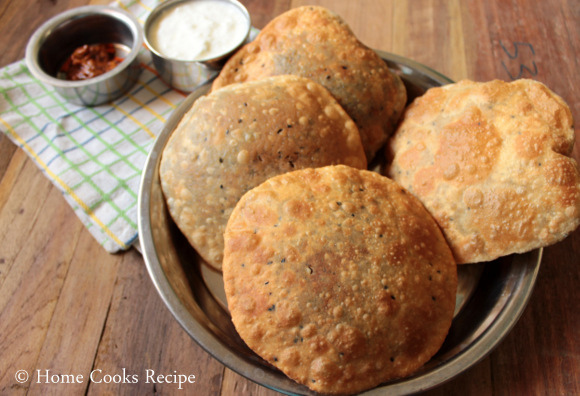
    be

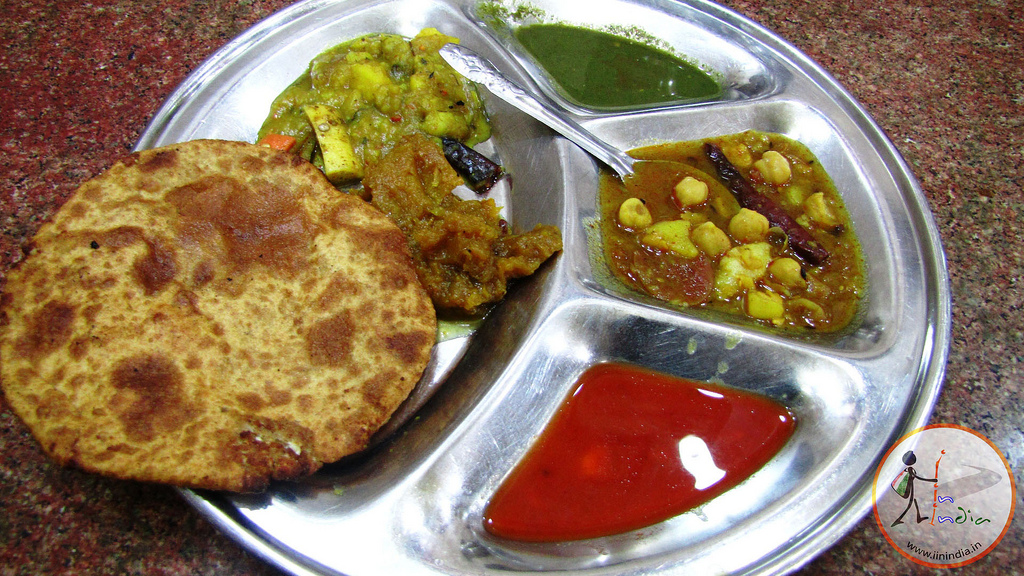
    One relatively less known delicacy but nevertheless enjoyed to its zenith by the  few loyal customers, the bedmi is a variety of Khasta Kachori smaller in size and more khasta by all means. This is what one could call the Kachori’s  younger cousin. Filled in the epicentre with Semolina, carom seeds and grated peas, this delicacy melts in your mouth. Served along with our beloved aloo ki sabzi and halwa, you might have an oddity treat and might as well try mixing the two side dishes (The halwa and the aloo ki sabzi). This queer combination will make you reminiscent of the sweet and sour soup gone terribly wrong, but it’s a taste nevertheless. The Nagori is the youngest of the brood of Kachoris and more closely resembles the papadi that you get at a chaat stall. This also served along with aloo ki sabzi and halwa will give you plentiful of energy (And not to mention a truckload of calories) to roam the rest of Chandni Chowk with me.

    The Punjabi Diaspora:
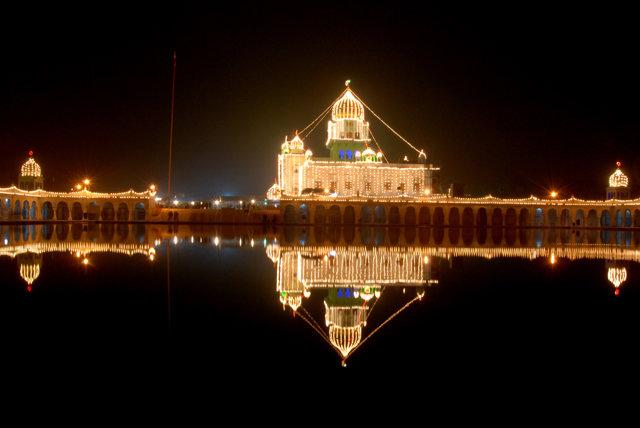
    bangla

    Delhi is borderline Punjab. Geographically and literally. Once you enter Delhi, you’ll see an equal number of turbans as you will see bare heads. That because, there was a huge exodus from the Punjab region during Delhi’s early industrialization days and also during the Punjab conflict periods. Thus there’s a mini Punjab residing in Delhi. And with their amazing good humor and tantalizing cuisines come along the mighty and revered Gurudwaras. Gurudwaras are the worship place for Sikhs. Here Sikhs spend quite a lot of time serving other people as they faithfully believe in the quote “ Service to mankind is Service to God.” There are a plenty of Gurudwaras in and around Delhi and the best part of visiting them is the tasteful  ‘Langar’.  Langar is the lunch that is served in Gurudwaras to everyone who visits them. Large langars are organized where people sit on elongated jute mats on the floor and eat out of leaf plates. The langar, anywhere, in any gurudwara is something to be DEFINITELY had if you ever get the lucky chance to visit Delhi. Daal is a must in every Langar. Along with it Halwa, aloo ki sabzi and poori make your lunch hearty and eventful. There are two large Gurudwaras in Delhi to which people flog on from places far and beyond. These are The SeesGanj Sahib and The Bangla Sahib. Both are lakes of tranquillity and you will feel emancipated from all your worries and ill humoured feelings, once you enter the complex. Visit these if you are looking for serenity and a meal full of love and affection.

    Kareem’s and Khan Chacha:

    Chicken = Kareem’s.              Kareem’s = Chicken.

    Chicken = Khan Chacha.     Khan Chacha = Chicken.

                         Kareem’s = Chicken = Khan Chacha.
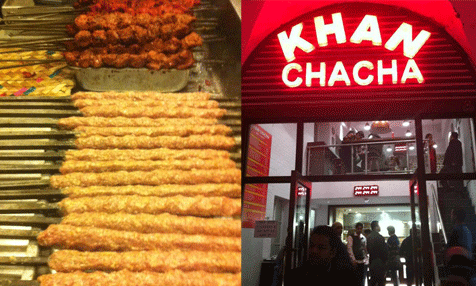
     

    tn_6284_khan1-1374305008

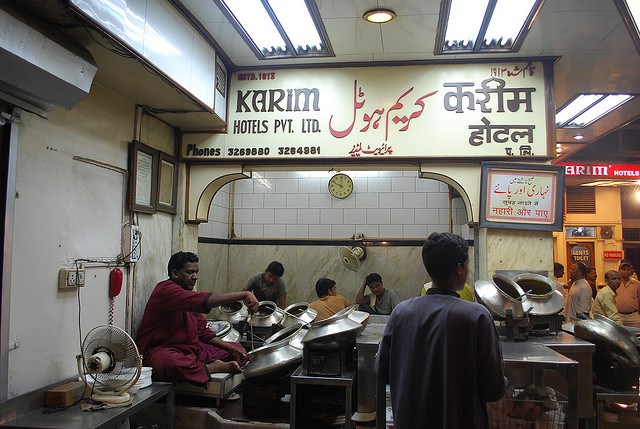
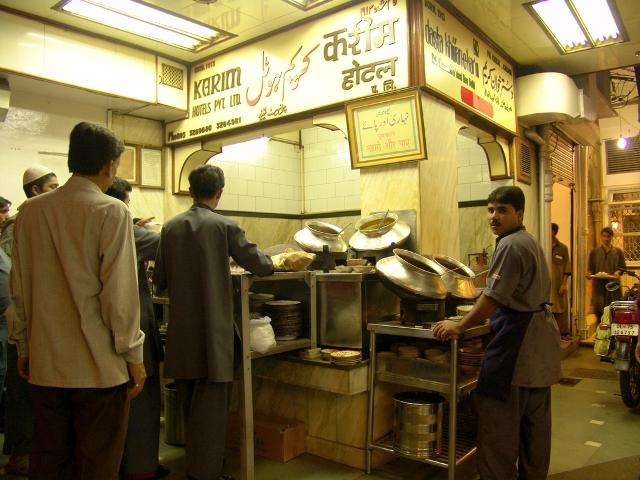
    One’s trip to Delhi will be wasteful, if he goes to Delhi but does not visit any of the above mentioned place. Both these places have been established in Delhi for the last 100 years or so and have been constantly providing the people of Delhi with an indispensable service ever since. The service of good food. Or more specifically, the service of Great Chicken. Khan Chacha and Kareem’s both are known for their Mughal style Chicken which they both offer in Chandni Chowk. The shop is tiny but the crowd of buyers: mammoth. Both of them provide exceptional Tandoori Chicken and Kebabs. Their extraordinary skills lie in providing with dry chicken variety. They specialize in Seekh kebab, Shammi kebab, mutton burra kebab, mutton stew and the rann (goat’s leg). These leave you with the exact smoky flavour that should be left after having a tandoori meal and also bestows upon you the feel of the grill.

    Connaught Place:
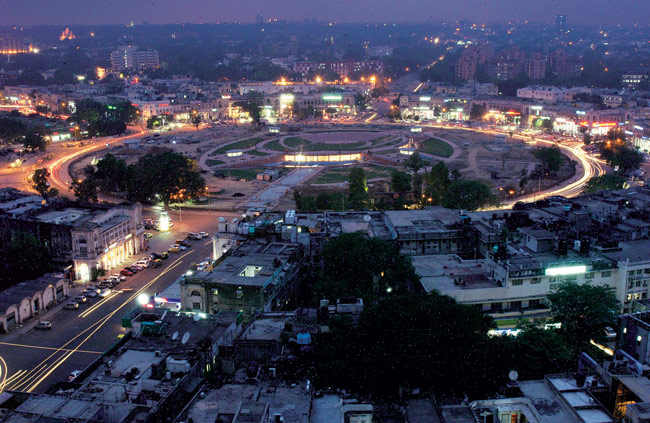
    cp-650_081714012910

    What makes Delhi, Dilli you ask. One of the reasons of Delhi’s uniqueness is Connaught Place. Two British Built market places in circular shape around a gigantic park in between. Sounds confusing? Well, it is. But in earnest Connaught Place is one stop destination for all the top notch brands anywhere in the world. Until one hasn’t a shop in Connaught Place, he/she is too amateur to go global. A beautiful set of buildings all dressed up in white just like a catholic wife-to-be in circular shape mark the inner circle and the outer circle. A market place to take a stroll ith your friends or go bridal shopping; A day to enjoy Delhi in one glance and a hurried shopping session; everything happens at Connaught Place.

    ‘THE’ Palika Bazaar:
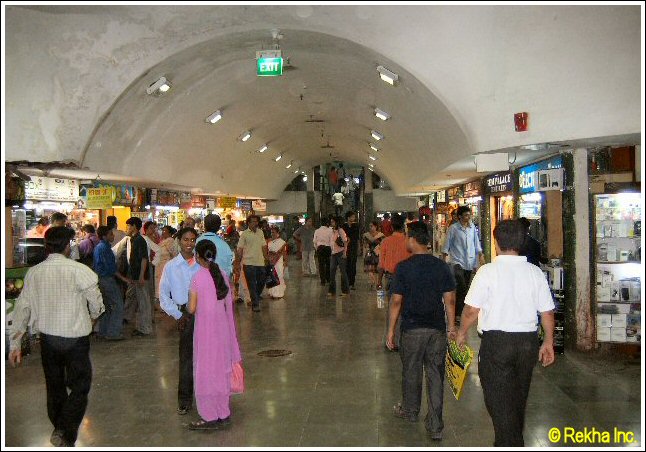
    pal

    Ever heard of an underground market place? Palika is one. No, it is not underground as in illegal, it is underground as in, it is literally 400 bunch of shops UNDER-the –GROUND. Remember how the Connought Place is circled around a gigantic park? Well this is a market place under that gigantic park. Palika is every women’s dream destination. Because you get the best of fashion labels at throw away prices. Loads of accessories, clothing, body tattoo shops throng the Palika. Men, don’t be disappointed. There’s something for you too, down there. Palika has men’s fashion outlets too, but more amazingly it has an entire bunch of shops that sell cheap China built Electronics gadgetry. So, next time you want a pen camera or a big grizzly transforming car, you can always go to the underground market.

    So, we made a tiny bit of progress in learning about Delhi. But don’t get tired yet, there’s more of Delhi to come.. Stay tuned.
  • What makes Delhi, Dilli…

    What makes Delhi, Dilli…

    A very long time ago when the heart of our nation was not famous for its countless rapes, an absent Government and Mufflerman; there was actually a city and a world inside that city that everybody loved. What made Delhi earn the jealousy of other metropolitan cities in the country, what is it that made Delhi stand shoulder to shoulder with Mumbai, the economic capital of India. Why is it that, people who have ever stayed in Delhi leave it with a heavy heart and tell everyone else that they can’t understand the emotions attached with the city if they have never ever lived in the city. Let’s find out!

    The Beginning of the Real Delhi:

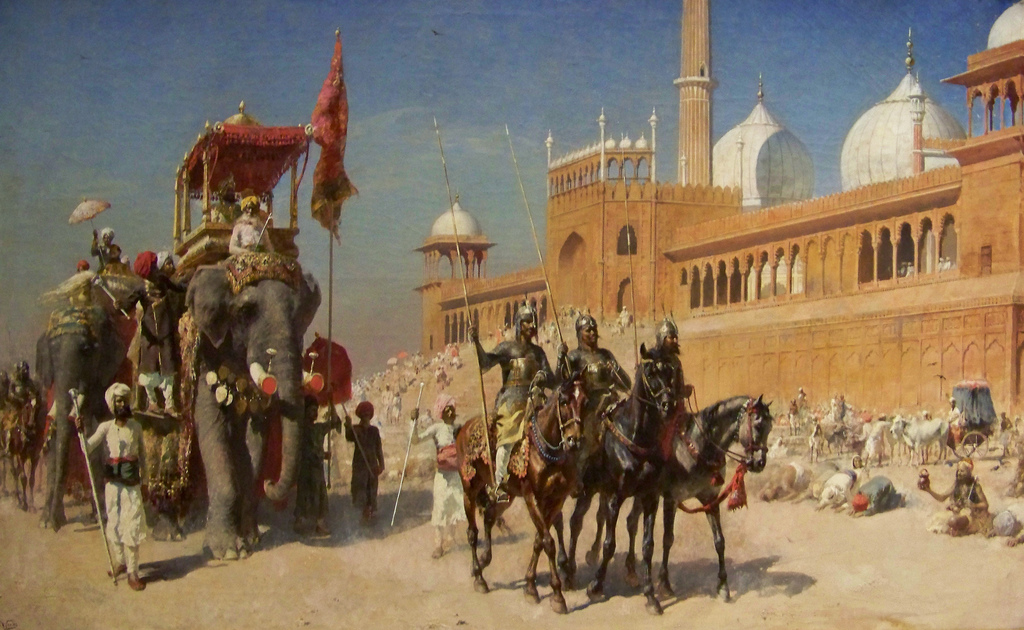
    Great_Mogul_And_His_Court_Returning_From_The_Great_Mosque_At_Delhi_India_-_Oil_Painting_by_American_Artist_Edwin_Lord_Weeks Now, the love for Delhi started long back when the Mughals transferred the Capital of India from Agra to Delhi. This is when the real on-ground transformations started taking place in Delhi. Before this move, people were as oblivious of Delhi as they were of any village in India. Firstly, with the onset of Mughals came along great Architectural Feats. For example Delhi boasts of the largest Brick Minaret in the world the Qutub Minar (well, it was built by Qutubbudin Aibek), it flaunts one of the largest mausoleums in India – The Jama Masjid, It carries reticence with its Old Fort. Also the Red Fort that instills in us a feeling of patriotism whenever we see it on our TV sets. All these Architectural marvels brought a Mughal charm to this city of ours and elevated it above its neighboring cities.

    Dilli and the finger licking tales:

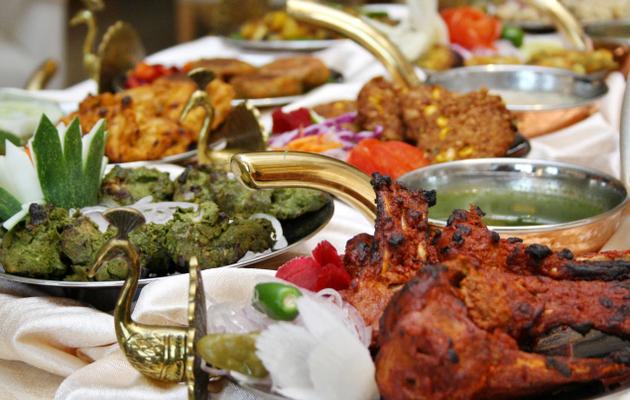
    AWADHI_FOOD_FESTIVA_898557g Along with the great architectural skill set of the Mughals arrived in Delhi their eternally pristine culinary taste. Their food was not just food, but Art on Stove. The Tandoori murg, The kadhai paneer, the Nihari,the  Paya, the Kachri Qeema, the Delhi-mein-world-famous-Mughlai Chicken, their biryani style and countless others set the tongues of the native Delhiites wagging. Not only did their cuisine establish itself in Delhi, it even grew there. More and more dishes were invented as an amalgamation of Delhi and Mughlai cuisines. This was a great culinary juxtaposition just waiting to happen. Seemed like this match was made in heaven. So, the Mughlai cuisine added one more feather to Delhi’s hat.

    Asli Delhi, Purani Dilli:

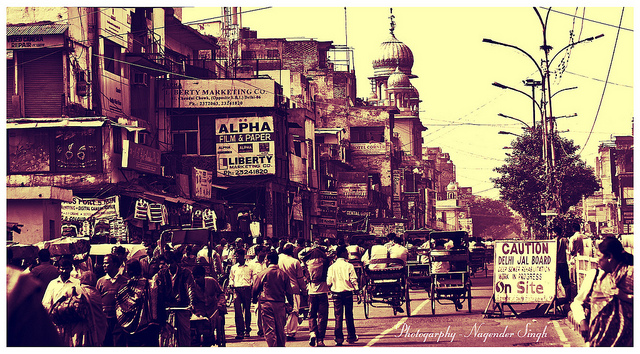
    7717061676_0ba4ab21a8_z Now, the heart of the Heart of the Nation. The Chandni Chowk and Chawri Bazaar area. For those new to the maps of  Delhi, these areas lie in the center of Delhi and still boast of historic architecture. These areas are famous for their super cramped streets, the always bustling crowd and nagging shopkeepers always trying to sell you substandard products. By the names in the list, all these seem to be pretty depressing by the levels of the national capital. But once you visit the place it seems just like your extended neighbourhood. It won’t seem as a market place to you, but a big great family  living in harmony yet tearing each other’s hair out. But there is a lot to watch out for in the Purani Dilli area. Since it is a crowded marketplace, pickpockets are always on the prowl. Also some shopkeepers tend to get too close for comfort levels in order to get their products sold. But every coin has two sides and prefer to see the loved one here please. Purani Dilli broken up and explained in pieces in the next points, because it ain’t so small that it can be contained in one measly point.

    The Paranthewaali gali:

    4950341851_7711ec9fd9_b Now, now, now. Every once in a while a moment comes in every person’s life that can’t be expressed even if you keep squealing with delight for a fortnight. For a foodie that moment would come when he enters the paraanthe waale gali. The lane where our Bollywood Star Akshay Kumar slaved and toiled for many years. The paraanthe waali gali is an even narrower lane than what already was a cramped main road of Chandni Chowk. There are a multitudes of shops there only selling paranthas. But mind you, these are not ordinary paranthas, these are paranthas made of Rabri, Paranthas made of bitter gourd and paranthas made of lady finger and all the odd vegetables and sweets you can ever garner. And these are not made on a pan or a stove, these aranthas are deep fried just like samosas and tikkis are. Your whole perception of paranthas changes after entering this foodie paradise. This narrow lane adds another dimension to your notion of parantha, by doing something with it that was unimaginable before this.

    The Japanese Samosa:

    7745361346_3ba6e884b2_z Well, to be honest, this is just sold in one shop in the entire Chandni chowk. But I swear to God, that you won’t have eaten anything like this before this. This samosa’s shape is more or less like regular samosas but the corn flour covering on the outside is striped. Thus the Japanese samosa is not wholly covered but partially revealing. The inner filling forms the crux of the whole dish. It is not spicy or filled with mashed potatoes for that matter. It is filled with a sweet mixture like that of a halwa. Thus changing the whole thought process around the samosa. By just keeping the name and shape intact, this exquisite dish retain the name value and the ingenuous sweet filling inside and the striped contours give it a modern twist. And thus, the Japanese Sammosa, The tour of the real Delhi has just begun. However, even the most brilliant of writers and esteemed authors would fail in describing the exact charisma and fascination of the city. Such complexly woven is the feel of it. I am just a young scribe who is trying to portray to you an image that tells what exactly Delhi is, if you have have never been there or miss the hell out of that angelic city of yours. To be continued…

  • A Platter of Vegetarian Kebabs

    A Platter of Vegetarian Kebabs

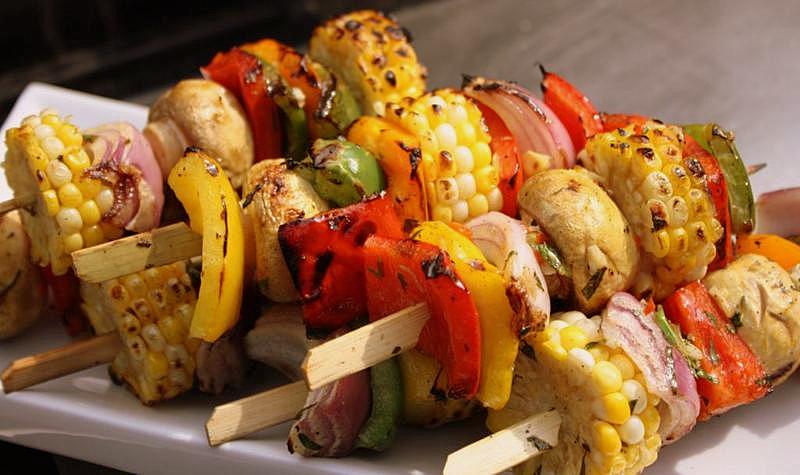
    Originating in the coastal countries of the eastern Mediterranean area, kebab is a versatile dish made by roasting and grilling pieces of meat, fish, and vegetables, over a skewer or a spit. The dish quickly spread in popularity and consumption throughout the nations of the Middle East, and then central Asia. The kebab traces its historic roots to before the 17th century B.C., and even the ancient Greek poet Homer mentions an erstwhile archaic dish resembling the same, and enjoyed all over his country in his works. However, a Turkish script by Kyssa-i Yusuf which dates back to around 1377, first properly mentions the culinary concept of the word, which is derived from the Persian language, and literally means “fry”, and sometimes “fry and burn”. Legend has it that the kebab was invented by medieval Persian soldiers who grilled meat on their swords over open-air fires in the battlefield. It quickly gained favour of both the classes and the masses, being served as the royal fare in various Islamic states over the ages, and as a much sought after and easily accessible snack or main course dish for many commoners, and the trend continues even today.

    Although lamb is the traditional choice of meat for making the kebab, there are many variants available in different meats and vegetables all over India due to religious constraints and direct or indirect dietary restrictions. Indian kebabs, whether they are vegetarian or non-vegetarian, have a unique and popular flavour of their own, owing to the wide spectrum of masalas (spices) and herbs native to the subcontinent. Apart from the numerous Indian innovations in the art of kebab making, the sheesh, shammi, tikka, and shawarma, original types of kebabs are also available everywhere, and can be found easily in small roadside eating joints as well as in top notch restaurants and hotels. The cities of Lucknow and Hyderabad are famous all over the country, owing to their thousands of decades-old, local eateries and food establishments which sell different types of primarily meat kebabs, ranging from tunday to kalmi and tangdi to reshmi, and have thus contributed a lot to culture, food, tourism, and economy.

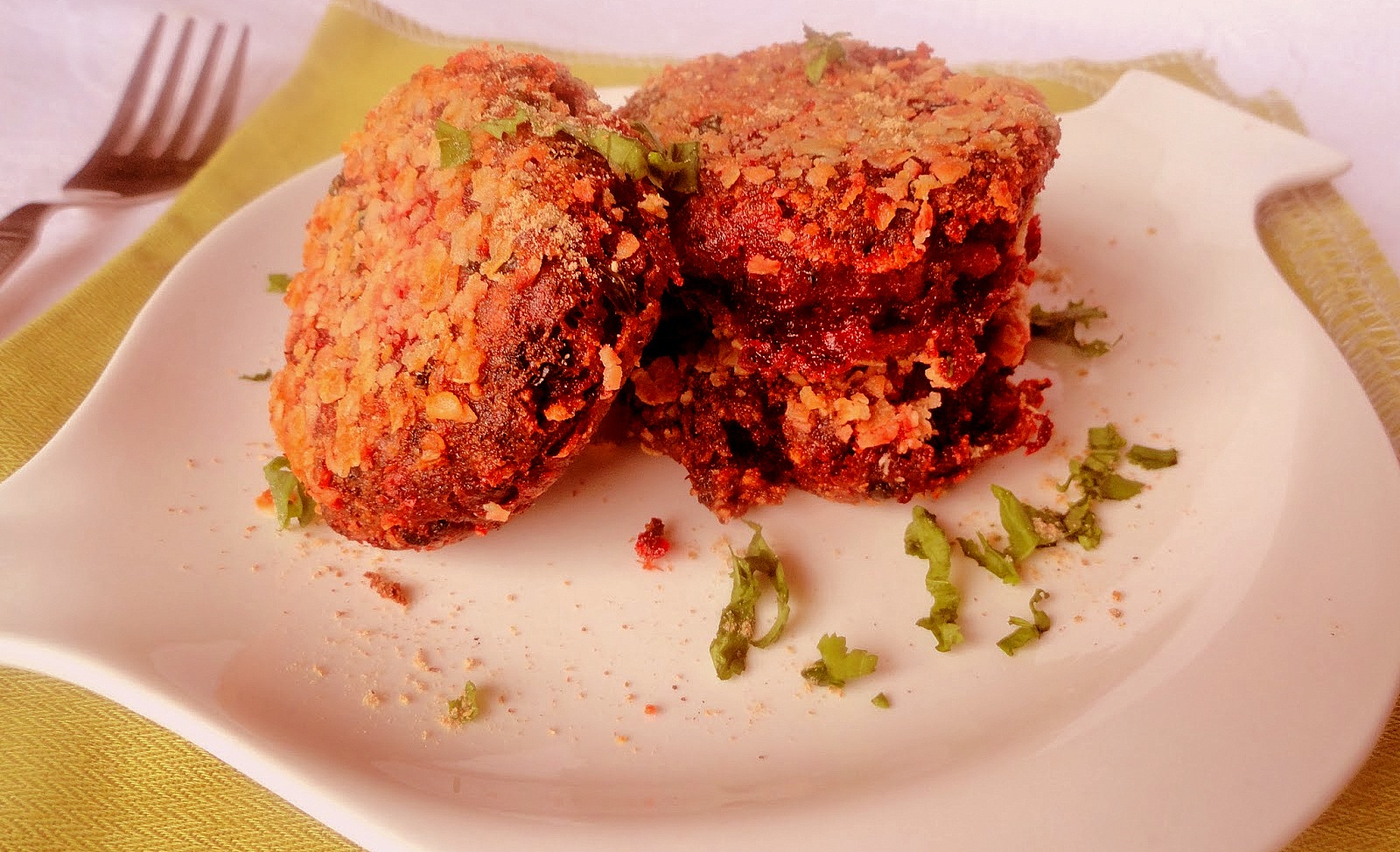
    While you can get non-vegetarian kebabs from anywhere, the vegetarian types are a rarity to find outside one’s house, and they are generally overpriced in the restaurants they are available in. Vegetarian kebabs can be easily made at home, with simple ingredients, and less elaborate methods than their non-vegetarian counterparts. This article will provide you with three novel recipes, all made wonderfully by my favourite chef in the world, my grandmother, for these lesser known variants, namely, shalgam ke kebab, kela chane kebab, and chukandar ke kebab.


    Shalgam ke Kebab (serves 4-6 people)

    Ingredients needed:

    • 7-8 bulbs of turnips
    • 2 tablespoons of roasted besan (gram flour)
    • Finely chopped onions
    • Finely shredded coriander, chilli, and ginger
    • 2 medium sized boiled potatoes
    • Salt to taste
    • 1 small teaspoon of garam masala powder
    • Vegetable oil

    Steps required:

    • Thoroughly wash the turnip bulbs, and then carefully peel their outer skins off.
    • Put the skinned turnips in a pressure cooker and steam thoroughly.
    • Once the turnips cool down, mash them and drain out the excess water.
    • Mash the boiled potatoes and mix them with the turnips. Add coriander, chilli, ginger, and onion to the mixture and be careful to make it consistent with dough.
    • Add garam masala and salt accordingly.
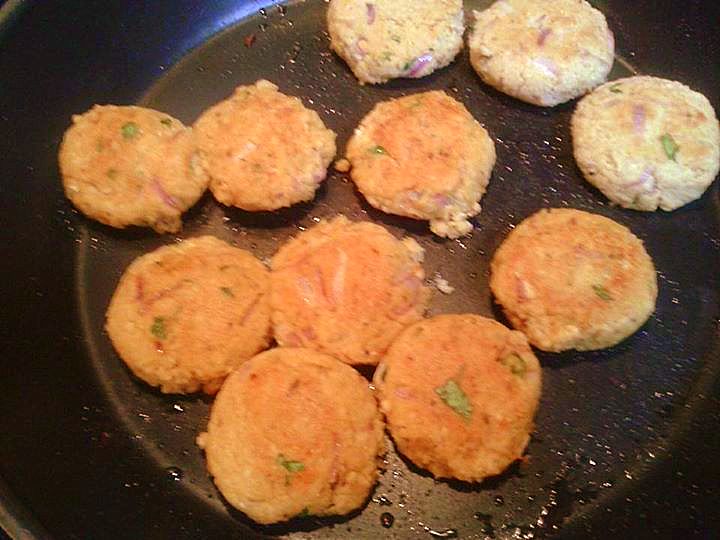
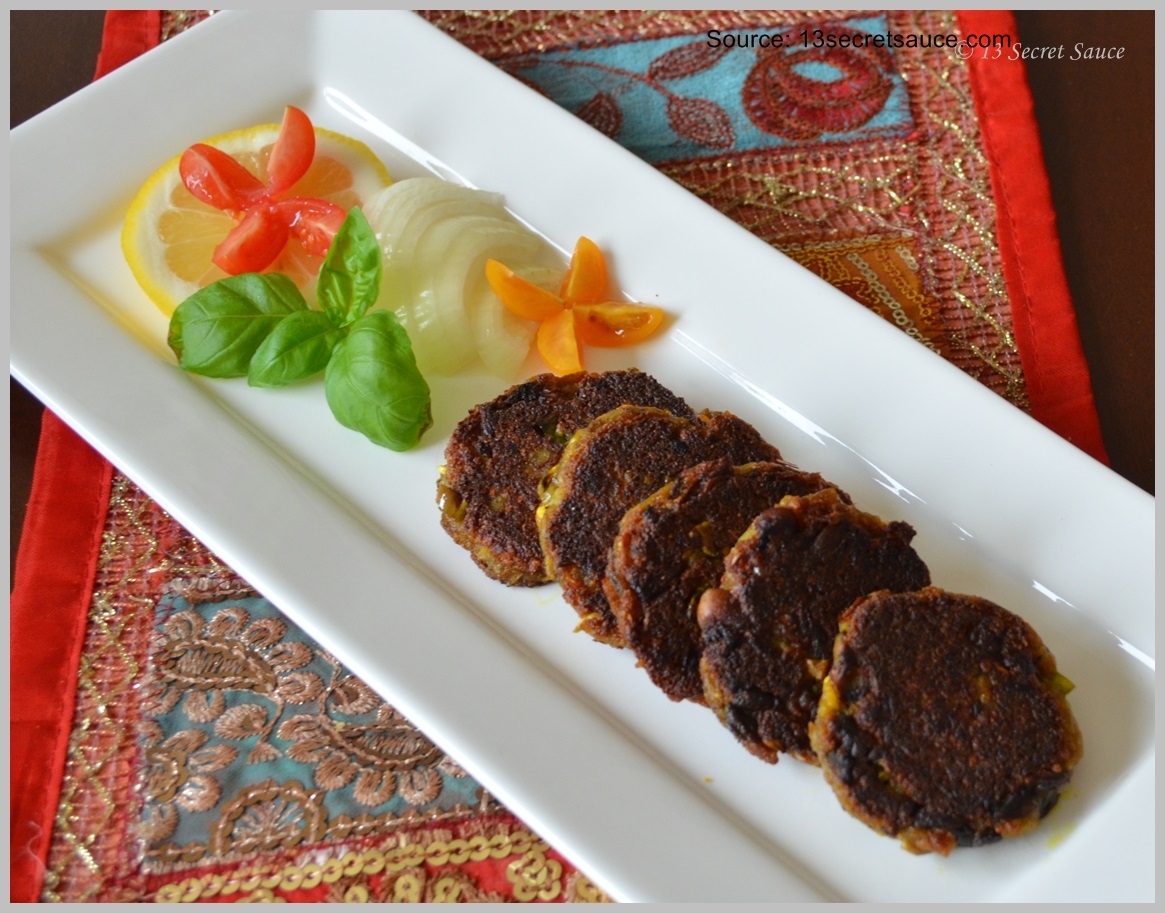
    • Make small balls of the prepared dough and flatten it into small cutlets or flattened disc shaped portions.
    • Shallow fry on a tawa (pan) until the kebabs are thoroughly cooked and are a rich golden-brown in colour.
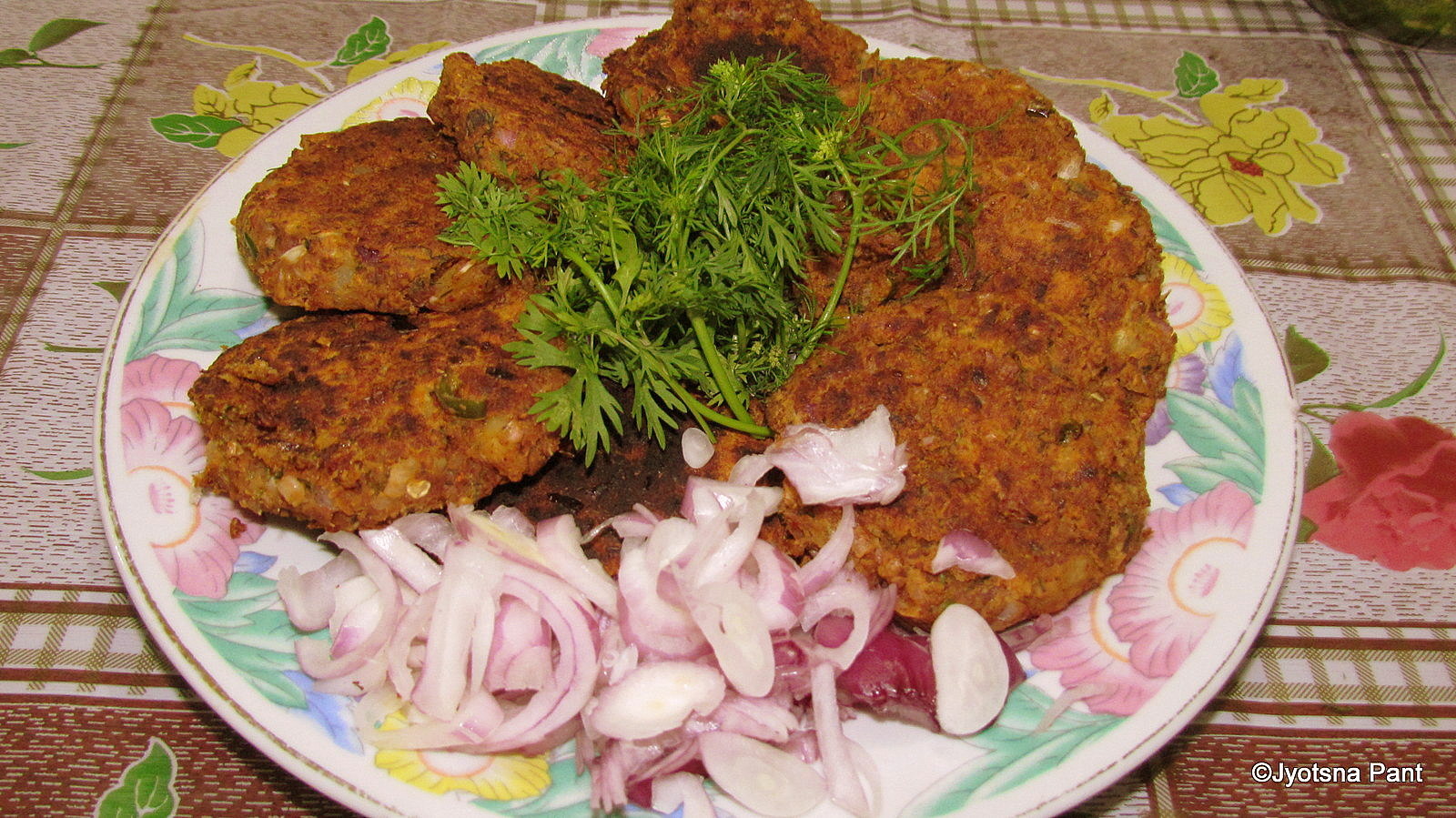
    • Top with sprigs of coriander and rings of onion. Serve hot, with a chutney of your choice.


    Kela Chane ke Kebab (serves 4-6 people)

    Ingredients needed:

    • 5 clean green unripe bananas
    • 1 bowl of soaked chana dal (gram beans)
    • Finely chopped onions
    • Finely shredded coriander, chilli, and ginger
    • Salt to taste
    • 1 small teaspoon of garam masala powder
    • Vegetable oil

    Steps required:

    • Make sure to wash the bananas thoroughly with fresh water before beginning. Once they are clean, steam them in a pressure cooker with their skins intact.
    • Steam the dal separately to a soft consistency.
    • Once both ingredients cool down, peel the bananas, and mash together with the dal to make a dough.
    • Add garam masala and salt. You can also add other spices such as red chilli powder if you prefer.
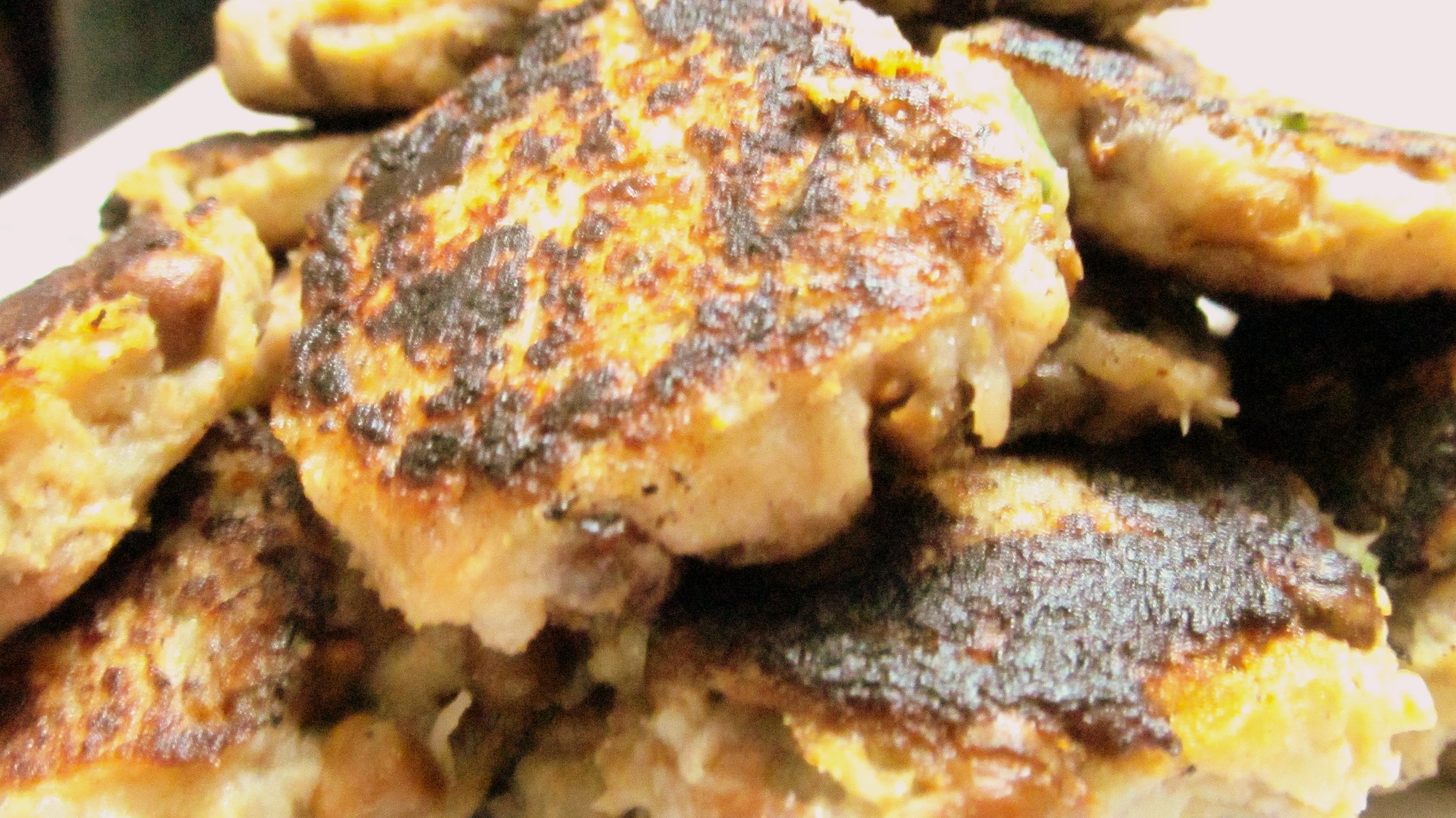
    • Shallow fry on a pan.
    • Garnish with sprigs of coriander, and serve with onions and chutney.


    Chukandar ke kebab (serves 4-6 people)

    Ingredients needed:

    • 7-8 beetroots
    • 2 tablespoons of roasted besan (gram flour)
    • 2 boiled potatoes
    • 250 grams of paneer
    • A few whole clean leaves of cabbage
    • Finely chopped onions
    • Finely shredded coriander, chilli, and ginger
    • Salt to taste
    • 1 small teaspoon of garam masala powder
    • Vegetable oil

    Steps required:

    • Steam the beetroots thoroughly after cleaning them.
    • Mash the beetroots to a dough-like consistency. If necessary, add a little bit of boiled potatoes as well. Add roasted besan to this mix.
    • In a separate bowl, mash potatoes and mix them with paneer chunks.
    • Add coriander, chilli, ginger, and onion to the beetroot dough.
    • Make miniature balls of the paneer and potato mix after adding salt and garam masala to it.
    • Wrap them in a leaf of cabbage.
    • Encase this in an even layer of beetroot dough. Make it firm with more besan if required.
    • Shallow fry on a pan until the kebabs are thoroughly cooked.
    • Cut the kebabs open from the centre, top with coriander, and serve hot with chutney.
  • The holy month of Ramadan – all you need to know!

    The holy month of Ramadan – all you need to know!

    With the advent of the pious month of Ramazan or Ramadan, hustle and bustle can be seen throughout all the Muslim households. The preparations begin a lot in advance. Excitement can be seen everywhere. From shopping for clothes and accessories to stocking up the eateries in order to avoid the last minute confusions, people do it all. This is the ninth month of the Islamic lunar calendar. This is said to be the most sacred month. The word Ramadan is of Arabic origin. Its literal translation is ‘intense scorching heat or dryness’. It is a rigorous month of intense fasting wherein all the members of the family fast every day for the entire period. The fasting is mandatory for Muslims who reach puberty unless they are physically unable to do so. Certain exceptions are made in the case of children, ill people, pregnant women, diabetes patients, menstruating women etc. The fasting or the rozas commence from dawn and end at dusk. They do not consume any food or drink neither do they smoke. Swearing is something that is also avoided. As I have heard from some friends, they do not even gulp in their saliva. This might be a shocker, but it’s true.

    Fasting is undoubtedly good for health. It has its perks. It gives the digestive system a rest along with allowing the cleansing and de-toxification of the body. It relaxes the body and revitalizes it. A tranquil spiritual feeling descends. In popular belief in Islamic culture, fasting washes away the sins and bestows upon the people many rewards. The fasting diverts the attention from materialistic activities and gives time for spiritual reflection, cleanses the soul and purifies the heart. The person becomes more considerate, empathetic and self-disciplined. He begins to see the less fortunate in new light and within him generosity creeps in.
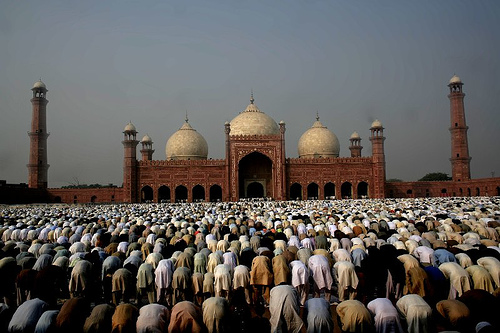
    Namaz

    The beginning of Ramadan is marked by a new moon. Fasting begins from the very next day when the moon is seen. The month lasts for approximately 30 days. It depends on when the crescent moon has been sighted.
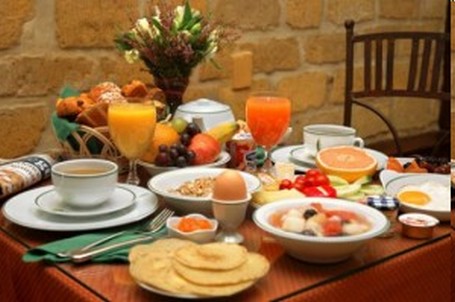
    The people who fast wake up early before the sun rises and consume the meal called ‘suhoor’ or the ‘seheri’ which keeps them going through the day. Thus the suhoor is a heavy meal which gives enough strength for the entire day to the people who are fasting. It is very necessary to consume ample amount of water or sharbat during suhoor in order to remain hydrated throughout the day. As soon as the sun rises, suhoor ends and the first prayer or the namaaz is offered. This first prayer is called the fajr or the morning prayer.
    sehri

    The entire day goes by without consuming anything. People put themselves through rigorous fasting. They offer five prayers or namaaz during the day. The devotion and dedication of these people is a thing to admire.
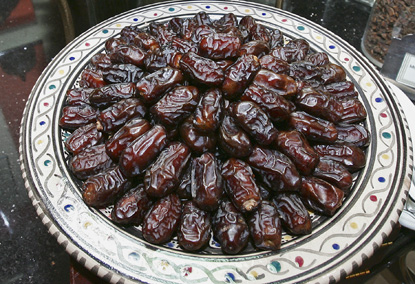
    At sunset the last prayer is offered which is called the maghrib. The meal which breaks the fast at sunset is called ‘iftaar’. Most people eat dates for breaking the day long fast and later go on to have a proper feast.

    dates

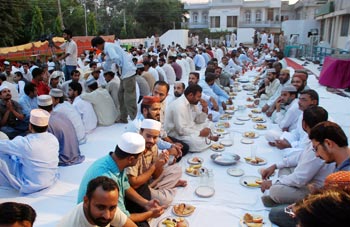
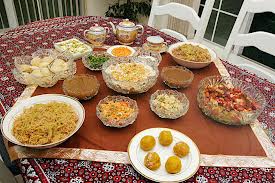
    At iftar, social gatherings are very common in which the meal is spread out in a buffet style. Friends and families gather for this small celebration together during the evening.

    iftar-dinner-080918_04

    Traditional dishes and desserts are served which are specific to the month of Ramadan. Families also share the dishes they prepare for iftaar with their neighbours. Nothing quenches the day long thirst like a glass of water does! Juices and milk are also a popular choice, though caffeinated beverages are not usually consumed. Sewain is the most sought after dessert.
    Iftar

    Common food items that are consumed during the two meals are fresh fruits and vegetables, dry fruits, kebabs, sharbat, salads, lamb stew, haleem, jalebi etc.
    Some people also indulge in the practice of giving away food to the poor and homeless during iftaar. This can be done on an individual basis wherein the meal is offered to a few people. This can also be seen in large public areas where the less fortunate gather and break their fast with the food these people offer to them. This charity is one of the most important parts of Ramadan. It is believed that helping a fasting person break their fast garners great rewards.
    Along with fasting and charity, reciting the Quran, the holy book, on a regular basis is also an integral part of the month of Ramadan. This recitation is voluntary rather than mandatory. Though it is pretty common to finish the entire Quran during the course of the 30 days.
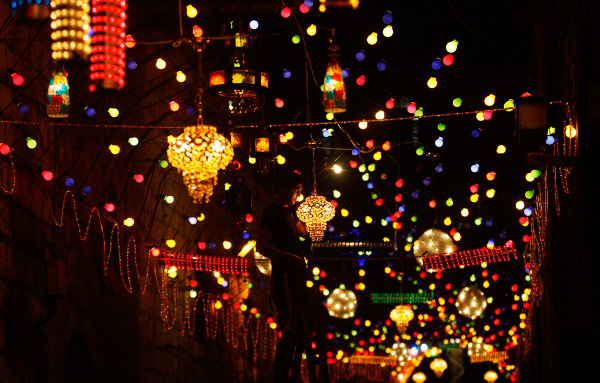
    Ramadan gets over on the next day after the sighting of the new moon. The day when it gets over is celebrated as Eid-ul-fitr. This festival is celebrated with huge pomp and show. The people flock the bazaars and shopping malls for new clothes and accessories. Henna or the mehendi, colourful bangles and beautiful suits are adorned by the women. This is a day of no fasting. People decorate their houses with pretty lights and set up a lavish feast. The gifts are given in the form of Eidi to children and relatives. ‘Eid Mubarak’ is the greeting that is said all around. Neighbours and family members visit each other to share sweets and dishes. Sewaiyaan is the most loved sweet dish which is prepared with vermicelli in milk along with dried fruits.
    Ramadan-prep
    Ramadan is a month where people believe that all their sins get forgiven. And they do a lot to achieve that, fasting straight for 30 days is no easy task. It is admirable to see them put themselves through so many restrictions in order to stand by their culture.
    Wishing all the people who are celebrating this holy month, Ramadan Mubaarak!!

  • Delhi’s Street Food

    Delhi’s Street Food

    There are many cities in the world which are famous for their street food and without a doubt Delhi finds a place in that list. Delhi is not only the capital of India but also a place which has rich heritage and history behind it. Although Delhi is full of high end restaurants and hotels which provide excellent food and ambience, Delhi’s street foods have their own separate name and reputation. These street foods are famous for being delicious and exquisite. And so people are crazy towards these street foods. The best things about the Delhi’s street foods is that they are not only fabulous in taste but are also very much pocket friendly and so everybody can afford it. Further there are numerous options available so people can select the dish as per their choice. Once you taste the dishes which are sold here, you will surely not be able to stop yourself from going back to the same place again and enjoy these appetizing dishes. This article is dedicated to all those people who are very much passionate about trying new, delicious food items in Delhi.


    Dilli Haat:

    6

    Everybody knows Dilli Haat as a place which is perfect for window shopping and so it is one of such places where the people love to visit. Dilli Haat is also known for the wide range of street food stalls selling the delicious dishes. You can find all type of Indian foods be it a North Indian cuisine or South Indian cuisine. There are also specific shops selling the food items from a particular state. For a person who loves to try new dishes, Dilli Haat is the perfect destination as they will find numerous options in one location.


    Connaught Place:

    7

    Connaught Place is located into the heart of Delhi and it is one such place where the people living here love to visit. It is because this place not only has shops of almost all brands but also famous food chains, restaurants, clubs, five star hotels and street food stalls which are open till late night. The famous food items here are Mutton Samosa, wide range of chicken, mutton and fish dishes, vegetarian and non-vegetarian rolls, Rasqulla, Chole Bhature, Biryani and many more. You will certainly enjoy shopping here and when you will get hungry you will have enormous choice to choose from.


    Chandni Chowk:

    5

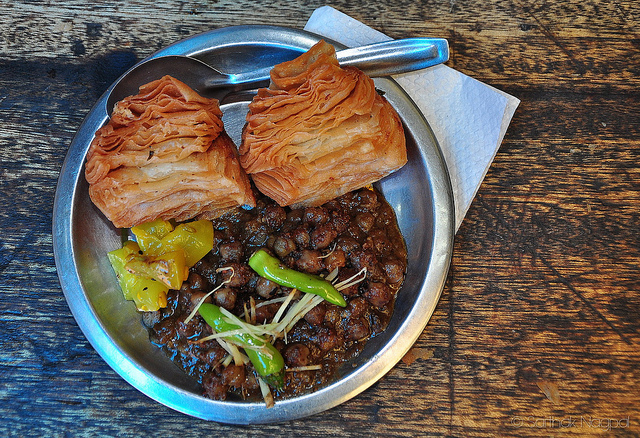
    Chandni Chowk is one of the oldest areas in Delhi and is often crowded with people coming here for shopping and offering prayers at the Jama Masjid. But without a doubt, the wide variety of street food which you can get in Chandni Chowk is simply unmatchable. You may be a vegetarian or a non-vegetarian; this place will surely make you happy with its exquisite dishes. You can visit the Karim’s if you love eating chicken and muttons. Else if you are a vegetarian, then you can simply walk into the Paranthe Wali Gali and get a taste of the delicious paranthas which are sold here from generations. Further you will also find Jalebi, Kachori, Dahi Bhalle, different types of Chatt, Lassi and Pakodas which will surely make you fall in love with them.


    Khan Market:

    1

    Khan Market is one of the high end shopping markets in Delhi but the food items that are available here are very much pocket friendly and people simply love them. From noon till late mid night you will find variety of Chinese and Indian foods in various stalls. So the people living nearby Khan Market often pay visit in evening to taste the mouth-watering dishes that are sold here. Momos, Chilly Potatos, Soups, Corn and Chatt are the famous dishes in this place.


    Pandara Road:

    4

    Pandara Road is another excellent place in Delhi where you will find delicious street foods. If you are a person who likes to eat spicy food, then this is the place you should visit. The Punjabi and the North Indian cuisines available in this place are simply amazing and eating here will surely be a delightful experience for you. Both for the non-vegetarians and the vegetarians there are tremendous options available and you will certainly not be disappointed with the food here. If you love Punjabi dishes then Pandara Road is the place you should visit as it has almost every dish which is made in Punjab and their preparation is so healthy and spicy that you will certainly feel like coming back to this place again.


    Nehru Place:

    3

    Though out the day you will find Nehru Place filled with people as it is one of the biggest electronics market in India. But apart from the computer and electronic shops here, you will also find numerous food corners there. Again the Punjabi food is the most famous here. But then you can also find the food stalls offering the fast foods, continental and north Indian cuisines. The best thing about the food sold here is that they are delicious and healthy to eat. One simply gets a much desired relief after eating in the food stalls here.

  • KARIM’S: A must visit restaurant for the non-vegetarians

    KARIM’S: A must visit restaurant for the non-vegetarians

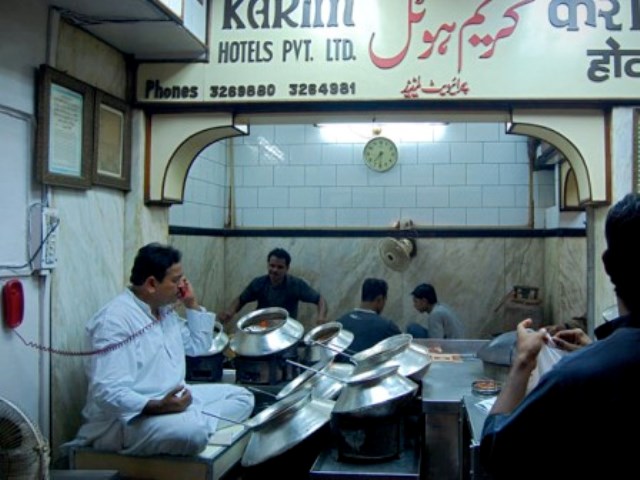
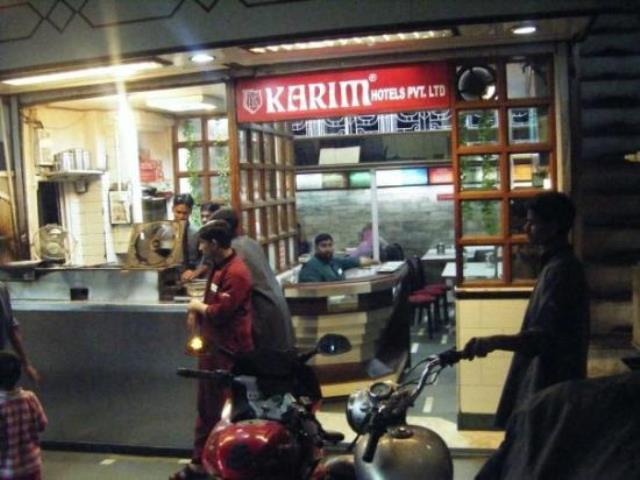
    Karim’s is one of the most famous non vegetarian destinations located in the Jama Masjid area of Old Delhi. The popularity of this restaurant can be described by the fact that today Karim’s is synonym to the area in which it is located. This place provides the best and most delicious Mughlai cuisine. None of the non-vegetarian food chain in India is more famous than Karim’s. This hotel has simply created its utmost position in providing the ultimate non vegetarian dishes. The reason behind its rise is the use of the secret exotic spices which they use in their dishes.

    2


    This hotel was started by the veteran cook Haji Karimuddin who served as the royal chef in the court of the Mughals. In the year 1857, when the Mughal Empire came to end after the last ruler Bhadur Shah Zafer was overthrown by the Britishers, Haji Karimuddin had no other options but to run away from the shackles of the Britishers. He spent the next few years in the small area near the Jama Masjid. Although Haji Karimuddin was in a condition which he never expected of, he never forgot the recipes of mouthwatering dishes that he used to cook for the Mughals. During this time of struggle he taught his son all the secret recipes that were used in these dishes. Finally in the year 1911, when people from different parts of India were coming to Delhi to join the coronation ceremony of the King George V, Haji Karimuddin opened a Dhaba to help the people by providing them with the tasty food during their stay. He started by selling only two dishes. With the overwhelming response that he received, he finally opened his own restaurant in the year 1913 with a view to serve people with the dishes that he used to cook in the Mughal’s kitchen. Since then this family has been serving the royal foods. At present it is the fourth generation of this family which is looking after this famous restaurant chain.

    3

    Karim’s has a wide range of the main course and starters in its menu that ranges from chicken to mutton. One can simply select the dish as per their choice and experience the taste they will cherish for a long time. One of the reasons why Karim’s food is famous is because of the fact that they are delicious in taste and quite spicy in flavor. After the mouthwatering meal, one can simply enjoy a variety of desserts which this place has. If you are planning to visit Delhi, then this city has lots to offer in terms of the tasty and delicious food options that will be available in front of you. But if you are one of the non-vegetarians then this is one such place which you must visit. You will surely have the pleasure of experiencing the cuisines that you have never had before.

    1

    This is not one of the very highly priced restaurants and so people from all section of the society visit this place to get the taste of the Mughlai foods. Every time you visit this place you will find it filled with people more than its capacity. From the time the restaurant opens and till it gets closed, you can find people all over it. This is the power of the delicious food that they serve. This restaurant is the recipient of the many prestigious awards such as the Golden Plate Best North Indian Restaurant Award for the year 2005. Recently when the Prime Minister of Pakistan visited India on the oath taking ceremony of the Indian Prime Minister Narendra Modi, he expressed his desire to taste the food from this veteran restaurant. This shows that not only in India, people in various other countries are also aware of the finest food that this place provides and whenever they get a chance to visit India, they do take out time to visit Karim’s. Even the painter M. F. Hussain had words of praise after he visited this restaurant.

    5

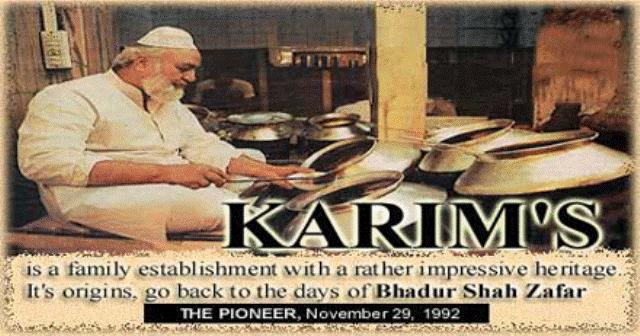
    Almost all the magazines and shows based on the Indian food have mentions the delicious non-vegetarian food served at the Karim’s. Pioneer described Karim’s as a place which is served by a family which has a rich heritage and expertise in cooking the non-vegetarian food. Not a single hotel or restaurant can match the food being served at Karim’s. In one of its edition, the world famous Time magazine termed Karim’s as one of the best restaurants in Asia. Leading newspapers such as The Hindu, The Sunday Observer, The Asian Age, The Indian Express and everyone else have constantly reviewed this place for their readers and have mentioned it as one of the must visit non place serving restaurant. The world’s famous travel and food shows being telecasted by the National Geographic and the BBC World Guide have also praised this restaurant and have telecasted the story of a family which is so much dedicated in serving the best Mughlai dishes in India.

  • Kebabs- something you can drool over.

    Kebabs- something you can drool over.

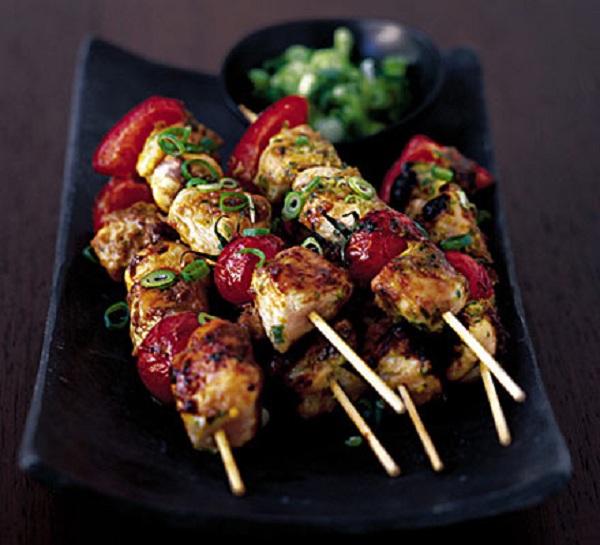
    Kebab is a Middle Eastern dish where pieces of meat or vegetables are grilled or roasted. They can be both vegetarian and non vegetarian. The traditional meat used for the preparation of kebabs was lamb however depending upon local tastes and preferences of the consumers, other options such as beef, chicken and pork also started being used. The kebab was so famous in the Mediterranean and Southeast Asia that it became a part of the everyday cuisine. From the Middle East it travelled to Central Asia and then slowly became a worldwide favourite with time. During the earlier days, the Greeks used portable trays made up of ceramic to grill pieces of meat and vegetables while Persian soldiers used their swords to grill meat over open flames.

    Kebabs can be prepared at home as well. One of the methods for the preparation of chicken kebab is given below. Similar way can be used to make other non veg and vegetarian kebabs by just substituting chicken with any other meat or vegetable.

    4 T

    Chicken  kebab

    Directions:

    • Dilute 2 tablespoon of cornflour in 1 cup of water
    • Clean the chicken and chop the meat in medium size pieces
    • Marinate the chicken with salt, vinegar and black pepper and place it for 15 minutes
    • Add to chicken the cornflour mixture with curd, ginger green chillies and garlic with 1 tablespoon of ghee and mix well
    •  Cover and refrigerate it for about 8-10hours
    • Melt ghee in a pan and slowly add the pieces of chicken on high flame
    • Fry till the piece turn golden brown
    • Once all the pieces are fried, serve with chutney and salad.

     Chicken_Kebab

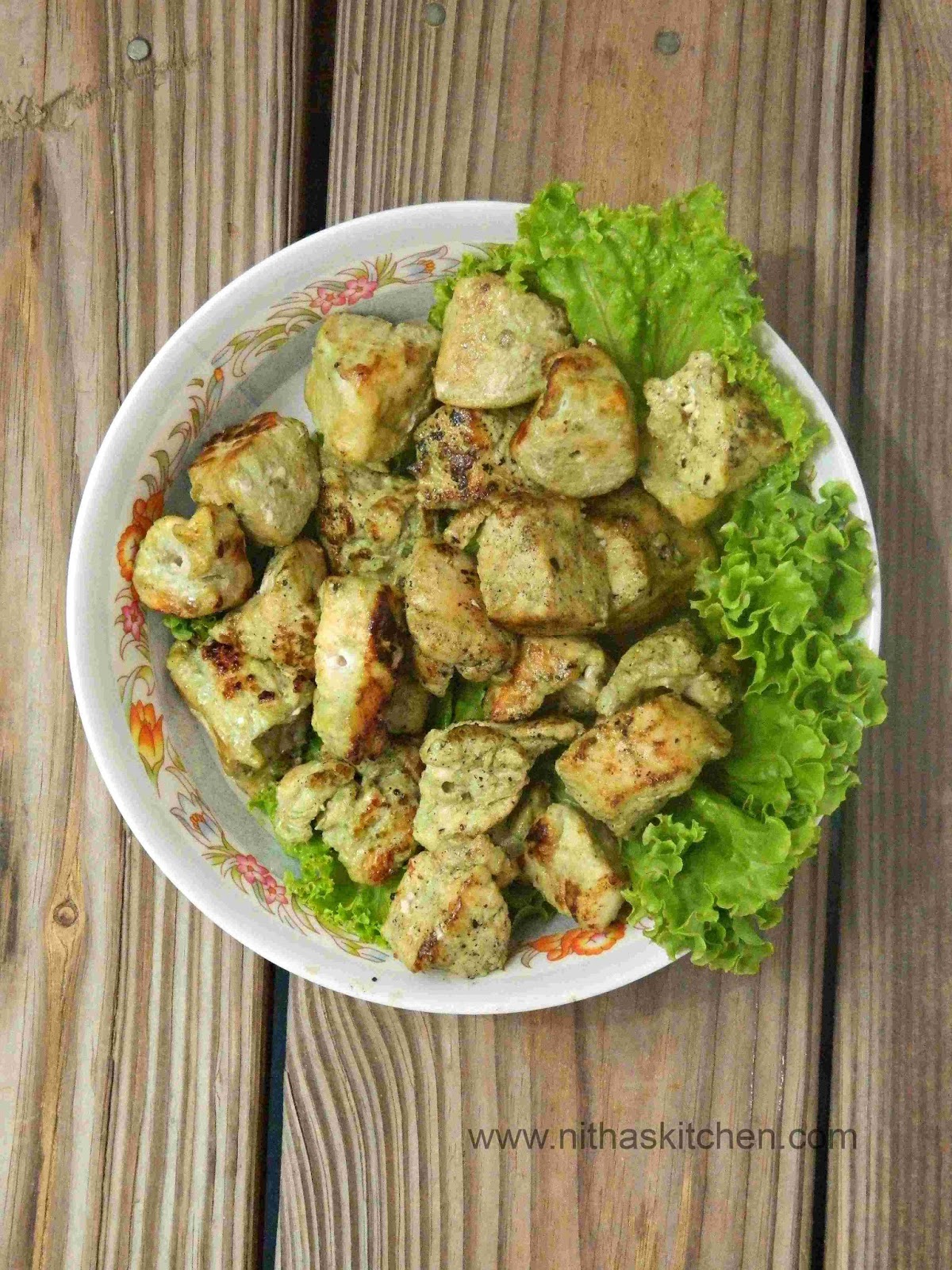
     Green chicken kebab

    This is another recipe for the preparation of chicken kebabs which uses coriander leaves, mint leaves, methi leaves and spinach as well.

    Directions:

    • Wash about 400 grams of chicken and chop them in medium sized pieces
    • Apply salt, lemon, ½ teaspoon chilli powder on the pieces and keep it aside for 10-15 minutes.
    • While the chicken is marinating, chop the methi leaves into thin slices and grind it with mint, coriander, spinach leaves, ginger, garlic and green chillies to form a paste.
    • Now add curd and spices in the paste and mix well.
    • Coat the chicken pieces with the paste and cover it and place it aside for 20 minutes. During this time span the chicken will suck in the smell and flavour of the green paste.
    • After soaking the skewers in normal water for, apply oil and arrange the pieces of chicken onto it. Spread oil over the chicken pieces.
    • Preheat the oven at about 350F for 5 minutes and after that place the skewers in the oven and leave it to grill for 18 minutes.
    • A check has to be kept to see that all the sides of the skewer sticks cook evenly.
    • Once the kebab is ready, remove it from the skewer and arrange it on a serving plate and serve with lemon wedges and spicy green chutney.

    Veg-Chilli-Milli-420

    Veg Chilli Milli Kebab recipe

    This is a vegetarian kebab recipe for the vegetarians out there

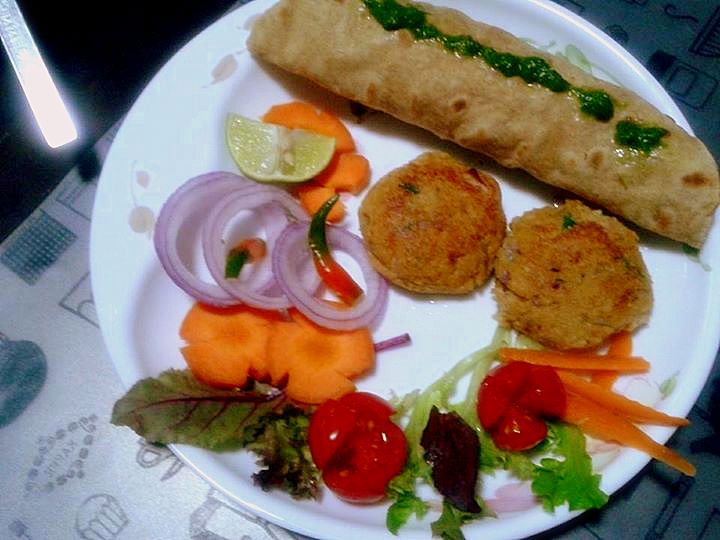
    • Mash 4 potatoes in a bowl and at the same time boil spinach for some time then drain and blend the spinach to form a puree.
    • Combine 1tsp of ginger and garlic each with 4 green chillies and capsicum and chop them finely.
    •  Now mix all the items together. The boiled potatoes, the spinach puree and chopped mixture of ginger garlic with chilli and capsicum.
    • To this add red chilli powder, turmeric powder, black pepper, coriander and garam masala powder (1/2 teaspoons each)
    • Also add 2 tablespoon of breadcrumbs and salt to taste.
    • Wash and clean the skewers and then apply oil over them.
    • Preheat the oven at about 350F and arrange the kebabs onto the skewers and then again apply oil over the kebabs.
    • Grill the kebabs for about 20 minutes till they are golden brown and have a crispy crust.
    • Once the kebabs look nice and golden, remove them from the skewer and place it on a serving plate and garnish it with some fried chillies.
    • Your vegetarian kebab is ready to be served.

    sheeshakebabimg4

     Vegetable Seekh Kebab

    This is another vegetarian dish of Hyderabadi cuisine. This dish can be eaten both as a snack as well as a starter. The main ingredients used in this dish are French beans and cabbage and the special fact about this dish is that it is prepared on a stone.

    Directions for cooking:

    • In a pan heat 2 tablespoon of oil and then add chopped french beans, carrot and cabbage on one side of the pan and on the other side add about ¾ cups of green peas and mash them nicely.
    • Mix everything and cook for about 3-4 minutes.
    • In another pan roast gram flour (3 1/2 tablespoon) and caraway seeds for about 2 minutes.
    • Now mix the flour with the vegetables along with ginger garlic paste and green chillies and mix well for half a minute.
    • Add salt, chat masala and cashewnut powder with the flour and mix everything well.
    • Take portions of this mixture and cover it on the skewer and press it around the stick till it’s evenly layered.
    • Put oil on the grill stone and heat.
    • Now place the kebabs on the hot stone for about 3 minutes till all the sides are slightly coloured.
    • Serve the dish by sprinkling it with some chaat masala.

    There are many more of such tasty kebab dishes which can be prepared at home. Earlier kebabs used to be consumed only by the royals but with time it became a favourite of all.

    Georgie Rajan

  • Tunday Kababi:Serving Perfection

    Tunday Kababi:Serving Perfection

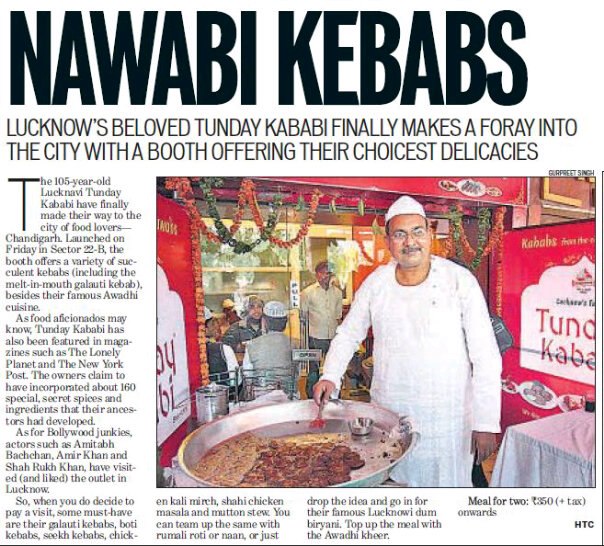
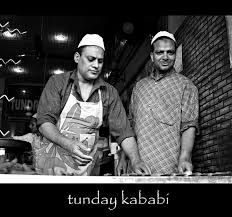
    The effortless tossing and spinning atop fingertips that have mastered the art of making soft,well spanned rumali rotis,skewers being fanned ,the spicy aroma of kebabs being made on open charcoal flames ,the soft smoky smell that lingers in your nostrils,the slicing and dicing of fresh salad,onions chopped into rings and the chutney being made on stone ‘silbatta’ ,coriander,chillies and lemon grounded into a perfect mix. This is the heavenly sight of the Tunday Kababi’s open kitchen in Aminabad ,Lucknow.
    Established in the year of 1905,this place has still not lost its charm and flavour.It has never ceased to amaze people.The city of Nawabs has yet another ace in its deck of foody cards.With numerous franchises across the nation,in fact some even around the globe,The original Tunday Kababi is the Kohinoor of its kabab kingdom.

    tk4
    A typical eatery with all the cooking,simmering,frying and brewing happening right in front of your eyes,attaining a seat here is a tough bargain.
    A colossal menu that comprises of every Mughlai dish you could think of,presents before you a dilemma that is tough to tackle,let alone dismiss.
    To choose between biryanis ,kormas,shorbas and kebabs is without a doubt a really tough call.But to ease that tensed nerve ,here is a suggestion,begin with the all time favorite and famous KABAB.
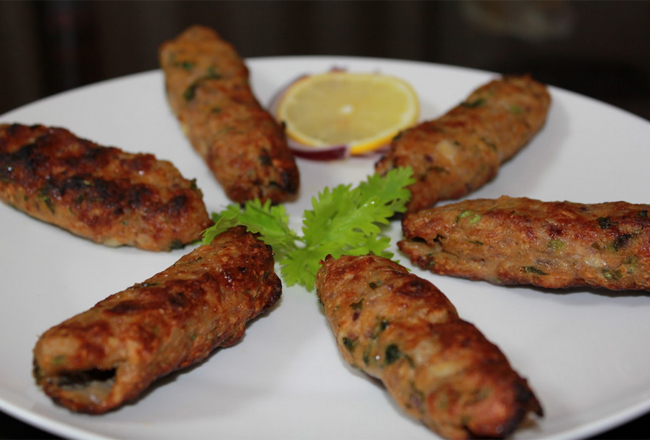
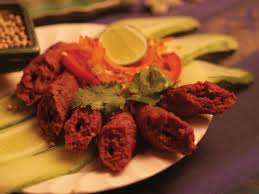
    Galuati,seekh,shaami,kakori,pasinda and boti kabab.Yes THOSE are the types of kababs that you have to choose from.Though it totally depends upon what your personal choice of kabab is,yet for those who are treading on the Nawabi grounds of mughlai food for the first time,a personal favorite is the Galauati kabab.
    This particular type of kabab is a favorite of a vast majority,hence in all possibility ,even the rarest of cases who are not fond of anything mughlai will develop a liking to the galauati ,the moment their tastebuds come in contact with the kabab.

    galauti
    What is so special about it?
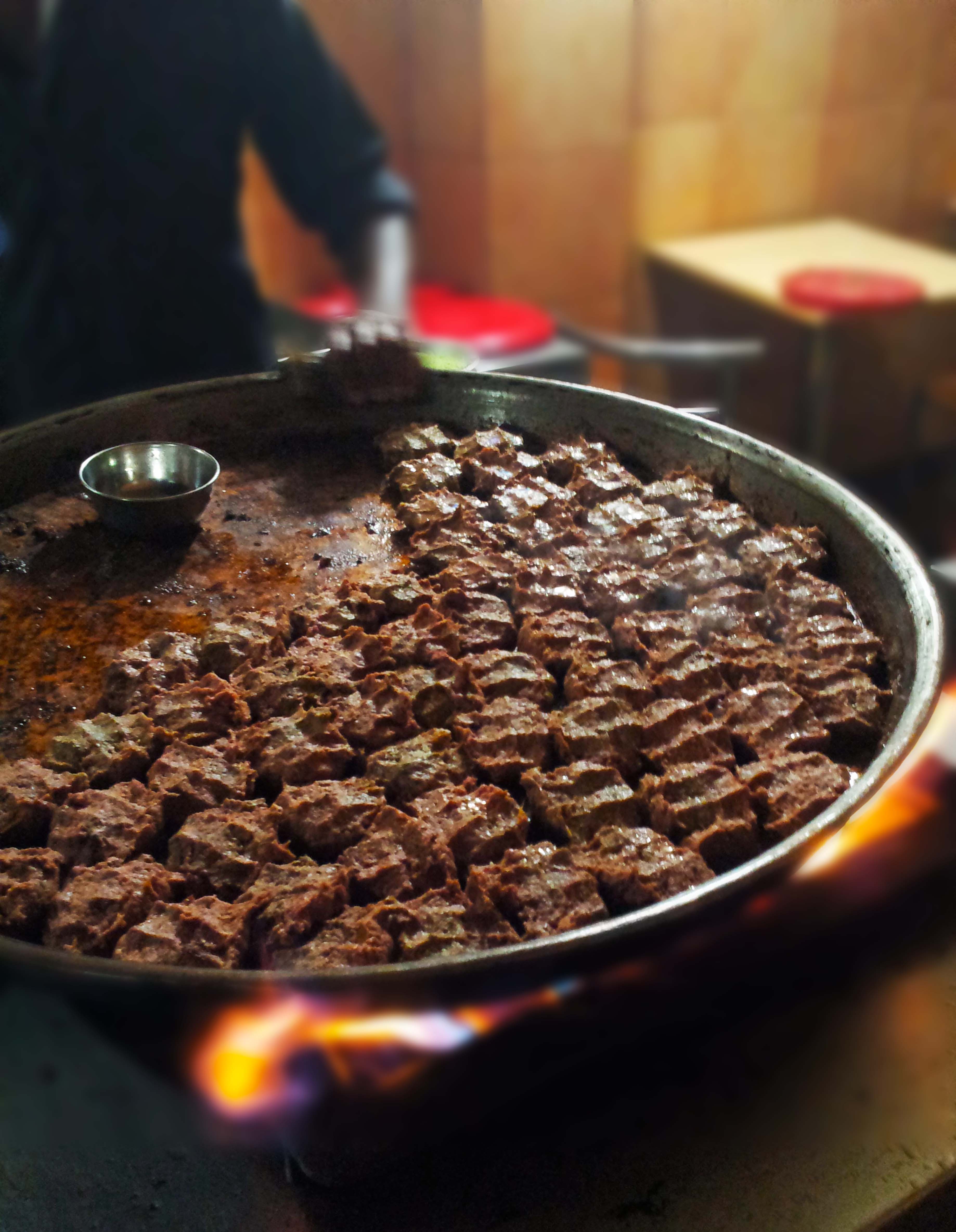
    Well now,getting into the details of WHAT MAKES IT SO SPECIAL,we begin with the preparation.Galauati kababs are made from mutton that is well beaten ,tender and juicy.They are then kneaded and rolled into soft lumpy round masses and then pressed down in a perfect circular shape on the ‘tava’ heated on charcoal flame.Flipped more than three times,the benefit of such rigorous cooking methodology will be uncovered as soon as your order arrives.The subtle smoky and spicey smell of crispy kababs is the most prominent of all sights in your plate.Taking the first bite would require you to break a portion of the soft rumali roti and as you pressure your finger on top of the kebab,the crispy crust of it breaks away ,paving way towards a soft ,juicy center. Precisely,this is the beauty of tunday ke kabab.Its not just a treat to the palate but a visual and olfactory treat as well.
    Having made your first bite,the very moment you place it on your tongue,you would experience a subtle yet savory blast of flavours.The spices ,the way the mutton is marinated ,the smoky charcoal aroma,the freshness of the chutney and salad,all work together to conjure up the most fantastic of mughal food experiences.After the first,there is no stopping,you shall devour all the contents in your plate.
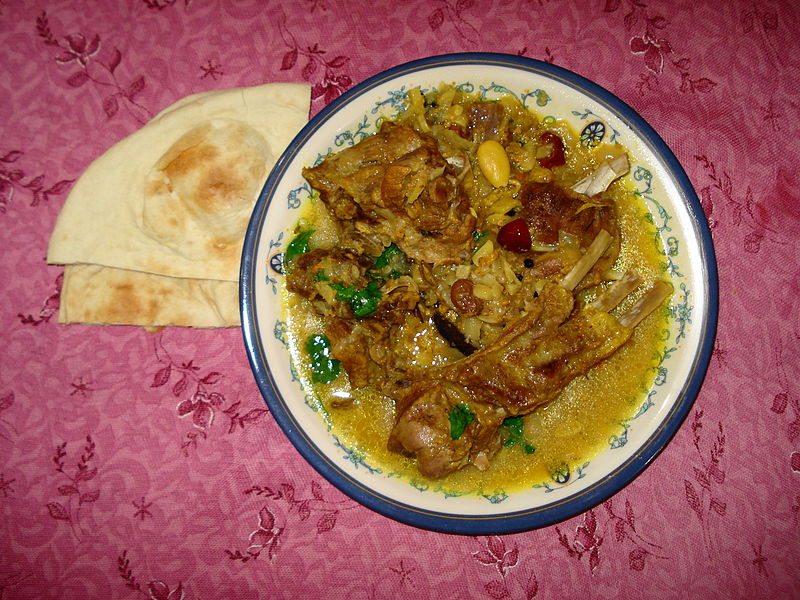
    If your stomach still allows ,the butter chicken,Nahari mutton,Mughlai parantha,mutton curry and mutton biryani are also a must try.Neither too spicy nor too bland,maintaining the perfect balance of flavours the butter chicken and mutton gravy are also among the list of popular favorites.

    tk

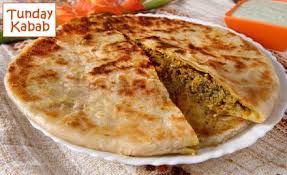
    The Mughlai parantha comes by as a surprise element. Clad in the spongy soft armor of flour made exterior with beautiful brown-1red spots bearing the sign of being well made,resides the core made up of mutton stuffed in every interstice of it.
    This preparation is one beast of a dish that absolutely escalates the sensitivity of your tastebuds,catapulting you to the most sensuous of all palatial pleasures.The biryanis have a similar effect.Yet as stated earlier,the kababs are the show stealers .On the whole ,Tunday kababi offers you dishes that envelope your senses and make every bite an experience so indulgent that it leaves an everlasting mark on your memory.Each cell in your brain,stomach and tongue shall remember its delicious and delectable taste.Your olfactory nerves shall tingle at the mere thought of it,and the salivary glands shall water at the name of its dish.

    tk3
    Amazingly enough,an order for two people costs around Rs.250 or so and what is even more praiseworthy is just how filling this food is!As far as the hygiene,quality and validity of the praises showered are concerned,well it has been functional for over a hundred years,has numerous franchises and has a four and a half stars on Zomato,now that speaks volumes!A complete paisa vasool,each penny shelled out is justified by each bite you eat.Value for money,great taste,unforgettable experience and a delectable treat to the senses all under the same roof. The royal foody stroll in the fields of Nawabi Kababi would not have been possible without them!BON APETITE!

  • Unparalleled Taste of the Awadhi Cuisine

    Unparalleled Taste of the Awadhi Cuisine

    The sumptuous meal that the city of Awadh has to offer is nothing short of magical. The royalty and the grandeur of it will leave you mesmerized. It will leave an everlasting impression on your taste buds. You’ll always want some more of it. You will get the Nawabi feel in every bite you take. Such is the magnificence of the Awadhi cuisine. The city is notably famous for the dum style of cooking. It originated in Awadh, or the present day Lucknow. This style of cooking goes back to the 16th century. The food is cooked over a slow fire in a closed container.  With the increased time of cooking, the entire flavour of the spices and herbs used, is released into the dish. This gives a distinct taste to the Awadhi cuisine. Sometimes cooking dough is used to seal the mouth of the container in which the dish is being prepared. This leads to aroma of the spices to seep through the dough, thus providing it with a flavour.

    Dumpukht

    Awadhi Dumpukht

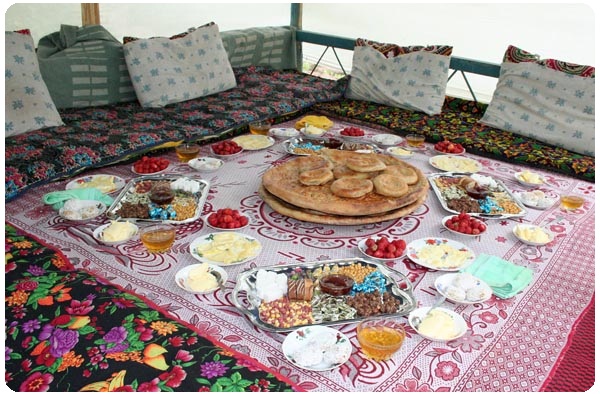
    Not just the style of cooking, but also the way in which the meal is spread out elaborately, will make your mouth water. The presentation of the food has a royal touch to it. When you sit down to eat, it will appear to you that you’re a king and everyone on the table is waiting for you to take the first bite! In the olden times, the spread was laid out in the centre and it was necessary for everyone to sit around and eat together. Such a spread is known as Dastarkhwan. It consists of a variety of dishes like kebabs, korma, biryani, roomali rotis, nihari kulchas, sheermal etc. Such practices can still be observed around the city. The menu of the Dastarkhwan changes with the seasons.

    Dastarkhan

    A typical example of the spread: Dastarkhwan

    The menu of winters is very different from that of spring. In winters, heat giving, rich meat is preferred. During spring, various kinds of crispy snacks are prepared. Similarly during summers, a variety of dishes and desserts are prepared using raw mangoes. Sewaiyan is another sweet dish which can be often seen in the houses during the pious months of Ramzan. The dishes that form a major part of the Awadhi platter are Kebabs, Biryani, Korma and a variety of breads. Kebab is the identity and pride of Lucknow. Kebabs are made from meat, fish or vegetables that are grilled on a chulha. Lucknow boasts a wide variety of Kebabs, namely, Kakori Kebabs, Seekh Kebabs, Galawat ke Kebabs, Ghutwa Kebabs, Shami Kebabs, and Boti Kebabs etc. Vegetarian kebabs are made using yam, kidney beans, jackfruit (kathal), peas and taro (arbi). The most famous shop for kebabs in Lucknow is the Tunde Ke Kabab. It is a 100 year old shop which serves the best kebabs in the city. It boasts of using 160 different homemade spices which is their trade secret. The who’s who of Bollywood come all the way to try out these kebabs. The list of the fans is endless. So many of the Bollywood biggies fly out the khansamas (cooks) from here to cater their functions. This is surely a feat to be proud of.

    Galouti kebab.png

    Galouti Kebabs

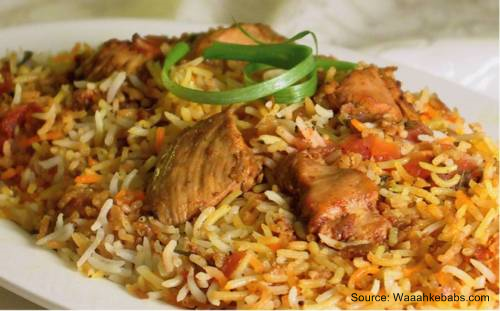
    Lakhnawi biryani is another dish that is famous worldwide. It is a special preparation of basmati rice with species, curd, meat and/or vegetables. It uses the method of layering. The meat and the rice are cooked separately. They are then layered on top of each other and baked. Vegetarian biryani is also very common.
    Biryani

    Biryani

    The various types of breads that are eaten are chapatis, pooris, parathas, naans, roomali roti, tandoori roti and sheermal (sweet naan). Korma is the curry used which is made by braising meat or vegetables in case of navratan korma. The Awadhi desserts have the perfect kind of sweetness and taste that is required after a meal. Kulfi is one such dessert which is famous among the masses. It is made from rich milk and cream. Prakash Ki Mashhoor Kulfi is the oldest known shop for kulfi. They offer the best falooda kulfi in the city. A type of halwa which is specially prepared in Lucknow is the sohan halwa.  Different cereals like gram flour, sooji, wheat etc. are used to prepare halwa. It is heavily garnished with rich dry fruits. The barfi, jalebi and rabri are some other desserts to look up to. After the meal, consumption of Paan is quite common. An evening without Paan is thought to be incomplete. Paan is made from betel leaf which is garnished with saffron, spices, silver foils and other condiments.

    Falooda Kulfi

    Falooda Kulfi By Prakaksh ki Mashoor Kulfi

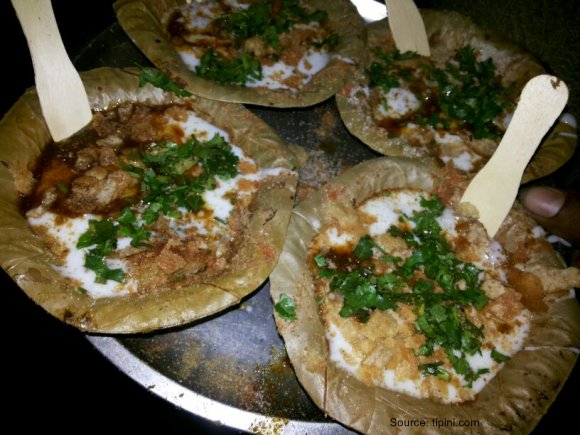
    After boasting of the nawabi Awadhi cuisine, Lucknow still has a lot to show off in terms of street food. Be it Idris ki biryani or Shukla ki Chaat, be it Rahim ke Kulchey Nihari or Royal Café k paani-batashe, every single one of them is worth a try. And when you try them once, you’re surely going to be a fan. The originality of the taste will hold you spellbound. Paapdi chaat, tikki chaat, dahi bada, paani poori, sev poori etc., the names are enough to tickle your taste buds. Where else can you get eight different types of paani for the paani puri at one stall? That’s right, in this magical city which has a cuisine so quintessential!

    Shukla ki Chaat 

    Aaloo Tikki by Shukla ki Chaat

    The mouth-watering delicacies that this culture offers are just too many to name. Piece of advice, go try out some Awadhi cuisine, you are missing out on a lot. Trust me, you’ll be thankful!