Category: Culture

  • Foods To ‘Spark Up’ A Runner’s Plug !

    Foods To ‘Spark Up’ A Runner’s Plug !

    Running is one of the best workouts for us. If you are looking for a cardio exercise to control your weight, go running. If you are looking for a workout to get rid of lifestyle diseases, go running. Well, there are other types of workouts too, and you must be thinking why am i stressing on running out of all the exercises. This is because in the fast- paced lives as ours today, everything is preferred to be short and sweet with excellent results. And running is something that, if done merely for 15 minutes per day, will help you as equally as a one hour long aerobics or yoga session.

    Running is a handy exercise. You just need o put your shoes on and find a track to run, that might be a simple road, a jogging trail or even a treadmill, for that matter. And the most important aspect about running is the kind of food you eat. Yes !! Runners have special nutritional needs, even if you are doing it for losing weight. Runners need to constantly maintain their energy throughout the day, repair their muscles and joints by proper lubrication, and all this can be done if they eat food that can perform these tasks in their bodies.

    So here are some of the foods that runners should definitely have in the grocery list :-
     

    banana

    Banana:

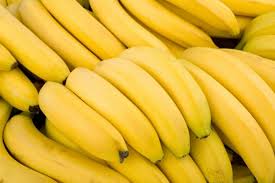
    Bananas are packed with instant energy boosters, i.e. , carbohydrates and are among the best pre-workout foods for runners. They are loaded with potassium which makes them even more desirable as potassium regulates blood pressure and reduces the risk of stroke specially in people who suffer from heart problems. This banana restores the level of potassium in the body that is lost while sweating during exercise. Moreover, the softness and lightness in texture and taste makes it easier to consume even with pre-running nerves.
     

    berries

    Berries:

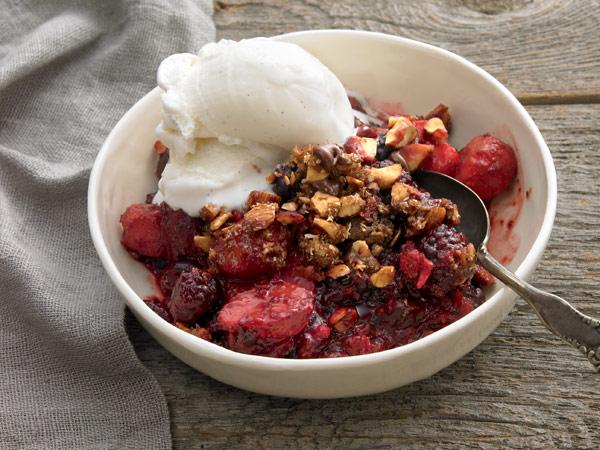
    The colorful substances that are responsible for the blue color of the blueberries, the deep purple color of the blackberries and rich red color of raspberries are a powerful group of antioxidants called anthocyanins, which provide a host of health benefits ranging from maintaining healthy blood vessels to prevention of cancer. They are one of the ideal foods for runners, as they prevent muscle soreness and strength loss due to the presence of vitamin c and potassium. Frozen berries are just as good as fresh ones, in fact they can be stored for a long time and can be consumed as and when required. Berries can be used as a part of smoothie, can be added to yogurt or oatmeal an consumed as a great treat.
     

    low fat yogurt

    Low fat yogurt:

    Running an definitely improve your bone density, provided that its coupled with calcium. And there’s nothing like a bowl of low-fat yogurt for your daily calcium intake. In addition to this, yogurt has special milk proteins, that are important for building and repairing muscles after the tough run. It is also abode to millions of healthy bacteria which help our digestive tract to be in a proper shape and prevents inflammation and soreness. Yogurt can be used a part of smoothie, as a salad dressing, or can be topped with fruits and granola for a tastier bite.
     

    salmon

    Salmon:

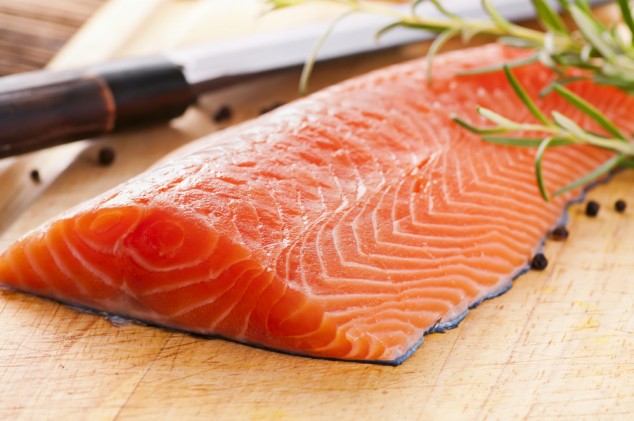
    Salmon is the king of fishes, nutritionally. In addition to being an excellent source of high-quality protein, they are loaded with omega-3-fatty acids, which, unfortunately  are sorely deficient in our diet otherwise. Omega-3-fatty acids not only boost the heart’s health by creating more elastic blood vessels, but also improve nervous system functioning. They also help  to balance the body’s inflammation response, and fend off diseases. It can be eaten baked, grilled or poached with fresh herbs and citrus zest. It is also great in salads, pasta, soups or as a topping of a pizza.
     

    whole grain pasta

    Whole grain pasta:

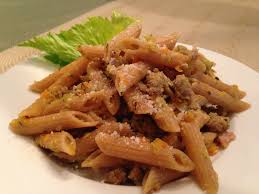
    Pasta is a wonderful food for runners as it restocks the spent glycogen stores, and whole grain pasta is even better because of its digestible carbs, and more fiber that fills you up, and vitamin d that is crucial to energy metabolism, and other disease fighting compounds. Some really good varieties even contain the much needed omega-3-fatty acids. Pasta is great when tossed with veggies, meat, seafood or tofu, as it makes a great one-pot meal.
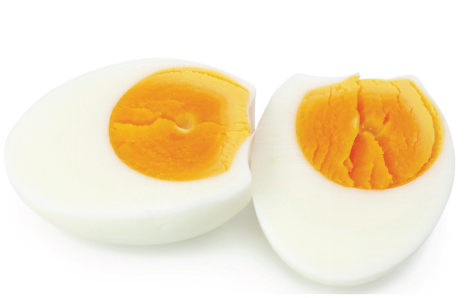
     

    eggs

    Eggs:

    Eggs are known as the body building foods due to their protein-rich content. One egg fulfills 10 per cent of your daily protein need. They contain all the proteins that muscles need to promote repair and recovery and to cure soreness. In addition, eggs are good for your eyes, brain and heart. Eggs are great anytime, whether boiled, poached, scrambled  or as a part of sandwiches, toasts or wraps.


    So these were some of the foods that must be there in your kitchen if you are planning on a running regime or are already an active runner. Incorporating these foods in your diet, will not only keep your muscles and joints in good shape, but also keep you active to continue the workout for days ahead. So, ‘spark up’ the energy plug in your body and go running !!

  • Aloe Vera comes with an antiseptic and medicinal properties

    Aloe Vera comes with an antiseptic and medicinal properties

    You all must be aware about the benefits of aloe Vera when skin issues are concerned..  Whether it might be rashes, sunburns etc..!! But do you people know about its health benefits..?? I think over millions of people only thousands of them know its other part and the rest must be treating it as an antiseptic for their skin.
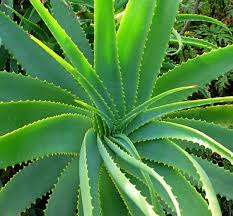
    Aloe Vera is a succulent plant that is very short-stemmed and naturally grows up to 60-100 cm. The leaves of this plant are fleshy green with small white teeth over it. It has entitled as the ‘Wand of the Heaven’ by the Americans for having widespread antiseptic properties.

    Aloe Vera in its history is known for its medicinal and antiseptic properties. According to scientific researches it is generally considered as the beauty secret. Aloe Vera extract can be used as a lotion or is diluted to form aloe Vera gel. These extractions or prepared gel are applied on the skin to make it more smooth and shiny.  It is used to obliterate your eye makeup very smoothly and also helps in providing relief to tired and swells eyes. Skin specialist considers it as a remedy for sunburn, skin irritations, acne etc. It is applied 2-3 times a day and its cooling properties help in curing sunburns.

    face

    Aloe Vera is rich in Vitamin C and E and our skin needs these vitamins so that it always remains hydrated and soft. And nothing can be better than adding coconut oil to it so that essential nutrients and required fats all together are provided to our skin. It internal qualities keep our skin moisturizing and it’s under layer effects keeps it shiny. Aloe Vera gel is also applied on hairs to make it smoother.

    aloe2

    This is all about its healing properties and its major concern with skins. Now let’s talks about its health benefits. Aloe Vera extract is not only applied on skins rather it is also used in preparing aloe Vera juice. This aloe Vera juices in turn is taken and overpower its medicinal properties. This plant has a magical property which is used in the treatment of various diseases. So the major issue is How to prepare this aloe Vera juice. It’s quite easy and has a homemade recipe.

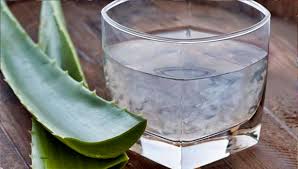
    Aloe Vera Juice: Initially breaks off some of the leaves from Aloe Vera plant. Then, with the help of knife, take out the extract from the leaves gently. Peel out the yellow layer from the extract so that we are left with only a clear gel. Place this in the blender and add one cup of grapes/orange juice into it. Blend these into it for some time until it is fully mixed. Pour this into a glass and your Aloe Vera Juice is ready.

    aloe1

    Aloe Vera juice helps in maintaining our digestive system and allows food particles to pass through our intestine flawlessly. It acts as a detoxifier and helps with alleviating ulcers, acidity and inflammation. Drinking this regularly helps in removing joint pains and decreases swelling. It also reduces rigidness of bones and makes them soft. It also cures diabetes and decreases sugar level to the large extent. Its antibacterial properties help in promoting cell growth and increases mouth gums. It also helps in improving immunity and boosts our immunity. It also increases energy along with maintaining weight. It contains minerals and nutrients which help in improving blood pressure and blood oxidation.

    juice

    To make it more delicious to drink instead of preparing aloe Vera juice we can make Aloe Vera Cocktail. Just by adding few more ingredients to it, it can take a new form of drink.  Firstly, prepare aloe Vera juice as usual and then add 1-2 cup of pineapple, one carrot and one green apple along with 2-4 tbsp of water to it. Finally, blend them and pour it into a glass with a straw. Now this exotic cocktail is ready to be served.

    Now we are all familiar with its health and skin benefits, but these are all due to its nutritional value. It consists of 12 vitamins, 75 nutrients, 18 amino acids, 20 minerals and 200 enzymes in it. When Vitamins is concerned, it consists of Vitamin A, B1, B2, B6, B12, C and E. These minerals have their effects internally or externally. It also consists of various compounds such as mannans, lectins and polysaccharides etc.

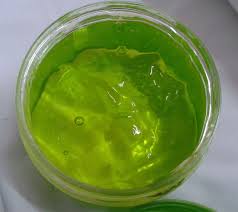
    Aloe Vera Gel: Take out the extract and place it into the blender. Foe every ¼ cup of aloe add 400IU Vitamin E and 500mg Vitamin C. Blend these together and placed the prepared gel in refrigerator.

    gel

    As we know every coin has two faces similarly Aloe comes with its advantages and disadvantages both. Excess drinking of aloe juice may be a cause of cancer in later days and can lead to serious kidney diseases and sometimes even results in death. So it’s better to consult a doctor before its intake.


  • Maltese Cuisine – The Streets

    Maltese Cuisine – The Streets

    ” Food is the beginning of wisdom. The first condition of putting any thing into your head and heart, is to put something into your stomach.”-

    –          Ludwig Feuerbach


    It is something you can’t resist.You NEED it.Maybe the models with a 69 cms waist don’t need it but , whatever! Food is everyone’s need and for people like me , well , its our crack!Food has had the likes of Bobby Chin, David Rocco ,Gordon Ramsay and Nigella Lawson on its fingertips.And good food is anyone’s getaway.
    So in this article , let me take you through the rocky limestone mountains, the narrow cobblestone streets,into the kitchens where all the women work and cook together like it’s cake walk ( I must warn the non-foodies that cooking is an art .Your mom must have made you realize that times uncountable….so BEWARE! :P). A place with its eclectic mix of cuisine.Lets dive into the fine culinary culture of Malta.

    Many civilizations have occupied the Maltese Islands over the centuries. Located in the relatively narrow straits that separate Sicily and the coast of North Africa, Malta is of great strategic importance, and the islands have changed hands many times throughout recorded history. The United Kingdom gained control of Malta in the early 19th century, making it a British colony.The food was no exception.And so, the vast repertoire of dishes which would be considered as making up the traditional Maltese cuisine are infused with a complex history of colonialism, trade links, and multi-cultural influence.

    Maltese cuisine does share some ingredients with the other Mediterranean countries like pasta, tomatoes, olive oil, fish, garlic, rice etc. but it has also enriched the food with its rich, regional diversity and left its mark on several dishes.

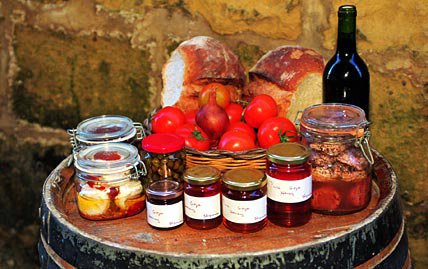
    If you want to try the local cuisine you can very well do that in any village bar. A fine Maltese vintage wine with `gbejnet ( sheep cheeses) , a dish of olives, zalzett (coriander flavoured sausage) with Maltese crackers known as galleti and some bigilla ( bean plate) ladled with Maltese bread and olive oil is bound to make your summer days a little more tasty, a little more yummy! 😀

    As for the cold days, just grab a cup of coffee or a glass of wine with hot pastizzi (savoury ricotta filled pastries)!!! And who doesn’t love ricotta!? <3<3

    If you are planning a day out at the beach, do not forget to try the hobs biz-zejt, a snack made from a thick slice of crusty Maltese bread rubbed with juicy tomatoes and topped with some fresh mint, onion, sheep’s cheese and anchovies all doused with a good amount of green olive oil.

    In the mild, humid winter , restaurants with outdoor seatings bring on bowls of golden minestra which is a thick vegetable soup served with Maltese bread and oil. Fish is a consistent aspect of the Maltese cuisine and the aljotta, a delectable garlicky fish soup is savoured by many.Depending on the season, you can see spnotta (bass), trill (red mullet) and cerna (grouper).

    Aljotta

    With the globalization, the culinary tradition of a place tends to decline but Malta seems to hold onto it’s roots strongly. Nationally, the Maltese celebrate the Imnarja, a harvest festival held in June during the Feast of Saint Peter and Saint Paul, and the Regatta on September 8, which celebrates Malta’s victory over the Turks during the Great Siege of 1565 and Malta’s resistance to Axis bombing during World War II. However, the largest celebration in Malta occurs in mid-February during the festival of Carnival.This calls for summer villages producing street foods.The take- away restaurants too, offer sweet foods like imqaret (date pastries) and Qubbajt (nougat) which you can enjoy along with the fireworks and processions of the Carnival.

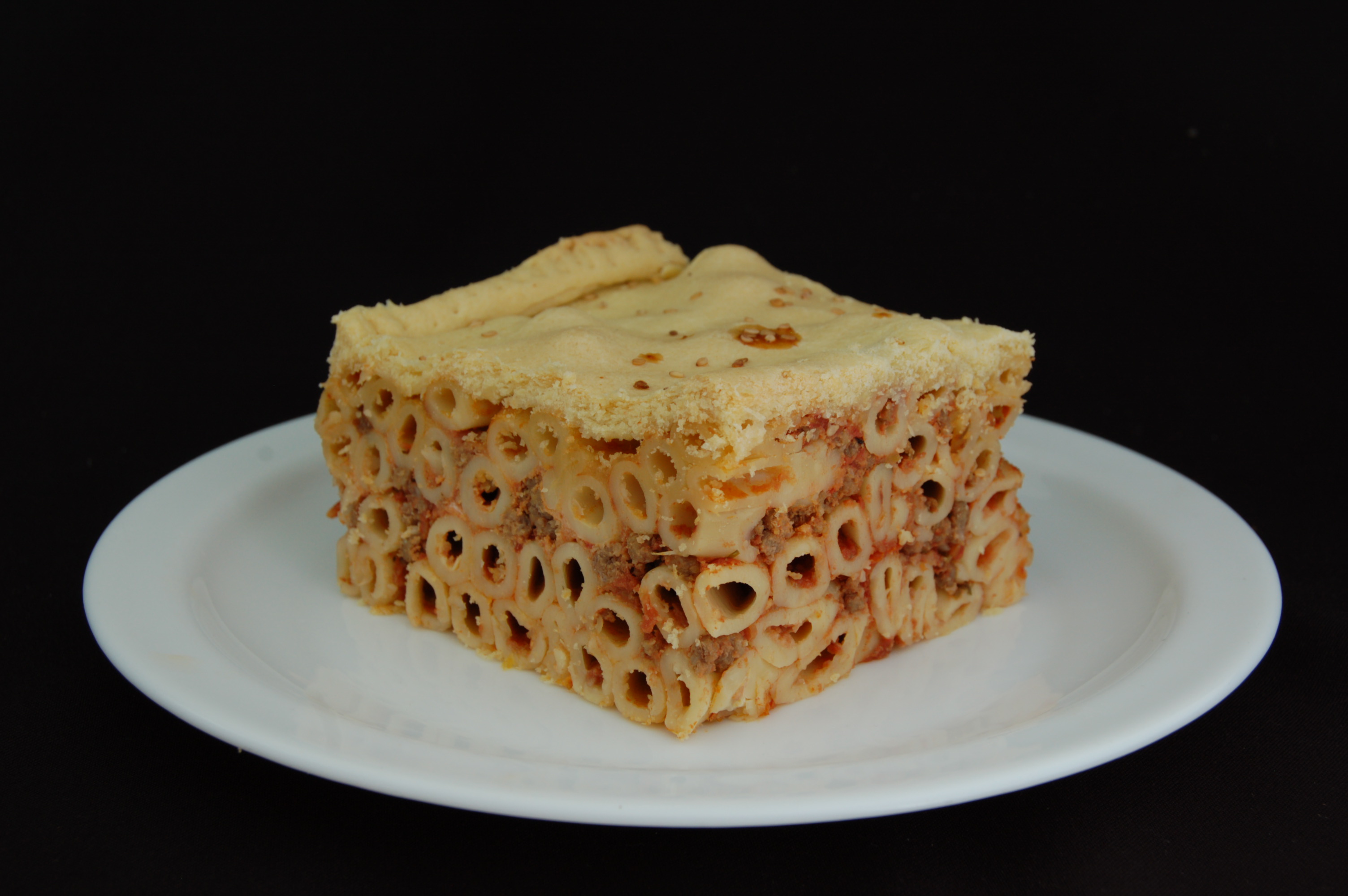
    qaghaq tal- ghasel

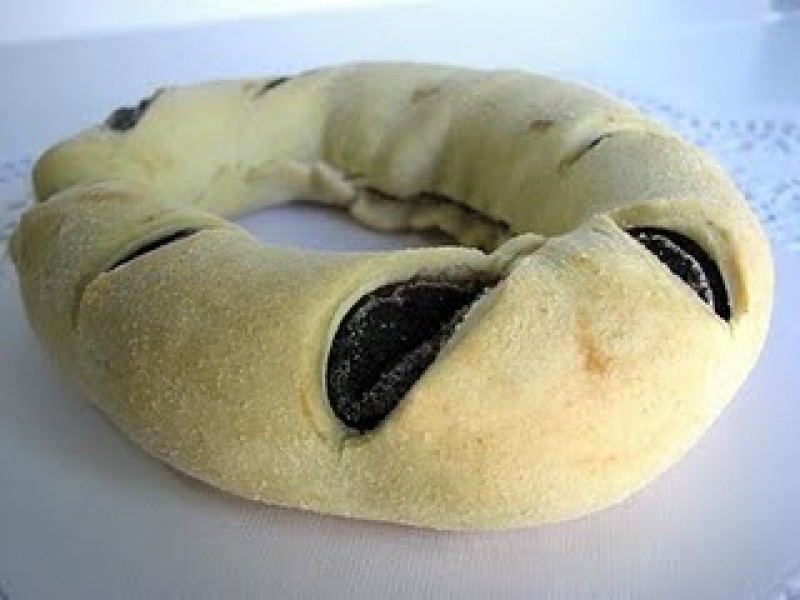
    The Ross fil-forn ( baked rice), imqarrun ( baked Macaroni) or timpana ( a special rich pasta baked in a pastry case) followed by rabbit or meat dishes with potatoes and vegetables are a favourite when it comes to special family meals.And the special occasions also call for desserts!Easter sees the production of Figolli which are almond stuffed pastry figures and during Christmas qaghaq tal-ghasel (honey rings) are famous. But if the occasion is none of the above, then a simple Cassata ( ricotta filled sponge with marzipan), Sicilian-style, semi-freddo desserts, Helwa tat-tork (sugary mix of crushed and whole almond) or some Kannoli (ricotta filled with fried pastries) is perfect with cup of coffee or without coffee also!Its dessert after all!! 😀

    Maltese_Timpana


    Malta may not be as celebrated like its neighbours for wine production but Maltese vintages are anything but spectacular. The international grape varieties grown on the Islands include Cabernet Sauvignon, Merlot, Syrah, Grenache, Sauvignon Blanc, Chardonnay, Carignan, Chenin Blanc and Moscato.The indigenous varieties are Gellewaza and Ghirghentina that produce some excellent wines of distinctive body and flavor.

    So, if you are ever in Malta, I can promise you that you won’t be let down by the food, the picturesque palaces and cathedrals, public squares, or the people. When you sit in front of a baroque castle, chumping away at a zalzett and watching the sunset , you make a memory and one that you definitely do not want to forget.

  • JEEZ! Chinese

    JEEZ! Chinese

    Familiar with fried rice, spring rolls and Manchurian?

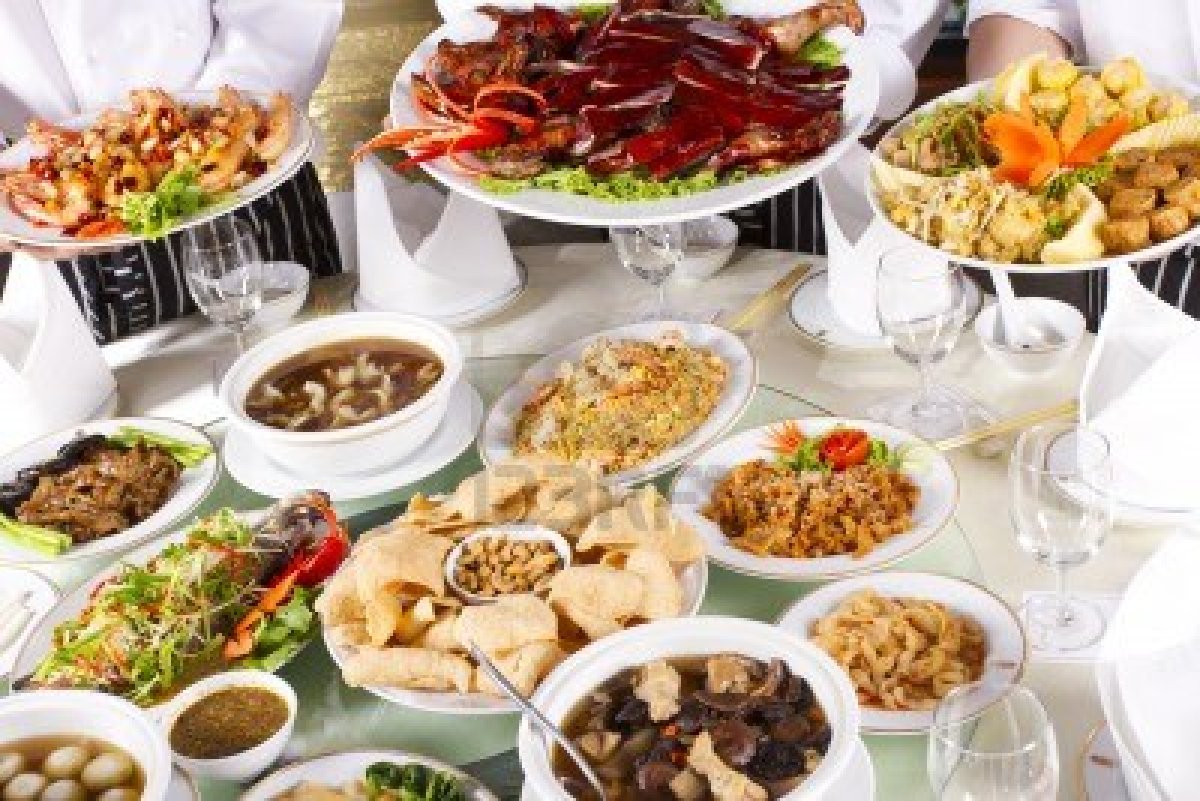
    Thanks to the Chinese for blessing us with such an appetizing cuisine. Unlike the Italian and French cuisines, Chinese cuisine is less sophisticated has far more outreach to the general population around the world. No wonder it’s ranked among the best cuisines the world.But sadly, noodles bears the overused symbolism of Chinese in food, like Butter chicken and Naan to the Indian cuisine.

    History of Chinese cuisine dates back to thousands of years and has encountered change at every level from time to time. People in china are especially particular about their food and hence they have eight culinary traditions namely, ANHUI, CANTONESE, FUJIAN, HUNAN, JIANGSU, SHANDONG, SZECHUAN and ZHEJIANG cuisines. The prominence of this cuisine had taken it out past the national boundaries to countries like Singapore, Malaysia, Indonesia, India and America who have incorporated their native flavors to the cuisine.

    Let’s learn more about it in particular, Staples in Chinese cuisine involve rice, noodles, vegetables, sauces and seasonings. It doesn’t include much of Dairy products but the same is subtly compensated by variety of seafood, poultry and meat.  Corn, millet, cabbage, sweet potato and tofu are eaten the most under vegetables and cereals categories. It is said that that when in past famines were frequented much, it posed a threat to the food supply for general population. At that time rice became an important part of every meal as it was available in plentiful and was observed to go well with both vegetables and meat based on what was available. This gave rice a revered position in their platter which is cherished still the same. And yes! It is traditional for them to use chopsticks and soup spoons for every meal.So now that we had familiarized ourselves to the cuisine, moving towards more exciting part let’s regard some really delectable must have dishes. Shall we?

    1. PEKING DUCK

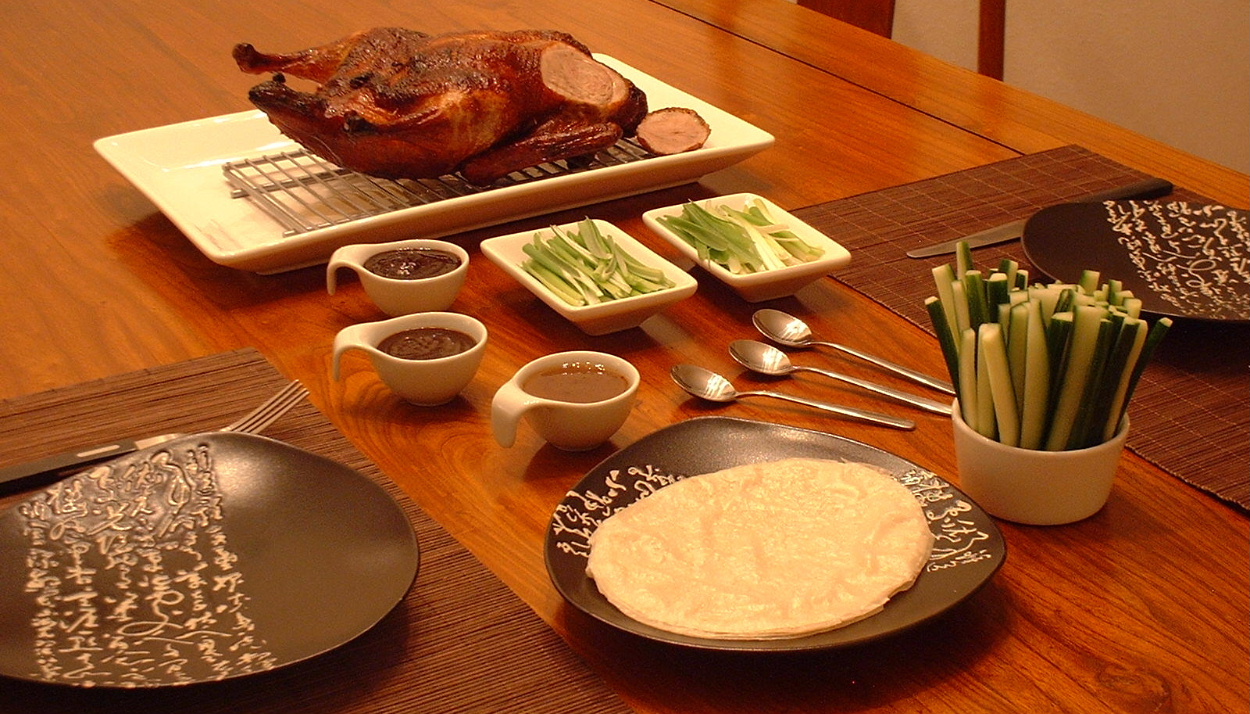
    Peking duck is a duck dish originated from Beijing and cooked from the imperial era is now considered a national dish.  Relished for the thin and crisp duck skin, the dish is eaten with scallion, cucumber and sweet bean sauce with pancakes rolled around the fillings. After cooking, dish is served in three steps: skin dipped in garlic and sugar sauce, meat served with steamed pancakes, sweet bean sauce and spring onions. The rest and vegetables is either eaten separately or mixed with the broth which customers often takeaway.

    Peking_Duck


    1. KUNG PAO CHICKEN

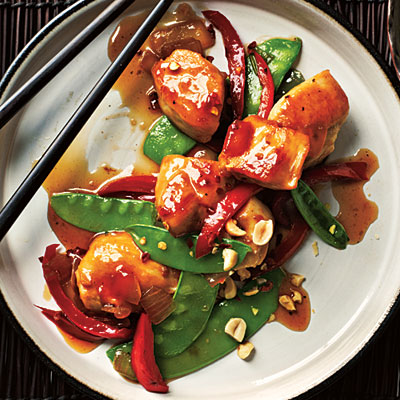
    Next on the list is the very delicious Kung Pao chicken, categorized under Szechuan cuisine originated primarily from the south-western parts of China. Known for its spicy twist, dish is made up of chicken, peanuts, vegetables and chili peppers.  The original version of Kung Pao chicken involves marinating diced chicken and stir frying it with vegetables and peanuts. In vegetables, chili peppers and Sichuan peppercorns are important components. While preparing, peanuts or cashew nuts are deep fried in the wok first till they are golden brown and afterwards rest of the ingredients are added. In the westernized versions of Kung Pao chicken instead of marinated diced chicken, beef, pork or seafood are often substituted which is then cooked by adding orange or orange juice with ginger, garlic and corn starch. The dish is garnished with roasted peanuts or cashew nuts.

    kung-pao-chicken

    1. CHOWMEIN

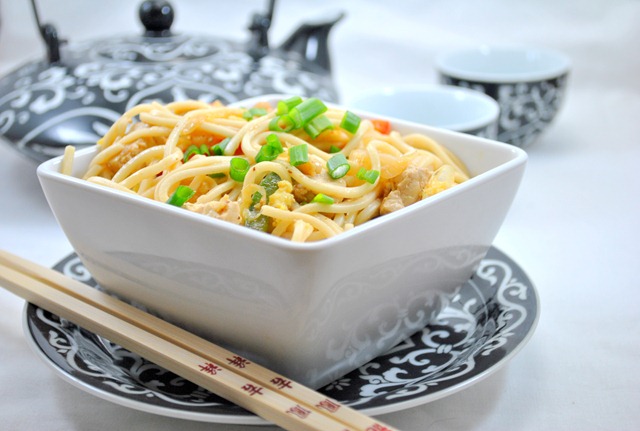
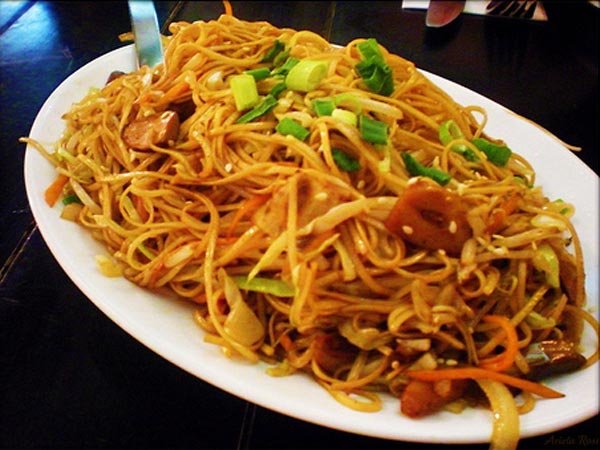
    Now who wouldn’t know this? Very well relished by everyone, it literally means “stir-fried” noodles”. Though there are many regional variations to it, it’s basically they are prepared in two ways: 1. Steamed and 2. Crisp. The Steamed chowmein has long and rounded noodles with softer texture than crispy chowmein, which has fried and flat noodles and is crisper and drier in texture.

    chowmein

    The popularity of chowmein is so widespread that it has more than 5 varieties collaborating with respective regional cuisines all over the world. There are still differences except the basic texture of noodles between crispy and steamed noodles. Like crispy noodles May or may not contained any vegetables or and be simply strained and stir fried, while steamed chowmein usually carrots, onions or celery, cabbage and sprouts.

    crispy chowmein

    The former is served with thick brown sauce while the other is topped with soy sauce. Chowmein can be custom incorporated into Frankies, burgers or you can add chicken or egg to increase the nutrient value of this delight.

    1. WANTONS

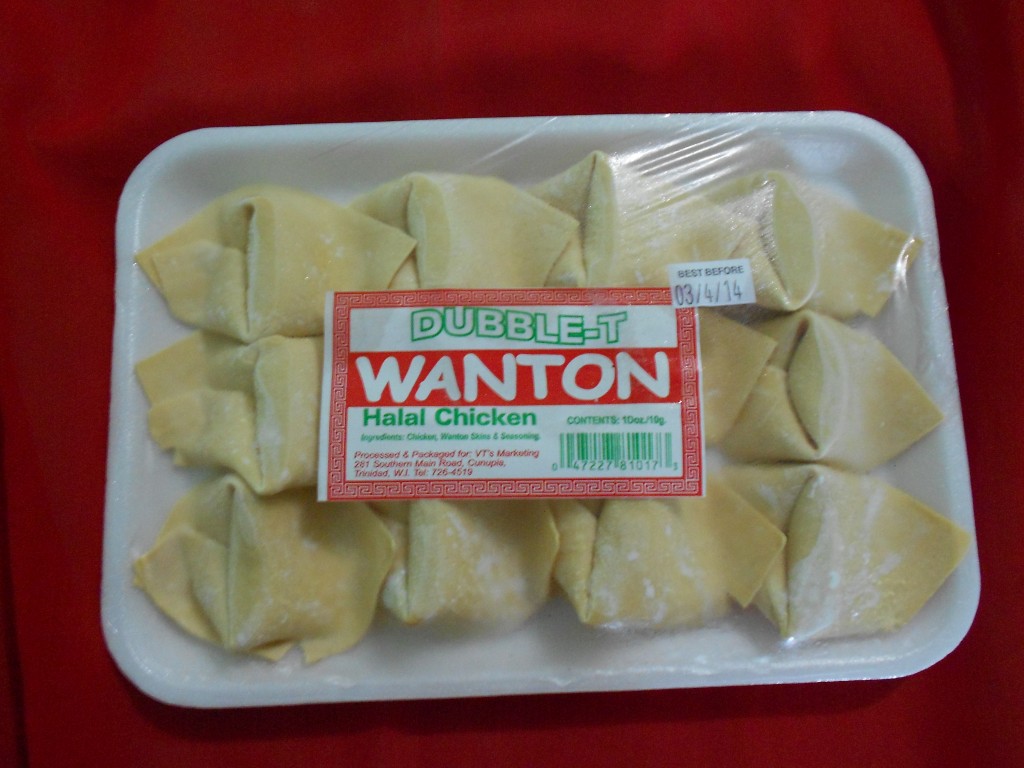
    Dumpling! Yes, wantons are a common addition to soups in Chinese cuisine. The dough is prepared by using flour, water, egg (as per preference) and salt which is then made into small wrappers filled with meat or shrimp or steamed vegetables seasoned with spices, garlic and green onions. The shapes are made as per desire but most versatile shape is right triangle, made by folding the wrapper in half by pulling two diagonally opposite corners.

    wanton

    Relished by boiling and serving them in soups, wantons are also preferred deep fried, like other Chinese dishes it also has various regional variations. Basically the differences lie between the shapes and the filling inside the wantons. If not comfortable with sweating to cook, the pre cooked versions of wantons are available in the market. Enjoy the delicacy with Hoisin or garlic sauce.

    Wrapped-Wantons-Chicken

    1. POPULAR INDO-CHINESE ENTREES

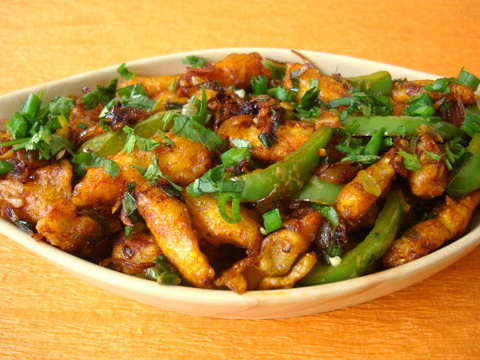
    Now talking about what we plate after collaborating with Chinese cuisine, we actually have plenty from appetizers to desserts.  One of the most popular appetizers is momos apart from apart from spring rolls and soups.Popular entrees include chilli and Manchurian dishes which is often cooked with either chicken for non vegetarian foodies and is mostly substituted by paneer and other vegetables like cauliflower and baby corns for Vegetarians.

    baby-corn-manchuria

    All this and more delicacies are there to explore in this cuisine, which is ever evolving and still have roots to the Chinese tradition. So, explore into the finesse of Chinese.

  • Indian Cuisine

    Indian Cuisine

    The moment we Indians hear the word food our mind gets filled with hundreds of pictures of herbs, spices, dishes, sweets and what not. In India its not just about eating to live in fact it’s the other way round that is living to eat. When our moms cook food for us it is not just about taste but also her love served in the form of food. All of us have seen the serene look on our mothers’ face after we eat what she cooks for us. Any person would trade the world for it.

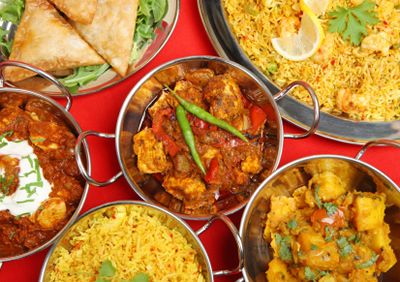
    Coming back to Indian cuisine, which is in itself a very vast topic to be discussed because India is a land of many religions and cultures and people belonging to different cultures have different taste pallet. Each state in India has some or the other kind of food that is exclusive to that state. In fact some states are known by the food served there. Bihar is known for its traditional dish “litti chokha”, west Bengal for fish and rice, Rajasthan for “daal-baati” and Punjab for “sarson ka saag.” There is a great deal of diversity in flavors in each of these dishes.

    Ingredients used in Indian cuisine are a great way to understand the distinction between various kinds of food cooked in India. While most of the dishes are cooked in vegetable oil, peanut oil is famous in northern and western India, mustard oil in eastern India and coconut oil in south India. Each culinary region also has a distinct blend of spice mix; also known as garam masala and it varies for individual chefs. Use of curry leaves and mustard seeds in very typical of Gujarati and south Indian dishes. Also Kashmiri desserts are seasoned with cardamom, saffron and rose petals.

    Cuisine across India is a result of variation in the local culture and geographical location. It also depends on seasons as those fruits and vegetables are eaten which are ripe. First of all we would talk about Delhi, the capital of India, which is also the birthplace of mughlai cuisine. Delhi since ages has been known for its street food. Delhi has people from all parts of India and thus the cuisine in Delhi is an amalgamation of different Indian cuisines modified in unique ways. Western food items also influence the cuisine in Delhi.

    mughlai-cuisine-250x250

    The food in Punjab is for those who are strong hearted. It is very rich in flavors and has a liberal dose of ghee and spices. They also use a lot of milk and milk butter and no meal is complete without buttermilk. Mainly people in Punjab are wheat eaters and relish eating paranthas and maize roti. The ubiquitous tandoori chicken is a favorite of all non-vegetarian eaters.

    The cuisine of Uttar Pradesh is very diverse and has absorbed and adapted a lot of cuisines to make wonderful dishes. The people of Uttar Pradesh love to eat but they also like to cook and to feed other people. As people they are extremely warm and for them the ultimate form of hospitality is to serve their guests with food until they beg for mercy. They have a wide variety of vegetarian dishes and divine desserts.

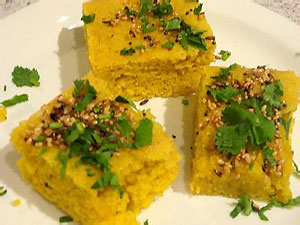
    Unlike any other cuisine, Gujarati cuisine is strictly vegetarian. The difference lies in the unusual blending of sweet and salt into a harmonious whole. Gujarati food has remained more or less the same since ages. The most well known Gujarati dishes are “khaman dhokla”, “paunk”, “undhyoo” and “shrikhand.”

    Cuisine_Gujarat

    Goan cuisine is a combination of Konkani and Portuguese food styles.This culinary amalgamation and adaptation has resulted in fiery coconut based curries and stews using pork and beef and rich cakes and pastries. It also offers an interesting range of red and white wine.

    Feni is a local cashew fruit or coconut brew that hits all the right spots in our taste buds. For people who are less adventurous, there is refreshing coconut water drunk straight from the tender green coconut.

    Bengali food consists of a lot of fish, lentils and rice. Usually their breakfast consists of milk and rice flakes eaten with jaggery. Lunch and dinner are mostly elaborate affairs. The first course is rice and daal with vegetables, pickled mangoes and fresh salad. It is followed by rice and meat. Bengalis are great fish eaters. The “hilsa” fish is a specialty when cooked in mustard sauce.

    bengali-food

    Bengalis love sweets. A vast array of milk based “mithai” has originated in Bengal. The light and spongy Rosogulla and the mouth-watering Sandesh, which are the specialties in Bengali sweets, are available all over India, but nowhere do they taste as they do in Kolkata.

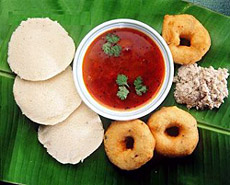
    The food of Tamil Nadu is what is known as “south Indian cuisine” everywhere else in the country. All meals center on a base of rice or semolina preparation like idli, dosa and vada. Eaten alongside is the sambar, sour hot dal with vegetables.

    south indian

    The drink of choice throughout the state is coffee. It is grown in the plantations in the Nilgiri Hills. The coffee is brewed with great care and filtered such that it is guaranteed to deliver the right taste of caffeine with a flavorful punch.

    Just like the culture in India, the food in India has also been influenced by various civilizations, which have contributed a fair share in its overall development and the present form of food that we eat.


  • Dances of God’s Own Country!

    Dances of God’s Own Country!

    The National Geographic Magazine names Kerala among the top 10 paradises in the world. ‘God’s Own Country’ was originally a phrase New Zealanders used to describe their home land. The earliest use of the phrase was as the title of a poem about New Zealand by Thomas Bracken. God’s own country as a phrase was often used and popularized by New Zealand’s longest serving Prime Minister RichardSeddon. The etymological meaning of Kerala is the land of coconuts, Kera means coconut in Malayalam. Kerala is abundantly endowed with coconut trees all over its mainland. The thick ambush of coconut trees is a treat to the eyes. Situated at the southernmost part of India, it is an exotic location with a temperate climate. However the real beauty of the land are its people, Kerala boasts of having the first fully literate state in the country, Kottayam. Life expectancy rate in Kerala is the highest in India and the female to male sex ratio n Kerala is higher than the national average.

    Kerala is a home to a number of dance and art forms, they are an integral part to the regions culture. They are performed in temples and ceremonious occasions. The dances of Kerala are wonderfully vibrant and breathtakingly enchanting. They carry hues of enthusiasm and gaiety and are a perfect blend of pristine culture and rich traditional beauty. Legends and mythological stories are depicted through the dance forms. Kerala is today known all over the world for its enchanting performing arts which were highly patronized by the rulers and sketched to eternity by the folklores.

    Kerala has a rich variety of folk dances. Some of them are

    Kathakali

    kathakali

    Kathakali is one of the oldest theatre forms in the world. It is group dance where in dancer take in roles based on themes from the Hindu mythology, primarily the epics Ramayana and Mahabharata. A really interesting aspect of Kathakali is the elaborate dressing and makeup. Characters are sorted according to the nature of the role they play and wear colors accordingly. The face of noble male characters like kings and divine heroes such as Rama are painted green. Characters of high birth such as Ravana with an evil streak in them are painted a similar green on their faces with red streaks. Extremely evil or excessively angry characters wear predominantly red makeup and a flowing red beard. Forest dwellers and hunters are represented with a black faces. Women and ascetics wear a luminous yellow face. The technique of depiction involves a highly complicated gamut of gestures with which the actor can articulate lines and even words, the body movements and footwork are aesthetically intricate and precise. The actors to perform this feat have to go through several decades of trainingand require regular body massages for flexibility and muscle strength and control.


    Mohiniattam

    mohini

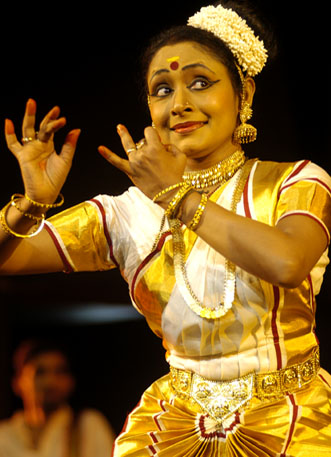
    it is a dance form closely related to Bharatanatyam of Tamil Nadu called dasiattam. Originated in the temples the dance was performed by Devadasis, it articulated feminine love in it myriad forms namely carnal, paternal and devotional. It somehow degenerated to eroticism in the epicurean way of life until Vallathol, a renowned Malayalam poet revived its status in modern times with his institute called Kalamandalam. Most of the features of Mohiniattam are similar to the one in kuchipudi and bharatnatyam, though there are subtle differences in the movements and hand gestures. The language used in the lyrics is a mix of Malayalam and Sanskrit, known as manipravalams


    Koothu

    CHAKYAR_KOOTHU_G8U_1114422e

    It is a socio-religious act performed in the Koothambalam. It is a solo narrative dance with sprinkles of wit and humor. Through the inimitable narration of the epics the Chakkiyar, the performer articulates the satirical conditions in those times. No one is above the butt of his mockery, he doesn’t spare kings or slaves. His humor ranges from innocent mockery to veiled innuendoes.


    Theyyam


    thiyam-

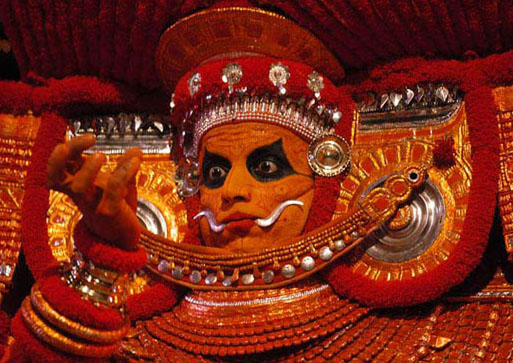
    Thaiyam is one of the most spectacular dance forms of Northern Kerala which is about eight centuries old. It is believes to have been derived from the word Daivam meaning God. It is believed that immortal spirits enter into mortal bodies while performing the dance. Theyyam is staged regularly in the shrines of Malabar.

    There are also a large number of folk dances that have survived the ages and continue to enthrall us with their rapture. Some of them are


    Thiruvathira

    thiru

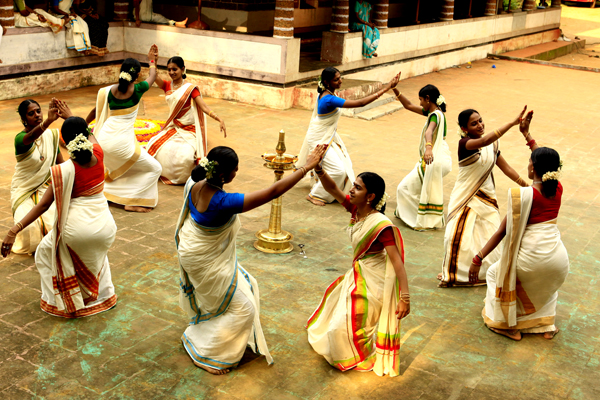
    Thiruvathira is performed by maidens who revolve around a cirle while performing dance steps along the music which is essentially the clapping and the narrative song sung by singers as they go around the cirle.


    Kolkali

    Arts Festival

    It is a group dance performed in a circle where the dancers dance to the rhythmic beats with sticks in their hands. The dance gains tempo and pace as it advances and is performed only by the males who have a certain basic martial art training.


  • Rasgulla: The syrupy taste of India

    Rasgulla: The syrupy taste of India

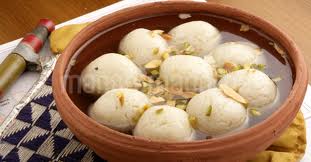
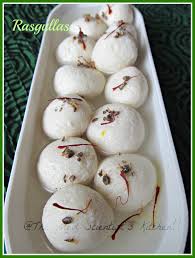
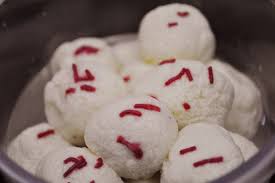
    Don’t you people got bored with the same khichdi and daal all the time in your lunch and dinner? Have some change and make your appetite more interesting and delicious..!! Go on and try some desserts, sweets, ice-creams. What can be more yummy and delicious than Rasgulla..! Rasgulla, the name itself can make you salivate.  The most historical and yummy Bengali dish is famous all over the country and also spread its taste over neighbouring countries like Nepal, Bhutan, Pakistan and Bangladesh. It is a white spongy variant also popularly known as Rossogolla in Bengal.

    ras2

    It is a syrupy dessert based on cheese (chhena) is popular in the whole nation mainly in West Bengal and Orissa. It is typically served on various occasions and parties. They are white sweet yummy balls which is spongy and rubbery in nature.

    Sri Nobin Chandra Das, who is remembered as the father of Rossogolla succeeded in inventing this National Sweet of India in 1868. He is responsible for modifying this recipe of white variant spongy dish all over the nation. He popularised this sweet dish among various sweet-makers and finally canned rasgullas were prepared to gain this popularity outside Kolkata.

    This sweet dish not only popular among parties or dinner instead in Puri this is most widely used as an offering to the Goddess Lakshmi as a tradition. There people believed that Jagannath tried to pacify Lakshmi with these rasgullas and that’s why she is offered this as a ‘Bhog’. Due to this tradition scholars perceived this offering as the origin of this dish.

    ras6

    This Bengali sweet doesn’t exist as a single rather several variants exist. Starting with Notun Gurer Rasgulla, which are the most famous seasonal variants with the addition of Fresh Jaggery in it. Then comes Kamola Bhog, which is rich in orange flavour.  Originally the rasgullas used to be creamish in colour and less spongy. In Orissa it is very common to embed a piece of cashew or raisin which increases its taste. Conventional Rossogolla, Cream Chop, Sponge Rossogolla, Rajbhog, khasta are another variants that are available in different shapes and sizes. They are generally served to the guest at room temperature but sometimes they are also served them chilled. This is not enough instead hot rasgullas are also famous among Indian household.

    ras5

    Manufacturers of Rasgullas do not generally disclose the recipe of this sweet dish and it seems that its preparation might be difficult. But it is not so. It has an easy and convenient way. Its preparation initially needs the preparation of Chhena balls and syrup.

    Ingredients: Flour (2 tspn), milk (1 litre), sugar (200gm), Lemon juice, Water.

    Preparation of Chhena balls:

    • Initially boil full cream milk and allow it to cool down.
    • For separating chhena and water add lemon juice to it.
    • After separation, bundle up the content of milk in muslin cloth and keep it for 6-8 hours so that extra water is drained out.
    • Now add flour to the Chhena and prepare fine dough.
    • From that dough make small balls.

    Preparation of Syrup:

    • Boil water and add sugar to it.
    • After sugar is dissolved then add ½ cup of milk.
    • Some un-dissolved particle would float which needs to be separated from it to obtain clear syrup.
    • Add Chhena balls to it and boil it along with the addition of water to it in a span of 15 minutes.

    Rossogollas is ready and it needs to be cooled now.

    How much delicious this sweet dish is depends mainly on its serving size. The size of rasgullas varies greatly but usually small size of 3.5 oz is preferable. The serving size will directly affect nutritional value of this sweet.

    Generally a person believes that sweet dish is responsible for various diseases and they tend to avoid sweets. All the wishes of them are marred. But it is just their perceptions and in reality it is highly nutritious dish after taking your lunch or dinner. This delicious sweet consists of 186 calories (153 calories for carbohydrates, 17 calories for fats and 16 for proteins).

    ras4

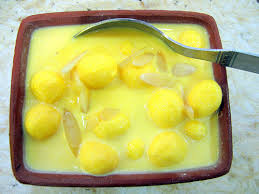
    In ancient times Rasgullas are served normally at room temperature but now days demands changed and it has led them to be served chilled. They are also served with Ice cream as a dessert to make ice cream rasgullas. In restaurant to add more cream to this dessert it is served with blueberry sauce. It is entitled as Oriya dessert. Sondesh is similar as rasgulla and is another Chhena dish prepared in Bengal. The Chhena balls prepared is also used in Rasmalai which is popular throughout India. In this sweetened milk is mixed instead of syrup. In Creamy chop chhena is sandwiched in the middle of the clotted cream. This dish is served in various occasions such as marriages, parties and it shows the symbol of your high dignity. This is also served as a welcome dish on various festive occasions.

    Go on and try it..!!

    ras3


  • INSTANT ACCHARS: PICK YOUR PICKLE

    INSTANT ACCHARS: PICK YOUR PICKLE

    Growing up in India “Acchars” or the Indian pickle has been a substantial part of my childhood experience. I would see my Mom and Aunts spending considerable time in preparing the vegetables, gathering the spices and making arrangements for their storage for days on end. A very tedious affair indeed!! But the end product makes up for all the trouble caused. Pickles are tangy and immediately add savor to anything they are consumed with, be it- paratha, burger or pancakes.

    Pickles are formed by the anaerobic fermentation of vegetables and unripe vegetables in the presence of brine (salt-water) or vinegar. This caused them to dehydrate and thus, discourages the growth of microbes. Moreover, their pH is less than 4.6 which further kills most bacteria. Thus, they can be preserved for months and depending on the recipe, even years!!  The vegetables pickled in brine as opposed to vinegar, are known to contain Lactobacillus and are thus, probiotic.

    Like mentioned above, making “Acchars” can be a pretty tiring job especially if you are a student or working a 24×7 job. Not anymore. Here are 5 instant Pickle recipes anyone can make. They can be stored for lesser duration as compared to the traditional pickles, but the tang it brings to our food is so worth it!!

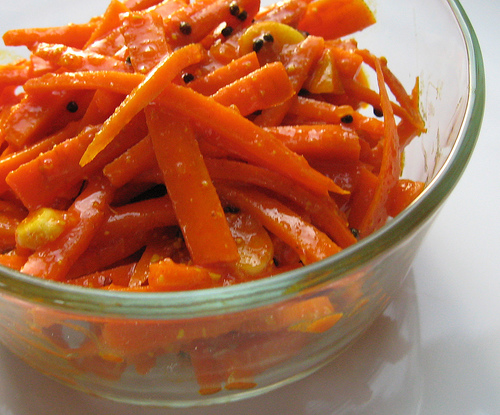
    1.  CARROT PICKLE

    carrot

    Ingredients

    1. 10 carrots
    2. 1 ½ tbsp crushed mustard
    3. 1 ½ tbsp lemon juice
    4. 1 ½ tbsp oil
    5. Cumin powder
    6. Turmeric powder

    Method

    Wash the carrots and peel them to remove a thin layer of outer covering. Cut the carrots into desired shapes, preferably rectangular. Gather all the ingredients in a bowl and mix them thoroughly. And you are good to go!! Finish this preparation within 2-3 days.

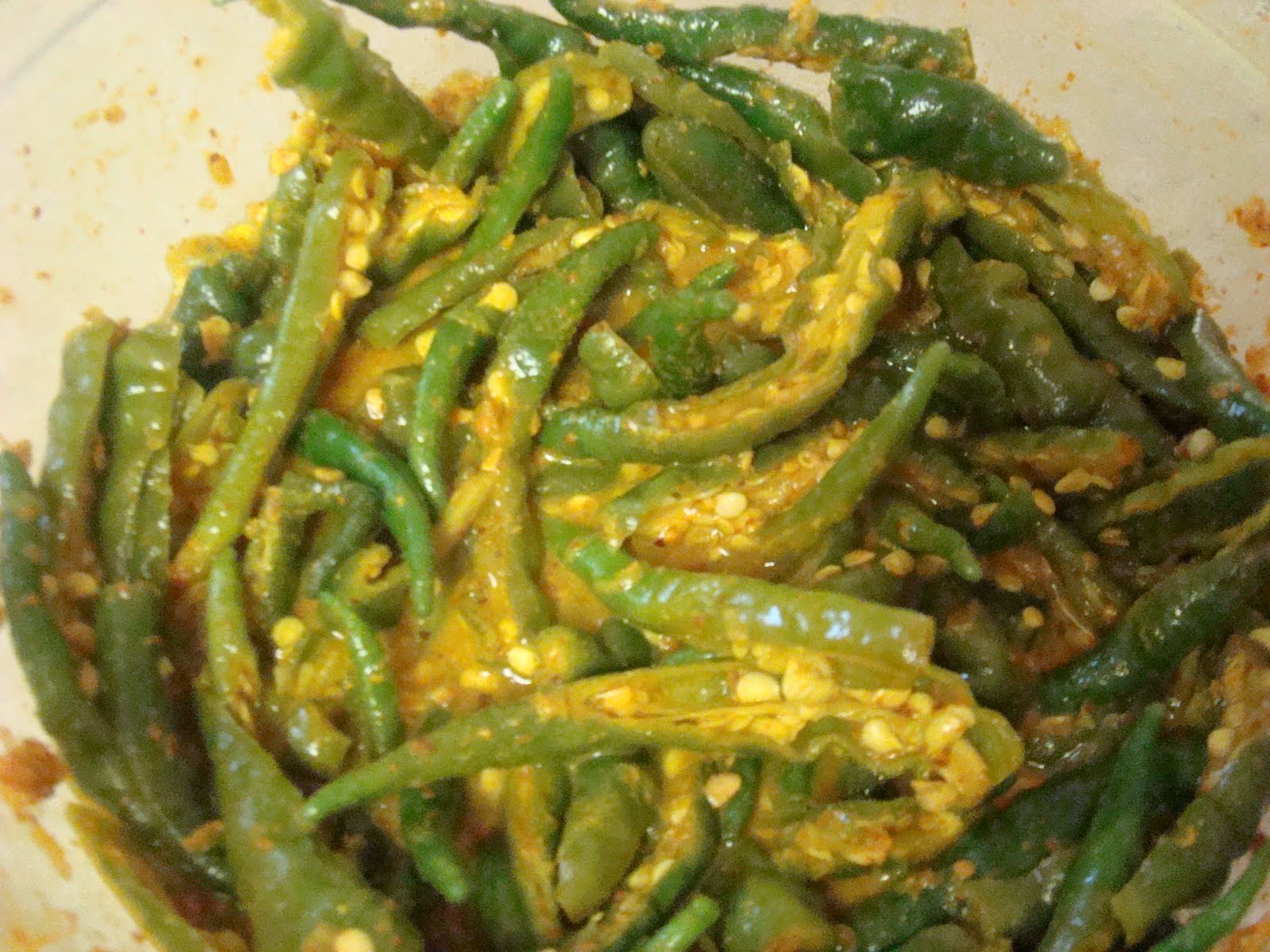
    1. GREEN CHILLI  PICKLE

    chilli

    Ingredients

    1. 1 cup green chilies
    2. ¼  tbsp fenugreek seeds
    3. ¼  tbsp cumin seeds
    4. 1/8 tbsp turmeric powder
    5. 1/8 tbsp grounded asafetida
    6. 1 tbsp lemon juice
    7. 2 tbsp oil
    8. ½ tbsp sugar
    9. ½ tbsp salt
    10. ¼ tbsp amchoor or dried mango powder

    Method

    Wash green chilies and give them a longitudinal cut right in the middle such that they still remain joined at the end. Put oil in a pan and allow it to heat it till it is ready enough to fry. Add cumin and fenugreek seeds and keep whisking them lightly till they begin to crackle. Add amchoor, asafetida, turmeric powder, salt and chilies and mix them for a few minutes. Finally, add sugar and lemon juice. Mix them properly and turn off the heat.

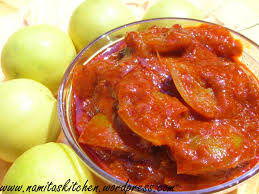
    1. LEMON PICKLE

    lemon

    Ingredients

    1. 10 lemons
    2. 6 tbsp salt
    3. 2 tbsp red chili powder
    4. ½ tbsp turmeric

    Method

    It takes a little longer to prepare this pickle. But it can be stored for months and is extremely easy to make. Cut the lemons into half or make 4 pieces. Gather the lemons in a large bowl and pour all the other ingredients i.e. salt, turmeric and chili powder. Mix the constituents properly. Remember, depending on the climate and temperature of the place, the amount of ingredients has to be adjusted. Put the mixture in a glass-jar and put it daily under sunlight for a week or so. The pickle is considered ready when the lemon loses water and becomes soft. To store it for longer duration, add oil.

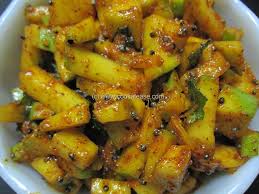
       4. MANGO PICKLE

    mango

    Ingredients

    1. 1 cup sliced unripe mango
    2. 1 tbsp chili powder
    3. ½ tbsp salt
    4. 1 ½ tbsp mustard oil
    5. 1 tbsp cumin seeds roasted
    6. ¼ tbsp grounded asafetida
    7. ½ tbsp turmeric powder

    Method

    Mango pickle is arguably the most famous and mouth-tickling pickle there is. Traditionally, it requires a long for the mango “acchar” to get ready. But you need not compromise with taste in your hectic life. So let’s get started. Firstly, take the mango strips in a bowl and add salt. Mix these two ingredients properly and leave them aside for one and a half hour. Once the mangoes lose water, drain the water and collect the mango strips. Put these strips in a large bowl and add all the other ingredients. Mix these thoroughly and your delicious pickle is ready to be served. It can be stored up to 3-4 days when refrigerated.

        5. AMLA OR INDIAN GOOSEBERRY PICKLE

    Amla_Pickle_Stp3

    Ingredients

    1. 10 Amlas
    2. 1/8 tbsp Red chili powder
    3. 1/8 tbsp asafetida
    4. 1/8 tsp fenugreek powder
    5. A pinch of turmeric powder
    6. Salt-to taste
    7. 1 tbsp oil
    8. 1/8 tbsp yellow mustard seeds

    Method

    Boil water in a pan with a pinch of salt. Slowly add Amlas to this boiling mix and let it heat for 5 to 6 minutes. Drain water from the Amlas and allow them to cool for some time. Once they cool down, separate them into their natural wedge shape by cutting and remove the seed in the middle. Heat oil in a pan and add asafetida and mustard seeds. When the seeds begin to crackle, add amla wedges followed by the rest of the ingredients and cook them for 3-4 minutes. Turn off the flame and allow it to cool. Refrigerate for prolonged storage.


    Pickles add flavor to your life, they make your food come alive and dance. In our hectic lives, we often compromise with our meals. So the next time, you decide to half-heartedly swallow bread and a sad not-so-tasty vegetable that you prepared, think again!! Just few minutes of your precious time and you can add soul to your snack. so, come on- PICK YOUR PICKLE!!

  • Producing Marvels in the Cottage! – India’s indigenous industries

    Producing Marvels in the Cottage! – India’s indigenous industries

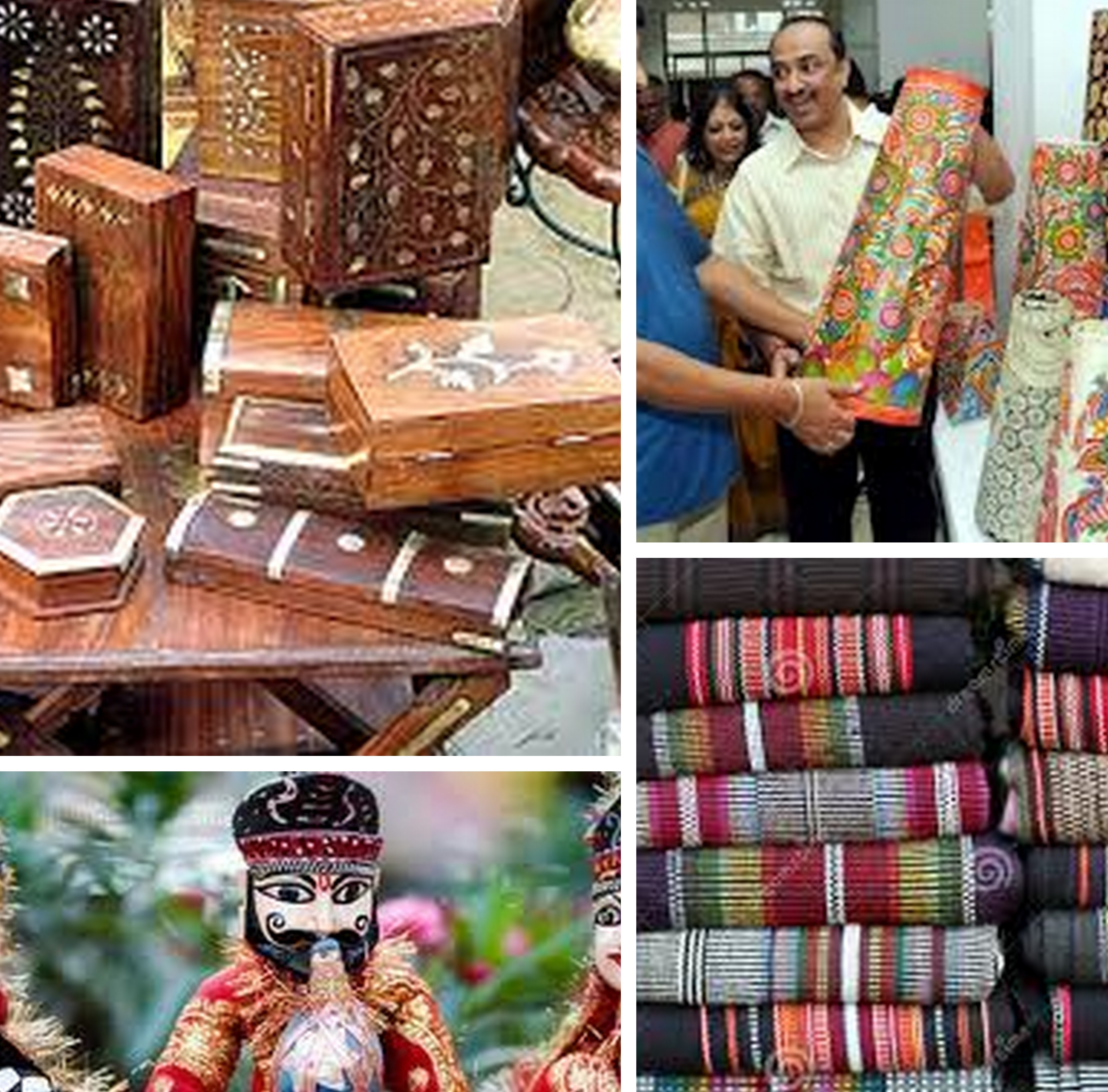
    Talk of India to an American and the first few things that cross his mind will be great food, beautiful handicrafts and marvelous cultural heritage. India is known for its gorgeous art and craft forms, be it the woolen carpets of Kashmir, or the metal artifacts of ……, these form the pride of a curators’ collection.

    What makes them worth the value they have is the years of experience and skill that goes into mastering the art. Indian cottage industries have not just kept these arts alive but have also helped them reach out to a wider spectrum of audience.  They play the role of a window to the age-old cultural heritage of Indian civilization for the outer world.

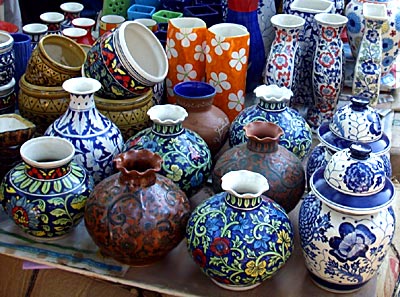
    Right from the time of Indus valley civilization dotting the face of India, clay and mud pots portray a magical coalescence of design and purpose. The excavation of ancient cities like Harappa and Mohenjo-Daro have revealed some of the finest forms of this age-old art. Indian villages have carried the patrimony of the art and have amalgamated immense thought and concept with picturesque aesthetics that appeal to the audience. Indian pottery produces two types of products viz. glazed and unglazed pottery.  Depending on the origin, the artists and the type of clay found in a particular region, every state has a unique sense of this art. While the villages of Alwar and Kutch are known for very fine paper-thin pottery with incised designs, the villages of Nizamabad in Uttar Pradesh are famous for black pottery with silver intricacies worked in it, thus striking a resemblance with the Bidar work of Andhra Pradesh. Some villages of Delhi, Jaipur, Amritsar and Tamil Nadu are known to produce gorgeous pieces of glazed pottery with white background and blue and green designs on them. The utility factor of this art is not just limited to pots or vessels; it offers a plethora of decorative items made like paper weights, flower vases, tea sets, ashtrays, pen stands etc. to choose from. These are examples of Karigari pottery which is famous in many Indian villages.

    pottery

    Terracotta is another art villages of West Bengal, Tamil Nadu, Gujarat and Bihar are famous for. While women in Bihar, Gujarat and Bengal prepare clay figures using this art to propitiate their deities, Gorakhpur in Uttar Pradesh has villages where clay figurines of animals are made.

    terracotta

    Wood, cane and bamboo crafts also feature among the multitude of art-inspired cottage industries. Bamboo carving was first  introduced in the Sattras of Brahmaputra Civilization in Assam wherein the disciples would carve miniatures of gods, goddesses and their incarnations. The intricately and exquisitely carved figurines can still be seen in Majuli where the Sattras are housed. In the modern days, Indian artisans produce stunningly beautiful utility articles out of bamboo. Objects like baskets for storing clothes, vessels for carrying water, bamboo fans and furniture are some of those. Toys made by carving bamboo stems are also a symbol of excellent craftsmanship.

    bamboo

    Wood-carving like bamboo-art was also started with an impulse to decorate places of worship. The availability and easy accessibility to timber made it an excellent medium for artisans to portray their skill. Wooden idols of Hanuman, Garuda and other Indian deities are seen in various temples of Assam. Besides these, decorative and utility items like lamp stands, storage boxes and even wooden ornaments are a rage among art curators. Wood is also used to make the much famous and vibrant hued puppets of Rajasthan; and who doesn’t spend a buck or two to spectate a nice puppet act?

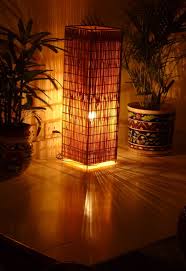
    Cane culture of Arunachal Pradesh is another vibrant craft tradition. Dyed cane strips are used to make parts of attires and other articles like baskets, bags etc. For instance, the Wanchos, a local tribe of the north-east, use dyed cane strips to make head gears, waist bands, armlets or even dancers’ baskets. The most common colours used for dyeing are red, yellow and black though the Monpas paint their strips in a variety of colours like red, pink , brown yellow, green and blue.

    cane lampshade

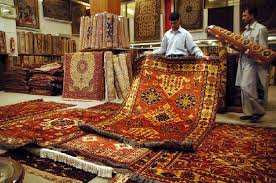
    Carpet weaving is an ancient craft that originated in Persia which was introduced by Emperor Akbar in India. Years later, it has now flourished as a significant cottage industry in remote tribal and rural areas. Carpets, durries and rugs produced in villages of Kashmir, Punjab, Uttaranchal and Haryana cater to the international and indigenous markets alike. Be it the hand knotted silk carpets of Amritsar or the warm woolen carpets of Kashmir, place one of these in your drawing room and lighten the entire ambience up with the exquisite piece of art!

    images

    Handloom industry is one cottage industry we are proud of. We boast about it as an ancient craft form that flourished as an industry between 5000 and 3000 BC. There are vivid accounts about this art form in our fables and epics like the Ramayana and the Mahabharat. The cities of Harappa and Mohenjo-Daro have had evidences of the use of woolen and decorative embroidery in handloom. Hand-spinning, hand printing and hand typing are the skills required to master the art. Besides providing employment to scores to people in the country, the industry also transcends linguistic and communal barriers. With Mahatma Gandhi preaching the concept of ‘Swadesi’ in his freedom-movement, khadi gained popularity as an indigenous fabric. Today we see Indians and foreigners of all classes sporting attires made of this handloom fabric with great pride.

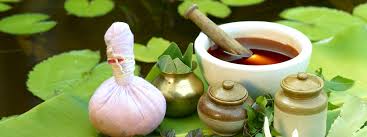
    Ayurveda (Sanskrit for ‘life-knowledge’) or the Hindu tradition of medicine is another indigenous tradition that is native to the Indian subcontinent. Using natural plant products and elements of nature to cure or improve mental, physical and emotional health of a person is what it is known for. People practicing Ayurveda or under its’ influence seem to be content with it.

    download

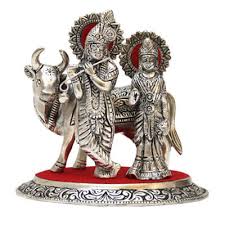
    Among other main cottage industries of India are metal-molding to produce beautiful artifacts like idols, coir industry etc.

    download (1)

    These industries not only reflect the richness of Indian culture but also provide a means of livelihood to a large chunk of the Indian population. Appreciation and promotion of such arts will help them grow and flourish, and that is precisely what we need to do.

  • The cultural capital of India – Kolkata

    The cultural capital of India – Kolkata

    Kolakta which is the capital of West Bengal and it is the former capital of British India during the year 1772 to 1911.It is one of the ancient and largest cities in India and also one of the major ports in India.IT is located on the eastern bank of hugli river.A city of commerce, transport, and manufacture, Kolkata is the dominant urban centre of eastern India.

    kolkata-city
    Kolkata-city

    Origin of name Kolkata:

    The ancient name of Kolkata is Calcutta, it is a older version of Bengali name Kalikata. According to few people the name Kalikantha is derived from the word Kalikshetra which means ground of goddess Kali.According to few people the name came as the city is located on the bank of the canal Khal.The other opinions are as it is famous for the manufacturing of shell lime, the Bengali words for lime are Kali and the burnt shell in Bengali is kata, thus the name originated according to few people.As it is famous for manufacture of shell lime the government of West Bengal has changed its name to Kolkata.

    Landscape:

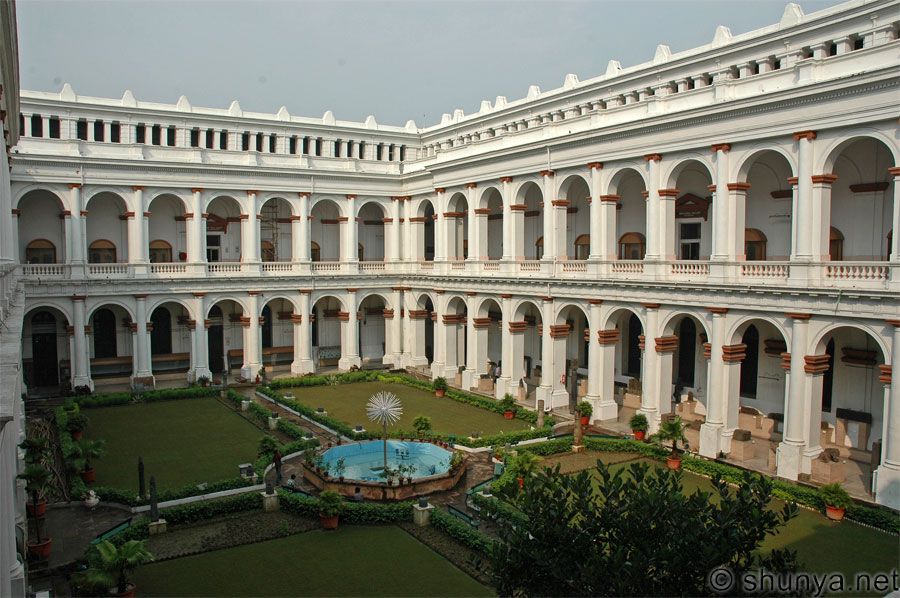
    The city has a maximum elevation of about 9 meters above sea level.The city handles a large portion of India’s foreign trade in both agricultural and manufactured products.The main thoroughfare in Kolkata is Jawaharlal Nehru Road.Along this road we can find many shopping malls, city’s shops, restaurants, and hotels. On our way we an find Indian Museum which has a vast collection of ancient Indian artifacts and on this road we can find Birla Planetarium which is one of the largest planetariums in Asia.Maidan park covering over 985 acres and the main attractions of the park are Fort William and the Victoria Memorial Hall which is massive monument in the museum which is made up of marble.

    Indian-Museum-kolkata
    Indian-Museum-Kolkata

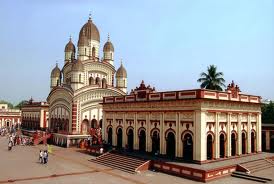
    The city is having many old churches, temples, mosques.The largest mosque in the city was Nakhoda Mosque which was built around 1926 to 42.The Kali temple is an impressive Hindu temple which is famous all over the country.Coming to churches St. Paul’s which is an Anglican cathedral is built around 1839 to 47.Durga puja which is famous Hindu festival celebrated very grandly throughout the city during the months of September and October.

    Kolakta kali temple
    Kolakta kali temple

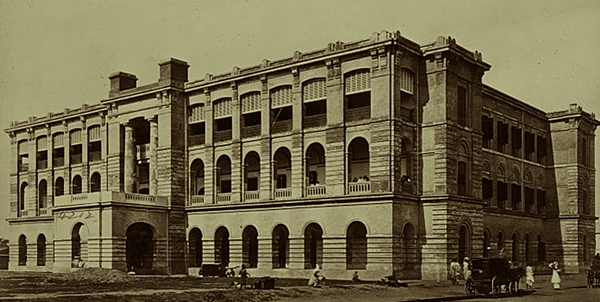
    University of Calcutta which is being the oldest and is found during the year 1857 and this is one of the leading Institution in the city of Kolkata for the higher education.In this city of Kolkata there is National library with a collection of about 20,00,000 volumes.This library is situated at Belverdere Estate which is located near Alipore Zoo.

    Calcutta_university_1857
    Calcutta_university_1857

    The city of Kolkata is having an International Airport which is being served by several railways and highways, including the Grand Trunk Road which links Kolkata with Delhi and upper part of India.In India first Subway is opened in Kolkata during the year 1984.

    kolkata_international_airport
    Kolkata_international_airport

    Climatic conditions:

    The city is quite hot with moderate temperatures during December to January and is having high temperatures during April and May.The average annual rainfall in Kolkata is about 64 inches.Winter falls from the end of November and continues till February.it is pleasant and the fogs and mists reduce the visibility in the early hours.

    People:

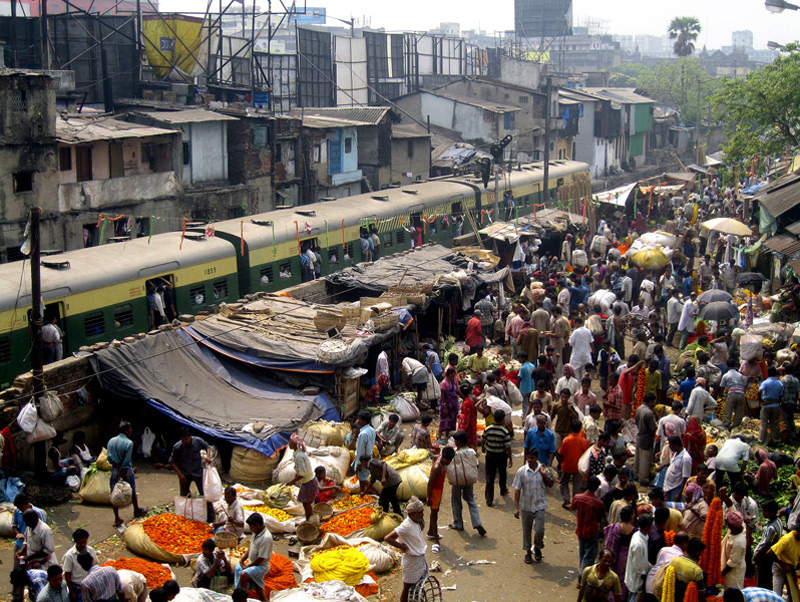
    We can find many religions in Kolkata but the major are Hindus, Christians, Muslims.Because of this multi linguistic in nature we can find many languages are being spoken by the people but most dominant language is Bengali.Many people from various parts of the world visit this city for various purposes being a cosmopolitan city.The population in Kolkata is extremely high and overcrowding can be find in almost every place we visit in the city.This overcrowding is found from many decades this is mainly due to the migrants of the people from the neighbouring states like Bihar, Orissa, Uttar pradesh, Jharkhand are coming to Kolkata in search of employment.

    Over crowding in Kolkata
    Over crowding in Kolkata

    Economy:

    Kolkata Is one of the India’s  prominent economic centres because of its manufacturing industries, finance, trade, exports, imports and is having major activities like printing, publishing, and newspaper circulation, as well as for recreation and entertainment.In addition to all these there are many resources available in Kolkalta like coal, iron, manganese, mica, petroleum, tea, and jute.

    Kolkata Cuisine:

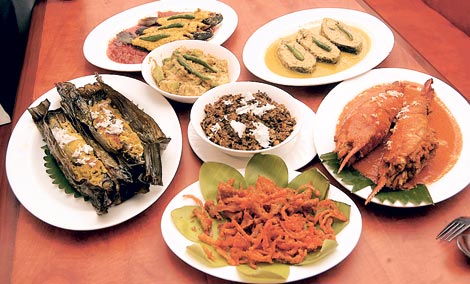
    Kolkata is having unique food habits and many of them eat meat and fish regularly.People of Bengal mostly prefer to eat fish, goat, mutton and chicken and the only exception is beef and few Muslim communities even eat it also.As Kolakta is having countless rivers, ponds and lakes many varieties of fish are available here and we can also find prawns, shrimp and crabs also in abundant.Most of the people eat fish as a dish in any of their day meal.They use different types of spices both for fish and vegetables.

    Kolkata cuisine
    Kolkata cuisine

    Fish:

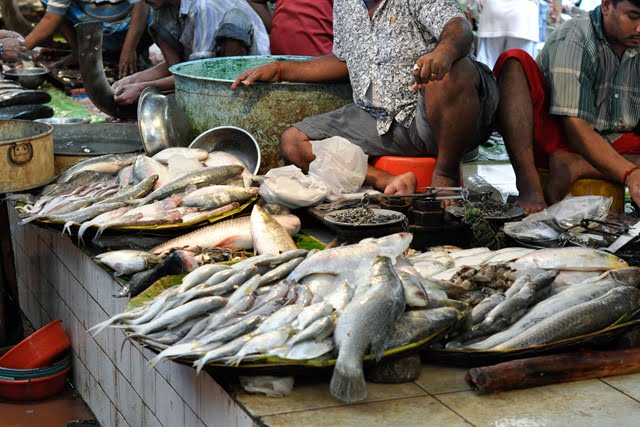
             Fish is the dominant kind of protein in their cuisine because of the numerous number of ponds, lakes, rivers.Almost every part of the fish are eaten and few spare bits of the fish are usually used to flavor curries and dals.The salt water fish Ilish is very popular among the Bengali’s and is also known as the icon of Bengali’s cuisine.There are many ways for the cooking of these fishes depending on the texture, size, fat content and the bones.They can be fried, roasted, a simple spicy tomato based gravy.Some are cooked with curd or yogurt with sour sauce, with sweet sauce or even the fish made to taste sweet on one side and savoury on the other.There is a saying that the Ilish fish can be cooked in 108 different ways.

    Varieties of fishes in Kolkata fish market
    Varieties of fishes in Kolkata fish market