Category: Hotels and Restaurants

  • The Madras you don’t see

    The Madras you don’t see

    Imagine.

    There’s a bitter war going on in North India. People belonging to different categories are fighting each other, there’s fist fighting, the local –made guns are drawn, abuses on everybody’s mouth. Visualize any Anurag Kashyap movie; that intense. Then suddenly, somebody in the far distance loudly shouts MADRAS!! And everybody, regardless of their caste, creed, religion drown out every single thought in their minds and replace it with just get one word:

    IDLI/DOSA.

    And after that single moment of silence, the fight resumes.

    The thought behind is, that people from all over the country, regardless of their scathing diversity unanimously see Madras cuisine in one single light – Idli/Dosa. There’s nothing beyond and there’s nothing beneath. And I was one of those notion holders too. Until I was transferred here.

    Guys! Let me just tell you. There’s a huge, eclectic taste world wrapped under the sheets of Madras. And only those who spend a teeny-tiny amount of time here can see through it. Today, I am gonna’ let you in, on this beautifully delicious world. Let’s po!!

    The Kaapi:

    People here are a little different from the rest of the country. And hey! I am not being rascist here. Almost the entire city is up and ready to go about their jobs at 6 in the morning(Even after taking baths daily). And to keep them fresh, the tea and coffee joints open up at 4 in the morning. The Kaapi is one treat on those shops. Kaapi, a fond name for the local coffee here. There’s no Bru and no Nescafe.There’s just Kumbakonam filter coffee.
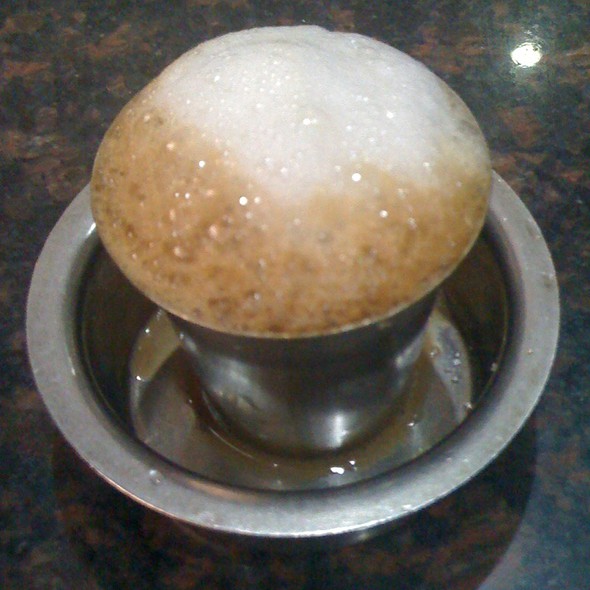
    kaapi


    And no, Kumbakonam wasn’t that monster in Ramayana. Kumbakonam is a place in Tamil Nadu where lots of Coffee is grown. And the powder from those beans is pristine. One has to have its taste in his/her lifetime. Also the Kaapi is not to be drunk ordinarily, it is drunk from a ‘Katori’ or a saucer if you may.

    The Parotta:
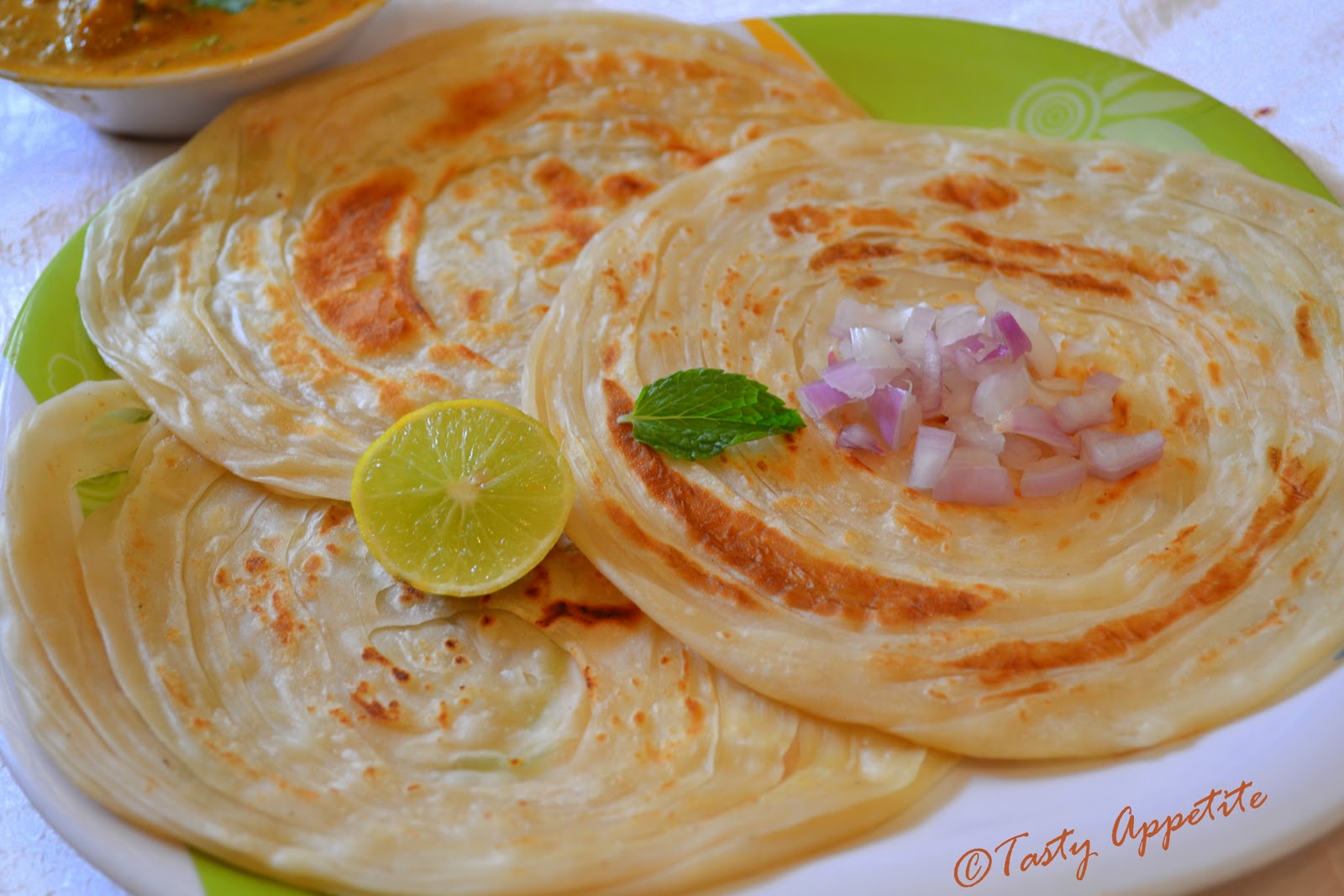
    p main g


    Okay, Punjabis, hold on! This is not your morning Aloo ka desi ghee waala Parantha. There is no typing error in the heading. There is a thing called Par-o-tta. These are tiny lachcha paranthas made entirely from Maida and greased with oil. And I am guessing spices weren’t discovered till the time parotta was invented, because it doesn’t have any. Not one grain of salt or pepper or any other spice imaginable.

    The Kuruma:

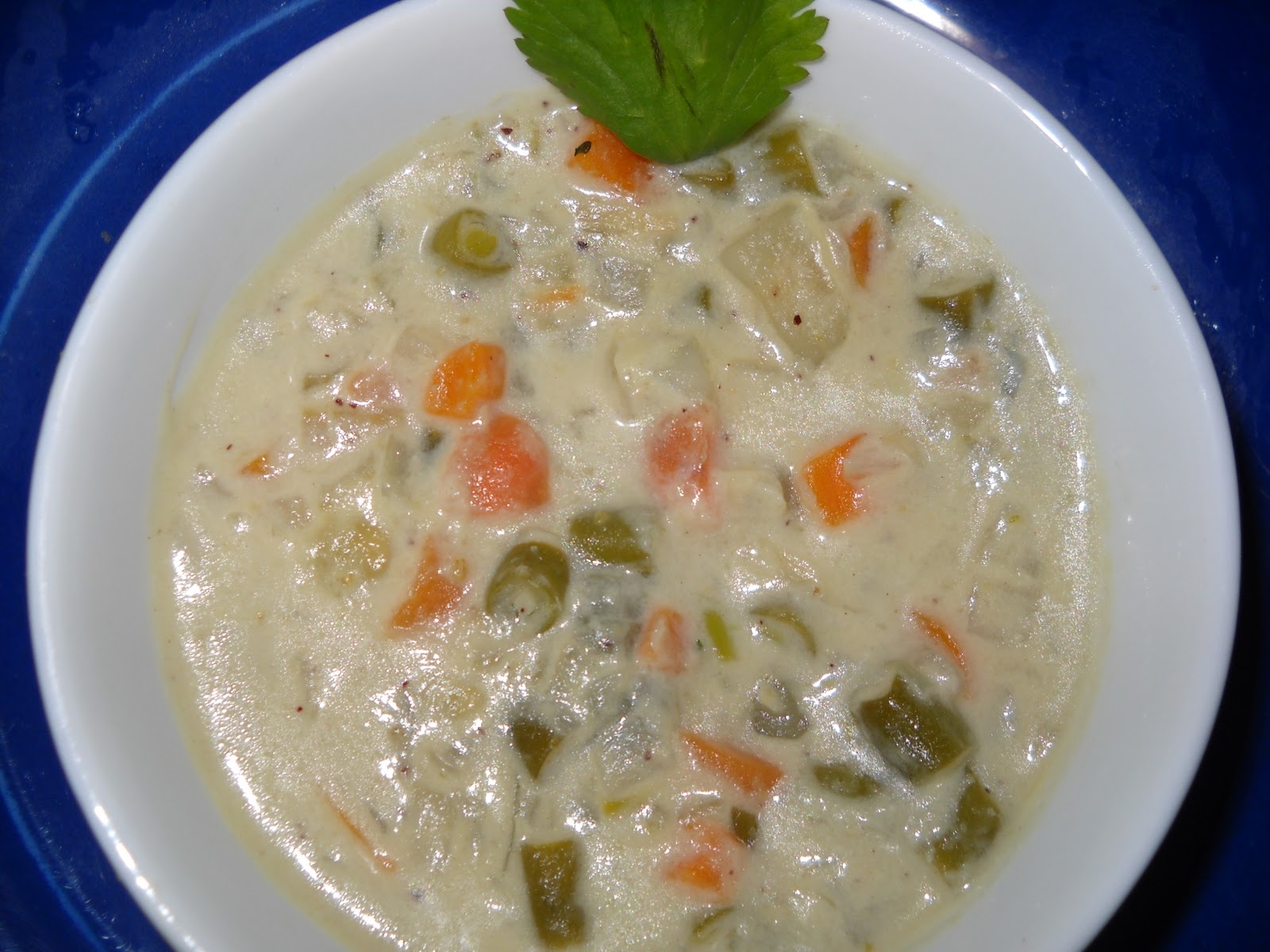
    Now, when I started writing this one(and the previous one), I came to realize that south Indian people don’t get too tensed over their food. They are happy having some water and spices with their parottas. Because that is what Kuruma is. Kuruma is mixed-vegetable with gravy. Apparently lots of it. The Kuruma is low on spices and tastes a bit bland, but I am a Punjabi, and anything less than a Bhut-Jholokia is bland for me. Take some vegetables cook them a little and put lots of water over it. Voila! Kuruma ready. BTW, it is tasty as hell and I can’t stay one single day without having it once at least.
    Picture 024


    The Saapad:

    thali


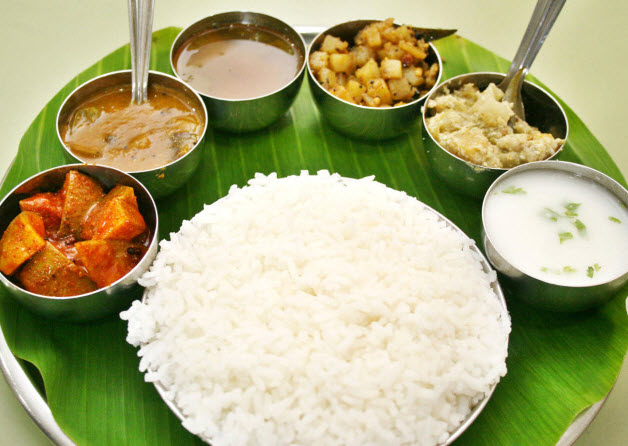
    Now, if you go to any low end restaurant and ask for idli-dosa-vada in the middle of the day, you’ll only come back hungry after hearing an ‘ILLA’. That because, in the lunchtime each and every low-end or budgeted eatery/restaurant prepares one and one thing only. The Saapad. You get it for a mere Rs. 40-Rs. 50 and return home with a stomach full upto the brim. First of all, for any new comer eating an entire Saapad plate alone is mission impossible. But by a slim chance he turns out to be as fat as me and can finish it alone, he won’t be able to even look at food for another 6 hours. Such plentiful is the Saapad. Saapad is nothing but lots of boiled Rice, served with millions of Gravy(s). You will have 4-5 saucers of different coloured waters surrounding your heap of rice. One would be Sambhar, another would be Rasam. Rest, even people who eat them don’t know what it is, but they all are tangy as anything.

    The appalam:

    Remember, those crispy Paapad like things you used to fry and eat in winter evenings, that is appalam here. And it is served along with Saapad to make your food go crisp.

    appalam


    The Podhi Dosa:

    Now as you all must be wondering, this is not some new kind of dosa, but our own Plain Dosa. Now, here comes the twist. Plain Dosa filled with Podhi masala. Podhi masala is just borderline spicy. You know, you’ll want to have more just to decide if it is spicy or not. And then in the second bite too, you’ll be just as confused and will be rushing for the third bite. This cycle goes on and makes the Podhi Dosa feature on our hidden treasures list.

    podi


    The ‘Dindigul’ Chicken Biriyani:

    biryani


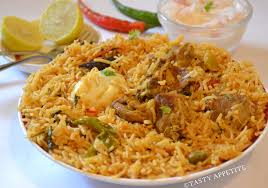
    The respected ‘BAAP’ of every dish here. Throw a stone in Madras and it is sure to land in a biryani shop. Such is the sprawling number of Biryani centres in Tamil Nadu. Dindigul is a place in Tamil Nadu and the origin of this masterful recipe. The unique taste of the biryani comes from a special Biryani powder which contains Fennel Seeds, Cinnamon Stick, Cardamom Pods, Star Anise and Cloves. This Biryani is served with a Brinjal vegetable. Now I know, when anybody hears brinjal, they can just think of barely digesting the Baigan ka bhartha, but trust me on this, the gravy is sumptuous. Also given along is onion Raita. This adds a little wetness to the biryani which otherwise is smeared with oil. And here it is where the most hackneyed of clichés comes to life. The Madrasis eating food with their hands. But I am not from South India and I love eating it with bare hands. Eating it that traditional way leaves a flavour to be savoured on your hands. Lick it, feel it.

    So now if you get a chance to go down south, don’t stick to the good old menu. Go out into the wild and try all of the above. Then you might have a glimpse of the real Chennai and not Madras.

     

  • Roll it up the Kolkata way !!!

    Roll it up the Kolkata way !!!

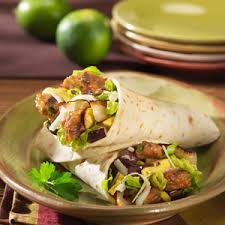
    I am not asking you to practice some yoga trick  , my only motive is to make your tongue roll over your lips when i will share the very classic street food dish “THE ROLLS”. I am a roll admirer….I can any time binge on these crispy ,spicy, tangy, full on masala marke dish. Rolls are very commonly eaten in every part of the world. People survive on alien lands just because to there rescue rolls are on duty 24×7. You get them in all forms , veg , non veg , spicy , mid spicy , non spicy , tangy , saucy , juice , crispy , fried, shallow fried. Just keep on counting you wont be able to recollect its variations at one go. This is winter season and we all eat (Statistically proven ) more than any other seasons. We feel hungry after every hour as in winters we tend to grab more of food to generate heat in our body , even we digest rapidly. Every street in  the cities with offices ,school and college campuses are filled with roll stalls and its busy at any time of the day. Kolkata my city is the city for roll stalls. Trust me , the variety and taste we get to eat here is way much than any part of the world. We keep it quiet unhealthy , very oily , very bulky …but still we commit suicide eating this tasty lethal food. Be it Arselan in park circus , Hot kati roll in Park street or veg roll in Golpark we all just crave for these tasty dynamites of awesomeness and we forget everything about our health (I guess we don’t care about that in this city ). Lets try out these awesome variation of rolls in our own kitchen and feast all our loved one’s to recreate the magic of streets any time at home itself.

    images

    Chicken Roll :

    Ingredients :

    For chicken filling : 400 g small chicken pieces ,1 tablespoon lemon juice , 1 teaspoon red chilly powder, 1 tablespoon ginger garlic paste, salt to taste, 1 teaspoon vinegar,1 teaspoon green chilly chopped, 1 tablespoon dark soya sauce, 1 tablespoon mustard sauce, 2 cups sliced onions, 2 cups sliced capsicum, 1 teaspoon , cumin powder, 1 teaspoon coriander powder, 1 teaspoon turmeric powder, oil for cooking.

    For the roll Chapati : 2 cups of refined flour, Oil for moistening the roll dough and shallow frying the chapati roll, 1/2 teaspoon sodium bicarbonate , 1 teaspoon of baking powder, Luke warm water for dough.

    Servings : 4 to 5 rolls.

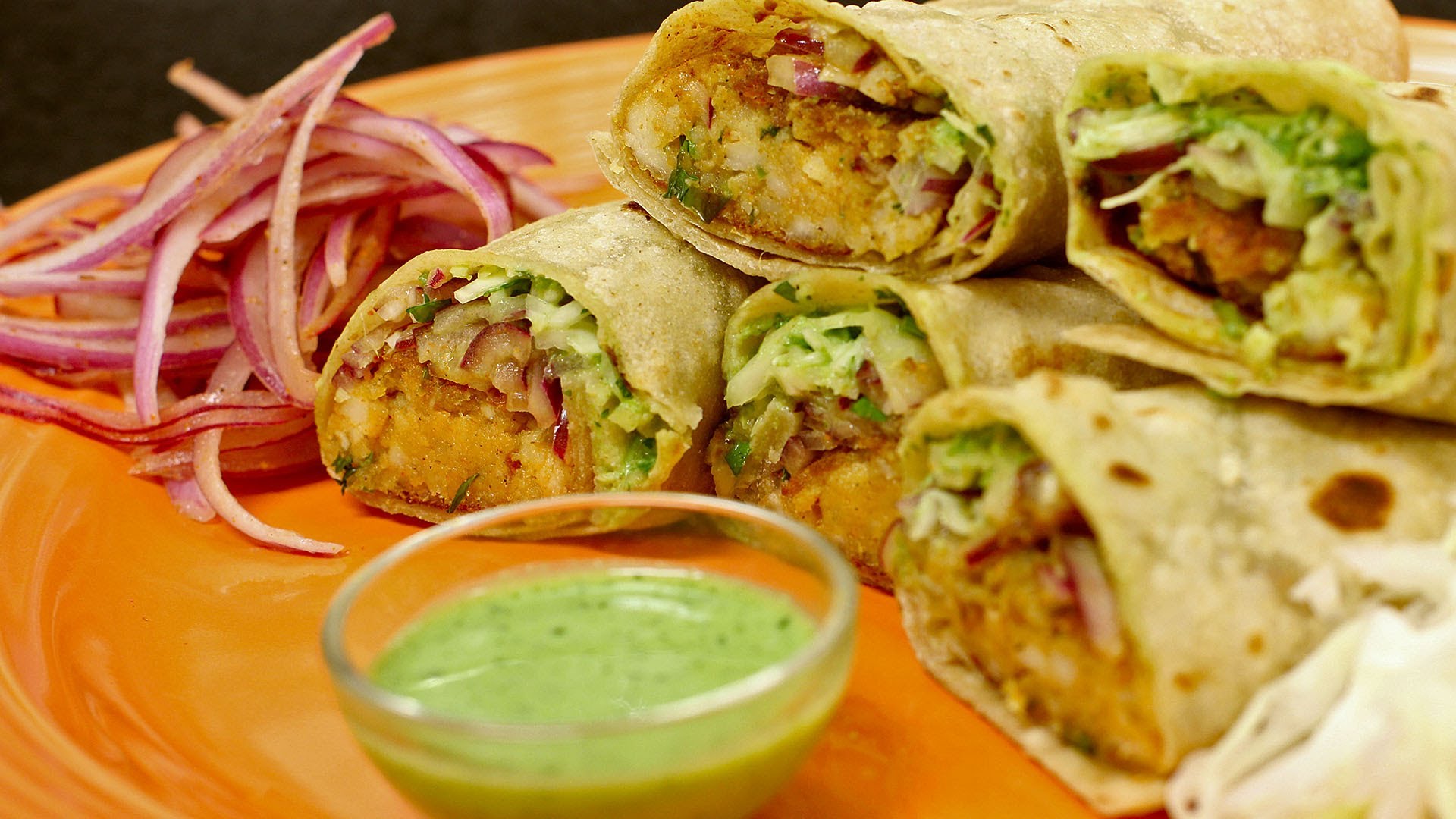
    Method : Mix lemon juice ginger garlic paste , red chilly powder, vinegar, salt with chicken pieces and keep it for 1 hour in that marination. Once its marinated, Heat the oil in a pan ,add green chillies and half cup sliced onions and capsicum (Keep the rest for garnishing). Cook it for 5 to 8 minutes until its cooked completely . Now add all the sauces, tomato ketchup , soya sauce, Mustard sauce, cumin powder, coriander powder, turmeric powder . Cook it for 2 to 3 minutes until the sauces dry up to make a thick filling. Now keep it aside to get cool in room temperature. MIx baking powder, and sodium bicarbonate and 1 teaspoon cooking oil & salt with the refined flour and with gradual addition of Luke warm water make a tight but smooth dough. Keep it aside for 30 minutes. Once the dough is absorbs the moisture well in 30 minutes make round shape chapati’s out of it with the help of a rolling pin. Once all the chapatis are ready just shallow fry it on a hot pan. Once the chapatis are golden and crispy take it out from pan fill it generously but in even proportion with chicken fillings, garnish on top with onions slices , little tomato ketchup , mustard sauce and capsicum and roll it and seal the ends with  butter paper or simple stick the ends with toothpick You are ready to taste the cult Kolkata.

    maxresdefault

    Paneer tikka roll :Dough making process is the same. The only difference is the filling rest the process is no different than chicken roll.

    Ingredients : For Paneer filling:

    Paneer tikka marination : 400 g OF Paneer/ cottage cheese cubes, 1 cup yoghurt, 1 tablespoon roasted besan , 1 tablespoon corn starch, 1 teaspoon lemon juice, 1 cup diced onions, 1 cup diced capsicums, 1 cup diced tomato de-seeded, 1 teaspoon red chilly powder, 1 teaspoon turmeric powder, 1 tablespoon ginger garlic paste,salt to taste,  1 teaspoon coriander powder, 1 teaspoon cumin powder, 1 teaspoon chaat masala powder. Skewers / toothpicks for tikka assembling before grill.

    For filling of roll : 1 tablespoon tomato ketchup, 1 tablespoon green chilly sauce, 1 cup sliced onions seasoned with chaat masala , 1 teaspoon black salt for garnishing.

    Roll chapati is similar to chicken roll.

    Servings : 4 to 5 rolls

    Method : Firstly marinate the paneer cubes with 1 cup yoghurt, 1 tablespoon roasted besan , 1 tablespoon corn starch, 1 teaspoon lemon juice,  1 teaspoon red chilly powder, 1 teaspoon turmeric powder, 1 tablespoon ginger garlic paste,salt to taste,  1 teaspoon coriander powder, 1 teaspoon cumin powder, 1 teaspoon chaat masala powder adding 1 cup diced onions, 1 cup diced capsicums, 1 cup diced tomato de-seeded also to the marinate mixture and keep it aside for 30 minutes in refrigerator. Once done assemble it with onions, capsicum and tomato into the skewers and grill it for 15 to 20 minutes changing sides into a griller at around 180 degree celcius. You will get hot steamy paneer tikkas . Once the chapatis are prepared just assemble this paneer tikka evenly on it  with tomato ketchup , chilly sauce , black salt and chaat masala seasoned onion slices and roll it and eat it immediately before someone else snatches it from you.

     images (1)

    Bean finger Roll :

    Roll making process is as usual similar lets note down its interesting filling recipe.

    Ingredients :

    For bean fingers : 2 cups of kidney bean soaked overnight, boiled and mashed, 1 cup of chopped onions, 1 teaspoon of green chilly powder, 1 cup bread crumbs , 1 cup mashed and boiled potato, 1 egg beaten , 1 tablespoon corn starch, chaat masala powder, 1 teaspoon lemon juice, 1 tablespoon chopped coriander, 1 teaspoon red chilly powder, salt to taste, oil for deep frying the patty.

    For filling the roll : 1 tablespoon tomato ketchup, 1 tablespoon green chilly sauce, 1 cup sliced onions seasoned with chaat masala , 1 teaspoon black salt for garnishing.

    Servings : 4

    Method : Mix all the ingredients (Except egg and bread crumbs) and make patties of finger shapes but little thick and long. then each patty is dipped in egg and coated generously with bread crumbs. deep fry the patties. assemble it in the chapati with  tomato ketchup, chilly sauce and onions and black salt as garnish roll it up and enjoy the tasty treat.

  • A Platter of Vegetarian Kebabs

    A Platter of Vegetarian Kebabs

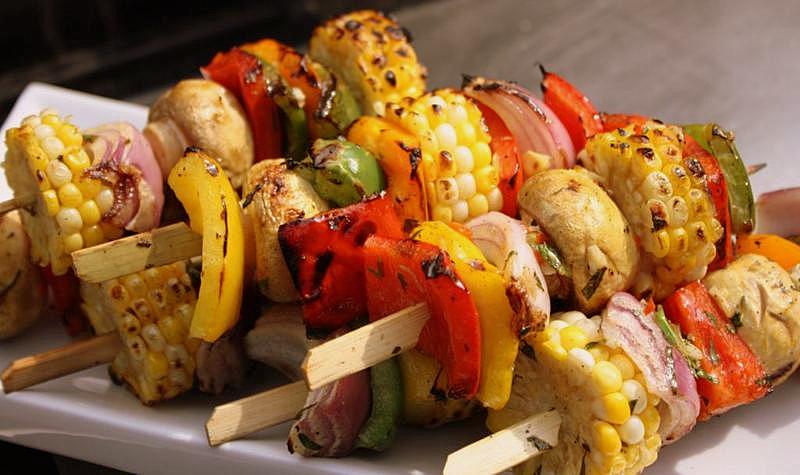
    Originating in the coastal countries of the eastern Mediterranean area, kebab is a versatile dish made by roasting and grilling pieces of meat, fish, and vegetables, over a skewer or a spit. The dish quickly spread in popularity and consumption throughout the nations of the Middle East, and then central Asia. The kebab traces its historic roots to before the 17th century B.C., and even the ancient Greek poet Homer mentions an erstwhile archaic dish resembling the same, and enjoyed all over his country in his works. However, a Turkish script by Kyssa-i Yusuf which dates back to around 1377, first properly mentions the culinary concept of the word, which is derived from the Persian language, and literally means “fry”, and sometimes “fry and burn”. Legend has it that the kebab was invented by medieval Persian soldiers who grilled meat on their swords over open-air fires in the battlefield. It quickly gained favour of both the classes and the masses, being served as the royal fare in various Islamic states over the ages, and as a much sought after and easily accessible snack or main course dish for many commoners, and the trend continues even today.

    Although lamb is the traditional choice of meat for making the kebab, there are many variants available in different meats and vegetables all over India due to religious constraints and direct or indirect dietary restrictions. Indian kebabs, whether they are vegetarian or non-vegetarian, have a unique and popular flavour of their own, owing to the wide spectrum of masalas (spices) and herbs native to the subcontinent. Apart from the numerous Indian innovations in the art of kebab making, the sheesh, shammi, tikka, and shawarma, original types of kebabs are also available everywhere, and can be found easily in small roadside eating joints as well as in top notch restaurants and hotels. The cities of Lucknow and Hyderabad are famous all over the country, owing to their thousands of decades-old, local eateries and food establishments which sell different types of primarily meat kebabs, ranging from tunday to kalmi and tangdi to reshmi, and have thus contributed a lot to culture, food, tourism, and economy.

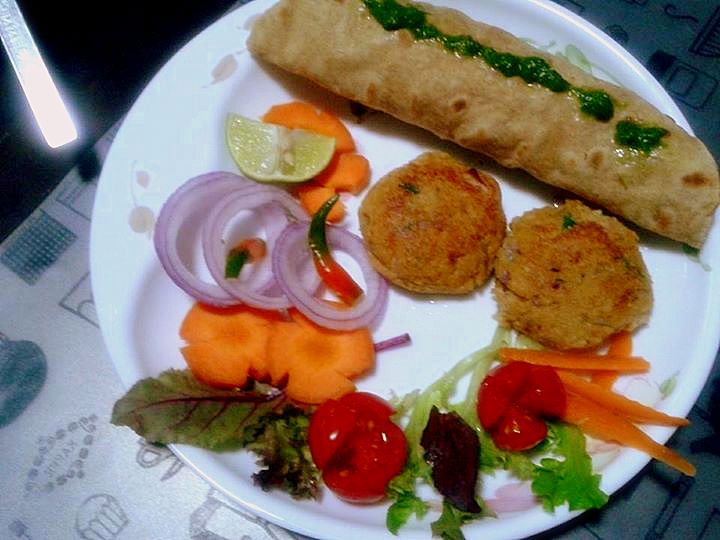
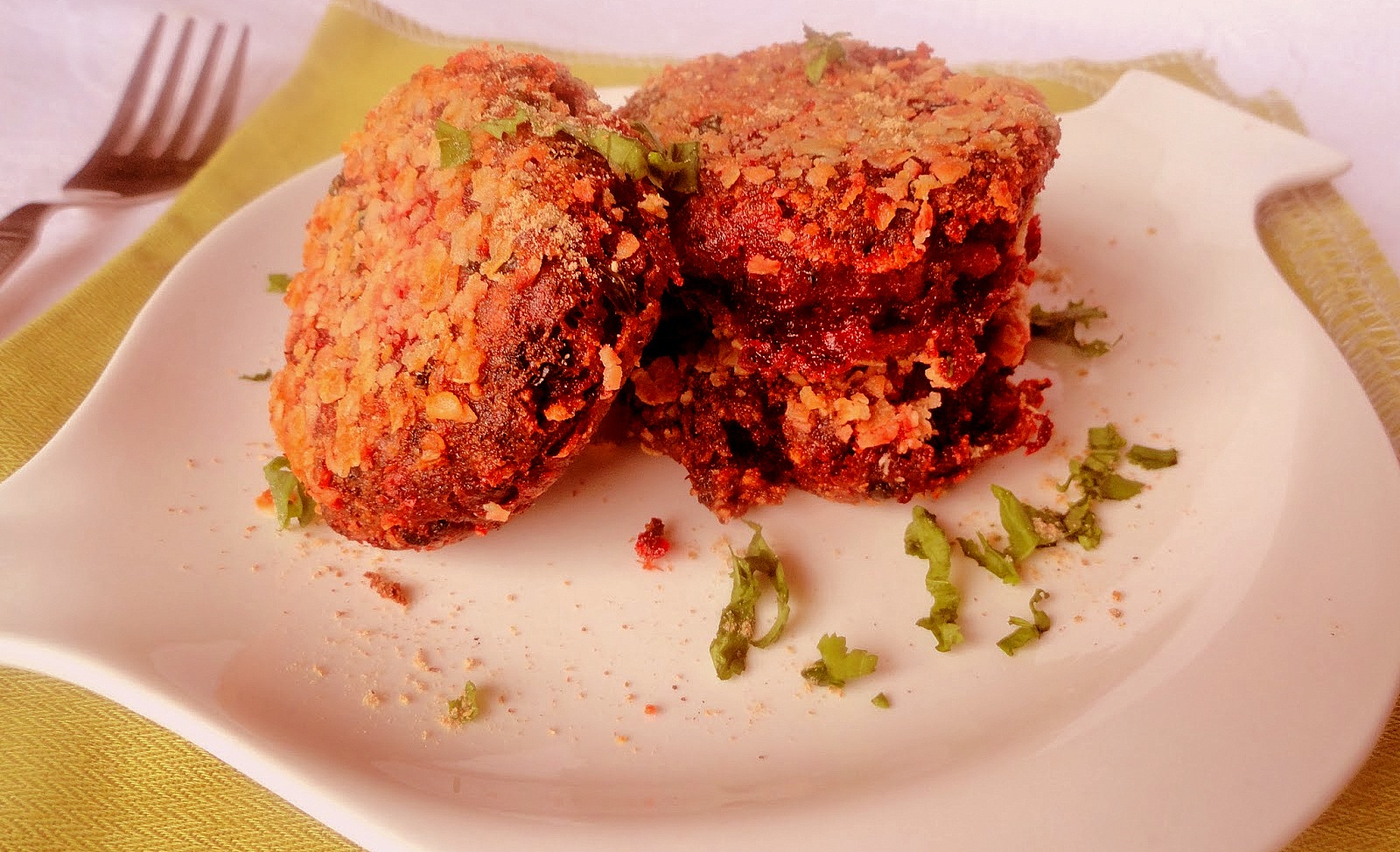
    While you can get non-vegetarian kebabs from anywhere, the vegetarian types are a rarity to find outside one’s house, and they are generally overpriced in the restaurants they are available in. Vegetarian kebabs can be easily made at home, with simple ingredients, and less elaborate methods than their non-vegetarian counterparts. This article will provide you with three novel recipes, all made wonderfully by my favourite chef in the world, my grandmother, for these lesser known variants, namely, shalgam ke kebab, kela chane kebab, and chukandar ke kebab.


    Shalgam ke Kebab (serves 4-6 people)

    Ingredients needed:

    • 7-8 bulbs of turnips
    • 2 tablespoons of roasted besan (gram flour)
    • Finely chopped onions
    • Finely shredded coriander, chilli, and ginger
    • 2 medium sized boiled potatoes
    • Salt to taste
    • 1 small teaspoon of garam masala powder
    • Vegetable oil

    Steps required:

    • Thoroughly wash the turnip bulbs, and then carefully peel their outer skins off.
    • Put the skinned turnips in a pressure cooker and steam thoroughly.
    • Once the turnips cool down, mash them and drain out the excess water.
    • Mash the boiled potatoes and mix them with the turnips. Add coriander, chilli, ginger, and onion to the mixture and be careful to make it consistent with dough.
    • Add garam masala and salt accordingly.
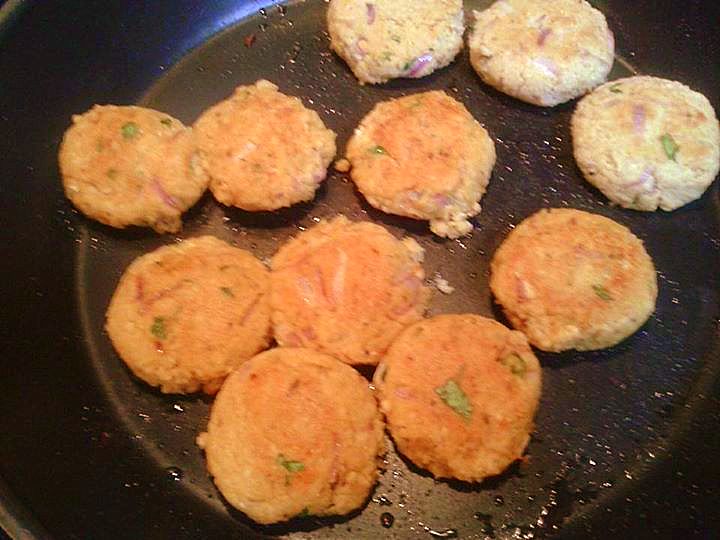
    • Make small balls of the prepared dough and flatten it into small cutlets or flattened disc shaped portions.
    • Shallow fry on a tawa (pan) until the kebabs are thoroughly cooked and are a rich golden-brown in colour.
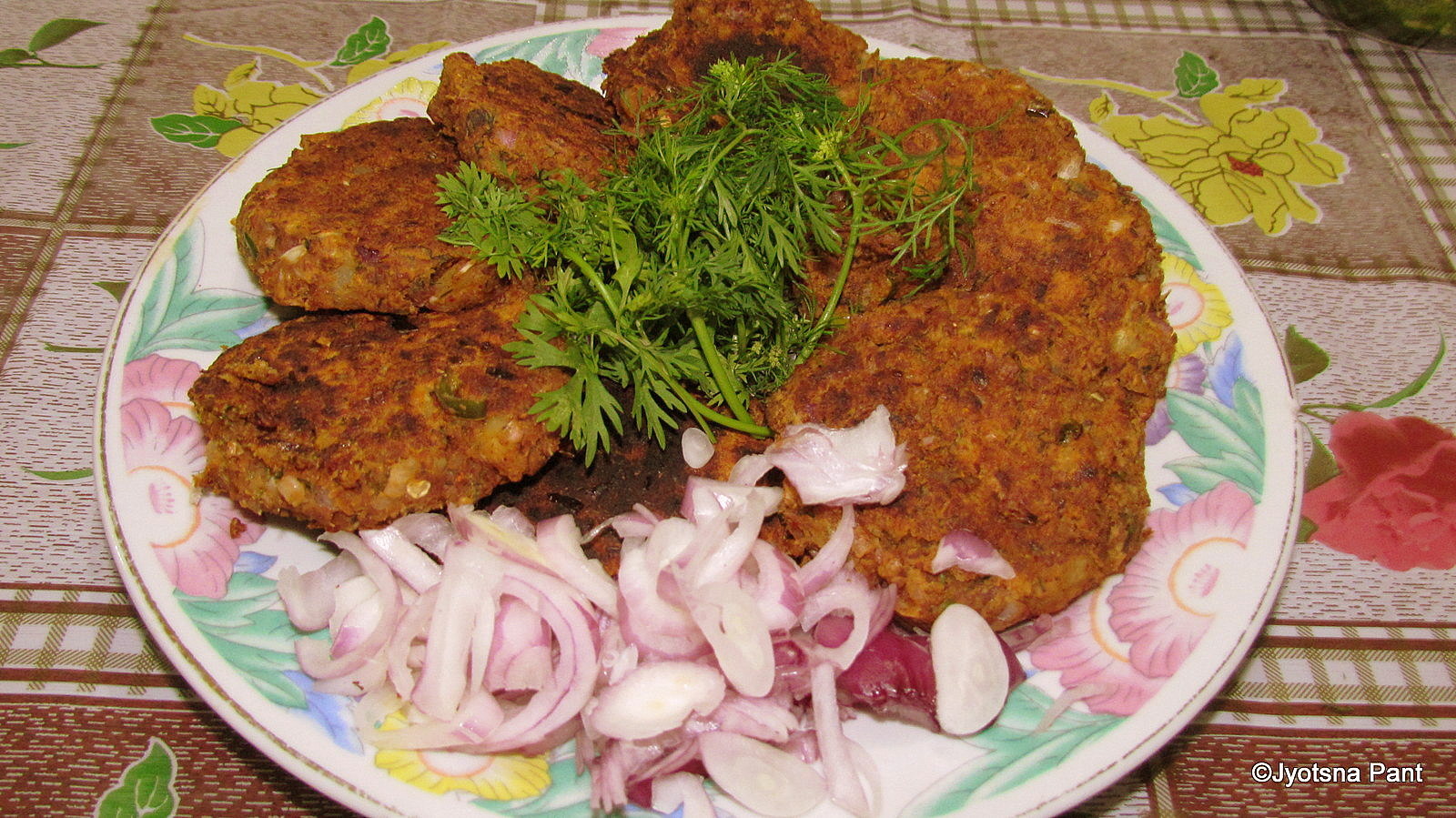
    • Top with sprigs of coriander and rings of onion. Serve hot, with a chutney of your choice.


    Kela Chane ke Kebab (serves 4-6 people)

    Ingredients needed:

    • 5 clean green unripe bananas
    • 1 bowl of soaked chana dal (gram beans)
    • Finely chopped onions
    • Finely shredded coriander, chilli, and ginger
    • Salt to taste
    • 1 small teaspoon of garam masala powder
    • Vegetable oil

    Steps required:

    • Make sure to wash the bananas thoroughly with fresh water before beginning. Once they are clean, steam them in a pressure cooker with their skins intact.
    • Steam the dal separately to a soft consistency.
    • Once both ingredients cool down, peel the bananas, and mash together with the dal to make a dough.
    • Add garam masala and salt. You can also add other spices such as red chilli powder if you prefer.
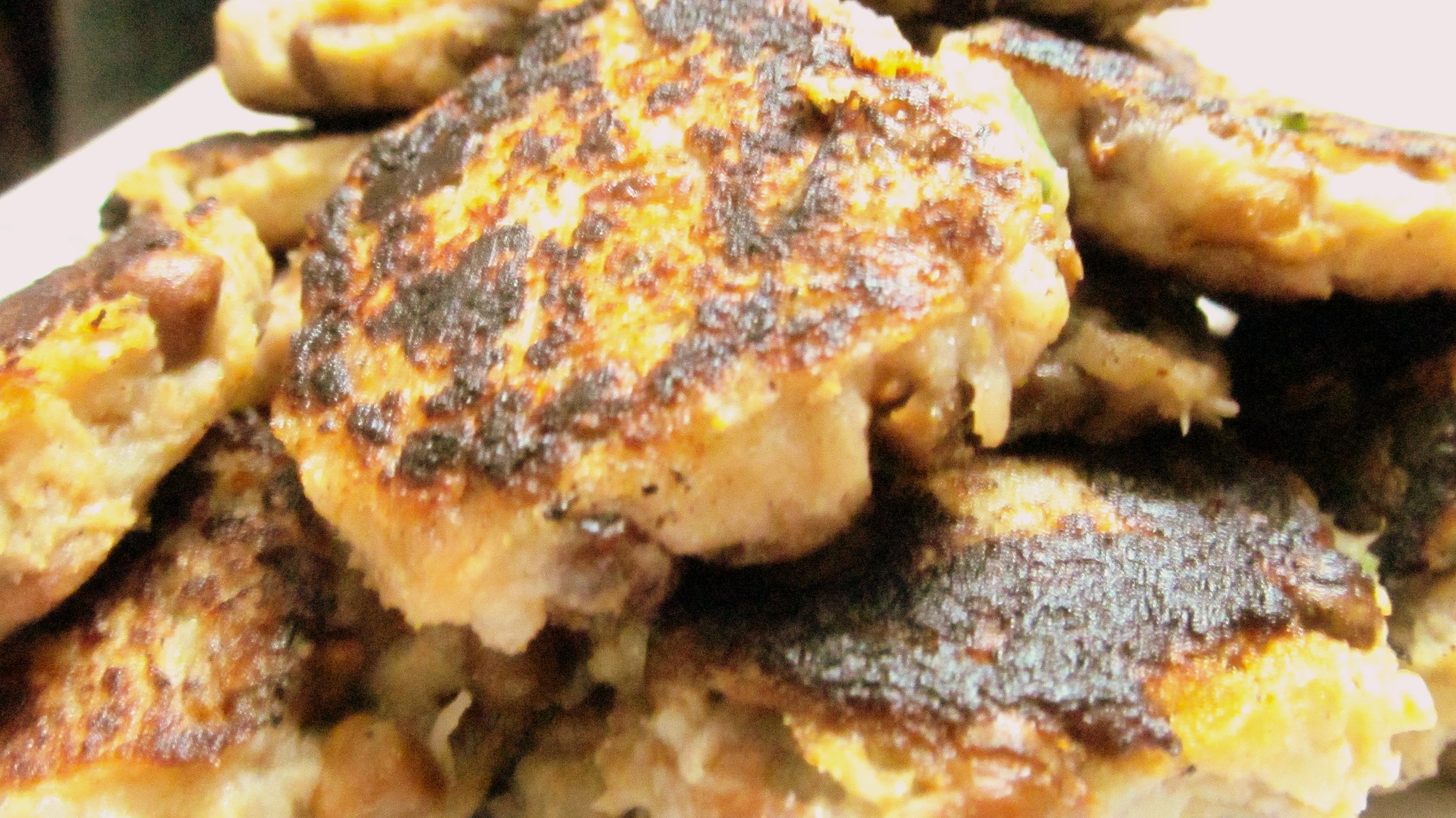
    • Shallow fry on a pan.
    • Garnish with sprigs of coriander, and serve with onions and chutney.


    Chukandar ke kebab (serves 4-6 people)

    Ingredients needed:

    • 7-8 beetroots
    • 2 tablespoons of roasted besan (gram flour)
    • 2 boiled potatoes
    • 250 grams of paneer
    • A few whole clean leaves of cabbage
    • Finely chopped onions
    • Finely shredded coriander, chilli, and ginger
    • Salt to taste
    • 1 small teaspoon of garam masala powder
    • Vegetable oil

    Steps required:

    • Steam the beetroots thoroughly after cleaning them.
    • Mash the beetroots to a dough-like consistency. If necessary, add a little bit of boiled potatoes as well. Add roasted besan to this mix.
    • In a separate bowl, mash potatoes and mix them with paneer chunks.
    • Add coriander, chilli, ginger, and onion to the beetroot dough.
    • Make miniature balls of the paneer and potato mix after adding salt and garam masala to it.
    • Wrap them in a leaf of cabbage.
    • Encase this in an even layer of beetroot dough. Make it firm with more besan if required.
    • Shallow fry on a pan until the kebabs are thoroughly cooked.
    • Cut the kebabs open from the centre, top with coriander, and serve hot with chutney.
  • The Six Things You should Eat when Visiting Agra

    The Six Things You should Eat when Visiting Agra

    Agra, known all over the world as the hometown of the beautiful Taj Mahal, also has a rich and varied range of cuisines to its credits. Serving as the haven of many communities, Agra is home to Muslims, Marwaris, Jains, Baniyas, and many more, which has culminated into the city being a one stop destination for all kinds of food, delighting the non-vegetarian and vegetarian alike, with all kinds of culinary budgets. While the city has not expanded much in terms of area and general civic infrastructure, the hospitality business sure has boomed greatly, which was an added bonus for the local eateries and restaurants. If you ever visit the city of the Taj, here are some unique local dishes and delicacies you must try:


    1. Petha

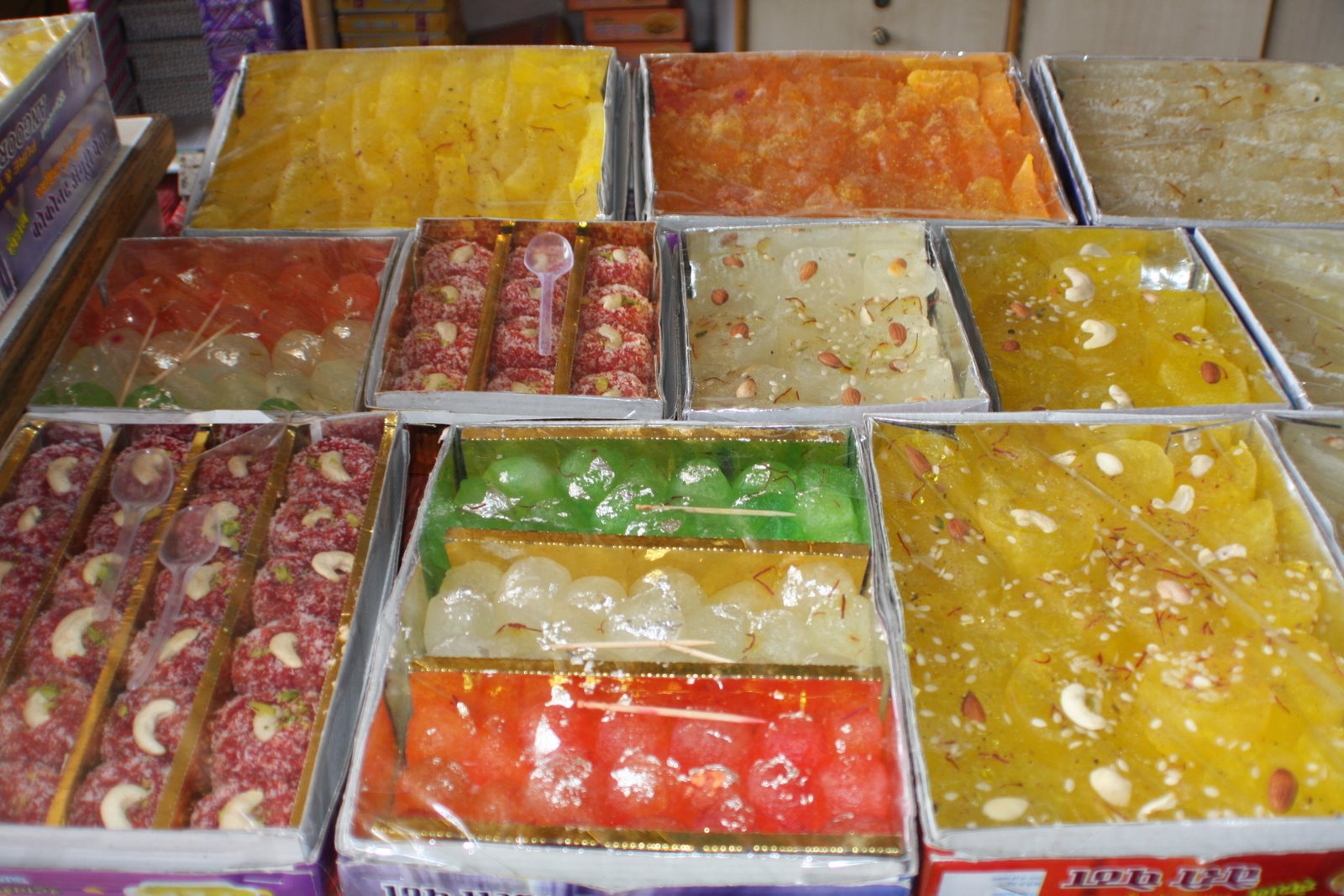
    Probably one of the most famous delicacies to be associated with the city, petha is, and has always been the rage when it comes to the food business here. You will find billboards and railway stations flooded with advertisements for this local sweetmeat, which has been manufactured for centuries in the small bustling galis (alleys) and local mandis (markets). Petha is a translucent, soft, syrupy, and chewy sweet made from ash gourd, also known as white pumpkin or more popularly, squash. While the basic and simplest type of petha comes in small white cubical hunks, you can find many more types, in cylindrical and rectangular shapes, and different flavours ranging from kesar (saffron), chocolate, angoori (grape), and even mango. The most famous petha manufacturing chain here is Panchhi Petha, with its branches spread in every corner of the city.


    2. Dalmoth

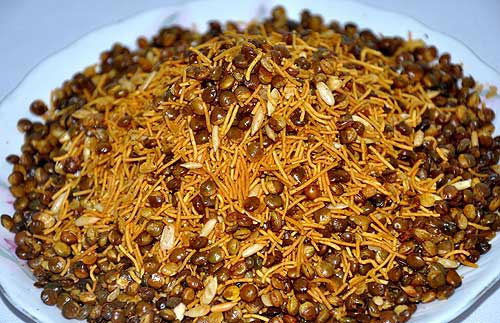
    A traditional north Indian namkeen (salted snack), dalmoth in Agra is synonymous with petha when it comes to taste and fame. Dalmoth consists of a proportionate mixture of fried dal (lentils), dried fruits, nuts, spices, and oil. The lentils used to prepare the snack can be of any kind, the most notable ones being chana (yellow gram), moong dal (green gram), and moth beans. Crispy in texture and sharp in flavour, dalmoth can be customized according to your requirements in many local food eateries. In addition to this, dalmoth also comes packaged in small boxes, which one can find easily at any sweet shop, or halwai, as they are more commonly called in north Indian states. This snack serves as the perfect light munching material with a cup of hot and sweet tea in the evenings.


    3. Bedhai and Jalebi


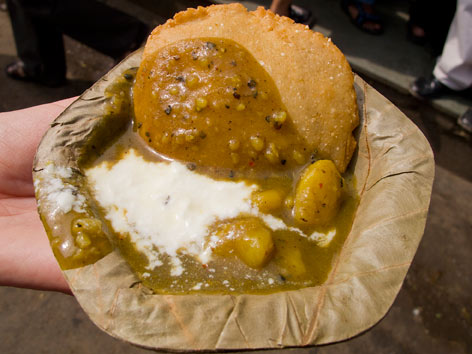
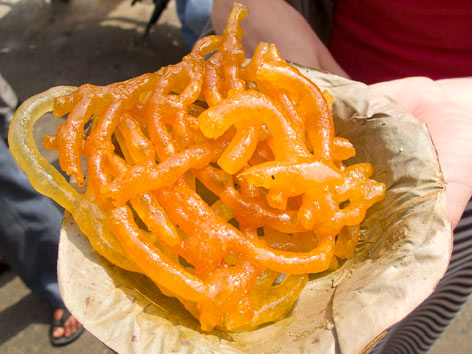
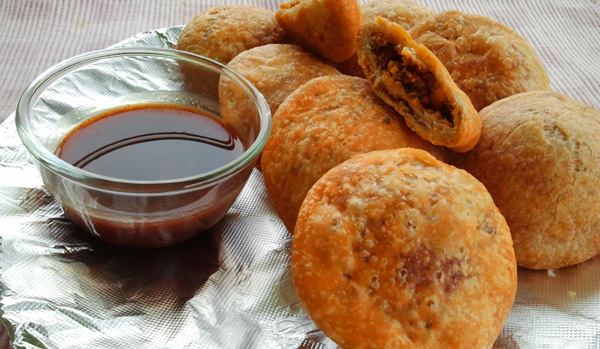
    If you come to Agra and do not have this particular dish, you have missed out on the city’s street food in a major way. Bedhai resembles the kachori, in the way that both are round, flattened breads, deep fried in vegetable oil, but the former contains a delightful stuffing of masala, made of lentils, besan (gram flour), and spices. It is served with a spicy, hot curry of potato chunks and green chillies, and occasionally with a dollop of sweetened curd. You will find many street corners overflowing with early risers treating themselves to bedhai and jalebi for breakfast. Served at many eateries, big and small, the famous North Indian jalebi is served as an accompaniment to bedhai. This sweetmeat is made by deep-frying maida (refined wheat flour) in concentric rings, and then soaking the product in hot sugar syrup. Both bedhais and jalebis are made fresh in enormous quantities each day all over the city, and sold out within a few hours. The two balance each other out perfectly, and also amply fill one’s stomach, making it a must-have on the Agra breakfast menu.


    4. Chaat


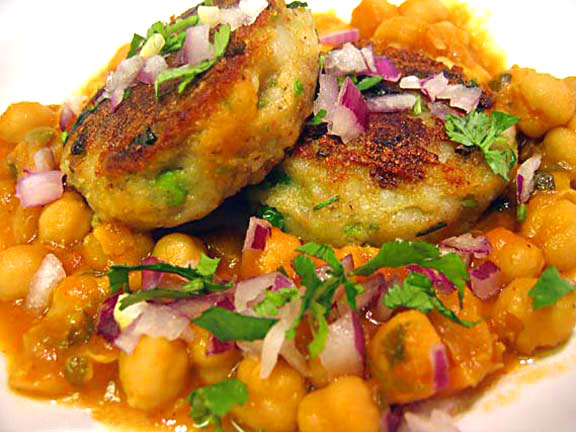
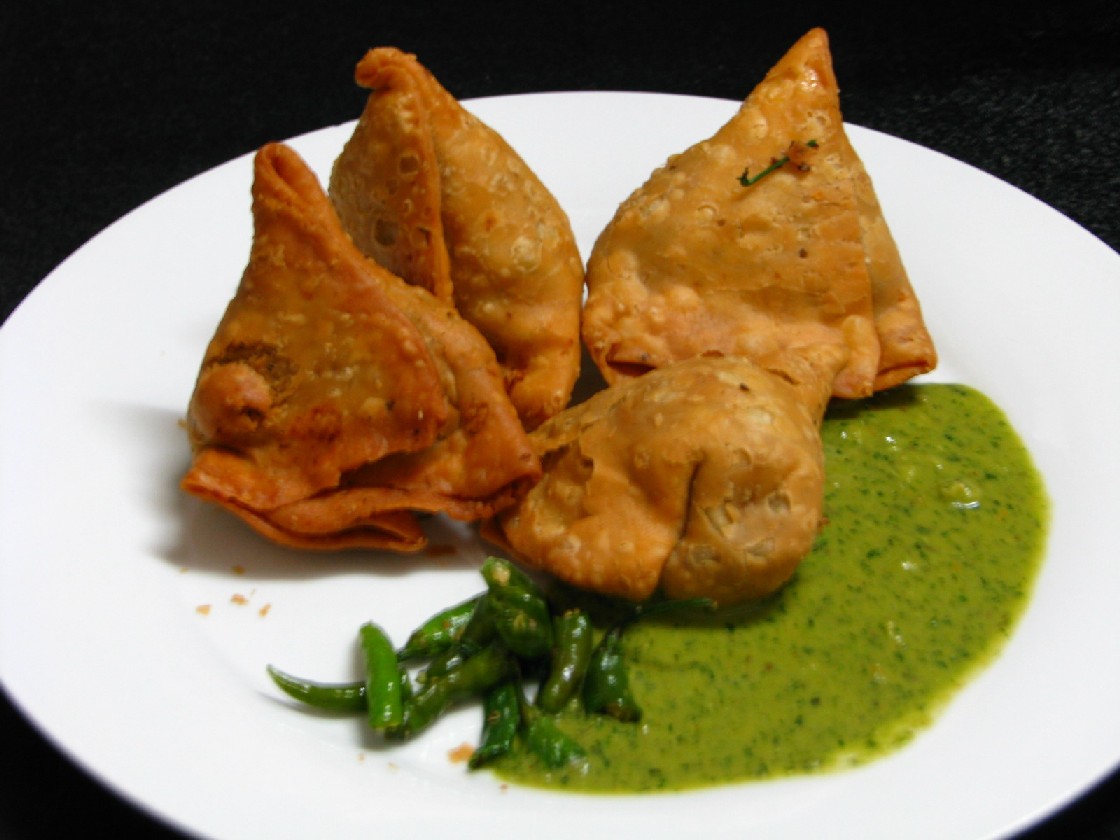
    Chaat is known to be the favourite ethnic snack of the quintessential north Indian. What makes Agra’s chaat so different are two features: firstly, its entire preparation in desi ghee (clarified butter), and secondly, the bhalla, which is the city’s answer to aloo ki tikki. The bhalla is made by mashing boiled potatoes and chickpeas together in a flat, round disc, after adding pieces of paneer, dried fruits, nuts, and sometimes, beetroot chunks. It is deep fried, and then smashed open from the centre, and served with a garnishing of shredded ginger, spices, chutney, and if you want, curd. There are two variants when it comes to chutneys, saunth, a sweet, thick, brown chutney made from tamarind, or the spicy, green chutney made from chillies and coriander. In addition to this, samosas, deep fried savouries stuffed with potato and other fillings, and khastas, small, spice-filled deep-fried breads, are also served in Agra, primarily in the evenings. Bhagat Halwai, Deviram Sweets, Dauji Mishthan Bhandar, and Sadar Bazaar are some of the best places to relish chaat in the city.


    4. Parantha

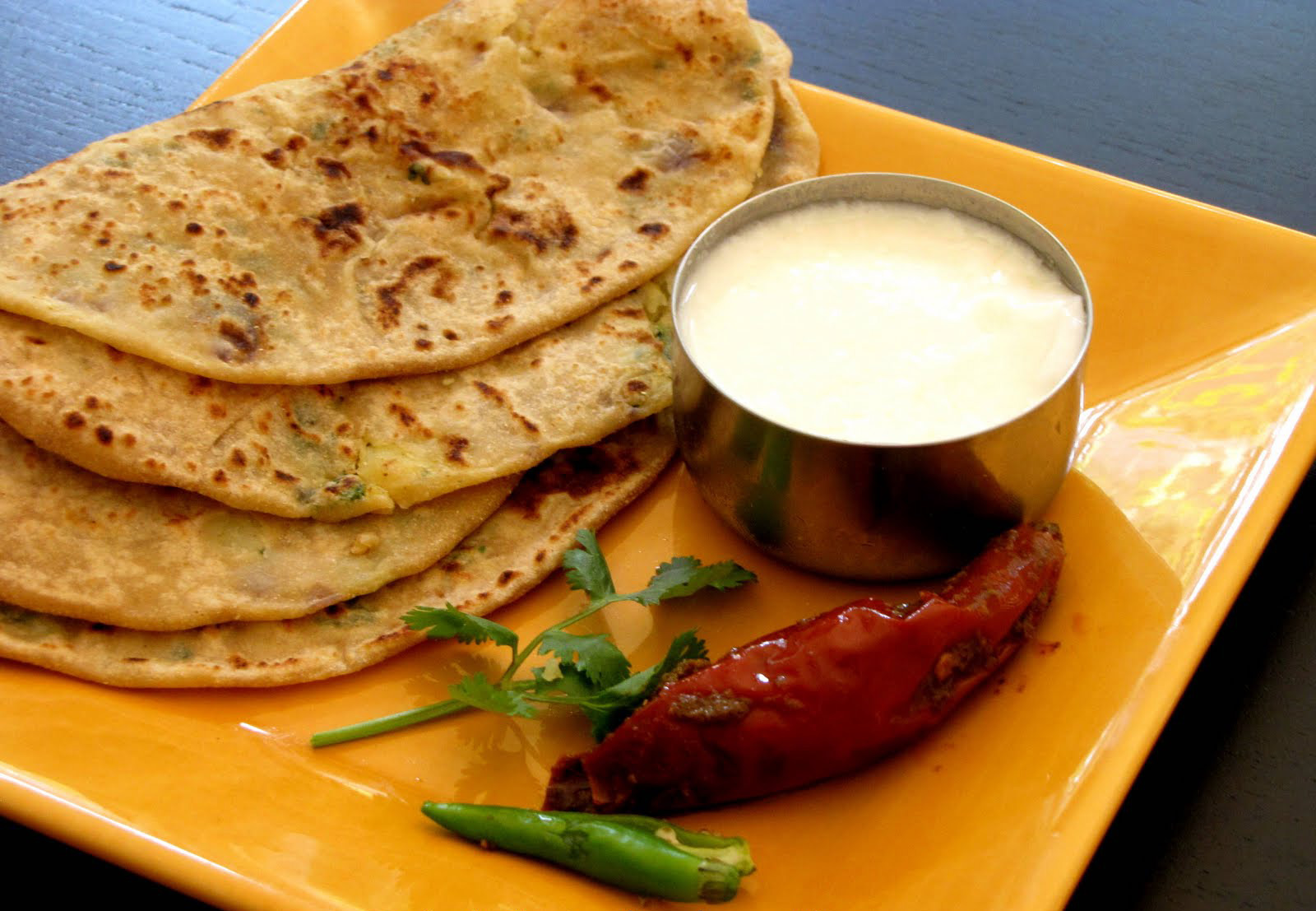
    Made by frying wheat dough discs on the traditional Indian tawa (pan), parantha forms the staple of most of the north Indian states, from Punjab to Uttar Pradesh. Since the majority of people living in Agra are vegetarians, the parantha here does not serve the all-exclusive non-vegetarian. Available in many variants, the paranthas in Agra are stuffed with various fillings such as potato, cauliflower, radish, and many more, and served in a thali (large round plate) with various sabzis (vegetable preparations) and chutneys. Rambabu Paranthe Wale is a popular food establishment with the locals, and many flock to the restaurant on weekends to have this dish.


    5. Gajak and Chikki

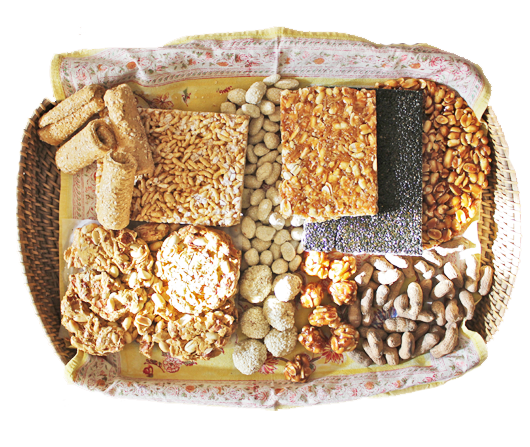
    A sweet and dry sweet made mainly in the winter months, gajak is made by layering til (sesame seeds), sugar, gur (jaggery) and oil. Gajak is an instant fix for anyone feeling cold in the chilly months of December and January, and provides immediate warmth on consumption. It is also served in the small and more easy to munch form of rewadis, which are small, round, bite-sized pieces of gajak. Chikki, more popular with the children, is a variant of this sweet and uses groundnuts instead of til. Both are served in flat sheets, and sold in boxes and packages on a large scale in the city. Bedariya Ram Gajak Wale and Manohar Lal Daulat Ram Garg Gajak Wale are some of the oldest gajak manufacturers and sellers in the city.


    6. Mughlai cuisine

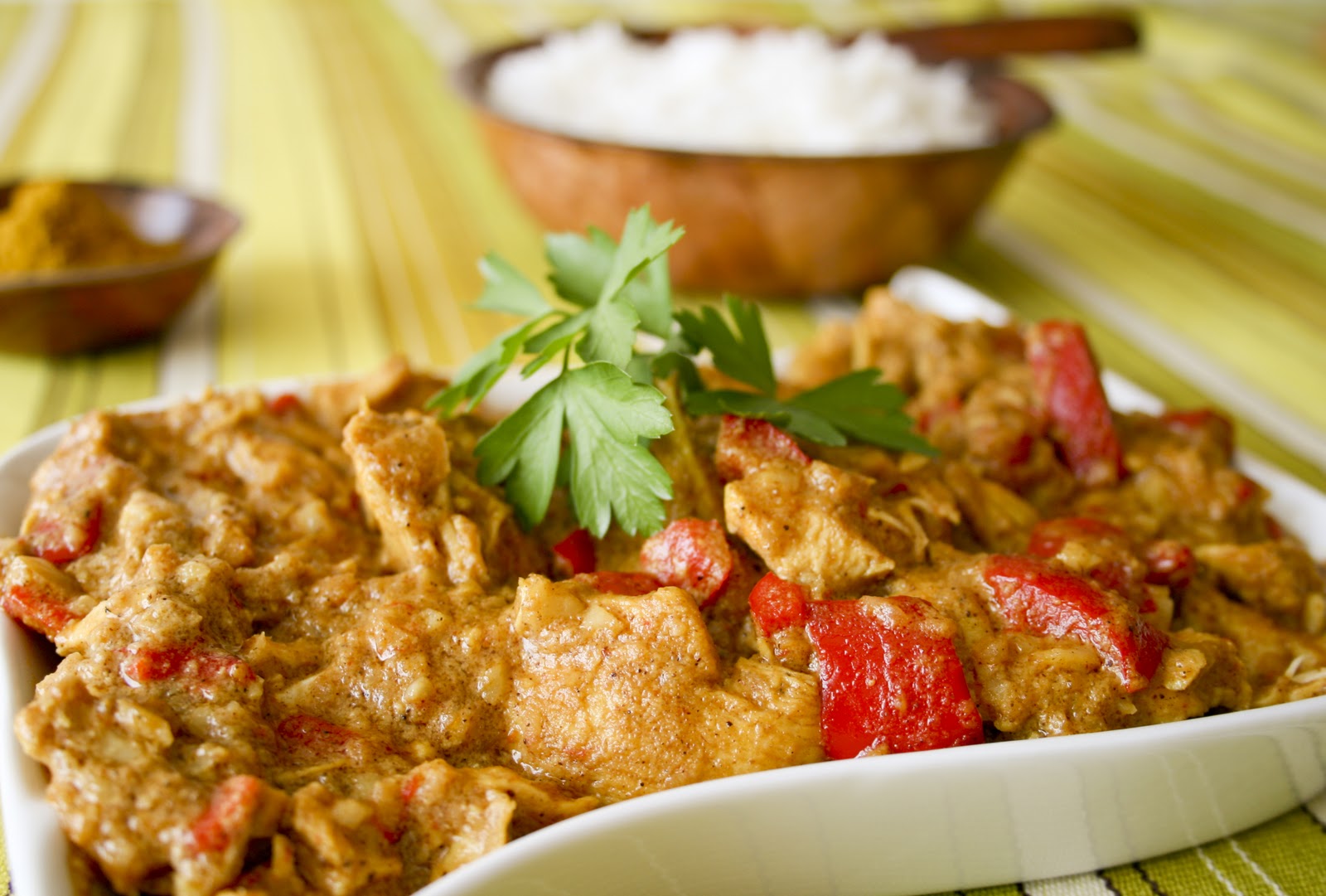
    And last, but not the least, you have to have Agra’s Mughlai preparations if you love meat. These dishes use various meats such as chicken, mutton, and lamb, which are marinated overnight in curd, ground spices, and herbs, and then made into delicious creamy and buttery curries. Garnished with coriander, butter, cream, and occasionally dried fruits and nuts, these delicacies instantly transport the non-vegetarian foodie into gastronomic heaven at first bite. You will find a variety of these dishes on the menus of many restaurants, korma, shahi, malai, butter, and keema all included. The best dine out places for Mughlai food in the city are Pinch of Spice and Kwality Restaurant, although you can find many small non-vegetarian open-air eating joints towards the cantonment area of the city.

  • Check out at the check in!!

    Check out at the check in!!

    It’s a place where people usually hang-out with their friends and family. Next to beaches and shopping malls, this attracts an equal number of people. We still live by the saying that a satisfied hunger and quenched thirst makes one pleasant and closer to us. True to these words, various hotels, restaurants, motels and other such places that offers food have opened up almost everywhere.

    temp1
    A restauramt setting


    In today’s world, it is not fair for someone to say that he/she do not often visit restaurants, owing to the fact that they are sprawled across the map of the world. Ranging from ordinary road-side carts and mini eat-outs to posh, rich and elegant restaurants boasting of the 5 stars of quality (that restaurants are usually titled to). It is, as the saying goes, where there is food, there are people.

    This tradition of offering food to people dates back to the times where cities were first beginning to develop and dynasties ruled parts of the world.

    The first restaurants

    The idea of serving food in exchange for money goes back to the days when people travelled by either foot or a horse-driven carriage. The earliest known restaurants were more, like today’s road-side inns. The customers were usually peasants and small-time traders, travelling from one city to another. These restaurants simply consisted of a few benches or tables and they did not have any particular menu. These places offered simple foods commonly found in merchant’s homes. It was the chef’s choice which ultimately became the day’s menu.

    In the middle ages, as the population slowly increased, taverns became one of the most common places for a common man to buy food and drinks. In addition to serving food, they served as the first bars or pubs too. A few of these can be seen even today.

    temp2
    An artist’s rendition of a restaurant in the olden days


    These places were usually places where people gathered and discussed official matters or met for recreational purposes. Thus, they imbibed a society that was socially strong. These taverns however, had a simple menu from which people could choose what they wanted to eat or drink and they were often served by people who owned the place or worked there. They were the first bearers or waiters.

    Restaurants also occurred in the form of road-side shops serving simple, yet satisfying meals. These were usually considered the fore-runners of the modern day fast-food chains that can be found sprawled across the map of the world. In the American continent, these usually sold the first buns and mustard, peanuts, popcorn, candies or any other such food articles by which people could satisfy their hunger temporarily.  Later, as time passed, the buns turned to hamburgers and hotdogs which soon became an instant hit not only because of their taste, but also because these foods were easily made and quickly served. Thus, it marked the beginning of fast foods. In France, small restaurants opened up at corners of streets or openings of junctions and they primarily served soups and stews which instantly struck a chord with the French. They soon revolutionized to various other food articles, which are served almost in all parts of the world even today. The French were usually good with breads and foods out of breads and dough. It was the French who brought “baking” to the limelight.

    temp3
    A painting of a street-side restaurant in Paris

    In the European sub-continent however, pies of various sorts and flavors were becoming popular. In short, restaurants immediately became popular among the people, even though they served simple foods.

    It was in the fifteenth century when foods from different parts of the world were traded. Thus each recipe special to a particular country, became famous in another part of the world. This never stopped there though and the market and trade only increased with time and now, it has resulted in the numerous continental restaurants, five-star hotels and simple inns which serve foods both simple and those unheard of in that region.

    Restaurants in India

    India is a vast, diverse, multi-cultured country which has different eating habits as well as different food items. Thus, the normal, modern restaurants with either a three or four star rating usually serve more of recipes from other parts of the country when compared to recipes from around the world. However, it is a different tale when it comes to continentals and five-star hotels. These serve both in equal proportions and in top qualities.

    The first restaurants here were road-side carts selling very simple items exclusive to that place or country. These types of road-side stalls can still be found even today, buzzing and alive with hungry people. However, these have now modernized to serving snacks (“chaat” items), in addition to serving sandwiches, beverages, pastries, juices, etc. they have become a common place of hang-out especially for the younger generation.

    Check out at the check in!

    Restaurants are places where, in addition to serving food, also provide people with a place to stay for a stipulated amount of time. This practice dates back to the time when travelers having travelled quite a long distance, needed a place to eat and rest. The earliest known such rest-houses where more like big houses apartments usually called “inns”. They had extra rooms which were carefully and regularly maintained by the owners and proprietors. The food was cooked by them and served. This soon modernized to become resorts and lodges.

    Rooms allotted for a longer period of time and those which offered more comforts were called suits and these are usually found in five-star hotels today.

    In short, restaurants have come a long way to what they are now. They have undergone changes alongside people and have become a common thing now. Not much thought have gone to their origin and history.

  • Barbeque Nation: A must visit!

    Barbeque Nation: A must visit!

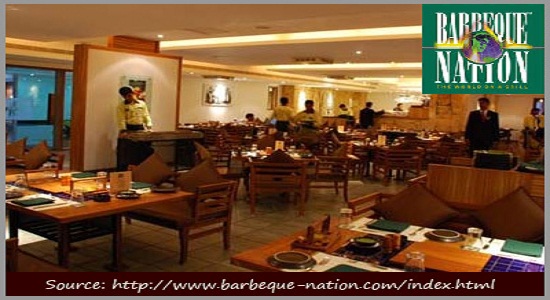
    barbeque-nation-restaurant

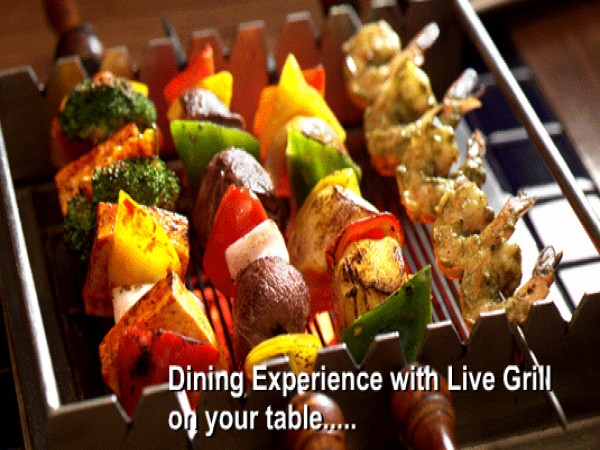
    A world of food in itself is Barbeque Nation. Whether you want to have a dinner out, celebrate an occasion with your friends, colleagues or loved ones, this is the place. A place with perfect ambience and zippy service. You just can’t miss to come in here at BBQ Nation. The food, which is vegetarian and non-vegetarian is fresh, tasty and the most special part is that they there is live grill that is placed directly on your table so that you can grill your starters and savour them while there are still sizzling. Wonderful, No? Also, there is lively arrangement of slow, peppy, hip music and other easy listening number you can choose from. Everything just perfect to lift up the mood.They say that they believe in simple pleasure of eating food and food here is like celebration of life in itself. The soups and salads and main course in this mouth-watering restaurant is taken from cuisines around the world- American, Mediterranean, Oriental, Asian and even Indian!

    Barbeque Nation being one of the most successful casual dining food chain in India and has several outlets in all the major cities of India. Let’s have a look on how it all started, the world on grill; food franchise, what’s the story behind it, let’s uncover it.

    Sure, some of the successful businesses today are born out of the small personal everyday needs and these end up becoming huge companies with a bit of innovation and desire to deliver satisfaction. Such a tiny, trivial issue pushed the thinking of Mr. Prosenjit Roy Chaudhary to an extent that the mere experiment to get rid of issue turned into one of the most successful food chain in India – Barbeque Nation; a.k.a BBQ Nation. Here goes the story. As in November, Indore can get quite chilly evenings and at the poolside of Sayaji Hotels, the temperature was 7 degree Celsius and Mr. Prosenjit was informed by his MD- Sajid Dhanani, about the complaints of customers that the kebabs served to the guests at hotel were getting cold. That evening, he was watching television in evening at his home, when he saw how nomads are facing a similar problem while camping at riverside. They erected a grill using stacked armour and roasted meat on it. Mr. Choudhary as amazed by this and began serving kebabs on mini grills at the tables, which were 90% cooked, in the banquet division of Sayaji Hotels. It was a big hit.

    Then, Chaudhary got the green flag from his MD, to enter into food retail and As CEO of BBQ Nation, he brought the idea to Mumbai and set up city’s first Barbeque Nation at Pali hill, Bandra. People liked it a lot and between 2006 to 2008, there were 13 outlets. Today there are 35 outlets across India. The chain generates revenue of nearly 9 crore per store and the profit margins are 19 percent. What is remarkable about it is the buffet service serving unlimited meat and seafood. As Mr. Chaudhary says,” Barbeque Nation doesn’t begrudge you on portions. He further adds,” If they say they are serving prawns, they will really give you unlimited amounts of prawns.” The firm says, it is interested to explore internationally also and will be going global in coming next years and also adds that Indian market is still the most exciting place to experiment. The firm tells,” We have some serious trade enquiries from Australia, UAE and especially from Dubai. We would be exploring the opportunities of expanding outside India now.”

    live-grill-at-barbeque-nation-ahmedabad

    The chain operates on economies of scale and it offers its customers the independent dining experience. The customers pay a flat price ranging between Rs. 650 and 800 per head, depending on location and time, gets a choice of five vegetarian and non-vegetarian that they can season and cook on the grill, at the table, then move to the main course buffet and can eat as much as they want. This is a unique experience in itself and you enjoy your food like having a barbeque at home and if I talk about taste, undoubtedly perfect. The firm feels that giving fixed price and unlimited choices and food, may have attracted and retained such a pool of customers. Also, it makes it easy for the group of professionals to visit as there is no uncertainty about the bill. He also adds that concept of unlimited buffet isn’t new but execution of Barbeque Nation is superior and lovely experience in itself, making the imitators difficult to copy and compete and operate at same level. The food chain is efficient in its service and is able to deliever consistency at every outlet; which is unlimited food, prompt service and clean toilets. The food is also a perfect blend of multiple cuisines and just the perfect taste to tickle your taste buds and makes it irresisitible for you to avoid coming here. You just can’t help but seduced to dine-in in BBQ Nation.

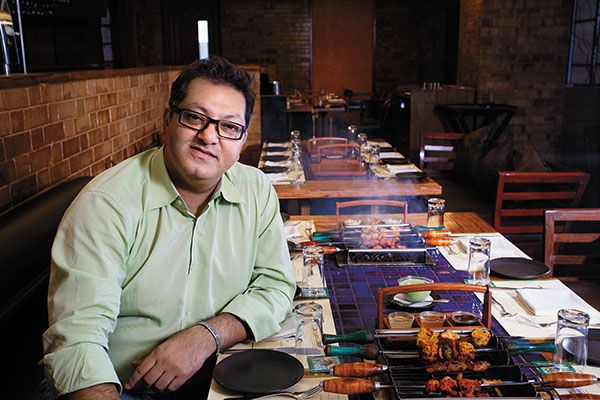
    topimg_21877_kayum_dhanani_barbeque_600x400

    In this picture is Mr. Kayum Dhanani, the now MD of BBQ.

    Indulge yourself in for an unforgettable Barbeque experience, something you just can’t forget and can’t resist walking in again. Go, discover the joy of partying well with Class and Style and yeah, the delicious food. The restaurant is all yours ready to serve your appetite.

  • Oils: The Most Basic Ingredient in our Dishes

    Oils: The Most Basic Ingredient in our Dishes

    High cholesterol is all what comes to your mind as soon as you hear or read about the oils. But do you people know without the oil no dish can be prepared. And the biggest misconception you people having these days is that you can use any oil in your dish and it doesn’t make any difference, but in reality this is the most common blunder you all are doing. So before using any oil just know about them. Two most common categories of oil are:

    Bit-Player oils: bit-player oils are the main ingredients in your delicious recipes. They are the best choice when cooking is considered because they are highly resistant to heat. They do not impart any flavor to your food. So being flavorless, they are not a good choice for salads or sauces, but good ingredient in cakes, breads or other baked dishes. Some example of bit-player oils are:

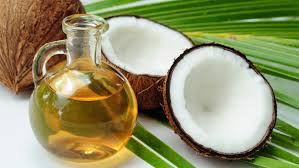
    Coconut Oils:  This semi-solid oil has gone through the period of Renaissance. Once it was only known for its fattening effects, but now it is known to have its health benefits too. Whenever your dish is demanding high heat this oil is the best choice you can opt. In this about 90% of fatty acid are saturated and for this reason it has a high resistance towards heat. It is semi-solid in nature and can be preserved for about years in our kitchen. It contains Lauric acid, which helps in killing of bacteria and also maintains cholesterol level in our food. It also affects the process of metabolism in our body due to this fatty acid. This oil is mainly used for the preparation of curry dishes and also for frying too.

    coocnut


    .

    Safflower Oil: This colorless oil includes a flavor in it. It is derived from safflower seeds. It is the best choice while salad is prepared due to the flavor it includes. It has one more property that it never gets solidify while refrigerated. It has a very high smoking point and due to this lady usually prefer this during frying.

    Peanut Oil: this oil is derived from the peanuts. This oil also has a high smoking point, but it is slightly lower than safflower oil and that’s why it is only used for frying chicken.

    Vegetable Oil: it is a combination of various different plants, seed oils and nuts. This oil is highly resistant to heat so this is the most common ingredients found in the every one’s kitchen

    vegetable

    Sunflower Oil: this oil is used for all common purposes. It includes flavours in it which are highly strong. It is not suitable for baked dishes but good for salads. It is highly rich in polyunsaturated fats. Some amount of saturated fat is also present. To prevent it from rancidity, it must be stored in cool and dark places.

    sunflowr

    Star-Cooking Oil: this oil does not need to gain attention because its flavor is enough for this. This is one of the main ingredients in all the appetizing recipes whether it is baked dish or any culinary dish. Several examples of this oil are:

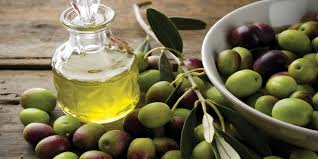
    Olive Oil: Olive oils can be regular, light or extra-virgin in nature. Regular olive oil is deep gold in color and is best for cooking while light olive oil is very in calories. From the very first pressing of olives we get virgin olive oil, but after several more pressing the oil is converted to extra virgin which is low in its acid levels. Olive oil helps in maintaining good cholesterol and decreases the amount of oxidized cholesterol in our body. It is highly resistant to heat and that is the reason it is used in cooking. Always prefer Extra Virgin Olive Oil as it has high nutritional value and has a high anti-oxidizing property. Keep it in a dry and cool place. It has several different flavors and due to this it has been famous in cosmetics too along with culinary.

    olive

    Sesame oil: this oil is mainly used in Chinese or Indian dishes. It is very thick and aromatic in nature. It includes flavor in it which is needed to make delicious sauces, spreads and dips. It has a high smoking taste that makes it usable in frying too.

    Grapeseed Oil: this is the most expensive oil these days with a high smoking point. This is nutty in nature. It is the special by-product that we obtain during wine making. It is best suitable for salads, fried dishes and fondue.

    Avocado Oil: This is a nutty oil with distinct flavors in it. This is same as the olive oil and can be used for common purposes.

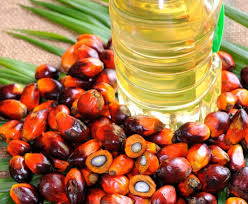
    Palm Oil: because of the monounsaturated and saturated fats this oil is the best choice for cooking. It has been derived and generated from the palm fruit. It also contains polyunsaturated fats in it. The unrefined type of this oil is known as Red palm oil. It is highly rich in nutrients such as Vitamin E, Q10, coenzymes etc. It does not cover the vast area because of some issues which were raised regarding its harvesting.

    palm

    This is all general information about oil that you must remember before using it.


  • Under 30 Minutes Guilt Free Desserts Recipes

    Under 30 Minutes Guilt Free Desserts Recipes

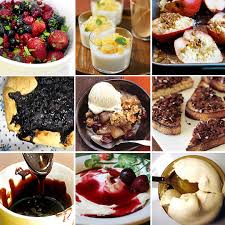
    Nothing can be more pleasant and refreshing than starting your day with the desserts. Celebrate your season with this small package which can be prepared in less than 30 minutes. Here are some of the recipes:

    Soup with Creamy Banana Freeze:

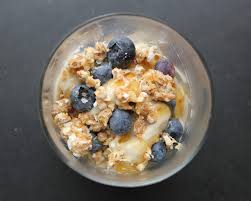
    Quite surprising soups can be cold too. Isn’t it?? This is a refreshing cold soup, which is full of nutritional value especially Vitamin C.  During summers and late spring this frozen cream gives you a feel of an ice-cream. Recipe of this yogurt follows all:

    banana

    Ingredients:

    • 5 cups fruit juice of grape, apple and cranberry

    • Pineapple juice

    • 1/2 tsp lemon zest

    • 1/4 to 1 cup sugar according to your own taste

    • 1 cinnamon stick

    • 3 star cloves

    • 2 cups water

    • 3/4 cup mixed berries

    • 1/2 tsp orange zest

    • Chopped seasonal fruit

    • Mint leaves

    • Red wine (optional)

    • 2 bananas (frozen)

    • 1/4 cup vanilla yogurt

    Preparation:

    • Mix all the ingredients like fruit juice, pineapple juice, cinnamon, water, cloves, orange and lemon zest and sugar into a container and boil them.
    • Boil these ingredients till it is reduced by one-half.
    • Blend these prepared mixtures and frozen berries in a blender till it gets smooth.
    • Put this into a refrigerator and allow them to be chilled.
    • Now place the chopped fruits equally into 8 bowls and pour that mixture over these chopped fruits.
    • Now prepare the banana cream by placing these bananas and vanilla yogurt into the processor and process them.
    • Now take the scoop on this banana cream and put them into that 8 soup bowls.
    • You can also add mint leaves if you want to and now soup with creamy banana is ready to be served.


    Watermelon Cups with lime sorbet:

    watermelon

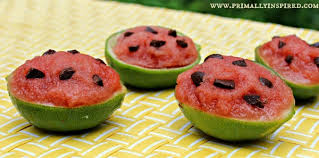
    This is a perfect dessert you people can have during the summer’s night.  This delicious dessert with the combination of watermelon and sorbet together makes your night and next morning refreshing.

    Ingredients:

    • A slice of watermelon
    • 2 tsp fresh lime juice
    • 1 pint lime sorbet
    • Basil or fresh mint


    Preparation:

    • Take a watermelon and cut it down into several slices. Remove all the seeds and cover from it.
    • Now put these slices onto a cutting board and further cut it into four slices with the help of cookie-cutter.
    • You are now left with four rounds of watermelon of 2-inch each.
    • Now take the melon baller and scoop out from the middle of those four rounds. If you don’t have melon baller then you can use a regular spoon too.
    • Take the fresh lime juice and sprinkle it over the scoops of watermelon.
    • Also put ½ cup of lime sorbet into these bowls of watermelon and if needed garnish it with mint.
    • Allow it to be chilled for some time and now this is ready to be served.


    Peaches and cream smoothie:  

    peaches

    This delicious smoothie is an excellent choice for all your meals whether it be snacks, lunch, breakfast etc.

    Ingredients:

    • 1 frozen or fresh banana

    • 5 canned peach halves or 15 frozen peach slices

    • 8 oz. Vanilla low-fat yogurt

    • Pinch of cinnamon

    • 1/2 cups milk

    Preparation:

    • Firstly, allow frozen or fresh banana to soften slightly and then cut it into pieces.
    • Also allow canned or frozen peaches melt slightly.
    • Put peaches, banana, cinnamon, yogurt and milk into a blender and blend it till it gets smooth.
    • Don’t open the lid of the jar and continue blending these until it gets creamy.
    • When you found the mixture to be creamy and smooth, then pour the mixture into the glasses. Now this is ready to be served.

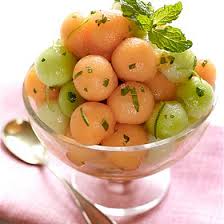
    Minty Melon Balls:

    minty

    Start your day with this fruit drizzled bowl which is just not healthy, but thirst-quenching too.

    Ingredients:

    • 1  honeydew melon
    • 1 cantaloupe
    • Lime juice
    • Honey (2 Tablespoons)
    • 10 chopped mint leaves

    Preparation:

    • Firstly cut honeydew melon into two equal halves.  Remove the seeds with the help of a spoon.
    • Take the melon baller and remove out the balls from the honeydew melon and repeat this method with the help of cantaloupe.
    • Now next you have to prepare lime juice so take the lemon squeezer and squeeze out the juice into a glass.
    • Add honey, lime juice and chopped mint together and combine them smoothly till you obtained a thick sauce.
    • Now add melon balls to this thick sauce.
    • Dessert is ready to be served.

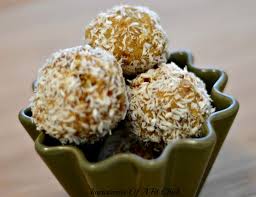
    Apricot Coconut Balls:

    Apricot coconut balls are a sweet, crunchy dessert, which provides a piquant flavor to your tongue.

    apricot

    Ingredients:

    • Orange juice

    • Dried and chopped apricots

    • Sweetened coconut

    • Grated lemon zest (2 tbsp)

    • Chopped pecans

    • Lemon juice (2 tbsp)

    • Granulated and powdered sugar


    Preparation:

    • Boil orange juice and apricots together in a pan for 10 minutes.
    • Blend coconut and nuts together in a blender until they are finely chopped.
    • After this add lemon juice and lemon jest into it.
    • Mixture so obtained is shaped into round balls.
    • Now roll these round balls in granulated sugar in case no humidity is there.
  • RECIPE AND RESTAURANT SURVIVAL GUIDE

    RECIPE AND RESTAURANT SURVIVAL GUIDE

    r1

    We have come a long way since the days when veggies meant overcooked carrot and a lump of stodgy potato. It’s a great treat to have the list of food choices we enjoy nowadays. But the pretentious language that’s built up around dinning is enough for us to grind our teeth so hard that whatever we choose to eat will soon need to be consumed through a straw.

    Celebrity chefs need to take a large share of blame. Who cares if back in the kitchen (preferably a closed kitchen, out of eye line and ear shot of the dinning table); they call the meaty component of a dish “the protein”? Thanks to legions of professional cooks fleeing the kitchen to bask in the glow of TV studios, we all have seen this. But when the suburban cooks start talking about balancing the protein, something’s gone awry. By all means, the chef, ask your apprentice to “check the protein on the grille,” if you must; by the time it makes it to my table, I want to hear it as a chop. If ostentatiously basic terms are annoying, the absurdly florid ones are positively infuriating. Even the fast food chains aren’t above trying to co-opt the English language to confer prestige upon themselves: the staffs who prepare food at Subway are officially known as “sandwich artists.” It’s time for a return to reality.

    Even the street restaurants these days offer you a list of dishes and drinks with the names and information which go straight over our heads, with this they try to show you the intelligence and ability of the chefs, this makes really hard to even order what you desire.

    Here, then is the restaurant survival guide to get you through your next meal.

    r2

    Haute barnyard- 

    Not satire, nor a criticism, but a tern coined by New York magazine’s Adam Platt to describe basic, good quality seasonal ingredients served up at hugely inflated prices in high- end restaurants. These are rare and very specific in their taste.

    Deconstructed-

    Translation: if you didn’t know what it was meant to be, you’d never recognize it. For example, for serving a boiled egg we mix core ingredients such as tuna, green beans and olive. In a deconstructed version, the egg might be infused with tuna; green beans might be mere smear of sauce on the plate, and the olives might se served separately, possibly to the neighboring plate. This is like experimenting with the ways of serving and mixing the ingredients.

    Mouthfeel-

    A highly technical and self important way of describing the way food feels in your mouth. This word requires you to give feedback of your taste buds through your expressions after having the food.

    EVOO-

    Short for “extra virgin olive oil.” Believe it or not this word has actually made into at least one dictionary. It’s also the priciest version of OO-prompting the new extra virgin coconut oil.”

    Compote-

    you’ve probably been eating compote since you were a child, you just didn’t know it. Its fruit stewed in sugar syrup. Yes, just like mother used to make, but at a price she’d assume was a misprint.

    Wilted-

    This used to be a bad thing-who would want to eat wilted veggies? Now it describes: a) greens that have been lightly cooked; and b) diners who have admitted defeat in the face of chef’s pretensions.

    Muddled-

    Cocktail ingredients, such as fresh lime or mint, which have been bashed about a bit with a pestle rather than chopped or blended.

    Molecular gastronomy-

    Molecular gastronomy is commonly used to describe a style of cuisine in which chefs explore culinary possibilities of borrowing tools from science lab and ingredients from food industry. All cooking relies on the change that heat produces in molecules, so “molecular gastronomy” (MG) is technically a redundancy. But that hasn’t stopped being taken up by the chefs and foodies around the world, who use it as an umbrella term to mean “cooking” but not as you and I would recognize it.

    Sous vide-

    Beloved of MG enthusiasts, this is long, super slow cooking in a low temperature water bath or in a temperature controlled steam environment for longer than normal cooking times. The intention is to cook the item evenly, ensuring that the inside is properly cooked without overcooking the outside and retain the moisture. It has become a common feature in television cooking shows. And for mere $900 a home version of the equipment could be yours.

    “Chef’s special sauce” (what are all the others- ready-mix in a jar?), and “pan-fried.” (As opposed to waiting for the pavement outside to get hot enough, perhaps?)

    The worst part of it all is that this overdone approach is unnecessary-sometimes the truly great chefs know. As acclaimed British restaurateur Alastair Little once put it, “you don’t want to read that your squash blossoms were handpicked underwater by Panamanian virgins. All you need to know are the primary ingredients, the main method of cooking and perhaps where the food has come from.” His compatriot Fergus Handerson shows how it should be done, at the acclaimed St Jones Bar and Restaurant in London. Sample entries from the bar menu: “Gull’s Egg and Celery Salt”; “Cheese and chutney sandwich”; Cured beef, Beetroot and Red Cabbage.” Now that’s appetizing.

  • Pocket-friendly Food!

    Pocket-friendly Food!

    When you want a sumptuous breakfast, that too under 150 bucks, where do you go?

    You go to Blue Sky Café.

    With burgers and grilled sandwiches priced in the range of 55 to 100, and mouth watering omelets, and yummy milkshakes with just the right amount of sugar – there seriously ain’t much to think about, is there?

    I breakfasted there on 10th of this month; had a Mushroom Chicken Cheese Omelet with some toast and shot all the cheese down (tried) with a glass of Hot Lemon. The food was well-prepared and simply delicious.

    I seriously need to thank Rachaita (college buddy) for taking me to all these awesome food places. The last time we were internship hunting, we ended up having Chilly Pork (around Rs 200) at Chung Wah, a splendid restaurant in Chandni Chowk (mind you, if you do not know where it is, ASK! Not that people were of much help in our case; we ended up walking for more than 40 minutes trying to locate the place.)

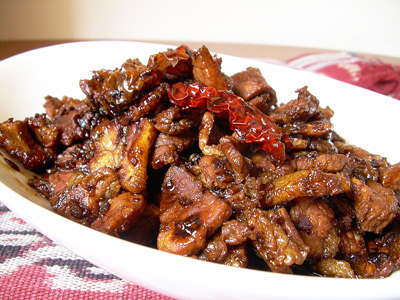
    And how can I proceed without sharing a home-made recipe of the divine Chilly Pork?


    Chilly Pork

     chilly pork

    Time: 40 minutes

    Serves: 4

    Ingredients: 800g pork fillet (cut into thin slices), 1tbsp soy sauce, 2 tbsp mirin, 2 tbsp hoisin sauce, 2 tbsp sesame oil , 1 tsp dried chilli flakes, 3 tbsp sunflower or vegetable oil, 4 garlic cloves crushed with the flat of a knife, 3 red chillies (cut in half lengthways, de-seeded), 6 spring onion bulb (halved), 1 tbsp soy sauce, 2 tbsp granulated sugar, 2 tbsp roasted peanuts, 350g jasmine rice (steamed)


    Directions: Mix together the soy sauce, mirin, hoisin sauce, sesame oil and chilli flakes in a shallow dish. Coat the pork in the marinade and chill in the fridge for 15 minutes. Heat a wok over high heat and add one tbsp of oil. Add half the pork and stir-fry for 1-2 minutes. Remove pork from wok and stir-fry the remaining pork for 1-2 minutes. Remove the pork from the wok. Heat the remaining tblsp of oil in the wok and add the garlic, chillies, one tbsp of water and the onions. Stir-fry for 1-2 minutes. Cover with a lid and cook for another 1-2 minutes. Add soy sauce and sugar and return the pork to the wok. Cook for a final minute. Garnish with roasted peanuts and serve with steamed rice.


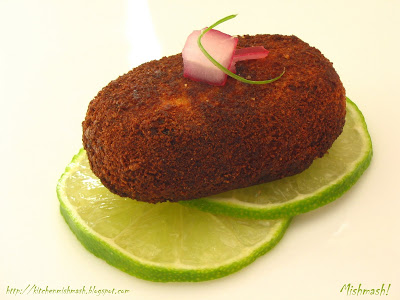
    The other day, on our way to browse books in College Street, we stopped at Dilkhush, which is situated exactly opposite to the famous sari shop, Adi Mohini Mohon Kanjilal. And Google to the rescue, the specialties are: Mutton Breast Cutlet and Dimer Devil (Devilled Eggs). As expected, we had both. The total bill came down to a mere 113 bucks. Well, about the food – the crunch, the aroma, the taste – purely nectarous. So, I’ll just keep my mouth shut and allow your taste buds to do all the talking.


    Mutton Breast Cutlet

     mutton cutlet

    Time: 20 minutes

    Serves: 4

    Ingredients:

    For Marinating- 8 pieces mutton ribs or chops, 2 tsp ginger paste, 2 tsp garlic paste, 1 tbsp of mint leaf paste or coriander paste, 1/2 tsp of coriander powder, 1/2 tsp of cumin seed powder, 1 tbsp of golden fried jullienes of onion, 1/4 tsp garam masala (powder of equal quantity of cardamon, clove, cinnamon sticks), 2 tsp of lemon juice

    For the batter: All purpose flour, 2 eggs whites, bread crumbs, pinch of baking powder, oil

    Directions:

    To prepare the meat- Take the mutton chops/mutton ribs and flatten the meat using a wooden hammer or any heavy kitchen tool. the flesh on the bone should be scrapped. In the marination bowl add all the marination ingredients and mix well with yogurt or lime juice. Add the mutton chops and smear the marination on it. Refrigerate it overnight. Add the Baking powder with the flour and sieve it.

    To fry- Take the Mutton chops and dip it in egg white. Dust it with flour and then coat it with bread crumbs. Take a heavy bottom flat frying pan. Add Oil and let it heat up. Slowly add the Mutton chops and fry till golden brown. Serve it hot with cold coriander chutney


    Devilled Eggs

     egg

    Time: 30 minutes

    Serves: 2

    Ingredients: 3 eggs, 1 medium potato, 1 medium onion, carrot or beet, Other vegetables as per availability, ginger and garlic, green chilies, hing (asafoetida), jeera (Cumin), garam masala powder, bread crumbs, maida

    Directions: Boil 2 eggs and 1 potato for 15 minute.  Cover the eggs with at least an inch of water. Cut onion, chilies, beans and grate the carrot/beet. Drain hot water, pour cold water (makes peeling off easier) and crack the egg shells. Cut the boiled eggs length wise and pop out the egg yolk in a separate container. Add peeled off potato and the vegetable mixture to the container. Add salt, pepper to taste. Mash them well. Heat a frying pan; put some cooking oil and then the onion pieces. Add the mashed potato-yolk-vegetable mixture. Fill the egg halves with the mixture. In a separate bowl, break an egg carefully and add a spoon of Besan. Add salt, pepper to taste and blend it well. On a pan, pour some bread crumbs. Heat a frying pan and add oil. Follow the sequence – roll the stuffed egg half in egg besan mixture, then in bread crumbs and then lower carefully on the heated oil. Fry well. Do this for each stuffed egg half.

    Kolkata is filled with such similar pocket-friendly food places and each is better than the other. For us, college-goers, it sure IS the place to be!