Category: More

  • Whey Protein for Fat Loss

    Whey Protein for Fat Loss

    You have tried it all. You have made sure to get adequate sleep, rigorously followed your training routine, obsessed over your calories and your stress levels are astonishingly low. Even after all this discipline, you cannot seem to lose those last few pounds of body fat. The solution however might be found in a different approach to the use of whey protein as a supplement.

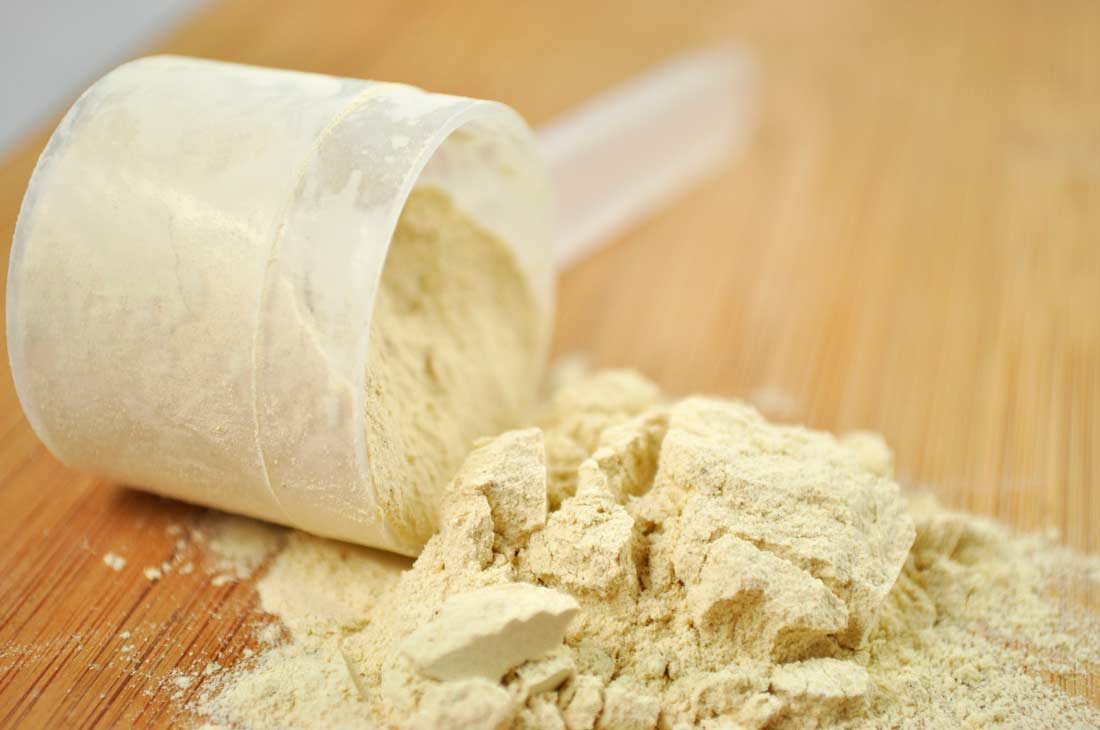
    Whey protein is a form of milk protein emerging as a by-product during the production of cheese. Whey protein has been manufactured into three forms for diet supplement purposes.

    ~ Whey Protein Concentrate

    ~ Whey Protein Isolates

    ~ Whey Protein Hydrolysates

    These forms vary according to their composition and consequently their protein content.

    What makes Whey Protein preferred is its high digestible protein and amino acid content. Whey Protein serves as a great example of optimum protein digestion. It also delivers adequate amounts of amino acid content essential to the body. Containing more BCAAs than other protein sources, Whey protein is being widely recognized as an essential health supplement to your regular diet.

    Studies proclaim Whey protein as a strong promoter of muscle growth owing to its role in increasing protein synthesis. Whey protein is generally consumed before or after a workout when it is needed most. Whey protein accounts for strength gains too aiding all the effort you put into your workouts. Aside from the health benefits, Whey Protein also helps you lose the fat you put on during the forced binge eating sessions.

    Now, eating more protein may go against conventional wisdom of dieting, but there is some truth behind it. Eating less does not necessarily help you lose fat. A large part of your focus must be emphasized on eating the right amount of calories and the sources from which you get these calories. We all know that the calories you ingest from a banana is different from a doughnut so instead of focusing on the amount of calories, it makes sense to focus on eating the right food. Whey protein plays an important role in fat loss in various ways. Rich in Leucine, Whey protein facilitates protein synthesis which requires quite an amount of calories. Leucine also aids fatty acid oxidation. Whey protein keeps you feeling full, satiates your hunger and prevents you from binge eating.

    A study originating in the University of Oklahoma indicates that simply adding a Whey protein supplement aids your fat loss goals. In the ten week study, two groups of participants were instructed not to change their diets. On the other hand one group was instructed to ingest a Whey protein supplement once per day for two weeks and twice a day for the remaining eight weeks of the study. Both groups were then introduced into a resistance training program for ten weeks. The results of the study indicated that both groups decreased body fat but the supplement group showed a much more significant decrease in fat mass. Other than fat loss, the supplement group had significantly increased muscle mass composition and decreased cholesterol levels. Another study conducted in 2006 indicated that adding Whey protein had a greater carry over into body fat reduction when compared to other protein sources.

    This article will also innumerate the different hacks you can make in your life to optimize your fat loss goals. Using a journal and keeping track of your food consumption helps you stay in check. By simply writing down what you eat, you remain conscious of your food habits and inevitably curb your desire for junk food. The truly dedicated would find the consultancy of a nutritionist a great idea. Fat loss is all about motivation and seeing the transformations undertaken by others really helps fuel the fire within you. When seeking fat loss, it becomes important to exercise the right way as well. The hamster wheel approach of long boring jogging sessions is the most frequently adopted weapon against fat loss. This is a myth strengthened by generations of ill use. The problem with low intensity training is the more you do it, the better you get at it. Eventually the returns you get from that workout begin to diminish over time. Therefore to burn more calories, you need to run for an even longer time. Even though you burn many calories during the workout, the low intensity nature of the workout does not help your body to burn calories after the workout.  A better approach would be short sprints of a higher intensity which will ramp up your metabolism throughout the day instead of just the length of your workout.

    In conclusion, Whey protein has always been attributed to weight gain. Even though this is true to some extent, Whey protein has been misunderstood. Consuming more calories than you burn does amount to adding body mass but the right nutrition does matter. Nobody would want to squander their efforts in the gym with improper nutrition. Like the saying goes, good health is an attribute to your efforts in the kitchen. Now Whey protein is obviously not the answer to fat loss. Fat loss is a daunting task and will require you to adopt a healthier lifestyle. The proper food choices and regular exercise will account for much of your efforts. Proper amounts of sleep and adequate rest also plays an important part in giving you the edge to perform better in all spheres life demands of you. Whey protein in truth is a powerful supplement to your quest for better health no matter what your specific goals may be.


  • What’s to Know about Willis Tower?

    What’s to Know about Willis Tower?

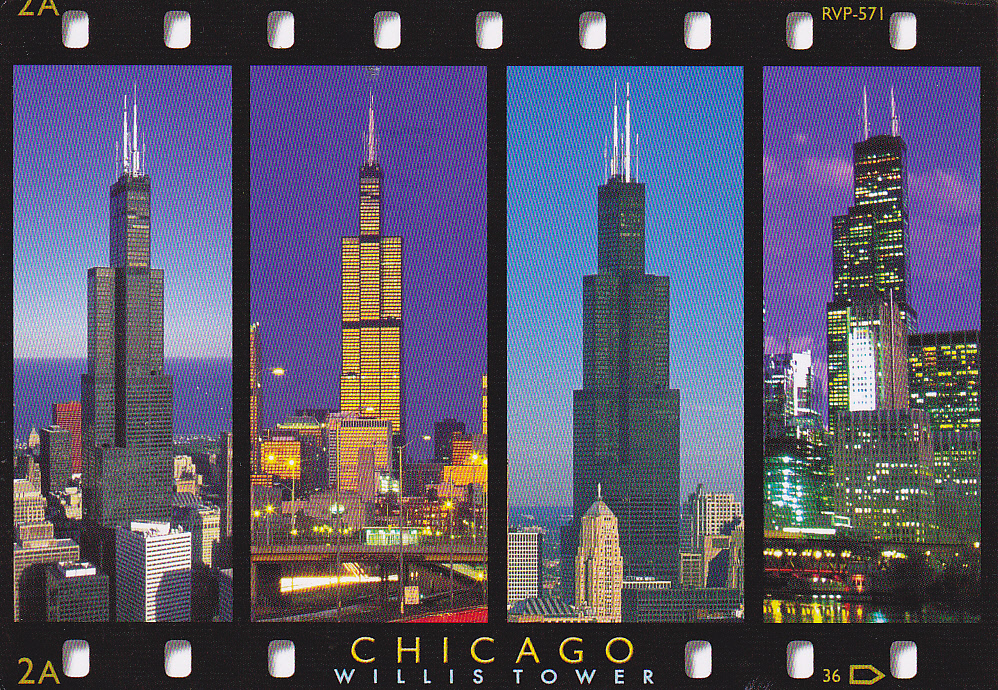
    The Willis Tower, formerly known as Sears Tower, is a 110 storey skyscraper in Chicago, United States of America, was once the tallest building in the world, occupying the top spot for a period of around 25 years, from 1973 to 1998, until the Petronas Twin Towers in Kuala Lumpur, Malaysia, broke the record. While Burj Khalifa, Dubai, holds the current world record, Willis Tower is now the eighth tallest building in the world, and the second tallest building in USA, surpassed only by the recently reconstructed One World Trade Centre in Manhattan. Willis Tower stands tall at an impressive height of four hundred and forty three metres, which is over sixty metres taller than the Empire State of Building in New York City. The Tower was originally built as the national headquarters of the Sears, Roebuck Company.

    tallest-freedom-tower-589126279

    Most people generally agree that the skyscraper was invented in Chicago, which is the third largest city in USA.  In 1871, a fire destroyed a third of the city, and architects set about rebuilding it. By this time, steel was being mass produced and, in 1852, Elisha Otis had invented the elevator, also known as the lift. New buildings could safely and practically be made much taller. The first high-rise building appeared in the city in 1882. This was the Home Insurance Company Building. It was the first building to have a skeleton structure made entirely of steel and iron. It had ten floors – a hundred fewer than Sears Tower which would be built ninety years later. As the demand for land in city centres grew, people needed to build fast and economically. Skyscrapers were the perfect solution to this challenge. With new materials and developing technology, the design of skyscrapers was gradually improved and perfected. Steel girders were used in different ways to build a strong framework. Some buildings were made of tall steel tubes, designed to withstand the winds that blow around the top levels. Inside the tubes, individual floors and rooms are rigid so that people can live and work safely and comfortably.
    It took around two thousand and four hundred workers around three years to build Willis Tower, and eventually finish it in 1973. The unique framework of the tower is made up of nine steel square tubes, which form a large square at the base. This rests on concrete, rock-filled shafts that are securely fitted into the solid rock beneath. The nine welded steel tubes rise fifty floors up. Then the building starts to narrow as you go upwards. Seven tubes continue on up to the sixty-sixth floor. Then five rise on to the ninetieth floor, leaving just two tubes to form the top twenty floors. Two television antennae take the building’s total height to a whopping five hundred and twenty metres – over half a kilometre. The amount of steel used to build the framework alone was enough to make more than fifty two thousand cars. Each of the steel tubes that form the top stage of the tower is 23 metres square in size. Viewed from above, the third strafe makes up a cross shape of five tubes. The second stage of the “step back” design has seven tubes that rise for 65 metres. Each side of the tower’s base, made up of nine tubes, is 69 metres long, with the total structure weighing over a 200,500 tonnes. During construction, up to eight floors were added to the building every month. The building’s steel frame was put together in sections, and were then welded and bolted tightly into place. In 1985, a four storey hall was built a base of Willis Tower, to give extra space. There are also shops and restaurants in the buildings.

    This huge building has over four hundred and eighteen thousands square metres of space, which amounts to around sixty football pitches. The Tower has a hundred and four high-speed lifts, which divide the building into three separate zones and make it easier for people to find their way around. The fireproofed frame is covered in a metallic skin made of black aluminium, and more than sixteen thousand bronze-tinted glass windows. Six automatic window-washing machines clean the whole of the building eight times a year. Willis Tower makes the high-rise buildings around it look small. It is designed to sway up to ninety centimetres at the top in the occurrence of strong winds. About 1.5 million tourists visit Willis Tower each year, making it the most sought after tourist attraction in the city. Two express lifts take them up to the 103rd floor in just over a minute. From the Tower’s Skydeck, visitors have a spectacular view of the Chicago panorama. In the building’s lobby there is an enormous “wallmobile” by the famous sculptor Alexander Calder. The Skydeck is situated a four hundred and twelve metres up in Willis Tower. On a clear day, visitors can see over eighty kilometres, with a breath-taking view of four American states – Illinois, Indiana, Michigan, and Wisconsin.

    IMG_0015

    The official address for the building is 233 South Wacker Drive, Chicago, Illinois 60606, and is the “most impressive office space in Chicago” as it rightfully claims on its official website. Its pinnacle stands tall at a height of 1,729 feet. While the Sears sold the building way back in 1994, and completely vacated the building by the following year, it still held the naming copyrights to the building till 2003. That year, the London based stockholdings company Willis Group Holdings Limited bought around three floors’ worth of area, and thus won the naming rights without any conflict. Currently, United Airlines is the largest occupier of the Willis Tower, and has about twenty floors under its ownership which are home to its headquarters and operations centre.

  • The Best Veggie… BROCCOLI

    The Best Veggie… BROCCOLI

    BroccoliCheeseSoup2

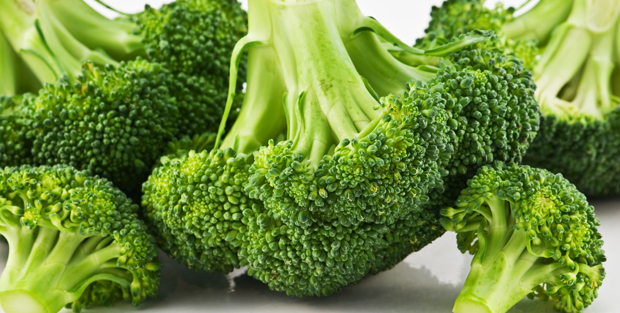
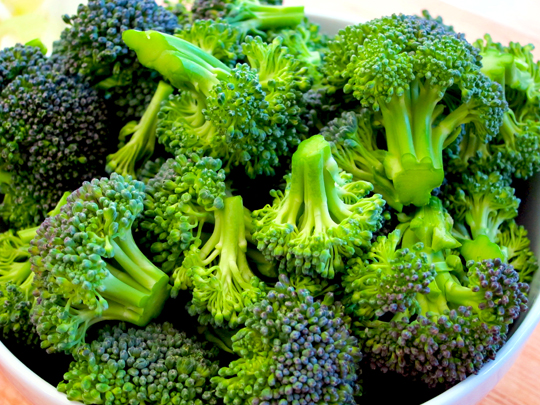
    The luscious, green cruciferous veggie called Broccoli is well-known and liked by all. When it comes to health benefits, it has almost every benefit to offer and people love it for its qualities. This vegetable can increase the attractiveness of almost anything be it salad, in raw form or cooked with peas exclusively. The reason for the fan following of broccoli is due to its nutritional profile which is unbeatingly impressive. When one is eating broccoli, he is sure to get dozens, no actually hundreds of nutrients that support optimal body functioning. If you want to know about the origin of word ‘Broccoli’, it comes from Italian word, basically which means ‘flowering crest of the cabbage’ and is generally characterised by large flower head, green in colour. This large  green or purple flower head is the reason that it is known to contain Phyto-nutrients that are found to have disease prevention and health maintenance properties. Broccoli is rich in Vitamin A, K, C, iron, zinc, B-complex vitamins phosphorus and dietary fiber. Also, it contains a very important compound, called glucoraphanin. Infact, just a 100gm serving of broccoli will provide you with 150% of daily recommended intake of vitamin C and regarding calories, it just contains 32 calories per 100 gm. Due to the presence of Vitamin C in such high quantities, it has gained so  much popularity, as alongwith this, it is also a very good source of Omega-3 fatty acids.

    To prepare Broccoli, it is recommended to cook only the amount one is going to eat for dinner or lunch and better not to keep extra with the purpose of consuming it later, when given fresh broccoli will be cooked in few minutes. Also, it is best to not overcook your broccoli as it will turn to mush and will take a very unappealing green colour and then you wont feel like eating it. Before Preparing, wash the broccoli in running water and don’t soak it in water. To cook it quickly, cut lengthwise slits in the stems, also, leaves are perfectly edible and contain the concentrated amounts of beneficial nutrients. Also, while cooking take care of the temperature by sticking to a low temperature to support your nourishment. It is good to eat freshly raw or half baked or cooked to get all the nutrients and to enjoy the benefits. As, the broccoli is available the year round in the market , it is preferred to choose bright, compact firm textured florets of broccoli seemingly rich in flavour and avoid the overmature flower heads with yellow buds, hollow stem and excessive branches.

    Redzel-Fresh-Broccoli

    Here are some enlisted benefits of broccoli and trust me there are many;

    It prevents or at least reduces Cancer risk: This is the number 1 benefit of broccoli. Researches say that just eat broccoli three times each month and one could potentially reduce the risk of bladder cancer by 40 percent. The reason being that Sulforaphane in broccoli has been known to kill cancer stem cells, thereby striking the root of tumor growth. Even it was found in a study that men who ate broccoli showed a number of  beneficial changes in genes that are known to fighting cancer.

    Prevents Diabetes and improves heart health: Eating it promotes the production of enzymes that helps in protecting heart blood vessels and reduce the molecules that damages them. It is this Sulforaphane that reduces the number of molecules that reduces cell damage. As, people with diabetes are more likely to develop cardiovascular disease such as heart attacks and strokes and Eating broccoli might help in reversing these effects.

    Prevents Arthritis: The sulphur rich broccoli compound blocks a key destructive enzymes that contributes in damaging cartilage. So, increasing broccoli in your diet can slow down and prevent arthritis. So, older people should start eating more broccoli and even the younger ones should develop taste of this wonderful veggie.

    Improves the eyes and skin health: Yes, the added benefit of broccoli is that it improves the skin health not by eating it though but by directly applying it. It prevents the skin cancer and improves the skin when damage is caused by UV rays of sun. Also, due to stimulation of variety of antioxidant defense pathways in your body, it slows down the ageing process. Moreover, broccoli also maintains eyesight as it contains Vitamin A in the form of cartenoids.

    Broccoli, overloaded with so many benefits for health, really makes it a wonder food. The range of benefits it offers like it alkalizes the body, helps in reducing cholesterol, maintains the right blood pressure and yes, is an excellent diet aid as it curbs overeating.  This veggie, broccoli is powerful antioxidant and boosts immune health and prevents cold. The working of broccoli for cancer prevention goes like this; The combination of antioxidant, anti-inflammatory, and detoxification components in broccoli make it a unique food in terms of cancer prevention. Connections between cancer development and oxidative stress, chronic inflammation, and inadequate detoxification are so well-documented in the research that any food improving all three of these metabolic problems is meant to be highly likely to lower the risk of cancer. The broccoli is the one, that is showing strong signs of decreased risk of prostate cancer, colon cancer, breast cancer and ovarian cancer. Recent studies have also provided us with a much better idea about the amount of broccoli that we need to lower our cancer risk and it is found like 1/2 cup of broccoli which is 22 calories per day can be enough. Though, some people are reluctant to have broccoli, the reason can be any many be they don’t like the taste or whatever, but even, a 2-cup serving twice a week would meet this minimum average amount, and this shows that it is a very little minimal amount in context of week’s food. You know, broccoli can provide you with some special cholesterol-lowering benefits, if cooked by steaming. Well, the benefits are innumerable and that’s the reason it has been counted as one of the world’s healthiest foods. Broccoli is like super pack of health food. The nutritional punch, that broccoli has, is irreplaceable from any vegetable. For diet conscious people, this is something perfect being high in fiber. So, keep eating this rich green food, Broccoli.

    Healthy Eating. Happy Life.

  • Go Nuts about Nuts! (Part 1)

    Go Nuts about Nuts! (Part 1)

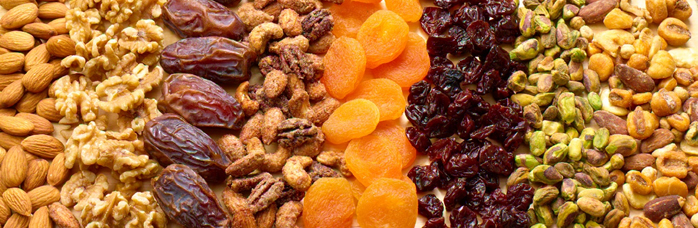
    With high nutritive value and a deliciously sweet taste, dried fruit is fruit from which the majority of the original water content has been removed either naturally, through sun drying, or through the use of specialized dryers or dehydrators. Nuts are edible fruits as well, anatomically different from the rest because of their soft internal kernels enclosed within a hard shell. Both dried fruits and nuts possess high shelf life, and have been in use throughout centuries in every part of the world. Today, they form an integral part of our culture and cuisine, and have an irreplaceable importance in our daily lives.


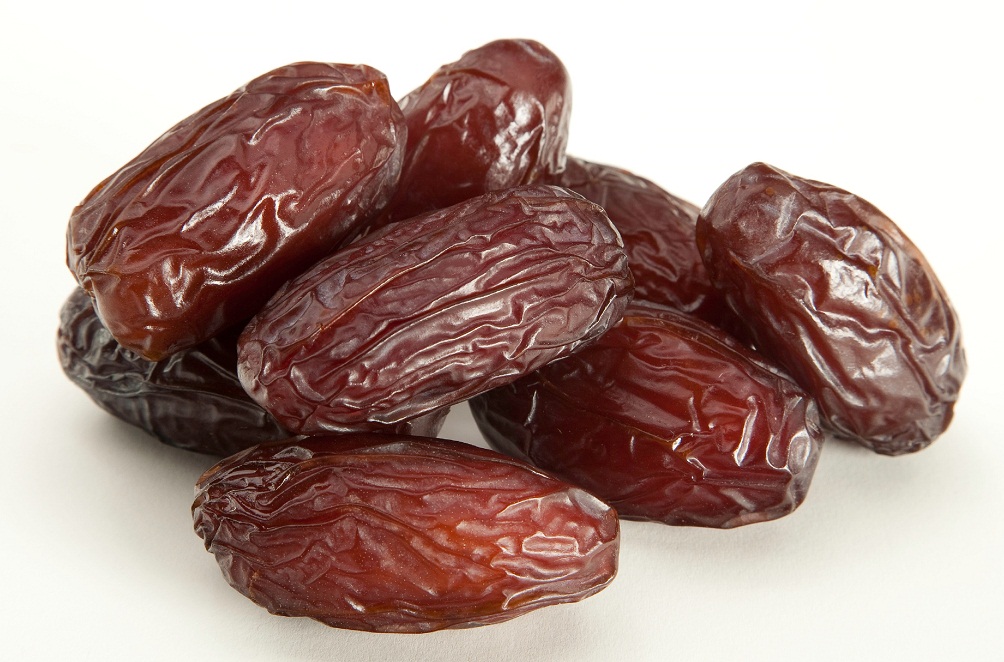
    1. Khajoor

    Khajoor, or the rather generic term, dates are the fruits of palm trees. Named Phoenix dactylifera in the binomial classification system of living organisms, both these names are derived from the Greek word for “finger”, dáktulos, because of the fruit’s elongated shape. What is interesting about the date palm, which produces this particular fruit, is that the male and female plants are separate and independent of each other, and only the female is capable of bearing fruit. The male plants only produce pollen, which is vital for the fertilization of the female and the subsequent production of dates. In most cities in India, dried dates are available easily at every fruit seller’s and vendor’s, and you can find those yellowish, deep red fruits packaged in small cylindrical plastic casings. Dates are extremely high in their carbohydrate content, and a hundred grams of dates will provide you with over three hundred calories. Dates contain minimal protein content, and an abundance of simple sugars which get easily absorbed in the bloodstream, and hence should be mostly avoided by obese and overweight people.


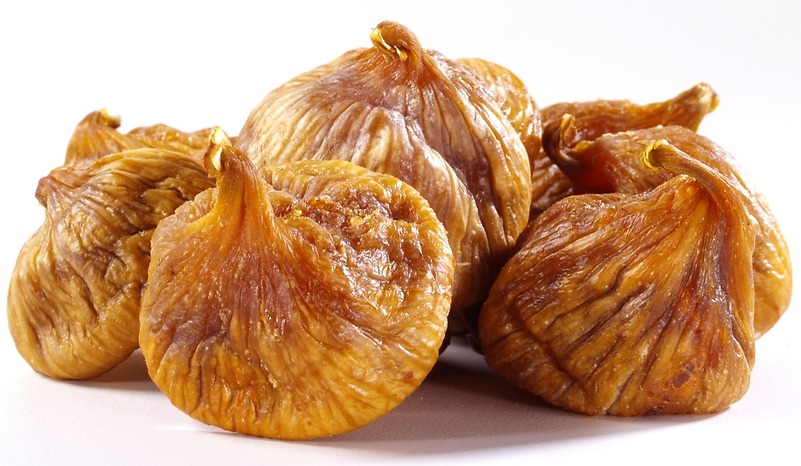
    2. Dried figs

    Figs (Ficus carica) are native to the countries of the Middle East and western Asia, and have been used for both ornamental and consumption purposes over the course of many centuries. One of the first edible plants cultivated by humankind, figs are mentioned in many historical accounts and incidents, one of the most famous being the suicide of the Egyptian queen Cleopatra, who apparently got herself bit to death by an asp smuggled in a basket of figs instead of surrendering to the erstwhile Roman Empire. The small, green-skinned fruit contains many smaller drupelets, or one-seeded fleshy fruit components, and can be eaten fresh, after drying, and in numerous other preparations ranging from jam to ice cream. Known by the vernacular term anjeer in most of the Indian subcontinent, figs are extremely high in their carbohydrate content as well. Dried figs contain rich amounts of sugar, and hence have high calorific content, making it an unhealthy dietary component for obese, overweight people with cardiac risks.


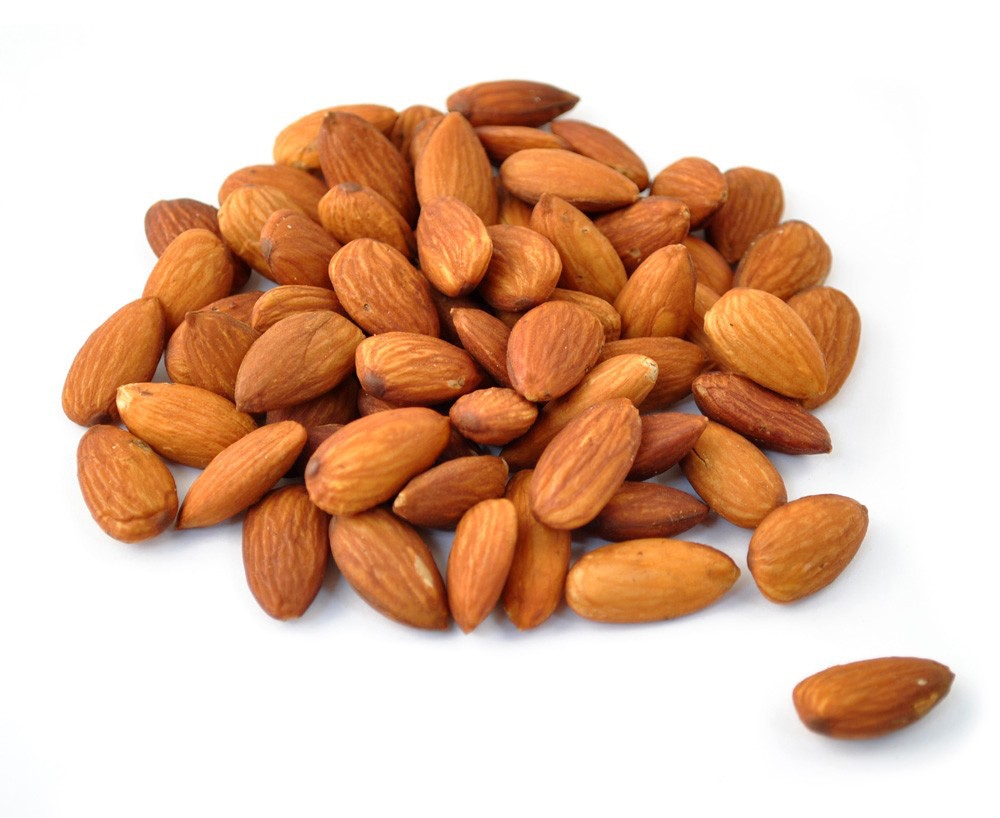
    3. Almonds

    Almonds, popularly known by their Hindi name badam in the northern states of India, are the seeds of a tree (Prunus dulcis) originally found in the Middle East and South Asia. Closely related to the peach family, the almond fruit also look rather like small green peaches, and are available in both sweet and bitter varieties. Etymologically speaking, the word is derived from countless variations and modifications of the Latin amandula, the Greek word amygdala, and the Old French almande or allemande over the ages. Apart from being eaten in its raw, roasted, and blanched forms, almonds are also used in your daily breakfast muesli as well as while making many delicacies such as cakes, nougat, marzipan, and macaroons in Europe and America, and badam halwa, barfi, biscuits, and flavoured milk in India. Extremely nourishing in nature, almonds are valued as a good muscle and body building substance, in addition to boosting the brain’s grey matter. Used for making oil, almonds also have high calorific value, with every hundred grams of almonds giving over six hundred and fifty calories, and sixty grams of almond fat giving nearly twelve teaspoons of oil.


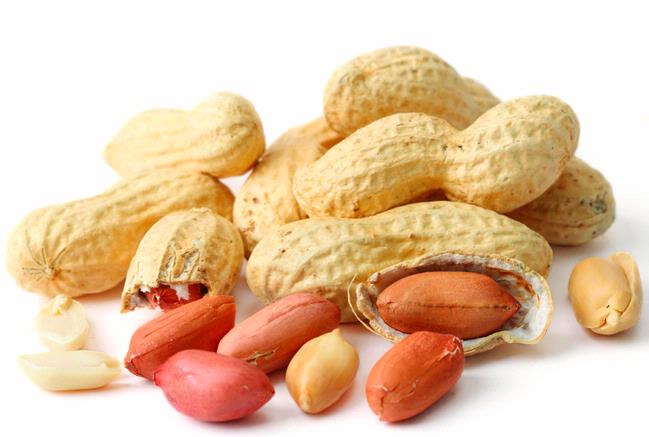
    4. Peanuts

    Peanuts, or groundnuts (Arachis hypogaea) as they are mostly called in India, belong to the leguminous beans family, and was first cultivated in the red soils of Paraguay. The species name as according to taxonomist Carl Linnaeus hypogaea has Latin roots and literally means “under the earth”. Apart from being eaten in their raw, salted, roasted, and even boiled forms, peanuts are used to make countless basic cooking ingredients such as flour and oil, as well as many complex delicacies. They also have many applications outside the realm of the kitchen, such as their usage in the manufacture of solvents, industrial non-edible oil, textile materials, and both allopathic as well as herbal medicines. American botanist George Washington Carver is credited with hundreds of peanut recipes and related products, peanut butter being one of his most famous patents of all time. In India, groundnuts alone make a wonderful evening snack in winters, and you can find them being sold at very cheap prices at any roadside vendor. Groundnut oil is very healthy and is used in many households as a cooking medium. They are also a major component of chikki, a popular north Indian snack made by boiling and solidifying jaggery, sugar, peanuts, and til (sesame seeds) in long sheets. Though groundnut resembles other pulses in general nutritive value, they are very rich in fat, with a hundred grams of groundnut will yield almost forty grams of oil worth more than five hundred calories.


    5. Cashews

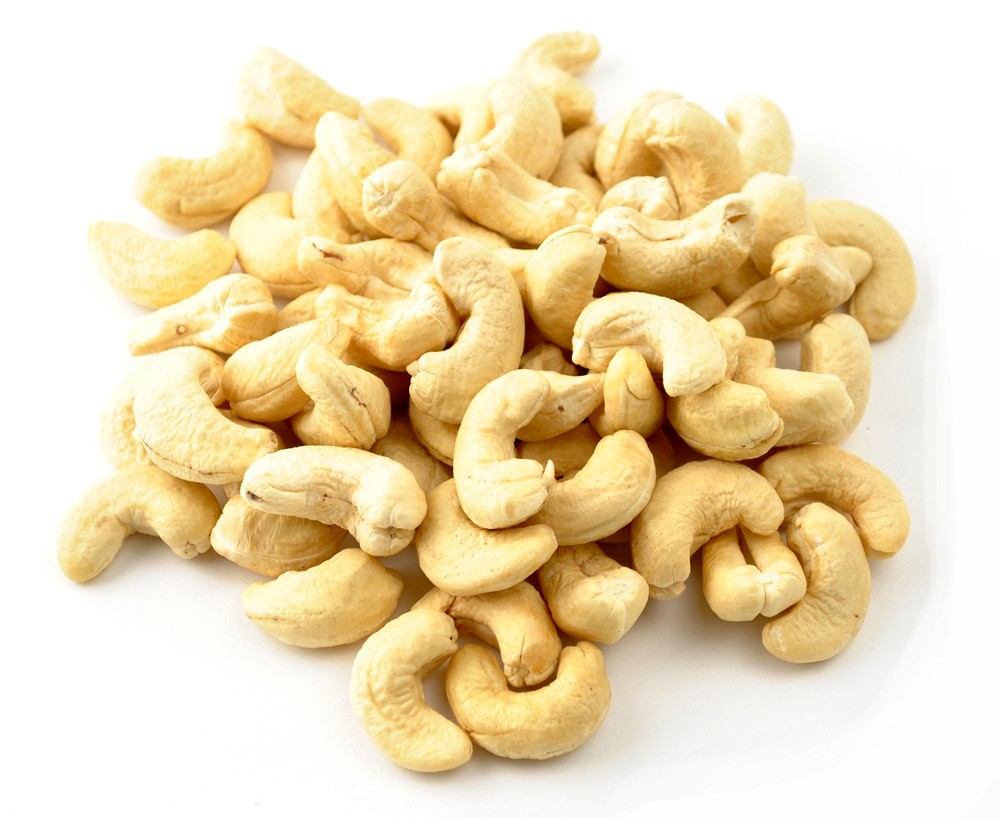
    Cashewnuts are derived from the cashew tree (Anacardium occidentale) which also bears the cashew apple. White, sweet, kidney-shaped, and extremely versatile as far as their culinary uses are concerned, cashews can be salted, roasted, creamed into gravies, made into liquor and oil, and are also used in the preparation of many sweet dishes. The word cashew has been derived from the Portuguese word caju which has been in turn derived from acajú of the indigenous Tupi language, and literally translates to the “nut that produces itself”. Cashews are used for making many Indian curries, such as korma and shahi dishes, and sweetmeats such as kaju katli. Because of their high starch content, cashews serve as good emulsifying agents and are used for thickening soups, syrups, curries, and the works. Boiling them in oil or salting them makes them harder to digest so they are best eaten in their natural, raw state. They go best with acidic fruit and non-starchy vegetables rather than sweet fruit and heavy starch. They are good body builders and easily digested when raw, and hence, help in cases of emaciation and in building good teeth. Like all nuts, cashews contain a great deal of unsaturated fatty acids, mostly in the form of oleic acid. On consuming a hundred grams of cashew nuts, you gain nearly fifty grams of fat, and a hundred grams of cashew oil, which amounts to around ten teaspoons, yields 600 calories.

  • Delicious Smoothies…!

    Delicious Smoothies…!

    1YI1ru0a9lo1_500_zps8cc9d639

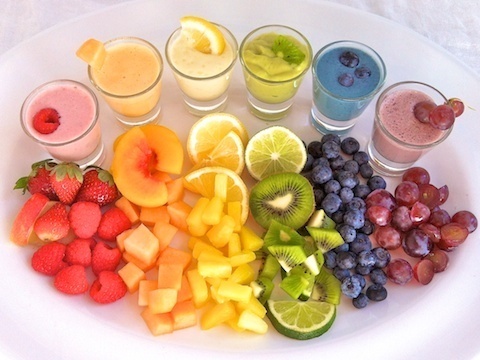
    The lovely, fruity, refreshingly cool smoothies are almost everyone’s favorite. Available in all varieties, be it fruity or veggie contained green smoothies, served with straw. So popular now, are found in all restaurants, grocery stores and even coffee shops, there’s nothing not to love about smoothies. They may sound like healthy option above all which they are undoubtedly but yes, there are some aspects to it which make not so good. They are considered healthy and come under this umbrella term because most of the time they are made of soy milk, yoghurt, frozen fruit or skim milk. They make a really good options for meal or snack when made with natural fruits. Well, let’s enumerate the health benefits of smoothies;

    Article-11.0

    Smoothies keep you hydrated: Having smoothie in breakfast helps in keeping you hydrated for the whole day. This is what something like soda, tea or coffee won’t do. The body do gets water from many foods and resources, so one doesn’t need to drink water while having smoothie. As milk and yoghurt are largely water, it will quench your thirst eventually. In hot weather, it is preferable to add some extra ice cubes for extra water and the chillness.

    Smoothies are perfect or Breakfast: Breakfast needs to be king size, I know you know that. Smoothies make up an excellent choice for breakfasts because they make you feel fuller and are heavy as fruits and veggies are blended together with milk or yoghurt. The classic breakfast of bread, peanut butter, jam and any fruit smoothie is easy-to-make and perfect for any day. Sipping smoothie in the morning prevents you from indulging in unhealthy urges like donuts or drive through. Also, if you have problem taking in those cod liver oil directly, you can add some drops in your smoothie and this will make it all the more nutritious.

    Smoothies are Easy, Portable and Custom-made: Smoothies are really easy to make and are really good on-the-go choice. Just pick some fruits, throw them in the blender, put some milk and drink the mixture. If you own a blender, it will be ready in no time. Also, they can be stored and will stay fresh for 24 hours if kept cool and sealed in a right container and you can carry it anywhere in the car or train or gym to have it anytime you like. A vacuum flask is a right choice if you want to keep your smoothie cool and fresh on the move. Moreover, the fun part is you can add all types of ingredients you like in your smoothie and make it as per your taste and mood.

    Smoothies are blend of Vitamins and Minerals: They are way better than Multi-vitamins. Drinking fruit smoothie every day is more healthful than taking those multivitamins, even recommended by nutritionists. As just a glass full provide us with enough fiber and loads of all the required vitamins and minerals. Smoothies are a true blend of nutrition. This in turn helps in digestion and may help in control blood sugar and lower cholesterol.

    Smoothies are Nutrient-dense and source of calcium: Smoothies are best when they are all natural made with real fruits and veggies. The nutrient –dense ingredients provides vitamins and oils necessary for complete nutrition. A truly healthy smoothie is the one that has dietary fats in the form of cream for the body to use in assimilating the vitamins and minerals. Just simply blend bananas with skim milk or yoghurt or soy milk and get a great deal of benefits and nutrients. And yes, the milk or any base you use is a rich source of calcium, giving it all the more richness.

    With all the pros of smoothies, let’s have a look on the ingredients that probably you shouldn’t be using but are preferable to put into your smoothie to make it really rich, which are like,

    Aloe Vera, Pomengranate juice, Kefir, Coconut Milk, Chia seeds, Moringa powder, Milled flax seed, Spirulina etc. Well, the great news if you want to know is that if you want to lose weight, smoothies can be used as a meal replacement not an addition to it, so just take it this way and enjoy the results. Like, sip a dairy based smoothie for breakfast or water-based smoothie as a snack. All the fruit or veggie smoothie can be a healthy additional meal plan as long as you maintain proper meal portion. Its better to incorporate smoothies in your diet plan by consulting your dietician or doctor.

    Some Awesome smoothie recipes:

    Coconut Water-Mango smoothie:

    2 cups unsweetened coconut water

    Pinch of cayenne powder

    2 tablespoons lime juice

    2 cups ripe mango chunks

    Blend all the ingredients in blender till smooth. Gulp them and enjoy the delicious smoothie.

    Now, Here’s is what a really healthy green smoothie will contain, just perfect for your body;

    ¼ cup water

    1 banana

    ¼ cup orange juice

    1 cup spinach

    ¾ cup strawberries

    ½ cup blueberries

    Blend till smooth and enjoy the green richness of the drink.

    mix-berry-smoothie-with-berries-and-mint-leaf-100145237

    All these less calories, full of refreshment and deliciousness smoothies make up really good combination in breakfast or as a evening snack. Basically, smoothie is perfect for a busy life like present time, counts as an ideal on the go drink and is really easy to make, ready in no time. Smoothies are now-a days everywhere, people are talking about it a lot on the internet or in general. Why? Because it is Healthy. Yes, It definitely is healthy. There’s more to green smoothies but smoothies or protein shakes in any form is healthy. Though, taking fruits and veggies straightforward form is also healthy, but sipping on smoothie gives a new refreshing touch to them.

    Healthy Eating. Happy Life.

  • What makes Delhi, Dilli – 3

    What makes Delhi, Dilli – 3

    The Final Chapter of the trilogy, thus begins.

    Delhi, the city with a heart has been featured, loved and adored with artists of all types of media. Whether it is Journalism or Film making, it is song writing or singing it, whether it is blog writing or writing professionally; most of the artists have had a love tryst with the city and continue to do so. But people from other places wonder why? People new to this city cry, what is the hue and cry about this city? It is only after you have lived in the city long enough that you feel its love swallowing you complete. That you feel yourself falling for a city which you didn’t understand just some time ago. Let’s try and comprehend the city and why you will love it!!

    The modern symphony:

    metro

    Delhi is one of the oldest inhabited city, no doubt. But this does not make the city ageing. The city with the evolution of time has grown dynamically. And the goading sign of the city’s modern outlook that appeals to people is its dense Metro network. The Delhi Metro is one of the longest fully functional Rapid Transport System in the world. The Metro system augments the Delhi suburban rail system and the fleet of Delhi Transport Corporation bus system. This requirement of today was just a dream in the pipelines a decade ago. The Delhi Metro has been a pioneer in harbouring in a new era of mass urban transportation in India. The swanky Metro system brought about a comfortable, air conditioned and eco-friendly services for the first time in India and completely revolutionized the mass transportation scenario in Delhi. Besides carrying millions of people every day, the Metro also reduced the pollution levels in the city by 6.3 lakh tons every year since its inception. The DMRC is enroute to adding another 140 kilometres to its already labyrinthine 193 kilometres. So, anywhere you see the Delhi Metro, it gives you the special feel of living in a New York styled Metropolitan with a quick and accessible Transportation System.

     India Gate:

    india gate

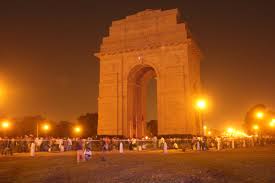
    One of the landmarks of the city, showcased in every Delhi based movie is the magnanimous India Gate. The India was originally called the All-India War memorial and is a memorial located just besides the Rajpath. India Gate was designed by Sir Edwin Lutyens and is a magnificent piece of architecture often drawing comparisons with the Arch of Constantine and Arc de Triomphe in Paris. This memorable landmark was built to commemorate the thousands of Indian soldiers who have died in wars outside and inside the country. This arch shaped marvel has the names of some 13,300 servicemen inscribed on its body, eternally commemorating them. After the Bangladesh liberation war in 1971 a black marble plinth like structure was erected underneath the great arch of India Gate. This plinth is surrounded by four flames and is covered with an army man’s helmet. This structure is called the Amar Jawan Jyoti or the Flame of the Immortal Soldier.

    But besides the historic reference, India Gate today is one of the hot spots for picnic for the modern nuclear family. India Gate, is surrounded by many Ice-Cream vendors and balloon sellers which make it worthwhile for the kids to hang around the place. For the elders in the family, the lawns of India Gate serve as a detoxifying day out, away from all their routine tensions and monotonous schedules of their work life. A day out at the India Gate is counted as a well spent day with your family and is a must for any new visitor in town.

    The Red Fort:

    red

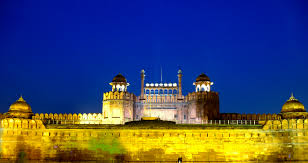
    Red fort was constructed when Shah Jahan decided to shift his capital from Agra to red Fort. The great Red ‘Bindi’ on Delhi’s construction started in 1639. And it took a whopping 8 years for it to complete. Initially its name was Qila-i-Mubarak and it was Delhi’s first fort. A magnificent one at that. It had 2 km long running walls whose main was to keep intruders out, but the mighty walls had to kneel down before the Sikhs and the British. The entire architecture is made from huge blocks of red sandstone. For the visitors of the town, there is a hour long light and music show every evening there which showcases the fort’s history. And since it is nearby chandni Chowk, you will be killing two birds with one stone, so go visit it as soon as you can.

    Qutub Minar:

    Qutub-Minar-at-Night-Images

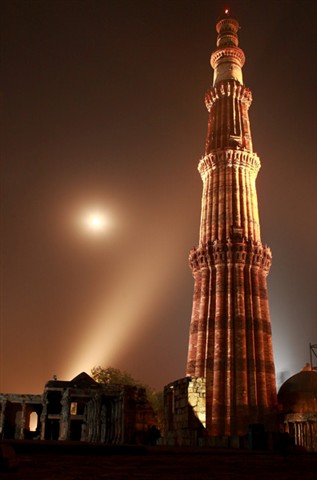
    The qutub Minar has a speculative history at best. It was constructed in 1206 by Qutub-ud-din Aibak  of the slave dynasty and is currently the tallest brick minaret in India.  Some say that it was constructed as a sign of victory of the slave dynasty over India . whereas others say that it was merely constructed for the people so that they can be called for prayer. The brick minaret has five storeys and is 72.5m tall. People often flog the monument to get a moment or two of peace amidst their extremely busy schedules.

    Jama Masjid:

    jama

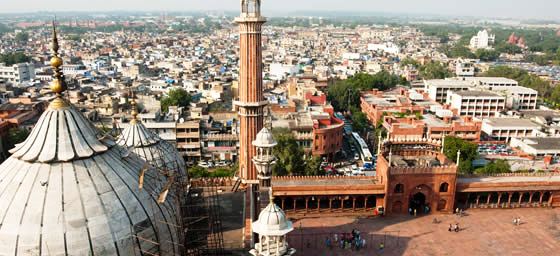
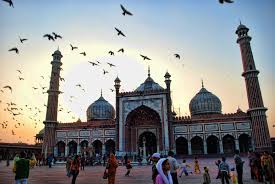
    The mausoleum constructed in the year 1656 in the heart of delhi is the largest mosque of the country. The lawns of the mosque can hold upto 25000 devotees at one time. Being in the vicinity of heavily crowded areas of chandni chowk and chawri bazaar, Jama Masjid has become quite a landmark in its own regard. On the different occasions of Eid, the muslim community often fills the mosque upto its brim. Before visiting it make shure that you cover your head, legs and bare hands.

    Thus this concludes our little round up of things, food and places that make Delhi what it is and quite possibly the reason as to why people love it and other metropolitan cities don’t. the country’s love towards is unfathomable and once you visit and stay there for a period of time, it colors you in its own ink. Forever.

  • What makes Delhi, Dilli – 2

    What makes Delhi, Dilli – 2

    In the last tour de Delhi, we hopped onto some of the binges of Delhi, how the love affair of the nation started with Delhi, the great repertoire of Architectural marvels in Delhi and a touched the tip of the iceberg as to what makes you melt with love, when you hear the word Delhi. Today, we explore more.

    The Bedmi and Nagori:

    be

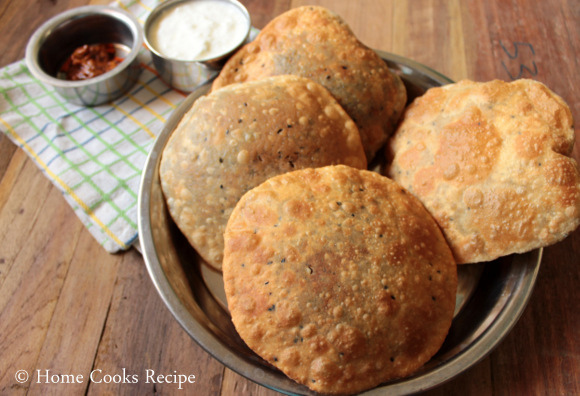
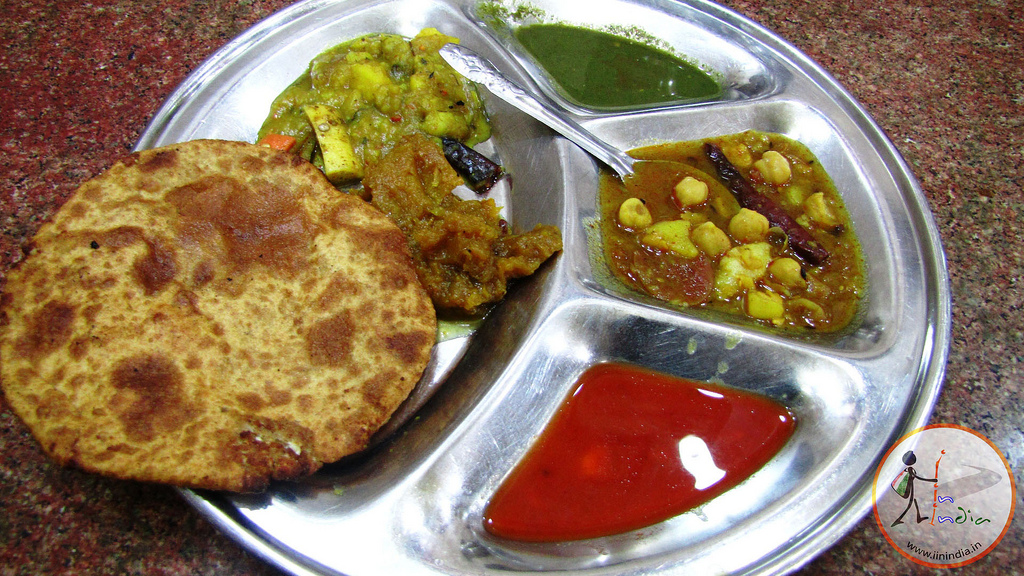
    One relatively less known delicacy but nevertheless enjoyed to its zenith by the  few loyal customers, the bedmi is a variety of Khasta Kachori smaller in size and more khasta by all means. This is what one could call the Kachori’s  younger cousin. Filled in the epicentre with Semolina, carom seeds and grated peas, this delicacy melts in your mouth. Served along with our beloved aloo ki sabzi and halwa, you might have an oddity treat and might as well try mixing the two side dishes (The halwa and the aloo ki sabzi). This queer combination will make you reminiscent of the sweet and sour soup gone terribly wrong, but it’s a taste nevertheless. The Nagori is the youngest of the brood of Kachoris and more closely resembles the papadi that you get at a chaat stall. This also served along with aloo ki sabzi and halwa will give you plentiful of energy (And not to mention a truckload of calories) to roam the rest of Chandni Chowk with me.

    The Punjabi Diaspora:

    bangla

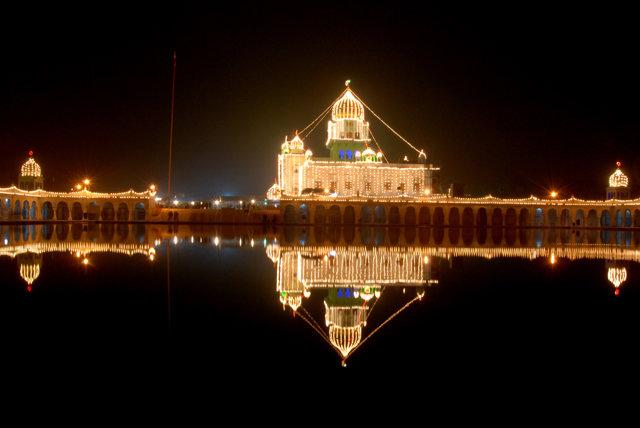
    Delhi is borderline Punjab. Geographically and literally. Once you enter Delhi, you’ll see an equal number of turbans as you will see bare heads. That because, there was a huge exodus from the Punjab region during Delhi’s early industrialization days and also during the Punjab conflict periods. Thus there’s a mini Punjab residing in Delhi. And with their amazing good humor and tantalizing cuisines come along the mighty and revered Gurudwaras. Gurudwaras are the worship place for Sikhs. Here Sikhs spend quite a lot of time serving other people as they faithfully believe in the quote “ Service to mankind is Service to God.” There are a plenty of Gurudwaras in and around Delhi and the best part of visiting them is the tasteful  ‘Langar’.  Langar is the lunch that is served in Gurudwaras to everyone who visits them. Large langars are organized where people sit on elongated jute mats on the floor and eat out of leaf plates. The langar, anywhere, in any gurudwara is something to be DEFINITELY had if you ever get the lucky chance to visit Delhi. Daal is a must in every Langar. Along with it Halwa, aloo ki sabzi and poori make your lunch hearty and eventful. There are two large Gurudwaras in Delhi to which people flog on from places far and beyond. These are The SeesGanj Sahib and The Bangla Sahib. Both are lakes of tranquillity and you will feel emancipated from all your worries and ill humoured feelings, once you enter the complex. Visit these if you are looking for serenity and a meal full of love and affection.

    Kareem’s and Khan Chacha:

    Chicken = Kareem’s.              Kareem’s = Chicken.

    Chicken = Khan Chacha.     Khan Chacha = Chicken.

                         Kareem’s = Chicken = Khan Chacha.


    tn_6284_khan1-1374305008

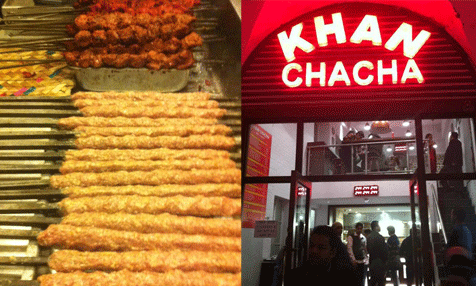
    One’s trip to Delhi will be wasteful, if he goes to Delhi but does not visit any of the above mentioned place. Both these places have been established in Delhi for the last 100 years or so and have been constantly providing the people of Delhi with an indispensable service ever since. The service of good food. Or more specifically, the service of Great Chicken. Khan Chacha and Kareem’s both are known for their Mughal style Chicken which they both offer in Chandni Chowk. The shop is tiny but the crowd of buyers: mammoth. Both of them provide exceptional Tandoori Chicken and Kebabs. Their extraordinary skills lie in providing with dry chicken variety. They specialize in Seekh kebab, Shammi kebab, mutton burra kebab, mutton stew and the rann (goat’s leg). These leave you with the exact smoky flavour that should be left after having a tandoori meal and also bestows upon you the feel of the grill.

    Connaught Place:

    cp-650_081714012910

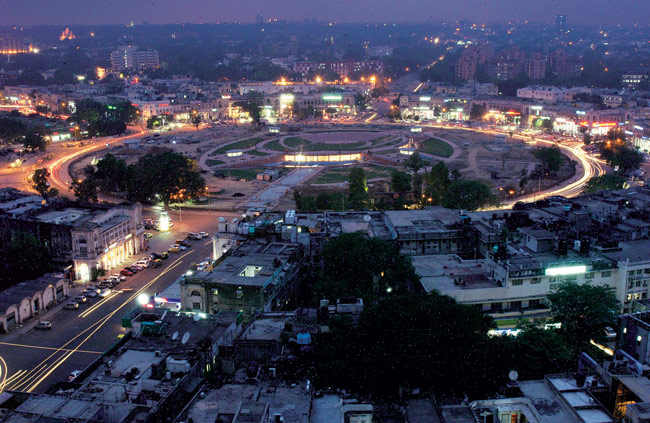
    What makes Delhi, Dilli you ask. One of the reasons of Delhi’s uniqueness is Connaught Place. Two British Built market places in circular shape around a gigantic park in between. Sounds confusing? Well, it is. But in earnest Connaught Place is one stop destination for all the top notch brands anywhere in the world. Until one hasn’t a shop in Connaught Place, he/she is too amateur to go global. A beautiful set of buildings all dressed up in white just like a catholic wife-to-be in circular shape mark the inner circle and the outer circle. A market place to take a stroll ith your friends or go bridal shopping; A day to enjoy Delhi in one glance and a hurried shopping session; everything happens at Connaught Place.

    ‘THE’ Palika Bazaar:

    pal

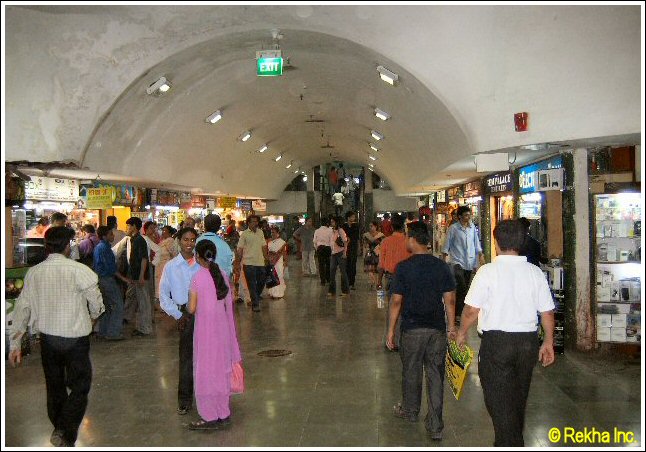
    Ever heard of an underground market place? Palika is one. No, it is not underground as in illegal, it is underground as in, it is literally 400 bunch of shops UNDER-the –GROUND. Remember how the Connought Place is circled around a gigantic park? Well this is a market place under that gigantic park. Palika is every women’s dream destination. Because you get the best of fashion labels at throw away prices. Loads of accessories, clothing, body tattoo shops throng the Palika. Men, don’t be disappointed. There’s something for you too, down there. Palika has men’s fashion outlets too, but more amazingly it has an entire bunch of shops that sell cheap China built Electronics gadgetry. So, next time you want a pen camera or a big grizzly transforming car, you can always go to the underground market.

    So, we made a tiny bit of progress in learning about Delhi. But don’t get tired yet, there’s more of Delhi to come.. Stay tuned.

  • What makes Delhi, Dilli…

    What makes Delhi, Dilli…

    A very long time ago when the heart of our nation was not famous for its countless rapes, an absent Government and Mufflerman; there was actually a city and a world inside that city that everybody loved. What made Delhi earn the jealousy of other metropolitan cities in the country, what is it that made Delhi stand shoulder to shoulder with Mumbai, the economic capital of India. Why is it that, people who have ever stayed in Delhi leave it with a heavy heart and tell everyone else that they can’t understand the emotions attached with the city if they have never ever lived in the city. Let’s find out!

    The Beginning of the Real Delhi:

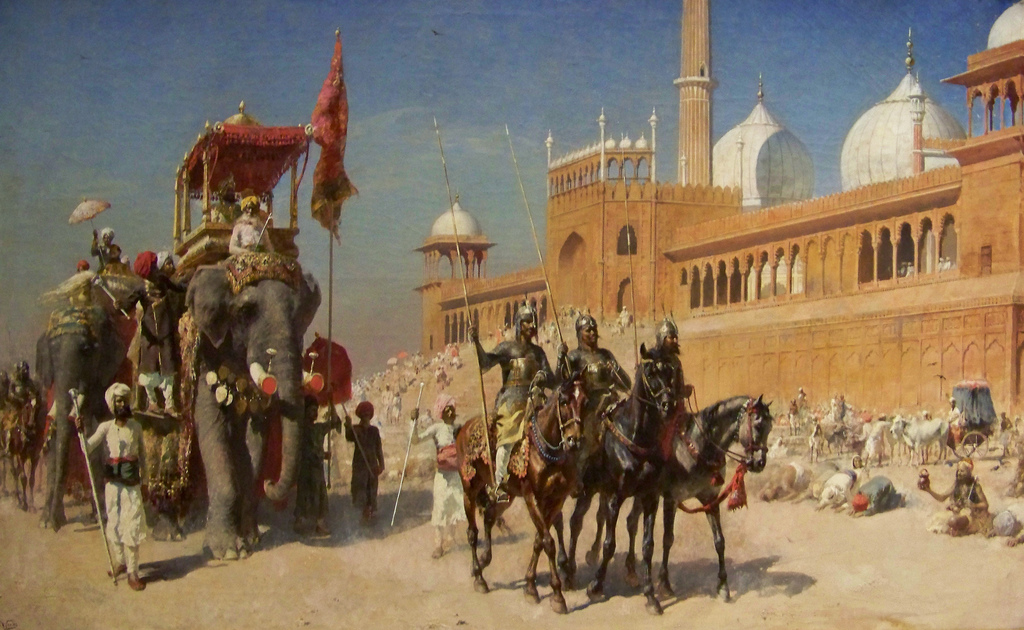
    Great_Mogul_And_His_Court_Returning_From_The_Great_Mosque_At_Delhi_India_-_Oil_Painting_by_American_Artist_Edwin_Lord_Weeks Now, the love for Delhi started long back when the Mughals transferred the Capital of India from Agra to Delhi. This is when the real on-ground transformations started taking place in Delhi. Before this move, people were as oblivious of Delhi as they were of any village in India. Firstly, with the onset of Mughals came along great Architectural Feats. For example Delhi boasts of the largest Brick Minaret in the world the Qutub Minar (well, it was built by Qutubbudin Aibek), it flaunts one of the largest mausoleums in India – The Jama Masjid, It carries reticence with its Old Fort. Also the Red Fort that instills in us a feeling of patriotism whenever we see it on our TV sets. All these Architectural marvels brought a Mughal charm to this city of ours and elevated it above its neighboring cities.

    Dilli and the finger licking tales:

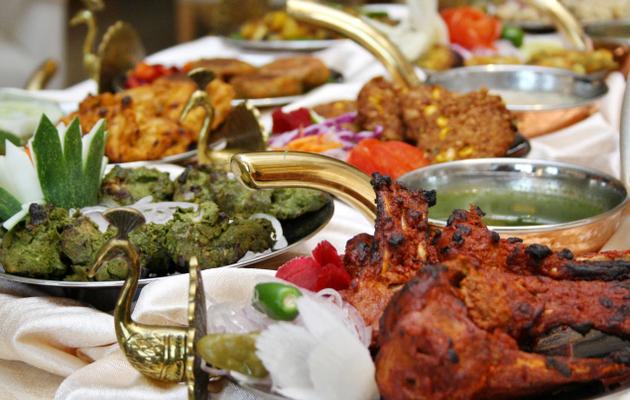
    AWADHI_FOOD_FESTIVA_898557g Along with the great architectural skill set of the Mughals arrived in Delhi their eternally pristine culinary taste. Their food was not just food, but Art on Stove. The Tandoori murg, The kadhai paneer, the Nihari,the  Paya, the Kachri Qeema, the Delhi-mein-world-famous-Mughlai Chicken, their biryani style and countless others set the tongues of the native Delhiites wagging. Not only did their cuisine establish itself in Delhi, it even grew there. More and more dishes were invented as an amalgamation of Delhi and Mughlai cuisines. This was a great culinary juxtaposition just waiting to happen. Seemed like this match was made in heaven. So, the Mughlai cuisine added one more feather to Delhi’s hat.

    Asli Delhi, Purani Dilli:

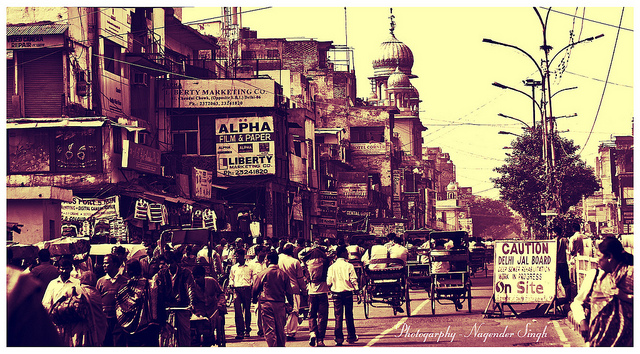
    7717061676_0ba4ab21a8_z Now, the heart of the Heart of the Nation. The Chandni Chowk and Chawri Bazaar area. For those new to the maps of  Delhi, these areas lie in the center of Delhi and still boast of historic architecture. These areas are famous for their super cramped streets, the always bustling crowd and nagging shopkeepers always trying to sell you substandard products. By the names in the list, all these seem to be pretty depressing by the levels of the national capital. But once you visit the place it seems just like your extended neighbourhood. It won’t seem as a market place to you, but a big great family  living in harmony yet tearing each other’s hair out. But there is a lot to watch out for in the Purani Dilli area. Since it is a crowded marketplace, pickpockets are always on the prowl. Also some shopkeepers tend to get too close for comfort levels in order to get their products sold. But every coin has two sides and prefer to see the loved one here please. Purani Dilli broken up and explained in pieces in the next points, because it ain’t so small that it can be contained in one measly point.

    The Paranthewaali gali:

    4950341851_7711ec9fd9_b Now, now, now. Every once in a while a moment comes in every person’s life that can’t be expressed even if you keep squealing with delight for a fortnight. For a foodie that moment would come when he enters the paraanthe waale gali. The lane where our Bollywood Star Akshay Kumar slaved and toiled for many years. The paraanthe waali gali is an even narrower lane than what already was a cramped main road of Chandni Chowk. There are a multitudes of shops there only selling paranthas. But mind you, these are not ordinary paranthas, these are paranthas made of Rabri, Paranthas made of bitter gourd and paranthas made of lady finger and all the odd vegetables and sweets you can ever garner. And these are not made on a pan or a stove, these aranthas are deep fried just like samosas and tikkis are. Your whole perception of paranthas changes after entering this foodie paradise. This narrow lane adds another dimension to your notion of parantha, by doing something with it that was unimaginable before this.

    The Japanese Samosa:

    7745361346_3ba6e884b2_z Well, to be honest, this is just sold in one shop in the entire Chandni chowk. But I swear to God, that you won’t have eaten anything like this before this. This samosa’s shape is more or less like regular samosas but the corn flour covering on the outside is striped. Thus the Japanese samosa is not wholly covered but partially revealing. The inner filling forms the crux of the whole dish. It is not spicy or filled with mashed potatoes for that matter. It is filled with a sweet mixture like that of a halwa. Thus changing the whole thought process around the samosa. By just keeping the name and shape intact, this exquisite dish retain the name value and the ingenuous sweet filling inside and the striped contours give it a modern twist. And thus, the Japanese Sammosa, The tour of the real Delhi has just begun. However, even the most brilliant of writers and esteemed authors would fail in describing the exact charisma and fascination of the city. Such complexly woven is the feel of it. I am just a young scribe who is trying to portray to you an image that tells what exactly Delhi is, if you have have never been there or miss the hell out of that angelic city of yours. To be continued…

  • The Madras you don’t see

    The Madras you don’t see

    Imagine.

    There’s a bitter war going on in North India. People belonging to different categories are fighting each other, there’s fist fighting, the local –made guns are drawn, abuses on everybody’s mouth. Visualize any Anurag Kashyap movie; that intense. Then suddenly, somebody in the far distance loudly shouts MADRAS!! And everybody, regardless of their caste, creed, religion drown out every single thought in their minds and replace it with just get one word:

    IDLI/DOSA.

    And after that single moment of silence, the fight resumes.

    The thought behind is, that people from all over the country, regardless of their scathing diversity unanimously see Madras cuisine in one single light – Idli/Dosa. There’s nothing beyond and there’s nothing beneath. And I was one of those notion holders too. Until I was transferred here.

    Guys! Let me just tell you. There’s a huge, eclectic taste world wrapped under the sheets of Madras. And only those who spend a teeny-tiny amount of time here can see through it. Today, I am gonna’ let you in, on this beautifully delicious world. Let’s po!!

    The Kaapi:

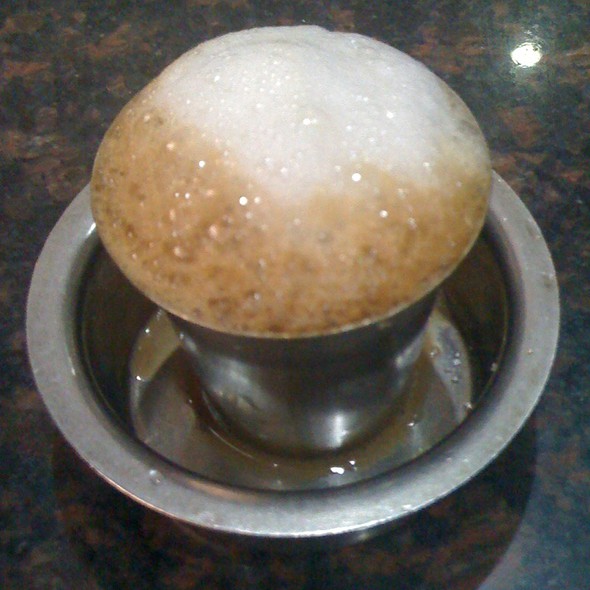
    People here are a little different from the rest of the country. And hey! I am not being rascist here. Almost the entire city is up and ready to go about their jobs at 6 in the morning(Even after taking baths daily). And to keep them fresh, the tea and coffee joints open up at 4 in the morning. The Kaapi is one treat on those shops. Kaapi, a fond name for the local coffee here. There’s no Bru and no Nescafe.There’s just Kumbakonam filter coffee.

    kaapi


    And no, Kumbakonam wasn’t that monster in Ramayana. Kumbakonam is a place in Tamil Nadu where lots of Coffee is grown. And the powder from those beans is pristine. One has to have its taste in his/her lifetime. Also the Kaapi is not to be drunk ordinarily, it is drunk from a ‘Katori’ or a saucer if you may.

    The Parotta:

    p main g


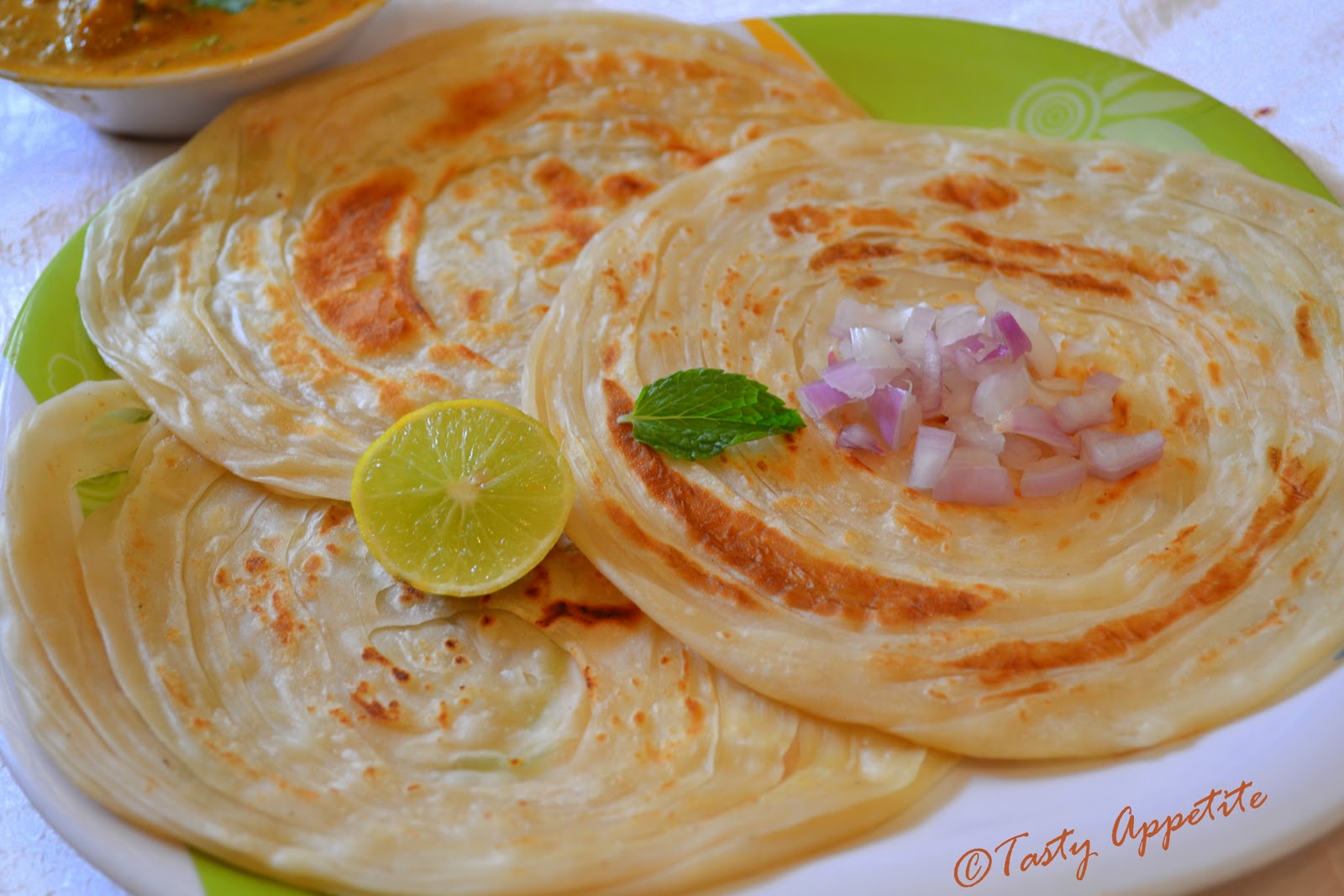
    Okay, Punjabis, hold on! This is not your morning Aloo ka desi ghee waala Parantha. There is no typing error in the heading. There is a thing called Par-o-tta. These are tiny lachcha paranthas made entirely from Maida and greased with oil. And I am guessing spices weren’t discovered till the time parotta was invented, because it doesn’t have any. Not one grain of salt or pepper or any other spice imaginable.

    The Kuruma:

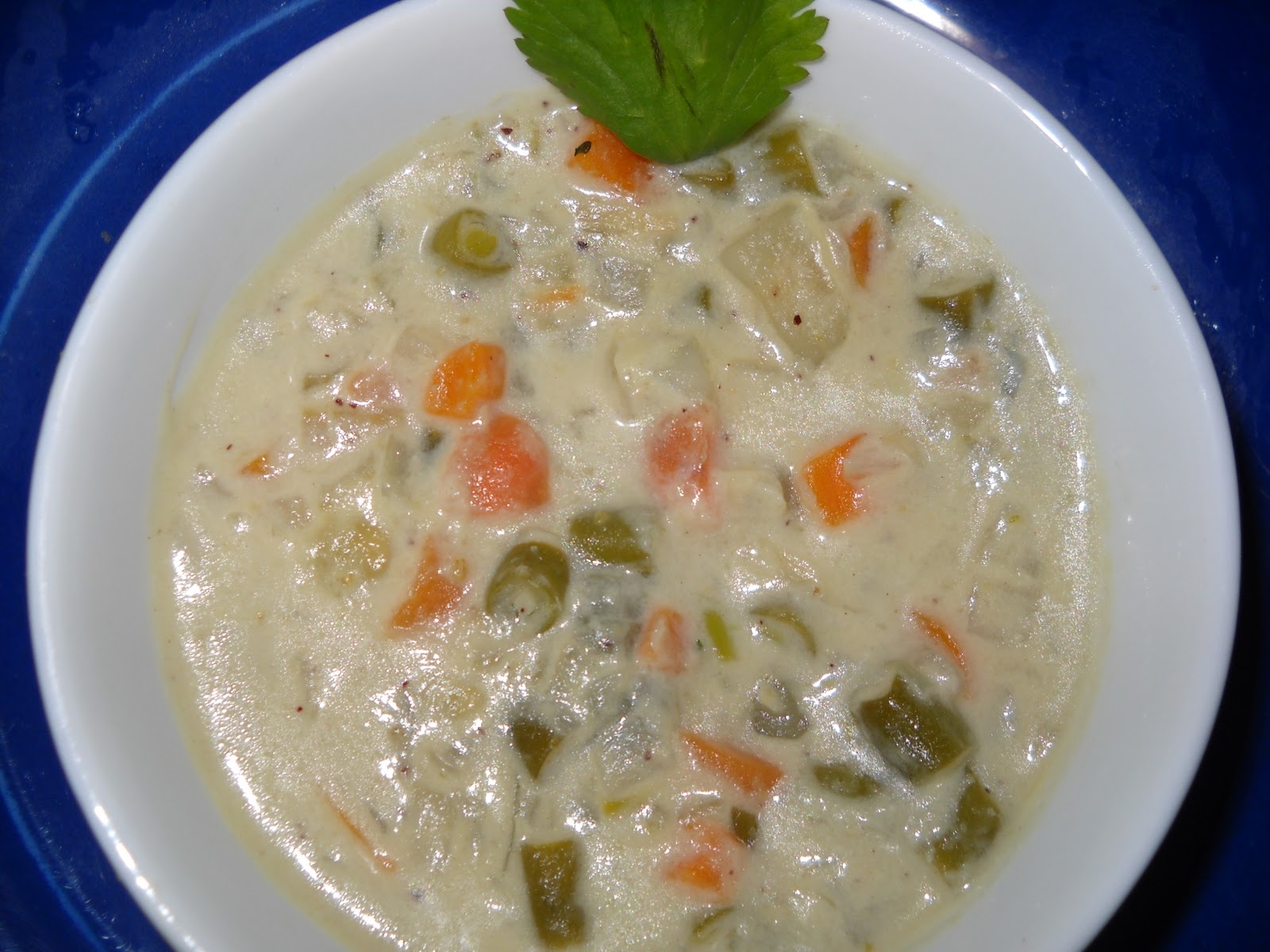
    Now, when I started writing this one(and the previous one), I came to realize that south Indian people don’t get too tensed over their food. They are happy having some water and spices with their parottas. Because that is what Kuruma is. Kuruma is mixed-vegetable with gravy. Apparently lots of it. The Kuruma is low on spices and tastes a bit bland, but I am a Punjabi, and anything less than a Bhut-Jholokia is bland for me. Take some vegetables cook them a little and put lots of water over it. Voila! Kuruma ready. BTW, it is tasty as hell and I can’t stay one single day without having it once at least.

    Picture 024


    The Saapad:

    thali


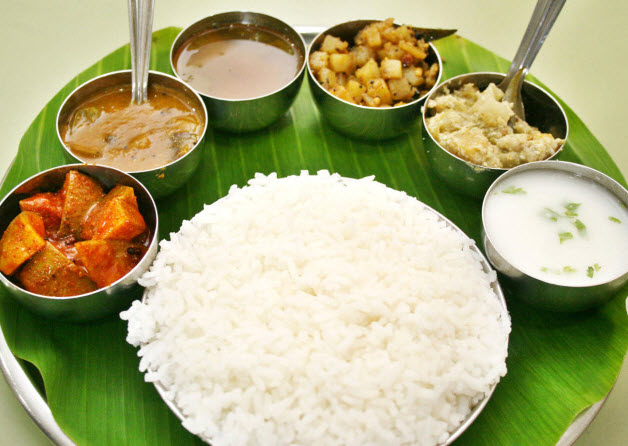
    Now, if you go to any low end restaurant and ask for idli-dosa-vada in the middle of the day, you’ll only come back hungry after hearing an ‘ILLA’. That because, in the lunchtime each and every low-end or budgeted eatery/restaurant prepares one and one thing only. The Saapad. You get it for a mere Rs. 40-Rs. 50 and return home with a stomach full upto the brim. First of all, for any new comer eating an entire Saapad plate alone is mission impossible. But by a slim chance he turns out to be as fat as me and can finish it alone, he won’t be able to even look at food for another 6 hours. Such plentiful is the Saapad. Saapad is nothing but lots of boiled Rice, served with millions of Gravy(s). You will have 4-5 saucers of different coloured waters surrounding your heap of rice. One would be Sambhar, another would be Rasam. Rest, even people who eat them don’t know what it is, but they all are tangy as anything.

    The appalam:

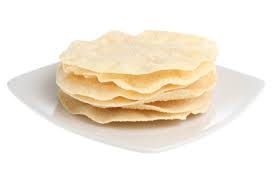
    Remember, those crispy Paapad like things you used to fry and eat in winter evenings, that is appalam here. And it is served along with Saapad to make your food go crisp.

    appalam


    The Podhi Dosa:

    Now as you all must be wondering, this is not some new kind of dosa, but our own Plain Dosa. Now, here comes the twist. Plain Dosa filled with Podhi masala. Podhi masala is just borderline spicy. You know, you’ll want to have more just to decide if it is spicy or not. And then in the second bite too, you’ll be just as confused and will be rushing for the third bite. This cycle goes on and makes the Podhi Dosa feature on our hidden treasures list.

    podi


    The ‘Dindigul’ Chicken Biriyani:

    biryani


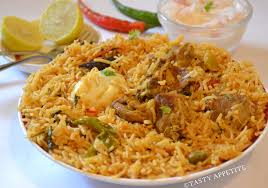
    The respected ‘BAAP’ of every dish here. Throw a stone in Madras and it is sure to land in a biryani shop. Such is the sprawling number of Biryani centres in Tamil Nadu. Dindigul is a place in Tamil Nadu and the origin of this masterful recipe. The unique taste of the biryani comes from a special Biryani powder which contains Fennel Seeds, Cinnamon Stick, Cardamom Pods, Star Anise and Cloves. This Biryani is served with a Brinjal vegetable. Now I know, when anybody hears brinjal, they can just think of barely digesting the Baigan ka bhartha, but trust me on this, the gravy is sumptuous. Also given along is onion Raita. This adds a little wetness to the biryani which otherwise is smeared with oil. And here it is where the most hackneyed of clichés comes to life. The Madrasis eating food with their hands. But I am not from South India and I love eating it with bare hands. Eating it that traditional way leaves a flavour to be savoured on your hands. Lick it, feel it.

    So now if you get a chance to go down south, don’t stick to the good old menu. Go out into the wild and try all of the above. Then you might have a glimpse of the real Chennai and not Madras.


  • My experiments with food (And truth too!)

    My experiments with food (And truth too!)

    India truly is one big piece of land. And on this big piece of land you encounter an eclectic mix of geographies  and topologies. And on these array of different  land designs, you come and meet very different people. People who practice different religions, wear very dissimilar clothes and practice varied traditions. And in all these differences lies one major difference, the different of cuisine. Just like we have over 700 gods and deities, I guess we must also have a similar number of different cuisines. But in all those differences they have one similarity. The trait of experimentation.

    No person who calls himself a religious foodie can never withstand a zeal for experimenting with food. Whether it is Milk and coca cola or Raajma with aloo bhujia; the tempt of experimenting is too great to be countered off. Hence we traipse to various parts of the country to look out for some experiments gone successful.

    The Chola Kulcha burger:

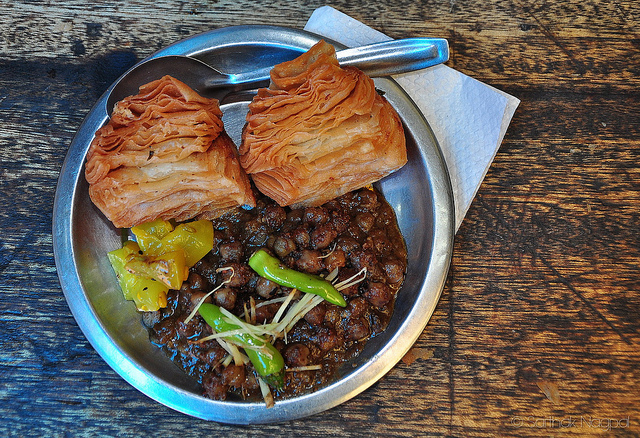
    Down the alleys and labyrinthine roads of a little known town in Punjab called Naabha, you will see gazillion of stalls selling this odd delicacy. Most people have had a taste of Chola-Kulcha in their life at some point or the other. This treat is in exactitude, same as the former, but a different form and slight delicious top ups give it the oomph factor that makes it feature in our list here.

    burger

    • Take two kulchas. Warm the boiled cholas and the kulchas.
    • Add a little bit of paneer and boiled mashed potatoes to the chola mix.
    • Now to the warm kulchas, add a dollop of butter and the samosa chutneys. The red one is mandatory, the chili sauce, add according to your taste. Keep the kulchas on the fry pan and add the chola mix in between the two kulchas. Voila! Your Chola Kulcha burger is ready to be savored.

    The Bhujia soup:

    Now, this treat had me baffled at first but left me craving for more later.

    There are places not so famous and not so hip in our country. Guduvanchery in Kancheepuram District (Chennai) is one such place. It is a sleepy village but with a huge local market. And in that market somewhere deep down, you may get lucky and get a chance to savor this orgasmic delight.

    soup

    The ingredients seem simple enough (Some namkeen + Some soup! Done!) But the trick lies not in the ingredients but the way those final ingredients are prepared. Neither the Bhujia is from Haldiram’s nor is the soup made from ready to eat packets. The Namkeens are homemade yet world class. For rookie foodies who try to differentiate between the two it will be in vain. But the oils from the namkeen and the spice mix in them scream homemade from top of their lungs. The namkeens are just not aloo bhujiia or khatta meetha. There’s a spectrum of namkeens of different sizes and different flavors available to choose from.

    But when in Home, do as the homies do. At your home, you can definitely use the knorr ready to eat and the aloo bhujia lying in the cup board waiting for guests to arrive at you home.

    The Samsiya:

    samosa

    Yes, the root of the words are the same but these are slightly different foods to be had.  While the samosa is filled with aloo mix, the samsiya is filled with fried onions. And in front of the samsiya, samosas seem gigantic. So, there should be no doubt if you find tiny samosas being sold 4 for Rs. 10 outside the Chennai railway Station. There’s one more wild twist in the tale of samsiya. Along with samsiya, you will never see your traditional imli and chili chutneys. The samsiya is served along with Coconut chutney. Just like idli is, just like vada and dosa are. This gives a good-humored  taste to the dish. Not spicy enough, not tangy enough but yes unique in its own sense.

    The Chola Pani puri:

    poori

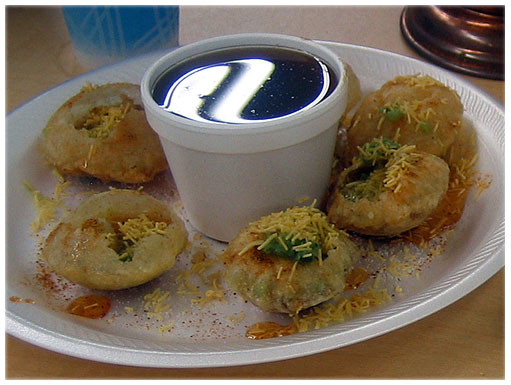
    All of you might have eaten our favorite street food: The pani puri. But you are in for a surprise when you visit a chat stall anywhere south of Maharashtra. While visiting a chaat stall, forget that you have ever eaten pani-puri before. This will be a whole new dish you will taste. Sure, the puri is the same shape as in our north and everywhere but everything else is different. The filling in the puri is not mashed potatoes but hot boiled mattar. You know the green balls that you threw out of your rice as kids, that one.  Also, the filling is not dry, there is thickened water along with the hot mattar. Next, the tangy paani which was as delicious as it was healthy. Want a tip? Forget that paani. Here the paani is devoid of any and every bit of zippy taste that you went to the chaat stalls for. The paani is hot (again) and very straight in taste. Just imagine yourself having a mild soup for the paani. And thus our beloved paani puri becomes, some hot dinner dish making you feel fuller instead of easing up your stomach.

    The vodka Paani puri:

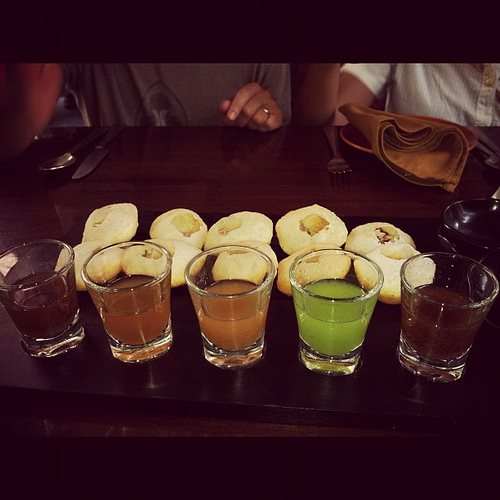
    Are all the liquor fans up yet?  *Sees left to right*  Great!  Now, this experiment is what you expect by its name.  Instead of paani you get vodka shots filled gol gappas.  Now no need for another appetizer huh? This is only offered at ‘Punjabi by nature’, a restaurant chain in the National capital and surrounding areas. The vodkas all come in different flavours, but I am sure you will not want to try out bubble gum flavored vodka with your puri.

    vodka

    So, from all around this great country of ours, we brought you some of the quirky, queer yet magnificently delectable experiments to tease you taste buds with. Try out all or some of these if you are in the neighbourhood, and get your tongue out of its routine. And do write some of your own experiments down in the comments section. Till our next journey around India, keep tasting.