Category: Religion

  • Yoga for Everyone!!

    Yoga for Everyone!!

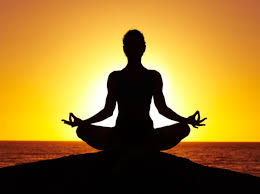
    Yoga, a thought itself creates a grotesque, twisted pose in our mind, but do you people know what actually yoga is apart from these senseless thoughts. Yoga is much more than these weird poses. Yoga has derived its name from the word yoking together, which means yoking of body and mind. It is a physical and mental exercise which aims to present our body and mind to the new world. It has originated since from the time of pre-Vedic traditions and now it has become a part of this Western world in the form of spiritual practices. This is often referred to as Hatha Yoga. Yoga described human as a combination of three bodies along with the five sheets which controls the energy flowing through the channels.
    yoga2

    People usually considered yoga as the regimented method for accomplishing a goal. It is one of the well-organized techniques to control the mental and physical status of our body. It helps in the expansion of awareness and consciousness in our mind.  It is controlled course to omniscience. It is a practice which helps us to enter into other bodies and simultaneously generate numerous souls along with the attainment of supernatural powers.

    A yoga practice varies their meaning with the different types of religions. Every religion has its own beliefs like in Jainism it is known as the most spiritual practice which helps in self-realisation, attainment of salvation and provides complete freedom to our soul. It is a practice which keeps us apart from attachments and provides purity to our soul. It is broadly classified into Shukla Dhyana, Dharmya Dhyana and Raudra Dhyana. When we move on to Buddhism it is considered as the form of meditation which increases our concentrating powers and provide supernatural spirits in us. They regarded Yoga as a path leading to Nirvana and enlightenment.

    yoga1

    Yoga carries a various different meaning like combination, connection, contact, application, method etc. For example chakra-yoga means locating the position of the thigh, guna-yoga has a sense of contacting with the cord, pum-yoga is for showing relations with a person, Bhakti-yoga is a path of devotion, Raja-yoga is a sense of controlling our minds etc. It is a complete way of living life which balances our body and rejuvenates each and every nerve of our mind.

    Yoga is like a package which offers stress relief, weight loss, all-round fitness of our body, glowing skin like benefits to us. We misunderstood yoga and keep it limited to its poses, but in reality it is immensely involved in bringing our mind, body and breath together. Here are some benefits that yoga involves:

    Fitness: As it is a known fact that health is wealth. You are truly fit and healthy when you are emotionally and mentally balanced. Health is a combination of expressing how enthusiastic and loving you are and here comes the major role of yoga in providing all-round fitness to our body with the help of meditation, several different postures and pranayama. It provides a hidden healing power to our mind and soul. It keeps our body away from any heart diseases.

     Boost Immunity: Certain researchers found that there are various yoga practices that helps in boosting our immunity towards any disease. Yoga practices tend to change some gene expression when you are on the mat itself. When you breathe well, move well then the entire organ functions well. A small irregularity in our mind affects the overall functioning of our body and makes our body restless, so in such cases, yoga poses helps in strengthening our muscles and releasing stress from the mind. It provides immunity to asthma and relieve all mental stress.
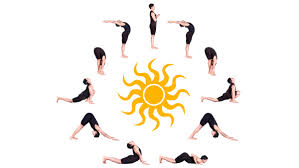
    yoga3

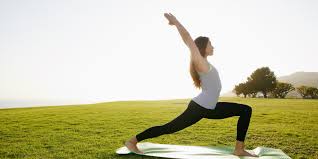
    Provide flexibility:  Include yoga in your daily routine and make your body more flexible and strong. It stretches each and every part of your muscles and tone them. It helps in improving our postures while we stand, sleep, walk or sit. In turn, it helps in removing our body pain due to incorrect postures.  It helps in twisting our body into various shapes and find inner peace.

    Some of the best yoga poses are

    Malasana: It is also known as Yoga Squat which helps in relieving backache and stretches our thigh and calves. This is just a squatting position with heels in, toes out and hands are in a prayer position in front of our chest.
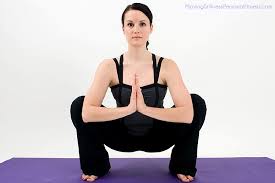
    malasana

    Camel Pose: this pose helps in improving our lungs capacity and stimulates thyroid and pineal glands. In this you have to stand up on your knees, keeping your hips apart. Your hands must rest on the lower back or on heels.
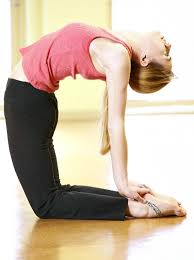
    camel

    Nostril Breathing:  this pose helps in maintaining the proper functioning of our respiratory system. In this you must be seated in a comfortable position to provide balance in both the branches of the nervous system. It helps in relieving stress and worries and refreshes our lymphatic system.

    So Yoga is a way of life and it aims to support you on that journey in an open environment…!!
  • Karma – A Buddhist

    Karma – A Buddhist

    Gautam Buddha was born in a the royal family of Lumbini. Lumbini is now situated in Nepal. In the year 563 BC, Buddha decided to renounce all kinds of worldly pleasures for he believed that real happiness lay somewhere else. So he read the teachings and books from religions to find the true meaning of life.

    300 million people across the world are followers of Buddhism. The word Buddhism comes from ‘buddhi’ which literally means ‘to awaken’. To many, Buddhism goes beyond religion and more than a religion it is a way of life. Buddhism was founded by Buddha Shakyamuni. He taught and lived in India around two thousand years ago. Since then, many people around the globe have followed the spiritual path Shakyamuni had shown.  Even today, the Buddhist beliefs of living in peace, loving, kindness, wisdom are just as relevant as they were in those ancient times. Buddha had said that confused and disturbed states of mind were the sole reason behind all of our problems and all the happiness that arises from a positive and peaceful state of mind.  Buddhism tells of methods for gradually overcoming anger, ignorance, jealousy and develop love, compassion and wisdom within us. The last peace that each one of us seeks, that absolute happiness can be experienced on this path. The best thing is about Buddhist beliefs are that they work for everyone.

    Karma is a bitch. They all say that. We often hear clichéd lines about Karma. Buddhism believes in Karma too. How real is the entire concept? How does Buddhism perceive Karma is something really interesting to know about?

    ‘There was guy named Michael Mastromarino. Who became a multi-millionaire by stealing organ tissues, bones, and other body parts from more than 1200 corpses. About 10,000 people received transplants from corpses, some of which were diseased with AIDS and Cancer.

    Eventually, Michael died of Liver cancer that spread to his bones.’

    Buddhism also talks about the mind being a totally unique and separate entity from other parts of the body. It is neither physical nor a by-product of physical processes. When a body dies and disintegrates, the mind does not cease to be. The mind that dissolves at death is a superficial mind but it disintegrates into another level of consciousness which the subtle mind and this mind has neither a beginning nor an end. This mind completely transforms into the pure mind of Buddha.

    Now how is Karma related to our mind? Karma is every action that we perform or everything that we do. In fact, every karma has a potential to give rise to its own repercussions. Imagine your mind to be a field and your actions are the seeds that you sow in that field. Maybe this is where the famous saying ‘You reap what you sow’ comes from. You sow positive seeds and the fruits would be positive and you sow negative seeds, the future would be filled with suffering.  Every action that is performed by us leaves an imprint and that action eventually leads to its own effect. The ‘law of karma’ as people call it, is simple. You will be happy if you are virtuous. You will suffer if you are not. Buddhist morality is totally based on this law.

    ‘Bardo’ is that intermediate stage that your mind enters the moment you die. This is a dream like phase. And in this phase, one experiences various visions that the subtle mind activates during the time of death. These visions could be beautiful or they could be terrifying; it all depends on the seeds you had sown.  When these seeds ripen completely, we are given the choice of rebirth. But here is something really interesting to know- as samsaric beings, we cannot choose our rebirth and its totally depends on our karma. If good karma ripens, you will be born as a human or a god, but if bad karma does, you might be born in the lower states of lives such as animals and birds. Basically, the winds of karma blow us into our next life and we land up being reborn in the higher or the lower states of life.

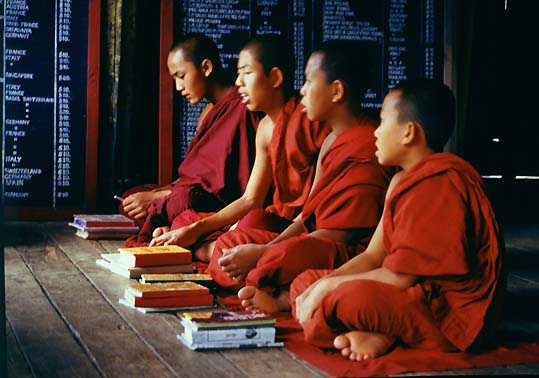
    buddhist_monks_school

    ‘Samsara’ is a Sanskrit word which means the cyclic existence is the uninterrupted cycle of death and rebirth. It’s more like a Ferris wheel at the fair. It goes up to the upper 3 realms and then down to the lower 3 realms. Or it could be compared to a pendulum, which goes to and fro, never stopping at one place for more than a few seconds. As long as you sit on this Ferris wheel, you shall experience a cycle of dissatisfaction and suffering, and the Ferris wheel doesn’t even stop when you die. Lasting happiness can only be experienced when you let go of this Ferris wheel and let your subtle mind pass into that “enlightened nothingness”.


  • Ganesh chaturthi celebrations in India

    Ganesh chaturthi celebrations in India

    Ganesh Chaturdhi Festival
    Ganesh Chaturdhi Festival

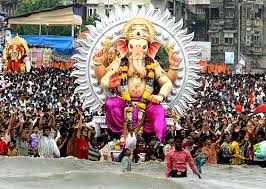
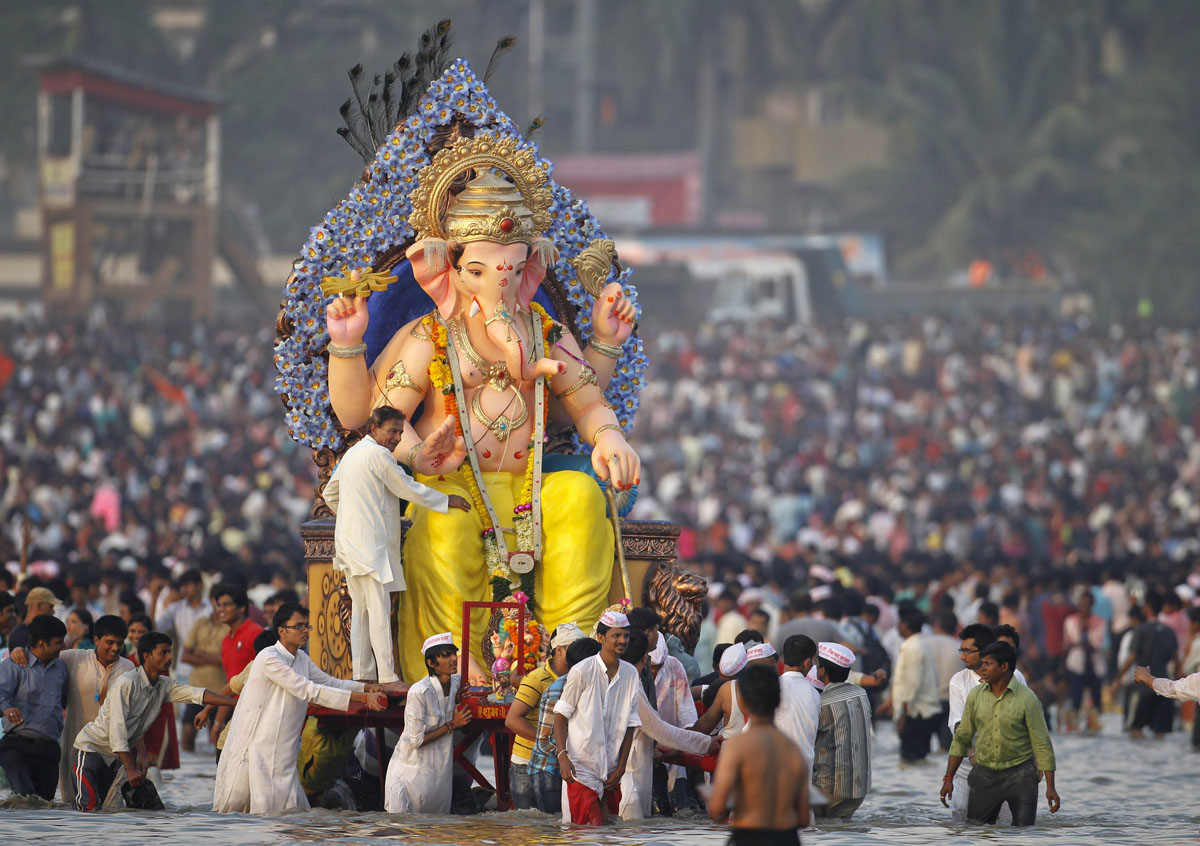
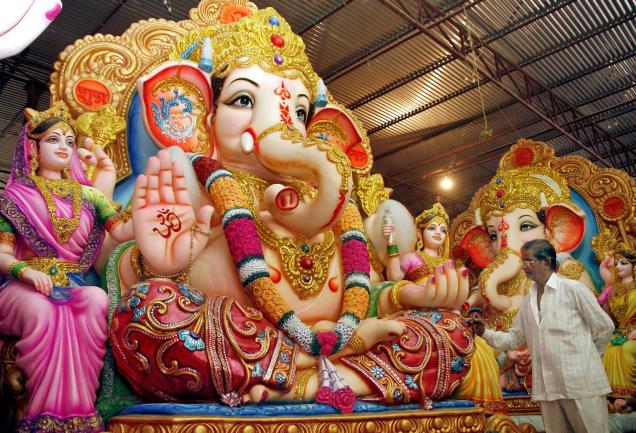
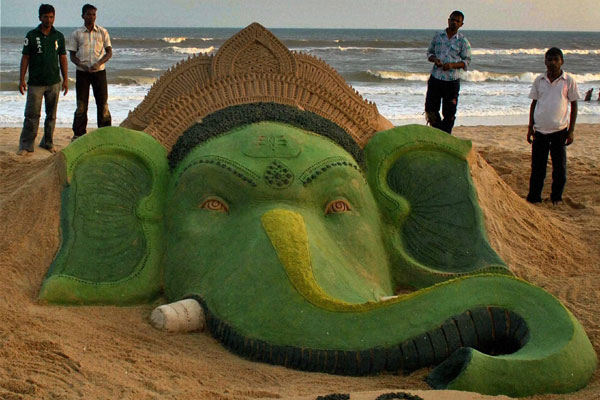
    Ganesha Chaturthi which is also known as Vinayaka Chavithi is celebrated by Hindu’s around the world.It is celebrated as the birthday of Lord Ganesha.This festival is generally celebrated in bhadra pada masa i.e., between mid August to mid September.It is celebrated with great devotion and with peace of mind.It is one of the grand festival celebrated in almost every part of the country.On this occasion, each and everyone place a clay model of Lord Ganesha in their homes and worship for seven to ten days with great devotion.The preparation of these Idols get started from 2 to 3 months prior to the day of Ganesh Chaturthi.The size of these idols may vary from 3/4th of an inch to 25 feet and even more.

    History:

    History
    History

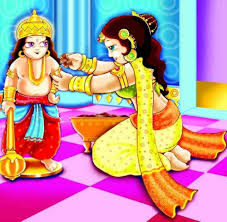
    According to Hindu stories ,Lord Ganesha is the son of Lord Siva and Parvati.There is a saying that Goddess parvathi has created Lord Ganesha with the sandal paste that she used for bath and created a figure and breathed life into it.Then she said to that little boy to stand guarding at the door till she completes her bath.At that time, Lord Shiva who had gone out earlier returns back and as the little boy doesn’t know Lord Siva, he did not allowed him.Then Lord Siva got extreme anger and told his followers to teach a lesson to the little boy.But being born to Parvati, he is very powerful, thus defeated Shiva’s followers and declared that nobody was allowed to enter while his mother was bathing.Thus Lord Siva got even more anger and cut the head of the child.Parvati after seeing this was furious towards Siva.Then Lord Siva promised that her son will be alive again.In search of that ,devas could not find the head of a dead person facing north,But they founded the head of a dead elephant facing north.They brought the head of the elephant and Lord Siva fixed it on the child’s body and brought him back to life.Then Lord Siva declared that from this day this boy would be called as Ganesha.

    Ganesha Chaturthi celebrations in Maharashtra:


    Ganesh Chaturthi celebrations in maharastra
    Ganesh Chaturthi celebrations in maharastra

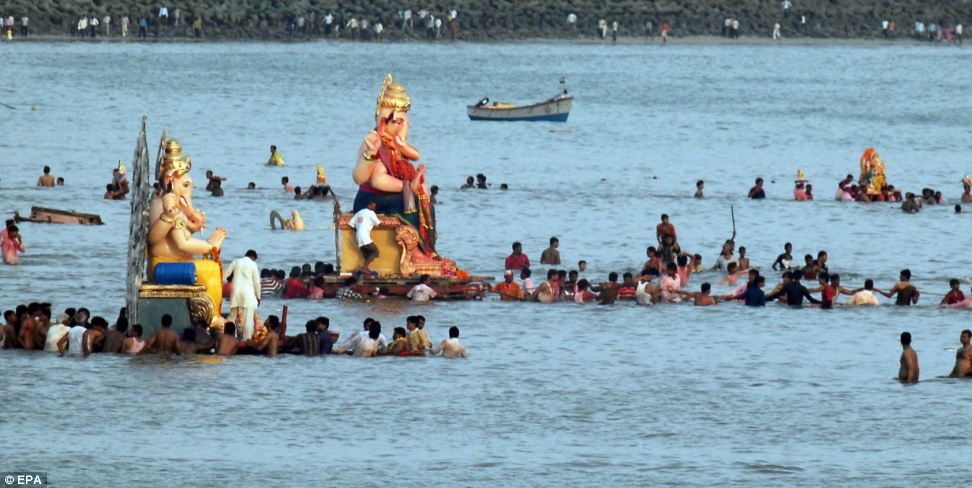
    In Maharashtra almost every Hindu family will establish their own clay statue in their homes and worship with great devotion.According to the people of Maharashtra ,their domestic celebrations come to an end after the completion of 1 day or 3 days or 5 days or 7 days or even 11 days.At the end of any of these days, people take the idol and immerse in large water bodies like rivers or sea.But due to some environmental concerns ,large number of families are immersing their statue or idol in a bucket of water at home itself.Later the clay from these statues are used for gardening.

    Ganesha Chaturthi celebrations in Andhra Pradesh:

    Ganesh-Chathurthi-celebrations-in-andhrapradesh
    Ganesh-Chathurthi-celebrations-in-andhrapradesh

    In Andhra Pradesh, clay Ganesha or Matti Vinayaka is mainly worshiped in each and every Hindu house.Few people worship Ganesha that is made out of Turmeric and few worship Plaster of Paris Ganesha.The festival celebrations will continue for five to ten days depending upon the family traditions.People believe that praying Lord Ganesha will fulfill their desires and wishes.He also blesses us by removing all the obstacles in our life.

    Ganesha Chaturthi celebrations in Tamil Nadu:

    Ganesh-Chathurthi-celebrations-in-tamil nadu
    Ganesh-Chathurthi-celebrations-in-tamil nadu

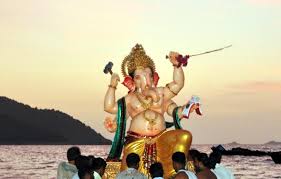
    Tamil Nadu celebrates Ganesha Chaturthi very grandly.This is also known as Vinayaka Chavathi in Tamil Nadu.This festival falls after the new moon day in the month of aavani.In Tamil Nadu, the festival is celebrated in all homes by worshiping the idol of Lord Ganesha that is made out of clay.The idol of Lord Ganesha is decorated with flowers and garland.Few dishes like Modak, ladoo and other dishes are offered to Lord Ganesha.In Tamil Nadu we can find Lord Ganesha idols placed in public places during the period of festive days.The height of these idols will not exceed 13 feet and they are made out of paper and clay as Plaster of Paris is banned by the State Government.Some of the idols are made out of coconuts, fruits, rudraksha and other organic materials.After worshiping for five to ten days they are immersed in Bay of Bengal.The police department make special arrangements for celebrating the festival peacefully with great joy.

    Ganesha Chaturthi celebrations in Kerala:

    Ganesh-Chathurthi-celebrations-in-kerala
    Ganesh-Chathurthi-celebrations-in-kerala

    In Kerala Ganesh Chaturthi is known as Vinayaka Chaturthi or Lamboodhara Piranalu.This festival generally falls in the month of chingam.During the festive days, the temples  have huge crowd and people worship idols of Ganesha by offering nivedyam.Cultural programs are held at different localities and elephants are worshiped throughout Kerala.In Kerala ,on the day of visarjanam the large possessions the tall statues of Lord Ganesha are taken to the nearby water bodies and are immersed in them.The streets are fully decorated with flowers, lighting and rangolis.

    Ganesh Chaturthi celebrations in Goa:

    Ganesh-Chathurthi-celebrations-in-goa
    Ganesh-Chathurthi-celebrations-in-goa

    Ganesh Chaturthi is one of the very important festival that is being celebrated by the Hindus in Goa.The festival preparations begin a month before and the actual festival is on the month of Bhadrapada masa.On this day ,women worship goddess Gouri with lord Siva.Festive celebrations include Pujas, Arati, feasts and many more.According to the tradition of Goa, many classical music instruments are played on the festive day.In most of the places festival is celebrated for two days and on the second day the idols are immersed either in the sea,rivers or tanks and wells.

  • Culture of Nepal

    Culture of Nepal

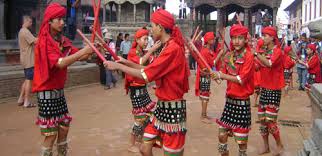
    Nepal has a unique culture which  has evolved since many years.It’s culture is greatly influenced by religion, architecture, music and literature.In Nepal, we can find various temples, churches, monasteries and many other religious buildings.There are many ethic groups, tribal and social groups in Nepal.Different type of festivals and practices are seen in Nepal.Nepal got its name from the Kathmandu valley as the founder of the  nation established a capital there in eighteenth century itself.

    Culture of Nepal
    Culture of Nepal

    Geography:

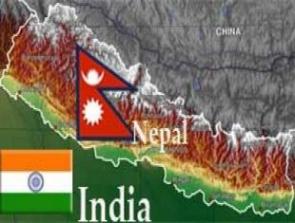
    The country is spread over an area of 381,200 square kilometers.It is surrounded by three Indian states on south, west and east whereas the north border is shared by Tibet.Most of the Himalayan mountain ranges are in Nepal, including the Mt.Everest.The country is divided into three horizontal zones which are: the high mountains, the lush central hills, and the flat region with low water levels in the south.The trade factor has influenced the ethnic groups.There are more than thirty six ethnic groups and over fifty languages in Nepal.According to 1977 ,the population of Nepal is nearly 22.6 million.As the birth rate is gradually increasing in rural areas, people are migrated  to cities.This lead to over population in Kathmandu, at present it is holding more than seven Lakh people.

    Geography of Nepal
    Geography of Nepal

    Ethnic relations:

    Nepal consists of many cultural, racial, linguistic groups, that are mainly divided into three categories.Indo Napelese, Tibeto Nepalese and Indigenous Nepalese.Since centuries, they were practicing Hinduism and people speak Indo-Aryan languages.Most of these people settle in lower hills and river valleys.The second type is Tibeto Nepalese who have generally Mongolian features and they speak Tibeto Burmese languages.These people reside in hills and mountain areas.Different groups under Tibeto Nepalese practice Buddhism, Hinduism.Later these ethnic groups fell into single caste hierarchy.The first and the top most caste is Hindus, second is Matwalis who are generally alcohol drinking people.Bottom are the untouchable Hindu castes.Higher caste people buy lands and enjoy political and economic privileges whereas lower caste people are far from these opportunities.Untouchable castes were not permitted to own land.We know that the caste system is illegal, but it has not disappeared in many places.Most of the posts like civil services, army and police were selected by the higher caste people only.

    Different Ethnic relations of Nepal
    Different Ethnic relations of Nepal

     Food:

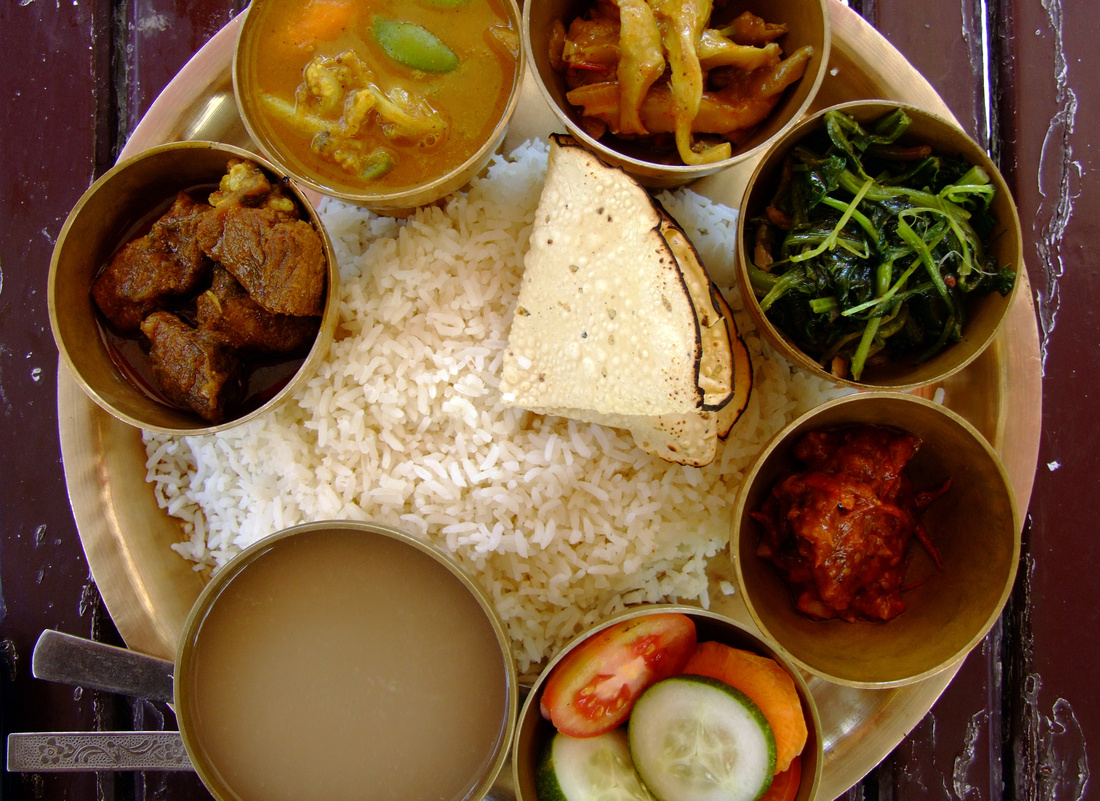
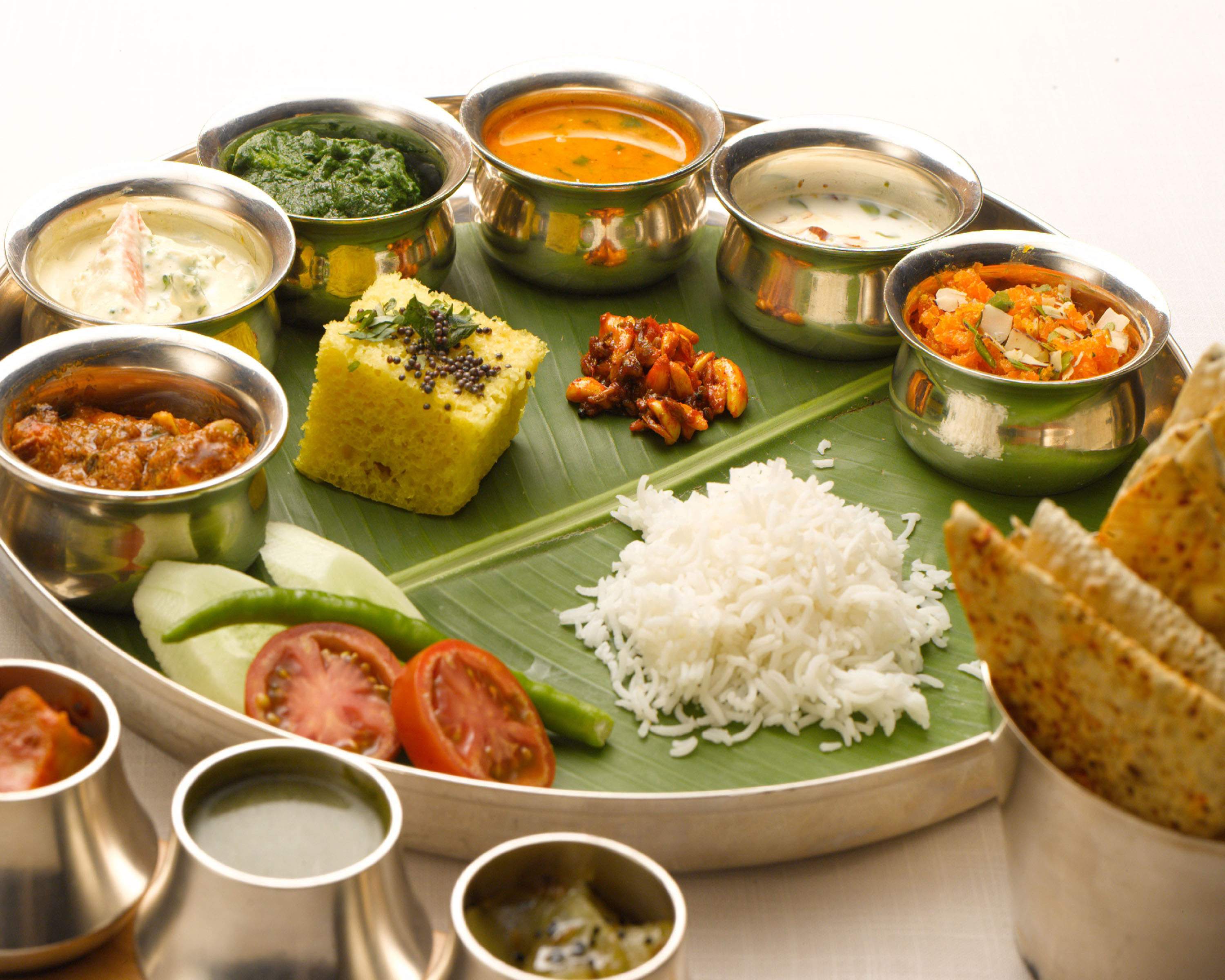
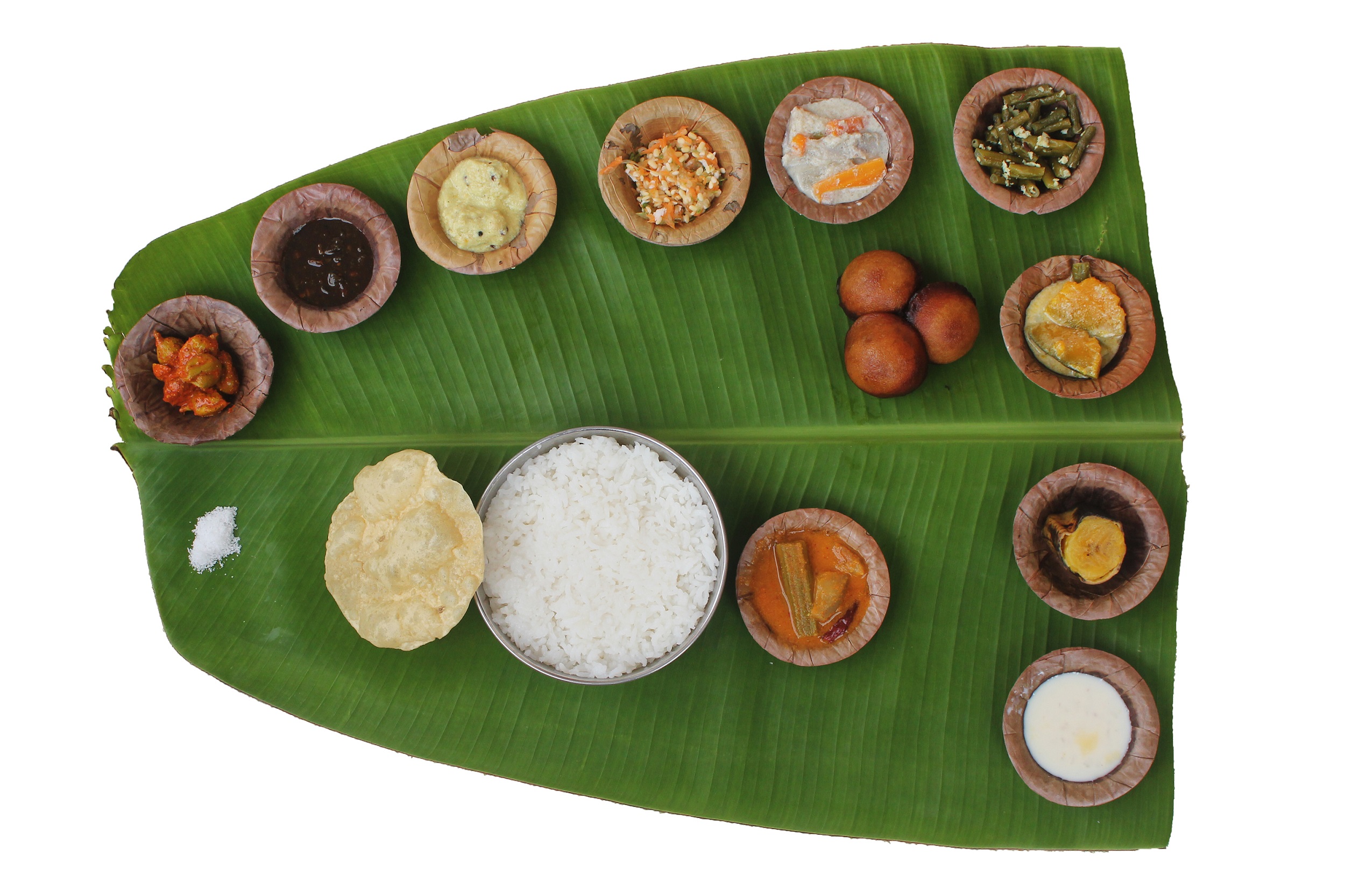
    Nepalese enjoy different food items that are generally hot, spicy and nutritious.Newari and Thakali cuisines are the original taste of Nepal.Generally Nepalese cooking style is influenced by both Indian cuisine and Tibetan cuisine.Nepalese staple food is daal bhat tarkari.Most of the tourists who visit Nepal like to have hot and spicy meat curries that are cooked in their style.The meal includes different varieties of food items and also pickle that is made out of fruits or vegetables are served.Most families eat from individual plates while seated on the floor.It is more common to eat food with hands rather than utensils.In Nepal, high caste people only eat vegetarian and do not take alcohol whereas other caste people may drink alcohol, eat pork and even beef.People of higher caste do not show interest to eat food that is prepared by strangers.

    Food of Nepal
    Food of Nepal

    Industries:

    In Nepal there was no industrial development till the middle of the twentieth century.The industrial development is accomplished with the help of countries like India, China and Soviet Union.With the abundant availability of minerals, industrial development is made possible in Nepal.The major industries focused on was of  jute, tea and sugar.Manufacturing of brick, tiles, construction materials, paper making, vegetable oil extraction, sugar refining and many more industries are established in Nepal.

    Industrial textile factory
    Industrial textile factory

    Trade:

    The trade of Nepal mostly depends on the neighboring countries -India and China.Major of the goods are imported from India.Goods transportation is limited by the terrain.Nepal import gold, machinery and other equipment.In Nepal although roads and modern transport are available, much of the country goods are transported by porters and pack animals.Generally this type of transport is used where landslides and flooding is more.Not only imports ,but Nepal is also famous for exports of goods like carpets, clothing, leather goods, jute, and grain.Apart from these, Nepal is famous for tourism which is another primary export.

    Nepal trade with the neighboring countries
    Nepal trade with the neighboring countries

    Medicine and health care:

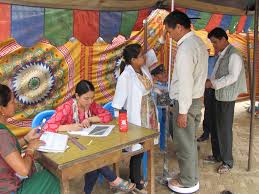
    Nepal suffers from malnutrition, infant mortality,respiratory and intestinal diseases.In Nepal, average expectation of life span is fifty seven years.Being very poor , unhygienic and lack of health care, the hospitals are available only in urban areas.But these hospitals are also poorly equipped and unhygienic.Few medicines are also not available in rural areas.There are few western hospitals, but the poor cannot afford them because of high costs.People still believe in religious practitioners and they approach them if they have any health problems.Hence, few people look at Ayurvedic medicines.As they think that illness is caused due to the imbalance of body hormones, they try to balance them using proper diet.Recently malaria is eradicated in Nepal.So at present, health development is concentrated on immunization, birth control, and basic medical care.

    Health care services in Nepal
    Health care services in Nepal
  • Hinduism and Food!
    Hinduism and Food!

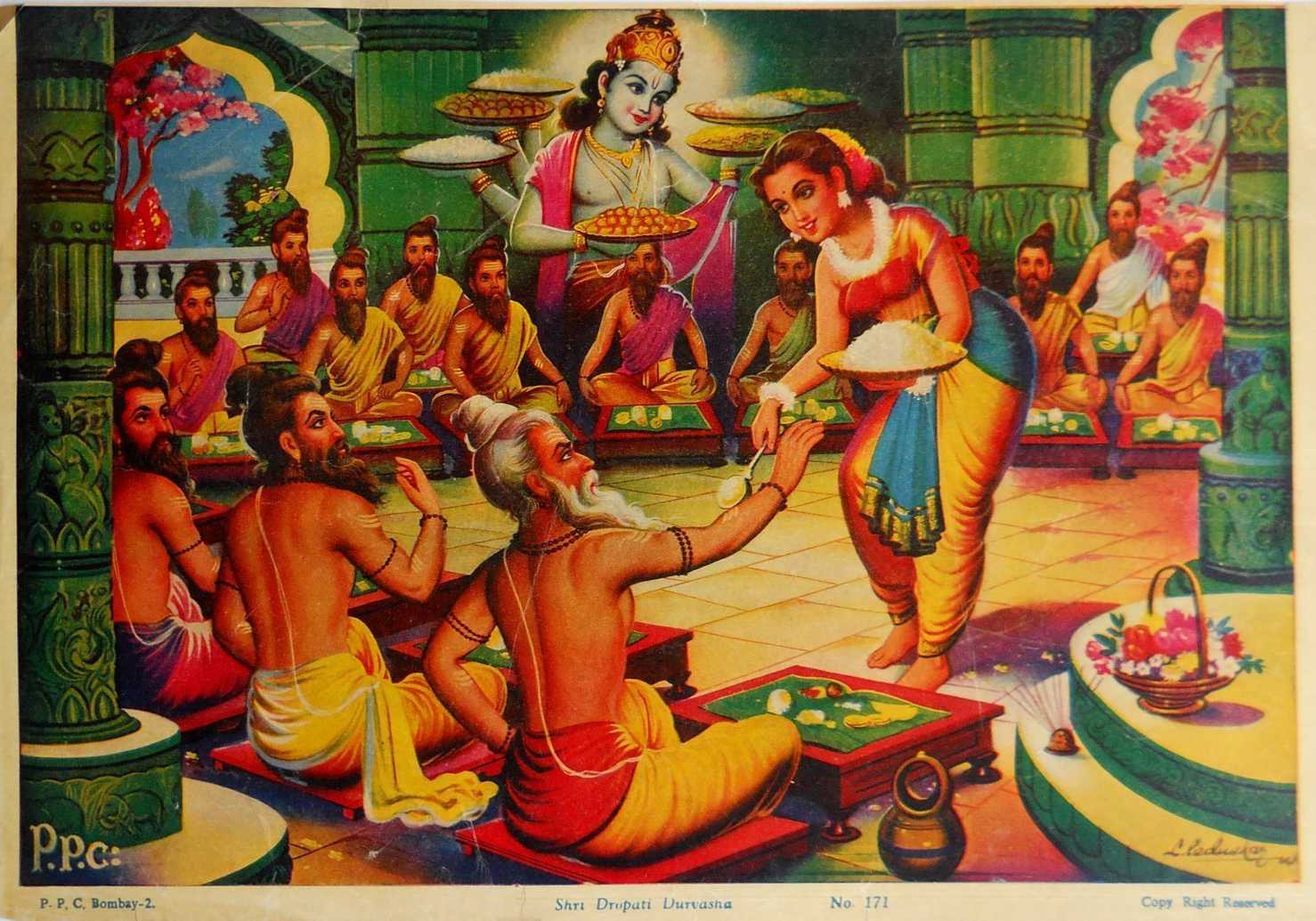
    There is a very prominent tale in Mahabharat where Draupadi had a bowl of plenty awarded to her by Sun god when she along with the Pandavas was in exile. She could take as much food from the bowl as she wanted until she herself has eaten.  One day sage Durvasa and his disciples arrived at her hut and asked Draupadi to feed them. Rishi Durvasa was known for his anger. To add insult to injury, she had already consumed food that day and knew that the pot would not yield any more eatables. She prayed to her Sakha, Lord Krishna for help. Incidentally, one grain of rice was left in the bowl. Lord Krishna took that grain and ate it up. To Draupadi’s surprise, Lord Krishna let out a belch as if just been fed with a sumptuous three-course meal. With him all the beings of the universe: the deities, yakshas , Gandharvas and also, Sage Durvasa and his disciples were satisfied.

    1

    This story indicates the importance of food in Hindu culture and mythology. In fact, food is central to almost all Hindu rituals and modes of worship. The Bhagavad Gita declares: “If one offers Me with love and devotion a leaf, a flower, a fruit, or water, I will accept it.” (9.26). The food is served in a clean place and before eating, water is sprinkled around the plate and vedic mantras are recited.  A little water is sipped before eating which is scientifically proven to be beneficial. The intension is that our mind and intellect remains inclined towards spirituality and virtues while doing everything, even, eating.

    Hindus believe that everything in the mortal world including, the five sense organs, the objects of the sense organs, elements, mind and intellect are essentially made of three qualities: Sattwa, Rajas and Tamas. Sattwa is associated with light, knowledge and purity; Rajas with activity and passion; and Tamas with ignorance, stagnancy and delusion. Consequently, different food items have different tendencies attached to them.

    3

    Foods which increase life, purity, strength, joy and cheerfulness and are savory, substantial and agreeable are Sattwic. This includes fruits, nuts, vegetables, milk and grains. The foods that are bitter, sour, saline, excessively hot, dry, pungent and burning are known as Rajasic. Onions and Garlics fall under this category and are believed to inspired passion in individuals. Tamasic food includes meat, alcohol, eggs, fish etc. Although, vegetarianism is encouraged in Hinduism, it is important to understand that these are mere guidelines that are provided to individuals to help aid the practice of meditation and there is no compulsion as far as adherence is concerned.

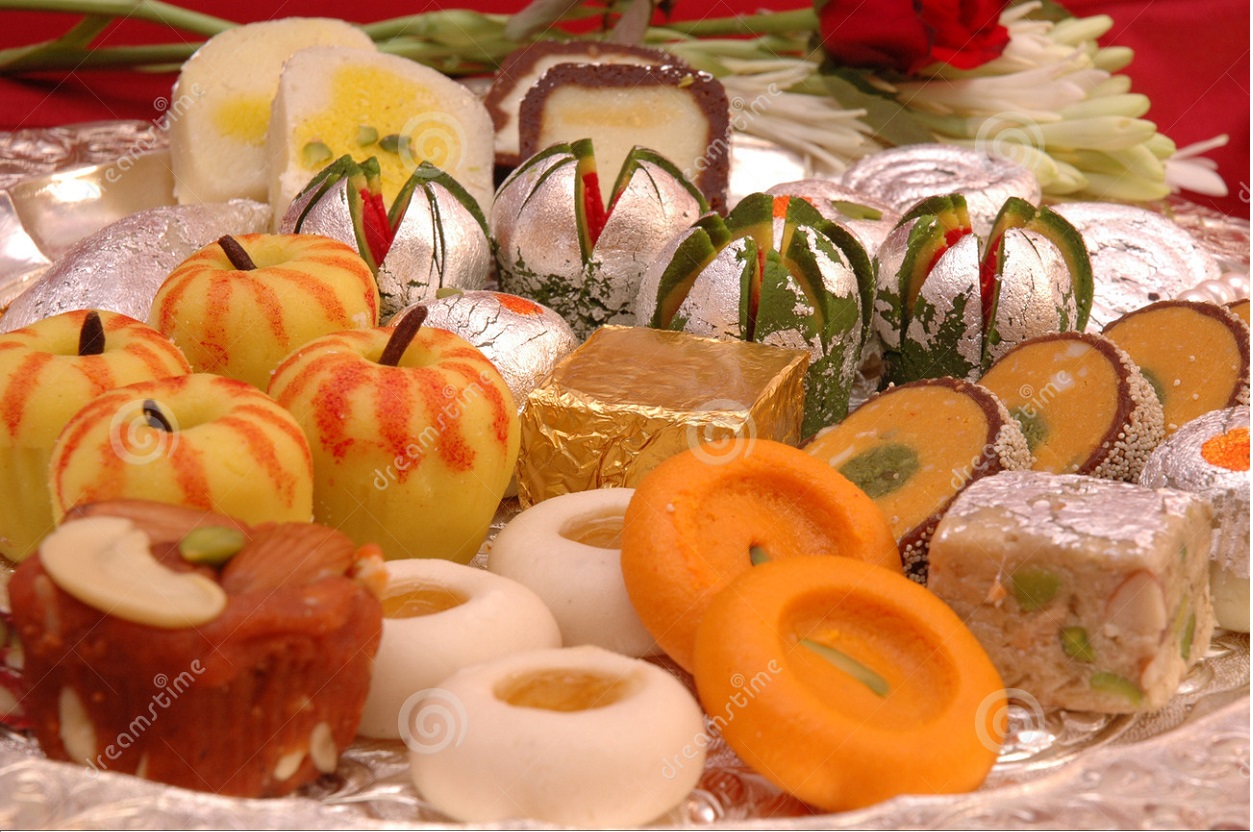
    Another important aspect of Hindu rituals is Prasad or the sacred food offering to the lord. Almost every Puja or worship is concluded by the distribution of Prasad i.e. the food that was offered to the lord during the worship. Prasad can include a variety of things such as jiggery, sweets, coconut, fruits, sweet rice, milk, tulsi leaves (Basil) etc.  The intension of the devotee is of prime importance here and not the material worth of the offering. Depending on one’s position and ability, one can offer anything with devotion. A few tulsi offered with a pure conscience will reap greater merit than gold offered with arrogance.

    4

    Growing up in a Hindu household, I have vivid memories of being restless during the entire course of my mother’s daily prayers and waiting for the Prasad at the end. During Navratras, the nine day worship of the divine mother, Bhandaras are organized.  Bhandaras are spiritual gatherings where large quantities of food are prepared by the community and then distributed to everybody who attends it. This is a form of community service where poor and ailing are fed alongside  the affluent and thus establishing their equality in the eyes of the lord.

    3

    Feast and fast, both are essential part of the Hindu experience. The festivals of Diwali, Holi, Dussehra  and Janmashtami are often associated with the preparation of delicious foods. People visit their friends and relatives and offer each other food. This helps in spreading harmony and unity in the community.  Hinduism offers a great deal of flexibility even in the case of fasting. Fasting can be complete, eating “purer” foods, adopting a completely vegetarian diet or it can be abstaining from favorite foods. It can be seen as a means of purification or as a sacrifice.

    3

    The Hindus are known to use hands to consume their food. The idea is to savor the food with as many sense organs as possible: the color and appearance of the food with eyes; its rich aroma with the nose; it’s delicious taste with the tongue and its texture with the hands. There is an interesting story regarding this. The Indian president, Dr. Radhakrishnan once met Britist Prime Minister Winston Churchill and they sat down for lunch. Before eating, Dr. Radhakrishnan washed his hands and when the food was served, took a morsel in his hands and began eating. Churchill told Dr. Radhakrishnan, “Why are you using your hands? Use spoon and fork, they are more hygienic”.

    Radhakrishnan’s repartee was, “Since nobody has used my hand to eat before, my hand is more hygienic than any spoon you can find.”

  • Meditating – The Third Eye

    Meditating – The Third Eye

    The attention is the outer expression of the soul. Most of the time our attention is drawn outside to the world through the senses. If we can withdraw our attention from the world outside and our body for a while and focus it at a point, known as the seat of the soul, we will find the inner light. The seat of  the soul is located between and behind the two eyebrows. This point has been called by  different names such as the third eye, the single eye, the shiv netra, the tenth door, the sixth chakra, the ajna chakra, or the mount of transfiguration.

    download (7)

    By concentrating our attention, the sensory currents that make us aware of sensation in our body withdraw. When these sensory currents are concentrated at the seat of the soul, we find light within.

    For this meditation process, we do not worry about our breathing or doing any difficult asanas or postures, or exercises. We do not touch the motor currents as they do in some yoga. The motor currents are those responsible for the automatic or involuntary processes in the body such as breathing, circulation, the heartbeat, and the growth of hair and nails. Instead, we withdraw the sensory currents. We do not worry about the breathing exercises. We let the breath go on naturally as we do when we perform the other functions of the life.

    images (5)

    To practice meditation, we sit in a pose most convenient in which we can remain still the longest. We close our eyes, and focus our attention on the field of darkness lying in front of us. By concentrating, the sensory currents withdraw to the third eye or single eye. When concentrated there, we find light. By absorption into the inner light, we transcend body consciousness and enter the inner realms beyond.

    download

    Once we pick a pose, we should close our eyes gently and concentrate on seeing what lies in front of us. There should be no pressure on the eyes. Our eyes should be as relaxed as they are when we go to sleep. Since these physical eyes are not those by which we see the inner realms, there is no need to turn our eyeballs upwards in the hope of seeing something there. We should not concentrate on our forehead, instead keep our eyeballs horizontal, as if looking straight ahead.

    If the eyeballs look or turn upward, we may feel a little pressure on the forehead, which may result in two problems. We may get a headache or we may generate heat in that area and our forehead will become hot. That will create problem for us, which will cause us to move, get up, do something to cool ourselves down. That will interrupt our meditation. So we should focus our attention few inches in front of us.

    download (1)

    When we close our eyes, we may first see darkness. That which sees the darkness is our inner eye. With the inner eye, gaze lovingly, sweetly, and penetrate deep into whatever is in front. We should be relaxed, but attentive as if watching a movie screen and waiting for the movie to begin. This is a process in which we do not worry about the world outside or what is going on in the body below. We are only trying to invert so as to reach the worlds within.

    In our body, we have our soul and our mind. The mind is a powerful entity whose main aim is to keep the soul in the body so that it does not reach the inner realms. The mind will try to entangle our attention in the physical world. It will do its best to prevent us from rising above this physical body and returning to god. We need to realize that soul is our real self- the part of us that is of the same essence as that of god. Unfortunately, we have been separated from God. If we can realize that our soul is covered by the mind and the body, and understand that the mind’s role is to keep us from knowing our soul, we will be better able to still our mind.

    images (6)

    For perfect concentration, we have to reach a state of no thoughts. If we have any thoughts, whether good or bad, they are all bad as far as meditation is concerned. Thoughts are like chains. The iron chains are our bad thoughts, but even if the good thoughts are the gold chains, they are still chains. Thus, good thoughts are still distractions and will not help us in meditation.

    There is a vistas of sight inside. We should be totally focused on what is before us. As we meditate more and progress, we will see inner vistas such as inner stars, moon and sun. As we gaze attentively into the middle of whatever we see, the power of God will guide us beyond the physical into the higher planes.

  • The Mesmerizing Museums!

    The Mesmerizing Museums!

    Human Civilization, across the vast area of the globe has been a seat of diverse cultural evolutions. The societies all across the world have evolved culturally, economically, socially, politically and spiritually. The change in values, principles, ethics and customs is reflected in the fact that all of us had been subjected to constant change through the processes of Urbanization, Industrialization and Modernization. From the Stone Age to the Modern Machine Age, man has traversed a long course in time!

    download (1)

    The change in the cultural and social practices is well reflected in many institutions and material evidences. One of them is a Museum. A museum, as an Oxford Dictionary defines it is an institution or a building that houses objects of interest to display to the public. Wikipedia calls a museum as an institution that conserves a collection of artifacts and other objects of scientific, artistic, cultural, or historical importance and makes them available for public viewing through exhibits that may be permanent or temporary. To many, a museum is the primary source of information about the evolution of man in a multitude of aspects. To many, visiting museums is a recreational activity. To some of us, a museum is a mirror into our true origin and a way to connect to our roots. Thus, a museum is a reflection of our ideologies that date back to millions of years and yet build our present identity.

    download

    The word ‘museum’ has possibly been derived from the Greek word ‘monseion’ that meant ‘seat of the Muses’. It then referred to a philosophical institution or a place for contemplation. The Latin derivation ‘museum’ appears to have restricted to places of philosophical discussions. Thus the great Museum in Alexandria which was founded by Ptolemy I Soter in the early 3rd century BC., with a college of scholars and a library of its own, was more of a prototype university to preserve and interpret material aspects of the heritage. By the 17th century, museum was a term used in Europe to refer to describe collections of curiosities. By the 18th century, the idea of an institution called a museum established to preserve and display a collection to the public was accepted. 19th and 20th centuries have witnessed establishment of many such museums all across the world in various countries. Though continued digitization of information and increasing capacity of digital information storage along with technological advancements has caused the traditional model of a museum to become less popular, but the virtual exhibits so developed still remain dependent on the preservation and interpretation of material things by the traditional concept of the model.

    download (2)

    Visiting a museum has been a household- recreation for many. Go to a place that has a decent historical lineage and it is bound to have a museum. And if there is a museum, visiting is a good option. What we should observe here is that a museum is not just to be visited for spectating the galore of our forefathers. It a place to connect to our history, gain information, promote our national and cultural identity and hence make it a memorable experience. These cultural institutions foster intercultural awareness and restore a sense of dignity and identity to many communities. They could also resolve conflicts. People and communities in areas infected with unrest and conflict could appreciate each other’s ancient history and thus co-exist in harmony if they were made aware of it through such institutions. UNESCO suggests making entries to museums free to promote the culture among various people irrespective of their caste, creed, social and economic status. The value of ancient arts and culture chimes in sync with the modern ethics of our society in the concept of museums. Quoting the exact words of NDMC that says:

    “The museum sector believes that it makes a real difference to people’s lives. It is a line that is frequently used to advocate and promote our work to stakeholders; but what does it mean and how might we investigate it? What is the nature of the impact that museums have on the individual and how does this play out in communities, societies and even nations?”

    images

    Museums are fundamentally driven by the human desire to delve evidence for secure meaningful information and to dig deeper for accounts of experiences. What a museum intends to do is make a cultural impact, by stimulating knowledge transfer, deliver life-enhancing skills, development of basic virtues and skills of patience, observation, reasoning out and hence the overall development of a human mind. It strives to establish an emotional connect and development of ideas or an increase in the capacity to learn.

    Given the significance of museums in our fast modern lives, it is a definite fact that the galore of these institutions is not to be given a miss. There are various museums in the world in different continents that are not just objects of cultural significance but reach out to the masses to etch a permanent impact on their minds. Having said that, let us have look at some of the famous museums of the world.

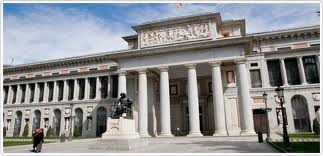
    1.)    The Prado, Madrid, Spain

    images (1)

    The Royal family of Spain curated and commissioned art with utmost passion. In addition to their fine taste and interest, their huge collection of the best Spanish paintings and works of the best artists from across the globe made them establish this museum. It was open to public in 1819 by Fernando VII in the neoclassic building designed by Juan de Villanueva.

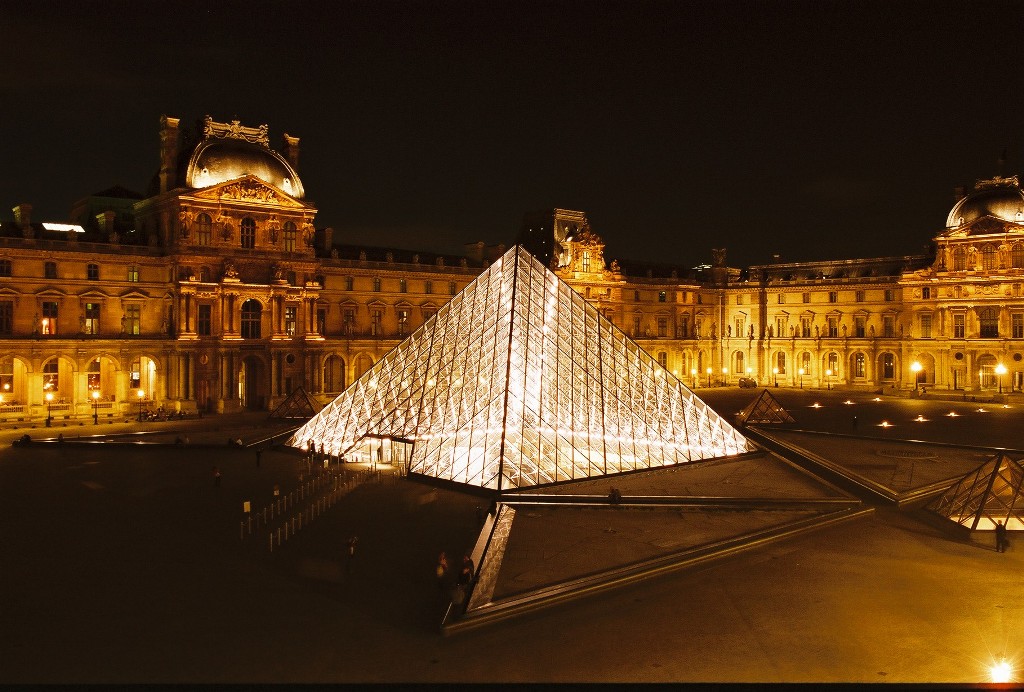
    2.)    Le Louvre, Paris, Spain

    Le-Louvre

    One of the largest and the most visited museums in the world, with over 9.3 million visitors in 2013, this museum is popular enough to make people swoon over it just by its name. Housed in the Louvre Palace, a former Royal Palace, it was opened in 1793. The famous glass pyramid added in 1989 is one the major attractions. The most famous exhibit being the classic painting of the Mona Lisa by Leonardo da Vinci.

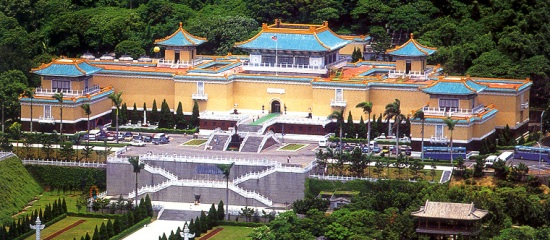
    3.)    National Palace Museum, Taipei

    W020090108346006316518

    The National Palace Museum boasts of the largest collection of ancient Chinese artifacts. The museum was originally established Beijing’s Forbidden City in 1925, after the expulsion of the last king of China. In the final years of the Chinese Civil War, the most precious items of the collection were transported to Taiwan.

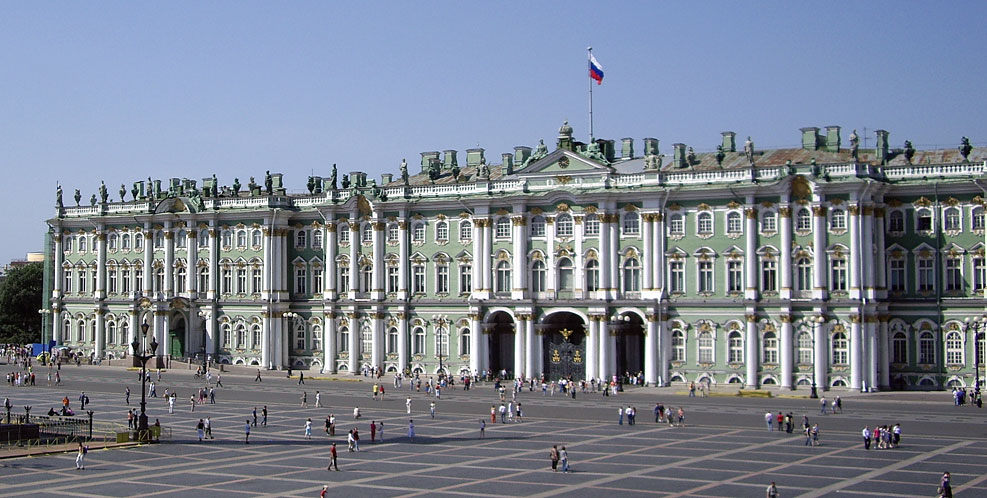
    4.)    State Hermitage Museum , Saint Petersburg, Russia

    Winter_Palace_facade_large

    The Hermitage has acquired a mesmerizing collection of arts from all over the world varying from the times of the Stone Era to the early 20th century. The glorious blue- and-white structure consisting of 6 buildings, was completed in 1764 and had served as the main residence of the Czars for several centuries. Founded by Catherine the Great, this massive museum houses some of the best works of famous artists like Michealangelo, Leonardo Da Vinci and more.

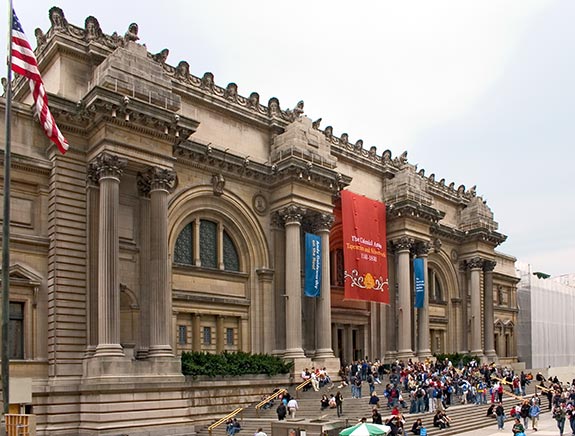
    5.)    The Metropolitan Museum of Art, New York City

    met

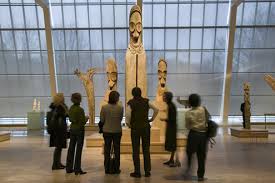
    Also known as the Met, This is an art museum located on the eastern edge of Central Park in the New York City. The vast gothic-style building was opened to public in the year 1872 and had been subjected to various add-ons after that. It has on exhibit, some of the finest works of art from across the human history depicting almost every field of craft in existence. It also organizes travelling shows throughout the year.

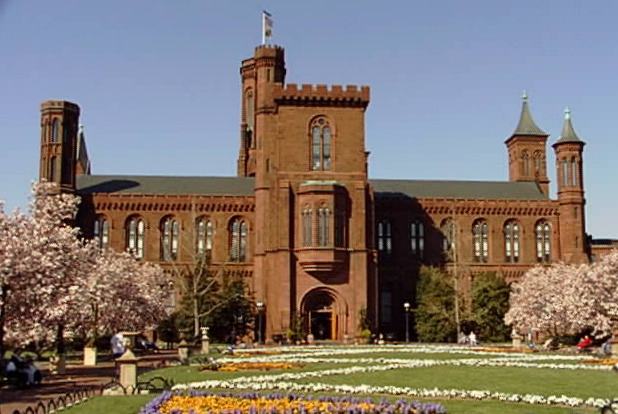
    6.)    Smithsonian Institution, Washington D.C.

    smithsonian

    This is the world’s largest research and museum complex. It includes 19 museums and galleries, the National Zoological Park and many research stations. Dorothy’s ruby red slippers, the dresses of the First Ladies, the Gem Hall and the Wright brothers’ 1903 flyer are some of the major attractions here.

    7.)    The British Museum, London, England

    download (4)

    This museum boasts of being the national collection of archaeology and ethnography ranging from pre-historic bones to pieces of Athens’ Parthenon. It houses the Rosetta Stone that was carved in 196 B.C. It was established in 1753 and has the largest collection of mummies outside of Egypt.

    8.)    Vatican museums, Vatican city, Rome

    download (3)

    It was founded by Pope Julius II in the 6th Century and are the most famous for the spiral staircase. The exquisitely decorated Sistine Chapel is another proud acquisition of the museum. The chapel ceiling was painted by Michelangelo between 1508 and 1512.

    9.)    The Egyptian Museum, Cairo

    download (5)

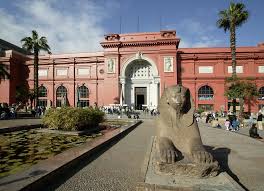
    It is counted as one of the worlds’ best museums. It has a huge collection of papyrus and coins used by ancient Egyptians. Also, it houses many artifacts from the final two Egyptian Dynasties and from the Valley of Kings. Main attractions are the Royal Mummy Room containing 27 mummies from the pharaonic times.

    10.)Museo Nacional de Antropologia, Mexico City

    download (6)

    The Museo Nacional de Antropología or National Museum of Anthropology was opened in 1964. It contains archaeological artifacts from the pre-Columbian heritage of Mexico. The most famous object of attraction is the Stone of the Sun which was not used as a calender actually but contains 20 day signs and the four eras of suns that preceded the present 5th sun.

  • 4 Efficient methods to Meditate

    4 Efficient methods to Meditate

    The post informs about “4 Efficient methods to meditate” and is drafted after discussing all the Pros and Cons in the post before of why there is a need for meditation? For all the people down for it do need to know proper techniques and different types of meditation. As mentioned in the earlier post regarding meditation, it is not a onetime cure. It should be a lifelong habit. So after saying that, we should not be looking for any sorts of shortcuts to perform the task dutifully. Meditation is all about focusing your mind on anything that calms your mind, whether it may be listening to soft music or focusing your breath and stare on a burning flame. One can start either from baby steps to more focused approach or directly start with the demanding focused meditation.

    There is no measurement as in which technique is better as all lead to the same result, it all goes down to what technique is one comfortable in. Just as you would be the one to practice meditation, you should be sure which technique resonates with your lifestyle and you. This will make sure the continuity of the practice for life long.

    So, starting with listing below mentioned are some of the most efficient techniques to perform meditation mentioned in no particular order, But before that please not that information given here are just some brief introduction about different techniques and gist of the procedure.

    1. MINDFUL MEDITATION

    Mindfulness-MindMap

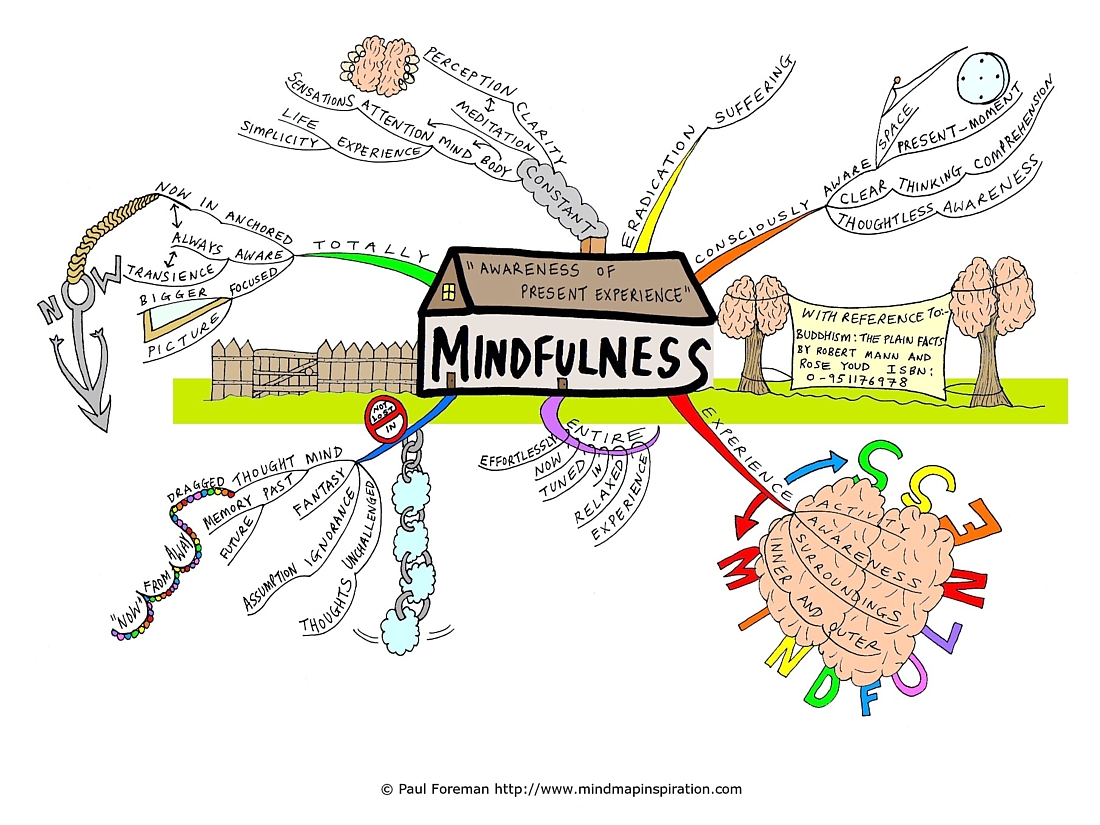
    One of the most popular meditation practices especially in the west, mindfulness meditation is about staying in the present moment.  Being aware of the moment and focusing only on one object while regulating your breath is what mindfulness meditation is all about.  Also known as Vipassana meditation, it is rooted from the Buddhist traditional practice. It is often used in psychological treatments to get rid of many mental conditions like OCD and anxiety.

    A person practicing this meditation needs to only focus on the ongoing happenings around and in his or her mind, like emotions and thoughts. This awareness sure has to be approached with no mental judgments whatsoever.

    1. TRANSCENDENTAL MEDITATION

    meditating

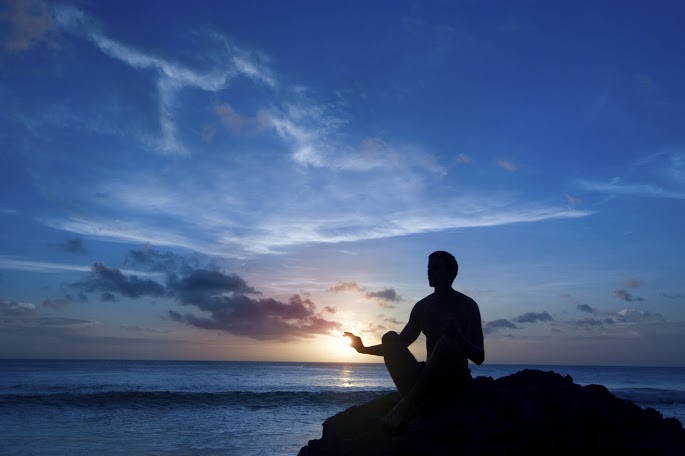
    Primarily originated from the Hinduism was later promoted extensively throughout the world for its deep spiritual approach. A very simplified practice rooted from the Vedanta, in Transcendental meditation a person needs to chant mantra or a sacred word and focus is on being uplifted from all that belongs to the material world.  Posture for the meditation is preferred to be sitting cross legged with back straight. This posture is known as “Lotus asana”, this asana is said to resemble a lotus and is said to encourage breathing proper to associated meditative practice and it also foster physical stability.

    1.  GUIDED MEDITATION

    Another excellent technique to pursue meditation for the beginners, guided meditation takes an individual to a journey of guided visualization of different imageries and situations. The guidance usually consists of stories and set of sceneries described in a narrative sense. This technique is very powerful to experience one’s own psyche and thinking pattern. A person can truly introspect their daily activities and keep track of their doings and if they are doing it right through the regular practice of guided meditation. This will help your subconscious to solve some of the tangled issues which seems impossible to rationally be handled by the conscious brain.  The meditation exercise starts with resting in any suitable and comfortable position, and then the person has to relieve all the stress stored in the different parts of the body from the head to toe. After the relaxed stage is reached, person is usually guided through stairs and doors to reach a peaceful place where colors and lights heal the self. Individual is allowed to relax there for few moments and asked to resolve any issues or find any required answers from the conscious life. It is believed that in this relaxed and calm state of the body the subconscious brain starts working which helps to increase our ability to see a situation from different perspectives; this resolves half of the problems.

    1. CHAKRA MEDITATION

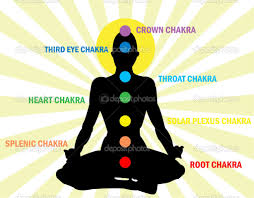
    According to Hindu beliefs “Chakras” are believed to be the energy centers or spots are located at the physical counterparts of the major plexi of arteries, veins and nerves in the human body.

    chakras

    So, it is believed that opening and activating chakras will contribute to overall well being of an individual. In chakra meditation focus is given to the breathing of the individual while he or she is visualizing a spinning light that is connected to each chakra. Start from the root or base chakra (Muladhara) and then slowly move your way up through to the crown chakra (Shasrara). Each chakra has their specific colors.

    At last, no method is difficult or easy to practice. They just differ in their approach. So, after finding the suitable type of meditation that relates to you, begin the practice! Meditation is not a onetime cure for anything and should be considered as a lifelong practice for the overall personality transformation.  It affects the society in general if the individuals in it practice the same. The increased awareness in the society is beneficial for everybody on our planet as the very process of meditation brings unity and brotherhood among people.

  • Savoury indulgence on Eid

    Savoury indulgence on Eid

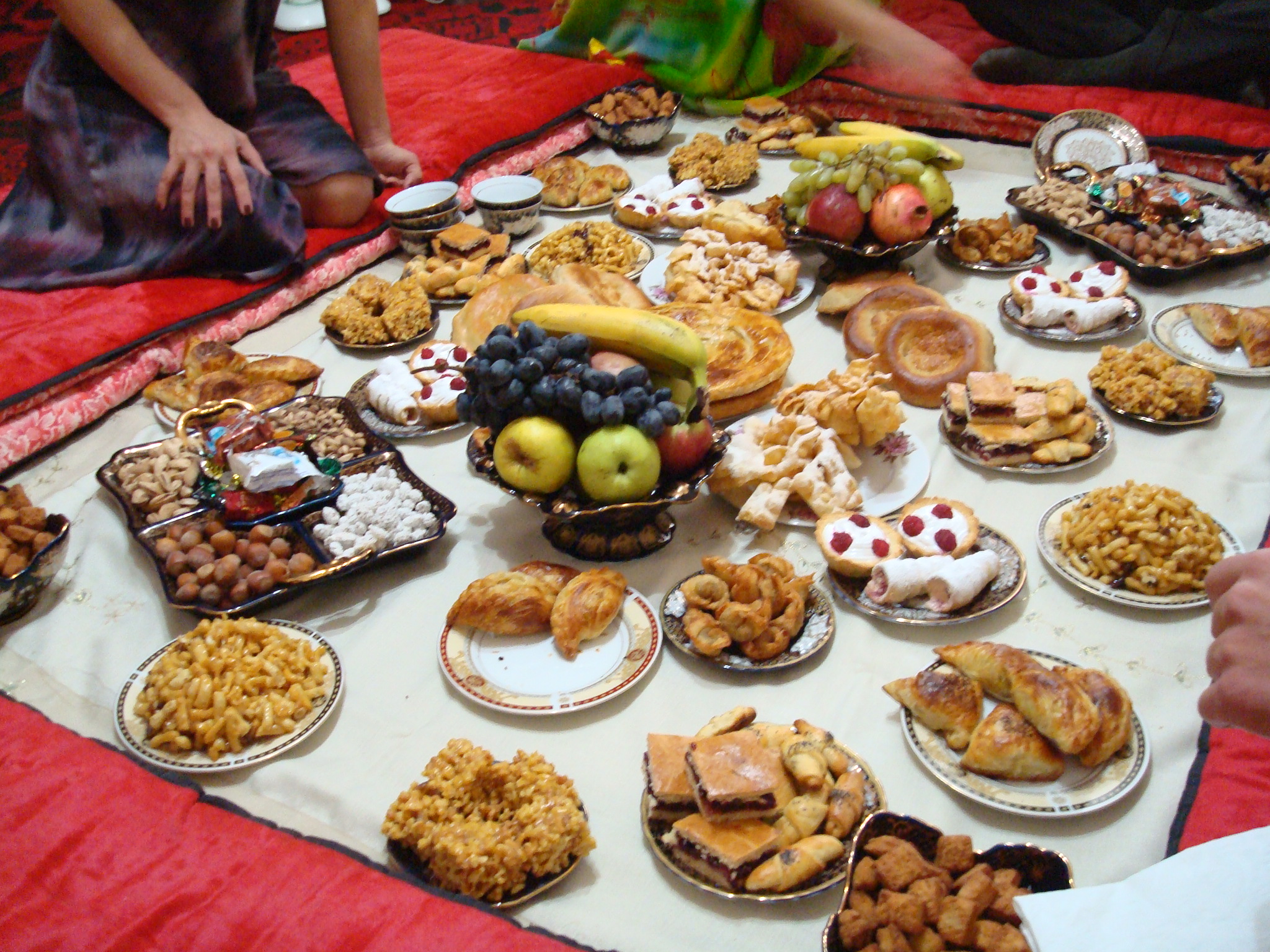
    Celebration of Id, without haleem on the menu is preposterous! And, this realization dawned upon me, after my acquaintance with a Muslim friend led to the arrival of an invitation for ‘Id ki daawat’ at their place. With no prior information or preparation I felt elated and made my way to their set destination. Having been alien to Islamic customs, however, did not dwindle my enthusiasm rather infuriated it, and after my arrival, when it was time to eat, I was shocked at the array of delicacies laid down on the huge wooden table. All, I had known to expect was many types of kebabs, shorbas, biryani, kormas and basbousas. The table, had taken a plethoric dimension.

    best-ramadan-buffets-2014-part-2_pullman-putrajaya_1malaysia-bazaar-by-the-lake

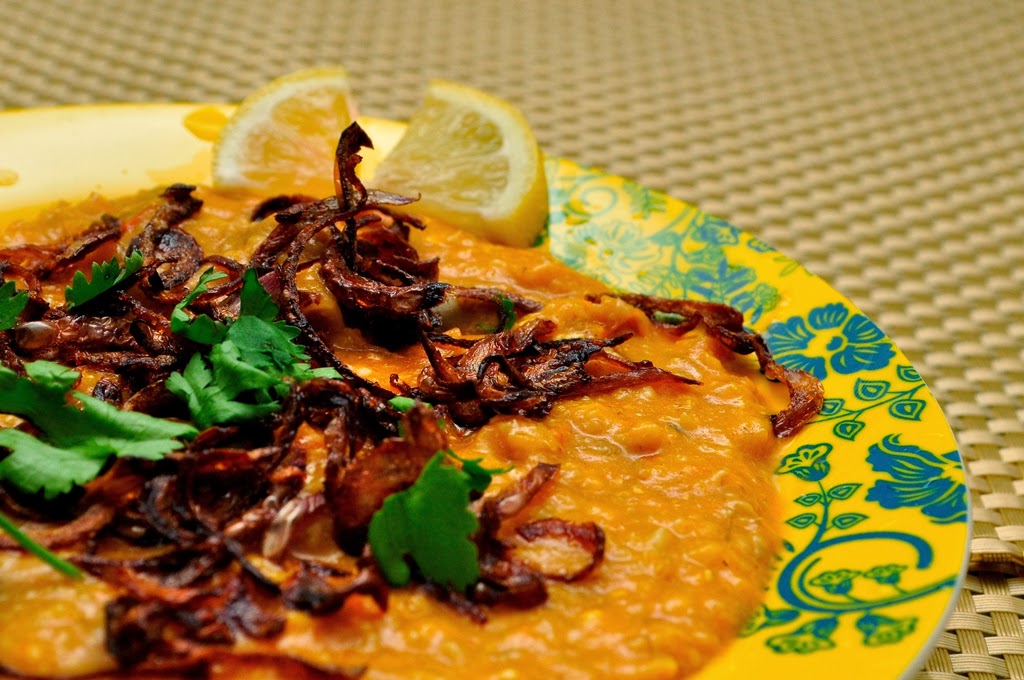
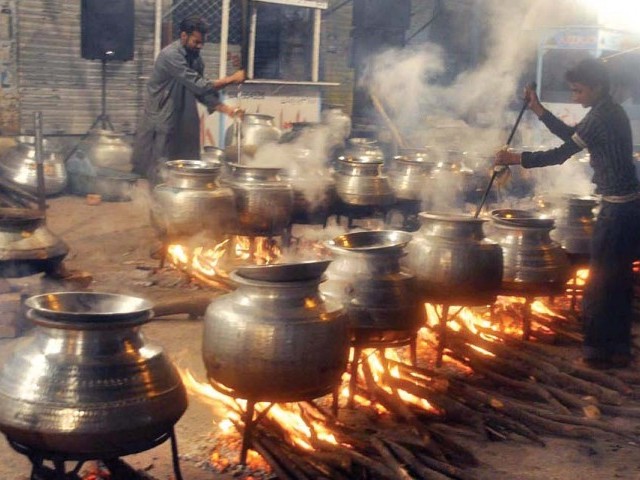
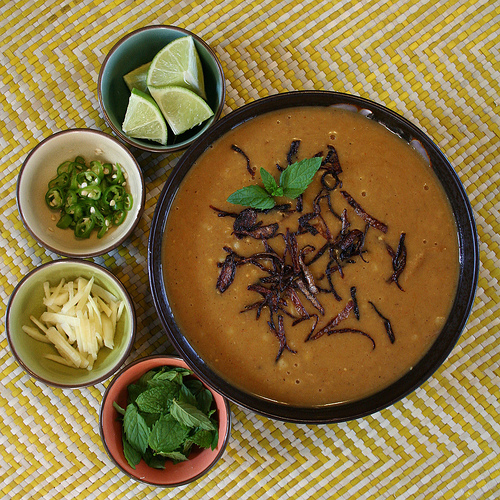
    My friend however, well aware of my palate-fantasies and curiosities, volunteered to introduce me with all of the savoury dishes, laid down there. What intrigued me the most, was their holy dish, Haleem, which was particularly consumed on this day. After further enquiry, with periodical interventions by the elders of the family to add minute details to the conversation, I comprehended that Haleem is a popular stew made out of wheat, barley, meat( which is usually beef, mutton, but also sometimes chicken) lentils and spices. It is slow cooked for almost seven to eight hours in order to unleash its divine taste and qualities, till, it reaches a paste-like thick aromatic consistency.

    Preparation-Of-Haleem1

    Its origin, however, is said to be lying in an Arabian dish called Harisah, which is an ancient delicacy, dating back to some 10th century or so, interwoven around an interesting history that I seemed to enjoy listening to, while gulping an extra helping of haleem and kebabs.

    So, according to the oldest member of the family, Dada-jaan, the recipe for Harisah was first put down in a book called Kitab Al-Tabikh (Book of recipes) by Abu Muhammad al-Muzaffar ibn Sayyar which is said to be one of world’s oldest surviving Arabic cookbooks, and that this recipe has many similarities with what, in these contemporary times, Middle East boasts as Haleem. It was said that Harisah, the ancestor of haleem was actually invented by the soldiers of the Hyderabad Nizam’s army, to cater to their gastronomic needs. Something similar to the traditional Harisah is said to be still available in a place called Barkas, Hyderabad, however under the name of Haris.Had never anticipated that a food item, would ever have such an illustrious past. The acquired knowledge aggravated my curiosity, and I vouched to myself, that given the opportunity, I would surely venture to try out the ancient dish Harisah. However, that was still just too distant for me then, and so I chose to retort back to unearthing the secret recipe that Dadee-jaan would mostly boast of. Was it my charm, or vexing curiosity that hung around me, I luckily managed to string it out .But after learning its elaborate preparation, I became sceptical of my capabilities and courage to endanger the cooking gas to prepare this dish, which involved seven to eight hours on the flame. Nevertheless, if you are beyond such scepticism and are willing to dedicate your time, energy and resources for this divine delicacy, here’s a little help I could manage.


    Haleem Recipe

    haleem

    INGREDIENTS

    • Mutton or Beef- 1 ½ kilograms
    • Wheat grains (crushed and soaked for 1 ½ hour) – ½ kilograms
    • Onions (thinly sliced) – 4 large
    • Gram Lentils (soaked and boiled)- 1 cup
    • Garam masala powder- 1 tsp.
    • Turmeric powder- 1 tsp.
    • Coriander powder – 1 ½ tbsp.
    • Red Chilli powder – 2 tbsp.
    • Garlic paste – 1 tbsp.
    • Ginger paste – 1tbsp.
    • Dalda Banaspati or any clarified butter (ghee) – 1 ½ cup
    • A pinch of soda
    • Salt to taste

    For Seasoning

    • Fresh Coriander leaves (finely chopped) – 1 bunch
    • Fresh Mint leaves (finely chopped) – 1 bunch
    • Sliced Onion (large)- 1
    • Ginger root (medium) – 2 pieces
    • Lemons (cut in quarters) – 4
    • Dalda Banaspati or clarified butter (ghee) – 2 cups
    • Green chillies (seeded and finely chopped) – to taste
    • Garam masala powder – 1 tsp.
    • Cumin seeds (roasted and ground) – 1 tsp.

    METHOD

    • In a pan, heat Banaspati or the clarified butter, and add the meat, garlic, garam masala powder, turmeric ,red chilli powder, , coriander powder and salt. Carefully, smear the meat in these spices and let it cook for some time on medium flame.
    • Take another separate pan, and fill it up with water. Boil the wheat grains in it with a pinch of salt. Keep a check over it, and once the water starts to bubble and the grains become tender and squashy, add a pinch of soda in it and cook for some 15-12 minutes more.
    • As the water gets soaked, drain the excess and, mix the grains with the mead. Keep stirring till all of it is mixed properly.
    • In a food processor, grind the lentils, and by adding a few cups of water, bring it to paste-like consistency.
    • Pour in the lentil paste into the meat and wheat grain mixture, and stir continuously. Position the pan, on a griddle or heavy tava, on low flame and cook some 30 to 40 minutes.
    • Sauté the sliced onions in ghee or clarified butter, and drain the excess oil, with the help of a tissue paper. Once the haleem is cooked, spread the fried onions over it, and sprinkle the garam masala powder, fresh mint and coriander leaves. Garnish it with cumin and ginger. While serving it, sprinkle some more seasoning!

    haleem-competition

    Though I haven’t yet tried making it properly due to certain limitations, I have still been engaged with the consumption of Haleem from time to time, and also had the opportunity to witness an actual haleem competition. On the day of Id, this week, I’m planning to once again indulge in its rich and luscious taste, expecting some more company this time!


  • Sweet Dishes For Eid-ul-Fitr-

    Sweet Dishes For Eid-ul-Fitr-

    Eid-ul-Fitr is the religious festival of Muslims that marks the end of the holy month of Ramadan during which they fast for 29 or 30 days from dawn to sunset. It is celebrated with great zest around the world and the greeting of “Eid Mubarak” (“Blessed Eid”) is exchanged between the merry-makers. According to some traditions, it is believed to have been initiated in Madinah after the migration of Muhammad from Mecca.

    Eid-ul-Fitr is known for the variety of delicacies prepared especially sweets earning it the name of “sweet Eid”. Depending on the region, the types and forms of the cuisine vary but always include sweet dishes. While local sweets such as Gulaab Jamun, Ras Malai etc have been promptly absorbed in the Eid cuisine in South Asia, Baklava and other types of pastry type sweets are eaten in Turkey. After a month of continuous fast, we believe people have earned this. So let us have a look at some of the wonderful desserts that are prepared in this amazing festival.

    1. SHEER KORMA 

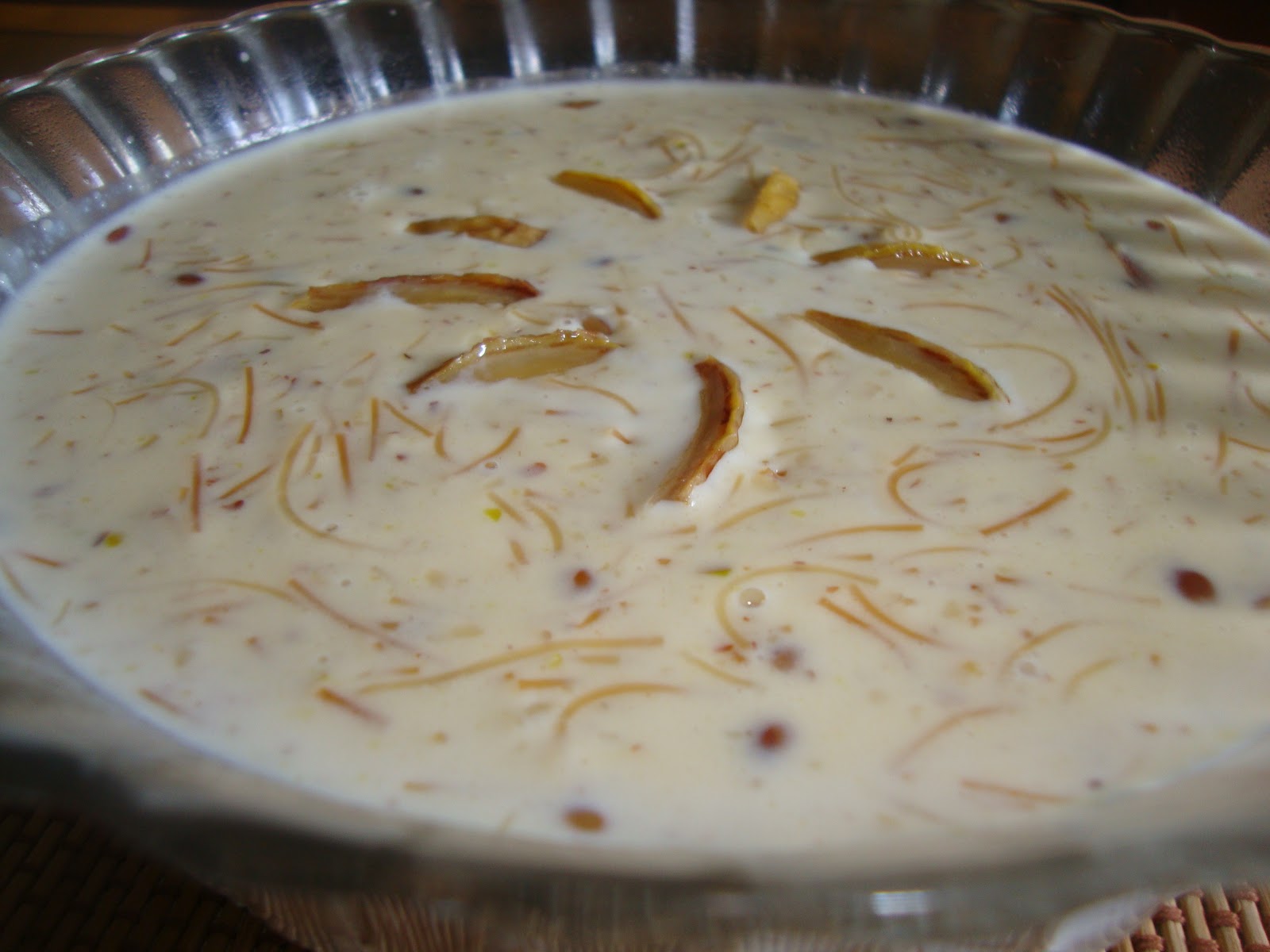
    Sheer Korma is a popular vermicelli (saviyaan) dish which is almost synonymous with Eid-ul-Fitr in India and Pakistan. It is served during the Eid morning after the prayer and then to the guests who arrive throughout the day.  Sheer is Persian for milk and Khurma is Persian for dates. It is simple and easy to prepare.

    1


    Ingredients

    1. 1 Packet vermicelli
    2. 500 ml Milk
    3. 1 cup sugar
    4. 1 tbsp butter
    5. ½ tsp flavoring agent like vanilla or rose water
    6. ½ cup raisins
    7. 20 whole cardamom pods
    8. ½ tsp cardamom powder
    9. 1 cup dry fruits like almond, cashews and pistachios
    10. ½ cup fresh cream
    11. ½ tsp saffron strands
    12. Dates cut in small pieces


    Method of preparation

    1. Melt butter in a pan and fry vermicelli in it till it turns beautiful brown. Make sure that you keep the heat low so that the vermicelli is not burnt. Once ready, the vermicelli will absorb all the butter. Alternatively, fried vermicelli is also available in the market.

    2. Mix ¼ cup sugar in it and then slowly add milk to it while constantly stirring the assembly. Increase the heat to bring the milk to boil.

    3. Now add the raisins, dry fruits, dates, cardamom pods and the remaining sugar and mix everything properly.

    4. Let the milk boil until it is reduced to half its original volume. Reduce the heat and thicken the korma to three-strand consistency.

    5. Quickly add your favorite flavoring agent and fresh cream. Cover it and let it simmer for 10 minutes.

    6. Garnish with saffron strands, and cardamom powder and serve it to the delight of friends, family and guests.

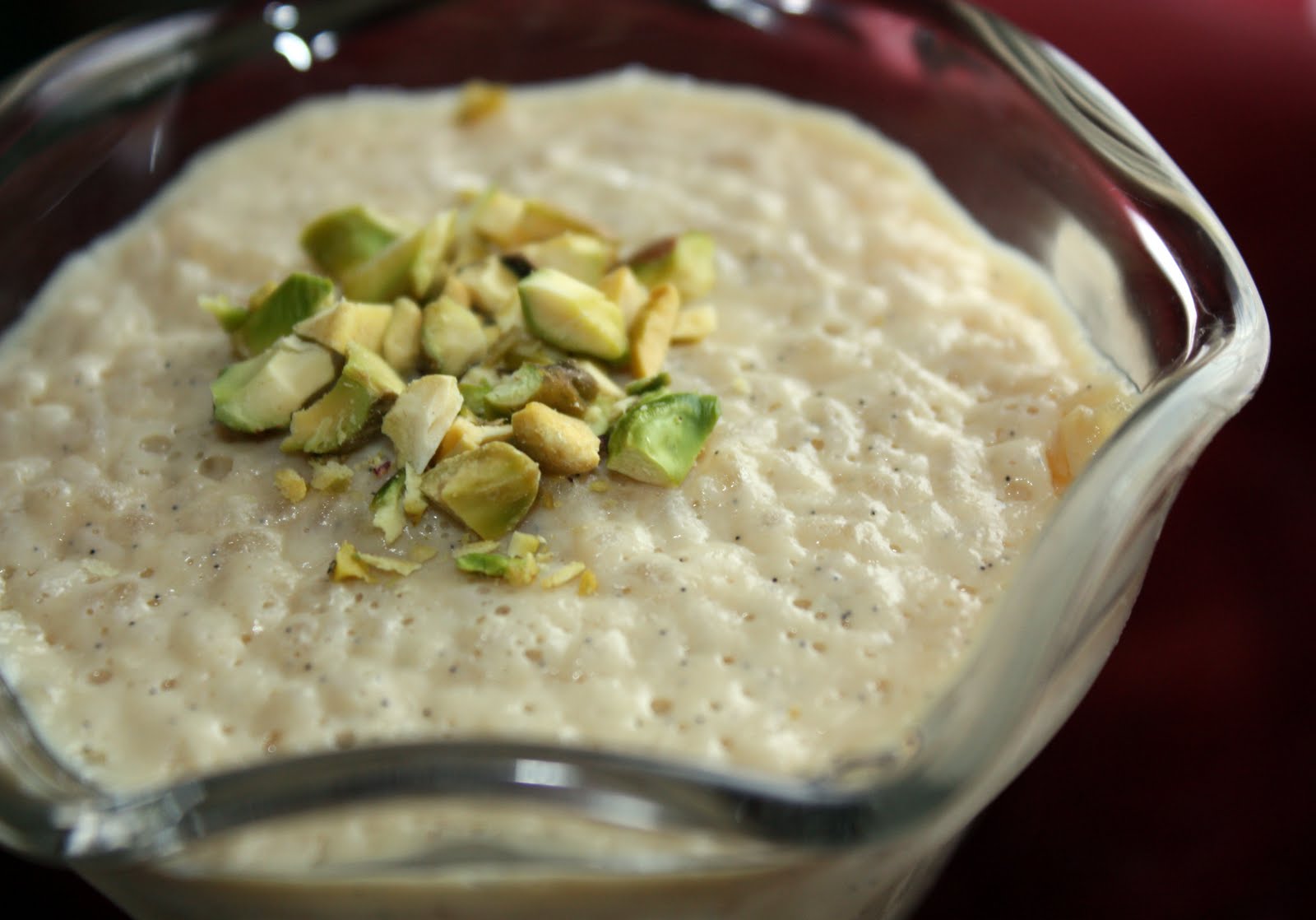
    2. BADAM PHIRNI

    Phirni is a very popular Indian dessert that is prepared on a variety of occasions including Eid, Diwali etc. There are more than a few versions of Phirni varieties available, for example, Gur aur Badam ki phirni (Jaggery and Almond Phirni), Sugar Badam Phirni etc. Here we will discuss the phirni that uses Sugar.

    2

    Ingredients

    3 cups Milk
    ¼ cup Rice
    2 tbsp Sugar
    1/4th Cup Blanched Almonds (sliced)
    ½  tsp Green Cardamom (crushed)
    1/2 tsp rose water

    Method of preparation

    1. Soak the rice in water few hours before the commencement of preparation. Grind the drained rice into a smooth paste and add a little boiled milk to it.

    2. Boil milk in a non-stick saucepan and bring it to boil. After boiling for a few minutes, reduce the heat to simmer.

    3. Increase the heat to moderate and add cardamom, sugar and rice paste to it while stirring constantly.  Allow it to thicken.

    4. Remove heat and add almonds.

    5. Put it in serving bowls and let it cool. Refrigerate it for some time and then serve.

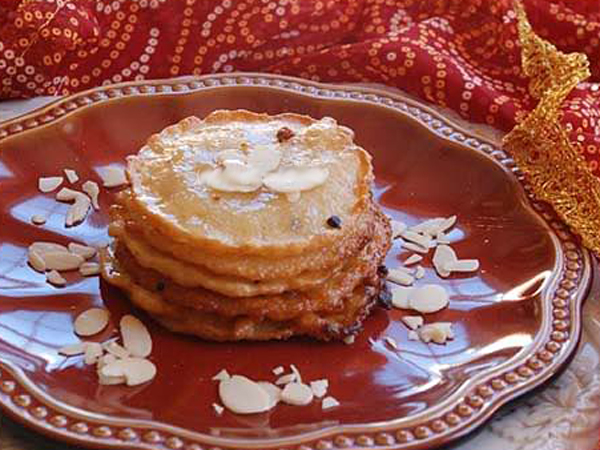
    3. SUFI MALPUA

    The delectable Sufi Malpua is somewhat irresistible and that explains it popularity among the Muslim community around the world. It is not only served on the occasion of Eid but also throughout the holy month for iftar (meal to break the fast).  It is easy to prepare and requires but few ingredients.

    3

    Ingredients

    1 liter Milk
    1/4 cup Maida
    1/4 cup Suji
    Ghee
    Water

    Method of preparation

    1. Boil the milk till it reduces to half its original volume.

    2. Roast the suji on a pan on low heat till it turns brown. Take special care so that it does not burn and turn black.

    3. Add the roasted suji and maida to the milk while constantly stirring the mixture. Make sure that no lumps are formed and assembly is of smooth pouring consistency. Pour this batter in a big round bowl.

    4. Boil water in a separate saucepan and bring it to boil. Add sugar to the boiling water and let it brew till it transforms into syrup of 1 thread consistency.

    5. Heat ghee in a pan and pour the batter in it in the form of small pan cakes. Let it cook for a few seconds and then turn it over. Make sure that the Malpuas retain their fluffiness and softness and not turn too hard or crisp.

    6. Dip the Malpuas in the sugar syrup and leave them in it for few minutes so that they absorb the syrup completely. Finally take them out of the syrup and serve!!