Tag: snacks

  • The Curious Case of Mrs. Hen’s kids!

    The Curious Case of Mrs. Hen’s kids!

    With an amazing lot of activity happening in a day, bachelors or bachelorettes staying alone seldom have time to treat their taste buds right. One day it is a meeting with the boss, another day it is work at home and till the third day you get so tired that it takes an effort to even get up from your bed. And preparing a meal in all this haste seems extravagant and too elaborate an activity to be carried out. And in this rigorous lifestyle of yours, the only thing that suffers is your stomach and more importantly, your taste buds. But we say no more of this! Today let us learn about some new tricks and revisit some old ones about Mrs. Hen’s kids – the eggs.

    Eggs are often restricted to the breakfast and that too you seldom have. Eggs are undermined most of the times, but its importance becomes clear when you need some quick fixes to get you jumpstarted. So, let’s start our romantic affair with eggs which should last longer than your relationship with any other human being.

    1. The Quintessential Omelet:
    omelet

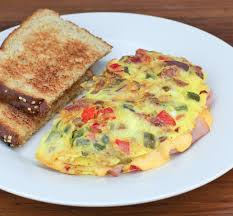
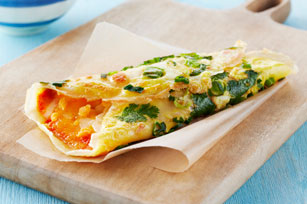
    This dish comes in handy when your refrigerator is running dry and your patience is running lose with all that hunger. Two eggs is what it takes to quiet down your stomach till the time you can arrange for something heavy or till Dominoz delivers that pizza you ordered. Breaking the eggs, mixing in some spices that you desire, a pan slicked with oil and the battered egg mixture on the pan. Blink your eyes and your omelet is ready. This recipe is heart-rote to everyone so much so that a more elaborate description would be shaming this article. But people might not be aware of the nutrient punch this wonder sphere packs with itself. An egg contains 6 gms of Protein and 70 calories. Now while you rejoice that omelet with toasted bread, let’s move onto our next big egg thing.

    2. Eggs with soldiers:
    sol

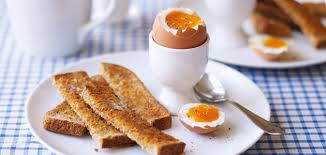
    There are times at night when you just crave for something to eat and are bored of the traditional egg recipes. Well in that case we have this amazing recipe for you. If you only have 5 minutes to spare, this recipe will be even more perfect for you. Place 4 eggs in boiling water and cook over low flame for 4-5 minutes. Caution: Do not let the eggs come to a boil. Now remove the eggs from the saucer and peel off the tops of the eggs. Add in some salt and desired spices on the top and eat the newer rgg recipe with bread sticks. Taste bhi, health bhi!!

    3. French Toast:
    fr

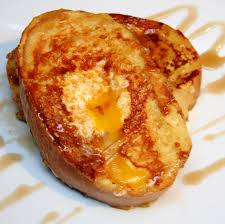
    Again. A relatively new and old recipe. Take out that borderline expired loaf of bread from your refrigerator and batter 4 eggs with spices added. Meanwhile, light up the stove and put a pan over with a slick of oil. Dip both the faces of a bread piece deep into the battered eggs such that both the faces are smeared with egg residue over their entire surface. Put it on the pan and cook for a minute maximum both sides. And voila! Your French toast are ready in a jiffy. Soak in 4-5 breads and you will be content for the next few hours to go.

    4. Tea Egg:
    tea

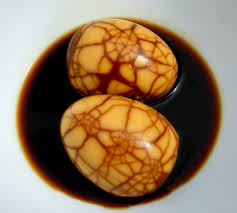
    Now Tea egg might take up some time, but this is nevertheless a newer recipe that people might have heard less about. Tea egg is basically a Chinese snack. Take a few eggs and boil them for 7-8 minutes. Boil them till the point where cracks develop on its surface. Drain the water but don’t peel the eggs yet. This crack-laden egg is then again put to boil in tea or sauce or spices. This dish is also called marble egg because the cracks in the shell create darkened lines with marble-like patterns. Chinese people commonly use a five-spice powder which contains cinnamon, fennel-seeds, cloves and Szechuan peppercorns. The eggs are boiled in the spiced-tea liquid and simmered at medium heat. The simmering allows the liquid to seep through the cracks and attribute flavors to the boiled eggs.

    5. Quick Egg muffin:
    Southwest_EggMuffins2

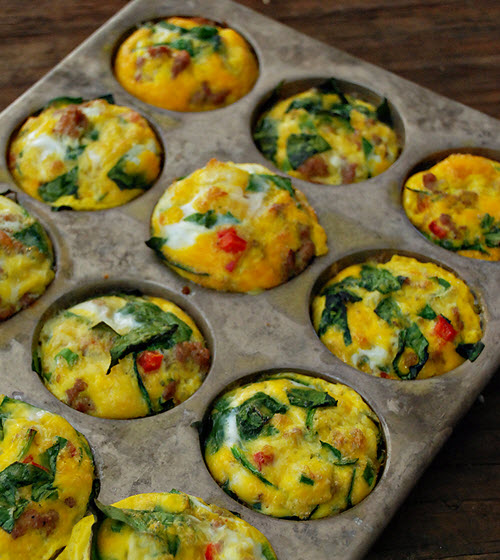
    People with a frenetic paced lifestyle must already be making merry at the name of the dish. The name in itself has quick in it. And you can be sure of one thing; this dish lives upto its name. Egg muffins are like Frittatas just smaller in size. This dish is prepared using scrambled eggs added with fresh chopped spinach and shredded sharp Cheddar Cheese. Whisk the eggs just like you do for an omelet, with spices, onions and spinach if you like. Cook in the microwave oven for 45 seconds and your hunger is done. It’s gone with the sound of the microwave’s beep.

    6. Eggs Benedict:

    benedict

    Eggs Benedict is an American breakfast and usually served along with ham or bacon. To make this dish you will have to devote some of your precious time, but the result will have you amazingly thrilled. First you have to make something the world calls the Hollandaise sauce. This is made by whisking egg yolks and squeezed lemon juice together in a bowl till the mixture is thickened and doubled in volume. Put the bowl in a steam bath and do not let the eggs get too hot or they will scramble. Add some froze butter cubes and continue to whisk till the btter melts. Remove from heat and whisk in salt and pepper and cover it. Heat the bacon and toast the English muffins. Cook some more eggs till the egg white is set and the yolk is soft. Lay down the muffin, bacon on its top, the half fried egg on its top and pour the Hollandaise sauce over. Garnish with some salt and pepper.

    And there you have it, 6 quick fixes with eggs that are not to be missed.
     

  • What makes Delhi, Dilli – 2

    What makes Delhi, Dilli – 2

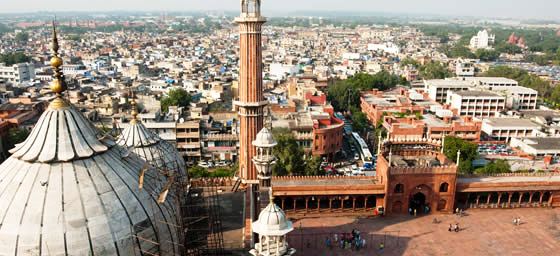
    In the last tour de Delhi, we hopped onto some of the binges of Delhi, how the love affair of the nation started with Delhi, the great repertoire of Architectural marvels in Delhi and a touched the tip of the iceberg as to what makes you melt with love, when you hear the word Delhi. Today, we explore more.

    The Bedmi and Nagori:

    be

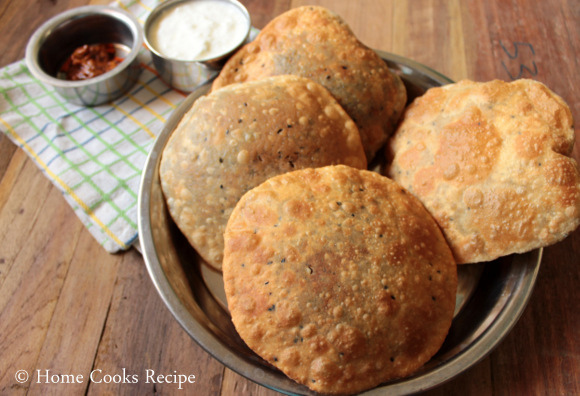
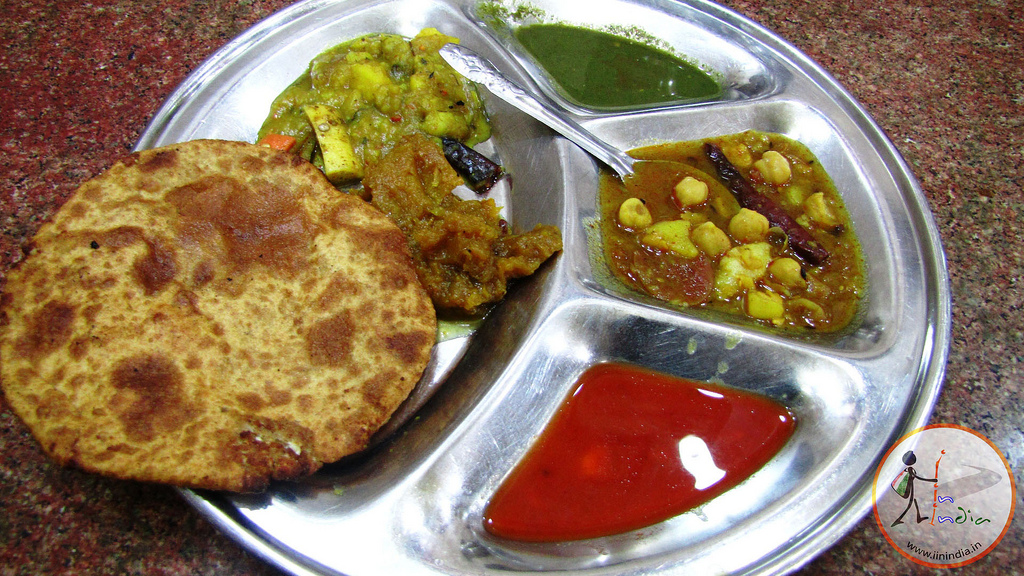
    One relatively less known delicacy but nevertheless enjoyed to its zenith by the  few loyal customers, the bedmi is a variety of Khasta Kachori smaller in size and more khasta by all means. This is what one could call the Kachori’s  younger cousin. Filled in the epicentre with Semolina, carom seeds and grated peas, this delicacy melts in your mouth. Served along with our beloved aloo ki sabzi and halwa, you might have an oddity treat and might as well try mixing the two side dishes (The halwa and the aloo ki sabzi). This queer combination will make you reminiscent of the sweet and sour soup gone terribly wrong, but it’s a taste nevertheless. The Nagori is the youngest of the brood of Kachoris and more closely resembles the papadi that you get at a chaat stall. This also served along with aloo ki sabzi and halwa will give you plentiful of energy (And not to mention a truckload of calories) to roam the rest of Chandni Chowk with me.

    The Punjabi Diaspora:

    bangla

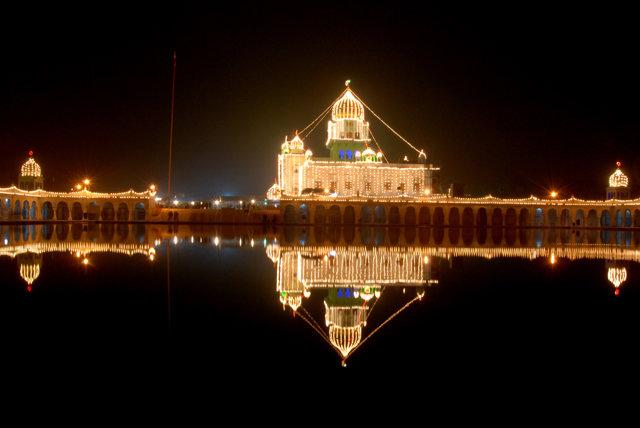
    Delhi is borderline Punjab. Geographically and literally. Once you enter Delhi, you’ll see an equal number of turbans as you will see bare heads. That because, there was a huge exodus from the Punjab region during Delhi’s early industrialization days and also during the Punjab conflict periods. Thus there’s a mini Punjab residing in Delhi. And with their amazing good humor and tantalizing cuisines come along the mighty and revered Gurudwaras. Gurudwaras are the worship place for Sikhs. Here Sikhs spend quite a lot of time serving other people as they faithfully believe in the quote “ Service to mankind is Service to God.” There are a plenty of Gurudwaras in and around Delhi and the best part of visiting them is the tasteful  ‘Langar’.  Langar is the lunch that is served in Gurudwaras to everyone who visits them. Large langars are organized where people sit on elongated jute mats on the floor and eat out of leaf plates. The langar, anywhere, in any gurudwara is something to be DEFINITELY had if you ever get the lucky chance to visit Delhi. Daal is a must in every Langar. Along with it Halwa, aloo ki sabzi and poori make your lunch hearty and eventful. There are two large Gurudwaras in Delhi to which people flog on from places far and beyond. These are The SeesGanj Sahib and The Bangla Sahib. Both are lakes of tranquillity and you will feel emancipated from all your worries and ill humoured feelings, once you enter the complex. Visit these if you are looking for serenity and a meal full of love and affection.

    Kareem’s and Khan Chacha:

    Chicken = Kareem’s.              Kareem’s = Chicken.

    Chicken = Khan Chacha.     Khan Chacha = Chicken.

                         Kareem’s = Chicken = Khan Chacha.


    tn_6284_khan1-1374305008

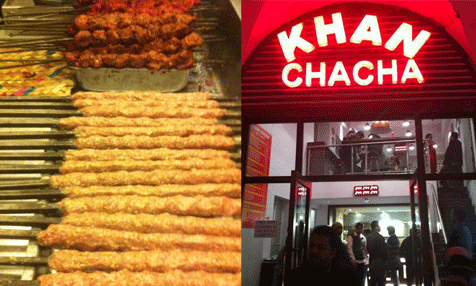
    One’s trip to Delhi will be wasteful, if he goes to Delhi but does not visit any of the above mentioned place. Both these places have been established in Delhi for the last 100 years or so and have been constantly providing the people of Delhi with an indispensable service ever since. The service of good food. Or more specifically, the service of Great Chicken. Khan Chacha and Kareem’s both are known for their Mughal style Chicken which they both offer in Chandni Chowk. The shop is tiny but the crowd of buyers: mammoth. Both of them provide exceptional Tandoori Chicken and Kebabs. Their extraordinary skills lie in providing with dry chicken variety. They specialize in Seekh kebab, Shammi kebab, mutton burra kebab, mutton stew and the rann (goat’s leg). These leave you with the exact smoky flavour that should be left after having a tandoori meal and also bestows upon you the feel of the grill.

    Connaught Place:

    cp-650_081714012910

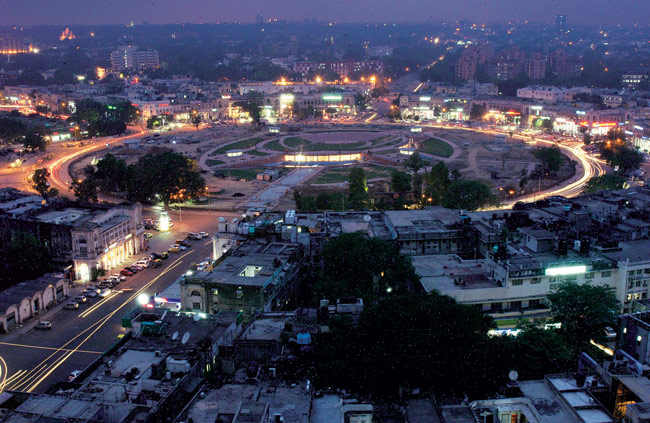
    What makes Delhi, Dilli you ask. One of the reasons of Delhi’s uniqueness is Connaught Place. Two British Built market places in circular shape around a gigantic park in between. Sounds confusing? Well, it is. But in earnest Connaught Place is one stop destination for all the top notch brands anywhere in the world. Until one hasn’t a shop in Connaught Place, he/she is too amateur to go global. A beautiful set of buildings all dressed up in white just like a catholic wife-to-be in circular shape mark the inner circle and the outer circle. A market place to take a stroll ith your friends or go bridal shopping; A day to enjoy Delhi in one glance and a hurried shopping session; everything happens at Connaught Place.

    ‘THE’ Palika Bazaar:

    pal

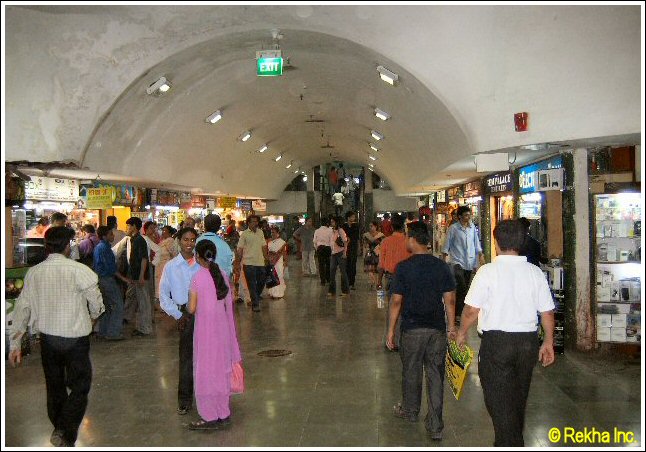
    Ever heard of an underground market place? Palika is one. No, it is not underground as in illegal, it is underground as in, it is literally 400 bunch of shops UNDER-the –GROUND. Remember how the Connought Place is circled around a gigantic park? Well this is a market place under that gigantic park. Palika is every women’s dream destination. Because you get the best of fashion labels at throw away prices. Loads of accessories, clothing, body tattoo shops throng the Palika. Men, don’t be disappointed. There’s something for you too, down there. Palika has men’s fashion outlets too, but more amazingly it has an entire bunch of shops that sell cheap China built Electronics gadgetry. So, next time you want a pen camera or a big grizzly transforming car, you can always go to the underground market.

    So, we made a tiny bit of progress in learning about Delhi. But don’t get tired yet, there’s more of Delhi to come.. Stay tuned.

  • What makes Delhi, Dilli…

    What makes Delhi, Dilli…

    A very long time ago when the heart of our nation was not famous for its countless rapes, an absent Government and Mufflerman; there was actually a city and a world inside that city that everybody loved. What made Delhi earn the jealousy of other metropolitan cities in the country, what is it that made Delhi stand shoulder to shoulder with Mumbai, the economic capital of India. Why is it that, people who have ever stayed in Delhi leave it with a heavy heart and tell everyone else that they can’t understand the emotions attached with the city if they have never ever lived in the city. Let’s find out!

    The Beginning of the Real Delhi:

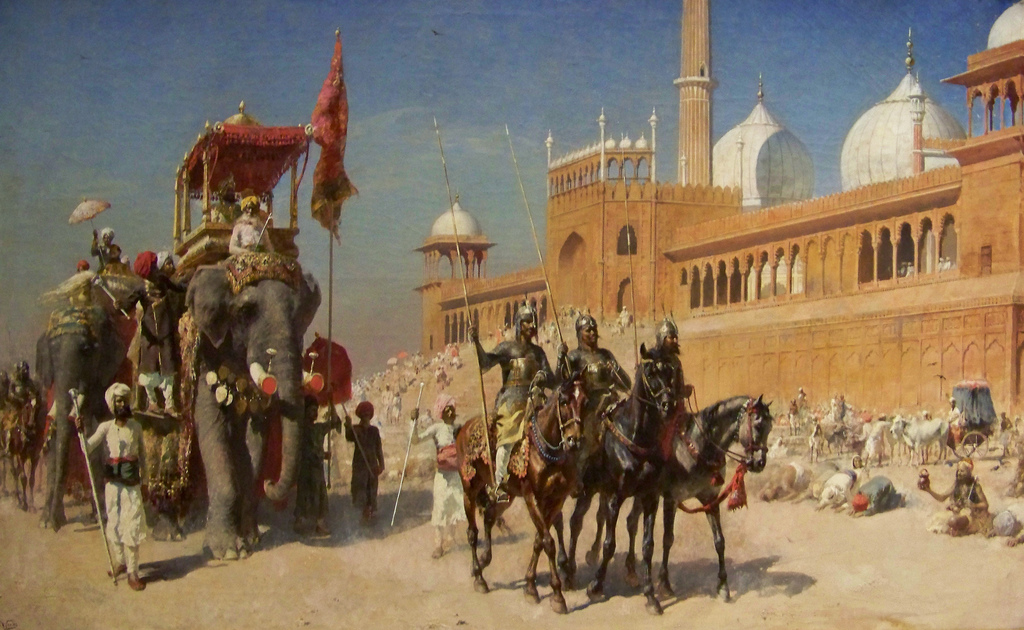
    Great_Mogul_And_His_Court_Returning_From_The_Great_Mosque_At_Delhi_India_-_Oil_Painting_by_American_Artist_Edwin_Lord_Weeks Now, the love for Delhi started long back when the Mughals transferred the Capital of India from Agra to Delhi. This is when the real on-ground transformations started taking place in Delhi. Before this move, people were as oblivious of Delhi as they were of any village in India. Firstly, with the onset of Mughals came along great Architectural Feats. For example Delhi boasts of the largest Brick Minaret in the world the Qutub Minar (well, it was built by Qutubbudin Aibek), it flaunts one of the largest mausoleums in India – The Jama Masjid, It carries reticence with its Old Fort. Also the Red Fort that instills in us a feeling of patriotism whenever we see it on our TV sets. All these Architectural marvels brought a Mughal charm to this city of ours and elevated it above its neighboring cities.

    Dilli and the finger licking tales:

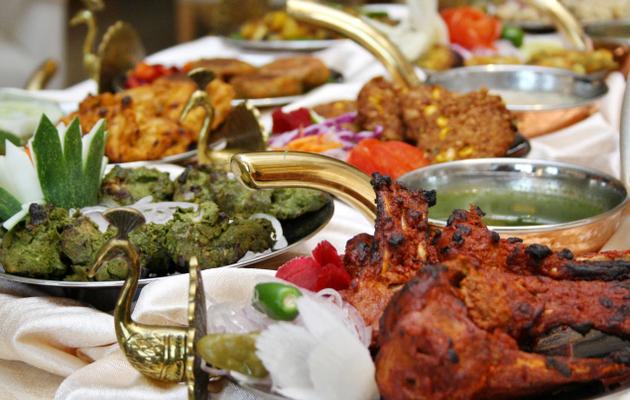
    AWADHI_FOOD_FESTIVA_898557g Along with the great architectural skill set of the Mughals arrived in Delhi their eternally pristine culinary taste. Their food was not just food, but Art on Stove. The Tandoori murg, The kadhai paneer, the Nihari,the  Paya, the Kachri Qeema, the Delhi-mein-world-famous-Mughlai Chicken, their biryani style and countless others set the tongues of the native Delhiites wagging. Not only did their cuisine establish itself in Delhi, it even grew there. More and more dishes were invented as an amalgamation of Delhi and Mughlai cuisines. This was a great culinary juxtaposition just waiting to happen. Seemed like this match was made in heaven. So, the Mughlai cuisine added one more feather to Delhi’s hat.

    Asli Delhi, Purani Dilli:

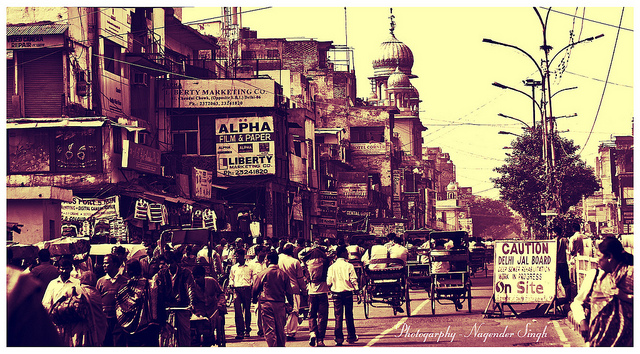
    7717061676_0ba4ab21a8_z Now, the heart of the Heart of the Nation. The Chandni Chowk and Chawri Bazaar area. For those new to the maps of  Delhi, these areas lie in the center of Delhi and still boast of historic architecture. These areas are famous for their super cramped streets, the always bustling crowd and nagging shopkeepers always trying to sell you substandard products. By the names in the list, all these seem to be pretty depressing by the levels of the national capital. But once you visit the place it seems just like your extended neighbourhood. It won’t seem as a market place to you, but a big great family  living in harmony yet tearing each other’s hair out. But there is a lot to watch out for in the Purani Dilli area. Since it is a crowded marketplace, pickpockets are always on the prowl. Also some shopkeepers tend to get too close for comfort levels in order to get their products sold. But every coin has two sides and prefer to see the loved one here please. Purani Dilli broken up and explained in pieces in the next points, because it ain’t so small that it can be contained in one measly point.

    The Paranthewaali gali:

    4950341851_7711ec9fd9_b Now, now, now. Every once in a while a moment comes in every person’s life that can’t be expressed even if you keep squealing with delight for a fortnight. For a foodie that moment would come when he enters the paraanthe waale gali. The lane where our Bollywood Star Akshay Kumar slaved and toiled for many years. The paraanthe waali gali is an even narrower lane than what already was a cramped main road of Chandni Chowk. There are a multitudes of shops there only selling paranthas. But mind you, these are not ordinary paranthas, these are paranthas made of Rabri, Paranthas made of bitter gourd and paranthas made of lady finger and all the odd vegetables and sweets you can ever garner. And these are not made on a pan or a stove, these aranthas are deep fried just like samosas and tikkis are. Your whole perception of paranthas changes after entering this foodie paradise. This narrow lane adds another dimension to your notion of parantha, by doing something with it that was unimaginable before this.

    The Japanese Samosa:

    7745361346_3ba6e884b2_z Well, to be honest, this is just sold in one shop in the entire Chandni chowk. But I swear to God, that you won’t have eaten anything like this before this. This samosa’s shape is more or less like regular samosas but the corn flour covering on the outside is striped. Thus the Japanese samosa is not wholly covered but partially revealing. The inner filling forms the crux of the whole dish. It is not spicy or filled with mashed potatoes for that matter. It is filled with a sweet mixture like that of a halwa. Thus changing the whole thought process around the samosa. By just keeping the name and shape intact, this exquisite dish retain the name value and the ingenuous sweet filling inside and the striped contours give it a modern twist. And thus, the Japanese Sammosa, The tour of the real Delhi has just begun. However, even the most brilliant of writers and esteemed authors would fail in describing the exact charisma and fascination of the city. Such complexly woven is the feel of it. I am just a young scribe who is trying to portray to you an image that tells what exactly Delhi is, if you have have never been there or miss the hell out of that angelic city of yours. To be continued…

  • My experiments with food (And truth too!)

    My experiments with food (And truth too!)

    India truly is one big piece of land. And on this big piece of land you encounter an eclectic mix of geographies  and topologies. And on these array of different  land designs, you come and meet very different people. People who practice different religions, wear very dissimilar clothes and practice varied traditions. And in all these differences lies one major difference, the different of cuisine. Just like we have over 700 gods and deities, I guess we must also have a similar number of different cuisines. But in all those differences they have one similarity. The trait of experimentation.

    No person who calls himself a religious foodie can never withstand a zeal for experimenting with food. Whether it is Milk and coca cola or Raajma with aloo bhujia; the tempt of experimenting is too great to be countered off. Hence we traipse to various parts of the country to look out for some experiments gone successful.

    The Chola Kulcha burger:

    Down the alleys and labyrinthine roads of a little known town in Punjab called Naabha, you will see gazillion of stalls selling this odd delicacy. Most people have had a taste of Chola-Kulcha in their life at some point or the other. This treat is in exactitude, same as the former, but a different form and slight delicious top ups give it the oomph factor that makes it feature in our list here.

    burger

    • Take two kulchas. Warm the boiled cholas and the kulchas.
    • Add a little bit of paneer and boiled mashed potatoes to the chola mix.
    • Now to the warm kulchas, add a dollop of butter and the samosa chutneys. The red one is mandatory, the chili sauce, add according to your taste. Keep the kulchas on the fry pan and add the chola mix in between the two kulchas. Voila! Your Chola Kulcha burger is ready to be savored.

    The Bhujia soup:

    Now, this treat had me baffled at first but left me craving for more later.

    There are places not so famous and not so hip in our country. Guduvanchery in Kancheepuram District (Chennai) is one such place. It is a sleepy village but with a huge local market. And in that market somewhere deep down, you may get lucky and get a chance to savor this orgasmic delight.

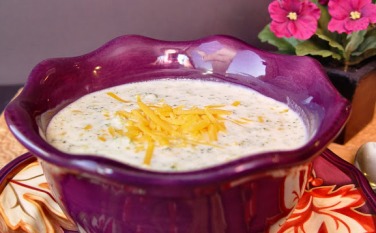
    soup

    The ingredients seem simple enough (Some namkeen + Some soup! Done!) But the trick lies not in the ingredients but the way those final ingredients are prepared. Neither the Bhujia is from Haldiram’s nor is the soup made from ready to eat packets. The Namkeens are homemade yet world class. For rookie foodies who try to differentiate between the two it will be in vain. But the oils from the namkeen and the spice mix in them scream homemade from top of their lungs. The namkeens are just not aloo bhujiia or khatta meetha. There’s a spectrum of namkeens of different sizes and different flavors available to choose from.

    But when in Home, do as the homies do. At your home, you can definitely use the knorr ready to eat and the aloo bhujia lying in the cup board waiting for guests to arrive at you home.

    The Samsiya:

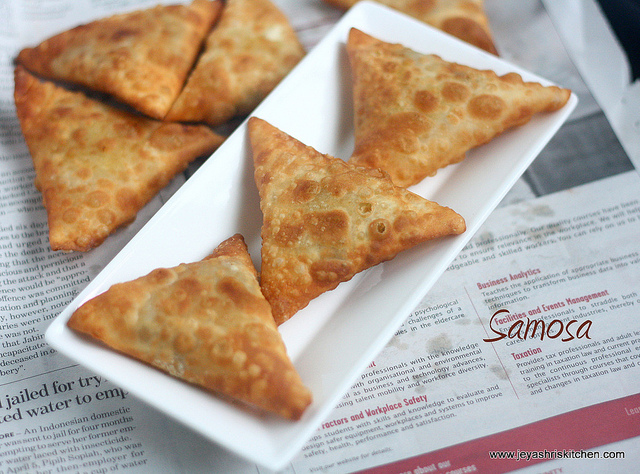
    samosa

    Yes, the root of the words are the same but these are slightly different foods to be had.  While the samosa is filled with aloo mix, the samsiya is filled with fried onions. And in front of the samsiya, samosas seem gigantic. So, there should be no doubt if you find tiny samosas being sold 4 for Rs. 10 outside the Chennai railway Station. There’s one more wild twist in the tale of samsiya. Along with samsiya, you will never see your traditional imli and chili chutneys. The samsiya is served along with Coconut chutney. Just like idli is, just like vada and dosa are. This gives a good-humored  taste to the dish. Not spicy enough, not tangy enough but yes unique in its own sense.

    The Chola Pani puri:

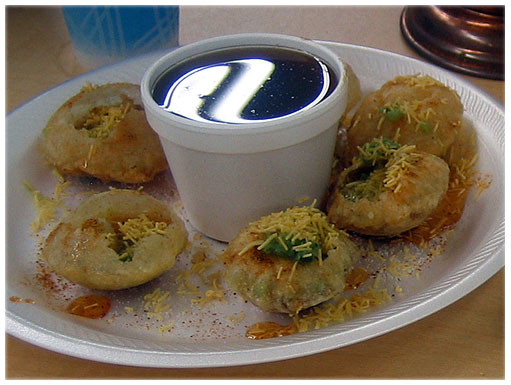
    poori

    All of you might have eaten our favorite street food: The pani puri. But you are in for a surprise when you visit a chat stall anywhere south of Maharashtra. While visiting a chaat stall, forget that you have ever eaten pani-puri before. This will be a whole new dish you will taste. Sure, the puri is the same shape as in our north and everywhere but everything else is different. The filling in the puri is not mashed potatoes but hot boiled mattar. You know the green balls that you threw out of your rice as kids, that one.  Also, the filling is not dry, there is thickened water along with the hot mattar. Next, the tangy paani which was as delicious as it was healthy. Want a tip? Forget that paani. Here the paani is devoid of any and every bit of zippy taste that you went to the chaat stalls for. The paani is hot (again) and very straight in taste. Just imagine yourself having a mild soup for the paani. And thus our beloved paani puri becomes, some hot dinner dish making you feel fuller instead of easing up your stomach.

    The vodka Paani puri:

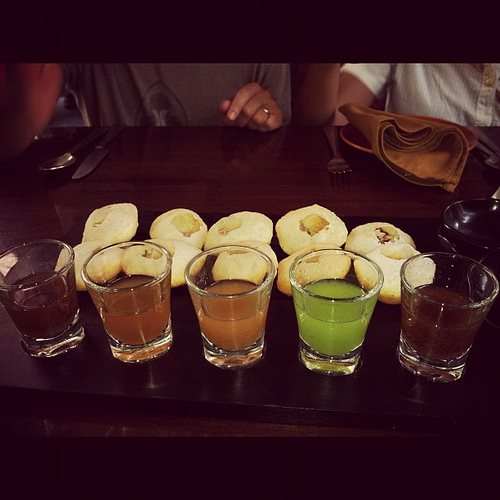
    Are all the liquor fans up yet?  *Sees left to right*  Great!  Now, this experiment is what you expect by its name.  Instead of paani you get vodka shots filled gol gappas.  Now no need for another appetizer huh? This is only offered at ‘Punjabi by nature’, a restaurant chain in the National capital and surrounding areas. The vodkas all come in different flavours, but I am sure you will not want to try out bubble gum flavored vodka with your puri.

    vodka

    So, from all around this great country of ours, we brought you some of the quirky, queer yet magnificently delectable experiments to tease you taste buds with. Try out all or some of these if you are in the neighbourhood, and get your tongue out of its routine. And do write some of your own experiments down in the comments section. Till our next journey around India, keep tasting.

  • A Platter of Vegetarian Kebabs

    A Platter of Vegetarian Kebabs

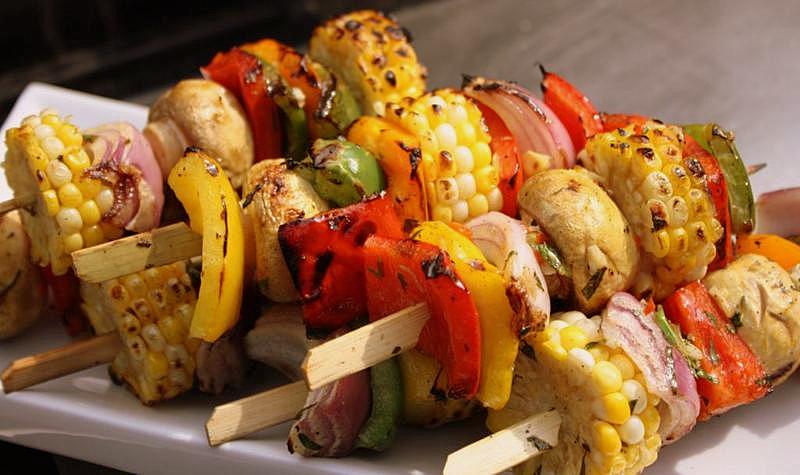
    Originating in the coastal countries of the eastern Mediterranean area, kebab is a versatile dish made by roasting and grilling pieces of meat, fish, and vegetables, over a skewer or a spit. The dish quickly spread in popularity and consumption throughout the nations of the Middle East, and then central Asia. The kebab traces its historic roots to before the 17th century B.C., and even the ancient Greek poet Homer mentions an erstwhile archaic dish resembling the same, and enjoyed all over his country in his works. However, a Turkish script by Kyssa-i Yusuf which dates back to around 1377, first properly mentions the culinary concept of the word, which is derived from the Persian language, and literally means “fry”, and sometimes “fry and burn”. Legend has it that the kebab was invented by medieval Persian soldiers who grilled meat on their swords over open-air fires in the battlefield. It quickly gained favour of both the classes and the masses, being served as the royal fare in various Islamic states over the ages, and as a much sought after and easily accessible snack or main course dish for many commoners, and the trend continues even today.

    Although lamb is the traditional choice of meat for making the kebab, there are many variants available in different meats and vegetables all over India due to religious constraints and direct or indirect dietary restrictions. Indian kebabs, whether they are vegetarian or non-vegetarian, have a unique and popular flavour of their own, owing to the wide spectrum of masalas (spices) and herbs native to the subcontinent. Apart from the numerous Indian innovations in the art of kebab making, the sheesh, shammi, tikka, and shawarma, original types of kebabs are also available everywhere, and can be found easily in small roadside eating joints as well as in top notch restaurants and hotels. The cities of Lucknow and Hyderabad are famous all over the country, owing to their thousands of decades-old, local eateries and food establishments which sell different types of primarily meat kebabs, ranging from tunday to kalmi and tangdi to reshmi, and have thus contributed a lot to culture, food, tourism, and economy.

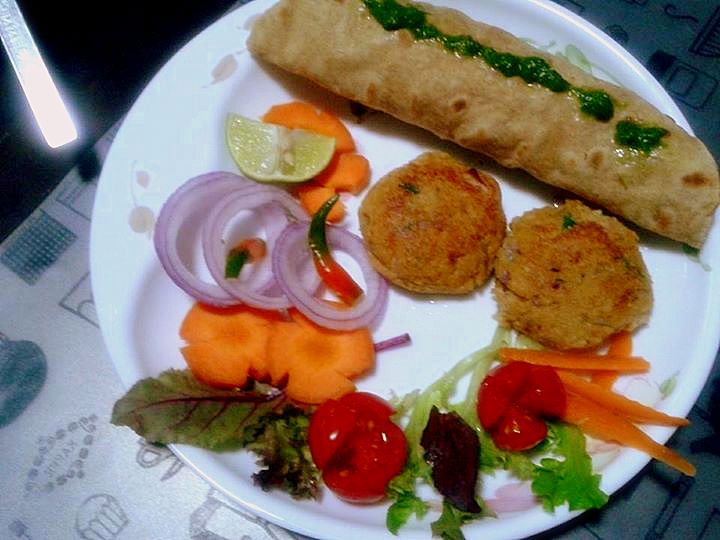
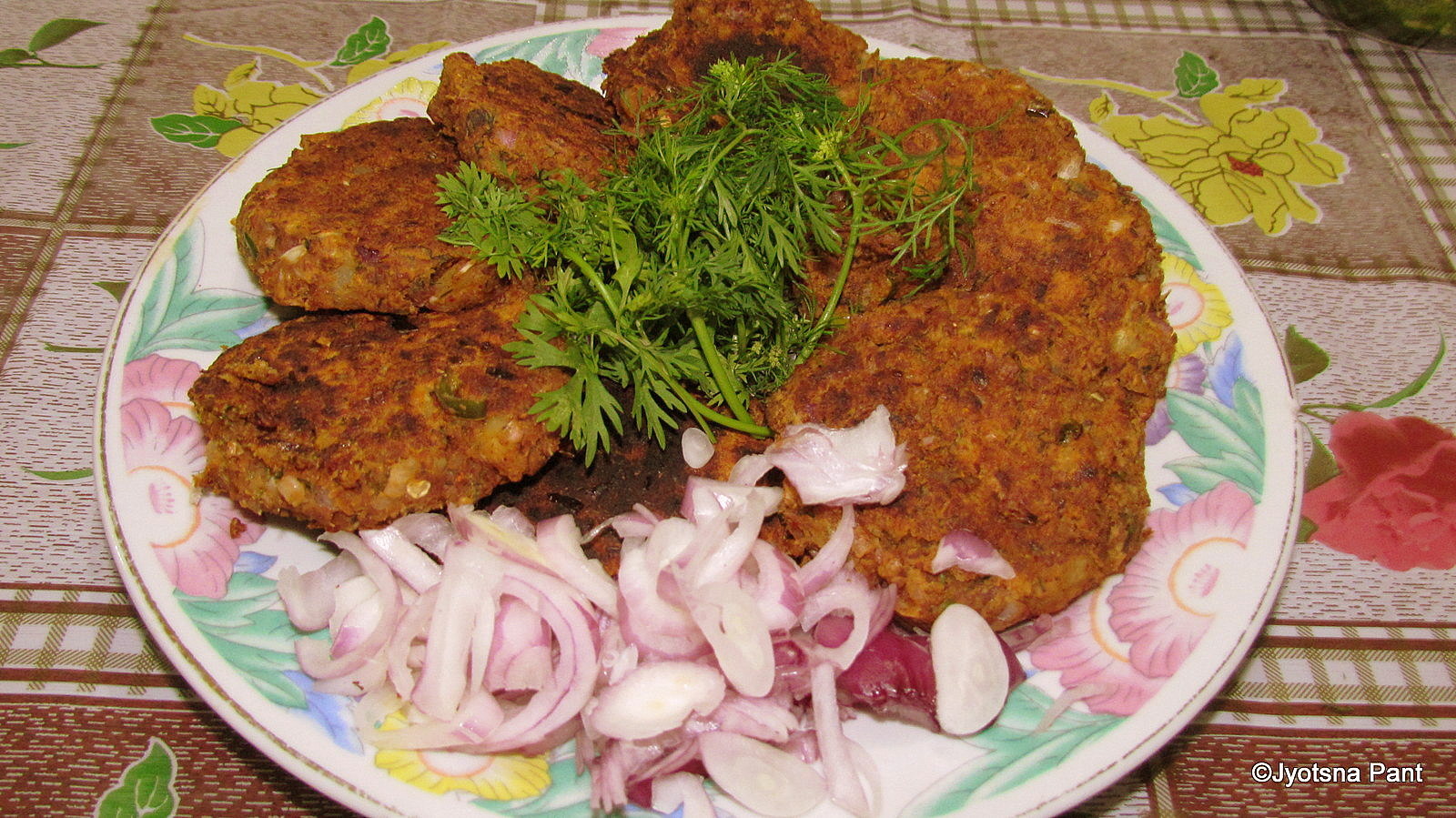
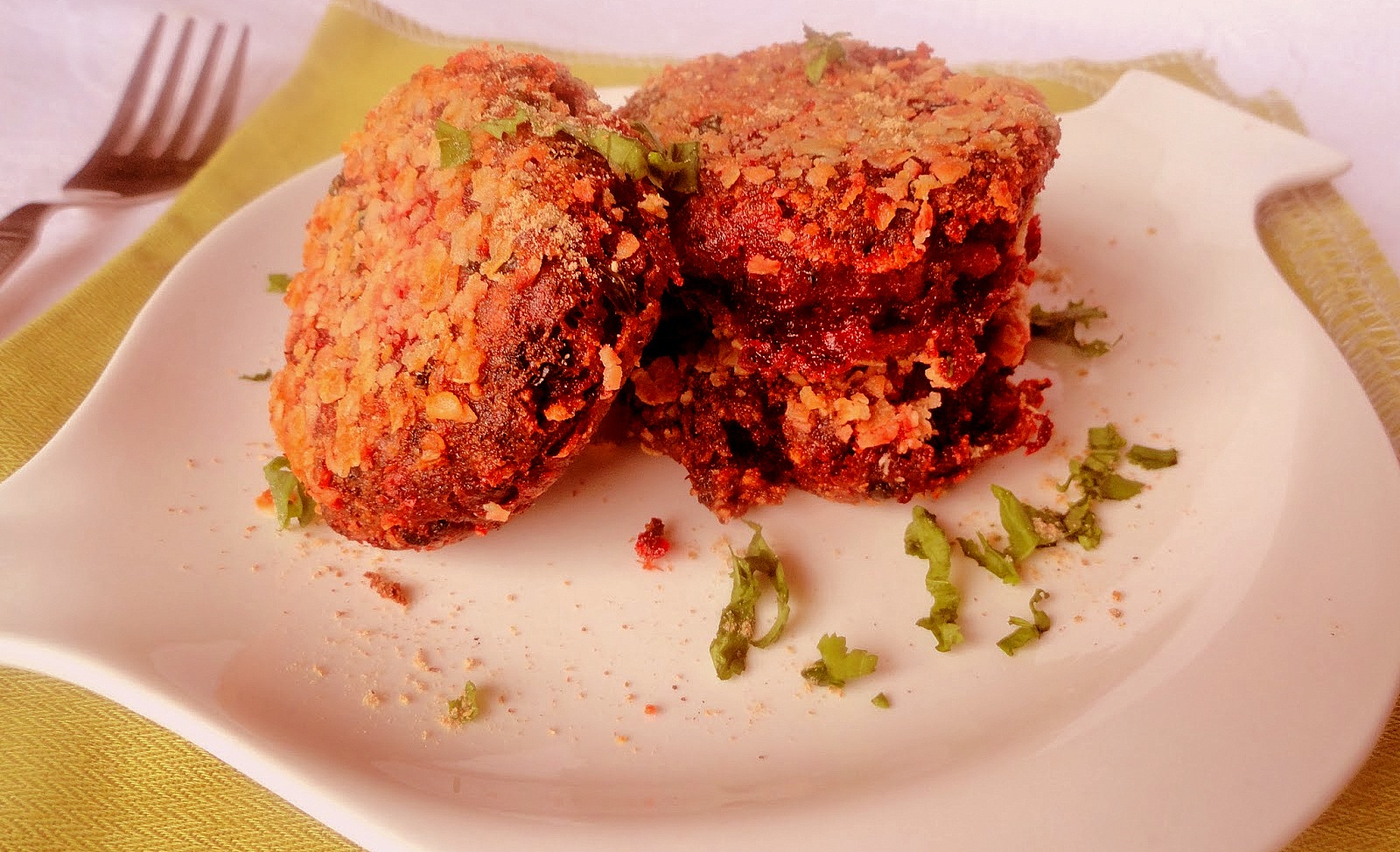
    While you can get non-vegetarian kebabs from anywhere, the vegetarian types are a rarity to find outside one’s house, and they are generally overpriced in the restaurants they are available in. Vegetarian kebabs can be easily made at home, with simple ingredients, and less elaborate methods than their non-vegetarian counterparts. This article will provide you with three novel recipes, all made wonderfully by my favourite chef in the world, my grandmother, for these lesser known variants, namely, shalgam ke kebab, kela chane kebab, and chukandar ke kebab.


    Shalgam ke Kebab (serves 4-6 people)

    Ingredients needed:

    • 7-8 bulbs of turnips
    • 2 tablespoons of roasted besan (gram flour)
    • Finely chopped onions
    • Finely shredded coriander, chilli, and ginger
    • 2 medium sized boiled potatoes
    • Salt to taste
    • 1 small teaspoon of garam masala powder
    • Vegetable oil

    Steps required:

    • Thoroughly wash the turnip bulbs, and then carefully peel their outer skins off.
    • Put the skinned turnips in a pressure cooker and steam thoroughly.
    • Once the turnips cool down, mash them and drain out the excess water.
    • Mash the boiled potatoes and mix them with the turnips. Add coriander, chilli, ginger, and onion to the mixture and be careful to make it consistent with dough.
    • Add garam masala and salt accordingly.
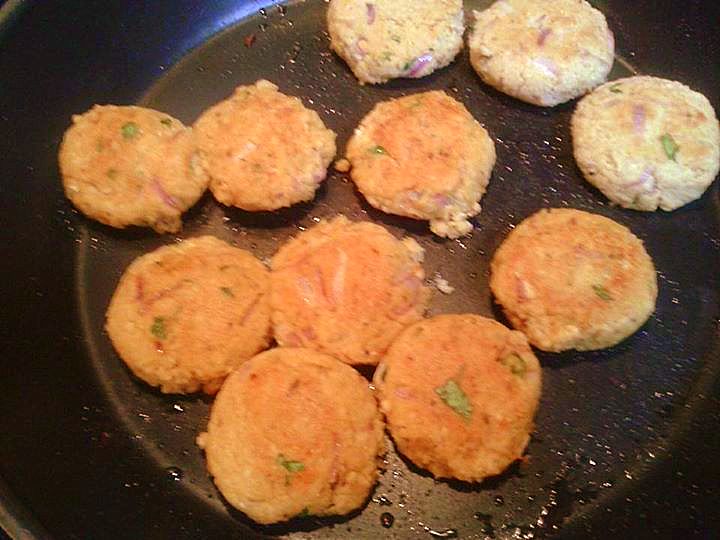
    • Make small balls of the prepared dough and flatten it into small cutlets or flattened disc shaped portions.
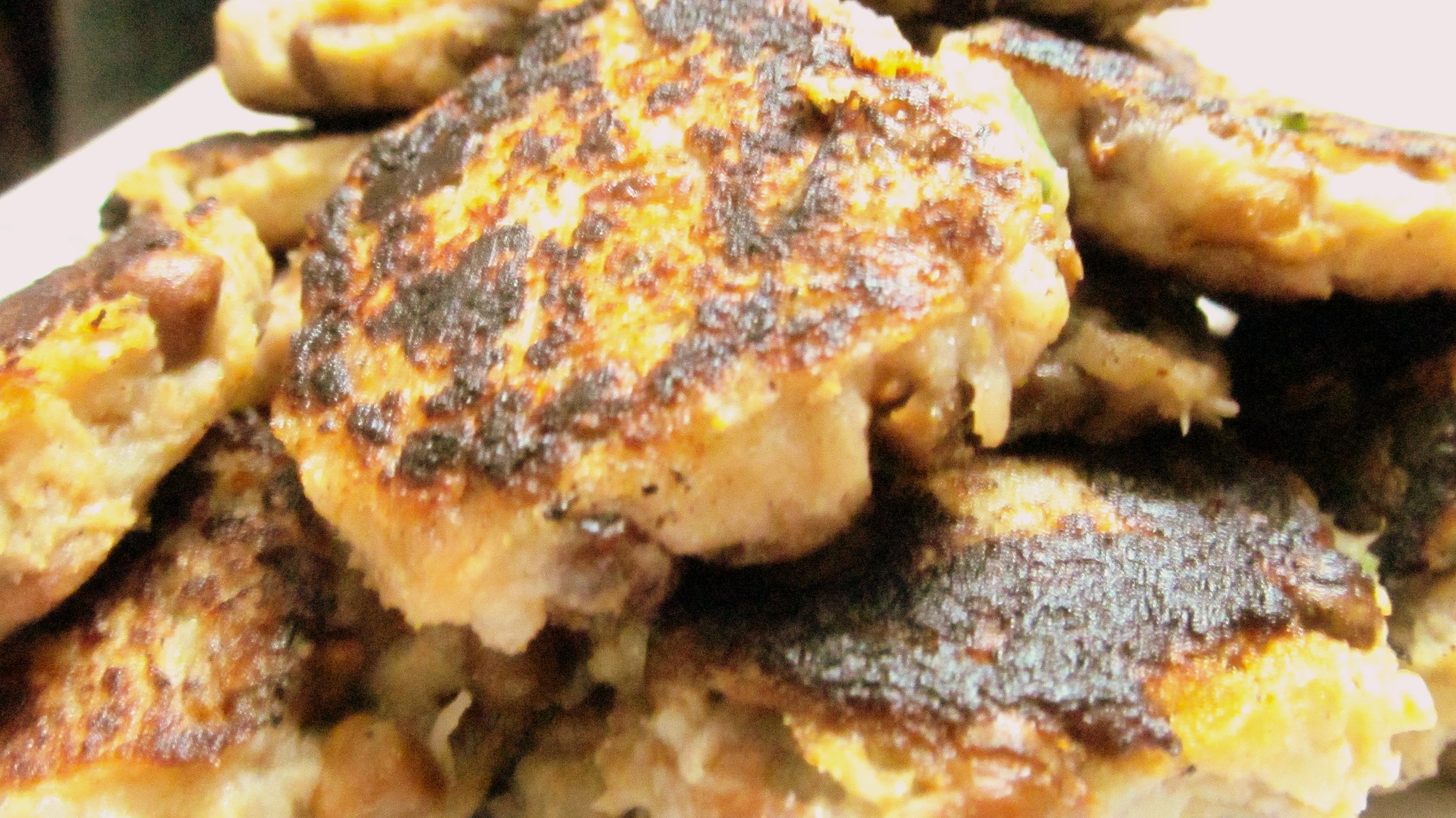
    • Shallow fry on a tawa (pan) until the kebabs are thoroughly cooked and are a rich golden-brown in colour.
    • Top with sprigs of coriander and rings of onion. Serve hot, with a chutney of your choice.


    Kela Chane ke Kebab (serves 4-6 people)

    Ingredients needed:

    • 5 clean green unripe bananas
    • 1 bowl of soaked chana dal (gram beans)
    • Finely chopped onions
    • Finely shredded coriander, chilli, and ginger
    • Salt to taste
    • 1 small teaspoon of garam masala powder
    • Vegetable oil

    Steps required:

    • Make sure to wash the bananas thoroughly with fresh water before beginning. Once they are clean, steam them in a pressure cooker with their skins intact.
    • Steam the dal separately to a soft consistency.
    • Once both ingredients cool down, peel the bananas, and mash together with the dal to make a dough.
    • Add garam masala and salt. You can also add other spices such as red chilli powder if you prefer.
    • Shallow fry on a pan.
    • Garnish with sprigs of coriander, and serve with onions and chutney.


    Chukandar ke kebab (serves 4-6 people)

    Ingredients needed:

    • 7-8 beetroots
    • 2 tablespoons of roasted besan (gram flour)
    • 2 boiled potatoes
    • 250 grams of paneer
    • A few whole clean leaves of cabbage
    • Finely chopped onions
    • Finely shredded coriander, chilli, and ginger
    • Salt to taste
    • 1 small teaspoon of garam masala powder
    • Vegetable oil

    Steps required:

    • Steam the beetroots thoroughly after cleaning them.
    • Mash the beetroots to a dough-like consistency. If necessary, add a little bit of boiled potatoes as well. Add roasted besan to this mix.
    • In a separate bowl, mash potatoes and mix them with paneer chunks.
    • Add coriander, chilli, ginger, and onion to the beetroot dough.
    • Make miniature balls of the paneer and potato mix after adding salt and garam masala to it.
    • Wrap them in a leaf of cabbage.
    • Encase this in an even layer of beetroot dough. Make it firm with more besan if required.
    • Shallow fry on a pan until the kebabs are thoroughly cooked.
    • Cut the kebabs open from the centre, top with coriander, and serve hot with chutney.
  • Monsoon’s Here!

    Monsoon’s Here!

    It’s start of July and there had been few showers to subtly start the season of drizzle. Monsoon’s here! Except the all unpredictable showers and muddy pools on the road, there are so much beautiful stuffs to root for. Romantic day offs and bread pakoras!
    Thinking of bread pakoras, we all have specified snack list for almost every season. Summer season had Mango chutneys, ice creams, shakes and squashes. For the monsoons spicy and crispy snacks do the roles of best treats.  One of strong points of evening snacks are they gratify the hunger between the two meals that is lunch and dinner. Whether it may be a school going child who came home after playing outside for hours or a housewife retiring from chores, evening snack refreshes us. Now, what snacks could we relish especially in some seasons, like for instance you would not want samosas on a summer evening or ice cream in winters? And as the topic goes all in for monsoons, we won’t deny relishing warm snacks on the rainy days.
    Just before we start, notice for all the calorie-watchers! Snacks mentioned below aren’t in any order put up considering their calorie values. So, indulge in the post warding off the concern for fat count.

    BREAD PAKORAS!

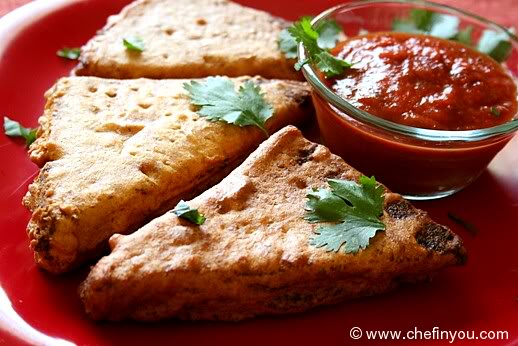
    bread pakorasFor the stale yet to be passing the date of expiry bread loaf, stuffed pakoras are a delicious rescue. It can either be stuffed with preferably mashed-spiced up potatoes or cheese and then can be shallow or deeply fried. The bread is soaked in gram flour and then fried. Bread pakoras like many varieties of pakoras are best when served with mint/coriander sweet, sour and spicy chutney. The chutney is prepared by grinding coriander and mint leaves along with ginger and garlic. Salt and a small amount of tamarind paste can be added, totally as per your taste preferences.

    CHOLE BHATURE!

    Next in the line is the best Punjabi meal to energize up a lazy damp afternoon.
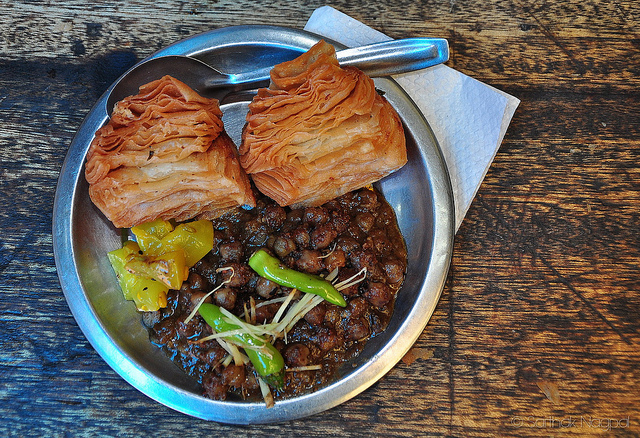
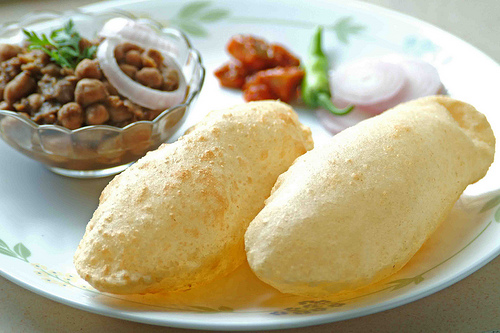
    Chole-bhatureChole Bhature is prepared in two parts and served as one dish. Chole is made by soaking chickpeas and then is prepared in typical North Indian style which includes ingredients like chopped onion and tomato cooked with coriander seeds, spices and ginger and garlic paste. Dried mango powder or as known as Aamchur powder is often used too. Bhature part is basically a kind of Puri made up by dough containing maida flour with yogurt, baking powder and sugar (as per taste). This dough is covered in damp cloth and kept overnight in a clean and dry place. Chole Bhature serves as a perfect mouth watering meal for an unpredictable monsoon afternoon.

    SAMOSAS!

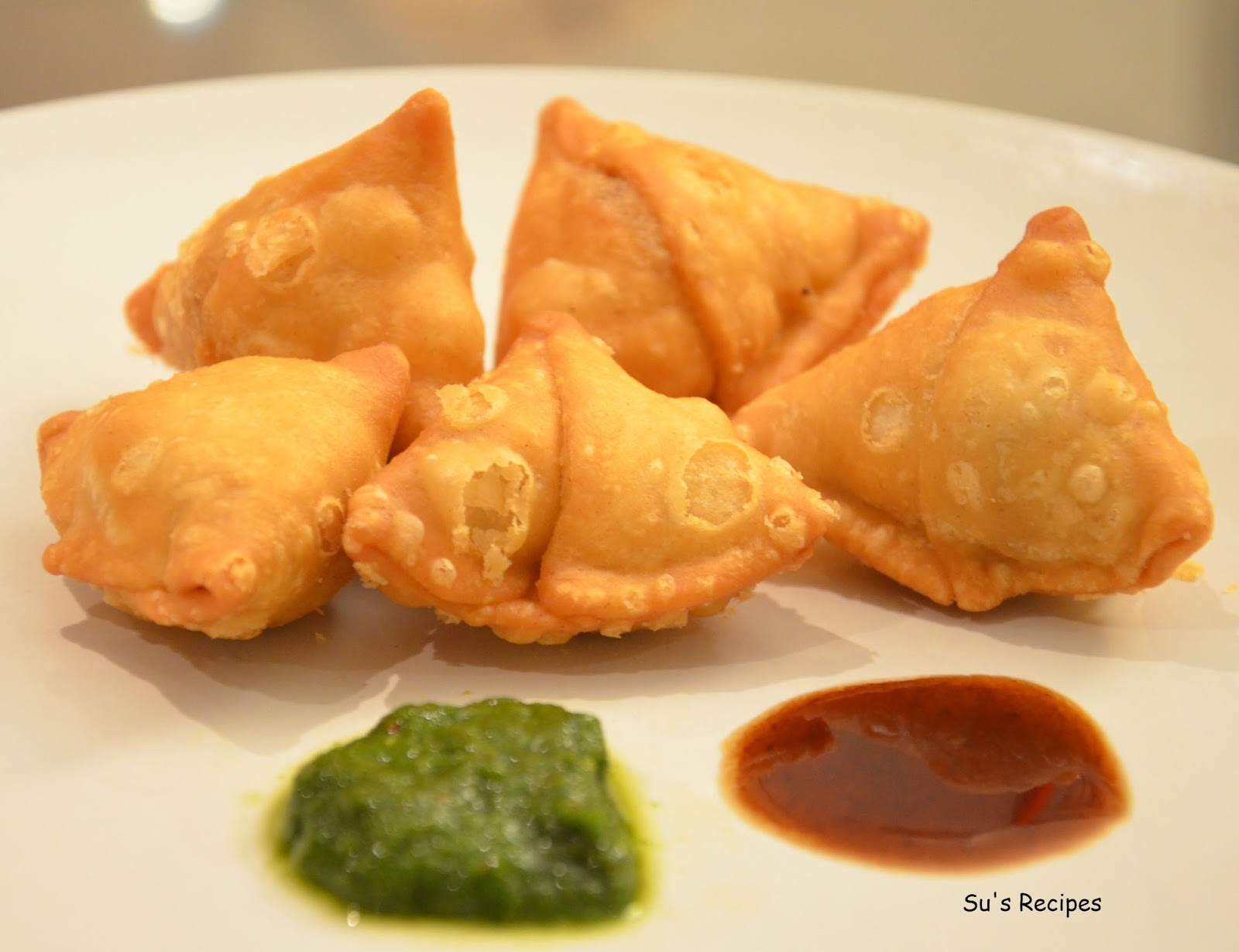
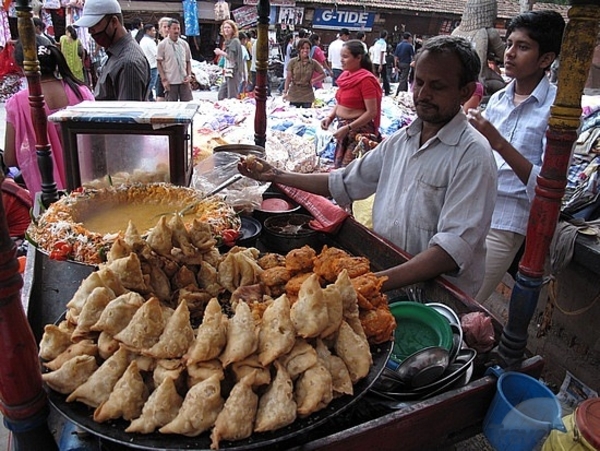
    samosaHow can we discuss an Indian snack list and not mention the very popular Samosas? A samosa is a fried pastry with filling of generally spicy mashed potatoes, onions and lentils. Very popular yet not expensive at all and relished snack all over India, WAIT! Abroad too, Samosas are just blessing on a cold monsoon evening. You wouldn’t like missing on to some Green or sweet chutney with it.
    Like samosas, kachoris are also a popular spicy snack alternative and can be easily prepared in the household.
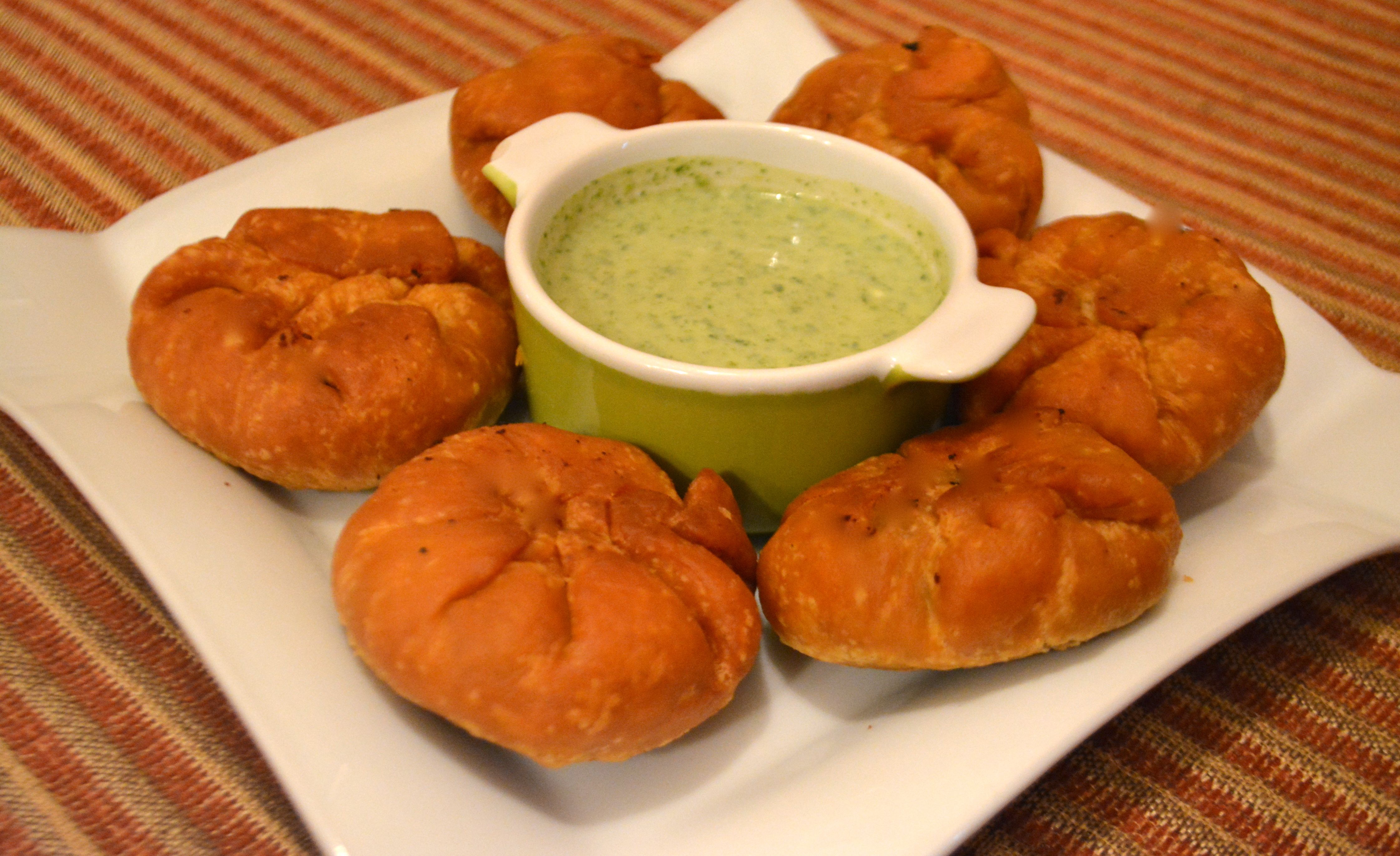
    Kachori

    POPCORN TIME!!

    popcornWatching a movie? We all know that popcorn is a must. So, why it is specially mentioned here? Well, it’s about how we wade away the clamminess of weather by adding some flavors to the popular snacks. Butter, chili flakes or cheese can be added in the popcorn for that warm snack for the movie time. If you are not much fan of popcorn, then you can also prepare “Pyaaz (Onions) ke pakore”! It serves as an excellent movie time snack and one or two of pakore equals a handful of popcorn, so you munch less.
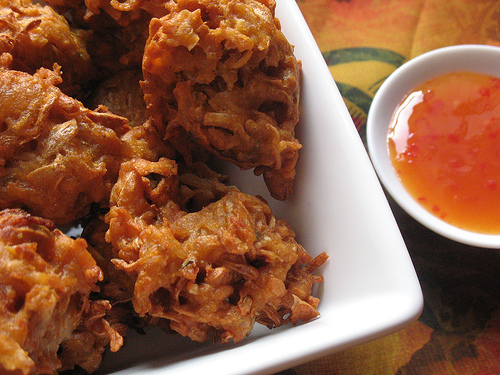
    onion-pakoraEasy to prepare pyaaz ke pakore is prepared by chopping onions in long slices and dipping them in mixture of Besan (Gram Flour), water, salt and chili powder. The dipped onions are then shallow or deep fried and served with the obvious green chutney or even tomato ketchup would do.

    FOR THAT SEASONAL FEVER.

    coldIt’s not unknown to most of us that whenever season changes and especially from summer to winters or monsoons, there is a scare of catching viral fever and cold. For the cold, soups and dals are the best. Now, how can we make it more tasteful? Yes! Additions! Manchurian balls, chicken and mushrooms!
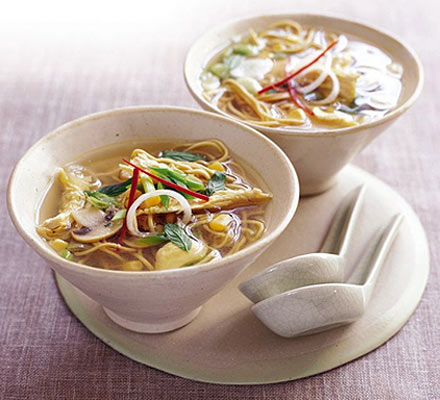
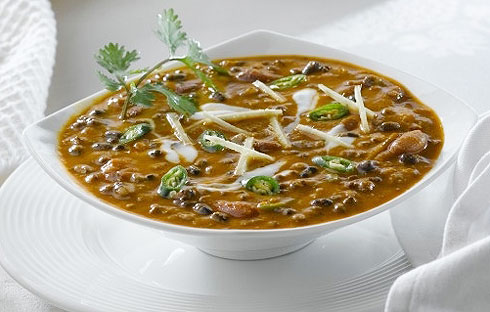
    noodles with soupOkay, before we miss. Dal Makhani! Perfect cure for the “mood gloom”. Nutritional balance? Check. High on potassium and sodium value, it doesn’t deny the presence of calories but that shouldn’t be an excuse for not indulging into this elegant rescue from the taste bud numbness caused due to the cold.
    dal makhani

    Jeez! CHINESE!

    Discussing soups and just about to forget Chinese food! Almost everything available in this cuisine goes so well for the monsoon season snack. Yes! Especially Maggi Noodles! Now, if you’re bored with noodles, MOMOS!
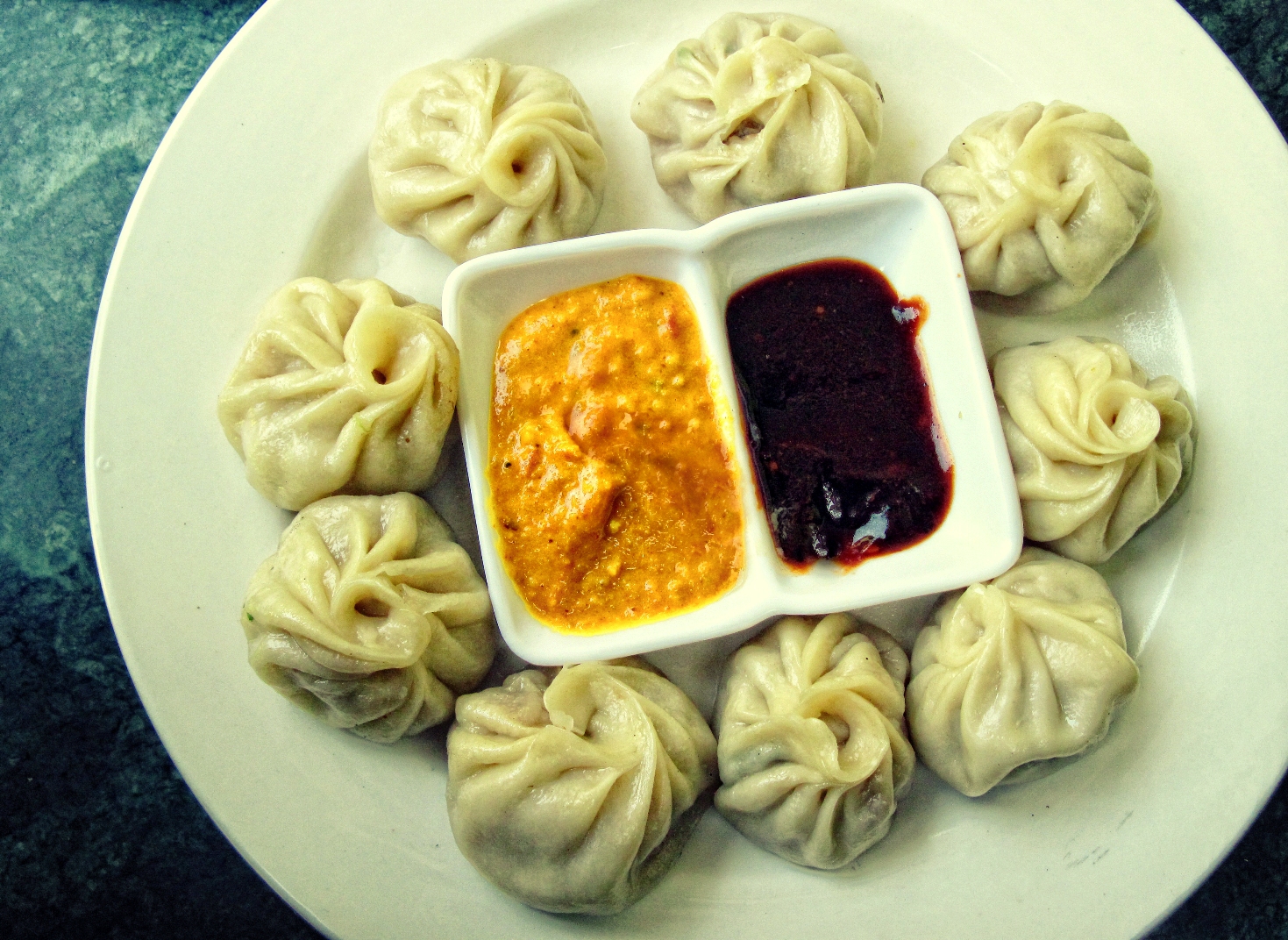
    MomoMomos are steamed/fried dumplings stuffed with either vegetarian or non vegetarian ingredients. They originally belong to Nepali culture Hot momos served with the chili sauces are just the excellent evening snack ever. Other to be mentioned Chinese snacks and starters just for this weather are (In no particular order) :
    (a)    Spring rolls
    (b)   Shanghai Chowmein (Well, it comes under noodles category)
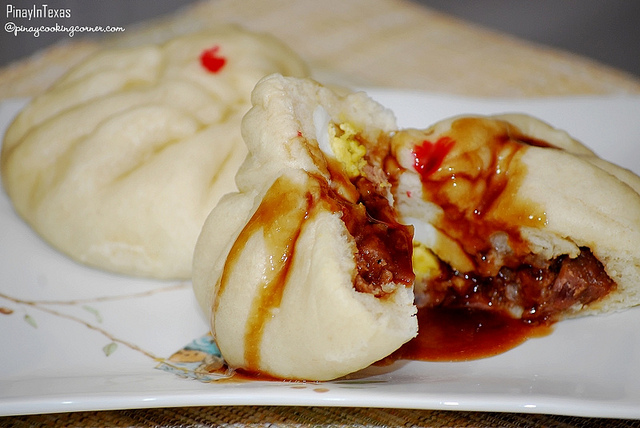
    (c)    Siopao (Stuffed steamed dumplings)
    siopao(d)   Jian Bing (Chinese crepes)
    Double-Cheddar-Jian-BingSo, here there you have! This checklist mentions just some of the worth savoring snacks and dishes for the monsoons, all must tries. Other than that, experiment and make your own custom season based dishes checklist!
    Don’t let the rain damp away the hunger pangs! Happy Monsoons!

    dancing-in-the-rain

  • Here is why you should stop eating bread

    Here is why you should stop eating bread

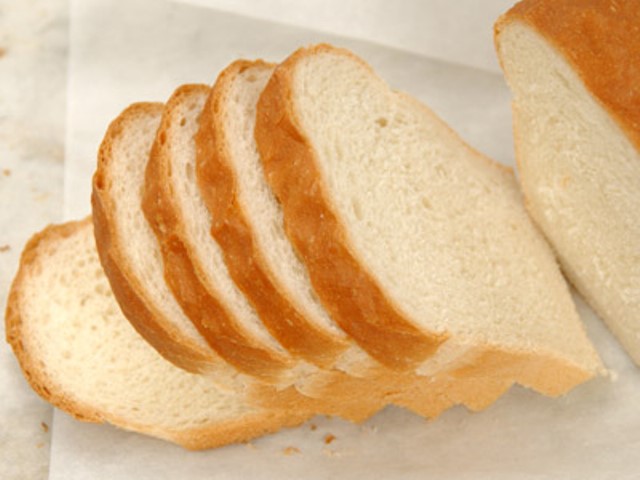
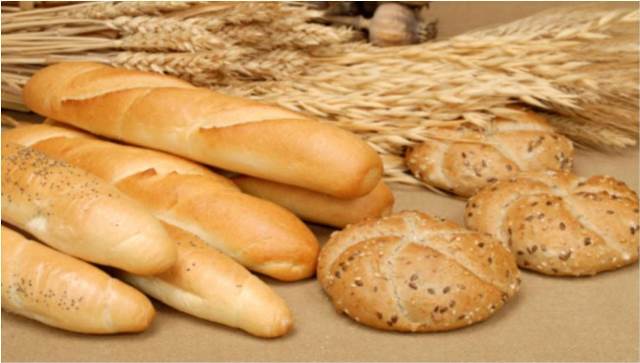
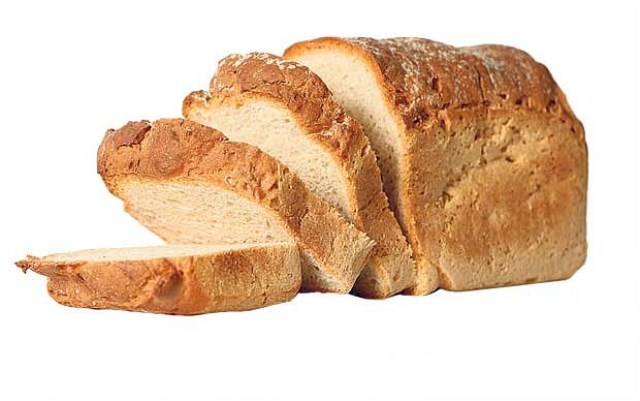
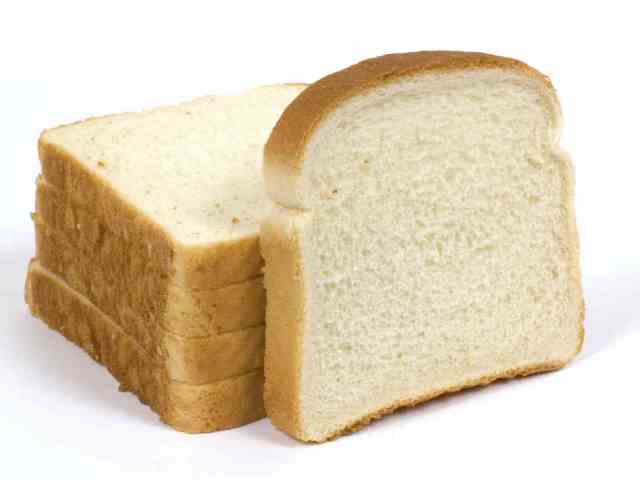
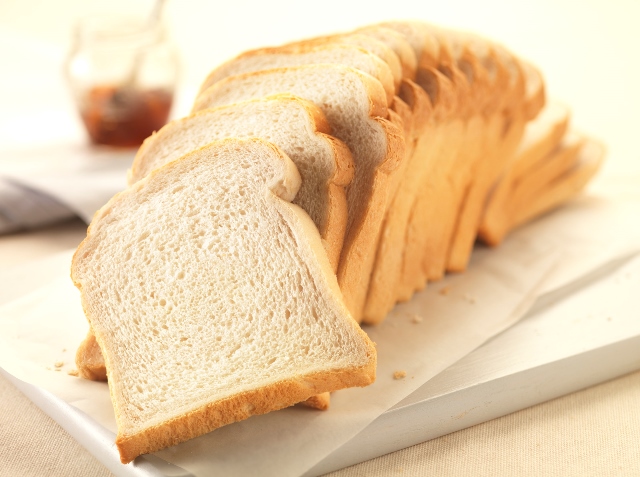
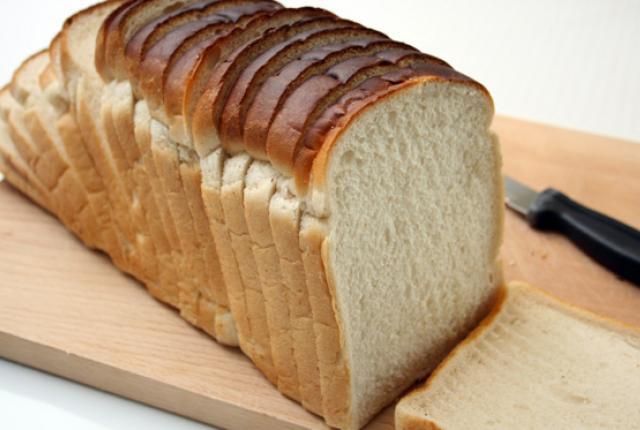
    Bread is one such food item which we extensively use in our daily life. It is prepared by mixing flour with water. The mixture obtained is then baked. If you will look at the history of the bread you will find its existence in almost every civilization. People find bread as the easiest food option available in front of them, so whenever they feel hungry, they eat the dishes made using them. But most of the people are not aware that the white bread consumption affects the human health in many ways. It simply means that bread isn’t healthy at all and you should start avoiding bread instantly. Many research conducted on this topic have yielded the same result. It is so recommended by the dietitians to stop eating bread and instead go for other food items which are available. We will hereby give you some of the adverse effect which bread can cause on the human health.

    5

    Bread is a rich source of the protein named as Gluten which has the properties found in glue and it is responsible for the viscoelastic properties of the dough. It has been proved in various research conducted worldwide that those people who regularly eat bread have the excess amount of Gluten in their body. This in turn seriously damages the digestive tract which results in lots of pain, tiredness and inconsistency in stool. The Gluten also causes disorder in brain and people get affected by the cerebellar ataxia disease. So you should stop eating bread and go for other options that are available.

    4

    People believe that bread is made using grains and is healthy for the body but they are not aware that it is not made using actual whole grains. They are made using grains which have been pulverized so as to get fine flour. Because of this process the breads gets digested easily and moreover the starch present in the bread also breaks down and so they enter as glucose into the bloodstream. This results into the steep rise of the insulin and blood sugar which is not at all good for human body. Again when the blood sugar level comes down we feel hungry. That is why people who are dieting and those who are affected with the blood sugar disease should avoid it instantly. Moreover if the blood sugar level is above the permitted value, it results into the formation of glycation and it is one such component which results into aging.

    3

    Bread is deprived of any sort of nutrients which is beneficial for the human body. Bread contains fructose which if present in access amount affects the health. This is proved worldwide that bread has sugar in it which is not at all healthy. They also have phytic acid in it which is generally known as the anti-nutrient. This phytic acid if present in the body makes the minerals required by the human body for growth and development to get stick to each other and so they do not get absorbed. The human body produces two types of cholesterol. While one is bad for the human health, other one is actually good and its presence is required. If you are a regular bread consumer then it is likely that the LDL cholesterol of the body will increase by 60 % which is quite a big figure and for your information LDL cholesterol is in fact the bad cholesterol which we have in our body. So it makes you prone to the different diseases such as the heath and lung diseases.

    2

    In all the bottom line is bread is not at all good for you as it is not at all nutritious. If we compare bread with other food items which are easily available to us, bread lie below them in terms of essential nutrition and minerals that they provide. Since the acid formed due to the bread consumption damages the intestinal lining, the absorption of the minerals and nutrients is not carried on by the human body and consequently its deficiency causes various diseases.

    1

    While this may be a bad news for all those people who love to eat bread or the dishes made using breads, it is for their own safety and healthy body that we hereby ask them to stop eating bread. It is not that you should completely eliminate it from your diet but then the frequency with which you eat bread and bread products must be decreased. So the next time you feel like eating bread, just remember that it will not only affect the functioning of your digestive system but will also not allow you to lose weight. We have given enough evidence which clearly states the adverse effects the human body. Other than bread there are various food items which are available and if you will eat those then you will certainly have a healthy body. So go for those and stop eating bread. Stay healthy.
  • Street Food Made Easy Part-2

    Street Food Made Easy Part-2

    Okay, for those of you who have read the previous edition to this article, I am not going to bother with an explanation regarding what street food is, how it tastes, what are its benefits and the like. However, for those who are reading about street food for the first time, this article will surely prove to be a pleasant surprise. And dare I say both for the tummy and the mind!

    Street food can be of various types. It can include heavy or light food items as per your hunger pangs. Well, in this article, I would like to satisfy those among you who prefer the former category.

    Often while returning from work or from school or from college, you find your stomach rumbling. Really loudly! Well, what to do? You know that having food from the street is not really the safest bet for your health. But what is the alternative then? It is really simple actually. Just make those street food items which you have been craving for God know how many days at your own home! Follow the recipes given below to get the most satisfying and sumptuous results with the utmost amount of ease on your part. I assure you that you will not be disappointed in the least. Simply read on to find out more!

    (1) Dahi Papdi Chaat:

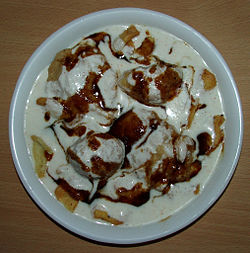
    PapriChaat


    Dahi Papdi Chaat is a very popular north Indian (Maharashtrian) street food item. Chaat essentially means a Hindi word which literally means ‘to lick’. It is now used to describe a whole range of savoury snacks and fast food items across Indian and in some places abroad as well. Papdi refers to the special crisp fried dough wafers which are made in a special way by using refined white flour and oil (mustard usually) as the main ingredients.

    Ingredients:

    •Crisp Papdis: 24.
    •Whisked Yoghurt: 1 ½ cups.
    •Salt: According to taste.
    •Sugar: 1 tbsp.
    •Boiled and Chopped Potatoes: 2 medium sized.

    •Blanched Sprouted Green Gram: ½ cup.
    •Red Chilli-Garlic Chutney: ¼ cup.
    •Green Chutney: ½ cup.
    •Sweet Tamarind Chutney: ¼ cup.
    •Roasted Cumin Powder: 1 tsp.
    •Chaat Masala: ½ tsp.
    •Red Chilli Powder: ½ tsp.
    •Fresh Coriander Leaves: According to use.
    •Sev: As required.
    •Peeled Pomegranate (Anar): 2 tbsp.
    Preparation:

    •Add salt and sugar to the yogurt and whisk further till it has arrived at a smooth consistency. Keep the mixture in the refrigerator till use. In the meantime, arrange the Papdis on a medium-sized plate.
    •Place some of the chopped potatoes over each Papdi. Over that, put some boiled sprouted moong. Drizzle a little Red Chilli-Garlic Chutney, Green Chutney and Sweet Tamarind Chutney over those.
    •Sprinkle cumin powder, chaat masala, a little red chilli powder and salt. Top it all up with the chilled yogurt mixture.
    •Drizzle some more of the Sweet Tamarind Chutney and the Red Chilli-Garlic Chutney. Then add the coriander leaves, Sev and the pomegranate pearls on top at the end.
    •Serve immediately.

    Preparation Time: 15-20 minutes.

    Serves 4.

    (2) Pav Bhaji:

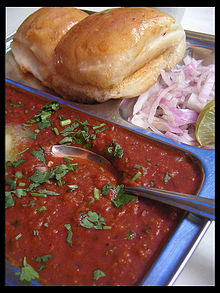
    PavBhaji

    Pav Bhaji is an exceedingly popular Maharashtrian street food item that traditionally originated in the Mumbai cuisine. While the Bhaji part of the dish is a traditional Indian name for a vegetable dish, the Pav or Pau or Pao was the Portuguese word for bread (small rolls). Pav Bhaji is native to Mumbai and has now become popular in almost all the metropolitan areas in India especially in those of central and western Indian states such as Gujarat and Karnataka.

    Ingredients:

    •Turmeric Powder: ¼ tsp.
    •Pav Bhaji Masala Powder: 1 ½ tbsp.
    •Ginger Garlic Paste: 1 ½ tbsp.
    •Finely Chopped Tomatoes: 3 medium sized.
    •Tomato Sauce (Optional): 4 tbsp.
    •Lemon Juice (Optional): 1-2 tsp.
    •Finely Chopped Onion for Garnishing (Optional): 1 small sized.
    •Coriander Leaves for Garnishing: According to requirement.
    •Butter/Oil for Bhaji: 1 tbsp.
    •Additional Butter for Pav: According to requirement.
    •Pav (Buns): 6 to 8.

    Preparation:

    •Add the butter or oil in a pan and heat it up. Add the chopped onions and fry till they turn translucent. Then, add the ginger garlic paste and fry till it gets fragrant.
    •Add the chopped tomatoes, the turmeric powder and then sprinkle salt. Continue to fry till the tomatoes turn soft and mushy.
    •Add the chilli powder, extra salt and Pav Bhaji Masala powder. Mix well and fry for another 2 minutes.
    •Pour water so that it is just enough to cover the vegetables.
    •Add the coriander leaves. Mix well and mash the curry if you desire a smooth Bhaji.
    •Cook till the consistency of the gravy becomes thick.
    •Slit the Pav buns horizontally leaving one edge intact.
    •Heat the butter on a pan. Open the buns and toast it for a minute or two. If you like to make it spicier, sprinkle some Pav Bhaji Masala Powder on the inner side.
    •Garnish with onions and serve either hot or warm.

    Preparation Time: 25-30 minutes.

    Serves 3-4.

    So, there you are. I am sure that you must be salivating by now if you have read through the recipes and seen the pictures. Especially if you are on an empty stomach! Well, then. Why the wait up? Go to the kitchen and start cooking. Nobody is going to stop you from devouring these delicious food items once you are done!

    Happy snacking folks!

  • Mangoes: Shout out to all the Mango Maniacs

    Mangoes: Shout out to all the Mango Maniacs

    Summer is at full stretch and the scorching heat and frequent power cuts don’t make it easy to fancy this season. There are still stuffs that we do root for throughout the year. Yes! I’m talking about long vacations, hometown visits or vacationing in the hill stations! But for all the “Foodaholics”, out there awaits the king of all fruits. Yes! MANGOES!! Though age is no category for a mango maniac, still I believe that kids are best examples of the same as to them apart from joining exciting summer camps or watching TV for endless hours, mangoes do hold a special place. Have to admit watching kids eat mangoes with pulp all over hands is an off-putting yet adorable sight. They are ones who won’t count calories but would feast upon them and contest with their siblings of who had the most like a true Mango maniac! As a kid when we used to head for our hometown, the sight of mango laden trees and lots of them used to get us frantic! Even in the cities at that time the quality of mangoes available in the market used to be fine and more feasible for the “Feast contests”.             Nowadays, we find it difficult to make a difference between which one is naturally and which are artificially ripened mangoes as both of them look almost alike. Well, to be honest artificially ripened looks more alluring. There are many features that set them apart like artificially ripened ones will have distinct patches of green color and their taste gives slight burning sensation in the mouth.  It is said that to get the taste of natural mango one should wait for the season to set in like after April. Now to list up all the mouth watering delicacies made from mangoes, though note that this wouldn’t include any sophisticated recipes but more like a list of the best homemade “Beat the heat” and other refreshments  from mango. Just to be sure Do Google the recipes for them!

    1. AAM PANNA!

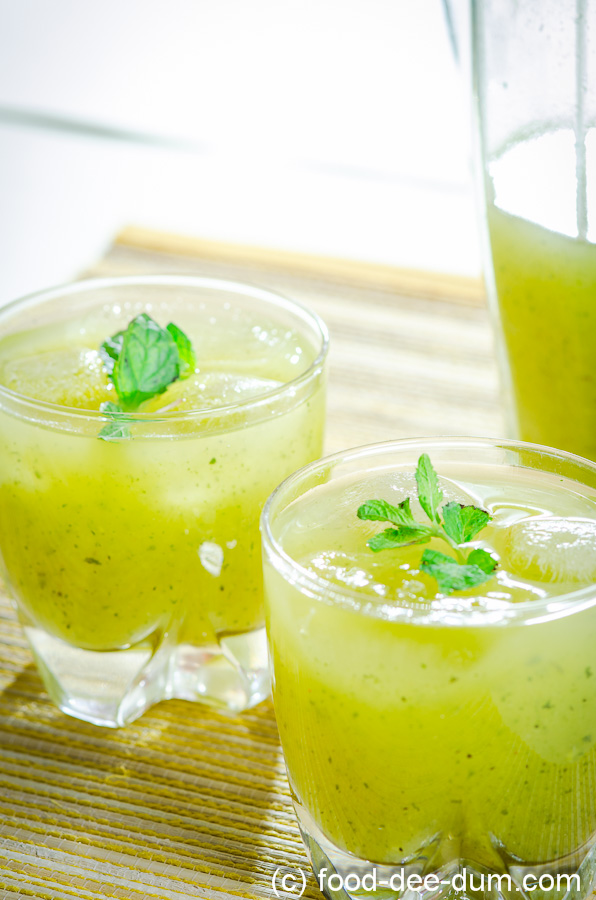
    Refreshing drink made from raw mangoes, Aam panna is made by taking the pulp out of boiled raw mangoes and then mixing the pulp with water adding sugar or jaggery. Of course not forget, Ice! Having a chilled glass of Aam panna after an exhausting day in office or playing all day in the scorching heat surely refreshes the senses. Aam_Panna

    1. AAMRAS!

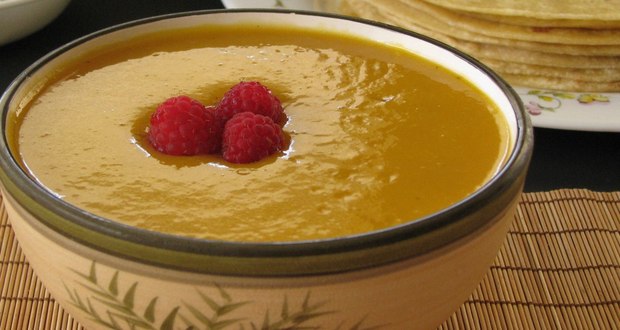
    Aamras is nothing but mango puree flavored with cardamom and saffron. This refreshment goes well with Puris, Paranthas or can relished solo. Sweetened naturally doesn’t have added sugars and one can enjoy this with limited calorie intake. aamras

    1. MANGO SMOOTHIE!

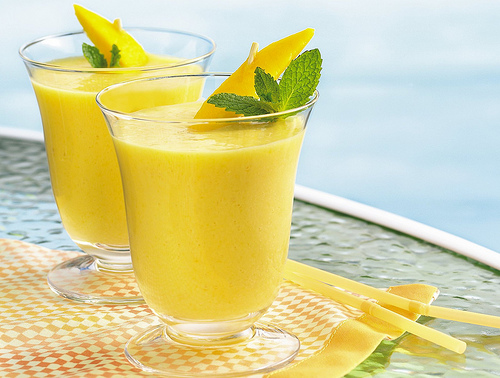
    Delicious summer drink prepared by blending mango pulp with almost equal amount of water and lime juice (as per preference). Sugar or sugarcane juice can be added to sweeten it more.Smoothie should be served chilled. Mango-Smoothies

    1. KHATTI MEETHI CHUTNEY!

    As it is not so much popular than the above refreshments, so I don’t know what its market name is. Regardless in our household it has been given that name.So, it’s basically prepared by frying raw mango pieces with mustard and cumin seeds. The fried mango pieces are the poured into hot sugar or jaggery syrup and cooked for few minutes.This mouth watering chutney tastes tangy-sweet and goes well with the meals or can be enjoyed as it is. Khatti meethi chutney

    1. MANGO MOUSSE!

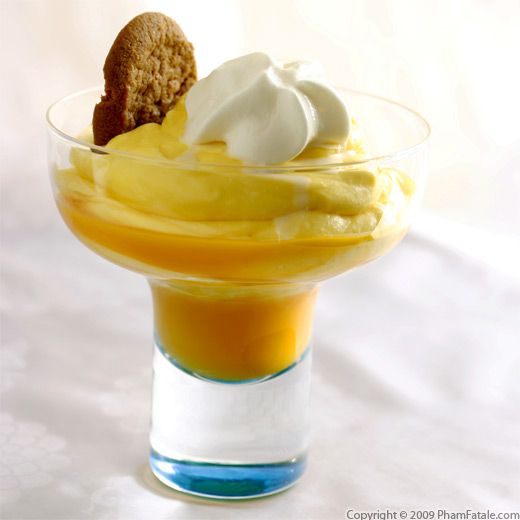
    One of the favorite deserts ever! Mango mousse is a light and creamy sweet dish prepared by both using egg or egg less. Prepared by blending the mango pulp with honey and cream and refrigerated for 30 minutes or so. This can be served with your favorite toppings like blueberry, tooti fruity e.t.c.  In the egg version while blending, egg whites pre- cooked in caramel is added. Mango mousse

    1. MANGO UPSIDE-DOWN CAKE!

    Fan of baking? If not too, this flavorsome cake is worth every bite.  Prepared like any other cake with a twisted layer of mangoes at the bottom. Top the cake with whipped cream and there you have a perfect piece of delight. Mango upside down cake   Okay, so the point made Mangoes are “Kings of Fruit”. Apart of being awesomely delicious let’s see if they carry more value.

     SKIN

    Having acne problems? Boil a raw mango, take the juice and apply as an acne remover. Mangoes are believe it or not great cleansers and exfoliate your skin too. Add wheat flour to mango pulp and apply this mixture to clean pores in the skin from deep within. For exfoliation purpose blend peeled mango with milk and crushed cashews or oat. People with sensitive skin can use mango-milk pack for refreshing their skin without worrying about reactions. Mangoes are also known to remove blemishes and enhance the skin color because of the presence of vitamin A, C and Beta carotene.

    Mango health benefits

    HEALTH

    4000 Years and older this fruit contains abundant levels of anti-oxidants  which is said to beneficial for preventing diseases like cancer, leukemia e.t.c.  It helps improving the eyesight due to presence of vitamin A. Additionally, the presence of fiber and Vitamin C helps in bringing down cholesterol and it increases metabolism.Mangoes are said to be rich in folic acid which helps in improving fertility.    So, a Mango maniac yet? There is around a month more for the mango season to get over, make sure you grab a bite of delectable must haves from safe to say now an “All rounder” fruit!

  • Potato chips

    Potato chips

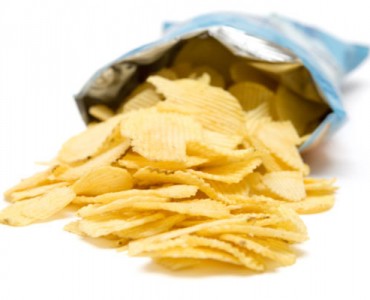
    A potato chip is nothing but thin slices of potatoes which are dried in the sun and then fried in hot oil to become nice, crispy and a ready to eat snack. For health conscious people these slices of potatoes are baked rather than fried in oil. Earlier potato chips were available in only one flavour that was salted but with time, changes occurred both in production technologies and taste of the consumer. Today different flavours of chips are available from classic salted to tangy tomato to cream and onion etc. Potato chips are a food item which is consumed by both children and adults and has a market which covers almost the entire world. In the west, chips became a common snack both in households and in the food market. Studies states that in 2005 total revenues gained from the sale of potato chips alone accounted to almost US$16.49 billion.

    chips 2

    There is a popular tale which talks about the birth of potato chips into this world. According to the tale it was on August 24 1853 in Saratoga Springs New York where an event took place. The credit for the introduction of this food item is given to George Crum who was a half black half Native American who was a cook by profession and worked in his own lake side restaurant called the Moonlake house. A customer had entered the restaurant but was not happy with the dishes in the menu card. So in order to appease the unhappy customer, Crum decide to try something new. He cut the potatoes into very thin slices and then fried them till they became nice and crispy. He then seasoned them with salt and gave it to the customer. The customer was very happy with the new dish and that’s how potato chips were introduced. The name given to these chips by the locals was Saratoga chips which remained till the mid 20th century. In 1973 St. Regis Paper Company which is responsible for the packaging of these chips revealed that the story was true and that Crum was a cook who by 1850 owned his own restaurant and the customer who had come that day was Cornelius Vanderbilt who was a local. With years going by chips became so famous that it began to spread in the neighboring regions as well. It was no longer a dish listed in the menu cards but had come out of restaurants to become products of mass production for home consumption. The Dalton which is an Ohio based chips producing company is considered to be the oldest in the United States, established in 1910. Chips soon became popular and in demand among the masses. Many industries which produced chips allowed their workers to take back home a small quantity of the produce. This was done both as a publicity stunt and secondly it helped to ensure employee satisfaction. Chips were sold in markets in tin cans earlier but the problem with this system was that the chips lying in the base used to become stale and crumbled. Later specially designed colorful plastic bags were introduced which were filled with nitrogen gas before sealing the ends which not only helped in increasing its shelf life but also helped the chips to remains nice and crispy and in shape avoiding crumbling.

    chips 1

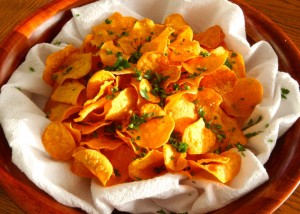
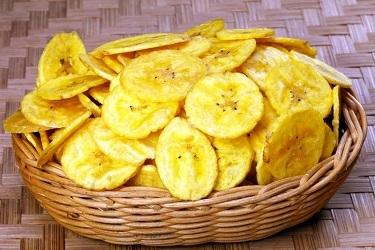
    Back in India, other than the potato chips we also have the banana chip which is a very important component of the south Indian cuisine. The basic technique of preparation remains the same where ripe bananas are sliced into thin pieces, dried in the sun and then fried in oil. These chips can be sugar or jagery coated or can be spicy or salted depending upon the taste preference of the consumers. Usually prepared in the Indian state of Kerala, these can be used either as a snack or with proper meals.

    chips 4

    The best part about these chips, may it be potato or banana, is that they can be prepared at home and the technique for both the types is almost the same. In order to prepare potato chips at home the directions are given below.

    Directions:

    •  First slice the potatoes finely.
    • Place the slices in cold water which is salted and boil it. When the chips have boiled well, drain the water and transfer the contents into another bowl.
    • Now add oil to the chips and mix well. After this add spices and any other extra ingredient like herbs, cheese etc and finally add salt. Remember whatever you add mix well so that every single chip is covered evenly.
    • Spread the chips on the baking platter and put them in a hot 200c oven and let them bake for about 20mins.
    • Shake or stir in between thought not compulsory.
    • Keep a check on the chips in order to avoid overcooking. The chips when done look light brown in colour and are crispy and crunchy when eaten.
    • After 20mins take out the chips and they are ready to be served.

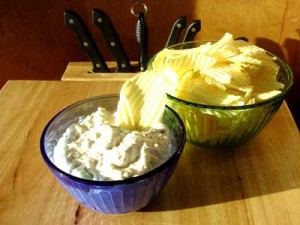
    Homemade potato chips can be enjoyed along with different items like eggs, meat or a cheese dip and can be also eaten on their own.

    chips 3

    Since potato chips come under the category of fried food, they pose serious health concerns for the public. A recent study reveals that potato chips are the biggest contributors to weight gain and the high starch content in potatoes chips is the main reason behind tooth decay. Other related health issues are high blood pressure caused by the high sodium content which is found in the salt used during the preparation of these chips.

    However due to all such concerns many companies invested in research and development in order to produce chips which provide the same or more level of satisfaction but the pose less risk than before.