Month: July 2014

  • Worried About Hair Falls! Try These Foods

    Worried About Hair Falls! Try These Foods

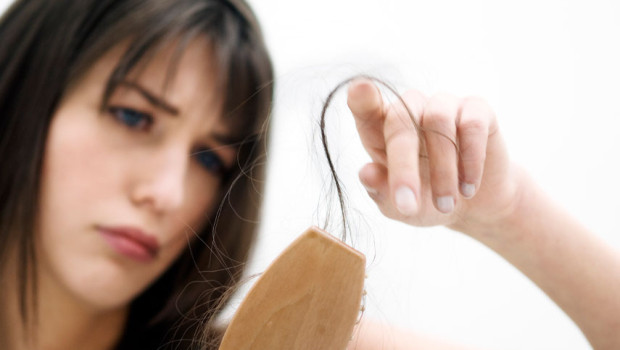
    Hair loss is a major concern these days. What we apply on our locks is not the only thing that leads to strong and healthy hairs. The perfect balanced diet also plays a significant role in this matter. Similar to each and every other bit of the body, the strong hairs can be determined by the nutritious diet.  When our body is disadvantaged from the necessary nutrients then our body undergoes the hair fall. The hair follicle is strengthened by the take in of proper nutrients. There are other factors also that negatively affect the quality of hair like smoke, environmental conditions, not sufficient sleep and many more. But proper nutrients can surely compensate for all these issues. The best way to overcome this situation is to provide your hairs with the perfect nutritious diet.  Below down there are few most desirable food products to prevent the hair fall.


    Salmons:

    Salmons

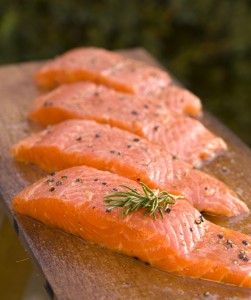
    Salmons are discovered to be very rich in proteins, vitamin D as well as omega-3 fatty acids. The body needs these nutrients to grow the hair. It has been found that the body is unable to produce the fatty acids which are needed in the growth of the hair and hence we should to take in food products which are rich in these fatty acids. If you don’t like eating salmons there are many others which contain these essential fatty acids like trout, avocado, walnut and many more. Make sure you take in sufficient amount of these fatty acids.


    Walnuts:

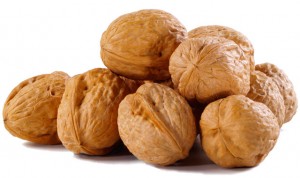
    Walnuts

    The walnuts are very good in fighting against the hair fall. The walnuts are those kinds of nuts which are filled with great quantity of omega-3 fatty acids. Apart from this they also contain vitamin E as well as biotin which are responsible for protecting the cells from impairment. And other than this walnut also contains a mineral –copper which provides the hair with shiny and glossy color. The elasticity of the hairs is also improved by the oils present in the walnuts and henceforth leads to stronger hairs. Hence walnuts are proved to be very friendly to the hairs.


    Eggs:

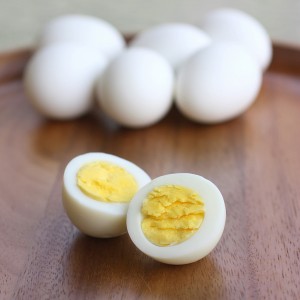
    eggs

    Eggs are soo hair friendly. They are vital in the growth of the healthy hair. Eggs are filled with many desirable nutrients. Some of them are proteins, iron, omega-6 fatty acids and many more. If our body is deprived of any of these essential nutrients then we certainly suffers the weak and feeble hairs. Apart from this eggs also contain biotin which is a major hair fall fighting source. Consequently it is advised to eat eggs to have beautiful, long and lustrous hairs.


    Oats:

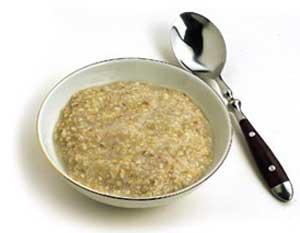
    bowl-of-oatmeal

    Oats are very much required to possess a healthy body as it is filled with fibers. But eating oats has other benefits too. They are found to be filled with fatty acids, zinc as well as iron too. These fatty acids are majorly responsible for the proper growth of the hair. And hence reduce the hair fall to a great extent. As we can see that we get so many essential nutrients from this particular food product therefore we should include a bowl of oats in our daily diet.


    Carrots:

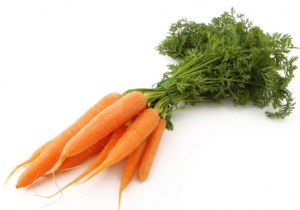
    carrots

    Vitamin A is delivered to the body in great amount by eating carrots. Vitamin A is not only beneficial for the eyes but also for the hairs. It delivers great nutrition to the scalp and makes it healthier. And subsequently the hair becomes stronger and shinier as a result of healthier scalp. Apart from carrots the perfect diet that includes green vegetables, fruits and proteins is found to be the promoter for well-conditioned hair. Hence carrots are very important to control and limit the thinning hair line.


    Prunes:

    prunes

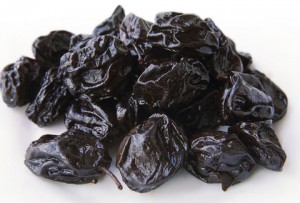
    There are several other hair related concerns apart from the hair fall like the hair undergoes dryness, firmness and lightening in the hair color. The major reason of all these conditions may be depletion in the amount of iron. And hence our body is need of iron rich food items. One of the major sources of iron is prunes and it majorly reduces the hair fall. Prune significantly enhances the hair quality and makes the hairs look more radiant. There are other sources of iron too which you can include in the diet as well like green vegetables, beetroots and many more.


    Spinach:

    Pile of baby spinach

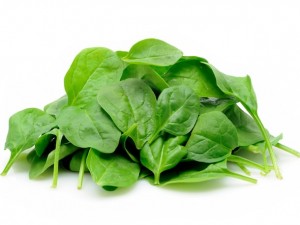
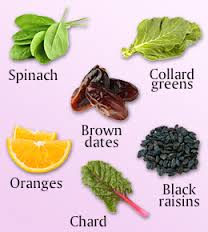
    Spinach proves to be of great help in maintaining the quality of the hair. Spinach contains some of the most essential nutrients like Vitamin C, iron and many more. And as a result taking in spinach makes the hair follicles healthier and eventually diminishes the hair fall. It also helps in the circulation of the oils in the scalp. There are many other options like broccoli as well as kale.

    Apart from the healthy diet there are some other points that you must take into account to prevent the thinning of the hair line. Extreme strain should be avoided and stop switching from your shampoo and hair product frequently. Lower down the usage of hair sprays. Thus start taking in the balanced diet and enjoys the perfect and glossy hair with no hair fall.

  • 5 Things you gotta know about Meditation

    5 Things you gotta know about Meditation

    Whenever “MEDITATION” word crosses any where we tend to imagine Yogis or mental training. That doesn’t mean meditation don’t involve them in the picture, it’s just not the whole scenario. Yes! Meditation is needed. Why? It’ll be discussed further in the post, but let us first free ourselves from the preset definition of Meditation in our minds and start from the basic.

    One of the defining features for living beings as we all know is Sensitivity. What’s sensitivity? It involves ability to adapt after we sense our environment. Humans gain sensitivity through Consciousness. Consciousness means forming a perception or being aware, of ourselves and our surroundings. In other words, through our consciousness we sense around the environment and respond respectively.Robots or machines if called simplistically are made by humans; still there is scope for collaborating conscious into their intelligence which is called Artificial Intelligence. Hence, being conscious is a unique feature of us, Humans!

    Now, there are three states of consciousness: waking, dreaming and sleeping. When we are awake, we sense our surroundings and respond to the situations we encounter. But, if we just have a normal stimulus-response relationship with our environment, why do we encounter conditions like stress? Because, every day we wake up and try to do activities that pleases our senses. The fascinating thing about our senses is like any other system in our body its needs increases exponentially with time. So, we can never satisfy them and the exhaustion resulted from this pursuit results in most cases of stresses. In the world where competition weighs everything down, we aren’t in a situation to compromise with the best we can give. So, it all comes down to increasing your potential to be a better person than a second before.

    What do we need for that?

    Calm and composed mind gives clarity to the thoughts in our mind which facilitates decisiveness, Coherent while communicating and gaining Emotional stability, intuition are just some of the mention able benefits.

    So, Why Meditation?


    1. It calms the “Freak-ish” side of you.

    At situations when you don’t know why you were screaming at that person or flipping out or just runaway from there,snapping man

    reason behind them are some unsettled thoughts and emotions which had been buried or repressed for some reason. Point to be made is neither you nor others like this side of you. Meditation drifts mind from the chaotic state to more stable disposed one, in this state you are able to focus all your energy to relax your mind. The repressed thoughts and emotions are if not resolved then at least isn’t projected as anger or frustration. So, after you’re done with meditating for a while; the calm mind forgets about the happenings and is ready for a fresh start.


    1. You become Smarter!

    Yes, it’s true and sure is so much heard from our parents, elders or counselors.

    kid-smart

    Now, come on it’s not like you meditate once in a month or week and you expect to top your boards. Once you cultivate a regular habit of meditating, it increases an individual’s focusing power which improves attention. More you give attention to something, more you will be grasping that topic.

    1. You’ll be upgraded!

    upgrade

    Yeah, it has been found out that meditation increases an individual’s level of consciousness. The benefit of evolving your level of consciousness is that the amount of disorder or disturbances in the life seems to be negligible. This means that with regular assimilation of meditation trivial disappointments would last for like a moment for you, not occupying all of you, all day.


    1. Apart from mind, it’s good for your body too!

    Meditation has been found to stimulate parasympathetic nervous system that is responsible for fight or flight response for the body. It calms down the body from the provoked state. This reduces the anxiety level for the individual which in due course of time can even treat disorders like insomnia.

    Getting anxious


    It slows down the respiration making an individual take only longer and deeper breaths. Why is it important? Every breath we take in gets oxygen and supplies it to the lungs which get transported to rest of the body from and we know oxygen is pretty important for every organ and system in the body. So, shallower and faster breaths cut down the time for this procedure, resulting in hasty transportation of oxygen and carbon di oxide.


    1. Get rid of those blues.

    depressed

    Meditation balances the neuro-chemical system of the body which reduces not only anxiety but also depression and moreover increases your critical thinking power! How’s that?It also helps staying in the present moment and it affects all aspects of your life and relationships.

    Meditation does or so more than that, it transforms one’s personality for good. Individuals get to know more about themselves and this brings about thirst for discovering more about enigma of life. The questions encountered after that like “What is life? And Why I go in a circle of happiness and sadness round and round?” will take you into a different yet exciting journey altogether. This will only enrich your consciousness more and more resulting in you perceiving the whole universe as part of oneself.  However easy and insignificant it may sound, it’s important for a human to get the answers for the same in his or her lifetime.

  • All about Red wine

    All about Red wine

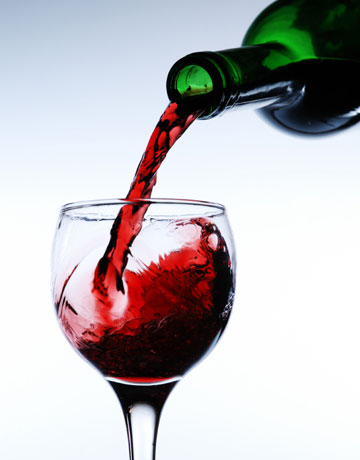
    It is often said that bread and wine completes one’s supper. Though bread, a solid food, satisfies our hunger, our stomach is more like a churning machine, digesting food and supplying the body with the required nutrients and so, in addition to the digestive juices it secretes; it does need a little extra lubricant at times, to completely break the food down. Wine, when taken in measured quantities along with food, does the trick. There are various types of wines that man has discovered and created. However, the wines containing a larger proportion of alcohol content along with the other ingredients which makes a wine, perfect, affects our health.  Red wine, however, boasts of various positive benefits and thus, stands out.

    history of wine
    red wine

    Manufacture- A brief description:

    It all starts in a vine yard growing black grapes.  The freshest and the best ones are carefully hand-picked and are then sent to a receiver. True to the fact that a perfect wine is certified by its taste, the raw grapes are carefully de-stemmed, washed and the leaves, removed. This is then processed, which includes crushing to completely squeeze the juice out. It is this juice which gives the wine its blood-red colour and its royal taste. The skins of these fruits are however retained and the pulp is stored in a large vessel and is allowed to ferment.

    wine-fermentation
    wine-fermentation


    This is the most important process in wine-making.  Suitable quantities of yeast and water are added for proper fermentation and the proportion is maintained throughout the process without any change. This is vital to maintain the richness of the wine. Then, tannin is also added to stabilize the red colour and also to prevent the wine from rotting by the process of oxidation. The addition of yeast naturally produces alcohol during fermentation. This is increased a little more by heating to a moderate temperature. However, the alcohol content in red wine is much lesser when compared to other types of wines, which makes it more like a health drink. Once the wine is finally made, it is packed and sent to shops which finally reach our shelves.

    Benefits:

    It is not just a myth that the best wines are the one’s which have lived for many years. The time of storage of wines is directly linked to its quality. In other words, the older the wine is, the richer and better it is. This is because of the chemical reactions which take place as the wine ages. Its taste improves and the colour becomes richer and the density of the wine, thicker.

    Red wine is a natural source of anti-oxidants. These compounds make it possible to rinse out the toxins from the body. The anti-oxidants are present in the form of phenols commonly found in the grapes of dark colors. Accumulation of oxidants in our body leads to clogging of the arteries and may also lead to the growth of cancerous tumours. The practice of drinking wine with food dates back and can be found in almost every ancient culture .

    It is still practiced today in many parts of the world. In the days of yore, it was a common belief that wine was the drink of the gods and drinking it would not only boost one’s health, but that it would also bring one, closer to god. Today, research has shown that red wine actually acts as an appetizer. It stimulates the glands in the stomach responsible for secretion of digestive juices and thus aids in the process of digestion. It was found that food was more easily broken down into the component proteins and energy and that these were more easily assimilated by the body. It was also found that red wine boosted the body’s immune system and thus kept illness at bay. Accumulation of oxidants in the body may also lead to a condition called macular degeneration, where the muscles in the eyes (the ciliary muscles) loosen, causing temporary or permanent vision impairment or formation of cataract. Red wine has the properties to decelerate macular degeneration. Also, it has proved to be an excellent supplement along with food for those wishing to diet and lose flab. Weight loss is found to occur when one consumes red wine along with one’s daily meal. This is explained by the fact that red wine retards the time for the stomach to get empty, thus making the person to eat less.  The feeling of hunger that one normally experiences is by a particular gland in the brain that is stimulated. Consumption of red wine during meals slows down the time taken for the signals to reach the brain, thus resulting in the person to think that he/she is full. As the food intake decreases, weight is automatically managed. Red wine is also found to protect an individual from major heart diseases, by increasing the body’s “good” cholesterol level, which is vital to keep the heart healthy. It eases the flow of blood through the veins and thus prevents unnecessary clotting of blood or blockages in the arteries. Slight changes in the blood pressure are also observed. The “bad” cholesterol levels are found to decrease in quantity, thus preventing blockages of the main arteries by fats hardened. The risk of heart attacks is thus reduced when red wine is consumed in measured quantities.

    The other side of it:-

    However, it has been found that wine, red wine or alcoholic wine is highly addictive and may lead to adverse effects if taken too much. Even though red wine contains very little amount of alcohol in it, over consumption can lead to lack of judgment or difficulty in speech. Also, the natural phenols present in the black grapes, is found to increase the risk of cancer if taken continuously or in large amounts. The cancerous agents may also leads to formation of ulcers in the stomach as it disrupts the natural breakdown of food by the digestive enzymes. Over dose of red wine may also lead to mental breakdown in the form of loss in memory either temporarily or permanently ( a condition called dementia). The risk of Alzheimer’s is found to increase a notch higher when the concentration of alcohol in the body increases. Alcohol, which is a known natural pain suppressor, may also dull the senses when one consumes it often. So it ultimately makes a person lethargic and slows one’s response to stimuli. The ability to grasp things and to think creatively is greatly reduced by an increase in the alcohol level in the body.

  • Sway the Ballroom Way!

    Sway the Ballroom Way!

    Dance is a way of life! People are rarely wrong when they say this, as dance expresses many lively aspects and emotions. Be it love, anger, disputes, chastity,  entertainment, surprise, bliss, sadness; dance can represent every shade of human emotion.   The movement to a rhythm is emotionally soothing and one confers a sense of accomplishment. Dance helps one to build confidence and express oneself; two things that every individual finds essential.

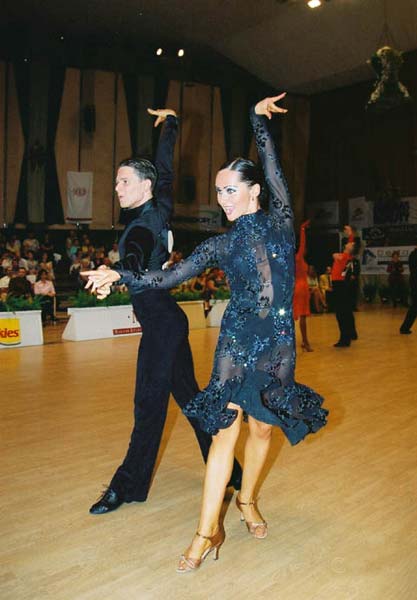
    The more romantic sort of a dance, however, is a ballroom dance. Ballroom dances are partner dances enjoyed socially and competitively worldwide. Love is an expression that can be shown beautifully in almost any ballroom dance form. Be it aggressively, possessively, intimately, softly, or delicately, a ballroom dance can show it all. It is considered an art form.

    It is bodily movement synchronized with a rhythm provided by some form of musical instrument. While the music is itself an art form, in dancing one takes advantage of the rhythm. Through tradition certain rhythms that are synchronized with selected patterns of body and foot movement are adopted. These patterns are then given names such as Mambo, Waltz, Cha Cha or Tango.

    download (2)download (3)ballroomdancing

    Jive:


    Jive is a dance style that originated in the United States from African-Americans in the early 1930’s. It was originally presented to the public as ‘Jive’ in 1934 by Cab Calloway. Jive is one of the five International Latin dances. In competition it is danced at a speed of 176 beats per minute, although in some cases this is reduced to between 128 and 160 beats per minute. It is a lively form of Swing dance, and a variation of the Jitterbug. While there are many complicated versions of jive, some of which involve flipping the female dance partner, the basic dance is well controlled, with a six count foot pattern.

    Jive

    Paso Doble


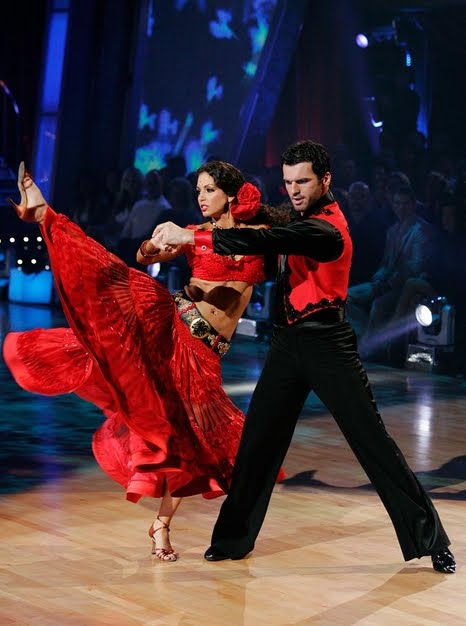
    Paso Doble in Spanish, literally means double step. It is a traditional dance in Spain and is danced to the kind of music played when the bullfighter enters the bullfighting ring (Paseo) or during the passes(Faena) before the final kill, during a bullfight. Paso Doble is a lively style of dance to the duple meter march-like Paso Doble music. It is modeled after the sound, drama, and movement of the Spanish and Portuguese bullfight. Famous bullfighters have been honoured with Paso Doble tunes named after them.

    Pasodoble2


    Cha Cha


    The Cha Cha is danced to; a little obvious, Cha Cha music, introduced by Cuban composer and violinist Enrique Jorrín in 1953. Styles of the Cha Cha dance may differ in the rhythmical structure. The original Cuban and the ballroom Cha Cha count is “two, three, chachacha” or “four-and-one, two, three”. The dance does not start on the first beat of a bar, though it can start with a transfer of weight to the lead’s right. Partners work together to synchronize each movement in perfect alignment.

    cha-cha


    Mambo


    The Mambo is one of the most sensual and emotional Latin American ballroom dances. Swaying hip movements, facial expressions, arm movements and holds all add to the sensuality of the dance. Mambo music was invented during the 1930’s by Arsenio Rodríguez, developed in Havana by Cachao and made popular by Dámaso Pérez Prado and Benny Moré. In the late 1940’s, Perez Prado came up with the dance for the mambo music and became the first person to market his music as “mambo”. Prado moved his music to Mexico, where his music and the dance was adopted. The original mambo dance was characterized by freedom and complicated foot-steps. Some Mexican entertainers became well known dancers like Tongolele, Adalberto Martínez, Rosa Carmina, Tin Tan and Lilia Prado.

    Mambo

    Rumba


    The Rumba is considered by many to be the most romantic of all Latin ballroom dances. It is often referred to as the “Grandfather of the Latin dances.” It is one of the ballroom dances which occurs in social dance and in international competitions. Among the five international Latin dances, Rumba is the slowest. It was derived from a Cuban rhythm and dance called the bolero-son;  a genre of slow-tempo Latin music and its associated dance.

    Rumba1

    Tango


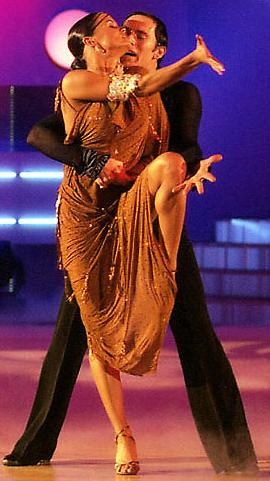
    Tango, in Latin, means touch. This sensual ballroom dance originated in South America in the early twentieth century. It is one of the ballroom dances which is most fascinating to watch. The Tango consists of a variety of styles that developed in different regions and eras of the world. The dance developed in response to many cultural elements, such as the crowding of the venue and even the fashions in clothing. The styles are mostly danced in either open embrace, where the dancers have space between their bodies, or close embrace, where the dancers connect either chest-to-chest (Argentine tango) or in the upper thigh, hip area (American and International tango).

    tango-lesson


    Waltz


    The Waltz is one of the oldest of ballroom dances, dating from the mid-Eighteenth Century. The German “Lander”, which is a folk dance, is supposed to be its predecessor. The name; “Waltz” is a developed form of “Waltzer”, which was derived from the Latin “Volvere”, which means rotation. When The Waltz was first introduced to the world in the early Nineteenth Century, it was treated with resentment because it was the first dance where the couple was in close contact. The man’s hand was to be wound around the lady’s waist and they were to dance so close that their faces almost touched. This is called a Closed Position in dance terminology. Waltz dancers appear to glide around the floor with almost no effort, showing its grace and elegance.

    Waltz


    Samba


    Samba is a Brazilian dance, which originated in Bahia, Brazil. Around the world, it is known as the symbol for Brazil and the Brazilian Carnival. It has also become the symbol of Brazilian national identity and is considered to be one of the most popular Brazilian cultural expressions. Traditionally, the samba is played by strings and various percussion instruments such as tambourine. Influenced by American orchestras in vogue and the cultural impact of US music post-World War II, Samba began to use trombones, trumpets, flutes, and clarinets.

    Samba

  • Delicious Food Culture of India

    Delicious Food Culture of India

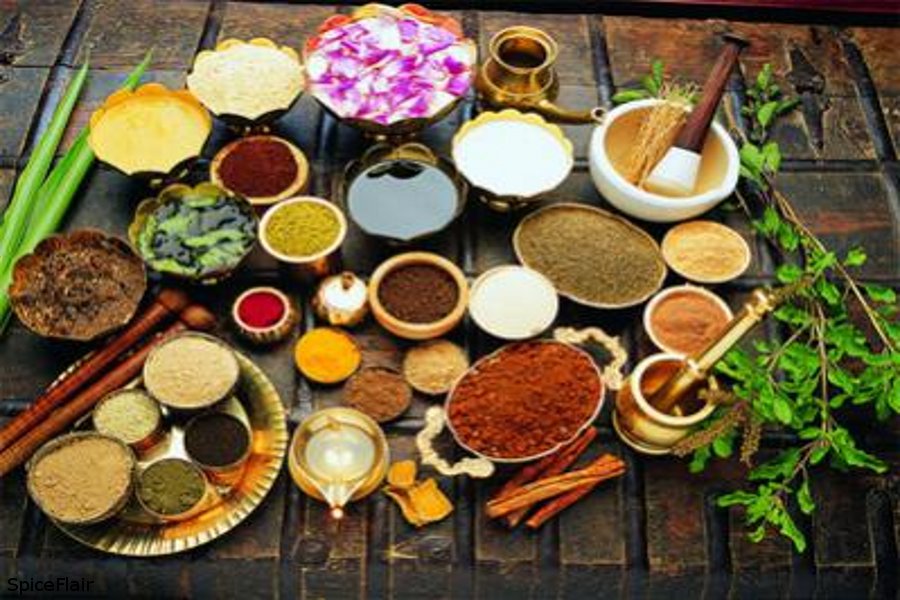
    India has one of the most colorful and aromatic cuisines in the world. Varieties of Indian food is countless. The Traditional Indian food is widely appreciated for its fabulous use of spices and herbs. Indian cuisine is famous for its large assortment of dishes. The cooking style varies from state to state and region to region. Indian food has many crown jewels which are hidden in many homes in Indian villages and towns. The entire country is suffused with scent of spicy curries coming from local restaurants and street stalls. A typical Indian meal consists of salty, creamy, sweet, spicy, hot and pungent flavors. Many regional specialties are enjoyed throughout India, and worldwide.

    RAJASTHANI FOOD-

    rajasthani

    Rajasthani cuisine is an array of colorful, spicy and unique dishes. It offers a fabulous variety of mouthwatering dishes. The food style of this fabulous desert state of India is affected by the natural indigenously and topography available ingredients.

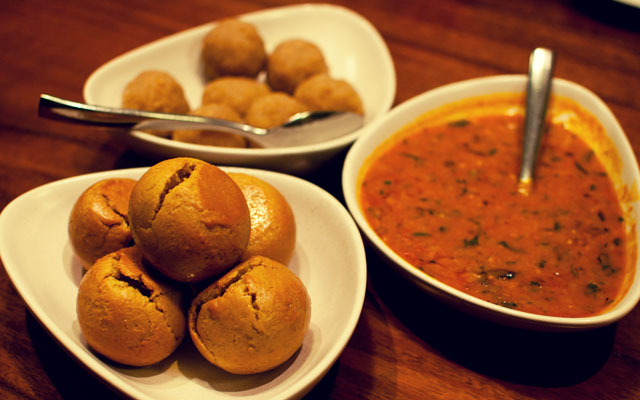
    Dal Baati churma- Dal Baati Churma is Rajasthan’s most favored and famous meal. It is a Rajasthani dish which has three servings termed as dal, Baati (baked wheat balls), and churma (sweet cereal powder). Baati is served with dal and churma. Ghee is applied on Baati to make it more delicious.

    Gatte Ki sabji- It is known as a spicy dish in Rajasthani Thali. It consists of the rolls of besan poured into the gravy of sabji and then cooked with pouring spices into the same.

    Bajre Ki Khichdi- Khichdi is easy to digest and is healthy Indian food prepared from rice and lentils. Vegetables such as potato, cauliflower and green peas are commonly added.

    Jodhpur Mawa Kachori- Mawa Kachori is a sweet made of mawa stuffed in kachori. It is a very prestigious and special dish originated from Jodhpur, Rajasthan.

    Ghewar- Ghewar is a delicious Rajasthani sweet which consists of rounded cakes of wheat flour in which sugar syrup is poured. Paneer ghewar is garnished with paneer and is highly demanded for their tasty flavor.

    Besan Ki Chakki- It is a traditional Rajasthani sweet made of Gram flour. Gram flour is a major ingredients here which is used to make some of the delicacies like gatte ki sabji, khatta, pakodi etc.

    GUJARATI FOOD-

    gujarati

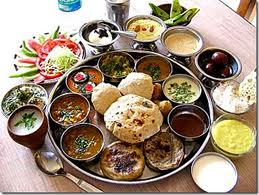
    The traditional Gujarati food is primarily vegetarian contains a high nutritional value. Gujarati cuisine has so much to offer and each and every dish has an absolutely different cooking style. It is mostly served on silver platters along with rice and wheat breads.

    The most popular form of meal of Gujarat, a typical Gujarati thali or meal consists of dal, roti, rice and Shaak which is cooked vegetables, with accompaniments of pickles and roasted papads. Popular beverages consists of buttermilk and tea. Sweet dishes of Gujarat contains laddoos and mango.

    Handvo- It is a traditional Gujarati savoury cake. It is a nutritious meal in its own right when served with chutney and buttermilk. It is crispy from outside but soft from inside.

    Khaman Dhokla- Khaman Dhokla is a very famous food savored by Indians around the world. It is traditionally made from Bengal gram lentil. It is very fluffy, soft and spongy in texture. It is perfect as a snack for any time of the day.

    Mohanthal- It is a traditional sweet of Gujarat. It tastes a bit like fudge and is one of the most popular and traditional dishes served at Gujarati weddings.

    SOUTH INDIAN FOOD-

    south

    South Indian cuisine is based on rice. Rice is combined with lentils to make wonderful dosas, vadas, idlis and uttapams. They are combined with sambhar, rasam and curried vegetable etc to give them a delicious flavor. South Indian food is also famous for its mixture of coconut, a wide variety of fishes and root tubers. Kerala is another state of South India. In this state, the food of localites is fish accompanied with rice of usually large size grains. Kerala cuisine also has a variety of chutneys and pickles, and crunchy pappadums, banana chips etc. In Andhra Pradesh, the food prepared is believed to be quite spicy and hot in nature. Some of the most famous eatables of this state are kurmas, yummy grilled kebabs and the delicious Biryani.

    PUNJABI FOOD-

    makki_di_roti_sarson_da_saag

    Punjab is known for its spicy, delicious and butter laden food throughout the world.

    Sarson Da Saag and Makki Di Roti- It is the traditional winter dish of Punjab. It is highly nutritious as it contains mustard leaves which are great source of iron and protein. It is served with lots of butter ad ghee.

    Lassi- It is the favorite drink of Punjabis. It is made from beaten curd and milk. It is mostly served there in steel glasses.

    Rajma Chawal- It is one of the main course dishes of Punjab. It is served with steaming hot boiled rice known as chawal. It is a wholesome meal because it is rich in carbohydrates, iron and as well as in protein.

    Butter Chicken- Punjab is famous for its spicy and best chicken dishes whether it is tandoori or curry chicken. It is high in calories but a mouthwatering creamy dish as it contains butter. It is served with butter naan.


  • Mango drinks for summer

    Mango drinks for summer

    Everyone need more than air-conditioning or a dip in the pool to battle the hot summer weather of May, June and July. So cool off and chill out with cool summer drinks. Summer is the best suited time to have cocktails. Summer is the perfect time for friends to gather and share a few drinks. So brake out the tropicals, the frappes, the coolers and chill out. Cool drink refreshes your mind, soul, heart and body so never forget to take cold drinks during summer.

    AAM PANNA

    aam panna

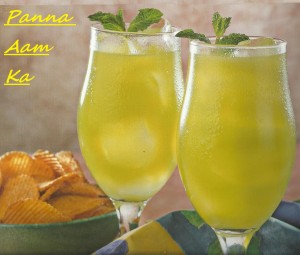
    It is the traditional North western Indian summer cooler drink. Aam Panna reduces the occurrence of heat strokes. It is not only a good refreshment but also a great rejuvenating drink as it restores the Sodium which was lost due to dehydration. It is rich in antioxidant which helps to remove the toxins from the body and purify blood. Here is a simple recipe for how to make aam panna.

    Ingredients-

    3 medium size green raw mangoes
    1 cup Sugar
    1 tablespoon roasted cumin powder
    Black salt to taste
    Salt to taste
    2 cup water
    1 tablespoon Mint leaves
    Ice crushed

    Recipe– Place the mangoes along with water in a sauce-pan and boil them. Simmer for 10 minutes. Then remove from gas. Alternately you can pressure cook the mangoes with water till they become soft. When they get cool, peel the mangoes and get the pulp with the help of a spoon. Grind mango pulp with water to a smooth paste. Take the pulpy mixture in a pan, add sugar and let it cook on gas till the sugar get dissolved completely. Stir continuously. Remove from gas and add roasted black salt, cumin powder and salt. Let this mixture cool down in proper time. To make the drink, take a glass and pour 1 -2 tablespoons of the mango mixture and pour it in chilled water. Now add finely crushed ice. Garnish with mint leaves and serve immediately.

    MANGO MILKSHAKE-

    mango shake

    Mango has a plenty of benefits that are good for our health and can fight against diseases such as cancer. It helps in digestion as it is rich in fiber. It is a rich source of vitamin A, hence it also boosts the immune system and lowers the risk of heart disease and stroke. Mango shake contains good amount of proteins and irons, therefore it is very beneficial for anemic patients. Vitamin D and calcium present in mango milkshake helps in strengthening the bones. The recipe for making mango shake is as follows-

    Ingredients

    1 cup milk,Ice cubes, 3 small ripe mangoes, 1/4-1/2 tablespoon cardamom powder (start less and increase as per taste), 2 tablespoon sugar.

    Recipe- Peel the mangoes and then add their pulp to a blender. Add the milk and cardamom powder to it. Start with the minimum, since some may find the flavor of cardamom too overpowering. Blend it well along with ice cubes until they get mixed. Taste and add sugar if needed and give it another whirl if added. Pour into glasses with ice-cream on the top and enjoy.

    MANGO MARGARITA –

    margarita

    Ingredients-

    Mangoes peeled and cut into small pieces, Ice cubes as required, salt as required, lemon juice 3 tablespoons, and 1 cup mango squash.

    Recipe- Put the pieces of mangoes in a blender and blend for a minute. Add mango squash, two table spoons lemon juice, ice cubes and blend it again for three minutes.Apply the remaining lemon juice at the rims of the glasses and dip the rims in the plates containing salt and then remove. Pour the margarita in the glasses and serve.

    MANGO LIME COOLER

    lime cooler

    Ingredients-

    1 tablespoon honey, ½ cup low fat milk, 1 ripe mango, peeled and cut into chunks, 1 tablespoon lime juice, Ice cubes, ½ cup plain fat free yogurt.

    Recipe- Put all the ingredients except the ice cubes in the blender, then cover and blend the mixture on high speed around 15 seconds. Add crushed ice and then continue blending for 15 seconds. Now kick back and enjoy the perfect summer drink.

    MANGO MOJITO-

    mango-mojito-ck-1041937-l

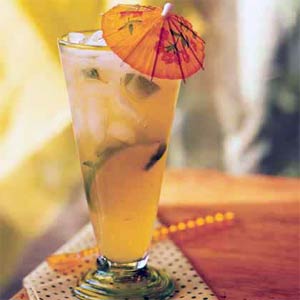
    A mango mojito features muddled mint leaves mixed with mango rum.

    Ingredients-

    1 lime wedge, 4 mint leaves, fresh mango (pureed), 90ml soda, ice cubes, 22ml light rum.

    Recipe- Muddle the mint leaves and lime juice until they are fragrant by pressing a muddler into the bottom of a cocktail shaker. Then pour the rum and the mango puree into the shaker. Fill the shaker 2/3 full of ice cubes. Shake the drink until the ingredients are well mixed and chilled. Place ice cubes in a fashioned glass. Strain the drink from the cocktail shaker over the ice cubes. Top the drink with club soda and garnish it with a slice of mango.

    MANGO COLADA-

    colada

    Ingredients-

    1 cup ripe mango cubes, 1/3 cup light rum, 1/3 cup cream of coconut, 1/2 cup pineapple juice, 2 tablespoons fresh lime juice, ice cubes.

    Recipe- Place all the ingredient shown above in a blender and then blend until it becomes smooth and thick. Add ice cubes. Pour into tall glass and enjoy your drink.


  • INDIAN CULTURAL DIASPORA AND DIVERSITY

    INDIAN CULTURAL DIASPORA AND DIVERSITY

    The India of today has had its first human settlement roughly around 7500BC by an ancient submerged river settlement in the Gulf of Cambay. It is believed that Homo heidelbergensis were the first to arrive in India touting crude stone tools. Around 70,000 years ago, modern humans migrated east, out competing the natives and were responsible for the disappearance of the so called hobbits.

    Asko Parpola, Finnish Indologist and Sindhologist proposed a theory of the first Indo-European speaking invaders called ‘Dasas’ being the first to arrive in the subcontinent. They were succeeded by the Indo-Aryans, the Rigvedic Aryans. The study of the Indo-Aryan migration was studied by Max Muller in the mid 19th century. The advent of the Dravidians is dated much before the Aryans, who were supplanted later. The earliest settlers of the North-east were the Austro-Asiatic followed by the Tibeto-Burmese and then by the Aryans. The entry of Islam is marked by the Arab traders as early as 7th century AD to coastal Malabar, then to coastal Gujarat in 11AD and to North India in 12AD with Turkish invasions. The amalgamation of many such entries into the nation laid foundation for the pillars of the “Indian Cultural Diversity”.

    For any other country in the world, diversity might be an inconsequential phenomenon laid backstage. But, in India with a population of over 1.21 billion people, more than 2000 ethnic groups, 1,635 languages, over 6000 dialects, 6 main religions and scores of other faiths, diversity in India is a gargantuan expression.

    The-Incredible-India

    The beauty of this country lies in the assimilation of various cultures, tradition and people, emerging out as a beautiful dawn spreading its rays to the rest of the world. The sublime charm of India lies in the fact that there is no centralization of cultures in a place but a complete dispersion throughout the country. The ringing of temple bells, prayers at the mosque, carols sung in the church, meditation in the Buddhist shrines, jap in the Gurudwaras, invocations at the Jewish and Parsi temples, the Zoroastrian fire temples, there is a magical binding in the air breathing out fumes of national integration unparalleled to any other nation in the world.

    unity-among-citizens

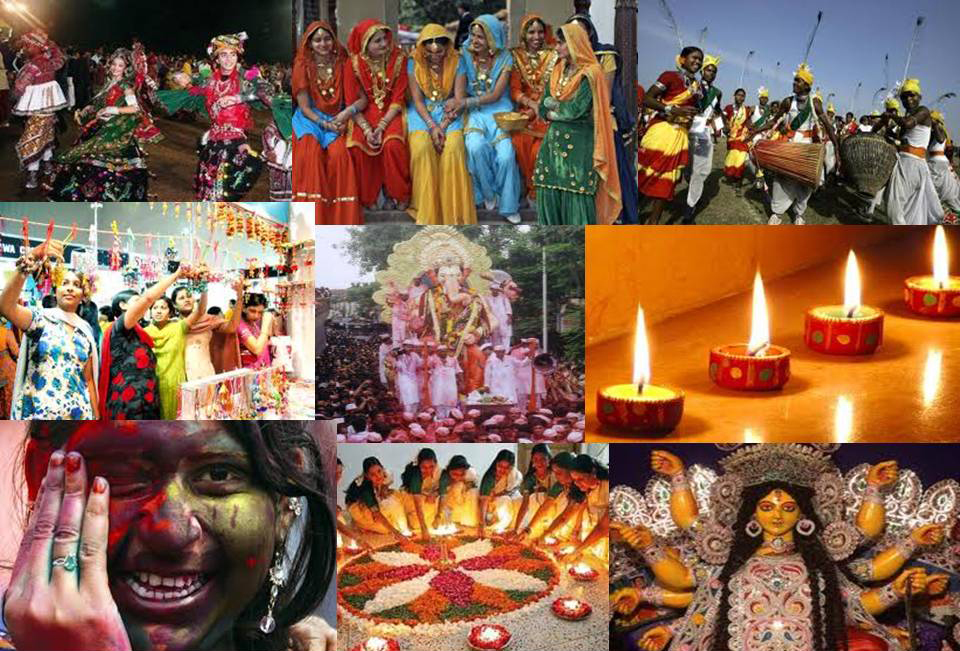
    Being a multi-religious society festivals are celebrated with great pomp and welled up enthusiasm across the country. Hinduism being the dominant religion of the subcontinent intertwines many traditions and celebrates many festivals like Navrathri, Diwali, Sivarathri, Ganesh Chaturthi, Holi and many more. Muslims fast during the month of Ramzan and celebrate Bakrid, Milad-un-Nabi, Waqf al Arafa and Hijra. Buddhists observe Buddha Purnima whereas Sikh festivals include Baisakhi and Gurunanak Jayanthi. Adding colours to all these festivals is the Dree, a tribal festival celebrated in the North-east. Some festivals are celebrated by many communities with matched up excitement and fervor. The whole country adorns beautiful attire, with an assortment of festive cuisine, larger than life idols, clothing, rituals, and harboring harmony fulfilling the connotation of universal brotherhood.

    indian-festivals

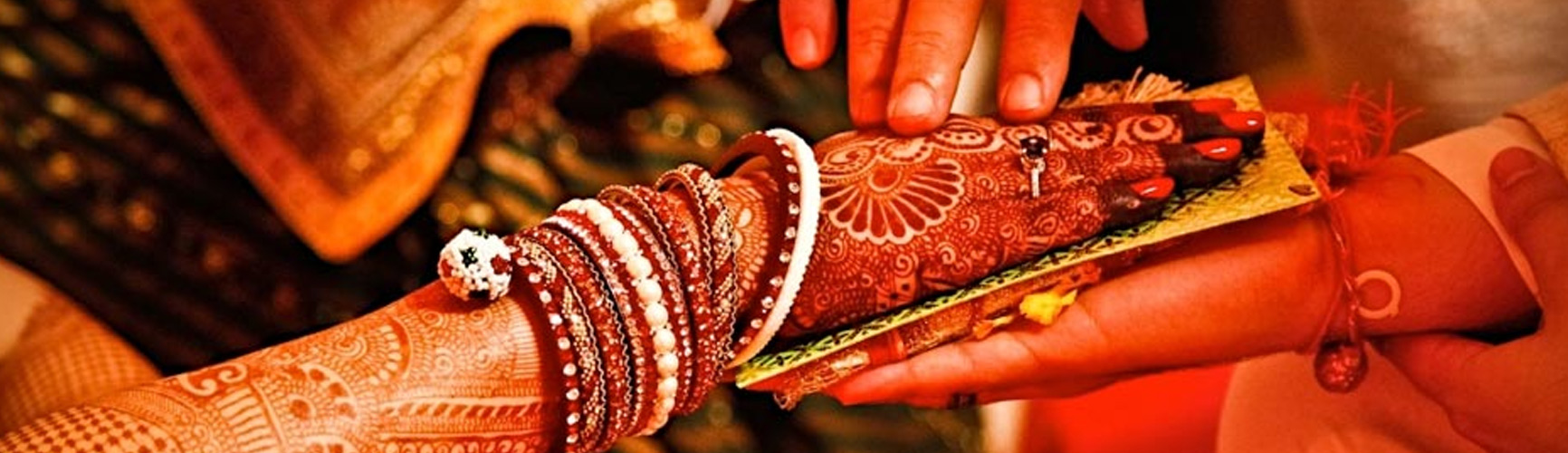
    Indian weddings are known all over the world for their opulence, colors, exquisite dressing, lavish decorations, enthralling music, dances, potpourri of dishes, vedic mantras and chanting exclusive to each religion. Marriages are preceded by Sangeet, Mehendi and many other fun filled activities bringing families together and sustaining bonds from ages. The emphasis is laid of the union of two families and the married couple. Many wedding customs are common to many religions. Kanyadan, vows around the fire are a forte in Indian weddings. The bonding of two souls is a tranquil treat to the eyes gathered. The Indian wedding system is being hailed all over for its assertion of family values.

    wedding-photography-bhopal-india  DSC_3634_1

    Greetings are an inevitable part of Indian culture. Be it Namaste, vanakkam, assalmu alaikum, sat sri akal or swagatam, reverence to the elders and mutual respect to peers is the main criteria of such salutations. “Godliness in me bows to Godliness in you” is the substance of Namaste and assalamu alaikum refers to “Peace be upon you”. Every greeting is to convey a wholehearted obeisance and a hope for each other’s prosperity.

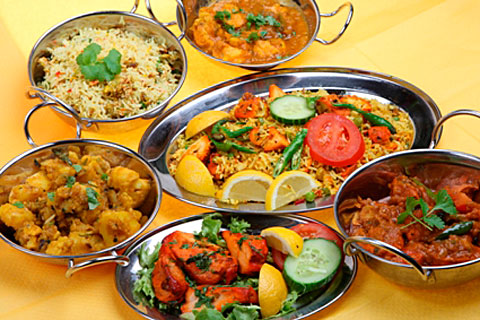
    The cuisine of India is unique to every state and region. It is heavily influenced by religious, cultural and traditional choices. It deploys a wide range of food preparation styles and techniques, culinary, spices, herbs, vegetables and fruits, each of them exclusive to a place. Every place in India is famous for their variety of dishes. Foreign invasions, trade relations have brought new foods later integrated into the local cuisine. Turmeric is a main ingredient of Indian food to which even the western world has found taste. Hyderabadi biryani, Gujarati dhokla, Poha of MP, UP’s gajar ka halwa, Sarson da saag of Punjab, Rajastani kachori and many more, sets the tongue buds dancing to their taste. Harold Mc Gee, author of On Food & Cooking states Indian food carries the taste of strangeness and confusion and wonder.

    3846973_orig

    Clothing in India depends on the climate, topography, traditions and ethnicity. Kancheepuram pattu saris, ghagras of the north, mehelka sador of Assam, chudidaar, salwar kameez, women’s clothing comes in a wide range of hues and colours like the rainbow. Dhoti, pancha-lungi, sherwani, dastaar, peta form the men’s wardrobe. India is a home to many weavers with varying fabric arts like zardosi, chikan work, kashmiri work, phulkari, kasuti and kantha embroidery. They depend on the fabric texture, design and workmanship in expressing the art with thread. Festive seasons have people decked up in rich fabrics depicting social status. India’s clothing history goes back to the Indus civilization where cotton was spun, woven and dyed. Ancient Greek historians Herodotus and Arrian speak volumes of Indian clothing methods with opulent beads and dyes.

    Indian-women-wearing-the-sari

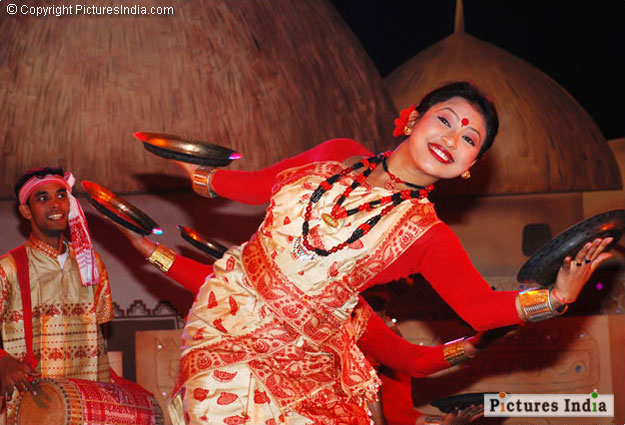
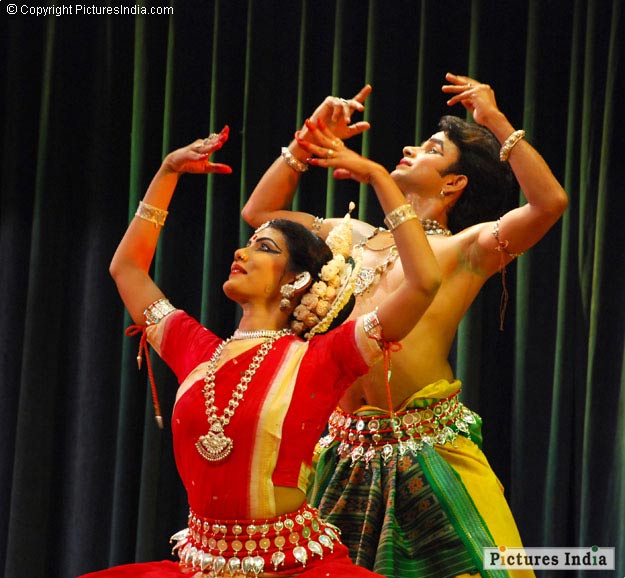
    India has had a long romance with the art of dance and music. Natyasastra (the science of dance) and Abhinaya darpana (mirror of gesture) are the surviving Sanskrit documents of the art of dance. Indian classical dance includes eight forms; Bharatanatyam of Tamil Nadu, Kuchipudi of AP, Kathak of UP, Katakali and Mohiniattam of Kerala, Yakshagana of Karnataka, Manipuri of Manipur, Odissi of Orissa and Sattriya of Assam. India is a home to a spectrum of folk dance forms like Bhangra of Punjab, Bihu of Assam, Kolattam of AP, Lavani of Maharashtra, Chhau of Jharkand, the list being a long drawn one. Dance is a way of expression. Mythological tales are mostly depicted in dances. But in this emerging world, Indian dance has also undergone many changes and are standing for social issues too. India’s tryst with music has a history spanning millennia and is grouped into Indian classical music, folk music and pop. Carnatic and Hindustani music are the classical forms, the later once being a subset of the former. They are traced back to 15th-16th centuries AD. Such diversifications in art forms are unprecedented in the entire globe.

    09_002012  09_004003

    The Lavani Dance

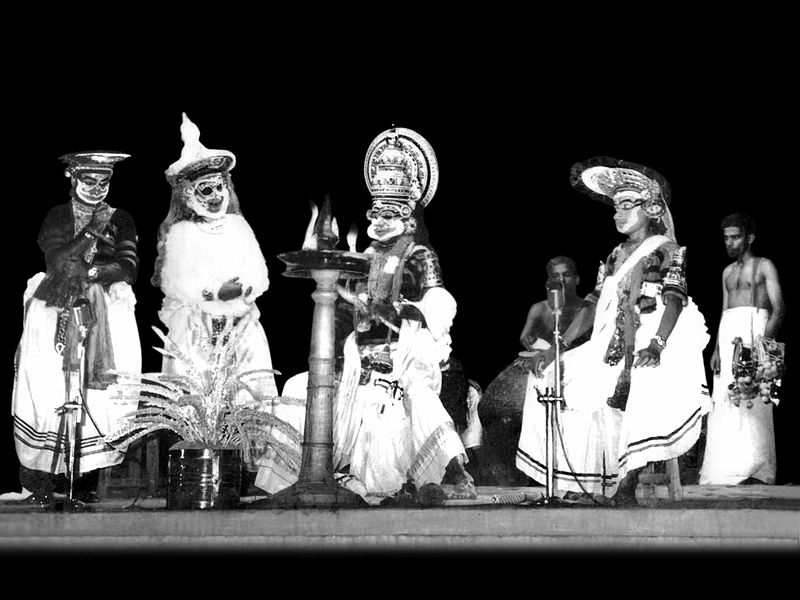
    Indian art forms have gained popularity over years and many foreigners have shown keen interest in perfecting the art. Out of reverence to the art, they have opened schools in many places of the world. Drama and theatre also find a decorous place with Kalidasa’s famous plays of Shakuntala, Meghadoota and later Bhasa. Oldest, yet surviving theatre traditions of the world is the 2000 years old Kutiyattam in Kerala. Indian culture is an exhaustive list of varying streams, streamlined with changing times evolving every time with a new look yet maintaining the vintage of the past.

    800px-Thoranayudham-_Madras1

    Kutiyattam Sanksrit theatre

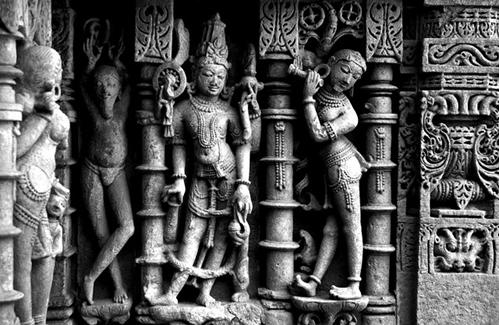
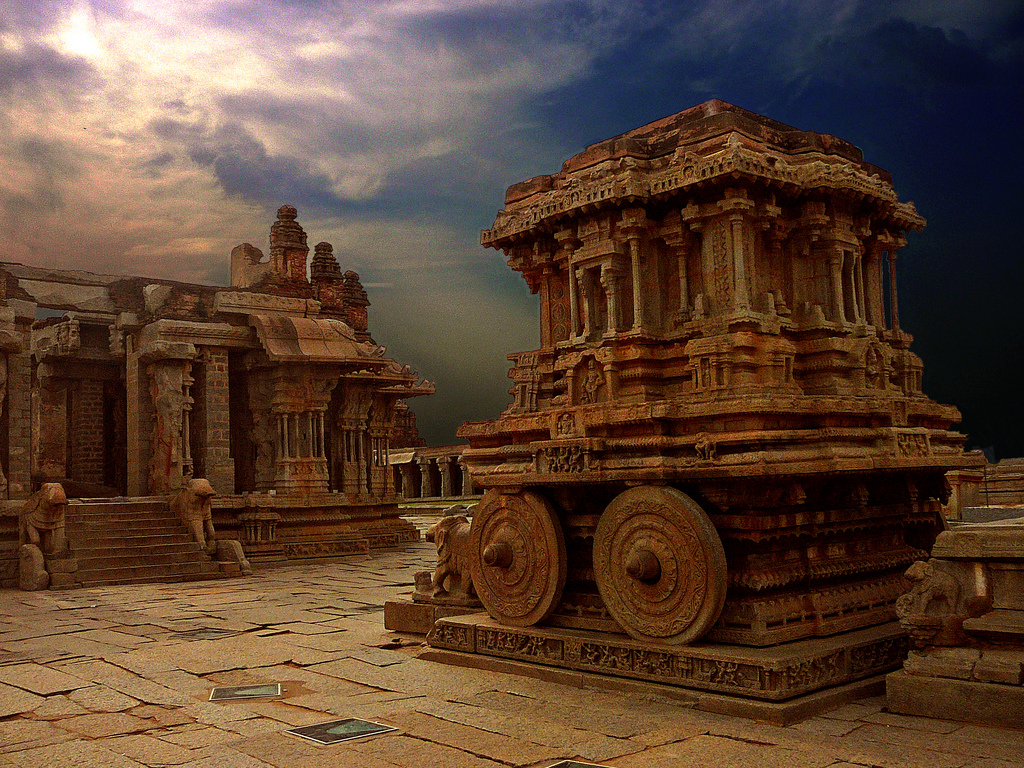
    India is a land of veritable treasures in the realms of art of painting and astounding architecture. India surpasses others in transmitting spiritual contents into expressions through colours, personifying high ideals and common beliefs of people. The cave paintings from the Ajanta, Ellora, Sittanavasi, Bagh and temple paintings conduces to fulfill the ultimate aim of life, moksha from the cycle of rebirth and death. Sculptures come down from the Indus civilizations which are made of bronze, stone and other pottery figurines. There is a Greco-Roman, Greco-Buddhist influence on sculptural forms. Many Hindu temples indicate strong architectural base encompassing multitude of expressions over time. Indian architecture has influenced eastern and south eastern Asia due to the spread of Buddhism. There is a difference of temple architecture in north and south India with the latter ones spread over large areas and representing the Dravidian format, while the former has a stamp of Aryan architecture. Thus it can be said that Indian tectonics has a profound presence in the world.

    sculpture1  Vitthala_temple,_Hampi_(_Ancient_India_Shines_Once_Again_)_Wallpaper_e80aj

    Vittala temple, Hampi


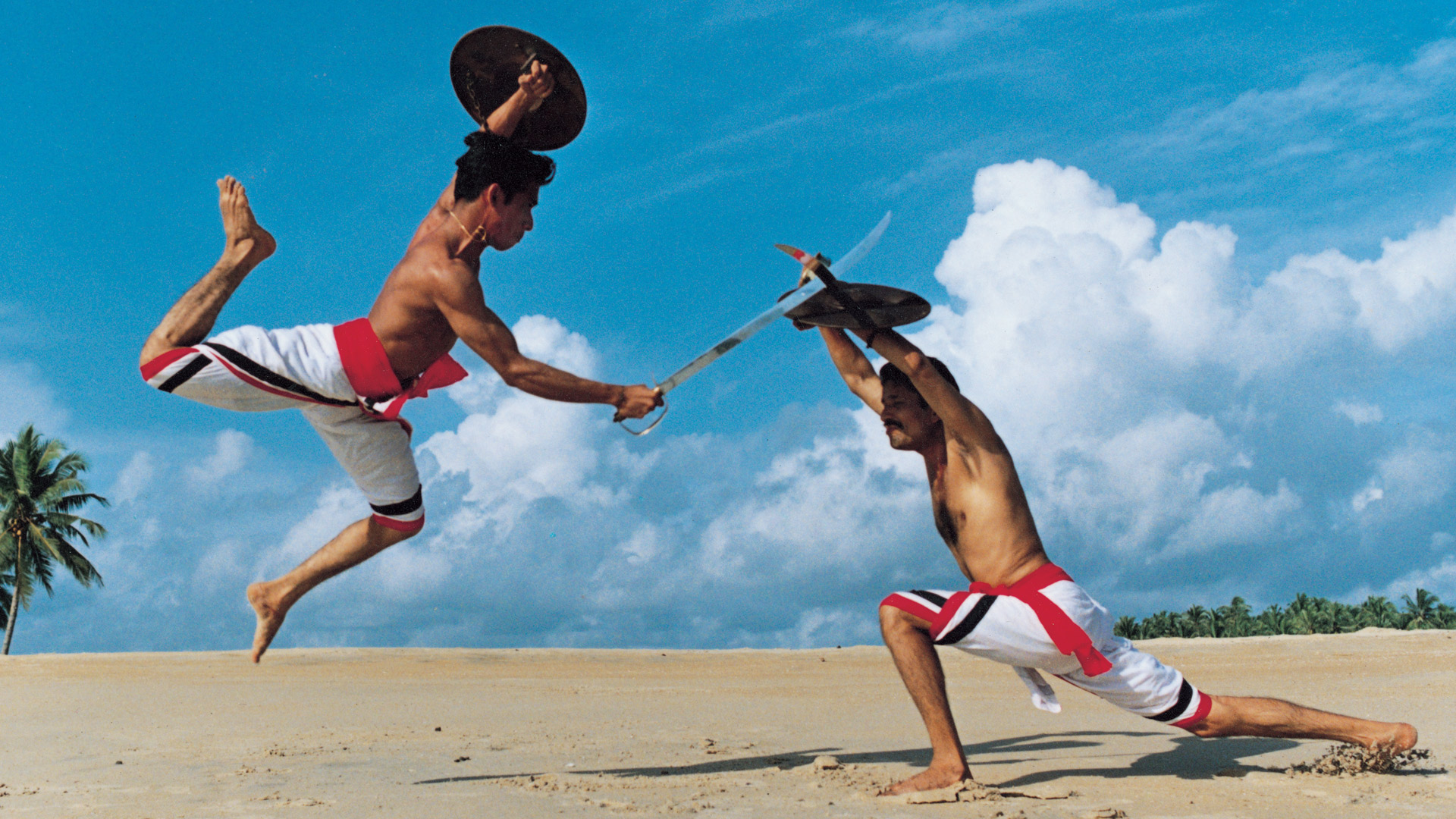
    Kalaripayattu from Kerala is one of the best known forms of martial arts. Paiki akhada, mushti yuddha are among the other forms. The medicine of Ayurveda has paved its way gaining admiration from all over the world. Panchakarma, a subsidiary of Ayurveda is a holistic approach which has spread its reach far and wide. Indian mythologies Ramayana and Mahabharata are the centre lore of Indian civilization changes.

    kalaripayattu20131111114353_27_1   15506_large

    Kalaripayattu                                                                           Ayurveda

    Such a multifarious civilization is a paragon to the world which blends itself with every culture forming a beautiful and closely woven web transcending religious boundaries. The bounty of Indian culture is incalculable. It a complex society, but one which has a tolerance towards others way of life which makes it stand apart. The cultural diaspora of Indian culture is a cool breeze bringing fragrance to lives. Indian culture is a bag of surprises surmounting the anticipations of a new cultural onlooker and never ceases to surprise the world.
  • Rasili Sweets Yummy bhi, Healthy bhi!!

    Rasili Sweets Yummy bhi, Healthy bhi!!

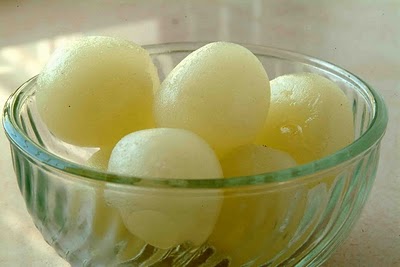
    RASGULLA-

    rasgulla2-tif

    Rasgulla is a dessert which is made primarily from a type of cottage cheese known as chhena, dough and sugar syrup. It’s native sweet of Indian state of Orissa, although various types of rasgulla can now be found throughout India. Rasgullas are typically served at social occasions or festivals.

    Ingredients-

    3 tablespoon Lemon juice, 2 cups sugar, 1 liter milk, I pinch ilaichi powder, ice cubes, nuts, water.

    Recipe- Heat the milk, when it start boiling, simmer the flame, add the lemon juice and stir properly. Heat further until when the water clearly separates. Put off the flame. Add some Ice cubes and mix well, ice cubes are added to stop the curdling at that instant. It prevents the chenna to become hard and helps for its soft texture. Take a metal strainer lined with a cheese cloth and then pour the curdled milk in it. Wash it well in the running water under the tap so as to remove the lemon smell and sourness. Then squeeze the excess water gently and hang it for 30 minutes. Squeeze the excess water now. After 1/2 an hour, take out the paneer in a bowl. It will be now more like a crumble look wise. Now knead this for 7-10 minutes gently to make it like a soft and smooth dough. Make smooth small balls of equal size. Apparently take the sugar, elaichi powder and water in a pressure cooker and boil it. After the sugar gets dissolved completely and the syrup boils, add the balls made carefully one by one. Cover the pressure cooker and cook it until you get one whistle in low flame. After a whistle, simmer more and keep it for another 5 minutes. Put off the flame and let the pressure gets released by itself then open the lid to see the rasgullas, by now it would have doubled in size. Cool down and refrigerate and serve them chilled.

    SANDESH-BENGALI MITHAI

    sandesh

    It is a very popular traditional Bengali Mithai which is made from fresh chenna. It’s absolutely delicious and the best part about making this sweet at home is that you can choose the type of flavour you want and as well as sweetness levels.

    Ingredients-

    1 cup of warm milk, a small pinch of cardamom powder, 1 cup of chenna, 2.5 tablespoon sugar, a pinch of salt, a few strands of saffron.

    Recipe- Firstly, soak the saffron strands in the warm milk. Once chenna is prepared, knead it to a smooth-ish consistency and then add sugar, cardamom powder and salt to it. It is once again kneaded lightly with your fingertips until the mixture is well combined. Now, transfer this to a pan and cook on low heat to remove the rawness of chenna. The mixture will start to let out some moisture and will turn mushy and soft. You keep stirring it until it starts to leave the sides of the pan. On overcooking, the chenna turns dry so stop when the mixture gets moist and comes together as a lump. Now Transfer this to a bowl and add the saffron plus milk. When the mixture is warm, shape it into small balls and flatten lightly. You can use moulds at this stage too.  You can add some saffron strands on the shaped sandesh to get a milder kesar flavour. Your sweet is ready and you can serve it immediately.

    GULAB JAMUN-

    gulab jamun

    It is one of the easiest sweet recipes which we can make for any occasions like Diwali or birthdays, anniversaries or any celebration.

    Ingredients-

    1/2 cup Sugar, 1 cup khoya, 3 tablespoon Maida, 1/8 tablespoon sodium bicarbonate, 2 cardamom, and 2drops rose essence, oil or ghee as per the need, 1/2 cup water.

    Recipe- Bring khoya to room temperature if it is frozen. Then Crumble it with your hands and measure it. Take maida, khoya and cooking soda in a mixing bowl and mix them well. Add water slowly and make a smooth dough without any cracks. No need to knead hard, just gather with your hands such that it forms a smooth dough without lumps. Keep it aside for 5 min and make balls of equal size. The balls should be smooth from outside, but do not roll so tightly by applying so much pressure. Just roll softly but until smooth. Meanwhile prepare the sugar syrup with sugar, water, powdered elaichi and saffron, then bring it to boil for 8 minutes to 10 minutes in medium flame. In the meantime, you can fry the rolled jamuns. Make the oil hot, not smoking hot, but hot enough to fry the jamuns. Keep it in low flame and add the jamuns and then keep rolling the jamuns gently with the use of the ladle inside the oil so that it gets cooked and fried to deep golden brown in colour. Fry only few at a time, do not dump the jamuns so many in oil. Drain them in the kitchen towel and immediately add it to hot syrup. Let it get soaked well. Add essence lastly if you require.

  • Four Appetizers from Bangladesh that Will Blow Your Mind!

    Four Appetizers from Bangladesh that Will Blow Your Mind!

    Not a very long time ago when both the Bengali sisters were conjoined, India witnessed a phenomenon in cuisine from this part of the country. Although Bangladesh today is not physically part of the nation we call our Home, fond memories of togetherness live on in the food enjoyed by West Bengalis. A large part of Bengal houses those Bengalis who had had their roots in East Bengal but have been living in the western counterpart for generations. Bengali Recipes thus include a significant melange of the East and the West. Here’s reliving ten appetizers from the other side of Bengal that will make you want to be a different kind of Bengali 😉

    Fried Fish:

    Fried Fish

    Wash a kilo of surmai fish (if you have a knack towards experimenting, go ahead!) and put half a tablespoon of salt, dill seed, coriander powder, tamarind pulp and ginger garlic paste. Put in an egg, mix it well and marinate for a while. To prepare the batter, mix some corn flour, salt, red chilli flakes, black pepper, gram flour, dill seeds and cumin seeds together. Take a piece of fish, roll it in dry ingredients and deep-fry till golden-brown. This dish is high in nutrients and fish is very good for both brain growth as well as hair. Not only that, this dish is very easy to make and serves to cure all evening-time hunger woes. Do not lose heart if you don’t get it right at the first go. With time and patience, this fish-preparation will become a piece of cake.


    • Crispy-fried Cauliflower:

    Cauliflower

    Four tablespoons of rice flour, one tablespoon of corn flour, half teaspoons each of red chilli powder and cumin powder, one-fourth teaspoon of turmeric powder and half teaspoons each of salt and sugar should be mixed well in a container. In another container, beat an egg, add one teaspoon of soya sauce and three tablespoons of water. Mix well.
    After a smooth batter is made by mixing these two mixtures, it should be set for around 10 minutes. In the meanwhile, take a saucepan and pour in some water. Add some salt (not more than one teaspoon) and leave it to boil. As the water boils, add 10-15 cauliflower pieces (all cut to an inch in size) and boil them for 5 minutes till the flowers soften. Drain the water. Heat some oil in a pan and keep adding the flowers after slowly dipping them in the batter that you have already made. Fry them, till you get the lovely brown tinge. Be patient with this dish, any hurry might result in loss of crispiness. Take the flowers, keep them on some tissue paper to soak the excess oil and then serve to your amazed guests!


    • Eggplant Fry:

    Beguni

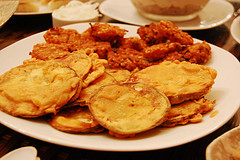
    This eggplant fry coated in besan is a huge hit on this side of the border too! Known as the infamous “beguni”, this dish can be a wonderful pre-meal snack or even a lovely evening-time munchie. The procedure is as follows: take half a cup of besan or gram flour, half teaspoons each of turmeric powder, red chilli powder and cumin powder, 2 teaspoons of rice flour, 3/4th teaspoons of baking powder and half a teaspoon of salt.
    Mix them well in a bowl and make sure the distribution of ingredients is as even as possible. Add water to the mixture and stir well to make a smooth batter. Keep it aside for half an hour to forty-five minutes. Now, the eggplant needs to be washed and sliced into pieces not more than half centimetres thick. Heat the oil on a medium flame, coat both sides of the eggplant pieces with besan and then carefully launch it into the oil. Fry both sides of the pieces till you get a nice golden-brownish tinge. Soak the oil on a paper towel and serve with or without ketchup.


    • Vegetable Cutlet:

    cutlet veg

    This is very good news for all the vegetarians out there! It is indeed a stereotype that Bengali food is nothing without meat and fish… and an untrue one at that! This vegetable cutlet will surely win over all, no matter what their preferences. Grate 2 medium-sized boiled potatoes and set them aside. Boil 3-4 cups of water, add two cups of mixed vegetables and a pinch of salt just when the water starts to boil. Boil for 5 minutes. Drain the water and leave the mixture to cool down.
    Squeeze the water from the vegetables. Mash the vegetables but do not make a paste. Heat one tablespoon of oil in a pan, add cumin seeds and crushed cashew nuts and fry all a while. Add chopped onion and continue frying till the onion becomes soft. Add half a teaspoon each of chopped green chilli, ginger paste, garlic paste and fry for a few seconds. Add the vegetables (not the mashed potato) fry till the water dries up.
    Take the vegetables in a mixing bowl, add the grated potato, and mix all. Add cumin powder, red chilli powder, garam masala powder, chat masala, mango powder, chopped coriander and salt and mix them well. In case the mixture still seems watery, add a few bread crumbs. These will soak up the excess water. Take a part of the vegetable mixture, make the desired shape and coat it with bread crumbs.
    Heat some oil in a pan. When the oil is well-heated, carefully put the cutlets in and fry till you achieve the golden-brown colour. Soak the excess oil on a paper towel. Serve with ketchup or chutney.
    All these dishes are very easy to prepare and never cease to amaze anyone they are served to! So get the Bengali bit of your Indian identity alive and kicking! 😉

  • Diet for healthy pregnancy

    Diet for healthy pregnancy

    Every women in her life time at least once she want to become mother and it is a sense of feeling which wont get for any other reason.Every women will feel proud and will be at most happy for being pregnant.Actually pregnancy is the development of one or more offspring generally known as embryo in a woman’s uterus.For most of the women for one pregnancy she can give birth to one child, but there are some cases for giving birth to twins or multiple child.Giving birth to a child actually occurs for about 38 weeks after conception in women who have a menstrual cycle length of four week.This Conception for getting pregnant can be achieved through either sexual intercourse or assisted reproductive technology.Pregnancy is a beautiful experience for women and it should be treated with at most care and love.

    pregnancy a precious gods gift for women
    pregnancy a precious gods gift for women

    Diet to be taken during pregnancy:

    This term pregnancy is a word for of joy for women in her lifetime.Pregnancy is a special stage in life of a women.It is the stage which improves her value and brings a identity in the society.From the moment she becomes mother she changes her state of mind and thinks like a mother.Most of the women during their pregnancy wont take proper diet but it is a must for every women to maintain proper diet as it not only effects her health but also effects the fetus or embryo.

    Eating during pregnancy
    Eating during pregnancy

    The food habits that are essential for every women who is a pregnant are as follows.We know that as we are starting any new project it is essential that the foundation must be strong,similarly during pregnancy women should be in good health.To maintain so one should not use drugs, cigarettes and alcohol and also one should not take fast foods, deep fried items, sweets and beverages.During the period  it is better to take home made food with wide range of vegetables which is nutritious and fruits should be taken along with it.

    Energy requirement:

    The first stage of pregnancy is called as first trimester.At this level energy requirement should be kept at normal level.As the embryo is not at all formed completely and is very small, it should not be considered as another person.So, as a result there is no need of extra energy is required for feeding the fetus at this stage.As the embryo increases week by week and for final stage it grows about 12 kgs which leads to morning sickness in some women.To avoid this care should be taken and must monitor their food intake and fluid intake.During second trimester the intake must be about 300 calories.During third trimester it is advisable to take small, concentrated and frequent meals should be taken.During the third trimester fasting must be avoided as the body glucose level are very low at this stage there are few cases that they may faint also.

    Energy supplients during pregnancy
    Energy supplients during pregnancy

    Protein content:

    Without proper taking proper proteins inside there will be severe health problems for both mother and fetus also.So to avoid this it is necessary to take food that are containing rich proteins.These proteins help fetus for its growth.The best food that is advisable to take in during pregnancy are milk, meat, eggs, sea-foods, poultry and cheese.It is also advisable to take vegetable proteins like mixed cereals and mixed pulses.

    protein food to be taken during pregnancy
    protein food to be taken during pregnancy

    Fat and carbohydrate requirement:

    It is very necessary and important for those pregnant women to see that the food they intake must not contain large amount of fats and carbohydrates.But they are increased a bit that must be sufficient for the supply of calories and energy to the fetus.At the stage of pregnancy it is better to avoid pizzas, burgers, heavy ice creams, deep fried food items etc., 

    fat containing food items
    fat containing food items

    Mineral and vitamin requirement:

    Among all the minerals from the intake of food items iron is the most important parameter during the time of pregnancy.It is increased from 8 to 10 percent per day apart from the normal intake.The food items that are suggested for pregnant women for minerals and vitamins are eggs, leafy vegetables, oranges, legumes, whole grain cereals and wheat germ.

    vitamins and minerals supplements
    vitamins and minerals supplements

    Calcium requirement:

    Calcium containing food items intake is very essential for the development of bones and skeleton of the embryo.If the calcium requirement for normal person is around 500 mg it must be double the intake for pregnant women.The food sources that are rich in calcium are milk, cheese, panneer, green leafy vegetables and ragi.

    calcium containing food items
    calcium containing food items

    Other trace minerals and other vitamins:

    Along with iron and calcium few other trace minerals are required for the development of fetus like zinc, iodine, magnesium, manganese and chromium.These are required in very minute amount and can easily get them from the intake of balanced diet.Along with important vitamins one can get all the required vitamins from the food items like milk, meat, eggs, yeast, liver, nuts, whole grains, tomatoes and fruits.Along with the intake of all the vitamins and minerals it is also necessary to see to take them in time and in sufficient amount for healthy pregnancy.Proper maintenance of sleep is also important during pregnancy.