
Month: August 2014

  • Dieting or Die-Eating?

    Dieting or Die-Eating?

    Dieting_

    Oh, no. It looks as though you’ve had a row with the weighing machine. Again.

    What was it this time? The needle pointed five kilos ahead? What other options are there apart from running, yoga, swimming and various other exercises?

    Dieting, you say? Cutting down your food intake to a minimal? Are you sure you know the difference between dieting and starving?

    Unfortunately, many don’t understand what dieting truly is.

    The common misconception is that Dieting refers to controlling the amount of food or calories you ingest, in order to lose weight.

    However, the truth runs along these lines:

    Dieting is the practice of eating food in a regulated fashion to decrease, maintain, or increase body weight. That’s right, folks. Dieting doesn’t mean cutting down on your nutrition intake–it means balancing it.

    To determine a proper diet for yourself, it is suggested that you visit a dietitian and have them plan it out for you, based on your body type, weight, eating habits, height, etc.

    However, if you’re more of the future planner, it would help to know some of the long term effects of dieting

    The Long Term Effects of Dieting:

    “Success” in dieting methods has been generalized as weight loss. This implies that losing weight will lead to improved health, and yet, health outcomes are not  included in diet case studies. Do weight-loss diets lead to improved cholesterol,  systolic and diastolic blood pressure, and fasting blood glucose? 

    The question is not whether or not one should diet, but what exactly is it that dieting achieves.

    In most case studies dieting persons show minimal improvements in the above mentioned health criteria, while none correlate with weight change.

    Shocking, but true. Though weight-loss dieting might help shed those extra pounds, it only does so temporarily. In the long run, however, case studies reported that, the majority of individuals had gained almost all of the weight that was lost after dieting, if not more, regardless of continuity in their diet or exercise program. It was also revealed that after two years of dieting, up to two-thirds of dieters were even heavier than they were, prior to beginning their program!

    The “Taboo” Foods

    Certainly, when you are put under a weight loss dietary program, there are certain foods you would be required to give up or cut down on. These include, but are not limited to:


    drinksSoft_Drinks_in_Glass_with_Bottles_926f0c15-b214-4abb-9bea-2dfe2f519478-prv

    • Salad Dressings
    • Beverages like alcohol, smoothies, coffee with cream and sugar, sweetened juices, teas, and sodas
    • Certain meats like Bacon, grilled Chicken
    • Cheese
    • Croutons
    • Burgers
    • Chocolates
    • Doughnuts
    • Cookies
    • Tortillas
    • French fries
    • Potato chips

    The list could go o forever, but to sum it up, anything with carbohydrates or fats becomes a taboo. Though it is true that not all dietitians advise that you ban these foods, or tell you to cut down on their quantity, could you really live with feeling guilty every time you pass a packet of Lays, in a shop?

    Think about what we saw earlier, about how dieting isn’t really all rainbows and ponies in the long run, and ask yourself: is all the effort really worth it? Is it honestly worth it to drown in shame every time you take a bite out of something sweet, only to find out that you’ll gain the same weight, or probably more, two years down the lane, despite your efforts?

    Doesn’t seem smart.

    chips 2processed meat

    The Ignored Side Effects

    Every day, it seems there’s a new “it” diet. But now, it seems as though there’s a whole new reason not to try them all: It turns out, switching diets can drastically affect your intestinal health.

    While there are studies that show the health and medical benefits of weight loss, a study in 2005 of around 3000 Finns over an 18-year period showed that weight loss from dieting can result in increased mortality, while those who maintained their weight got the best. It has also been found that in most cases, a low fat diet causes constipation. Is that something you want to deal with? I think not. In adolescents, it is noted that along with physical ones, dieting can inflict psychological and emotional harms. The stress of being thinner usually leads to eating disorders like Anorexia and low self esteem in teenagers. Sadly though, these ill effects are shadowed by the supposedly ‘fantastic’ results of dieting, that last no more than six months after the completion of your regime.

    images (2)

    The Consequences

    In many cases, normal dieting doesn’t seem to be satisfactory. Not because you’re not doing it right, but just because it isn’t normal and your body is not ready to accept such changes as you inflict on it during the course of your diet. Sadly, these simple signs are misunderstood and dieters are lead to believe that their diet lacks severity.

    As a result, they monitor their eating habits even more strictly than they did before and needless to say, this only leads to more harm.


    1. Binge Eating: Binge eating is sometimes the outcome of having gone too long without necessary nutrition and calories. If you consistently skip meals when on a diet, it is possible to feel deprived and eat many more calories late at night, especially if you’re unable to fall asleep from intense hunger.                                                                                                                                                             download (2)

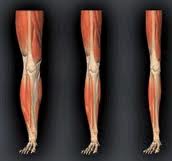
    2. Muscle Loss: Unhealthy dieting practices that don’t produce enough protein can lead to unwanted muscle loss. Your body needs protein to build and repair tissues, and carry out a large number of processes. When you don’t consume enough protein in your diet, your body will consume its own muscle mass. Ouch!                                                                                                                        muscle-loss-in-legs
    3. Fatigue and Nausea: Some unhealthy dieting practices include extreme calorie reduction. Juice fasts where you go for weeks without consuming solid foods often result in horrible side effects. Fatigue, nausea, dizziness and headaches are common consequences of these unhealthy diets.
    4. Challenge to mental Health: Unhealthy dieting is challenging for your mental health. Many people feel grumpy and irritable when they are hungry. Not getting enough calories, not having enough energy to carry out daily tasks, feeling dizzy and nauseous can all combine to push some extreme dieters into feelings of deep sadness or even depression.                                

     download (3)

    The Final Conclusion

    After having thoroughly read about dieting and it’s true colours, can you really say that it is the most natural way to lose unwanted weight?

    The challenge with weight loss diets is that they usually cannot be maintained in the long term. You may be able to survive on a short term basis on an extremely low-calorie diet, but eventually you will have to resume eating regular meals.

    The ball is in your court then. Do you prefer dieting? Or happily Die-Eating?

  • Meditating – The Third Eye

    Meditating – The Third Eye

    The attention is the outer expression of the soul. Most of the time our attention is drawn outside to the world through the senses. If we can withdraw our attention from the world outside and our body for a while and focus it at a point, known as the seat of the soul, we will find the inner light. The seat of  the soul is located between and behind the two eyebrows. This point has been called by  different names such as the third eye, the single eye, the shiv netra, the tenth door, the sixth chakra, the ajna chakra, or the mount of transfiguration.

    download (7)

    By concentrating our attention, the sensory currents that make us aware of sensation in our body withdraw. When these sensory currents are concentrated at the seat of the soul, we find light within.

    For this meditation process, we do not worry about our breathing or doing any difficult asanas or postures, or exercises. We do not touch the motor currents as they do in some yoga. The motor currents are those responsible for the automatic or involuntary processes in the body such as breathing, circulation, the heartbeat, and the growth of hair and nails. Instead, we withdraw the sensory currents. We do not worry about the breathing exercises. We let the breath go on naturally as we do when we perform the other functions of the life.

    images (5)

    To practice meditation, we sit in a pose most convenient in which we can remain still the longest. We close our eyes, and focus our attention on the field of darkness lying in front of us. By concentrating, the sensory currents withdraw to the third eye or single eye. When concentrated there, we find light. By absorption into the inner light, we transcend body consciousness and enter the inner realms beyond.

    download

    Once we pick a pose, we should close our eyes gently and concentrate on seeing what lies in front of us. There should be no pressure on the eyes. Our eyes should be as relaxed as they are when we go to sleep. Since these physical eyes are not those by which we see the inner realms, there is no need to turn our eyeballs upwards in the hope of seeing something there. We should not concentrate on our forehead, instead keep our eyeballs horizontal, as if looking straight ahead.

    If the eyeballs look or turn upward, we may feel a little pressure on the forehead, which may result in two problems. We may get a headache or we may generate heat in that area and our forehead will become hot. That will create problem for us, which will cause us to move, get up, do something to cool ourselves down. That will interrupt our meditation. So we should focus our attention few inches in front of us.

    download (1)

    When we close our eyes, we may first see darkness. That which sees the darkness is our inner eye. With the inner eye, gaze lovingly, sweetly, and penetrate deep into whatever is in front. We should be relaxed, but attentive as if watching a movie screen and waiting for the movie to begin. This is a process in which we do not worry about the world outside or what is going on in the body below. We are only trying to invert so as to reach the worlds within.

    In our body, we have our soul and our mind. The mind is a powerful entity whose main aim is to keep the soul in the body so that it does not reach the inner realms. The mind will try to entangle our attention in the physical world. It will do its best to prevent us from rising above this physical body and returning to god. We need to realize that soul is our real self- the part of us that is of the same essence as that of god. Unfortunately, we have been separated from God. If we can realize that our soul is covered by the mind and the body, and understand that the mind’s role is to keep us from knowing our soul, we will be better able to still our mind.

    images (6)

    For perfect concentration, we have to reach a state of no thoughts. If we have any thoughts, whether good or bad, they are all bad as far as meditation is concerned. Thoughts are like chains. The iron chains are our bad thoughts, but even if the good thoughts are the gold chains, they are still chains. Thus, good thoughts are still distractions and will not help us in meditation.

    There is a vistas of sight inside. We should be totally focused on what is before us. As we meditate more and progress, we will see inner vistas such as inner stars, moon and sun. As we gaze attentively into the middle of whatever we see, the power of God will guide us beyond the physical into the higher planes.

  • Just Taste the Berries

    Just Taste the Berries

    Berries are the culinary fruits of  flora which means the plant or the tree which bears fruits from the flowers. Berries are basically called as aggregate fruits beause agregate fruits are formed from one flower which contains many ovaries in it. So,berries grow in bunches from one flower of the plant . These berries doesn’t contain any seeds inside them , they are just fleshy which can be eaten raw without pitting.

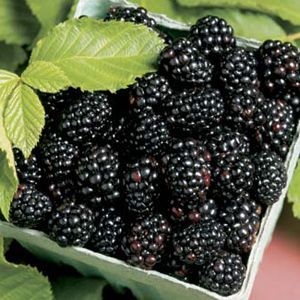
    Blackberry

    DETA-1311
    Blackberry is a soft fruit which is mainly used as ingredient in making ice creams , jam, desserts , juice and many more interesting food stuffs. Blackberry fruit is native to Europe, Central Asia, Africa , North and South America.
    Benefits:

    • Blackberries are rich in anti-oxidants and are very helpful in destroying cancer radicals formed inside the cell.
    • They contain many phyto -chemicals which are essential for good health and it helps in reducing inflammation.
    • Taking a cup of blackberries can protects immune system and lowers the risk of getting cancer as it contains vitamin C and antioxidants.
    • It also reduces of the risk of getting heart diseases and promotes good digestion.
    • Eating blackberries protects the skin from damage caused by UV -Rays and repairs the skin as it contains ellagic acid an antioxidant.and also inhibits the growth of skin cancer causing tumors from spreading .
    • Blackberries are considered to be rich in nutrients , Vitamin C & K and essential manganese minerals.

    risk factors:

    • During autumns this fruit is not recommended as the tree which bears fruits is infected by many virus and it becomes the host for many pesticides.

    recipes :

    • The varieties prepared with Blackberry fruits are very interesting and fun to eat.

    Some of them are:

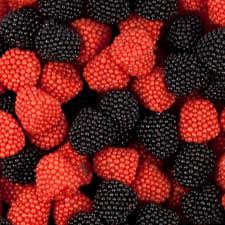
    • Blackberry candies

    Disney-Deliciously-Wicked-Gourmet-Candy-Corn-Blackberry-Magic

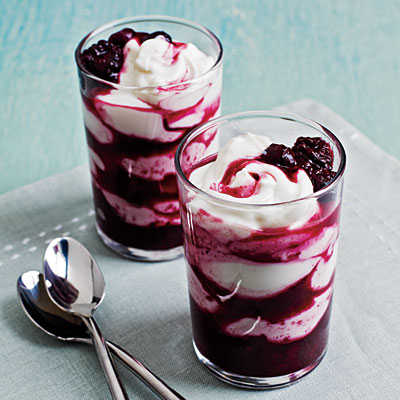
    • Desserts

    1107p30-greek-yogurt-warm-black-blueberry-sauce-l

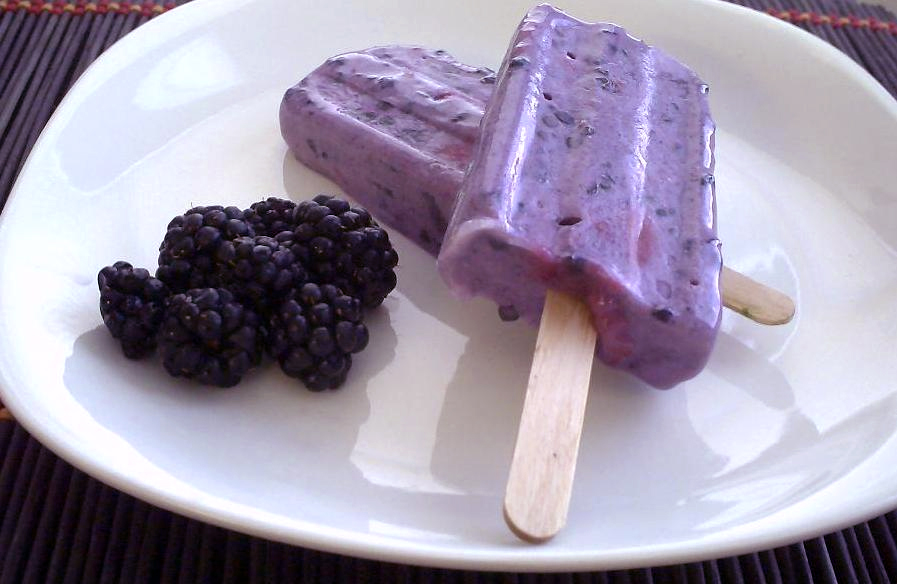
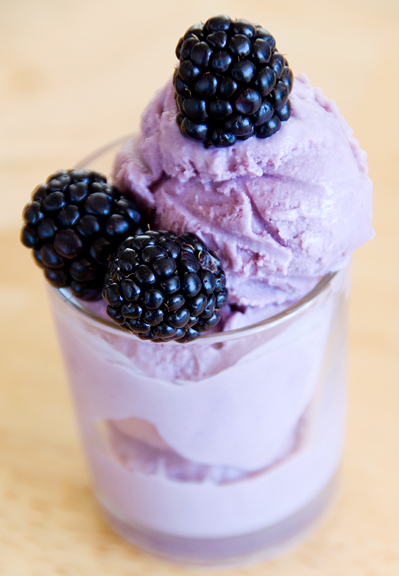
    • blackberry ice creams and Popsicle
    Blackberries-and-Cream-Popsicles
    popiscle
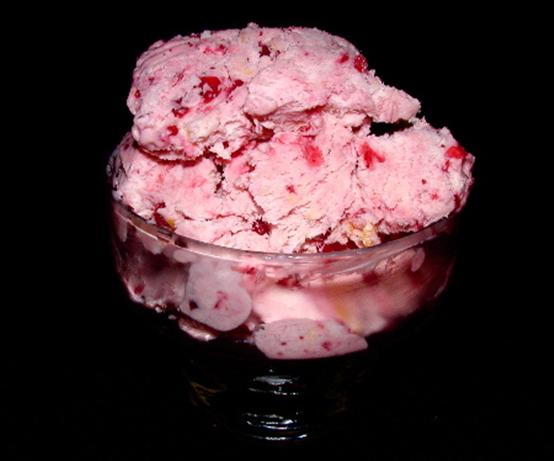
    blackberry-ice-cream-03
    blackberry ice cream
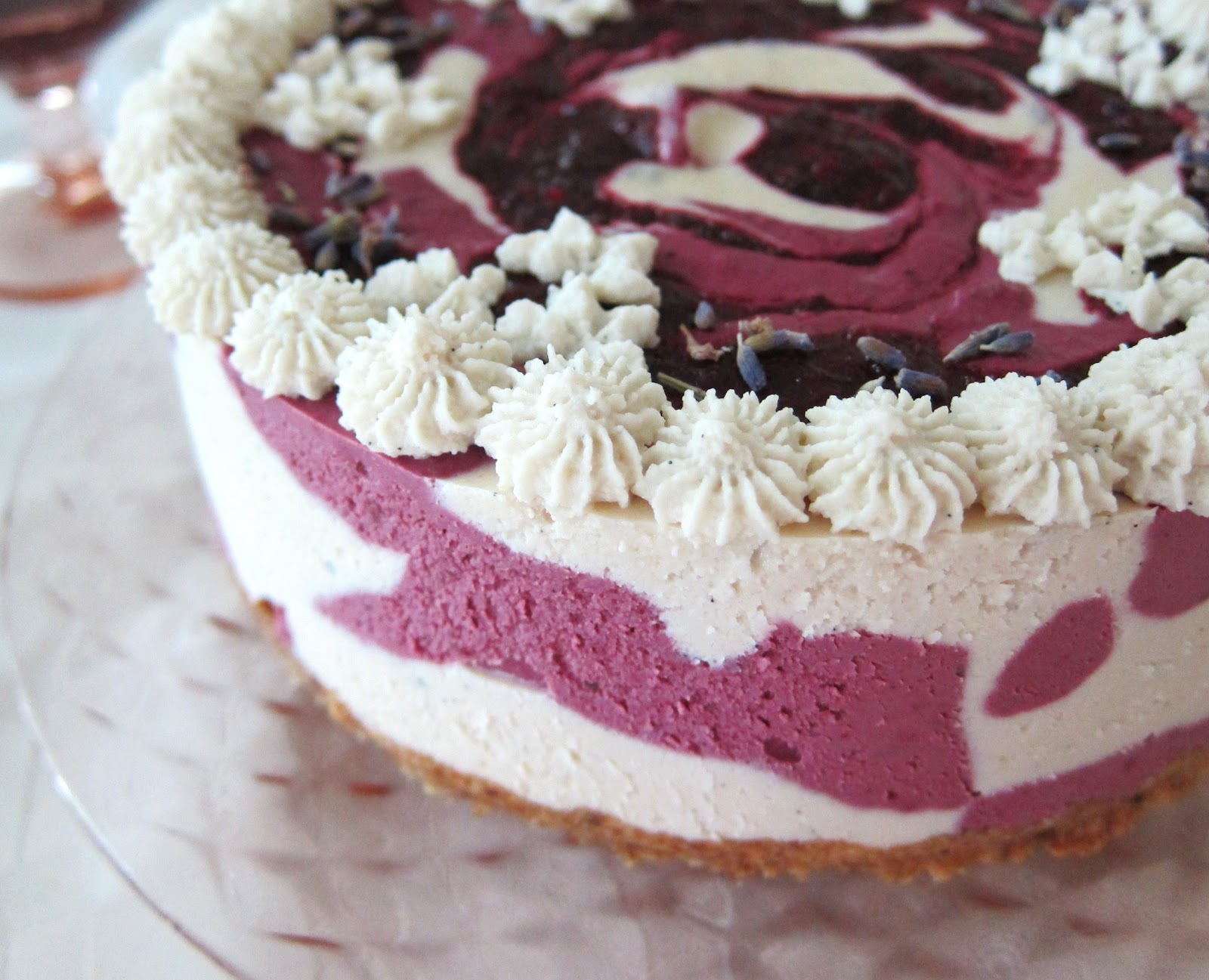
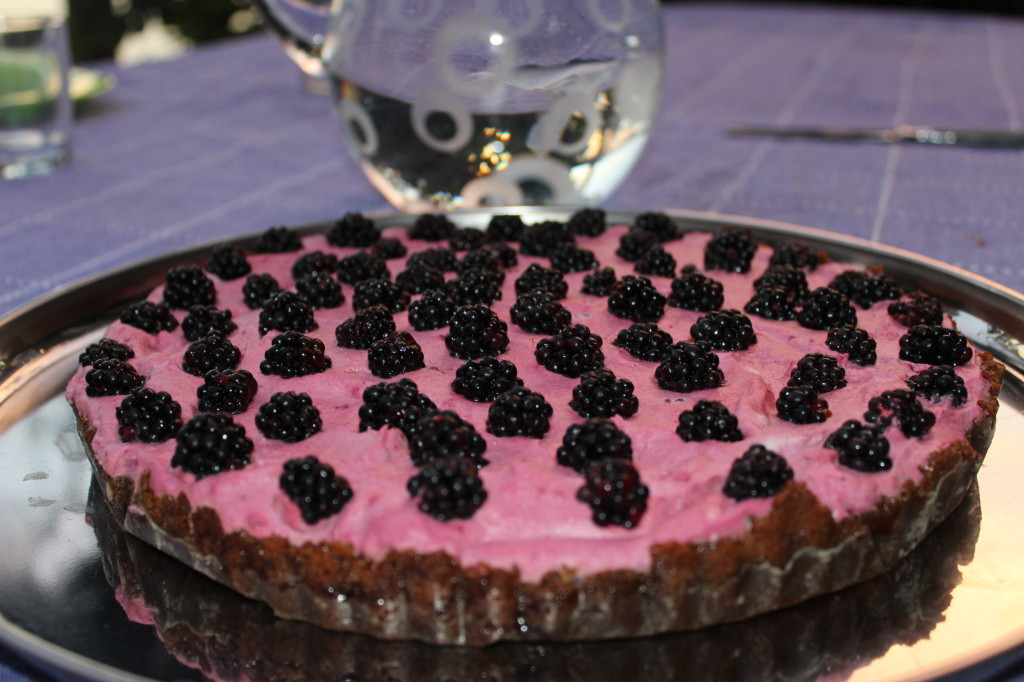
    • Blackberry cakes and pastries

    067

    IMG_2307-1024x682

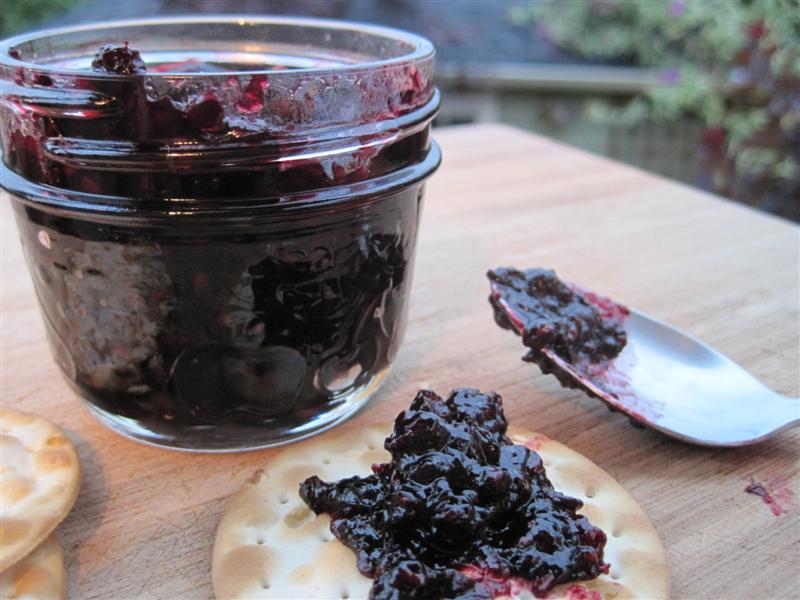
    • Jam and jelly

    blackberry-jam-Medium

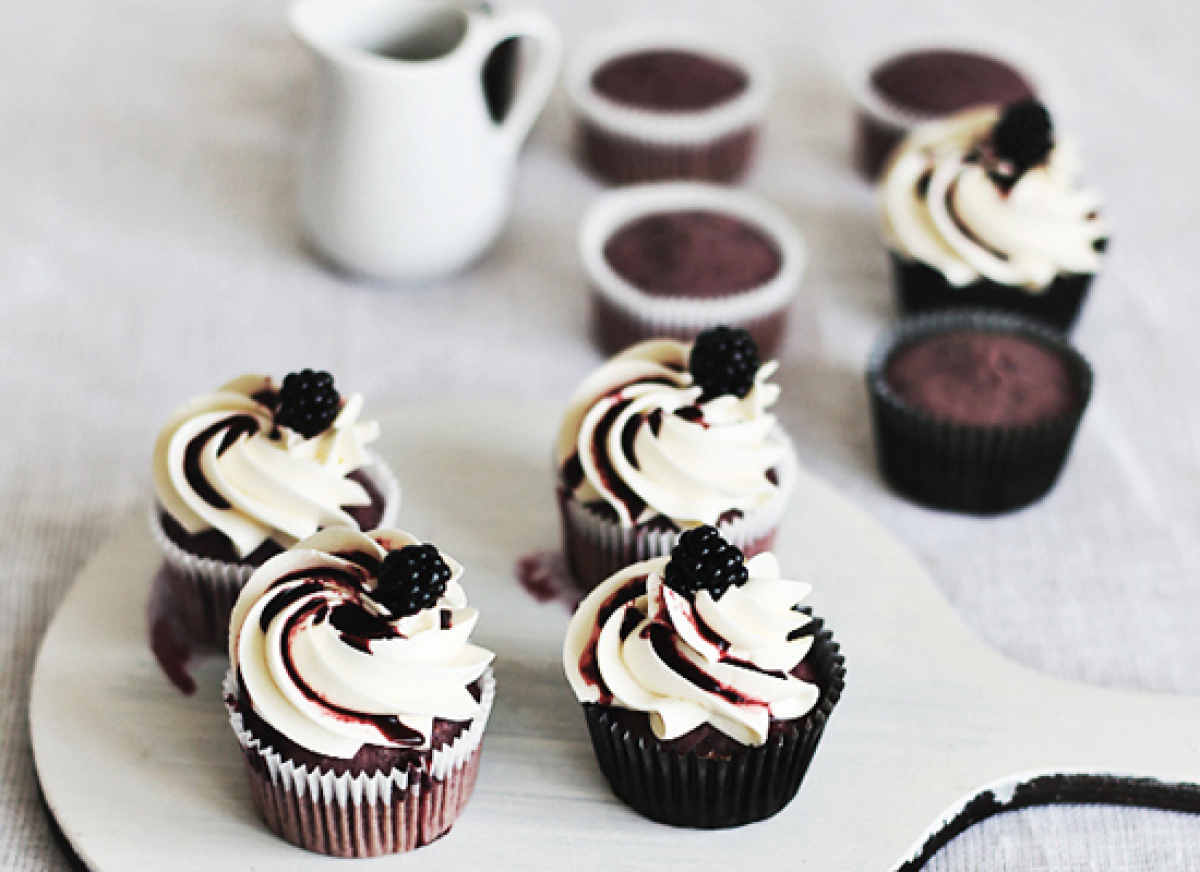
    • Blackberry cupcakes

    slide_243051_1334928_free

    steps to Prepare Blackberry Mojito:

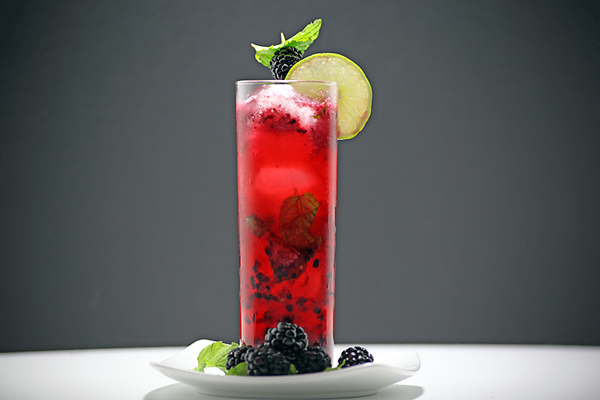
    blackberry-mojito

    1. Its a soft drink which can also be prepared at home very easily within less time.
    2. Just grind some required amount of blackberries and add some mint leaves in a blender and keep it a side
    3. To sweeten the drink add some chilled sugar syrup or essence to the mixture and stir well
    4. Next squeeze a lime into a jar and if possible add white rum which is optional
    5. And now add the blended blackberry and mint leaves into the jar in lime juice and shake it with a cocktail shaker or just add them all again in a blender for just 2 minutes
    6. Now take a glass and pour the required amount of prepared cocktail into it and top with some soda and ice cubes and decorate with a lime peace and blackberry and a mint leaf
    7. And here it goes your Blackberry Mojito is ready to drink


    Raspberries

    images (2)

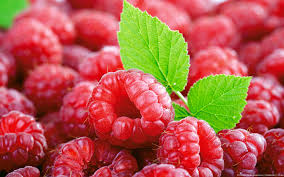
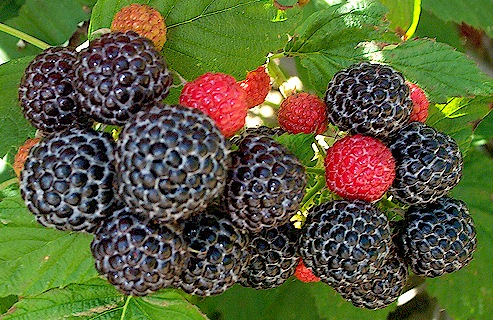
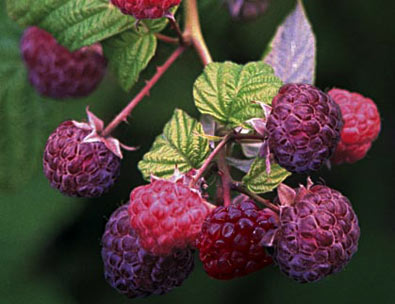
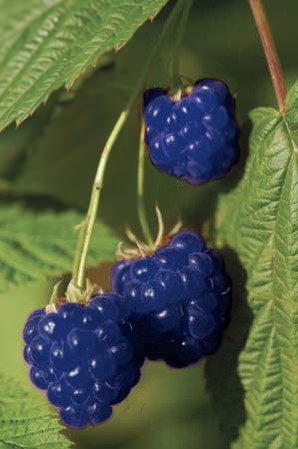
    • Raspberries are the fruits which are grown in the low temperature areas especially near polar regions. Raspberries are mostly red in color and pink also. There are many species of Raspberries ,even Dark purple colored raspberries , yellow or golden color,Blue color and Black Raspberries.


    red and black raspberries
    red and black raspberries
    Black raspberry
    Black raspberry
    Golden or Yellow Raspberries
    Golden or Yellow Raspberries
    Purple Raspberry
    Purple Raspberry
    • Raspberries are rich in minerals, vitamin C,Vitamin K, manganese and just 4% of sugar and no starch.
    • Raspberry leaves are used in making herbal tea either dried leaves or fresh. Leaves are also used in preparing herbal medicines.

      blue raspberry
      blue raspberry
    • Eating raspberry can keep you away from cancer like diseases
    • It has good amounts of antioxidants and phyto nutrients which is essential for human beings..fully ripened raspberries contain more amounts of antioxidants than the normal one.
    • It helps in increasing metabolism of the cells and clearing unnecessary fats and helps in reducing weight.So, i must say that raspberries are the excellent weight loosing fruits.


    blue-raspberry-gummi-rings
    raspberry gummi ring candies
    Jolly_Ranchers_Blue_Raspberry_2_w__34650.1405410492.1280.1280
    raspberry cany
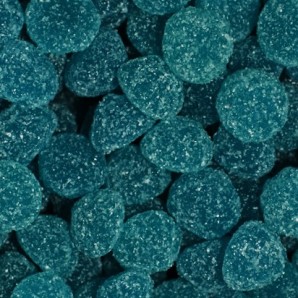
    blue-raspberry-slices_1
    raspberry sour chewing candies
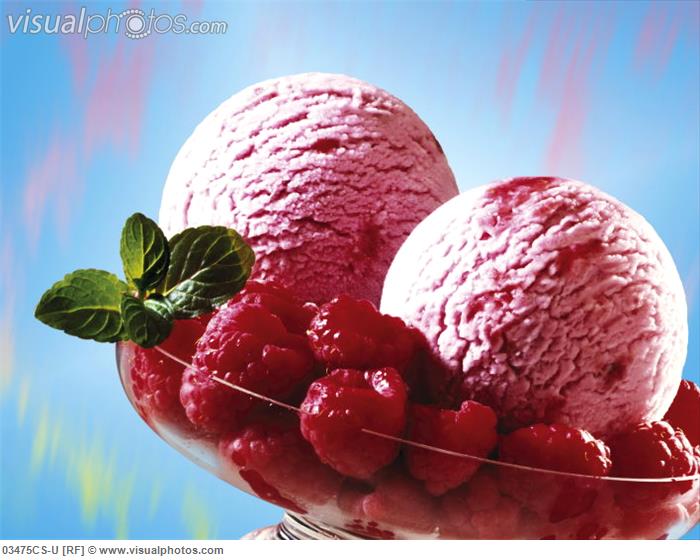
    raspberry icecream
    raspberry icecream
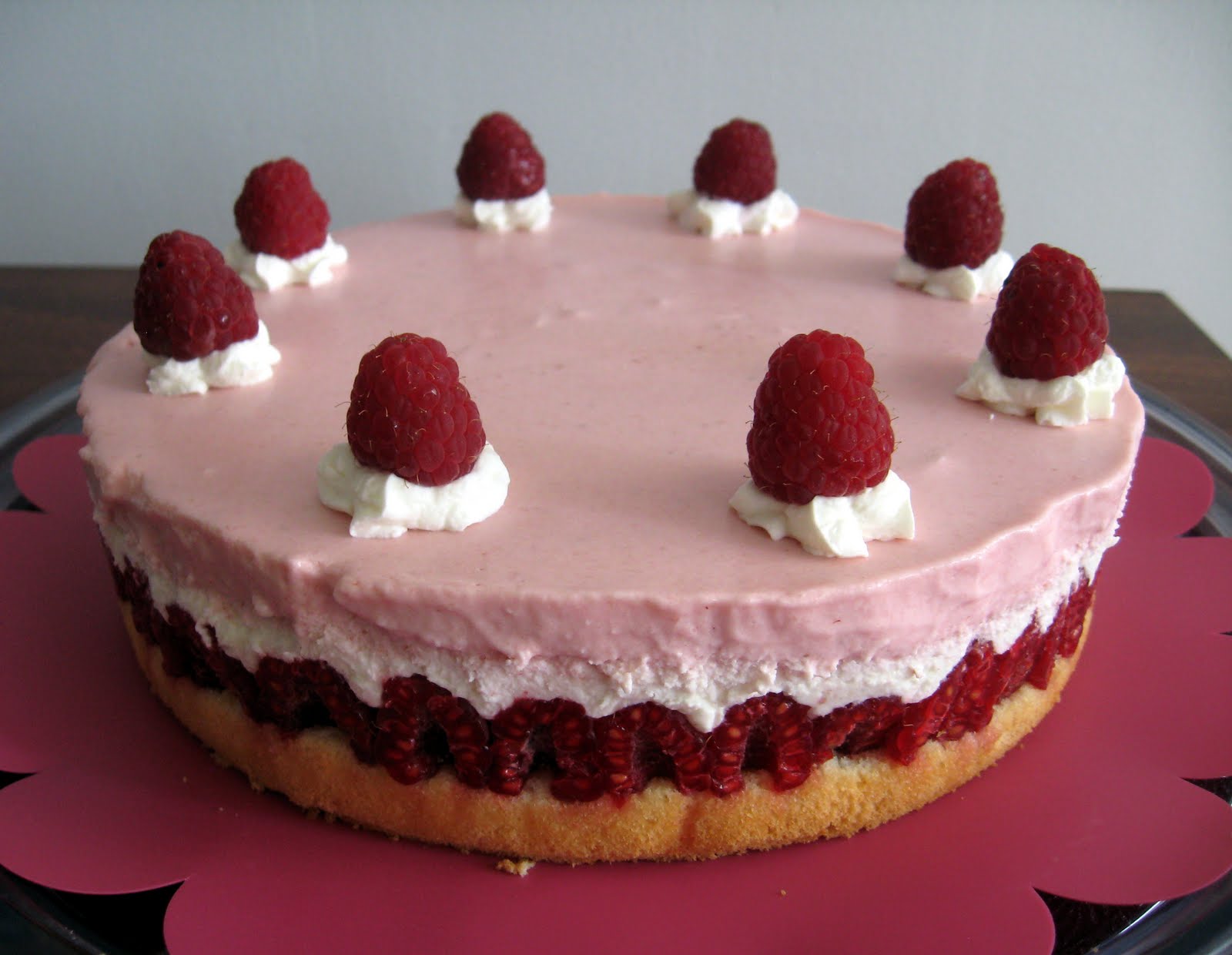
    raspberry cake
    raspberry cake


    blackraspberry cup cake


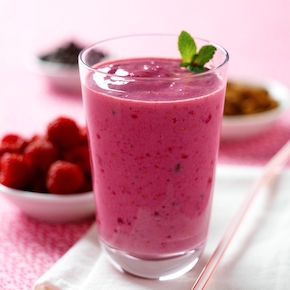
    Steps to prepare raspberry smoothie:
    Ingredients:


    orange-rasp

    • 1 cup of fresh raspberries
    • 1 cup broken Almonds
    • 1 apple
    • 1 banana
    • 1 cup of Non-fat yogurt
    • 1/2 cup of milk
    • 1 cup Sugar
    • Honey

    Preparation:

    1. First make a paste of almonds and keep a side
    2. Now add raspberries ,peaces of apple, banana into the blender
    3. Now add the almonds mixture into the raspberries mixture with and sugar
    4. Now at last add milk and honey and blend it for 2 minutes
    5. Freeze this for about 1 hour and then serve it by pouring it into the glass by garnishing with raspberries.

    Strawberry

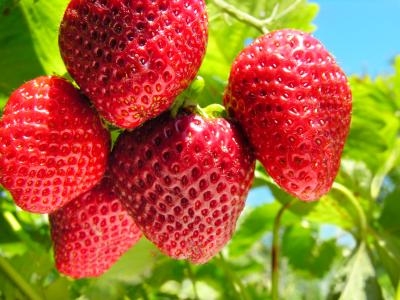
    147644-400x300-Closeup-of-strawberries

    strawberry hanging garden
    strawberry hanging garden
    strawberry smoothie
    strawberry smoothie
    strawberry ice cream
    strawberry ice cream
    • Strawberries are cultivated throughout the worldwide.
    • Strawberries can also be cultivated in gardens at home.
    • Its greatly consumed as fresh fruit or in varieties like ice creams, milkshakes, jams, pies,breads,cakes, and chocolates.
    • It has same health benefits as other berries have like like reduced risk of diseases like cancer , cardiovascular , and anti -inflammatory diseases .

    Blueberry


    download (2)

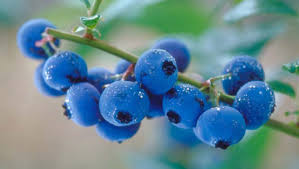
    • Blueberry is another variety of fruit like blackberries and raspberries . Its native to north America . It has many health benefits .
    • It is very useful in regulating blood pressure and maintaining sugar levels in blood.
    • It helps in reducing depression and improves brain memory
    • It contains many anthocyanins, and other pigments and phyto chemicals which helps in reducing the risks of diseases like cancer and inflammation
    • Similar to other berries its also used as flavor to make varieties of ice-creams, jams, jelly,cakes,desserts, juices, smoothies etc..
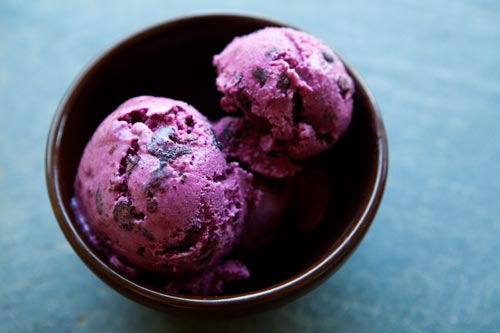
    blueberry-frozen-yogurt-1
    blueberry yogurt ice cream
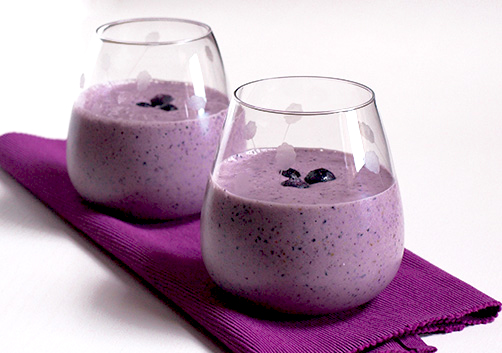
    blueberry-smoothie1
    blue berry smoothie

    Lingonberry or Cow berry


    images

    • Lingonberry or cow berry is cultivated mostly on ht elands of North America
    • This berries are very useful in making many food products like Jam and as ingredient in some cakes, fruit juices, ice creams and breads.

    pict6bYbZ

    • This fruit is rich in nutrients , vitamin C , vitamin A, Vitamin B,calcium, Magnesium, calcium .
    • Eating cranberries can keep you away from diseases like breast cancer, diabetes mellitus,and rheumatism.
    • Either the syrup or jelly of this fruit is used as traditional medicine to cure fever,disorders of gastrointestinal tract,kidneys and urinary tract.

    download


    Cranberry

    download (3)

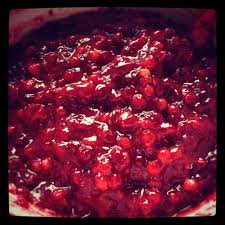
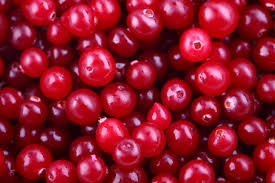
    • Cranberries are very similar to Lingonberry but they are little sour and bitter than lingonberries . It also has many health benefits as similar to Lingonberry .
    • It is especially helpful in maintaining good immune system, cadiovascualr system and also anti-cancer agents.
    • Its especially good for women health.
    • Dried cranberries , cranberry ice creams and jams are the mostly consumed varieties of cranberry fruit.
    image001
    cranberry juice


    cranberry ice cream
    cranberry ice cream


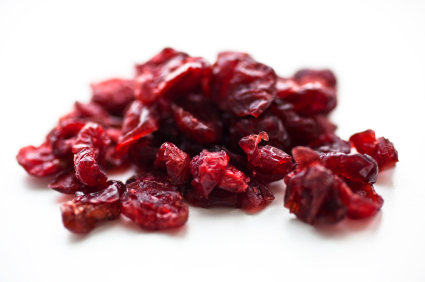
    Dried Cranberries
    Dried Cranberries


  • Scrumptious fruits you must eat and their benefits

    Scrumptious fruits you must eat and their benefits


    Fruits are the ultimate natural source of vitamins, minerals, proteins along with some anti-oxidants and other substances which are  very beneficial and essential for health to humans as a healthy diet. Humans and many animals are mostly dependent on fruits. Consumption of fruits in high amounts keeps us away from diseases like cancer,heart diseases,skin diseases etc… There are many kinds of fruits which grow in different atmospheric conditions at different regions. 

    Carambola:


    Carambola
    Carambola fruit / star fruit


    • Carambola is a fruit it is also called as star fruit or Carambola Apple.
    • Its name differs from region to region.
    • This fruit is native to  the places like Indonesia, Bangladesh,India and Sri Lanka.
    • The taste of the fruit is likely the mix of apple, pear,grapes and citrus  family.
    •  It tastes differently in different stages of ripening.

    Health benefits:

    •  Carambola contains Potassium, Vitamin C,sodium and acid.
    •  Its rich in anti-oxidants and contains low sugar
    •  It also contains Nitric oxide(NO) which varies at the ripening states

    Risk Factors:

    kideny prob

    •  This fruit is not recommended for those who are suffering with kidney failure, kidney stones and those who are suffering with kidney dialysis.
    • The patients with kidney problems when consumed this fruit can cause hiccups , nausea, vomiting, and mental confusion.

    Uses:

    •  This fruit when it is sour can be used for cleaning rusty materials or removing rusty stains from the clothes.

    Recipes prepared using star fruits:

    dsc_0799
    Carambola sour juice
    sf
    Carambola smoothie
    starfruit-juice-recipe-2
    Carambola juice

    Tambis

    images (2) images (3)

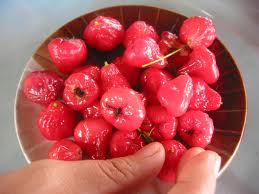
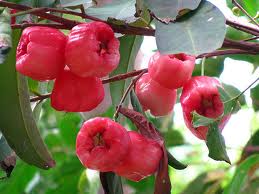
    •  Tambis is a fruit which is from the family of apple known famously as Rose apple .
    •  Its scientific name is Syzgium samarangense.
    • It is also called as bell fruitwater apple, Jamaican apple etc…, and it is called with different names in different regions.
    •  This fruit is  mainly found in the islands of Indian ocean, Andaman and Nicobar Islands .
    •  In India it is found in Andhra Pradesh in the dry land  areas of Rajanagaram mandal ,here in Telugu it is called as Kammari  Kayalu. In malyalam it is called as Chambaka.

     Health benefits:

    • Rose apples are very beneficial to Diabetic patients and also lowers blood pressure.
    •  It is considered to be good for brain, liver and blood.
    •  It is used as medicine in curing fever and asthma.
    •  Its seeds can be used to treat diarrhea

     Risk factors:

    •  Excessive consumption of this fruit can result in certain health problems
    •  Excessive eating can cause itching in the throat and leads to coughing.
    •  Eating 3-4 apples per day can serve good excessive is not beneficial.

    Litchi:

    Litchi Fruit-02(Small)

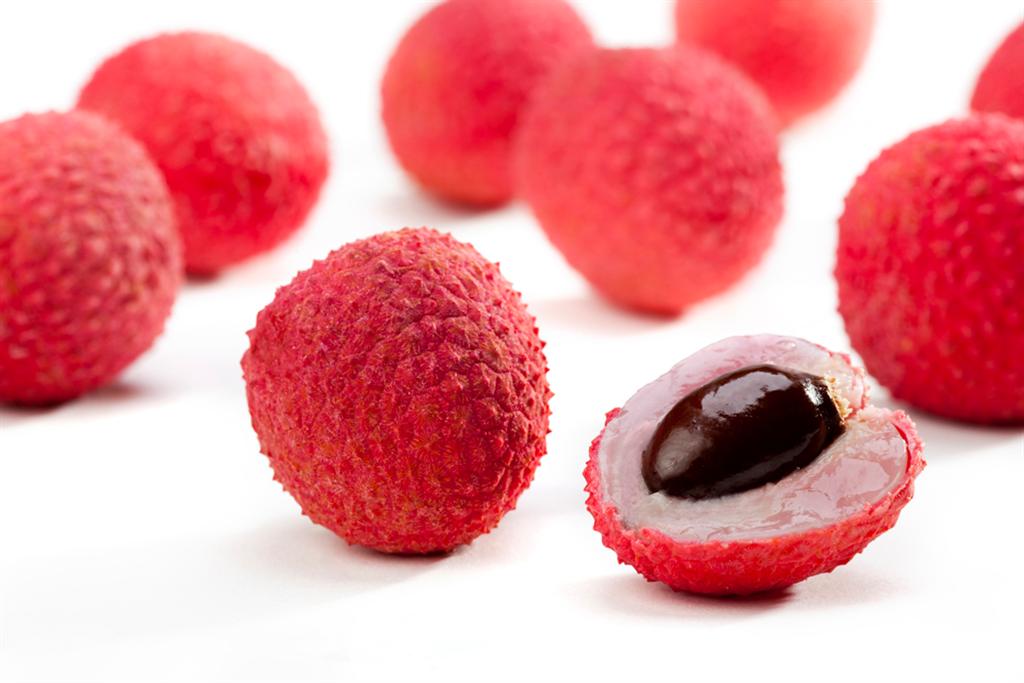
    •  Litchi fruits are mainly cultivated in China and India. It is also cultivated in many other countries like Bangladesh,   Vietnam, Sri  Lanka, Japan and several other places around the world. It tastes sweet and has perfume like smell in it .

     Health Benefits:

    •  Litchi helps in maintaining good health and fat free body as it contains no saturated fats or cholesterol.
    •  It contains good amounts of anti-oxidants,vitamins and dietary fibers.
    • Eating Litchi can help to improve flow of blood in organs, in reducing weight  and protects skin from UV rays.
    •  Its also source for Vitamin C, Vitamin B- complex,thiamine, niacin, and also minerals like copper and potassium.
    • Litchi is grown in many areas to prevent and treat malnutrition.

     Risk factors:

    •  Eating litchi’s is not recommended for children especially during the months of May and June , as the litchi’s are attacked by deadly virus called Encephalitis.

    Recipes made out of Litchi fruits:

    img_6554
    Litchy smoothie
    Lovely-Litchi-Martin
    Litchy juice
    Recipe
    litchy jelly ice-cream

    Palm fruit:


    nungu3
    Ice apple or nungu

    images (4) 7.1216326600.mbpm-palmyra-palm-fruit

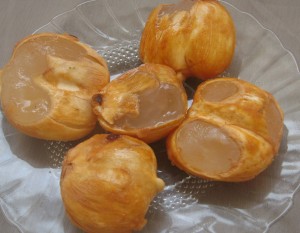
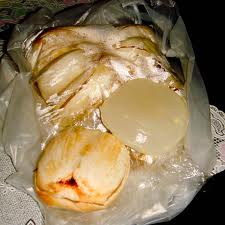
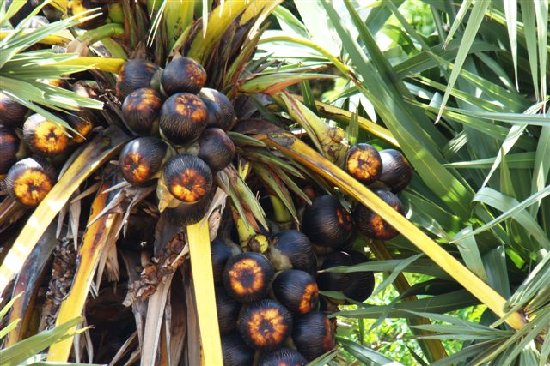
    •  Palm fruit which is also called Palmyra fruit or Ice -Apple, known as Tari in Hindi, Nungu in Tamil and Thati munjalu in Telugu.
    • This fruit is sweet in taste and looks transparent jelly like thing. Its also fermented to  make Toddy called kallu .
    • Palm trees which are grown bulky especially in India , Indonesia,Malaysia, Nepal,Sri Lanka, Bangladesh and Africa.
    •  Its scientific name is  Barassus Flabellifer.
    • In the states like Tamil Nadu , Andhra Pradesh and some places the seeds are allowed to germinate and  forms   stems like structure,which are called as Palm sprouts called as Gagulu or Panai Kezhingu is eaten raw or either boiled or roasted.
    •  And if the fruit is fully ripened then the outer yellow layer is eaten and used in preparing varieties of recipes.

     Health Benefits:

    • Palm fruits are very healthy and it has been all around from many years.
    • Palm fruits contain jelly like substance which is called Ice apple can be eaten or drink which is made out of it is taken as a  cool  drink during summer seasons.
    •  It gives instant energy as it contains Vitamin C and Vitamin B – complex
    • The fruit pulp is used to cure many skin inflammatory conditions
    •  The sap which is collected from the tree is used as tonic and laxative to cure liver diseases and ulcers.
    •  When this sap is fermented it becomes a crazy drink called kallu(alcohol)
    • The sap is also used to cure anemia, improves digestion and good for appetite.

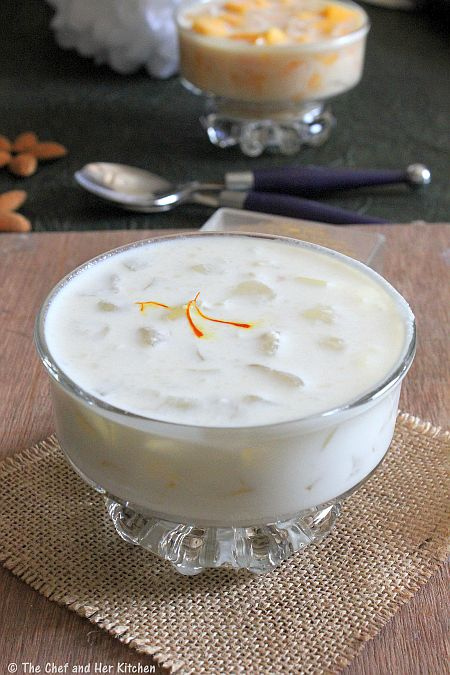
    Recipes made with Palm fruit:

     main_thumb[5]


    steps to prepare Rose Milk Ice Apple:

    • Boil thick milk in a vessel and cool it in a refrigerator for 1-2 hours
    • Peel the Ice Apple (nungu) and cut into  peaces
    • after 2 hours mix rose syrup to the milk and add sugar and blend it for  2 minutes
    • and then finally add nungu and serve it chilled


    thati-nungu-payasam-easy-tadgolapalm-fruit-dessert-easy-summer-dessert
    nongu paal

    Sweet Tamarind / Camachile


    images

    kamunsil

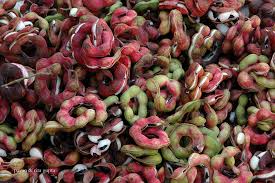
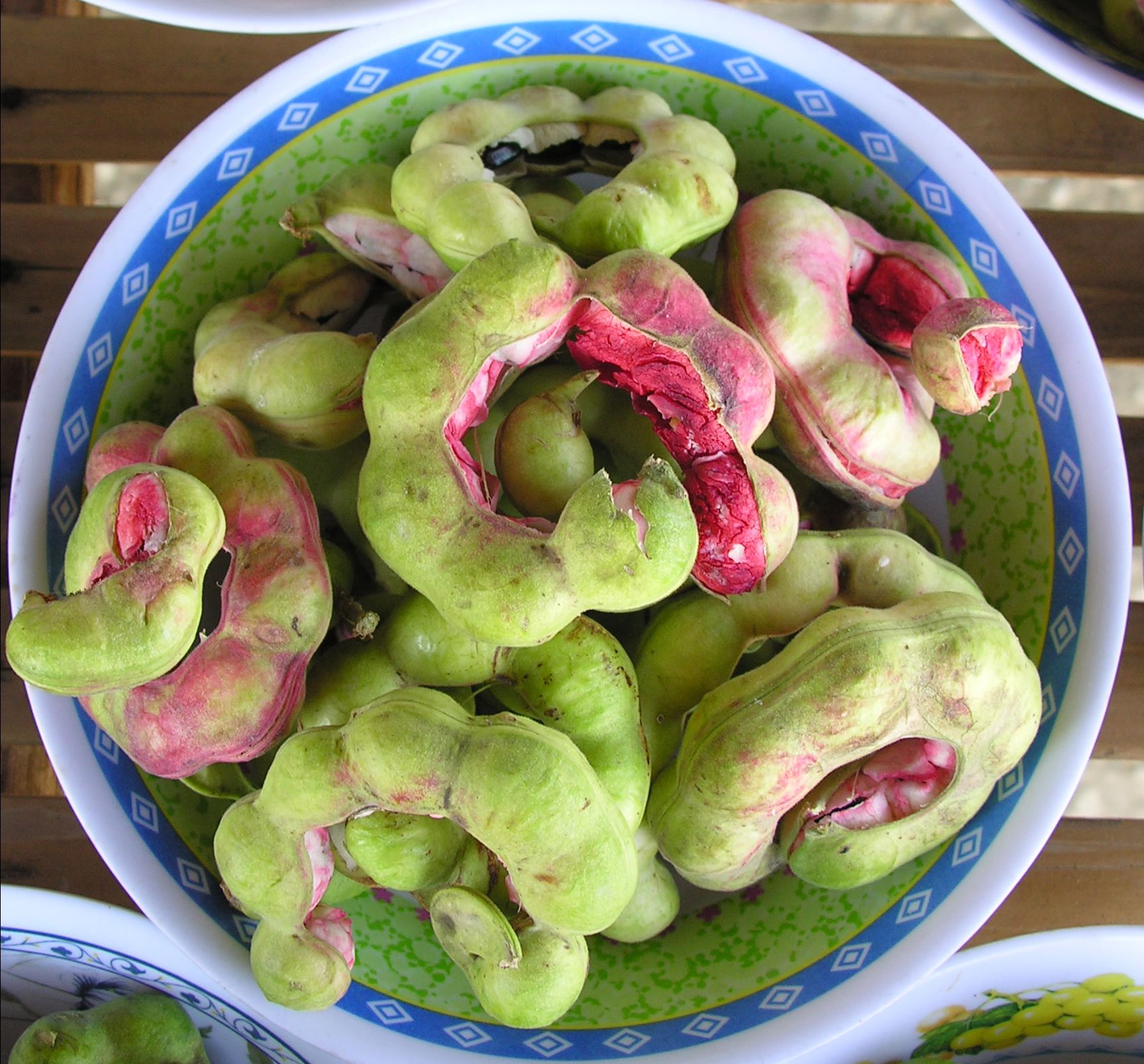
    •  Camachile is a fruit which is similar to tamarind but its pulp tastes sweet and looks twisted and red in color.
    •  These trees are grown on streets in India and its also found grown in South America, Mexico, Philippines, Bengal , Caribbean, Florida and other places.
    • This fruits are also called as Monkey pod. Its called as Seema Chintakaya in Telugu , Kodukka Puli in Tamil and Jungle Jalebi or  Ganga  Imli in Hindi.

     Benefits :

    •  This fruit is used in preparing many meat dishes
    • Its seeds are edible and useful in extracting oil out of them which contains only 10% seeds and good for reducing weight.
    •  Its also helpful in strengthening the gums of tooth ans preparing medicines
    •  The bark extract helps in curing diarrhea, tuberculosis and dysentery
  • Some easy pakora recipes

    Some easy pakora recipes

    Pakora is a fried snack. When the weather is rainy and you have your family at your home then the best way to enjoy the monsoon is by making Pakoras for them. Different people of the family have different tastes so, here are some recipes for you to make the monsoon days more enjoyable.

    BESAN KE PAKODE-

    besan ke pakode


    Besan Ke Pakode is the most delicious snack dish made with besan, onion and other spices. It is all time and any time favorite dish of elder ones and younger ones. In my home twice a week it is a compulsory tea time snack in the evening. You can serve them as an evening snack or a morning breakfast, they are all time tasty and mouthwatering.

    Ingredients-

    1 finely chopped big onion, 1/2 teaspoon red chili powder, freshly chopped cilantro, salt for taste, 2 cups besan, 6 finely chopped green chillies, a pinch of baking soda, and oil to deep fry.

    Recipe- Combine green chillies, onion, salt, besan, red chili powder, baking soda and lots of fresh cilantro in a mixing bowl. Mix all the ingredients well and add water to make a medium thick batter. Heat up a pan and add suitable quantity of oil to deep fry. As oil heats enough, then add a big spatula of prepared batter. Turn to fry from both the sides and when half fried, then take out from the oil. Then leave it to cool. Now again pour a spatula of batter in the hot oil and take out from the oil when half fried. Leave to cool. After few minutes when the half fried big pakoda is cool enough, then make small-small pakode from that big pakoda. Again deep fry in hot oil for few seconds, lower the flame. Turn and fry from all the sides. Take out from the oil and keep on absorbent paper. In this way make small-small pakode from each big pakoda. Serve hot with Indian flat bread and accompanied by green chutney or tomato sauce.

    ONION PAKODAS-

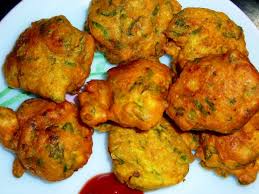
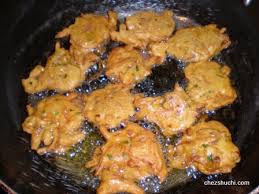
    onion pakode

    Ingredients-

    5 large onions, 1/2 teaspoon minced ginger, 4 teaspoons chopped cilantro, 2 teaspoon red chili powder, 1/2 teaspoon turmeric powder, salt to taste, 3 teaspoon rice flour, water as per needed, 3 green chillies, 2 teaspoon lemon juice, 2 teaspoon chopped curry leaves, 1/2 teaspoon coriander seed powder, 1 teaspoon cumin powder, 1/2 cup besan, 1/4 teaspoon cooking soda, oil 3 teaspoon to deep fry.

    Recipe- Peel, rinse and slice onion. Finely chop green chillies, coriander leaves, curry leaves, mince or grate ginger.  Meanwhile in a wok start to heat oil. In a wide bowl take sliced onion, green chillies, coriander and curry leaves, ginger, red chili powder, turmeric powder, cumin powder, coriander seeds powder and salt. Mix everything well. This step helps to mix onion with all spices and onion pieces gets separated nicely. Now add chickpeas flour/besan, rice flour. Mix again everything to combine flour with onion pieces. Now start to sprinkle water and mix well to bring everything together. Go easy on water as onion and salt release water too. Add lemon juice mix and then add 3 teaspoon of hot oil and mix again. Check for salt, spices and adjust anything if required.  Drop around small amount of mixture in oil with hand or using a spoon, make 6-7 pakoda in a batch. Make pakoras of the size you prefer small, medium or big and cook in medium flame until all sides are golden brown. Drain pakoda in kitchen tissue and cook remaining pakoda in batches. Serve them hot with chutney or tomato sauce.

    HARI MIRCH KE PAKODE-

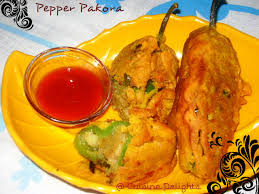
    mirchi pakoda

    Ingredients-

    4 chillies, oil for deep frying

    For the batter- 1 cup besan, 1/2 teaspoon garlic paste, salt to taste, cold water, 1/2 teaspoon garlic paste.

    For the filling- 1 boiled and mashed potato, 1/2 teaspoon zeera, 1/2 teaspoon ginger paste, salt, 1/2 teaspoon garlic paste, 1/2 teaspoon sugar.

    Recipe- In a bowl mix all the filling ingredients. In another bowl mix all the batter ingredients. Adjust the water amount keeping the consistency medium-thick. Batter should not be too runny. Fill the deseeded chillies with the prepared filling. Dip in the batter and deep fry till golden and crisp. Serve with pudhina chutney or sauce.

    ALOO PAKORA-

    aloo ke pakode

    Ingredients-

    2 large potatoes, 2 rice flour, 1 teaspoon red chili powder, 1/4 teaspoon cooking soda, water as needed, oil to deep fry, 1 cup besan, 1 sprig chopped curry leaves, 1/2 teaspoon turmeric powder, salt and 2 teaspoon hot oil.

    Recipe- Peel, wash and dice potatoes, transfer in a large bowl and add rest of ingredients except oil. Give a good stir, now add water 1 teaspoon at a time and mix until everything comes together, this doesn’t require so much of water so keep adding water only in less quantity. Heat oil, take 2 teaspoon of hot oil and mix with potato mixture.   Scoop a spoon of batter and drop in oil, do this 4-5 times to get 4-5 pakoras and fry until golden brown in medium heat.
    If using hand, scoop around 4-5 pieces of potato for one pakoras and deep fry. Have it with coconut chutney, sauce or just with hot tea/coffee.

    PANEER KE PAKORE-

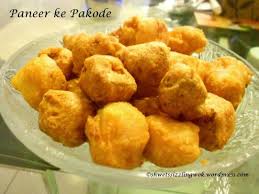
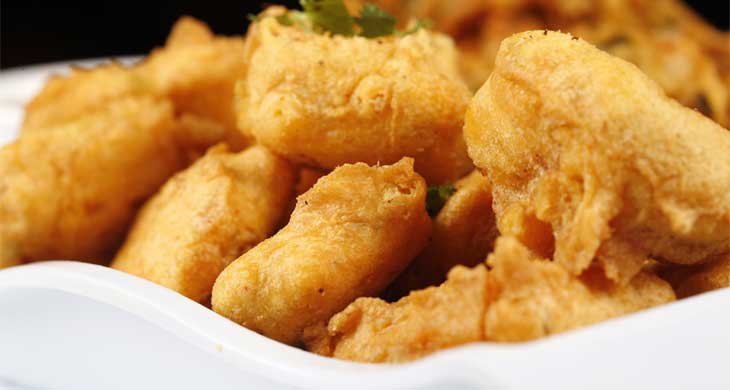
    paneer ke pakode

    Ingredients-

    1 liter milk, 1 lemon, 4 teaspoon tomato sauce, 6 teaspoon bread crumbs, 2 teaspoon flour, salt, finely chopped green chili, 2 teaspoon finely chopped green coriander, 4 big size boiled potato, 4 teaspoon green chutney, 1 packet potato wafers, oil and black pepper powder.

    Recipe- First, boil the milk, add green coriander, green chili, lemon juice and curdle the milk. Remove the water, put the cottage cheese in muslin cloth and place some weight on it. When the paneer sets, cut them into 5 cm pieces. Mash the potato and add salt and pepper to it. Add water to the flour like it is done when bhajiyas are made. Now, take two pieces of paneer, apply green chutney on one side and stick them together. Take mashed potatoes on a palm and spread it. Apply tomato sauce on it. Place the paneer on it and cover the paneer with the mashed potato-sauce mix. Shape the paneer. Dip this into batter and coat with bread crumbs. Deep-fry it. Serve with green chutney and potato wafers.


  • Benefits of Pomegranate juice for health

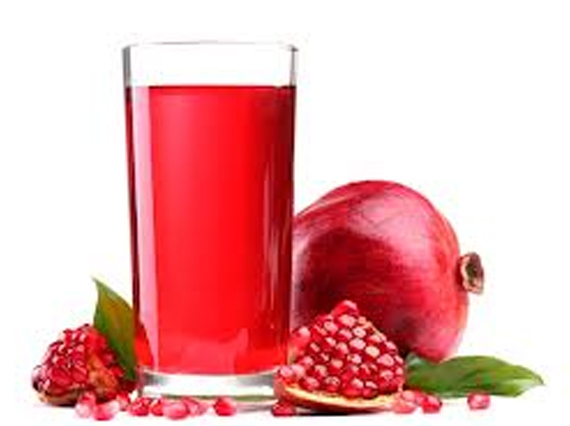
    Benefits of Pomegranate juice for health

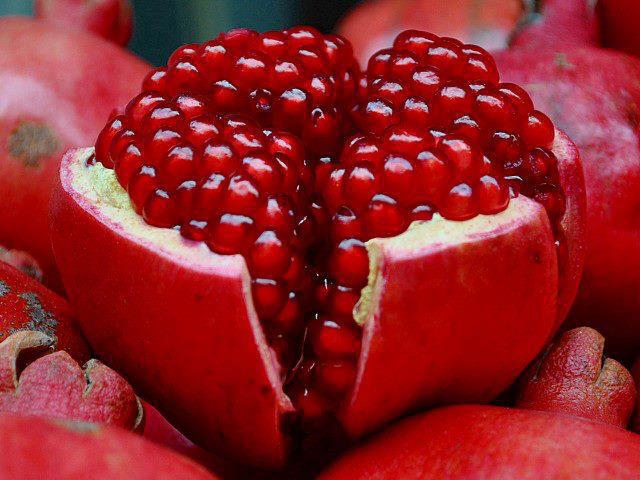
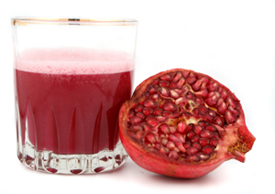
    Pomegranate is a thick skinned seedy fruit.The name pomegranate is derived from the french word “pomegranate” which means seeded apple.Pomegranates are originated in Iran and are brought to Egypt in 1600 B.C.This is not only used as a food source but it is also used as a medical source.Inside the fruits we can find jewel shaped seeds covered by a natural red rind.Drinking pomegranate juice helps our skin and hair in many ways.Of all the fruit juices, pomegranate juice is having special importance.This is because the peel contains the maximum amount of antioxidants which are released in abundance when the fruit is squeezed while juicing.Few people feel uncomfortable while eating the fruit with the little seeds.To such people pomegranate juice is the best way to enjoy the benefits of the fruit.In comparison to other fruits, pomegranates contain the maximum amount of anti-oxidants.The number of anti oxidants in pomegranate are nearly three times more than that in green tea and oranges.One glass of pomegranate juice will provide 40 percent of the body requirements.The juice must be taken without adding extra sweeteners to it, as it may counteract with some of the health benefits present in it.

    Pomegranate juice is having many health benefits
    Pomegranate juice is having many health benefits

    Health benefits of pomegranate juice:

    Over thousands of years in the middle and east regions pomegranate is used for medical purposes.Pomegranate juice is used as tonic for healing the frequently occurring body disorders like ulcers and diarrhea.The anti oxidants that are present in pomegranate juice offers protection against diabetes, heart diseases, osteoarthritis and several kinds of cancer.

    Fruit with strong outer layer and red rind inside
    Fruit with strong outer layer and red rind inside

    Benefits for heart:

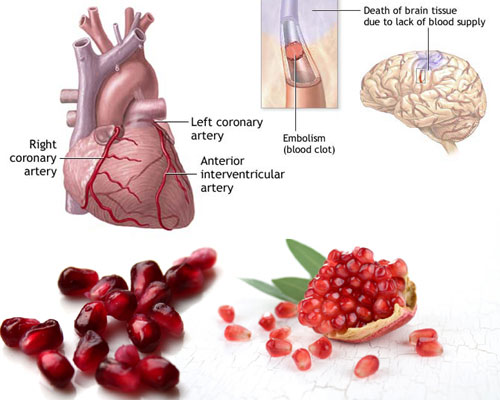
    Pomegranate juice helps in keeping the arteries flexible and maintain perfect functioning of heart.Atherosclerosis, which is one of the main reason for causing heart disease, can be reduced by taking pomegranate juice.It lowers the amount of bad cholesterol that is retained in the body and increases the amount of good cholesterol.

    Health-Benefits-of-Pomegranate-for-better-functioning-of-heart
    Health-Benefits-of-Pomegranate-for-better-functioning-of-heart

    Maintains blood sugar levels:

    Pomegranate juice contains fructose, but it does not increase the blood sugar levels which the other fruit juices do.According to few studies it is observed that people who took this juice daily for a period of two weeks, had no effect on their blood sugar levels.

    health benefits of pomegranate juice for maintaining blood sugar levels
    health benefits of pomegranate juice for maintaining blood sugar levels

    Maintains blood pressure:

    Pomegranate juice is helpful in reducing high blood pressure.The problems that are present in the blood vessels of heart patients can be reduced.This helps in coagulating blood and forming blood clots.It even acts as a blood diluting agent, and does not allow for an unrestricted flow of blood through the body.

    Pomegranate-juice-control-high-blood-pressure
    Pomegranate-juice-control-high-blood-pressure

    Protects from Cancer:

    Pomegranate juice eliminates free bonding of atoms and it also reduces the growth and development of cancer tissues.The anti oxidants present in the fruit are helpful in promoting strong immunity system.Daily intake of a glass of pomegranate juice can slow down the growth of cancerous cells in prostate cancer.Pomegranate juice blocks aromatase and reduces the chances of getting breast cancer.

    Pomegranate juice protects from cancer
    Pomegranate juice protects from cancer

    Soothes the stomach:

    Pomegranate juice is used in the treatment of diarrhoea.Digestion problems can overcome by taking pomegranate juice.This can be more effective by adding one teaspoon of honey in a glass of pomegranate juice.

    Pomegranate-juice-resolves-digestion-problems
    Pomegranate-juice-resolves-digestion-problems

    Boosts immunity:

    Taking pomegranate juice boosts our immunity system, as it contains strong anti bacterial and anti microbial properties.The microbes that are responsible for forming cavities in the mouth can be reduced by taking pomegranate juice daily.Of all the fruits pomegranate is having the capacity to oppose the transmission of HIV.

    pomegranate juice improves body immunity
    pomegranate juice improves body immunity

    Prevents anemia:

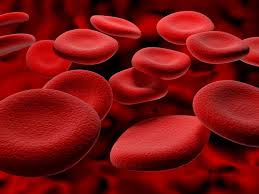
    Anemia is caused due to the deficiency of red blood cells in the body.As pomegranate juice is rich in iron,it helps in developing the red blood cells in the body.By adding few sugars to the pomegranate juice and taking few drops of it in the nostrils, can reduce nose bleeds.It is used as a remedy for red eyes.

    Chances of getting anemia can be reduced
    Chances of getting anemia can be reduced

    Improves digestion:

    Pomegranate juice aids in the smooth functioning of the stomach, heart and liver. This juice induces hunger and can even control thirst. Therefore it is a great choice of drink during summers. It also soothes urinary tract infection and eases the flow of urine. The high amount of dietary fiber, both soluble and insoluble in pomegranate juice helps to improve digestion and regulate bowel movement. Since it has no saturated fats or cholesterol, it is highly recommended for those aiming to lose weight.

    Pomegranate is good for digestion
    Pomegranate is good for digestion

    Helps in cartilage regeneration:

    Pomegranate juice helps in regulating the enzymes that damage the cartilage.So people who are suffering from bone disorders, joint pains and cartilage problems can overcome them by taking a glass of pomegranate juice.This is also observed by few studies.Bone inflammation can be relieved by taking unsweetened pomegranate juice.Taking pomegranate juice regularly dissolves the stones in kidneys and also cures the inability to develop or maintain an erection of the penis during sexual activity.

  • 9 FAT FIGHTING MEALS

    9 FAT FIGHTING MEALS

    Best-Fat-Fighting-Foods

    Mix and match these low-cal, energising options to create your own perfect meal plan that’ll slim you down. By letting you choose from a spread of meals that deliver health per day, drop kilos, makes you feel satisfied and get to enjoy your favourite foods. Every meal contain a fat fighting dose of fibre (an average of 25 grams a day), the nutrient that slims you down by filling you up. The meals are also loaded with bone-building calcium (about 1200 mg a day), which has been found to kick start the body’s fat burning engines. Here’s how the plan works: each day, choose a breakfast (400 calories each), lunch (550 calories), dinnenr(650calories). Combine the plan with some exercise. They get into those slim fit capris or skinny jeans. Your new body will be ready for them.

    TAKE YOUR PICK: BREAKFAST (400 CALORIES)

    m1

    • The five minute breakfast

    Toast two slices 100% whole wheat bread and spread with 1 table spoon peanut butter. Serve with 1 cup low fat plain yogurt and 1 cup chopped medium mango. (To create your own yogurt, hang toned curd for 2 hours to drain excess water, mix sugar and whip to a smooth paste)

    NUTRITIONAL INFO: 432 kcal, 10.72 gm fat, 4g chol, 8.5g fibre

    • Sweet peach smoothie

    In blender, mix 1 medium banana, 1 cup fresh peaches, 160ml yogurt, 2 table spoon orange squash, 1 table spoon toasted wheat germ/wheat bran. Have a fistful of walnuts and raisins.

    NUTRITIONAL INFO: 405 kcal, 11.38g fat, 10mg chol, 8.5g fibre.

    • Dalia porridge

    Heat 1 tablespoon oil in a pan and add a green cardamom. Reduce flame and add 50g dalia. Roast till light brown. Add water, 100ml milk and sugar to taste. Cook on slow fire till dalia is soft. Sprinkle 1 teaspoon chopped almonds and 1 teaspoon raisins. On the side have a cup of chopped ripe mango.

    NUTRITIONAL INFO: 405 kcal, 11.38g fat, 10mg chol, 8.5g fibre.

    TAKE YOUR PICK: LUNCH (550 CALORIES)

    • Tomato sandwich with cucumber salad

    Spread 2 slices of whole wheat bread with 1 tablespoon low fat mayonnaise. Top with 4 thick slices of tomato. ¼ cup fresh basil leaves, 1 teaspoon mixture of extra virgin olive oil, fruit vinegar, salt and black pepper to taste. On the side, serve with 1 cup diced melon and cucumber salad: toss 1 cup diced cucumber, 2 tablespoon pomegranate seeds, 2 tbsp vinegar seasoned with chopped mint, sugar and salt. Sprinkle with chopped walnuts.

    NUTRITIONAL INFO: 527 kcal, 34.2g fat, 10mg chol, 9.08g fibre.

    • Kaala channa with brown rice

    Boil 50g previously soaked channa. In a pan, heat 2 tbsp oil, add 125g grated onion, 200g blanched and chopped tomatoes. When done, add 1 ½ tsp ginger garlic paste and cook for 3 minutes. Add spices (1 tsp each of dhania and jeera powder, ½ tsp each of haldi and chilli powder) and salt and fry for 2 minutes. Add channa and cook. Use water as per curry requirement and cook on slow fire for 15-20 minutes. Have it with 50g boiled brown rice.

    NUTRITIONAL INFO: 557 kcal, 18.8g fat, 4.5g fibre.

    • Stuffed roti with pudina raita

    Prepare dough with 80g wheat flour, pinch of salt, water to knead and 2 tsp oil. Divide it in two. Roll out each portion to 5” diameter. Place a filling of 50g boiled, mashed, mixed vegetables (beans, carrot, potatoes and seasonal vegetables), ¼ tsp jeera powder, pinch of garam masala, chopped green chillies to taste, ½ tsp chopped fresh dhania and salt.  Roll carefully and cook on a hot tawa. Brush each side with ½ tsp of oil and lightly brown. Serve hot with potato and mint raita: 100ml dahi seasoned with ½ tsp roasted jeera, ½ tsp powdered sugar, black salt to taste and 1 tsp chopped mint and 40g boiled and diced potato.

    NUTRITIONAL INFO: 547 kcal, 16.9g fat, 6mg chol, 12.6g fibre.

    TAKE YOUR PICK: DINNER (650 CALORIES)

    • Pesto pasta

    Toss 1 ½ cup cooked linguini or any whole wheat pasta; ½ cup sliced baby corn; 20g boiled rajma; 1 cup fresh diced tomatoes; 2 cloves garlic; 1 ½ tbsp pesto sauce; and 1 tbsp grated parmesan cheese. Serve eith 1 ½ cup cooked broccoli. For dessert have fruit salad with syrup and ice cream; 150g mixed fruits (apple, peaches, litchis, cherries); syrup: 80ml water and 1 tsp sugar boiled together. Add a few drops of rose essence. Pour over fruit and serve with a scoop of vanilla ice-cream.

    NUTRITIONAL INFO: 632 kcal, 8g fat, 4mg chol, 17.1g fibre.

    • Grilled coconut masala fillet

    Wash and dry 200g fish and Make shallow slits on both sides and rub with ¼ tsp salt and 1/8 tsp haldi. Leave for a few minutes and then rub 1 tsp oil on both sides of the fish. Grill till brown. Grind to a paste 1 green chilli, 2 cloves garlic, 1g ginger, 2-3 peppercorns, ¼ tsp jeera. Mix this in ¾ cup coconut milk. Add ¼ tsp haldi, salt and few curry leaves and cook till the gravy is thick. Add the grilled fish and cook for 5-8 minutes. Before serving add a few drops of lemon juice. Serve with 50g brown rice.

    NUTRITIONAL INFO: 679 kcal, 36.6g fat, 9mg chol, 4.3g fibre.

  • RECIPE AND RESTAURANT SURVIVAL GUIDE

    RECIPE AND RESTAURANT SURVIVAL GUIDE

    r1

    We have come a long way since the days when veggies meant overcooked carrot and a lump of stodgy potato. It’s a great treat to have the list of food choices we enjoy nowadays. But the pretentious language that’s built up around dinning is enough for us to grind our teeth so hard that whatever we choose to eat will soon need to be consumed through a straw.

    Celebrity chefs need to take a large share of blame. Who cares if back in the kitchen (preferably a closed kitchen, out of eye line and ear shot of the dinning table); they call the meaty component of a dish “the protein”? Thanks to legions of professional cooks fleeing the kitchen to bask in the glow of TV studios, we all have seen this. But when the suburban cooks start talking about balancing the protein, something’s gone awry. By all means, the chef, ask your apprentice to “check the protein on the grille,” if you must; by the time it makes it to my table, I want to hear it as a chop. If ostentatiously basic terms are annoying, the absurdly florid ones are positively infuriating. Even the fast food chains aren’t above trying to co-opt the English language to confer prestige upon themselves: the staffs who prepare food at Subway are officially known as “sandwich artists.” It’s time for a return to reality.
    Even the street restaurants these days offer you a list of dishes and drinks with the names and information which go straight over our heads, with this they try to show you the intelligence and ability of the chefs, this makes really hard to even order what you desire.

    Here, then is the restaurant survival guide to get you through your next meal.

    r2

    Haute barnyard- 

    Not satire, nor a criticism, but a tern coined by New York magazine’s Adam Platt to describe basic, good quality seasonal ingredients served up at hugely inflated prices in high- end restaurants. These are rare and very specific in their taste.

    Deconstructed-

    Translation: if you didn’t know what it was meant to be, you’d never recognize it. For example, for serving a boiled egg we mix core ingredients such as tuna, green beans and olive. In a deconstructed version, the egg might be infused with tuna; green beans might be mere smear of sauce on the plate, and the olives might se served separately, possibly to the neighboring plate. This is like experimenting with the ways of serving and mixing the ingredients.

    Mouthfeel-

    A highly technical and self important way of describing the way food feels in your mouth. This word requires you to give feedback of your taste buds through your expressions after having the food.

    EVOO-

    Short for “extra virgin olive oil.” Believe it or not this word has actually made into at least one dictionary. It’s also the priciest version of OO-prompting the new extra virgin coconut oil.”

    Compote-

    you’ve probably been eating compote since you were a child, you just didn’t know it. Its fruit stewed in sugar syrup. Yes, just like mother used to make, but at a price she’d assume was a misprint.

    Wilted-

    This used to be a bad thing-who would want to eat wilted veggies? Now it describes: a) greens that have been lightly cooked; and b) diners who have admitted defeat in the face of chef’s pretensions.
    Muddled-

    Cocktail ingredients, such as fresh lime or mint, which have been bashed about a bit with a pestle rather than chopped or blended.

    Molecular gastronomy-

    Molecular gastronomy is commonly used to describe a style of cuisine in which chefs explore culinary possibilities of borrowing tools from science lab and ingredients from food industry. All cooking relies on the change that heat produces in molecules, so “molecular gastronomy” (MG) is technically a redundancy. But that hasn’t stopped being taken up by the chefs and foodies around the world, who use it as an umbrella term to mean “cooking” but not as you and I would recognize it.

    Sous vide-

    Beloved of MG enthusiasts, this is long, super slow cooking in a low temperature water bath or in a temperature controlled steam environment for longer than normal cooking times. The intention is to cook the item evenly, ensuring that the inside is properly cooked without overcooking the outside and retain the moisture. It has become a common feature in television cooking shows. And for mere $900 a home version of the equipment could be yours.

    “Chef’s special sauce” (what are all the others- ready-mix in a jar?), and “pan-fried.” (As opposed to waiting for the pavement outside to get hot enough, perhaps?)

    The worst part of it all is that this overdone approach is unnecessary-sometimes the truly great chefs know. As acclaimed British restaurateur Alastair Little once put it, “you don’t want to read that your squash blossoms were handpicked underwater by Panamanian virgins. All you need to know are the primary ingredients, the main method of cooking and perhaps where the food has come from.” His compatriot Fergus Handerson shows how it should be done, at the acclaimed St Jones Bar and Restaurant in London. Sample entries from the bar menu: “Gull’s Egg and Celery Salt”; “Cheese and chutney sandwich”; Cured beef, Beetroot and Red Cabbage.” Now that’s appetizing.

  • The art of Chikankari!

    The art of Chikankari!

    Gorgeous Terracotta pots, the ‘tehzib’ (polite mannerisms), the famous ‘Zari Zardosi’, the Nawabs, the eloquent Urdu poetry and the lip smacking Kebabs…Do these ring a bell in your mind? For many of us, it takes us to this one place located in Uttar Pradesh around the Gomti River, which is known as Lucknow to the world! Arts and crafts form the heart of this city. Handicrafts account for a major chunk of its economy and this place is a must-visit for everyone who has a liking for indigenous arts.  Lucknow has given another fine art form to the world, called the ‘Chikankari’.

    images

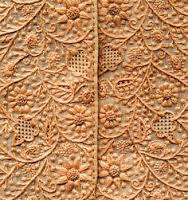
    Chikankari is a unique traditional embroidery style also known as ‘shadow work’. It is a very delicate hand embroidery done originally on soft muslin cloth using a white thread and occasionally a yellowish silk fibre. With the modernization of this old art-form, artisans have started producing these elegant marvels on a multitude of bases like semi-georgette, pure georgette, silk, chiffon and other light and thin fabrics. It is made sure that the fabric is not hard or very thick to make sewing with the needle easier. The intricacy and the exquisite gossamer characteristics of this art form lends it a very subtle elegance and a fine quality that is appreciated by designers all over the world. The art of Chikan embroidery is not just a mere craft anymore. It accounts for a large amount of income of the state through exports and is thus one of the most important economic activities practiced in Lucknow and the neighbouring areas. It provides employment to over 3 lakh people ranging from artisans, dealers, entrepreneurs and exporters.

    6.-Noor-Jehan-eating-paan

    The word ‘Chikan’ has Persian roots and finds its lexical origin in the word ‘Chikh’ or ‘Chakin’ which refers to a cloth adorned with needlework. The origin of Chikan has several tales associated to it. The earliest reference to it was in the 3rd century BC when a Greek traveler, Megasthenes mentioned the use of flowered muslins by Indians. Some famous folklore suggest that a traveler passing through a village near Lucknow is accountable for the popularity of the craft. They say that the tired traveler while crossing this little village asked for water from a poor peasant who offered it graciously to him. As a token of appreciation, he taught the skill of Chikankari to the farmer so that he would never fall short of money ever again. Though it is said that Chikankari became an integral part of Indian Culture when the art form was revived by the Mughal Empress Noor Jehan. Despite being a part of the Indian heritage for centuries before this, the origin of chikan is believed to be in the town of Awadh due to the impetus given to the work by Noor Jahan.

    images (5)

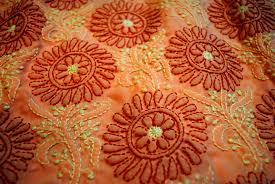
    The art has a huge Mughal inclination. The inspiration from Mughal designs can be widely seen in the motifs sewn onto the fabric. Generally floral designs with plants, leaves or creepers (bel) are the most common designs used. Individual motifs and bhutis of animals and birds are also a common sight in this exquisite needlework. Fish, the emblem of Oudh is also widely used.

    images (3)

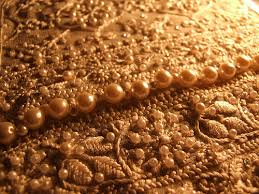
    Arabesque versions of soft roses, gorgeous lilies, intricate butterflies and other animals lend this couture a mesmerizing expression of indigenous style of the Mughal Era. Chikankari has adopted additional adornments like sequin, bead and mirror work, Mukaish, Kamdani and Badla to lend it a heavier and richer appeal. Also, apart from the original use of white thread, one can find a fine collection of threads of different materials and varied colours. Integrating this needle work with stones, embellishments or jail work gives it an eclectic appeal.

    download

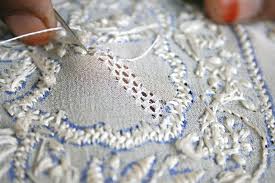
    The process of Chikankari has five different stages: Designing; Engraving; Block printing; Embroidery; and finally washing and finishing. The desired patters are sketched and then engraved on one or more dye blocks which are collectively used to put together a beautiful pattern on the ground fabric. The embroider then stitches on the pattern using different stitching patterns depending on the design and the shape required. There are around 36 different stitches that are done here. They are broadly classified into three types: flat stitches, open trellis like ‘Jali’ work and raised or embossed stitches. Some of these intricate stitching patterns are described here.

    images (2)

    Bakhya: Also called the shadow work, it has two types, Ulti and Sidhi. Normmally done from the wrong side of the fabric, Bakhya is also known as the double back style.

    Tepchi: It is a long running stitch which is employed for simple straight designs. It is usually used for outlines.

    Hool: It is a detatched eyelet stitch wherein a hole is punched into the fabric and the threads are teased apart which are then held back by small straight stitches all around. It generally forms the centre of a flower.

    Jali: Here the thread is never drawn through the fabric making sure that the back side looks as perfect as the front. The fibres of the cloth are torn apart slightly and tiny buttonhole stitches are inserted into the cloth.

    Zanzeera is a small intricate fine chain stitch generally used to outline leaves or petals.

    While Phanda is a millet-shaped stitch and Murri is a rice shaped minute stitch, both of these are used to embroider the centre of flowers in ordinary Chikankari motifs.

    images (6)

    There are various other stitches like Turpai, Darzdari, Rahet, Banarsi, Khatau and many more which lend the art work a unique look altogether. The style of stitching is chosen according to the pattern to be followed as in this embroidery style, strict rules are followed. It is obeyed that a stitch assigned for a particular purpose has no other alternative and cannot be replaced by any other stitch. Though, frames are used these days by the chikan-karigars, it was not used originally. Originally, the fingers and the thumb of the left hand were used to hold the cloth in place and then the stitching was done by the right hand. Once the stitching is over, the fabric is checked for any flaws and is then washed before it is starched and ironed. The whole procedure can take up to six to seven months.

    images (1)

    Though the art form has reached out to the world and has seen a number of variations under the impact of Globalization, it still retains its authenticity and glamour. It is widely worn by people all across the world in various forms. Be it scarves, sarees, kurtis or even gowns, this indigenous art form has spread all over the fashion industry.

    So, next time you visit the Nawabi city of Lucknow, make sure you get your collection of this prized art form!

  • Meal is incomplete without Cereals

    Meal is incomplete without Cereals

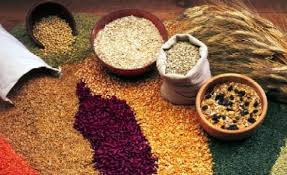
    Cereals are the staple food in our meal providing unlimited benefits to our body and mind too. If one has choices available for healthy lifestyles, then cereals are the best choice you people can opt. The nutritional value of cereal is undoubtedly so high that no other food item can replace this staple item from our meal. It is highly rich in carbohydrate, fats, proteins, vitamins and minerals.

    Cereals, being the main source of carbohydrates help in providing you with vigorous energy and increase the immunity of our body against cancer. It also aids in removing constipation problem and maintain the sugar level. Cereals are also supplemented with iron and fiber contents which keep your body away from any heart diseases and maintain the level of cholesterol in your body. Nothing could be better than having cereals in your breakfast as they are enriched with high protein contents. They are generally preferred to be accompanied with the glass of milk.

    cer1

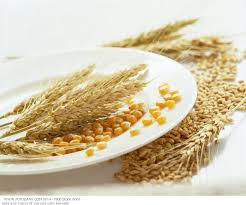
    Cereals are also known as grains and are the most staple crops which belongs to monocot families. They are grown to gain the edible component of this fruit. The fruits are known as Caryopsis. It is largest selling crop grown all over the world and therefore it is farmed in huge quantities. The name has been derived from the word Ceres (Roman goddess of agriculture). It was firstly cultivated in South West Asia by the Neolithic founder.

    According to the production statistics every country has its own staple food like wheat is mainly consumed in Europe and India; rice is famous in Japan, South East Asia, Pakistan and US; maize is widely popular grain in Africa and Northern America; millets are eaten in Africa and India.

    cer3

    You can find different types of cereals in your meal. It can be rice, brown rice, wheat, maize, millet etc. Let us discuss some of them. Rice is the most popular cereal eaten across the world. It is cultivated in tropical regions rather than cold regions. It is consumed in many countries with various different rice recipes prepared which are truly lip-smacking. Maize is the most staple crops found in South America and Africa. Popcorn and Cornflakes are the two other different forms in which this particular cereal is consumed. Cornflakes is counted in one of the healthiest snacks and popcorn is the favorite time pass during the movies. Wheat, this cereal needs no description. All the basic food items like bread, pastries, biscuits, pancakes, cookies, etc are incomplete without this cereal. It is mostly cultivated in agricultural zones. There are various different species of this cereal, which is grown all over the world.

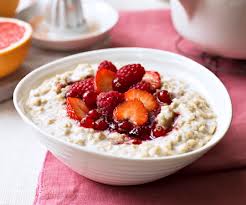
    Cereals are mostly eaten in breakfast meal. Breakfast cereal is a commercial food available in all the kitchens around the world. They are eaten as an individual item or sometime they are also accompanied with water or milk. According to our taste fruits are also added and some sweeteners too. Breakfast cereal is boiled or mixed with milk in order to make them soft before consumption. Some of the best examples of breakfast cereal are Corn Flakes, Porridges, oatmeals etc. Breakfast cereals are widely accepted in developing and developed countries, both as they are a single bowl of full nutrients. It provides you with full nutritional value while maintaining your health and weight.

    porridge

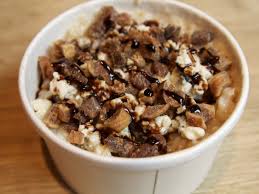
    Porridge is unconditionally the most nutritious breakfast anyone can have. It is fully rich in fibre and minerals. For making it sweet people use jaggery and it is decorated with almonds and raisins. Intake of this porridge in your breakfast helps in maintaining your sugar level. Poha is another version of rice which is generally prepared on every Sundays in the Indian households.

    Cornflakes are the healthiest breakfast, loved by all the children. A bowl of this corn flake along with the milk fulfills the demand of all the nutrients like carbohydrates, proteins, vitamins and iron. Its intake is more effective during the time of monsoon as due to high moisture it becomes easy for your body to hold the water.

    cornflakes

    Wheat flakes are just the replacement of wheat porridge and is prepared using wheat. It is taken in the breakfast meal as it is highly rich in calcium. Oatmeal is best for those who are going through diseases like diabetes and cholesterol. There is no need to add sugar into the bowl of oats. It helps in exorcising depression from your mind. Muesli is the best choice among all the breakfast cereal as it consists of four types of grains along with almonds and raisins. It helps in the mental and physical growth of the child and keeps them fit and fine. The most amazing fact is it is served with yoghurt. Sometime people take it as their evening snack too.

    oatmeals

    Try some juicy cereals too for your child and enjoy all the nutrients in just a tiny piece of grain..!!