Category: Culture

  • The holy month of Ramadan – all you need to know!

    The holy month of Ramadan – all you need to know!

    With the advent of the pious month of Ramazan or Ramadan, hustle and bustle can be seen throughout all the Muslim households. The preparations begin a lot in advance. Excitement can be seen everywhere. From shopping for clothes and accessories to stocking up the eateries in order to avoid the last minute confusions, people do it all. This is the ninth month of the Islamic lunar calendar. This is said to be the most sacred month. The word Ramadan is of Arabic origin. Its literal translation is ‘intense scorching heat or dryness’. It is a rigorous month of intense fasting wherein all the members of the family fast every day for the entire period. The fasting is mandatory for Muslims who reach puberty unless they are physically unable to do so. Certain exceptions are made in the case of children, ill people, pregnant women, diabetes patients, menstruating women etc. The fasting or the rozas commence from dawn and end at dusk. They do not consume any food or drink neither do they smoke. Swearing is something that is also avoided. As I have heard from some friends, they do not even gulp in their saliva. This might be a shocker, but it’s true.

    Fasting is undoubtedly good for health. It has its perks. It gives the digestive system a rest along with allowing the cleansing and de-toxification of the body. It relaxes the body and revitalizes it. A tranquil spiritual feeling descends. In popular belief in Islamic culture, fasting washes away the sins and bestows upon the people many rewards. The fasting diverts the attention from materialistic activities and gives time for spiritual reflection, cleanses the soul and purifies the heart. The person becomes more considerate, empathetic and self-disciplined. He begins to see the less fortunate in new light and within him generosity creeps in.
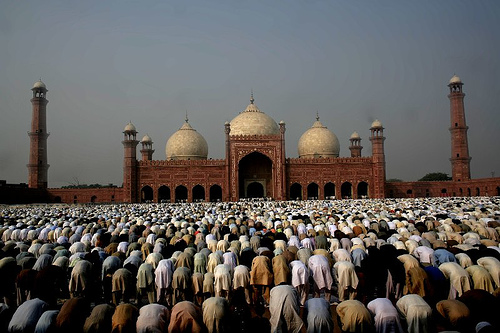
    Namaz

    The beginning of Ramadan is marked by a new moon. Fasting begins from the very next day when the moon is seen. The month lasts for approximately 30 days. It depends on when the crescent moon has been sighted.
    The people who fast wake up early before the sun rises and consume the meal called ‘suhoor’ or the ‘seheri’ which keeps them going through the day. Thus the suhoor is a heavy meal which gives enough strength for the entire day to the people who are fasting. It is very necessary to consume ample amount of water or sharbat during suhoor in order to remain hydrated throughout the day. As soon as the sun rises, suhoor ends and the first prayer or the namaaz is offered. This first prayer is called the fajr or the morning prayer.
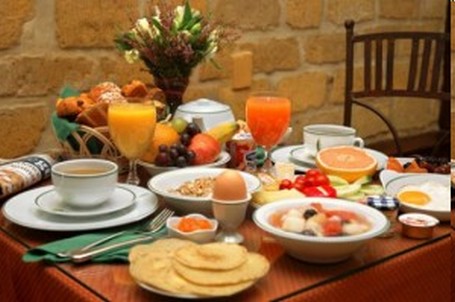
    sehri

    The entire day goes by without consuming anything. People put themselves through rigorous fasting. They offer five prayers or namaaz during the day. The devotion and dedication of these people is a thing to admire.
    At sunset the last prayer is offered which is called the maghrib. The meal which breaks the fast at sunset is called ‘iftaar’. Most people eat dates for breaking the day long fast and later go on to have a proper feast.
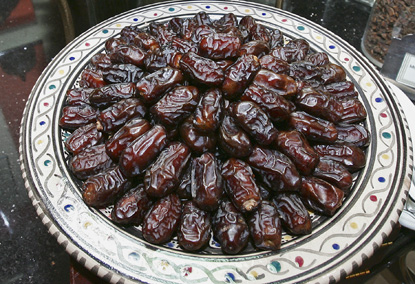
    dates

    At iftar, social gatherings are very common in which the meal is spread out in a buffet style. Friends and families gather for this small celebration together during the evening.
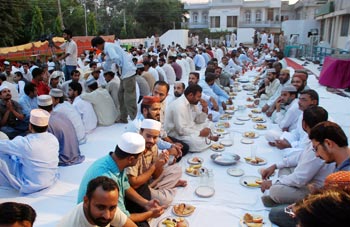
    iftar-dinner-080918_04

    Traditional dishes and desserts are served which are specific to the month of Ramadan. Families also share the dishes they prepare for iftaar with their neighbours. Nothing quenches the day long thirst like a glass of water does! Juices and milk are also a popular choice, though caffeinated beverages are not usually consumed. Sewain is the most sought after dessert.
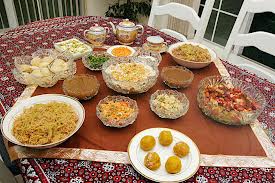
    Iftar

    Common food items that are consumed during the two meals are fresh fruits and vegetables, dry fruits, kebabs, sharbat, salads, lamb stew, haleem, jalebi etc.
    Some people also indulge in the practice of giving away food to the poor and homeless during iftaar. This can be done on an individual basis wherein the meal is offered to a few people. This can also be seen in large public areas where the less fortunate gather and break their fast with the food these people offer to them. This charity is one of the most important parts of Ramadan. It is believed that helping a fasting person break their fast garners great rewards.
    Along with fasting and charity, reciting the Quran, the holy book, on a regular basis is also an integral part of the month of Ramadan. This recitation is voluntary rather than mandatory. Though it is pretty common to finish the entire Quran during the course of the 30 days.
    Ramadan gets over on the next day after the sighting of the new moon. The day when it gets over is celebrated as Eid-ul-fitr. This festival is celebrated with huge pomp and show. The people flock the bazaars and shopping malls for new clothes and accessories. Henna or the mehendi, colourful bangles and beautiful suits are adorned by the women. This is a day of no fasting. People decorate their houses with pretty lights and set up a lavish feast. The gifts are given in the form of Eidi to children and relatives. ‘Eid Mubarak’ is the greeting that is said all around. Neighbours and family members visit each other to share sweets and dishes. Sewaiyaan is the most loved sweet dish which is prepared with vermicelli in milk along with dried fruits.
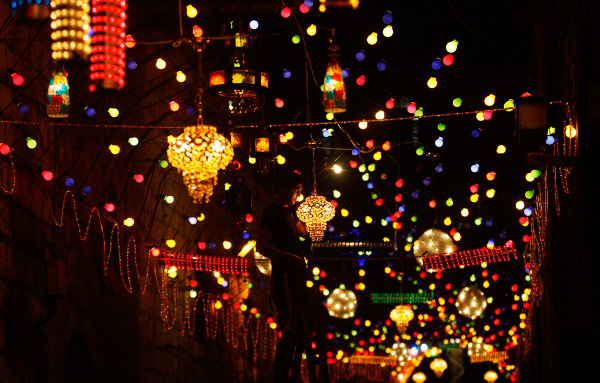
    Ramadan-prep
    Ramadan is a month where people believe that all their sins get forgiven. And they do a lot to achieve that, fasting straight for 30 days is no easy task. It is admirable to see them put themselves through so many restrictions in order to stand by their culture.
    Wishing all the people who are celebrating this holy month, Ramadan Mubaarak!!
  • The most Refreshing Yogurt : Lassi

    The most Refreshing Yogurt : Lassi

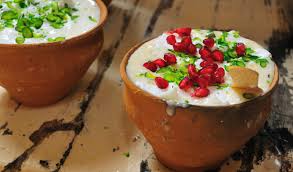
    Lassi, a yogurt based drink which always leaves you wanting more.  In this summer nothing can be more refreshing than this coolant drink. Yogurt drinks are widely popular all over the world. In India people referred this yogurt based drink as “Lassi”.

    Lassi is also known as buttermilk is a traditional drink in India and Pakistan. It was originated in Punjab and is an age-old custom in Punjab to serve this coolant drink after the meal in huge glasses. It consist of Yogurt or curd, water, sugar, pepper, raisins and sometimes salt too.  Lassi can be salty or sweet and it depends on our taste which one we would like to have. Different flavors of it can be generated by adding seasonal fruits. To give a creamy taste it is topped with clotted cream. Lassi is chilled with ice-cubes and served during or after the meal as a refreshment drink.

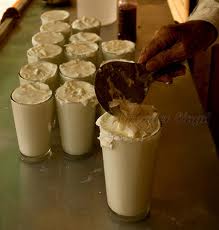
    malailassi

    Lassi along with refreshment also helps in maintaining our digestive system and enzymes. Lassi being an item prepared from curd helps in alleviating problems related to stomach such as constipation etc. It helps in generating healthy bacteria and decreases the number of bad bacteria. Being rich in proteins it is a main intake of bodybuilders to keep their muscles stiff. Whenever we feel low a glass of Lassi can work and increases our energy level. It is also used to provide strength to our bones as it is a good source of calcium. It also decreases building up of bacteria and gastrointestinal problems.

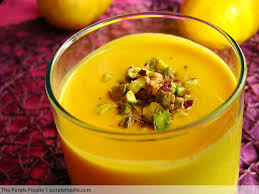
    Lassi is of only two types: Sweet or Salted…Really is it so?? The answer is NO..Lassi comes with its variants…it mainly depends on our taste and ingredients we would love to have. Like Sweet Lassi is a flavoured form of lassi with sugar and different form of flavours added to it e.g. Rose, Lemon, Strawberry or any other juices. Saffron Lassi is a type of this which has saffron as a special ingredient in it. This is popular in Pakistan and Rajasthan. Makkhaniya lassi is lassi topped with a layer of butter over it.

    lassi1

    Preparation of lassi is quite easy. You just want some ingredients and blender with you. Ingredients required are:  1.5 cups curd, 7-8 tbsp sugar, 1/2 cups water, saffron (optional), 6-7 almonds/nuts, I tbsp rose water, ice cubes. Initially take the curd, sugar in a blender and blend it. It is blended until an even mixture is obtained. Make sure that it is not blended for a long time otherwise butter will start to float on the top. Now lassi is ready and pour it into the tall glasses. Sprinkle the nuts and pieces of almonds over it. Saffron is added if required.

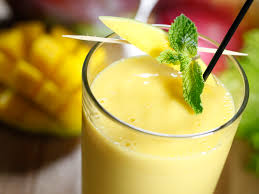
    Mango Lassi is prepared from mango pulp and yogurt. Sugar is optional ingredient in it. It has gained its popularity all over the world including UK, Singapore, Malaysia. In Canada this lassi is treated as a cold drink with kesar mango pulp added to it along with the cream and there it is served with an ice cream. To make it more delicious nuts are also sprinkled at its top.

    lassimango

    Bhang Lassi, the name itself creates an image of Punjab’s culture. This lassi contains bhang as an ingredient in it. Bhang is a type of liquid derivative of eaten forms of Cannabis. This is mainly taken during Holi and it is served with pakodas. In Uttar Pradesh there are some bhang shops and they all are licensed so you people can visit, can buy some bhang products in case you want to and can enjoy bhang lassi.

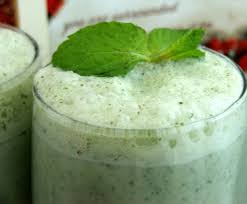
    Chaach is another form of lassi which is salted in form. It is diluted in form and contains salt and jeera for giving salty taste. Some people used to add green chillies as a seasonal element. In Gujarat and Rajasthan it is served along with the meal and especially during summers. It acts as coolant drink during this hot season.

    salted lassi

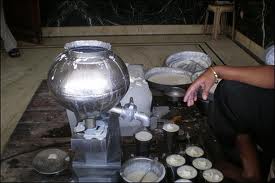
    In the hot summer, chilled Lassi is served in tall a glass which is topped with clotted cream. In Punjab, the demand is getting so high day by day that shopkeeper started using washing machines for blending curd instead of mixers. With these maximum demands can be easily fulfilled. Lassi so prepared is very thick and spoon is served with it to make it easy to drink. Firstly, you can have the taste of buttery cream and then drink that lassie. People in Northern India preferred to have lassi with samosa, paranthas and sometimes with chat too.

    punjab

    Lassi must be prepared in a proper way like never add lassi with the fruit because curd and fruit always contradicts each other so it can indirectly harm our immune system. Reduce the consumption of lassi in winters and especially at late nights because it increases the concentration of phlegm in our body.


  • Gujarati’s folk dance: Daandiya Raas

    Gujarati’s folk dance: Daandiya Raas

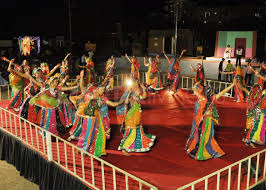
    Dandiya is basically a dance form which was originated by Lord Krishna in Vrindavan. It was a symbol of Raas Lila between Krishna and Radha. But now it has become a popular folk dance of Gujarat. It is a custom followed during Navaratri evenings in various parts of Western India. During this season people gather together and perform Dandiya Raas.

    Dandiya Raas has become a substantial part of Navaratri festival. This festival is celebrated throughout India to pay tribute to the incarnations of Mata Ambe. It continues for nine days and people tend to visit temples and then open their fasts. While the days are passed in worshipping, the nights are energetic and vivacious. The excitement of this festive season is at its peak. In every part of the country special events are organized and arrangements are made for Dandiya especially in Gujarat.

    dand1

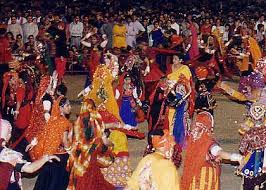
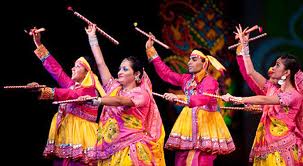
    There are various forms of this dance form like Dang Lila in Rajasthan. In this people used to perform dance with only one large stick in their hands. But in Dandiya Raas people carry sticks in their hands and form two large circles. Stick is the only prop used in this dance form and it is fully decorated. The sticks are made of bamboo and to give an attractive look they are usually painted with different colors. In the ancient times Dhol was enough to make them dance, but today various tracks are in the market, which makes their feet dance according to its beat. The people from both the circles make pairs and dance accordingly. Their sticks hit together and create a nice sound. One circle tends to move clockwise and another anticlockwise. And if they are short of sticks, then they just hold one stick in their right hands and dance. In some parts of the state it is also known as Stick Dance.

    garba1

    Dandiya Raas generally includes a large number of people so to make it a successful event sometimes dancer are supplemented by an instrumentalist which is a master in playing drums. This man stands in the center of these two circles and hundreds of people gather around to see the live performances. The sound of these sticks produces a rhythm of musical waves. It is the highlight and focus of attraction during the festive season of Navratra.

    dand4

    Raas Dandiya is performed to display a fight between the Goddess and the demon-king Mahishasura. The sticks used in the dance are a symbol of swords of Durga. In this dance the dancers energetically move their feet and sticks to tune themselves to the rhythm and set according to the beats. This dance does not require many skills and can be easily co-ordinated. Dancers perform in a very rhythmic and elegant manner and it appears like they are rotating around ‘Mandvi’.

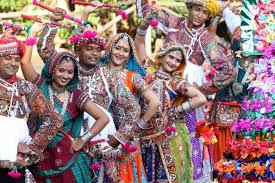
    Dandiya is not all about how we dance instead the most attractive part is how we are dressed up. In this dance form both men and women participate. The women are generally dressed up in traditional colorful dresses or in general, we can say three-piece like embroidered choli and ghagra with bandhani dupattas. They adore themselves with attire consisting of mirror work and jewelry. Women adorn themselves with silver jewelry on their heads, silver bangles in their hands, etc. The men are seen in colorful turbans and traditional dhoti and kurtas. The dresses they wear not only make them appear charming rather it also make their moves appear flexible. These events are organized in a large garden or grounds. So to give a plasma effect the whole area is covered with lanterns and candles.

    dand2

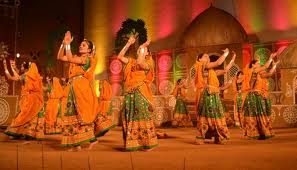
    People generally use Garba and Dandiya as each other synonym but in reality they are not similar and there lies a major difference between them. Garba is a dance form which consist of feet and hand movements without using any props like sticks. Women are the only ones included in this dance form and coordinate their steps. Dandiya Raas is another style which colorfully decorated and lucrative sticks in it. In Dandiya various steps require an even number of participants while in a Garba random number of people can participate. You can need to be careful and attractive while you are playing with Dandiya but Garba is a freestyle form of dancing that requires no coordination. Musical Instruments such as table, drums, and harmoniums are required for Garba dance. Garbage is always performed before Aarti while Dandiya is performed after Aarti.

    garba

    Generally Dandiya Raas and Garba dance is reflected during the Navaratri festival, but in some parts of our country, it has become a culture in wedding ceremonies. Raas is very complex when it has to be performed on stage with some particular music and steps. Initially, when Raas entered into our culture, all the songs were related to Lord Krishna, but as soon as it was expanded songs about love, Goddess Durga came into the scene.


    .


  • The Best Carnival on Earth!

    The Best Carnival on Earth!

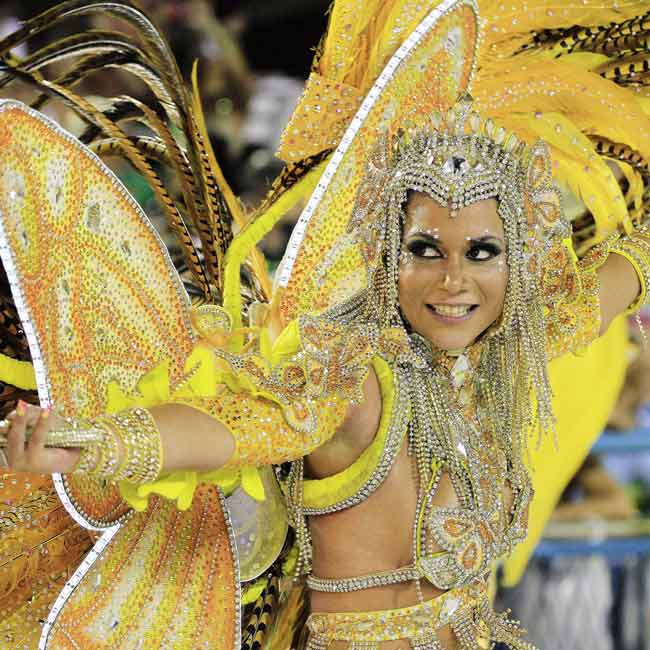
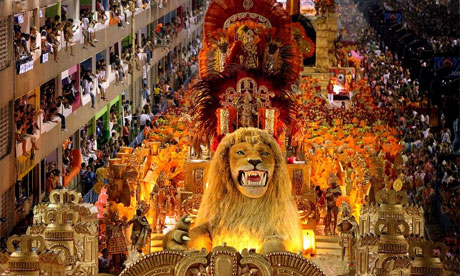
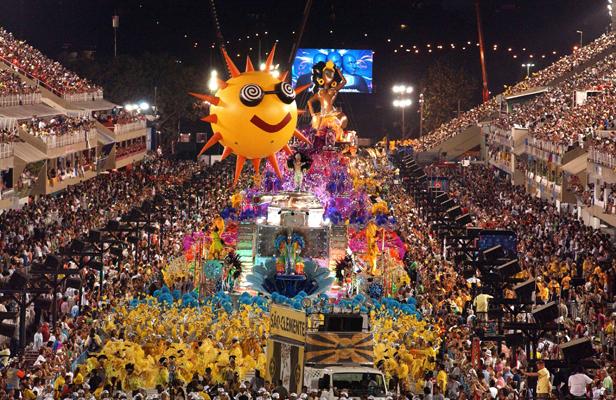
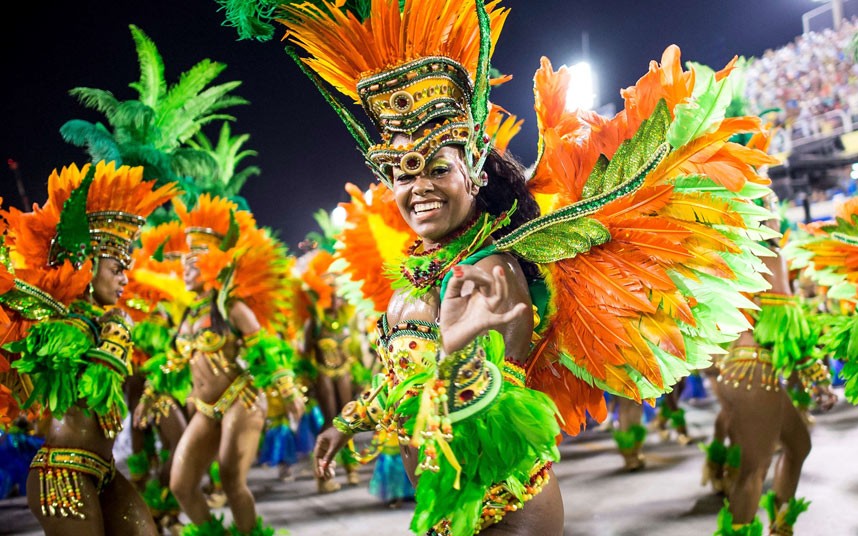
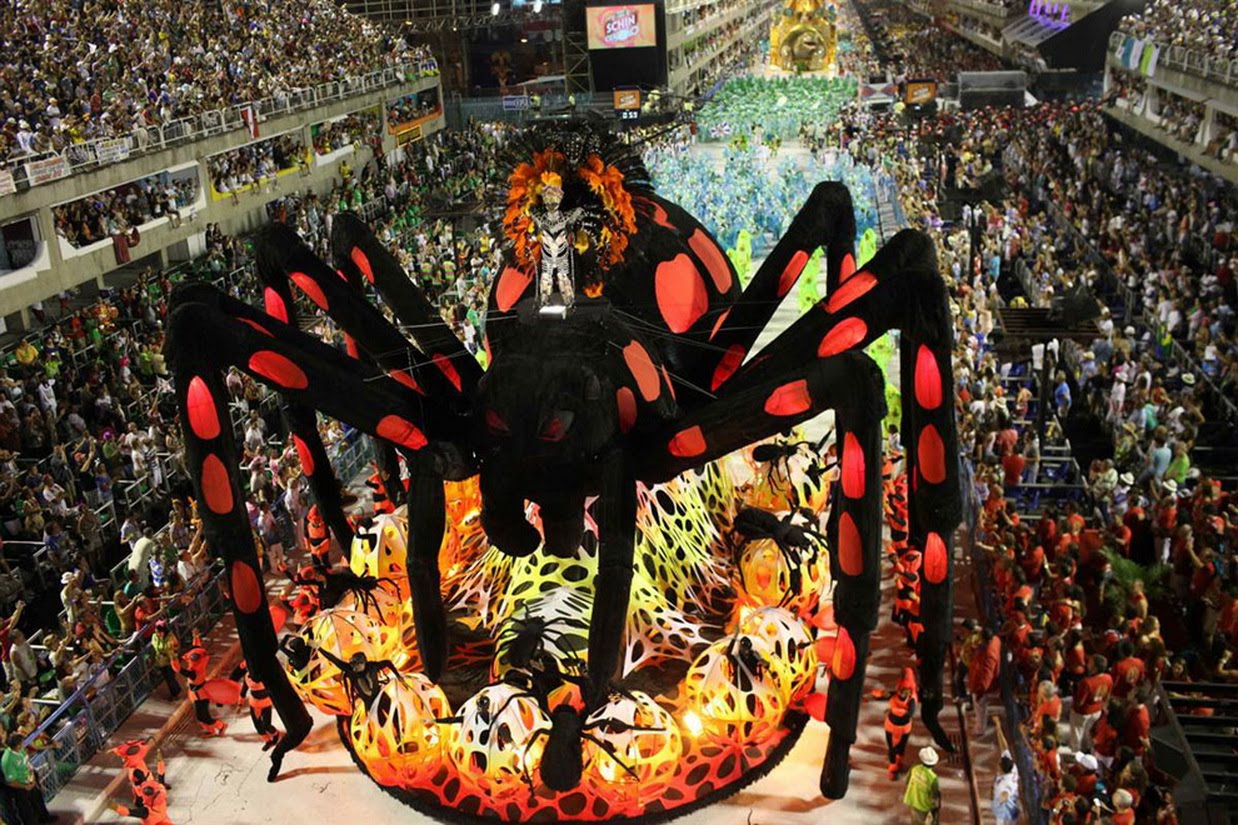
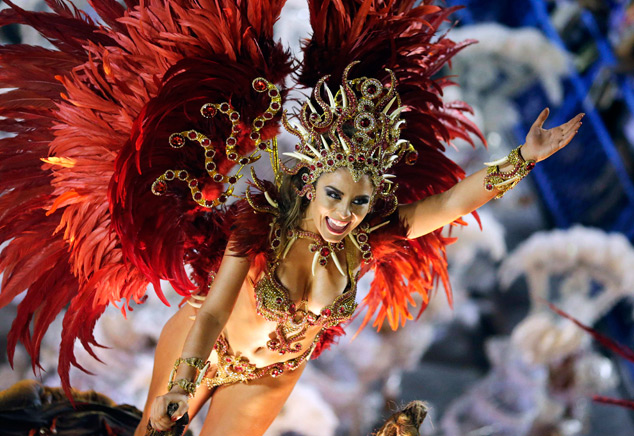
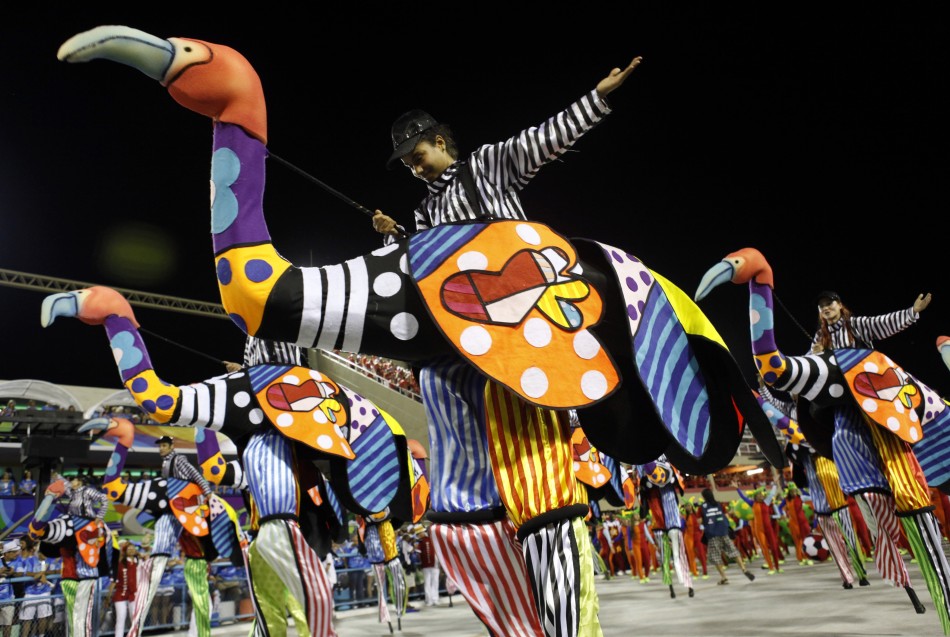
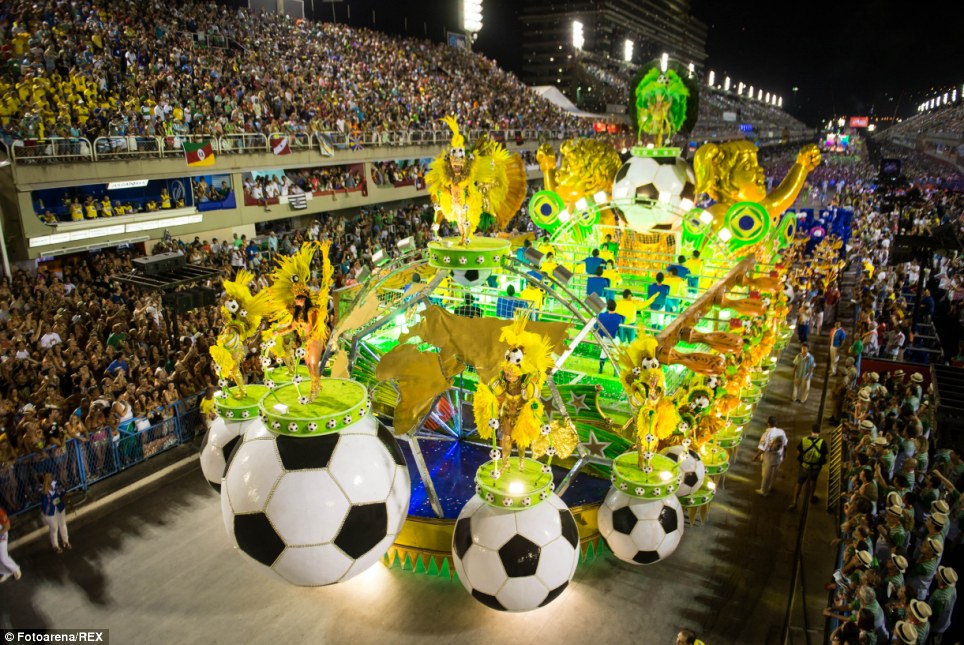
    SAMBA It’s one of the hottest, sexiest and the most amazing carnival on the face of this earth! And not just this, but the Carnival is something that gives one chance to witness the true culture of Brazil. It is a euphoric extravaganza, where people from all walks of life come together and have tons of fun. A lot of people consider the Carnival in Brazil as one the biggest festive celebrations. It has got wild parties, colours, vibrance, costumes and everything you can relate to the idea of ‘festivity’! It’s celebrated in Brazil every year before Easter. The word Carnival holds its roots in the word ‘carnelevare’ which literally means ‘removal of meat’. Traditionally, the festival is believed to be celebrated before those particular days when the Roman Catholics abstained from consuming alcohol or meat. This was done to drive away bad things from their life. The carnival originated in the Era dominated by the Europeans. The carnival was the day when people indulged in alcohol, sex, dancing and all the fun just before the beginning of Lent. That was the time when people exchanged clothes (and sometimes even slaves)! PARADE Carnivals are a thing across the globe. But the Brazilian Carnival tops the list when it comes to the popularity of carnivals. It’s a weeklong festival where people revel in dances and enjoy a lot! Almost all the Brazilian cities host a carnival before Lent, but the one we know of (and of course, the pictures that we usually get to see) are of the Carnival at the capital city of Brazil, Rio! Samba has been the traditional dance of Brazil and people wear beautiful costumes and masks and do the samba to the beats of drums. Now the pictures that you see of the festival are of the famous parade that happens during which gorgeous (and very sexy) samba dancers standing on a vehicle move across the stadium as more and more people join in the parade. rio-carnival--danc_2841261k Generally, shops are shut during the time of the Carnival and people come out to rejuvenate themselves. Many Samba schools who are also involved in various community services form the organising team of the Carnival. You don’t know how to dance? It is totally okay. A lot of people with two left feet come to enjoy this carnival and try their hand (ummm actually feet) at dancing!   Here are some really interesting facts about the amazing Rio Carnival:

    1. It’s held 40 day before Ester and is super-wild four day extravaganza.
    2. It ends on a day called ‘Fat Tuesday’, which comes before ‘Ash Wednesday’, that is the start of Lent.SPIDER
    3. The festival is celebrated in the month of February which is the hottest month of the year. We see the city’s temperature rising during this time, literally and metaphorically too!
    4. The Greeks and Romans celebrated the arrival of spring with a grand party. The festival’s history can be traced back to the age old tradition of the Greeks and Romans.
    5. The traditions were carried to the New World in the 1700s by the Portuguese.br
    6. A festival called “Entrudo” is when people throw water, lime and food at each other.
    7. The Carnival as we know it today has evolved with time. Huge street parades with people revelling and dancing are the best part of the Carnival.
    8. A lot of bands and orchestras entertain the people with Samba music.
    9. The Samba Parade is the most awaited and the most interesting part of the Carnival. It is actually a competition between the odd 200 Samba schools of Rio..br 1
    10. Sambodromo is the stadium where the Carnival is celebrated. The audience witness an enthralling competition between Rio’s Samba schools and they are judged based on their elaborate costumes, dances and music.
    11. £3 million and more are spent on the outfits and preparations of the Carnival.
    12. The dance schools are formed from a majority of people from the city’s slums.br3
    13. Around two million people attend the festival each year.
    14. The mayor of Rio inaugurates the festival each year where he hands over a huge gold and silver key to the Fat King, Rei Momo.
    15. The festivities begin much before the actual Carnival starts. Actually, Rio is a result of months of preparation and hard work.
    16. Small local parades that are called ‘blocos’ happen across the city and attract thousands of people.
    17. A ‘Pee Patrol’ is appointed to catch hold of the people who urinate on the streets. The funny thing is that this happens even after 17,000 portable toilets are installed around the city.
    18. 25,000 jobs are created because of the carnival and around £420 million of revenue is generated by the hotels and bars.
    19. Celebrations of the Carnival are held in Sao Paulo, Olinda, Manaus and Porto.footy
    20. Each year, this greatest and the most magnificent Carnival on Earth attracts celebrities like Jennifer Lopez and PSY.

    .

  • FIVE ESSENTIAL NUTRIENTS FOR HEALTHY SKIN AND WHERE TO FIND THEM!!
    FIVE ESSENTIAL NUTRIENTS FOR HEALTHY SKIN AND WHERE TO FIND THEM!!
    Skin-care is probably the most overrated issue in our life. With the flooding of creams, face-washes and other products in the market, beauty is arguably the most profit-generating venture. There are day creams, night creams, anti-aging, wrinkle-lift, fairness creams, cold-creams and what not!! I am sincerely waiting for noon creams, evening creams, summer creams, spring creams and most importantly, anti-dumbness creams.  When all these creams don’t suffice, people flock to the parlors and salons for various treatments like bleaching and de-tanning.A little application of moisturizers and sunscreens is necessary for protecting our skin. Agreed!! Also,messages are very helpful in improving blood-circulation to the skin and relaxation. Agreed again!! But at the same time,there is a hoard of unnecessary products in the market that are simply aimed at duping huge sums of money from people.. The photo shopped images of celebs and models further push people towards parlours and beauty-treatments. The drive for that radiant flawless skin has never been stronger. Ironically, when the drive for looking younger and prettier is stronger than ever before, people have forgotten the essentials of ever-lasting beauty.  In fact, the secrets of beauty are highly mis-understood.The old adage- You become what you eat, is long forgotten!! This leads to many problems like premature-aging,chemical burns etc. The safest and the longer-lasting ways to a healthy, glowing skin is probably the easiest too- eating right, exercising and protecting from sun!! So, let me take you to a tour into the beautiful kingdom of delicacies that will make your skin glow like never before!!

    1.  VITAMIN E

    vitamin e

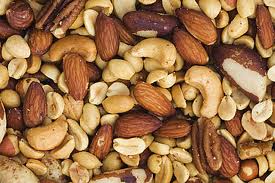
    When our body comes in contact with external influences like Sun exposure, chemicals etc., some molecules constituting our body get oxidized and produce free-radicals. Free-radicals are extremely unstable molecules and they take electrons from neighboring molecules to gain stability. This induces a chain reaction that produces more such radicals, thereby causing severe damage to skin cells and collagen, the main structural protein of our body. This results in aging, fine-lines and wrinkles. Our body thus needs antioxidants that neutralize free radicals. Vitamin E is an extremely powerful antioxidant and thus, the route to longer youth. It is found in avocado, almonds. Hazelnuts, corn oils etc.

    2. VITAMIN C

     Vitamin-C

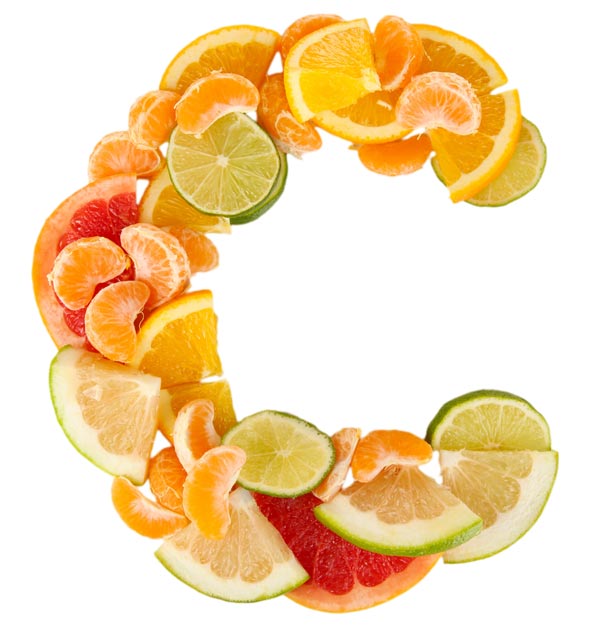
    Vitamin C, also known as ascorbic acid, is an elixir for your skin. Vitamin C is known to aid the production of Collagen, the main structural protein that makes up for about 25-35% of the whole body protein content. Collagen strengthens the capillaries supplying the skin and also helps in cell growth. Thus, Vitamin C is essential for skin repair and maintenance. Moreover, Being an anti-oxidant, it is also known to neutralize the free-radicals. It also reduces the effects of long-term effects of sun exposure like skin cancers. The main sources of Ascorbic acid are – Guava, Oranges, Lemons, Strawberries, Blueberries and other citrus fruits.

    3. ZINC

    food-sources-of-zinc

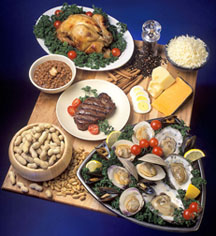
    Zinc is the goldmine of skin benefits. It is primarily responsible for carrying out repair work. Sebum is an oily secretion by sebaceous glands to keep our hair and skin moisturized. When secreted in excess, it can cause a variety of problems like Acne. Zinc helps counteract the damage to skin caused due to acne by reducing the amount of sebum secreted and repairing the scarred skin around acne. Zinc is one of the main constituents of almost all Sunscreen products because it provides protection against harmful UVA and UVB rays. It’s anti-cancerous properties further reduces chances of skin cancer due to repeated exposure of sun. It is also important for a healthy scalp and provides protection against skin ailments such as burns, boils, eczema etc. Zinc is found in abundance in fish, meat, whole grains, nuts, sea-food, seeds etc.

    4. OMEGA-3 AND OMEGA-6 FATS

    download

    Omega-3 fatty acids particularly, eicosapentaenoic acid (EPA) regulate oil production in the body and keeps your hair and skin hydrated. Without these essential fats, your scalp and skin will become dry and flaky. Apart from this, these fatty acids are very powerful anti-oxidants as well and thus, protect our skin from free-radical damage. They are also associated with skin maintenance and repairs and have anti-inflammatory action. For this reason, they are used for providing relief in skin conditions like eczema, psoriasis etc. They, however, cannot be produced by body and has to be obtained from outside. Chief sources include- flax-seed oil, linseed, walnut and rapeseed oil.

    5.LOW GI-CARBS

    images

    Clear skin-tone, freedom from acne and a slim waistline, you name it and you have it!! Low GI carbs are your one-stop solution to all beauty-related problems. As opposed to high GI carbohydrates like sweets, potatoes etc. , low GI carbs release sugar in the blood-stream slowly. This makes you feel full for longer duration and also, helps avoid a situation known as hyperinsulinemia (excess of insulin in blood)which is often associated with acne. The main sources of low GI carbs include beans, pulses, porridge etc.

    Once you start regulating your diet to include these products, you would feel a new re-flux of energy in your life. But don’t be too impatient. It takes about 6 weeks for a new layer of epidermal cells to form on your body. So, the diet changes would also take as much to provide visible results!! A little care and control today can guard your beauty forever!!

  • Touring Manipal and around

    Touring Manipal and around

    A university town located within the temple city of Udupi, Manipal has a vivacious history attached to it. Once, just a barren land with deserted roads, this town now boasts of a university campus spread across 600 acres and an astir crowd from all possible corners of the country and the world alike. The town derives its name for ‘Mannu palla’ which means Mud Lake, in Kannada and Tulu (the native languages) that is located in the centre of this town. Manipal is now a melting pot of cultures, languages and religions and if nothing else it boasts of an overlapping mosaic of cultures and provides the perfect atmosphere for the holistic development of an individual. With majority of the population being academia viz. students, professors and researchers, this town is not only a knowledge power house but also a house to various national achievements in fields of engineering, medicine, architectures, arts like culinary skills, jewelry designing and various other sciences. Manipal, as what we know it to be today is the brain child of the visionary, Dr. T.M.A. Pai who first established the Kasturba Medical College, Manipal Campus in 1953 and then the Manipal Institute of Technology 5 years later.

    As a member of the student fraternity here in Manipal, I feel extremely nostalgic just at the mere mention of its name. Manipal has something about it that eddies around you forever and gets stuck in your mind like the breeze that blows amok.

    This place is not just a town with architectural marvels in the form of its beautiful campus buildings, but it showcases the perfectly congruous existence of nature with man-made elements. Where on one side it brags about state-of-the art libraries, innovation centres, academic buildings, museums and planetariums, it also houses a plethora of picturesque destinations to visit. Manipal is currently twinned with Loma Linda, California as its sister city.

    36300363

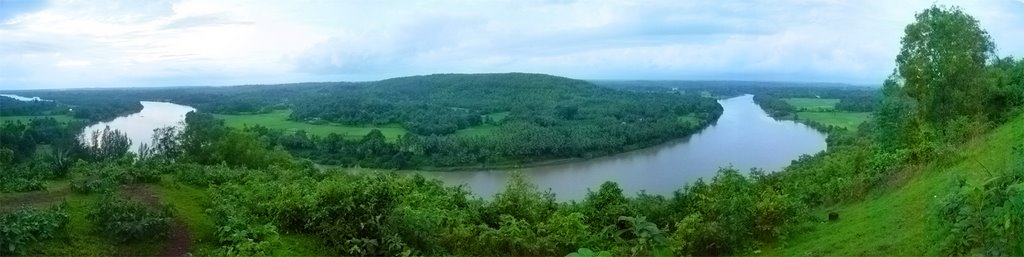
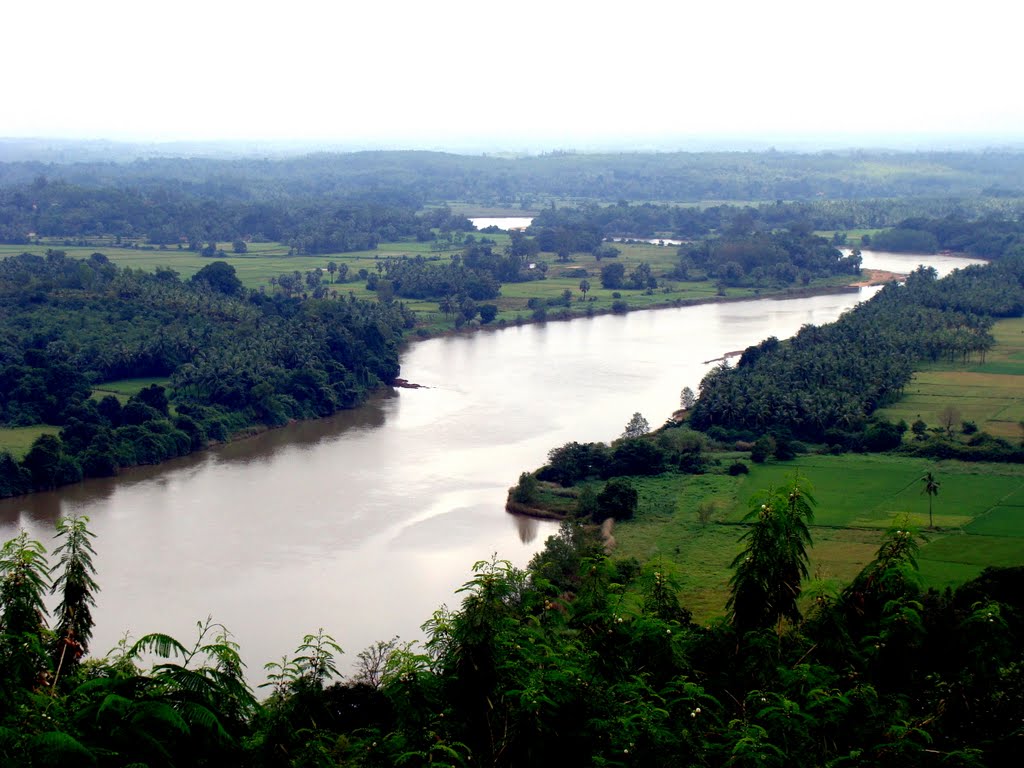
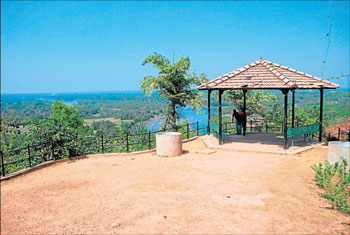
    They say, “No trip to Manipal is complete without watching the sunrise or the sunset from the gorgeous cliff overlooking the Swarna river, called the End point.” They even say that this is where it all began. Stand at the edge of the cliff, and you can see the Arabian Sea in the western horizon and the Western Ghats in the eastern horizon. A paradise for trekkers, joggers, environmentalists and photographers, this place is a total respite from the rigorous student lives of the Manipal University students. Once a barren land, this place has now received a facelift with a beautiful garden and umbrella sheds lining the lush green route.

    end-point-350

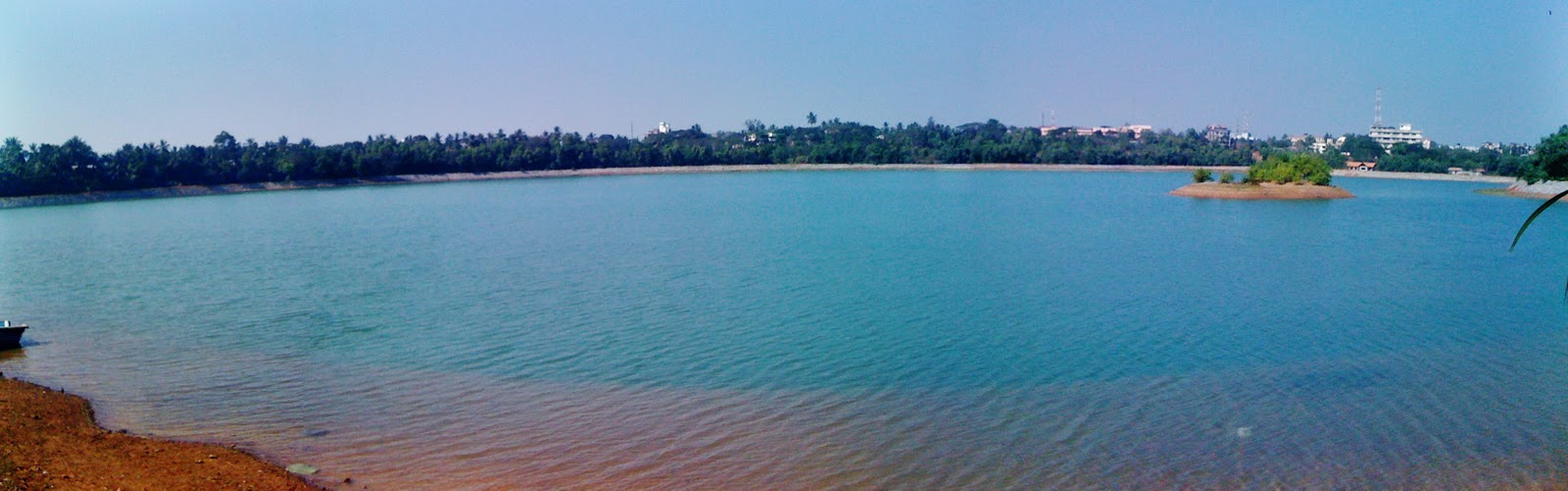
    Located in the heart of the town is the Manipal Lake, that was formed as a result of continued extraction of clay and mud from the same spot for manufacturing tiles. The pit that would collect rain water and look like a pond during the monsoons, soon was developed into a gorgeous lake.

    manipal lake

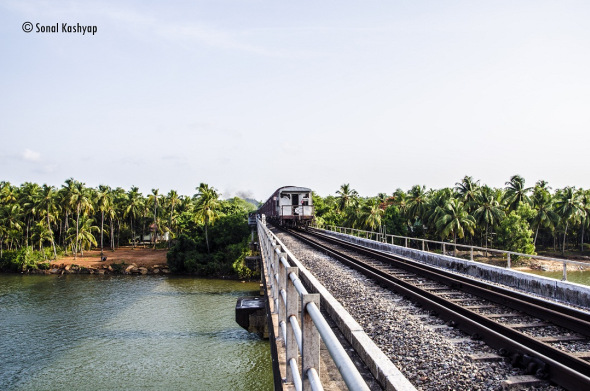
    The Railway Bridge is my favourite get away spot. Away from the hustle and bustle of the busy town life, this place offers a serene atmosphere for relaxing, busting the stress and maybe introspecting too! You may have your momentary adrenaline rush when a train or two pass through shaking the entire bridgre and blowing wind at a tremendous speed. Remember to hold on to the railings when you see a train approaching!

    14

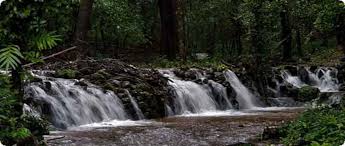
    Manipal also has its own mini water falls at Dashrath Nagar. Also known as the Arbi Falls, these are tiny streams of forceful flowing water over moss-covered rocks. They do not possess height but one can find a multitude of flora and fauna in the forest surrounding these crystal clear waters. Many other tourist spots around Manipal make this place a treat to the travelers’ heart.

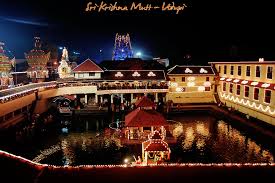
    1.)    Udupi– Derived from the Tulu name, Odipu, this city is famous as the Temple City. It is famous for the Krishna Mutt (temple of Lord Krishna) that attracts scores of tourists and locals on a daily basis. Udupi seems to be synonymous with delicious vegetarian food all over the world. It is a must visit for a divine experience.

    images (1)

    2.)    Kudremukh– It is a mountain range and name of a peak located in Chikkamagaluru district, located 88 kms away from Manipal. Kudremukh literally means horse-face in Kannada, in context to the beautiful view of a side of the mountain that resembles a horse’s face. It offers about 13 trekking routes ranging from tough to easy, so do carry your trekking gear along!

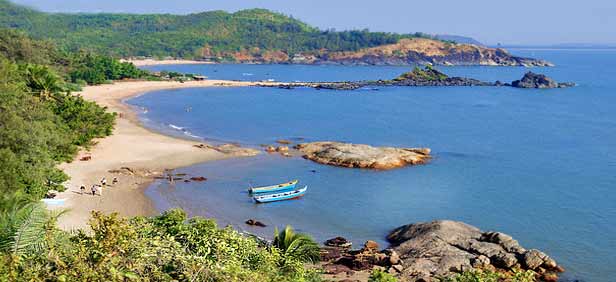
    3.)    Gokarna– Gokarna meaning Cow’s Ear has a legend that says Lord Shiva had emerged from the ear of a cow (Prithvi, the Mother Earth) here. Also, its location at the ear-shaped confluence of two rivers Gangavali and Aghanashini, lends it, its name. Gokarna attracts people of all tastes because of its clean sands, blue sea, multitude of flora and of course, its’ temples.

    om-beach-gokarna-karnataka

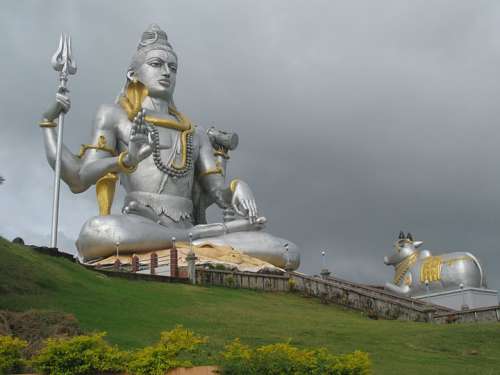
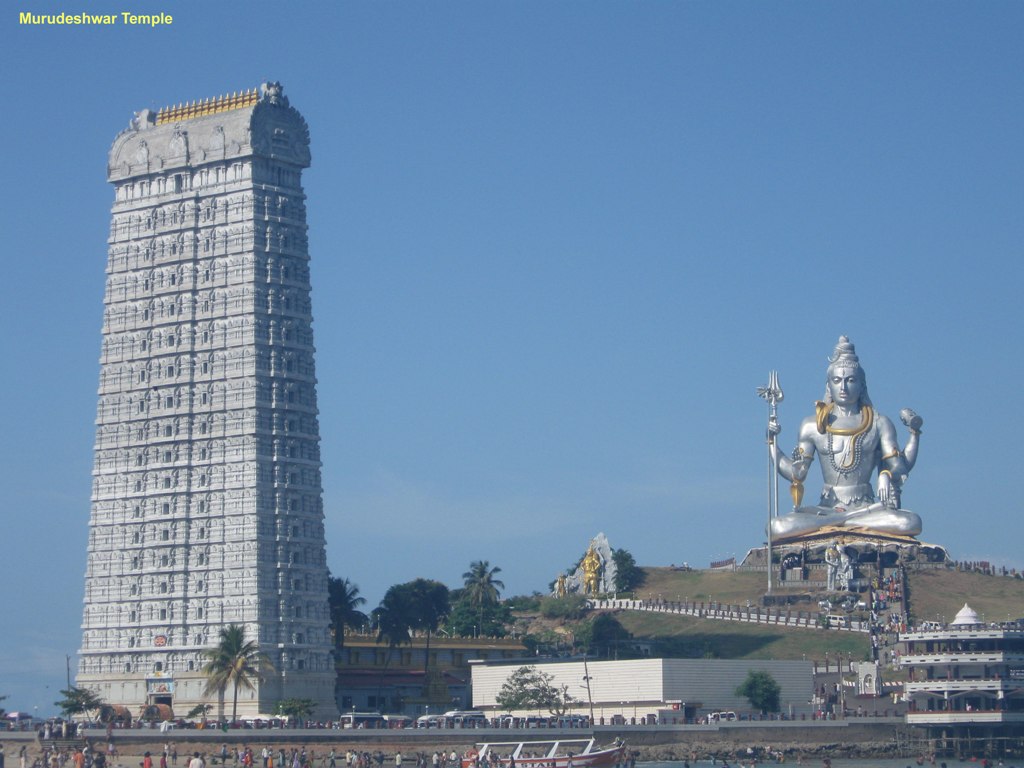
    4.)    Murudeshwara– Murudeshwara is another name for Hindu God, Shiva. The towering statue of Lord Shiva is the second highest statue of the deity after the one in Nepal. The Murudeshwara temple and the Raja Gopura are a must visit too.

    Murudeshwara-Photos-temple-pics-Murudeshwara-538188-1-JPG-destreviewimages-500x375-1324605121 MurudeshwarTemple

    5.)    Beaches– A stay at Manipal and you do not visit the beaches? Well, not happening!

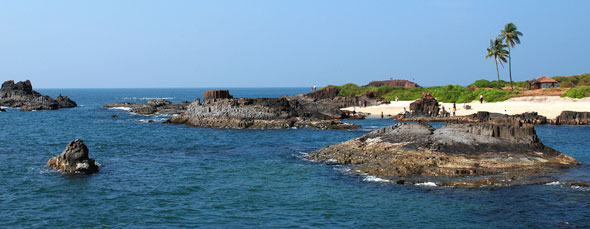
    a.)    Malpe: An important natural port and a fishing harbor, Malpe is located at the mouth of the Udyavara. It is a beach town that pleases the eyes and the photographers’ lens alike. St. Marys’ Island, also known as Coconut Island and Thonsepar, are a set of four small islands in the Arabian Sea off the coast of Malpe. Studies reveal that the basalt formation of these islands is a result of sub-aerial volcanic activities, for back then Madagascar was attached to India. According to a legend, Vasco Da Gama first landed on these islands on his voyage from Portulag and named one of these islands as O Padrão de Santa Maria, as a dedication to Mother Mary.

    malpe-hotels

    b.) Kaup (Kapu): Kaup, pronounced as Kapu beach is a famous beach in south Karnataka that is known for its’ lighthouse, crashing Arabian Sea waves and a strong breeze.

    6.)    Coorg– Located around 120 kms away from Manipal it takes around two hours to get here. Also known as Kodagu, it is home to the native speakers of Kodava Language, although it is again a potpourri of religions and cultures thus offering you various linguistic options for communicating, from Tulu and Kannada to Konkani to Urdu, and of course English and Hindi too. Coorg is famous in the world for its coffee plantations and brave warriors. Make sure you include the following spots in your itinerary when you visit this agricultural district:

    a.)    Talakaveri: Here is where the River Kaveri originates. The temple on the riverbanks here is dedicated to Lord Brahma, and is one of only two temples dedicated to Brahma in India and Southeast Asia.

    b.)    Bhagamandala: Situated at the confluence of two rivers, the Kaveri and the Kanika and supposedly a third river, the Sujyothi, that is said to join from underground, makes this a must visit.

    c.)     Nagarahole: A national park and wildlife resort; it is a treat to the eyes.

    d.)    Iruppu Falls: A sacred spot in south Kodagu in the Brahmagiri hill range.

    e.)    Abbey Falls: a picturesque waterfall 5 kms away from Madikeri. Also there are various temples to visit. With their marvelous architecture and glorious historic stories, these are more than mere spots of pilgrimage.

    images (3)

    7.)    Agumbe– 49 kilometres or near about 1.5 hours of travelling away from Manipal, this small village is sometimes known as the ‘’Cherrapunji of the South.” Wikipedia states that “Agumbe is associated with rainforest conservation efforts, documentation of medicinal plants, tourism (trekking and photography), power generation through hydro electrics and promotion of cottage industry.” Besides this, Agumbe is home to various scenic waterfalls like the Jogigundi falls, Onake Abbi falls and Barkana Falls. The famous Sunset Point rests on one of the highest peaks of the Western Ghats on the Udupi-Agumbe Road, where on a fine evening, one can view the mesmerizing sunset over the Arabian Sea.

    download

    So, take a week off, pack your bags, take umbrellas, trekking shoes, camera and loads of comfortable clothes and fly to Mangalore, which is 63 kms away from Manipal. You can then take a bus to Manipal; Won’t cost you more than 90 rupees! Happy touring!

  • Secrets of the Bengali Kitchen

    Secrets of the Bengali Kitchen

    The best part about cooking, as every enthusiast would agree, are the little additions and subtractions here and there that can make-or-break your dish. All those who have tried their hand at cooking Bengali cuisine know how particularly tiring it can be to get the dish “just right”. Bengali cuisine, like every other cuisine, has a feel unique to it. For a true Bong foodie, distinguishing between authentic and ‘almost-authentic’ Bong food in a matter of a few seconds is a skill picked up quite early. Then how DOES one get it right? Here’s bringing you five delicious secrets from the Bengali kitchen that will add that extra zing to your maachh, mishti and more 😉

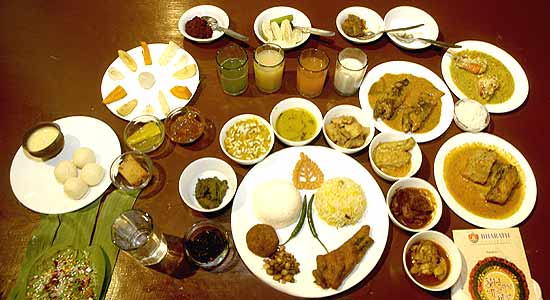
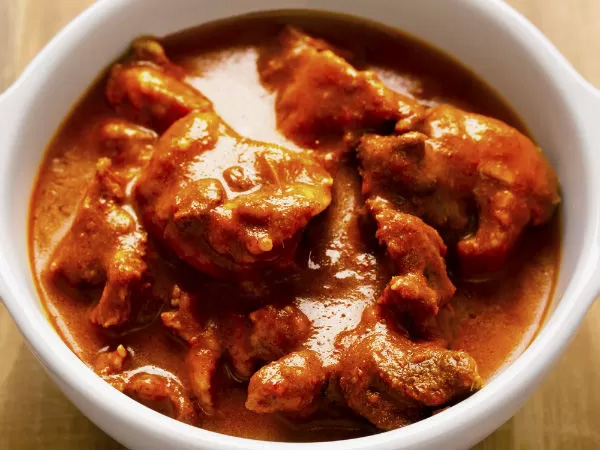
    Kosha Mangsho: One of the most popular and well-loved dishes in Bengal is definitely the “Kosha Mangsho”, translated to English as Red Mutton Curry. Along with great taste, Kosha Mangsho comes with high health benefits and has always been a favourite in Bengali kitchens. What tends to go wrong with it most of the time is the correct, and rather hard-to-achieve, balance of spices. The easiest trick in the book to get this one right is to go easy on the chillies. I would suggest avoiding chillies altogether, but if unavoidable, try getting hold of Kashmiri Degi Mirch. Degi Mirch refers to the dried fruit of chilli peppers and powdered Degi Mirch has been made easily-available in stores under various brand-names. To get the brilliant reddish-brown colour that defines the curry, add a spoonful of sugar in the oil and wait for it to caramelise before frying the spices.

    kosha mangsho

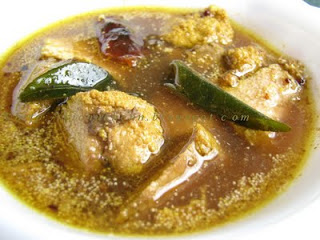
    Maachher Tawk: This sweet-and-sour dish is a fish-based preparation, very popular with traditional Bengalis even today. The most important step to get right here is, of course, the choice of fish. Machher Tawk is prepared using large pieces of rohu or ‘katla machh’, an easily available sweet-water fish bred in Bengal’s numerous ponds but may also be prepared using the ‘mourala’ fish that can be eaten whole. The ‘tawk’ is often compared to the rasam of South India and helps cool the body and also helps in digestion, thus making it a popular summer favourite. The fish used has to be very fresh and devoid of any smell. The fish must be lightly fried; remember, it comes towards the end of the meal and must not be a heavy curry. Use a little jaggery instead of sugar, raw mangoes instead of tamarind and maybe one or two green chillies for the zing and voila! You have perfected the traditional fish curry!

    maacher tawk

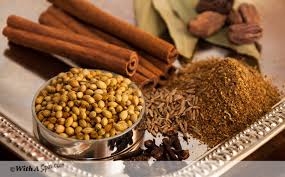
    Garam Masala: Although this is one of the oldest tricks in the book, I deem it quite necessary to mention it here. A blend of ground spices common in Asian cuisine, the word garam refers to intensity of the spices used. A typical Indian version of garam masala contains turmeric, black and white peppercorns, cloves, cinnamon, black and white cumin seeds and black, brown, and green cardamom pods. Garam masala contains several micronutrients and is considered good for health. One important commandment of Bengali Cuisine that one must remember is : toil brings rewards (in this case, flavour.) Instead of choosing the readymade garam masala available in the market, opt for making a powder of crushed small cardamom, clove and cinnamon. Do not go for badi ilaichi as it will ruin the authentic Bengali taste of your dish, no matter what you choose to cook.

    garam masala

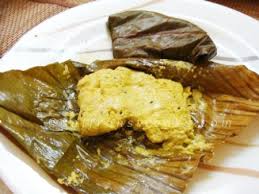
    Fish in Mustard Sauce: The health benefits of mustard are innumerable; high in selenium and magnesium, it is recommended to patients of asthma, arthritis and high cholesterol. It also slows ageing and helps one to lose weight. The world knows about the Bengali love for fish, and ‘Bhetki machher paturi’ is a gem in the crown. The trick to getting this very tricky dish right is making a good mustard paste, making sure that it doesn’t taste bitter. Heads up: this could be a major challenge, especially if you’re not comfortable with this dish. Professionals often fail while trying to get this one right and it is unlikely that those attempting it for the first time will hit the bull’s eye. However, that is no reason to lose hope as long as time and practice accompany it! One little tip: instead of sticking to only black mustard, try to use equal portions of black as well as white mustard. Soak the mustard seeds overnight and when crushing it in the mixer, add small ice-cubes instead of water. The magic of mustard will soon reveal itself!

    bhetki macher paturi

    Sweet Tooth: No Bengali meal is complete without the sweet dish at the end! No matter how wonderful your meal is, the true Bengali will always look at you expectantly at the end of the meal for that heavenly offering of mishti doi, sandesh or pantua. You have to get a little strict here; keep the calorie counter running! Although Bengali sweets are delightful to eat, they aren’t recommended in large amounts. A little tip here: when making mishti doi, make sure you use cow’s milk and never buffalo’s milk. Curd made from buffalo’s milk, although very common in East India, is not recommended at all for its high fat content. The best bit about Bengali desserts is the variety: cham-chams, rosogullas, payesh…the list is endless!

    mishti doi

    So what are you waiting for? Grab that apron, and you’re all set to win that Bong heart! A word of advice: serve it with a winning smile and a lot of love. Fondness is a dish best served smiling!

  • The End of Good Folk: “Bihu Somrat” passes away to cheers of joy

    The End of Good Folk: “Bihu Somrat” passes away to cheers of joy

    Khagen-Mahanta


    When I heard the news the first time, I was moved to tears. To everyone around me, it meant nothing. On June 13th, a person by the name of Mr. Khagen Mahanta passed away after months of battling an illness. To those unfamiliar with his life and field of work, he may be better known as Bollywood singer Papon’s father.

    Papon

    Nothing can make a man prouder than the moment when he is known as his son’s father. To me, however, it was a shattering moment. Don’t get me wrong; I have nothing against the son. The battle I wage is against the cloud of disinterest that surrounded the father’s death. Facebook and Twitter were flooded by the World Cup fever, which by the way is a wonderful thing to happen. It makes me very happy to see people feeling proud of their passions, but it also disturbs me tremendously when we remain ignorant of, and even disrespectful towards, somebody else’s passions. Among those thousand World Cup posts, my eyes rested on one Facebook update about the heartbreaking news I had mentioned in the very beginning of my sad story: “Reputed King of Bihu… Rest in peace!” Ah. An Assamese friend remembered. Finally. I congratulated him- I really did. “It’s wonderful that you made an effort to make the world realised what a gem we have lost.” “I spent the whole of yesterday listening to his songs. I feel like I’ve lost my childhood.” Those words brought tears to my eyes. “I didn’t know you were so fond of Assamese culture”, my friend went on. “You’re Bengali, aren’t you?”


    happy-face-4

    A major chunk of my new-found respect for him disappeared. Mr. Khagen Mahanta was one of the greatest exponents of Assamese folk music. A musical legend, he was also tremendously famous as a soldier who made music his weapon. On his death, musician and singer JP Das lamented: “He was a true gentleman who never raised his voice. He was very passionate about Assamese folk music and its preservation. He tried to save the ‘borgeet’, ‘goxha’, ‘biya naam’ and other forms. His death has created a vacuum in the field of music.” Mr. Mahanta, for me, however, was simply the reason why I fell in love with Assamese culture in the first place. He is called the “Bihu-Somrat” (King of Bihu) and my first encounters with the part of his soul that he put in his music were through his Bihu songs I found in an old record in the attic. Although Bengal does celebrate Bihu (at least, parts of it do), the first Bihu song I heard was in Assamese. And I loved it. Assamese is a wonderful language, and fused with the melodious voice of this man, it struck a chord somewhere deep in my heart. My rendezvous with folk music had started early, and I soon went on to explore music from various parts of the country. The words ‘popular’, ‘folk’ and ‘classical’ did not mean anything to my childish ears, all I knew was I had found a passion that would fuel the loneliness of teenage, and fire the love of the senses that adolescence brings on. As I grew up, I realised my friends in school never discussed these things. They spoke of English rock songs I hated, discussed people with hairstyles that scared me and never comprehended the beauty I felt in my veins everytime Mahanta’s voice hit my ears. No one understood the language, and he was therefore labelled ‘boring’. I have news for you. I don’t understand or speak Assamese either. How can we call ourselves music-lovers when languages and social distinctions (folk, classical) and utterly stupid classifications called genres get in the way of our passion? Folk music remains my passion till date, and Mahanta’s songs simply enticed me towards the language! As I grew up, I made a sincere effort to pick up the language so that I could feel the spirit of the songs. By the time I had made myself fairly acquainted with the exponents of Assamese folk music, I realised I was very close to attaining an acquaintance with the language. Language and culture are vehicles of each other, but in the world that had been created around me, both were things to be looked down upon. The lure of the regional was something that had become part of my world and, at the same time, something that could never allow my world to merge with that of my friends. I realise now that I shouldn’t have been so shocked at the social media reaction. The death of folk culture had made its presence felt quite early in my life…and yet, it hurt me when a country on the other side of the world managed to receive the admiration that a region in our very own country has never received and truly deserves. I do not wish to advocate the supremacy of one culture over another; that can never be. Each country, each region and each culture is as supreme as another and everyone has something to learn from their neighbours. All I wanted was Bengal, Punjab, Kerala, Telengana to feel the pain Assam felt at that moment. Selfishly, perhaps, I wanted my country to scream out to the world and ask it to share in our loss. What I realised was : none had lost, for none had loved. Years of fighting for culture and music, and his death is met by rejoicing of various sorts. Several Assamese friends I spoke to told me they had never heard of him. They’d heard of Papon, of course. Famous Bollywood Singer. Chartbuster Hits. It’s okay if he died, they grinned. His son will carry forward the legacy. Are any of us worthy of carrying forward the legacy of our past? Assam had lost a gem that day but my generation had lost Folk long before that.

    images

    May my children be as enamored by him as I was. Or will they?

  • Cultural dresses of Indian states

    Cultural dresses of Indian states

    India is a great land of culture and heritage. India is a country of colors and cultures. Indian fashion is too much influenced by their background and cultures of the people. Traditional clothing in India varies with, religion, region and community. Each and every state of India has its own tradition, culture and lifestyle to celebrate fairs and festivals with these traditions.Indians have always given a lot of importance to the dress materials since the inception of Indian civilization.  Indian Clothing is known for its elegance and traditional wear all over the world.  Festive season is the best way for exploring India and its culture, which is unique in every state of India. People of different communities wear different types of dresses in India which has become their identity.

    South India-

    south india

    South Indian dresses are known for its simple and graceful look.This Indian state costumes of this region are made up of cotton and are light, because of its warm climate. Normal clothing here is sarees for women. Unstructured cloth called a lungi which is usually worn over shirt. It’s a common attire for men, and some ladies, within the southern states of Kerala, Karnataka, Tamil Nadu and Andhra Pradesh. The traditional dress of Kerala is the ‘Mundum neriyathum’ or ‘mundu and neriathu’. It is worn by men and women of Kerala. States like Kerala, Karnataka and Tamil nadu are famous for their silk and cotton sarees. Sarees have formed a specific place in the attires of Tamil Nadu. It is a traditional outfit for all Indian women. Kanchipuram silk saris are very popular and women generally wear them on significant occasions like wedding and religious ceremonies. Clothing of Tamil Nadu is not restricted only to women even men also have that passion to show their style and look handsome. They wear a lungi with an Angavastra or shirt.

    North East India-

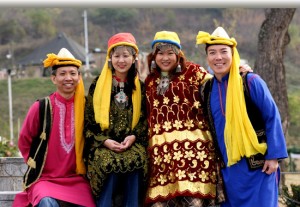
    north east

    North East is called a state of seven sisters. The Seven Sister States includes Assam, Arunachal Pradesh, Nagaland, Manipur, Meghalaya, Mizoram and Tripura. Along with the scenic beauty of northeastern India, its traditional ethnic clothes represent the true spirit of India. The bright traditional clothing of northeast Indian people gives an identity to Asian fashion worldwide. The women dresses of Arunachal Pradesh are colorful with myriad patterns which gives a true feeling of their tribe culture. The women of Buddhist Monpas tribe wear a jacket above a sleeveless chemise which is tied to their waists with a narrow and lengthy strip of cloth in a rounded manner. They were accessories which are cut from bamboo trees and decorated with beads. The costumes in the Meghalaya shows the ethnicity of their tribes. The women wears a short cloth round the waist, while men put a loincloth. Silk fiber of Assam constitutes the lion’s share of costumes of Assam. Traditional costume of Assam is known as “Mekhla Chadar”. A women tribe of Arunachal Pradesh wear a very attractive woven petticoat and a linen blouse, which looks like an ancient replica of modern indian skirts and shirts.

    North India-


    North india

    The main states which covers North India are Jammu and Kashmir, Himachal Pradesh, Punjab, Haryana, Maharashtra and Rajasthan. Costumes of Maharashtra comprise a sari as traditional attire for women and a dhoti and a shirt for men. The traditional dresses of women in Punjab are extremely beautiful and colorful. Punjab is known for its use of “phulkari” embroidery in its traditional costumes. The people of Haryana are very simple and their spirited enthusiasm for life is visible in their way of dressing up. The basic traditional dress of Haryanvi women is the Damaan, Kurti and Chunder. The highlight of the chunder is usually the shiny laces all along the border and is used to cover the head. The most popular attire of women in Jammu and Kashmir is the phiran. The Pheran and Poots are two gowns worn on top of each other. Most of their clothes are made up of wool and silk with intricate embroideries. Phirans are tied at the waist with folded material called lungi. Rajasthani wear colors to make up for the absence of blooming flowers. The traditional dress of a Rajasthani woman is the ghagra choli and odhani. Rajasthan is famous for its tie and dye prints or bandhani prints.

    West India

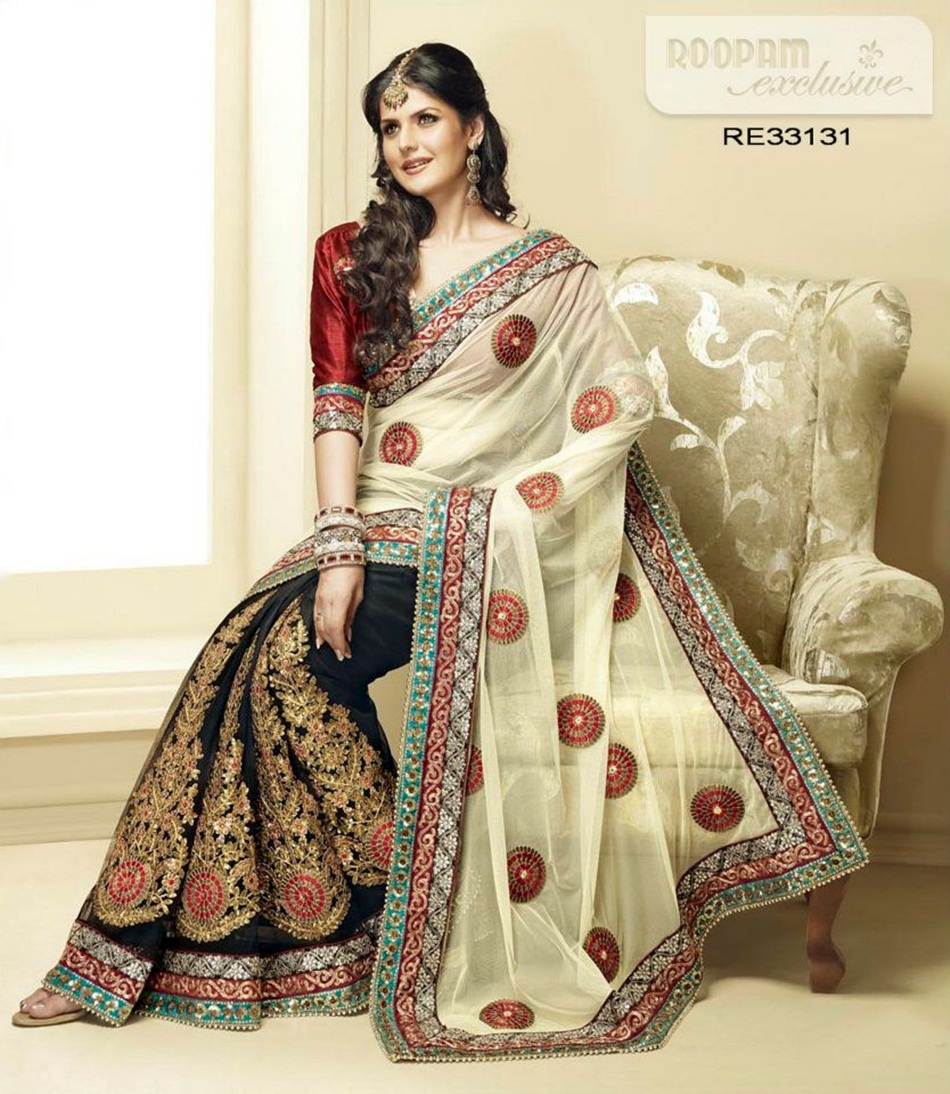
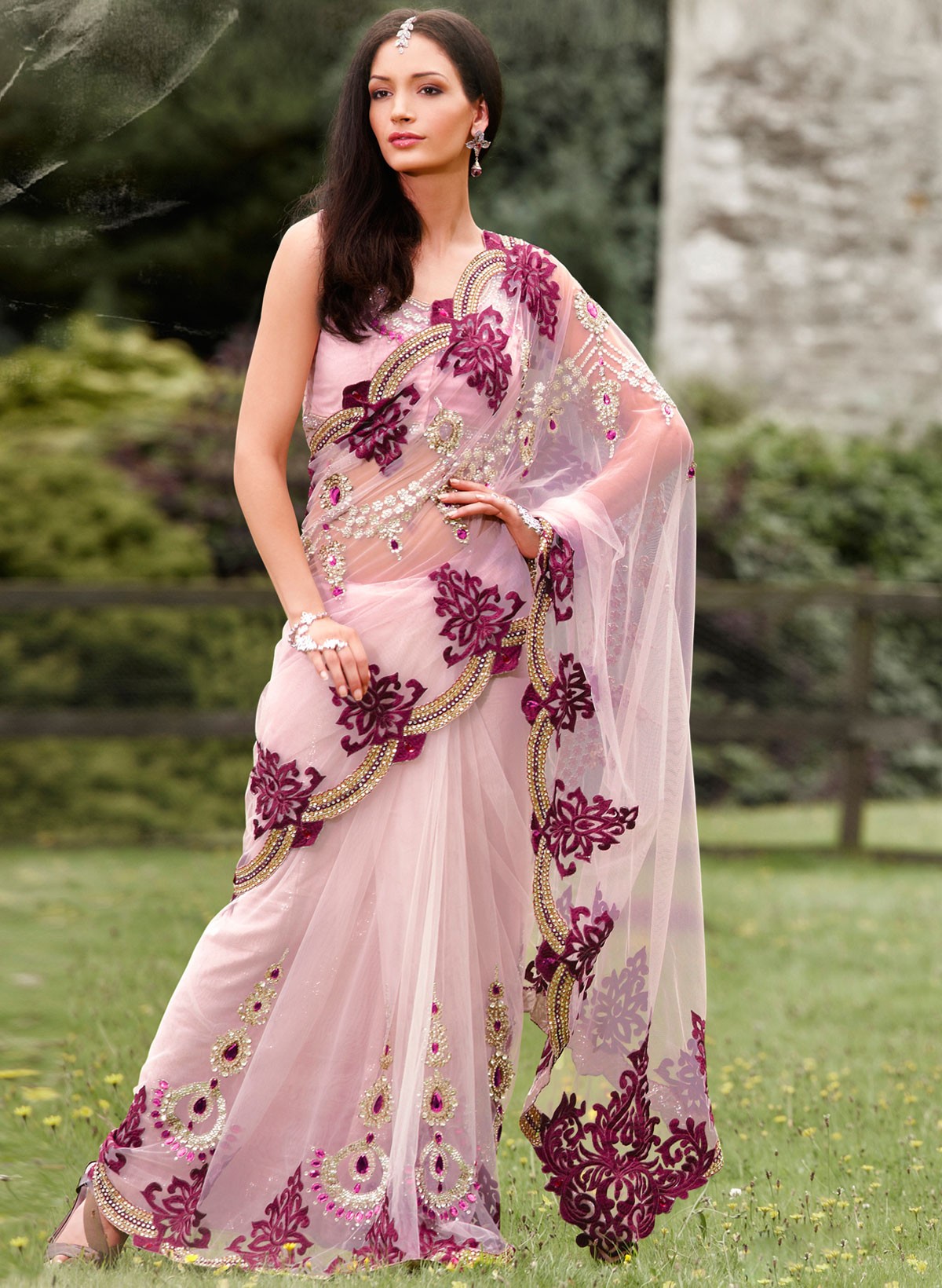
    saree

    Madhya Pradesh, Goa, Maharashtra and Gujarat are the states which lies in the west part of India. Costumes of Maharashtra comprise a sari as traditional attire for women and a dhoti and a shirt for men. The Maharashtrian women wear famous Paithani sari during festivals and religious functions. Clothes are an important part of the Goa lifestyle making it essential to dress well at the innumerable social occasions and parties. In Goa, women prefer Western dresses like skirts and tops, trousers and shirts etc. Christian women wear sarees. The traditional dress of women in Madhya Pradesh and Gujarat is the colorful ghagra choli. Ghagras are ankle-length skirts secured around the waist. Saree is also a cultural dress of Gujarat.

  • Culture of Mayan

    Culture of Mayan


    images (1)


    The Maya civilization, one of its kinds happened to be only as early from 300 to 900 A.D. It was the root of the myth behind 2012 was quite sophisticated in the pre-Columbian Americas. It spreaded from southeastern Mexico across modern-day Guatemala, Belize and the western parts of Honduras and El Salvador which is quite significant for that period and thus, claiming its stake in history of mankind. The Maya were indigenous people of  Mexico and central America.The people of Maya never came under a single political flag, obviously there weren’t any situation of political unification at any level. They merrily lived in around sixty distinct kingdoms, each having its own distinct ruler and the relations between the kingdoms were quite subtle and yet complex. They did negotiation, trading and inter-marriage, as well as invasion and were trained for warfare and war strategies. There were several artistical monuments and the Maya cities most often had a dramatic stepped pyramid topped by a temple sanctuary at their center as a spiritual place. Nearby they had the palaces of the royal court, which was built lavishly and it functioned as the center of government and provided luxury accommodation to rich merchants and other rich folk. Close case studies tell they had residences, temples and plazas, even a few ball courts which have been identified only recently. These courts usually consisted of two parallel walls and they played their ritual game using a rubber ball between the two long walls.

    The Maya produced impressive and awestruck creative artworks, crafts which includes polychrome ceramic vases and carved stone monuments portraying their rulers in different activities of life in which war portrayals were most common where the king is shown with great pride and honour. The British Museum even holds a number of carved lintels from Yaxchilan in a safe place of modern south Mexico. But the thing , which made the Mayan civilization hot in recent times was ‘the Long Count’ ,an elaborate calendar system which was prodigiously designed to provide dates and that was quite a thing considering this level of a sophisticated writing system in that period.

    CULTURE-

    mayanfarmers

    Religion– The Maya believed in a cyclical nature of time, like the Aztec and Inca who came to power later.  At that time the ceremonies and rituals were associated with terrestrial cycles which they observed as separate calendars. The priest of that time had the job of interpreting these cycles and giving an outlook of future or past. In some Maya rituals, people were killed by having their arms and legs held a priest used to cut the persons chest and tore out his heart as an offering. There is a massive array of supernatural characters in the Maya religious tradition.

    Agriculture– The Maya had sophisticated and diverse methods of food production. Mayan used several farming techniques to grow their crops including the slash and burn method, terracing etc. It was believed that a temporary system of agriculture provided most of their food. But now it is thought that permanent raised fields, forest gardens and wild harvesting were also crucial to support the large population in some areas. The major food sources were beans, tomatoes, pumpkin and cacao.

    Politics- A Classic Maya polity was a hierarchical state headed by a ruler. Such kingdoms were no more than a capital city. Although there were greater kingdoms, which extended patronage over smaller polities. The identity of each kingdom was that of a political unit associated with a ruling dynasty. Interestingly, most kingdoms never disappeared from the political land until collapse of the whole system.

    images

    The Mayan region was not homogenous in the distribution of natural sources and culture. Various groups followed the same system of agriculture and worshiped the same tribal gods. Each tribe had its own specific culture and style. The cultural peak of the empire was reached in an area covered with dense forest where man had to fight with nothing but stone tools and fire.  The Maya in this lowland area had been active traders and farmers of beans and succeeded to clear the forest through the practice of cutting and burning for planting.

    The Maya people never disappeared neither with the arrival of the Spanish conquistadors nor at the time of the Classic period decline. The Maya and their descendants form sizable populations throughout the Maya area and maintain a distinctive set of traditions that are the result of the post-Conquest ideas and cultures. Mayan population exceeded carrying capacity of the environment including exhaustion of overhunting of fauna and agricultural potential. The Maya centers of the southern lands went to decline during the 8th and 9th centuries and were abandoned shortly thereafter.  In its last period, the Mayan Culture reached and flourished its maximum splendor, agricultural advances, a solar and religious calendar, highly developed numeration system and a new sophisticated construction systems buildings.