Category: Drinks

  • Craft Beer vs Mainstream Brands of Beer

    Craft Beer vs Mainstream Brands of Beer

    Craft beer has been on the upswing for years now and is very much a part of the beer drinkers array of options for an afternoon half pint, pint or pitcher.  Mainstream beer companies have of course seen this as an opportune time to join in the fun by producing their own craft-esque beers.  However, there is an undeniable charm to knowing that you are drinking a fine craft beer that has more than a team of marketers behind the taste, ingredient choice and label design.  Craft beer has personality, each small brewery has a tale to tell of its inception, creation and production.  A tale that can be regaled and embellished with each delectable sip of fine craft beer.

    Glasses with different sorts of craft beer, wooden barrel and bar

    Still not convinced?

    Well, let’s take a look at why craft beer is considered ‘better’ than most mainstream beers by both snobs, hipsters and your bearded bartender friend.

    1) Quite simply, it has more flavour

    There is a weight and density of flavour in craft beer that mainstream beer just does not have.  Being as fair as I can be in my argument, it is worth pointing out that there are no rules when it comes to personal preference, if you enjoy a light beer that is mostly water, then cheers!  No hard feelings, craft beer is just not your thing.  However, if you enjoy a hearty and meaty libation that can take you on a journey through the flavours of each ethically and organically (sometimes) sourced ingredients then craft beer is for you!  Large mainstream companies will often look to the most cost efficient method of mass producing their product, while the craft beer men and women are more concerned with making a great tasting beer than cutting costs.

    2) They are stronger!

    Beer as it was meant to be, strong, flavourful and something to savour.  Craft beer will often have a higher alcohol content compared to mainstream beer.  The weaker, more watery mainstream beers will mean you can drink more of them… and oh yes, spend more money.  By drinking fewer beers, not only will your waistline thank you (debateable), but you will need to hit the bathroom fewer times in one evening.

    3) It’s Healthy???

    Yes, well, maybe.  Depending on the sources of information you favour, craft beer has been shown to have health benefits.  Craft beer does contain nutrients, fibre and antioxidants.  Due to the way that mainstream beer is filtered and preserved, a lot of these benefits are lost.  By no means should you replace your gym routine with a trip to the the pub to order a craft beer through.

    4) Variety is King!

    So if you don’t like one mainstream beer brand, chances are, you will probably not like beer in general.  With Craft beer there are a great many different flavours, consistencies and aromas to explore.  So if you didn’t like one craft beer, try another, who knows… discovering your new favourite drink could be one sip away.

    Ultimately, you should let your own personal preference be your guide.  Trying a lot of different flavours to find your perfect match is preferable to enduring the same, watery lager every time you feel like a beer.  Try a sip of something new, if you don’t love it, no harm done.  Getting away from the familiar comfort of mass produced flavourless beer that must be served at ice cold temperatures to be remotely palatable is your first step into a larger world – a world full of flavour, personality and fun.  If you have the opportunity, meet up with some of the people who make the beer you’re drinking at the brewery.  Hearing someone talk about a subject they’re passionate about is a wonderful thing in its own right.

    This guest post was brought to you by Keg n Cork Liquor Company of Edmonton – craft beer specialists!

  • Universal Studios Singapore: A Magical Journey

    Universal Studios Singapore: A Magical Journey

    While vacationing in Singapore some time back, I had the good fortune of getting to explore the then newly opened Universal Studios along with my grandmother. Located within Resorts World on Sentosa Island, Singapore, the massive theme park as one can see today took nearly two years of construction and testing to build. This one in a kind tourist paradise is stunning and extraordinary in its architectural finesse and roller-coaster layout, and has quickly risen through the ranks to become one of the best theme parks in Asia. Spread over an area of around fifty acres, Universal Studios Singapore contains a total number of twenty-four specially designed attractions. There are seven specific zones based on a bestselling television series or blockbuster film produced by the company, all surrounding an artificially modified lagoon. The park was officially inaugurated on 28th May, 2011, and since then, the tourist crowd has been pouring in consistently for the unforgettable rides offered there.

    307743_2450549821068_107624392_n 317379_2450608222528_1553518607_n

    Themed after the Hollywood Boulevard of the 1970s, Hollywood forms the entrance zone of the theme park. It features a long, but adequately spacious walkthrough with the erstwhile dynamic architecture lining the faux street, complete with the signature palm trees. With an outstanding replica of the celebrated Hollywood Walk of Fame, this zone also contains a Broadway style theatre, which regularly holds live musicals starring characters from Universal Horrors and Sesame Street. Several restaurants and a variety of flagship shops also line the walkway, selling unique dishes and eatables such as chocolate fudge, candy floss, and elaborate main course preparations from many cuisines, as well as movie memorabilia, celebrity posters, books, themed souvenirs, film accessories and apparel. Different food joints in the Hollywood zone have been remodelled to resemble settings from iconic Universal films, such as Mel’s Diner, which is based on the 1973 production, American Graffiti, and serves its customers snacks and beverages as per the culinary traditions of the 1950s.

    298205_2450557461259_767743055_n 311713_2450552421133_1315545504_n

    The New York zone lives up to its name, and is a perfect post-modern replication of the Big Apple, with its signature neon lights, huge billboards, towering skyline, and bustling sidewalks crafted to visual and aesthetic perfection. One of the major decor pieces here is the replica of the much renowned New York Public Library which has been created by talented artist in precision down to the last detail, and even has the two enormous statues of lions in white stone guarding its faux entrance. Lights! Camera! Action! Hosted by Steven Spielberg is this zone’s front running sound and lights show fitted with additional special effects to mimic a major hurricane about to hit the city. Other attractions in this area include New York styled pizza parlours and barbeque grills, apart from a Sesame Street: Space Chase themed indoor ride featuring beloved characters such as Elmo, Cookie Monster, Bert, Abby, and many others.

    296213_2450560741341_1930820810_n 314341_2450562701390_40690414_n

    Sci-Fi City proved to be one of the most exciting zones for me in Universal Studios Singapore by far, and will indeed prove to be delight for countless other science fiction enthusiasts. It is supposed to be an imagining of the future of human civilization, with remnants of the human population and previously unknown alien beings socializing and living together in a much more technologically advanced era. The blue and red Human and Cylon roller coasters inspired from the Battlestar Galactica television franchise currently hold the world record of the tallest pair of duelling roller-coasters standing at a height of around a hundred and forty metres. A Transformers themed simulation ride, which was opened much later by the director of the famous film adaptations, Michael Bay on 2nd December 2011, is another key feature of this zone. A much minor ride of revolving teacups, named Accelerator, and various merchandise shops and themed food outlets are other things to look forward here.

    293595_2450568581537_1777969231_n 297980_2450566861494_1453031324_n

    The aptly named Ancient Egypt zone is designed as per the settings of the many American productions of the 1930s, rightfully called Hollywood’s Golden Age of Egyptian exploration. Sandstone obelisks, statues and miniature pyramids form the architectural diaspora of this zone, and the main ride here is the high-speed and dark Revenge of the Mummy: The Ride, which is based on The Mummy film series. Treasure Hunters is another key ride, and consists of an airborne leisure car ride around an abandoned Egyptian excavation site. Apart from souvenir shopping, visitors can eat out at the Oasis Spice Cafe which boasts of a sumptuous multi-cuisine buffet serving spicy delicacies from Lebanese, Turkish, Indian, and Mediterranean cultures.

    314546_2450602942396_817192514_n 319155_2450569021548_749427338_n

    Based on one of the bestselling science fiction franchises of all time, The Lost World zone is divided into two areas, Jurassic Park and the more aquatic based Waterworld. The Jurassic Park series has been based on the popular live-action adaptations of Michael Crichton’s fictional works of cloned dinosaurs, which have been directed by Steven Spielberg. Waterworld is based on the 1997 Hollywood film of the same name which stars Kevin Costner. The Lost World is filled with action packed adventures for all people, and has a diverse range of shows and rides, including roller-coasters, pyrotechnics, water rides, stunts, rock-climbing, as well as movie merchandise retail outlets and themed restaurants.

    297361_2450574741691_1461647883_n 310534_2450575581712_148669093_n

    Far Far Away is the fantastical, magical realm of fairytale characters in the Shrek movie series, and one of the more children-targeted attractions of Universal Studios Singapore. From the gentle ogre Shrek to the loud princess Fiona and the lovable Donkey, you will find all the characters from this much loved fictional universe, and be mesmerized by a huge and intricate real-life version of the Far Far Away Castle, and the delightfully dirty replica of Shrek’s Swamp as shown in the animated films. This zone includes miniature child-friendly coasters and ferris wheels, apart from a 4D simulated adventure ride and a digitally interactive live show with one of the characters. An added bonus to this area are the aptly named food outlets which sell memorabilia and food items based on fairytale myths, such as magical potions, liquid elixirs, you name it.

    298913_2450578821793_171735215_n 310153_2450581261854_679314696_n

    Madagascar is the culminating zone of the theme park, and is based on the animated film adventures of Alex, Gloria, Marty, and Melman, a lion, a hippopotamus, a zebra, and a giraffe, all of who escape from the New York City Zoo, and travel to the wild but unknown regions of the African continent. This area has more kid-friendly rides, such as a crate water ride, and a carousel, and appropriately themed merchandise shops and food outlets.

  • Chandni Chowk – The Streets of Chaos, Hhistory and Wonder

    Chandni Chowk – The Streets of Chaos, Hhistory and Wonder

    The year before I completed school and slogged the entire summer giving competitive exams. I reluctantly left Delhi to pursue management in a prestigious institute nearly two thousand miles away. In those countless nights spent dreaming about home, what I missed most was my visits to Chandni Chowk with my mother. The streets of Chandni Chowk never fail to amaze me.

    Chandni Chowk can be traced to the time of the Mughal Empire. When Shah Jahan moved the capital from Agra to Shahjahanabad (Delhi), he built the magnificent Red Fort on the banks of River Yamuna. It was erected in the year 1650 AD as an accompaniment to the fort. Designed by his dearest daughter Jahaanara, it was a square(chowk) with a pool in the centre. The tale says that the square and the pool used to dazzle on a moonlit night- hence ‘Chandni Chowk’. Many say that it is named so after its silversmiths.

    For someone who’s been to Chandni Chowk a dozen times, it’s difficult to distinguish the dariba from the meena bazaar– It is truly a labyrinth! Located in central Delhi, The streets of Chandni Chowk are lined with several objects of fascination that draws everybody to it – right from fashion designers exploring beautiful fabrics and accessories for their creations to freezing Delhites seeking refuge from the unforgiving winters with delicious revdi and gajjak. And then there are those wide- eyed tourists caked with sunscreen, admiring the busy streets and clicking away curious onlooker. Despite the chaos, Chandni Chowk is a cosmos in itself.

    Chandni Chowk is home not just to several shops but also to several places of worship. The Jama Masjid attracts thousands of people every day. Sri Digambar Jain Lal Mandir is known for its bird hospital. The Sunehri Masjid and the Fatehpuri Masjid too retain their importance in present times.

    Chandni Chowk has seen several palatial havelis raised to the ground. The Chunamal Haveli, spread over nearly an acre and ten scores old, it houses several shops on the ground floor while Lal Chunamal’s fifth generation resides on the first floor. The Haksar Haveli, where Pandit Jawaharlal Nehru took his vows with Kamala Nehru is now a commercial complex. Our favourite action man Akshay Kumar (then Rajiv Bhatia ) spent his childhood there before making it big. It is quite common to find pictures of Akshay posing with the shopkeepers adorn the walls of many a shops in Chandni Chowk. “Bachpan ke dost the hum – ek saath patang udaya karte the hum” is the standard reply to any questions asked about those pictures. Akshay’s movie Chandni Chowk to China further put Chandni Chowk in the limelight.

    Chunnamal Haveli
    The Chunnamal Haveli

    The market comprises of different lanes known for different items. The Dariba is known for breathtaking, beautiful jewellery that attracts all brides-to-be and anyone looking for something. Most shops are more than a century old and yet are as sought after as they must be in their heydays. Right from glittering diamond necklaces to one time wear costume jewellery, the dariba has everything. Chandni Chowk is known for its silver, be it cute balis for school girls, jhumkas for casual college wear or expensive gift items such as chandi glasses, trays and coins that people have been exchanging on festivals and auspicious occasions. You can even get your grandmother’s tarnished silver jewellery polished and bring it back in fashion!  If not, then sell exchange/sell it for the new trendy pieces. There is a chance Chandni Chowk is named so after its sparkling silver!


    Traditional jewellery that you would spot only with your grandmother still sells like hot cakes among the more, recent fashionable kinds such as sparkling diamond sets. Meenakari jewellery that brides still swear by is very sought after. Magnificent kundan and  polki sets adorn the showcase, among a barrage of the kinds that are currently trendy. They are styled both in the antique and shiny finish. Be rest assured that everything you buy will stay on in your family for generations!


    The dariba is home to the renowned Gulab Johri Mal Shop. Found in 1819, the shop sells exquisite itras or perfumes made from actual extracts customised to your taste. You can explore their entire range of fragrances before settling for the sweetest smell. As exciting as it sounds, it is often impossible to pick and choose! To help compare fragrances better, you are advised to sniff coffee beans in between. Or better still, ask for the one that smells the most!

    The Kinari bazaar sells luxuriant  zardozi and zari material that can brighten any outfit. All brides flock to the market to get their hand on lovely lehengas and embroidered sarees that often inspire designer wear! What helps is that kaleeras, choodas and all other essential rite-d-passage items are found in one mile’s radius.

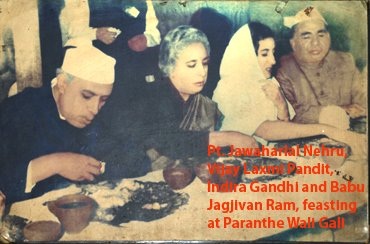
    Chandni Chowk is as much about food as it is about fashion. A visit to Chandni Chowk is incomplete without paranthas. The Paranthe Wali Gali is true paradise. Shallow fried in ghee, the delicious parantha is served with different kinds of sabzis, sweet and sour chutney and different kinds of pickle, nobody knew paranthas could be so much fun! Also try the sweet lassi served in small earthen pots known as kulhars. The thick, delicious rabri made from condensed milk is a must for those with a sweet tooth.


    Street food like chaat, moong pakodis are all over the place, with a chaatwala in every nook and cranny. For those with a craving for delicious Mughlai food, Karim’s is the place to visit. Opposite to Jama Masjid, it’s easy to find and inviting. The plain exteriors are in sharp contrast to the welcoming ambience of the restaurant. The Mutton burra and the sheermal, among other tantalising kebabs have been enjoyed by generations of loyal diners.

    Karim in Chandni Chowk
    Karim in Chandni Chowk
    Karim
    Amazing food at Karim’s

    Chandni Chowk leaves an everlasting impression on everyone who walks its streets.


  • All about Papaya – Nutrition, Uses and Recipes

    All about Papaya – Nutrition, Uses and Recipes

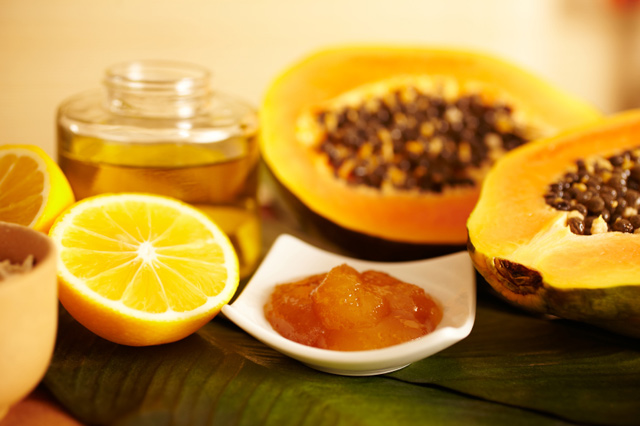
    Papaya is a fruit that’s quite commonly available in all continents of the world during the summer season. Rich in Vitamin A and Vitamin C, the fruit has many health benefits. The fruit, it’s seeds as well as the leaves are edible and are widely used in South East Asian cuisines. If you don’t prefer eating raw papaya, you can make a variety of dishes, smoothies and drinks and enjoy it the way you like. You can make it into a flavor you like. You just have to spice it up!

    All about Papaya - Nutrition, Uses And Recipes

    Before moving on to the various recipes let us take a look at the nutritional and health benefits offered by papaya.

    Protects Heart : As I have already mentioned, Papayas are rich in Vitamin C and Vitamin A. This makes it a wonderful element in a salad as it helps in preventing heart diseases. Vitamin A and C  play a key role in oxidation of cholesterol in our body, that is they are powerful anti-oxidants. Moreover, papayas have high fiber content, which also helps in lowering the cholesterol level!

    Supports Digestive System and Immune System : Papayas help in improving the digestive heath and they also help in preventing colon cancer. It is also available now in tablet forms to treat digestion related problems! They also help in improving the immune system and prevent common illness like cold, flu, etc.

    Prevent Prostrate Cancer : It is widely known that, papaya when taken with a sip of green tea can reduce the risk of prostrate cancer to a great extent!

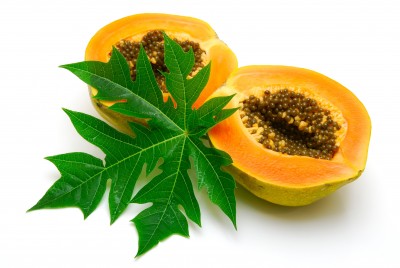
    Traditional Medicine To Treat Malaria : Leaves of the papaya tree are also edible and in some countries, its medicinal value is put to use. They are boiled and used to make tea, s a medicine to treat malaria.

    As we have now covered its health benefits and nutritional value, let’s now see some of its other uses.

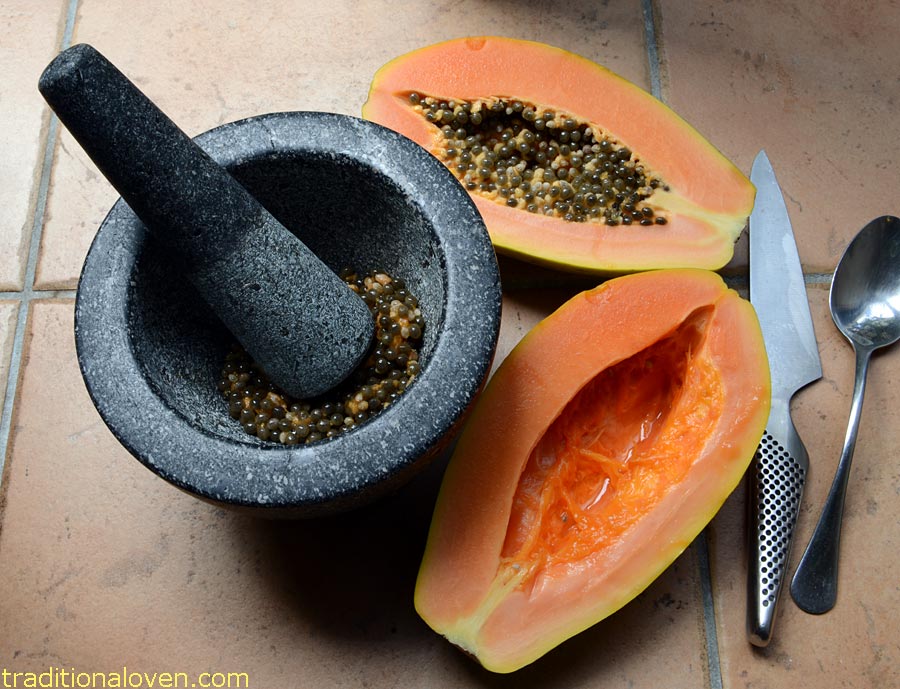
    Papaya Face Mask    papaya seeds

    Substitute Spinach and  Black Pepper : The seeds of papaya can also be used for cooking. They are spicy and are used as a substitute for black pepper in many countries. The seeds also help in destroying intestinal worms. The papaya leaves can also be boiled or steamed and cooked as a spinach!

    Skin and Face Mask : Papaya is one of the best face masks that help in rejuvenating the skin, heals acne and other skin infections.

    Apart from the above mentioned uses and benefits, Papayas can be used to make some of the best dishes. If you like juices and smoothies, sweets (halwa) or salads and salsa, papayas can blend in and create some of the delicious dishes.

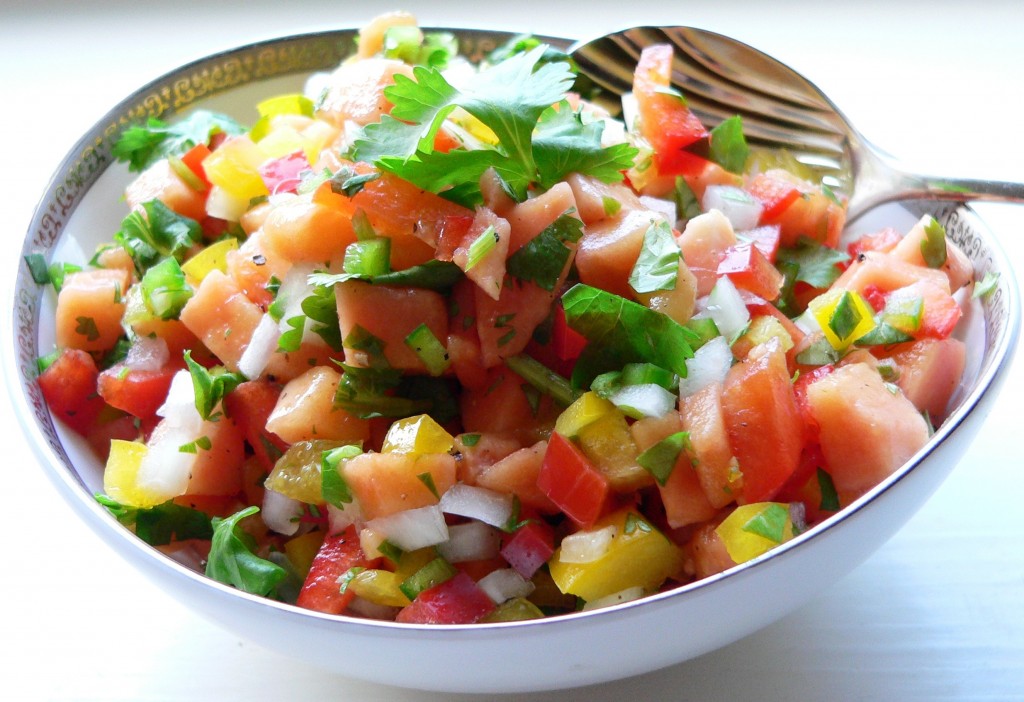
    Papaya Salsa

    Papaya Salsa

    For those who like to eat spicy dishes, the best way to eat a papaya is to make a papaya salsa! It is very easy to make as you don’t have to cook. All you need is the ingredients. Mix them, stir them well and they are ready to serve with chicken or fish!

    Ingredients:

    1 mango or 1 pineapple

    1 ripe papaya

    1 large red bell pepper

    1 avocado

    a small sweet onion

    fresh cilantro

    balsamic vinegar

    salt and pepper

    How To Make:

    Step 1 : Peel the mango or pineapple, avocado and papaya and dice them into small cubes.

    Step 2 : Chop the onion, cilantro and the red bell pepper

    Step 3 : Now mix the diced fruits, red bell pepper, onion and avocado in a large bowl.

    Step 4 : Add two tablespoons of the balsamic vinegar and 2 tablespoons of the chopped fresh cilantro.

    Step  5 : Now stir the contents and add salt and pepper to taste.

    Step 6 : Let the mix for sometime and after 15 minutes, the Papaya Salsa is ready to serve.

    If you are a lover of sweets and desserts, you can make use of the fully ripened sweet papayas to prepare Papaya Halwa.

    Here is the recipe for Papaya Halwa, one of the best delicacies to serve during dinner, festivals and parties. It can be served as a dessert!

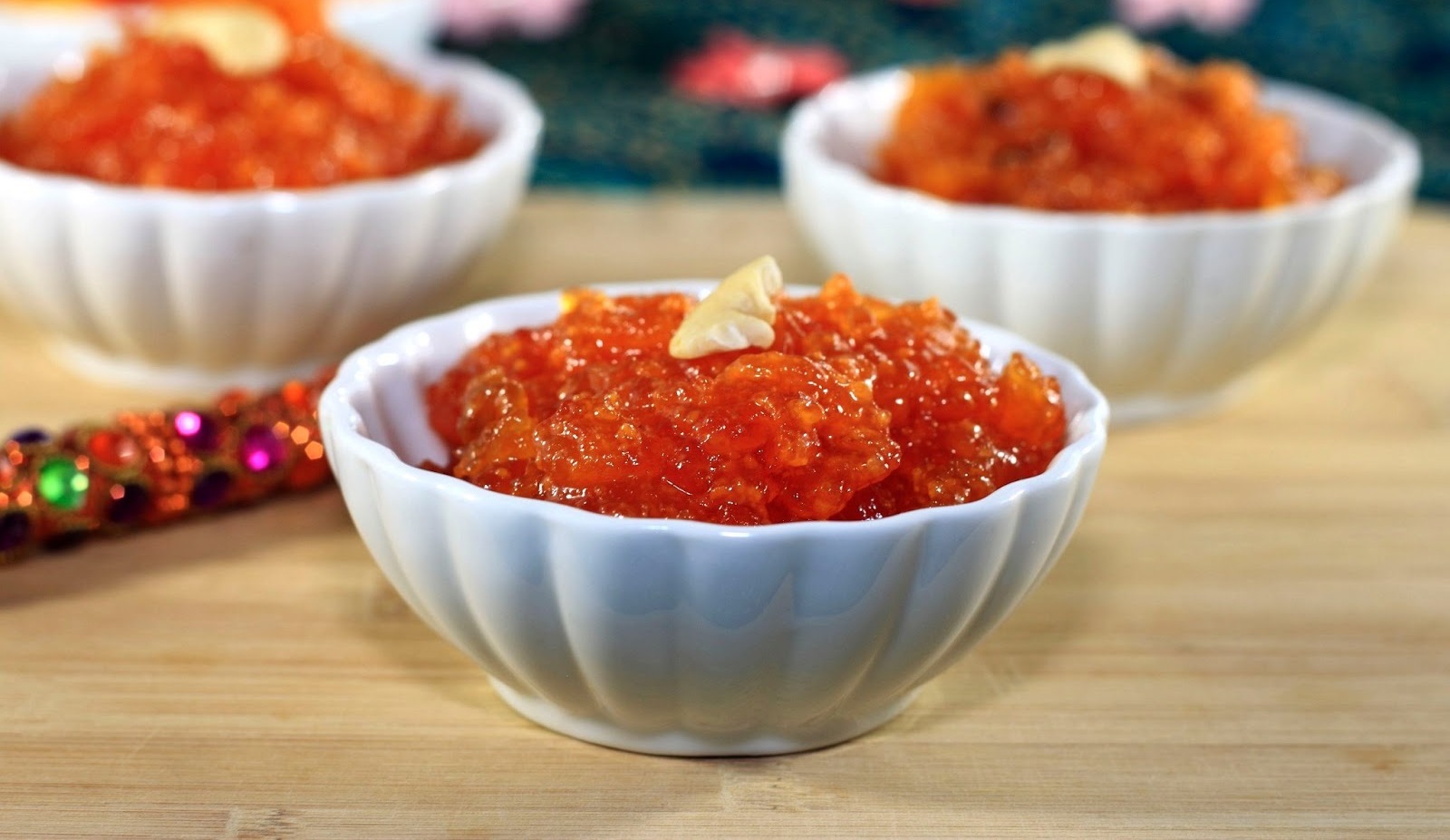
    Papaya Halwa

    Papaya Halwa

    Papaya Halwa is one of the delicious sweets and is very easy to make. It requires very less ingredients. All you need is a sweet fully ripened papaya and the following ingredients, listed below

    Ingredients:

    1 fully ripened papaya

    2 tablespoons of oil or ghee

    1 cup of sugar

    2 tablespoons of Almond Powder / Milk Powder / Coconut Powder

    1 tablespoon of Cardamom Powder

    4-5 Cashew Nuts

    How To Make:

    Step 1 : Take a fully ripe papaya, peel off the skin and dice it into small cubes. You can also grate the papaya with grater so that it will be easier to mash it.

    Step 2 : Pour some oil or ghee in a pan and heat it. Now add the diced / grated papaya in the pan. Keep the stove on low flame for about 15 minutes and stir the papaya often until it is well cooked.

    Step 3 : Add the required amount of sugar, and mash the mix with a potato masher. It will slowly lose its opacity and start to release the juices which will it easier to mash it as well.

    Step 4 : About 20 minutes later, the color and consistency of the mix will change considerably and it will become thicker.

    Step 5 : Now add the cardamom powder and the almond powder/milk powder/coconut powder.

    Step 6 : Now let it cook for 5 more minuted on low flame, stir it well and add cashew nuts.

    Step 7 : Stir for 2-3 more minutes and the Papaya Halwa is all ready to serve!


    If you are looking for a refreshing drink that supplies energy after a tiresome day at work, you can make this quick drink, Papaya-Melon Tango.

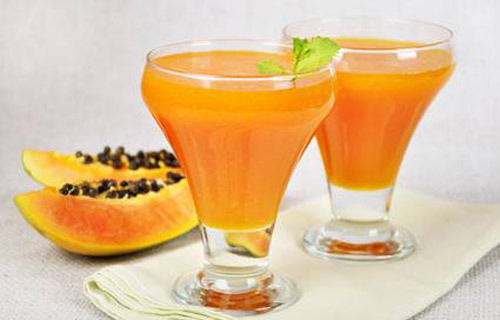
    Papaya-Melon Tango

    Papaya-Melon Tango

    Papaya-Melon Tango is a rich source of glucose and provides immense energy after an exhausting day.

    Ingredients:

    1/4 cup of peeled and diced papaya

    3/4 cup of peeled and diced muskmelon

    1/2 tablespoon of lemon juice

    1/4 cup of crushed ice

    How To Make:

    Add the diced papaya and muskmelon in a mixer along with the lemon juice and crushed ice. Turn on the blender until the mix turns into a smooth liquid and the Papaya-Melon Tango is ready to serve!

    The above mentioned ingredients makes 2 glasses of Papaya-Melon Tango.

    Place it in a fridge to keep it cool.

  • 15 Places to Eat out in Delhi On Valentine’s Day

    15 Places to Eat out in Delhi On Valentine’s Day

    The new year here, and Valentine’s Day will soon come knocking on your doorsteps in a few weeks. Love and food are inseparable parts of everyone’s lives, and what better than the 14th of February to celebrate a gastronomic delight with your loved ones, and faithful, insatiable tastebuds as well. As someone rightly said, “you eat what you love, and you love what you eat,” it’s only right to give that special one an unforgettable culinary journey on V-Day with fine wining and dining, and this list of romantic restaurants in the capital might just help you find that dream destination:

    1. Amreli

    amreli-26

    Situated in Hotel Diplomat, Chanakyapuri, Amreli is a small, but extremely beautiful restaurant which offers a unique fusion menu for the curious palate, ranging from the jalapeno and cheese naan to galouti kebab burger. With chic, lavish decor and a pleasant open-air seating space in a little garden, Amreli is the go-to place if you want to taste wonderful dishes from Mediterranean, Oriental, and Indian cuisines.

    2. Diggin

    diggin-4630

    A place that will leave you spellbound, Diggin is the right place to reserve for two if you both swear by Italian food. Recently established in Anand Lok, near Gargi College, this restaurant is a divine sight by night, with fairy lights and creepers winding up wooden and brick walls – in short, the ultimate evening eating ambience. Their extensive menu covers pastas, pizzas, and everything else under the Tuscan sun, all puns intended, and the dessert menu is just to die for.

    3. Rose Cafe

    3027_so-delhi-rose-cafe15-1364642914

    A quaint little cafe set in the middle of nowhere in Saket, Rose Cafe is the tea lover’s paradise. With reasonable prices, this place offers various dishes from European and Lebanese cuisines, with the perfect English breakfast menu and the most elaborate of mezze platters. This quiet establishment boasts of an independent garden as well as delicate indoor wooden decor in soft shades of pink and white, as well as some of the best desserts and spaghetti you can find in Delhi.

    4. The Potbelly Rooftop Cafe

    pbrtc

    Located in Shahpur Jat, The Potbelly Rooftop Cafe is one of the most ingenious restaurants in the city, having to its credit a brilliantly crafted menu which has infused the Bihari and continental styles of cooking in the most unique of ways. With a diverse selection of delicacies that caters to both the vegetarian and non-vegetarian foodie, Potbelly is a novel choice for a date, along with its homely balcony seating which not only guarantees the privacy you will need, but will also ensure a stunning view over the adjacent greenery.

    5. Le Bistro Du Parc

    Le-Bistro-Du-Parc

    For the Parisian romantic at heart, Le Bistro Du Parc offers select menu of classic French delicacies, which states candidly, “Contrary to popular belief, not all French chefs hate vegetarians!” and indeed, this amazing little place proves to be a wonderful dining experience for all foodies alike. With the friendliest and most efficient staff and chefs, and an aesthetically minimalist dining ambience, Le Bistro Du Parc will win your hearts over for sure.

    6. Moet’s Stone

    3881f2bac4fc294e428f7e6de28acc42

    Standing on the fringe of the Defence Colony market, Moet’s Stone is a warm, welcoming place to eat out with your loved one. Serving mainly continental food, the menu features a mouth-watering array of assorted pizzas, a vast array of appetizers and an even more glorious range of main course dishes you can thoroughly enjoy. Stone forms one of the four outlets of the Moet’s Building, with a luxurious balcony view and a tinge of the rustic in its plush interiors to enjoy, for everyone who visits.

    7. Zo

    zo-cafe-delhi

    A serene, peaceful place nestled in a corner of the bustling Hauz Khas Village, Zo pays tribute to the rustic and the antique in its ambience. Decked up with paintings, artefacts, and chandeliers, Zo offers continental cuisine with flavour fusions from around the world, such as Moroccan lamb burgers and Carribean jerk chicken sandwiches. A truly romantic retreat in the locale, this restaurant also boasts of one of the most brilliant mocktail and gourmet shake menus in the city.

    8. QBA

    qba5 low

    One of the most popular food establishments in the city, QBA serves Oriental, Mediterranean, Indian, and Lebanese cuisines, apart from a huge selection of cocktails and other alcoholic beverages. The place is a rarity in its own right, with an extensive dining space located right in the booming heart of Delhi, Connaught Place. With a separate seating area on a gigantic terrace, and the world at your fingertips (and taste buds), QBA will make you fall in love with it at first sight.

    9. Amour – The Patio Restaurant, Cafe & Bar

    amour-hauz-khas-rooftop

    A rooftop cafe located in the heart of Hauz Khas Village, Amour, stays true to its name, and will make you adore its food at first bite. Offering the usual continental and Italian fare, Amour also serves various exotic French and seafood delicacies. A general fan favourite for the HKV-trotter, this place will conquer your heart with its plush, wooden decor, and the soft, yellow lights that illuminate the place after sunset.

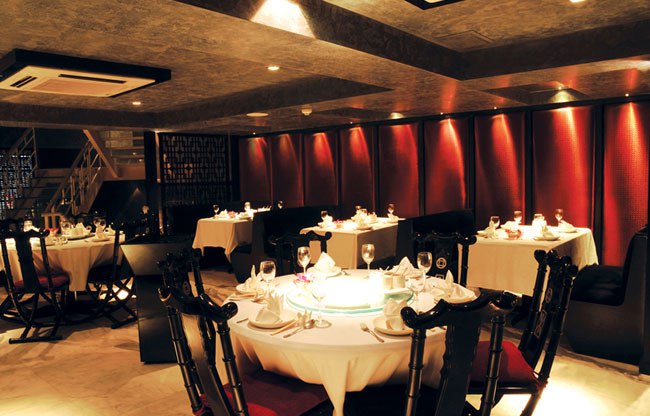
    10. China Garden

    7b9d9d12b8d35f303d6199daa18f96d2_featured_v2

    Situated in Greater Kailash 2, China Garden guarantees a fine dining experience for the Oriental cuisine lover. The menu not only boasts of authentic Chinese delicacies but forages into other styles of cooking from over the globe as well, each dish being executed with perfection. China Garden appeals to all, with vegetarian exotic fare to equally delightful fare using pork, chicken, and seafood. The interiors are brightly-lit, and are an excellent blend of Chinese traditional art and sleek, edgy, modern architecture, giving you a Quentin Tarantino movie vibe.

    11. Lodi – The Garden Restaurant

    cc5e5184e9f09664a7eb888983596cff

    Lodi is probably the best place to dine out in Delhi during the evenings, all due to the sole reason that it lights up like a fairyland when the sun sets. And with live jazz music softly playing in the background, it proves to be the perfect romantic getaway for any couple. Catering Lebanese and Mediterranean cuisine to all, and located on Lodhi Road, Lodi has one of the most divine food platter menus, ranging from cheese to mezze, along with seafood, rolls and wraps, fusion desserts, and many others on its serving list.

    12. Sevilla – The Claridges

    504527-sevilla-the-claridges

    Probably one of the most posh places to eat out in Delhi, Sevilla serves Spanish delicacies such as tapas, paella, and churros, as well as various Mediterranean variations of seafood and other dishes. Located in The Claridges Hotel, Aurangzeb Road, Sevilla is one of the more high-end restaurants in the city, but totally worth it. Spread over a huge area, the romantic ambiance alone is an experience in itself, with private canopies and rooftop tables set among lush greens and pleasant yellow lights.

    13. Ivy & Bean

    9099_aa1-1384865574

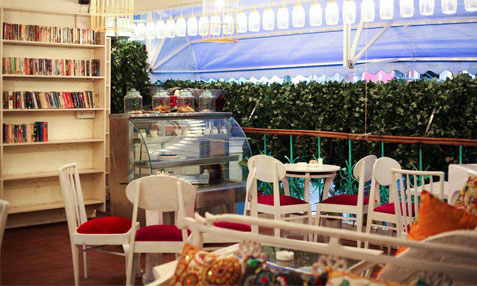
    A blessing for the bookworm and foodie parts of you, Ivy & Bean, located in Shahpur Jat, is a quaint little cafe that serves primarily British and Italian dishes. Known for its collection of books, excellent food at reasonable prices, and free Wi-Fi among other things, this place is sure to give a warm, cosy feeling to every hungry nerd. Ivy & Bean has a homely touch to its preparations, as well as its interiors, making it an offbeat, but nevertheless, an exciting place for a quiet fun date.

    14. Rara Avis

    raraavis

    Serving authentic French cuisine along with a fabulous selection of wines, Rara Avis is located in M-Block Market, Greater Kailash 2. The restaurant has wonderfully elaborate wooden interiors, and pretty lighting, with both indoor and outdoor seating. A must-visit for European enthusiast, Rara Avis is a savoury experience with its wide range of French dishes, ranging from the rustic classic to the urban chic flavours.

    15. The Chatter House

    5

    Highly recommended if you want to indulge yourself in classic American food, The Chatter House is located in Epicuria Food Mall, the well-known foodie heaven under the Nehru Place Metro station. The place has an independent bar area, rustic diner-like wooden interiors, dim lights, and a novel combination of a foosball table and a snooker table for its customers, making it the perfect laidback, casual date destination. The menu also offers an extensive array of Indian, Mexican, and Mediterranean dishes, along with a variety of freshly brewed coffees.

  • Go Nuts about Nuts! (Part 1)

    Go Nuts about Nuts! (Part 1)

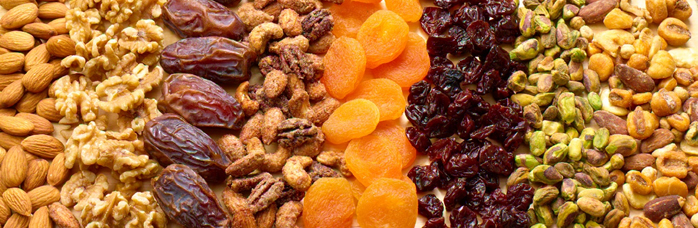
    With high nutritive value and a deliciously sweet taste, dried fruit is fruit from which the majority of the original water content has been removed either naturally, through sun drying, or through the use of specialized dryers or dehydrators. Nuts are edible fruits as well, anatomically different from the rest because of their soft internal kernels enclosed within a hard shell. Both dried fruits and nuts possess high shelf life, and have been in use throughout centuries in every part of the world. Today, they form an integral part of our culture and cuisine, and have an irreplaceable importance in our daily lives.


    1. Khajoor

    Khajoor, or the rather generic term, dates are the fruits of palm trees. Named Phoenix dactylifera in the binomial classification system of living organisms, both these names are derived from the Greek word for “finger”, dáktulos, because of the fruit’s elongated shape. What is interesting about the date palm, which produces this particular fruit, is that the male and female plants are separate and independent of each other, and only the female is capable of bearing fruit. The male plants only produce pollen, which is vital for the fertilization of the female and the subsequent production of dates. In most cities in India, dried dates are available easily at every fruit seller’s and vendor’s, and you can find those yellowish, deep red fruits packaged in small cylindrical plastic casings. Dates are extremely high in their carbohydrate content, and a hundred grams of dates will provide you with over three hundred calories. Dates contain minimal protein content, and an abundance of simple sugars which get easily absorbed in the bloodstream, and hence should be mostly avoided by obese and overweight people.



     

    2. Dried figs

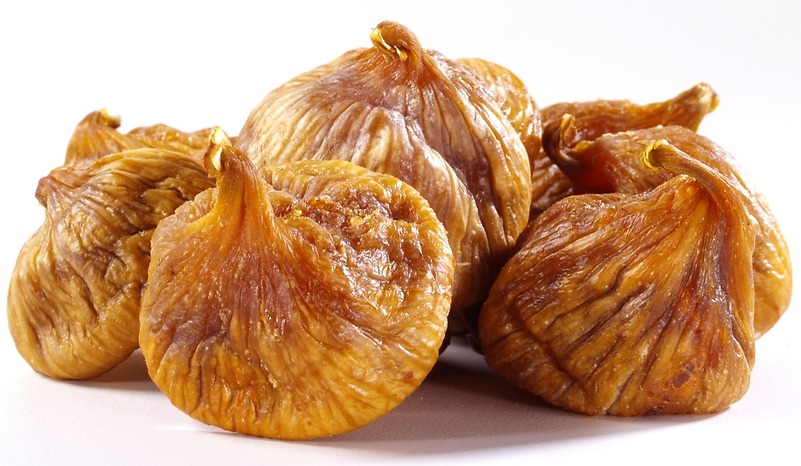
    Figs (Ficus carica) are native to the countries of the Middle East and western Asia, and have been used for both ornamental and consumption purposes over the course of many centuries. One of the first edible plants cultivated by humankind, figs are mentioned in many historical accounts and incidents, one of the most famous being the suicide of the Egyptian queen Cleopatra, who apparently got herself bit to death by an asp smuggled in a basket of figs instead of surrendering to the erstwhile Roman Empire. The small, green-skinned fruit contains many smaller drupelets, or one-seeded fleshy fruit components, and can be eaten fresh, after drying, and in numerous other preparations ranging from jam to ice cream. Known by the vernacular term anjeer in most of the Indian subcontinent, figs are extremely high in their carbohydrate content as well. Dried figs contain rich amounts of sugar, and hence have high calorific content, making it an unhealthy dietary component for obese, overweight people with cardiac risks.


    3. Almonds

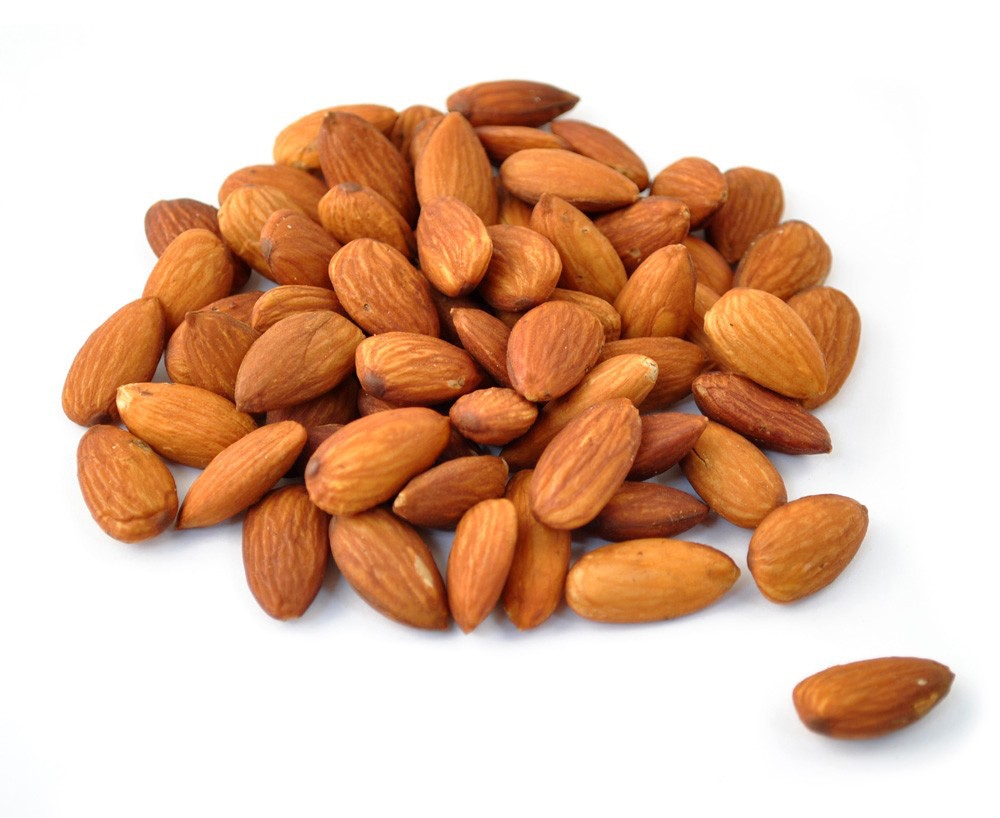
    Almonds, popularly known by their Hindi name badam in the northern states of India, are the seeds of a tree (Prunus dulcis) originally found in the Middle East and South Asia. Closely related to the peach family, the almond fruit also look rather like small green peaches, and are available in both sweet and bitter varieties. Etymologically speaking, the word is derived from countless variations and modifications of the Latin amandula, the Greek word amygdala, and the Old French almande or allemande over the ages. Apart from being eaten in its raw, roasted, and blanched forms, almonds are also used in your daily breakfast muesli as well as while making many delicacies such as cakes, nougat, marzipan, and macaroons in Europe and America, and badam halwa, barfi, biscuits, and flavoured milk in India. Extremely nourishing in nature, almonds are valued as a good muscle and body building substance, in addition to boosting the brain’s grey matter. Used for making oil, almonds also have high calorific value, with every hundred grams of almonds giving over six hundred and fifty calories, and sixty grams of almond fat giving nearly twelve teaspoons of oil.


    4. Peanuts

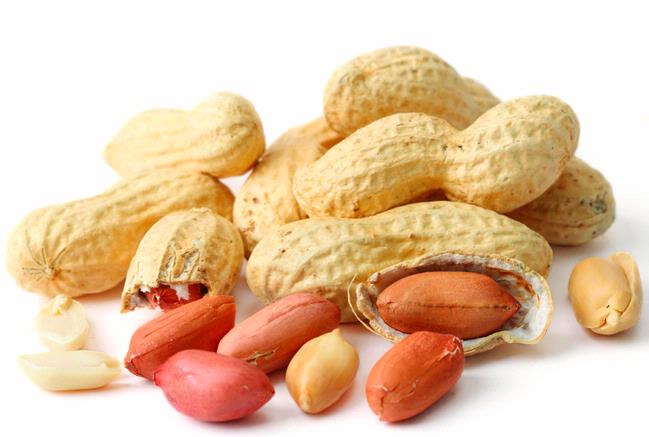
    Peanuts, or groundnuts (Arachis hypogaea) as they are mostly called in India, belong to the leguminous beans family, and was first cultivated in the red soils of Paraguay. The species name as according to taxonomist Carl Linnaeus hypogaea has Latin roots and literally means “under the earth”. Apart from being eaten in their raw, salted, roasted, and even boiled forms, peanuts are used to make countless basic cooking ingredients such as flour and oil, as well as many complex delicacies. They also have many applications outside the realm of the kitchen, such as their usage in the manufacture of solvents, industrial non-edible oil, textile materials, and both allopathic as well as herbal medicines. American botanist George Washington Carver is credited with hundreds of peanut recipes and related products, peanut butter being one of his most famous patents of all time. In India, groundnuts alone make a wonderful evening snack in winters, and you can find them being sold at very cheap prices at any roadside vendor. Groundnut oil is very healthy and is used in many households as a cooking medium. They are also a major component of chikki, a popular north Indian snack made by boiling and solidifying jaggery, sugar, peanuts, and til (sesame seeds) in long sheets. Though groundnut resembles other pulses in general nutritive value, they are very rich in fat, with a hundred grams of groundnut will yield almost forty grams of oil worth more than five hundred calories.


    5. Cashews

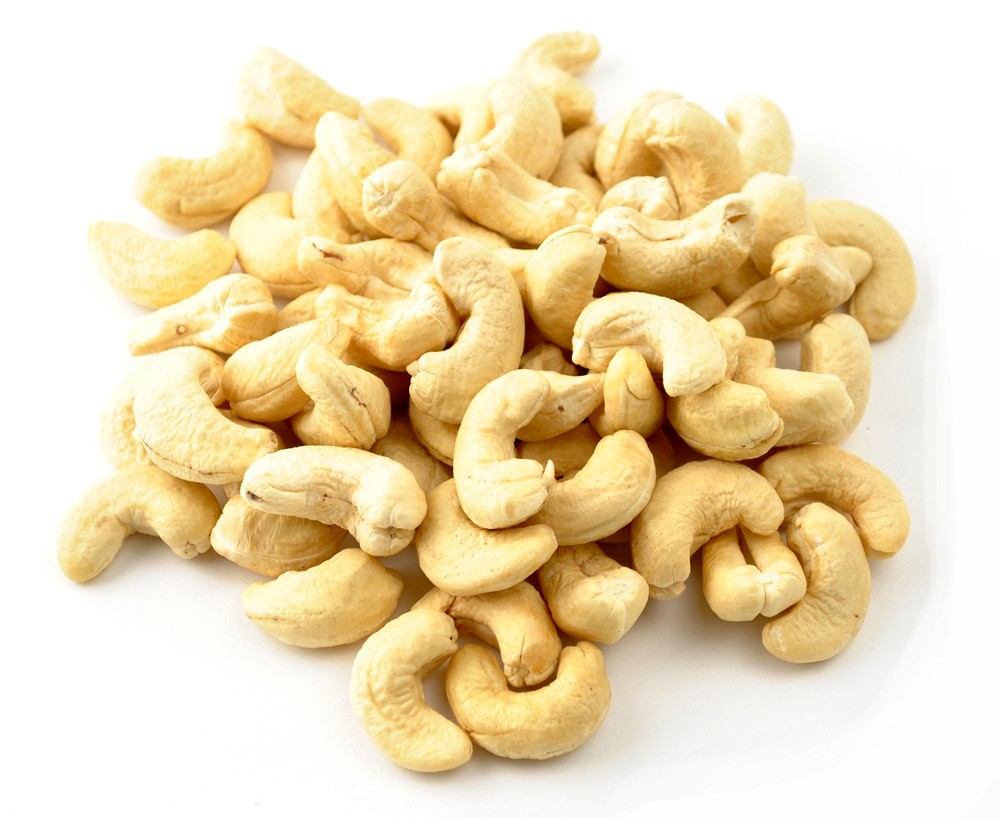
    Cashewnuts are derived from the cashew tree (Anacardium occidentale) which also bears the cashew apple. White, sweet, kidney-shaped, and extremely versatile as far as their culinary uses are concerned, cashews can be salted, roasted, creamed into gravies, made into liquor and oil, and are also used in the preparation of many sweet dishes. The word cashew has been derived from the Portuguese word caju which has been in turn derived from acajú of the indigenous Tupi language, and literally translates to the “nut that produces itself”. Cashews are used for making many Indian curries, such as korma and shahi dishes, and sweetmeats such as kaju katli. Because of their high starch content, cashews serve as good emulsifying agents and are used for thickening soups, syrups, curries, and the works. Boiling them in oil or salting them makes them harder to digest so they are best eaten in their natural, raw state. They go best with acidic fruit and non-starchy vegetables rather than sweet fruit and heavy starch. They are good body builders and easily digested when raw, and hence, help in cases of emaciation and in building good teeth. Like all nuts, cashews contain a great deal of unsaturated fatty acids, mostly in the form of oleic acid. On consuming a hundred grams of cashew nuts, you gain nearly fifty grams of fat, and a hundred grams of cashew oil, which amounts to around ten teaspoons, yields 600 calories.

  • Delicious Smoothies…!

    Delicious Smoothies…!

    1YI1ru0a9lo1_500_zps8cc9d639

    The lovely, fruity, refreshingly cool smoothies are almost everyone’s favorite. Available in all varieties, be it fruity or veggie contained green smoothies, served with straw. So popular now, are found in all restaurants, grocery stores and even coffee shops, there’s nothing not to love about smoothies. They may sound like healthy option above all which they are undoubtedly but yes, there are some aspects to it which make not so good. They are considered healthy and come under this umbrella term because most of the time they are made of soy milk, yoghurt, frozen fruit or skim milk. They make a really good options for meal or snack when made with natural fruits. Well, let’s enumerate the health benefits of smoothies;

    Article-11.0

    Smoothies keep you hydrated: Having smoothie in breakfast helps in keeping you hydrated for the whole day. This is what something like soda, tea or coffee won’t do. The body do gets water from many foods and resources, so one doesn’t need to drink water while having smoothie. As milk and yoghurt are largely water, it will quench your thirst eventually. In hot weather, it is preferable to add some extra ice cubes for extra water and the chillness.

    Smoothies are perfect or Breakfast: Breakfast needs to be king size, I know you know that. Smoothies make up an excellent choice for breakfasts because they make you feel fuller and are heavy as fruits and veggies are blended together with milk or yoghurt. The classic breakfast of bread, peanut butter, jam and any fruit smoothie is easy-to-make and perfect for any day. Sipping smoothie in the morning prevents you from indulging in unhealthy urges like donuts or drive through. Also, if you have problem taking in those cod liver oil directly, you can add some drops in your smoothie and this will make it all the more nutritious.

    Smoothies are Easy, Portable and Custom-made: Smoothies are really easy to make and are really good on-the-go choice. Just pick some fruits, throw them in the blender, put some milk and drink the mixture. If you own a blender, it will be ready in no time. Also, they can be stored and will stay fresh for 24 hours if kept cool and sealed in a right container and you can carry it anywhere in the car or train or gym to have it anytime you like. A vacuum flask is a right choice if you want to keep your smoothie cool and fresh on the move. Moreover, the fun part is you can add all types of ingredients you like in your smoothie and make it as per your taste and mood.

    Smoothies are blend of Vitamins and Minerals: They are way better than Multi-vitamins. Drinking fruit smoothie every day is more healthful than taking those multivitamins, even recommended by nutritionists. As just a glass full provide us with enough fiber and loads of all the required vitamins and minerals. Smoothies are a true blend of nutrition. This in turn helps in digestion and may help in control blood sugar and lower cholesterol.

    Smoothies are Nutrient-dense and source of calcium: Smoothies are best when they are all natural made with real fruits and veggies. The nutrient –dense ingredients provides vitamins and oils necessary for complete nutrition. A truly healthy smoothie is the one that has dietary fats in the form of cream for the body to use in assimilating the vitamins and minerals. Just simply blend bananas with skim milk or yoghurt or soy milk and get a great deal of benefits and nutrients. And yes, the milk or any base you use is a rich source of calcium, giving it all the more richness.

    With all the pros of smoothies, let’s have a look on the ingredients that probably you shouldn’t be using but are preferable to put into your smoothie to make it really rich, which are like,

    Aloe Vera, Pomengranate juice, Kefir, Coconut Milk, Chia seeds, Moringa powder, Milled flax seed, Spirulina etc. Well, the great news if you want to know is that if you want to lose weight, smoothies can be used as a meal replacement not an addition to it, so just take it this way and enjoy the results. Like, sip a dairy based smoothie for breakfast or water-based smoothie as a snack. All the fruit or veggie smoothie can be a healthy additional meal plan as long as you maintain proper meal portion. Its better to incorporate smoothies in your diet plan by consulting your dietician or doctor.

    Some Awesome smoothie recipes:

    Coconut Water-Mango smoothie:

    2 cups unsweetened coconut water

    Pinch of cayenne powder

    2 tablespoons lime juice

    2 cups ripe mango chunks

    Blend all the ingredients in blender till smooth. Gulp them and enjoy the delicious smoothie.

    Now, Here’s is what a really healthy green smoothie will contain, just perfect for your body;

    ¼ cup water

    1 banana

    ¼ cup orange juice

    1 cup spinach

    ¾ cup strawberries

    ½ cup blueberries

    Blend till smooth and enjoy the green richness of the drink.

    mix-berry-smoothie-with-berries-and-mint-leaf-100145237

    All these less calories, full of refreshment and deliciousness smoothies make up really good combination in breakfast or as a evening snack. Basically, smoothie is perfect for a busy life like present time, counts as an ideal on the go drink and is really easy to make, ready in no time. Smoothies are now-a days everywhere, people are talking about it a lot on the internet or in general. Why? Because it is Healthy. Yes, It definitely is healthy. There’s more to green smoothies but smoothies or protein shakes in any form is healthy. Though, taking fruits and veggies straightforward form is also healthy, but sipping on smoothie gives a new refreshing touch to them.

    Healthy Eating. Happy Life.

  • Go Nuts about Nuts! (Part 2)

    Go Nuts about Nuts! (Part 2)

    With high nutritive value and a deliciously sweet taste, dried fruit is fruit from which the majority of the original water content has been removed either naturally, through sun drying, or through the use of specialized dryers or dehydrators. Nuts are edible fruits as well, anatomically different from the rest because of their soft internal kernels enclosed within a hard shell. Both dried fruits and nuts possess high shelf life, and have been in use throughout centuries in every part of the world. Today, they form an integral part of our culture and cuisine, and have an irreplaceable importance in our daily lives. In the second segment of this listicle, there is more to learn about our favourite ones.


    6. Walnuts

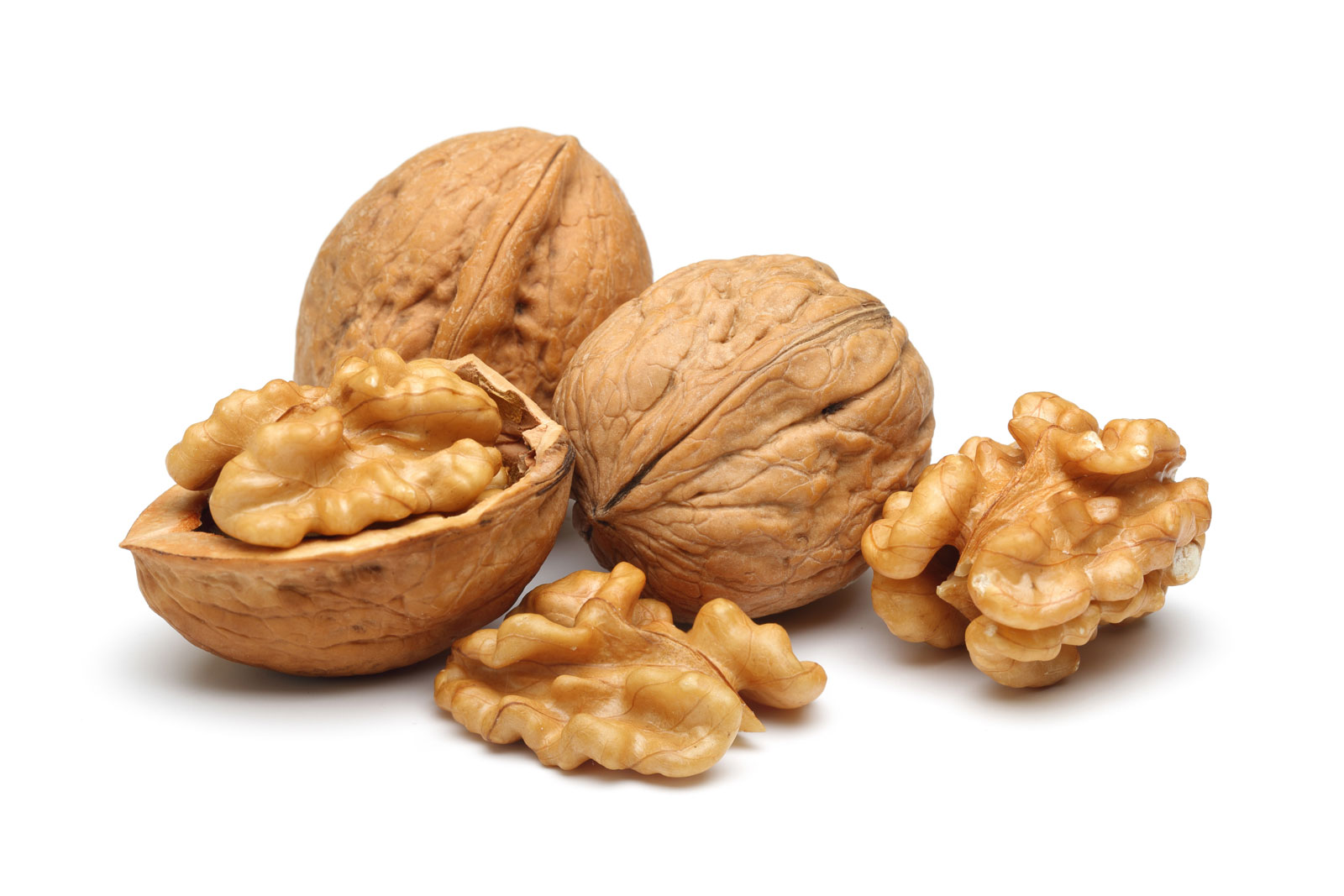
    Walnuts are derived from the Persian and English walnut trees (Juglans regia) and its soft edible kernel resembles the human brain. In etymological terms, the word is derived from the Germanic wal and the Old English wealhhnutu, meaning “foreign nut”. The shells are thin with a faint sheen and crack neatly into half, revealing the twisted, curly shaped nut. Versatile in the kitchen, walnuts can be candied and pickled in addition to being eaten raw or in their roasted form. Walnuts also form an integral part of many dishes, particularly desserts like chocolate brownies and even breakfast mueslis. You can also find them in many a salad, as their slightly bitter taste balances out the overall sweetness of the rest of the dish. Walnuts are very rich in protein and also contain a small amount of Vitamin B. They are rich in antioxidants and are curative for many minor diseases such as eczema. In fact, the oil obtained from the kernel has been found of great help in skin diseases. The green unripe walnut is useful for expelling worms from the stomach. They are also good for treating constipation because of their proven laxative qualities. Walnuts also possess many other non-culinary qualities, some of them being in the areas of cleaning agents, inks and dyes, and even anti-cancer drugs. Although walnuts are highly rich in protein and are very good for the brain, they yield nearly seven hundred calories and seventy grams of fat in just a hundred grams.


    7. Pistachios

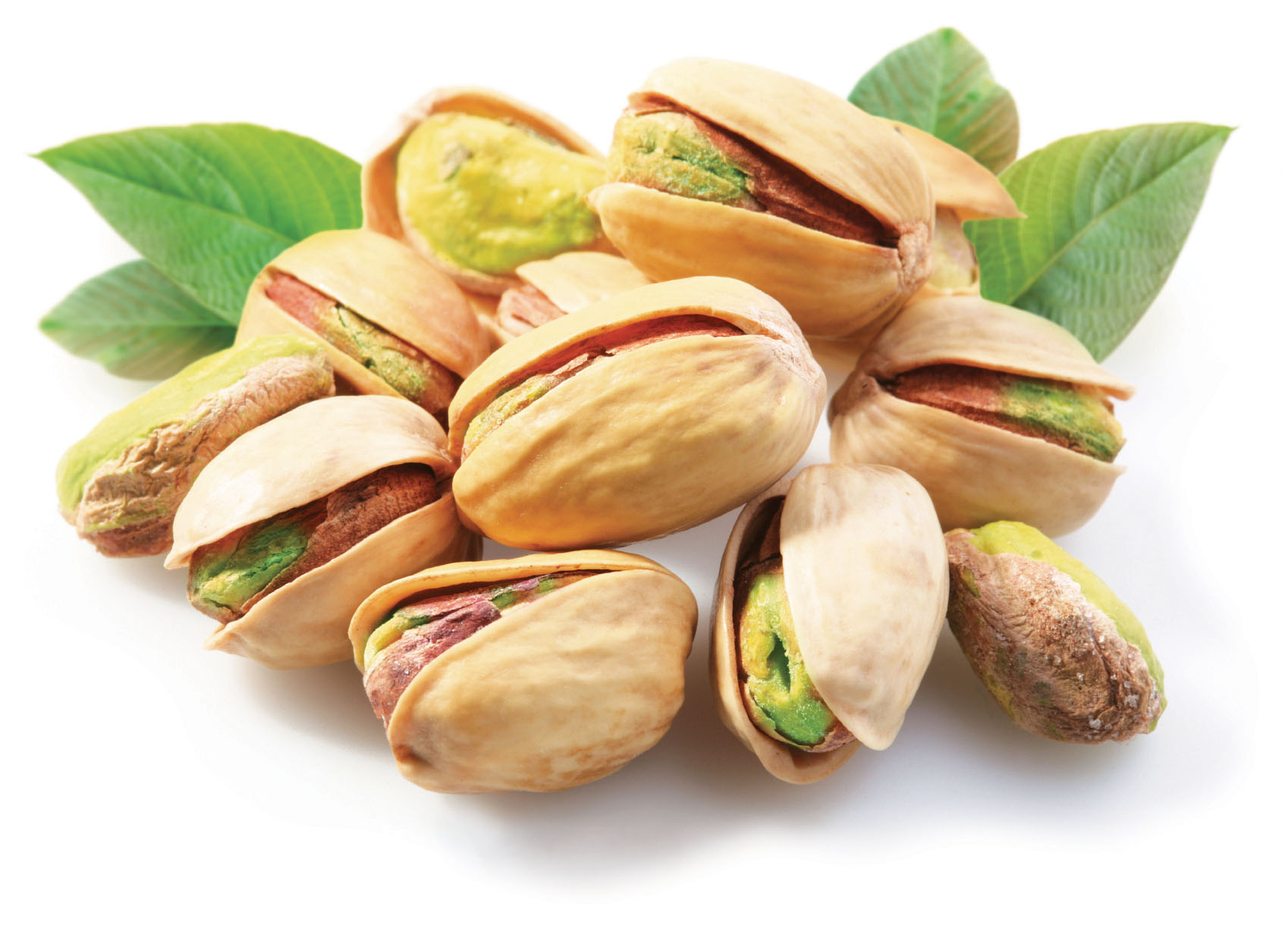
    Pistachios belong to the cashew family and are obtained from small pistachio trees (Pistacia vera) which originated from the countries of Central Asia and the eastern part of the Mediterranean coast. The word pistachio comes from the medieval Italian pistacchio, which has been derived from the classical Latin pistacium, which in turn has its origin in the ancient Greek pistákion and the Persian pistákē. The kernel of the pistachio nut is consumed, and the non-edible beige coloured shells also find many uses in non-culinary areas, such as fuel and composting purposes. Pistachios formed a common part of the diet of ancient human civilizations, with notable mentions in ancient texts dating back to centuries before the advent of the Christ. Slightly sweet in taste, pistachios are eaten raw, roasted, salted, and also as a part of desserts such as the Indian kulfi, cold salads, Italian biscottis, Turkish delights, and ice cream. Pistas, as they are commonly called in India, are very high in calories and thus should be avoided by obese and overweight people with diligence. According to dietary charts, a hundred grams of pistas yield more than six hundred calories.


    8. Fenugreek

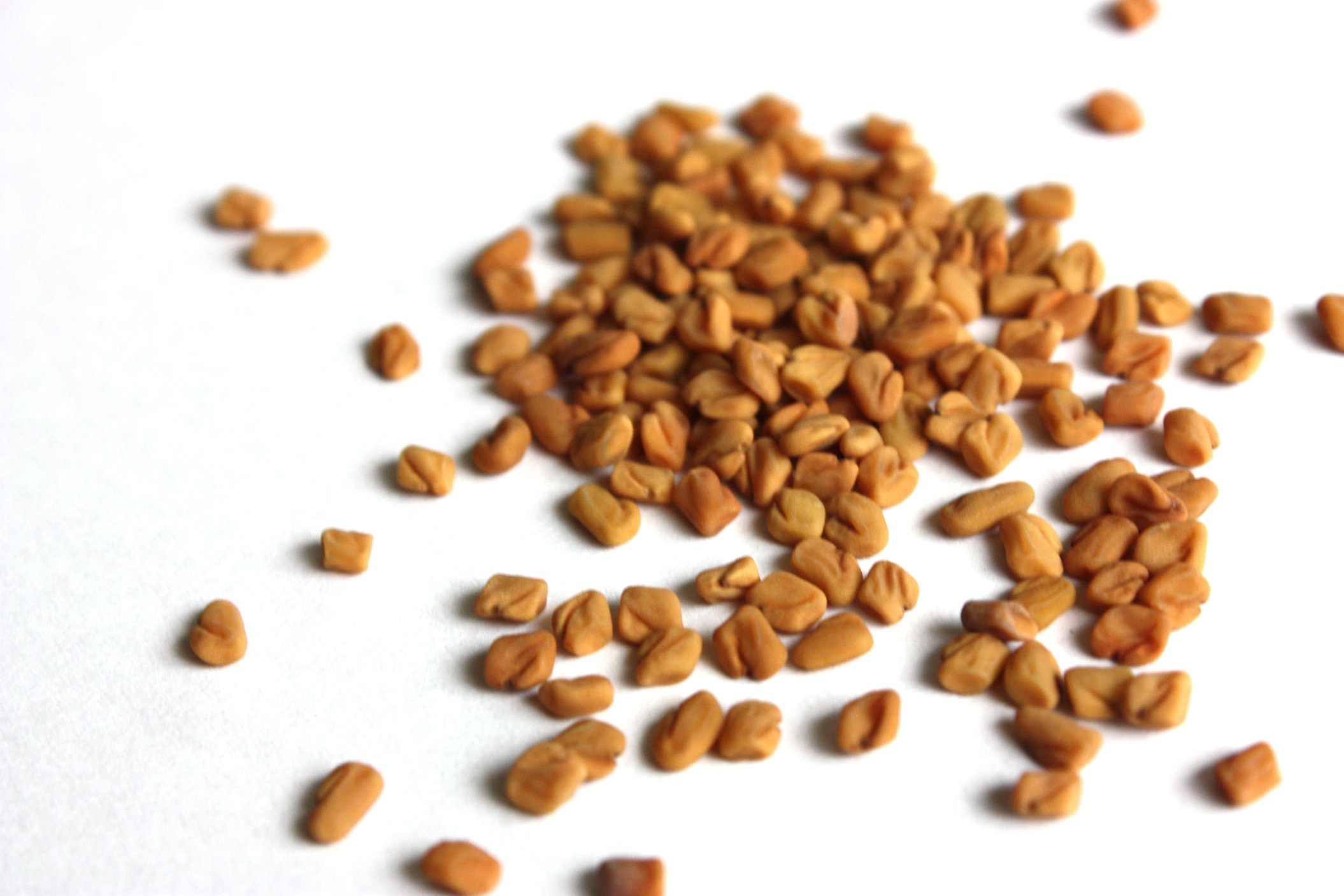
    Fenugreek seeds are obtained from the small herbaceous fenugreek plant (Trigonella foenum-graecum), and are usually called methi by most people in the Indian subcontinent. Originating from Egypt and other countries of Western Asia, fenugreek and its various parts are used as herbs, spices, and vegetables. The word has its origins in the Latin faenugraecum, literally meaning “Greek hay” and dates back to the ancient Roman era where the dried fenugreek plant was used as fodder. Hard lentils by biological classification, fenugreek seeds are a dark fawn in colour and possess an astringent aroma. Containing around five percent of bitter fixed oil, the seeds are usually broken to down to obtain the same. The oil is bitter in taste, smells like celery, and is used in small quantities in seasoning Indian dishes like sambhar and kadhi. Rajasthani people even make curry out of fenugreek. Fenugreek oil greatly improves the flavour and quality of pickles, and is mostly used in cooking with sour substances so as to balance out the taste. It is particularly beneficial to non-insulin dependent diabetics as it helps them to regulate their blood glucose levels by their significant hypoglycaemia-inducing properties. It is also used in buttermilk to treat dysentery.


    9. Mustard

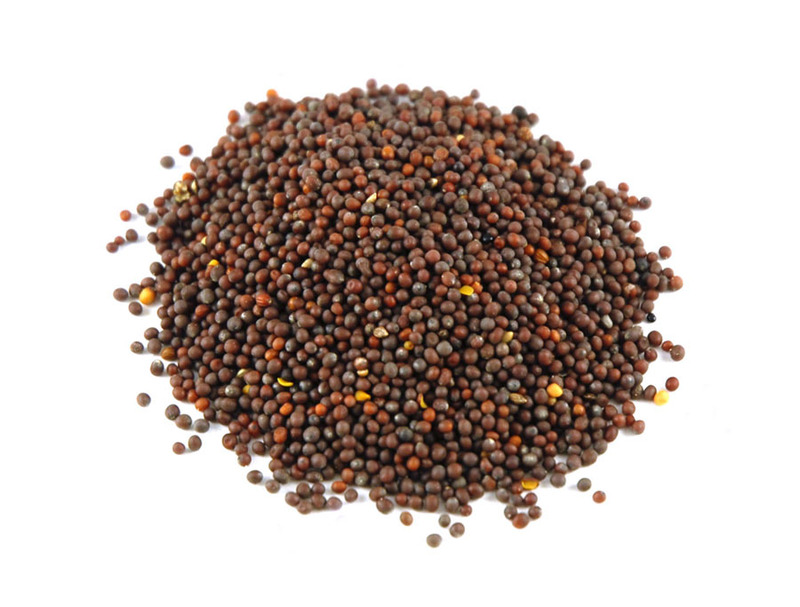
    Mustard seeds are derived from the mustard plant (Brassica juncea) and are generally advised to be consumed in moderate amounts. They are small in size, stretching no more than two millimetres in diameter, and are usually reddish-black in colour. Mentioned in many ancient religious texts, mustard holds an important historicity in Hinduism, Judaism, Christianity, and Buddhism. Generally called by their Urdu term sarson in most parts of northern India, mustard has its etymological origins in the Old French mostarde and the Latin mustum which means “new wine”. The leaves are consumed as vegetable, the skinned seeds are used for making pickles, and its oil is used as a cooking medium. The pungent taste and tear-producing properties of mustard seeds are due to nitrogen and sulphur containing compounds called isothiocyanates. Mustard seeds are used in treating rheumatism, arthritis, acidity, kidney and bladder ailments, bronchial inflammation, and are also recommended particularly for pregnant women. Nursing mothers are advised to take mustards due to its detoxifying properties. Mustard greens are rich in Vitamins A, B, and C, and contain fibre in bulk, which produces a mildly laxative effect.


    10. Coconut

    September52011022

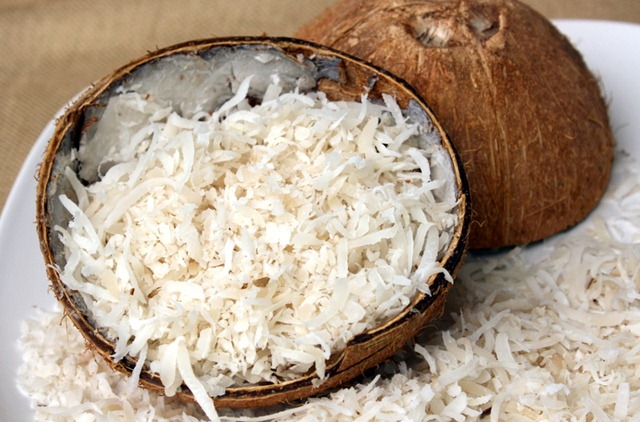
    Dried coconut is obtained from the coconut palm tree (Cocos nucifera) and is ideally found in coastal and tropical areas where the hot temperature and slightly arid soil contribute to its growth. The coconut has even been mentioned in old fiction, such as in “The One Thousand and One Nights” story by Sindbad the Sailor. Derived from the Spanish word coco which literally means “grinning face” and refers to the three-holed humanoid appearance of the fruit, coconuts have important uses all over the world. Primarily used in the southern states of India for its oil, coconut is a vital part of the local cuisine, and an inseparable ingredient of many delicacies. It is also used in the north as a part of many sweetmeats, with coconut milk a favourite summer beverage throughout the country, and fermented coconut being used to make toddy, an alcoholic beverage native to South Asia. Rich in Vitamins A, B, and C, this tropical wonder food is also a rich source of potassium, sodium, calcium, magnesium, iron, phosphorus, and sulphur. While the carbohydrate and protein content is moderate, the fat content is quite high, with a hundred grams of oil yielding nearly seven hundred calories.

  • A Brief History of Bottled Water

    A Brief History of Bottled Water

    Bottled water is water in the best combination of potability and portability. When drinking water, taken from any source, be it wells, springs, distillery, or mineral geysers, is packaged in glass and plastic bottles, it is called bottled water. They may or may not be carbonated. Nowadays, you can find water bottles available in various shapes and sizes, ranging from gulp-sized miniature water bottles to enormous carboys for giant water coolers. Bottled or table water can come from underground springs and wells, or taps. It is purified before it is bottled. Natural mineral water and spring water are types of underground water that contain naturally-occurring minerals. Sparkling water has carbon dioxide to make it fizzy. If this occurs naturally, it is often removed and replaced to ensure that it is always at the same level.

    The first bottles were made in sizes that were easy to carry. The 750 ml bottle became the standard size for most types of wine in the 19th century. In the United States of America, this has been the legal size since 1979, even though metric measurements are not widely used there. Some wine and champagne bottle sizes have Biblical names such as Methuselah, Balthazar, Nebuchadnezzar, and many others. The name Jeroboam was used for the four-bottle size as early as 1725 in Bordeaux, and others were soon named in the same way.

    In the 19th century, contaminated water from taps and pumps spread the killer disease cholera. Bottled water became popular as a safe alternative. In 1741, the English scientist Dr. William Brownrigg created the first artificial mineral water. He added health-giving minerals and carbon dioxide for fizziness. Dr. Brownrigg, incidentally, was also the first scientist to extract the element platinum. In 1792, Joseph Schweppe moved from Vienna to London and began to produce his own brand of artificial mineral water. His company grew to become one of the world’s most famous manufacturers of soft drinks. French doctor Louis Perrier gave his name to Perrier Water, which beamed the best known bottled mineral water in the world. In the 1960 James Bond novel For Your Eyes Only, the titular character insists on drinking only this type of water.

    Now the world drinks over a hundred and fifty billion litres of bottled water every year, which is equivalent to the quantity of water needed to fill sixty thousand Olympic sized swimming pools. In the United Kingdom, people drink more than two billion litres in totality, meaning an approximate of thirty-five litres per person. However, Italians drink more bottled water than any other nation, a hundred and eighty-five litres per person every year. Many people choose bottled water over tap water because it lacks substances such as chlorine, which affect the flavour of tap water, and also because bottles are portable. Bottled water is also produced to strict safety standards, so in some places it may be safer. Bottled water removes billions of litres of water from the underground, while making and transporting the bottles uses huge amounts of energy. Over 2.5 million tonnes of plastic go into the bottles every year and this has to be disposed of. Bottled water may also lack fluoride and other useful minerals found in tap water, so it may also be less healthy than the water in our homes.

    Bottled water is obtained from Artesian wells, the ground water table, bore wells, hot springs, mineral springs and other natural as well as man-made sources of water. This water is taken to huge industrial plants where it can be purified by one or a mix of numerous scientific methods, some of which include ozone purification, distillation, fluorination, sedimentation, multiple membrane disinfection, ultraviolet irradiation, and many others. It is then packaged in standardized quantities in sterilized and appropriately shaped plastic or glass bottles, as per the strict guidelines of the national food and health ministries. While one can find your average Bisleri water bottle in any grocery store, there is also a large plethora of other variants of bottled water, such as the ones available in fruit and sweetened flavours. Regardless of whether it is flavoured or not, bottled water can also contain artificially added minerals, fluorine, carbon dioxide, and other permitted preservatives and artificial flavouring. However, soft drinks such as Pepsi and Coca-Cola are different from the conventional bottled water in the fact that the amount of added substances does not exceed one percent of the amount of the total product, which is water, in the latter, whereas it forms a much bigger part in the former.

    Often stored as an integral part of emergency kits in the possible occurrence of a natural disaster, bottled water is often considered to be a foolproof, good tasting, and microbe-free source of drinking water, with a universally approved stringent set of rules and regulations followed all over the world by all countries. While one can consume bottled water without any significant health risks, it is also just as safe to use it for other purposes such as hand washing, personal hygiene, washing utensils, cleaning clothes, and other cleaning purposes. Bottles produced on a mass scale do not generally have any explicit expiry date on their labels, but rather an optimum amount of time the water should be used in without fear of contamination. Being highly stable, and packaged in the safest of ways, bottled water is without a doubt, a very safe thing to use, and therefore, have an indefinite shelf-life as long as they are not tampered with in any way by damaging, opening, and consequent possible infection.

    In India, bottled water is manufactured by large private companies such as Bisleri, Aquafina, Kinley, Himalaya, and Catch, as well as government bodies such as the Indian Railways Catering and Tourism Corporation. In this age of rampant water pollution, bottled water is not only the first choice of tourists, both foreign and domestic, but is also widely used in households as well. Priced at very nominal rates, and with the bottles being easy to recycle, bottled water seems to be just about the safest and easily obtainable source of drinking water these days.

  • 10 Elixirs to Keep you Warm this Winter

    10 Elixirs to Keep you Warm this Winter

    Drinking Hot Chocolate on a cold winter night by my electric fire place would be one of my fondest childhood memories. The waft of the same would be enough to warm the cockles of my heart. Waking up to the smell of coffee with a hint of caramel would be reason enough to wake up for school and the after school Masala Chai full of spices like clove, nutmeg and ginger.

    These hot sweet beverages would be source of warmth and fire that kept the clod and cough at bay. Now the addition of something special makes it even better. A shot of rum, a dash of whiskey instantly brings the blush in my cheeks. Many experts argue against the warming properties of alcohol, but in certain countries located in higher altitudes it is an age old custom to welcome guests with a potent shot of whiskey.

    Spices like Ginger, Clove, Cinnamon, Peppercorn and Cardamom help in increasing blood circulation in the body hence resulting in the body heat being distributed properly and more efficiently. The mere addition of any of the spices can transform your every day drink into something quite special.

    I am sure all this talk of mystical magical wonderland-ish drinks has made your quite thirsty, so without further delay i present to you some exotic and interesting drinks for adults which can be made at home, for when you are entertaining or otherwise.

    Alhambra

    alhambra

    This is so simple to make and so delicious. It’s really for grown-ups who never really grew up!

    Ingredients: 5 measures hot cocoa or drinking chocolate; 1 measure Cognac

    Method: Pour the hot cocoa or drinking chocolate into a warmed glass and add the Cognac.

    Brown Betty

    brown betty

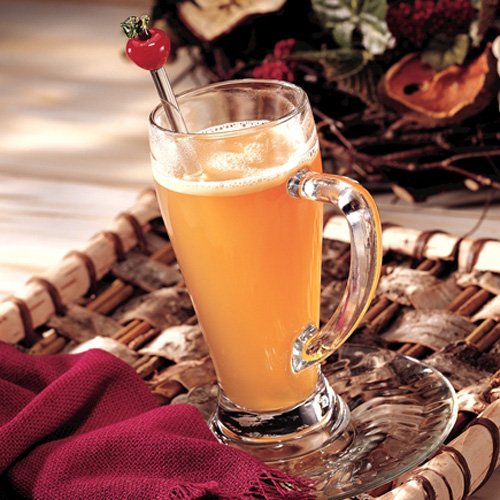
    This is a terrific, hot, beer-based punch. The quantities given will serve around 8 people.

    Ingredients: 1.3 Liters or amber ale; 12 measures brandy; 2 and 1/4th cups water; 1/2 cup brown sugar; 1 lemon sliced; 4 whole cloves; 1 cinnamon stick; 1/2 teaspoon grated nutmeg; 1/2 teaspoon ground ginger.

    Method: In a large saucepan, over a medium heat, add the sugar, lemon slices, cloves, cinnamon, nutmeg,ginger and water. Stir continuously to dissolve the sugar and let the mixture come to the boil. Turn the heat down and let the mixture simmer for around 10 minutes. Add the brandy and the ale, the heat, but do not boil. Serve hot in beer mugs, each garnished with a slice if lemon.

    Bumpo

    bumpo

    This is a quick fix after a long tiring day at work.

    Ingredients: 2 measures hot water; 2 measures rum; 1 measure lime juice; 1 teaspoon sugar; ground nutmeg.

    Method: Dissolve the sugar in the glass with the lime juice and hot water. Add the rum and dust slightly with the ground nutmeg.

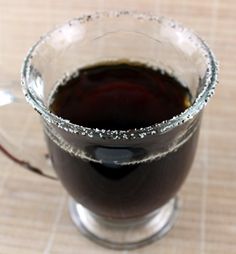
    Cafe d’Amour

    cafe damour

    This is a coffee made without cream- the perfect way to end an intimate dîner pour deux. It is after all, the ‘coffee of love’. Be careful when you heat and ignite the Cognac- the only thing that should be inflamed are your passions, not the kitchen.

    Ingredients: 5 measures hot black coffee; 1 and 1/4th measures cognac; zest of 1/2 lemon; 1 stick of cinnamon; sugar (to rim the cup and to sweeten, if desired)

    Method: Rim the cup with lemon and dip into some sugar. Add the coffee, lemon zest and the cinnamon stick to the saucepan and simmer. Carefully pour the Cognac into a large soup laddle and ignite it. Pour the the flamimg Cognac into the coffee and then extinguish the flame by putting the lid on the saucepan. Remove the lid and strain the mixture into sugar-rimmed cup.

    Colonial Boy

    colonial boy

    This is a wonderful, tea-based hot drink that’s perfect after a long, winter walk.

    Ingredients: 5 measures hot black tea(sweetened to taste); 1/2 measure Irish Whiskey; 1 dash bitters.

    Method: Pour the hot tea into the glass and add the Whiskey and the Bitters.

    English Bishop

    eng bishop

    This is a port-wine drink, made with baked oranges and served hot. This would serve 6 people.

    Ingredients: 1 large orange; 12 cloves; 700 ml inexpensive Port; 1 tablespoon honey; 1 teaspoon allspice; 2 dashes Cognac (optional).

    Method: Stick the cloves into the whole orange and bake it in the oven on a low heat for 30 minutes. Cut the baked orange into quarters and put it in the saucepan. Pour in the Port and add the allspice, honey and Cognac if desired. Over a very low flame, simmer gently for 15-20 minutes- do not boil or the flavor of the Port will be spoiled. Serve in warmed cups.

    Grog

    Grog

    This spiced-rum mix was named after Admiral Sir Edward Vernon, who was nicknamed ‘Old Grog’ because his cloak was made of the coarse material grosgrain. Returning from the Caribbean in 1740, in order to save on costs (or perhaps stretch the rum ration), Old Grog diluted the Crew’s Rum with water, a mixture that was immediately named ‘Grog’. They soon discovered that it tasted better hot.

    Ingredients: 2 measures dark rum; 2 measures water; 2/3 measure lime juice; 1 teaspoon brown sugar (or honey); 2 cloves; 1 cinnamon stick.

    Method: Add all of the ingredients to a small saucepan and heat gently to dissolve the sugar. When hot, strain into a heat-proof cup.

    Hot Buttered Rum

    10213_hot_buttered_rum

    This drink was first published in Life magazine on September 21, 1942. It is especially popular in the fall and winter and is traditionally associated with the holiday season.In the United States the drink can be traced back to the Colonial Days.

    Ingredients: 2 measures Dark Rum; 2 measures water; 1 teaspoon brown sugar (or honey); 1 pinch ground nutmeg; 4 drops vanilla essence; 1 small cinnamon stick; 1 small knob of butter.

    Method: Place the cinnamon stick, nutmeg and vanilla essence in the heat-proof cup. Heat the rum, water and sugar in the saucepan until almost boiling. Remove from the heat and pour into the cup over the spices. Put the knob of butter on top and watch it melt into the mixture.

    Hot Scotch Toddy

    hot toddy

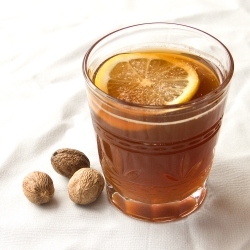
    This drink has various recipes and is traditionally drunk before going to bed, or in wet or cold weather. Some believe the drink relieves the symptoms of the cold and flu — in How to Drink, Victoria Moore describes the drink as “the vitamin C for health, the honey to soothe, the alcohol to numb.”

    Ingredients: 2 measures Scotch; 3 measures boiling water; 1/2 measures lemon juice; 1 teaspoon brown sygar (or honey); 3 drops bitters; 1 slice lemon, studded with cloves; ground nutmeg.

    Method: Put the sugar, bitters, lemon juice and clove-studded lemon slice in the glass. Add the Scotch and pour in the boiling water. Stir to dissolve the sugar and sprinkle with ground nutmeg.

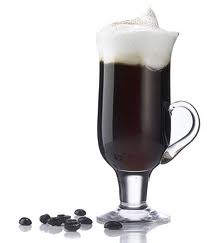
    Royale Coffee

    coffee royale

    The most famous hot coffee and liqueur drink topped with whipped cream is Irish Coffee. This uses Irish Whiskey, but there are numerous variations. Try the royale, with Cognac.

    Ingredients: 1 measure Cognac; 5 measures hot black coffee (sweetened to taste); 1 and 1/2 measures whipped cream; grated chocolate.

    Method: To the warmed glass, add the hot coffee and the cognac. Gently float the whipped cream on top and sprinkle with grated chocolate.

    I hope you enjoy making these and may they warm your dreary winter evenings. Salute!