Category: More

  • Food Myths- The Secret Revealed

    Food Myths- The Secret Revealed

    Myths surrounding foodstuffs are like UFOs, one can always hear about them but nobody really knows whether there is any truth to them! There is no shortage of food myths floating around on the web. It wouldn’t be wrong to say that behind most food and nutrition myths, there is a kernel of truth. But what is the reality behind these myths? Are they authentic enough for us to believe and follow? Let’s find out the truth behind some of the world famous food myths that have been around for ages.

    1

    MYTH 1: Drinking water in between meals is not good

    While drinking water has been considered essential, having the life giving elixir while during meals is often said to do more harm than good. This is one myth that has been passed down from generations. The truth, however, is that though drinking water fills you up, it does no damage to your digestive process. Infact, it might even do your system a world of good. So, keep that glass of water nearby and see that you are drinking enough through the day.

    2

    MYTH 2: Carbohydrates make you fat.

    Contrary to popular belief, there’s nothing inherently fattening about carbohydrates, says Jean Harvey-Berino, from the Department of Nutrition and Food Sciences from the University of Vermont and co-author of The Eating Well Diet (Countryman, 2007). The real reason behind people getting obese is the large volume of calories that they consume on a daily basis and second is lack of exercises.
    3 (2)

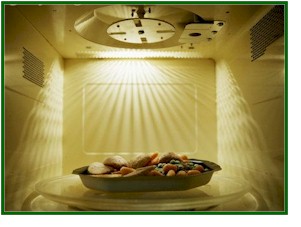
    MYTH 3: Radiation from microwaves makes food unsafe for consumption

    The term “Radiation” may bring images of nuclear plants in one’ mind, but in reality, these refer to simple energy waves. The microwaves used to cook foods are weak in nature according to Robert Brackett, who is the director of the National Centre for Food Safety and Technology at the Illinois Institute of Technology. The changes brought about in the food are from the heat generated in the food, not by the microwaves used to heat the foodstuff. However, a check has to kept on the kind of container used for cooking while exposing the food to microwaves.

    4

    MYTH 4: The desire to consume particular food items is a sign of nutrient deficiency of nutrients provided by that food

    Nope, in reality food cravings happen more or less to satisfy one’s emotional needs. Cravings are the mind’s way of distracting one from an otherwise restricted or boring diet.

    5

    MYTH 5: Mini meals help you control your weight better than having large meals

    The body metabolism boosts up slightly every time we munch on something to eat. This is a bodily reaction to what we’ve consumed. By having many small meals instead of fewer, larger ones, it’s true that we shift our metabolism upstream and burn a few more calories. But the calorie difference is minimal and does not add up to a large value. Having said that, munching on snacks in between meals, may help some by keeping them from getting hungry often and consuming too many calories.
    6

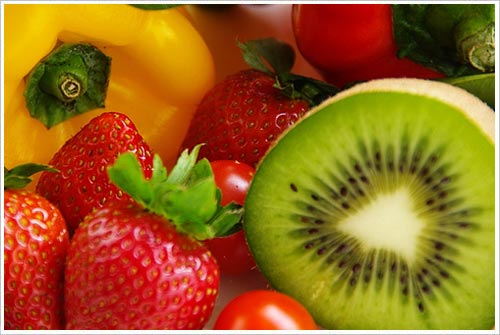
    MYTH 6: Fruit skins are waste

    This is by far one of the most ludicrous myth! While fruit peels may not seem appetizing to many, it is in fact known to have a higher concentration of antioxidants than the flesh! However, a word of caution here. To make most fruits appear attractive, they are waxed and polished to give them a rich shiny exterior, thereby making them attractive. To avoid consuming the wax, wash and rinse the fruits well in warm water.

    7

    MYTH 7: Eating after 7 pm will make you fat

    No it wouldn’t. It is true what health expert’s claim – that it’s healthy to have an early dinner. In other words, it is a part of a healthy lifestyle to have an early dinner. This helps and gives the body time to digest food before you sleep. Experts claim that  it’s not when you eat that makes you fat; it is infact what you eat and the amount of calories you consume that makes you fat. Late night snacking might only affect the amount of sleep .
    8

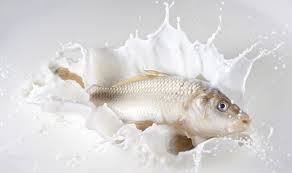
    MYTH 8: Having milk immediately after eating fish is bad

    According to some people, having milk with a meal comprising of fish as a major ingredient will make you sick and may also cause white spots or discolouration in the skin . however we find  no scientific reason, however, backing the above myth. You can very well have fish and milk together without having any kind of adverse effects on health or your skin. To add, as a note of relief, and also a well known fact, there are many mouth watering and healthy recipes around the globe which combine the goodness and taste of  fish and milk. So, go ahead, have your favourite two ingredients in a go without worrying about the myth.

    9

    MYTH 9: Chocolate causes acne

    Whoever passed on this statement is definitely not a chocolate lover!! The myth found its origins in the late 90’s and it became so popular and common that most teenagers and their parents believed it!  No conclusive scientific evidence backing this claim has been found though till now. Acne is caused due to irregular oil gland secretions and clogged pores aggravated by oily foods. Different foods may cause acne in different people and for some people that food just had to be chocolate. This does not mean the poor chocolate be blamed entirely for it!! Have your favourite bar; it is known to have more health benefits than you can think of. As for the zits, avoid oily foods, have enough water and cleanse your skin often to get rid of them.
    10

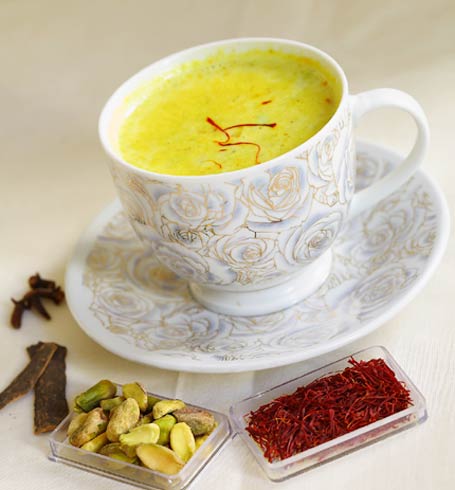
    MYTH 10: Having saffron during pregnancy makes your baby fair

    Sure!! Saffron or kesar is considered beneficial for pregnant women (when taken in small quantities) owing to its properties. But following a belief that having saffron with milk when you are pregnant, will make your baby fair, is nothing but outrageous. First of all, colour of the skin must never be a matter of such concern. The important matter is that the baby must be healthy. The complexion of a person is in no ways related to how much saffron you consume. True, both milk and saffron are good for health, but it’s not going to make the baby fair as scientifically, the colour of the skin depends entirely on the gene pool of the child and this, is a proven fact!!

    Georgie Rajan
  • Probiotics : Teaming Up With Good Microbes

    Probiotics : Teaming Up With Good Microbes

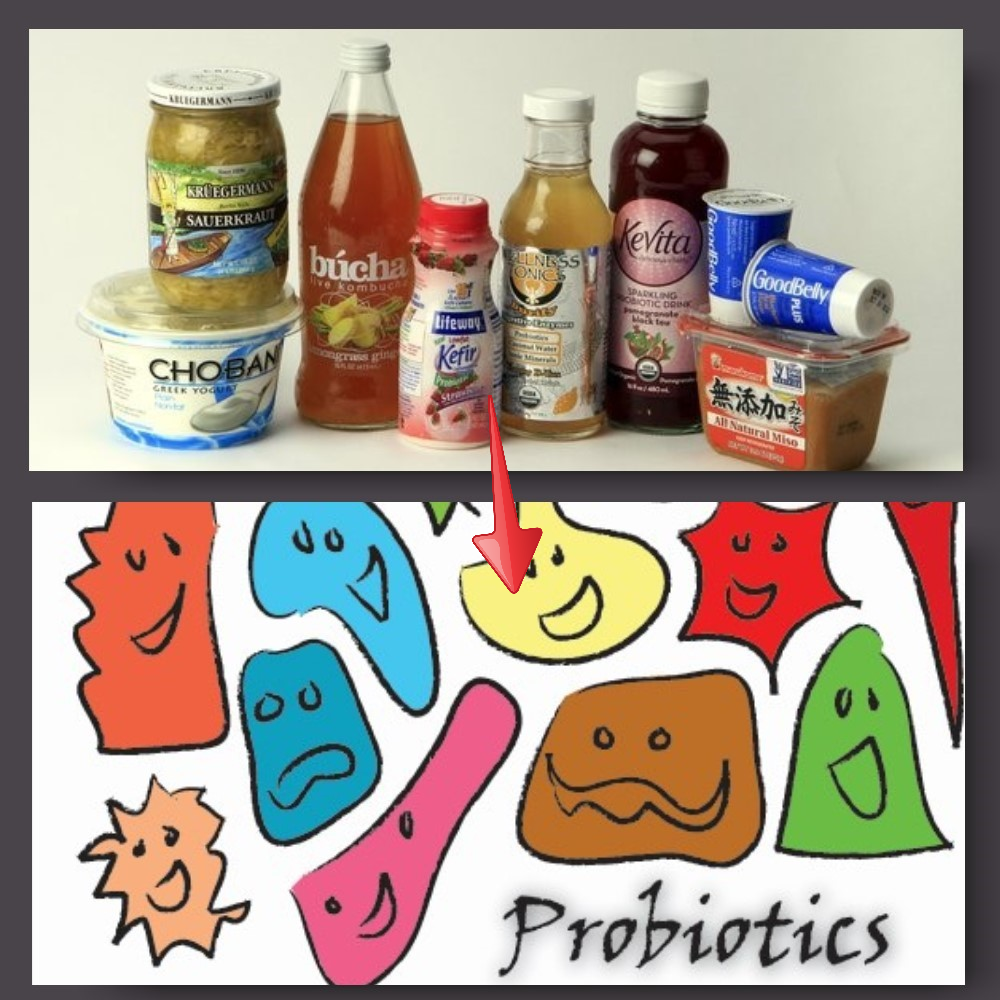
    When Homo sapiens came into existence, the food they had, only came from plants. Gradually, people started eating animals. And today, we eat almost everything that is not harmful to us. That includes even the teeny- tiny micro-organisms, that are not even visible to us unless and until we have a good 40X microscope. When we think of these microbes, the first picture that comes to our mind is that of diseases; as they are the prime disease-causing agents in the environment. And if you’re told that having a microbe-rich food is quite beneficial for our digestive system and immunity, you’ll probably think of me as a crazy person. But, this is now scientifically proven. Everybody is not bad, even at the microscopic level. There are some good micro-organisms which, when consumed by us in adequate quantity, are very good for our health. And this is where I introduce a commonly-heard-yet-rarely-understood term- “PROBIOTICS“.  Probiotics are foods which have live micro-organisms, mostly bacteria and yeasts, which are very good for our health, specially for lactose-intolerant people and those who are on antibiotic dosage. Our gut harbors millions  of good micro-organisms and probiotics replenish them, when their balance gets disturbed. They also boost our immunity as our body teams up with these good microbes.

    2probiotics

    Fermented foods are a rich source of probiotics, as they are made by the growth of healthy micro-organisms in optimum conditions, like warm and moist environment. Fermented foods should be included in our diet as they are the most natural and healthiest way for consumption of probiotics.

    So, on the whole, for people who don’t know which probiotic foods to take, here’s a small list of some of the common ones:


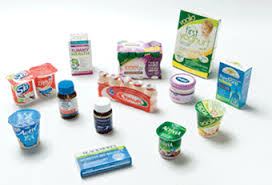
    fermented milk products

    Fermented milk and milk products:

    Fermented milk and its products are loaded with lactic acid bacteria, which are also found in yogurt. Live-cultured yogurt is one of the best known probiotic foods available. And because it comes from milk, we get a dose of animal protein ( about 9 grams per 6- ounce serving), and several other nutrients found in dairy foods, like calcium, vitamin B2 , vitamin B12 , potassium and magnesium. Other famous fermented milk product brands in India are Yakult and Dannon.

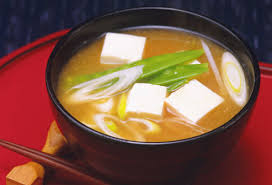
    miso soup

    Miso Soup:

    Popular in Japanese restaurants,  miso  is a tofu and vegetable broth soup, that is made by adding a tablespoon of miso to some hot water, which is low in calories and high on probiotics. It is a healthy and delicious break from the normal canned soup.


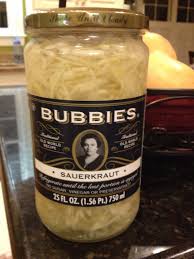
    sauerkraut

    Sauerkraut:

    It is a probiotic dish made from fermented cabbage or other vegetables. It is extremely rich in healthy live cultures and also reduces allergy symptoms. It is also rich in vitamins B, A, E, C. It is generally eaten as a side dish or with a hot dog.


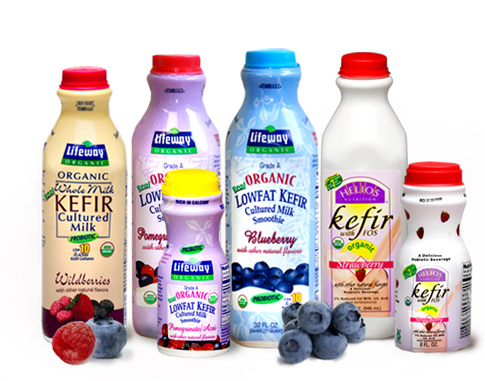
    kefir

    Kefir:

    It is a fermented dairy product and similar to yogurt. It is a combination of goat’s milk and fermented kefir grains. It is also rich in anti-oxidants. It is taken as a flavored or plain over healthy granola fruit, or as a smoothie-like drink.


    kombucha tea

    Kombucha Tea:

    It a type of fermented dark tea, that has lots of healthy gut bacteria. It increases your energy, enhances your well-being and also helps to lose weight. It can be tried hot or iced .
     

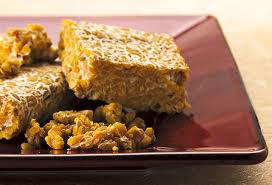
    tempeh

    Tempeh:

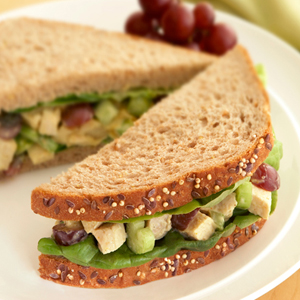
    Tempeh is a fermented, probiotic rich food made from soy beans, and is a great substitute for meat or tofu. It is a great source of vitamin B12. It can be sautéed, baked, or eaten crumbled on salads.
     

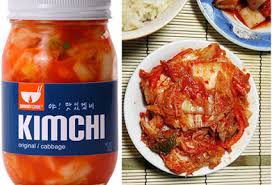
    kimchi 1

    Kimchi:

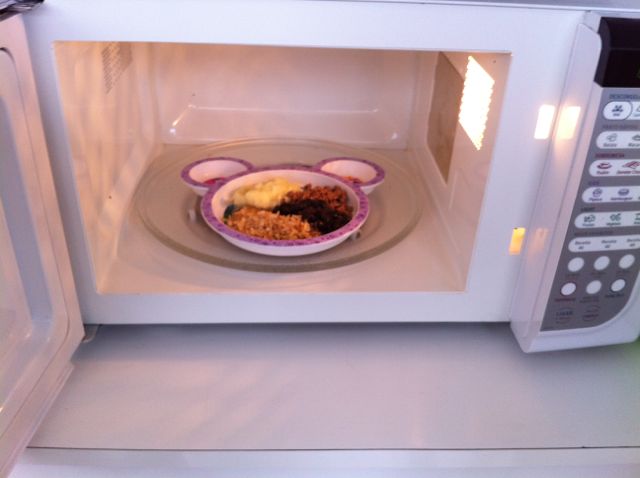
    It is an Asian form of pickled sauerkraut, and is an extremely spicy and sour fermented cabbage, typically served as side dishes in Korea. It is a great source of beta-carotene, calcium, iron, and vitamins A, C, B1 and B2, besides beneficial bacteria.

    Some really popular natural probiotics found in Indian cuisine are :


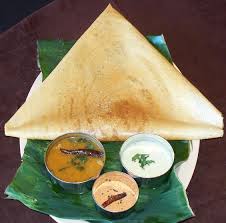
    dosa

    Dosa:

    Dosa is a very famous South Indian dish which requires a perfect combination of rice and black lentils, in the form of a fermented batter. They have a crispy, savory crepe like texture and the sour kick comes from the lactic acid bacteria formed during the fermentation process. They are very easy on your tummy, even when you are feeling under the weather.


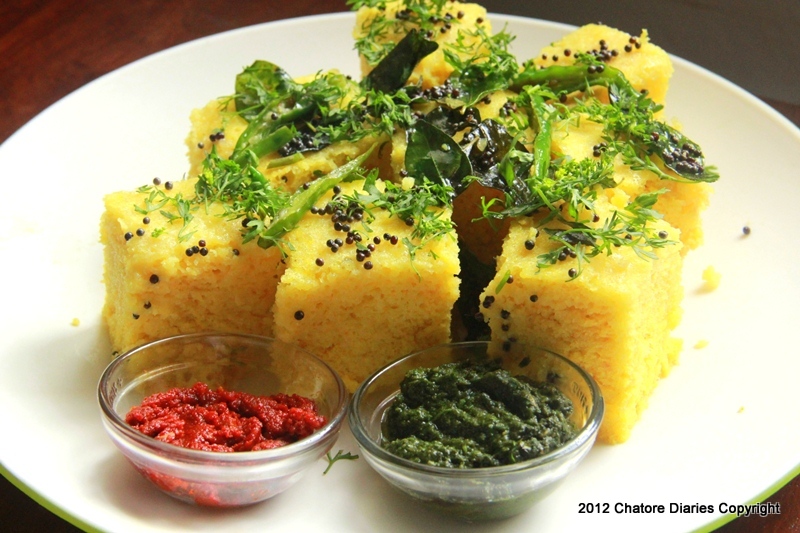
    dhokla

    Dhokla:

    Dhokla is an essential part of the cuisine of Gujarat, India. It is made by mixing lentil flour with buttermilk or yogurt followed by their fermentation overnight. These are then steamed and served chilled. Dhoklas  are very famous and healthy snack in India, specially Gujarat.


    idli

    Idli:

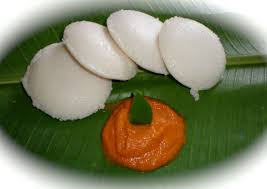
    Idli is a South Indian dish and a popular Indian snack, made by steaming the fermented batter of rice and black lentils. They are served with sambhar or as a part of salad, called idli salad.

    probiotics-are-the-good-guys-big

    If you don’t have access to these foods, then the best natural and easily available probiotic is homemade curd or buttermilk, which is a boon for our digestive system. It should be consumed at least once a day. Remember, we have a large biome of microbes in the gut flora and its very important to maintain a respectful relationship with them.

  • Food For Thought : Boosters and Busters

    Food For Thought : Boosters and Busters

    Ever thought about how food can affect how you feel and behave? Think about thanksgiving, that hearty meal that leaves you as sleepy as a dose of valium. Or think about a cup of mocha latte, there’s nothing like a foamy cup containing 2 caffeine saturated drinks, is there? And when you are feeling low, because of frustrating reasons like you run out of cash or you have exams, you don’t reach out for a bowl of spinach, do u ? You just grab a chocolate, because that is what makes you feel good.

    Certain foods have mind-altering effects on you, which is why we crave for different foods in different situations or moods of our life. Some foods make us feel content, calm, happy or boosts our spirits, whereas some foods make us aggressive, sad or lazy.

    It is still difficult to classify foods which influence your moods. So here is a simple list of foods that may boost or bust your mood, without filling you out.


    havin a bad day

    Edible pick-ups for boosting your mood:

    berries

    Berries:

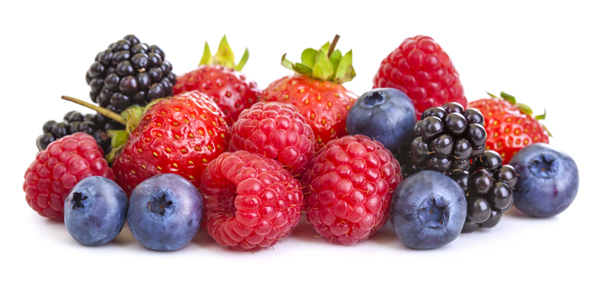
    Berries like blueberries, purple- berries, are loaded with vitamin -C, which acts as a great stressbuster. These berries also have anthocyanins, which are a type of antioxidants which uplift your mood and memory functions.


    cheese

    Cottage cheese:

    Cottage cheese has tryptophan, which is a sleep inducing amino acid, that relaxes entire body and mind and helps to remove restlessness. You can also find tryptophan in soymilk, tofu and lentils.


    chocolate

    Chocolate:

    When you put a piece of chocolate in your mouth, it melts on your tongue and you can literally feel stress leave you and bliss greet you. Chocolate is a joy stimulant. Cocoa boosts brain serotonin levels, which acts as an anti-depressant. Chocolates also have a neurotransmitter that temporarily blocks feelings of pain and depression. This is why chocolate has been referred to as the new anti anxiety drug. Also, eating dark chocolate reduces stress hormones specially cortisol. When you do indulge in chocolate for busting your stress, make sure you have 1.4 ounces of it.

    proteins

    Protein:

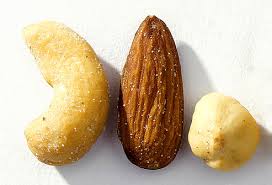
    A high quality source of protein- like organic eggs, a piece of Gouda cheese or almonds- can keep your blood sugar levels at bay along with enhanced energy and mood.


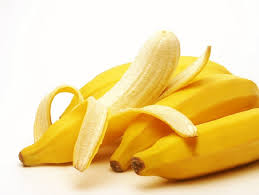
    banana

    Banana:

    Banana has vitamin B, specially B6 and magnesium which soothes the nervous system. It also has dopamine, which is a great mood booster, and induces feelings of happiness in the mind.


    happy coffee

    Coffee:

    Coffee affects our general sense of well-being and improves brain health due to release of a chemical substance called BNDF, which also helps in synthesis of neurons( brain cells).


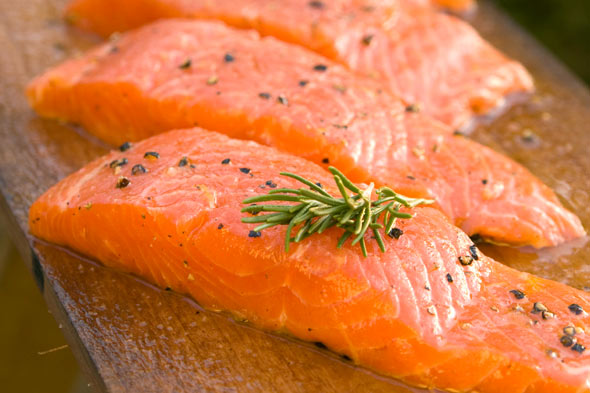
    salmon

    Fish:

    Eating fishes like salmon, tuna, sardines, rainbow trout will provide you omega-3-fatty acids, which are very good for our health, and specially, heart. Omega 3 fatty acids alter brain chemicals, which are linked with mood, like serotonin and dopamine,  which decrease depression, aggression and give a feeling of happiness.


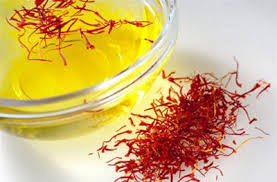
    saffron

    Saffron:

    Saffron is a spice derived from the flower of saffron crocus. It has long been used in the treatment of PMS symptoms, like mood swings and depression. Now saffron has proved to be a potential anti-depressant , by helping to make the feel-good neurotransmitter serotonin available to the brain.


    coconut

    Coconut:

    When you are stressed, the smell of coconut may blunt your adrenaline response, by slowing your heart rate. The scent of coconut lowers our blood pressure and enhances alertness and soothes our response to stress.

    Just as foods can uplift your mood, they can also bring it down. Eating a lot of spicy foods can make you mad at little things as they heat up your body. Here’s a list of foods that trigger a negative mood.

    Mood busting foods to avoid-


    sugar

    Sugar:

    Abnormal sugar intake can lead to fluctuations in blood sugar levels, which can cause mood swings. Sugar causes insulin and leptin resistance and impaired signalling. Sugar also suppresses activity of BNDF, which deteriorates brains health by stopping synthesis of neurons. Also, sugar triggers a chain of chemical reactions which promote chronic inflammation.


    gluten

    Gluten:

    Gluten is a protein found in grains like wheat, rye etc. and it negatively impacts mood and brain health. It can promote depression and have detrimental effect on our brain.


    Processed_Food_

    Processed foods:

    Apart from sugar and gluten, food may also have trans fats, artificial colors, monosodium glutamate (MSG), artificial sweeteners, and synthetic ingredients, which cause irritability and poor mood.The list of potentially mood busting ingredients is a long one.


    So basically, the science of food’s effect on mood is based on the changes it can bring to our brain structure(chemically and physiologically), which can lead to altered behavior. To sum up, foods can have immense impact on your brain and body, and having balanced meals with all kinds of nutrients is the best way to support your mental and physical health. But if you are in a bad mood, you should look into your kitchen or fridge for countering it, instead of your medicine box.


  • Curry in a Hurry – in less than 30 minutes!

    Curry in a Hurry – in less than 30 minutes!

    Curry is a dish containing complex combinations of herbs and spices, usually including fresh or dried hot chillies. Curry dishes may contain fish, poultry or meat, either alone or mixed with vegetables. They may also be purely vegetarian.

    Curries are great for using any leftover food one may have in the fridge from the night before. They are also quite versatile. Most are really easy to make and cost effective. One can keep it simple or spice it up to suit one’s taste.


    Cooking a curry need not take long stressful hours in the kitchen. It can be prepared pretty quick and in an easy manner. Not only are these preparations delicious but they are packed with a good deal of nutrients.

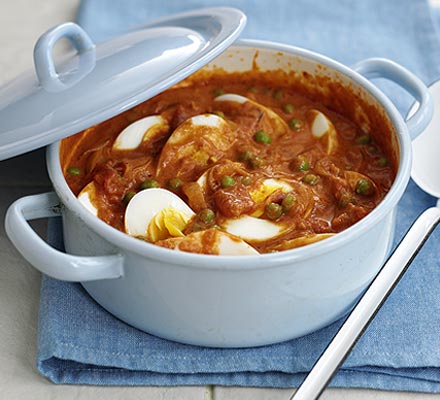
    My favourite Curry-in-a-Hurry is the Creamy Egg Curry. It is light, healthy, yummy and leaves me wishing I had cooked a bit more.

    A few other ‘Yummy – Tummy – Curry’ are:


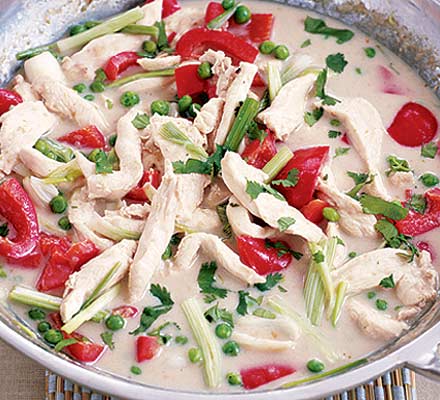
    Speedy Green Chicken Curry

    chicken curry

    Time: 15 minutes

    Serves: 4

    Ingredients: 1 tsp vegetable oil, 1 red onion (cut into half-moon slices), 4 tbsp Thai Green curry paste, 2 x 400g cans light coconut milk, 2 tbsp fish sauce, zest and juice 2 limes, 1 tbsp brined green peppercorn (drained and rinsed), 200g green beans (trimmed and halved), 4 skinless chicken breasts (cut into long strips), handful basil leaves, cooked basmati rice (to serve)

    Method: Heat the oil in a medium pan, add the onion and fry for 2 minutes. Tip in the paste and cook for 1 min more. Pour in the coconut milk, fish sauce, lime zest and juice, and peppercorns. Bring to a simmer, then add the beans and chicken. Cook for 5 minutes or until the chicken is cooked through.Just before serving, add the basil leaves. Serve with basmati rice.


    Creamy Egg Curry

    egg curry

    Time: 25 minutes

    Serves: 4

    Ingredients: 2 tbsp sunflower oil, 2 onions (thinly sliced), 2 heaped tbsp curry paste, 400g can chopped tomatoes, 8 eggs, 140g frozen peas, 4 tbsp Greek yogurt, rice (to serve), mango chutney (to serve)

    Method: Heat the oil in a pan, then fry the onions over a low heat for 10 minutes until golden. Add the curry paste and sizzle for 2 minutes, stirring. Add the tomatoes and 200ml water, season to taste and then bring to the boil. Simmer for 10 minutes until you have a rich sauce.Meanwhile, boil the eggs for 8 minutes, cool in cold water, then peel and halve. 3 Stir the peas and yogurt into the curry and simmer for another 2-3 minutes. Put the eggs into the pan, spoon the curry sauce over and leave for another 2 minutes to heat through. Serve with rice and mango chutney.


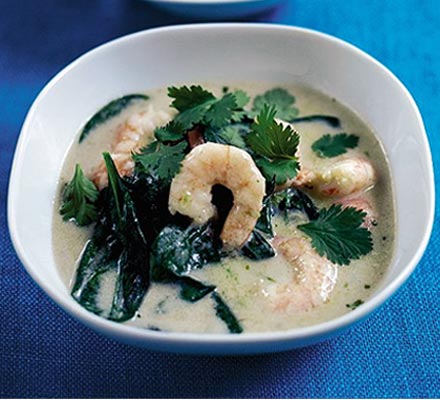
    15 – minute Prawn Curry

     Prawn curry

    Time: 15 minutes

    Serves: 4

    Ingredients: 390g can coconut milk, 2 tbsp Thai green curry paste, 2 tsp sugar, small bunch fresh coriander (leaves and stalks), 400g bag frozen tiger prawns (defrosted, cooked, peeled), 100g baby spinach leaves, juice 1 lime, 1 tbsp Thai fish sauce

    Method: Open the coconut milk; pour the thin milk into a jug, keeping back any thick coconut cream. Scoop the coconut cream into a blender. Add 2-3 tbsp of the coconut milk plus curry paste, sugar and coriander stalks and blend to a smooth paste. Heat a wok, tip in the paste, stir fry for 1-2 minutes, then pour in the remaining milk from the jug.Bring to a simmer, then add the prawns and spinach. Cook until the prawns are heated through and spinach has wilted. Add lime juice and fish sauce; then spoon into bowls. Scatter over coriander leaves and serve with plain rice or noodles


    Squash and Coconut Curry

    coconut curry

    Time: 25 minutes

    Serves: 2

    Ingredients: 2 tbsp Madras curry paste, 1 large sqush (chopped into medium size chunks), 1 red pepper (halved, deseeded and roughly chopped into chunks), 400g can reduced-fat coconut milk, small bunch coriander (roughly chopped)

    Method: Heat a large frying pan or wok, tip in the curry paste and fry for 1 min. Add the squash and red pepper, then toss well in the paste. Pour in the coconut milk with 200ml water and bring to a simmer. Cook for 15-20 minutes or until the butternut squash is very tender and the sauce has thickened. Season to taste, then serve scattered with chopped coriander and naan bread or rice.


    No – fry Thai Curry

    thai curry

    Time: 20 minutes

    Serves: 2

    Ingredients: 2 rounded tbsp Thai green curry paste, 400ml can coconut milk, 2 skinless boneless chicken breast fillets (very thinly sliced), 1 red pepper (seeded and cut into chunks), 3 spring onions (halved lengthways and cut into long pieces), cupful of frozen peas, 2 tbsp chopped fresh coriander or basil (to serve), rice or noodles (to serve)

    Method: Make the sauce. Stir the curry paste over the heat in a medium pan for a few seconds, pour in the coconut milk and bring to the boil.Cook the rest. Add the chicken and vegetables, let it all start to bubble again, then turn down the heat and cook very gently for 5 minutes until the chicken is tender but the vegetables still have some texture. Stir in the coriander or basil and serve spooned over rice or noodles.


    Recipe and Image Courtesy – bbcgoodfood.com

  • Your Guide to Surviving Without Cooking

    Your Guide to Surviving Without Cooking

    There are days when you love to cook. You look up fancy recipes online, don an apron, and cook up a storm. Maybe you even invite a friend over. And then there are those days when you absolutely don’t want to. You hate the mess, you hate the fumes, and you really the effort required. What do you do then? Order a pizza? Eat out? Drive by a take-out? Any of those options could work once in a while. But college students and 20-something office-goers with rented apartments and no family living in will know that those lazy days come a tad bit too often. Besides, regular assignments and the pressure of timely submissions mean that there are those days, not all that infrequently, when you simply can’t afford time away from your laptop and in the kitchen. The sheer frequency then implies that Dominos deliveries and KFC takeouts might not only burn a hole in your pocket but also deal a heavy nutritional blow to your body!

    So are there cost-effective and healthy ways to survive those lazy days without cooking? Thankfully, there are. A little thought, a little creativity can take you a long way. Here are some tips and tricks to help you get started.


    • Go Paleo.

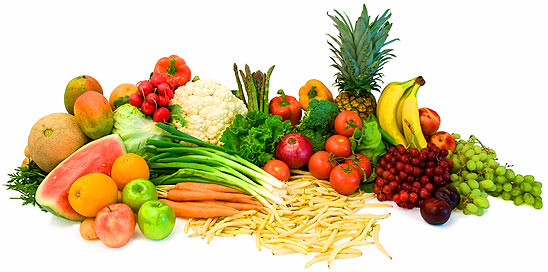
    Raw Paleo-style food

    Growing interest in Paleo diets has revealed just how far modern humans have divorced themselves from the healthy foods nature intended for us to eat. By eating more raw food and following a Paleo-style diet, you will not avoid cooking but also reconnect with some very healthy food choices. Eat foods that can be eaten pretty much in their natural states, without requiring any changes to be made by you – like fresh or dried fruits, nuts, seeds, and long-lasting veggies like carrots, cabbage, and peppers. You could spice up your veggies, too! Try Yogurt, hummus, salsa, and tomato sauce. Do note that if you want to puree or blend nuts, seeds, and fruits, then there is some preparation involved.

    • Eat like a backpacker.

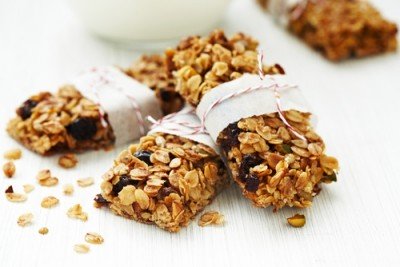
    Granola Bars

    Stock up on granola bars, whole-bran corn flakes, whole-wheat cookies, bread, peanut butter, and canned beans. However, take care not to over-supply your kitchen – just as a backpacker keeps moving to new destinations and can’t be weighed down by too much food. Always only have sufficient to eat should you get too busy – or too lazy, as the case may be – in the next few days. This will ensure that you do not begin to live your life off energy bars.

    • Be salad-savvy.

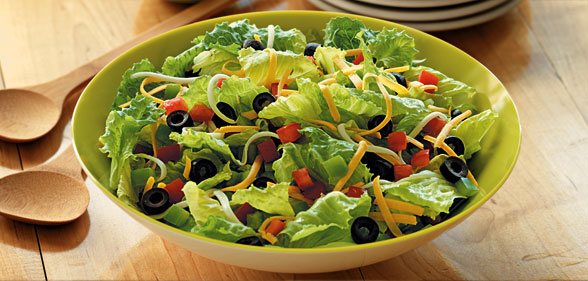
    Salad

    Salads are not only easily prepared but also pack great health benefits. They add more fibre to your diet, help keep your blood pressure and cholesterol levels in check, enhance insulin sensitivity, and improve your immune system. And you don’t have to stick to the typical garden salad either. Come up with ways to make your salad more interesting! For ideas, you can always look for easy, no-cook salad recipes online

    • Get creative with sandwiches

    Sandwich

    Sandwiches are easy to make, can taste great, and can be healthy too! Opt for whole-grain brown bread rather than the sliced white stuff that has had all the life processed out of it. Try as many fresh veggies as you can afford to. If you want meat between your bread, go for chunks of real, fresh chicken rather than processed meat like bologna and salami. If you are watching your weight, though, you’d do well to avoid too much cheese or fatty sauces. Instead, go for small amounts of hard cheese for a big flavour boost. For sauces, try mustard, mint, or tomato. Get creative with condiments – pepper and oregano will spice things up nicely. Try eating your sandwiches toasted, cold, open-faced, or heated in the microwave. Don’t be afraid to try sweet fillings such as sliced fruit – you might be pleasantly surprised.

    • Use microwaveable foods and meals.

    Microwaveable Meal

    Every once in a while, you could buy food or pre-made meals that you can put in the microwave to heat up and eat up later. But make it a point to include a good dose of fresh food such as an accompanying salad or some lightly steamed veggies. Be sure to read the labels – many microwaveable meals are high in saturated or trans-fats, sugar, salt, and artificial additives. For good quality microwave meals, try a local delicatessen, specialist bakery, or gourmet foods store that makes microwaveable meals and fresh salads for takeout on a daily basis.

    • Try the smarter on-the-go foods.

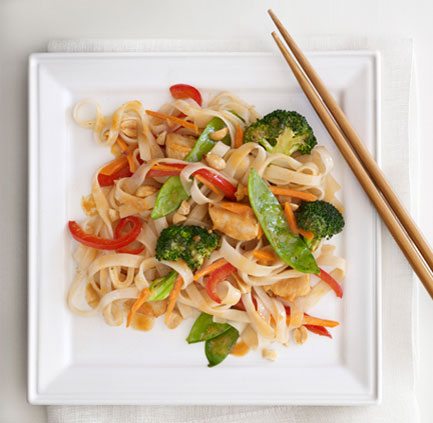
    Asian Stir-fry

    Don’t live off commercial food. They tend to be very high in trans-fat, salt, sugars and artificial flavorings, and colorings. You don’t need all those unhealthy, nutrition-deficient fillers in your body. However, there are ways to choose your take-out options smartly on those rare occasions that you absolutely have to. Skip the double-cheese pepperoni pizza and juicy hamburger. Instead, opt for cheese-free thin-crust veggie pizzas, Asian stir-fries, falafel plates, and salads.

    If all else fails, make friends with people who are enthusiastic about cooking and feeding others. But remember to be nice and reciprocate in other ways!

  • Burger Urges!!

    Burger Urges!!

    What is it about that meaty (or veggie) patty topped with mayo, ketchup, lettuce and sandwiched between the oh-so-tasty buns that makes our tongues water? Is it the ambrosias aroma of the spice mix or the spectacular way the Burger sits in front of us neatly packed in its various layers? Or the inexplicable sensation the moment we take our first bite – the burst of flavour that hits us, the heavenly infusion of the crackle and the mayo, the melting of the chicken in our mouth…? Which one is it?

    There is no one answer.

    There is no answer.

    One needs not a reason to love. One simply does.

    All of us love our KFC Zinger Burger or McDonald Maharaja Mac. So, why not try making our own Burger at home?

    Let’s start with a Burger for the vegetarian souls and then we will gradually move on to the meatier ones.

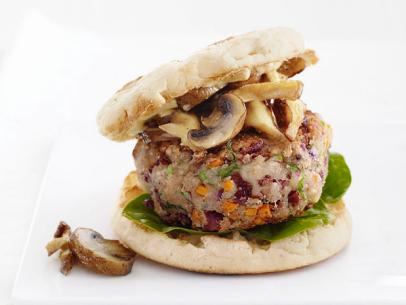
    Veggie Burger with Mushrooms

    Veggie-Burgers-with_s4x3.jpg.rend.sni12col.landscape

    Time: 25 minutes

    Serves: 4

    Ingredients: 1 15-ounce can kidney beans (drained and rinsed), 1 small red onion (shredded and squeezed dry), 1/3 cup chopped walnuts, 1 small carrot (finely diced), 1 cup plain or whole-wheat breadcrumbs, 2 scallions (white and green parts, finely chopped), 2 tbsp chopped fresh parsley, 2 tsp soy sauce, Kosher salt, freshly ground pepper, 3 tbsp extra-virgin olive oil, 3 cups assorted mushrooms (sliced), 4 English muffins (split and toasted), mayonnaise and/or mustard (for garnish), baby spinach (for garnish)

    Method: Smash the beans in a bowl with a potato masher or fork until slightly chunky. Add the onion, walnuts, carrot, 1/2 cup breadcrumbs, scallions, parsley and 1 teaspoon Worcestershire sauce. Season with salt and pepper and mix with your hands until combined. Spread the remaining 1/2 cup breadcrumbs on a plate. Form the bean mixture into 4 patties; lightly coat with the breadcrumbs, shaking off any excess. Heat 2 tablespoons olive oil in a large nonstick skillet over medium-high heat. Add the patties and cook until golden and slightly crisp, 2 to 3 minutes per side. Transfer the burgers to a plate. Heat the remaining 1 tablespoon oil in the same skillet over medium heat. Add the mushrooms and the remaining 1 teaspoon Worcestershire sauce; season with salt and pepper and cook until the mushrooms are slightly wilted, 3 to 4 minutes. Serve the burgers on the English muffins with mayonnaise and/or mustard, baby greens and mushrooms.


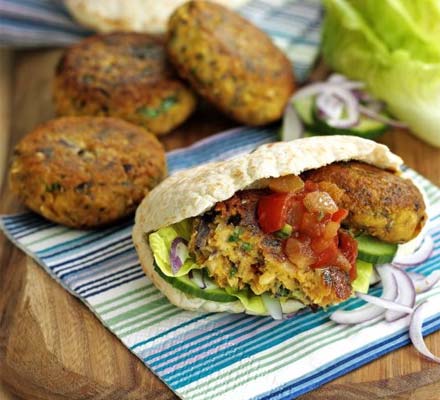
    Falafel Burger
    falafel burger

    Time: 16 minutes

    Serves: 4

    Ingredients: 400g can chickpeas (rinsed and drained), garlic cloves (chopped), handful of flat-leaf parsley or curly parsley, 1 tsp ground cumin, 1 tsp ground coriander, ½ tsp harissa paste or chilli powder, 2 tbsp plain flour, 2 tbsp sunflower oil, toasted pitta bread, 200g tub tomato salsa (to serve), green salad (to serve), 1 small red onion (roughly chopped)

    Method: Pat the chickpeas dry with kitchen paper. Tip into a food processor along with the onion, garlic, parsley, spices, flour and a little salt. Blend until fairly smooth and then shape into four patties with your hands.Heat the oil in a non-stick frying pan, add the burgers and then quickly fry for 3 minutes on each side until lightly golden. Serve with toasted pittas, tomato salsa and a green salad.


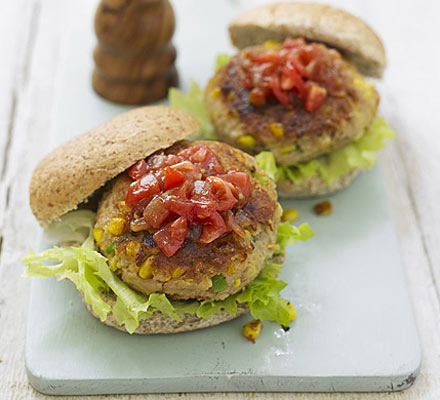
    Tuna Sweetcorn Burger

    tuna burger

    Time: 15 minutes

    Serves: 4

    Ingredients: 85g white bread (torn into pieces), 198g can sweetcorn (drained), 2 x 185g cans tuna in water (drained well), 25g grated cheddar, 3 spring onions (finely chopped), 1 egg (beaten), 2 tbsp vegetable oil, wholegrain bread rolls (to serve), lettuce (to serve), salsa (to serve)

    Method: Whizz the bread in a food processor to crumbs, tip into a bowl, then whizz half the sweetcorn until finely chopped. Add the chopped corn, remaining whole corn, tuna, cheese, spring onions and some seasoning into the bowl with the bread and mix well. Add the egg, bit by bit (you may not need it all), until the mixture is sticky enough to be shaped into four even-size burgers.Heat the oil in a non-stick pan, then cook the burgers for 5 minutes on each side until golden and hot through the middle. Stuff into wholemeal buns with your favourite lettuce and a good dollop of salsa.


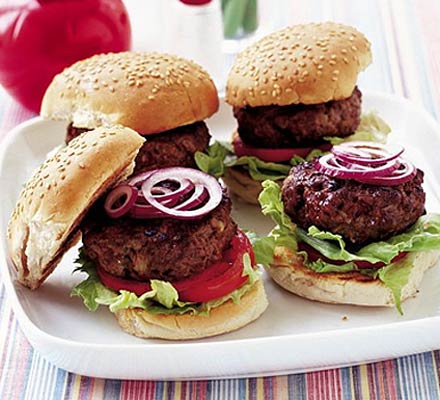
    Beef Burger

    beef burger

    Time: 25 minutes

    Serves: 4

    Ingredients: 1 small onion, 500g good-quality beef mince, 1 egg, 1 tbsp vegetable oil, 4 burger buns, All or any of the following to serve – sliced tomato, beetroot, horseradish sauce, mayonnaise, ketchup, handful iceberg lettuce, rocket, watercress

    Method: Peel the onion, slice in half through the root and trim off the top. Place cut-side down on a chopping board. With your knife parallel to the board, cut 3 slices through the onion, keeping the root intact. With the knife point at root end, cut down through the onion from top to bottom, 4 times. Holding the root end, finely slice to give you small diced pieces. Tip the beef into a bowl with the onion and egg, then mix.Divide the mixture into four. Lightly wet your hands. Carefully roll the mixture into balls, each about the size of a tennis ball. Set in the palm of your hand and gently squeeze down to flatten into patties about 3cm thick. Make sure all the burgers are the same thickness so that they will cook evenly. Put on a plate, cover with cling film and leave in the fridge to firm up for at least 30 minutes.Heat the barbecue to medium hot (there will be white ash over the red hot coals – about 40 minutes after lighting). Lightly brush 1 side of each burger with oil. Place the burgers, oil-side down, on the barbecue. Cook for 5 minutes until the meat is lightly charred. Don’t move them around or they may stick. Oil the other side and then turn over using tongs. Don’t press down on the meat, as that will squeeze out the juices. Cook for 5 minutes more for medium. If you like your burgers pink in the middle, cook 1 min less each side. For well done, cook 1 min more. Take the burgers off the barbecue. Leave to rest on a plate so that all the juices can settle inside. Slice each bun in half. Place, cut-side down, on the barbecue rack and toast for 1 min until they are lightly charred. Place a burger inside each bun, then top with your choice of accompaniment.


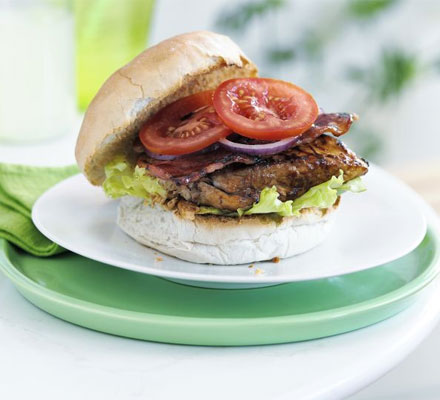
    BBQ Chicken Burger

     bbq chicken burger

    Time: 25 minutes

    Serves: 4

    Ingredients: 4 chicken breasts (skinless, boneless), 4 rashers bacon (optional), 4 large burger buns (sliced in half), lettuce (to serve), tomato (to serve), red onion (to serve)

    For the sauce and marinade: 4 tbsp tomato ketchup, 4 tbsp brown sauce, splash of chilli sauce (optional), 2 tsp clear honey, 2 garlic cloves (crushed)

    Method: Make the sauce and marinade by mixing everything together in a large bowl and then put a few spoonfuls aside. Slice halfway into the thickest part of each breast and open it up like a book. Flatten down slightly with your hand and then toss in the bowlful of marinade to coat. Chill for as little, or as long, as you have time to.Barbecue the chicken for about 10 minutes until completely cooked through, turning so it doesn’t burn but is nicely charred and sticky. Cook the bacon at the same time until crisp, if using, and toast the buns. Assemble the burgers with lettuce, slices of tomato, onion and the reserved sauce on the side for dolloping on top.


    Recipe and Image Courtesy – bbcgoodfood.com, foodnetwork.com

  • Sumptuous Salads

    Sumptuous Salads

    The word ‘salad’ comes from the French word ‘salade’ having the same meaning and from the Latin word ‘salata’ which means salty. In English, the word first appears in the 14th century.  The term ‘salad days’, meaning ‘days of youthful experience’, was first recorded by Shakespeare in 1606.

    Salads are of different types, such as, Green Salad (only leafy vegetables used), Vegetable Salad (leafy or non leafy vegetables used along with non-vegetables), Bound Salad (often used as sandwich fillings. Salad examples- Egg salad, Tuna salad, etc), Fruit Salad (as the name suggests, they are made of fruits), Main Course Salad (a type of heavy salad. Example – Caesar salad, Cobb salad, Greek salad, etc.) and Dessert Salad (they are sweet. Example – Cookie salad, Pistachio salad, etc.).

    Salads are highly nutritious and good for your health. Moreover, they are quite filling.

    They are easy to make and they hardly take much time to be prepared. You can experiment with different textures, colours, flavours and prepare your salad as par to your taste bud.

    A few delicious easy-to-make salads:

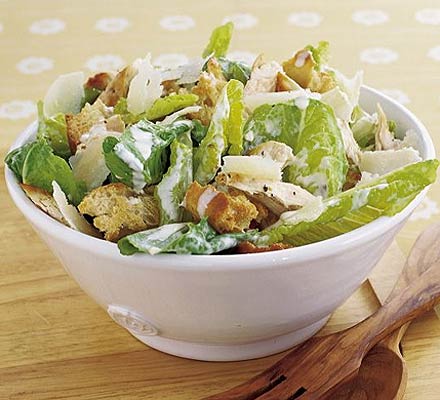
     Chicken Caesar Salad with Herbs and Croutons

     caesar salad

    Time: 20 to 25 minutes

    Serves: 6 to 8

    Ingredients:

    For dressing – ½ cup freshly grated Parmesan cheese, 8 anchovy fillets, 3 tbsp fresh lemon juice, 3 garlic cloves, 2 tbsp Dijon mustard, ¾ cup olive oil

    For croutons and salad – 3 tbsp olive oil, 4 garlic cloves (minced), 2 tsp chopped fresh thyme, 1 tsp chopped fresh rosemary, 3 ¾ inch thick country bread slices (crusts cut off, bread cut into ¾ inch cubes, 12 cups freshly grated Parmesan cheese, cracked black pepper

    Method:

    For dressing:
    Combine 1/2 cup Parmesan, anchovies, lemon juice, 3 garlic cloves, and mustard in processor; blend well. With processor running, slowly add olive oil. Season with salt and pepper.

    For croutons and salad:
    Preheat oven to 325F. Heat 3 tablespoons of oil in heavy medium skillet over medium heat. Add garlic, thyme and rosemary; sauté until fragrant, about 1 minute. Remove from heat. Add bread cubes to skillet with garlic-herb oil and toss to coat. Spread out bread cubes on rimmed baking sheet. Sprinkle with salt and pepper. Bake just until croutons are golden, stirring occasionally, about 15 minutes.

    Place romaine in large bowl. Add 2/3 cup dressing and 1/4 cup grated Parmesan cheese and toss to coat. Add croutons and toss well. Serve (passing remaining dressing, Parmesan cheese and cracked black pepper separately).


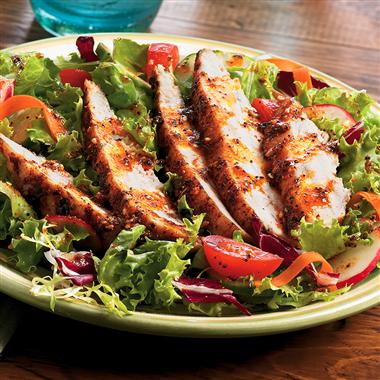
    Roasted Chicken Salad

     Roasted_Chicken_Salad-2

    Time: 1 hour 10 minutes

    Serves: 10 to 15

    Ingredients:

    For the dressing – 1 cup mayonnaise, ¾ cup sour cream, ¼ cup extra virgin olive oil, 2 tbsp honey, salt, pepper

    For the salad – 7 ½ pounds chicken breasts (boneless, skinless), salt, pepper, 2 pinches cayenne pepper, 1 tbsp lavender, 1 lemon (juiced), 3 cloves garlic ( minced), 2/3 cup sliced roasted almonds, 1 large onion (chopped), ½ bunch celery (chopped), herbs ( 2 tbsp chopped parsley leaves, 2 tbsp chives, 2 tbsp chopped tarragon leaves)

    Method:

    For the dressing – Mix all ingredients together.

    For the salad – Preheat the oven to 400 F. Clean the chicken thoroughly. Sprinkle salt, pepper, cayenne, lavender, lemon and garlic on chicken. Bake in preheated oven until golden brown. Let chicken cool and then pull it into small strips. Add roasted almonds, onions, celery, dressing and herbs. Mix together all ingredients in dressing. Add the chicken. Mix. Serve.


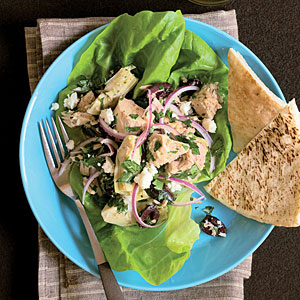
    Greek Tuna Salad

     greek-tuna-salad-su-l

    Time: 25 minutes

    Serves: 6

    Ingredients: 3 cans water packed tuna (unsalted and drained), 6 ½ ozs artichoke heart marin (drained and quartered), ½ cup kalamata (pitted, halved), 1/3 cup feta cheese crumbles, 2 tbsp minced garlic, ½ cups purple onion (sliced), 2 tbsp sherry vinegar, ¼ cup extra-virgin olive oil, ¾ tsp kosher salt, ½ tsp black ground pepper (fresh), ½ cup flat leaf parsley (chopped), 1 head butter lettuce

    Method: Combine all ingredients except lettuce in a large bowl. Arrange a few lettuce leaves on each of 6 plates. Spoon tuna mixture on top of lettuce and serve with pita chips or warmed pita halves.


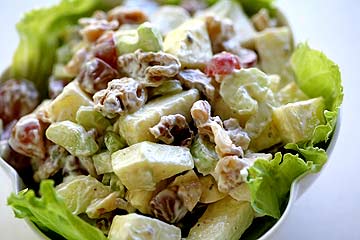
    Waldorf Salad

     waldorf-salad

    Time: 10 minutes

    Serves: 2

    Ingredients: ½ cup walnuts (chopped, slightly toasted), ½ cup celery (thinly sliced), ½ cup red seedless grapes (sliced), 1 sweet apple (cored and chopped), 3 tbsp mayonnaise, 1 tbsp fresh lemon juice, salt, pepper, lettuce

    Method: In a medium sized bowl, whisk together the mayonnaise (or yogurt) and the lemon juice. Add ½ tsp of salt, ¼ tsp of fresh ground pepper. Add the apple, celery, grapes and walnuts. Mix. Serve on a bed of fresh lettuce.


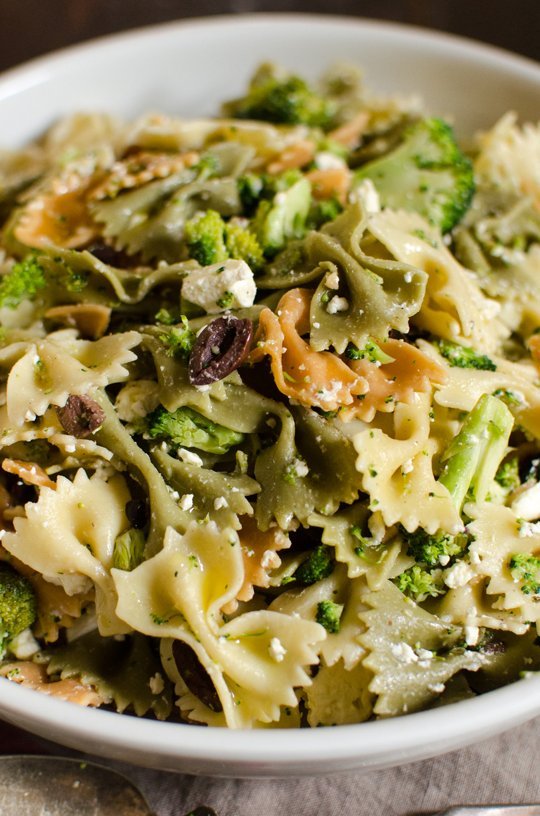
    Broccoli and Feta Pasta Salad

    pasta_

    Time: 50 minutes

    Serves: 4

    Ingredients: 1 pound tri-color pasta, 4 tablespoons extra-virgin olive oil (divided), 1 medium head broccoli (chopped into 1/2-inch florets),8 ounces feta cheese, 1 cup pitted Kalamata olives (roughly chopped), 1 tablespoon red wine vinegar, flaky salt, freshly-ground black pepper

    Method: Cook the pasta in a generous quantity of boiling, well-salted water. Drain and return to the pan or a large bowl and toss until coated with 1 tablespoon olive oil. Heat 1 tablespoon olive oil in a deep sauté pan over medium heat. Add the broccoli and cook until crisp-tender — about 5 to 7 minutes. Toss the broccoli with the cooked pasta. Crumble the feta cheese into the pasta, and stir in the olives as well. Whisk together the remaining 2 tablespoons olive oil and vinegar and toss with the pasta. Season generously with salt and pepper. Refrigerate overnight, or until serving.
    Recipe and Image Courtesy – epicurious.com, yummly.com

  • Plan your Summer Cooking

    Plan your Summer Cooking

    Summer is here and so is the sickening heat. So, you need to start planning your summer cooking. I promise this will prove to be a boon later. You need a smart menu to get your way through. Jot down family meals which are simple, less time consuming, healthy and definitely not fussy.

    Remember to drink loads of water throughout the day. This will help you get rehydrated and keep headaches at bay. The fitter you are the better. Since in summer it is quite hot most of the time, when you are shopping, shop at one go so you won’t have to keep going back. Always make a list before shopping. Be guided by your head, not your stomach. Learn to keep a well-stocked store cupboard and replace things as you use them. Store food in fridge and freezer – this way, you can make several meals in case of an emergency.

    My Summer Collection –

    Cheesy Scrambled Egg Croissants (Quick and simple yet incredibly mouth – watering)

    [Good source of Calcium; Suitable for vegetarians; Not suitable for freezing]

    croissants

    Time: 7 minutes

    Serves: 4

    Ingredients: 8 large eggs, 100g grated cheddar, a splash of milk, chives, 4 large croissants, salt, pepper

    Method: in a bowl whisk the eggs, cheddar, milk and some seasoning. Pour into a saucepan and heat gently, stirring continuously, until softly scrambled. Stir in a small bunch snipped chives, then split open 4 croissants and put the scrambled eggs inside.


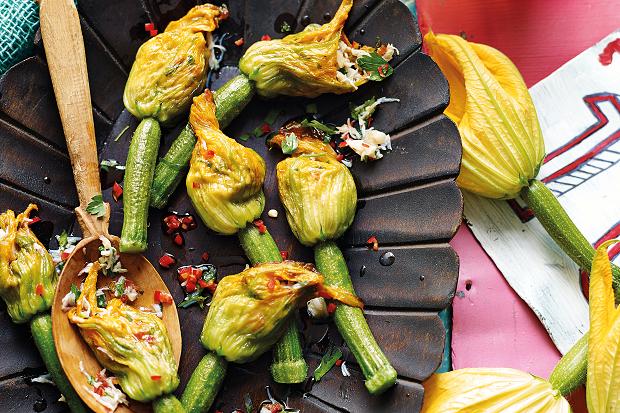
    Spicy Crab Courgette Flowers (Courgette flowers are generally in season in summer. This is a must-have dish)

    [Gluten free; Not suitable for freezing]

    035_spicy_crab_cour_421545c

    Time: 20 minutes

    Serves: 5 (makes 10 flowers)

    Ingredients: 100g fresh white crab meat, 1 red chilli (finely chopped), 1 tsp white wine vinegar, 1 tsp freshly chopped flat-leaf parsley, 10 baby courgettes with flowers, 1 tbsp olive oil

    Method: Mix together the crabmeat, chilli, white wine vinegar, parsley and some seasoning. Carefully fill the courgette flowers with this mixture. Twist the top of each flower to make sure that no filling comes out when cooking. Don’t overfill them. Once you have stuffed all the flowers, heat the oil in a frying pan over medium heat and add the courgettes. Cook on all sides for about 6-7 minutes. Serve immediately.


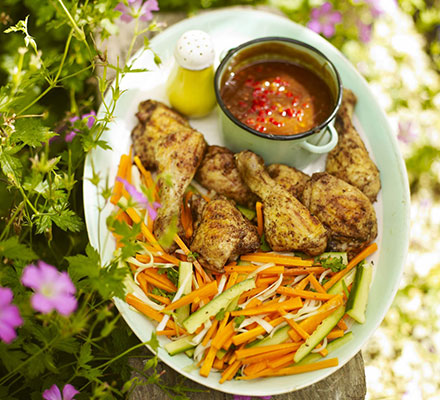
    Bang Bang Chicken with Sichuan Salad (A hit among friends and family)

    [Good source of Folate; Not suitable for freezing]

    bangbang

    Time:  1 hour 5 minutes

    Serves: 4

    Ingredients:

    For the salad – 1 tsp Sichuan peppercorns, 1 large cucumber (peeled, deseeded and cut into matchsticks), 1 bunch spring onion (shredded), 1 tbsp sesame oil, juice ½ lime, handful chopped coriander

    For the chicken – 1 kg pack chicken drumsticks or thighs, 1 tbsp olive oil, 1 tsp Chinese five-spice

    For the sauce – 140 kg chunky peanut butter, 100ml low-sodium soy sauce, 1 tbsp rice vinegar, 1 tbsp toasted sesame oil, 2 tbsp granulated sugar, 2 red chillies (deseeded and finely chopped)

    Method: Toast the peppercorns in a small frying pan until they begin to darken. Remove and cool, then crush with a large pinch of salt using a pestle and mortar. Mix in a bowl with the cucumber. Set Aside. Put the chicken in a bowl and rub in the oil and five- spice, leaving to marinate for an hour or use straight away. Cook on the barbeque, turning regularly, for about 35 to 40 minutes until the juices run clear. Whisk together all the ingredients for the sauce until smooth, adding water if needed. Drain the cucumber and mix through the carrots, spring onions, sesame oil, lime juice and coriander. Serve everything on a big platter.


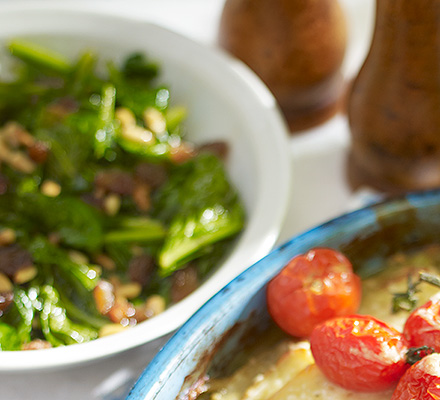
    Spinach with Raisins and Pine Nuts  (easy to make and very healthy. You can use other nuts as well.)

    [Suitable for vegetarians; Low fat; Gluten free; Not suitable for freezing]

     spinach2

    Time: 15 minutes

    Serves: 6

    Ingredients: 2 tbsp olive oil, 2 rounded tbsp pine nuts, 2 rounded tbsp raisins, 500g baby spinach leaves, 2 tsp balsamic vinegar

    Method: heat the oil in a large pan, add the pine nuts and fry until golden. Add the raisins and fry briefly, then add the spinach leaves and turn in the pan over a fairly high heat until the leaves are just wilted. Sprinkle in the balsamic and seasoning, warm through and serve straight away.


    Tomato Tart (A Mediterranean-inspired elegant summer tomato tart. Dig in!)

    [Suitable for vegetarians; not suitable for freezing]

     tomato

    Time: 1 hour 20 minutes

    Serves: 4

    Ingredients: 3 whole garlic bulbs, 2 tbsp olive oil, 375g block all-butter puff pastry, 1 ½ tbsp honey Dijon mustard, 325g cherry tomatoes (halved), 1 egg (beaten), 150g pack soft goat’s cheese, handful basil leaves

    Method: Heat oven to 180C . Slice the tops off the garlic bulbs and sit on a sheet of foil. Drizzle over 1 tbsp of the oil, season and wrap into a parcel. Roast for 50 minutes or until soft, then leave to cool (this can be done the day before). Use a sharp knife to cut the pastry into quarters. Roll out each piece and cut into 14cm- diameter circle. Use a saucer as a guide if you don’t have a cutter. Pop the circles on a baking tray and score a 1 cm border around the edge of each, being careful not to cut all the way through. Avoiding the border, prick the pastry all over with a fork and then chill. Increase oven to 200C. When the garlic is cool enough to handle, squeeze the flesh from the bulbs into a bowl. Add the mustard, remaining oil and some seasoning, and use a fork to mash to a paste. Spread this over the pastry, leaving the border clear, then top with the tomato halves, skin inside down, and season well. Brush the edges of the pastry with egg, crumble over the goat’s cheese and bake for 25 – 30 minutes until the pastry is golden and crisp, and the tomatoes are starting to shrivel. Remove from the tray and allow to cool to room temperature. Scatter over the basil before serving.


    Recipe and Image Courtesy – bbcgoodfood.com

  • Bean It Up!

    Bean It Up!

    Green Beans are popular among vegetarians as well as non vegetarians because of their high nutritional value. Beans are classified into Bush beans, Pole beans, Shell beans, Mottled beans, White beans, Yellow wax beans, Red or Kidney beans, Black beans and Pink beans.

    Fresh green beans are a rich source of dietary fiber, vitamins (especially Vitamin A, Vitamin B6, Vitamin B1, Vitamin C, Vitamin K and Folates) and minerals (Calcium, Magnesium, Manganese Phosphorus, Zinc, Iron and Potassium). Moreover, they are low in calories and contain no saturated fats.

    How to prepare beans before cooking?

    Wash raw beans in cold water. Just before using, remove the strings and trim the ends.

    Green beans can be used in grilled-salads, curries, soups, stews, stir fry (with rice) and be steamed with other vegetables. It tastes brilliant when mixed with butter, meat, seafood, nuts, mushrooms, leafy vegetables, cheese, etc. With anything and everything, it is good to go!

    So, Bean It Up!

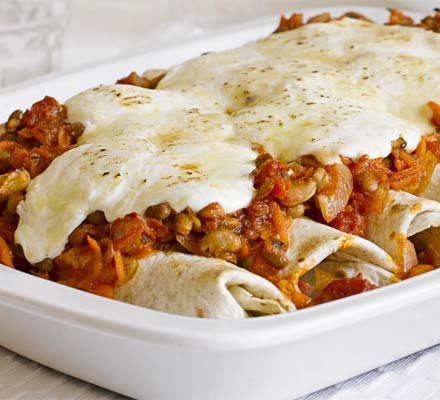
    Bean Enchiladas

     bean enchiladas

    Time: 30 minutes

    Serves: 4

    Ingredients: 1 tsp olive oil, 2 onions (chopped), 280g carrots (grated), 2 – 3 tsp chilli powder, 2 x 400g cans chopped tomatoes, 2 x 400g cans pulses in water (drained), 6 small whole meal tortillas, 200g low-fat yogurt, 50g extra-mature cheddar cheese (finely grated)

    Method: Heat the oil in a large frying pan. Cook the onions and carrots for 5-8 minutes until soft – add a splash of water if they start to stick. Sprinkle in the chilli powder and cook for 1 min more. Pour in the tomatoes and pulses and bring to the boil. Turn down the heat and simmer for 5-10 minutes, stirring occasionally, until thickened. Remove from the heat and season well.Heat grill to high. Spread a spoonful of the bean chilli over a large ovenproof dish. Lay each tortilla onto a board; fill with a few tbsp of chilli mixture, fold over the ends and roll up to seal. Place them into the ovenproof dish. Spoon the remaining chilli on top.Mix the yogurt and grated cheese together with some seasoning, and spoon over the enchiladas. Grill for a few minutes until the top is golden and bubbling. Serve with a green salad.


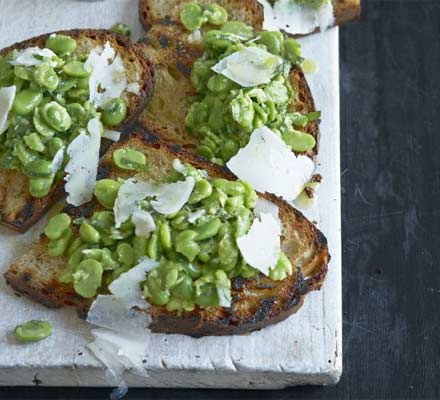
    Broad Bean Bruschetta

    bean bruscetta

    Time: 40 minutes

    Serves: 4

    Ingredients: 300g podded broad beans, 4 tbsp olive oil (plus extra for drizzing, juice 1 lemon, handful mint leaves, 4 slices rustic white bread, 1 garlic clove (peeled but left whole), 140g pecorino cheese (shaved with a peeler)

    Method: Cook the broad beans in boiling water for 2 minutes. Drain, refresh under cold water, drain again and then peel from their skins.Use a masher to roughly crush the beans with the olive oil and lemon juice and then stir through the mint. Season with salt and pepper to taste.Heat a griddle pan; toast the bread on both sides, then rub with the garlic clove. Spoon some of the beans over each slice of bread, scatter over the pecorino and drizzle with more olive oil to serve.


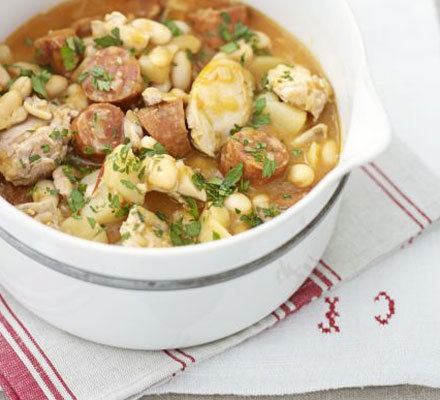
    Spanish Bean Stew

    bean stew

    Time: 30 minutes

    Serves: 4

    Ingredients: 1 tbsp olive oil, 200g chorizo sausage (thickly sliced), 1 onion (chopped), 400g chicken thigh fillets (cubed), 1 tomato (roughly chopped), 410g can cannellini beans (drained), 1 large potato (cut into small cubes), 500ml hot chicken stock, 4 tbsp chopped parsley

    Method: Heat the oil in a large pan. Cook the chorizo, onion and chicken over a high heat for 5 minutes. Add the tomato and cook for a further 2-3 minutes until pulpy.Stir in the beans, potato and stock. Bring to the boil, then cover and gently simmer for 20 minutes until the potato is soft and the chicken cooked through. Stir through the parsley and serve. You can cool and freeze the stew for up to 2 months. To serve, defrost and heat through thoroughly.


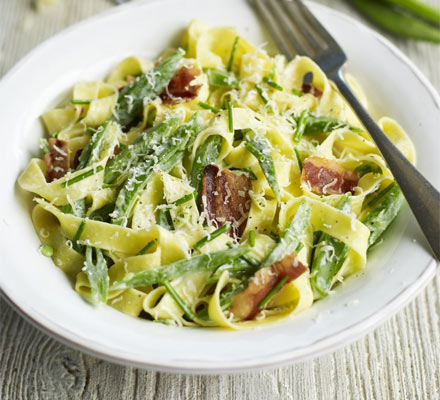
    Fettuccine with Beans and Pancetta

     pasta bean

    Time: 15 minutes

    Serves: 4

    Ingredients: 100g pack smoked pancetta rashers, 350g fettuccine, 400g runner beans (trimmed and thickly sliced on the diagonal), 6 tbsp crème fraÎche, 15g pack chives (snipped), finely grates parmesan (optional)

    Method: Put a large pan of water on to boil for the pasta. Meanwhile, separate the rashers of pancetta and cook them in two batches (without oil) in a large non-stick frying pan until the fat on the pancetta is golden. Lift out onto a plate to crisp up.When the water is boiling, add salt and the pasta to the pan and boil for 6 minutes. Tip in the beans, quickly return to the boil and cook for about 4 minutes more until both the pasta and beans are just tender.Drain and tip into a large serving bowl. Toss with the crème fraîche, chives or basil and plenty of seasoning and then quickly tear in the crisp pancetta (keeping it quite chunky). Serve with the Parmesan, a simple tomato salad and some crusty bread (optional).


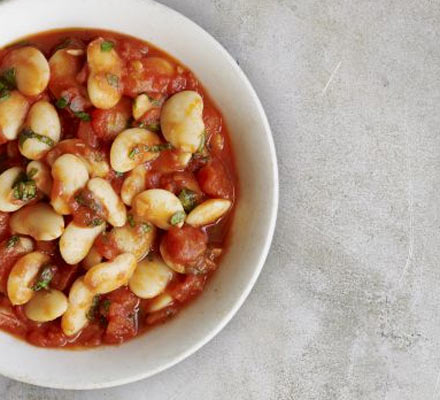
    Butter Bean

     butter bean

    Time: 20 minutes

    Serves: 4

    Ingredients: 1 tbsp olive oil, 4 garlic cloves (crushed), 400g tin chopped tomatoes, 2 tsp sugar, 2 x 400g tins butter beans (rinsed and drained), small bunch basil (chopped)

    Method: Heat the oil in a medium saucepan. Fry the garlic for 1 min, then add the tomatoes, sugar and some seasoning. Tip in the beans and a splash of water. Cover and simmer for 5 minutes, then stir in the basil and serve.


    Recipe and Image Courtesy – bbcgoodfood.com

  • Homemade and Healthy

    Homemade and Healthy

    Too much fast food is not good for your health. Even at home, we usually aimlessly settle for the fat-rich food while snacking – for the simple reason that it looks (and sounds) more appealing and is way tastier. I’m not going to argue about the taste but in this age, where most of us are suffering from obesity or simply trying to stay fit, the high calorie and high fat delicacies does not help.

    So what’s the alternative?

    I’m not asking you to give up your favourite meal but you could try to make it a tad bit healthier. Then a tad more. And then a bit more.  Adapt and adjust (if only for your own good).

    Truly speaking, it’s quite a win-win situation.

    So, here’s your stairway to a low-fat Biriyani, a feel good soup and a much lighter dessert:

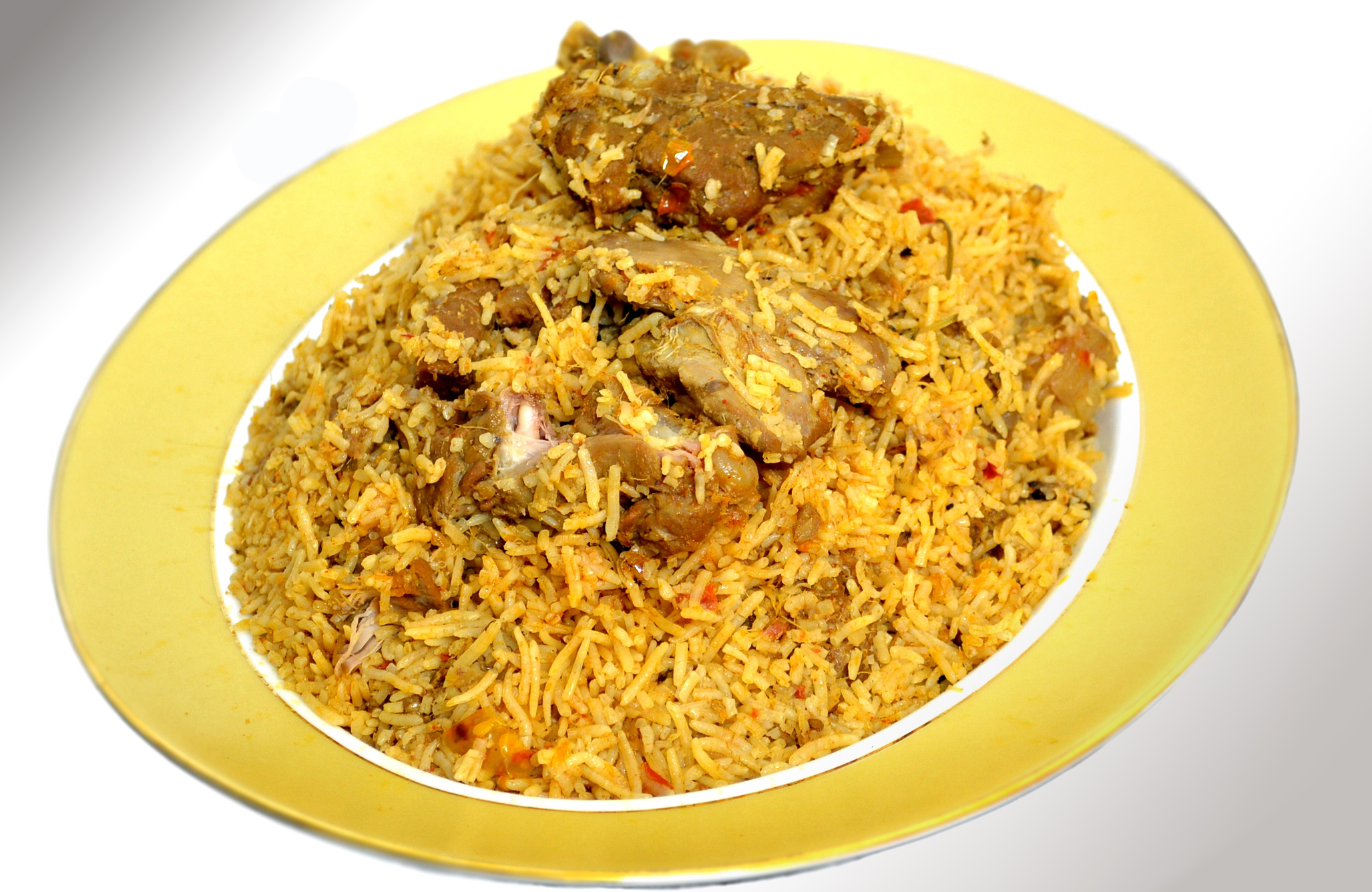
    Low-fat Chicken Biriyani

    biriyani

    Time – 2 hours

    Serves – 4

    Ingredients – 3 garlic cloves (finely grated), 2 tsp finely grated ginger, ¼ tsp ground cinnamon, 1 tsp turmeric, 5 tbsp natural yogurt, 600g boneless chicken breasts (cut into 4 cm pieces), 2 tbsp semi-skimmed milk, good pinch saffron, 4 medium onions, 4 tbsp rapeseed oil, ½ tsp chilli powder, 1 cinnamon stick (broken in half), 5 green cardamom pods (lightly bashed to split), 3 cloves, 1 tsp cumin seeds, 280g basmati rice, 700ml chicken stock, 1 tsp garam masala, handful chopped mint and coriander leaves

    Method – In a mixing bowl, stir together the garlic, ginger, cinnamon, turmeric and yogurt with some pepper and ¼ tsp salt. Tip in the chicken pieces and stir to coat. Cover and marinate in the fridge for about 1 hour. Warm the milk to tepid, stir in the saffron and set aside. Heat oven to 180C. Slice each onion in half lengthways, reserve half and cut the other into thin slices. Pour ½ tbsp of the oil onto a baking tray, scatter over the sliced onion, toss to coat, then spread out in a thin, even layer. Roast for about 40 to 45 minutes, stirring halfway, until golden. When the chicken has marinated, thinly slice the reserved onion. Heat 1 tbsp oil in a large frying pan. Fry the onion for 5minutes until golden. Stir in the chicken, a spoonful at a time, frying until it is no longer opaque, before adding the next spoonful. Once the last of the chicken has been added, stir fry for a further 15 minutes until everything looks juicy. Scrape any sticky bits off the bottom of the pan, stir in the chilli powder, then pour in 100ml water, cover and simmer on a low heat for 15 minutes. Remove and set aside. Cook the rice while the chicken simmers. Heat 1 tbsp oil in a large frying pan, then drop in the cinnamon stick, cardamom, cloves and cumin seeds. Fry briefly until their aroma is released. Tip in the rice and fry for 1 min, stirring constantly. Stir in the stock and bring to boil. Lower the heat and simmer, covered, for about 8 minutes. Remove from the heat and leave with the lid on for a few minutes. Stir the garam masala into the remaining 1 ½ tsp oil and set aside. When the onions are roasted, remove and reduce oven to 180C. Spoon half the chicken and its juices into an ovenproof dish, then scatter over a third of the roasted onions. Remove the whole spices from the rice, then layer half of the rice over the chicken and onions. Drizzle over the spiced oil. Spoon over the rest of the chicken and a third more onions. Top with the remaining rice and drizzle over the saffron- infused milk. Scatter over the rest of the onions, cover lightly with foil and heat through in the oven for about 25 minutes. Serve scattered with the mint and coriander.


    Three bean and Chilli Soup

    1652568_orig

    Time – 25 minutes

    Serves – 4

    Ingredients – 1 chopped red onion, 1 tbsp olive oil, 1 finely diced red chilli, 1 tbsp dried oregano, 400g can chopped tomatoes, 2 x 400g cans drained mixed beans, 800 ml vegetable stock

    Method – Fry chopped onion in olive oil in a large saucepan for 5 minutes. Add the chilli and cook for 5 minutes. Add oregano, tomatoes, mixed beans and vegetable stock. Bring to the boil and simmer for 20 minutes. Season and then serve.


    Coffee Panna Cotta

    l

    Time – 15 minutes

    Serves – 4

    Ingredients – 125ml  whipping cream, 50g golden caster sugar, ½ vanilla pod (slit lengthways), 2  small gelatine leaves, 2 tsp instant coffee granules, 150g full-fat Greek Yogurt, 150 ml buttermilk, sifted cocoa powder (for dusting)

    Method – Put the cream and sugar in a small saucepan. Scrape thin the seeds from the vanilla pod and then drop in the pod. Stir over a low heat until the sugar has dissolved. Bring the mixture just to the boil, then remove from the heat and leave to infuse for 5 minutes. Meanwhile lay the gelatine leaves in a shallow dish and pour over enough cold water to cover them. Soak for 4 to 5 minutes. Remove the gelatin leaves from the water, then stir the leaves into the cream until dissolved. Stir in the coffee granules until they are also dissolved. Leave the mixture to become cold, stirring occasionally. Keep checking so that you can catch it before it starts to set. Discard the vanilla pod. Beat the yogurt and buttermilk together in a large bowl, then gradually pour and beat in the cold coffee mixture. Transfer it to a jug, then pour into 4 small dariole moulds. Chill for 4 to 5 hours. When ready to serve, dip each mould into a bowl of very hot water for a few seconds only, then turn each dessert out onto a small plate. Serve with a light dusting of cocoa.


    HAPPY EATING!!


    Recipe Courtesy – bbcgoodfood.com

    Image Courtesy – daawat-a-biriyani.com, aurorasgypsycafe.com, yelp.com