Tag: easy recipes

  • Easy Tapioca Recipes

    Easy Tapioca Recipes

    Tapioca is a starch extracted from ‘cassava’ roots. This plant is the native to the north region of Brazil but today it is cultivated worldwide. Tapioca is known for its nutritional value. It predominantly consists of carbohydrates and is low in saturated fat, protein and sodium. It has no significant essential vitamins or dietary minerals. It is also used in other purposes like tapioca roots can be used to manufacture biodegradable wastes and tapioca starch can be used to starching garments before ironing.

    So here are some easy tapioca dishes that can be tried out in homes.

    i)  TAPIOCA PUDDING
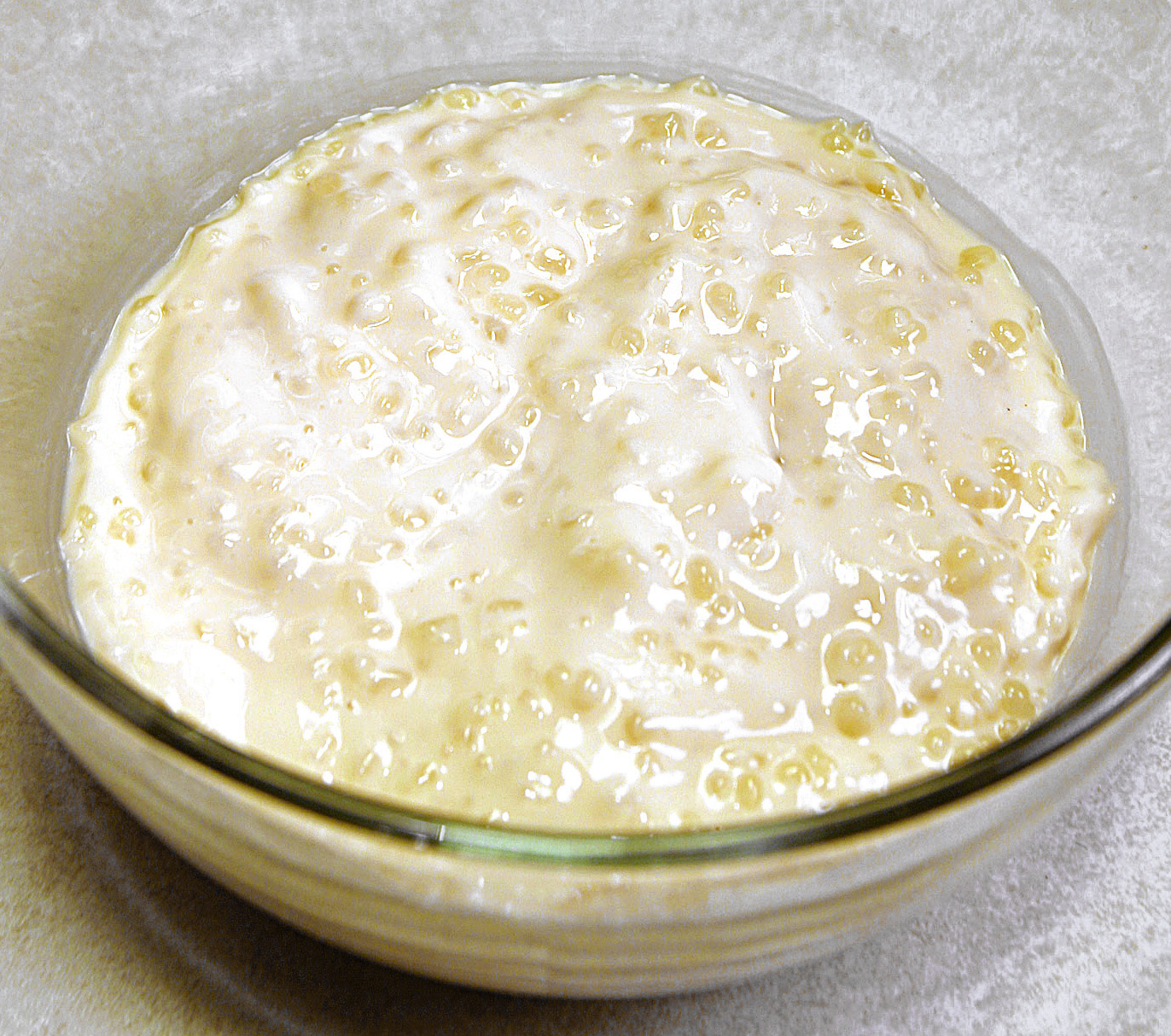
    Tapioca_pudding-3

    Time: 35 min

    Ingredients:

    Tapioca- ½ cup

    2% low fat milk- 3 cups (if pearls are soaked overnight, then use 2 ½ cups milk)

    Salt- ¼ teaspoon

    Sugar- ½ cup

    Eggs- 2

    Vanilla- ½ teaspoon

    Preparation:

    1)      Soak tapioca pearls in water the night before to reduce some excess starch (hence less cooking time).

    2)      In a saucepan, mix the tapioca pearls, milk and salt. Stir it frequently on medium high heat until the mixture comes to a boil.

    3)      Now reduce the heat to a minimum and simmer 5 minutes. Add sugar to it gradually while stirring.

    4)      In another bowl, beat the two eggs. Add some tapioca mixture to the eggs and continue stirring, preventing the eggs from scrambling.

    5)      Now add the mixture to the tapioca and gently bring the mixture back to near boiling. Reduce the heat to minimum and simmer, stirring constantly, till the desired consistency is reached.( note that the pearls should be translucent and gelatinous in this stage)

    6)      Allow the tapioca mixture to cool before adding vanilla to it.


    ii)  BOILED TAPIOCA
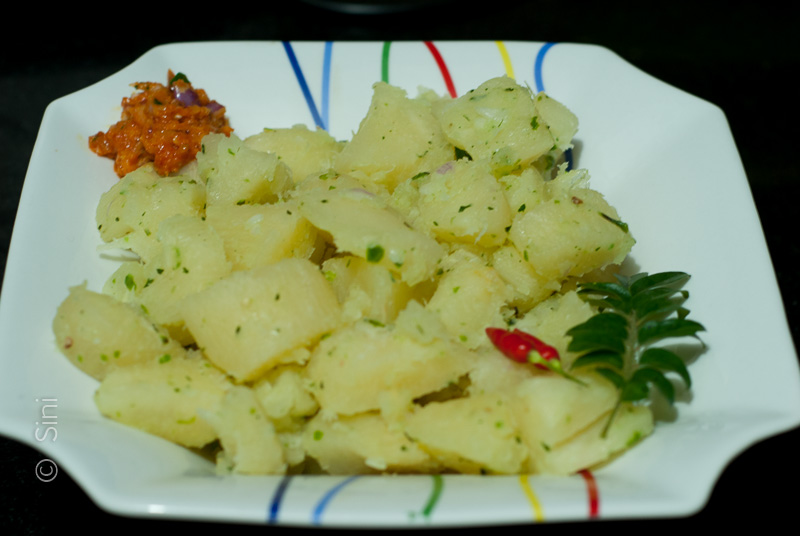
    boiled tapioca

    Preparation time: 15 minutes

    Ingredients:

    Tapioca-1

    Salt- to taste

    Preparation:

    1)      Peel the skin of tapioca and wash it thoroughly. Then cut it into big pieces.

    2)      Take these tapioca pieces in a vessel and pour enough water so that the pieces are submerged.

    3)      Now add some salt to it and boil it.

    4)      Cook for about 10 min till the pieces are soft.

    5)      Drain the excess water.

    6)      To make it more flavorful, add mustard seeds and some curry leaves. Also sprinkle some freshly grated coconut on top.

    7)      Now serve it hot.


    iii) TAPIOCA PUTTU
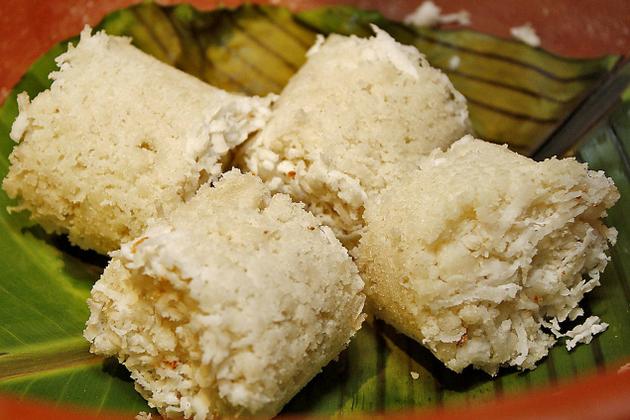
    tapioca puttu

    Preparation time: 20 min

    Ingredients:

    Tapioca flour- 1 cup

    Grated coconut- 1 cup

    Onion (big) – 1

    Green chili- 3

    Salt- to taste

    Preparation:

    1)      Cut onion and green chili finely.

    2)      In a bowl, mix tapioca flour, green chili, coconut and onion.

    3)      Sprinkle water to it and mix it well. Now keep the mixture for about 15 min.

    4)      Steam it for 10 min.


    iv) TAPIOCA HALWA
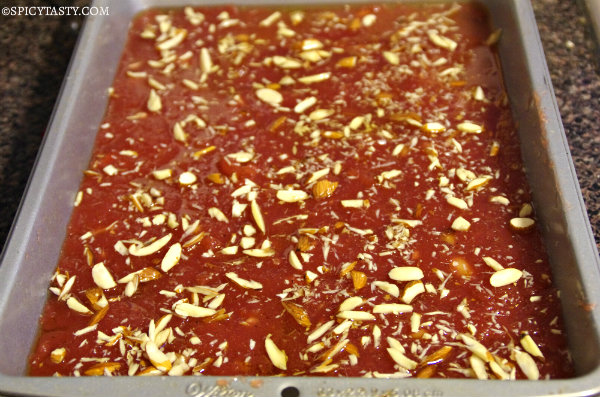
    tapioca halwa

    Preparation time: 30 min

    Ingredients:

    Tapioca- ¼ kilos

    Grated coconut- ½ cup

    Sugar- ¼ kilo

    Ghee- 100 g

    Cashew- 10

    Raisins- 20

    Kesari powder- a pinch

    Cardamom powder- ¼ tsp

    Preparation:

    1)      Remove the skin of tapioca.

    2)      Grind tapioca, coconut and sugar to a thick paste and transfer this content to a bowl.

    3)      Melt 2 tsp of ghee in a frying pan.

    4)      Add cashew and raisins to the ghee and fry it till it reaches a golden color. Now add it to tapioca.

    5)      Add kesari powder, cardamom powder and ghee to tapioca.

    6)      Stem the contents for about 15 min.

    7)      Cut it into pieces when cool. Keep the contents in a cool place.


    v)  TAPIOCA AVIYAL
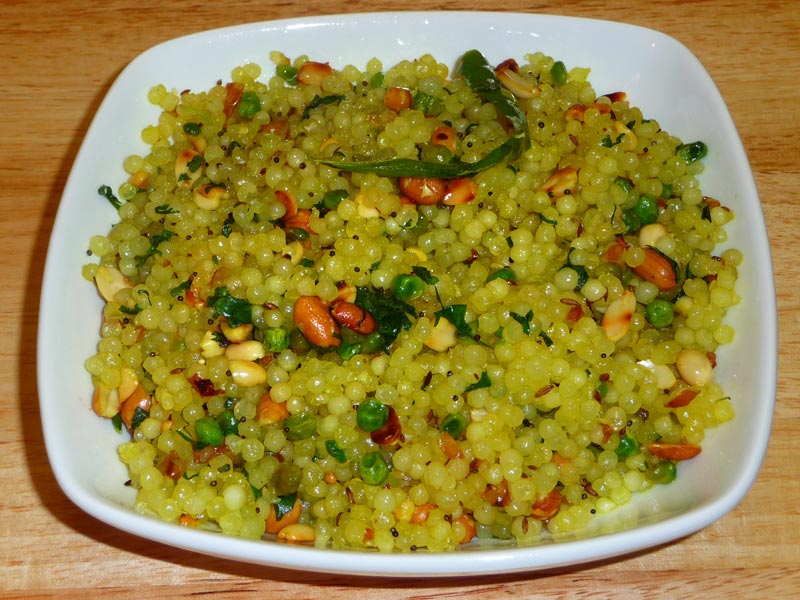
    t. aviyal

    Preparation time: 35 min

    Ingredients:

    Tapioca (cut into long thin pieces) – 1

    Grated coconut- 1 cup

    Shallots- 4

    Jeera seeds- ½ tsp

    Curd- 2 tbsp

    Turmeric powder- ¼ tsp

    Chili powder- 1 tsp

    Curry leaves- a sprig

    Coconut oil- 1 tsp

    Salt- to taste

    Preparation:

    1)      Cook tapioca by adding salt and water and until it is soft.

    2)      Drain excess water and keep it aside.

    3)      Grind coconut, jeera, shallots, turmeric powder and red chili powder into a paste.

    4)      Now add this paste to the tapioca pieces and mix well.

    5)      Reduce the heat and cook the tapioca for about 1 min, stirring frequently.

    6)      Add curry leaves, curd and cook until it is thick.

    7)      Garnish it with grated coconut and remove from heat.

    8)      Serve it hot.


    vi) TAPIOCA CURRY
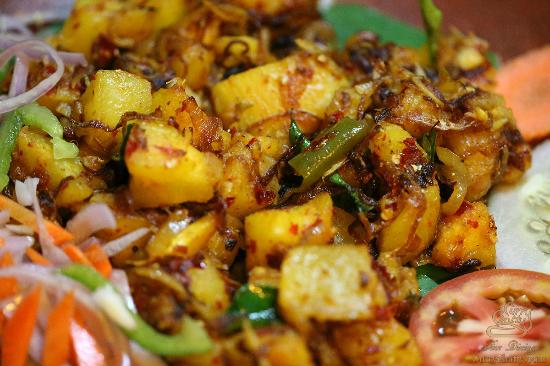
    t. curry

    Preparation time: 20 min

    Ingredients:

    Tapioca- 1

    Grated coconut- ¼ cup

    Cumin- ¼ tsp

    Garlic- 2 cloves

    Curry leaves- a few

    Red chili- 4

    Turmeric powder- a pinch

    Mustard- ½ tsp

    Curry leaves- few

    Urad dal- ½ tsp

    Salt- to taste

    Oil- as needed

    Preparation:

    1)      Boil tapioca with salt and turmeric powder. Now peel of its skin and set it aside.

    2)      Grind coconut, cumin, garlic, red chili and curry leaves into a paste.

    3)      Heat oil in a frying pan and add mustard, curry leaves and urad dal to it.

    4)      When mustard splutters, add grated coconut to it and heat till a raw smell subsides.

    5)       Add tapioca to it and mix well.

    6)      Cook for few minutes and remove the pan from heat.

    7)      Garnish it with curry leaves and serve it hot.


    vii) TAPIOCA PEARLS IN COCONUT SAUCE
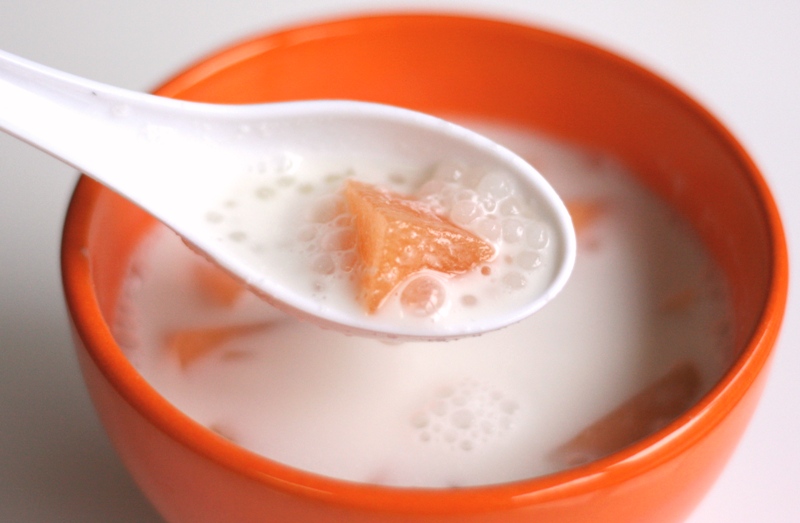
    tapioca-pearls-and-coconut sauce

    Preparation time: 20 min

    Ingredients:

    Tapioca pearls- 100 g

    Sugar- 30 g

    Salt- a pinch

    Coconut milk- 150 g

    Preparation:

    1)      Boil the tapioca pearls in water till it becomes translucent.

    2)      Drain off excess water.

    3)      Now add sugar to it and heat the contents to dissolve the sugar.

    4)      In a separate pan, warm the coconut milk with a pinch of salt.

    5)      Now add the tapioca pearls to the warm coconut milk.

    6)      Serve it hot.


    viii)  SABUDANA LADOO (LADOO MADE OF TAPIOCA PEARLS)
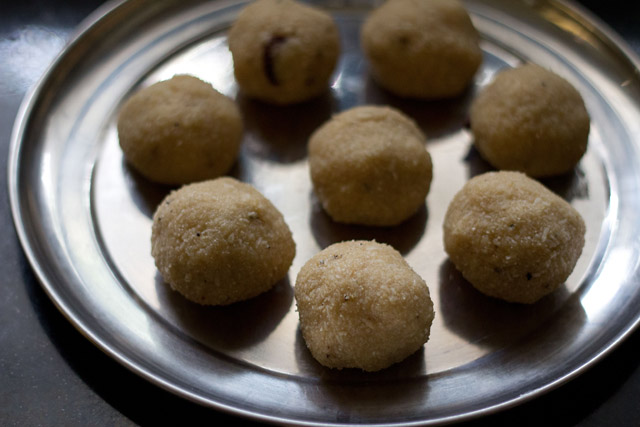
    sabudana-ladoo10

    Preparation time: 45 min

    Ingredients:

    Tapioca pearls- 200 g

    Grated coconut- ½ cup

    Powdered sugar- 30 g

    Ghee/ oil- 1 tsp

    Chopped cashews- 4

    Cardamom powder- ¼ tsp

    Nutmeg (crushed) – 1

    Preparation:

    1)      Roast tapioca pearls in a pan in low flame. This takes about 20 to 30 min.

    2)      Remove the pearls from the pan when it reaches a golden color. Now keep it aside to cool.

    3)      Grind it into a fine powder.

    4)      In another pan, heat the grated coconut.

    5)      Add the powdered tapioca pearls and powdered sugar to it.

    6)      Heat oil/ghee in a pan and roast the cashew nuts in it.

    7)      Now pour this whole mixture to the grated coconut mixture.

    8)      Also add cardamom powder and nutmeg to it. Mix the contents well.

    9)      When the mixture is slightly warm, make medium sized ladoos from it.

  • While Dieting,You Eat!!

    While Dieting,You Eat!!

    hero_pdt_value_au

    With the spurt in the number of Mcdonalds and Dominoz all around the country, seldom it is that we find kids and adults alike whom we can term as perfect specimens of the human anatomy. Cheaper and cheaper burgers and fries combos and the easy accessibility of everything unhealthy is taking this Aryan civilization faster to its unhealthy end than we can possibly imagine.And some who are aware of this gradually surmounting epidemic of obesity turn themselves to starving, or dieting as they more fashionably call it.

    And this is where most of them go wrong. If you out the word dieting on google and search for its meaning, the first result it shows is: Restrict oneself to small amounts in order to lose weight” But this is wrong in its most fundamental sense. Living beings need energy to work, breathe and live. And unlike Jaadu(from Koi Mil Gaya) our energy does not directly come from sunlight.We humans, have to have food in order to survive. So, starving, fasting and skipping meals is out of bounds. What we will do today is, get a new regime started for those who are willing to exchange flab with muscle and diseases with health.

    First of all, forget everything that you ever ate anything and that you had a diet schedule planned. Here, we all start afresh. Just like infants do.

    plan

    Secondly, many might have said or suggested to you; plan your meals ahead of time. Forget it. Because, food can’t be quantified beforehand. Suppose you worked out a little extra today, won’t you need an extra glass of milk to balance the energy that you’ve lost? So, never plan your eating. Eat, whatever your heart wants, but from the list that we decide here for ourselves only. Now we begin by clearing off all the things that are clichéd and everyone tells you about them. You should eat loads of fruit they provide vitamins, drink lots of water: gives you roughage, gorge on soups: healthy for your body and all that. But doesn’t everybody know this list by heart by now? So, we come down to those Indian dishes that you can prepare in your kitchen while hunger strikes. Let’s start with dinner.

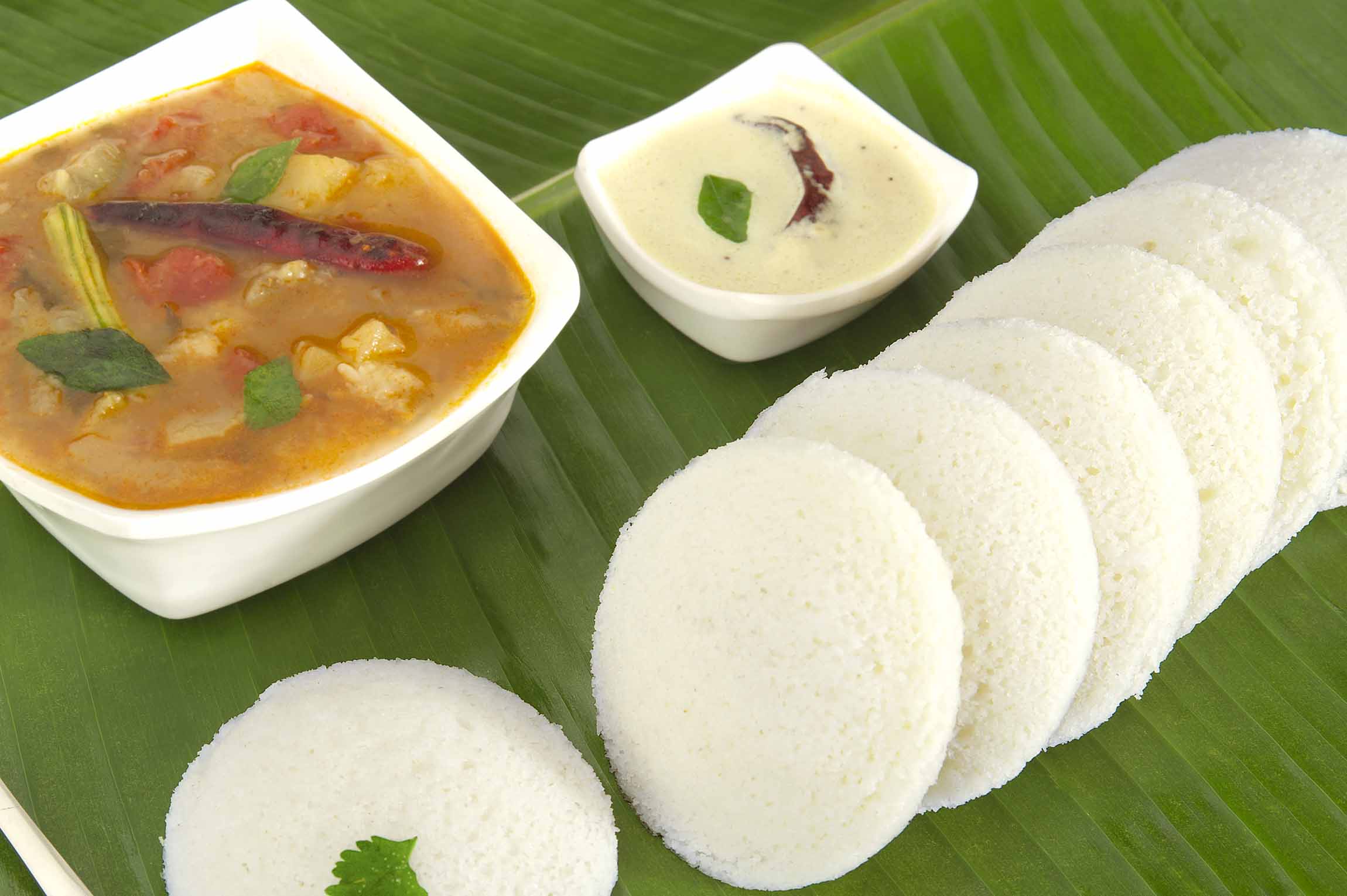
    Idli Sambhar:

    idli

    A blast for the tongue from the South of India and easy on your belly too. This dish makes it to the top of our list of the Indian foods for dieters. Each idli contains just 39 calories, which is a minimal amount in comparison to a healthy 2,000-calorie daily diet. . Idlis contain no fat, no saturated fat and no cholesterol. Consuming less than 16 grams of saturated fat and 300 milligrams of cholesterol lessens your risk of cardiovascular disease and stroke.

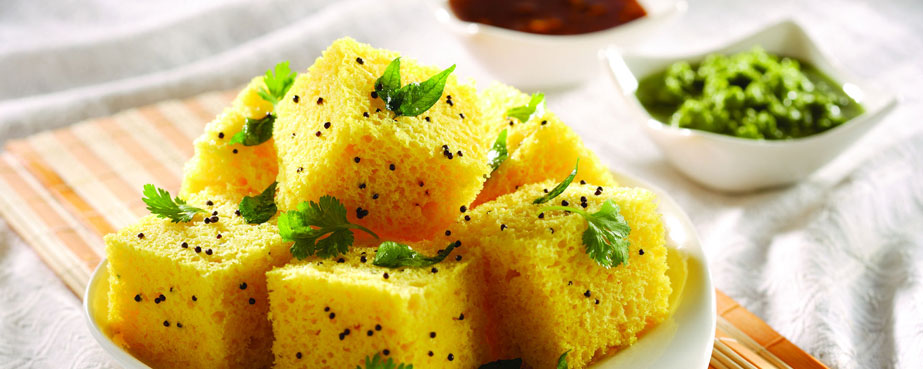
    DHOKLA:

    dhokla

    Going in the reverse order from dinner to breakfast, its time for your evening snack. And what better than dhokla to freshen you up and lighten you at the same time. Yes, it is chiefly made up of Dal and Rice, but don’t cringe as otherwise you would have been gormandizing on chips or samosas for sure. But remember, Dhokla is low in saturated fat, very low in cholesterol, low in sodium, high in dietary fiber and high in vitamin A and C. And for us dieters, low fat is all that matters, right people?

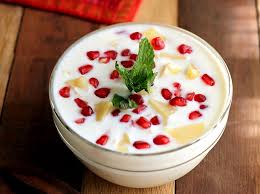
    SPROUTS AND RAITA:

    raita

    To your lunch, let’s start by having some Raita, what say? Now, raita as you all know is made by adding fruits, vegetables or any other thing to beaten yoghurt. And the best part is that one serving includes just 60 calories. To the beaten curd one can add grated bottle gourd or some fruits. But if you are in the mood for some crunch, you can very well add Boondi to it. Boondi, is fried, yes. But a handful of pea sized boondis will do your diet no harm.

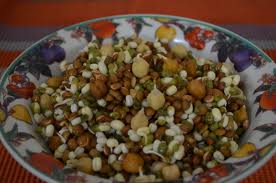
    sprouts

    With Raita, you can have sprouts as the main course and feel a bit Pseudo-European. Keep the pulses in water overnight and in the morning add a bit of lemon, some spices, some cucumber and your lunch is ready in a jiffy.

    OATS AND DALIYA:

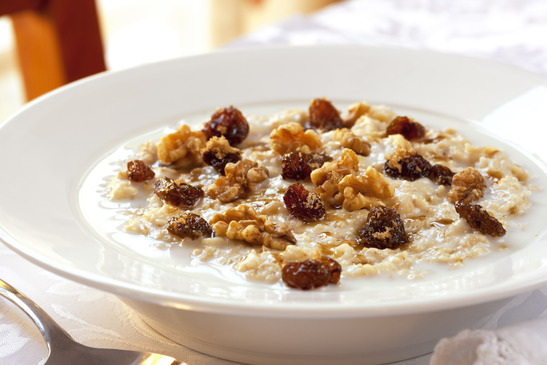
    Oatmeal

    Now, one thing with which we should agree with the hackneyers is that, breakfast should be heavy. And the dieticians have logic and Science backing them too. According to some studies if we consume more calories at breakfast and very less at dinner, this will help you lose weight quicker because if you eat a larger breakfast it will give a kick start to your metabolism and plus you won’t feel all drained and sleepy in that history class of yours. Plus more calories in the breakfast gives you more time in the day to burn them off. For breakfast why don’t we have something milk based, like oats? Well oats take two minutes to cook and trust me, you won’t be able to eat more than one and half cups of it. And hey, no adding sugar at your mom’s back, OK?

    daliya-b-23-6-2012

    Other than oats, you can also have Daliya in the morning. Daliya or Bulgur wheat in Angrezi, is a very light and healthy option for breakfast. Daliya is an excellent source of fiber that keeps you feeling full and also helps to maintain a healthy digestive system. And just like oats, daliya can be either milk based or oil and vegetable based. Now, a little oil isn’t harmful for your body and don’t cringe if once in a blue moon you are fed up of having only milk based diet for your mornings. So, here we are with a very basic diet plan for you to follow and with just one mantra at the end. Never starve yourself, Never. You need food to live. So, just give it a healthy twist and keep eating ( or dieting, whatever you like to call it! ).

  • My experiments with food (And truth too!)

    My experiments with food (And truth too!)

    India truly is one big piece of land. And on this big piece of land you encounter an eclectic mix of geographies  and topologies. And on these array of different  land designs, you come and meet very different people. People who practice different religions, wear very dissimilar clothes and practice varied traditions. And in all these differences lies one major difference, the different of cuisine. Just like we have over 700 gods and deities, I guess we must also have a similar number of different cuisines. But in all those differences they have one similarity. The trait of experimentation.

    No person who calls himself a religious foodie can never withstand a zeal for experimenting with food. Whether it is Milk and coca cola or Raajma with aloo bhujia; the tempt of experimenting is too great to be countered off. Hence we traipse to various parts of the country to look out for some experiments gone successful.

    The Chola Kulcha burger:

    Down the alleys and labyrinthine roads of a little known town in Punjab called Naabha, you will see gazillion of stalls selling this odd delicacy. Most people have had a taste of Chola-Kulcha in their life at some point or the other. This treat is in exactitude, same as the former, but a different form and slight delicious top ups give it the oomph factor that makes it feature in our list here.

    burger

    • Take two kulchas. Warm the boiled cholas and the kulchas.
    • Add a little bit of paneer and boiled mashed potatoes to the chola mix.
    • Now to the warm kulchas, add a dollop of butter and the samosa chutneys. The red one is mandatory, the chili sauce, add according to your taste. Keep the kulchas on the fry pan and add the chola mix in between the two kulchas. Voila! Your Chola Kulcha burger is ready to be savored.

    The Bhujia soup:

    Now, this treat had me baffled at first but left me craving for more later.

    There are places not so famous and not so hip in our country. Guduvanchery in Kancheepuram District (Chennai) is one such place. It is a sleepy village but with a huge local market. And in that market somewhere deep down, you may get lucky and get a chance to savor this orgasmic delight.

    soup

    The ingredients seem simple enough (Some namkeen + Some soup! Done!) But the trick lies not in the ingredients but the way those final ingredients are prepared. Neither the Bhujia is from Haldiram’s nor is the soup made from ready to eat packets. The Namkeens are homemade yet world class. For rookie foodies who try to differentiate between the two it will be in vain. But the oils from the namkeen and the spice mix in them scream homemade from top of their lungs. The namkeens are just not aloo bhujiia or khatta meetha. There’s a spectrum of namkeens of different sizes and different flavors available to choose from.

    But when in Home, do as the homies do. At your home, you can definitely use the knorr ready to eat and the aloo bhujia lying in the cup board waiting for guests to arrive at you home.

    The Samsiya:

    samosa

    Yes, the root of the words are the same but these are slightly different foods to be had.  While the samosa is filled with aloo mix, the samsiya is filled with fried onions. And in front of the samsiya, samosas seem gigantic. So, there should be no doubt if you find tiny samosas being sold 4 for Rs. 10 outside the Chennai railway Station. There’s one more wild twist in the tale of samsiya. Along with samsiya, you will never see your traditional imli and chili chutneys. The samsiya is served along with Coconut chutney. Just like idli is, just like vada and dosa are. This gives a good-humored  taste to the dish. Not spicy enough, not tangy enough but yes unique in its own sense.

    The Chola Pani puri:

    poori

    All of you might have eaten our favorite street food: The pani puri. But you are in for a surprise when you visit a chat stall anywhere south of Maharashtra. While visiting a chaat stall, forget that you have ever eaten pani-puri before. This will be a whole new dish you will taste. Sure, the puri is the same shape as in our north and everywhere but everything else is different. The filling in the puri is not mashed potatoes but hot boiled mattar. You know the green balls that you threw out of your rice as kids, that one.  Also, the filling is not dry, there is thickened water along with the hot mattar. Next, the tangy paani which was as delicious as it was healthy. Want a tip? Forget that paani. Here the paani is devoid of any and every bit of zippy taste that you went to the chaat stalls for. The paani is hot (again) and very straight in taste. Just imagine yourself having a mild soup for the paani. And thus our beloved paani puri becomes, some hot dinner dish making you feel fuller instead of easing up your stomach.

    The vodka Paani puri:

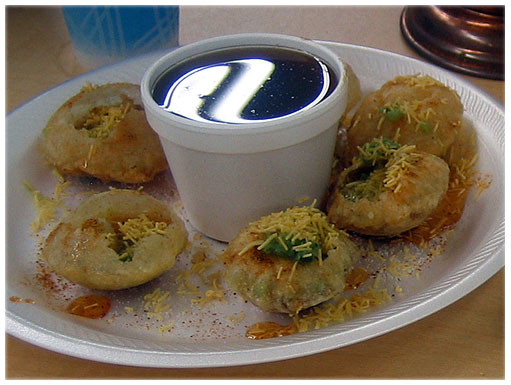
    Are all the liquor fans up yet?  *Sees left to right*  Great!  Now, this experiment is what you expect by its name.  Instead of paani you get vodka shots filled gol gappas.  Now no need for another appetizer huh? This is only offered at ‘Punjabi by nature’, a restaurant chain in the National capital and surrounding areas. The vodkas all come in different flavours, but I am sure you will not want to try out bubble gum flavored vodka with your puri.

    vodka

    So, from all around this great country of ours, we brought you some of the quirky, queer yet magnificently delectable experiments to tease you taste buds with. Try out all or some of these if you are in the neighbourhood, and get your tongue out of its routine. And do write some of your own experiments down in the comments section. Till our next journey around India, keep tasting.

  • A Platter of Vegetarian Kebabs

    A Platter of Vegetarian Kebabs

    Originating in the coastal countries of the eastern Mediterranean area, kebab is a versatile dish made by roasting and grilling pieces of meat, fish, and vegetables, over a skewer or a spit. The dish quickly spread in popularity and consumption throughout the nations of the Middle East, and then central Asia. The kebab traces its historic roots to before the 17th century B.C., and even the ancient Greek poet Homer mentions an erstwhile archaic dish resembling the same, and enjoyed all over his country in his works. However, a Turkish script by Kyssa-i Yusuf which dates back to around 1377, first properly mentions the culinary concept of the word, which is derived from the Persian language, and literally means “fry”, and sometimes “fry and burn”. Legend has it that the kebab was invented by medieval Persian soldiers who grilled meat on their swords over open-air fires in the battlefield. It quickly gained favour of both the classes and the masses, being served as the royal fare in various Islamic states over the ages, and as a much sought after and easily accessible snack or main course dish for many commoners, and the trend continues even today.

    Although lamb is the traditional choice of meat for making the kebab, there are many variants available in different meats and vegetables all over India due to religious constraints and direct or indirect dietary restrictions. Indian kebabs, whether they are vegetarian or non-vegetarian, have a unique and popular flavour of their own, owing to the wide spectrum of masalas (spices) and herbs native to the subcontinent. Apart from the numerous Indian innovations in the art of kebab making, the sheesh, shammi, tikka, and shawarma, original types of kebabs are also available everywhere, and can be found easily in small roadside eating joints as well as in top notch restaurants and hotels. The cities of Lucknow and Hyderabad are famous all over the country, owing to their thousands of decades-old, local eateries and food establishments which sell different types of primarily meat kebabs, ranging from tunday to kalmi and tangdi to reshmi, and have thus contributed a lot to culture, food, tourism, and economy.

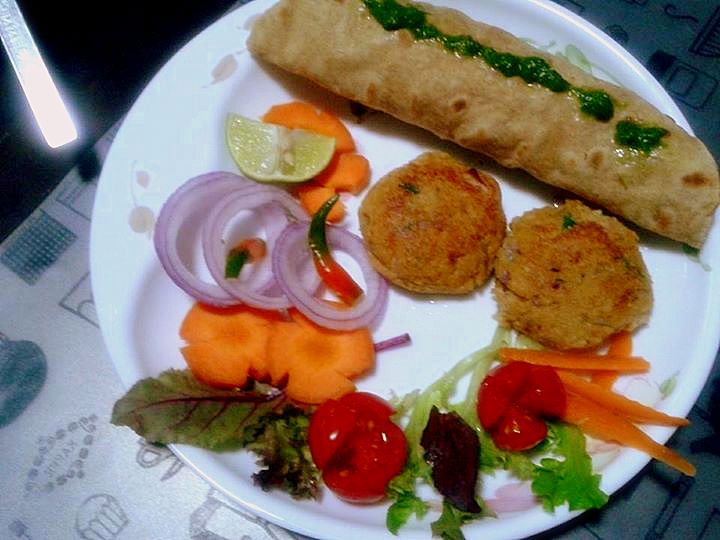
    While you can get non-vegetarian kebabs from anywhere, the vegetarian types are a rarity to find outside one’s house, and they are generally overpriced in the restaurants they are available in. Vegetarian kebabs can be easily made at home, with simple ingredients, and less elaborate methods than their non-vegetarian counterparts. This article will provide you with three novel recipes, all made wonderfully by my favourite chef in the world, my grandmother, for these lesser known variants, namely, shalgam ke kebab, kela chane kebab, and chukandar ke kebab.


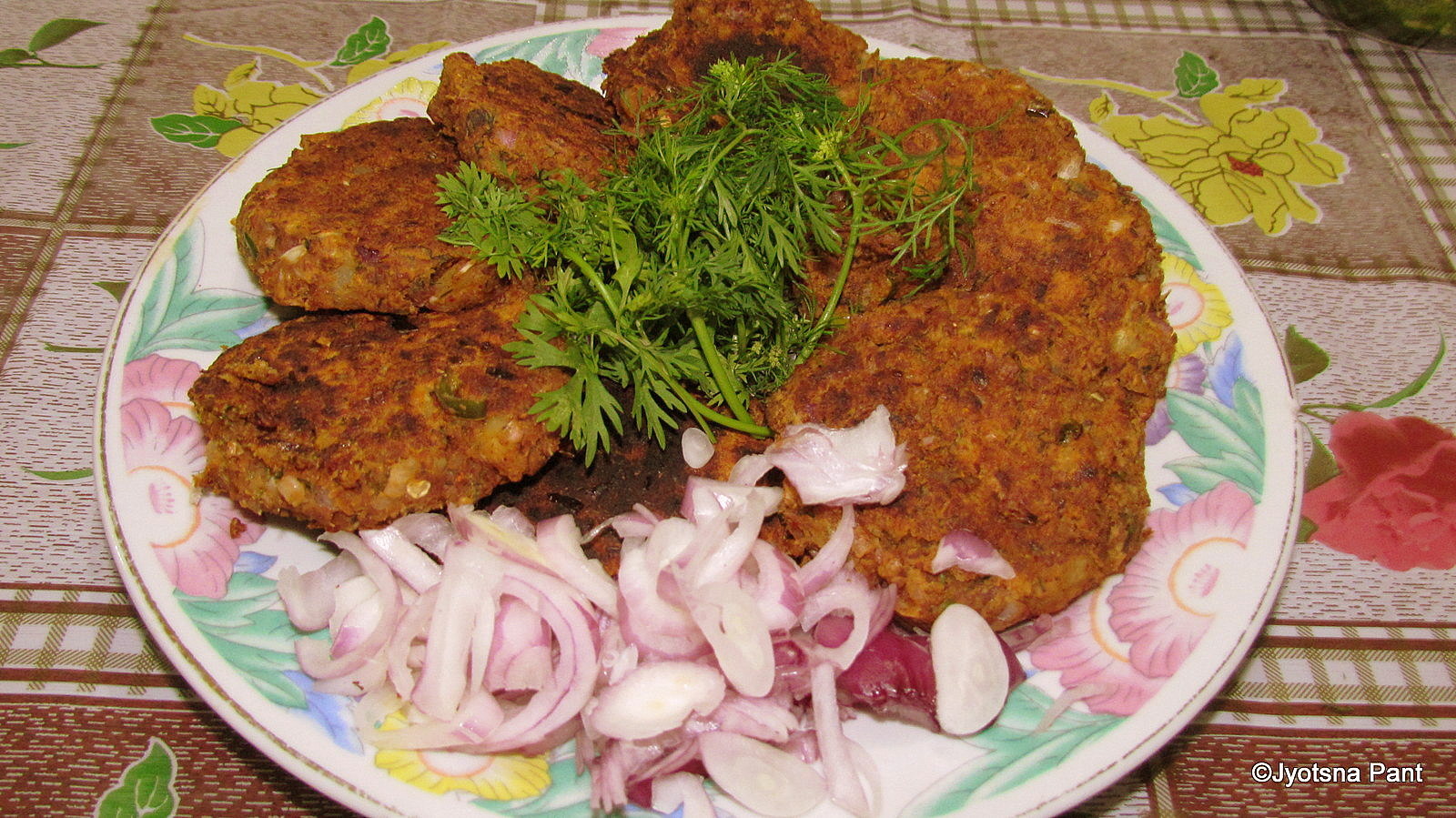
    Shalgam ke Kebab (serves 4-6 people)

    Ingredients needed:

    • 7-8 bulbs of turnips
    • 2 tablespoons of roasted besan (gram flour)
    • Finely chopped onions
    • Finely shredded coriander, chilli, and ginger
    • 2 medium sized boiled potatoes
    • Salt to taste
    • 1 small teaspoon of garam masala powder
    • Vegetable oil

    Steps required:

    • Thoroughly wash the turnip bulbs, and then carefully peel their outer skins off.
    • Put the skinned turnips in a pressure cooker and steam thoroughly.
    • Once the turnips cool down, mash them and drain out the excess water.
    • Mash the boiled potatoes and mix them with the turnips. Add coriander, chilli, ginger, and onion to the mixture and be careful to make it consistent with dough.
    • Add garam masala and salt accordingly.
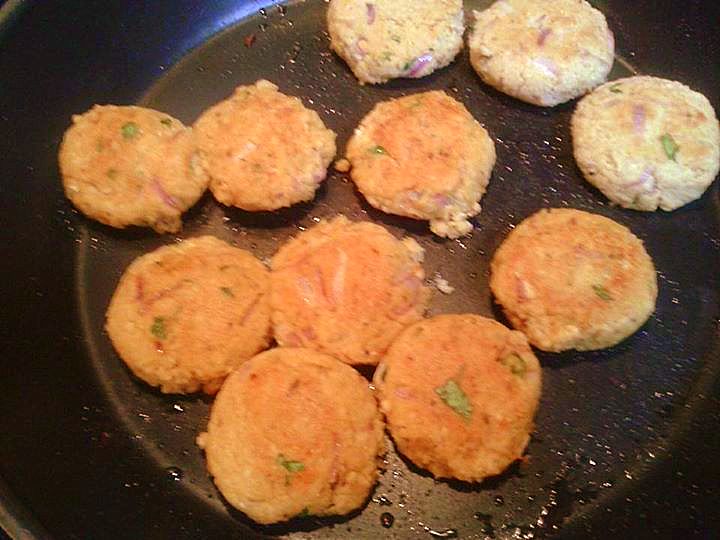
    • Make small balls of the prepared dough and flatten it into small cutlets or flattened disc shaped portions.
    • Shallow fry on a tawa (pan) until the kebabs are thoroughly cooked and are a rich golden-brown in colour.
    • Top with sprigs of coriander and rings of onion. Serve hot, with a chutney of your choice.


    Kela Chane ke Kebab (serves 4-6 people)

    Ingredients needed:

    • 5 clean green unripe bananas
    • 1 bowl of soaked chana dal (gram beans)
    • Finely chopped onions
    • Finely shredded coriander, chilli, and ginger
    • Salt to taste
    • 1 small teaspoon of garam masala powder
    • Vegetable oil

    Steps required:

    • Make sure to wash the bananas thoroughly with fresh water before beginning. Once they are clean, steam them in a pressure cooker with their skins intact.
    • Steam the dal separately to a soft consistency.
    • Once both ingredients cool down, peel the bananas, and mash together with the dal to make a dough.
    • Add garam masala and salt. You can also add other spices such as red chilli powder if you prefer.
    • Shallow fry on a pan.
    • Garnish with sprigs of coriander, and serve with onions and chutney.


    Chukandar ke kebab (serves 4-6 people)

    Ingredients needed:

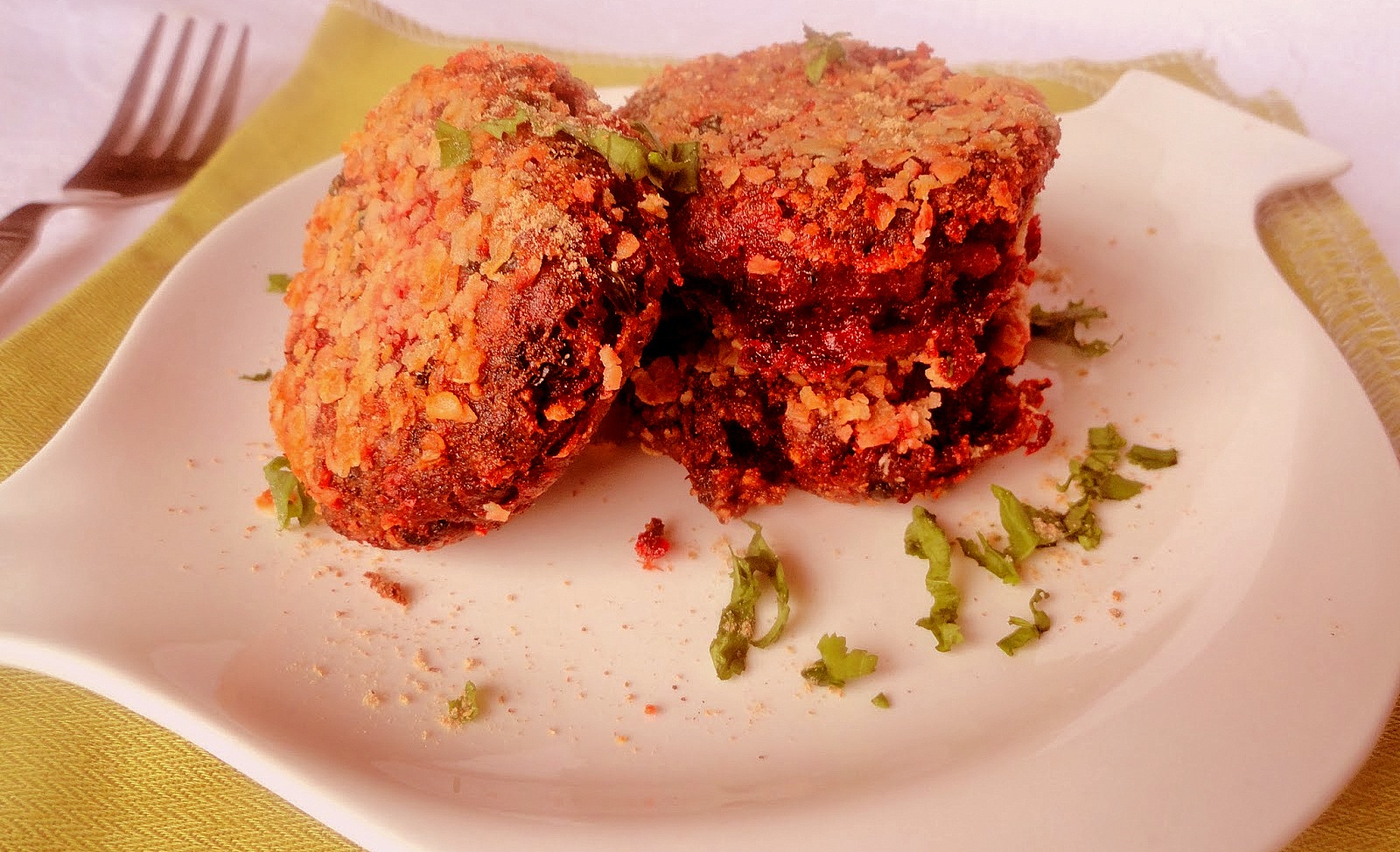
    • 7-8 beetroots
    • 2 tablespoons of roasted besan (gram flour)
    • 2 boiled potatoes
    • 250 grams of paneer
    • A few whole clean leaves of cabbage
    • Finely chopped onions
    • Finely shredded coriander, chilli, and ginger
    • Salt to taste
    • 1 small teaspoon of garam masala powder
    • Vegetable oil

    Steps required:

    • Steam the beetroots thoroughly after cleaning them.
    • Mash the beetroots to a dough-like consistency. If necessary, add a little bit of boiled potatoes as well. Add roasted besan to this mix.
    • In a separate bowl, mash potatoes and mix them with paneer chunks.
    • Add coriander, chilli, ginger, and onion to the beetroot dough.
    • Make miniature balls of the paneer and potato mix after adding salt and garam masala to it.
    • Wrap them in a leaf of cabbage.
    • Encase this in an even layer of beetroot dough. Make it firm with more besan if required.
    • Shallow fry on a pan until the kebabs are thoroughly cooked.
    • Cut the kebabs open from the centre, top with coriander, and serve hot with chutney.
  • Winter Delights: Gajar Ka Halwa and Gujarati Meethi Kadhi

    Winter Delights: Gajar Ka Halwa and Gujarati Meethi Kadhi

    The frigid winter months of December and January are bearing down upon us, and all anyone wants to do right now is to curl up cosily in their heavy blankets and eat tons of hot, rich food. The harsh weather right now makes the human body crave even more for nutrition, and it is not surprising that some of the best dishes that we know of taste the best in these freezing days. Compared to the year long summer heat in most parts of India, we have a greater appetite for food in the winters. It is in these few weeks that we look with great curiosity towards our kitchens, and wait impatiently for our mothers to emerge out of the area with some aromatic and delicious gastronomic work. Be it sarson ka saag and makke di roti, gulab jamuns, hot coffee, or ginger tea, all of these dishes and more never fail to tickle our tastebuds during the cold season. Here are two easy to cook recipes, one for gajar ka halwa, and the other for Gujarati meethi kadhi, in case you ever need a hot fix for your winter woes.


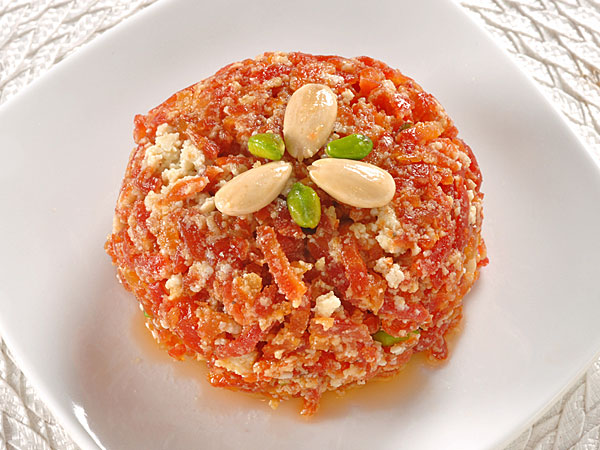
    Gajar ka Halwa

    Also known as gajrela, gajar ka gajrela, and carrot halwa, gajar ka halwa is a South Asian dessert pudding and a winter delicacy in north Indian states. Made by cooking grated carrots, milk, ghee (clarified butter), and nuts together, this dessert is eaten on many festive occasions in both India and Pakistan apart from being available round the year in most sweetmeat shops of the subcontinent. A completely vegetarian preparation, gajar ka halwa is a dish enjoyed by all people, and has been subject to a number of culinary innovations, some of which are a vegan version, red velvet gajar ka halwa, similarly flavoured doughnuts topped with the same, a cream cheese and halwa combination which is the desi counterpart to the carrot cheesecake.

    The dish dates back to the ancient Mughal times, and the word “halwa”, meaning sweet, is itself derived from the Arabic language. Gajar translates to carrot from the Hindi language. While gajar ka halwa may seem like a particularly difficult preparation to pull off in the kitchen, it is actually not. Although the ingredients do take a considerable amount of time to cook fully, gajar ka halwa is a very easy recipe to make provided you have all the cooking materials you need ready at your disposal.

    Recipe (serves three-four)

    Ingredients required:

    • 1 kg of grated carrots, cleaned and peeled beforehand
    • 100 ml of condensed milk
    • Cleaned, preferably roasted, dried fruits and nuts (cashews, almonds, raisins, pistachios)
    • ½ kg of khoya
    • 4 big tablespoons of desi ghee (clarified butter)
    • 1 cup of castor sugar
    • 4 cups of milk
    • Cardamom seeds. Alternatively, you can use one-third of a teaspoon of cardamom powder.

    The steps needed:

    • Put the shredded carrots and milk in a heavy-bottomed pan or a wok on medium flame.
    • Let the carrots soak in the milk to a considerable amount. Let the mixture turn a rich golden-orange colour.
    • Add condensed milk and cardamom and stir for some time.
    • When it is cooked halfway, add khoya, after putting aside some for garnishing. Also add ghee.
    • Once everything is properly mixed, add sugar on a low flame. Take note of the flame and ensure that the sugar does not caramelize in the halwa.
    • Add dried fruits from above, garnish with a little khoya, and serve in bowls. You can also add varakh (the silver food foil) for an aesthetic look.


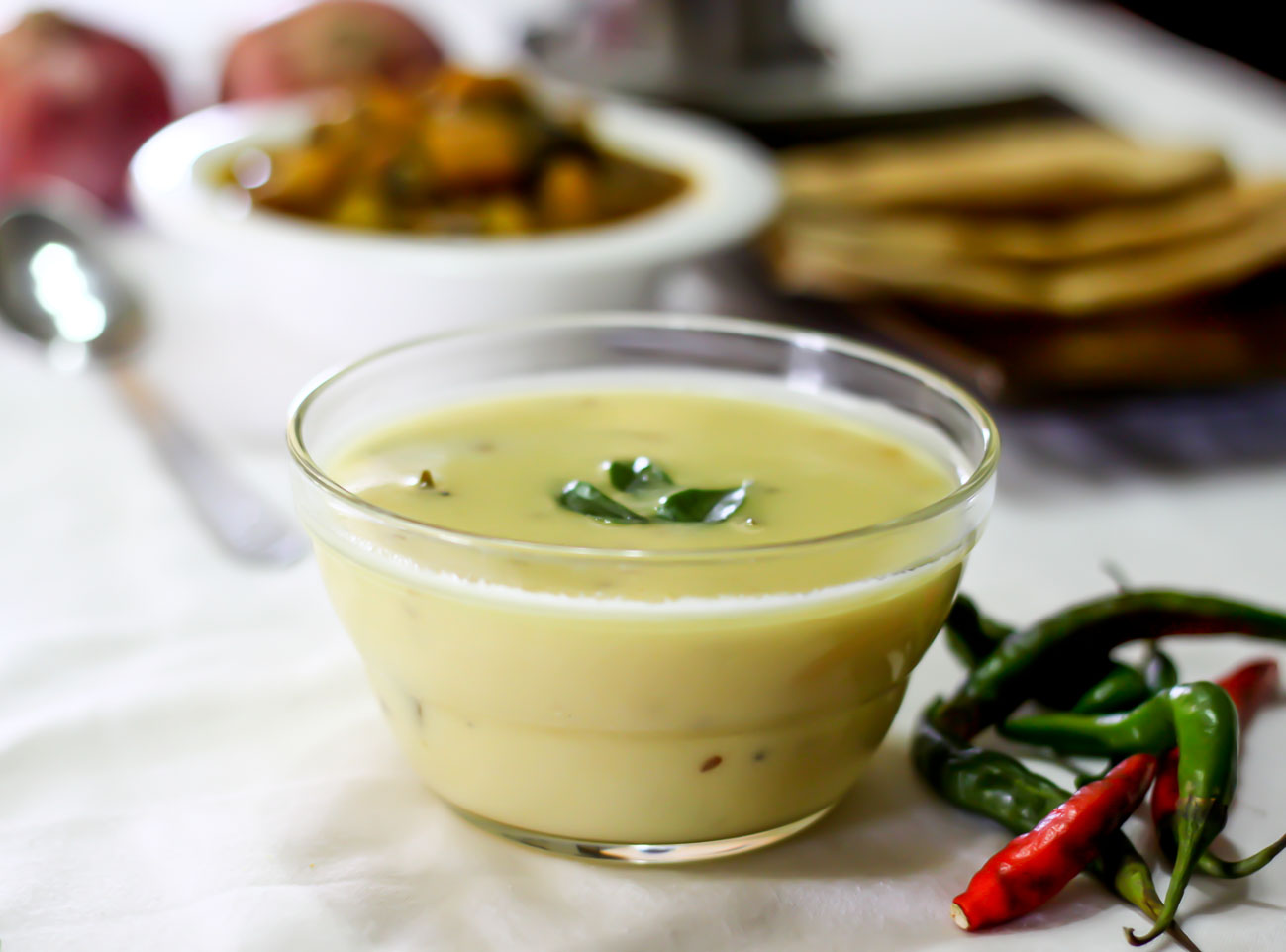
    Gujarati Meethi Kadhi

    Kadhi is an Indian main course dish of desert origins, and was first made in Rajasthan. However, it quickly grew popular with people from other regions of India, and now has different variants according to different states, belonging to Punjab, the Sindh area of Pakistan, Gujarat, Uttar Pradesh, and Maharashtra. While it is a dish best served hot, kadhi itself is derived from curd and yoghurt, which ironically taste best when cold.

    Gujarati cuisine is known for its sweetness, and its kadhi carries the same quality. In our household, Gujarati meethi (Hindi for “sweet”) kadhi is a winter favourite, and its recipe has passed on from one generation to the next, with a few modifications by each. This dish can be had as a drink, and since we already have the salty kadhi of Uttar Pradesh, complimented with besan pakodas (fillets), Gujarati meethi kadhi is served as a hot and sweet beverage mostly in the evenings. It hardly takes much time and effort to prepare, and is the perfect heavy snack that will fill your stomach in between meals. All you need is a bowl, a saucepan, and some easily accessible cooking materials, and a time period of fifteen minutes to spare.

    Recipe (serves two)

    Ingredients required:

    • 2 big tablespoons of besan (gram flour)
    • 1½ glasses of curd
    • Half a cup of water
    • Turmeric
    • Curry leaves
    • Asafoetida
    • A teaspoon of rai (mustard seeds)
    • Two teaspoons of sugar
    • Salt
    • Whole, dried red chillies
    • 2 teaspoons of oil

    The steps needed:

    • Add the besan and curd slowly in a big bowl, stirring slowly so that no lumps are formed.
    • Put a pinch of turmeric in this mixture. Also, add salt according to taste.
    • In a separate pan, put oil and let it heat on a slow flame.
    • To the hot oil, add rai, a little hint of asafoetida, and some curry leaves. Be careful to not let the curry leaves blacken completely because of excessive heat.
    • On a low flame, add red chillies to the pan.
    • Take the besan and curd paste, and pour it in the pan.
    • Stir continuously so that no lumps are formed while keeping the pan on a medium flame.
    • Let the mixture boil, and then pour it in glasses.
    • Top with a few curry leaves and serve hot.
  • Easy Ragi Recipes

    Easy Ragi Recipes

    HISTORY

    ragi history

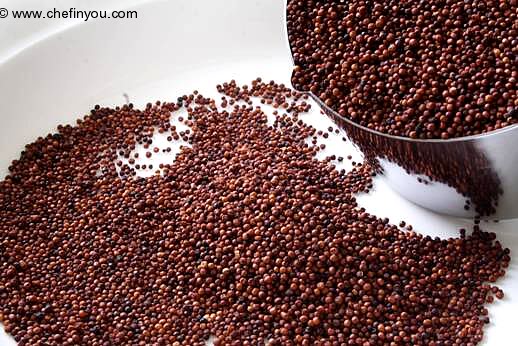
    Ragi, also known as Elusine corcana, has been cultivated in India as far back as 4000 years ago. Today many Indian states produce Ragi and Karnataka is the top producer with 58% of India’s export share. It is also known as Finger Millet in the southern part of India and Nachni in the northern side.

    HEALTH BENEFITS

    ragi health benefits

    Ragi along with oats is one of the most nutritious food and also an easy one to digest. It is rich in calcium, protein and also iron and other minerals. It is rich in unsaturated fat which is good for the body and helps in weight loss. The presence of Tryptophan in Ragi reduces appetite. As compared to white rice, it contains high fiber which helps in digestion and also helps in reducing the cholesterol levels in the body. Patients suffering from anemia and low hemoglobin should include more ragi in their diet because it is a rich source of natural iron. Also, it is a natural relaxant and helps patients suffering from insomnia. It is used as an excellent baby food in the southern parts of India. Ragi porridge is given to the baby for bone growth and overall development.

    But after seeing all these health benefits, ragi should not be consumed in large quantities. High consumption of ragi leads to increase in the quantity of oxalic acid. Hence, it is not advisable for patients suffering from kidney stones.

    So here are some of the easy ragi recipes that can be tried at home.

    A)     RAGI BISCUITS

    ragi biscuits

    INGREDIENTS

    Ragi flour-1 cup

    Powdered sugar- ½ cup

    Butter- ½ cup

    Cardamom powder- ¼ cup

    Baking powder- ¼ tsp


    METHOD

    1)      Roast ragi flour in a pan for 5 min.

    2)      After roasting it add sugar, butter, cardamom powder and baking powder to it and mix it well.

    3)      Make it as a ball and place it in a greased tray. Leave enough spaces between the biscuits.

    4)      Bake it in an oven at 300f for 20 min.

    5)      Cool it and store it in a tight container.


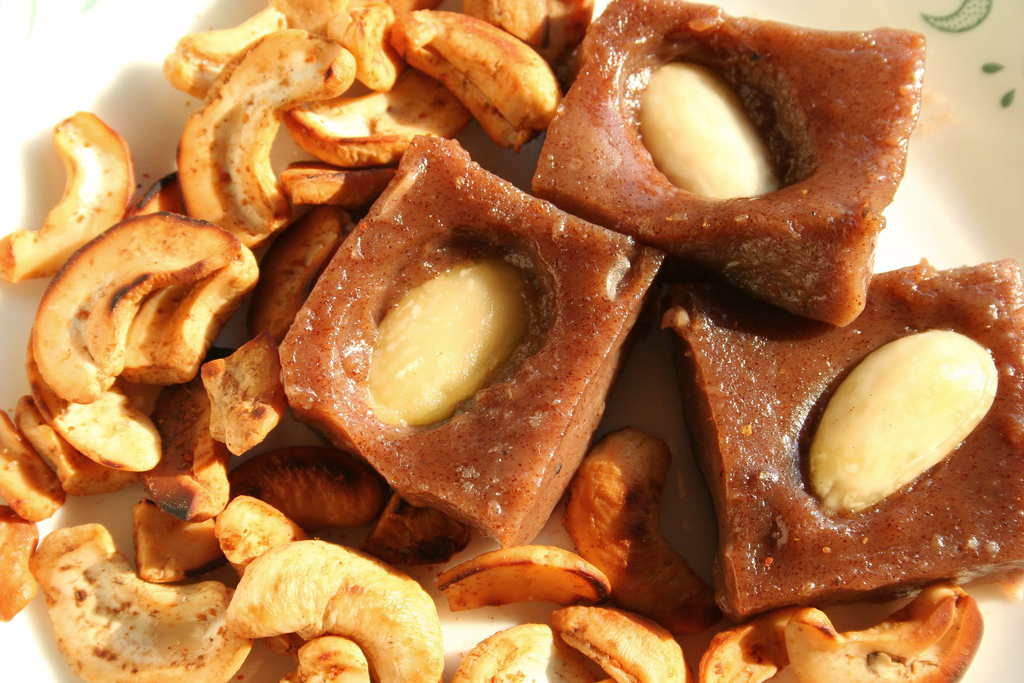
    B)      RAGI COCONUT MILK HALWA

    ragi coconut milk halwa

    INGREDIENTS

    Ragi- 1 cup

    Coconut milk-1 cup

    Sugar -1 cup

    Cashew (fried) – 5

    Cardamom powder- a pinch

    Ghee- needed


    METHOD

    1)      Soak ragi overnight.

    2)      Grind ragi and extract milk.

    3)      Mix ragi milk, coconut milk and sugar in a pan and cook.

    4)      Add ghee and stir continuously.

    5)      When content thickens and ghee starts leaving the contents, remove the pan from the stove.

    6)      Add cashew and cardamom powder to it.

    7)      Transfer the contents to a greased tray.

    8)      Cut into desired shape when it is cool.


    C)      RAGI WHEAT DOSA

    ragi wheat dosa

    INGREDIENTS

    Ragi flour-1 cup

    Wheat flour- 1 cup

    Butter milk- for mixing

    Salt- to taste


    METHOD

    1)      Mix the ingredients well.

    2)      The mixture should be of the thickness of regular dosa batter.

    3)      Keep it overnight and make dosa the next day.

    4)      Serve it hot with any kind of chutney.


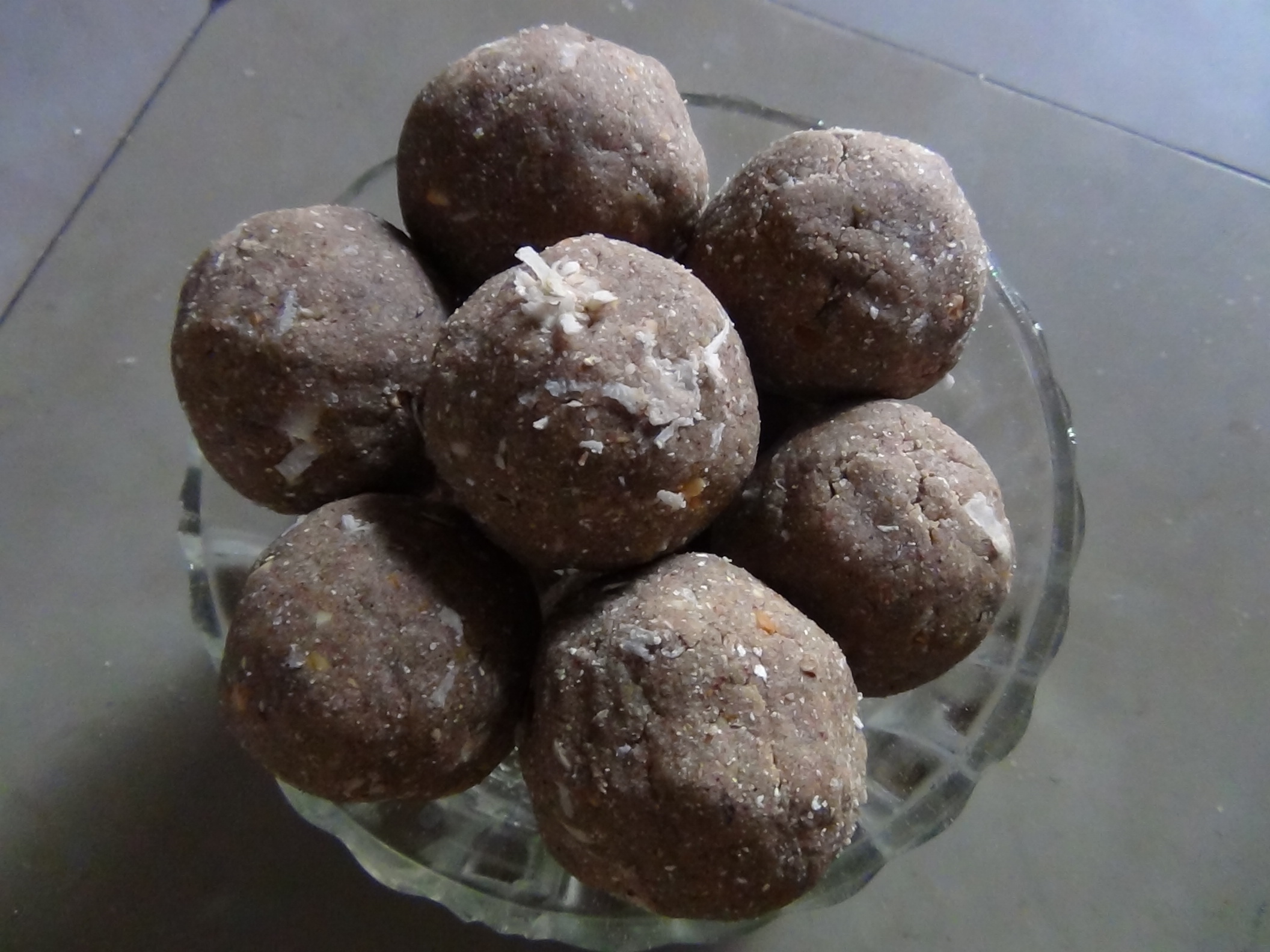
    D)     RAGI COCONUT LADOO

    ragi ladoo

    INGREDIENTS

    Ragi- 1 cup

    Powdered jaggery- ¼ cup

    Roasted peanuts- ¼ cup

    Grated coconut – ¼ cup

    Salt- a pinch


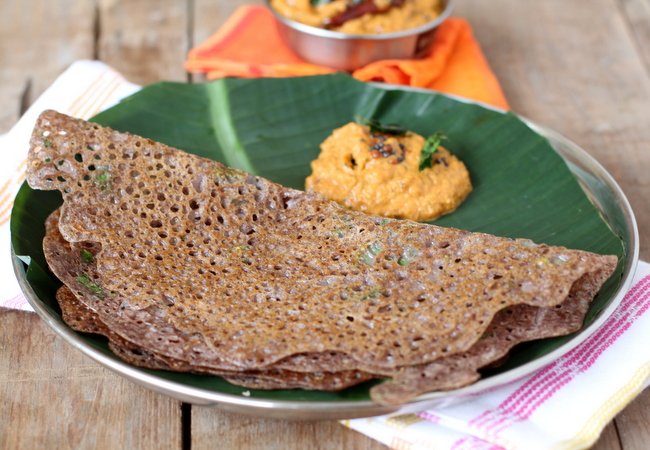
    METHOD

    1)      Take flour and salt in a bowl and water to it little by little while mixing it.

    2)      Add grated coconut to it and steam the mixture for about 10-15 min.

    3)      Lay the mixture into a tray and let it cool.

    4)      Add jiggery and peanuts to it and blend it well.

    5)      Roll them into lemon sized balls.

    6)      Store it in a tight container to use it longer.


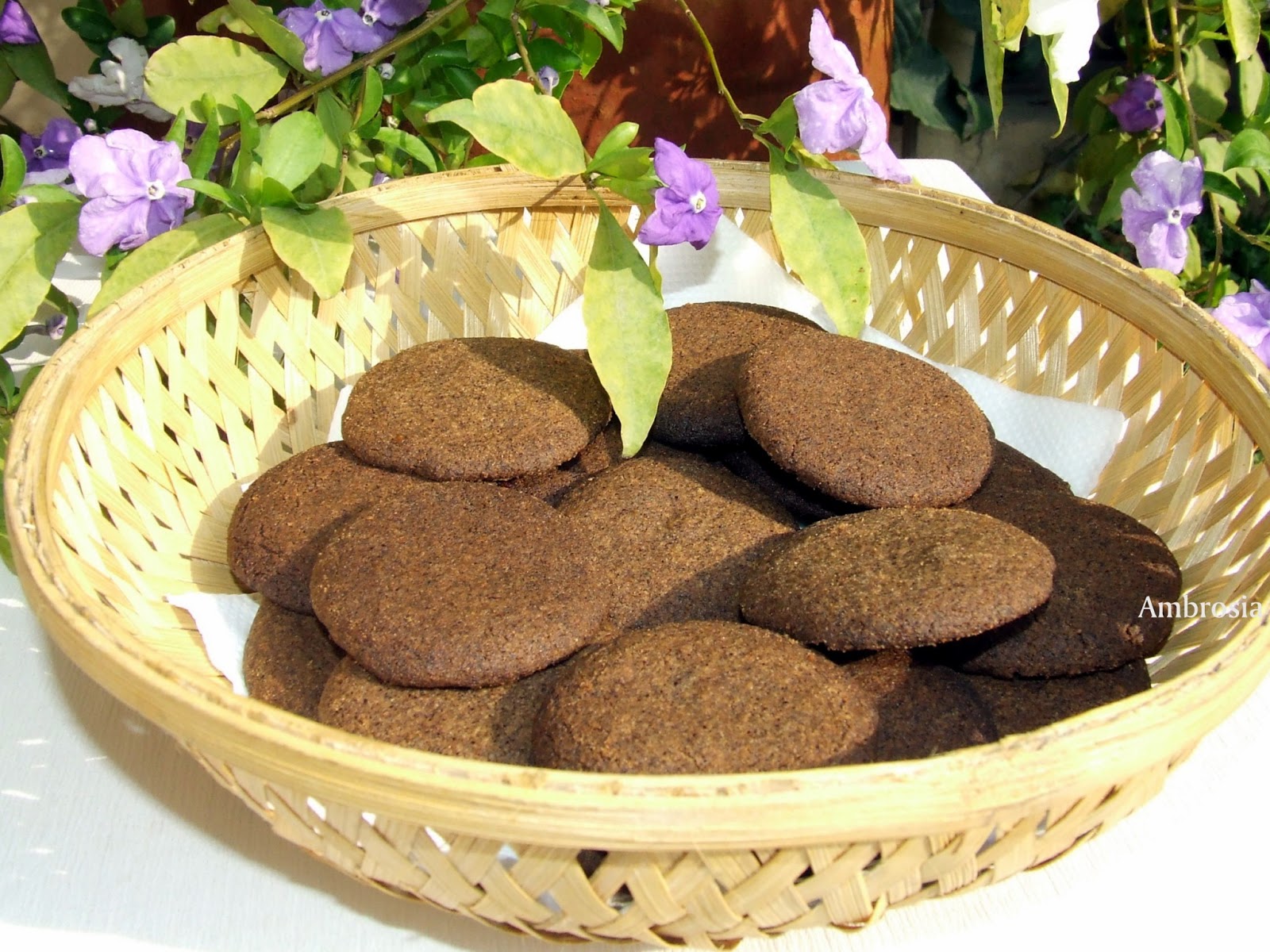
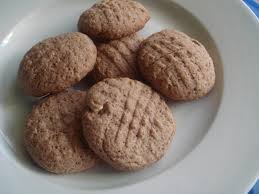
    E)      RAGI COOKIES

    ragi cookies

    INGREDIENTS

    Ragi flour- 1 cup

    Brown cane sugar- ½ cup

    Green cardamom powder- ½ tbsp

    Ginger powder- 2 pinches

    Baking powder- ½ tbsp

    Oil (rice bran) – ½ cup

    Egg (whisked) – 1

    Salt- ½ tbsp


    METHOD

    1)      Mix ragi flour and cardamom powder in a bowl.

    2)      Roast this mixture for a minute or two in a pan till the color changes a bit.

    3)      In a bowl break an egg and whisk it.

    4)      Now add roasted ragi and sugar into it and mix it well.

    5)      Add dry ginger and salt to it.

    6)      Now add oil and mix it well. Now the mixture looks like a dark dough.

    7)      Make round balls and then flatten them in your palms.

    8)      Pre-heat the oven for about 5-7 minutes.

    9)      Keep the cookies in a pan with butter paper on it.

    10)   Place the biscuits with about an inch away from each other.

    11)   Bake it for 8 minutes at 180 degree Celsius.


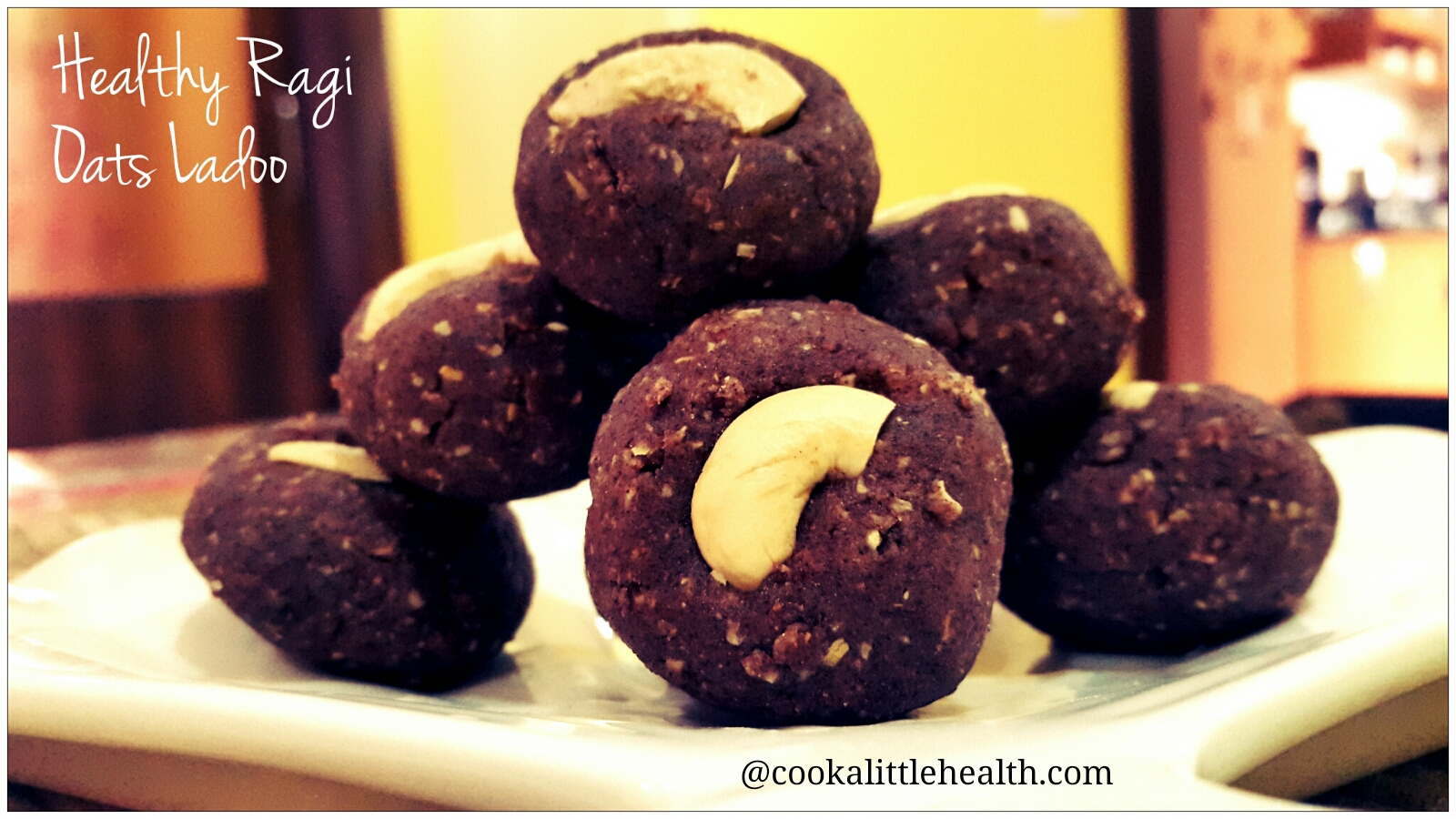
    F)      RAGI OATS LADOO

    ragi oats ladoo

    INGREDIENTS

    Ragi flour- 1 ½ cup

    Oats flour- 1 cup

    Dates (ripe) – 20

    Milk- ¼ cup

    Honey- ½ cup

    Ghee- 3 tbsp

    Green cardamom powder- 1 tsp

    White sesame seeds- ¼ cup

    Coconut powder- ¼ cup

    Cashew nuts- 12


    METHOD

    PREPARATION

    1)      Roast the oats lightly and grind them in a mixture.

    2)      Take about 15 dates in a bowl and remove the seeds from it.
    3)      Add milk to it and make it into a paste with the help of a blender.

    4)      Cut the remaining oats into small pieces.

    5)      Dry roast white sesame seeds.

    6)      Dry roast cashew nuts.


    COOKING

    1)      Take 1 tbsp of ghee in a pan and roast the oats flour on low flame for few minutes.

    2)      Now take another pan and add the remaining ghee to it. Add roast ragi flour to it and heat it in low flame till the rawness is removed.

    3)      Add oats flour to the ragi flour and mix it well in low flame.

    4)      Add dates paste to it and mix it well.

    5)      Now add half of honey and mix it.

    6)      Add cardamom powder to it and keep the pan in a low flame.

    7)      Take the pan out of the stove and let it cool.

    8)      Now add the pieces of dates.

    9)      Now add the remaining honey and mix well into a dough.

    10)   Now take some dough and add a cashew to it and make it in the form of a ladoo.

    11)   Mix sesame seeds into coconut powder.

    12)   Roll the ladoo in this mixture.

    13)   Do the same with the remaining dough and serve it.

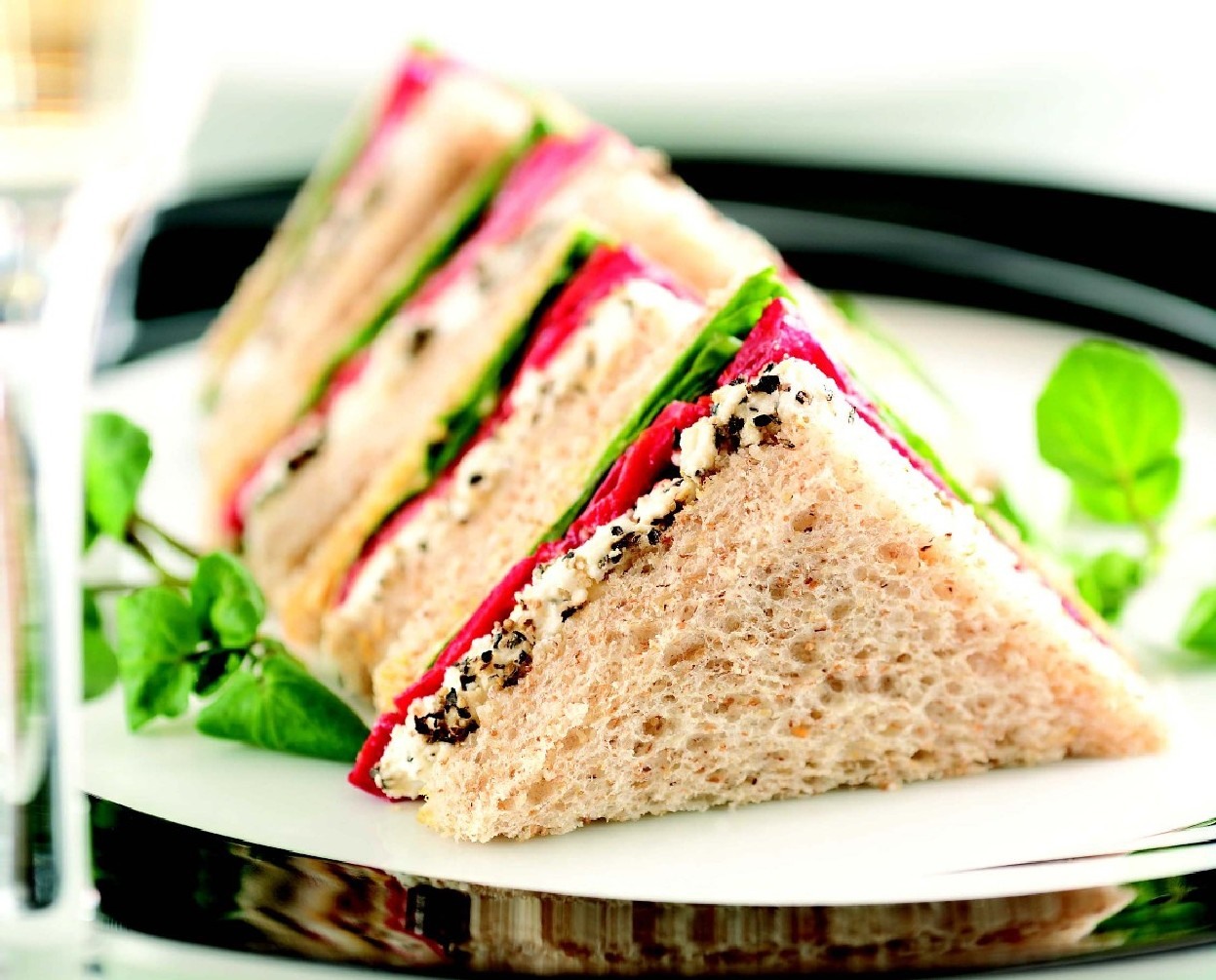
  • Easy Sandwich Recipes

    Easy Sandwich Recipes

    Sandwich is the product of the modern world which was introduced in the western world. Later it spread to other parts of the globe. This simple, easy to make dish is a favourite among children and adults alike. Sandwiches are good for our health since it includes vegetables that we won’t take otherwise. It is a widely popular lunch food is easy to carry and is usually taken to picnics, offices and schools.

    HISTORY

    sandwich history

    The history of modern sandwiches using sliced bread dates back to 18th century Europe. But historians argue that sandwich or sandwich like dishes were used in different cultures.

    The famous Jewish religious leader, Hiller the Elder, is said to have wrapped Paschal lamb or the Passover lamb in soft Matzah (flat, unleavened bread) during Passover ceremony (a religious ceremony of the Jews). Predecessors of sandwich can also be found in Europe during middle ages and also in Netherlands during 17th century.  Initially, sandwiches were considered to be the food of men who shared it while gaming and drinking at night. But slowly, it entered to the aristocratic homes and became a part of their diet. The popularity of this simple food increased due to industrialization and the rise of the working class. Sandwiches became popular in Spain and England during 19th century. This popular and quick meal became part of American culture during 20th century and from then on became a staple diet.

    THE STORY OF THE NAME ‘SANDWICH’

    download

    It is considered as the namesake of John Montagu, 4th Earl of Sandwich, 18th century English aristocrat, who is considered as the eponymous inventor. Before being known as sandwich, it was known as ‘bread and cheese’ or ‘bread and meat.’

    In Spain, sandwich is also known as ‘bocadillo.’ Hamburger is one of the popular varieties of hot sandwiches.

    EASY SANDWICH RECIPES

    A)     HAKKA NOODLES SANDWICH

    download (1)

    INGREDIENTS

    1)      1 Hakka noodles packet

    2)      Capsicum (finely chopped)-1

    3)      Spring onion (finely chopped)

    4)      1 carrot (chopped)

    5)      1 tbs cabbage

    6)      1 tbs  beans (chopped)

    7)      Soya sauce and chili sauce- as per requirement

    8)      Oil

    METHOD

    1)      Boil water and add Hakka noodles and 1 tsp oil.

    2)      Remove the pan and pour the content to a plate and let it cool.

    3)      In another pan, add oil and let it become hot.

    4)      Add chopped vegetables and fry (the vegetables should be crunchy)

    5)      Add soya sauce, chili sauce and also noodles to it and mix well.

    6)      Garnish it with chopped spring onions and serve it hot.


    B)      CHILI PANEER TOAST SANDWICH

    images (1)

    INGREDIENTS

    1)      1 tbs oil

    2)      1 finely onion

    3)      1 crushed green pepper

    4)      2 bread cubes

    5)      ½ cup grated paneer

    6)       tomato ketchup

    7)      chili sauce

    8)      ¼ tsp pepper powder

    9)      Salt- to taste

    10)   Coriander leaves

    11)   ¼ cup grated cheese

    METHOD

    1)      Heat oil in a pan and fry onion and capsicum for 5 minutes.

    2)      Add bread cubes, grated paneer, tomato ketchup, chili sauce, salt and pepper powder to it and mix it well.

    3)      Apply butter on toasted bread.

    4)      Spread the above mixture and sprinkle some grated cheese on top of it.

    5)      Grill until the cheese melts.


    C)      GRILLED CHEESE SANDWICH

    grilled cheese sandwich veg

    INGREDIENTS

    1)      Cooking oil

    2)      2 slices of whole grain bread

    3)      2 slices of cheese

    4)      ½ tomato-sliced

    5)      ½ cup baby spinach

    METHOD

    1)      Layer cheese, tomato and spinach between the bread slices.

    2)      Heat a large skillet over medium low heat. Add oil to it.

    3)      Heat the sandwich till the bottom becomes light brown in color. Flip to the other side and heat it in the same way.

    4)      Cut the sandwich to half and serve it hot.


    D)     GRILLED AMERICAN CHEESE SANDWICH

    grilled cheese sandwich

    INGREDIENTS

    1)      2 slices of bread

    2)      1 slice of American cheese

    3)      1 tbs mayonnaise

    METHOD

    1)      Heat the skillet over medium heat.

    2)      Spread half the mayonnaise to one side of the bread. Heat this side of the bread in the skillet.

    3)      Now add cheese on top of it.

    4)      Spread mayonnaise to one side of another slice of the bread. Keep this side on top of cheese.

    5)      Heat the sandwich till the cheese melts.

    6)      Turn the bread and repeat.

    7)      Cut the sandwich into half and serve it hot.


    E)      ITALIAN STYLE GRILLED CHEESE SANDWICH

    italian style

    INGREDIENTS

    1)      2 slices of white bread

    2)      1 tsp margarine (softened and divided)

    3)      1 slice American cheese

    4)      ½ tsp Italian seasoning

    5)      ¼ tsp crushed red pepper flakes

    6)      2 slices of tomatoes (thinly sliced)

    METHOD

    1)      Spread ½ tsp of margarine on one side of each slice of bread.

    2)      Place the bread (with the margarine side) on a skillet.

    3)      Place cheese on top of bread and sprinkle it with Italian seasoning and red pepper flakes.

    4)      Lay tomato slices on seasoned cheese, overlapping tomato slices.

    5)      Place the other slice of bread on tomato, with butter side up.

    6)      Cook on medium flame till the bread turns a golden brown color.

    7)      Remove the sandwich from the skillet.

    8)      Serve it hot and enjoy the food.


    F)      GRILLED CHEESE AND TOMATO SANDWICH

    grilled cheese and tomato sandwich

    INGREDIENTS

    1)      2 slices of bread

    2)      2 slices of tomato

    3)      2 slices of Swiss cheese

    4)      2 tsp of mayonnaise

    5)      1 pinch salt

    6)      1 pinch pepper

    7)      1 pinch Italian seasoning

    8)      1 pinch garlic powder

    9)      1 pinch minced garlic

    10)   2 tbs butter

    METHOD

    1)      Spread mayonnaise on both sides of bread.

    2)      Put slices of cheese on one piece of bread.

    3)      Add tomato slices.

    4)      Sprinkle it with pepper, Italian seasoning and salt.

    5)      Add cheese on top of tomatoes and cover it with another piece of bread.

    6)      Heat a pan with butter and garlic powder or minced garlic.

    7)      Spread butter on top of each side of bread.

    8)      Grill it until the bread turns golden brown color and the cheese melts.


  • KASHMIRI PANDITS- CULTURE AND CUISINE

    KASHMIRI PANDITS- CULTURE AND CUISINE

    Kashmiri pundits, also known as Kashmir Brahmins are the oldest inhabitants of the state of Jammu and Kashmir. They are the only Hindu community native to Kashmir. Through the years, many Hindus have migrated from different parts of the country. The history of the Kashmiri pundits is the history of Kashmir valley itself.

    CUISINE

    cuisine

    They have their own exquisite culture as well as food habits. They introduced the use of yoghurt, asafetida and turmeric powder to Indian cuisine. There is a heavy use of mutton in Kashmiri cuisine. Its use was prevalent throughout the history of Kashmir. There are about 30 different varieties of mutton in the cuisine. Normally pundits do not use meat but it has a prominent place in the cuisine of Kashmiri pandits. The use of beef is strictly prohibited in the cuisine of Kashmir.

    Meat is cooked in the households of Kashmiri pundits during festivals and it is part of their identity.

    NOTED DISHES

    1)      ROGAN JOSH

    lamb_rogan_josh

    It is a lamb based dish which is seasoned with Kashmiri chilies, ginger, asafetida and bay leaves. Asafetida is used by Pandits in place of garlic. Yoghurt is used instead of onions to make the dish thicker. It is a favourite dish in Kashmir and is cooked during special occasions. It is originated in Persia and is aromatic in nature. It is one of the signature dishes of Kashmiri cuisine. The word Rogan Josh means, “Cooked in oil at intense heat.” This dish was brought to Kashmir by Mughals. It is one of the main dishes in the multi- course dish of Kashmir known as ‘Wazwan.’

    There are many adaptations of this dish where different varieties of sauce are used.

    PREPARATION

    INGREDIENTS

    1)      1 kg  lamb mutton cut in 70gm. Pieces

    2)    ½ cup mustard oil

    3)    1 tbs ghee

    4)    ½ cup curd

    5)    ¼ tsp asafetida

    6)    ½ tsp cumin

    7)    6-8 pieces of half crushed cloves

    8)    2 bay leaves

    9)    2 tbs Kashmiri chili powder

    10)2 tbs fennel powder

    11)1 tsp dried ginger powder

    12)1 tbs salt

    13)1 tbs garam masala

    14)4 cardamom

    15)2 pieces of cinnamon

    16)3 pieces of big cardamom

    17)1 tbs ghee


    METHOD

    1)    Wash the mutton and drain off extra water.

    2)    Put mustard oil in a frying pan and keep it in a full flame till the smoke comes out. Remove it from the flame for 2-3 minutes.

    3)    Mix mutton with the curd and heat the pan on a full flame for frying.

    4)    Stir the mixture so that it won’t stick to the bottom of the pan and also the liquid produced by the pan dries up.

    5)    Now add asafetida, cumin, salt and cloves to it and heat it on a low flame till it becomes brown.

    6)    Now add chili powder to it and stir till deep red color appears.

    7)    Now add 2 glasses of water and bay leaves, fennel powder, ginger powder, cinnamon pieces, crushed cardamom and stir so that that the ingredients mix properly. Cover the pan with a lid and then heat the mixture on a low flame.

    8)    Add garam masala and ghee and boil it for two minutes.

    9)    Garnish the dish with coriander and serve it with boiled rice.


    2)      YAKHNI

    yakhni

    This is another mutton dish from the lands of Kashmir. It is a yoghurt based mutton curry and it excludes the use of turmeric and chili powder. Other ingredients include bay leaves, cloves and cardamom leaves. It is often served with rice along with another spicy side dish.

    PREPARATION

    INGREDIENTS

    1.       1 kg mutton (chest pieces)

    2.       3 ladles of mustard oil.

    3.       2 table spoons of fennel powder

    4.       1 table spoon cumin

    5.       2 bay leaves.

    6.       ½ tea spoon asafetida

    7.       5 half crushed cloves

    8.       3 black cardamom

    9.       1 inch cinnamon

    10.   1 kg whipped curd.

    11.   1 spoon pure ghee


    METHOD


    1)      First wash the mutton and drain off excess water.

    2)      Heat oil in a pressure cooker and then add mutton, salt and asafetida to it. Start frying for five minutes in full flame.

    3)      Put ½ glass of water, fennel powder, crushed black cardamom, cinnamon and bay leaves and pressure cook it up to 3 whistles.

    4)      Put oil in a frying pan and heat it. Then cool it for three minutes and put cumin to it.

    5)      Put it on a low flame and stir the cumin for three minutes. Then add curd to it and put the pan on a high flame. Stir the mixture continuously so that it won’t curdle till it boils.

    6)      Add the boiling curd and pure ghee in the mutton and keep it on a low flame for five minutes.

    7)      Serve the dish with hot boiled rice.


    3)      WOZIJ CHAAMAN

    wozij chaaman

    It is an important vegetarian dish prepared in Kashmir during special occasions.

    INGREDIENTS

    1) 1 kg cheese

    2) 1 table spoon salt

    3) 2 table spoon red chili powder.

    4) 2 table spoon fennel powder

    5) 1 tea spoon ginger powder

    6) 1 tea spoon cumin

    7) 1/2 tea spoon black cumin.

    8) 1/4 tea spoon asafetida

    9)  4 crushed black cardamom

    10) 4 half cloves

    11) 2 bay leaves

    12) 2 small pieces of cinnamon

    13) 3 crushed cardamom

    14)  3-4 ladles mustard oil.


    METHOD


    1)    Cut the cheese into big pieces.

    2)    Put oil in a pan and fry the cheese in oil till they turn into brown color. Then add the cheese into a boiler.

    3)    Add 3 glasses of water and then salt to it. Also add fennel powder, bay leaves and cinnamon pieces in the boiler.

    4)    Turn the stove to low flame and add black cumin, cloves, asafetida, and red chili powder to it.

    5)    Add ½ glass of water in the pan containing rest of the oil and heat till the red color appears and water evaporates.

    6)    Empty the contents of the pan in boiler and cook it in low flame till some water evaporates.

    7)    Add cardamom and cumin to it and cook for 1 min.

    Now the dish is ready and can be served with chapatti or hot boiling rice.


  • Sweet Potato: Delicacies you cannot miss

    Sweet Potato: Delicacies you cannot miss

    SWEET POTATO DISHES

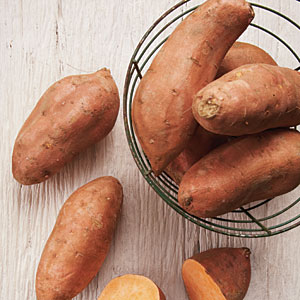
    Sweet potato is the healthier replacement of our beloved potatoes and it is loved by most of us. Packed with important vitamins and other nutrients, sweet potato helps us stay fit. They are also a good source of potassium and iron which are two most important minerals for our body. Sweet potatoes are not only delicious but they also come with long list of health benefits. So, head to the nearest grocery store now and grab some sweet potatoes. Here are a few dishes to get you started.

    -sweet-potatoes-m

    1. Sweet Potato Biscuits

    Ingredients:

    • 1/2 kg of all-purpose flour

    • 1/2 teaspoon salt •

    I cup butter

    • 1 sweet potato

    • 4 teaspoon baking powder

    • 1/2 cup buttermilk

    • 1/4 -1/2 cup unsalted butter

    • 3-4 tablespoon maple syrup

    Method:

    • Cook and mash the sweet potato.

    • Now, add buttermilk to mashed sweet potato and blend it well.

    • In another bowl add the all-purpose flour, baking powder and salt. Add the butter to this and mix it well.

    • Add the two mixtures and mix it well into soft dough.

    • Roll out the dough on a smooth surface to about a thickness of 1 inch. Use a biscuit-cutter to cut into your desired shapes.

    • Bake it for 15 minutes approximately and your sweet potato biscuits are ready.

    For the Maple Butter:

    • Mix the maple syrup with the butter to get a smooth mixture.

    • Serve with the warm biscuits.

    sweet potato biscuits


    2. Sweet Potato Patties

    Ingredients:

    • 4 sweet potatoes

    • 3 eggs

    • 1 cup of chopped onion

    • 1-2 teaspoons of chilli powder

    • 1 teaspoon salt

    • 1/2 teaspoon cumin seeds

    • 1 teaspoon pepper

    Method:

    • Grate the sweet potatoes and keep it aside.

    • In a pan, sauté the cumin seeds until brown.

    • Whisk the eggs and add the grated sweet potato, chopped onion, chilli powder, pepper, salt and the cumin seeds.

    • Heat oil in a frying pan. Now put spoonful of batter into it and fry until golden brown.

    • Serve it with sauce or chutney.

    sweet-potato-bites-300x300

    3. Sweet Potato Pancake

    Ingredients:

    • 1 cup wheat flour

    • 1 cup all-purpose flour

    • 1 sweet potato

    • 2 tablespoons sugar

    • 4 teaspoons baking powder

    • 2 cups of milk

    • 2 eggs

    • Butter

    • Maple Syrup

    Method:

    • Cook the sweet potato and peel it. Now, puree it and keep it aside.

    • Take a bowl and whisk the eggs. Add wheat flour, all-purpose flour, sugar, baking powder and milk.

    • Heat a pan and butter it properly. Cook a spoonful of the batter until golden brown on both the sides.

    • Serve the hot sweet potato pancakes with maple syrup and enjoy!

    4. Sweet Potato Pasta Ingredients:

    • 1 cup of whole wheat pasta

    •1 sweet potato

    • 1 red bell pepper (thinly sliced)

    • 1 cup diced tomatoes

    • 1 teaspoon crushed garlic

    • 1 tablespoon lemon juice

    • 2-3 tablespoons of chopped parsley

    • 1/2 cup cheese

    • Salt

    Method:

    • Peel and shred the sweet potato and keep it aside.

    • Cook the pasta until tender.

    • Take a skillet and add 1 tablespoon of oil along with garlic. Keep stirring until you get the aroma of the garlic. Now, add the sweet potato, tomatoes, bell pepper and water. Cook until the bell pepper is crisp and tender. • Drain the pasta but keep half of the water it was cooked in. Now, put the pasta back into the vessel and add the sweet potato mixture, 1 tablespoon oil, parsley, lemon juice, salt and cheese. Add the retained pasta water and combine the mixture well. Your delicious sweet potato pasta is ready!


    5. Sweet Potato Chocolate Pudding

    Ingredients:

    • 1 large roasted sweet potato

    • 1/4 cup unsweetened cocoa powder

    • 2-3 tablespoons maple syrup

    • 1/4 cup milk

    • 1/2 teaspoon vanilla extract

    Method:

    • Peel and puree the roasted sweet potato until smooth.

    • Combine all the ingredients and blend it well until smooth. It should in a puree form. Your easy-to-make sweet potato chocolate pudding is ready to serve!

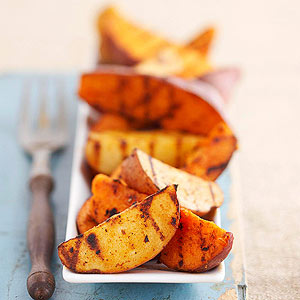
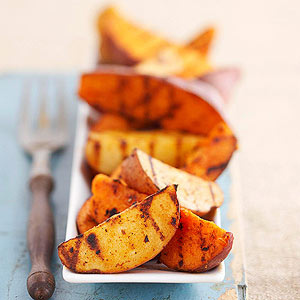
    6. Sweet Potato Wedges

    Ingredients:

    • 2-3 sweet potatoes

    • Pepper

    • Salt

    Method:

    • Peel the sweet potato and cut into wedges.

    • Mix the wedges with some oil, pepper and salt. Blend it well.

    • Roast the wedges in the oven for around 15 minutes until they turn golden brown.

    • Sprinkle some pepper on the top and serve them hot with ketchup.

    potato-wedges-

    7. Sweet Potato Soup

    Ingredients:

    • 1 sweet potato (peeled and diced)

    • 1 chopped onion

    • 1/2 teaspoon chopped garlic

    • 3-4 carrots (peeled and sliced)

    • 1 red pepper, sliced

    • 1 teaspoon ginger

    • 1/4 cup yogurt

    • 1 cup chicken broth

    Method:

    • Heat oil in a pan. Add chopped onion and garlic. Sauté for 2-3 minutes.

    • To this add the chicken broth and two cups of water. Stir well.

    • Now, add sweet potato, carrots, red pepper and ginger. Cook it well.

    • Once it is done, keep this mixture in the fridge for around 25 minutes. • Next, remove the vegetables from the mixture and puree them until thick.

    • Put this puree into the soup and blend them well. • Cook until the soup thickens. When it almost finished, add yogurt and mix it well. Serve and enjoy!

  • Chutneys are Yummy! Part 2

    Chutneys are Yummy! Part 2

    Chutney (also translated as Chatney or Chatni) is a family of condiments mainly associated with South Asian cuisine that usually contain some mixture of spice(s), vegetable(s), and/or fruit(s). Chutneys may be either wet or dry, and can have a coarse or fine texture. There are various types of chutneys.

    Traditionally, chutneys are ground with a mortar and pestle made of stone or an ammikkal . Spices are added and ground, usually in a particular order; the wet paste thus made is sauteed in vegetable oil, usually gingelly (sesame) or groundnut (peanut) oil. Electric blenders or food processors can be used as labor-saving alternatives to stone grinding.

    Chutney

    Let’s explore two new mouth-watering recipes of Chutneys which one can make easily at home!

    • Garlic Chutney:

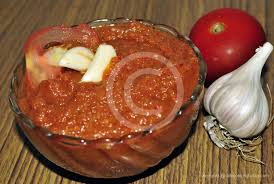
    garlic chutney

    This is a fiery-spicy chutney made from garlic cloves and red chilies. It is a taste-enhancing must-have accompaniment for South Indian dishes like Dosa, Idli, etc. In this customized Indian Garlic Chutney recipe, garlic, soaked red chillies and coconut are first sautéed in oil, and then crushed with tamarind pulp to make delicious Chutney having a complex hot, sour and spicy taste altogether.

    • Ingredients:

    1)  8 chopped garlic cloves (skin removed).
    2)  2 whole dry red chillies, seeded and broken into pieces.
    3)  ½ cup grated fresh coconut.
    4)  1 teaspoon tamarind pulp.
    5)  ¼ cup water.
    6)  2 teaspoons oil.
    7)  Salt according to taste.

    • Directions:

    1)  Heat 1 teaspoon oil in a pan. When the oil is hot enough, sauté the chopped garlic over a low flame for a minute and then transfer to a plate.
    2)  Heat the remaining 1 teaspoon oil in the same pan and sauté the dry red chillies over a low flame for 20-30 seconds. Again, transfer them to the same plate.
    3)  Let the sautéed garlic and dry red chillies cool for about 3-4 minutes. Transfer the garlic and the dry red chillies to the chutney jar of a grinder or food processor. Grind them until a medium coarse paste is formed.
    4) Add the grated coconut, the tamarind pulp, ¼ cup water and salt (according to taste) to the jar.
    5)  Grind them till a medium coarse paste is formed. Tasty South Indian Garlic Chutney to be enjoyed along with Dosa and Idli is ready to be served!

    • Tips:

    1)  You can also use 2 teaspoons of the red chilli powder in place of the usual dried red chillies.
    2)  Dry Kashmiri red chillies are specially added to get that nice red color and also to make a less spicy Chutney when compared to other varieties of chillies as such.
    3)  Replace the tamarind pulp with 1 teaspoon of lemon juice for a slight variation in the overall taste of the Garlic Chutney.

    • Preparation Time: 5 minutes.
    • Cooking Time: 5 minutes.
    • Servings: 6 (½ cup).


    • Pudina Chutney:

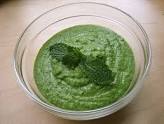
    pudina chutney

    Pudina (Mint) is an herb known for its medicinal benefits for indigestion, acidity, headache, dental and skin diseases. It is an integral part of Indian cuisine as well. This Pudina Chutney recipe makes for an extremely flavorsome and tempting Chutney prepared right from fresh mint and coriander leaves. However, its main taste comes from the tamarind paste which is added to give a nice tang to its spiciness. The whole texture of the Chutney is derived from the fresh coconut.

    • Ingredients:

    1)  ¼ cup fresh Pudina (mint) leaves.
    2)  1 cup chopped coriander leaves.
    3)  ½ cup grated fresh coconut.
    4)  2 chopped green chillies.
    5)  ½ inch piece ginger, chopped.
    6)  2 teaspoons tamarind pulp or lemon juice.
    7)  1 teaspoon sugar (optional).
    8)  Salt according to taste.
    9)  ½ cup water.

    • Note:

    This recipe requires tamarind pulp as an ingredient. You can easily find ready-made tamarind pulp to be bought in the market. If the tamarind pulp is not available, then you can also prepare it at home by simply following the directions which are given below-

    1)  Soak the tamarind in hot water for roughly 1 hour.
    2)  Remove the seeds of the tamarind.
    3)  Strain the whole mixture to prepare fresh and homemade tamarind pulp.

    • Directions:

    1)  Clean the mint leaves and the coriander leaves well by running them under fresh tap water.
    2)  Grind the fresh coconut, green chillies, ginger, sugar and salt together in the chutney jar of a mixer or a food processor until a very smooth paste is formed.
    3)  Add the mint leaves, the coriander leaves, the tamarind pulp (or the lemon juice) and ½ cup water. Grind again until a very smooth consistency of chutney is arrived at.
    4)  Fresh Pudina Chutney is ready to be served along with your favorite condiments!

    • Tips:

    1)  Replace the tamarind pulp with an alternative of lime juice for an even more delicious tang of the Pudina Chutney.
    2)  Store it in an airtight container in refrigerator for up to 3-4 days. You can then use as and when it is required.
    3)  You can always add more water and adjust the spices according to your own tastes so as to make the Pudina Chutney more diluted and thin, or of a concentrated and strong flavor.

    • Preparation Time: 10 minutes.
    • Servings: 8 (1 cup chutney).

    So there you are – two delicious Chutneys which you can easily make at home by following some simple instructions. These are very good from the health point of view. They also acts as excellent taste enhancers.

    Keep watching this space for more delicious recipes!