Author: srishti saha

  • Candy Bars: Part 2

    Candy Bars: Part 2

    Candies and chocolates form an integral part of our growing up and growing old alike. The first part of ‘Candy Bars’ covered facts about some popular chocolates that make our lips smack just at the mere mention of the names. This article covers a few more of them.
    Toblerone
    toblerone-hero
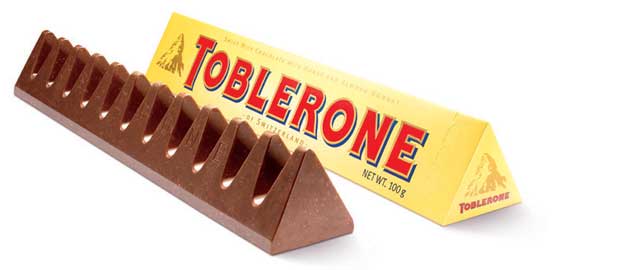
    Toblerone is a Swiss chocolate bar brand that has been named after its’ creator Theodor Tobler. It was first launched in 1908. It is well known for its distinctive prism shape or that of a pentahedron. The shape of the chocolates is apparently inspired from the Swiss Alps. However, Theodors’ sons claim that the triangular shape comes from a pyramid shape that some dancers created at a show that Theodor saw. The uniquely shaped milk chocolate includes nougat, almonds and honey thus lending it a characteristic flavor. ‘Torrone’, Italian for nougat lends the chocolate its’ second half of the name.
    1

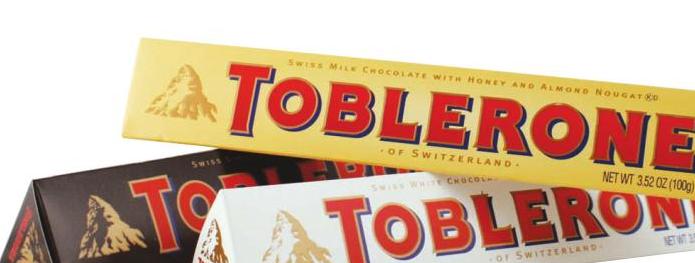
    Toblerone is sold in a variety of sizes and flavors ranging from ten centimeters to nearly one meter. The variants of Toblerone that have been produced are equally popular. Dark chocolate, White Chocolate, Snow top (with white chocolate peaks) and Toblerone Pralines are some of them to name.
    Mars Chocolate bar
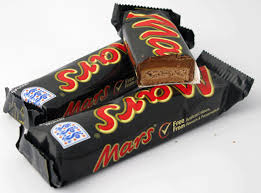
    images
    Mars is again a chocolate bar manufactured by Mars Inc. It was first manufactured in 1932 by Forrest Mars in the United Kingdom. A delectable chocolate bar featuring nougat and caramel covered in milk chocolate. In the States, a different confection with nougat almonds and soft caramel bore the same name until it was discontinued in 2002. In 2002, the Mars bar that was sold worldwide was reformulated and the price was revised. The nougat was made lighter and the chocolate layer on the top was made thinner. Mars has been marketed in various sizes, from bite sized ‘Snack Time’ versions to large ‘king-size’ bars.
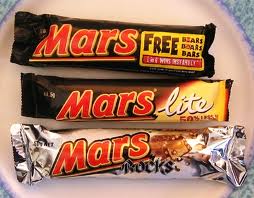
    download (1)

    Several limited edition variations have also been released in different countries. Mars Almond and Mars Triple Chocolate with chocolate nougat and chocolate caramel are my personal favorites. There have been dark chocolate versions, now called Mars Dark (earlier Mars Midnight) and Mars Dark and Light as well. A variety of other products like Mark Lava (orange flavored), Mars Vanilla, Mars Loaded and Mars Honeycomb have also been produced.
    Snickers
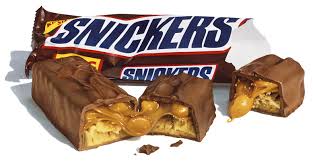
    download (2)
    Snickers has been my comfort food before all exams and after all important events. It is my personal favorite when it comes to chocolate bars because of the perfect balance of taste that is struck among the ingredients. Snickers is a brand name for a chocolate bar produced by Mars Inc. It is a rich chocolate bar with nougat topped with peanuts and caramel, covered with milk chocolate. In countries like Ireland, the United Kingdom and the Isle of Man, Snickers was sold under the name ‘Marathon’ until 1990. The candy bar has been named after the favorite horse of the Mars family.

    images (1)

    With a variety of variations and limited editions of the chocolate bar, the original one still stays a hit. Snickers Almond Bar was another popular variation which was later stopped in 2009. Peanut-butter and dark chocolate versions of this have also been released. So find your favorite and as they say, ‘Grab a Snickers!’
    3 musketeers
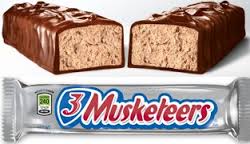
    images (2)
    3 musketeers, as fascinating as the name sounds, I bet it is one of the most pleasant experiences for your palate. It is a candy bar manufactured in the United States and in Canada by Mars Incorporated. It was the third brand produced by Mars in 1932 for the first time. Originally, it had three different pieces in the same package with chocolate, strawberry and vanilla flavors; hence the name. Rising costs and other constraints left only the most popular chocolate flavored bar phasing out the other two. It is basically a fluffy-soft whipped chocolate core covered with milk chocolate.
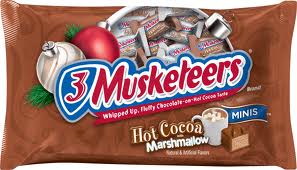
    images (3)

    Manufacturing 3 musketeers is a fascinating procedure. The nougat chocolate center is first formed into large slabs, cut into required sizes and after the centers are formed, they are enrobed in milk chocolate. In this process, the centers pass through a continuous flowing vertical “sheet” of chocolate while, a rotating chocolate covered wheel under the mesh belt coats the base of the bar simultaneously. 3 musketeers has been released in a number of varieties. The mint version was the first brand extension, which was introduced to celebrate the 75th anniversary of the chocolate bar in 2007. Mocha Cappuccino, French Vanilla and Strawberry are some other limited editions that have been introduced.
    Hershey’s Krackel
    download (5) download (4)
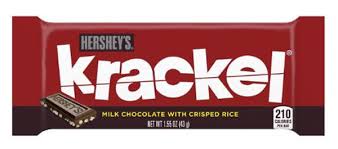
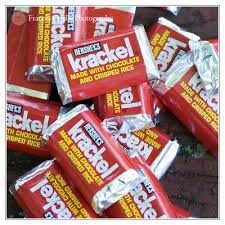
    Krackel is a chocolate bar manufactured by the Hershey Company. It contains crisped rice in milk chocolate which makes it very similar to rival company Nestle Crunch. When it was first introduced in 1938, it also had almonds in the recipe. Peanuts were later added in 1939; but both the nuts were later removed in 1941. It was originally sold as an individual candy bar product and sometime later was only available as one of Hershey’s miniatures.
    download (3)

    It was again reintroduced as an individual chocolate bar in 2014. The creamy milk chocolate and the crispy rice make this a very popular treat. There have been any variations in the flavors as such but the comeback of the chocolate bar as an independent product after 17 years was a great news for all its fans!
    images (4)
    So, doesn’t just reading about chocolates make us happy? It makes us crave for one too though! Now that these fact files about some really popular chocolate brands have been covered, select your favorite one and go grab a bar!

    download

    Nothing satiates a huge appetite more than a piece of chocolate. Make sure you complete the chocolate bar in one sitting! Most of us do that, as they say:
    “Strength is the capacity to break a Hershey bar into four pieces with your bare hands – and then eat just one of the pieces.”
  • The art of Chikankari!

    The art of Chikankari!

    Gorgeous Terracotta pots, the ‘tehzib’ (polite mannerisms), the famous ‘Zari Zardosi’, the Nawabs, the eloquent Urdu poetry and the lip smacking Kebabs…Do these ring a bell in your mind? For many of us, it takes us to this one place located in Uttar Pradesh around the Gomti River, which is known as Lucknow to the world! Arts and crafts form the heart of this city. Handicrafts account for a major chunk of its economy and this place is a must-visit for everyone who has a liking for indigenous arts.  Lucknow has given another fine art form to the world, called the ‘Chikankari’.

    images

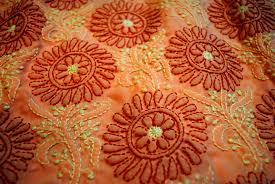
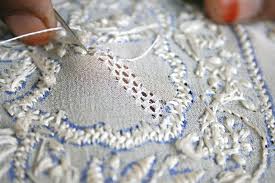
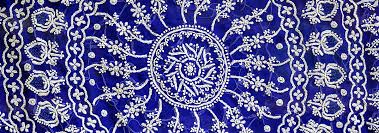
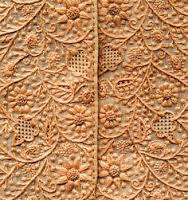
    Chikankari is a unique traditional embroidery style also known as ‘shadow work’. It is a very delicate hand embroidery done originally on soft muslin cloth using a white thread and occasionally a yellowish silk fibre. With the modernization of this old art-form, artisans have started producing these elegant marvels on a multitude of bases like semi-georgette, pure georgette, silk, chiffon and other light and thin fabrics. It is made sure that the fabric is not hard or very thick to make sewing with the needle easier. The intricacy and the exquisite gossamer characteristics of this art form lends it a very subtle elegance and a fine quality that is appreciated by designers all over the world. The art of Chikan embroidery is not just a mere craft anymore. It accounts for a large amount of income of the state through exports and is thus one of the most important economic activities practiced in Lucknow and the neighbouring areas. It provides employment to over 3 lakh people ranging from artisans, dealers, entrepreneurs and exporters.

    6.-Noor-Jehan-eating-paan

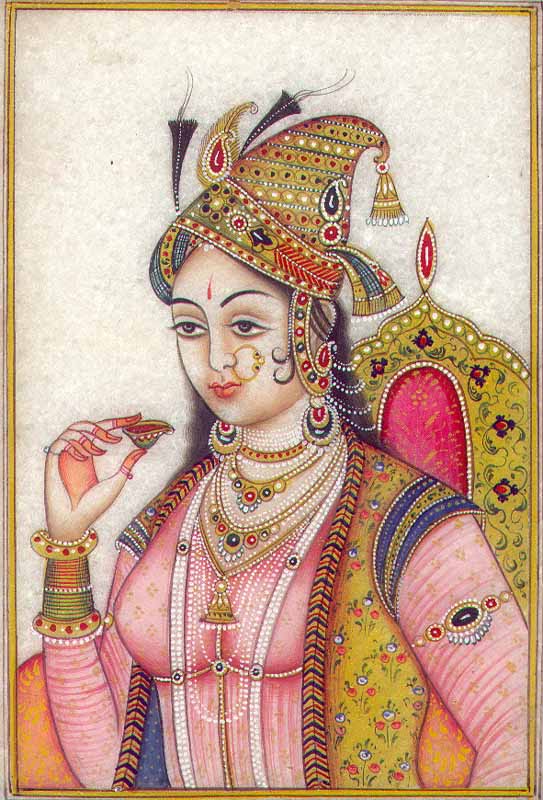
    The word ‘Chikan’ has Persian roots and finds its lexical origin in the word ‘Chikh’ or ‘Chakin’ which refers to a cloth adorned with needlework. The origin of Chikan has several tales associated to it. The earliest reference to it was in the 3rd century BC when a Greek traveler, Megasthenes mentioned the use of flowered muslins by Indians. Some famous folklore suggest that a traveler passing through a village near Lucknow is accountable for the popularity of the craft. They say that the tired traveler while crossing this little village asked for water from a poor peasant who offered it graciously to him. As a token of appreciation, he taught the skill of Chikankari to the farmer so that he would never fall short of money ever again. Though it is said that Chikankari became an integral part of Indian Culture when the art form was revived by the Mughal Empress Noor Jehan. Despite being a part of the Indian heritage for centuries before this, the origin of chikan is believed to be in the town of Awadh due to the impetus given to the work by Noor Jahan.

    images (5)

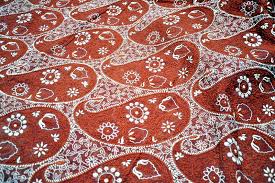
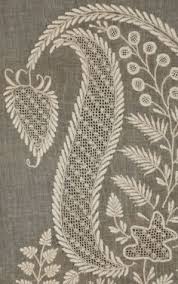
    The art has a huge Mughal inclination. The inspiration from Mughal designs can be widely seen in the motifs sewn onto the fabric. Generally floral designs with plants, leaves or creepers (bel) are the most common designs used. Individual motifs and bhutis of animals and birds are also a common sight in this exquisite needlework. Fish, the emblem of Oudh is also widely used.

    images (3)

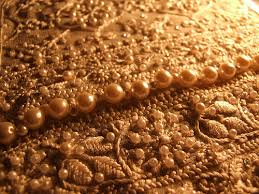
    Arabesque versions of soft roses, gorgeous lilies, intricate butterflies and other animals lend this couture a mesmerizing expression of indigenous style of the Mughal Era. Chikankari has adopted additional adornments like sequin, bead and mirror work, Mukaish, Kamdani and Badla to lend it a heavier and richer appeal. Also, apart from the original use of white thread, one can find a fine collection of threads of different materials and varied colours. Integrating this needle work with stones, embellishments or jail work gives it an eclectic appeal.

    download

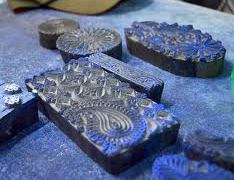
    The process of Chikankari has five different stages: Designing; Engraving; Block printing; Embroidery; and finally washing and finishing. The desired patters are sketched and then engraved on one or more dye blocks which are collectively used to put together a beautiful pattern on the ground fabric. The embroider then stitches on the pattern using different stitching patterns depending on the design and the shape required. There are around 36 different stitches that are done here. They are broadly classified into three types: flat stitches, open trellis like ‘Jali’ work and raised or embossed stitches. Some of these intricate stitching patterns are described here.

    images (2)

    Bakhya: Also called the shadow work, it has two types, Ulti and Sidhi. Normmally done from the wrong side of the fabric, Bakhya is also known as the double back style.

    Tepchi: It is a long running stitch which is employed for simple straight designs. It is usually used for outlines.

    Hool: It is a detatched eyelet stitch wherein a hole is punched into the fabric and the threads are teased apart which are then held back by small straight stitches all around. It generally forms the centre of a flower.

    Jali: Here the thread is never drawn through the fabric making sure that the back side looks as perfect as the front. The fibres of the cloth are torn apart slightly and tiny buttonhole stitches are inserted into the cloth.

    Zanzeera is a small intricate fine chain stitch generally used to outline leaves or petals.

    While Phanda is a millet-shaped stitch and Murri is a rice shaped minute stitch, both of these are used to embroider the centre of flowers in ordinary Chikankari motifs.

    images (6)

    There are various other stitches like Turpai, Darzdari, Rahet, Banarsi, Khatau and many more which lend the art work a unique look altogether. The style of stitching is chosen according to the pattern to be followed as in this embroidery style, strict rules are followed. It is obeyed that a stitch assigned for a particular purpose has no other alternative and cannot be replaced by any other stitch. Though, frames are used these days by the chikan-karigars, it was not used originally. Originally, the fingers and the thumb of the left hand were used to hold the cloth in place and then the stitching was done by the right hand. Once the stitching is over, the fabric is checked for any flaws and is then washed before it is starched and ironed. The whole procedure can take up to six to seven months.

    images (1)

    Though the art form has reached out to the world and has seen a number of variations under the impact of Globalization, it still retains its authenticity and glamour. It is widely worn by people all across the world in various forms. Be it scarves, sarees, kurtis or even gowns, this indigenous art form has spread all over the fashion industry.

    So, next time you visit the Nawabi city of Lucknow, make sure you get your collection of this prized art form!

  • The Mesmerizing Museums!

    The Mesmerizing Museums!

    Human Civilization, across the vast area of the globe has been a seat of diverse cultural evolutions. The societies all across the world have evolved culturally, economically, socially, politically and spiritually. The change in values, principles, ethics and customs is reflected in the fact that all of us had been subjected to constant change through the processes of Urbanization, Industrialization and Modernization. From the Stone Age to the Modern Machine Age, man has traversed a long course in time!

    download (1)

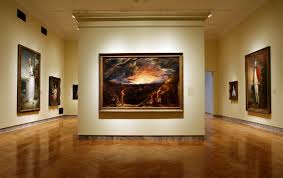
    The change in the cultural and social practices is well reflected in many institutions and material evidences. One of them is a Museum. A museum, as an Oxford Dictionary defines it is an institution or a building that houses objects of interest to display to the public. Wikipedia calls a museum as an institution that conserves a collection of artifacts and other objects of scientific, artistic, cultural, or historical importance and makes them available for public viewing through exhibits that may be permanent or temporary. To many, a museum is the primary source of information about the evolution of man in a multitude of aspects. To many, visiting museums is a recreational activity. To some of us, a museum is a mirror into our true origin and a way to connect to our roots. Thus, a museum is a reflection of our ideologies that date back to millions of years and yet build our present identity.

    download

    The word ‘museum’ has possibly been derived from the Greek word ‘monseion’ that meant ‘seat of the Muses’. It then referred to a philosophical institution or a place for contemplation. The Latin derivation ‘museum’ appears to have restricted to places of philosophical discussions. Thus the great Museum in Alexandria which was founded by Ptolemy I Soter in the early 3rd century BC., with a college of scholars and a library of its own, was more of a prototype university to preserve and interpret material aspects of the heritage. By the 17th century, museum was a term used in Europe to refer to describe collections of curiosities. By the 18th century, the idea of an institution called a museum established to preserve and display a collection to the public was accepted. 19th and 20th centuries have witnessed establishment of many such museums all across the world in various countries. Though continued digitization of information and increasing capacity of digital information storage along with technological advancements has caused the traditional model of a museum to become less popular, but the virtual exhibits so developed still remain dependent on the preservation and interpretation of material things by the traditional concept of the model.

    download (2)

    Visiting a museum has been a household- recreation for many. Go to a place that has a decent historical lineage and it is bound to have a museum. And if there is a museum, visiting is a good option. What we should observe here is that a museum is not just to be visited for spectating the galore of our forefathers. It a place to connect to our history, gain information, promote our national and cultural identity and hence make it a memorable experience. These cultural institutions foster intercultural awareness and restore a sense of dignity and identity to many communities. They could also resolve conflicts. People and communities in areas infected with unrest and conflict could appreciate each other’s ancient history and thus co-exist in harmony if they were made aware of it through such institutions. UNESCO suggests making entries to museums free to promote the culture among various people irrespective of their caste, creed, social and economic status. The value of ancient arts and culture chimes in sync with the modern ethics of our society in the concept of museums. Quoting the exact words of NDMC that says:

    “The museum sector believes that it makes a real difference to people’s lives. It is a line that is frequently used to advocate and promote our work to stakeholders; but what does it mean and how might we investigate it? What is the nature of the impact that museums have on the individual and how does this play out in communities, societies and even nations?”

    images

    Museums are fundamentally driven by the human desire to delve evidence for secure meaningful information and to dig deeper for accounts of experiences. What a museum intends to do is make a cultural impact, by stimulating knowledge transfer, deliver life-enhancing skills, development of basic virtues and skills of patience, observation, reasoning out and hence the overall development of a human mind. It strives to establish an emotional connect and development of ideas or an increase in the capacity to learn.

    Given the significance of museums in our fast modern lives, it is a definite fact that the galore of these institutions is not to be given a miss. There are various museums in the world in different continents that are not just objects of cultural significance but reach out to the masses to etch a permanent impact on their minds. Having said that, let us have look at some of the famous museums of the world.

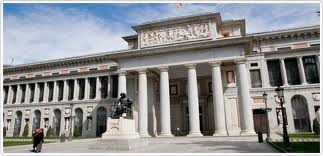
    1.)    The Prado, Madrid, Spain

    images (1)

    The Royal family of Spain curated and commissioned art with utmost passion. In addition to their fine taste and interest, their huge collection of the best Spanish paintings and works of the best artists from across the globe made them establish this museum. It was open to public in 1819 by Fernando VII in the neoclassic building designed by Juan de Villanueva.

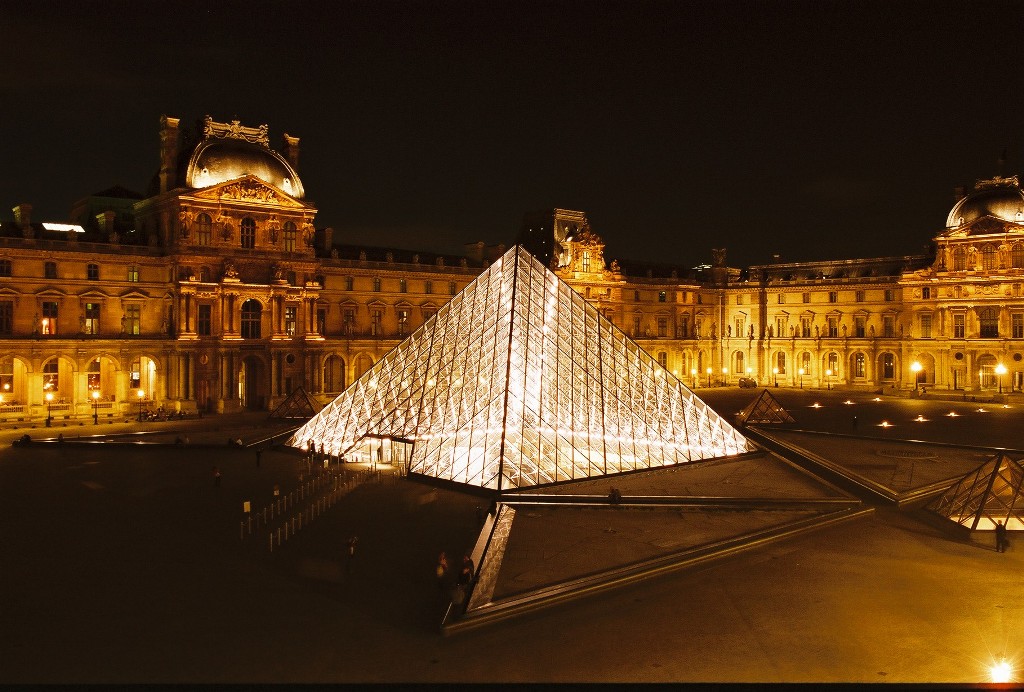
    2.)    Le Louvre, Paris, Spain

    Le-Louvre

    One of the largest and the most visited museums in the world, with over 9.3 million visitors in 2013, this museum is popular enough to make people swoon over it just by its name. Housed in the Louvre Palace, a former Royal Palace, it was opened in 1793. The famous glass pyramid added in 1989 is one the major attractions. The most famous exhibit being the classic painting of the Mona Lisa by Leonardo da Vinci.

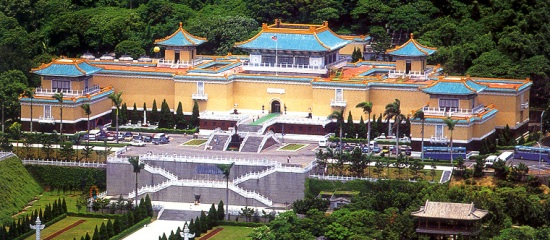
    3.)    National Palace Museum, Taipei

    W020090108346006316518

    The National Palace Museum boasts of the largest collection of ancient Chinese artifacts. The museum was originally established Beijing’s Forbidden City in 1925, after the expulsion of the last king of China. In the final years of the Chinese Civil War, the most precious items of the collection were transported to Taiwan.

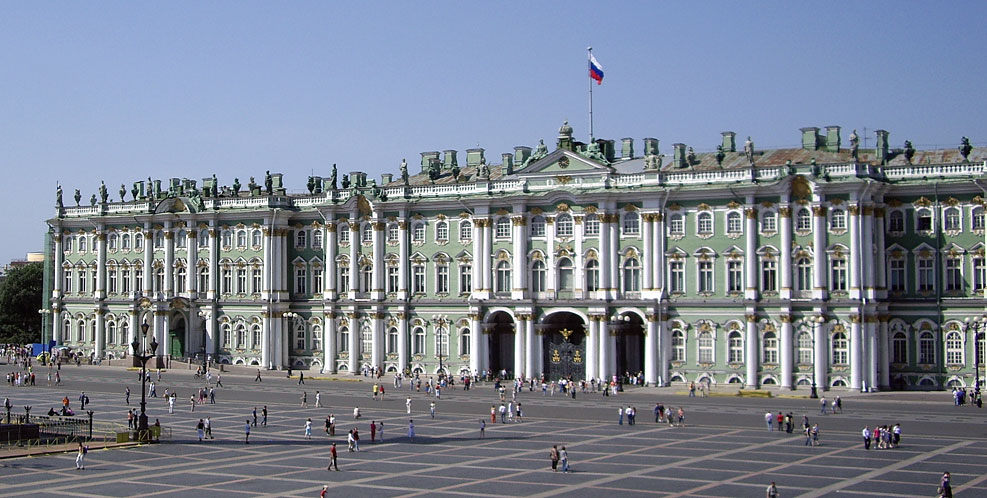
    4.)    State Hermitage Museum , Saint Petersburg, Russia

    Winter_Palace_facade_large

    The Hermitage has acquired a mesmerizing collection of arts from all over the world varying from the times of the Stone Era to the early 20th century. The glorious blue- and-white structure consisting of 6 buildings, was completed in 1764 and had served as the main residence of the Czars for several centuries. Founded by Catherine the Great, this massive museum houses some of the best works of famous artists like Michealangelo, Leonardo Da Vinci and more.

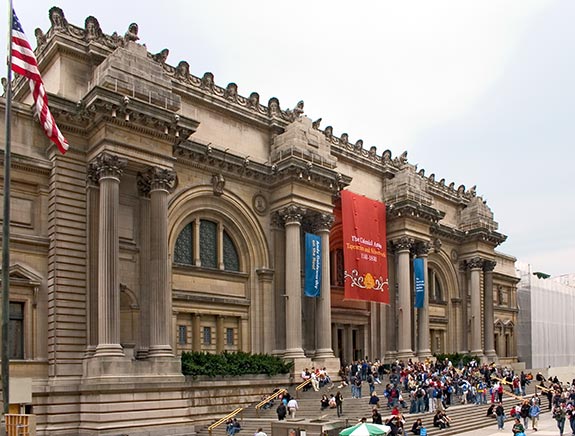
    5.)    The Metropolitan Museum of Art, New York City

    met

    Also known as the Met, This is an art museum located on the eastern edge of Central Park in the New York City. The vast gothic-style building was opened to public in the year 1872 and had been subjected to various add-ons after that. It has on exhibit, some of the finest works of art from across the human history depicting almost every field of craft in existence. It also organizes travelling shows throughout the year.

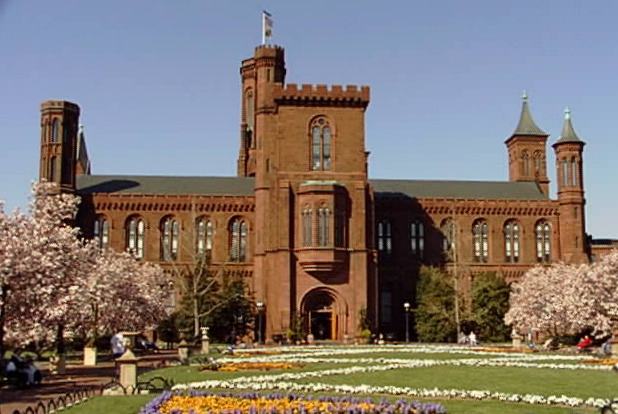
    6.)    Smithsonian Institution, Washington D.C.

    smithsonian

    This is the world’s largest research and museum complex. It includes 19 museums and galleries, the National Zoological Park and many research stations. Dorothy’s ruby red slippers, the dresses of the First Ladies, the Gem Hall and the Wright brothers’ 1903 flyer are some of the major attractions here.

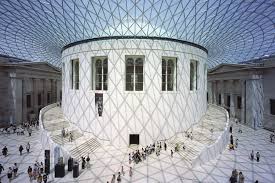
    7.)    The British Museum, London, England

    download (4)

    This museum boasts of being the national collection of archaeology and ethnography ranging from pre-historic bones to pieces of Athens’ Parthenon. It houses the Rosetta Stone that was carved in 196 B.C. It was established in 1753 and has the largest collection of mummies outside of Egypt.

    8.)    Vatican museums, Vatican city, Rome

    download (3)

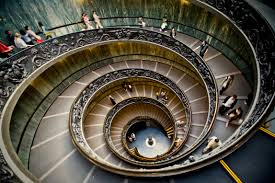
    It was founded by Pope Julius II in the 6th Century and are the most famous for the spiral staircase. The exquisitely decorated Sistine Chapel is another proud acquisition of the museum. The chapel ceiling was painted by Michelangelo between 1508 and 1512.

    9.)    The Egyptian Museum, Cairo

    download (5)

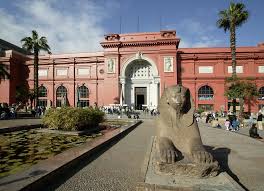
    It is counted as one of the worlds’ best museums. It has a huge collection of papyrus and coins used by ancient Egyptians. Also, it houses many artifacts from the final two Egyptian Dynasties and from the Valley of Kings. Main attractions are the Royal Mummy Room containing 27 mummies from the pharaonic times.

    10.)Museo Nacional de Antropologia, Mexico City

    download (6)

    The Museo Nacional de Antropología or National Museum of Anthropology was opened in 1964. It contains archaeological artifacts from the pre-Columbian heritage of Mexico. The most famous object of attraction is the Stone of the Sun which was not used as a calender actually but contains 20 day signs and the four eras of suns that preceded the present 5th sun.

  • A nutty affair!

    A nutty affair!

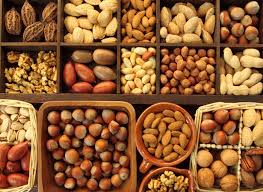
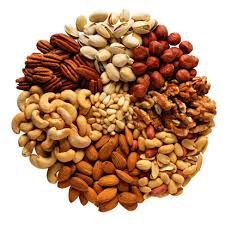
    Be it peanut butter or an almond fudge; hazelnuts coated in chocolate or a Choco-walnut cookie; nuts often form the heart of many dishes be it savory or a dessert. Though the botanical definition of a nut has a vivid criteria for categorization, yet in culinary terms, a nut is any large, oily kernel found within a shell and used in food.

    images (1)

    Nuts are rich in a variety of nutrients. Often suggested as a healthy snack option, these are packed with rich energy sources and many other nutrients. Because of the high oil content, they are an excellent source of high instant energy and even make you feel full after a handful is consumed. Nuts boast of a nutritional value loaded with monounsaturated-fatty acids (MUF) such as oleic and palmitoleic acids, which aid in lowering “bad cholesterol” and increase “good cholesterol.” They are rich source of all important omega-3 essential fatty acids which have an anti-inflammatory action and thus help in lowering the risk of blood pressure, coronary artery disease, strokes and breast, colon and prostate cancers. Another nutrient that these small wonders are loaded with are health benefiting poly-phenolic flavonoid antioxidants such as carotenes, resveratrol etc. This makes nuts an excellent choice for protection against cancers, heart disease, degenerative nerve disease, Alzheimer’s disease, and viral/ fungal infections.  In addition to calories, nuts contain high levels of vitamins and essential minerals such as manganese, potassium, calcium, iron, magnesium, zinc etc. They also have a good level of Vitamin E and Vitamin B complex which aid in cell building and overall health development. Thus we see that nuts are actually a complete food with a very balanced nutritional chart to their credit.
    images

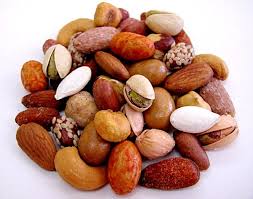
    Though most of us are familiar with many nuts that are commonly used in our kitchens, like the almonds, pistachios or even the humble peanuts, there are many other members of the nut-family which not all of us know.

    Here are some exotic nuts that are used for a variety of purposes all over the world.

    1.)    Pecans

    images (3)

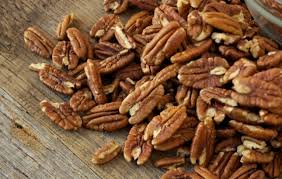
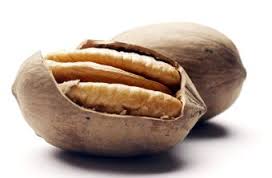
    The word ‘pecan’ is derived from an Algonquian word which means a nut requiring a stone to crack. It is a species of hickory that is natively grown in south-central North America. The parent tree is a deciduous tree that grows up to 20–40 m in height. A pecan, like the fruit of all other members of its genus, is not really a nut. It is technically a drupe i.e a fruit with a single stone or pit, surrounded by a husk.

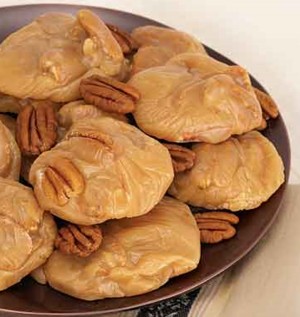
    The seeds of the pecan have a rich, buttery flavor. They can be eaten fresh or used in cooking, often in desserts. One of the most common desserts with the pecan as major ingredient is the pecan pie, a traditional U.S. recipe. Pecans also form a core ingredient in praline candy.

    pralines-2

    Pecans are rich in manganese and also serve as an excellent source of protein and unsaturated fats. Pecans also contain a significant amount of omega-6 fatty acids like walnuts.

    In addition to the seed, the wood from the tree is also used extensively in making furniture and wooden flooring. It is as well used as a flavoring fuel for smoking meats.

    download

    Pecans were originally harvested as a domestic crop. After the commercial cultivation of this crop started in late 1880s, U.S. has now become the leading producer with around 90 percent of the produce coming from there. San Saba in Texas is commonly known as “The Pecan Capital of the World”.

    2.)    Chestnut

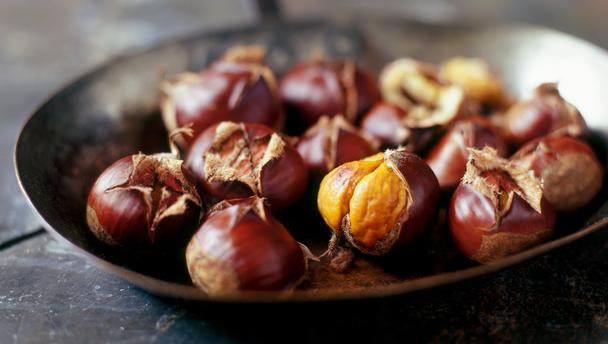
    roastchestnuts_68084_16x9

    Chestnuts are again an edible nut obtained from the deciduous tree from the Castanea genus. It is a native from the temperate regions of the Northern Hemisphere. The name “Chestnut” is derived from an older English term “Chesten nut”, which actually is obtained from the Old French word “chastain”. There are four main species viz. the European, Chinese, Japanese and American chestnuts.
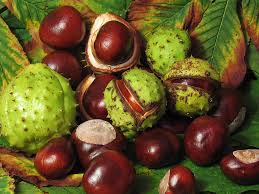
    images (4)

    A chestnut can either be peeled directly to be eaten raw or be roasted and then consumed. When cooked slightly, the taste resembles that of a baked potato. There are many other ways to use this nut for culinary purposes. Chestnuts can also be dried and milled into flour, which can later be used to make processed food items like breads, cakes, pancakes, and pastas. Candied chestnuts are a common delicacy in France and Turkey. Many cultures also enjoy desserts with pureed chestnuts and sugar with whipped cream.

    Chestnut wood contains many tannins, as it belongs to the same family as oak. This makes the wood very durable besides giving it excellent natural outdoor resistance. It also saves the need for any other protection treatment. The dry chestnut firewood also serves a good fuel option. It is also an excellent source of tannin and provides an excellent source of tanning leather.

    Fresh chestnuts contain a significant amount of calories in the form of carbohydrates with almost no fast. Besides a vast source of sugars, they are the only nuts that provide Vitamin C. The quantity of Vitamin C in chestnuts reduces by 40 percent when heated.

    3.)    Hazelnut

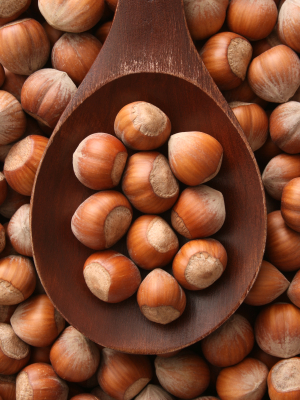
    hazelnuts

    A hazelnut is the nut of the hazel and is also called a cobnut or filbert nut. Hazelnuts are extensively cultivated in Turkey, Azerbaijan, Italy, Greece and Georgia, for commercial reasons. They are also grown in the south of the Spanish region of Catalonia and in the American states of Oregon and Washington. Turkey is the largest producer of hazelnuts in the world.

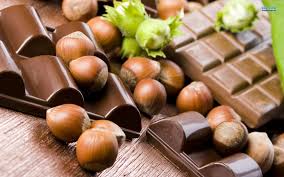
    Hazelnuts are widely used in confectionery to make pralines, chocolate truffles, and also in a variety of hazelnut paste products. In Austria, hazelnut paste is an important ingredient in the making of tortes. In a Kiev cake, the meringue body is flavored using hazelnut flour, and crushed hazelnuts are sprinkled over its sides.

    images (5)

    Hazelnuts are rich in protein and unsaturated fat. They also boast of a significant amount of thiamine and vitamin B6, along with smaller amounts of other B vitamins.

    So, these few nuts are among the many others like the Brazil Nut, the acorns, the Oak Nut and so on, which not only have a distinct flavor but are also used widely for many other purposes. With an excellent nutrient value, they form a delightful ingredient. Besides, it is always good to explore food, isn’t it?

  • The Wonder Ingredient that is Jaggery!

    The Wonder Ingredient that is Jaggery!

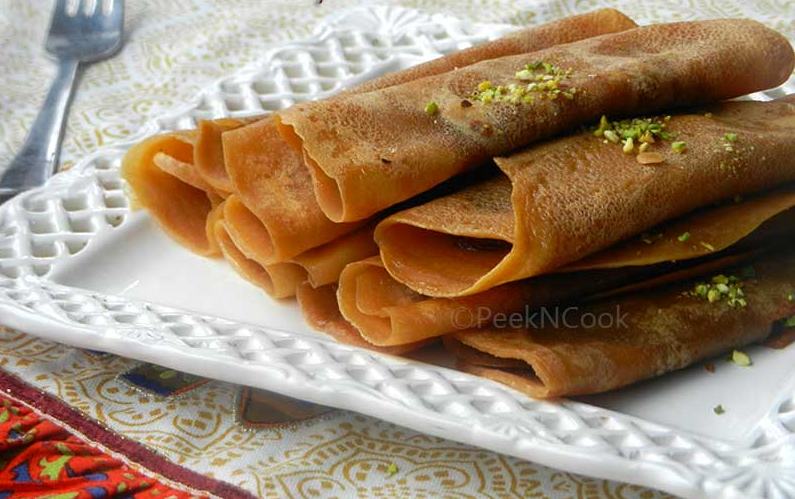
    With just a few days left for my college to reopen and consequently me having to leave home for hostel, I am being treated to a multitude of Bengali cuisines. And since, we hail from the City of Joy, happiness comes to us in the form of food and more than that desserts and sweets. So, my mom made this, what I call her best work till date, ‘Patishapta’ or Indian crepes with a coconut and jaggery stuffing. This brings me to the note that jaggery forms one of the most inevitable ingredient of most Indian desserts.

    images

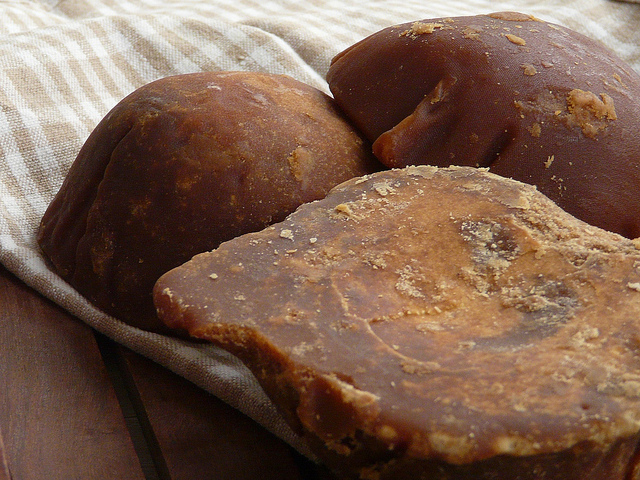
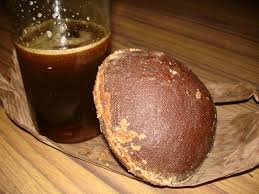
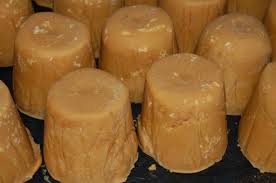
    Jaggery, or ‘gud’ as most of us would know it as in India, is a traditional unrefined form of sugar. This un-centrifuged derivative of sugar is a concentrated product of date, cane syrup or palm sap without separation of molasses and crystals. The color varies from a golden brown to a dark brown hue. Jaggery is used widely in Asian and African cuisine, sweet as well as savoury! The taste of this ingredient will remind of you of the ashy flavor of cooked sugar while the mild sweetness of the melting rocks of this product will make you fall in love with it immediately. Gud is available in the markets in the form of blocks or in a liquefied form, packed in jars.

    download

    Jaggery is produced extensively in all sugarcane growing areas. West Bengal, South India, Bangladesh, Sri Lanka and Pakistan use coconut palm to produce the best quality jaggery. Maharashtra is the largest producer and consumer of jaggery (called gul here). The Kolhapur district here in the Maratha-land is a paradise for jaggery-fans, owing to the quality of jaggery found here. Muzzafarnagar in Uttar Pradesh has the largest jaggery market in the world, followed by Anakapali in Andhra Pradesh. Mandya in Karnataka is also known for its’ jaggery production.

    images (2)images (1)

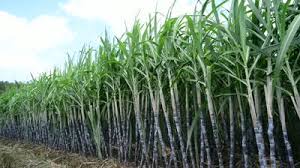
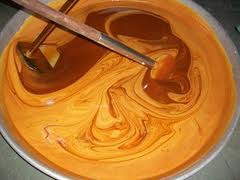
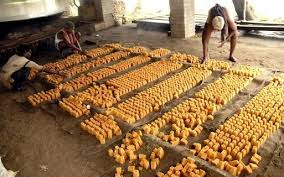
    Jaggery is made of products of sugarcane and the palm tree. The sugar made from the date palm sap is highly prized and is claimed to make the most flavorful and best quality gud, often called as ‘nolen gud’ or ‘patali gud’ in Bengali. Preparation of jaggery is a long process, right from the cultivation of the sugarcane crop to the final product packaging. The cut and cleaned sugarcane is put into power driven crushers and the juice is extracted in large containers. Some quantity of the juice is transferred to a smaller vessel for heating it over a furnace. Some lime is added to the juice while boiling it, so that the wood particles of the crushed sugarcane collect on the top in a froth. The froth is skimmed off time to time during this entire process. After over an hour of heating, the juice thickens and is reduced to approximately a third of its initial volume. The hot syrup thus formed is golden brown is color. The thickened syrup is then poured into shallow flat-bottomed concrete tanks to cool down and solidify. The tanks are large enough to let the hot liquid spread out in a very thin layer over a large area to facilitate quick cooling. After cooling down, the jaggery turns into a soft solid that can be molded into desirable shapes and packaged to be sent into the market.

    download (1)

    The chemical composition of jaggery indicates that it is comprised of 50% sucrose, around 20%  invert sugars and up to 20% moisture with the remainder containing wood ash, proteins and bagasse fibers. The quality of jaggery is determined by the color and texture. A good quality pure jaggery will be golden brown in color and will be relatively softer to cut through. A deeper brown indicates presence of impurities. So make sure you get those golden yellow blocks of jaggery that would melt in the mouth, next time you plan to buy some.

    download (2)

    Jaggery is widely used in many South Asian delicacies. Bengalis use it in their desserts and world-famous sweets, be it the humble ‘roshogolla’, ‘payesh’ (rice pudding) or ‘naadu’ (coconut or til laddus), we like to have that delectable flavor of ‘gud’ in all of these. Similar preparation of sweets have been practiced in the neighboring states like Assam. In some villages of Assam, people drink salty reed tea with a cube of jaggery, more popularly known as cheleka-chah (licking tea) in the local language. In Odissa, cakes or ‘pithas’ contain jaggery.

    download (3)

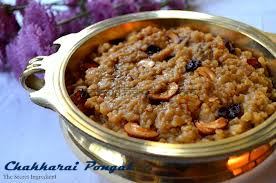
    South-India is a fan of this delicious ingredient too.  Tamil Nadu’s biggest festival Pongal offers a plethora of sweets and interesting dishes to taste. A dish called ‘chakkarai pongal’ uses jaggery as one of the main ingredients. Payasam (sweetened milk) and fruit salads are some other dishes where jaggery is used as a sweetener. In many rural areas across South India, palm jaggery is still used to sweeten beverages. It is sometimes added to sambhar or rasam to add mild sweetness. In Andhra Pradesh, it is used to make ‘Arisalu’, an authentic dish of the state during Sankranthi. Gujarati cuisine uses this ingredient to add sweetness to balance the spice and salty flavor of lentil soups (dal). Puran Poli is a famous Maharashtrian dish made with ‘gul’. Burmese and Sri Lankan dishes also use jaggery extensively as a flavoring agent and sweetener. Jaggery is combined with nuts, peanuts, spices to make toffees or even alcoholic beverages like palm wine.

    download (4)

    Jaggery is not just a mere food-ingredient for most Indian cultures. It is also used as a home-remedy for various ailments. It is used to stir body-heat and stimulate sweating so as to cool down the body. It is also said to aid digestion and is thus consumed in a small amount after meals by many. It also minimizes asthma, joint pains and purifies the blood thus keeping skin problems at bay. It is a great energy booster and can be a healthy source of energy in the middle of a busy day! It even has its own share of religious significance. Jaggery is considered auspicious and is eaten raw in many parts of India, before the beginning of an important work. The ‘kuchh meetha ho Jae’ notion in India is often celebrated using jaggery in many parts of India. It is also offered to deities in various festivals.

    Before I leave, I would definitely like to share the simple yet interesting recipe of the mouthwatering Patishaptas that I had.

    kheerer_patishapta

    PATISHAPTAS

    Ingredients:

    For the crepe-batter:-

    1 cup refined flour (maida)

    1/2 cup semolina (sooji)

    1/4 cup rice flour

    1.5 to 2 cups milk

    Oil, to cook the patishapta

    For the filling:-

    3 cups grated coconut

    2 Tbsp.  Date-palm jaggery

    3-4 green cardamoms

    8-9 pistachios for garnishing.

    Procedure:

    For the filling:-

    1.)    In a wok, mix the grated coconuts with jaggery and place it over low flame.

    TIP: you could also use ‘khoya’ instead of grated coconuts. While making the stuffing using khoya, remember to add milk while cooking it with jaggery.

    2.)    Add cardamom to the mixture and keep stirring till it becomes sticky.

    3.)    Keep the stuffing aside for around 20 minutes, to let it cool.

    For the crepes:-

    1.) Put the semolina in a large bowl. Sift the maida and the rice flour into it.

    TIP: you could add a small amount of sugar as per your taste if you wish to.

    2.) Add milk part by part and mix carefully making sure, no lumps are formed. Keep the batter aside for around 30 minutes.

    3.) Heat some oil in a non-stick pan and pour a thin layer of the uniform mixture on it and spread it carefully before it sets.

    4.) Put the prepared filling at the centre of this crepe lengthwise. Roll the crepe and let it cook till it turns light brown in colour.

    5.) Garnish with the crushed pistachios. Serve it hot or cold.

    TIP: You could serve these with a drizzle of condensed milk over it, especially if you did not add any sugar in the crepe-batter.

    Try this simple recipe and you’ll surely have some lip-smacking ‘patishaptas’ to eat and offer to the guests too.


  • Feng Shui! Some know-about-it facts!

    Feng Shui! Some know-about-it facts!

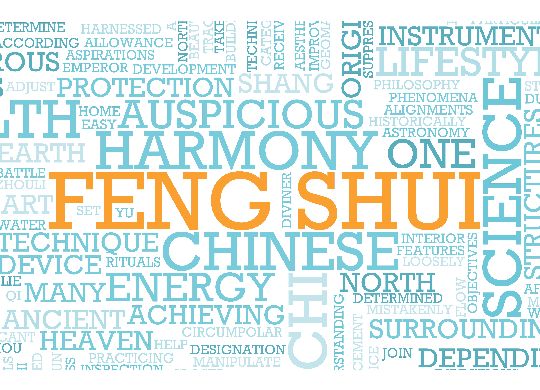
    Wikipedia defines Feng Shui as a Chinese philosophical system of harmonizing the human existence with the surrounding environment. It strikes up a correlation and creates a perfect balance between these elements of nature. The term Feng Shui literally translates into ‘wind-water’ in English. The practice of Feng Shui is one of the Five Arts of Chinese Metaphysics, among Chinese Astrology Bazi (Four Pillars of Destiny), Divination, Mian Xiang (Face reading) and the science of Chinese Medicine. It explains and discusses architecture along the lines of metaphorical terms of “invisible forces” that bind the universe, earth, and man together, known as Qi. This ancient art based on the principles of mathematics, geology, philosophy, psychology, intuition, astronomy and astrology, draws together an ideal mix of aesthetic and moral ideas. It can help you grow physically, morally, intellectually and spiritually in fields of profession/ career, academics, personal life, health etc.

    download (1)

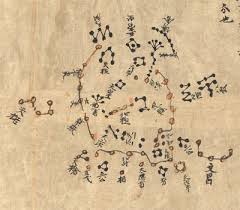
    The principles of Feng Shui have existed for millions of years and can be observed in cultural practices of Taosim, Buddhism, Shinto, Confucianism and Vaastu Shastra. As a matter of fact, India and China both lay claim to Feng Shui’s ancestry and origin. Archaeologists have found evidence that date around 5500 years ago to reinforce the presence of Vasstu Shastra (building science). As of present claims, Yangshao (a Neolithic culture that existed extensively along the Yellow River in China) and Hongshan (a Neolithic culture in northeastern China) cultures are said to have evidence of the earliest use of Feng Shui. Astronomy forms the basis of early practices of this ancient art. In 4000 B.C. during the Zhou Era, a constellation called Yingshi (the then Ding) was used to indicate the appropriate time to build a capital city. A grave at Puyang that contains mosaic which actually is a Chinese star map of the Dragon and Tiger asterisms and the Beidou (the Big Dipper) is oriented along a north south axis. The presence of both round and square designs in the Chinese architecture of these times suggest the presence of gaitian cosmography (the belief that Heaven was round and Earth was in the shape of a square) in the Chinese society and its’ influence on ancient Feng Shui.

    download

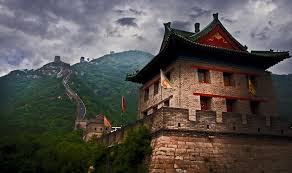
    The organized body of knowledge of Feng Shui was first studied and practiced in the Tang Dynasty in around 888 A.D. Another exemplary application of Feng Shui was seen during the Han Dynasty (206B.C. to 220A.D.) wherein the expansion of this empire incorporated a multitude of geological zones and climates keeping in mind the principles of Feng Shui. The Great Wall of China was built during 771-476 B.C. keeping in mind the ideas of Feng Shui.

    yangyunsungm55018adownload (3)

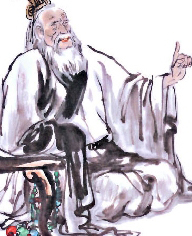
    One of the most famous Feng Shui masters is Master Yang Yun Sang, who left a legacy of many classical Feng Shui texts. He is said to be the founder of what is called the Landscape school of Feng Shui. In the nineteenth century AD, Yang Yun Sang collated the first ever physical compilation of Feng Shui principles, systematically describing the characteristics of land and water formations which then became the standard text of the Landscape (or Form) School of Feng Shui. His writings suggest the importance of selecting an auspicious site that has the dragon’s energy or the dragon’s breath and hence emphasizes on careful examination of land formations like hills, mountains, valleys and even water formations. This is because the vital energy or Qi (‘Ch’i) contained in specific parts of the Earth was described as finding the Dragon and it lair. The Form school is the oldest school of Feng Shui.

    download (6)

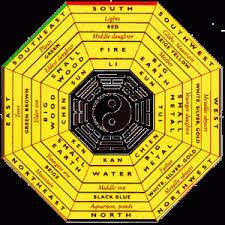
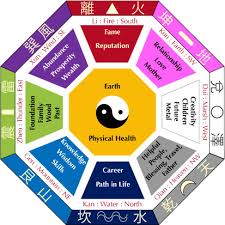
    Almost a century later, another school of thought called the Compass school of Feng Shui became popular. Master Wang Chih was the main influence in this school and he developed his teachings during the Song Dynasty (960 A.D.-1279 A.D.). The ideologies of this school of thought are based on the compass directions and the I-Ching trigrams arranged in the octagonal symbol of the Feng Shui energy map (the Bagua, meaning 8 areas). The Yin-Yang theory and the Theory of Five Elements are some of the other theories that were developed under this school of Feng Shui.


    download (4)

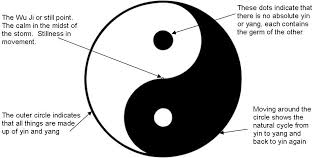
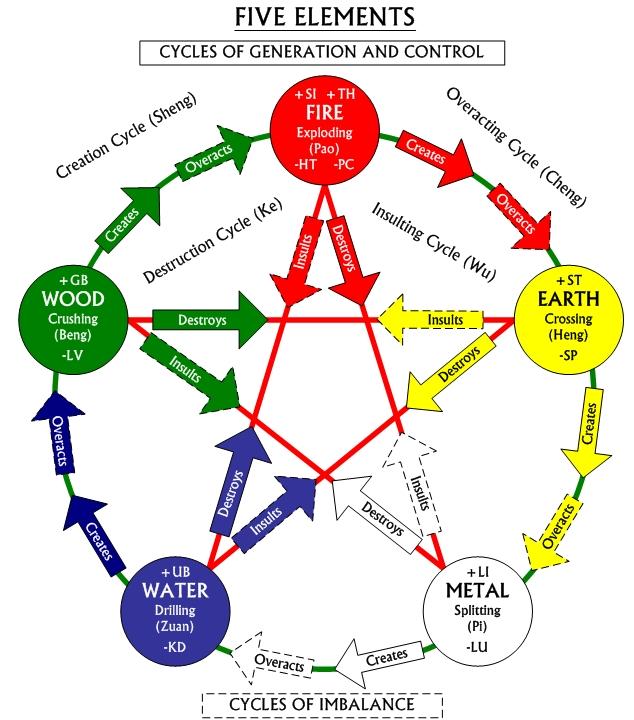
    The theory of Yin and Yang in Chinese philosophy indicates how opposite or contrary forces are actually relative and complementary to each other. Yin (the Moon; feminine) and Yang (the Sun; masculine) are the two opposing cosmic forces of nature that interact to form a dynamic environment of existence where the assembled model is greater than the individual constituents. Another basic principle of Feng Shui is the Theory of Five Elements viz. Wood, Fire, Earth, Metal and Water. These elements interact among themselves through processes what are known as the Productive and Destructive cycles. Colours (derivation of Light) are assigned to each elements and they are said to be identified as the expression of each elements. The colour correspondence of each elements is as follows:

    WOOD: Green, Brown

    FIRE: Red, Strong Yellow, Orange, Purple, Pink

    EARTH: Light Yellow, Sandy/Earthy, Light Brown

    METAL: White, Gray

    WATER: Blue, Black

    Some theories also identify the elements with shapes. The correspondence is as follows:

    WOOD: Rectangular

    FIRE: Triangular

    EARTH: Square

    METAL: Round

    WATER: Wavy

    FiveElementsCycleBalanceImbalance

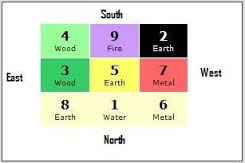
    Some other widely popular concepts of Feng Shui are the Lo-Shou square and the Kua number concept to name some. The Kua number concept was used to determine the most auspicious positions or directions based on the persons’ date of birth. The Lo-Shou square is an ancient theoretical and conceptual tool applied by Feng Shui practitioners till date. The square so mentioned is a 3×3 symmetric square with numbers 1-9 written in the unit squares as shown in the diagram below. Among various stories of the origin of this tool, also called the Magic Square, one of them is the most popular. It is said that Emperor Yu was walking along the river Lo, thus lending it the name. Lo Shou Square literally translates into the Scroll of River Lo. This legend dates back to 650 B.C., when the great floods had hit China.A turtle that emerged from the river had an unusual 3 x 3 pattern on its shell. This thus became the core idea of the Lo Shu Square, a mathematical grid where the sum of numbers from each row, column or diagonal is the same and equals 15 in any direction. As we see from the pattern of the numbers the even numbers (representing the Yin energies) are at the 4 corners of the square and with 5 in the centre, the odd numbers (the Yang forces) form a cross. Each number has a specific energy correspondence to it, say for instance, the number 9 carries a strong fire influence while 1 is a water-associated number.

    download (5)

    This art has thus influenced Asian architecture for millions of years and has now even reached the West. Some basic Feng Shui tips are:

    quote_corrected

    1.)    Declutter!

    If you can get rid of even half the unnecessary stuff in your home and office, it eases the flow of energy in the premises. This is the first step that should compulsorily be followed.

    2.)    Avoid working with your back facing a door.

    If your desk is positioned in a way that your back has to be towards a door, or if there is no way to alter the position, put a mirror above your desk or a reflective surface on your desk that enables you to see the door in the reflection. This fills the work or study atmosphere with positivity and moral strength and security. Also, it lets you concentrate better.

    3.)    Flora Cure!

    Plants symbolize culture, growth, freshness and life besides performing an excellent role in air purification. They also beautify the place. No harm in letting the plants grow where you stay. They always do you good!

    4.)    Keep the Toilet Seat covered!

    The Feng Shui perspective says that a toilet seat is a drain and it lets the good energy in your homes flow away through it. So, keep it covered. There is nothing appealing about an exposed toilet seat!

    5.)    Fix what’s broken!

    Broken things should not be kept at home or in the office as they would neither serve their purpose nor look good. So, try repairing them or if they are beyond repair, I’d suggest discarding them off and getting them replaced.

  • Milkshakes! 5 interesting recipes to follow!

    Milkshakes! 5 interesting recipes to follow!

    Give a child a glass of plain milk, and he’ll shirk from it forever, blend some ice-cream into it, fuse a fruit or two into it or maybe shake it up with some chocolate syrup and the kid will love having milk for almost every meal! Yes, what I’m talking about here are milkshakes! Be it the scorching summers or the dull monsoons, a chilled milkshake is always appreciated by everyone, be it a kid of 5 or the parents at 35.

    download (1)

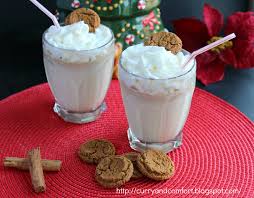
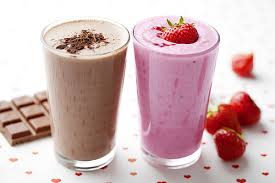
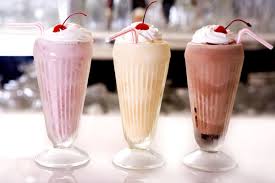
    A milkshake is a cold, sweetened beverage with a milk-base and is usually flavored with ice-cream and flavouring agents like caramel or chocolate sauce, butterscotch or fruit syrups. It is also known as a thickshake or a frappe in New England.

    The term ‘milkshake’ was coined in 1885 for an alcoholic whiskey drink, which was a tonic as well as a treat. However, by 1900, the term was used for wholesome drinks made with chocolate, vanilla syrups or strawberry. Soon, people were asking for the new treat with ice-creams. This treat started gaining popularity soon enough, they were a must-have on all food outlet menus.

    download (3)

    Though restaurants and food outlets serve exotic milkshakes served with sides that can serve as a complete meal and keep your stomach full for half a day, blending a milkshake at home is not big deal either. Call it a frappe, velvet or a frosted shake, this treat will never disappoint you. These liquid treats are not just packed with nutrients but many of them also aid weight loss.

    Following are some innovative simple milk-shake recipes that have been tried and tested by me.


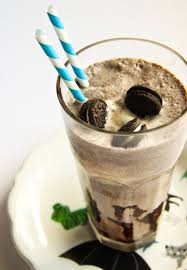
    OREO MILK SHAKE

    download

    Ingredients:

    10+2 Oreo cookies

    4 scoops of Vanilla Ice-cream

    50-100ml milk

    A pinch of salt

    Procedure:

    Crush the Oreo cookies coarsely with hand and place them in a blender. Add the scoops of ice-cream and the milk.

    Pulse till cookies are completely crushed.

    Add a pinch of salt and blend till completely smooth. Add more milk according to the required thickness.

    Pour into a tall glass and serve with 2 Oreo cookies sitting pretty on the top!

    TIP: You could add a drizzle of dark rum to turn it into an adult treat for your cocktail parties!


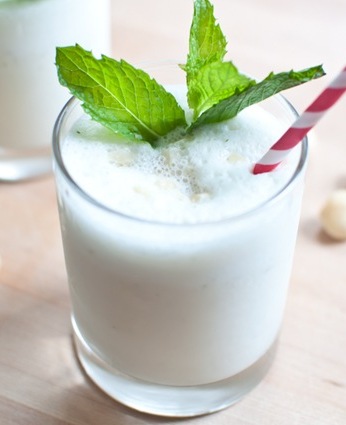
    VANILLA MILK SHAKE

    DSC_00751

    Ingredients:

    4 scoops Vanilla Ice-cream

    2 teaspoons vanilla essence/ extract

    50-100 milk

    Sugar if needed

    2-3 mint leaves to garnish

    Procedure:

    In a blender add the ice-cream with a splash of mil and blend until completely smooth.

    Add the vanilla extract and blend again.

    Check for the taste and thickness and add sugar or milk if required.

    Pour into tall tumblers and serve chilled with mint leaves placed on top.

    TIP: You could garnish with chocolate syrup and chopped walnuts for the extra flavor.


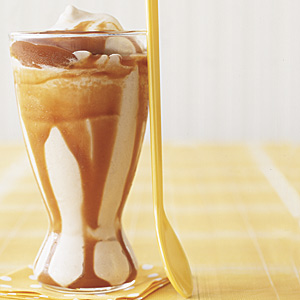
    CARAMEL MILK SHAKE

    milkshake-ct-1624492-l

    Ingredients:

    1 cup sugar+1/3 cup water

    ¾ cup heavy cream

    A pinch of salt

    1 table spoon butter

    1 teaspoon vanilla extract

    2 scoops Vanilla Ice-cream

    1/2 cup whole milk

    Procedure:

    Add the water to a medium saucepan and set it over high heat. Pour the sugar directly into the centre so that none of it scattres onto the sides.

    Bring to a boil and cook till the sugar starts to brown. Do NOT stir the pot. Let all the sugar melt uniformly.

    TIP: You could give the pot a gentle swirl to help melt all the sugar.

    Once the sugar turns into a deep brown sauce, carefully and gradually add the cream. Add the butter, salt and the vanilla extract.

    Swirl the pot to dissolve all the ingredients evenly into the sauce.

    Drizzle a bit of the caramel sauce so prepared into tall glasses along the sides and put the tumblers into the freezer to chill. The sauce will set and produce a gorgeous effect on the glasses.

    Take the rest of the sauce and pour into a blender with the whole milk. Blend until smooth

    Pour the shake into the glasses that had been prepared in the freezer.

    Serve chilled.


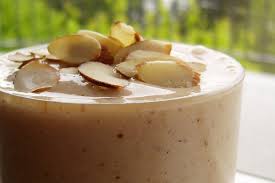
    DATES ALMOND AND BANANA MILKSHAKE

    images

    Ingredients:

    2 large ripe bananas

    1 cup of almonds soaked overnight in water.

    1.5 cups of almond milk

    8-9 ripe dates (stones removed)

    1 teaspoon of Cinnamon Powder

    1 teaspoon butter

    1 teaspoon Vanilla essence

    Whipped cream and chopped almonds to serve.

    Procedure:

    De-skin the soaked almonds and blend them to form a fine paste. Add the bananas and dates, with a small amount of the milk and blend to form a smooth paste.

    Pour the remaining milk, cinnamon powder, vanilla essence and butter and blend until smooth and uniform.

    Pour into talk glasses and serve chilled with whipped cream and crushed almonds on top.

    TIP: You could also add a drizzle of honey on the top.


    MEXICAN COFFEE MILKSHAKE

    VM0403H_mexican-coffee-milkshake_s4x3.jpg.rend.sni12col.landscape

    Ingredients:

    ¼ cup granulated sugar

    1 cinnamon stick

    2 tablespoons orange zest

    1.5 tablespoons instant coffee powder.

    2 scoops Coffee ice-cream

    1/2 cup milk (optional)

    Whipped cream for serving

    Procedure:

    Combine 1 cup water and the sugar in a medium saucepan. Cook over medium heat, stirring continuously till all the sugar dissolves.

    Split the cinnamon stick with your hands and add it to the pot. Add the orange zest and let the mixture sit for about 10 minutes till all the flavours infuse. Remove from flame.

    Remove the cinnamon stick and add the instant coffee powder to the syrup.

    Add the ice-cream and the syrup in a blender and mix until smooth.

    Serve chilled in tall glasses. Garnish with the whipped cream.

    TIP: you could use ground cinnamon powder/ coffee powder/ roasted coffee beans/ orange zest as additional garnishes.


    Enjoy these treats for breakfast or have them as a healthy snack; you’ll love these either ways. You could also experiment and come up with interesting recipes. Happy Blending!

  • The World of Scarves

    The World of Scarves

    Be it the dull gloomy grey winters or the scorching heat of the Delhi summers, step out of your houses and you’ll see women and girls all covered up in scarves and stoles of varying colors and sizes. A must-have in your handbag, a style-statement, or a meter protection from the heat or the cold, the scarf is one humble piece of clothing that not many would like to miss.

    images (2)

    The history of scarves can be traced back to Rome where it was first used to help people keep clean. It was called a ‘sudarium’ and men would normally tie it around their neck or waist while they would go off for work. Although the dates and place of origin for the culture of scarves cannot be determined exactly, it is said that the Egyptian Empress Nefertiti would wear a woven silk scarf along with a conical head-dress back in 1350 B.C. Sculptures and literary evidences also suggest the use of scarves in the Chinese culture. Warriors of the Chinese Emperor Chang used to wear cotton scarves that would mark the designations and ranks.

    images (6)

    The famous Egyptian form of dance, called the Belly Dancing used sequined and colored scarves, worn low around the hips as a part of their vibrant costumes. Back in the 1700s, the French used to wear colorful scarves called ‘Cravats’ to demonstrate political support by the color of ones’ scarf.  In early New England, it was a custom for the family of a deceased person to give scarves to the friends and community members at the funeral ceremony. It was later banned as an attempt to curtain the extravagance. In the Victorian Era, as proposed by Queen Victoria, these fanciful accessories were used to differentiate between the castes and classes of the society.

    images (5)

    Though the scarf has now translated into an ornamental piece of clothing, or a statement clothing or a fashion accessory as many fashion magazines call it, it has had a significant cultural, religious and social importance in various early societies. The evolution of scarves have epitomized the changes in art, culture and history. The book ‘Scarves’ by Nicky Albrechtsen highlights the fact that scarves in the early 20th century were not just a fashion accessory. They happened to be social artefacts that would walk one through the growth and evolution of art, fashion and social lifestyle. In the early 1930s with the invention of Rayon, women who could not afford a silk scarf would opt for this alternative to keep up with the requirements of the growing fashion world. In the 1940s, designers and manufacturers started experimenting with other fabrics and soon the silken-square of style could be found in various fabrics like cotton, fur, wool or linen.

    download (2)

    With time, this humble piece of clothing was attached to various historical events and important practices. During World War II, wearing a scarf became a necessity in some cases; women working in ammunitions factories during the war had to wear scarves on their heads, for their own safety to prevent their hair being caught in machinery. Knitting of scarves had become a patriotic war time duty in the United States. Later in the 1980s, the manufacturers would even print logos and commercial sketches on scarves that would even serve as a platform for advertising. It is also said that scarves were used as a travel souvenir in the 1960s. A scarf depicting the St. Tropez harbor (now the Marina Port Harbor) in France would have to be worn around the neck of well-travelled elite. Scarves were also used to hold account of excerpts and fragments of historical events. An interesting example of this is a scarf that had extracts from Winston Churchill’s speeches.

    custom

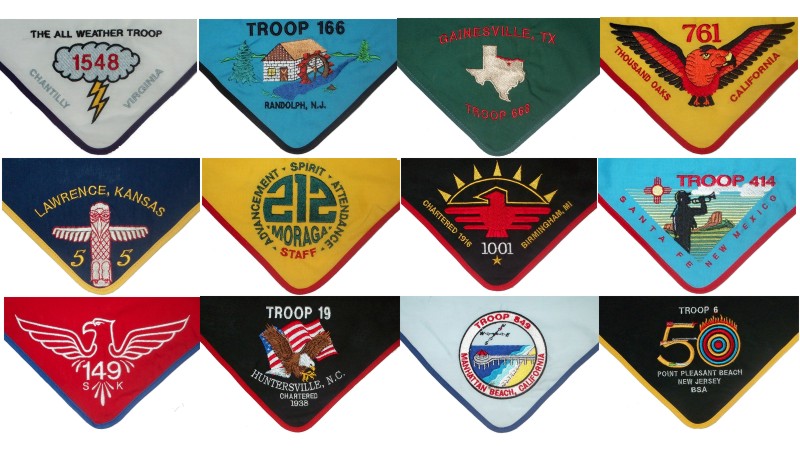
    Scarves were also produced to mark important sporting events, for instance, the 1953 Coronation Derby winner, Pinza, or the London Olympics in 1948. They have as well been used to commemorate royal occasions. Besides these, a scarf is often attached to various cultures and communities as a part of their legacy or the sentiment attached to the initial practices of wearing a scarf. Members of the student community in the UK traditionally wear scarves of distinctive stripes identifying their respective colleges or University. Scouting groups had scarves as an important part of their uniforms to differentiate their groups. Bhutanese men wear scarves called ‘kabneys’ on a formal visit to an office. These identify the designation of the person. Bhutanese women wear smaller scarves called ‘kiras’ that are hand woven and have fringes at the end.

    downloadimages (4)

    Till date scarves are incorporated as a part of the uniform in defense services in various countries around the world. Silk Scarves were used by pilots to protect themselves from the exhaust and smoke and to prevent neck chafing. Today, the military flight crews wear scarves imprinted with emblems to keep up the spirit and the age-old heritage.

    images (3)download (1)

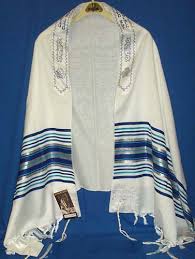
    As stated above, Scarves are also an object of great religious significance. In the Muslim community, men and women are expected to dress up modestly. As a result, women are to cover their heads with a head scarf, commonly called the ‘hijab’. In Judaism, a Jewish prayer garment called the ‘Tallit’ compulsorily has fringes on all four corners and these fringes are commonly known as tzittzit. They symbolize the commandments that God spoke to Moses. The Tibetan tradition considers the practice of offering white silk scarves (khatas) during the beginning of new relationships, be it marital, business or political, as a symbol of ones’ good intentions. They are also offered to spiritual images and statues of Buddha, nuns, spiritual preachers, monks and leaders like Dalai Lama.

    images

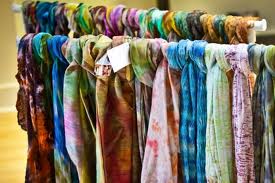
    While walking through the gullies of Delhi street markets, one can see rows of scarves on display ready to be sold like hot buns. Girls and women of all ages and castes pick these beautiful squares of color to pull together their outfit. A bare essential in ones’ wardrobe, is not just a fashion accessory but serves the purpose of protection and also caters to various cultural and religious sentiments. Who would have ever thought that this simple piece of cloth has had its own share of historic significance? So grab a vibrantly hued or patterned scarf, roll it , wrap it, wear it like a tie or a turban with you regular outfit and you’re good to go!

  • Jams and Jellies

    Jams and Jellies

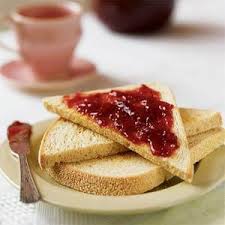
    Spread it on a finely toasted slice of bread or top some crackers with a dollop of this, and you’re good to go for a quick delicious snack! I am talking about jams and jellies. As a kid, my favorite dessert used to be vanilla ice-cream with strawberry jelly that my mom used to make as home. Having seen orange marmalade being made at home, I have grown up having the best of the fruit preservatives world!

    download

    Preserving fruit by turning them into delicious jams, jellies, marmalade, preserves or fruit butters has been an age old practice. The exact place of origin is not clear though we believe it started in the Middle East where there was an abundance of sugar. The concept of preserving fruit was brought to Europe where it gained popularity as jams, jellies and preserves. Back in the 16th century, when the Spanish came to the West Indies, they preserved fruits using sugar cane to make jam and jelly hence popularizing the idea. In the U.S., early English settlers would make fruit preservatives using honey, molasses and fruit pectin derived from apple parings.

    images

    The concept of cooking fruit to preserve it was a home-task until Industrial Revolution. Cooks would make preservatives to relish seasonal fruits at other times of the year or to store them for times of scarcity. Preserving fruit would be helpful for sailors to take on long voyages. During World War 1, U.S. Army troops were given a grape-jam called ‘Grapelade’ for their stay during the war. After the troops returned, they demanded more of the jam hence leading to increased production. On advent of Industrial Revolution, came the era of factory-produced fruit preservatives. They were commercially produces and soon the market racks were filled with arrays of jam and jelly bottles, thus making it completely unnecessary to make preserves at home. Despite that, home-cooks and chefs continue to make their own jellies and jams thus indicating that this practice has more of a cultural significance rather than mere physical nourishment.

    images (1)

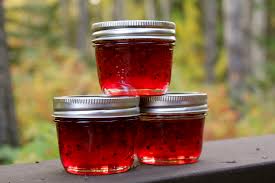
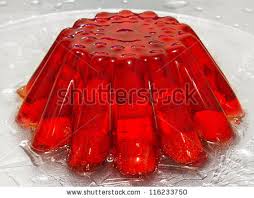
    When you go to buy some of these delectable condiments, make sure you know what you want. Jams and jellies, relished equally have a huge difference. Jams use the complete fruit hence avoiding any wastage. Jams have an interesting texture as they are neither solid nor liquid. They contain chunks of fruits which lends it a sense of bite and solid appearance, but leave it at room temperature and you will see the juicy bit of it too. Jellies on the other hand have a clear translucent appearance and have the sparkling flavor of fruit juices. After cooking the fruit in its juices, it is left to naturally strain its juices through a muslin cloth. Forced straining of the juices might take away the clear appearance of the juice. Marmalade are only different from jams in a way that they have the fruit peels processed into them. Marmalade mainly use citric fruits like oranges, lemons, mandarin etc. or combination of these.

    download (1)

    Some easy home-made recipes are given below.


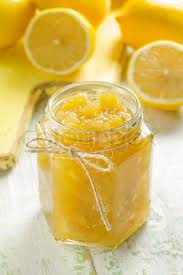
    Lemon Marmalade

    download (2)

    Ingredients:

    10 large lemons

    4 cups water

    4 cups sugar

    Procedure:

    Peel off the yellow part of peel in strips from lemons. Cut strips of desirable thickness and cut off all white membrane (pith), from the peeled lemons using a knife.

    Cut the peeled lemons crosswise into thin slices. Put the lemon peel, sliced fruit, and water in a heavy non corrosive vessel, cover it and refrigerate for a few hours.

    Heat the lemon mixture by boiling it over high heat, stirring frequently.

    Reduce the heat and simmer it till the mixture softens, for about half an hour. Remember to keep the vessel covered during this step.

    Add sugar to the mixture .Increase the heat to medium-high and stir until sugar dissolves. Heat to boiling and reduce heat just so mixture boils gently. Boil uncovered, stirring frequently until the mixture reaches a temperature of around 220 degrees Fahrenheit.

    Store in clean glass jars when the mixture cools down.

    These might also serve as interesting gift ideas or personalized tokens of appreciation.


    Spiced Peach and Apricot Jam

    pea

    Ingredients:

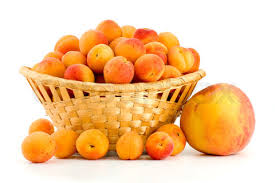
    6 medium peaches, peeled and pitted

    8 medium apricots, pitted

    2 tbsp. (25 mL) lemon juice

    5 1/2 cups (1.375 L) sugar

    1 tsp (5 mL) cinnamon

    1/2 tsp (2 mL) allspice

    Procedure:

    Finely chop the peaches and apricots and combine them with lemon juice in a deep heavy vessel.

    Place the heavy bottomed vessel over high heat and cook till the mixture comes to a full rolling boil. Stir constantly.

    Stir in the sugar and spices and cook over high heat till the mixture returns to a full rolling boil. Boil hard for 1 minute, stirring constantly.

    Remove from heat. Stir and skim the foam away. Let the mixture cool down

    Store in clean sterilized jars and enjoy with any kind of bread.


    Strawberry Jelly

    images (3)

    Ingredients:

    2 pounds fresh strawberries

    2 cups white sugar

    1/4 cup lemon juice (2 1/2 lemons)

    Procedure:

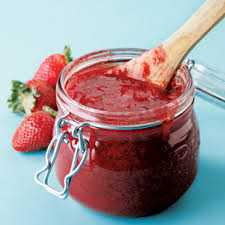
    Wash, stem and quarter the strawberries. In a heavy-bottomed saucepan, mix together the fruit, sugar and lemon juice.

    Mix in the sugar and stir over low heat until the sugar is dissolved. After the sugar crystals have dissolved, increase heat to high till the mixture comes to a full rolling boil.

    Strain the mixture through a fine muslin cloth without pressing the pulp and sieve through. Place the liquid back in the saucepan and boil it stirring often, till it reaches an approximate 220 F.

    Transfer to clean sterile jars and refrigerate jelly for up to two weeks and enjoy.

  • The crowning glory of the Ruby red- Saffron

    The crowning glory of the Ruby red- Saffron

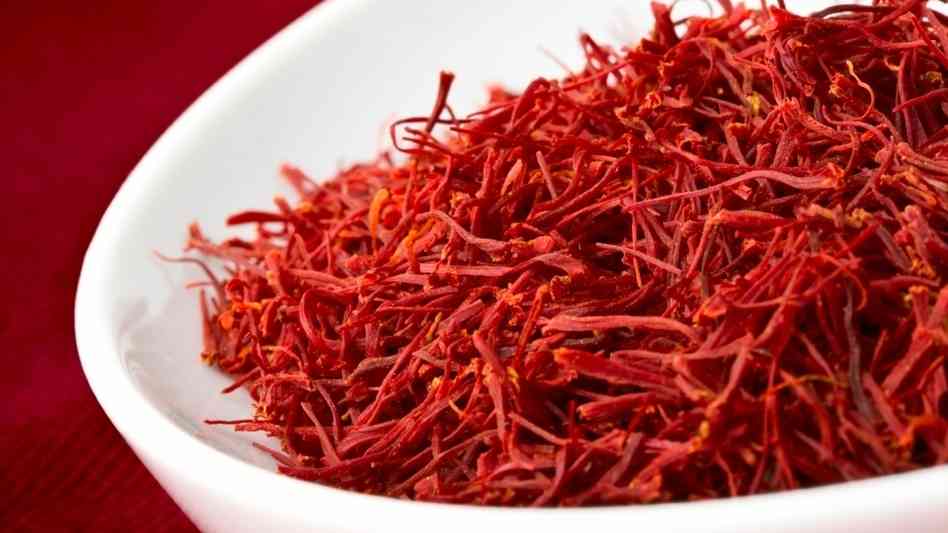
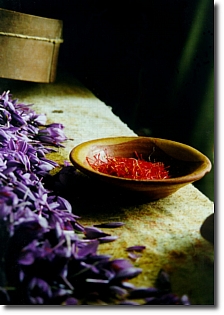
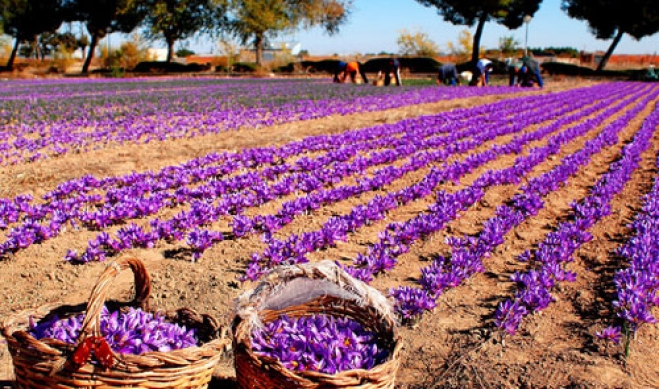
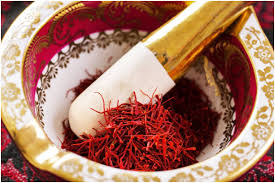
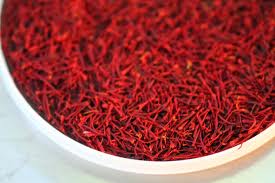
    Call it ‘Saffron’, ‘Zafran’, ‘Kesar’ or ‘Zafferano’, this spice definitely is a prized possession for professional chefs and home cooks alike. The most expensive spice on your kitchen shelf and in the world is also titled as the ‘King of Spices’ or ‘The Golden Spice’. Not everyone knows that Saffron is the stigma along with the style of the flower of Crocus Sativus, commonly known as the rose of saffron. The plant grows up to 30 cm in height and bears about three to four flowers each with three different crimson stigmas. These crowning glories of the rose of saffron are dried and then used as what we know as the strands of Saffron.

    cosecha2

    The crop is native to Southwest Asia and Greece, where it was first cultivated. It was then propagated and cloned in Eurasia and was later brought to parts of North and South America. Iran now accounts for 90 percent of the total world saffron production. Today, this spice is globally used and is an undisputed rock star for all taste buds, irrespective of ethnicity, cultures or regions.

    3855122_orig

    Evidences claim that saffron is not just of culinary significance. It holds a cultural and economic importance for many civilizations while it is socially significant for many of them too. Most of the modern-day cultivation of saffron is done in India, Iran, Spain and Greece. The balmy Mediterranean and the mountainous Kashmir are responsibly the breeding baskets of the best quality Zafran. Other parts of the planet except Antarctica are minority producers. The cultivation of saffron needs a lot of patience and effort as manually plucking the minute stigmas from each flower is a tedious job. Also, since an overwhelmingly high number of flowers is required to produce a marketable amount of saffron, the costs by weight automatically go up. Besides, the relatively low production and the importance of this spice, make trading it a primary source of wealth for many areas like the hinterlands of Birjand, Ghayen, Ferdows in South Khorasan Province, along with areas abutting Gonabad and Torbat-e Heydarieh in Razavi Khorasan Province, which are the key cropping areas.

    220px-Man_gathering_saffron_Knossos_Crete_crocus_sativus_fresco

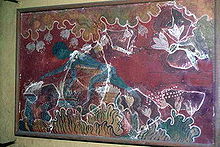
    Some civilizations hold this spice in such high regard that they have literature paintings and legends attached to it. Ancient Greek legends hold accounts of brazen sailors who would embark on tiring long voyages to the land of Cilicia to procure the most valuable crocus crop according to them. The most famous of these legend is that of Crocus and Similax, where in the handsome young Crocus was in pursuit of the beautiful Similax, expressing his idyllic love to Similax who soon outgrew his affection. While he continued his pursuit, she bewitched him and transforms him into Saffron Crocus whose blazing crimson stigmas were symbolic of his undying and unrequited love. Saffron was also honored as a sweet smelling spice three millennia ago in the Hebrew Tanakh (Song of Solomon). Asian legends including those of Kashmir, China and Afghanistan have relics, fables, legends and tokens of tribute dedicated to the Crocus Sativus.

    download (1)

    The uses of saffron in the modern day societies extend from culinary flavoring to medicinal properties and even cosmetics and fabric dyes. Ancient Buddhist legends account the use of saffron soaked in water to yield a gorgeous golden-yellow hue that was appreciated so much so to be made the official colour of the robe and mantle for Buddhist Monks. It has been found that Persian saffron threads have been woven into ancient carpets and funeral shrouds. The brilliant yellow uniform colour that it produces makes it an apt substitute for chemically synthesized dyes. Besides this, it has an interesting sweet grassy aroma that has been used to aromatize wine, food and is even used as an air freshner. It is said that courtesans would use saffron to attract and lure nobles towards themselves. Saffron also has proven medicinal properties that work wonders on a multitude of issues- blood disorders, stomach upsets, eye problems, heart diseases and paralysis to name some of them. The ancient Persians and Egyptians used saffron an aphrodisiac, a general-use antidote against poisoning, a digestive stimulant, and a tonic for dysentery and measles. Medieval Europeans also used this spice as a cure for various respiratory diseases and cold and flu. It was used for its carminative (suppressing cramps and flatulence) and emmenagogic (enhancing pelvic blood flow) properties.

    The cosmetic applications of saffron dates back to the time when the Egyptian queen, Cleopatra used saffron infused in milk or water in her daily bath. This expensive spice contains some volatile but vital essential oils that have therapeutic and beautifying properties for the skin. Rich in carotenoids (anti-oxidants), saffron makes an excellent recipe for good health and brilliant skin. Those who long for a brighter complexion, fairer skin or those suffering from skin problems like acne, can depend on it to find amazing results.

    images (1)

    As we all know, saffron has an impeccable exotic flavor to offer to whatever cuisine it is added to. It finds a significant place in European, North-African and Asian cooking. Be it the Kashmiri dum-biriyani or the Swedish lussekatt (a rich yeast dough bun that is enhanced with saffron, along with cinnamon or nutmeg and currants), Saffron has a delectable delicate flavor that you would not want to miss. Indian desserts are one place this spice finds a significant spot despite its high cost. One such dessert is the favourite-of-all Rasmalai. With discs of cottage-cheese, cooked in sugar syrup that melt in the mouth, the saffron coloured milk sauce is what stands out. Here is a simple recipe of this toothsome sweet-dish.

    rasmalai

    RASMALAI

    For the paneer discs:

    Ingredients-

    1.) Homemade paneer (cottage-cheese) – 110 grams (make paneer from 1 liter of milk)

    2.) Semolina/rava (any rava) – 1 tsp

    3.) Cardamom – 1/4 tsp

    4.) Sugar (for the discs) – 2 tsp

    5.) Water – 2 1/2 cup

    6.) Sugar (for the syrup) -1 cup

    Procedure-

    a.) Knead paneer/ homemade cottage cheese, with rava (semolina), cardamom powder and sugar, into a soft dough and make small equal-sized balls out of the dough.

    b.) Flatten them gently and place them on a maida (flour)-dusted plate.

    c.) Meanwhile, cook the sugar and water on low flame to make a thick syrup.

    d.) When the solution comes to a rolling boil, lower the temperature and gently drop the discs into the syrup. The discs shall swell up and almost double up in size.

    For the saffron-milk sauce:

    Ingredients-

    1.)    Milk – 2 1/2 cups or 1/2 liter

    2.)    Sugar – 1/3 cup

    3.)    Cardamom powder -1/4 tsp

    4.)    Saffron -7-8 strands

    5.)    Pistachios -chopped – 2-3 tbsp

    6.)    Almonds (blanched and thinly sliced/slivered) -3-4 tbsp

    Procedure-

    a.) Boil the milk over low flame till it reduces to half. Keep stirring to prevent it from burning.

    b.) Soak the strands of saffron in about 2 tablespoons of milk and keep it aside.

    c.) Add all the ingredients except the nuts and the saffron and cook the milk mixture till the sugar dissolves.

    d.) Next, add the almonds and pistachios, saving some for the garnish and mix well. Add the saffron solution and stir till the colour spreads uniformly.

    e.) Take it off the flame and let it cool down. Drop the discs into this milk sauce while it is still warm and let it chill in the refrigerator.

    f.) Garnish with almonds and pistachios before serving chilled.

    Hope you like the recipe and enjoy the flavor of the delectable spice that is the hero of this dessert.

    Make sure you store your saffron strands in a dry and cool place. It can be preserved longer this way and can be used for 4-5 years without losing its colour, aroma or flavor.