Category: Food

  • What makes Delhi, Dilli – 2

    What makes Delhi, Dilli – 2

    In the last tour de Delhi, we hopped onto some of the binges of Delhi, how the love affair of the nation started with Delhi, the great repertoire of Architectural marvels in Delhi and a touched the tip of the iceberg as to what makes you melt with love, when you hear the word Delhi. Today, we explore more.

    The Bedmi and Nagori:
    be

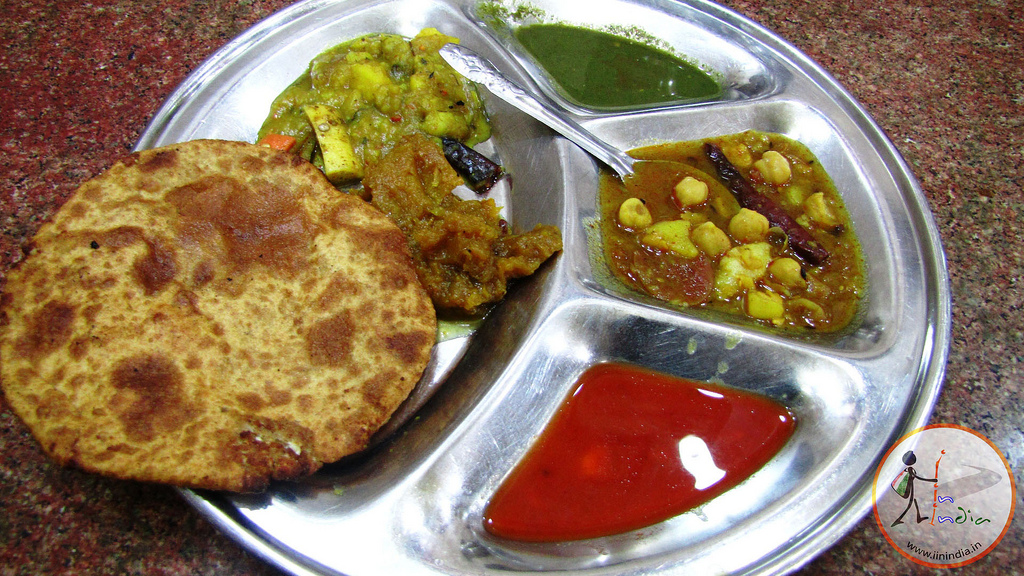
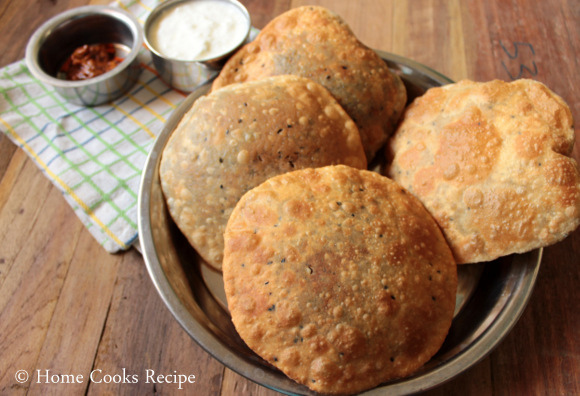
    One relatively less known delicacy but nevertheless enjoyed to its zenith by the  few loyal customers, the bedmi is a variety of Khasta Kachori smaller in size and more khasta by all means. This is what one could call the Kachori’s  younger cousin. Filled in the epicentre with Semolina, carom seeds and grated peas, this delicacy melts in your mouth. Served along with our beloved aloo ki sabzi and halwa, you might have an oddity treat and might as well try mixing the two side dishes (The halwa and the aloo ki sabzi). This queer combination will make you reminiscent of the sweet and sour soup gone terribly wrong, but it’s a taste nevertheless. The Nagori is the youngest of the brood of Kachoris and more closely resembles the papadi that you get at a chaat stall. This also served along with aloo ki sabzi and halwa will give you plentiful of energy (And not to mention a truckload of calories) to roam the rest of Chandni Chowk with me.

    The Punjabi Diaspora:

    bangla

    Delhi is borderline Punjab. Geographically and literally. Once you enter Delhi, you’ll see an equal number of turbans as you will see bare heads. That because, there was a huge exodus from the Punjab region during Delhi’s early industrialization days and also during the Punjab conflict periods. Thus there’s a mini Punjab residing in Delhi. And with their amazing good humor and tantalizing cuisines come along the mighty and revered Gurudwaras. Gurudwaras are the worship place for Sikhs. Here Sikhs spend quite a lot of time serving other people as they faithfully believe in the quote “ Service to mankind is Service to God.” There are a plenty of Gurudwaras in and around Delhi and the best part of visiting them is the tasteful  ‘Langar’.  Langar is the lunch that is served in Gurudwaras to everyone who visits them. Large langars are organized where people sit on elongated jute mats on the floor and eat out of leaf plates. The langar, anywhere, in any gurudwara is something to be DEFINITELY had if you ever get the lucky chance to visit Delhi. Daal is a must in every Langar. Along with it Halwa, aloo ki sabzi and poori make your lunch hearty and eventful. There are two large Gurudwaras in Delhi to which people flog on from places far and beyond. These are The SeesGanj Sahib and The Bangla Sahib. Both are lakes of tranquillity and you will feel emancipated from all your worries and ill humoured feelings, once you enter the complex. Visit these if you are looking for serenity and a meal full of love and affection.

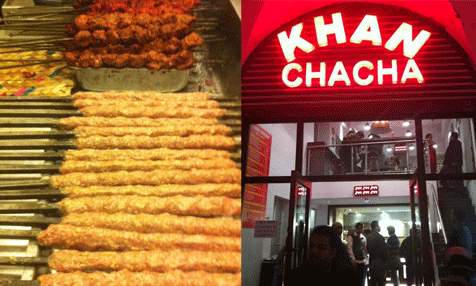
    Kareem’s and Khan Chacha:

    Chicken = Kareem’s.              Kareem’s = Chicken.

    Chicken = Khan Chacha.     Khan Chacha = Chicken.

                         Kareem’s = Chicken = Khan Chacha.
     

    tn_6284_khan1-1374305008

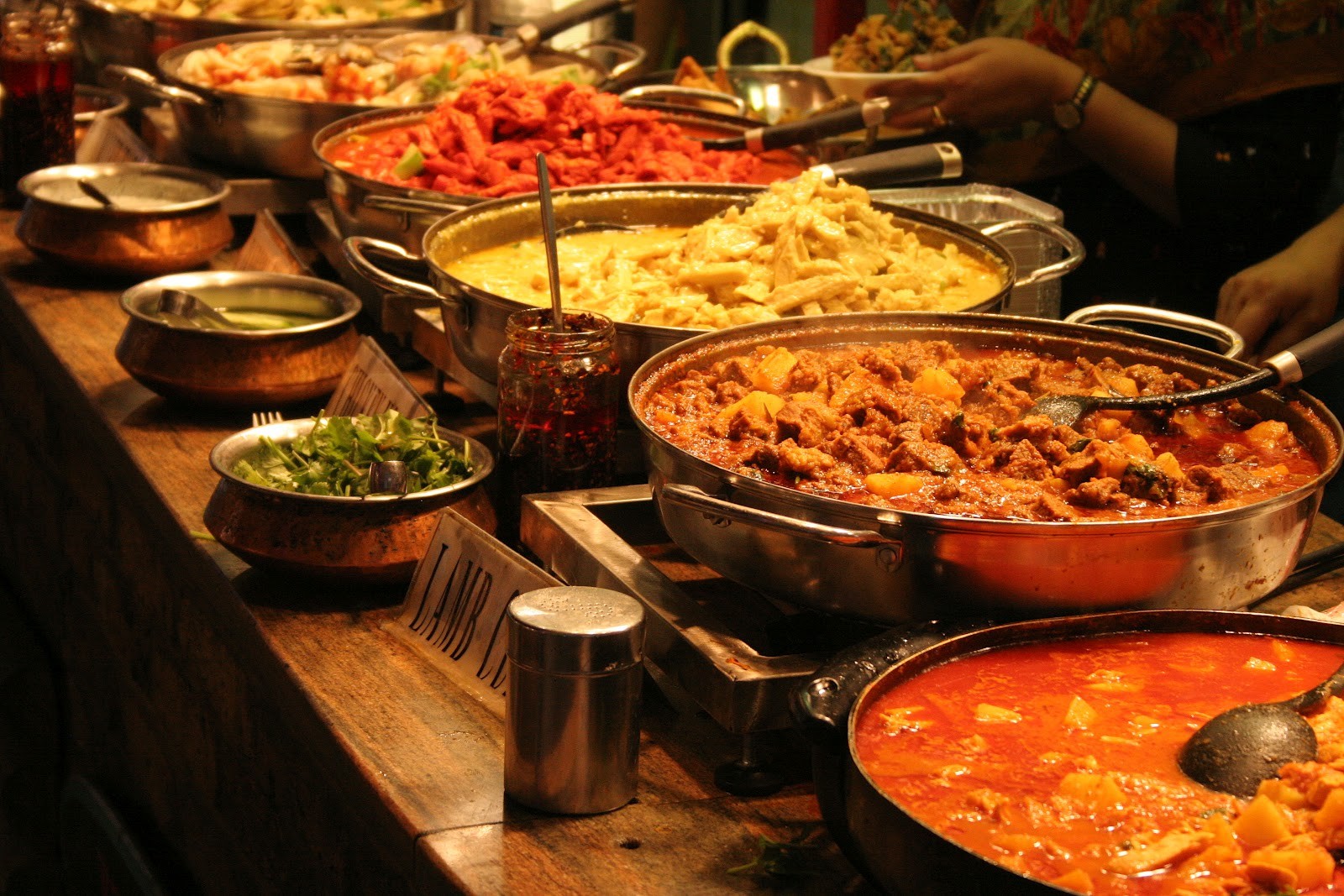
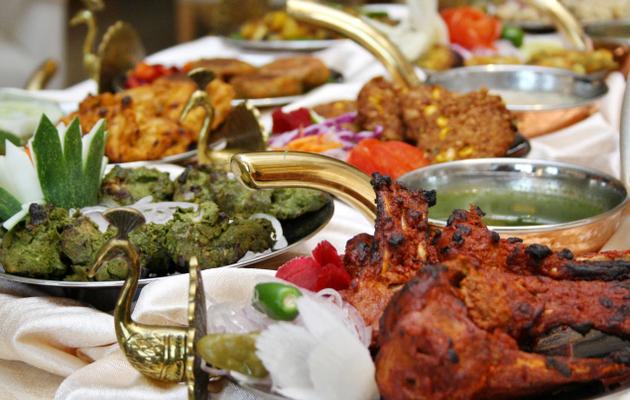
    One’s trip to Delhi will be wasteful, if he goes to Delhi but does not visit any of the above mentioned place. Both these places have been established in Delhi for the last 100 years or so and have been constantly providing the people of Delhi with an indispensable service ever since. The service of good food. Or more specifically, the service of Great Chicken. Khan Chacha and Kareem’s both are known for their Mughal style Chicken which they both offer in Chandni Chowk. The shop is tiny but the crowd of buyers: mammoth. Both of them provide exceptional Tandoori Chicken and Kebabs. Their extraordinary skills lie in providing with dry chicken variety. They specialize in Seekh kebab, Shammi kebab, mutton burra kebab, mutton stew and the rann (goat’s leg). These leave you with the exact smoky flavour that should be left after having a tandoori meal and also bestows upon you the feel of the grill.

    Connaught Place:
    cp-650_081714012910

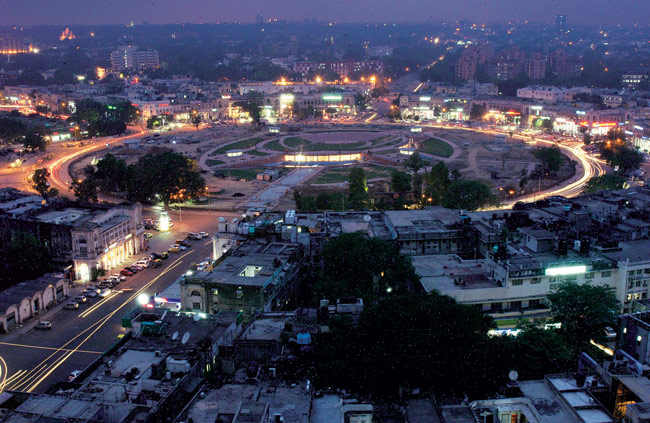
    What makes Delhi, Dilli you ask. One of the reasons of Delhi’s uniqueness is Connaught Place. Two British Built market places in circular shape around a gigantic park in between. Sounds confusing? Well, it is. But in earnest Connaught Place is one stop destination for all the top notch brands anywhere in the world. Until one hasn’t a shop in Connaught Place, he/she is too amateur to go global. A beautiful set of buildings all dressed up in white just like a catholic wife-to-be in circular shape mark the inner circle and the outer circle. A market place to take a stroll ith your friends or go bridal shopping; A day to enjoy Delhi in one glance and a hurried shopping session; everything happens at Connaught Place.

    ‘THE’ Palika Bazaar:
    pal

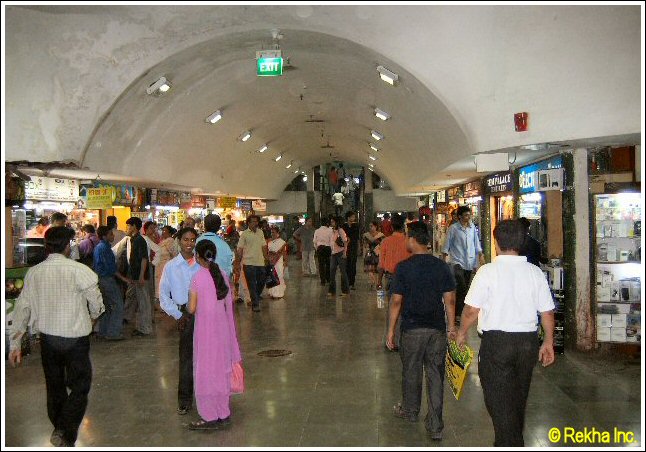
    Ever heard of an underground market place? Palika is one. No, it is not underground as in illegal, it is underground as in, it is literally 400 bunch of shops UNDER-the –GROUND. Remember how the Connought Place is circled around a gigantic park? Well this is a market place under that gigantic park. Palika is every women’s dream destination. Because you get the best of fashion labels at throw away prices. Loads of accessories, clothing, body tattoo shops throng the Palika. Men, don’t be disappointed. There’s something for you too, down there. Palika has men’s fashion outlets too, but more amazingly it has an entire bunch of shops that sell cheap China built Electronics gadgetry. So, next time you want a pen camera or a big grizzly transforming car, you can always go to the underground market.

    So, we made a tiny bit of progress in learning about Delhi. But don’t get tired yet, there’s more of Delhi to come.. Stay tuned.

  • What makes Delhi, Dilli…

    What makes Delhi, Dilli…

    A very long time ago when the heart of our nation was not famous for its countless rapes, an absent Government and Mufflerman; there was actually a city and a world inside that city that everybody loved. What made Delhi earn the jealousy of other metropolitan cities in the country, what is it that made Delhi stand shoulder to shoulder with Mumbai, the economic capital of India. Why is it that, people who have ever stayed in Delhi leave it with a heavy heart and tell everyone else that they can’t understand the emotions attached with the city if they have never ever lived in the city. Let’s find out!
    The Beginning of the Real Delhi:

    Great_Mogul_And_His_Court_Returning_From_The_Great_Mosque_At_Delhi_India_-_Oil_Painting_by_American_Artist_Edwin_Lord_Weeks Now, the love for Delhi started long back when the Mughals transferred the Capital of India from Agra to Delhi. This is when the real on-ground transformations started taking place in Delhi. Before this move, people were as oblivious of Delhi as they were of any village in India. Firstly, with the onset of Mughals came along great Architectural Feats. For example Delhi boasts of the largest Brick Minaret in the world the Qutub Minar (well, it was built by Qutubbudin Aibek), it flaunts one of the largest mausoleums in India – The Jama Masjid, It carries reticence with its Old Fort. Also the Red Fort that instills in us a feeling of patriotism whenever we see it on our TV sets. All these Architectural marvels brought a Mughal charm to this city of ours and elevated it above its neighboring cities.

    Dilli and the finger licking tales:

    AWADHI_FOOD_FESTIVA_898557g Along with the great architectural skill set of the Mughals arrived in Delhi their eternally pristine culinary taste. Their food was not just food, but Art on Stove. The Tandoori murg, The kadhai paneer, the Nihari,the  Paya, the Kachri Qeema, the Delhi-mein-world-famous-Mughlai Chicken, their biryani style and countless others set the tongues of the native Delhiites wagging. Not only did their cuisine establish itself in Delhi, it even grew there. More and more dishes were invented as an amalgamation of Delhi and Mughlai cuisines. This was a great culinary juxtaposition just waiting to happen. Seemed like this match was made in heaven. So, the Mughlai cuisine added one more feather to Delhi’s hat.

    Asli Delhi, Purani Dilli:

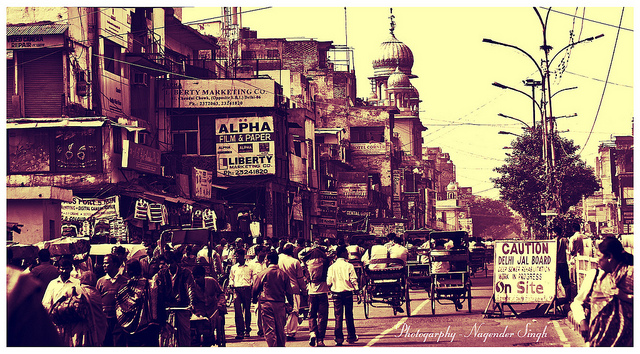
    7717061676_0ba4ab21a8_z Now, the heart of the Heart of the Nation. The Chandni Chowk and Chawri Bazaar area. For those new to the maps of  Delhi, these areas lie in the center of Delhi and still boast of historic architecture. These areas are famous for their super cramped streets, the always bustling crowd and nagging shopkeepers always trying to sell you substandard products. By the names in the list, all these seem to be pretty depressing by the levels of the national capital. But once you visit the place it seems just like your extended neighbourhood. It won’t seem as a market place to you, but a big great family  living in harmony yet tearing each other’s hair out. But there is a lot to watch out for in the Purani Dilli area. Since it is a crowded marketplace, pickpockets are always on the prowl. Also some shopkeepers tend to get too close for comfort levels in order to get their products sold. But every coin has two sides and prefer to see the loved one here please. Purani Dilli broken up and explained in pieces in the next points, because it ain’t so small that it can be contained in one measly point.
    The Paranthewaali gali:

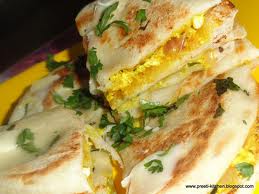
    4950341851_7711ec9fd9_b Now, now, now. Every once in a while a moment comes in every person’s life that can’t be expressed even if you keep squealing with delight for a fortnight. For a foodie that moment would come when he enters the paraanthe waale gali. The lane where our Bollywood Star Akshay Kumar slaved and toiled for many years. The paraanthe waali gali is an even narrower lane than what already was a cramped main road of Chandni Chowk. There are a multitudes of shops there only selling paranthas. But mind you, these are not ordinary paranthas, these are paranthas made of Rabri, Paranthas made of bitter gourd and paranthas made of lady finger and all the odd vegetables and sweets you can ever garner. And these are not made on a pan or a stove, these aranthas are deep fried just like samosas and tikkis are. Your whole perception of paranthas changes after entering this foodie paradise. This narrow lane adds another dimension to your notion of parantha, by doing something with it that was unimaginable before this.

    The Japanese Samosa:

    7745361346_3ba6e884b2_z Well, to be honest, this is just sold in one shop in the entire Chandni chowk. But I swear to God, that you won’t have eaten anything like this before this. This samosa’s shape is more or less like regular samosas but the corn flour covering on the outside is striped. Thus the Japanese samosa is not wholly covered but partially revealing. The inner filling forms the crux of the whole dish. It is not spicy or filled with mashed potatoes for that matter. It is filled with a sweet mixture like that of a halwa. Thus changing the whole thought process around the samosa. By just keeping the name and shape intact, this exquisite dish retain the name value and the ingenuous sweet filling inside and the striped contours give it a modern twist. And thus, the Japanese Sammosa, The tour of the real Delhi has just begun. However, even the most brilliant of writers and esteemed authors would fail in describing the exact charisma and fascination of the city. Such complexly woven is the feel of it. I am just a young scribe who is trying to portray to you an image that tells what exactly Delhi is, if you have have never been there or miss the hell out of that angelic city of yours. To be continued…

  • Taste a Bite of shahi tukra

    Taste a Bite of shahi tukra

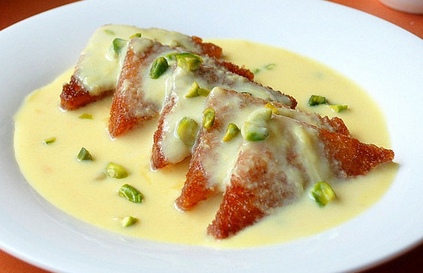
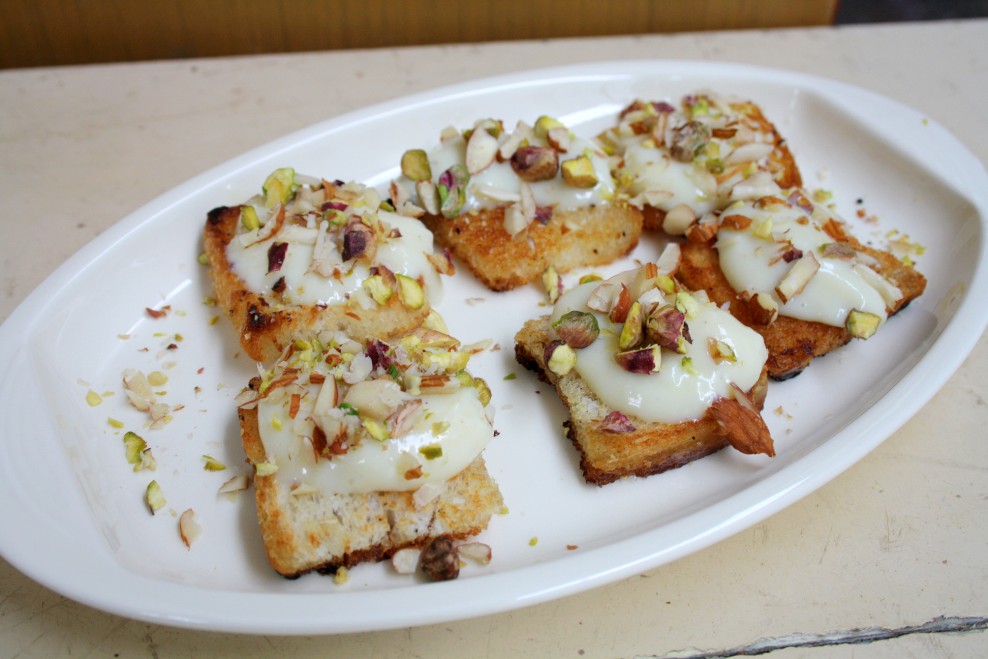
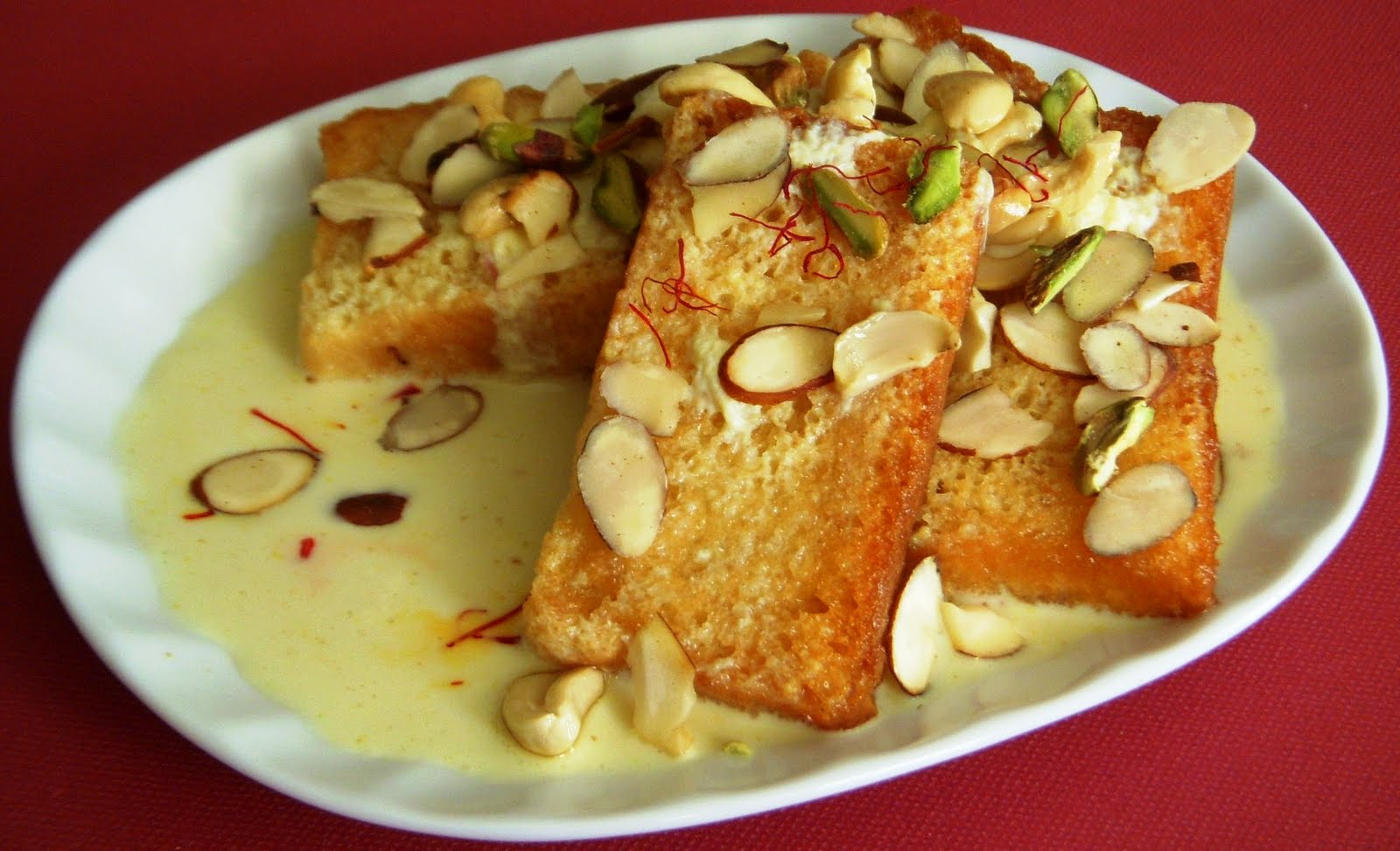
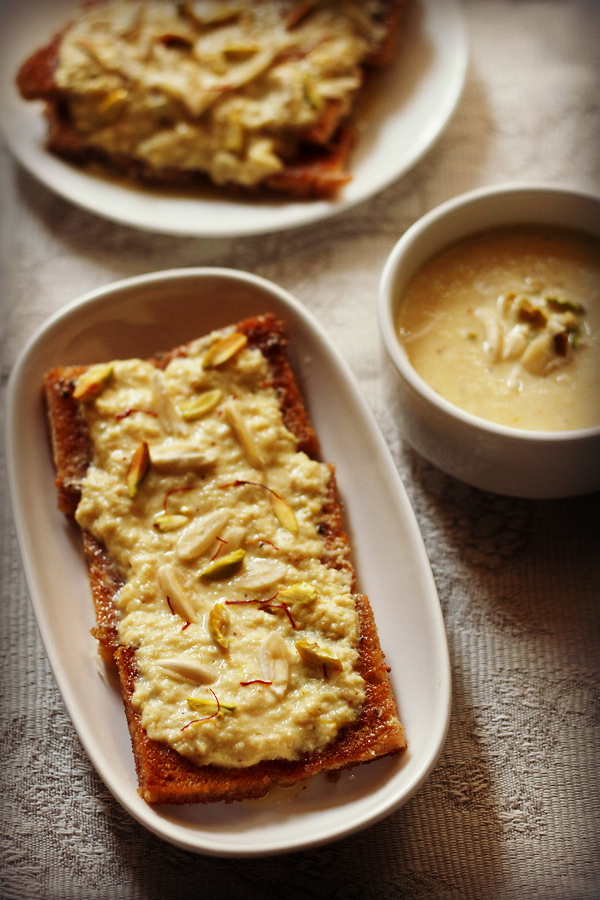
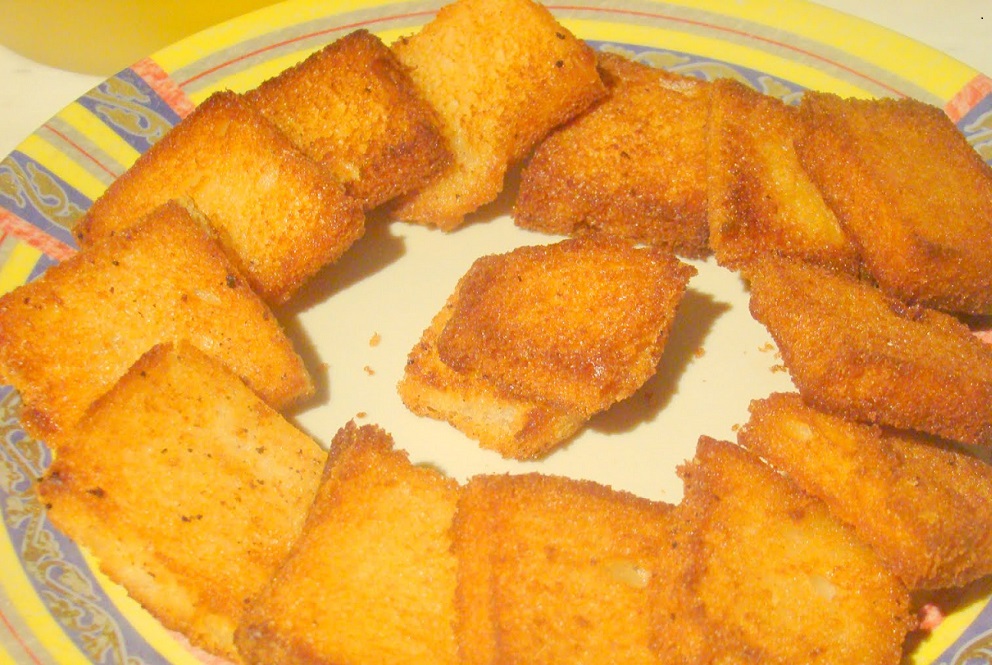
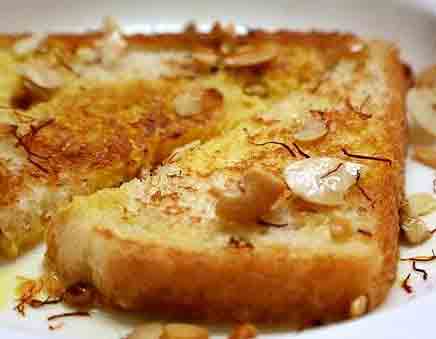
    Shahi tukra, a royal treat to taste buds at anytime. It is a rich and delicious Hyderabadi dessert recipe. It won’t be inappropriate to call it royal piece of dessert. It is rich in taste, aroma and flavor. Shahi tukra also called Indian bread pudding has its origin form the mughal era. Though mughal dishes demands a lot of time and preparation but this dish is way easy to make.

    Shahi-Tukda-Adukkala
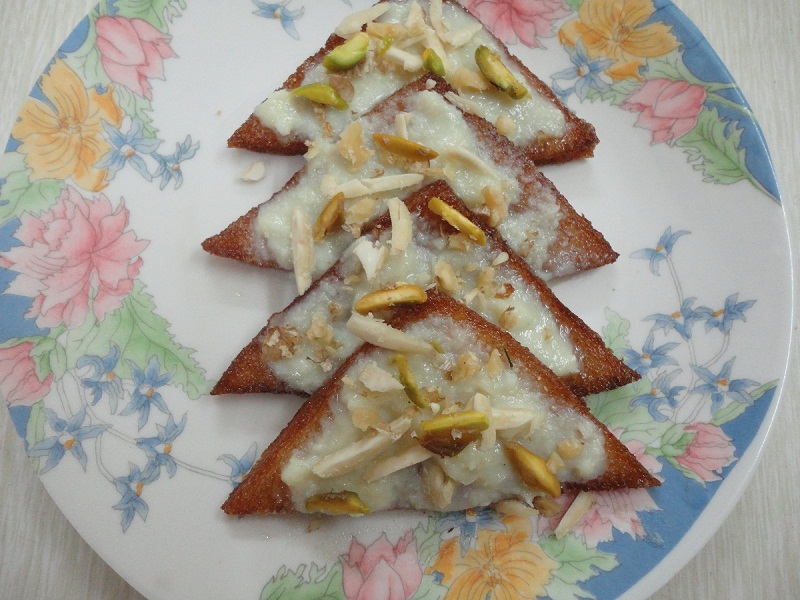
    Desserts often get put In not to eat food list if you are on weight losing mission but sometime or occasional having taste of delicious desserts never harms your body. It is a similar to the famous cousin ‘Double Ka Meetha’ only difference is in way of making them. The Shai tukra is a simple sweet dish made of fried bread soaked in sugar syrup coated or topped with fragrant creamy sweet thickened milk or rabri garnished with dry fruits. This dessert is way easy to make and less time consuming as it takes maximum 1 hour.

    double ka meetha 010
    INGREDIENTS:
    • 5 to 6 bread wheat/ brown bread slices or white bread
    • 2 spoon or half cup ghee ( one-one spoon for frying each bread)
    • one cup cashew nuts-break into small pieces kismis pistachios crushed almonds finely sliced
    • saffron 3 to 6 strands soaked in 2 teaspoon of milk ghee 2 tea spoons

    shahi-tukra-recipe
    For rabri:
    • 4 cup  or 1 liter full fat milk or condensed milk
    • 2 to 3 spoons sugar or as required according to your convenience
    • 3 tea spoon milk powder (not mandatory) or half spoon cardamom powder, a pinch of saffron
    • 1 tea spoon masala milk powder (optional)
    • 1 tea spoon rose water or rose essence
    • For garnishing – kesar or a pinch of saffron
    For sugar syrup:
    • Half cup sugar
    • Half cup water
    • 4 green cardamoms powder in mortar pestle or half spoon cardamom powder or a drop of rose water
    For Garnishing:
    • 14 to 15 almonds
    • A few standard of saffron
    • 12 to 14 pistachios

    you can increase or decrease the quantity of ingredients depending on the quantity of shahi tukra you making.

    rabri-sweet
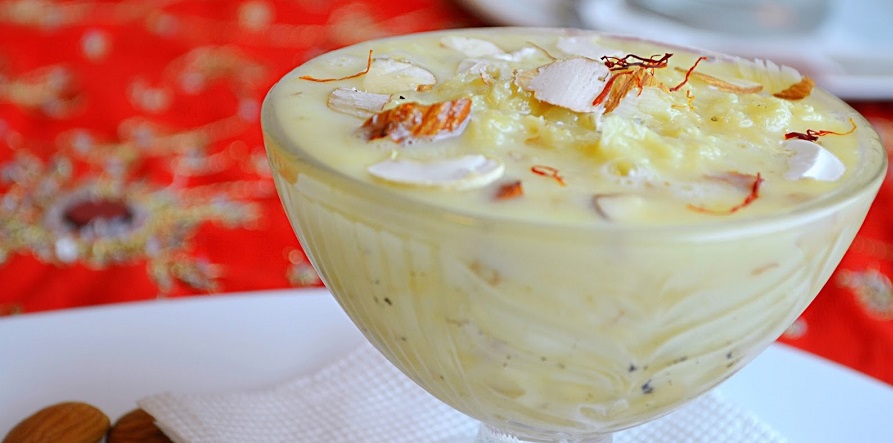
    Preparing rabri or sweet creamy thickened milk:

    • First step, take milk in a broad thick pan or in a sauce pan. You can take 1 liter or as much as required, fat milk, depending on quantity you making and bring it  to the first boil.

    • Rabri can be prepared with condensed milk or you can make a vanilla clustered instead of milk.

    • Now add 3 teaspoon milk powder though it is not essential to use it. It may help you in reducing the cooking time of rabri otherwise, you have to simmer the milk for some more time period.

    • You can also add masala milk powder. Allow milk to reduce to half its original quantity.

    • Stir up and scrap milk continuously so that milk does not get brown or brunt from the bottom as well as from the sides.

    • Add back the clotted milk or malai and the dried milk from the sides to the milk.

    • Now add sugar and keep on simmering, stirring, removing the clotted cream then add sugar stir well so that the sugar dissolves.

    • Next step put crushed saffron or saffron powder along with rose water or rose essence. You can also add sliced almonds and pistachios.

    • It will take about half to one hour for the milk to thicken on a low or medium flame.

    if you want to make chilled shahi tukra then rabri to be prepared one day before and put to freeze up in the fridge.

    Preparing/ Toasting bread slices:

    DSC03552
    This preparation you can start while boiling milk for rabri.
    • Slice the crusts of the bread. Cut them into squares or triangles or any other shape as you like. Now put 1 spoon of ghee in a flat pan or frying pan and heat it for a minute. You can also use oil for frying but for royal and delicious taste ghee is a better choice. If you are calorie conscious then you can use wheat bread rather then white bread and can toast bread slices in a toaster till it becomes golden brown.

    • Placed bread sliced on non stick pan, drizzle two tea spoon ghee over it at low medium heat and toast them till beneath got brown after it  flip and toast the other side.

    • Then flip both the sides’ one after other till it get crispy and golden brown color.

    • Drain the toasted bread slices on paper towel and add one spoon of ghee again and toast the remaining slices.
    Preparing sugar syrup:

    Shahi-tukra
    • Mix half cup of sugar with half cup of water in a pan. You can cook and toast both sugar syrup and bread slices simultaneously.

    • Keep sugar solution on a low heat.

    • When whole mixture starts boiling, it means the one thread consistency will not take much time.

    • If one thread consistency reached then it mean sugar syrup is ready add cardamom powder or rose water and stir.

    • In case sugar syrup cools and crystallizes before you make toasted bread slices to soak in it then just add about one to two spoon water and reheat the syrup.

    double-ka-meethaimg_2065

    Now dip the bread slices deep in the sugar syrup with the help of spoon or coat the bread slices with sugar syrup. When bread slices looks like fully soaked in the syrup and then arranges bread slices in a try. Now neatly pour the rabri on the bread slices and garnished with almonds, pistachios and nuts.

    Now you can serve the royal piece of dessert shahi tukra, Sweet and yummy in every bite.
    If you want to serve chilled shahi tukra rather then hot fried shahi tura then keep it in fridge and serve chilled shahi kura.

  • The Madras you don’t see

    The Madras you don’t see

    Imagine.

    There’s a bitter war going on in North India. People belonging to different categories are fighting each other, there’s fist fighting, the local –made guns are drawn, abuses on everybody’s mouth. Visualize any Anurag Kashyap movie; that intense. Then suddenly, somebody in the far distance loudly shouts MADRAS!! And everybody, regardless of their caste, creed, religion drown out every single thought in their minds and replace it with just get one word:

    IDLI/DOSA.

    And after that single moment of silence, the fight resumes.

    The thought behind is, that people from all over the country, regardless of their scathing diversity unanimously see Madras cuisine in one single light – Idli/Dosa. There’s nothing beyond and there’s nothing beneath. And I was one of those notion holders too. Until I was transferred here.

    Guys! Let me just tell you. There’s a huge, eclectic taste world wrapped under the sheets of Madras. And only those who spend a teeny-tiny amount of time here can see through it. Today, I am gonna’ let you in, on this beautifully delicious world. Let’s po!!

    The Kaapi:

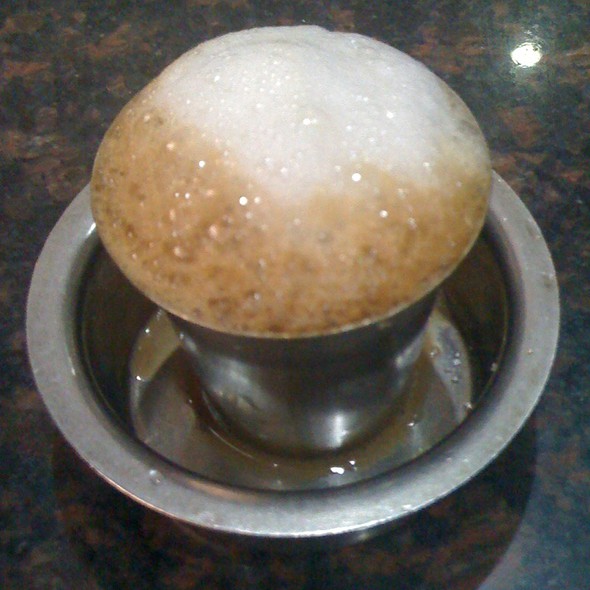
    People here are a little different from the rest of the country. And hey! I am not being rascist here. Almost the entire city is up and ready to go about their jobs at 6 in the morning(Even after taking baths daily). And to keep them fresh, the tea and coffee joints open up at 4 in the morning. The Kaapi is one treat on those shops. Kaapi, a fond name for the local coffee here. There’s no Bru and no Nescafe.There’s just Kumbakonam filter coffee.

    kaapi


    And no, Kumbakonam wasn’t that monster in Ramayana. Kumbakonam is a place in Tamil Nadu where lots of Coffee is grown. And the powder from those beans is pristine. One has to have its taste in his/her lifetime. Also the Kaapi is not to be drunk ordinarily, it is drunk from a ‘Katori’ or a saucer if you may.

    The Parotta:

    p main g


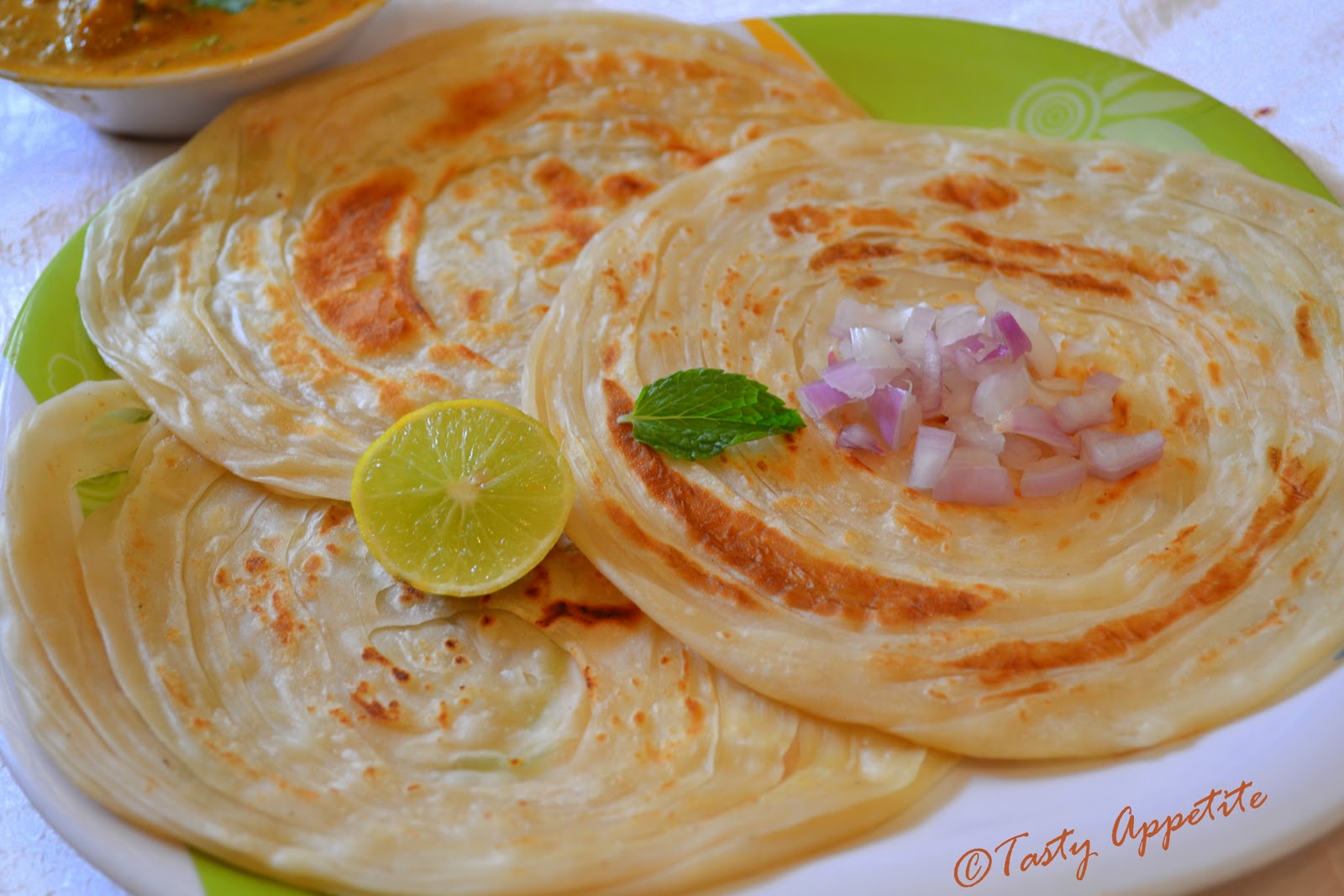
    Okay, Punjabis, hold on! This is not your morning Aloo ka desi ghee waala Parantha. There is no typing error in the heading. There is a thing called Par-o-tta. These are tiny lachcha paranthas made entirely from Maida and greased with oil. And I am guessing spices weren’t discovered till the time parotta was invented, because it doesn’t have any. Not one grain of salt or pepper or any other spice imaginable.

    The Kuruma:

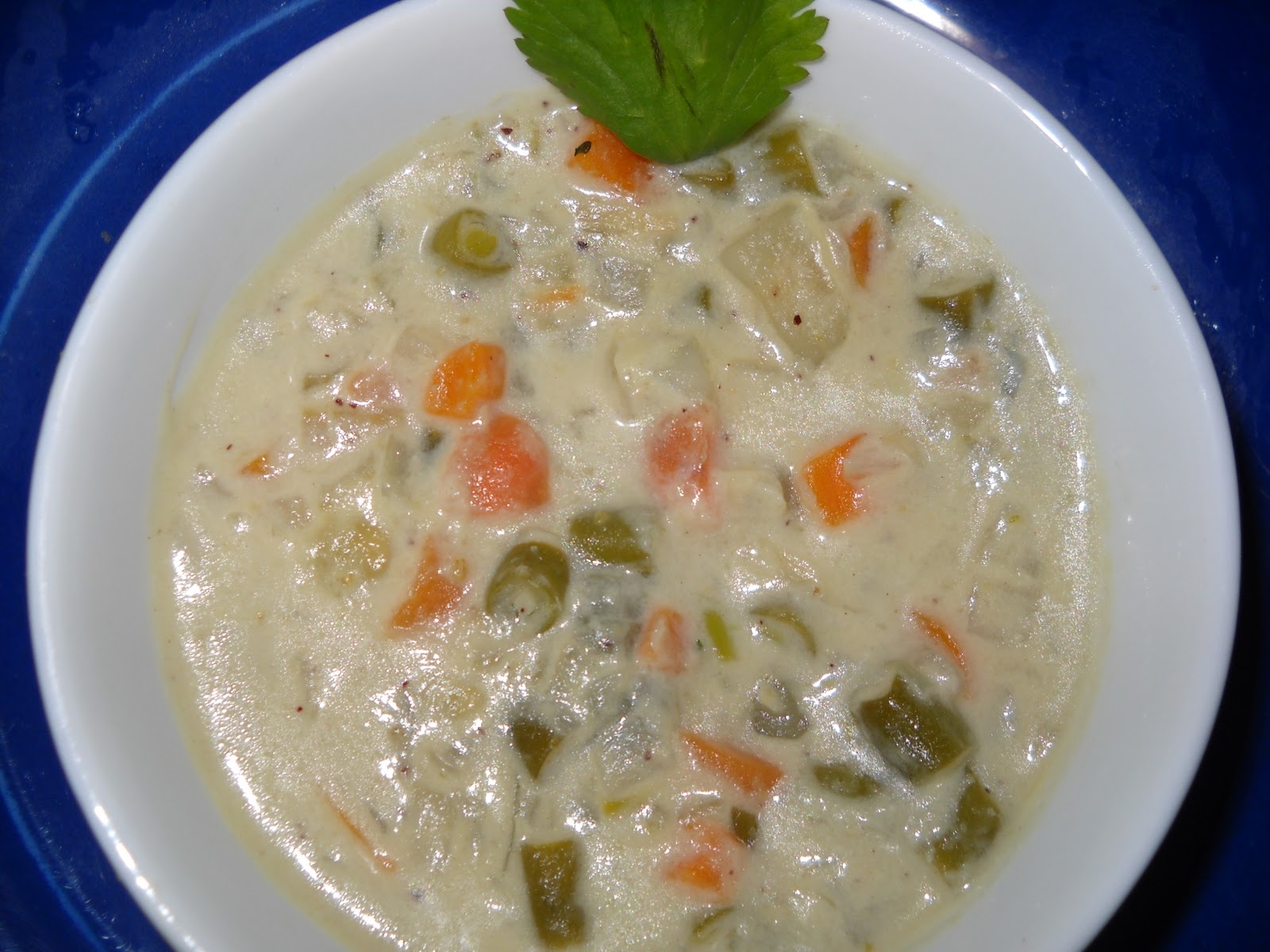
    Now, when I started writing this one(and the previous one), I came to realize that south Indian people don’t get too tensed over their food. They are happy having some water and spices with their parottas. Because that is what Kuruma is. Kuruma is mixed-vegetable with gravy. Apparently lots of it. The Kuruma is low on spices and tastes a bit bland, but I am a Punjabi, and anything less than a Bhut-Jholokia is bland for me. Take some vegetables cook them a little and put lots of water over it. Voila! Kuruma ready. BTW, it is tasty as hell and I can’t stay one single day without having it once at least.

    Picture 024


    The Saapad:

    thali


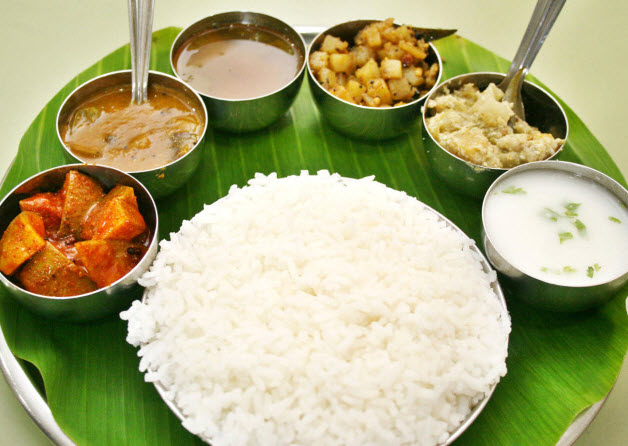
    Now, if you go to any low end restaurant and ask for idli-dosa-vada in the middle of the day, you’ll only come back hungry after hearing an ‘ILLA’. That because, in the lunchtime each and every low-end or budgeted eatery/restaurant prepares one and one thing only. The Saapad. You get it for a mere Rs. 40-Rs. 50 and return home with a stomach full upto the brim. First of all, for any new comer eating an entire Saapad plate alone is mission impossible. But by a slim chance he turns out to be as fat as me and can finish it alone, he won’t be able to even look at food for another 6 hours. Such plentiful is the Saapad. Saapad is nothing but lots of boiled Rice, served with millions of Gravy(s). You will have 4-5 saucers of different coloured waters surrounding your heap of rice. One would be Sambhar, another would be Rasam. Rest, even people who eat them don’t know what it is, but they all are tangy as anything.

    The appalam:

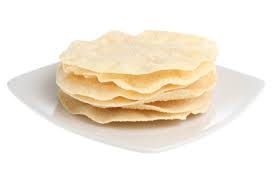
    Remember, those crispy Paapad like things you used to fry and eat in winter evenings, that is appalam here. And it is served along with Saapad to make your food go crisp.

    appalam


    The Podhi Dosa:

    Now as you all must be wondering, this is not some new kind of dosa, but our own Plain Dosa. Now, here comes the twist. Plain Dosa filled with Podhi masala. Podhi masala is just borderline spicy. You know, you’ll want to have more just to decide if it is spicy or not. And then in the second bite too, you’ll be just as confused and will be rushing for the third bite. This cycle goes on and makes the Podhi Dosa feature on our hidden treasures list.

    podi


    The ‘Dindigul’ Chicken Biriyani:

    biryani


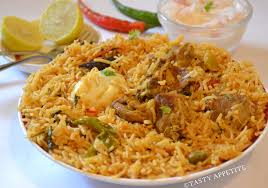
    The respected ‘BAAP’ of every dish here. Throw a stone in Madras and it is sure to land in a biryani shop. Such is the sprawling number of Biryani centres in Tamil Nadu. Dindigul is a place in Tamil Nadu and the origin of this masterful recipe. The unique taste of the biryani comes from a special Biryani powder which contains Fennel Seeds, Cinnamon Stick, Cardamom Pods, Star Anise and Cloves. This Biryani is served with a Brinjal vegetable. Now I know, when anybody hears brinjal, they can just think of barely digesting the Baigan ka bhartha, but trust me on this, the gravy is sumptuous. Also given along is onion Raita. This adds a little wetness to the biryani which otherwise is smeared with oil. And here it is where the most hackneyed of clichés comes to life. The Madrasis eating food with their hands. But I am not from South India and I love eating it with bare hands. Eating it that traditional way leaves a flavour to be savoured on your hands. Lick it, feel it.

    So now if you get a chance to go down south, don’t stick to the good old menu. Go out into the wild and try all of the above. Then you might have a glimpse of the real Chennai and not Madras.


  • My experiments with food (And truth too!)

    My experiments with food (And truth too!)

    India truly is one big piece of land. And on this big piece of land you encounter an eclectic mix of geographies  and topologies. And on these array of different  land designs, you come and meet very different people. People who practice different religions, wear very dissimilar clothes and practice varied traditions. And in all these differences lies one major difference, the different of cuisine. Just like we have over 700 gods and deities, I guess we must also have a similar number of different cuisines. But in all those differences they have one similarity. The trait of experimentation.

    No person who calls himself a religious foodie can never withstand a zeal for experimenting with food. Whether it is Milk and coca cola or Raajma with aloo bhujia; the tempt of experimenting is too great to be countered off. Hence we traipse to various parts of the country to look out for some experiments gone successful.

    The Chola Kulcha burger:

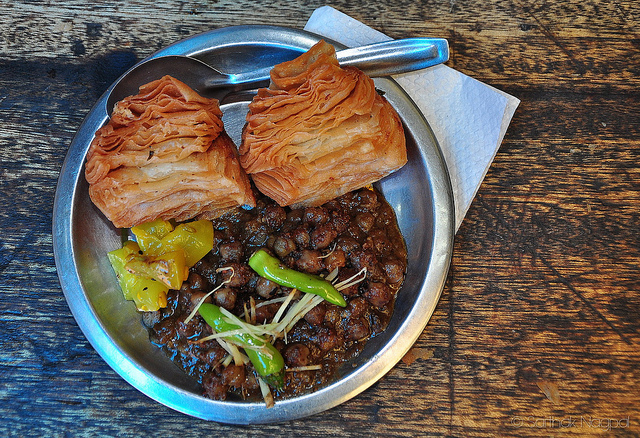
    Down the alleys and labyrinthine roads of a little known town in Punjab called Naabha, you will see gazillion of stalls selling this odd delicacy. Most people have had a taste of Chola-Kulcha in their life at some point or the other. This treat is in exactitude, same as the former, but a different form and slight delicious top ups give it the oomph factor that makes it feature in our list here.

    burger

    • Take two kulchas. Warm the boiled cholas and the kulchas.
    • Add a little bit of paneer and boiled mashed potatoes to the chola mix.
    • Now to the warm kulchas, add a dollop of butter and the samosa chutneys. The red one is mandatory, the chili sauce, add according to your taste. Keep the kulchas on the fry pan and add the chola mix in between the two kulchas. Voila! Your Chola Kulcha burger is ready to be savored.

    The Bhujia soup:

    Now, this treat had me baffled at first but left me craving for more later.

    There are places not so famous and not so hip in our country. Guduvanchery in Kancheepuram District (Chennai) is one such place. It is a sleepy village but with a huge local market. And in that market somewhere deep down, you may get lucky and get a chance to savor this orgasmic delight.

    soup

    The ingredients seem simple enough (Some namkeen + Some soup! Done!) But the trick lies not in the ingredients but the way those final ingredients are prepared. Neither the Bhujia is from Haldiram’s nor is the soup made from ready to eat packets. The Namkeens are homemade yet world class. For rookie foodies who try to differentiate between the two it will be in vain. But the oils from the namkeen and the spice mix in them scream homemade from top of their lungs. The namkeens are just not aloo bhujiia or khatta meetha. There’s a spectrum of namkeens of different sizes and different flavors available to choose from.

    But when in Home, do as the homies do. At your home, you can definitely use the knorr ready to eat and the aloo bhujia lying in the cup board waiting for guests to arrive at you home.

    The Samsiya:

    samosa

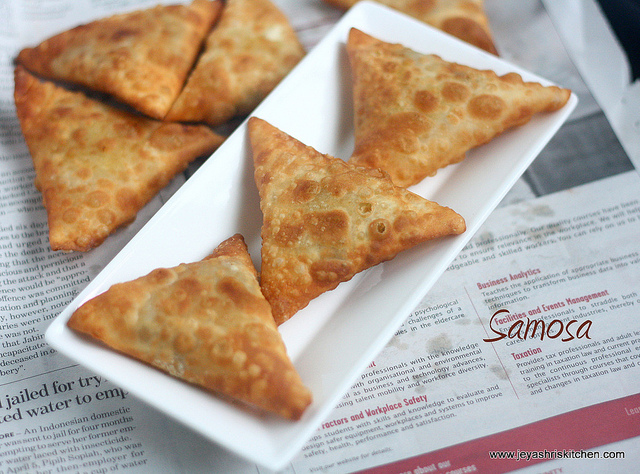
    Yes, the root of the words are the same but these are slightly different foods to be had.  While the samosa is filled with aloo mix, the samsiya is filled with fried onions. And in front of the samsiya, samosas seem gigantic. So, there should be no doubt if you find tiny samosas being sold 4 for Rs. 10 outside the Chennai railway Station. There’s one more wild twist in the tale of samsiya. Along with samsiya, you will never see your traditional imli and chili chutneys. The samsiya is served along with Coconut chutney. Just like idli is, just like vada and dosa are. This gives a good-humored  taste to the dish. Not spicy enough, not tangy enough but yes unique in its own sense.

    The Chola Pani puri:

    poori

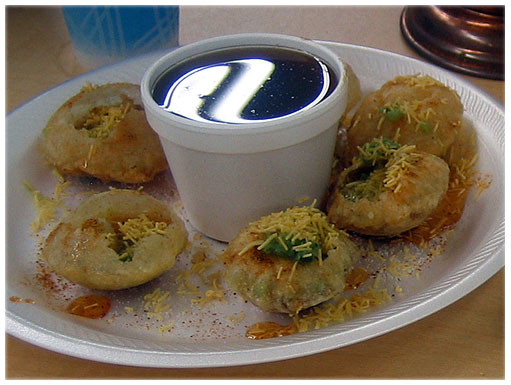
    All of you might have eaten our favorite street food: The pani puri. But you are in for a surprise when you visit a chat stall anywhere south of Maharashtra. While visiting a chaat stall, forget that you have ever eaten pani-puri before. This will be a whole new dish you will taste. Sure, the puri is the same shape as in our north and everywhere but everything else is different. The filling in the puri is not mashed potatoes but hot boiled mattar. You know the green balls that you threw out of your rice as kids, that one.  Also, the filling is not dry, there is thickened water along with the hot mattar. Next, the tangy paani which was as delicious as it was healthy. Want a tip? Forget that paani. Here the paani is devoid of any and every bit of zippy taste that you went to the chaat stalls for. The paani is hot (again) and very straight in taste. Just imagine yourself having a mild soup for the paani. And thus our beloved paani puri becomes, some hot dinner dish making you feel fuller instead of easing up your stomach.

    The vodka Paani puri:

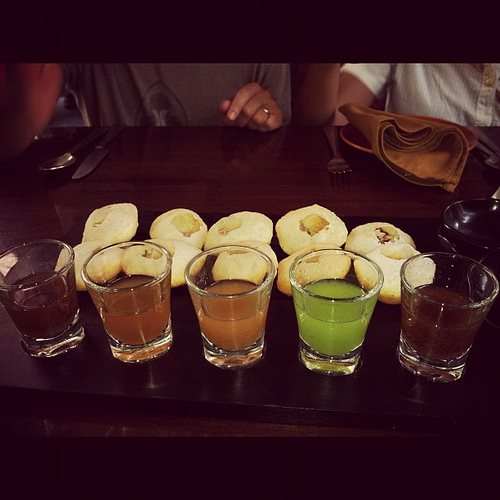
    Are all the liquor fans up yet?  *Sees left to right*  Great!  Now, this experiment is what you expect by its name.  Instead of paani you get vodka shots filled gol gappas.  Now no need for another appetizer huh? This is only offered at ‘Punjabi by nature’, a restaurant chain in the National capital and surrounding areas. The vodkas all come in different flavours, but I am sure you will not want to try out bubble gum flavored vodka with your puri.

    vodka

    So, from all around this great country of ours, we brought you some of the quirky, queer yet magnificently delectable experiments to tease you taste buds with. Try out all or some of these if you are in the neighbourhood, and get your tongue out of its routine. And do write some of your own experiments down in the comments section. Till our next journey around India, keep tasting.

  • Be Careful about your food condiments!

    Be Careful about your food condiments!

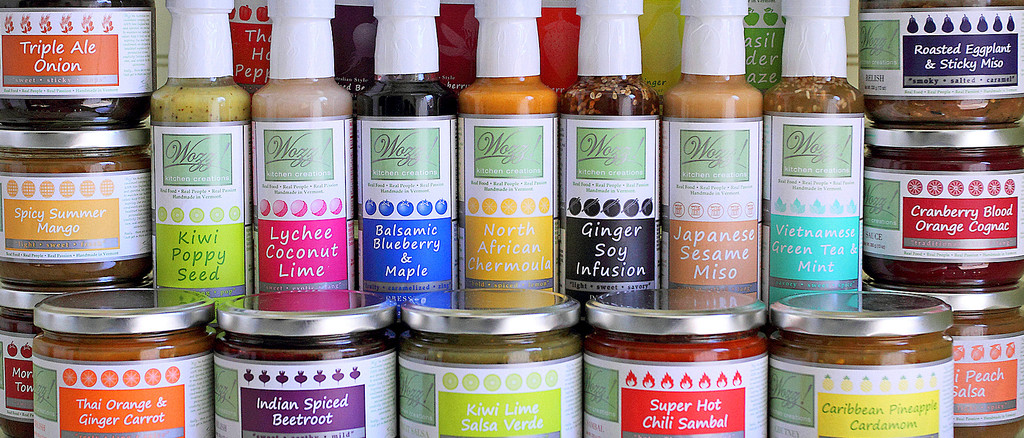
    A condiment is a common generic term for any spice, sauce, or any other minor food preparation that is taken with the main course to impart a particular flavour, to enhance the original flavour, or to complement the dish. Although table items like salt, pepper, sugar, pickles, tomato ketchup, and the works are most people’s general idea of condiments, barbeque sauce, teriyaki sauce, soy sauce, and marmite, all of which are used during cooking as well, are also classified under the same. The word condiment is derived from the Latin words condimentum, meaning “spice, seasoning, sauce” and condere, meaning “preserve, pickle, season”.


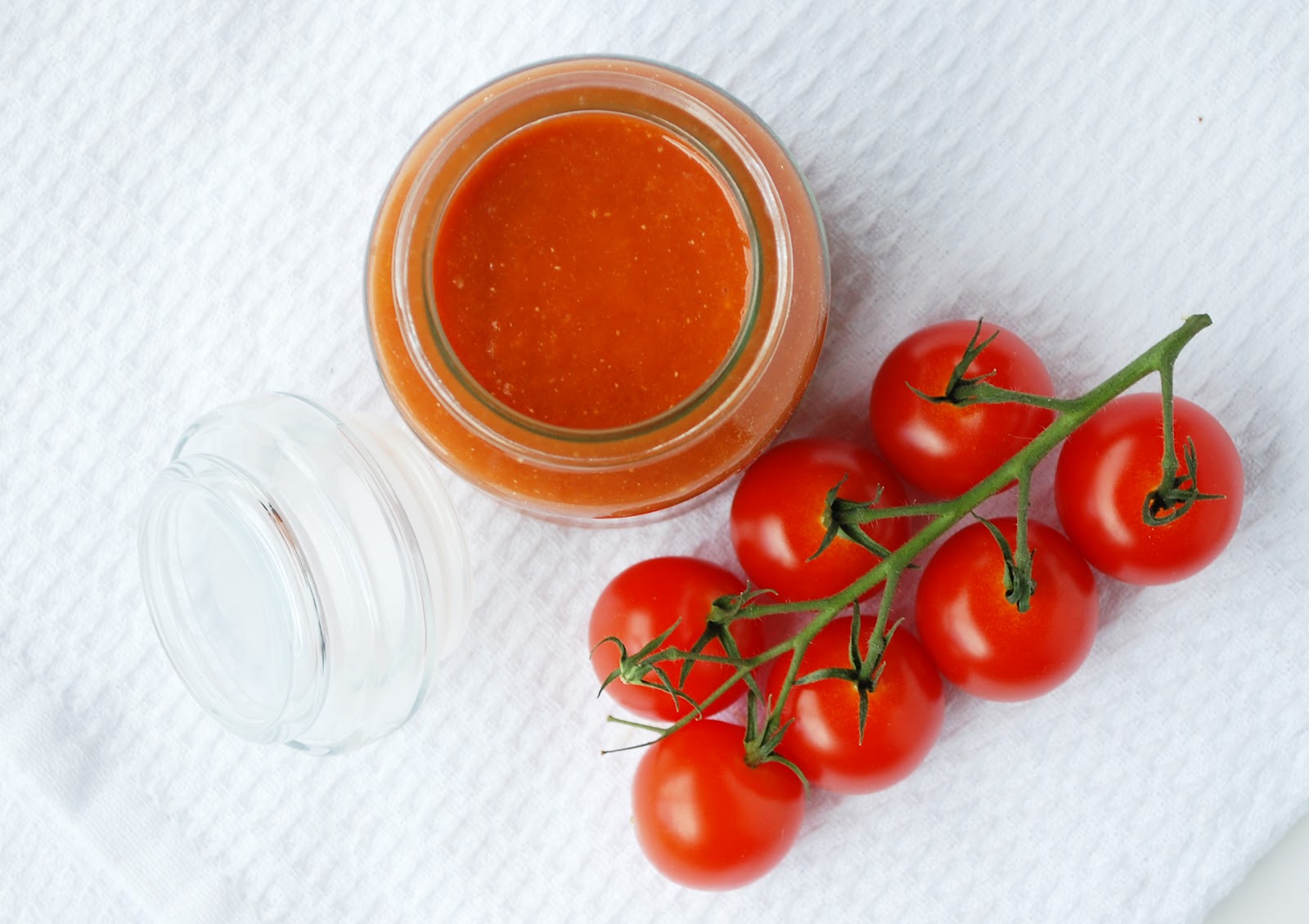
    1. Tomato ketchup

    The first known recipe of tomato ketchup perhaps was the one published by Sandy Addison in the American cookbook, The Sugar House Book, way back in 1801. However, Jonas Yerks is widely believed by many to have cashed on the saleability of the condiment and made a product originally sold by American farmers in small niche sales, a national phenomenon. Heinz Tomato Ketchup was the first multinational company to sell tomato ketchup on a mass scale, and since their establishment in 1876, have remained one of the bestselling brands of ketchup.

    Chemically speaking, tomato ketchup is a mixture of tomato, onion, garlic, sugar, salt, garam masala, and preservatives like sodium benzoate and acetic acid. While the best way to cook tomato sauce is the original, organic way by making it from fresh tomatoes at home, bottled tomato ketchup is also a safe option. Since canned ketchup hardly contains any fat, it can be consumed by obese and overweight people without any grave health issues cropping up.


    2. Chutney

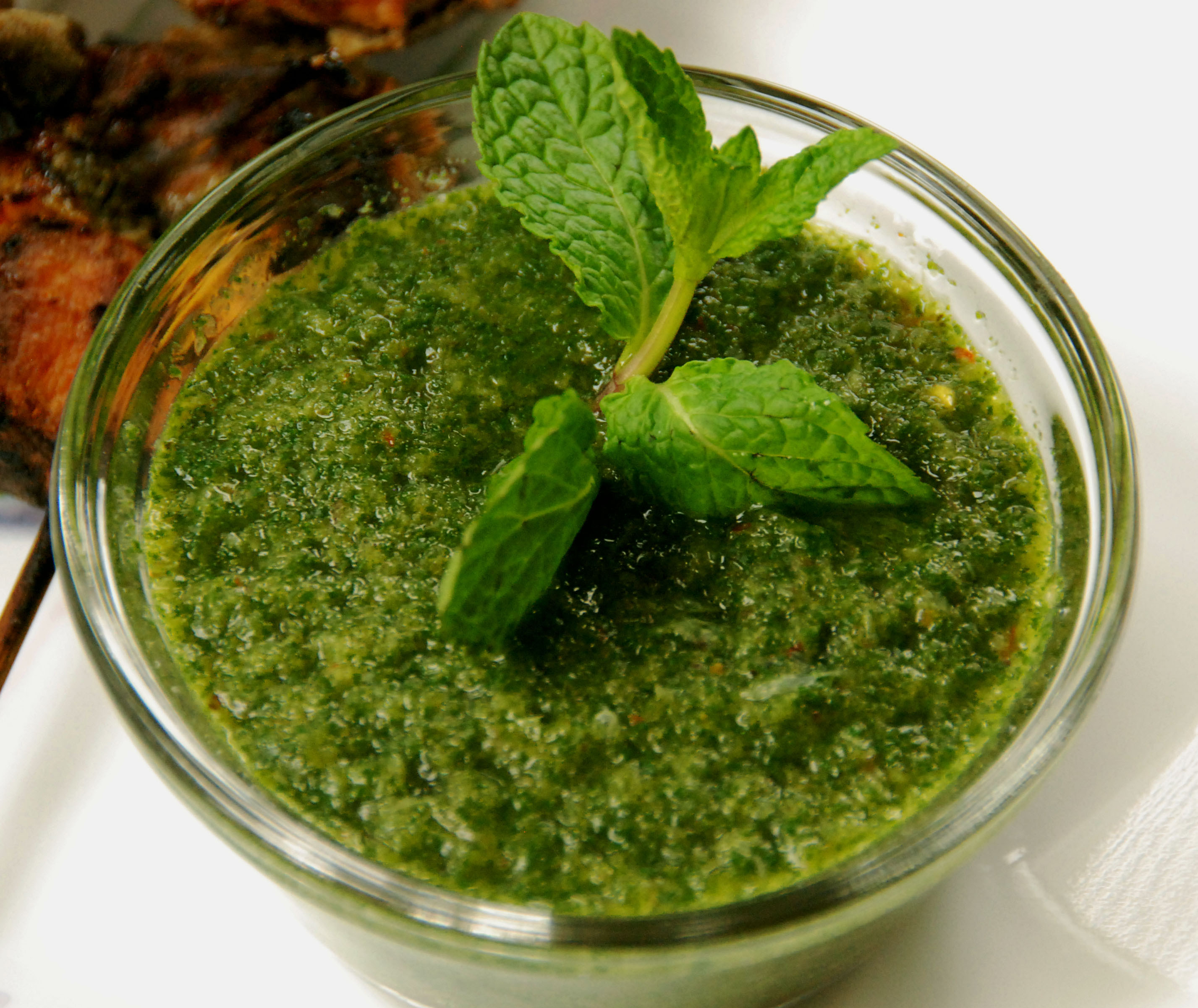
    Originating in India and other neighbouring countries of South Asia, chutneys are a blended, liquid mixture of spices, herbs, vegetables, and/or fruit. Highly variable and versatile in nature, chutney can be made by any palatable combination of its components. Generally hot because of their high spice content, some chutneys can also be sweet in taste. Traditionally made in village households by grinding raw materials with a mortar and a pestle, and then, as in most cases, cooking the paste in vegetable oil, chutneys nowadays are being produced in tons of cans and leak proof packages, courtesy electric blenders and huge food processors.

    The natural acidic content of most components, as well as the presence of sugar and salt in this condiment serve as natural preservatives. Vinegar can be added as well, both to enhance the taste and the shelf-life of the chutney. With the exception of coconut chutney which has an oil content of around forty percent, people can take chutney in liberal amounts owing to its good nutritive and fibre content. Carrot chutney, curry leaves chutney, and dhania-pudina (coriander-mint) chutney are some of the most popular ones consumed in the country, as well some of the healthiest.


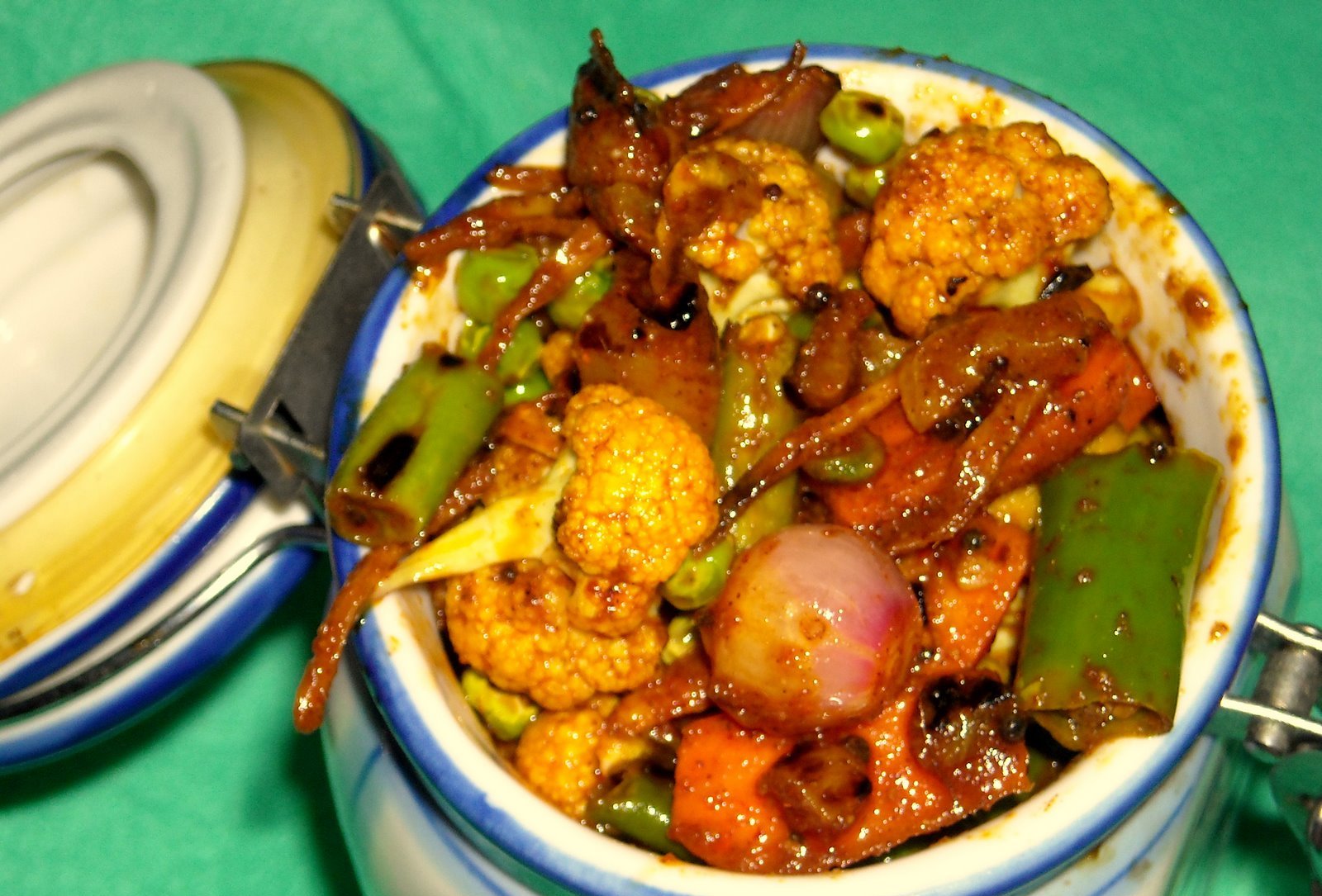
    3. Pickle

    Also known as achaar, pickles form an inseparable part of the cuisine of the Indian subcontinent and other countries of South Asia. Pickles are generally made from handpicked vegetables and fruits, which are then chopped into small pieces and preserved in an immersion of edible vegetable oils like sesame oil, sunflower oil, or any other, along with plenty of salt, and a mixture of different Indian spices, including asafoetida, red chilli powder, turmeric, and fenugreek. In many regions, particularly coastal areas, meat and fish are also made into pickle and produced on a large scale. This particular mixture is then slowly cooked on a low flame or by the natural heat of the sun, of which the latter is usually the preferred, but longer process.

    Pickles are full of natural preservatives and hence discourage the growth of microbes that would otherwise allow this condiment to decompose. People who have been recommended low salt diets or who suffer from high blood pressure problems should not consume pickles, due to their high sodium content. Sometimes, a particular component of pickles can trigger allergic reactions in people. Overweight and obese people can consume pickles as well, as long as they are cooked in vinegar, sodium benzoate, or any other non-oily preserving medium. However, they must be consumed fresh due to their extremely low shelf life.


    4. Jam

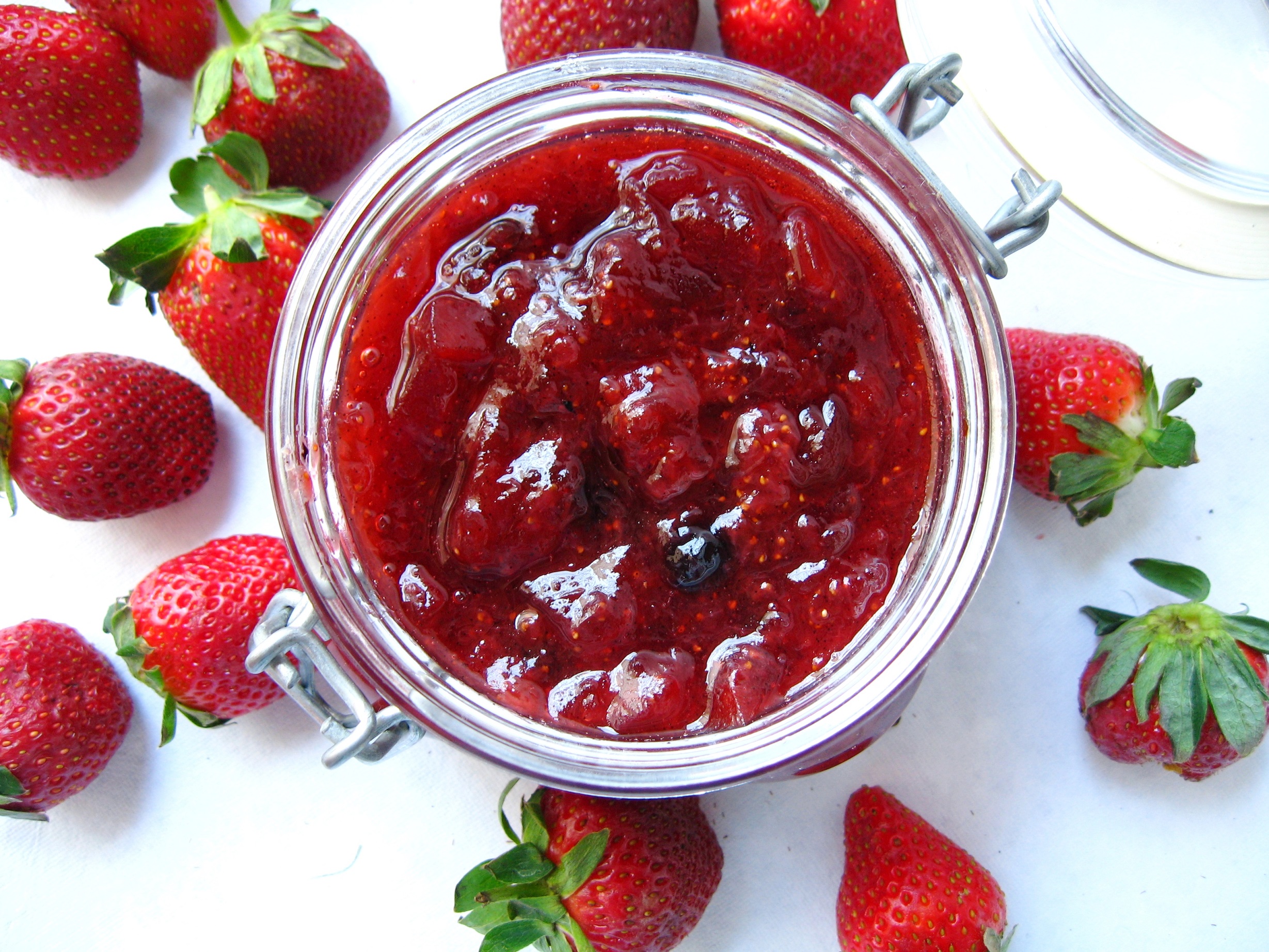
    Available in many flavours and colours, jam typically is a semi-solid suspension of both the juice and flesh of a particular single or a mix of vegetables and fruits, boiled in a sugar solution. Usually called by the popular term fruit preserve in most parts of Europe and America, you can find canned bottles of jam in nearly every grocery store today, with types ranging from apple, squash, strawberry, berries, and mixed fruit. Marmalade is a much loved jam variant and popular breakfast condiment, and it is made from the peel and fruit extracts of citrus fruits such as oranges cooked in a sugar syrup. In India, an ethnic jam type is a much favoured food accompaniment, and consists of entire pieces of fruit cooked in sugar and water and then cooled hereafter.

    Jams offer little other than concentrated energy in the form of sugar. It is a great source of energy for growing children who usually lead active lifestyles and have vigorous, playing sessions on a daily basis. One tablespoon of jam yields minute amounts of dietary fibre in the form of pectin, which is a by-product of the boiling process, and a negligible amount of vitamins. The heat treatment involved in the boiling process incidentally, also greatly reduces the Vitamin C content in jams.


    5. Jelly

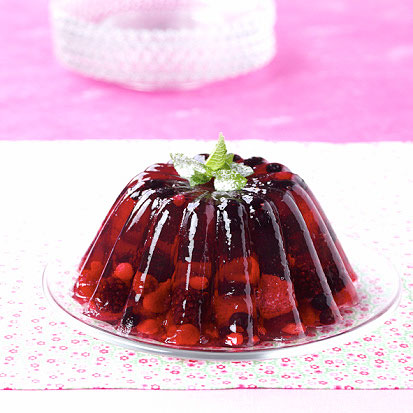
    Generally eaten as dessert, jelly is a clear, translucent preparation made by boiling and setting a mix of fruit pieces and juice extracts (occasionally vegetables), gelatine, and sugar solution. While the process of producing and most of the core ingredients used for jelly are almost identical to that of jam, jellies are available both in perishable and long lasting forms. Home cooked jellies which are served as a sweet dish are meant for immediate consumption, while candied jellies such as gummy bears possess a much greater shelf life.

    Since jellies contain an extremely high amount of sugar, and very little proteins and vitamins, much like jam, they should be avoided by overweight, obese, and diabetic people.

  • Go Nuts about Nuts! (Part 2)

    Go Nuts about Nuts! (Part 2)

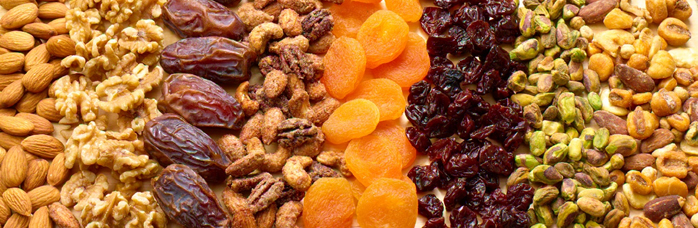
    With high nutritive value and a deliciously sweet taste, dried fruit is fruit from which the majority of the original water content has been removed either naturally, through sun drying, or through the use of specialized dryers or dehydrators. Nuts are edible fruits as well, anatomically different from the rest because of their soft internal kernels enclosed within a hard shell. Both dried fruits and nuts possess high shelf life, and have been in use throughout centuries in every part of the world. Today, they form an integral part of our culture and cuisine, and have an irreplaceable importance in our daily lives. In the second segment of this listicle, there is more to learn about our favourite ones.


    6. Walnuts

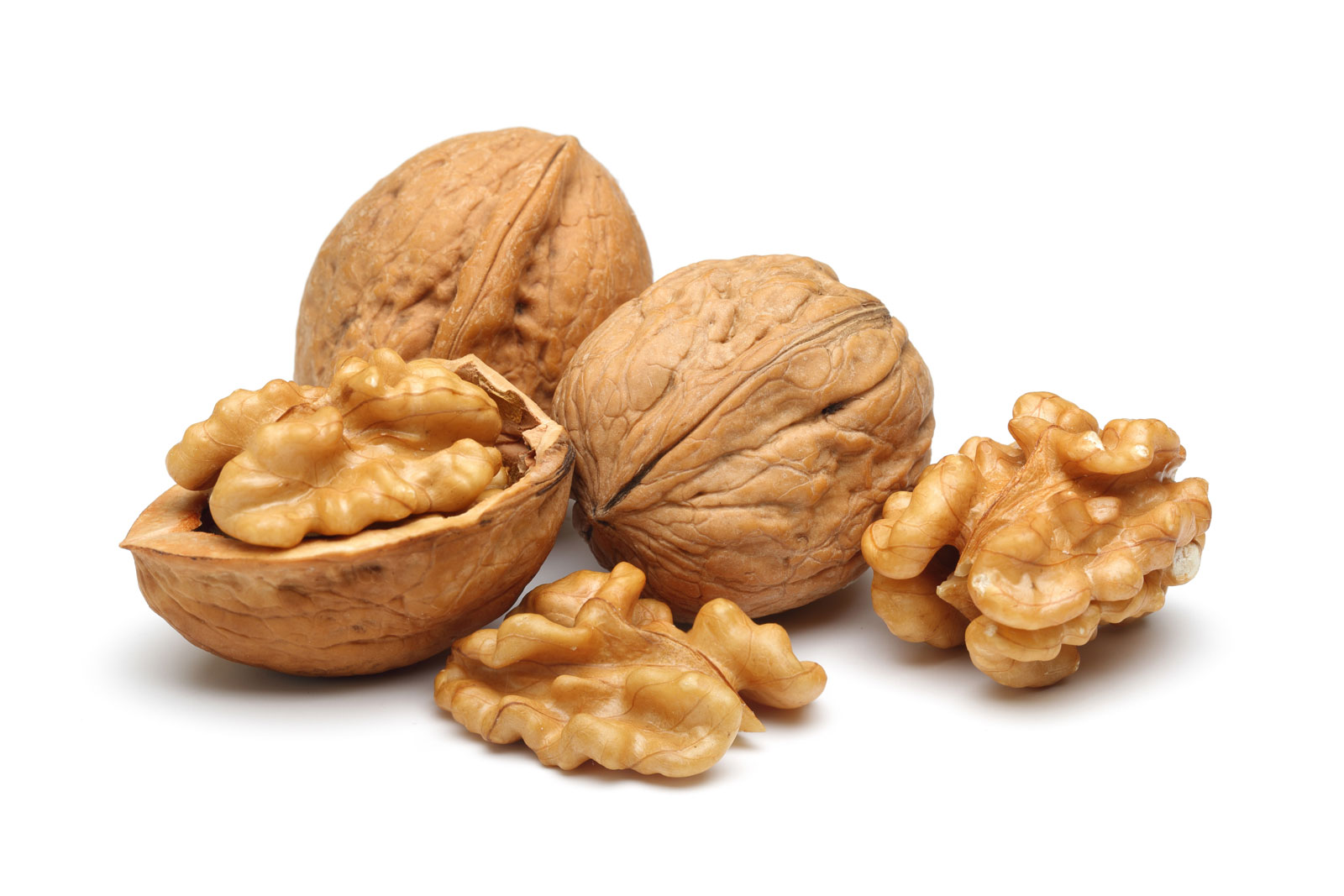
    Walnuts are derived from the Persian and English walnut trees (Juglans regia) and its soft edible kernel resembles the human brain. In etymological terms, the word is derived from the Germanic wal and the Old English wealhhnutu, meaning “foreign nut”. The shells are thin with a faint sheen and crack neatly into half, revealing the twisted, curly shaped nut. Versatile in the kitchen, walnuts can be candied and pickled in addition to being eaten raw or in their roasted form. Walnuts also form an integral part of many dishes, particularly desserts like chocolate brownies and even breakfast mueslis. You can also find them in many a salad, as their slightly bitter taste balances out the overall sweetness of the rest of the dish. Walnuts are very rich in protein and also contain a small amount of Vitamin B. They are rich in antioxidants and are curative for many minor diseases such as eczema. In fact, the oil obtained from the kernel has been found of great help in skin diseases. The green unripe walnut is useful for expelling worms from the stomach. They are also good for treating constipation because of their proven laxative qualities. Walnuts also possess many other non-culinary qualities, some of them being in the areas of cleaning agents, inks and dyes, and even anti-cancer drugs. Although walnuts are highly rich in protein and are very good for the brain, they yield nearly seven hundred calories and seventy grams of fat in just a hundred grams.


    7. Pistachios

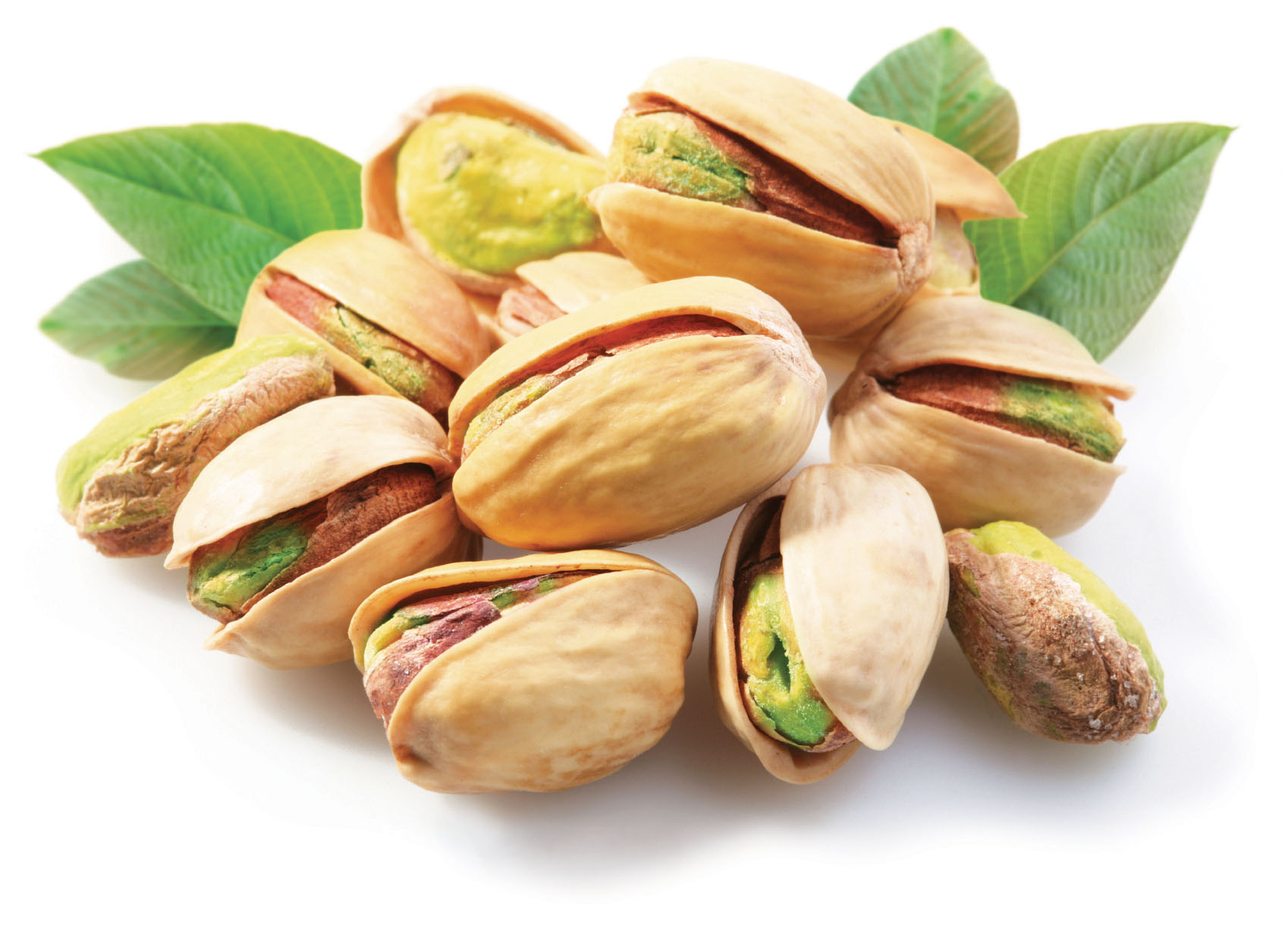
    Pistachios belong to the cashew family and are obtained from small pistachio trees (Pistacia vera) which originated from the countries of Central Asia and the eastern part of the Mediterranean coast. The word pistachio comes from the medieval Italian pistacchio, which has been derived from the classical Latin pistacium, which in turn has its origin in the ancient Greek pistákion and the Persian pistákē. The kernel of the pistachio nut is consumed, and the non-edible beige coloured shells also find many uses in non-culinary areas, such as fuel and composting purposes. Pistachios formed a common part of the diet of ancient human civilizations, with notable mentions in ancient texts dating back to centuries before the advent of the Christ. Slightly sweet in taste, pistachios are eaten raw, roasted, salted, and also as a part of desserts such as the Indian kulfi, cold salads, Italian biscottis, Turkish delights, and ice cream. Pistas, as they are commonly called in India, are very high in calories and thus should be avoided by obese and overweight people with diligence. According to dietary charts, a hundred grams of pistas yield more than six hundred calories.


    8. Fenugreek

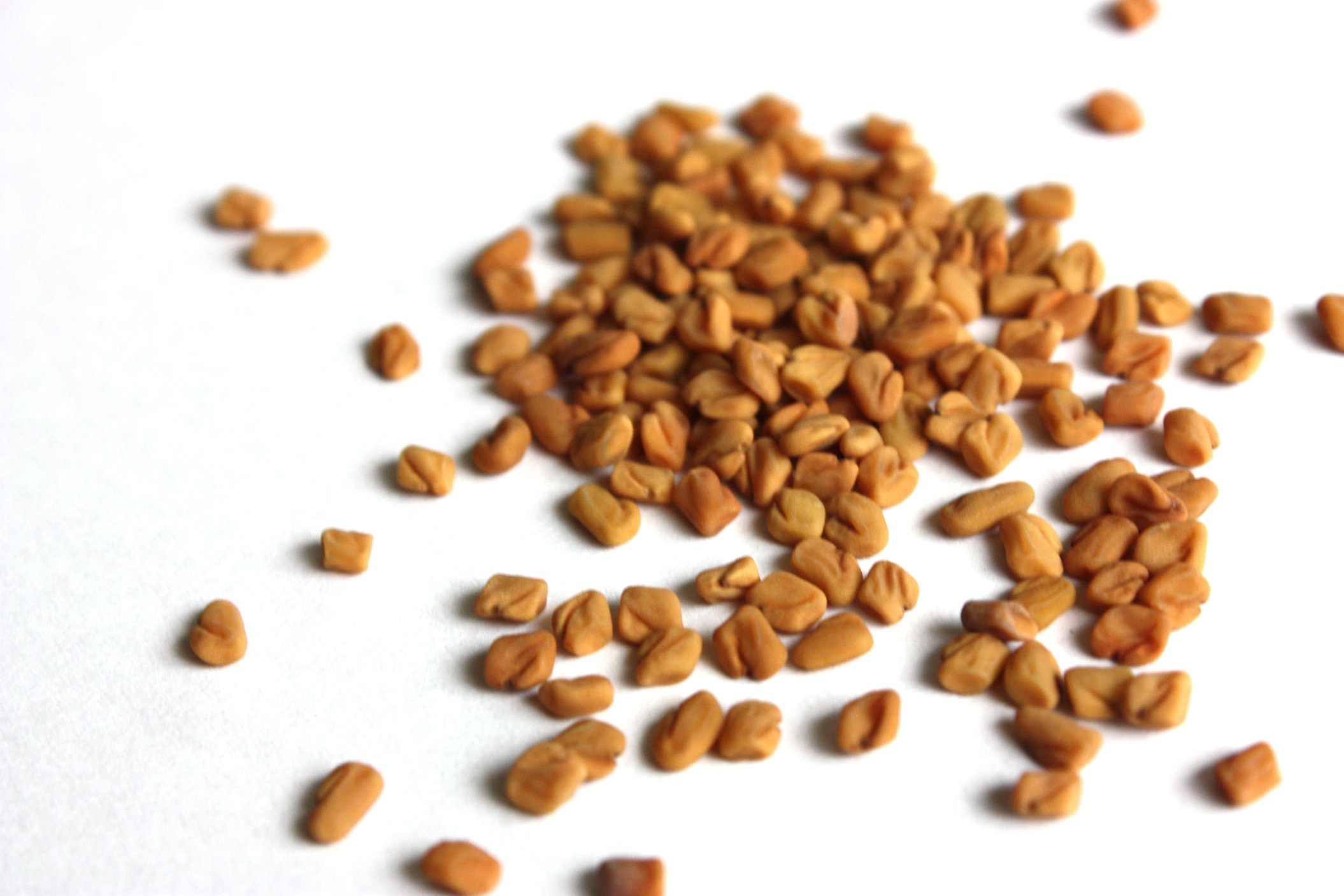
    Fenugreek seeds are obtained from the small herbaceous fenugreek plant (Trigonella foenum-graecum), and are usually called methi by most people in the Indian subcontinent. Originating from Egypt and other countries of Western Asia, fenugreek and its various parts are used as herbs, spices, and vegetables. The word has its origins in the Latin faenugraecum, literally meaning “Greek hay” and dates back to the ancient Roman era where the dried fenugreek plant was used as fodder. Hard lentils by biological classification, fenugreek seeds are a dark fawn in colour and possess an astringent aroma. Containing around five percent of bitter fixed oil, the seeds are usually broken to down to obtain the same. The oil is bitter in taste, smells like celery, and is used in small quantities in seasoning Indian dishes like sambhar and kadhi. Rajasthani people even make curry out of fenugreek. Fenugreek oil greatly improves the flavour and quality of pickles, and is mostly used in cooking with sour substances so as to balance out the taste. It is particularly beneficial to non-insulin dependent diabetics as it helps them to regulate their blood glucose levels by their significant hypoglycaemia-inducing properties. It is also used in buttermilk to treat dysentery.


    9. Mustard

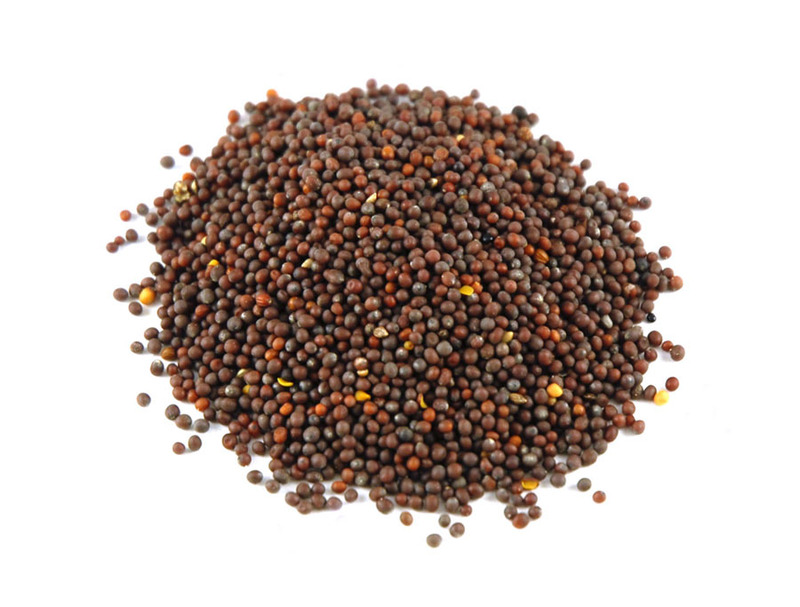
    Mustard seeds are derived from the mustard plant (Brassica juncea) and are generally advised to be consumed in moderate amounts. They are small in size, stretching no more than two millimetres in diameter, and are usually reddish-black in colour. Mentioned in many ancient religious texts, mustard holds an important historicity in Hinduism, Judaism, Christianity, and Buddhism. Generally called by their Urdu term sarson in most parts of northern India, mustard has its etymological origins in the Old French mostarde and the Latin mustum which means “new wine”. The leaves are consumed as vegetable, the skinned seeds are used for making pickles, and its oil is used as a cooking medium. The pungent taste and tear-producing properties of mustard seeds are due to nitrogen and sulphur containing compounds called isothiocyanates. Mustard seeds are used in treating rheumatism, arthritis, acidity, kidney and bladder ailments, bronchial inflammation, and are also recommended particularly for pregnant women. Nursing mothers are advised to take mustards due to its detoxifying properties. Mustard greens are rich in Vitamins A, B, and C, and contain fibre in bulk, which produces a mildly laxative effect.


    10. Coconut

    September52011022

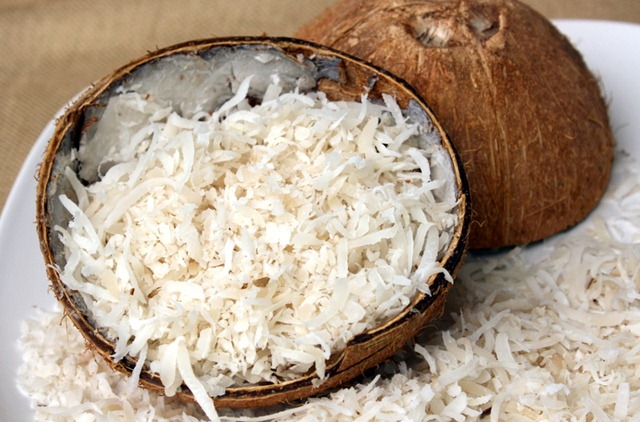
    Dried coconut is obtained from the coconut palm tree (Cocos nucifera) and is ideally found in coastal and tropical areas where the hot temperature and slightly arid soil contribute to its growth. The coconut has even been mentioned in old fiction, such as in “The One Thousand and One Nights” story by Sindbad the Sailor. Derived from the Spanish word coco which literally means “grinning face” and refers to the three-holed humanoid appearance of the fruit, coconuts have important uses all over the world. Primarily used in the southern states of India for its oil, coconut is a vital part of the local cuisine, and an inseparable ingredient of many delicacies. It is also used in the north as a part of many sweetmeats, with coconut milk a favourite summer beverage throughout the country, and fermented coconut being used to make toddy, an alcoholic beverage native to South Asia. Rich in Vitamins A, B, and C, this tropical wonder food is also a rich source of potassium, sodium, calcium, magnesium, iron, phosphorus, and sulphur. While the carbohydrate and protein content is moderate, the fat content is quite high, with a hundred grams of oil yielding nearly seven hundred calories.

  • Why Brown Rice…?

    Why Brown Rice…?

    brown-rice-jar

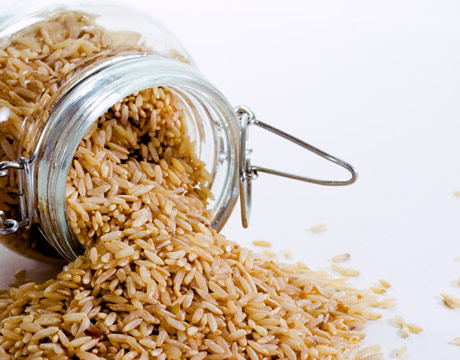
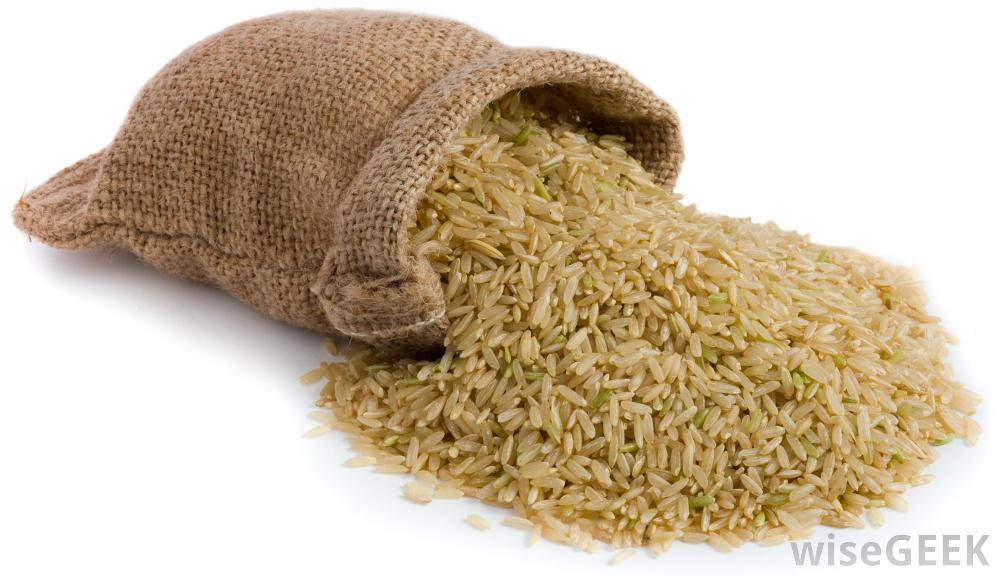
    Well, Brown rice is something probably everyone has heard of and is now too common to see in grocery stores. And, they are better than White rice; most of us know that! Though it is true that White rice looks more attractive and delicious than brown rice because of its texture and majority of people choose white one but that doesn’t mean it makes them a healthy alternative. According to many studies, it has been proved that Brown rice is the top choice in terms of nutrition and inherent health benefits.

    Now, the question comes, Why Brown Rice?? The answer and the reason lies in the Process, which occurs like, before white rice went through refining process, it looked exactly like brown rice. Brown rice , actually are still left with the hull and bran which renders it quick cooking time thus making it easier to digest as it’s much lighter in the stomach and are also regarded as unpolished rice. These side hulls and brans provide them with natural “wholeness” to the grain and are rich in proteins, magnesium, calcium, fiber. The health benefits associated with replacing White rice in your diet with Brown rice are like it reduces the risk of Type 2 diabetes and also help in losing weight. The well known fact is that eating whole grains is critical part of any diet. Also, there was study by Harvard Medical School, which solely  confirmed that gaining weight  was inversely associated with the intake of high-fiber, whole grain foods. This literally meant that taking more whole grain foods will lead to less weight gain. That’s the reason why these all bran corn flakes or whole grain breads are recommended for people trying to lose weight. It proved that women who consumed more whole grains consistently weigh less and were very less likely to gain more  weight compared to those eating foods made from refined grains. The enlisted benefits of brown rice being counted are;

    brown-rice

    High source of Anti-oxidants: The best thing, if any about brown rice is that they are rich in antioxidants. Usually, the general perception is that the antioxidant intake is associated with blueberries, green tea or other fruits and vegetables. The antioxidant capacity of brown rice is right up there with these superstars, giving you all the lovely benefits like these wonder foods. So, learn to enjoy its taste.

    High Fiber Content: Brown rice contains high fiber content , supplying 14 percent of the recommended daily value for fiber, which is an important nutrient to prevent cancer and is considered as number one food to prevent colon cancer. All this is attributed to the high levels of fiber as it attaches to substances that cause cancer and toxins, thus eliminating them and preventing in developing in those areas. Also, fiber is known to promote cardiovascular health.

    Perfect Baby Food: Brown rice in itself is a cereal and this is what makes it a perfect food for babies due to natural nutrition and fiber it is known to contain. Moreover, it is excellent food for preventing the risk of asthma in childhood as studies show that whole grains like brown rice or fish lowers this risk by 50 percent. This is better choice than polished and refined white rice as growing babies require nutrient rich diet to maintain their rapid growth cycles.

    Rich in Selenium and Manganese: Brown rice has very rich content of selenium , which is known to destroy cancer cells and even repair DNA. What is worth knowing is that just one cup of brown rice contains 88 percent of the recommended daily value of Manganese, which reduces the risk of common illnesses, such as arthritis, cancer, heart disease and fights the risk of developing free radicals. Manganese is very beneficial for our nervous and reproductive benefits and plays a key role in synthesis of fatty acids.

    A Slow release in Sugar: Do you know that Brown rice helps in stabilizing sugar levels, and this is what makes them an excellent choice for diabetic patients. Studies show that people who consume atleast half cup of brown rice daily have more stabilized sugar levels than the ones who eat white rice. Just eating whole grains like barley, whole wheat or brown rice will lower the risk of developing type 2 diabetes.

    Good Source of Phytonutrients: These compounds which have anti inflammatory properties are naturally found in plants and they tend to act as antioxidants. Many researches have shown that brown rice are known to provide as much phytonutrients as other foods like fruits and veggies.

    If you havn’t consumed brown rice yet, it is required to develop taste for them. Though they tasteless, but still. So, first you should mix 1 cup of brown and white rice each, when making for the first time. Then, gradually reduce the portion of white rice while cooking and eventually you’ll end up making and eating brown rice solely in your diet. And, you will soon start liking rich nut like flavour and brown texture of your rice. Then, continue with this brown rice diet and enjoy the wholesome benefits. As, rice is such a popular menu option in all the cuisines and in almost all the cultures around the world. So, when there is such a healthy option for us, why should we ignore it. Generally, people don’t know much about brown rice and unconsciously go for white rice in grocery stores as they loved the aroma and are so used to it. But, with so much talking about brown rice, now people have started taking brown rice as they are loaded with nutrients and their awesome wholesomeness. Non-Basmati makes a good dinner and fends off hunger cravings; And with so many health benefits, its not easy to avoid them now. Also, taste for them develops with time and altogether your health also will improve. Also, try these healthy delicacies as above and enjoy the deliciousness.

    Healthy Eating. Happy life.

  • Quirky Fooooood Facts!

    Quirky Fooooood Facts!

    food-intolerance-getty

    Food, Food, Foood, we crave for it, we love it, we want more, we want tasty and what not. Yes, we do! The more delicious food is, the more crazy we go for it. Craving for eatable is directly associated with the tastefulness. Sitting, binging on favorite foods is like heaven on earth. If you are also among the one who is curious not about what to eat but about the complex still awesome facts as to what makes up food, this will be right read for you. And, if you love food, you will love weird, quirky, lovely, yuk, yum, wow facts about food too; Enjoy as you read on!

    i-love-food

    Bananas; you love them, No! Rich source of iron, calcium. Well, do you know The Banana tree is actually a herb, and if you have seen and checked out the banana tree, you will see there’s no wooden trunk, the plant dies and then like a phoenix it is reborn. The banana we love, is a fruit of the herb and we eat this herb a lot!

    Peanuts, that we love to have in the form of peanut butter or peanut shake or in raw form. Just add some salt and masala, and we are ready to munch on it anytime But did you know, these peanuts were once used to help in making bombs. This happens like when peanut oil is processed, we get glycerol, which is then made into nitroglycerine, and that makes up a main constituents in dynamite. But then times have changed and now peanut is rarely used in dynamite. Just restricted its use to the kitchen. In case, you want to make your own explosives!

    Butter Tea, Not much popular, probably you have heard and tasted it. For tea lovers, hope you will still love your tea. You know this Tibetan tea is a must try. Boiled for half a day, and then, churned with bamboo, with salt butter and rancid soda and they even love to add tsu and flour to it and a mixture of hardened cheese, sugar and butter and then they enjoy this tea.

    Potatoes, Apples, Onions; the important ones, No?! wondering, what these have in common, Maybe, nothing when you see or taste them. But just try this once. Close your eyes and block your nose and taste them and you will be surprised as they will taste the same. Yes, the potatoes, apples and onions. Crazy, Right? Even the textures are the same but you will not know what exactly you have eaten till you breathe again. Exciting this is!

    Coconut Water; the perfect refreshment on a beach and a sunny day and yes, the nutrient rich also. But what is going to be mentioned here will surprise you more than anything. Caution as it must be followed only in case of emergency. Apparently, it is believed that coconut water can be used as a substitute for the blood plasma and yeah, you heard it right, as it contains appropriate levels of pH, as it surrounds the embryo and provides nutrition.

    Carrots, you see them red or orange, I know, But do you know the traditional colour of carrots is considered as purple. What actually happened is Dutch people, took strains of purple, yellow and white carrots and developed them into plump and sweet orange carrots and then we see them as reddish orange carrots and love to eat them.

    Now here comes this not so nice fact which goes like this. The food that you eat is known to legally contain some moulds, parasites, rodent hair. Not that you want to know this, but we just needed to share as a part of quirkness!

    Here’s this interesting fact, if you ever wondered which city have most expensive meals in the world. This would be Tokyo for dinner, Sydney for lunch and Madrid for Breakfast. This is the reason you need help while budgeting your international meal plans.

    Now, this is a research showing where the water goes! The research by Waterfootprint.org says, that the production of about two pounds of cheese requires 5000 litres of water, 1500 litres for sugar and the whopping 701 litres for apples. Yes, the huge massive amount of water.

    Mushrooms, most loved have no cholesterol and do you know they are virtually free of sodium and fat. What they contain is Vitamin B1, B2, selenium, Iron, niacin, potassium, thus giving us all the more reasons to love them and eat them.

    Worcestershire Sauce; the well known part of Chinese cuisine. There’s something fishy about this sauce, And do you the main ingredient of this sauce? The anchovies, which is a fish available in England. And, this sauce is prepared by taking these fish and soaking them in vinegar, till all the bones dissolve. Vegetarians might not like to read his fact even!

    Clear chicken soup with garlic bread is number one choice for non-vegetarians. This is the most popular soup known to mankind. But the point to ponder is, Was it the first soup known, Well, no, the leathery mammal, called hippopotamus was the first ingredient used in the first soup. Interesting enough!

    Well, Food everyone dwells on. Food is all time favorite, whether you’re in happy mode or exciting, party mode or sad, puckered up. But food finds its place everywhere, so do the facts associated. These quirky pieces of information related to the most important part of life, The food presents a very interesting insights. There are foods you know are beneficial for your health and then there are there are these facts about them, which we bet you didn’t know. Quirky enough that you feel the urge to tell them to your friends. From Hippo soup to Bananas being herb, enjoy the quirkness.

    Bon Appetite!

  • Snack-Time: Part 3

    Snack-Time: Part 3

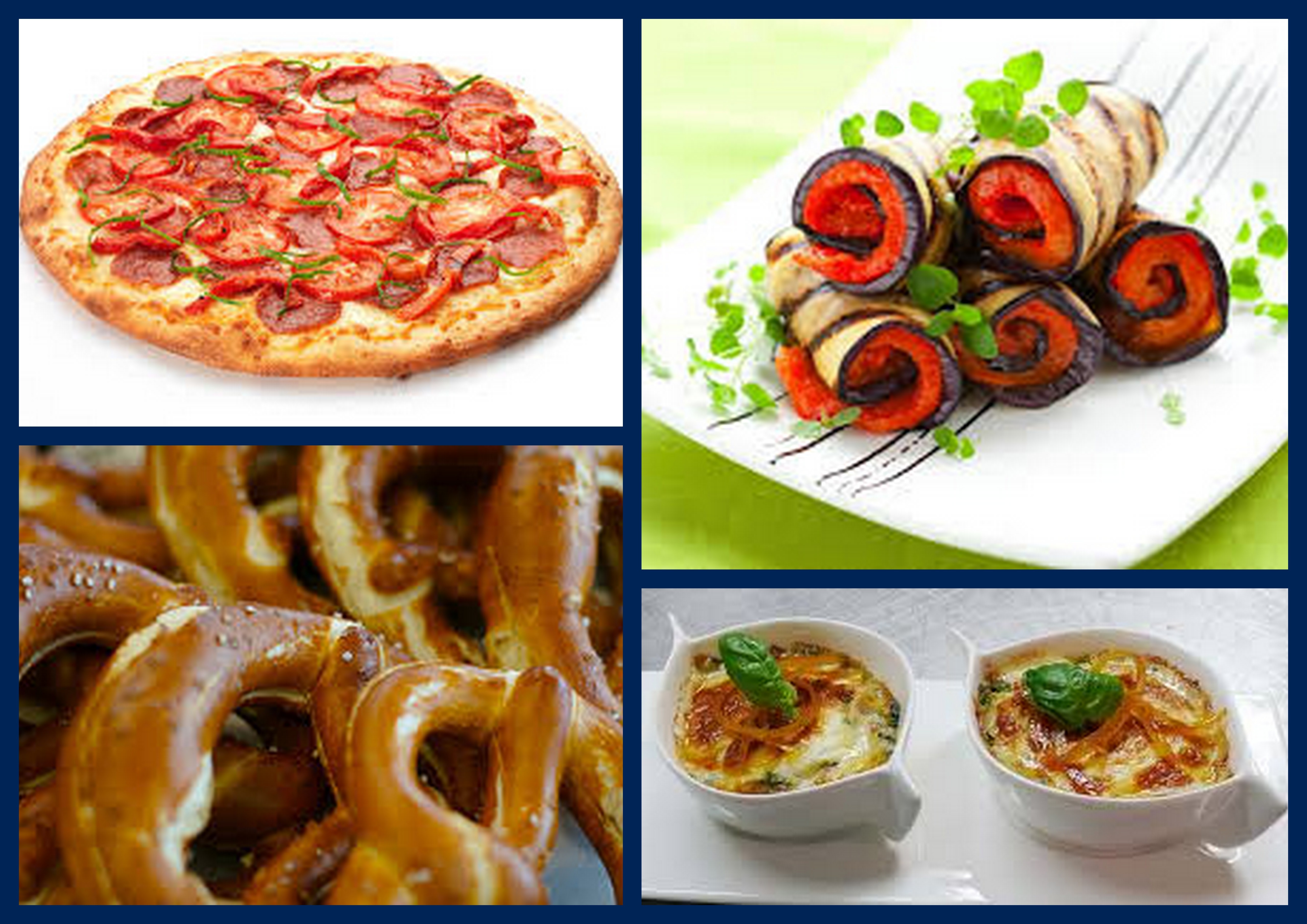
    The third and the final article in the series ‘Snack-Time’, primarily focuses of two popular snacks from Europe. We all have an idea how passionate the Europeans are about their cuisine. Be it the most extravagant dinner party or the simplest dish prepared at home, they relish every grain of food. The Europeans are not just very particular about what is on their plate, they also make sure they have suitable complements for each dish, be it an age-old wine or just plain orange juice.

    download (3)

    European snacks are popular throughout the world and are now sold by many leading outlets internationally. Be it sweet treats or savory dishes, Europeans are very particular about the technique of cooking as they believe it lends them authenticity. With a fair amount of cultures interacting and existing harmoniously on a relatively smaller piece of land, the intermingling of cultures is well reflected in the cuisine and food habits. European cuisine is alternatively also called Western cuisine and a characteristic feature of this food culture is that they emphasize greatly on accompaniments, seasonings and sauces and condiments. The cooking in Western countries is diverse from Asian cooking and also in the method of serving. For instance, the size of the meat served for a meal is considerably larger in Western cuisine than in the Asian meals. Following are a few famous appetizers from this continents of beauty and culture.

    Pretzel

    images (1)
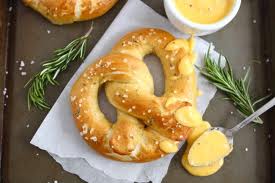
    A pretzel is a baked bread in a shape of a unique knot. Though salt is the most common seasoning for pretzels, other flavouring agents include chocolate, sugar, seeds, glazes and much more. The traditional shape of a pretzel is a symmetrical loop that is distinctive. The ends of a traditional pretzel is made from a long strip of dough which has its’ ends intertwined and then twisted back into itself in a particular way that is called the pretzel loop. Though they now come in various shapes and sizes, the standard shape stays the same. The origin of pretzels has been recorded differently in various accounts. It has been written by Bryan Bunch and Alexander Hellemans in the book ‘The History of Science and Technology’, which dates back to 610 AD that an Italian Monk invented pretzels to reward the children who learned their prayers. The strips of dough were folded to resemble arms crossing the chest and were then baked. These were called ‘pretiola’ which means ‘little rewards’.

    images (3)

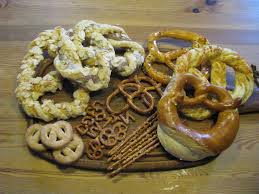
    It is claimed by some accounts that pretzels have a Christian back-ground and the credit of a pretzels’ invention goes to the German monks. A 12th century illustration, Hortus deliciarum from Alsace depicts a pretzel at a banquet organized by Queen Esther and King Ahasuerus. Some other records also claim that the pretzel may be invested in southern France. When bakers were held hostage by local dignatories in Germany, they apparently came up with the concept of pretzels out of desperation. It is known as ‘Brezel’ in German and the name may have been derived from the Latin root ‘bracellus’ meaning ‘bracelet’ or ‘bracchiola’ which means ‘little arms’.
    The pretzel holds a significance that is greater that satiating ones’ hunger. It has been used as an emblem for the bakers in south Germany since the 12th century. It also holds a religious significance as pretzels are made of only flour and water and thus it can be consumed during Lent when the Christians are asked not to eat eggs or dairy products.

    images (2)
    One can now find a variety of pretzels, sweet and savory in a variety of flavors and sizes. Toppings like sesame seeds, poppy seeds, melted cheese, bacon, pumpkin or caraway seeds or even nuts like chopped almonds, pistachios and walnuts can be used to make a pretzel look inviting.

    Pizza

    download

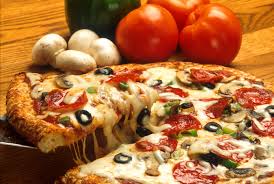
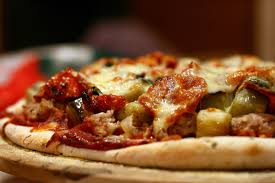
    What the world knows now as a Pizza and consumes it as a full course meal was originally a small-sized portion of food. A traditional pizza is an oven baked flat bread with toppings of tomato sauce and cheese. Some additional complements are a variety of vegetables, meats and condiments that go well with the bread. The name ‘pizza’  first appeared in a Latin text from Gaeta which dates back to 997 AD. Gaeta is a town in southern Italy and the text stated that  ”a tenant is to give the bishop of Gaeta duodecim pizze (“twelve pizzas”) every Christmas Day, and another twelve every Easter Sunday”.

    download (2)

    The modern pizza is said to be invented in the city of Naples in Italy and its’ popularity has now reached out to the world. It is said that ancient  Greeks used to coat their breads with a combination of oils, spices and cheese. On the other hand, Romans developed the concept of a ‘placenta cake’ topped with honey and cheese and flavoured it with bay leaves. But the modern Neapolitan pizza was invented only in the late 18th or early 19th century. Before that time,a  flat bread was generally  topped with a variety of flavourful seasonings for instance,  garlic, salt, cheese and basil. It is still not clear as to when tomatoes were first added.

    images

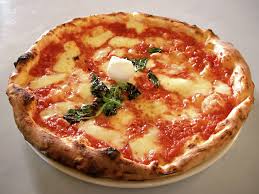
    A famous story claims that the Pizza Margherita as we know it today was invented in 1889. When Queen Margherita was to visit the Royal Palace of Capodimonte, the Neapolitan pizza maker, Raffaele Esposito was commissioned to create a pizza in her honor. Out of the three different pizzas which he had prepared, the Queen preferred a pie that had the colors of the flag of Italy viz. red  from the tomato, green from basil leaves, and white mozzarella cheese. Apparently, this pizza was then named after the Queen as we all know now know it to be, “Pizza Margherita”. Various other variations were then brought into the existing recipe and now there are innumerable varieties and versions of a pizza that are prepared in homes world wide and are even sold by leading food chains.

    images (4)


    These are some of the brilliant food options that the world provides us with. There are many more and reading about food history gives us a new dimension about it. Next time you bite into your favourite pizza, the delectable Shawarma or sit with a big bowl of popcorn while watching a movie, you’ll definitely eat with a newer awareness.