Category: Recipes

  • Rice Is Nice!

    Rice Is Nice!

    Rice is a part of the Bengali’s ‘Mach Dal Bhat’ and most of us have had it for a better part of our life – Rice for dinner. Rice for lunch. For some, rice for breakfast too. It is the staple food of Bengal. And it goes well with a myriad of delicious sides.

    Rice can be cooked in various ways. It can be steamed, boiled, spiced up, etc. it can be simply stirred with jeera to make ‘Jeera Rice’ or made into a pulau, a biriyani or porridge; you can even make a risotto (this I learnt from MasterChef Australia). It can be used in soups, in sushi, stuffed in vegetables or wrapped in grape leaves.


    Rice provides more than one – fifth of the calories consumed by humans all around the world. So, why not learn how to cook ‘em?


    Jeera Rice
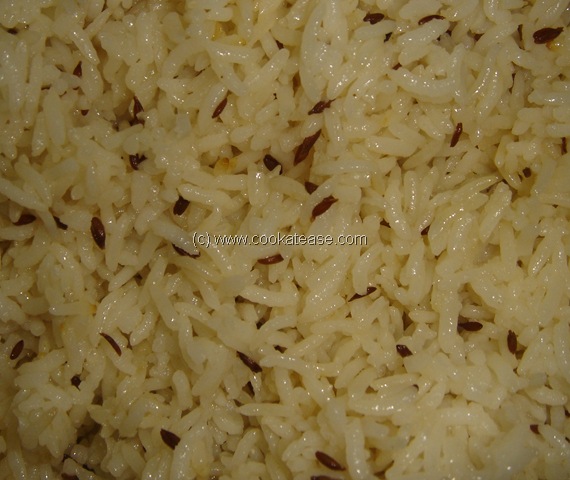
     Jeera_Rice_1

    Time: 30 minutes

    Serves: 4

    Ingredients: 1 1/2 cups Basmati rice, 2 tsp Cumin seeds, 1 ½ tsp Ghee, 1 bay leaf, 1 black cardamom, 1 2 inch cinnamon stick, salt

    Directions: Wash rice thoroughly and soak in water for half an hour. Drain. Heat the ghee in a pan. Add cumin seeds, bay leaf, cardamom and cinnamon. When cumin seeds crackle, add the rice. Add salt to taste. Stir till ghee coats every grain of rice and it looks glossy. Add three cups of water. Bring to a boil. Stir once. Reduce heat to minimum and cover the pan with a lid. Leave a little gap, otherwise water will boil over. Rice will be done when holes appear on the surface and water has been completely absorbed. Fork the rice out onto a serving dish. This will separate each grain. Serve hot with any curry.


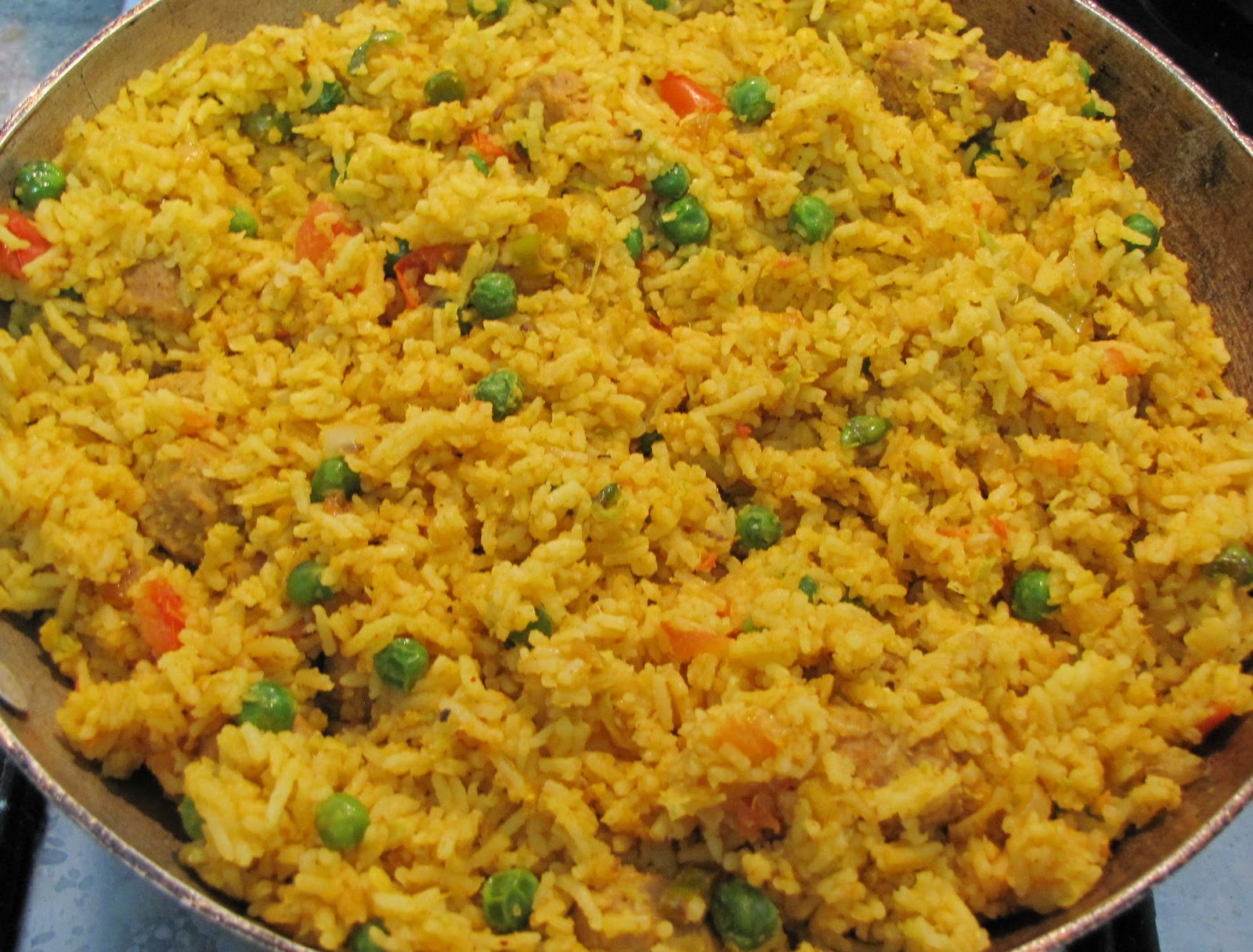
    Vegetable Pulao

     vegetable pulao-1_thumb[1]

    Time: 30 minutes

    Serves: 4

    Ingredients: 2 cups long grained or basmati rice soaked for 30 minutes, 2 or 2.5 cups of chopped mixed veggies (cauliflower, carrots, green peas, potatoes, broccoli, corn kernels, baby corn, french beans ), 1 large onion (sliced), 1 tsp ginger-garlic paste, 1 green chili (chopped), 1 medium size tomato (chopped), 4.5 cups water or vegetable stock, 2 to 3 tbsp oil or ghee, salt, whole spices (1 tsp cumin, 1 bay leaf 2-3 cloves, 2 green cardamoms , 1 black cardamom, 1 pinch of mace, 1 small star anise, 1 inch cinnamon)

    Directions: In a deep pot, heat oil and fry all the whole spices till the oil becomes fragrant. Add the onions and brown them. Add the ginger-garlic paste and saute for a minute. Add the tomatoes & green chilies and saute for 2-3 minutes on a low flame. Add all the veggies and saute again for 2-3 minutes on a low flame. Drain the rice and saute for 2-3 minutes on a low flame, so that the rice gets well coated with the oil. Pour water and stir. Season with some salt. Cover tightly and let the rice cook on a low flame, till the water is absorbed and the rice is well cooked. Fluff and let the rice stand for 5 minutes. Serve the vegetable pulao hot with some side salad, sliced onion & lemon wedges.


    Hyderabadi Vegetable Biriyani
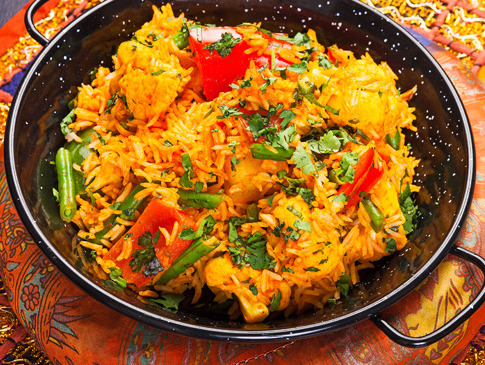
     Hyderabadi-Vegetable-Biryani

    Time: 45 minutes

    Serves: Served 4

    Ingredients:

    For the Rice: 1 and half cup basmati rice, 2 green cardamoms, 2 black cardamoms, 2 cloves, 1 cinnamon, 1 bay leaf, , 2 mace strands (javitri), 3 cups water, salt


    For the Vegetable Gravy: ½ medium sized cauliflower (florets removed), 1 medium sized carrot (diced), 1 medium sized potato  (cubed), 1 cup of chopped french beans, ½ cup frozen fresh peas, 1 and half onion (finely sliced), 1 green chili, slit, 2 tbsp ginger (julienned), 1 tbsp chopped garlic, 1 tsp caraway seeds, 2 green cardamom, 2 black cardamoms, 2 cloves, 1 cinnamon, 1 bay leaf, 2 mace strands, 100 gm whisked yogurt, ¼ tsp turmeric powder, ½ tsp red chili powder or cayenne pepper, 2 tbsp cashew nuts, 1 tbsp sultanas or raisins, 2 tbsp almonds (blanched, peeled and sliced), 3 tbsp ghee, salt


    For the assembling (herbs and spices): ½ cup chopped coriander, ½ cup mint leaves, 100 gm whisked yogurt, a few saffron strands, 1 tbsp milk


    Directions:Pick and clean the rice in running water. Soak the rice in water for 30 minutes. Now microwave or pressure cook the rice. Cook the rice till its ¾th done. In a pressure cooker or a microwave cooker, add the pre-soaked rice, add all the spices mentioned above and salt. Cook till the rice is almost done. Fluff the rice and keep it separate. Heat the ghee in a handi. Add cardamom, mace, clove, cinnamon and bay leaf. Fry them till they crackle. Add the onions. Fry them till golden brown. Add the green chilli, ginger and garlic. Fry for a minute. Add the turmeric and red chili powder. Stir. Add the vegetables and stir for a minute. Add the curd. Stir and then add ¾ cup water. Add salt. Stir the mixture well.

    If using a pressure cooker for cooking the vegetables, then cover the cooker with a lid and pressure cook for 2 minutes. If not using a pressure cooker, then bring the entire vegetable mixture to a boil. Then simmer until the vegetables are cooked. Add the dry fruits (almonds, raisins and cashew nuts) to the vegetable gravy.

    Warm the milk. Add saffron to it. Let this saffron-milk mixture cool. Add the curd to this mixture and mix well. In the same handi with the cooked vegetables, sprinkle half each of saffron-flavored curd, mint and coriander leaves. Now spread half of the rice. Sprinkle the remaining saffron-flavored curd/yoghurt, mint and coriander leaves. Spread the remaining rice. Sprinkle rose water. Place a moist cloth on top. Cover with a lid. Then seal with wheat flour dough or keep a heavy weight on the lid. Place the sealed handi on the gas stove at low fire. Cook for 20-25 minutes more.

    If using an oven, preheat the oven to 190 degree C and bake the biryani for 15-20 minutes. Assemble the vegetable biryani as mentioned above in an oven proof utensil and then bake it.
     

  • Delicious Rajasthani Dishes

    Delicious Rajasthani Dishes

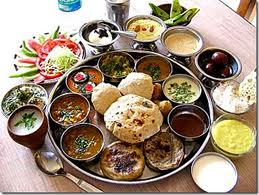
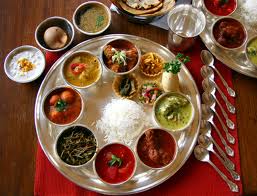
    Rajasthani culture itself includes warlike lifestyles of its people. Along with the royal heritage Rajasthan possesses royal cuisine too. For mouth-watering aroma the food is especially cooked in pure ghee. Rajasthani dish is delicious to taste..!! Rajasthani thaali is a combination of two to three sweet dishes, several rajasthani curries, bajra and missi roti. So here come several famous Rajasthani dishes which need to be tasted if you haven’t tasted it once.

    Kalakand, a sweet dish preferred by all the people of the region. It is also famous by the name called Mishri-Mawa. It is prepared with the help of cottage cheese and sweetened milk. It was firstly originated and prepared in Alwar so people usually called it as Alwar’s Kalakand. In several places it is known by the name Milk Cake. Because of its delicious and excellent taste it is renowned all over the state and even a place is named after this particular dish in Alwar.

    kalakand

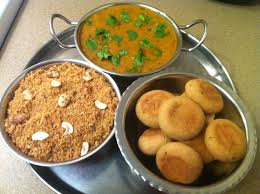
    Dal Bati Churma is a well-known Rajasthani dish which includes three individual servings i.e. Dal, Bati and Churma. Its preparation is quite easy, but take more time as compared to other Rajasthani dishes. It is considered as the most eminent and common dish for all kinds of occasion, whether it be any religious occasions, wedding parties or any small get together. Dal is basically made of tuvaar. It is prepared with the same common recipe as it has. Baati is prepared using wheat flour which is mixed with dahi, salt and water. Now the prepared ball sized round balls and put it into a well-heated oven. After it becomes brown it is served with ghee. Dal-baati is generally served with pudina chaatni, kari, green salad and buttermilk or chaach. Dal baati is incomplete without Churma. It is made of ground wheat, which is crushed and mixed with ghee to make it rich in calories. It is like a tradition to be followed in Rajasthan.

    dal baati

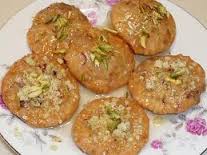
    Jodhpuri Mawa Kachori, a special sweet originated in Jodhpur. As we know Jodhpur is known for having Rajasthani delicacies. Various different dishes were originated in Jodhpur like Pyaaz Kachori, Mirchibada, Makhaniya Lassi etc. Mawa Kachori is a sweet dish prepared from mawa which is stuffed in Kachori. It was firstly prepared by famous Rawat Mishthan Bhandar in Jodhpur. Since, from that time it is serving the best mawa kachori in the whole state.

    kachori

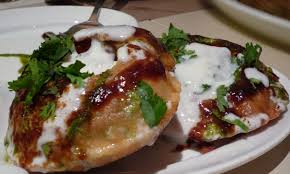
    Rajasthan is not only famous for sweet dishes instead its spicy dishes is as yummy and delicious as its sweet dishes. When we talk about spicy the first name comes to our mind is Kachori. Pyaaz ki Kachori is one of the variants of Rajasthani Kachori which was originated in Jodhpur. It is made of fried pastry which was stuffed with spicy onion. People across the country and especially travelers after entering into Rajasthan firstly wants to have this excellent taste in their mouth. This dish has become popular all over the country and is served in every Rajasthani outlet and restaurants. People here in Rajssthan prefer to have this spicy dish in their breakfast and snacks.

    kachoripyaaz

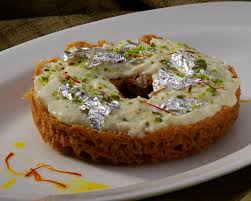
    Ghewar is another renowned Rajasthani sweet dish. The demands for this sweet dish remain high during all the seasons, but especially it becomes a part of the meal during Teej. It gives an indication of the beginning of the festive season. It is made of wheat flour given a shape of rounded cake. After this preparation, it is poured into sugar syrup and then served. It has several variants that distinguish its taste. Rabdi Ghewar is generally famous and prepared on the occasion f wedding ceremonies which include a topping of rabdi along with the crunch of nuts over it. On the occasion of Gangaur, Makar Sakranti people used to celebrate their happiness with this Ghewar.
    ghewar

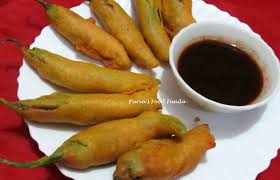
    Mirchi Vada, another famous snack in Rajasthan. As we know everyone has a different taste varying it from sweet to spicy, so here comes a blend of both. Mirchi vada is combination of spicy and sweet flavours both. It is a spicy fried dish made from Mirchi stuffed with potato in it. It is served with tomato sauce, tamarind chatni, curd and with mint too. But during its preparation, make sure to remove the seeds of Mirchi so that it does not become spicier.
    mirchi

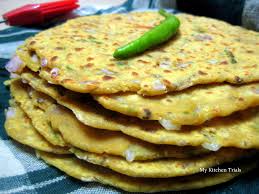
    The meal is incomplete without rotis and in India there are different variants of rotis, paranthas etc. So when Rajasthani thali comes into concern it is incomplete without Missi Roti. Missi Roti is a specialty of Rajasthani cuisine. In ancient period it was prepared on a traditional chulha with the coals, but now a day’s people started using ovens for its preparation. Its preparation is quite simple. Initially you need to mesh wheat flour and besan along with dhaniya, red chilly, oil, salt and jeera. A stiff dough is prepared. After this thick rotis are made and brushed with melted ghee. Then it is ready to be served with Shahi Gatte, green chilly and pickle.

    missi


  • The crowning glory of the Ruby red- Saffron

    The crowning glory of the Ruby red- Saffron

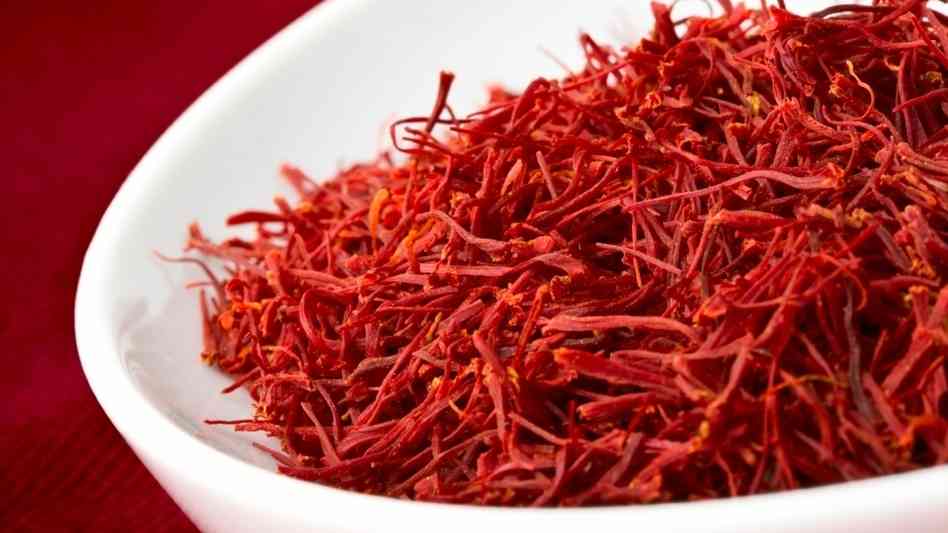
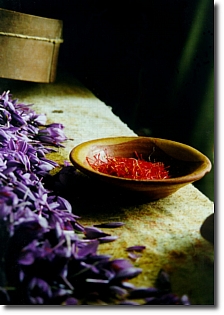
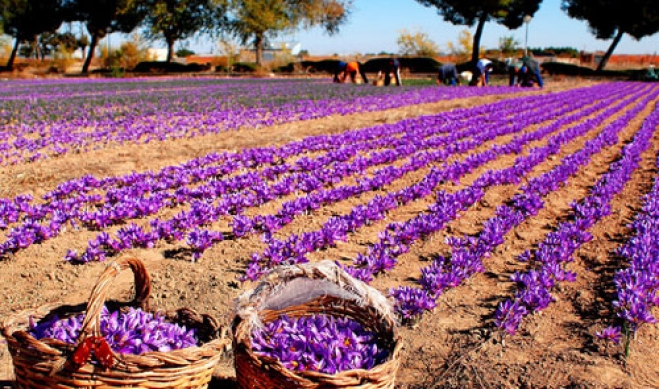
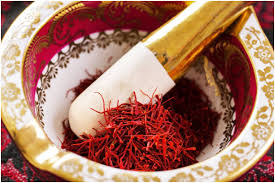
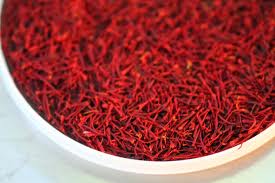
    Call it ‘Saffron’, ‘Zafran’, ‘Kesar’ or ‘Zafferano’, this spice definitely is a prized possession for professional chefs and home cooks alike. The most expensive spice on your kitchen shelf and in the world is also titled as the ‘King of Spices’ or ‘The Golden Spice’. Not everyone knows that Saffron is the stigma along with the style of the flower of Crocus Sativus, commonly known as the rose of saffron. The plant grows up to 30 cm in height and bears about three to four flowers each with three different crimson stigmas. These crowning glories of the rose of saffron are dried and then used as what we know as the strands of Saffron.

    cosecha2

    The crop is native to Southwest Asia and Greece, where it was first cultivated. It was then propagated and cloned in Eurasia and was later brought to parts of North and South America. Iran now accounts for 90 percent of the total world saffron production. Today, this spice is globally used and is an undisputed rock star for all taste buds, irrespective of ethnicity, cultures or regions.

    3855122_orig

    Evidences claim that saffron is not just of culinary significance. It holds a cultural and economic importance for many civilizations while it is socially significant for many of them too. Most of the modern-day cultivation of saffron is done in India, Iran, Spain and Greece. The balmy Mediterranean and the mountainous Kashmir are responsibly the breeding baskets of the best quality Zafran. Other parts of the planet except Antarctica are minority producers. The cultivation of saffron needs a lot of patience and effort as manually plucking the minute stigmas from each flower is a tedious job. Also, since an overwhelmingly high number of flowers is required to produce a marketable amount of saffron, the costs by weight automatically go up. Besides, the relatively low production and the importance of this spice, make trading it a primary source of wealth for many areas like the hinterlands of Birjand, Ghayen, Ferdows in South Khorasan Province, along with areas abutting Gonabad and Torbat-e Heydarieh in Razavi Khorasan Province, which are the key cropping areas.

    220px-Man_gathering_saffron_Knossos_Crete_crocus_sativus_fresco

    Some civilizations hold this spice in such high regard that they have literature paintings and legends attached to it. Ancient Greek legends hold accounts of brazen sailors who would embark on tiring long voyages to the land of Cilicia to procure the most valuable crocus crop according to them. The most famous of these legend is that of Crocus and Similax, where in the handsome young Crocus was in pursuit of the beautiful Similax, expressing his idyllic love to Similax who soon outgrew his affection. While he continued his pursuit, she bewitched him and transforms him into Saffron Crocus whose blazing crimson stigmas were symbolic of his undying and unrequited love. Saffron was also honored as a sweet smelling spice three millennia ago in the Hebrew Tanakh (Song of Solomon). Asian legends including those of Kashmir, China and Afghanistan have relics, fables, legends and tokens of tribute dedicated to the Crocus Sativus.


    download (1)

    The uses of saffron in the modern day societies extend from culinary flavoring to medicinal properties and even cosmetics and fabric dyes. Ancient Buddhist legends account the use of saffron soaked in water to yield a gorgeous golden-yellow hue that was appreciated so much so to be made the official colour of the robe and mantle for Buddhist Monks. It has been found that Persian saffron threads have been woven into ancient carpets and funeral shrouds. The brilliant yellow uniform colour that it produces makes it an apt substitute for chemically synthesized dyes. Besides this, it has an interesting sweet grassy aroma that has been used to aromatize wine, food and is even used as an air freshner. It is said that courtesans would use saffron to attract and lure nobles towards themselves. Saffron also has proven medicinal properties that work wonders on a multitude of issues- blood disorders, stomach upsets, eye problems, heart diseases and paralysis to name some of them. The ancient Persians and Egyptians used saffron an aphrodisiac, a general-use antidote against poisoning, a digestive stimulant, and a tonic for dysentery and measles. Medieval Europeans also used this spice as a cure for various respiratory diseases and cold and flu. It was used for its carminative (suppressing cramps and flatulence) and emmenagogic (enhancing pelvic blood flow) properties.

    The cosmetic applications of saffron dates back to the time when the Egyptian queen, Cleopatra used saffron infused in milk or water in her daily bath. This expensive spice contains some volatile but vital essential oils that have therapeutic and beautifying properties for the skin. Rich in carotenoids (anti-oxidants), saffron makes an excellent recipe for good health and brilliant skin. Those who long for a brighter complexion, fairer skin or those suffering from skin problems like acne, can depend on it to find amazing results.

    images (1)

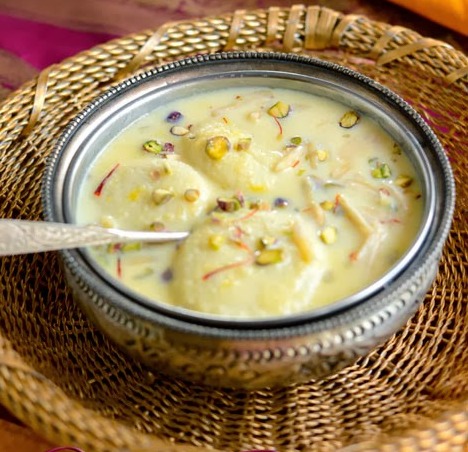
    As we all know, saffron has an impeccable exotic flavor to offer to whatever cuisine it is added to. It finds a significant place in European, North-African and Asian cooking. Be it the Kashmiri dum-biriyani or the Swedish lussekatt (a rich yeast dough bun that is enhanced with saffron, along with cinnamon or nutmeg and currants), Saffron has a delectable delicate flavor that you would not want to miss. Indian desserts are one place this spice finds a significant spot despite its high cost. One such dessert is the favourite-of-all Rasmalai. With discs of cottage-cheese, cooked in sugar syrup that melt in the mouth, the saffron coloured milk sauce is what stands out. Here is a simple recipe of this toothsome sweet-dish.

    rasmalai

    RASMALAI

    For the paneer discs:

    Ingredients-

    1.) Homemade paneer (cottage-cheese) – 110 grams (make paneer from 1 liter of milk)

    2.) Semolina/rava (any rava) – 1 tsp

    3.) Cardamom – 1/4 tsp

    4.) Sugar (for the discs) – 2 tsp

    5.) Water – 2 1/2 cup

    6.) Sugar (for the syrup) -1 cup

    Procedure-

    a.) Knead paneer/ homemade cottage cheese, with rava (semolina), cardamom powder and sugar, into a soft dough and make small equal-sized balls out of the dough.

    b.) Flatten them gently and place them on a maida (flour)-dusted plate.

    c.) Meanwhile, cook the sugar and water on low flame to make a thick syrup.

    d.) When the solution comes to a rolling boil, lower the temperature and gently drop the discs into the syrup. The discs shall swell up and almost double up in size.

    For the saffron-milk sauce:

    Ingredients-

    1.)    Milk – 2 1/2 cups or 1/2 liter

    2.)    Sugar – 1/3 cup

    3.)    Cardamom powder -1/4 tsp

    4.)    Saffron -7-8 strands

    5.)    Pistachios -chopped – 2-3 tbsp

    6.)    Almonds (blanched and thinly sliced/slivered) -3-4 tbsp

    Procedure-

    a.) Boil the milk over low flame till it reduces to half. Keep stirring to prevent it from burning.

    b.) Soak the strands of saffron in about 2 tablespoons of milk and keep it aside.

    c.) Add all the ingredients except the nuts and the saffron and cook the milk mixture till the sugar dissolves.

    d.) Next, add the almonds and pistachios, saving some for the garnish and mix well. Add the saffron solution and stir till the colour spreads uniformly.

    e.) Take it off the flame and let it cool down. Drop the discs into this milk sauce while it is still warm and let it chill in the refrigerator.

    f.) Garnish with almonds and pistachios before serving chilled.

    Hope you like the recipe and enjoy the flavor of the delectable spice that is the hero of this dessert.

    Make sure you store your saffron strands in a dry and cool place. It can be preserved longer this way and can be used for 4-5 years without losing its colour, aroma or flavor.

  • Nuts about them!!

    Nuts about them!!

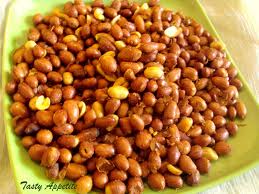
    They have been around quite a long time and have become so common, people hardly notice their presence. They occur as plain salted, sprinkled with spices and coated with a tinge of lemon or as small pieces in odd shapes, deftly concealed under layers of yummy, crunchy chocolate, their taste easily identifiable. According to records, peanuts have been a very tasty part in mankind and have evolved along with them, although not in terms of appearance, but on the basis of usage. They can be used plain salted as an excellent snack, spiced for use as a good substitute for popcorn, or roasted to perfect conditions to make a masterpiece among chocolates.  Peanuts have not changed through history, but their ways of eating have transformed a lot.

    History of peanuts

    peanut12


    Peanuts have been believed to have first grown in the Brazilian forests. Finds have proved the existence of these nuts in the form of pottery-paintings. Even during those days, the appearance of these nuts hasn’t changed much and even today, they grow under the ground as tubular plants. They have been found to be rich in fats and proteins, which were both essential for general body metabolism and development. Their conditions for cultivating and their simplicity to cook them made them immensely popular and a huge success throughout the world.  The wildest types of peanuts are still exported in large numbers even today from the countries of Bolivia, Paraguay and Brazil and hence, these places have been thought to be the birthplace of peanuts. Their history can be traced back to the Peruvian civilizations, where they were an important offering to the gods during ceremonies, rituals and sacrifices. Even the Egyptians were found to give importance to this nut, by burying them along with their dead. They thought that these foods often helped the dead in their afterlife.  From the civilization of Peru, it slowly spread to Spain, and to other parts of Central America. However, the mass migration of peanuts worldwide was because of the European civilization, which contributed greatly to the popularity of these nuts. The Europeans first discovered peanuts in Brazil. The Portugal brought it to their homeland and later passed it on to the Philippines and West Africa. Thus, peanuts slowly found their way into every nook and cranny of almost everyone in the world. However, it was not after the 1930’s that people switched the use of peanuts from cattle feed to human food. During the voyages of the African slaves to America, peanuts served as a staple food.

    India produces about 6.23 million metric tonne of peanuts every year and is one of the largest producer and exporter.

    Groundnut superiority!

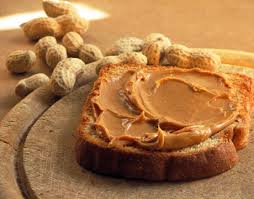
    They are also known as groundnuts .One of the best advantages of peanuts which make them so easy to grow is their nature to grow best by the use of the “crop-rotation” technique. In this technique, after the cultivation and harvest of particular plants are done and the soil, almost exhausted off its nutrients, another plant is grown, which, in addition to making use of the remaining nutrients, also replenishes the soil of the lost nitrates. Groundnuts, belonging to the tubular-type plants that grow underground, act as a good source of nitrate replenishing agent. Also, their rough, outer shells prevents them from most attacks by moisture and bacteria and hence were found to be the best sources of food for the armies and during long travels. As time passed, the combination of peanut and butter in a semi-solid or gel type proved to be a tasty idea and immediately struck a chord with the people. Thus, was born, one of the most famous foods ever made by man- the peanut butter jelly.

    peanut1

    In the 19th century, it was discovered that peanuts could protect decaying teeth and a physician in St.louis, made a paste of peanut, with a tinge of butter and fed to the people with bad teeth. Soon, this idea spread to all parts of the world like a wildfire and serial and confectionary companies realized this to be their window to the larger market. They adopted the basic idea and made changes of their own to it. While some added more butter to make it taste delicious, others churned it to give it a smoother, richer texture and feel, while the rest, roasted it to the perfect temperature to give the jam, a crunchy taste. One of the most common uses of peanuts is in the manufacture of peanut oil. This is found to have a relatively higher smoke point and a milder flavor. Also, it is healthier than saturated fats as it is monosaturated. Their shelf life is longer and they are resistant to rancidity. Peanut oil is very common in the Indian sub-continent, as Indian foods have been found to use oil more than any other country in the world.

    In addition to using peanuts as oil, they are ground to a fine powdery state to give, peanut flour. It has been found to have high protein content and is used as a flavor enhancer in many dishes. Also, peanut flour is gluten-free and low in fat content and hence, a perfect choice of flour for the diet consciousness.  Dry roasted peanuts are very famous in the American sub-continent where they are produced in large numbers and packed in hermetically sealed pouches and sold in thousands daily. These make the perfect snack while watching a movie or a game with friends and family. Peanuts are otherwise steamed or boiled in pressure cookers making them an ideal snack during cold or rainy seasons. This type of dish is very common especially in the southern parts of India.

    peanut4


    In countries like Israel, peanuts are mixed with sesame oil, lecithin, and are roasted to perfection. They are then coated with a layer of salt or sugar and sold in the markets as snacks.

    Nuts about them!!!

    The market and trade of peanuts throughout the world have become easier and faster. As a result of this, it has reached people in almost all niches of life more than any other food has. Naturally, there are many ways that one can eat it. It has been found that there are over 300 ways or 300 recipes that one can make using peanuts.

    Although it is a very popular and easily affordable snack, there are some who are highly allergic to it. This symptom is most commonly found in the American continent. One of the reasons for his allergy is because of the lack of sufficient digestive juices to break down and digest the nut. They have been found to take a longer time to digest and the taste lingers long after consumption. One of the most important benefits of groundnuts, though, is their ability to act as natural anti-oxidants, keeping the heart healthy. Truly, peanuts indeed occupy the top positions when it comes to snacks. Now that is what’s called, groundnut superiority.

  • Famous Cheese Recipes for Cheese Lovers

    Famous Cheese Recipes for Cheese Lovers

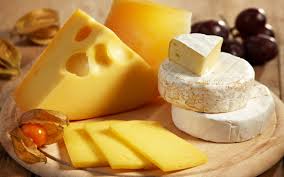
    Think about Cheese and the image which comes to our mind is melted cheese on pizzas, vegetables covered with melted cheese, cheese sandwich etc. The list is endless. Cheese is popular all over the world and is one of the ingredients loved by each and every heart. A person who loves cheese is entitled as turophile. In ancient times, there had been a special kitchen in Rome, which is especially maintained for the preparation of cheese. Every cuisine in this world is incomplete without cheese. In 16th century, it is known to be the currency in Denmark.

    Cheese is a food obtained from the milk of buffalos, cows, goats or sheep. It is formed by the coagulation of milk and milk must be acidified. Finally solids are separated out and given a final form. United States, being the largest producer produces 2000 varieties of cheese. It is a large source of protein, calcium and phosphorus.

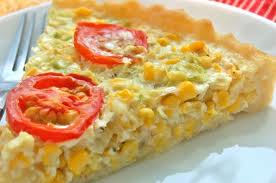
    corn

    You must be thinking now cheese is ready and this is all about cheese, but actually now the picture starts. All the cuisines all over the world use cheese as special ingredients.  Every dish is incomplete without cheese whether it is margarita pizza, cheesecakes, Savory Corn tarts, Gratin of potatoes, pasta, fondue, macaroni, etc. The list is not completed here, rather it is endless. The preparation of these dishes requires cheese as the main ingredient, but they also require some other ingredients to complete its preparation and now we will discuss some of them.

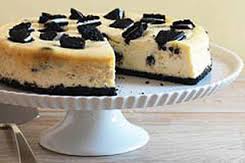
    cake

    Oreo Cookie cheesecake is a much loved dessert by the children. It contains oreo cookies, melted chocolate and creamy cheese. Initially crushed down the cookies and mix it with butter. Then beat sugar, cornflour and cheese along with egg one by one. After this add vanilla essence and melted chocolate in it. Pour the solution over the crust and allow it to bake at 180 degrees C for 10 mins and then decrease the temperature to 100 degrees C for 2 hours. Allow it to cool down and then cut down the slice and it is ready. In every bite of these slices you will have a taste of creamy cheese on your tongue and after every bite the only thing you will speak is “yummy cheese”.

    margharita

    When you talk about cheese, slideshow of hot sizzling pizza flashes across your mind. Isn’t it? So here comes the best cheese based pizza’s recipe i.e.  Margharita. Take the dough and place it on the tray for pre-heating. Cover it with a layer of mozzarella cheese and spread a layer of pasta and basil leaves. Put the prepared material into the oven for 10-12 minutes. Now, after this drizzle down some olive oil and pepper on it. The pizza is ready to be served and cut down the slices too.

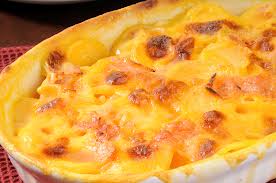
    gratin

    Cheesy dip items are all we want now days. Then how could you forget about gratin of potatoes along with garlic cream. It is a yummy dish with very easy recipe. Cut the potatoes and grate down the cheese. Now add salt and pepper to the potatoes.Now layer the pieces of potatoes and add all the grated cheese along with the garlic cream to it. If the bowl is empty add another layer of potatoes with the garlic cream and cheese. Cover it with butter and allow it to bake at 180 degrees C for 25 minutes. After the potatoes are fully cooked and surface of potatoes covered with cheese becomes brown, then it is ready to be served.

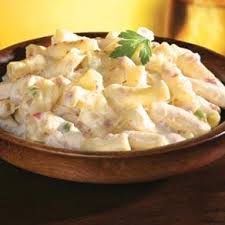
    cheese pasta

    If cheese and pasta lovers are together then four cheese pasta will be there in their menu definitely. This item is as cheesy as cheese. Initially boil the pasta in salted water and mix it with the olive oil. Boil milk with thyme, bay leaf, rosemary and onions and mix the butter with flour. Add both the mixture slowly along with the pepper and salt and stir it. Grate different varieties of cheese like Parmesan, Brie, Emmental and cheddar. Add this to the above sauce. In a pan, add garlic, chili flakes and tomatoes to it. Now mix it properly and serve.

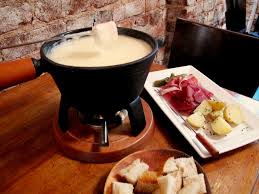
    fondue

    Melted cheese is far more delicious and yummy than the melted chocolate. Here comes another melting cheese dish known as ‘Cheese Fondue’. Fondue is prepared with the help of melted cheese and is a popular Swiss dish known all over the world. Varieties of cheese such as Gruyere and Emmental are added to white wine. Now hot mixture is ready and next you have to add vegetables like baby corn, broccoli to it. Enjoy the cheesiness in every sip of this fondue.

    These are some recipes famous all over the world. So if you haven’t tasted any of these dishes, then what are you waiting for. Go to the nearby cuisine and place the order. Spend some cheesy moments with the cheese. Go cheesy, think cheesy and eat cheesy…!!

  • Four Appetizers from Bangladesh that Will Blow Your Mind!

    Four Appetizers from Bangladesh that Will Blow Your Mind!

    Not a very long time ago when both the Bengali sisters were conjoined, India witnessed a phenomenon in cuisine from this part of the country. Although Bangladesh today is not physically part of the nation we call our Home, fond memories of togetherness live on in the food enjoyed by West Bengalis. A large part of Bengal houses those Bengalis who had had their roots in East Bengal but have been living in the western counterpart for generations. Bengali Recipes thus include a significant melange of the East and the West. Here’s reliving ten appetizers from the other side of Bengal that will make you want to be a different kind of Bengali 😉

    Fried Fish:

    Fried Fish

    Wash a kilo of surmai fish (if you have a knack towards experimenting, go ahead!) and put half a tablespoon of salt, dill seed, coriander powder, tamarind pulp and ginger garlic paste. Put in an egg, mix it well and marinate for a while. To prepare the batter, mix some corn flour, salt, red chilli flakes, black pepper, gram flour, dill seeds and cumin seeds together. Take a piece of fish, roll it in dry ingredients and deep-fry till golden-brown. This dish is high in nutrients and fish is very good for both brain growth as well as hair. Not only that, this dish is very easy to make and serves to cure all evening-time hunger woes. Do not lose heart if you don’t get it right at the first go. With time and patience, this fish-preparation will become a piece of cake.


    • Crispy-fried Cauliflower:

    Cauliflower

    Four tablespoons of rice flour, one tablespoon of corn flour, half teaspoons each of red chilli powder and cumin powder, one-fourth teaspoon of turmeric powder and half teaspoons each of salt and sugar should be mixed well in a container. In another container, beat an egg, add one teaspoon of soya sauce and three tablespoons of water. Mix well.
    After a smooth batter is made by mixing these two mixtures, it should be set for around 10 minutes. In the meanwhile, take a saucepan and pour in some water. Add some salt (not more than one teaspoon) and leave it to boil. As the water boils, add 10-15 cauliflower pieces (all cut to an inch in size) and boil them for 5 minutes till the flowers soften. Drain the water. Heat some oil in a pan and keep adding the flowers after slowly dipping them in the batter that you have already made. Fry them, till you get the lovely brown tinge. Be patient with this dish, any hurry might result in loss of crispiness. Take the flowers, keep them on some tissue paper to soak the excess oil and then serve to your amazed guests!


    • Eggplant Fry:

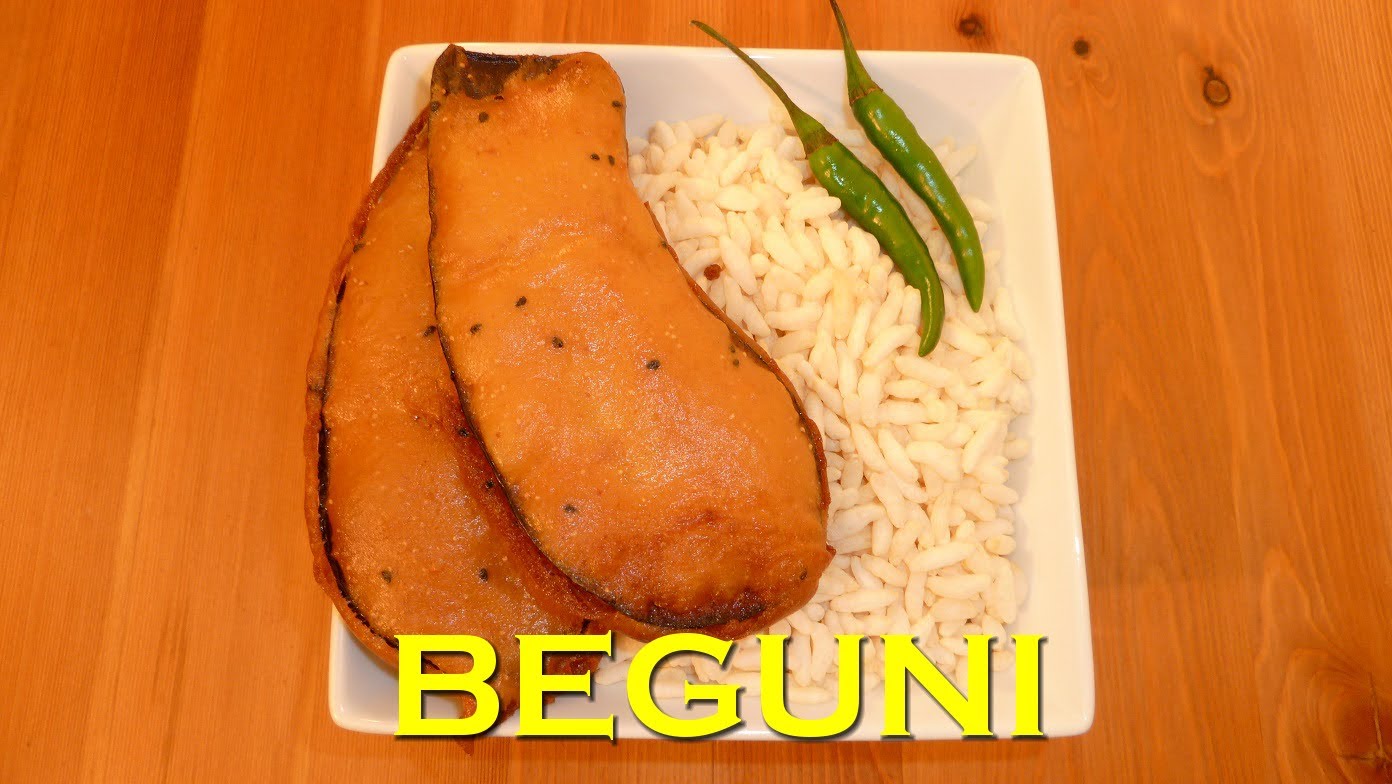
    Beguni

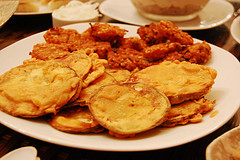
    This eggplant fry coated in besan is a huge hit on this side of the border too! Known as the infamous “beguni”, this dish can be a wonderful pre-meal snack or even a lovely evening-time munchie. The procedure is as follows: take half a cup of besan or gram flour, half teaspoons each of turmeric powder, red chilli powder and cumin powder, 2 teaspoons of rice flour, 3/4th teaspoons of baking powder and half a teaspoon of salt.
    Mix them well in a bowl and make sure the distribution of ingredients is as even as possible. Add water to the mixture and stir well to make a smooth batter. Keep it aside for half an hour to forty-five minutes. Now, the eggplant needs to be washed and sliced into pieces not more than half centimetres thick. Heat the oil on a medium flame, coat both sides of the eggplant pieces with besan and then carefully launch it into the oil. Fry both sides of the pieces till you get a nice golden-brownish tinge. Soak the oil on a paper towel and serve with or without ketchup.


    • Vegetable Cutlet:

    cutlet veg

    This is very good news for all the vegetarians out there! It is indeed a stereotype that Bengali food is nothing without meat and fish… and an untrue one at that! This vegetable cutlet will surely win over all, no matter what their preferences. Grate 2 medium-sized boiled potatoes and set them aside. Boil 3-4 cups of water, add two cups of mixed vegetables and a pinch of salt just when the water starts to boil. Boil for 5 minutes. Drain the water and leave the mixture to cool down.
    Squeeze the water from the vegetables. Mash the vegetables but do not make a paste. Heat one tablespoon of oil in a pan, add cumin seeds and crushed cashew nuts and fry all a while. Add chopped onion and continue frying till the onion becomes soft. Add half a teaspoon each of chopped green chilli, ginger paste, garlic paste and fry for a few seconds. Add the vegetables (not the mashed potato) fry till the water dries up.
    Take the vegetables in a mixing bowl, add the grated potato, and mix all. Add cumin powder, red chilli powder, garam masala powder, chat masala, mango powder, chopped coriander and salt and mix them well. In case the mixture still seems watery, add a few bread crumbs. These will soak up the excess water. Take a part of the vegetable mixture, make the desired shape and coat it with bread crumbs.
    Heat some oil in a pan. When the oil is well-heated, carefully put the cutlets in and fry till you achieve the golden-brown colour. Soak the excess oil on a paper towel. Serve with ketchup or chutney.
    All these dishes are very easy to prepare and never cease to amaze anyone they are served to! So get the Bengali bit of your Indian identity alive and kicking! 😉

  • Ooooo Sauce-y !!

    Ooooo Sauce-y !!

    Sauces are the splendor and glory of French cooking.

    -Julia Child


    I remember ordering an egg roll at Bedwin, a well known roll shop here in Kolkata. (To those who love their rolls, kindly don’t take offence) They served the egg roll with potato and onion filling and no ketchup or sauce of any kind. A healthy roll. Well, for me, that’s not a roll – it’s chapatti with potato and egg. I mean, where’s the sauce?

    A roll without sauce is not a roll. Period.

    A sauce, whoever insignificant it may seem, adds flavor, moisture and visual appeal to a dish. Nowadays, most of the sauces are store bought, like Soy Sauce, Tomato Sauce, Worcestershire Sauce and the like. But by watching Masterchef, the one thing I have learnt is that there’s nothing like a fresh home-made sauce. The taste of a store bought one is nowhere near its zing.

    Anyhow, here are a few easy-peasy sauce recipes for you to try out (some even take less than 15 minutes to make) –


    Barbeque Sauce

     barbeque

    Time- 30 minutes

    Makes- 450 ml

    Ingredients- 1 tbsp olive oil, 1 onion (finely chopped), 400g can chopped tomatoes, 3 garlic cloves (finely chopped), 85g brown sugar, 3 tbsp malt vinegar, 2 tbsp Worcestershire sauce, 1 tbsp tomato purée

    Directions- Heat oil in a saucepan and add the onion. Cook over a gentle heat 4-5 minutes, until softened. Add remaining ingredients, season and mix. Bring to the boil, then reduce heat and simmer for 20-30 minutes, until thickened. For a smooth sauce, simply whizz the mixture in a food processor or with a hand blender for a few seconds.


    White Sauce

     white

    Time- 15 minutes

    Makes- 500 ml

    Ingredients- 500ml whole milk, 1 onion (halved), 1 bay leaf, 2 cloves, 50g butter, 50g plain flour

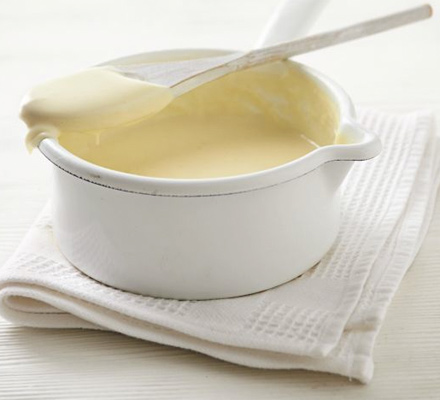
    Directions- Gently bring the milk to the boil in a small saucepan with the onion, studded with the bay and cloves (step 1, above). Turn off the heat and leave to infuse for 20 minutes.Melt the butter in another saucepan, and add the flour. Stir continuously until a paste forms (step 2) – this is called a roux. Continue cooking for 2 minutes.Remove the onion, bay and cloves from the milk with a slotted spoon and discard. Add the infused milk to the roux gradually, stirring as you go, until you get a smooth sauce (step 3). Cook for 5-10 minutes, stirring continuously, until the sauce has thickened. Season well.


    Tomato Sauce

     tomato

    Time- 50 minutes

    Serves- 8

    Ingredients- 4tbsp olive oil, 2 onion (finely chopped), 2 carrots (finely chopped), 2 celery sticks (finely chopped), 2 garlic cloves (crushed), 2 bay leaves, 1 tsp sugar, 4 x 400g cans chopped tomatoes

    Directions- Heat the oil in a pan and add the vegetables and bay leaf. Stir in the sugar with some salt. Gently cook for 10-15 minutes until the vegetables are tender. Stir in the tomatoes and 150ml water. Simmer very gently for 30 minutes until the sauce has reduced by two-thirds and is very thick. Stir occasionally, particularly towards the end of the cooking time, so that the sauce doesn’t catch on the bottom. If you like your sauce a little thinner, then add a splash of water. Serve half with pasta and chill or freeze other half in 1-2 batches for later use.


    Pesto Sauce

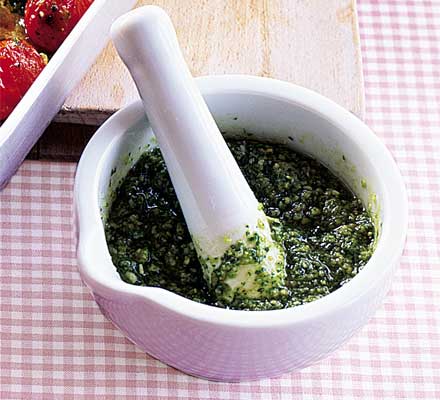
     pesto

    Time- 10 minutes

    Makes- 250 ml

    Ingredients- 50g pine nuts, large bunch of basil, 50g parmesan (or vegetarian alternative), 150ml olive oil (plus extra for storing), 2 garlic cloves

    Directions- Heat a small frying pan over a low heat. Cook the pine nuts until golden, shaking occasionally. Put into a food processor with the remaining ingredients and process until smooth, then season.Pour the pesto into a jar and cover with a little extra oil, then seal and store in the fridge. It will keep in a fridge for up to two weeks.


    Bread Sauce

     bread

    Time- 25 minutes

    Ingredients – 600ml milk, 50g butter, 1 onion (chopped), 6 cloves, 6 peppercorns, 2 garlic cloves, 1 bay leaf, 3 thyme sprigs, 100g white breadcrumbs, 4 tbsp single cream or mascarpone, pinch nutmeg (freshly grated)

    Directions- Simmer the milk, butter, onion, cloves, peppercorns, garlic and herbs in a pan for 20 minutes. Strain and return the liquid to the pan. Add the breadcrumbs and simmer for 3-4 minutes. Stir in the cream or mascarpone. Add nutmeg, season and serve. Can be made up to 3 days in advance and heated up on the hob or microwave on Medium for 3 minutes.


    Caramel Sauce

     caramel

    Time- 10 minutes

    Servess- 10

    Ingredients- 250g caster sugar, 142ml pot double cream, 50g butter

    Directions- Tip the sugar into a heavy-based frying pan, stir in 4 tbsp water, then place over a medium heat until the sugar has dissolved. Turn up the heat and bubble for 4-5 minutes until you have caramel. Take off the heat, and then carefully stir in the cream and butter. Leave the sauce to cool, and then tip into a bottle.


    Butterscotch Sauce

     butter

    Time- 10 minutes

    Serves- 8

    Ingredients- 100g caster sugar, 25g butter, 300ml pot double cream

    Directions- Dissolve the caster sugar with 3 tbsp water over a low heat. Bring to the boil but don’t stir at all. When the sugar is a dark golden caramel, whisk in butter. Remove from the heat and stir in double cream.


  • Monsoon Special!!

    Monsoon Special!!

    A fine sunless Sunday mid-morning. You wake up groggily staring at the clock ticking its way close to 12. Then you see the dark clouds drawing near. A few deep grave rumble here and there. Soft water pellets land on your windowsill which gradually change into fat drops. You rush to close all the windows in your house lest it floods in.

    You watch the world bath in its glory…the trees swaying their boisterous branches, dancing away…the leaves singing  “srabon er dharar moto…

    Inevitably it’s a romantic weather.

    A romantic weather demands some easy to cook food…so that you can spend your time slouching under your blanket with a book in hand, while the food can be cooked in a jiffy.

    So, what’s the best way to satisfy your tummy this monsoon?

    Well, since it is monsoon, it’s Khichdi Time!


    Khichdi

    Khitchadi

    Time- 10 minutes

    Serves- 3

    Ingredients- ½ cup basmati rice, ½ cup moong dal/spilt and dehusked green gram, 1.5 tbsp ghee, ¼ tsp turmeric powder, 1 tsp cumin seeds, peas, rock salt or regular salt as required

    Directions- Rinse both the rice and dal together for a couple of times in water. Heat the ghee in a pressure cooker. Crackle the cumin, then add the turmeric powder and stir. Add the rice and moong dal. Saute for a minute. Add 4 to 4.5 cups water. Add peas. Season with salt. Stir and then pressure cook the khichdi for 5-6 whistles.


    The 5 fries (bhaja)

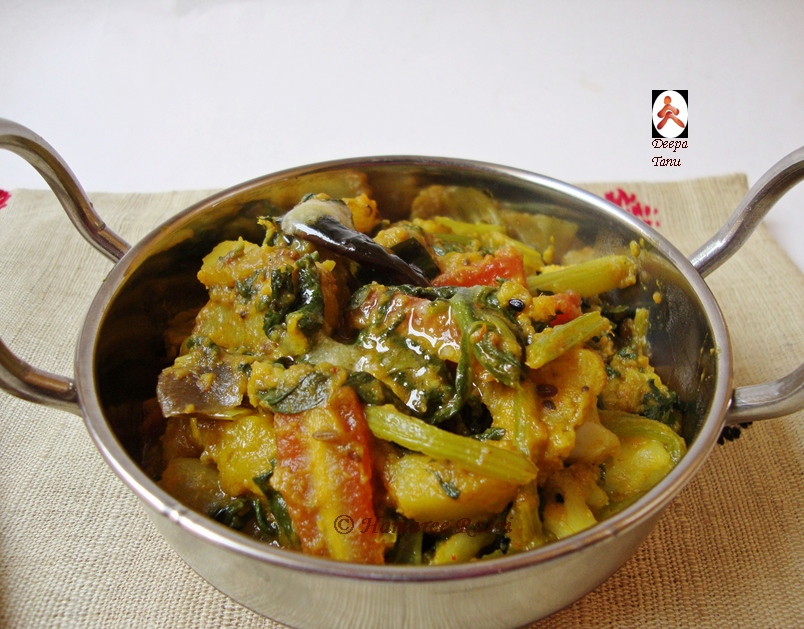
    Fried Potato, Fried cauliflower, Beguni (Fried Eggplant), Peyazi (Onion Fritters) and Ilish mach bhaja (Fried)

    Since you know how to fry your fish, and the potato and cauliflower are fried the same way as the eggplant and onion, I’ll just jot down two recipes here.


    Beguni (Fried Eggplant)

    beguni

    Time- 10 minutes

    Serves- 10

    Ingredients- 2 eggplant, Salt to taste, 1 teaspoon sugar, 2 cups besan flour, 1/2 teaspoon red chili powder, A pinch of turmeric powder, A pinch of hing (aesofetida), 2 cups oil

    Directions- Cut eggplant into longitudinal thin slices. Add salt to taste. Set aside.Make a batter of 2 cups besan. Start to add water little at a time to make a smooth and thick batter. Add salt, red chili powder, pinch of turmeric powder, pinch of hing.Heat oil in a deep fryer. Coat the eggplant in batter. The oil should be hot. Slowly release the coated eggplant in oil. Fry till each side is golden brown. Place it on a towel to let the excess oil be soaked.


    Peyazi (Onion Fritters)

    onion-fritters-curry-mayo-3

    Time- 10 minutes

    Serves- 4

    Ingredients- 2 to 3 medium sized onions, 2 cups gram flour or besan, ½ tsp red chilli powder, ½ tsp garam masala powder, ¼ tsp turmeric powder/haldi (optional), ¾ tsp ajwain or carom seeds, a pinch of asafoetida/hing, Oil, water as required, salt as required

    Directions- Peel the onions. Rinse and slice them thinly. Add the chilli powder, garam masala powder, asafoetida, salt and chick pea flour to the sliced onions. Add water and mix it to a thick and smooth consistency. Now heat the oil in a deep frying pan. Take a teaspoonful of the onion batter and add it in the oil. On a medium heat fry the onion fritters till golden brown.


    Labra (Mixed Vegetables)

    labra 12

    Time- 15 minutes

    Serves- 2-3

    Ingredients- 100 gm eggplant, 100 gm Pumpkin, 100 gm Sweet potatoes, 1 Raw bananas, 2 Potatoes, 3 Tbsp Mustard oil, 1 Tbsp Corainder Seeds, 1/2 tsp Cumin Seeds, 1/2 tsp Fennel Seeds, 5 Red Chilies, 1 inch Ginger, 1/4 tsp Turmeric powder, 1 tsp Sugar, 1 Tbsp Ghee, mixed seeds(1/4 tsp Mustard Seeds,1/4 tsp Cumin Seeds, 1/4 tsp Fenugreek Seeds, 1/4 tsp Bleck Cumin Seeds, 1/4 tsp Fennel Seeds)

    Directions- Cut the vegetables into medium size pieces. Powder the corainder, cumin and fennel seeds, and red chillis finely. Heat oil, add the crushed ginger and fry lightly. Add the mixed spices called ‘ panch phoran’ and stir fry for a minute. Add vegetables, fry well, cover and cook for 10-15 minutes. Add turmeric powder, salt, and one cup of water. Simmer the flame and cook until vegetables are done. Add the powdered spices, sugar and stir well. Cook for another few minutes adding ghee.


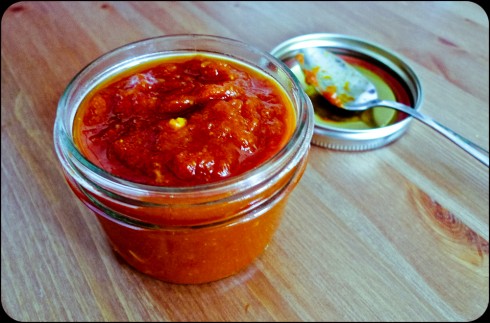
    Tomato Chutney

    Tomato-Chutney-490x323

    (to be served with some Fried Papad, optional)

    Time- 10 minutes

    Seves- 5

    Ingredients- 500 g tomato, chopped, 4 cm piece ginger (peeled and chopped), 250g brown sugar, 150ml red wine vinegar, 5 cardamom seeds, ½ tsp paprika

    Directions- Tip all the ingredients into a large heavy-based pan and bring to a gentle simmer, stirring frequently. Bring to a gentle boil so that the mixture turns dark, jammy and shiny.


    Payesh ( a rice dessert)

    payesh]

    Time- 30 minutes

    Seves- 2

    Ingredients- 1cup basmati rice, 10 almonds sliced, 1 tbsp raisins, 2 tsp melted ghee, 3 green cardamoms, 2 litres milk, 1 cup jaggery grated jiggery, 1 tbsp sugar

    Directions- Clean and wash the rice. Blanch the almonds and slice. Wash the raisins.Heat a tablespoon of ghee. Add the rice. Stir it for a little bit till it becomes opaque. Take it off the heat.Boil milk. Lower the heat up and continue to boil stirring constantly for fifteen minutes.Mix in the rice and continue to stir fry till the rice is soft. Continue to stir fry till the milk has reduced to half.Mix in jaggery. Mix in sugar. Mix in the cardamoms, almond slices and raisins (if using) and stir well. Serve hot or cold.


    Recipe Courtesy – vegrecipesofindia.com, allrecipes.com

    Image Courtesy – hamareerasai.com, seriouseats.com, bongcook.com, thesecondlunch.com

  • The most Refreshing Yogurt : Lassi

    The most Refreshing Yogurt : Lassi

    Lassi, a yogurt based drink which always leaves you wanting more.  In this summer nothing can be more refreshing than this coolant drink. Yogurt drinks are widely popular all over the world. In India people referred this yogurt based drink as “Lassi”.

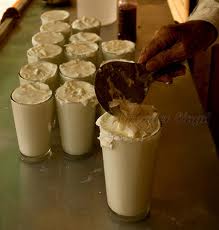
    Lassi is also known as buttermilk is a traditional drink in India and Pakistan. It was originated in Punjab and is an age-old custom in Punjab to serve this coolant drink after the meal in huge glasses. It consist of Yogurt or curd, water, sugar, pepper, raisins and sometimes salt too.  Lassi can be salty or sweet and it depends on our taste which one we would like to have. Different flavors of it can be generated by adding seasonal fruits. To give a creamy taste it is topped with clotted cream. Lassi is chilled with ice-cubes and served during or after the meal as a refreshment drink.

    malailassi

    Lassi along with refreshment also helps in maintaining our digestive system and enzymes. Lassi being an item prepared from curd helps in alleviating problems related to stomach such as constipation etc. It helps in generating healthy bacteria and decreases the number of bad bacteria. Being rich in proteins it is a main intake of bodybuilders to keep their muscles stiff. Whenever we feel low a glass of Lassi can work and increases our energy level. It is also used to provide strength to our bones as it is a good source of calcium. It also decreases building up of bacteria and gastrointestinal problems.

    Lassi is of only two types: Sweet or Salted…Really is it so?? The answer is NO..Lassi comes with its variants…it mainly depends on our taste and ingredients we would love to have. Like Sweet Lassi is a flavoured form of lassi with sugar and different form of flavours added to it e.g. Rose, Lemon, Strawberry or any other juices. Saffron Lassi is a type of this which has saffron as a special ingredient in it. This is popular in Pakistan and Rajasthan. Makkhaniya lassi is lassi topped with a layer of butter over it.

    lassi1

    Preparation of lassi is quite easy. You just want some ingredients and blender with you. Ingredients required are:  1.5 cups curd, 7-8 tbsp sugar, 1/2 cups water, saffron (optional), 6-7 almonds/nuts, I tbsp rose water, ice cubes. Initially take the curd, sugar in a blender and blend it. It is blended until an even mixture is obtained. Make sure that it is not blended for a long time otherwise butter will start to float on the top. Now lassi is ready and pour it into the tall glasses. Sprinkle the nuts and pieces of almonds over it. Saffron is added if required.

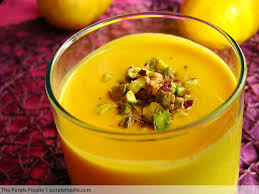
    Mango Lassi is prepared from mango pulp and yogurt. Sugar is optional ingredient in it. It has gained its popularity all over the world including UK, Singapore, Malaysia. In Canada this lassi is treated as a cold drink with kesar mango pulp added to it along with the cream and there it is served with an ice cream. To make it more delicious nuts are also sprinkled at its top.

    lassimango

    Bhang Lassi, the name itself creates an image of Punjab’s culture. This lassi contains bhang as an ingredient in it. Bhang is a type of liquid derivative of eaten forms of Cannabis. This is mainly taken during Holi and it is served with pakodas. In Uttar Pradesh there are some bhang shops and they all are licensed so you people can visit, can buy some bhang products in case you want to and can enjoy bhang lassi.

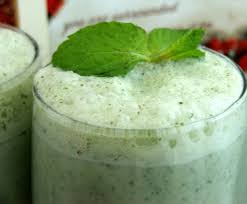
    Chaach is another form of lassi which is salted in form. It is diluted in form and contains salt and jeera for giving salty taste. Some people used to add green chillies as a seasonal element. In Gujarat and Rajasthan it is served along with the meal and especially during summers. It acts as coolant drink during this hot season.

    salted lassi

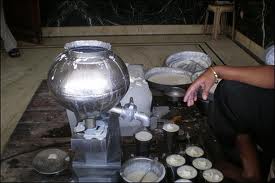
    In the hot summer, chilled Lassi is served in tall a glass which is topped with clotted cream. In Punjab, the demand is getting so high day by day that shopkeeper started using washing machines for blending curd instead of mixers. With these maximum demands can be easily fulfilled. Lassi so prepared is very thick and spoon is served with it to make it easy to drink. Firstly, you can have the taste of buttery cream and then drink that lassie. People in Northern India preferred to have lassi with samosa, paranthas and sometimes with chat too.

    punjab

    Lassi must be prepared in a proper way like never add lassi with the fruit because curd and fruit always contradicts each other so it can indirectly harm our immune system. Reduce the consumption of lassi in winters and especially at late nights because it increases the concentration of phlegm in our body.


  • Secrets of the Bengali Kitchen

    Secrets of the Bengali Kitchen

    The best part about cooking, as every enthusiast would agree, are the little additions and subtractions here and there that can make-or-break your dish. All those who have tried their hand at cooking Bengali cuisine know how particularly tiring it can be to get the dish “just right”. Bengali cuisine, like every other cuisine, has a feel unique to it. For a true Bong foodie, distinguishing between authentic and ‘almost-authentic’ Bong food in a matter of a few seconds is a skill picked up quite early. Then how DOES one get it right? Here’s bringing you five delicious secrets from the Bengali kitchen that will add that extra zing to your maachh, mishti and more 😉

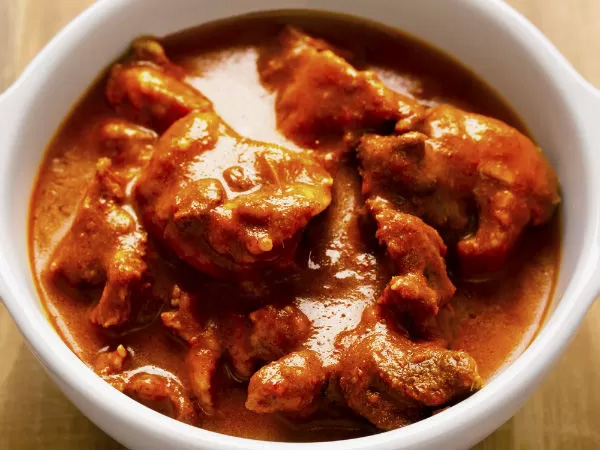
    Kosha Mangsho: One of the most popular and well-loved dishes in Bengal is definitely the “Kosha Mangsho”, translated to English as Red Mutton Curry. Along with great taste, Kosha Mangsho comes with high health benefits and has always been a favourite in Bengali kitchens. What tends to go wrong with it most of the time is the correct, and rather hard-to-achieve, balance of spices. The easiest trick in the book to get this one right is to go easy on the chillies. I would suggest avoiding chillies altogether, but if unavoidable, try getting hold of Kashmiri Degi Mirch. Degi Mirch refers to the dried fruit of chilli peppers and powdered Degi Mirch has been made easily-available in stores under various brand-names. To get the brilliant reddish-brown colour that defines the curry, add a spoonful of sugar in the oil and wait for it to caramelise before frying the spices.

    kosha mangsho

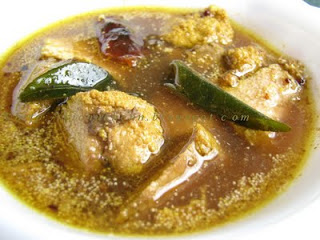
    Maachher Tawk: This sweet-and-sour dish is a fish-based preparation, very popular with traditional Bengalis even today. The most important step to get right here is, of course, the choice of fish. Machher Tawk is prepared using large pieces of rohu or ‘katla machh’, an easily available sweet-water fish bred in Bengal’s numerous ponds but may also be prepared using the ‘mourala’ fish that can be eaten whole. The ‘tawk’ is often compared to the rasam of South India and helps cool the body and also helps in digestion, thus making it a popular summer favourite. The fish used has to be very fresh and devoid of any smell. The fish must be lightly fried; remember, it comes towards the end of the meal and must not be a heavy curry. Use a little jaggery instead of sugar, raw mangoes instead of tamarind and maybe one or two green chillies for the zing and voila! You have perfected the traditional fish curry!

    maacher tawk

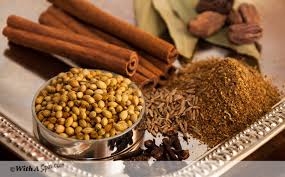
    Garam Masala: Although this is one of the oldest tricks in the book, I deem it quite necessary to mention it here. A blend of ground spices common in Asian cuisine, the word garam refers to intensity of the spices used. A typical Indian version of garam masala contains turmeric, black and white peppercorns, cloves, cinnamon, black and white cumin seeds and black, brown, and green cardamom pods. Garam masala contains several micronutrients and is considered good for health. One important commandment of Bengali Cuisine that one must remember is : toil brings rewards (in this case, flavour.) Instead of choosing the readymade garam masala available in the market, opt for making a powder of crushed small cardamom, clove and cinnamon. Do not go for badi ilaichi as it will ruin the authentic Bengali taste of your dish, no matter what you choose to cook.

    garam masala

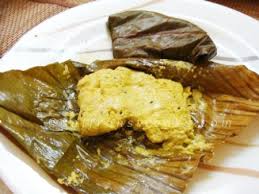
    Fish in Mustard Sauce: The health benefits of mustard are innumerable; high in selenium and magnesium, it is recommended to patients of asthma, arthritis and high cholesterol. It also slows ageing and helps one to lose weight. The world knows about the Bengali love for fish, and ‘Bhetki machher paturi’ is a gem in the crown. The trick to getting this very tricky dish right is making a good mustard paste, making sure that it doesn’t taste bitter. Heads up: this could be a major challenge, especially if you’re not comfortable with this dish. Professionals often fail while trying to get this one right and it is unlikely that those attempting it for the first time will hit the bull’s eye. However, that is no reason to lose hope as long as time and practice accompany it! One little tip: instead of sticking to only black mustard, try to use equal portions of black as well as white mustard. Soak the mustard seeds overnight and when crushing it in the mixer, add small ice-cubes instead of water. The magic of mustard will soon reveal itself!

    bhetki macher paturi

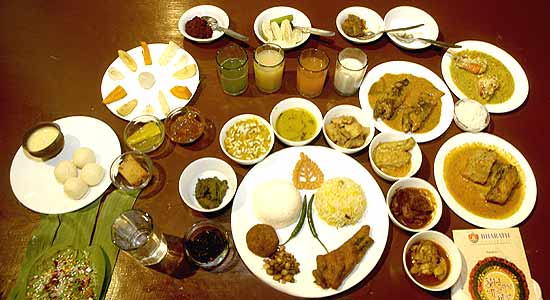
    Sweet Tooth: No Bengali meal is complete without the sweet dish at the end! No matter how wonderful your meal is, the true Bengali will always look at you expectantly at the end of the meal for that heavenly offering of mishti doi, sandesh or pantua. You have to get a little strict here; keep the calorie counter running! Although Bengali sweets are delightful to eat, they aren’t recommended in large amounts. A little tip here: when making mishti doi, make sure you use cow’s milk and never buffalo’s milk. Curd made from buffalo’s milk, although very common in East India, is not recommended at all for its high fat content. The best bit about Bengali desserts is the variety: cham-chams, rosogullas, payesh…the list is endless!

    mishti doi

    So what are you waiting for? Grab that apron, and you’re all set to win that Bong heart! A word of advice: serve it with a winning smile and a lot of love. Fondness is a dish best served smiling!