Category: Uncategorized

  • Benefits of Healthy Food

    Benefits of Healthy Food

    Food is essential. Everything what we do happens because of nutrients we give to our body. People take it for granted but our body need nutrients. Food is a fuel for our body to move it, to think and to give energy to our muscles. The minerals and vitamins are there so that our bodies can function. Protein has developed an image of containing calories. Food is not only for sustaining health but to feel better. And the only way to keep our body healthy by eating a wide variety of healthy foods.

    Eating a healthy diet will go a long way to make sure that you have all the nutrients to make your body fit. Our body utilizes everything we put into it, and what we give is determined by how it is used- for bad health or good.

    BENEFITS OF HEALTHY FOOD-

    EFFECT OF FOOD ON HEALTH-

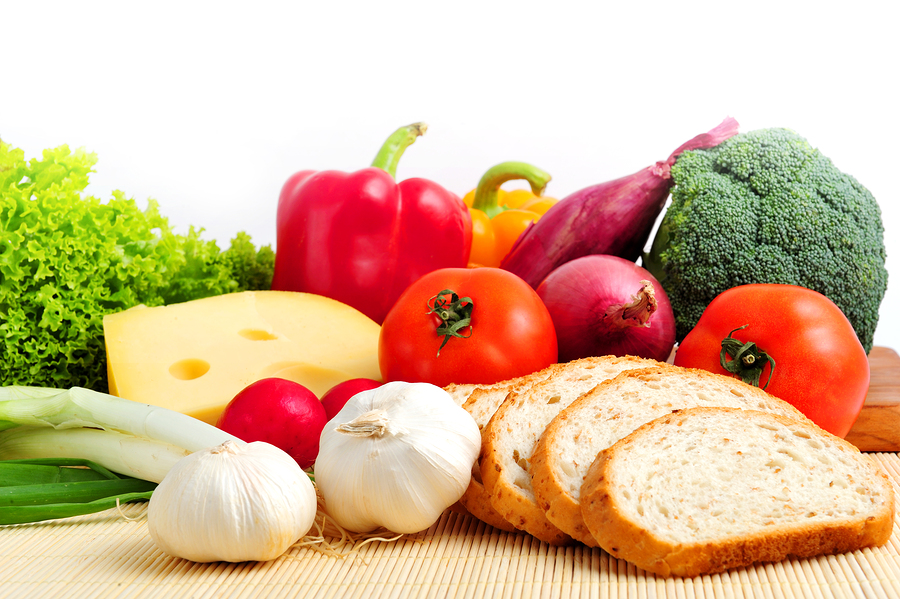
    Fruit is a carbohydrate rich in vitamins, minerals, and fibers. The fiber in the fruits can be a big help when it comes to weight loss. Fresh fruits are rich in water content and tend to be low in calories. The water content and high fiber helps you in a minimal calorie cost and makes fruit a smart addition to any weight-loss plan. Fruit is beneficial for the people who are fighting with cardiovascular disease because diet rich in vegetables and fruits makes us strong to fight with heart diseases. Vitamin A helps against macular degeneration. Vitamin B helps in improving memory, and gives healthy hair. Vitamin C enhances your natural beauty. So you need to watch your calories, and should add fruits a part of your daily routine.

    Whole Grains contains three layer of seeds nutrient dense germ, fiber rich bran and the starchy endosperm. Regular consumption of whole grains reduces risk of high blood pressure, heart diseases, and diabetes. It also helps in weight loss and maintenance. Whole grains also contain vitamin B which gives fuel to our body and promote heart health. The vitamin E in whole grains helps in boosting eye health, reduces risk of cataracts and slows the progress of vision loss.

    HEALTHY FOOD GIVES HEALTHY SKIN-

    Skin is a vital part of our body. Without skin we are just bones and blood. A part of your body’s makeup comes from what you put in it. There are many tasty food that can give you great skin and including them in your daily routine is essential. Healthy skin makes you look younger and fresher. Glossy hair and glowing skin can be yours in days, all you have to do is eatthe foods your body needs to look its best. Also there are certain foods to give your skin a natural beauty. Fatty acids have effects on skin and hair condition. But the body can’t make essential fatty acids, so they are provided to our body by food. Oily fish, Salmon are good sources of fatty acids. You must include soya beans, prawns, and eggs in your diet to make your skin as well as hair healthy.
    When you cook food, it loses its vital nutrients. When you eat cooked food, you don’t get nutrients which your body needs for its functioning and it is shown in your skin. Your skin cells also require nourishment to look fresh and natural.

    EFFECT OF FOOD ON YOUR BRAIN-

    The brain is the platform for our mental health and therefore for our mind. The brain is made up of water, fatty acids and other essential nutrients. Most of the brain is derives from food. Essential fatty acid performs a vital function in brain. It helps in the structuring of brain cells, and ensures that smooth communication is possible within the brain. It is called “essential” because it is not made inside our body so we need to intake food rich in fatty acid.

    Secondly there are some foods which affect our brain slowly over a period of weeks. It includes carbohydrates such as potatoes and rice, lecithin containing products such as eggs and cakes. Their purpose is to bias the function of a transmitter system by enhancing the functioning of brain. In terms of second system, insulin helps in uptake of glucose through neurons, as well as in maintain their function. Diets that are higher in fats promotes insulin resistance which reduces the ability of body to utilize insulin and increases the risk of dementia.

    EFFECT OF FOOD ON YOUR MOOD-

    Several studies have shown that food might be used to treat such common problems as depression, hyperactivity, and insomnia etc. Specific foods and nutrients can produce changes in chemical balance of our brain. Also the way people feel is affected by what they eat. For example, we give candy to soothe a crying child and hot milk to induce sleep. Consumption of certain nutrients can change the levels of brain chemicals that transmit messages between nerve cells. Research shows that people with vitamin B1, vitamin B12 deficiencies are at the risk of depression.

    It is therefore essential to eat more whole foods and pay specific attention to fruits, vegetables, vitamins and minerals. Introduce a few changes in your diet and feel the difference.

  • For the Chicken Lovers: 5 MUST-have dishes!

    For the Chicken Lovers: 5 MUST-have dishes!

    I like my chicken roasted, smoked, curried, steamed, sandwiched, in gravy, in salad, in soup, basically, in any random form. The fact about chicken is that it can be prepared in a diverse number of ways. Either you can take your time and leisurely prepare a chicken dish in about 3 – 4 hours and have a perfect lunch or if you are running against time, you can land up with a neat chicken dish in even less than 30 minutes.

    That’s the way with chicken.


    So, here I am, showering all my love and dedicating this week’s article only to CHICKEN.


    Let the CHICKEN fiesta begin!


    Spicy Parmesan Chicken

    spicy-chicken-fingers_med

    Time: 25 minutes

    Serves: 2

    Ingredients:  6 chicken supremes

    For the marination –

    Salt and black pepper
    1 Tbsp minced garlic paste
    1 Tbsp red chilli flakes
    1 1/2 Tbsp flour
    For the Parmesan batter-

    1/2 cup cream
    4 Tbsp parmesan cheese (grated)
    1 egg
    Salt and pepper to taste
    Parsley
    1 grated nutmeg
    For Frying-

    4 Tbsp olive oil
    4 Tbsp butter
    For tomato chutney-
    1 cup cherry tomato
    1/2 onion
    1 green chilli
    Salt and pepper
    4 Tbsp olive oil
    4 Tbsp balsamic vinegar
    Chopped parsley

    Directions:

    For the marination-
    First take chicken pieces and marinate it with salt and pepper. Add garlic paste, red chilli flakes. Sprinkle some flour and let the chicken get marinated for few minutes.
    For parmesan batter-
    Take a bowl add some cream, grated Parmesan cheese and mix it well. Add a egg and blend the mixture well. Then add some salt, pepper for taste. Add fresh parsley leaves, grated nutmeg to the batter.
    For the frying-
    Dip the marinated chicken supremes in the batter. Take a pan and add olive oil, butter. Let it get heated for 2 minutes. Put the dipped chicken supremes for frying. Fry perfect.
    For tomato chutney-
    Take cherry tomatoes, onion, green chilli and put it in the mixer. Add some olive oil and balsamic vinegar. Add fresh parsley leaves and blend it all together.


    Chicken Layonnaise

    Chicken-Layonnaise_med

    Time: 30 minutes

    Serves: 2

    Ingredients:

    200 gm chicken julienne
    100 gm butter
    50 gm onions
    10 gm garlic
    60 gm capsicum
    60 gm tomatoes
    3-4 black olives
    Spinach-boiled
    Sauteed potato
    Sauteed carrots
    sauteed beans-boiled
    sauteed 60 ml
    White Wine salt
    pepper-to taste

    Directions: Heat butter and saute onions and garlic for about a minute. Add chicken and quick fry on high heat until chicken gets a brown texture on the outside. Add capsicum and tomatoes and sauté for a minute. Then add the white wine and season with salt and pepper.  Add the black olives and serve with all the vegetables.


    Fried Chicken Roll

    chicken-roll_med

    Time: 40 minutes

    Serves: 10

    Ingredients:

    2 cups all purpose flour
    2 eggs white
    1 cup bread crumbs
    3 cups grated chicken
    1/2 tsp turmeric powder
    1/2 tsp pepper powder
    1 tsp chicken masala
    1 tsp chilli powder
    1 tsp coriander powder
    3 to 4 coriander leaves
    Salt to taste
    3 to 4 green chillies
    2 onions

    Directions: Mix all purpose flour with water and egg and make it like a batter. Spread  2 to 3 table spoons of batter on a frying pan and spread it like chapati till it becomes slightly hot. In another frying pan,heat oil and add onions and heat till it turns brown.  Add salt,chilli, chilli powder, turmeric powder, coriander powder, chicken masala. Then add the boiled and grated chicken to the mixture and stir well for abaout 5 to 10 minutes. Now add coriander leaves and keep aside. Roll the masala in the chapati and dip in egg white and breadcrumbs. Finally deep fry the rolls.


    Chicken Manchurian

    chicken-manchurian_med

    Time: 1 hour

    Serves: 3

    Ingredients:

    250 gm chicken mince
    2 eggs, slightly beaten
    3/4 cup refined flour
    1/2 tsp garlic paste
    1/2 tsp ginger paste
    Oil for deep frying
    2 Tbsp oil
    1 tsp finely chopped garlic
    1/2 cup finely chopped onions
    1 large capsicum-chopped fine
    For sauce, mix together –
    3 Tbsp corn flour-blended
    1/2 cup water
    2 Tbsp vinegar
    2 tsp salt
    2 tsp soya sauce
    1/2 cup tomato puree
    2 Tbsp chopped celery or 1/4 tsp celery salt
    2 cups water

    Directions: Mix together the chicken, egg, flour, garlic and ginger paste, ajino moto and enough water so as to have a thick batter. Leave this for 5-10 minutes. Heat the oil, keeping the heat high drop heaped teaspoonfuls of batter and fry to a golden brown. Drain on absorbent paper till required. Heat 2 Tbsp of oil, and stir-fry the garlic and onion in it over high heat, till the onions look glossy. Add the capsicum and turn around a few times. Add the sauce mixture, and simmer till the sauce thickens and becomes translucent. Add the fried balls, turn around a few times and serve.


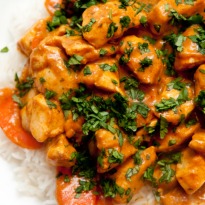
    Dahi Chicken  (chicken cooked with curd)

    Dahi-Chicken_med

    Time: 1 hour

    Serves: 4

    Ingredients:

    1/2 kg boneless chicken (cut as you like it)
    2 1/2 cups yogurt
    1 tsp cumin / zeera powder
    1 tsp garlic paste
    1/2 tsp red chilli (rang) powder
    A little less than 1/4 tsp turmeric/haldi
    1/4 tsp garam masala
    Few slit green chillies
    2 onions, chopped
    1 tomato, chopped
    Coriander leaves to garnish
    2 tsp oil
    1 tsp salt

    Directions: Take the yogurt and mix in the cumin powder, garlic paste,garam masala, haldi and red chilli powder. Mix with hands. Put chicken into this and add slit chillies. Keep aside for 30 minutes. Now heat 2 tsp oil in pan and add onions. Cook till translucent and soft. Add the tomatoes. Cook for a minute and add all the chicken and marinade. Keep cooking till gravy reaches the consistency you like. Of you like it more dry, cook a little bit more till yogurt curdles around chicken. Check for salt. Garnish with coriander leaves and enjoy. You can eat this with rice if the gravy is more and with Indian bread (roti/naan) if you dry it up.


    Recipe Courtesy: cooks.ndtv.com

    Image Courtesy: cooks.ndtv.com

  • Beauty of the feast!

    Beauty of the feast!

    World consists of human divided by infinitesimal differences by region, religion, nation, race, caste, color, creed and what not. Things like globalization would be impossible to think of if we would not have been able to find the common binding factor among the differences. India here very well stands for its world known diversity which had stood as one against the tests of time. Apart of being multicultural from the very roots of it, Indians tend to employ these differences to propagate brotherhood among them. Sharing of cultural elements like native food, religious practices, festivals and language has only helped us to bind together.  Thinking of food, how many of us really look for what’s in the platter is more than just a meal?

    Every culture has their own essence and it can very well be witnessed by their local cuisine. As the saying by Adelle davis goes “We are indeed much more than what we eat, but what we eat can nevertheless help us to be much more than what we are.” holds true when we think of food more than mere nutrition provider. Nowadays food has become an art, there are nutritionists and health inspectors their careers based on the quality of food served to masses.  People like Tarla Dalal and Sanjeev Kapoor are superheroes of kitchens in India as they redefined the culinary art altogether and who can miss Masterchef series? They all prove that food is a serious deal and as fine and detailed the fine arts are, same is for the food or culinary arts.

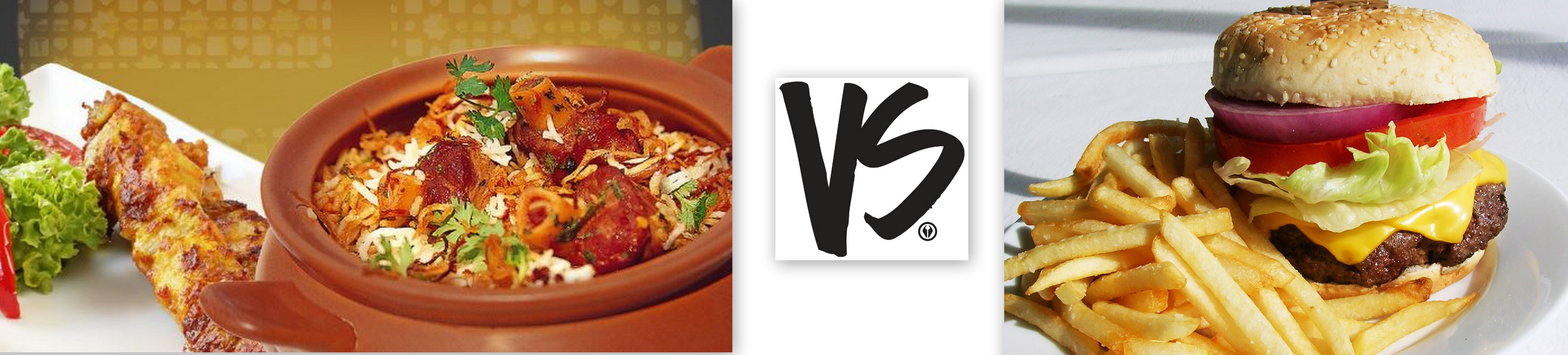
    Beauty of food is celebrated in every cuisine around the world like Chinese and Indian food are tangy and spicy where Italian cuisine is comparatively less zesty and prefer involving more of herbs. If we come to think of it, whenever we go to a new place and one of the first things that we look for is food available there. It makes a whole lot of impact on how we perceive that place for the rest of the time. I think that most would agree to the fact that we tend to look for our native flavors in the new region, so goes with the food. How much ever we buy pizzas and subs it won’t suffice the appetite of an Indian living overseas finding tikkas and kebabs.

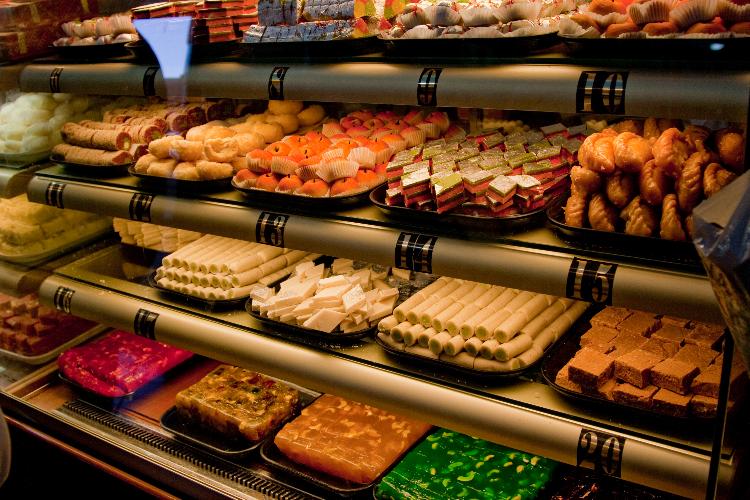
    Food does so much more than calming the hunger; it crosses boundaries of region and religion. In India especially during festivals which occur more than Sundays in the whole year, we have a pre-planned menu set for each one. The cooking of all the sweets gives the real pleasure of an occasion for the mothers in the household and children’s by making sure to consume every bit of them. The sharing of sweets signifies sharing part of happiness that had come with the festivals.

    Festival sweets

    For a culture rich country like ours, food holds more meaning and there are regulations and provisions regarding cuisines in any religion, state e.t.c. Like in a Brahmin household usage of onion and garlic is avoided and in Christianity communion involves having bread and wine (or other substitutes) to represent the body and blood of Jesus Christ. When a dietary practice is preserved by religious dogma it is given additional force, and if observed it tends to promote a balanced diet! It may be one of the reasons behind many of our grandma’s and grandpa’s resistance against diseases and allergies.

    Food has many nutrients and a person should contain just the right amount for their age in their meals. Leafy vegetables as we all are very familiar of carries infinite benefits like building up one’s resistance to diseases, helping in one’s “weight management program” more like dieting? They are also known to lower the risk of cardiovascular disease and Type 2 diabetes. Like in all seriousness, vegetables no matter how much we despised them as kids do have a hand over pizzas!

    Talking about pizzas, who doesn’t like having a large size ordered along with coke on a Friday? The fact that we had become conscious about our fast food intake is because of the general awareness regarding cholesterol related diseases like obesity, hypertension e.t.c.

    Fat gained by fast foods

    Fast foods are source of saturated fats also known as “Bad fats” and are often linked with diseases like cardiovascular and coronary heart diseases as well as stroke. Nowadays many healthy choices regarding even the basic in groceries like flour and edible oils are available in the market. Once in a month or few weeks surrendering to the craving for fast foods is okay I guess, but the fact doesn’t change that dieting and refraining from them is the solution for the above problems. Yes! Exercise! Obesity is another much discussed disorder caused by the negligence of the individual’s choice of meals, caution should be taken where something can appeal to the taste buds doesn’t necessarily goes well with the rest of body. Moreover the skipping of meals in order to “diet” is a pointless thought as we can see an obvious difference visible between men who had his meals and who didn’t, the stark lethargy and dreariness is hard to miss. In the other words, skipping meals over a period of time without regarding with a nutritionist would only make you look like a zombie strolling in workplace out of the series “Walking Dead”!

  • Street Food Made Easy Part-1

    Street Food Made Easy Part-1

    They say that temptation was the fall of man. Well, the Bible does anyway. It relates how Eve and Adam gave in to temptation when falsely lured by the Serpent and how they bit into the Forbidden Fruit. Despite being forbidden repeatedly, their greed was predominant. And this small act of temptation signified their fall from God’s grace and the Garden of Eden.
    One such similar temptation when it comes to matters of the tummy is street food. It is not gastronomically appropriate for you. In fact, it is every dietitian’s worst nightmare come true. You are highly aware of all these solid facts! And yet you simply can’t stay away from these forbidden delights out on the city streets. Street food just has that certain appeal of its own, you say.
    Now what comes to your mind immediately when upon hearing the term ‘street food’? Unhealthy? Unhygienic? Inappropriate? Unfit? Unpalatable? Well, there might just be a way to avoid all of the above terms and also savour these tempting snacks at the same time. How you ask? It’s impossible no longer. If you have the recipe to spruce up these cookeries at hand, you no longer have to worry about any outside problem at all. You can be your own cook and your own critic at the same time! And all while enjoying the comforts of your own little kitchen at home as well. Don’t worry even if you are a beginner at cooking. All you have to do is simply follow the recipes and voila! There you go. You have those mouth-watering and irresistible food items right in front of you all just waiting to be devoured. Now then, we ask. How much better could it honestly get?
    What’s the wait up for then? Simply make a note of the following recipes. Close your eyes. And just let your taste buds do the talking. Read on to find out more!

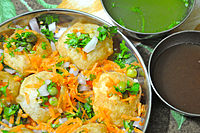
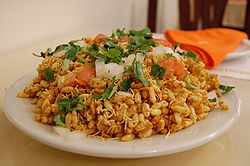
    (1) Bhelpuri:

    Bhelpuri

    Bhelpuri is a savoury Indian snack, and also a variant of chaat. It is typically prepared by mixing together appropriate portions of puffed rice, vegetables and a tangy tamarind sauce along with a few other ingredients on the side. Bhelpuri is thought to have originated in Gujarat. Thereafter, because of its immense popularity among the mass, the recipe has spread to many other parts of India where it has been modified accordingly to suit local food availability. The Kolkata variant of Bhelpuri is called Jhaal Muri (meaning “spicy puffed rice “). A native Mysore variant of Bhelpuri is known as Churumuri or Churmuri in Bangalore.

    Ingredients:

    • Puffed Rice: 2 cups.
    • Sev: ½ cup.
    • Roasted Masala Chana Dal: ¼ cup.
    • Roasted Peanuts: ¼ cup.
    • Crisp Puris: 8.
    • Onion: 1 medium sized.
    • Potatoes: 2 medium sized.
    • Green Chillies: 2-3
    • Salt: According to taste.
    • Green Chutney: ¼ cup.
    • Tamarind Chutney: ½ cup.
    • Garlic and Red Chilli Chutney: 2 tbsp.
    • Lemon Juice: 1 tsp.
    • Fresh Coriander Leaves: 10-15.

    Preparation:

    •Peel the onion and chop finely. Clean the coriander leaves, wash well and then chop finely. Boil the potatoes. Then peel and cut into bite sized pieces. Wash and remove stems. Then finely chop the green chillies.
    •Combine the puffed rice, onion, roasted masala chana dal, peanuts, potatoes, green chillies, half of the Sev and toss well in a big mixing bowl. Add four crushed puris and mix further. Add salt according to taste. Add the three chutneys as per your own taste and mix well. Add lemon juice and mix well.
    •Garnish with the chopped coriander leaves and the remaining Sev. Serve immediately along with the remaining puris to eat.

    Preparation Time: 12-15 minutes.

    Serves 4.

    (2) Panipuri:

    Panipuri

    Panipuri (also known as Golgappa, Pani ke Bataashe, Phuchka or Gupchup) is a popular street snack famous all over the countries of India, Pakistan, Bangladesh and Nepal. It basically consists of a round, hollow fried crispy puri which is filled with a mixture of flavored water (“pani”), tamarind chutney, chili, chaat masala, potato, onion and chickpeas. It is generally small enough to fit completely into one’s mouth in one go. The pleasure lies in being able to swallow it whole and thus, relish the small bite-sized snack as it is meant to be. It is an exceedingly popular street food dish especially in the regions of Mumbai, Kolkata, Delhi and Lucknow in India. The panipuri is said to have originated from the Magadha region of India.

    Ingredients:

    •Crisp Puffed Puris: 40.
    •Date and Tamarind Chutney: 1 ½ cups.

    For the filling:

    •Boiled Bean Sprouts: 1 cup.
    •Boiled Potatoes cut into small pieces: 2 big-sized.
    •Black Salt: According to taste.
    •Chaat Masala: 1 tsp.

    For Pani:

    •Fresh Coriander Leaves: 20-25.
    •Fresh Mint Leaves: 20-25.
    •Green Chilies: 5-6.
    •Panipuri Masala: 2 tbsp.
    •Dried Mint Powder: 12 tbsp.
    •Black Salt: According to taste.
    •Salt: According to taste.
    •Roasted Cumin Powder: ½ tbsp.
    •Lemon Juice: 3 tbsp.
    •Boondi: ¼ cup.
    •Dry Mango Powder: 2 tsp.

    Preparation:

    •To make the moong sprout filling, combine all the ingredients in a bowl, toss to mix well and set aside.
    •To make the pani, grind the coriander leaves , mint leaves and green chillies to a paste using water as required.
    •Transfer the coriander and mint paste into a large bowl, add panipuri masala, dry mango powder, black salt, salt, cumin powder and lemon juice and stir to mix well. Add six cups of water to the above mixture.
    •Stir to mix well and put to chill in the refrigerator. While serving, add boondi to the prepared pani and stir.
    •Take a puri, break a little of the crust, fill it up with a little moong and potato filling followed up by a half a tablespoon of sweet date and tamarind chutney each.
    •Dip the puri in the prepared pani and serve immediately. Similarly, prepare the remaining puris and serve.

    Preparation Time: 16-20 minutes.

    Serves 4.

    Well then, what are you waiting for? These delicious street food items are exceedingly simple to make. Moreover, you can vouch for the food hygiene yourself. We assure that they will surely leave you craving for more. And more.

    So, stop slacking! Get snacking!

  • How Food Affects your mood

    How Food Affects your mood

    It’s a known fact that fast foods are harmful to your health. It has been well documented and has been explained a lot. But you might be surprised to know that eating the wrong food might affect your mood severely. Recent researches have shown that the food you eat adversely affects your mood and it is necessary to eat foods which have certain nutrients which are called “happy nutrients” to lead a healthy and happy life. Turns out our fast-food diet, with all those processed chemicals and hardly any nutrients, throws off our body’s feel-good chemistry. Drew Ramsey, M.D., co-author of  “The Happiness Diet”, says that eating the wrong foods can add to our daily stress and make us feel anxious, lethargic, and downright grouchy. What’s worse, a diet that deprives our brains of much-needed “happy” nutrients also makes us fat. When you’re stressed out, you’re more likely to reach for high-calorie junk foods that pack on the pounds, fueling a never-ending unhappiness cycle that goes like this: You eat bad, then you feel bad, so you eat worse, and then you feel even worse.

    happyfud1

    Happy Food

    There is no such thing as food which gives instant happiness but certain foods have the tendency to give a positive vibe which might have a positive effect on our mood. Imagine a pleasant day, a plate with bright green spinach topped with caramel-colored crunchy nuts, dried fruits and a generous serving of chocolate syrup garnished on top. Immediately you feel a sense of happiness. You start feeling light. Food has such positive effects on your brain. Your favorite food can keep you happy. happ Omega-3 fatty acids, magnesium, tryptophan, folate and other B vitamins, low glycemic foods, and chocolate have all been studied to assess their impact on mood.  These foods are part of a healthy diet and when you have a healthy diet you feel about your body and confident that your food is not going to affect your body. This ultimately has a positive impact on your mood.

    happy2

    Chocolates are the most common happy foods. They have a very strong effect but the happiness is short lived. But if you want to feel good most of the time rather than in short bursts, then you need to build up your neurotransmitter levels in your brain. Neurotransmitters are the chemicals that send and receive information around the brain and body. One of the best ways of doing this is to ensure that you have enough folate in your diet. A diet with plenty of dark green leafy vegetables, Brussels sprouts, endives, spinach and silver beet provides plenty of folate. Folate is killed by heat, so it’s important that the vegetables aren’t cooked too much. To improve your overall mood, you need to work on improving your serotonin levels. Anyone affected by seasonal affective disorder, or SAD, will be low on serotonin. Walnuts and Lentils are high serotonin foods. The food which has highest degree of happiness in them is fish, especially salmon. Salmon is packed with vitamins D and B12 as well as omega-3 fatty acids. And it is also good for boosting your serotonin levels, helping to fight off depression and lift your mood. Another common “happy food” is banana.  Eating bananas boosts the dopamine levels in your brain, which reduces depression. They are also high in vitamin B6 and magnesium. Foods high in magnesium and B6 help you make GABA, the neurotransmitter that calms people down. People who don’t have enough GABA are anxious and tend to be less happy.

    The Foods to Avoid

    Most people suffer from hypertension and increased sugar levels because of their depression which is caused by work pressure. But researches show that the food you eat can also negatively impact your life in general your mood in particular. It is important to avoid certain depressing foods. Alcohol is a central nervous system depressant. If you have a history of a mood disorder, proceed with extreme caution. Your central nervous system is responsible for taking in information through the senses, controlling motor function, as well as thinking, understanding, and reasoning. It also controls emotion. Alcohol slows all this down, exacerbating symptoms associated with depression.

    alcohol

    According to some experts, even a modest amount of caffeine can contribute to depression and anxiety. Caffeine disrupts sleep, making it more difficult to fall asleep and to stay asleep; those disturbances affect mood. It can cause agitation, tremors, and nervousness. Energy drinks, particularly, are bad news as some of them contain the caffeine equivalent of 14 cans of soda. Anything that is cooked with hydrogenated oils and contains trans-fats could potentially contribute to depression. Also watch out for saturated fats, found in animal products such as high-fat dairy, butter, etc. They can clog arteries and prevent blood flow to the brain.

    Think before you Eat!

    The next time you sit down to eat, before filling your plate think whether you deserve happiness. If you feel you deserve happiness then avoid those which are likely to depress you. Keep your food habits clean. Keep your stomach happy and it will automatically keep your mind happy and stress free!

  • The Dairy Industry-Not so White!

    The Dairy Industry-Not so White!

    The Indian Dairy Industry is the fastest growing milk and milk product industry in the world. India is the leading producer of dairy products in the world. India with 134mn cows and 125mn buffaloes has the largest population of cattle in the world. More than fifty percent of the buffaloes and twenty percent of the cattle in the world are found in India.

    dairy3

    Dairy products are a major source of cheap and nutritious food to millions of people in India and the only acceptable source of animal protein for large vegetarian segment of Indian population, particularly among the landless, small and marginal farmers and women. The major boom for dairy industry was during 1971-1996 when the “Operation Flood” was organized by the Indian Government. An integrated cooperative dairy development programme was implemented in three phases. The National Dairy Development Board was designated by the Government of India as the implementing agency. The major objective was to provide an assured market round the year to the rural milk producers and to establish linkage between rural milk production and urban market through modern technology and professional management. Milk production grew from 21 million tons in 1970 to nearly 69 million tons in 1996 – more than threefold, at the compound growth rate of 4.5 per cent.

    The Ugly Side

    In spite of the employment opportunities and massive boom to the economy The Dairy Industry has several critics for the way in which the cattle are handled. To meet the growing demand for milk, farmers impregnate cows repeatedly. Male calves are either sent to be killed or left on the roads to fend for themselves by rummaging in garbage cans. Many farmers cannot afford to feed their cows, and so they leave the animals on the road and only take them in for milking. Once a cow is deemed no longer useful, she is either sent to an illegal abattoir or abandoned in the city to starve. Calves are taken away from their mothers and often sold as veal calves after spending months chained unable to walk, stretch their legs, or even turn around. The adults are also forced to endure months, even years of needless suffering and cruelty.The stress caused by poor conditions on factory farms leads to lameness, disease, and reproductive problems, rendering them virtually useless at just 4-5 years old while their natural life span is 20-25 years. Cows are beaten into submission and artificially inseminated so that they will keep producing milk. Although this practice should be performed by trained professionals, most cows are repeatedly inseminated by “barefoot healers” who ignore the most basic hygienic standards and use equipment that has not been sterilized, exposing cows to infections and diseases.

    dairykod2

    Most of a cow’s day is spent confined to a narrow, filthy stall. Cows are injected with Oxytocin, an illegal drug that causes them to produce unnaturally large quantities of milk and suffer severe stomach cramps as though they were in labour. Cows are impregnated repeatedly. They grieve for every calf they deliver who is ripped away a few days after birth.


    A global problem

    Cruelty in Diary Industry is not restricted to only India. It is a very global problem and there have been several cries to stop this cruelty and save these cattle. The major producers of milk and milk products such as Australia, New Zealand among others are criticized heavily for the way the milk products are made and the unfair treatment meted out to the cattle. Australia has been particularly targeted by Cattle Welfare Associations for the manner in which they treat these cattle. The calves are separated from the mom within 24 hours of their birth and transported long distances for butchering. The Australian Media has been very critical and have highlighted some of these issues extensively. The government has taken note and the dairy farming standards have improved over the past few years.


    Possible Solutions

    cruelty

    Milk in general is a rich source of proteins and is a very good supplement for humans. It is also a fact that cows produce more milk than what is necessary for its calves the main reason why our ancestors started milking cows. But the practice which was once considered to be good for both cows and man has now become a pain for these innocent animals. Cows have been worshipped in India for a long time, but the steady decline in cattle population is due to uncivilized and brutal treatment meted out to these creatures. The possible solution to this would be to milk cows in an organic way and use only what they give us naturally and avoid techniques like artificial insemination. This can only be achieved if we reduce the consumption of milk and milk related products. There are several other supplements for these products which can be obtained with less harm to other living organisms. The whole situation can be improved by educating the farmers about better practices which can be achieved by sensible media coverage. Everything is a part of cycle of life and all practices has been in existence for a very long time, but this unnatural cruelty towards animals is very shameful and disrupts the very meaning of being human.

  • Strawberry Pleasures

    Strawberry Pleasures

    images (6)

    The heart shaped and juicy, as lovely as a love story. A bright red strawberry, is like a symbol of love. These strawberries were considered as the darling of spring’s transition into summers, with this fruit being available only in the month of June. But now with  advance in agriculture techniques, these are now available all round the year. You can now enjoy these lovely strawberries anytime  your heart desires.

    Strawberries, small red fruits clad in scarlet red, dotted with tiny seeds and wearing green little caps, make one of the most delicious and attractive food on earth. They may be found in different varieties, colors or sometimes even different shapes.

    Strawberries belong to the rose family and for centuries it grew as wild in America and Europe, but today them are not limited to their native place due to the advancement in crossbreeding techniques.

    images (7)

    You’ll fall in love with them, when you know how good they are for you and your belly. These yummy berries are low in calories and fats, high in fiber, potassium, folic acid and antioxidants. You won’t believe that eight medium sized strawberries could impart you more vitamin C than oranges.

    One full cup of strawberries contain 45 calories, 0 gm fats, 0 gm cholesterol, 1 mg sodium, 3 gm fiber, 7 gm sugar and 1 gm protein.

    Reportedly, United States was the greatest producer of this fruit till 2005. Strawberries also carry the potential to some of the medical and beauty treatments-

    l Strawberries if consumed on a regular basis help to reduce the possibility of cancers and heart attacks.

    l These berries could also help to remove stains from your teeth.

    l Their intake helps in reducing blood pressure.

    l Strawberry juice when combined with honey, could provide cure for sunburns and inflammation.

    l Intake of nitrate rich strawberries, helps increase flow of blood and oxygen to your muscles.

    l Consumption of strawberries by pregnant women is helpful in reducing risk of birth- defects in child, due to the presence of folic  acid in them.

    Since long, strawberries have been associated with love. During the olden days, newly weds were served with strawberries. Some believe that splitting a double strawberry into two and sharing it with opposite sex may lead you to fall in love with him/her.Some consider them as a symbol of Venice, the Goddess of Love.

    There are several strawberry festivals held in different parts of the world, especially in United States. These festivals are organized in late spring, which is the harvest time for this fruit. They are a treat for strawberry lovers as they offer a lot of fun activities and entertainment to the visitors. A number of strawberry delicacies, like pies, shortcakes, jams and desserts are served during this  festival.

    images (8)

    Some healthy strawberry recipes-

     1. Strawberry shortcakes-

    download (3)

    Combine 1 tbsp corn sweetener and 1 tbsp corn starch in a small sauce pan. Stir in 1 cup orange juice. Boil it, cook and stir it constantly for 1 min. Until mixture is thickened. Now cool the mixture by stirring. Combine orange juice mixture and some sliced  strawberries in a bowl and stir them together. Cover it and refrigerate for 30 min. To serve, spread vanilla sauce over it.
     2. Mango- ginger strawberry smoothie-

    download (4)

    combine 1 cup peeled mango, 1 cup sliced strawberries, 1/2 cup vanilla yogurt, 1/4 cup cold water, 2 tsp honey, 2 tsp minced crystallized ginger and some crushed ice. Blend them all together, to make a soft gentle puree and serve in glasses.

    3. Fresh strawberry jam-

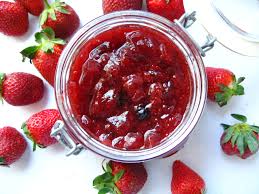
    download (5)

     Combine 2 cup sugar, lemon zest and lemon juice in a saucepan and cook at low heat for 10 min, till sugar is dissolved. Add strawberries and continue to heat for 20 min, until strawberries release their juice. Cook till the juice gels on the cold plate and store this  refrigerated in sterilized jars.

    4. Strawberry lemonade-

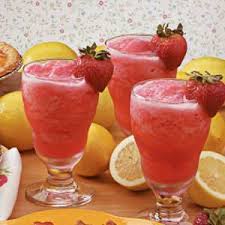
    download (6)

    In a saucepan, add 2 cup water and 1 cup sugar and bring them to boil. Heat and stir the mixture, until sugar dissolves. Add lemon  juice, and then remove from heat. Let it cool, and then drain it. In a blender, puree the strawberries and add it to the drained mixture with lemon juice. Stir well and serve chilled, garnished with mint and strawberries.

    5. Strawberry frozen yogurt-

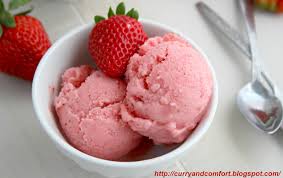
    download (7)


    24 hrs before you start making it, insert your ice cream maker into freezer. Add strawberries, lemon zest, lemon juice, sugar and  rum to a bowl and toss. Cover the bowl with plastic and let the strawberries to soften at room temperature for 1 hour. Now, add  strawberries with their juice in a blender. Blend the berries, and then add vanilla bean seeds and yogurt to it and continue to blend  it. Place it in freezer to chill. Now, turn the ice- cream maker on and pour the yogurt into it. Churn until the mixture looks slushy, after 12 to 15 min.Place it in freezer to make the scoop  hard.

  • Chandigarh on a roll.

    Chandigarh on a roll.

    Chandigargh-Pinjore-Anand Sahib

    images

    Chandigarh, the city of French architect Le Corbusier, is best known for being India’s most planned urban developments. The shared capital of Punjab and Haryana, it lies at foothills of the Shivalik range and offers options for easy getaways. That’s what this itinerary is all about.

    Day 1: Chandigarh

    Get into town

    Arrive in Chandigarh and check into a city hotel that will make sightseeing convenient. We recommend the newly opened JW Marriott in Sector 35 B. Freshen up, put on your walking shoes and get ready to see the city of Corbusier. Entrusted with creating a blueprint for Chandigarh, he envisaged a city of planned residential blocks, grid-pattern streets, several gardens and public spaces. Begin at Capitol Complex, the administrative quarters and a grand expression of Corbusier’s work. Break for lunch; you are never short of places serving hearty, affordable Punjabi khaana in the city centre. Later, drive around the city, taking in the architecture. A visit to the Le Corbusier Centre is also recommended. Spend a relaxing evening in your hotel.

    Day 2: Chandigarh sights

    Distance:

    Time Taken:

    Today is for a tour of Chandigarh’s most popular attractions. They attract tourists by the scores and for a good reason. First, the Rock Garden, which houses figures and sculptures that are almost a symbol for Chandigarh. Nek Chand scoured the Shivalik hills for interestingly shaped pebbles and rocks, interspersed them with waste materials like glass shards and created this spectacle spread over 25 acres. After a break for lunch, wander off to Sukhna Lake, where the city gathers in the evening to stroll, unwind and just hang out. Head back to the hotel, before getting a taste of Chandigarh’s buzzy nightlife. Buzz, in Sector 17, is a good choice, with good drinks, food and a dance floor in case you want to groove a bit.

    Day 3: Chandigarh gardens & museums

    Chandigarh’s museums and galleries are as well-organized as the city itself. Take a tour of the Government Museum and Art Gallery in Sector 10 with its splendid collection of stone sculptures from the Gandhara period. Pre-historic fossils are another major attraction here. Then, there’s the Museum of Evolution of Life in Sector 10 that lets you travel back 5,000 years to the Indus Valley Civilization. The International Dolls Museum in Sector 23 has a colourful collection that children will especially love. Devote the second half of the day to a relaxing stroll through the city’s beautifully laid-out gardens, such as the Zakir Hussain Rose Garden and the Garden of Fragrance in Sector 36 which lives up to its name. As the day winds down, get to sector 17; the sleek shopping area, dotted with fountains and sculptures, becomes one big outdoor club every night. There are drinking and dining options aplenty here.

    Day 4: Prakriti Farms

    Distance: 45 kms

    Time: 1 hour (by road)

    Drive out to this organic farm which nestles in the lower Shivaliks and is set amidst forestland on all sides. Accommodation is in Swiss cottage tents and safari tents . Take a farm tour and see environment-friendly farming practices at work. Dine on delicious Punjabi food prepared from vegetables grown on the farm. You could also catch a Sufi music performance in the evening. It’s the perfect green getaway and antidote to city stress.

    Day 5: Pinjore

    Distance: 25 kms

    Time: 30 minutes (by road)

    It’s picnic time. Make the short drive from Chandigarh to Pinjore Gardens, also called Yadavindra Gardens. Carry a picnic lunch. With its scenic location at the foothills of the lower Shivalik range, this is a garden created in the Mughal style. Stroll amidst the plant nurseries and Japanese garden and picnic on the lawns. Return to Chandigarh for the night.

    Day 6: Hidden Valley

    Distance: 8 kms

    Time: 20 minutes (by road)

    After a relaxing day in the gardens, it’s time for some adventure. It’s at Hidden Valley, an eco-tourism centre in the Shivalik foothills. The famous Mata Jainti Devi temple is nearby. At Hidden Valley, you are surrounded by nature. Go trekking, mountain-biking and take cart rides. This day trip is perfectly suited for children as well. Return to Chandigarh.

    Day 7: Anandpur Sahib

    Distance: 85 kms

    Time: 1 and half hours (by road)

    Anandpur Sahib, one of the most sacred spots for Sikhs, is serene and calming, even with the hundreds of devotees who throng the place.  Walk its marble corridors and say a quiet prayer, or meditate. After a break for lunch, travel to see the Gurudwara Qila Taragarh Sahib, a graceful fort that sits atop a hill.  You’ll be surrounded by spectacular views all around. Get back to Chandigarh in time for your return trip.

    ——

    Do:  A boat ride on Sukhna Lake may seem like a touristy thing to do. But try it, it’s utterly enjoyable.

    Eat: Can’t leave Chandigarh without tucking into its most-famous food export. The butter chicken at Pal Dhaba in Sector 28 is rated among the best by locals.

    Shop: Phulkari is Punjab’s beautiful embroidery. Buy shawls and dupattas at the Punjab Emporium in Sector 17.

    Plus Says

    Best time to go: Mid-August to November is a good time to visit Chandigarh, especially if you prefer mild weather to extreme. But the cold winters have their charm, too, and are a great time to indulge in rich, Punjabi fare.

    Good to know:

    Hop on hop off bus: This open-top double-decker bus service run by the Tourism Department is a convenient way to take in Chandigarh’s sights. It begins at Hotel Shivalik View, in Sector 17, and takes you to the Rose Garden, Museum and Art Gallery, Bouugainvillea Garden, Rock Garden and Sukhna Lake.

    Permits: Special permits are required to enter some of the key buildings in the Capitol Complex. These can be had at the Tourism Bureau.

    Girls’ nights out: Chandigarh’s pubs and bars are surprisingly women-friendly. So, think nothing of making a night out of it with your girl gang. The Blue Blazer in Sector 26 and Score in Sector 8 have rocking ladies nights.

    Great getaways:  While there’s plenty to do in the planned city of Chandigarh it also makes a convenient point from which to travel out of town. Some of the day trips and short trips from Chandigarh include those to the quiet hill station of Kasauli, the town of Barog and Renuka lake on the Kalka-Shimla highway and Morni Hills in the Shivalik range.

    Tip: Both men and women must cover their heads and dress respectably when entering Gurudwaras. These welcome people of all religions and denominations.


    Top Picks:

    Cooking classes at Prakriti Farms: The organic farm, based on sustainable practices, offers cooking demos and classes in Punjabi cuisine. Sign up and get hands-on training in some classic dishes.

    Cycling through the city: Chandigarh, with its dedicated lanes, is perfect for cycling. PedalChandigarh is an outfit that rents out bikes and also arranges cycling tours.  Cycles are parked at ISBT, Sector 17.

    Rock the night: With its late closing times, dance floors and discotheques, Chandigarh is a happy place for party types. Besides Buzz, check out also spots like Zinc Lounge in Sector 26.

    Evenings at Sector 17: It’s a daily party in the piazza at Sector 17. Fountains light up, people gather, bars and restaurants buzz with activity. A recommended way to spend an evening in Chandigarh.

    Gardens by night:  You will enjoy attractions such as the Rose Garden by day. By night, these are lit up and allow access to visitors.

  • QUEEN OF HERBS- THE HOLY TULSI

    QUEEN OF HERBS- THE HOLY TULSI

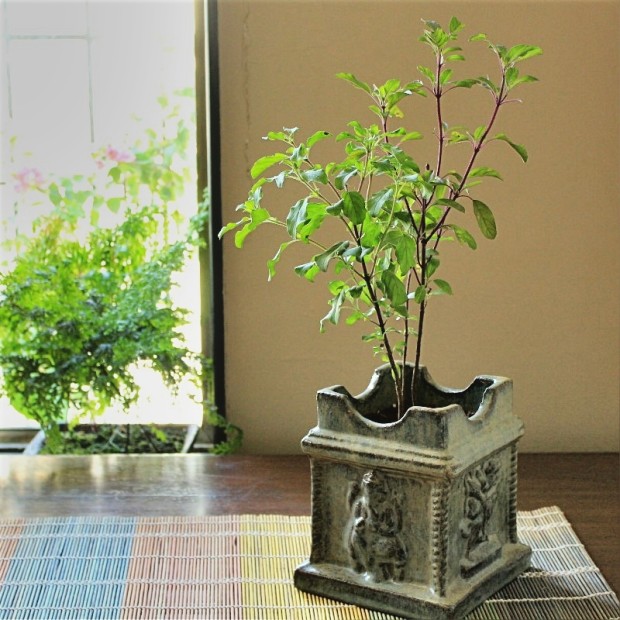
    Since time immemorial, the mankind has relied on the healing power of herbs. If we dig into our ancient past, we would find enumerable references of traditional herbs with numerous health benefits. One such plant, which finds it mention everywhere, is tulsi or basil.

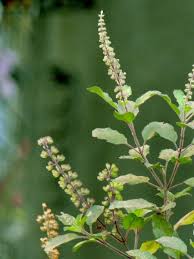
    The holy tulsi, also known as the ‘ QUEEN OF HERBS ’ ,is the most sacred of all the herbs found in India. In Ayurveda, tulsi is regarded as a divine plant. The benefits of the plant are much beyond our knowledge and its mere presence can bring a change.

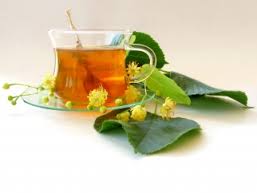
    Tulsi-Plant-620x620

    Dr. RM Gupta, a naturopath, says, “ tulsi is not only beneficial in curing cold and cough but it can also act as an anti-cancer and blood-purifying agent.”

    There are three types of tulsi mentioned in Ayurvedic texts – Rama tulsi, Shyama or Krishna tulsi and Vana tulsi, all having their own different benefits. According to Hinduism, it is regarded as Goddess Tulsi. Its leaves are offered during the worship of Lord Vishnu and his incarnations of Krishna and Vithoba.

    download

    Beauty benefits –


    Tulsi stems and roots are known for the making of the tulsi malas. Tulsi also known as skin rasayana, helps to stay healthy and supple as it is a good source of vitamin C, carotene, calcium and phosphorus.


    For hair, add a small amount of tulsi oil to coconut oil and massage well. Tulsi helps to improve blood circulation and keeps the scalp cool. Applying tulsi paste, keeps the scalp and roots clean and dandruff free.


    It has also been successfully tried by some naturopaths in treatment of leucoderma. Its anti-oxidant properties prevents the body from damages caused by free radicals, thus delaying the aging process and appearance of wrinkles and other signs of aging.

    images (1)


    Health focus-


    According to the reports published, an oily substance found in tulsi actively destroys tuberculosis bacilli. It is also used to prepare more than 300 medicines in Ayurveda and homeopathy. During eclipses, may people believe that if leaves of the tulsi plant are kept near the food items then it prevents any adverse effects on them


    It is claimed that tulsi promotes positive thoughts among people who come in contact with it. The plant has the ability to clear bad air, and therefore known to promote positive thoughts among people who come in contact with it.

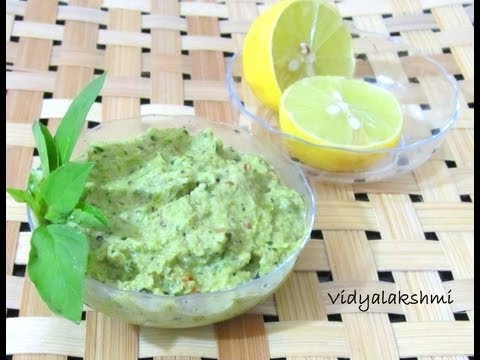
    tulsi chutney


    Medicinal value-


    Not only from the religious point of view but from a medicinal perspective also, tulsi has endless medicinal values and these are –


    1.  Swine flu– wonder herb tulsi not only keeps this dreaded swine flu away but also helps in fast recovery from it. Tulsi improves the body’s overall defense mechanism including its ability to fight viral diseases. It was successfully used in combating Japanese encephalitis. The juice of tulsi leaves, should be consumed twice a day with empty stomach as it reduces the chances of swine flu returning.


    1.   Cough– tulsi is one of the basic ingredient of almost all the Ayurvedic cough syrups                                                                                               and helps mobilize mucus in bronchitis and asthma.

    images

    1.   Eye disorders– tulsi juice is an effective remedy for sore eyes and night blindness   caused by lack of vitamin A.


    1.   Tooth disorders– tulsi is good for maintaining dental health and is an excellent mouth freshener and oral disinfectant as it destroys germs and bacteria found in mouth.


    1.   Radiation poisoning and cataracts– tulsi gives promising protection from radiation poisoning and cataracts.


    1.   Fever– during rainy season, when dengue and malaria fever prevail, tender leaves of tulsi, boiled with tea, acts to prevent these diseases. In case of acute fever, a decoction of the leaves boiled with powdered cardamom in approximately half-a-liter water, mixed with sugar and milk brings down the body temperature significantly. This should be repeated after every two or three hours.


    1.   Headaches– tulsi is used as an effective medicine for headaches. A decoction of the leaves twice a day can help get rid of headaches.

    images (2)

    1.   Respiratory disorders– the herb, tulsi is useful in treatment of respiratory system disorders. Tulsi leaves boiled in half-a-liter water, till half amount of water is left, added with ginger and honey is an effective remedy for asthma, bronchitis, influenza, cough and cold. This can also be given with cloves and common salt, to get immediate relief.


    Home remedies with tulsi-


    Tulsi strengthens the body to fight diseases caused by the deficiency of vitamin A and C. It also has the potential to cure feminine diseases.


    1.  In case of sore throat, boil tulsi leaves with water and drink twice a day. This water can be used to gargle.
    2.  Tulsi juice and honey are effective in curing hiccups.
    3.  Tulsi leaves provide relief in ear pain and infection. Put a few drops of tulsi leaves into the ear for relief.
    4.  To get relief from pain due to burns, apply tulsi juice mixed with equal amounts of coconut oil.
    5.  To get quick relief from itching, apply tulsi juice mixed with lemon on the affected portion.
    6.  Eating a few leaves of tulsi improves digestion, relieves acidity and gastric trouble.
    7.  Tulsi leaves boiled with water, and then cooled can be applied on acne-affected area and eliminates pimples.
    8.  A few leaves of tulsi chewed can cure ulcers and infections in mouth.
    9.  To cure malaria, take 5-6 leaves of tulsi with black pepper powder twice a day.
    10.  Using the powder of dry tulsi leaves, and brushing teeth with this powder can keep healthy gums and prevent bad breath.
  • Coffee Mania!

    Coffee Mania!

    You get up in the morning and you have it. You come home tired after a day of grueling work and you have it. You want to take a break to rejuvenate and satiate yourself and you have it. Well, you may be wondering by now what this ‘it’ is. It is a very simple thing actually. A cup of steaming coffee!

    cupofcoffee
    Coffee is a brewed beverage prepared from the roasted or baked seeds of several species of an evergreen shrub of the genus Coffea. Coffee plants are nowadays cultivated in more than 70 countries which are primarily in the equatorial region namely the continents of Latin America, Southeast Asia, and Africa. In case of India, the best quality coffee plantations can be found in the regions of Kunnor Valley located in the Nilgiri Hills.

    CoffeeBeans
    Have it hot or have it cold, pour milk into or have it without, add a dash of cream or not, take sugar with it or simply don’t – there are ample choices when it comes to sipping on this refreshing beverage. Coffee-lovers can partake of coffee in various ways. Here are some of the more popular ones:

    (1) Espresso:

    espresso

    Espresso is a concentrated coffee beverage. It is brewed by forcing a very small amount of nearly boiling water which is about 86 to 95 °C (that is, 187 to 203 °F) under high pressure through finely ground coffee beans. Espresso often has a thicker consistency than the coffee brewed by other methods. The flavours and chemicals in a typical cup of espresso coffee are much more concentrated. Espresso often serves as the base for other coffee drinks such as a latte, cappuccino, macchiato, mocha, or americano. The usual serving size is much smaller in case of this particular beverage. But be very careful while you have this drink for a little bit too much and you will be sharing the lifestyle of certain night owls!


    (2) Cappuccino:

    Cappuccino

    This comes next in the line of popularity when it comes to coffee. Cappuccino is a coffee-based drink prepared with the help of espresso, hot milk, and steamed milk foam. A cappuccino usually exceeds the height of the cup it is served in. The foam is thus, visible above the side of the cup. A cappuccino is traditionally served in a Chinese porcelain cup which has far better heat retention characteristics than glass or paper. It also enhances the aesthetic beauty of this simple drink. The foam on top of the cappuccino acts as an insulator and helps retain the heat of the liquid which allows it to stay hot for a longer period of time.


    (3) Latte:

    Latte

    A latte is a type of coffee beverage which has portions of both espresso and hot steamed milk. They are generally mixed in the beverage in a ratio of 1:3 to 1:5 espresso to milk. A latte always has a little foam on the top which acts a good insulator as well as makes the drink look extremely inviting. This beverage is very much similar to the Portuguese galão. It is immensely popular among the mass in the regions adjoining Portugal, Turkey and Spain.


    (4) Mocha:

    Mocha

    A mocha is almost identical to a latte except in the way it is garnished and for one special ingredient namely, chocolate. Mocha is usually prepared in the ratio of one third of espresso along with two thirds of steamed milk. However, a special portion of chocolate is added as garnishing later in the form of hot chocolate syrup. Some top chefs even add chocolate shavings and chips as an innovation. Mochas can contain either dark or milk chocolate. But in the current age of industrialization, other coffee vending systems across the world are designed in such a manner that they use instant chocolate powder as a ready alternative instead of the traditional chocolate syrup to marginalize profits.


    (5) Indian Filter Coffee:

    Coffee remains an integral part of South Indian culture in Asia. Whether it is a wedding ceremony or an occasion to entertain your house guests, coffee is an essential item on the menu. South Indian Coffee also known as Mysore Filter Coffee or ‘Kaapi’ (the South Indian phonetic rendering of “coffee’’) is a sweet milky form of coffee which is made from dark roasted coffee beans (70%–80%) and chicory (20%–30%). It is especially popular in the five southern states of India -Andhra Pradesh, Telengena, Karnataka, Kerala and Tamil Nadu. It is traditionally served in broad-based and goblet-shaped stainless steel glasses.

    (6) Instant Coffee:

    Instantcoffee

    Instant coffee is the most popular choice of coffee drink in today’s fast-paced life. Instant coffee is a beverage which is prepared from brewed coffee beans. Through various manufacturing processes, the coffee is dehydrated into the form of powder or fine granules. These can be rehydrated when steaming hot water is added to the mixture in order to provide a drink which is almost similar (though not identical) to the conventional cup of coffee. Some popular brands of instant coffee include Nescafe, Bru, Mr. Brown Coffee, Folgers, etc. This is the most popular type of coffee in terms of preparation and efficiency for the globetrotters or even people on the move 24×7. Thus, it truly lives up to its name.


    However, too much of a good thing is never beneficial. Thus, before signing off, let me caution you about the few health hazards excessive coffee consumption may give rise to. It might cause insomnia or heart ailments among some. But that is no major reason for you to get alarmed or panic. So, what are you waiting for? You now have all the necessary information which you require to make your decision regarding the type of coffee you would like to enjoy. Sit back, relax and simply enjoy your choice of hot (or cold) cup of coffee!