Category: Vegan

  • Chokhi Dhaani: A Treat for all your Senses!

    Chokhi Dhaani: A Treat for all your Senses!

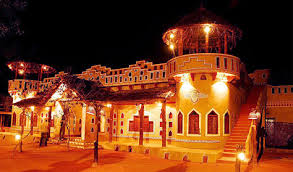
    Rajasthan, India’s biggest state in terms of land area that is spread over 132,139 square miles is a hub for ancient cultures and beautiful civilizations. The ‘land of Kings’ as the name suggests, was once home to the worlds’ first and most ancient human civilization, Indus Valley Civilization. Owing to its rich culture and extravagant history, Rajasthan is one of the finest seats of  both ancient and emerging cultures. The capital of this western state of India, Jaipur is a perfect example of how urban civilization can co-exist with age-old traditions, cultures and settlements. In this city lies an establishment that embodies the exact essence and individuality of the state. Chokhi Dhaani is a resort cum recreational centre that reflects the cultural, social and economic realities of the state from the ancient as well as modern times. Chokhi Dhaani is a concept that captures the vibrancy of Rajasthani culture in its truest sense. It hence has to offer to the inbound and native tourists the different facets and components of the western states’ heritage in its’ pristine semblance.
    download (5)

    Chokhi Dhaani directly translates into ‘ Special or good village’ and with the ambiance it boasts of, it makes one experience rural Rajasthan in its’ unadulterated form. Although it is located at a little distance from the actual city of Jaipur, it is well connected and easily accessible. Located around 20 kilometres away from Jaipur on the Tonk Road, one can reach here easily using ones’ own private conveyance or by a taxi. A taxi might cost you a bit around 600 Indian Rupees, inclusive of waiting charges. For an evening out in Chokhi Dhaani along with an exquisite Rajasthani meal, it shall cost you around 650  Indian rupees for an adult and around 400 for kids aged between 3 to 9 years of age (or of height up to 3.5 feet) . Without the meal it costs up to 450 rupees for an adult and 350 for the kids. The prices may vary a bit according to the time and season of visit. Chokhi Dhaani even has rooms for those of you who intend to put up here for your entire trip to Jaipur.  For those who intend to stay in the resorts within Chokhi Dhaani, there are buffet meals which may cost you around a thousand bucks for adults and 650 bucks for children. With food to die for, you shall not regret spending the amount of money here. The village is open for visitors from 5 in the evening to 11 in the night.
    download (3)

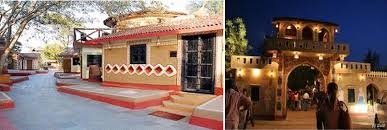
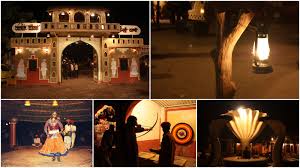
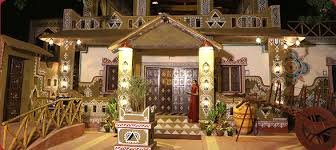
    With a huge wall with the appearance of the rustic mud walls as those that exist in the rural huts and structures in the desert region of Rajasthan and a beautiful wooden door open to welcome you, this place pleases ones’ eyes at the very first sight. Once you step in, you have men and women clad in aboriginal Rajasthani clothes and costumes ready to welcome you with open arms,  smiles on their faces and warmth in their hearts . These men adorning traditional Rajasthani attire and colourful turbans tied in the accurate fashion welcome you with ‘tikas’ or red vermilion on the forehead. After paying the required amount for entering, you can step into this world of wonder. There are little hut-like structures with thatched sloping roofs that are scattered around. You may find people greeting you in the traditional Rajasthani way and offering you an amazing variety of services. From a plethora of activities around you could witness a puppet show with narrations, a magic show, a snake charmer making snakes dance to his tune or even local dances by women dressed in colourful costumes. The dancers might even rope you in and the music and beats played on the indigenous drums and other musical instruments will tempt you enough to keep dancing to the tunes till you are drained out of energy. If you are too tired from walking around, there are sheds that give away refreshing summer drinks for free. Be it the delectable ‘aam panna’ or the tangy ‘jaljeera’, ones’ thirst for these Indian drinks never ends. Women can get their hands and feet decorated and tainted with henna for minimal charges. There are slides and other joy rides for the children as well. You may even get your future predicted by an astrologer, tarot card reader and a palmist that sit there every evening. Visitors also have an option of  enjoying rides on animals like camels, elephants or horses on a fixed route around the entire place. It is a great experience for those who have never been to rural areas of the Indian states and yet want to experience the little details of the life there.
    images

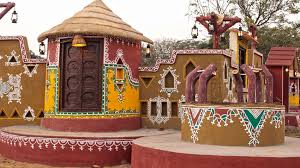
    A maze made of mud walls and a cluster of mud huts resembling the ones’ in an actual village complete the rustic setting of the place, thus lending it authenticity. You can even find life-sized models of men and women, made of clay to complete the scenery of rural households. With facilities for people to try smoking from the traditional ‘hookah’ , it can provide you with yet another point to note down in your list. There is also a man-made canal which permits boating and thus can be a good way to relax after roaming around.
    download (1)

    An artificial tunnel that has been made to look like a haunted place leads into an open space whee there are groups of people dressed as people from the indigenous tribes. They seem to be friendly and one can easily interact with them and can even dance if he/she wishes to. There are shops and counters where one can buy a wide variety of articles, native handicraft products or just souvenirs for friends and family. Products ranging from puppets, key rings,  stationary, shawls and turbans, other clothing items or even plastic and mud toys; one can find them all here. There are counters for games like archery, dart games and many others, where if lucky, you can even win small rewards!
    download (4) images (1)

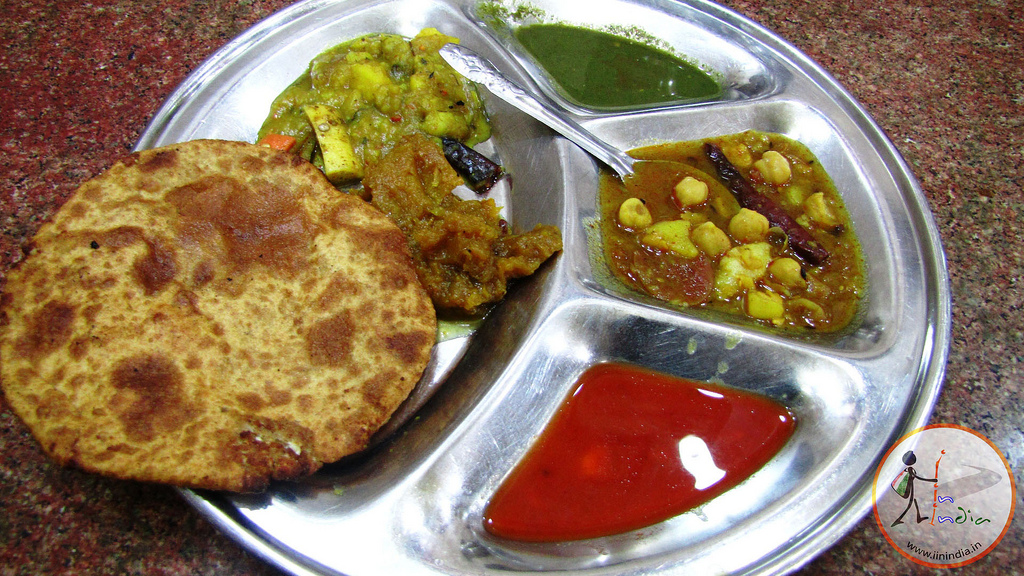
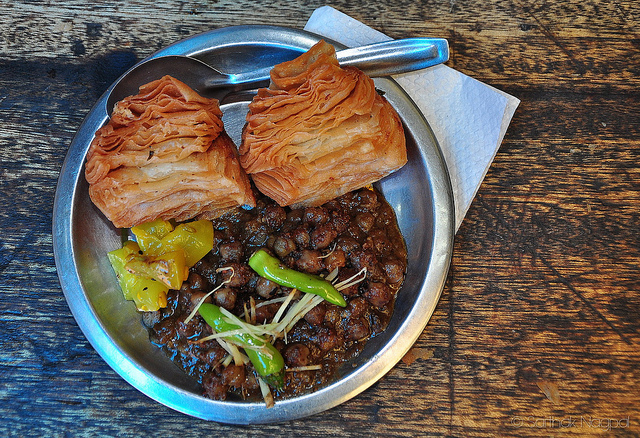
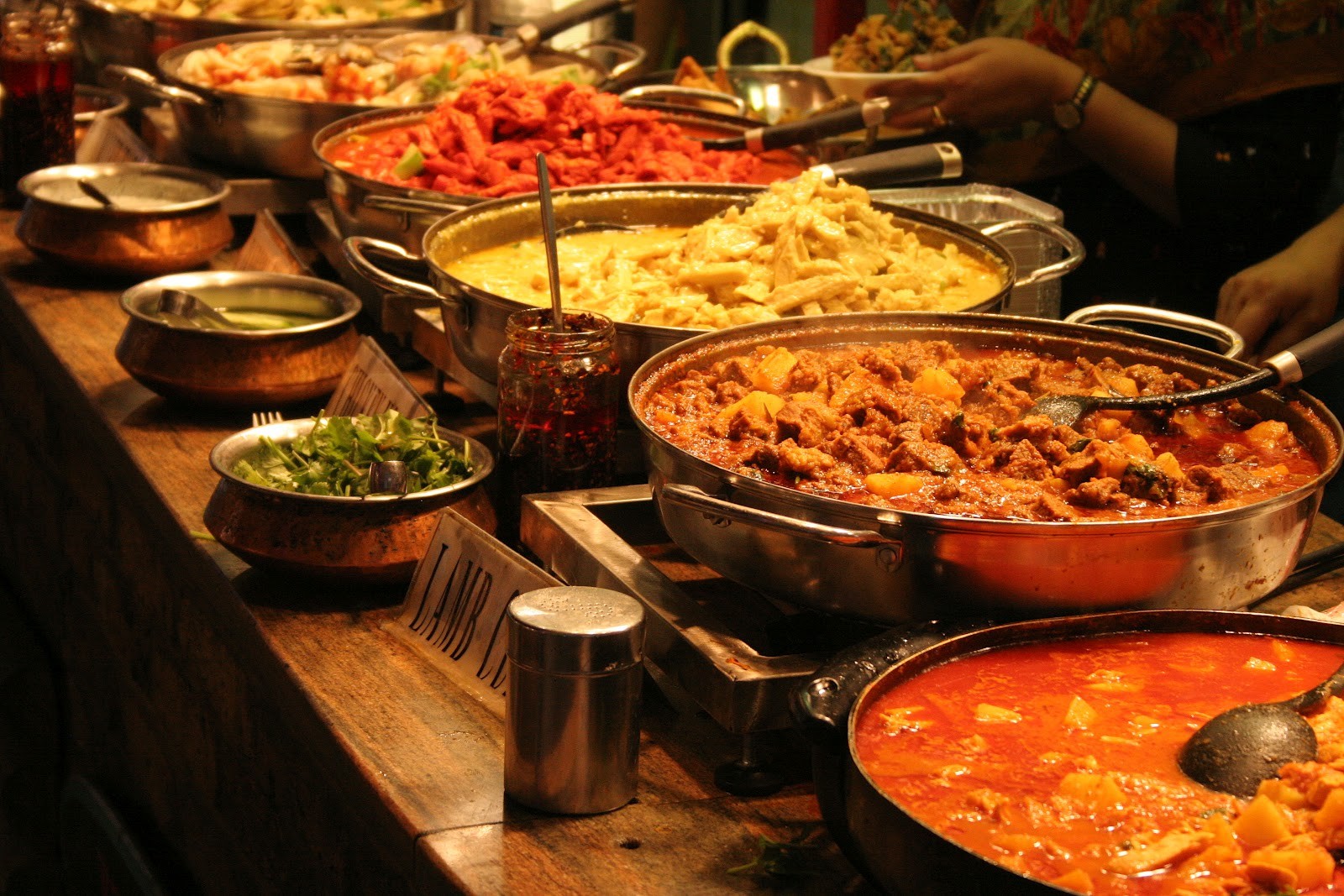
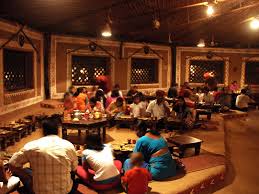
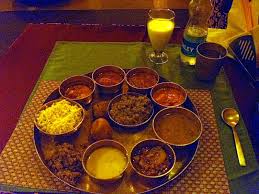
    The best part is the dining place where one gets to sit in a rural Rajasthani setting  and enjoy unlimited servings of authentic pure vegetarian food from the state. Be it a variety of breads, spicy chutneys, delicious sides and curries or the refreshing ‘chaanchh’; one can never have enough of the food served here. One has the options of sitting in either an AC hall or a non-AC dining space.  Once you’re done with the meal, make sure you thank the ones’ who served you. They definitely will appreciate your acknowledgement.
    download (2)

    An evening spent here will be an outing that is worth your time and money. Make sure this place features on your itinerary for the next Jaipur trip that you plan.

  • While Dieting,You Eat!!

    While Dieting,You Eat!!

    hero_pdt_value_au

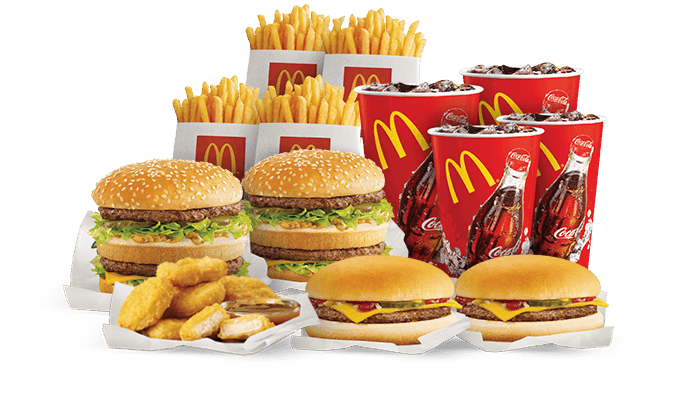
    With the spurt in the number of Mcdonalds and Dominoz all around the country, seldom it is that we find kids and adults alike whom we can term as perfect specimens of the human anatomy. Cheaper and cheaper burgers and fries combos and the easy accessibility of everything unhealthy is taking this Aryan civilization faster to its unhealthy end than we can possibly imagine.And some who are aware of this gradually surmounting epidemic of obesity turn themselves to starving, or dieting as they more fashionably call it.

    And this is where most of them go wrong. If you out the word dieting on google and search for its meaning, the first result it shows is: Restrict oneself to small amounts in order to lose weight” But this is wrong in its most fundamental sense. Living beings need energy to work, breathe and live. And unlike Jaadu(from Koi Mil Gaya) our energy does not directly come from sunlight.We humans, have to have food in order to survive. So, starving, fasting and skipping meals is out of bounds. What we will do today is, get a new regime started for those who are willing to exchange flab with muscle and diseases with health.

    First of all, forget everything that you ever ate anything and that you had a diet schedule planned. Here, we all start afresh. Just like infants do.

    plan

    Secondly, many might have said or suggested to you; plan your meals ahead of time. Forget it. Because, food can’t be quantified beforehand. Suppose you worked out a little extra today, won’t you need an extra glass of milk to balance the energy that you’ve lost? So, never plan your eating. Eat, whatever your heart wants, but from the list that we decide here for ourselves only. Now we begin by clearing off all the things that are clichéd and everyone tells you about them. You should eat loads of fruit they provide vitamins, drink lots of water: gives you roughage, gorge on soups: healthy for your body and all that. But doesn’t everybody know this list by heart by now? So, we come down to those Indian dishes that you can prepare in your kitchen while hunger strikes. Let’s start with dinner.

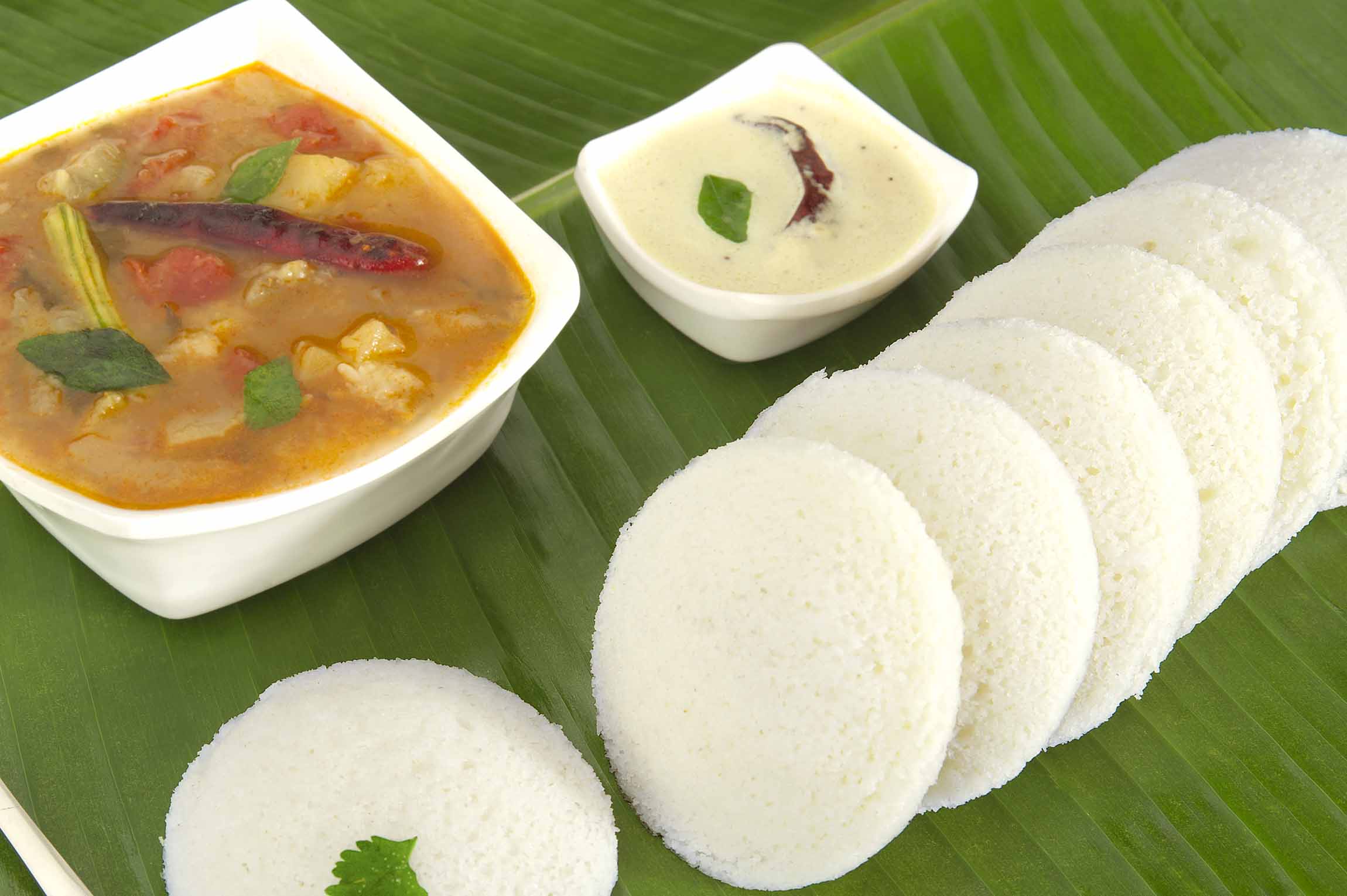
    Idli Sambhar:

    idli

    A blast for the tongue from the South of India and easy on your belly too. This dish makes it to the top of our list of the Indian foods for dieters. Each idli contains just 39 calories, which is a minimal amount in comparison to a healthy 2,000-calorie daily diet. . Idlis contain no fat, no saturated fat and no cholesterol. Consuming less than 16 grams of saturated fat and 300 milligrams of cholesterol lessens your risk of cardiovascular disease and stroke.

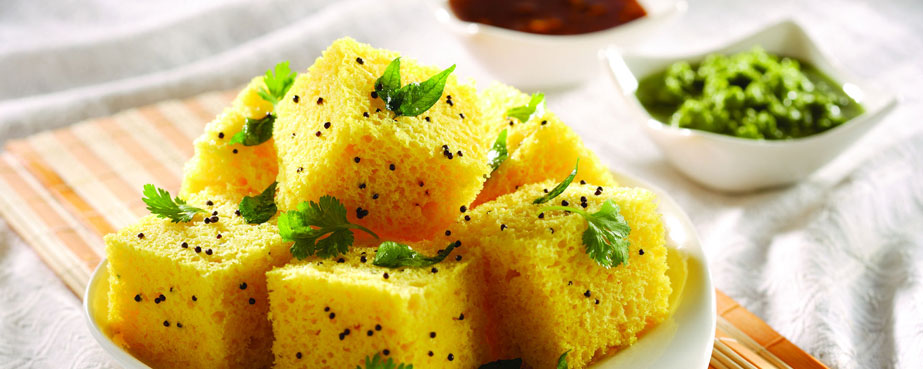
    DHOKLA:

    dhokla

    Going in the reverse order from dinner to breakfast, its time for your evening snack. And what better than dhokla to freshen you up and lighten you at the same time. Yes, it is chiefly made up of Dal and Rice, but don’t cringe as otherwise you would have been gormandizing on chips or samosas for sure. But remember, Dhokla is low in saturated fat, very low in cholesterol, low in sodium, high in dietary fiber and high in vitamin A and C. And for us dieters, low fat is all that matters, right people?

    SPROUTS AND RAITA:

    raita

    To your lunch, let’s start by having some Raita, what say? Now, raita as you all know is made by adding fruits, vegetables or any other thing to beaten yoghurt. And the best part is that one serving includes just 60 calories. To the beaten curd one can add grated bottle gourd or some fruits. But if you are in the mood for some crunch, you can very well add Boondi to it. Boondi, is fried, yes. But a handful of pea sized boondis will do your diet no harm.

    sprouts

    With Raita, you can have sprouts as the main course and feel a bit Pseudo-European. Keep the pulses in water overnight and in the morning add a bit of lemon, some spices, some cucumber and your lunch is ready in a jiffy.
    OATS AND DALIYA:

    Oatmeal

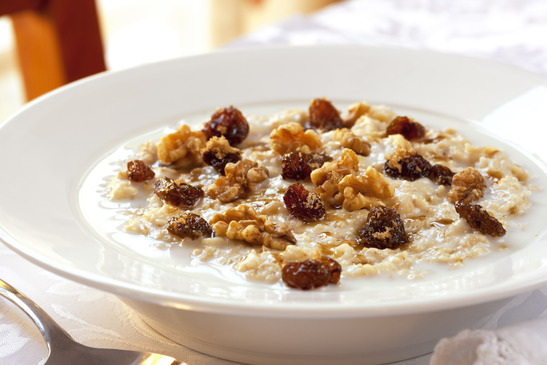
    Now, one thing with which we should agree with the hackneyers is that, breakfast should be heavy. And the dieticians have logic and Science backing them too. According to some studies if we consume more calories at breakfast and very less at dinner, this will help you lose weight quicker because if you eat a larger breakfast it will give a kick start to your metabolism and plus you won’t feel all drained and sleepy in that history class of yours. Plus more calories in the breakfast gives you more time in the day to burn them off. For breakfast why don’t we have something milk based, like oats? Well oats take two minutes to cook and trust me, you won’t be able to eat more than one and half cups of it. And hey, no adding sugar at your mom’s back, OK?

    daliya-b-23-6-2012

    Other than oats, you can also have Daliya in the morning. Daliya or Bulgur wheat in Angrezi, is a very light and healthy option for breakfast. Daliya is an excellent source of fiber that keeps you feeling full and also helps to maintain a healthy digestive system. And just like oats, daliya can be either milk based or oil and vegetable based. Now, a little oil isn’t harmful for your body and don’t cringe if once in a blue moon you are fed up of having only milk based diet for your mornings. So, here we are with a very basic diet plan for you to follow and with just one mantra at the end. Never starve yourself, Never. You need food to live. So, just give it a healthy twist and keep eating ( or dieting, whatever you like to call it! ).

  • The Sweeter Cravings

    The Sweeter Cravings

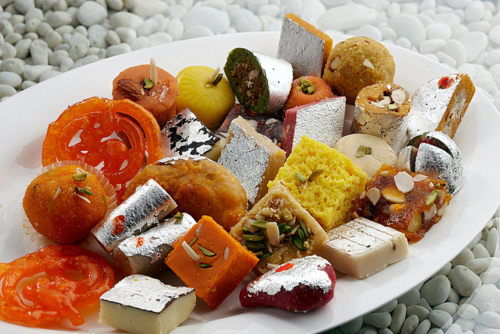
    Have you ever given a thought to one elusive and relatively unimportant question? Don’t you think that Indian sweet dishes differ hugely and vastly from those around the world? While the entire world enjoys cheese cakes and apple tars and chocolate pastries; here at home we enjoy Moti choor ke Laddoos, Sooji ka Halwa, Kheer and Jalebis. I, for one have never seen any foreign sweet dishes similar to what magic our Indian sweets offer. They are crude in shapes and relatively uncreative as compared to their Indian counterparts. We have spiral shaped jalebis, spherical shaped Gulab Jamuns, diamond cut Kaju Katlis and the eternally loveable square shaped barfis. Even the shapes of our sweet dishes offer more varieties than the entire world’s sweets all together. So, let’s explore a few tonight.

    Gulab Jamuns:

    recipe_of_gulab-jamun

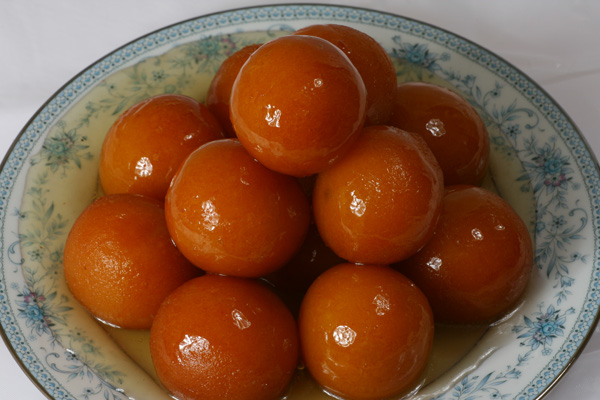
    The epitome of sweetness and the harbinger of merry occasions, Gulab Jamuns is one of the most royal sweet dishes Indians offer. This is one dish which most often decorates the dessert counter sof Indian Marriages. Eaten warm, soft and dipped in slurpy sugar syrup, this sweet dish is enjoyed by kids and adults alike. To the uninitiated, Gulab jamuns are milk solids based spherical dumplings traditionally made with thickened or reduced milk and savored in rose flavored sugar syrup. Gulab Jamun is brownish red in color and it inherits the color because of the sugar content in the milk powder or khoya. When the dumplings are fried the sugar caramelization gives it its dark color. Traditionalists eat it when hot and in singular proportions while experimentalists usually add a dollop of ice cream atop of the gulab jamun which gives two solely different flavors to the dish and mingles the warmth and the coolness of both the ingredients.

    Jalebi:

    jalebi

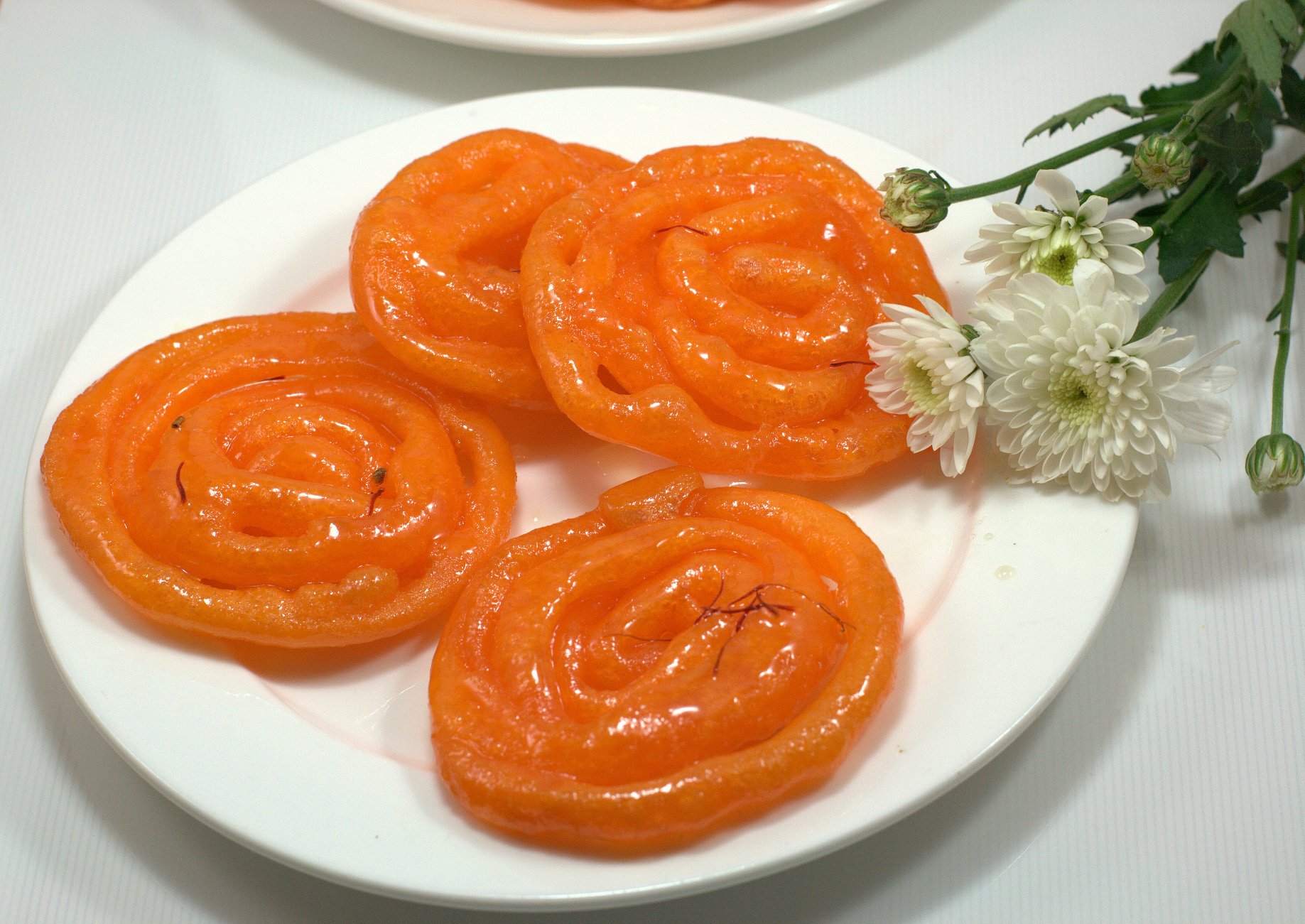
    Again, a traditional fried sweet dish which enjoys the honor of being served in most of the marriage ceremonies. Jalebis are orange in color and are enjoyed best while warm. Jalebis have a chewy texture with a crystallized sugary exterior coating. This dish derives its roots from Iran where it is known as Zulbia and was traditionally given to the poor during Ramadan. It is made by deep frying white four in spiral shapes which are then soaked in sugar syrup. These are one of the highest selling sweet dishes in the local markets during chilly winters.

    Kaju Katli:

    kaju

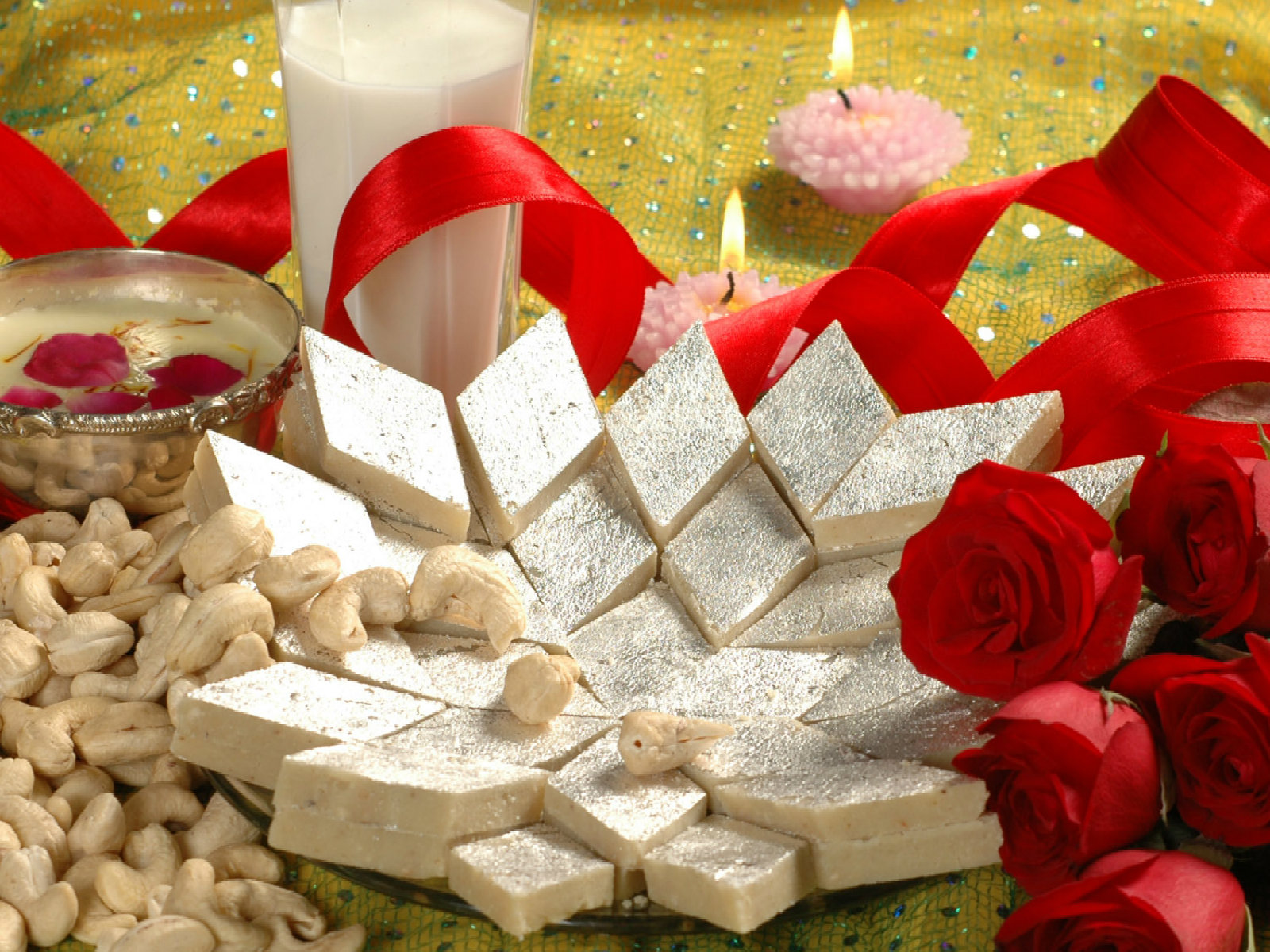
    Well, kaju literally means cashew nut and this sweet dish is based on these nuts. The batter or barfi is made by thickening milk with sugar and dry fruits. It is then spread in a flat, shallow dish and cut into desired sizes and shapes. Kaju Katli is often seen as diamond shaped quadrilaterals and comes in expensive at Rs. 500 a Kg. This sweet dish is generally given to friends and family members during Diwali celebrations as a mark of celebration. This dish has what the English call, gravitas. The thickened milk attributes to the dish by giving it a melting base. Melting, because as the barfi slides along the contour of your tongue, it starts melting and bursting into flavors. But the barfi’s card of aces is the cashew ingredient which makes it different from all the other barfis in town.

    Rasgulla:

    Rasgulla_recipe

    Many kids and uninitiated people muddle Gulab Jamun and Rasgulla with one another. This because Rasgullais the light shaded, spongier cousin of the gulab jamun. Rasgulla is similar in shape to Gulab Jamun and is cooked in sugar syrup, just like the latter. West Bengal on the other hand gave the world a newer sweet dish (similar to rasgulla) called Roshogulla which is lighter than the original and is dipped in lighter sugar syrup. Rasgulla is made up of ball shaped dumplings of Chenna( Indian cottage cheese) and semolina dough. Rasgulla is eaten cold and is refreshing and has an unbridling effect on its consumers. That is, its consumers will never be satisfied with just one. The Rasgulla originated in the present day Odisha as Khirmohana. Traditionally it is offered as a special offering to Goddess Lakshmi a day after the famous Rath Yatra at Jagannath Temple at Puri. The most popular variety of the Rasgulla is the lighter, spongy white variety. Roshogulla is a less perishable item and can often be found in canned tetra boxes. This availability of the canned variety led to this sweet dish’s popularity outside of Kolkata where it was born. A quirky fact about Roshogullas fame is that the Indian Space Research Organization (ISRO) is developing dehydrated roshogullas for Indian astronauts in its planned mission in 2016.

    Laddoo:

    Ladoo-indian-sweets-24568533-300-198

    Laddoo also brings in delightful memories with itself as there is seldom a person in this country who was not treated laddoos to, while in his/her childhood. Laddoo again are ball-shaped sweets popular in India. These are made of flour, minced dough and loads of sugar with other ingredients that vary by recipe. They are often served at festive or religious occasions. There are a variety of laddoos available in India and all of them use a different flours  like Besan ke Laddoos use chickpea flour as the base and coconut as the garnish. These are combined with sugar and ghee and molded in ball shapes. These delicacies are often decorated with silver foil and almond chips. Laddoo is often given at temples as a Prasad especially at Tirupati Venkateshwar Temple, Andhra Pradesh.  Quirky fact: A Laddoo weighing 6,300 kg was made for the Indian God Ganesh in Andhra Pradesh in September 2012.

    Thus these were quite a few of the exemplary unique dessert’s that India as a cultural hub enjoys. While the list is never ending these are the ones which are the most famous or the most loved.

  • What makes Delhi, Dilli – 2

    What makes Delhi, Dilli – 2

    In the last tour de Delhi, we hopped onto some of the binges of Delhi, how the love affair of the nation started with Delhi, the great repertoire of Architectural marvels in Delhi and a touched the tip of the iceberg as to what makes you melt with love, when you hear the word Delhi. Today, we explore more.

    The Bedmi and Nagori:

    be

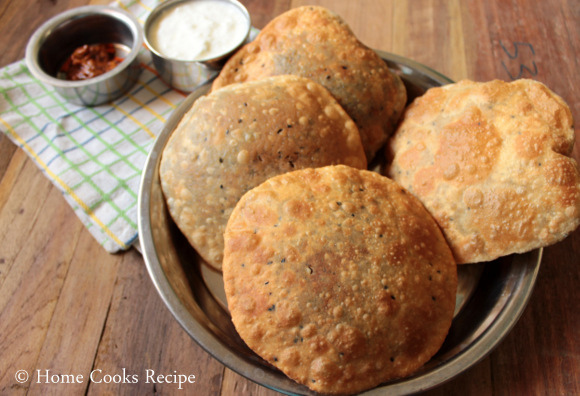
    One relatively less known delicacy but nevertheless enjoyed to its zenith by the  few loyal customers, the bedmi is a variety of Khasta Kachori smaller in size and more khasta by all means. This is what one could call the Kachori’s  younger cousin. Filled in the epicentre with Semolina, carom seeds and grated peas, this delicacy melts in your mouth. Served along with our beloved aloo ki sabzi and halwa, you might have an oddity treat and might as well try mixing the two side dishes (The halwa and the aloo ki sabzi). This queer combination will make you reminiscent of the sweet and sour soup gone terribly wrong, but it’s a taste nevertheless. The Nagori is the youngest of the brood of Kachoris and more closely resembles the papadi that you get at a chaat stall. This also served along with aloo ki sabzi and halwa will give you plentiful of energy (And not to mention a truckload of calories) to roam the rest of Chandni Chowk with me.

    The Punjabi Diaspora:

    bangla

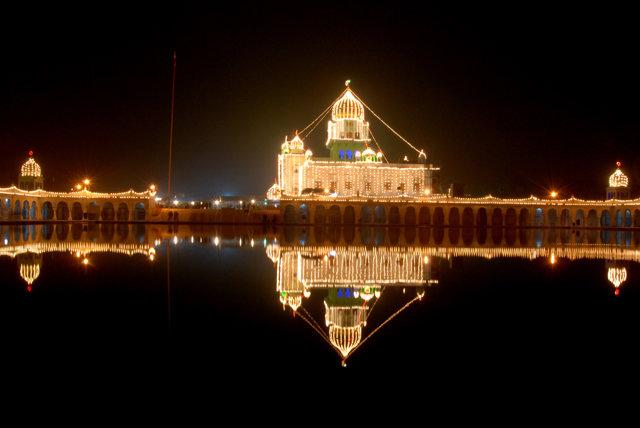
    Delhi is borderline Punjab. Geographically and literally. Once you enter Delhi, you’ll see an equal number of turbans as you will see bare heads. That because, there was a huge exodus from the Punjab region during Delhi’s early industrialization days and also during the Punjab conflict periods. Thus there’s a mini Punjab residing in Delhi. And with their amazing good humor and tantalizing cuisines come along the mighty and revered Gurudwaras. Gurudwaras are the worship place for Sikhs. Here Sikhs spend quite a lot of time serving other people as they faithfully believe in the quote “ Service to mankind is Service to God.” There are a plenty of Gurudwaras in and around Delhi and the best part of visiting them is the tasteful  ‘Langar’.  Langar is the lunch that is served in Gurudwaras to everyone who visits them. Large langars are organized where people sit on elongated jute mats on the floor and eat out of leaf plates. The langar, anywhere, in any gurudwara is something to be DEFINITELY had if you ever get the lucky chance to visit Delhi. Daal is a must in every Langar. Along with it Halwa, aloo ki sabzi and poori make your lunch hearty and eventful. There are two large Gurudwaras in Delhi to which people flog on from places far and beyond. These are The SeesGanj Sahib and The Bangla Sahib. Both are lakes of tranquillity and you will feel emancipated from all your worries and ill humoured feelings, once you enter the complex. Visit these if you are looking for serenity and a meal full of love and affection.

    Kareem’s and Khan Chacha:

    Chicken = Kareem’s.              Kareem’s = Chicken.

    Chicken = Khan Chacha.     Khan Chacha = Chicken.

                         Kareem’s = Chicken = Khan Chacha.


    tn_6284_khan1-1374305008

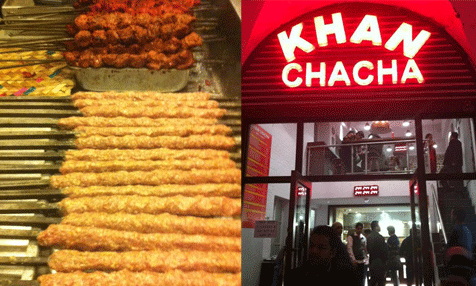
    One’s trip to Delhi will be wasteful, if he goes to Delhi but does not visit any of the above mentioned place. Both these places have been established in Delhi for the last 100 years or so and have been constantly providing the people of Delhi with an indispensable service ever since. The service of good food. Or more specifically, the service of Great Chicken. Khan Chacha and Kareem’s both are known for their Mughal style Chicken which they both offer in Chandni Chowk. The shop is tiny but the crowd of buyers: mammoth. Both of them provide exceptional Tandoori Chicken and Kebabs. Their extraordinary skills lie in providing with dry chicken variety. They specialize in Seekh kebab, Shammi kebab, mutton burra kebab, mutton stew and the rann (goat’s leg). These leave you with the exact smoky flavour that should be left after having a tandoori meal and also bestows upon you the feel of the grill.

    Connaught Place:

    cp-650_081714012910

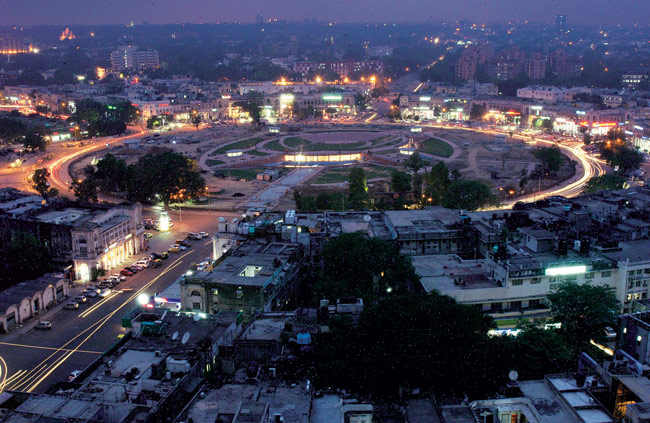
    What makes Delhi, Dilli you ask. One of the reasons of Delhi’s uniqueness is Connaught Place. Two British Built market places in circular shape around a gigantic park in between. Sounds confusing? Well, it is. But in earnest Connaught Place is one stop destination for all the top notch brands anywhere in the world. Until one hasn’t a shop in Connaught Place, he/she is too amateur to go global. A beautiful set of buildings all dressed up in white just like a catholic wife-to-be in circular shape mark the inner circle and the outer circle. A market place to take a stroll ith your friends or go bridal shopping; A day to enjoy Delhi in one glance and a hurried shopping session; everything happens at Connaught Place.

    ‘THE’ Palika Bazaar:

    pal

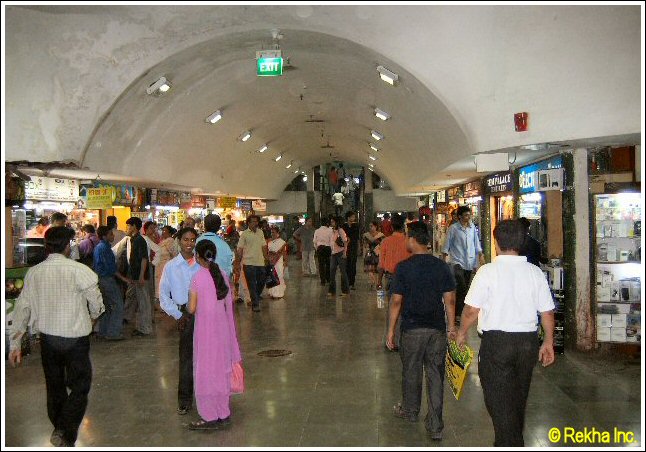
    Ever heard of an underground market place? Palika is one. No, it is not underground as in illegal, it is underground as in, it is literally 400 bunch of shops UNDER-the –GROUND. Remember how the Connought Place is circled around a gigantic park? Well this is a market place under that gigantic park. Palika is every women’s dream destination. Because you get the best of fashion labels at throw away prices. Loads of accessories, clothing, body tattoo shops throng the Palika. Men, don’t be disappointed. There’s something for you too, down there. Palika has men’s fashion outlets too, but more amazingly it has an entire bunch of shops that sell cheap China built Electronics gadgetry. So, next time you want a pen camera or a big grizzly transforming car, you can always go to the underground market.

    So, we made a tiny bit of progress in learning about Delhi. But don’t get tired yet, there’s more of Delhi to come.. Stay tuned.

  • What makes Delhi, Dilli…

    What makes Delhi, Dilli…

    A very long time ago when the heart of our nation was not famous for its countless rapes, an absent Government and Mufflerman; there was actually a city and a world inside that city that everybody loved. What made Delhi earn the jealousy of other metropolitan cities in the country, what is it that made Delhi stand shoulder to shoulder with Mumbai, the economic capital of India. Why is it that, people who have ever stayed in Delhi leave it with a heavy heart and tell everyone else that they can’t understand the emotions attached with the city if they have never ever lived in the city. Let’s find out!

    The Beginning of the Real Delhi:

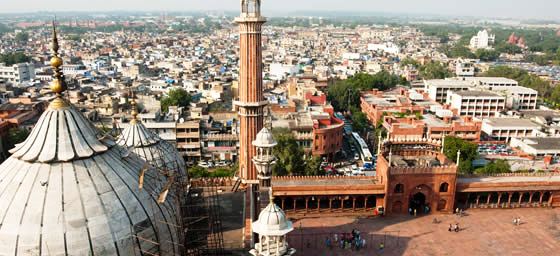
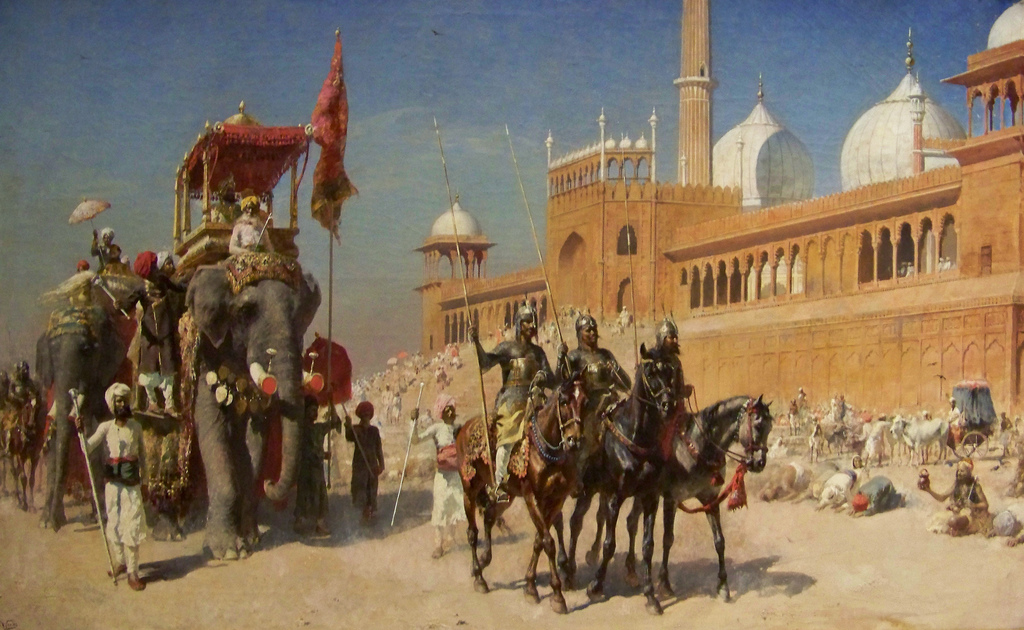
    Great_Mogul_And_His_Court_Returning_From_The_Great_Mosque_At_Delhi_India_-_Oil_Painting_by_American_Artist_Edwin_Lord_Weeks Now, the love for Delhi started long back when the Mughals transferred the Capital of India from Agra to Delhi. This is when the real on-ground transformations started taking place in Delhi. Before this move, people were as oblivious of Delhi as they were of any village in India. Firstly, with the onset of Mughals came along great Architectural Feats. For example Delhi boasts of the largest Brick Minaret in the world the Qutub Minar (well, it was built by Qutubbudin Aibek), it flaunts one of the largest mausoleums in India – The Jama Masjid, It carries reticence with its Old Fort. Also the Red Fort that instills in us a feeling of patriotism whenever we see it on our TV sets. All these Architectural marvels brought a Mughal charm to this city of ours and elevated it above its neighboring cities.

    Dilli and the finger licking tales:

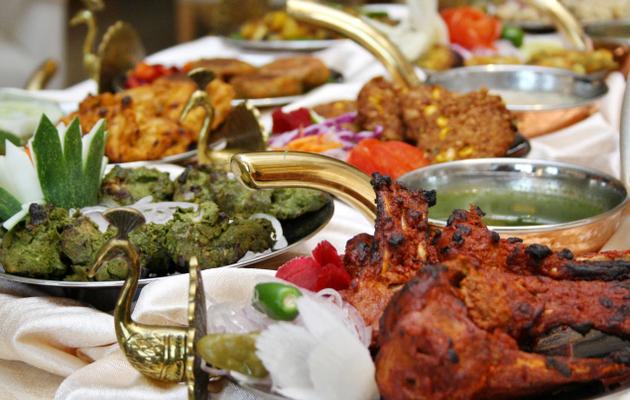
    AWADHI_FOOD_FESTIVA_898557g Along with the great architectural skill set of the Mughals arrived in Delhi their eternally pristine culinary taste. Their food was not just food, but Art on Stove. The Tandoori murg, The kadhai paneer, the Nihari,the  Paya, the Kachri Qeema, the Delhi-mein-world-famous-Mughlai Chicken, their biryani style and countless others set the tongues of the native Delhiites wagging. Not only did their cuisine establish itself in Delhi, it even grew there. More and more dishes were invented as an amalgamation of Delhi and Mughlai cuisines. This was a great culinary juxtaposition just waiting to happen. Seemed like this match was made in heaven. So, the Mughlai cuisine added one more feather to Delhi’s hat.

    Asli Delhi, Purani Dilli:

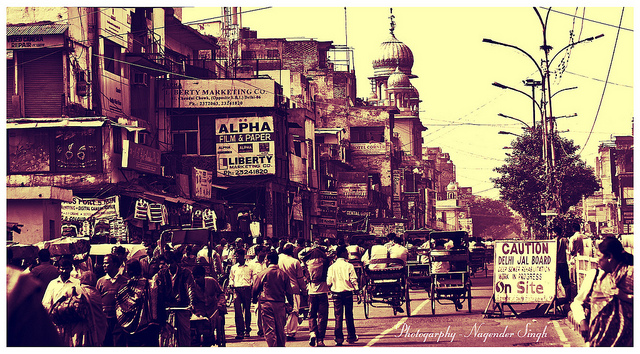
    7717061676_0ba4ab21a8_z Now, the heart of the Heart of the Nation. The Chandni Chowk and Chawri Bazaar area. For those new to the maps of  Delhi, these areas lie in the center of Delhi and still boast of historic architecture. These areas are famous for their super cramped streets, the always bustling crowd and nagging shopkeepers always trying to sell you substandard products. By the names in the list, all these seem to be pretty depressing by the levels of the national capital. But once you visit the place it seems just like your extended neighbourhood. It won’t seem as a market place to you, but a big great family  living in harmony yet tearing each other’s hair out. But there is a lot to watch out for in the Purani Dilli area. Since it is a crowded marketplace, pickpockets are always on the prowl. Also some shopkeepers tend to get too close for comfort levels in order to get their products sold. But every coin has two sides and prefer to see the loved one here please. Purani Dilli broken up and explained in pieces in the next points, because it ain’t so small that it can be contained in one measly point.

    The Paranthewaali gali:

    4950341851_7711ec9fd9_b Now, now, now. Every once in a while a moment comes in every person’s life that can’t be expressed even if you keep squealing with delight for a fortnight. For a foodie that moment would come when he enters the paraanthe waale gali. The lane where our Bollywood Star Akshay Kumar slaved and toiled for many years. The paraanthe waali gali is an even narrower lane than what already was a cramped main road of Chandni Chowk. There are a multitudes of shops there only selling paranthas. But mind you, these are not ordinary paranthas, these are paranthas made of Rabri, Paranthas made of bitter gourd and paranthas made of lady finger and all the odd vegetables and sweets you can ever garner. And these are not made on a pan or a stove, these aranthas are deep fried just like samosas and tikkis are. Your whole perception of paranthas changes after entering this foodie paradise. This narrow lane adds another dimension to your notion of parantha, by doing something with it that was unimaginable before this.

    The Japanese Samosa:

    7745361346_3ba6e884b2_z Well, to be honest, this is just sold in one shop in the entire Chandni chowk. But I swear to God, that you won’t have eaten anything like this before this. This samosa’s shape is more or less like regular samosas but the corn flour covering on the outside is striped. Thus the Japanese samosa is not wholly covered but partially revealing. The inner filling forms the crux of the whole dish. It is not spicy or filled with mashed potatoes for that matter. It is filled with a sweet mixture like that of a halwa. Thus changing the whole thought process around the samosa. By just keeping the name and shape intact, this exquisite dish retain the name value and the ingenuous sweet filling inside and the striped contours give it a modern twist. And thus, the Japanese Sammosa, The tour of the real Delhi has just begun. However, even the most brilliant of writers and esteemed authors would fail in describing the exact charisma and fascination of the city. Such complexly woven is the feel of it. I am just a young scribe who is trying to portray to you an image that tells what exactly Delhi is, if you have have never been there or miss the hell out of that angelic city of yours. To be continued…

  • My experiments with food (And truth too!)

    My experiments with food (And truth too!)

    India truly is one big piece of land. And on this big piece of land you encounter an eclectic mix of geographies  and topologies. And on these array of different  land designs, you come and meet very different people. People who practice different religions, wear very dissimilar clothes and practice varied traditions. And in all these differences lies one major difference, the different of cuisine. Just like we have over 700 gods and deities, I guess we must also have a similar number of different cuisines. But in all those differences they have one similarity. The trait of experimentation.

    No person who calls himself a religious foodie can never withstand a zeal for experimenting with food. Whether it is Milk and coca cola or Raajma with aloo bhujia; the tempt of experimenting is too great to be countered off. Hence we traipse to various parts of the country to look out for some experiments gone successful.

    The Chola Kulcha burger:

    Down the alleys and labyrinthine roads of a little known town in Punjab called Naabha, you will see gazillion of stalls selling this odd delicacy. Most people have had a taste of Chola-Kulcha in their life at some point or the other. This treat is in exactitude, same as the former, but a different form and slight delicious top ups give it the oomph factor that makes it feature in our list here.

    burger

    • Take two kulchas. Warm the boiled cholas and the kulchas.
    • Add a little bit of paneer and boiled mashed potatoes to the chola mix.
    • Now to the warm kulchas, add a dollop of butter and the samosa chutneys. The red one is mandatory, the chili sauce, add according to your taste. Keep the kulchas on the fry pan and add the chola mix in between the two kulchas. Voila! Your Chola Kulcha burger is ready to be savored.

    The Bhujia soup:

    Now, this treat had me baffled at first but left me craving for more later.

    There are places not so famous and not so hip in our country. Guduvanchery in Kancheepuram District (Chennai) is one such place. It is a sleepy village but with a huge local market. And in that market somewhere deep down, you may get lucky and get a chance to savor this orgasmic delight.

    soup

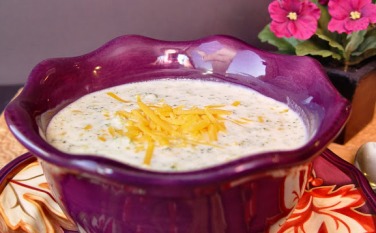
    The ingredients seem simple enough (Some namkeen + Some soup! Done!) But the trick lies not in the ingredients but the way those final ingredients are prepared. Neither the Bhujia is from Haldiram’s nor is the soup made from ready to eat packets. The Namkeens are homemade yet world class. For rookie foodies who try to differentiate between the two it will be in vain. But the oils from the namkeen and the spice mix in them scream homemade from top of their lungs. The namkeens are just not aloo bhujiia or khatta meetha. There’s a spectrum of namkeens of different sizes and different flavors available to choose from.

    But when in Home, do as the homies do. At your home, you can definitely use the knorr ready to eat and the aloo bhujia lying in the cup board waiting for guests to arrive at you home.

    The Samsiya:

    samosa

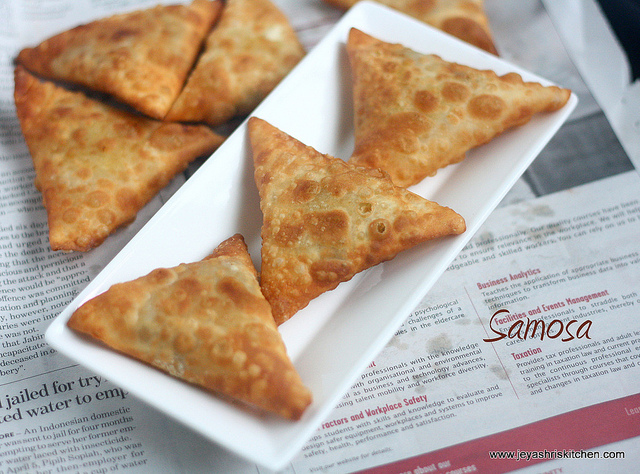
    Yes, the root of the words are the same but these are slightly different foods to be had.  While the samosa is filled with aloo mix, the samsiya is filled with fried onions. And in front of the samsiya, samosas seem gigantic. So, there should be no doubt if you find tiny samosas being sold 4 for Rs. 10 outside the Chennai railway Station. There’s one more wild twist in the tale of samsiya. Along with samsiya, you will never see your traditional imli and chili chutneys. The samsiya is served along with Coconut chutney. Just like idli is, just like vada and dosa are. This gives a good-humored  taste to the dish. Not spicy enough, not tangy enough but yes unique in its own sense.

    The Chola Pani puri:

    poori

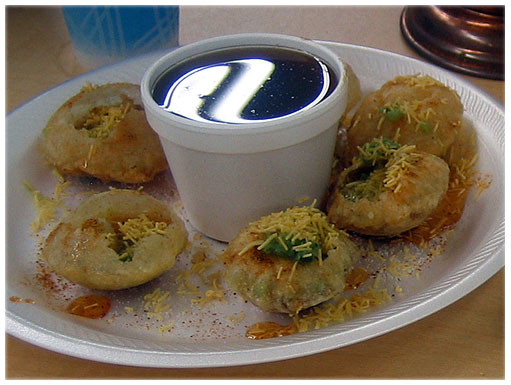
    All of you might have eaten our favorite street food: The pani puri. But you are in for a surprise when you visit a chat stall anywhere south of Maharashtra. While visiting a chaat stall, forget that you have ever eaten pani-puri before. This will be a whole new dish you will taste. Sure, the puri is the same shape as in our north and everywhere but everything else is different. The filling in the puri is not mashed potatoes but hot boiled mattar. You know the green balls that you threw out of your rice as kids, that one.  Also, the filling is not dry, there is thickened water along with the hot mattar. Next, the tangy paani which was as delicious as it was healthy. Want a tip? Forget that paani. Here the paani is devoid of any and every bit of zippy taste that you went to the chaat stalls for. The paani is hot (again) and very straight in taste. Just imagine yourself having a mild soup for the paani. And thus our beloved paani puri becomes, some hot dinner dish making you feel fuller instead of easing up your stomach.

    The vodka Paani puri:

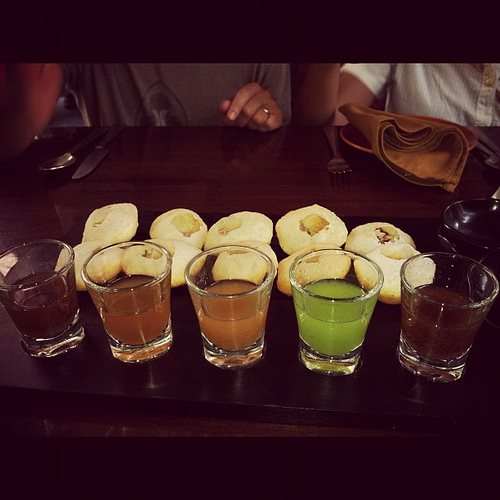
    Are all the liquor fans up yet?  *Sees left to right*  Great!  Now, this experiment is what you expect by its name.  Instead of paani you get vodka shots filled gol gappas.  Now no need for another appetizer huh? This is only offered at ‘Punjabi by nature’, a restaurant chain in the National capital and surrounding areas. The vodkas all come in different flavours, but I am sure you will not want to try out bubble gum flavored vodka with your puri.

    vodka

    So, from all around this great country of ours, we brought you some of the quirky, queer yet magnificently delectable experiments to tease you taste buds with. Try out all or some of these if you are in the neighbourhood, and get your tongue out of its routine. And do write some of your own experiments down in the comments section. Till our next journey around India, keep tasting.

  • Be Careful about your food condiments!

    Be Careful about your food condiments!

    A condiment is a common generic term for any spice, sauce, or any other minor food preparation that is taken with the main course to impart a particular flavour, to enhance the original flavour, or to complement the dish. Although table items like salt, pepper, sugar, pickles, tomato ketchup, and the works are most people’s general idea of condiments, barbeque sauce, teriyaki sauce, soy sauce, and marmite, all of which are used during cooking as well, are also classified under the same. The word condiment is derived from the Latin words condimentum, meaning “spice, seasoning, sauce” and condere, meaning “preserve, pickle, season”.


    1. Tomato ketchup

    The first known recipe of tomato ketchup perhaps was the one published by Sandy Addison in the American cookbook, The Sugar House Book, way back in 1801. However, Jonas Yerks is widely believed by many to have cashed on the saleability of the condiment and made a product originally sold by American farmers in small niche sales, a national phenomenon. Heinz Tomato Ketchup was the first multinational company to sell tomato ketchup on a mass scale, and since their establishment in 1876, have remained one of the bestselling brands of ketchup.

    Chemically speaking, tomato ketchup is a mixture of tomato, onion, garlic, sugar, salt, garam masala, and preservatives like sodium benzoate and acetic acid. While the best way to cook tomato sauce is the original, organic way by making it from fresh tomatoes at home, bottled tomato ketchup is also a safe option. Since canned ketchup hardly contains any fat, it can be consumed by obese and overweight people without any grave health issues cropping up.


    2. Chutney

    Originating in India and other neighbouring countries of South Asia, chutneys are a blended, liquid mixture of spices, herbs, vegetables, and/or fruit. Highly variable and versatile in nature, chutney can be made by any palatable combination of its components. Generally hot because of their high spice content, some chutneys can also be sweet in taste. Traditionally made in village households by grinding raw materials with a mortar and a pestle, and then, as in most cases, cooking the paste in vegetable oil, chutneys nowadays are being produced in tons of cans and leak proof packages, courtesy electric blenders and huge food processors.

    The natural acidic content of most components, as well as the presence of sugar and salt in this condiment serve as natural preservatives. Vinegar can be added as well, both to enhance the taste and the shelf-life of the chutney. With the exception of coconut chutney which has an oil content of around forty percent, people can take chutney in liberal amounts owing to its good nutritive and fibre content. Carrot chutney, curry leaves chutney, and dhania-pudina (coriander-mint) chutney are some of the most popular ones consumed in the country, as well some of the healthiest.


    3. Pickle

    Also known as achaar, pickles form an inseparable part of the cuisine of the Indian subcontinent and other countries of South Asia. Pickles are generally made from handpicked vegetables and fruits, which are then chopped into small pieces and preserved in an immersion of edible vegetable oils like sesame oil, sunflower oil, or any other, along with plenty of salt, and a mixture of different Indian spices, including asafoetida, red chilli powder, turmeric, and fenugreek. In many regions, particularly coastal areas, meat and fish are also made into pickle and produced on a large scale. This particular mixture is then slowly cooked on a low flame or by the natural heat of the sun, of which the latter is usually the preferred, but longer process.

    Pickles are full of natural preservatives and hence discourage the growth of microbes that would otherwise allow this condiment to decompose. People who have been recommended low salt diets or who suffer from high blood pressure problems should not consume pickles, due to their high sodium content. Sometimes, a particular component of pickles can trigger allergic reactions in people. Overweight and obese people can consume pickles as well, as long as they are cooked in vinegar, sodium benzoate, or any other non-oily preserving medium. However, they must be consumed fresh due to their extremely low shelf life.


    4. Jam

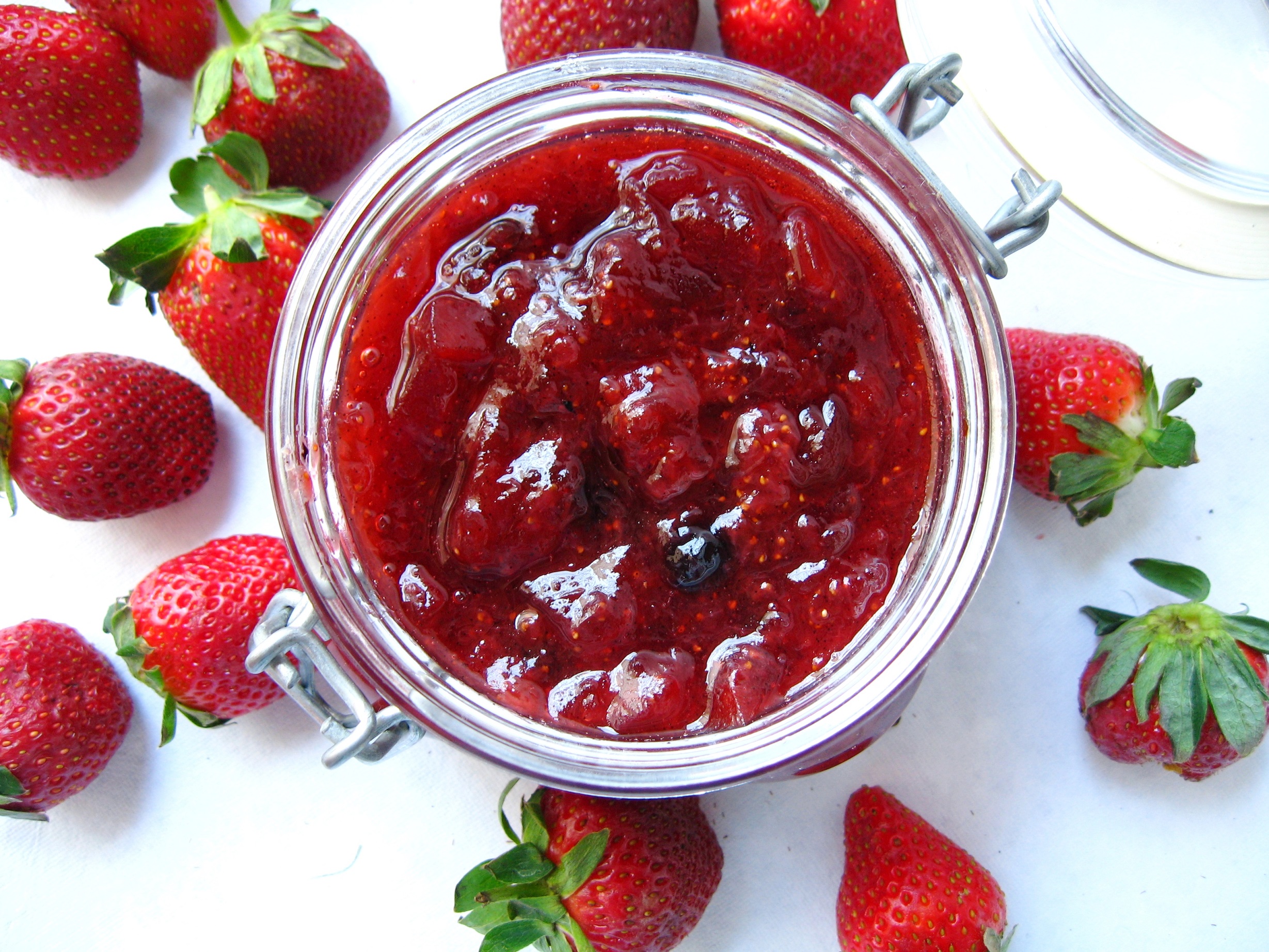
    Available in many flavours and colours, jam typically is a semi-solid suspension of both the juice and flesh of a particular single or a mix of vegetables and fruits, boiled in a sugar solution. Usually called by the popular term fruit preserve in most parts of Europe and America, you can find canned bottles of jam in nearly every grocery store today, with types ranging from apple, squash, strawberry, berries, and mixed fruit. Marmalade is a much loved jam variant and popular breakfast condiment, and it is made from the peel and fruit extracts of citrus fruits such as oranges cooked in a sugar syrup. In India, an ethnic jam type is a much favoured food accompaniment, and consists of entire pieces of fruit cooked in sugar and water and then cooled hereafter.

    Jams offer little other than concentrated energy in the form of sugar. It is a great source of energy for growing children who usually lead active lifestyles and have vigorous, playing sessions on a daily basis. One tablespoon of jam yields minute amounts of dietary fibre in the form of pectin, which is a by-product of the boiling process, and a negligible amount of vitamins. The heat treatment involved in the boiling process incidentally, also greatly reduces the Vitamin C content in jams.


    5. Jelly

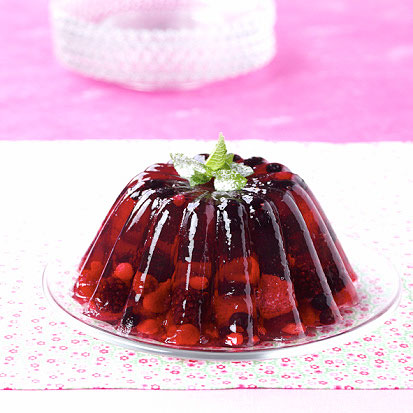
    Generally eaten as dessert, jelly is a clear, translucent preparation made by boiling and setting a mix of fruit pieces and juice extracts (occasionally vegetables), gelatine, and sugar solution. While the process of producing and most of the core ingredients used for jelly are almost identical to that of jam, jellies are available both in perishable and long lasting forms. Home cooked jellies which are served as a sweet dish are meant for immediate consumption, while candied jellies such as gummy bears possess a much greater shelf life.

    Since jellies contain an extremely high amount of sugar, and very little proteins and vitamins, much like jam, they should be avoided by overweight, obese, and diabetic people.

  • A Brief History of Bottled Water

    A Brief History of Bottled Water

    Bottled water is water in the best combination of potability and portability. When drinking water, taken from any source, be it wells, springs, distillery, or mineral geysers, is packaged in glass and plastic bottles, it is called bottled water. They may or may not be carbonated. Nowadays, you can find water bottles available in various shapes and sizes, ranging from gulp-sized miniature water bottles to enormous carboys for giant water coolers. Bottled or table water can come from underground springs and wells, or taps. It is purified before it is bottled. Natural mineral water and spring water are types of underground water that contain naturally-occurring minerals. Sparkling water has carbon dioxide to make it fizzy. If this occurs naturally, it is often removed and replaced to ensure that it is always at the same level.

    The first bottles were made in sizes that were easy to carry. The 750 ml bottle became the standard size for most types of wine in the 19th century. In the United States of America, this has been the legal size since 1979, even though metric measurements are not widely used there. Some wine and champagne bottle sizes have Biblical names such as Methuselah, Balthazar, Nebuchadnezzar, and many others. The name Jeroboam was used for the four-bottle size as early as 1725 in Bordeaux, and others were soon named in the same way.

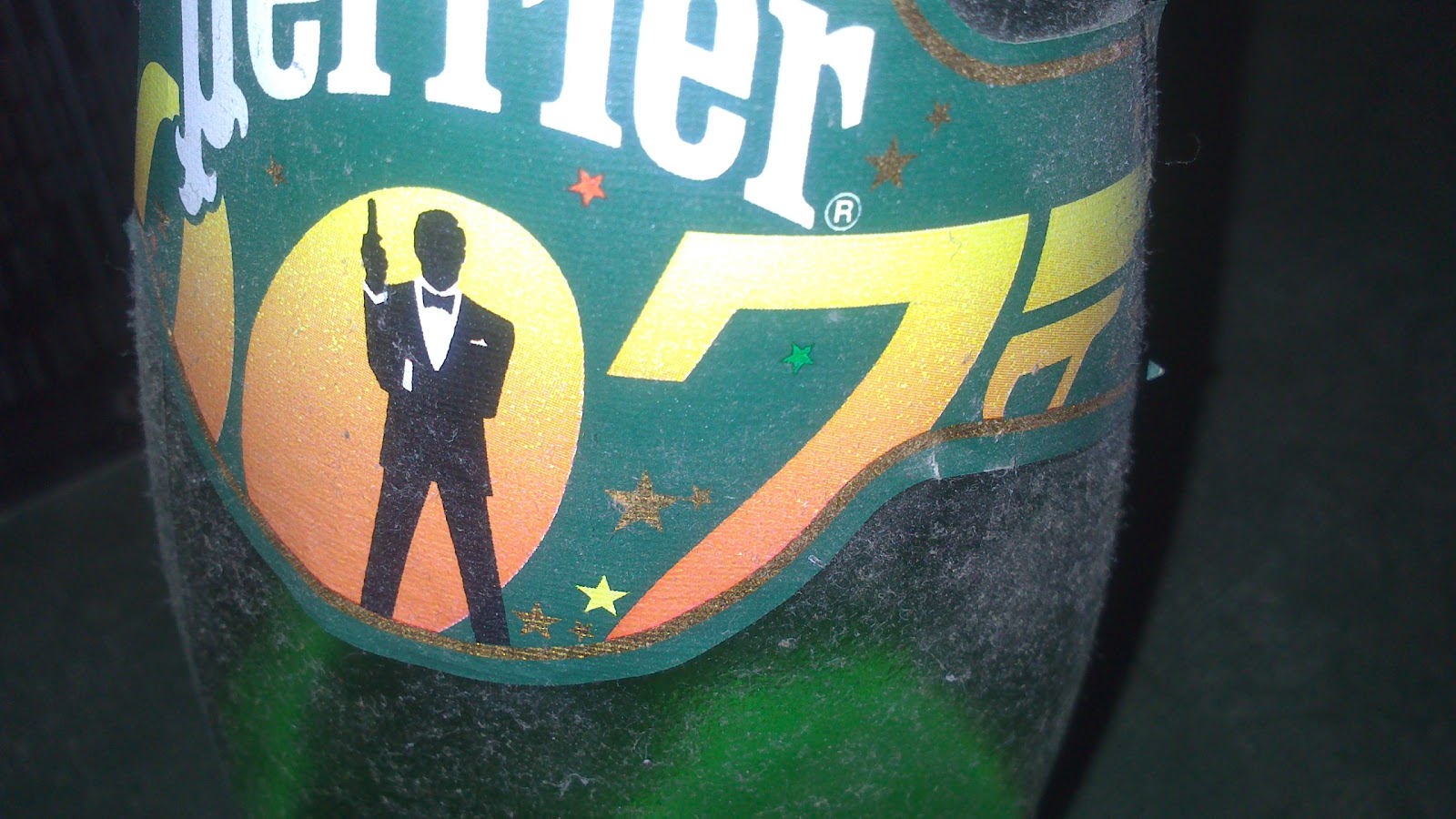
    In the 19th century, contaminated water from taps and pumps spread the killer disease cholera. Bottled water became popular as a safe alternative. In 1741, the English scientist Dr. William Brownrigg created the first artificial mineral water. He added health-giving minerals and carbon dioxide for fizziness. Dr. Brownrigg, incidentally, was also the first scientist to extract the element platinum. In 1792, Joseph Schweppe moved from Vienna to London and began to produce his own brand of artificial mineral water. His company grew to become one of the world’s most famous manufacturers of soft drinks. French doctor Louis Perrier gave his name to Perrier Water, which beamed the best known bottled mineral water in the world. In the 1960 James Bond novel For Your Eyes Only, the titular character insists on drinking only this type of water.

    Now the world drinks over a hundred and fifty billion litres of bottled water every year, which is equivalent to the quantity of water needed to fill sixty thousand Olympic sized swimming pools. In the United Kingdom, people drink more than two billion litres in totality, meaning an approximate of thirty-five litres per person. However, Italians drink more bottled water than any other nation, a hundred and eighty-five litres per person every year. Many people choose bottled water over tap water because it lacks substances such as chlorine, which affect the flavour of tap water, and also because bottles are portable. Bottled water is also produced to strict safety standards, so in some places it may be safer. Bottled water removes billions of litres of water from the underground, while making and transporting the bottles uses huge amounts of energy. Over 2.5 million tonnes of plastic go into the bottles every year and this has to be disposed of. Bottled water may also lack fluoride and other useful minerals found in tap water, so it may also be less healthy than the water in our homes.

    Bottled water is obtained from Artesian wells, the ground water table, bore wells, hot springs, mineral springs and other natural as well as man-made sources of water. This water is taken to huge industrial plants where it can be purified by one or a mix of numerous scientific methods, some of which include ozone purification, distillation, fluorination, sedimentation, multiple membrane disinfection, ultraviolet irradiation, and many others. It is then packaged in standardized quantities in sterilized and appropriately shaped plastic or glass bottles, as per the strict guidelines of the national food and health ministries. While one can find your average Bisleri water bottle in any grocery store, there is also a large plethora of other variants of bottled water, such as the ones available in fruit and sweetened flavours. Regardless of whether it is flavoured or not, bottled water can also contain artificially added minerals, fluorine, carbon dioxide, and other permitted preservatives and artificial flavouring. However, soft drinks such as Pepsi and Coca-Cola are different from the conventional bottled water in the fact that the amount of added substances does not exceed one percent of the amount of the total product, which is water, in the latter, whereas it forms a much bigger part in the former.

    Often stored as an integral part of emergency kits in the possible occurrence of a natural disaster, bottled water is often considered to be a foolproof, good tasting, and microbe-free source of drinking water, with a universally approved stringent set of rules and regulations followed all over the world by all countries. While one can consume bottled water without any significant health risks, it is also just as safe to use it for other purposes such as hand washing, personal hygiene, washing utensils, cleaning clothes, and other cleaning purposes. Bottles produced on a mass scale do not generally have any explicit expiry date on their labels, but rather an optimum amount of time the water should be used in without fear of contamination. Being highly stable, and packaged in the safest of ways, bottled water is without a doubt, a very safe thing to use, and therefore, have an indefinite shelf-life as long as they are not tampered with in any way by damaging, opening, and consequent possible infection.

    In India, bottled water is manufactured by large private companies such as Bisleri, Aquafina, Kinley, Himalaya, and Catch, as well as government bodies such as the Indian Railways Catering and Tourism Corporation. In this age of rampant water pollution, bottled water is not only the first choice of tourists, both foreign and domestic, but is also widely used in households as well. Priced at very nominal rates, and with the bottles being easy to recycle, bottled water seems to be just about the safest and easily obtainable source of drinking water these days.

  • A Platter of Vegetarian Kebabs

    A Platter of Vegetarian Kebabs

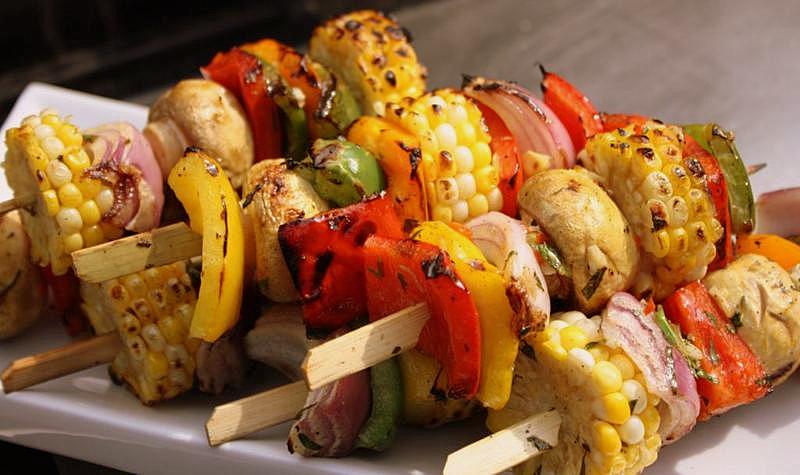
    Originating in the coastal countries of the eastern Mediterranean area, kebab is a versatile dish made by roasting and grilling pieces of meat, fish, and vegetables, over a skewer or a spit. The dish quickly spread in popularity and consumption throughout the nations of the Middle East, and then central Asia. The kebab traces its historic roots to before the 17th century B.C., and even the ancient Greek poet Homer mentions an erstwhile archaic dish resembling the same, and enjoyed all over his country in his works. However, a Turkish script by Kyssa-i Yusuf which dates back to around 1377, first properly mentions the culinary concept of the word, which is derived from the Persian language, and literally means “fry”, and sometimes “fry and burn”. Legend has it that the kebab was invented by medieval Persian soldiers who grilled meat on their swords over open-air fires in the battlefield. It quickly gained favour of both the classes and the masses, being served as the royal fare in various Islamic states over the ages, and as a much sought after and easily accessible snack or main course dish for many commoners, and the trend continues even today.

    Although lamb is the traditional choice of meat for making the kebab, there are many variants available in different meats and vegetables all over India due to religious constraints and direct or indirect dietary restrictions. Indian kebabs, whether they are vegetarian or non-vegetarian, have a unique and popular flavour of their own, owing to the wide spectrum of masalas (spices) and herbs native to the subcontinent. Apart from the numerous Indian innovations in the art of kebab making, the sheesh, shammi, tikka, and shawarma, original types of kebabs are also available everywhere, and can be found easily in small roadside eating joints as well as in top notch restaurants and hotels. The cities of Lucknow and Hyderabad are famous all over the country, owing to their thousands of decades-old, local eateries and food establishments which sell different types of primarily meat kebabs, ranging from tunday to kalmi and tangdi to reshmi, and have thus contributed a lot to culture, food, tourism, and economy.

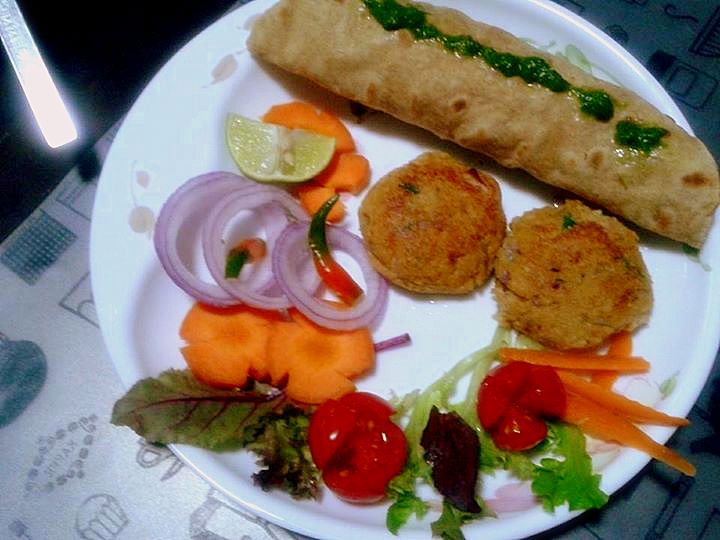
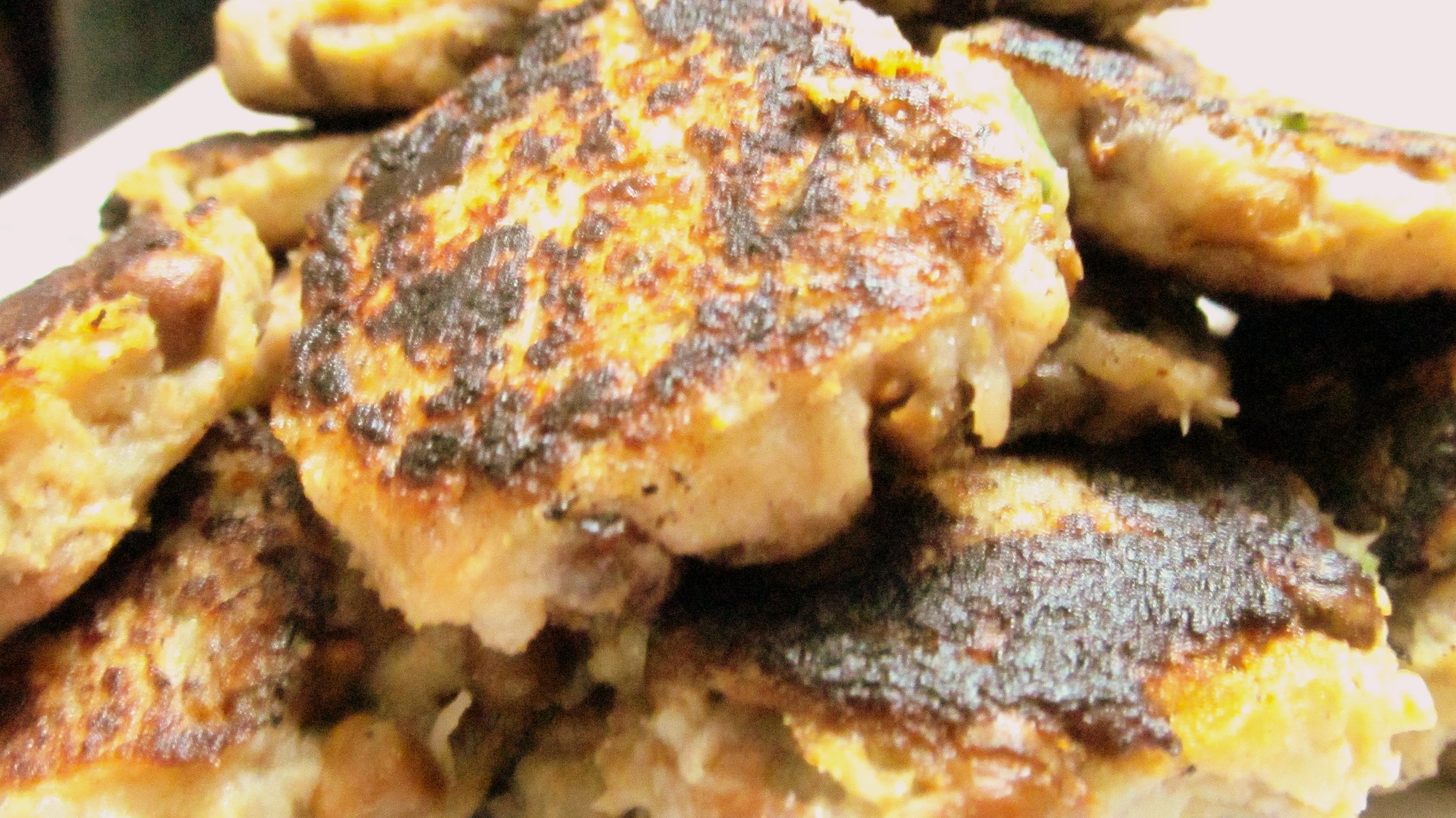
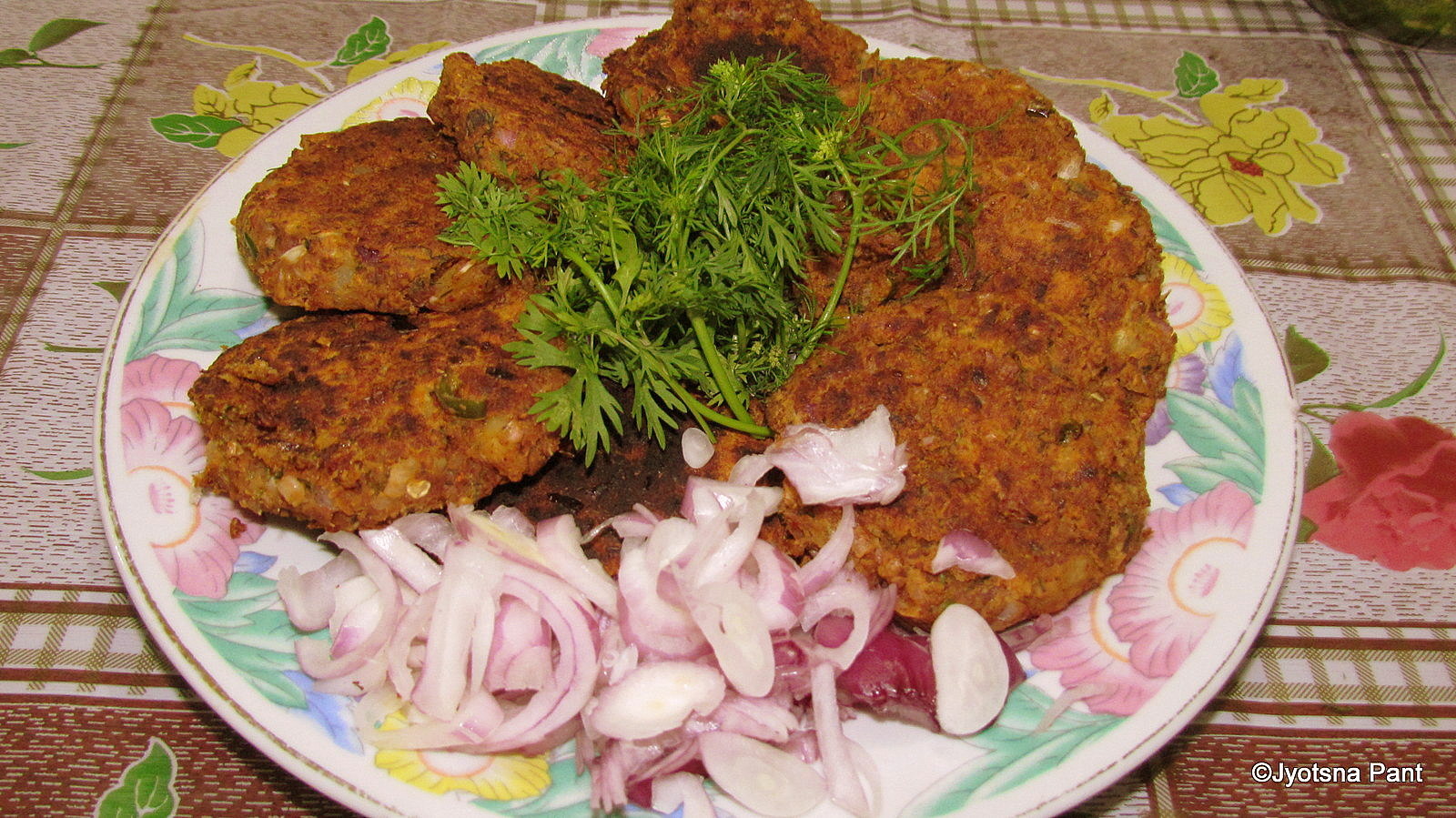
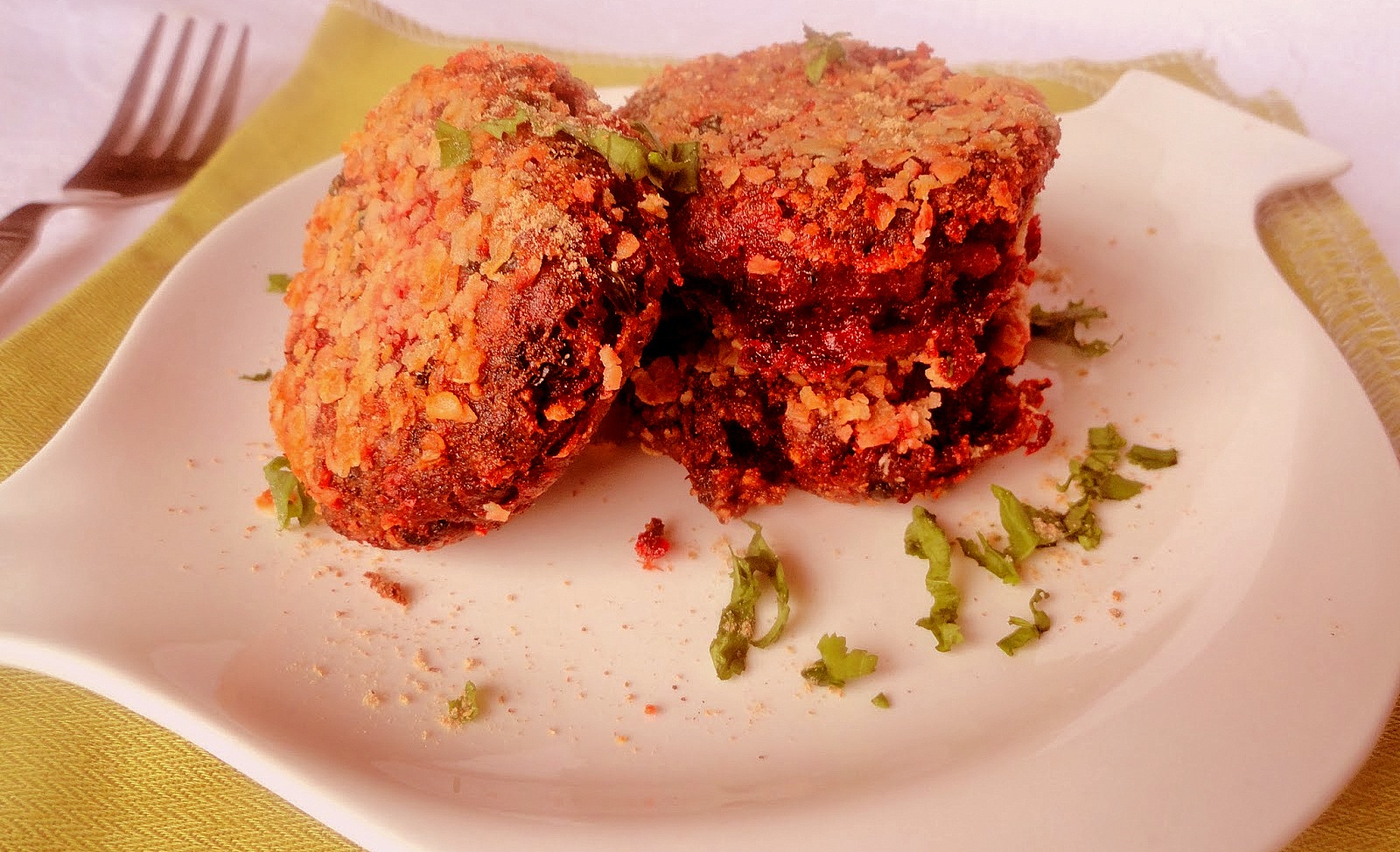
    While you can get non-vegetarian kebabs from anywhere, the vegetarian types are a rarity to find outside one’s house, and they are generally overpriced in the restaurants they are available in. Vegetarian kebabs can be easily made at home, with simple ingredients, and less elaborate methods than their non-vegetarian counterparts. This article will provide you with three novel recipes, all made wonderfully by my favourite chef in the world, my grandmother, for these lesser known variants, namely, shalgam ke kebab, kela chane kebab, and chukandar ke kebab.


    Shalgam ke Kebab (serves 4-6 people)

    Ingredients needed:

    • 7-8 bulbs of turnips
    • 2 tablespoons of roasted besan (gram flour)
    • Finely chopped onions
    • Finely shredded coriander, chilli, and ginger
    • 2 medium sized boiled potatoes
    • Salt to taste
    • 1 small teaspoon of garam masala powder
    • Vegetable oil

    Steps required:

    • Thoroughly wash the turnip bulbs, and then carefully peel their outer skins off.
    • Put the skinned turnips in a pressure cooker and steam thoroughly.
    • Once the turnips cool down, mash them and drain out the excess water.
    • Mash the boiled potatoes and mix them with the turnips. Add coriander, chilli, ginger, and onion to the mixture and be careful to make it consistent with dough.
    • Add garam masala and salt accordingly.
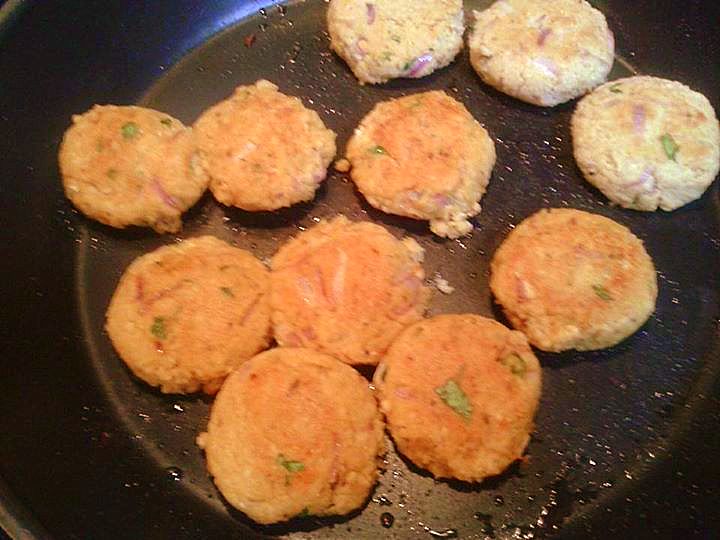
    • Make small balls of the prepared dough and flatten it into small cutlets or flattened disc shaped portions.
    • Shallow fry on a tawa (pan) until the kebabs are thoroughly cooked and are a rich golden-brown in colour.
    • Top with sprigs of coriander and rings of onion. Serve hot, with a chutney of your choice.


    Kela Chane ke Kebab (serves 4-6 people)

    Ingredients needed:

    • 5 clean green unripe bananas
    • 1 bowl of soaked chana dal (gram beans)
    • Finely chopped onions
    • Finely shredded coriander, chilli, and ginger
    • Salt to taste
    • 1 small teaspoon of garam masala powder
    • Vegetable oil

    Steps required:

    • Make sure to wash the bananas thoroughly with fresh water before beginning. Once they are clean, steam them in a pressure cooker with their skins intact.
    • Steam the dal separately to a soft consistency.
    • Once both ingredients cool down, peel the bananas, and mash together with the dal to make a dough.
    • Add garam masala and salt. You can also add other spices such as red chilli powder if you prefer.
    • Shallow fry on a pan.
    • Garnish with sprigs of coriander, and serve with onions and chutney.


    Chukandar ke kebab (serves 4-6 people)

    Ingredients needed:

    • 7-8 beetroots
    • 2 tablespoons of roasted besan (gram flour)
    • 2 boiled potatoes
    • 250 grams of paneer
    • A few whole clean leaves of cabbage
    • Finely chopped onions
    • Finely shredded coriander, chilli, and ginger
    • Salt to taste
    • 1 small teaspoon of garam masala powder
    • Vegetable oil

    Steps required:

    • Steam the beetroots thoroughly after cleaning them.
    • Mash the beetroots to a dough-like consistency. If necessary, add a little bit of boiled potatoes as well. Add roasted besan to this mix.
    • In a separate bowl, mash potatoes and mix them with paneer chunks.
    • Add coriander, chilli, ginger, and onion to the beetroot dough.
    • Make miniature balls of the paneer and potato mix after adding salt and garam masala to it.
    • Wrap them in a leaf of cabbage.
    • Encase this in an even layer of beetroot dough. Make it firm with more besan if required.
    • Shallow fry on a pan until the kebabs are thoroughly cooked.
    • Cut the kebabs open from the centre, top with coriander, and serve hot with chutney.
  • Snack-Time: Part 1

    Snack-Time: Part 1

    By definition, a snack is a term coined for the portion of food that is generally smaller than a proper meal and is eaten between the meals. Originally, snacks were prepared from simple ingredients that would easily be available at any house-hold. Traditionally, leftovers, fruits, salads, cold-cut sandwiches, nuts and similar simple-to-make food items were consumed as snacks.  With the globalization of cultures and industrialization taking over, packaged food and processed items started filling up the shelves of the snack-section in markets. Potato chips, chocolates, sausages, yogurts and smoothies are just to name a few.

    In the series of articles titled ‘Snack-Time’, this is the first of the three where in we covered two popular snacks from the North-American continent. Read on for all that information you need to know about how some of your favorite snacks came to be known in their present worth.

    Nachos

    images (12)

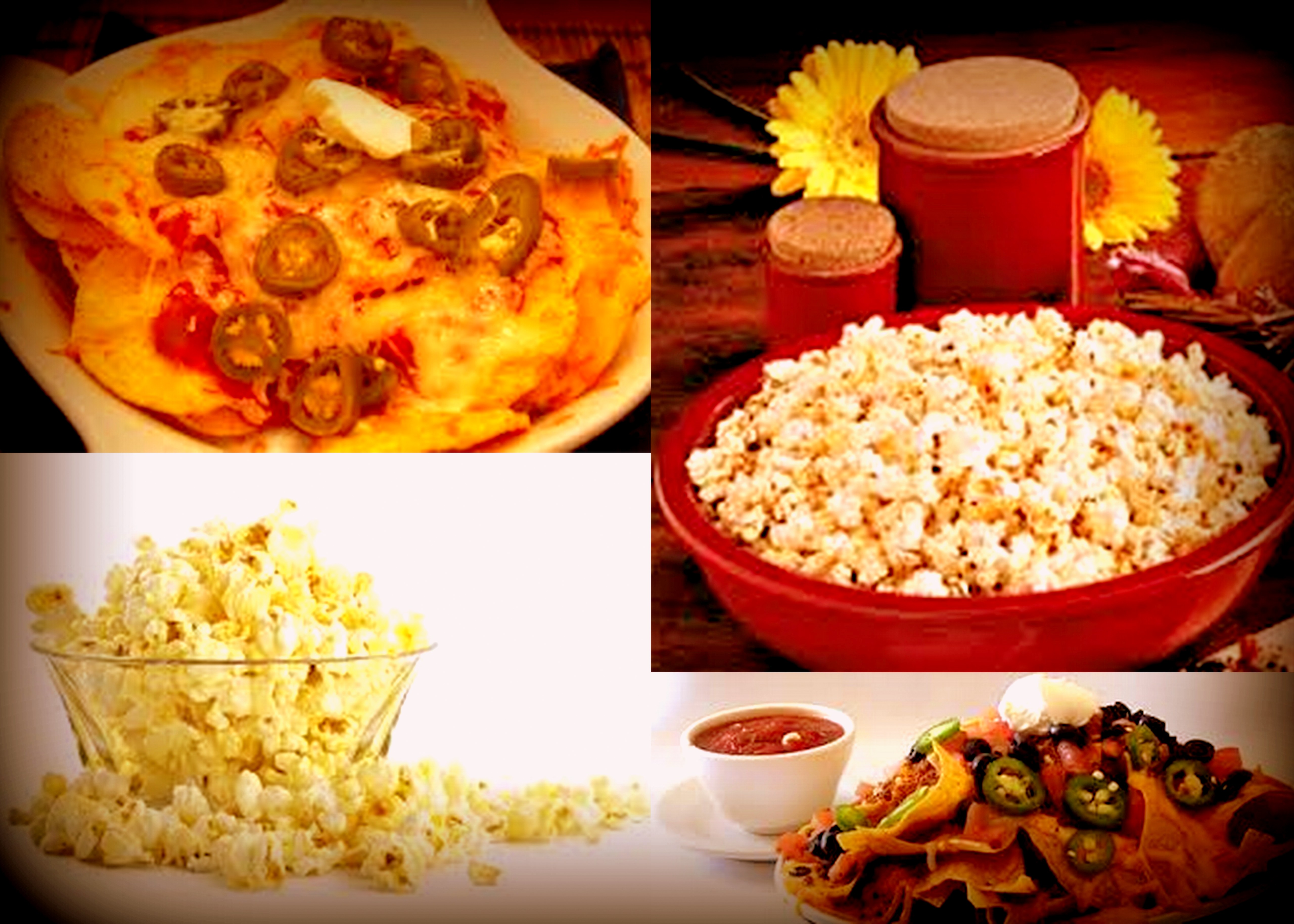
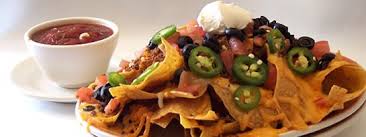
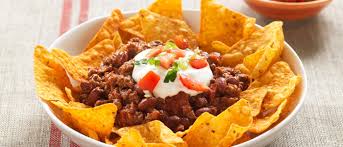
    Most of us Indians have developed a palate for spicy food and hence many of us are fond of Mexican food. The perfect blend of spice and flavours, ranging from that of spicy peppers to tangy sauces makes it a perfect blend for visual satisfaction and for quenching ones’ huge appetite. One such popular Mexican snack is Nachos. Nachos is a originally dish of tortilla chips topped with cheese or cheese-based dressings. Be it the movies or the football matches, nachos form an integral part at the menus of the snack-shop at stadiums and movie halls. THe traditional nacho recipe makes ones’ mouth water just by the mere mention. The salty crunch of the chips, the delectable flavours of the sauces, the creaminess of the cheese dressing and the fresh crisp of the jalapenos make it the best possible savory snack using cheese and chips. This appetizer can easily be transformed into a meal sized portion by jazzing it up as per your taste.

    download (8)

    The Mexican treat does not have a very ancient history. There are numerous tales about how this dish came into existence. Accounts claim that Nachos originated in Mexico, in the city of Piedras Negras, Coahuila. It is said that in the early 1940s, around 1943, a few number of ladies while on a shopping trip went to the Victory Club restaurant, located just south of Eagle Pass, Texas, after it had closed for the day. Reluctant to turn paying guests away, the maitre d’hotel, Ignacio Anaya, assembled a simple dish with whatever ingredients were available in his kitchen: tortilla chips and cheese, and coined a new name for it that read, ‘Nacho’s Especiales.’ He cut the tortillas into triangles, shredded cheddar cheese and tossed it in and heated them quickly. He then sliced some pickled jalapeno peppers and added them before serving it to the bunch of the women. As the word spread the name of the dish was changes. The apostrophe was dropped and it became ‘special nachos’. The popularity of this dish spread all over through Texas and the Southwest. Anaya also worked at the Moderno Restaurant which follows the original recipe till date. He went on to open his own restaurant which he called the ‘Nacho’s restaurant’ in Piedras Negras. Who knew that these tiny canapes of tortilla chips topped with cheese and a few pickled jalapeno peppers could take him that long a way.

    Popcorn

    download (6)

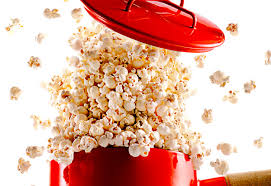
    Buy a ticket for the 2.00 p.m. show of a movie and enter the multiplex. You are welcomed by the pleasant aroma of corn and a long queue; a queue not crazy enough to enter the hall, but eager enough to grab a large bag of pop-corn! Popping corn, or better called as Popcorn is basically a variety of corn or maize that puffs up from the kernel when heated, due to expansion.

    The history of popcorn dates back to the before Christ era. As per the records, Popcorn was first cultivated on the Mexican lands around 9,000 years ago. It was derived from a wild grass. The evidence of popcorn being cultivated from 3600 B.C. was found in New Mexico. A few centuries later it was then domesticated on agricultural lands across Central and South America as well thus gaining popularity. It is one of the oldest forms of corn known and cultivated by human dwellings. Corncobs were also found at two atavistic sites in the country, Peru viz.  Huaca Prieta and Paredones  and it is claimed that they may belong to a time as early as 4700 B.C. This fact implies that people dwelling along the coast of northern parts of  Peru had already been introduced to the concept of popcorn by this time.

    download (7)

    The narrative that the British settlers  travelled to America in the 16th and 17th centuries and hence, carried what they learned about popping corn from the Native Americans is claimed to be a myth. There is no proof that the natives from the coast of North American cultivated or even knew about popcorn so early.

    Popcorn gained popularity during the Great Depression as it was inexpensive and costed nothing as compared to other food items. It thus became a common domestic commodity. During the World War II, prices of candy soared as sugar cultivation and consequently, manufacturing processes of candy became highly priced. This is when the Americans consumed almost thrice the amount of popcorn they used to use earlier.

    Mushroom_and_butterfly_popcorn

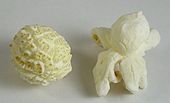
    A popped kernel of the corn is known as a flake, which can either be shaped as a butterfly (right) or as a mushroom (left) as shown in the picture. Popcorn can either be eaten with salted toppings like butter and spices or with toffee or caramel toppings as a sweetened snack. Many other versions like cheese flavoured popcorn  are also widely available these days. The snack has gained popularity all over the globe and is also taken as breakfast cereal.

    download (9)

    These are two famous snacks that the North Americans introduced us to. The other two parts shall cover a few more snacking options from the other cultures. Till then, keep crunching on those spicy nachos and these soft melt-in-the-mouth popcorns! Snack away!